DataChain is a developer-first platform for managing "Heavy Data"—large-scale, unstructured, multimodal datasets. It enables teams to curate, enrich, and version data like videos, images, audio, and PDFs for AI applications, featuring Python-based ETL pipelines, full data lineage, and scalable processing from local IDE to cloud.
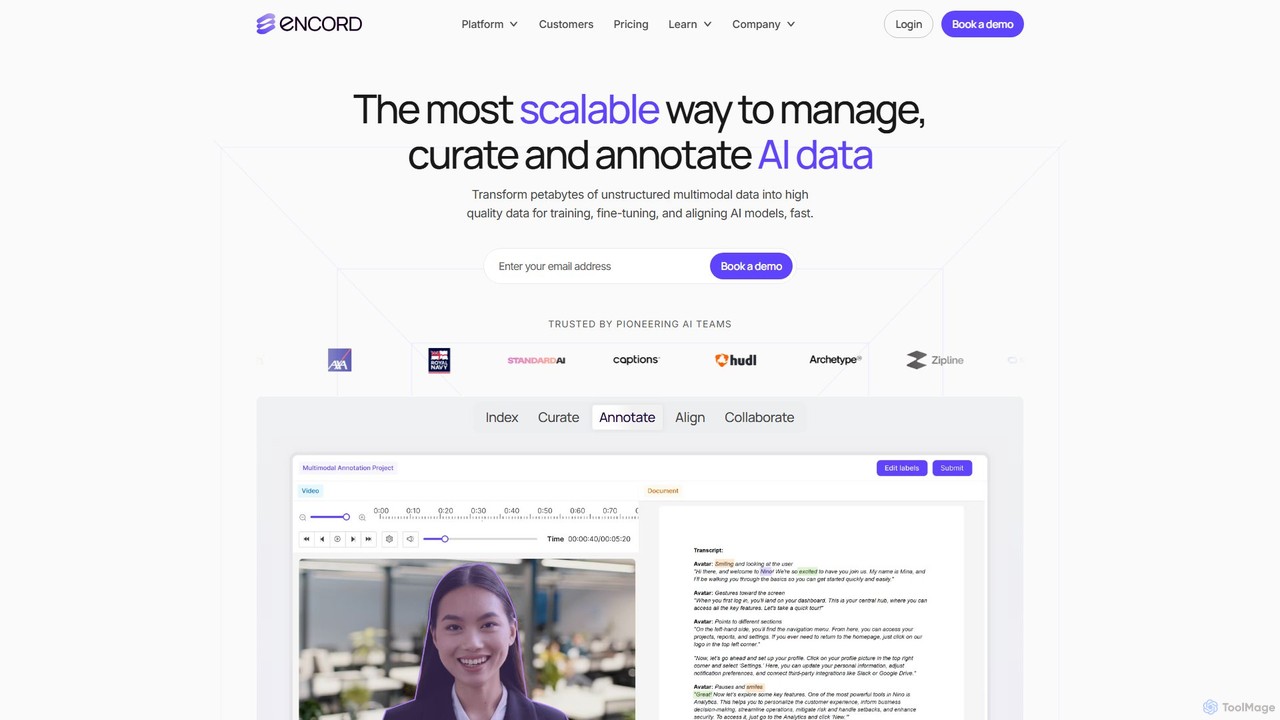
Encord is a comprehensive data development platform for visual and multimodal AI. It provides tools for managing, curating, and annotating large-scale, unstructured data like images, videos, and DICOM files. The platform helps AI teams build high-quality datasets, improve model performance, and accelerate the deployment of production-ready AI applications through advanced labeling, model evaluation, and human-in-the-loop workflows.
Product overview
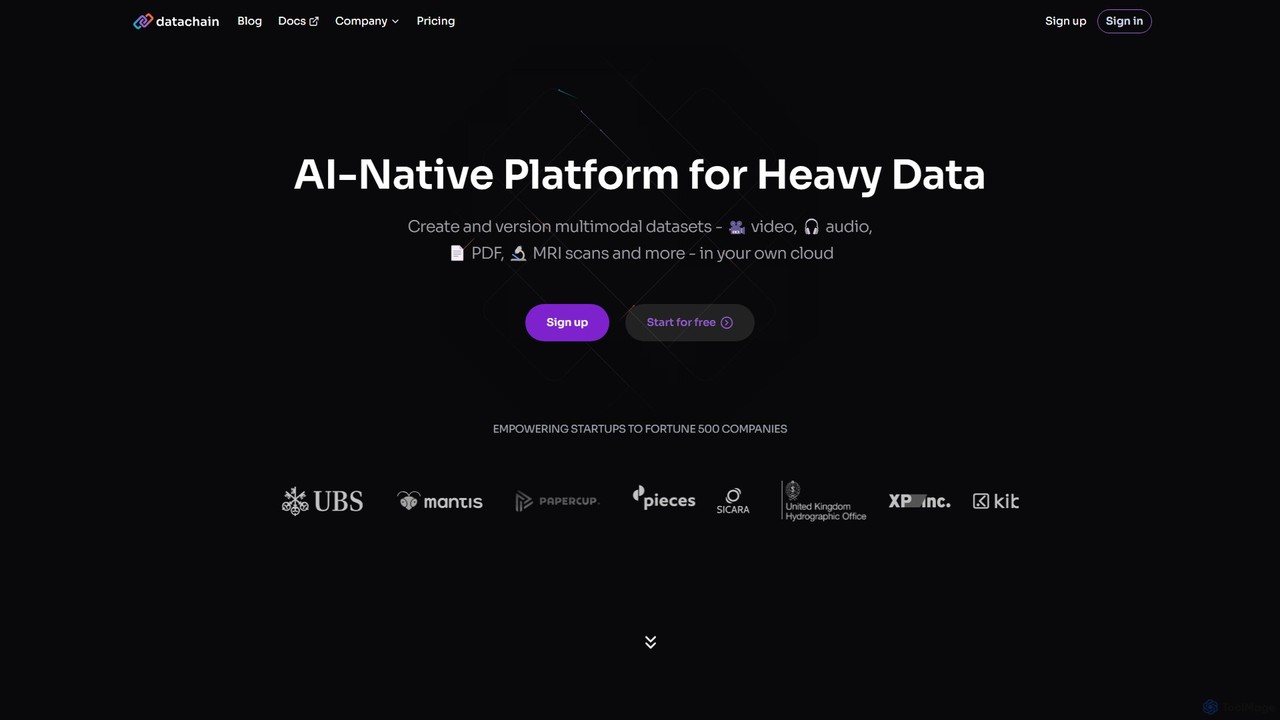
DataChain Product overview
DataChain is a developer-first platform for managing "Heavy Data"—large-scale, unstructured, multimodal datasets. It enables teams to curate, enrich, and version data like videos, images, audio, and PDFs for AI applications, featuring Python-based ETL pipelines, full data lineage, and scalable processing from local IDE to cloud.
Encord Product overview
Encord is a comprehensive data development platform for visual and multimodal AI. It provides tools for managing, curating, and annotating large-scale, unstructured data like images, videos, and DICOM files. The platform helps AI teams build high-quality datasets, improve model performance, and accelerate the deployment of production-ready AI applications through advanced labeling, model evaluation, and human-in-the-loop workflows.
Detailed feature comparison
| Feature | DataChain | Encord |
|---|---|---|
| Primary category | Database | Annotation |
| Added | 2025-08-04 | 2025-08-03 |
| Pricing | Freemium | Freemium |
| Official website | datachain.ai | encord.com |
| Product type | Website | Website |
| Performance data | ||
| User rating | Not verified | Not verified |
| Comments | 0 | 0 |
| Monthly visits | 4.4K | 266.9K |
| Monthly growth | 36.6% | 14.8% |
| Favorites | 120 | 138 |
| Details | View details | View details |
DataChain vs Encord monthly traffic
Compare DataChain and Encord by monthly reach, traffic trend, visit depth, top regions, and acquisition sources.
How to interpret the traffic data
In the DataChain vs Encord monthly traffic comparison, DataChain currently shows 4.4K visits and Encord shows 266.9K; Encord has about 60.2 times the visible traffic of DataChain, an absolute difference of about 262.5K visits. This reflects visible reach, not feature quality or paid users.
Both tools provide verified traffic details, so monthly trends, visit depth, regions, and acquisition sources can be compared on the same basis.
DataChain monthly traffic:
Latest traffic
Monthly traffic trend
- 2025/9: 3.8K Monthly visits
- 2026/1: 5.4K Monthly visits
- 2026/2: 4.5K Monthly visits
- 2026/3: 6K Monthly visits
- 2026/4: 3.2K Monthly visits
- 2026/5: 4.4K Monthly visits
Top regions
Top 5 countries/regions
| Country/region | Percentage | Traffic |
|---|---|---|
| 🇺🇸United States | 52.28% | 2.3K |
| 🇷🇺Russia | 19.72% | 875 |
| 🇮🇳India | 13.18% | 585 |
| 🇩🇪Germany | 12.17% | 540 |
| 🇪🇸Spain | 2.65% | 118 |
Search keywords
Encord monthly traffic:
Latest traffic
Monthly traffic trend
- 2025/9: 202.5K Monthly visits
- 2026/1: 239.8K Monthly visits
- 2026/2: 223K Monthly visits
- 2026/3: 232.2K Monthly visits
- 2026/4: 232.4K Monthly visits
- 2026/5: 266.9K Monthly visits
Top regions
Top 5 countries/regions
| Country/region | Percentage | Traffic |
|---|---|---|
| 🇺🇸United States | 39.97% | 106.7K |
| 🇮🇳India | 21.08% | 56.3K |
| 🇧🇩Bangladesh | 19.89% | 53.1K |
| 🇬🇧United Kingdom | 9.57% | 25.5K |
| 🇸🇬Singapore | 9.49% | 25.3K |
Traffic sources
| Source type | Percentage | Traffic |
|---|---|---|
| Direct | 77.81% | 207.7K |
| Referral | 15.68% | 41.9K |
| 6.51% | 17.4K |
Search keywords
Usage comparison
Compare the core capabilities of DataChain and Encord
DataChain Core features
Encord Core features
Use cases
DataChain Use cases
Encord Use cases
DataChain vs Encord:In-depth comparison and selection guidance
First decide whether the products solve the same kind of need
This in-depth DataChain vs Encord comparison uses only the product records, taxonomy, audience, traffic, and community signals available on this page. DataChain is primarily listed under “Database”, while Encord is primarily listed under “Annotation”, so the first decision is whether your actual task matches their recorded scope.
The structured fields currently show these decision-relevant differences: Primary category (DataChain: Database; Encord: Annotation); Monthly visits (DataChain: 4.4K; Encord: 266.9K); Monthly growth (DataChain: 36.6%; Encord: 14.8%); Favorites (DataChain: 120; Encord: 138); Website (DataChain: datachain.ai; Encord: encord.com). These facts are more useful for selection than brand visibility alone.
What market visibility and monthly traffic mean
In the DataChain vs Encord monthly traffic comparison, DataChain currently shows 4.4K visits and Encord shows 266.9K; Encord has about 60.2 times the visible traffic of DataChain, an absolute difference of about 262.5K visits. This reflects visible reach, not feature quality or paid users.
Both tools provide verified traffic details, so monthly trends, visit depth, regions, and acquisition sources can be compared on the same basis.
If public market visibility is an important first-pass criterion, investigate Encord first. The final choice should still follow taxonomy, use case, and a real trial because higher traffic does not prove broader capabilities or better workflow fit.
Product positioning, use cases, and roles
DataChain and Encord currently overlap in shared categories: Data Management; shared tags: data management, MLOps, and multimodal AI. This can place both on the same shortlist, but it does not prove equal implementation, depth, or cost.
DataChain's unique categories/tags are Database, Machine Learning, data pipeline, dataset management, data versioning, developer tools, ETL, and machine learning; Encord's are Annotation, Mlops, AI training data, computer vision, data annotation, data labeling, DICOM, and image annotation. These unique fields are the strongest differentiators: validate the product whose recorded scope matches the task instead of following traffic alone.
What ratings, comments, and favorites can tell you
DataChain has no verified rating, 0 comments, 120 favorites, and 118 likes;Encord has no verified rating, 0 comments, 138 favorites, and 120 likes。
Neither product has enough rating or comment samples for a credible reputation ranking.
Selection guidance by actual need
When to evaluate DataChain first
Put DataChain on the priority trial list when the task aligns with “Database” and especially Database, Machine Learning, data pipeline, dataset management, data versioning, and developer tools. This follows recorded positioning and does not imply unlisted capabilities are absent.
DataChain also currently records: pricing is freemium, product type is website, 4.4K verified monthly visits, no verified user rating. Verify any hard requirement around price, platform, or reach before trial, and do not let sparse review data substitute for testing.
When to evaluate Encord first
Put Encord on the priority trial list when the task aligns with “Annotation” and especially Annotation, Mlops, AI training data, computer vision, data annotation, and data labeling. This follows recorded positioning and does not imply unlisted capabilities are absent.
Encord also currently records: pricing is freemium, product type is website, 266.9K verified monthly visits, no verified user rating. Verify any hard requirement around price, platform, or reach before trial, and do not let sparse review data substitute for testing.
How to validate the recommendation before deciding
The available data describes positioning, public visibility, and community signals, but it cannot prove output quality, speed, integration effort, privacy, or long-term cost in your workflow. Before deciding, run the same representative tasks in DataChain and Encord, then record completion time, accuracy, manual corrections, and the real paid threshold. A like-for-like trial turns this comparison into a defensible adoption decision.
Comparison FAQ
How should I choose between DataChain and Encord?
Where does this comparison data come from?
What do unknown fields mean?
Related AI tools

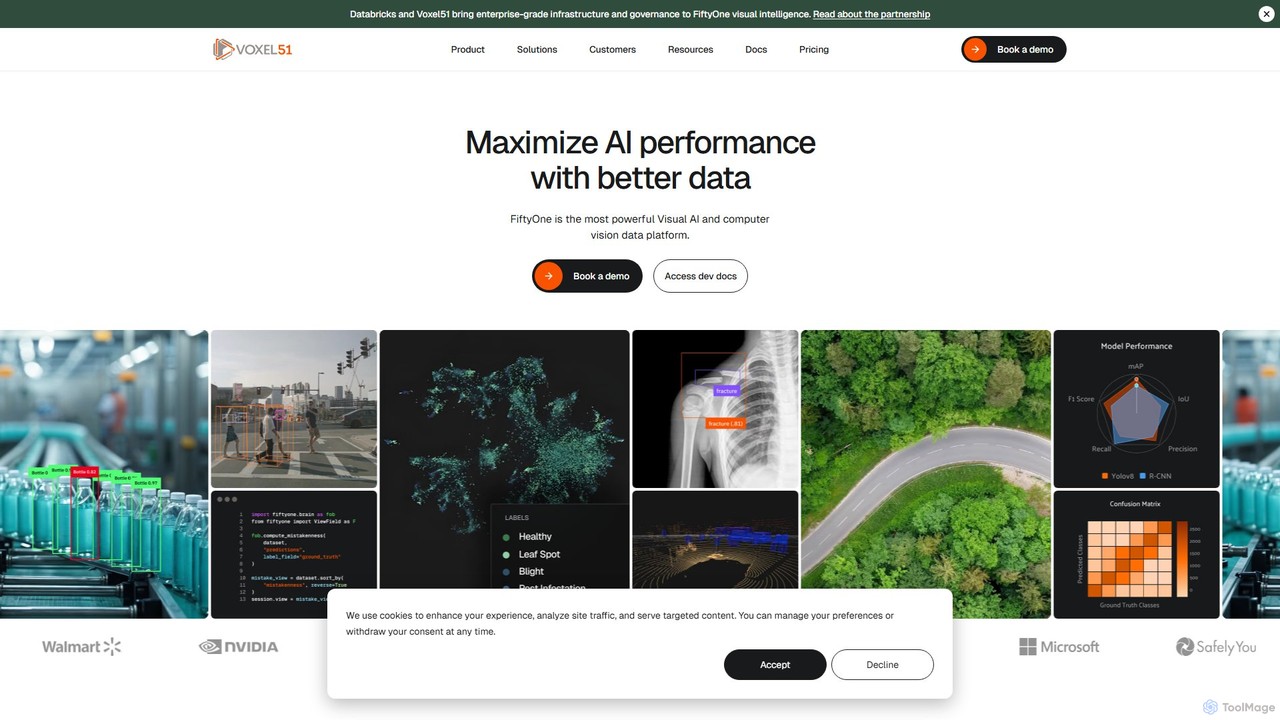
Voxel51
Voxel51 provides FiftyOne, an enterprise-grade computer vision and multimodal AI platform. It empowers developers and data scientists to curate, visualize, and evaluate complex datasets, leading to higher-performing models. By focusing on data-centric AI, FiftyOne streamlines workflows for data annotation, quality improvement, and model analysis, accelerating the entire development lifecycle.
Mlops
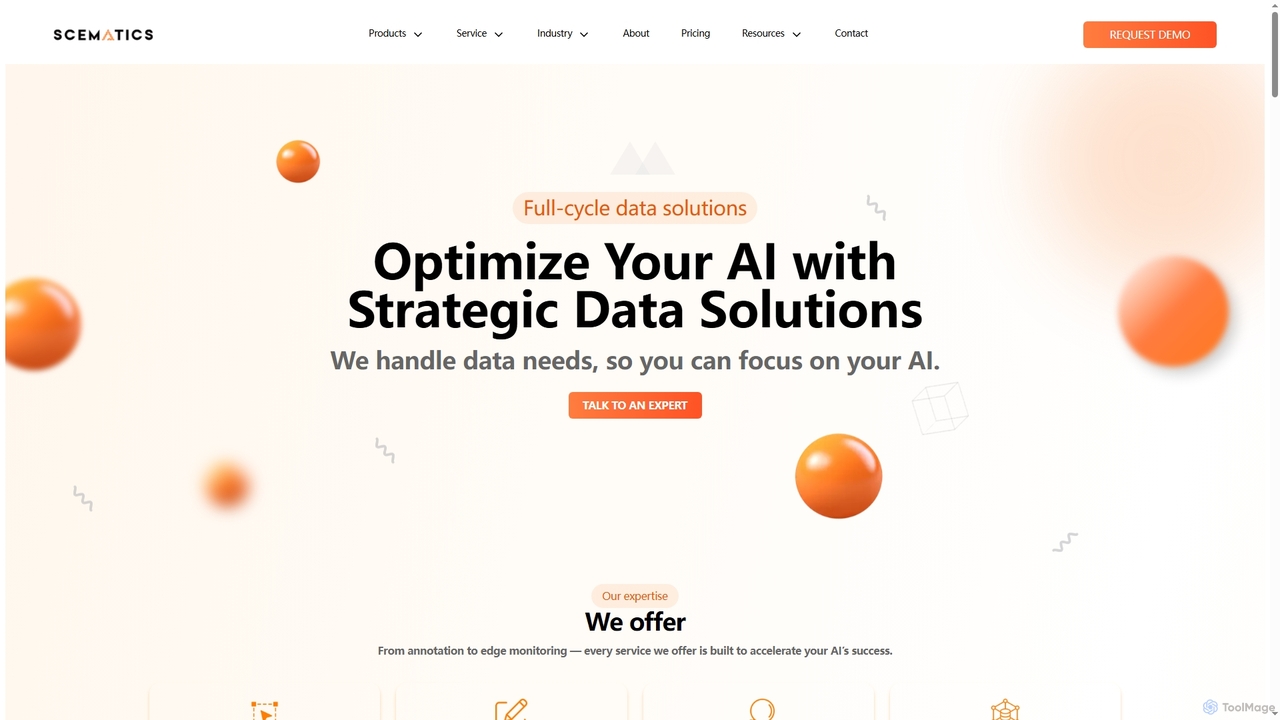
Scematics
Scematics is an all-in-one data annotation and labeling platform that provides strategic data solutions to optimize AI models. It offers intuitive tools, expert annotation services, edge case monitoring, and synthetic data generation, enabling teams to build high-quality, scalable training datasets for various AI applications across diverse industries.
3D
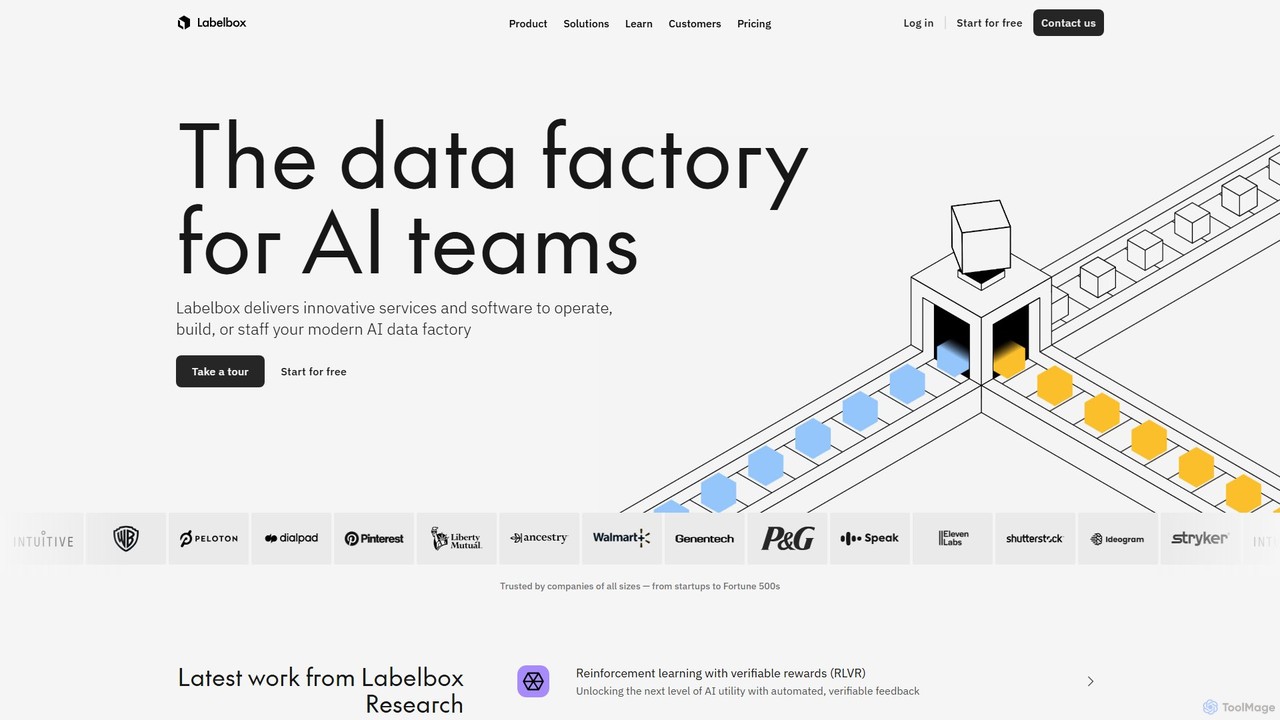
Labelbox
Labelbox is a comprehensive data-centric AI platform, or "Data Factory," designed for AI teams. It provides integrated software, expert services, and a talent marketplace to create, manage, and evaluate high-quality training data for advanced AI models, including LLMs and multimodal systems.
Labeling
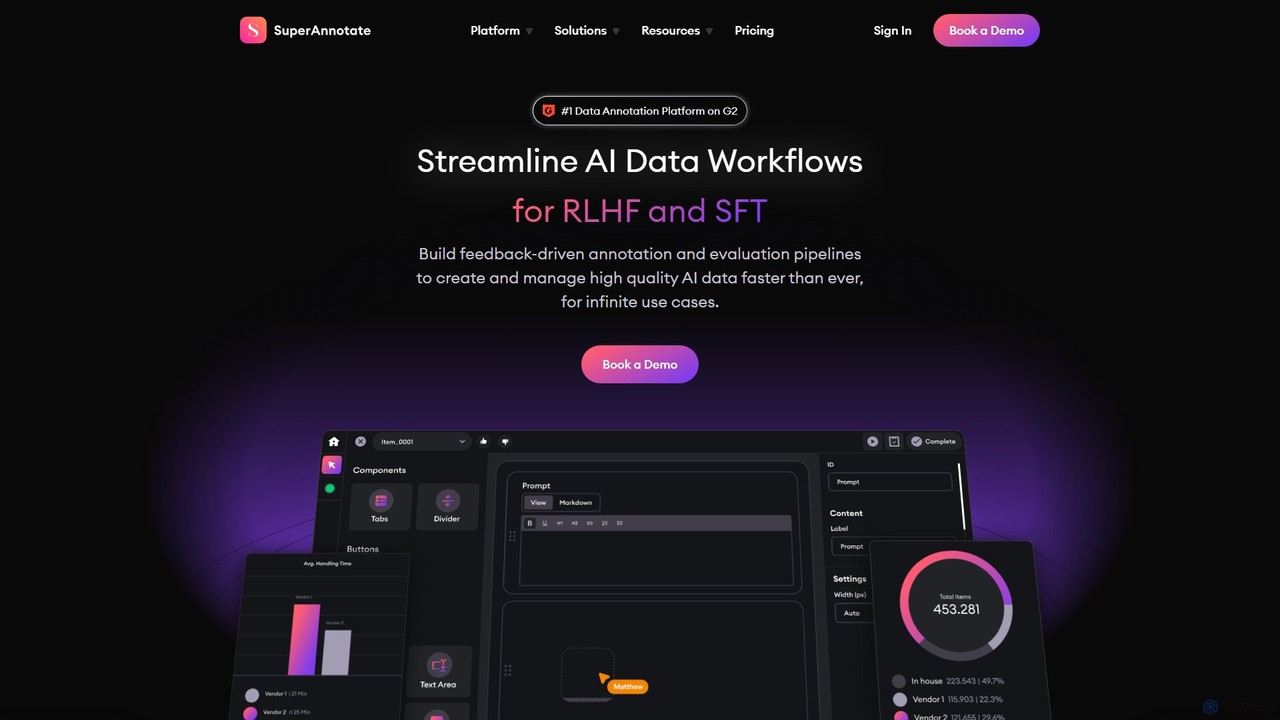
SuperAnnotate
SuperAnnotate is a leading AI data platform that streamlines the entire data pipeline for machine learning. It enables teams to annotate, manage, and curate high-quality multimodal datasets (image, video, text, audio) to accelerate model development, including for complex workflows like RLHF, RAG, and SFT. It's designed to improve model accuracy and efficiency.
Labeling
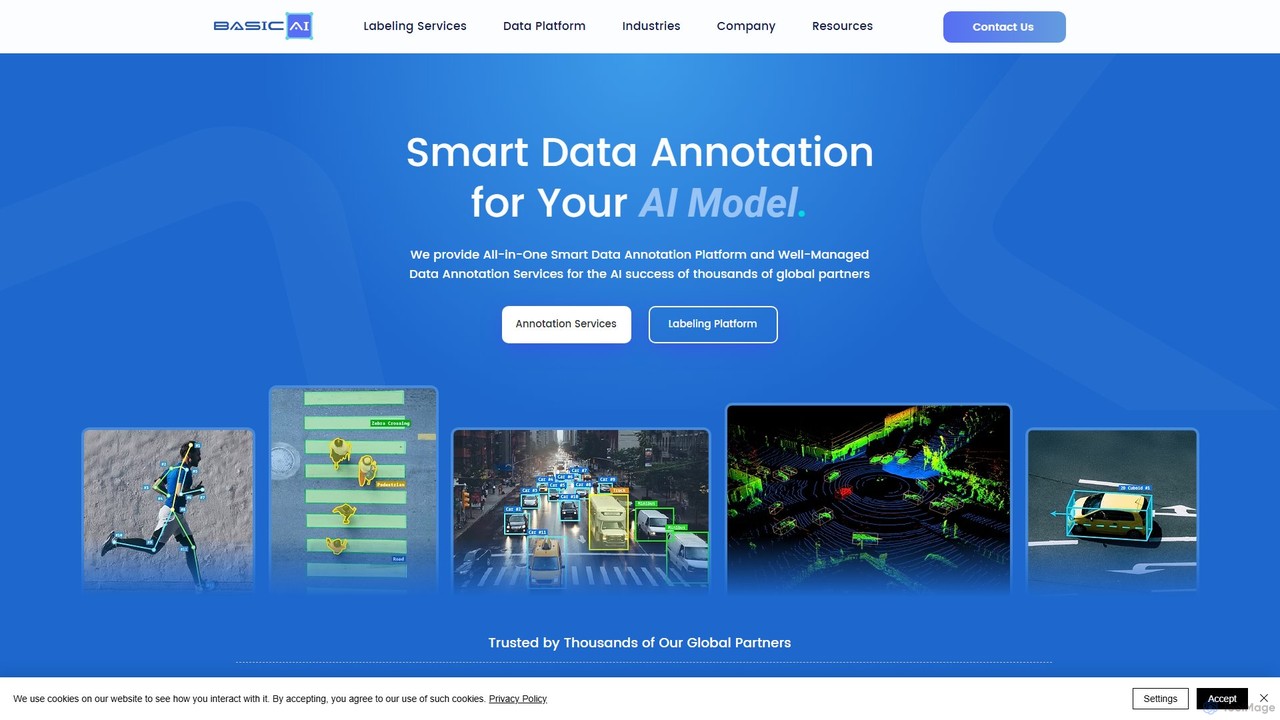
BasicAI
BasicAI offers a comprehensive data annotation platform and managed services to create high-quality training data for AI models. It specializes in 3D LiDAR, image, video, and NLP data, providing AI-assisted tools, scalable workflows, and enterprise-grade security to accelerate AI development.
Data Labeling
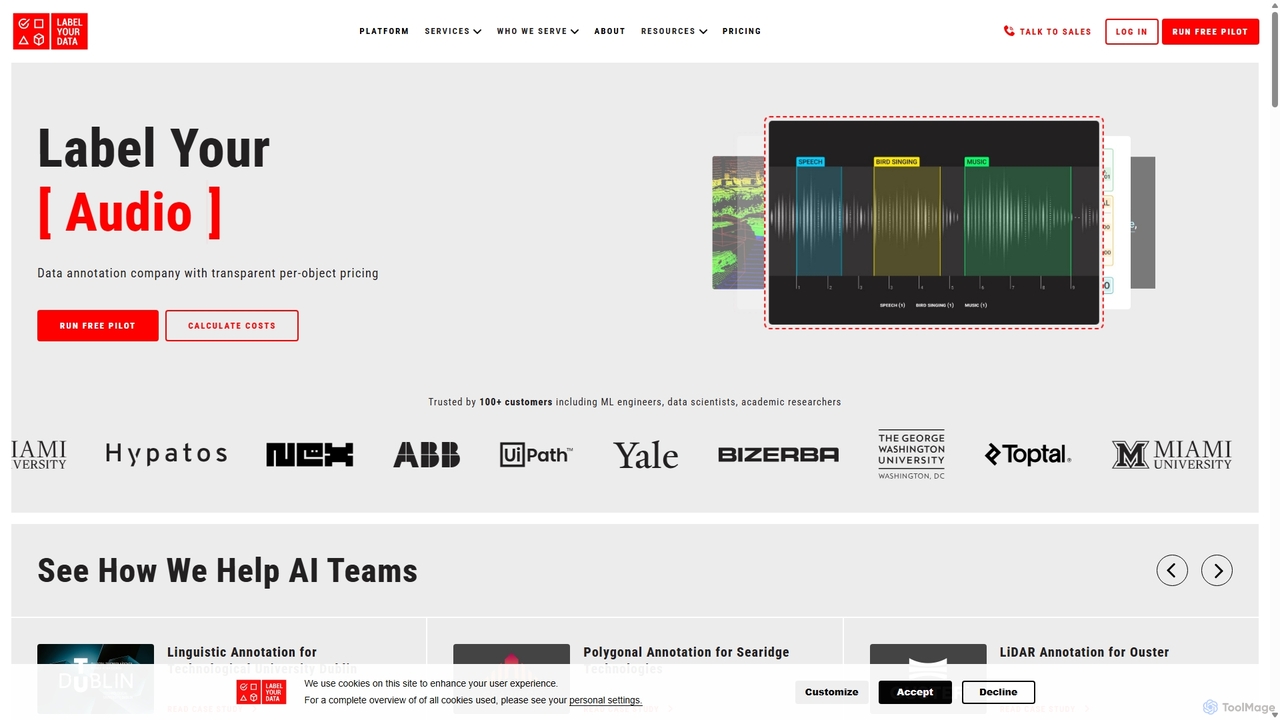
Label Your Data
A professional data annotation service and platform providing high-quality, accurate labeled datasets for machine learning. It supports diverse data types like images, video, text, and audio, offering flexible pricing, a self-serve platform, and fully managed services to scale AI projects of any size.
Data Management
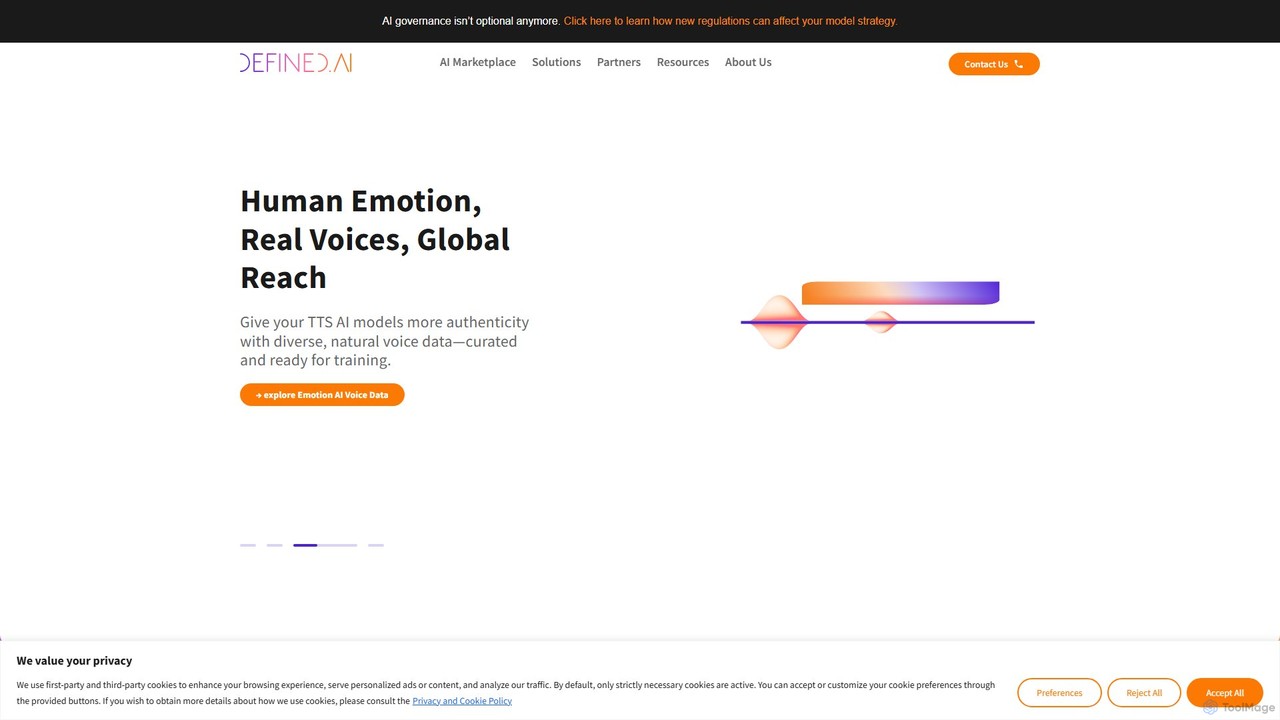
Defined.ai
Defined.ai is a leading marketplace and platform for high-quality AI training data. It provides off-the-shelf datasets and custom data collection/annotation services for computer vision, NLP, and speech recognition. By leveraging a global crowd and a robust platform, Defined.ai helps businesses accelerate the development of accurate and ethical AI models.
Data Annotation
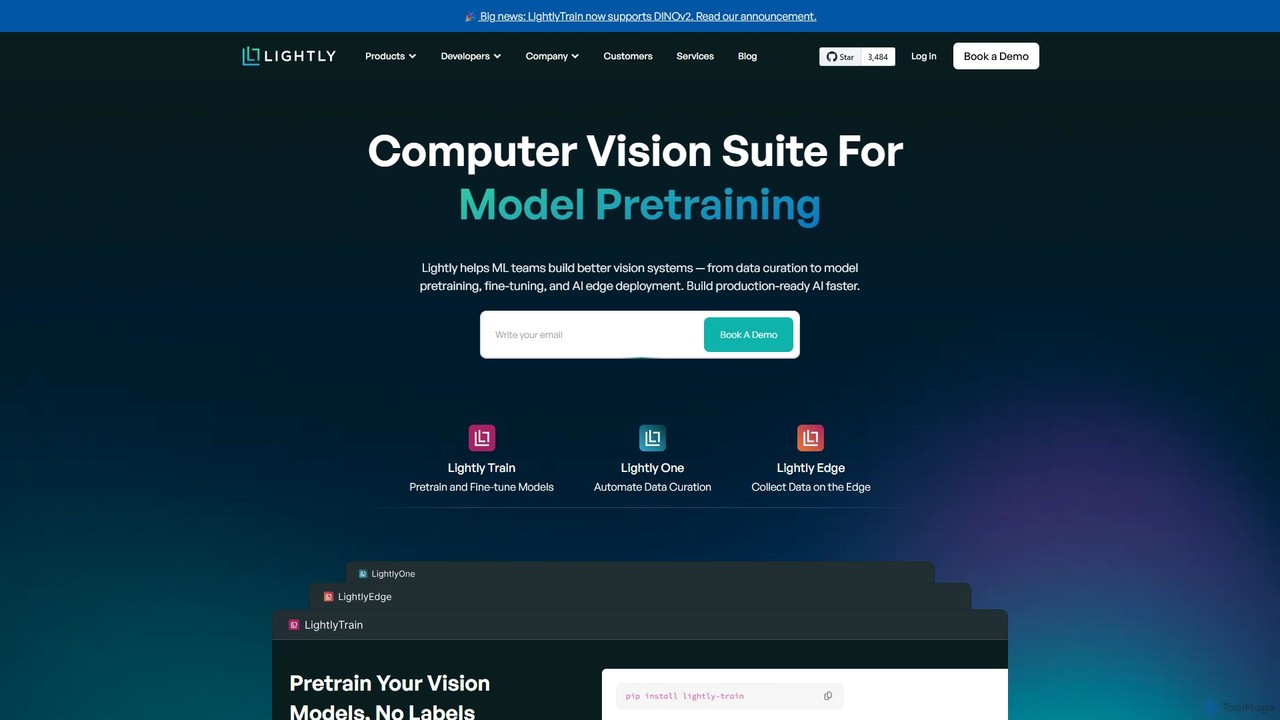
Lightly
Lightly is a comprehensive computer vision suite for machine learning teams. It streamlines the entire model development lifecycle, from intelligent data curation and selection on edge devices to efficient, label-free model pretraining and fine-tuning. By focusing on the most valuable data, Lightly helps build more accurate and production-ready AI models faster, while significantly reducing data labeling and storage costs.
Data Management
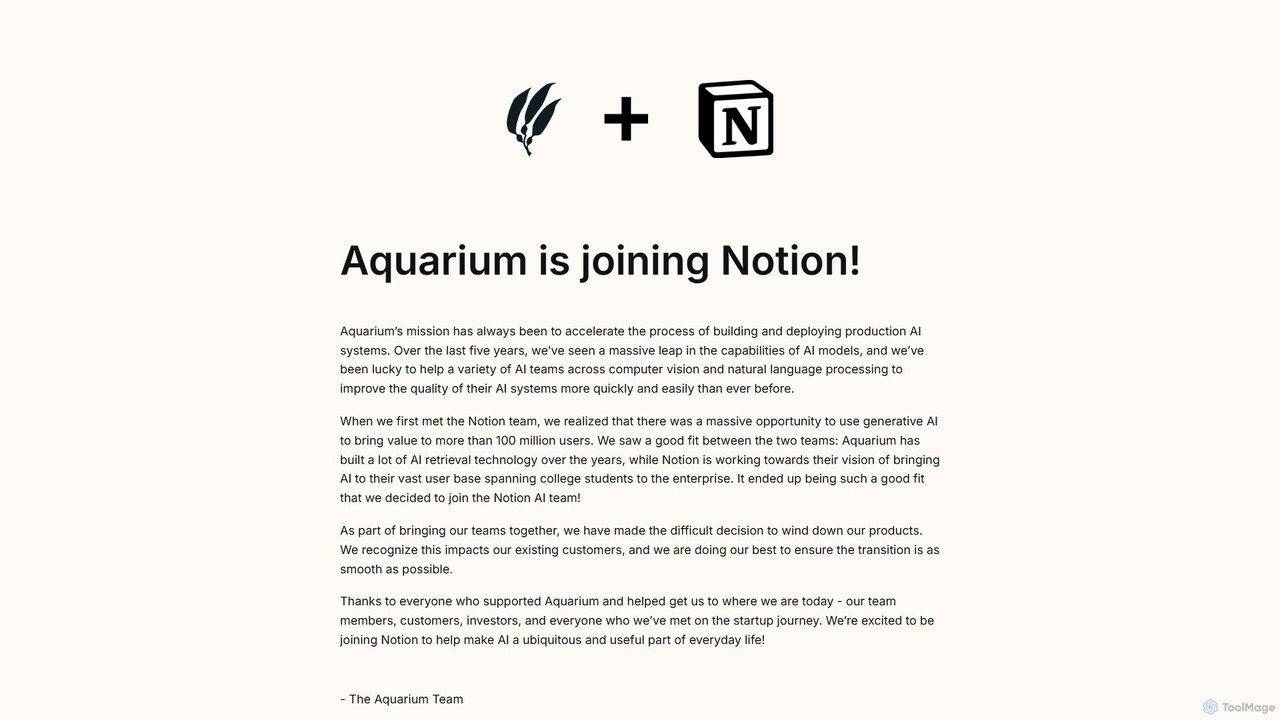
Tidepool
Tidepool (formerly Aquarium) was a powerful MLOps platform designed for AI teams to improve machine learning models. It specialized in managing and curating datasets for computer vision and NLP, enabling faster iteration and higher model performance through a data-centric approach.
Machine Learning
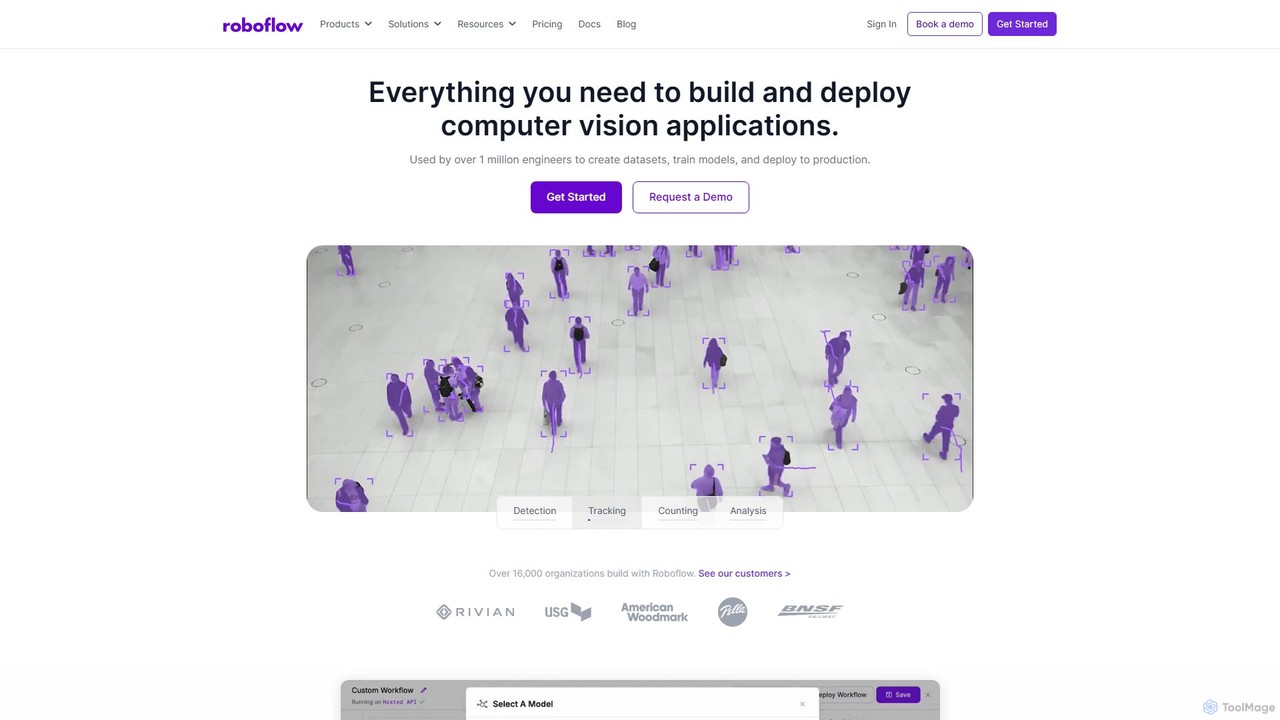
Roboflow
Roboflow is an end-to-end computer vision platform for developers and enterprises. It provides a comprehensive suite of tools to build, train, and deploy computer vision models at scale. From dataset creation and collaborative labeling to one-click model training and deployment to cloud or edge devices, Roboflow streamlines the entire MLOps lifecycle for vision AI, empowering over a million engineers to give their software the sense of sight.
Data Labeling
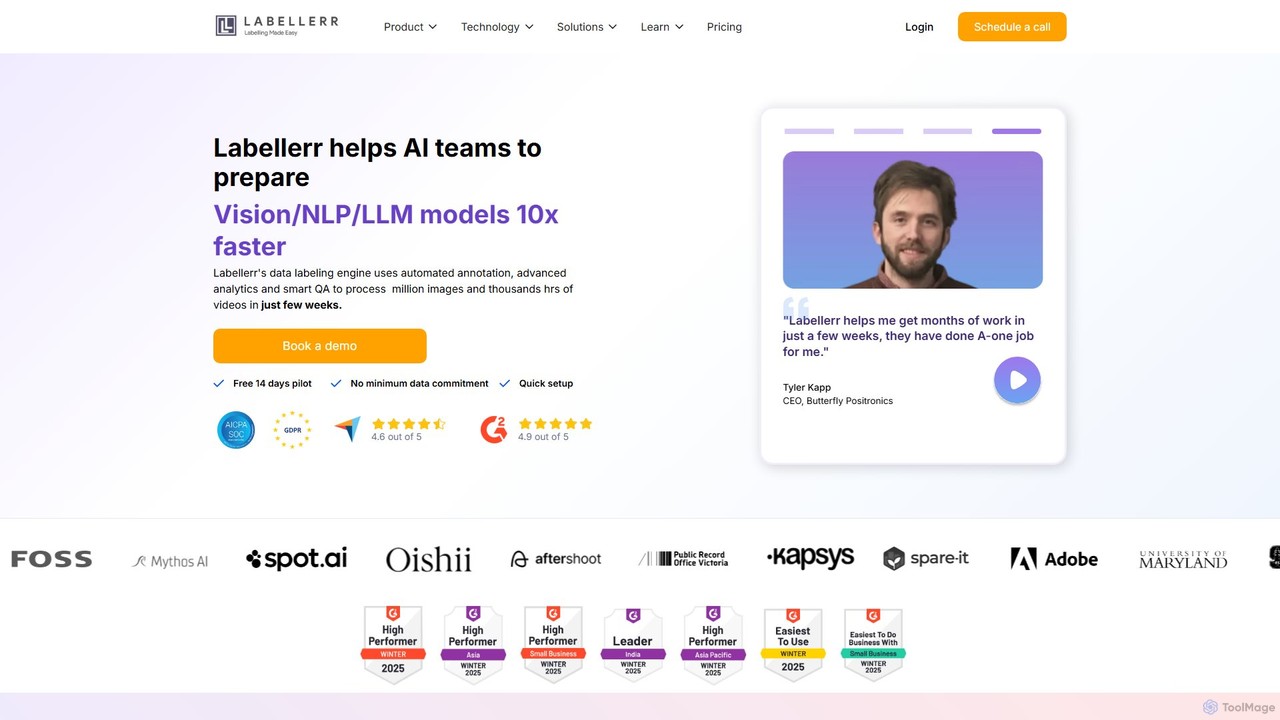
Labellerr
Labellerr is an AI-powered data labeling and annotation platform designed to accelerate the development of Vision, NLP, and LLM models. It offers automated annotation, smart quality assurance, and seamless MLOps integration to deliver 99% accurate labels up to 99x faster, significantly reducing data preparation time and development costs for AI teams.
Machine Learning Operations
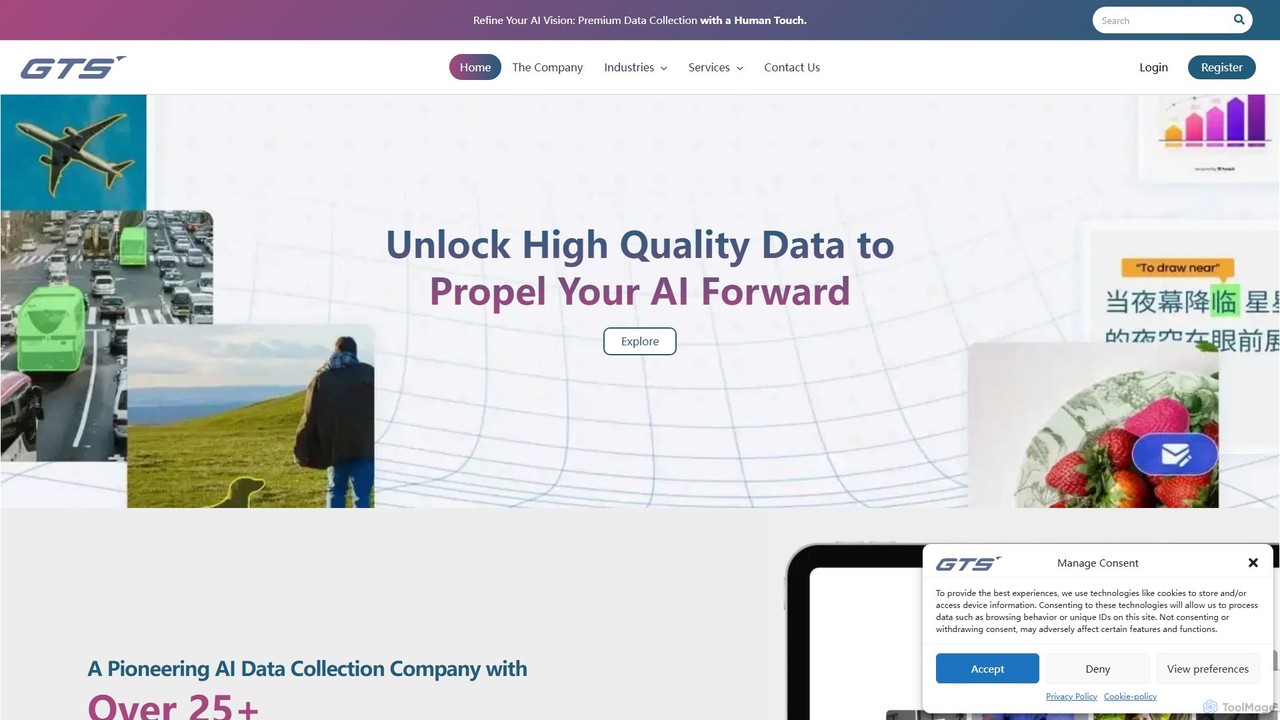
gts.ai
GTS.ai is a leading AI data solutions provider with over 25 years of experience. They offer high-quality, customized datasets for machine learning, including image, video, speech, and text data. Leveraging a global workforce of over 4.5 million, GTS provides comprehensive services from data collection and annotation to transcription and data management. They ensure data accuracy, security (ISO, GDPR, HIPAA compliant), and scalability for AI projects across various industries, helping businesses propel their AI initiatives forward with reliable data.
Data Annotation
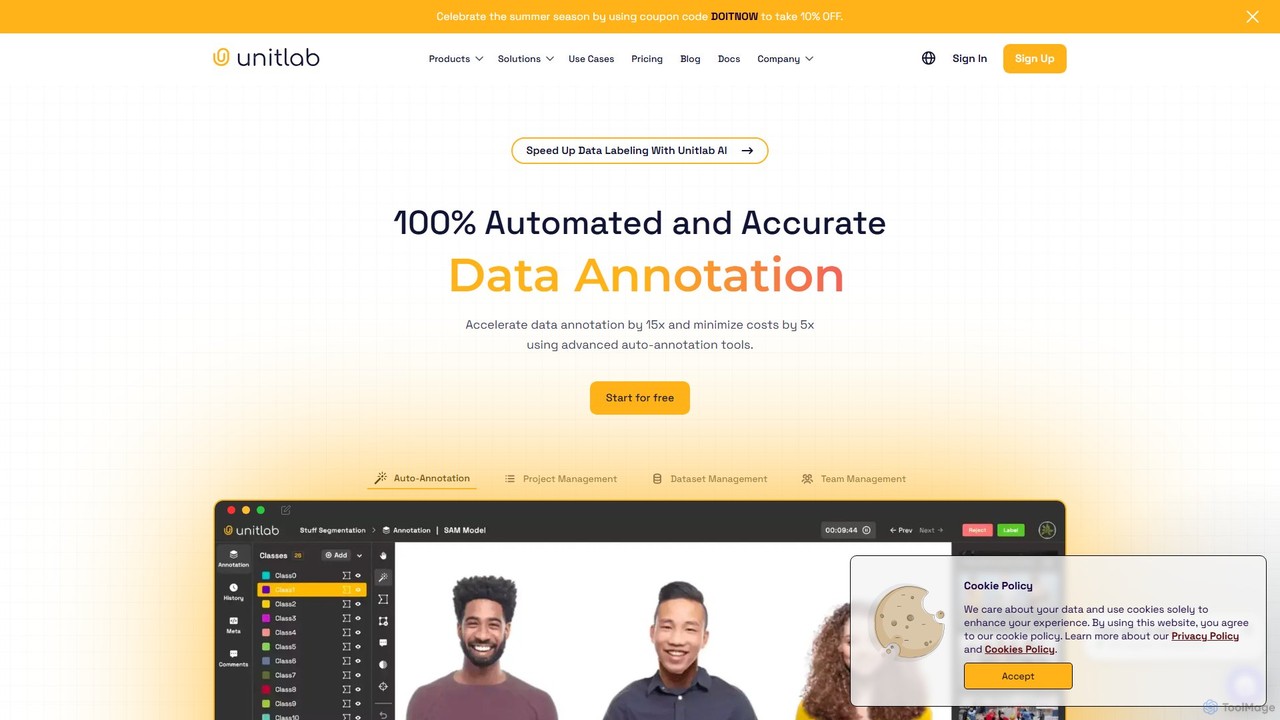
Unitlab
Unitlab is a streamlined data annotation platform designed for computer vision projects. It provides a comprehensive suite of tools for data annotation, dataset management, and model management. The platform supports various annotation types and offers AI-assisted labeling to accelerate workflows, making it ideal for industries like healthcare, agriculture, robotics, and autonomous driving.
Dataset Management
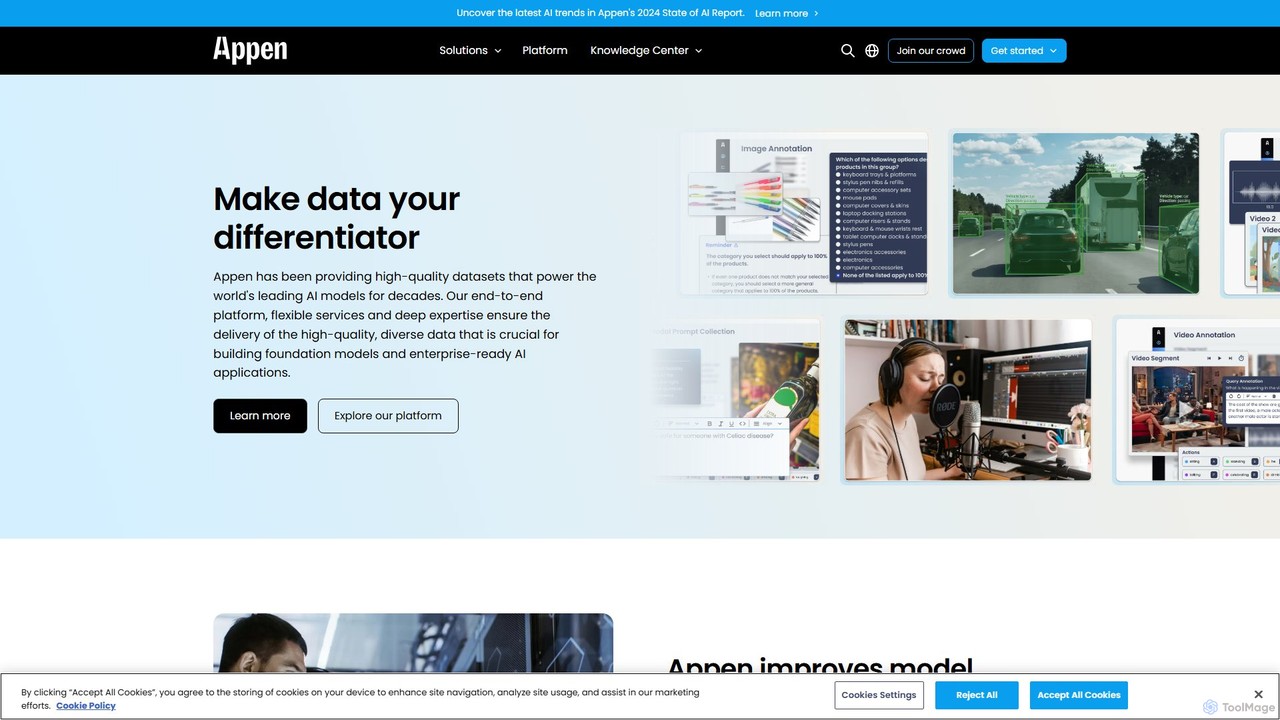
Appen
Appen is a global leader in providing high-quality, human-annotated data for AI and machine learning models. It offers data collection and annotation services at scale, leveraging a global crowd to power AI applications in computer vision, NLP, and more for the world's leading brands.
Enterprise Solutions
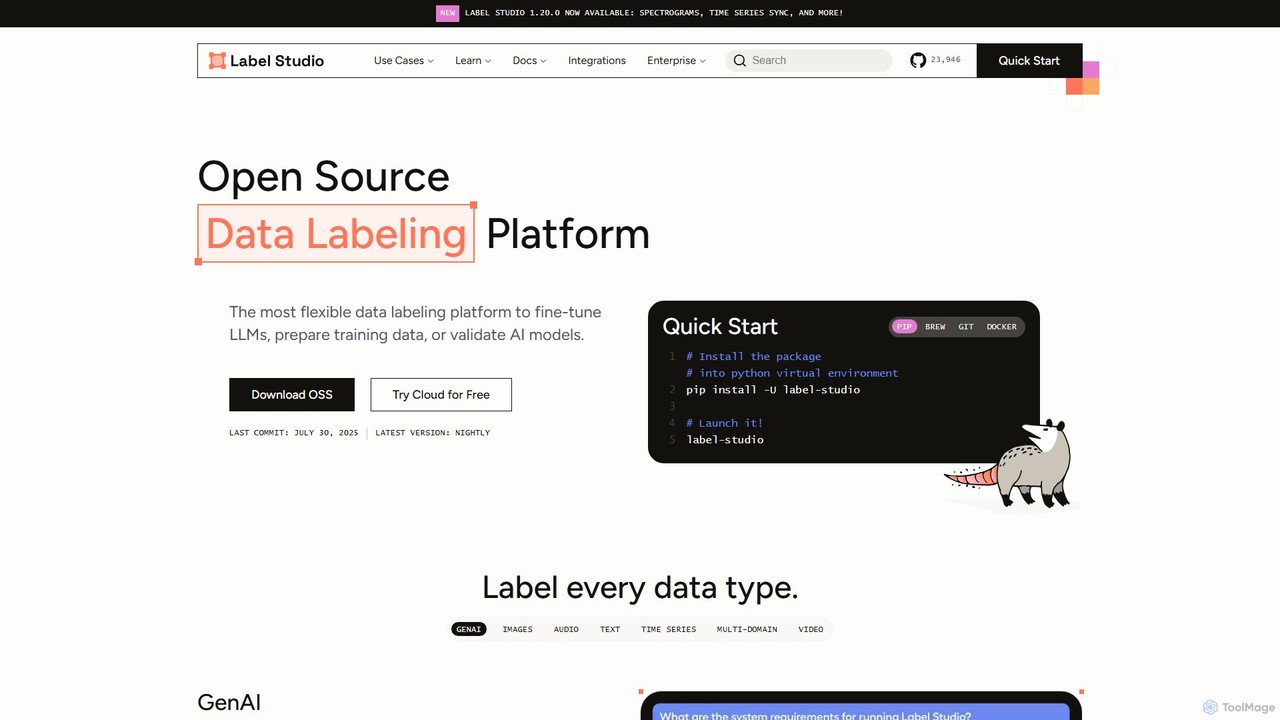
Label Studio
Label Studio is a versatile open-source data labeling platform designed for a wide range of data types. It enables users to annotate images, text, audio, video, and time-series data to fine-tune LLMs, prepare training data for machine learning, and validate AI models with human-in-the-loop feedback.
Training Data