LLMRTC is a TypeScript SDK for building real-time voice and vision AI applications. It integrates WebRTC for low-latency audio/video streaming with LLMs, speech-to-text, and text-to-speech technologies through a unified, provider-agnostic API. Developers can focus on application logic while LLMRTC handles complex conversational AI infrastructure.

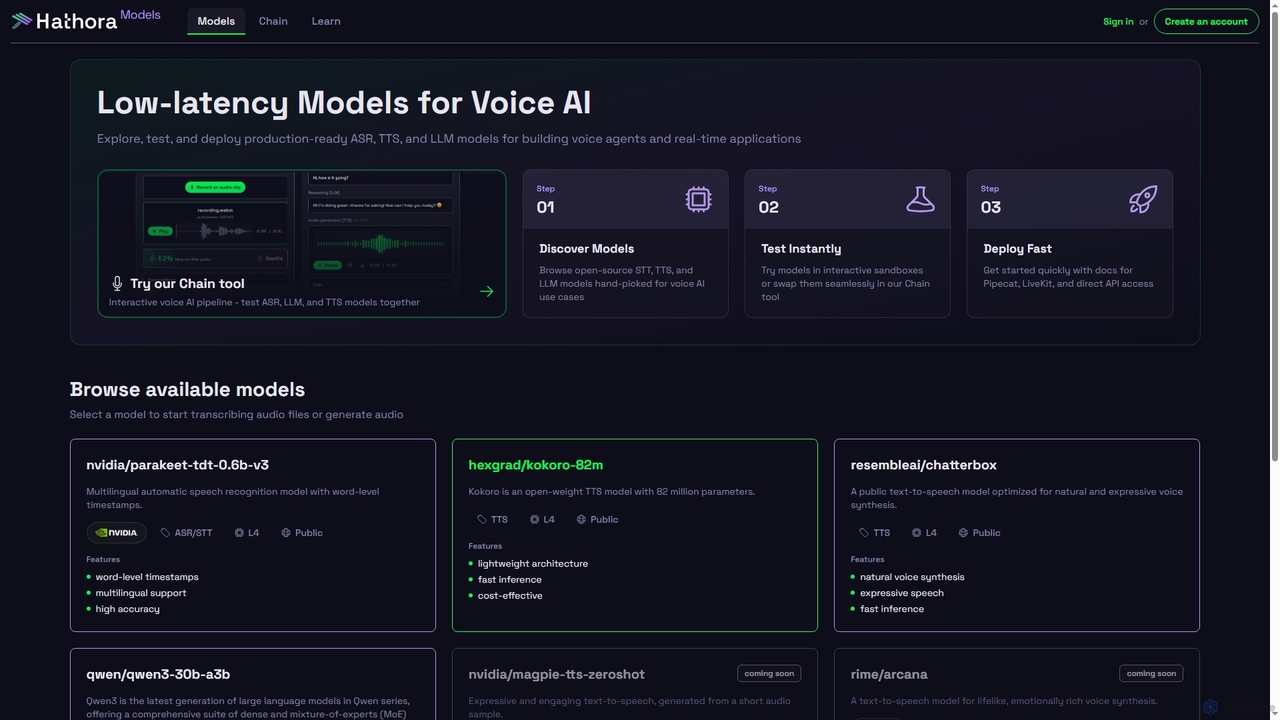
Models by Hathora offers a curated catalog of low-latency ASR, TTS, and LLM models optimized for voice AI and real-time applications. Developers can explore, test, and deploy production-ready models quickly, featuring interactive sandboxes and direct API access for seamless integration into voice agents and other applications.
Product overview
LLMRTC Product overview
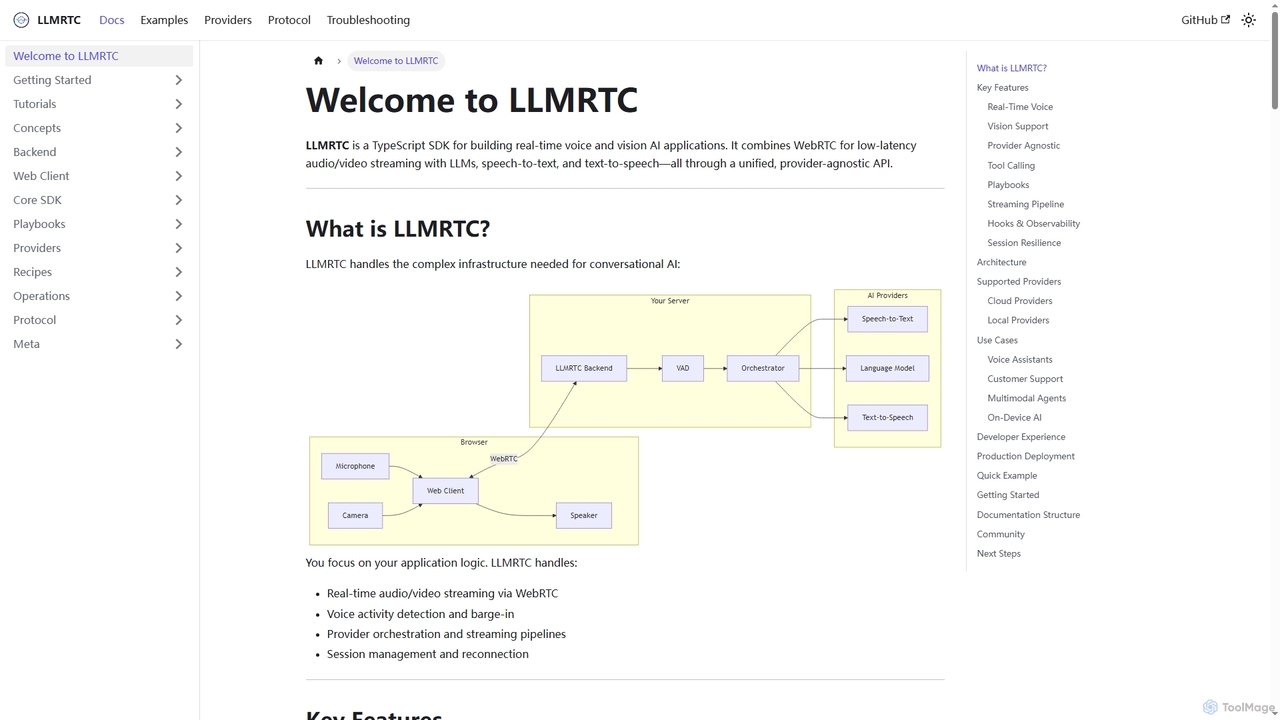
LLMRTC is a TypeScript SDK for building real-time voice and vision AI applications. It integrates WebRTC for low-latency audio/video streaming with LLMs, speech-to-text, and text-to-speech technologies through a unified, provider-agnostic API. Developers can focus on application logic while LLMRTC handles complex conversational AI infrastructure.
Models Product overview
Models by Hathora offers a curated catalog of low-latency ASR, TTS, and LLM models optimized for voice AI and real-time applications. Developers can explore, test, and deploy production-ready models quickly, featuring interactive sandboxes and direct API access for seamless integration into voice agents and other applications.
Detailed feature comparison
| Feature | LLMRTC | Models |
|---|---|---|
| Primary category | Conversational Ai | Api |
| Added | 2026-01-12 | 2025-11-16 |
| Pricing | Not verified | Not verified |
| Official website | www.llmrtc.org | models.hathora.dev |
| Product type | Website | Website |
| Performance data | ||
| User rating | Not verified | Not verified |
| Comments | 0 | 0 |
| Monthly visits | 3.5K | 3.5K |
| Monthly growth | Not verified | Not verified |
| Favorites | 16 | 93 |
| Details | View details | View details |
LLMRTC vs Models monthly traffic
Compare LLMRTC and Models by monthly reach, traffic trend, visit depth, top regions, and acquisition sources.
How to interpret the traffic data
In the LLMRTC vs Models monthly traffic comparison, LLMRTC currently shows 3.5K visits and Models shows 3.5K; the two products have similar visible traffic, an absolute difference of about 3 visits. This reflects visible reach, not feature quality or paid users.
Both values come from visits recorded inside ToolMage. They can indicate relative interest on this site, but not total website traffic or global market share.
LLMRTC monthly traffic:
Latest traffic
Models monthly traffic:
Latest traffic
Usage comparison
Compare the core capabilities of LLMRTC and Models
LLMRTC Core features
Models Core features
Use cases
LLMRTC Use cases
Models Use cases
Best suited roles
LLMRTC Best suited roles
Models Best suited roles
LLMRTC vs Models:In-depth comparison and selection guidance
First decide whether the products solve the same kind of need
This in-depth LLMRTC vs Models comparison uses only the product records, taxonomy, audience, traffic, and community signals available on this page. LLMRTC is primarily listed under “Conversational Ai”, while Models is primarily listed under “Api”, so the first decision is whether your actual task matches their recorded scope.
The structured fields currently show these decision-relevant differences: Primary category (LLMRTC: Conversational Ai; Models: Api); Monthly visits (LLMRTC: 3.5K; Models: 3.5K); Favorites (LLMRTC: 16; Models: 93); Website (LLMRTC: www.llmrtc.org; Models: models.hathora.dev); Added (LLMRTC: 2026-01-12; Models: 2025-11-16). These facts are more useful for selection than brand visibility alone.
What market visibility and monthly traffic mean
In the LLMRTC vs Models monthly traffic comparison, LLMRTC currently shows 3.5K visits and Models shows 3.5K; the two products have similar visible traffic, an absolute difference of about 3 visits. This reflects visible reach, not feature quality or paid users.
Both values come from visits recorded inside ToolMage. They can indicate relative interest on this site, but not total website traffic or global market share.
The current traffic scope is not sufficient for a reliable product ranking. Treat monthly visits as a market-interest signal, then decide using taxonomy, use cases, pricing, and a like-for-like trial rather than reading exposure as product capability.
Product positioning, use cases, and roles
LLMRTC and Models currently overlap in shared tags: conversational AI, llm, low latency, and text to speech; shared roles: AI Engineer, Machine Learning Engineer, Product Manager, Software Developer, and Solutions Architect. This can place both on the same shortlist, but it does not prove equal implementation, depth, or cost.
LLMRTC's unique categories/tags are Conversational Ai, Sdk, Webrtc, Speech To Text, Text To Speech, Computer Vision, AI development, and developer tools; Models's are Api, Model Deployment, Large Language Models, Speech Recognition, Text To Speech, API, ASR, and language models. These unique fields are the strongest differentiators: validate the product whose recorded scope matches the task instead of following traffic alone.
What ratings, comments, and favorites can tell you
LLMRTC has no verified rating, 0 comments, 16 favorites, and 17 likes;Models has no verified rating, 0 comments, 93 favorites, and 86 likes。
Neither product has enough rating or comment samples for a credible reputation ranking.
Selection guidance by actual need
When to evaluate LLMRTC first
Put LLMRTC on the priority trial list when the task aligns with “Conversational Ai” and especially Conversational Ai, Sdk, Webrtc, Speech To Text, Text To Speech, and Computer Vision, or the users include Technical Lead. This follows recorded positioning and does not imply unlisted capabilities are absent.
LLMRTC also currently records: pricing is not verified, product type is website, 3.5K on-site monthly views, no verified user rating. Verify any hard requirement around price, platform, or reach before trial, and do not let sparse review data substitute for testing.
When to evaluate Models first
Put Models on the priority trial list when the task aligns with “Api” and especially Api, Model Deployment, Large Language Models, Speech Recognition, Text To Speech, and API, or the users include Data Scientist and Voice UX Designer. This follows recorded positioning and does not imply unlisted capabilities are absent.
Models also currently records: pricing is not verified, product type is website, 3.5K on-site monthly views, no verified user rating. Verify any hard requirement around price, platform, or reach before trial, and do not let sparse review data substitute for testing.
How to validate the recommendation before deciding
The available data describes positioning, public visibility, and community signals, but it cannot prove output quality, speed, integration effort, privacy, or long-term cost in your workflow. Before deciding, run the same representative tasks in LLMRTC and Models, then record completion time, accuracy, manual corrections, and the real paid threshold. A like-for-like trial turns this comparison into a defensible adoption decision.
Comparison FAQ
How should I choose between LLMRTC and Models?
Where does this comparison data come from?
What do unknown fields mean?
Related AI tools

Gabber
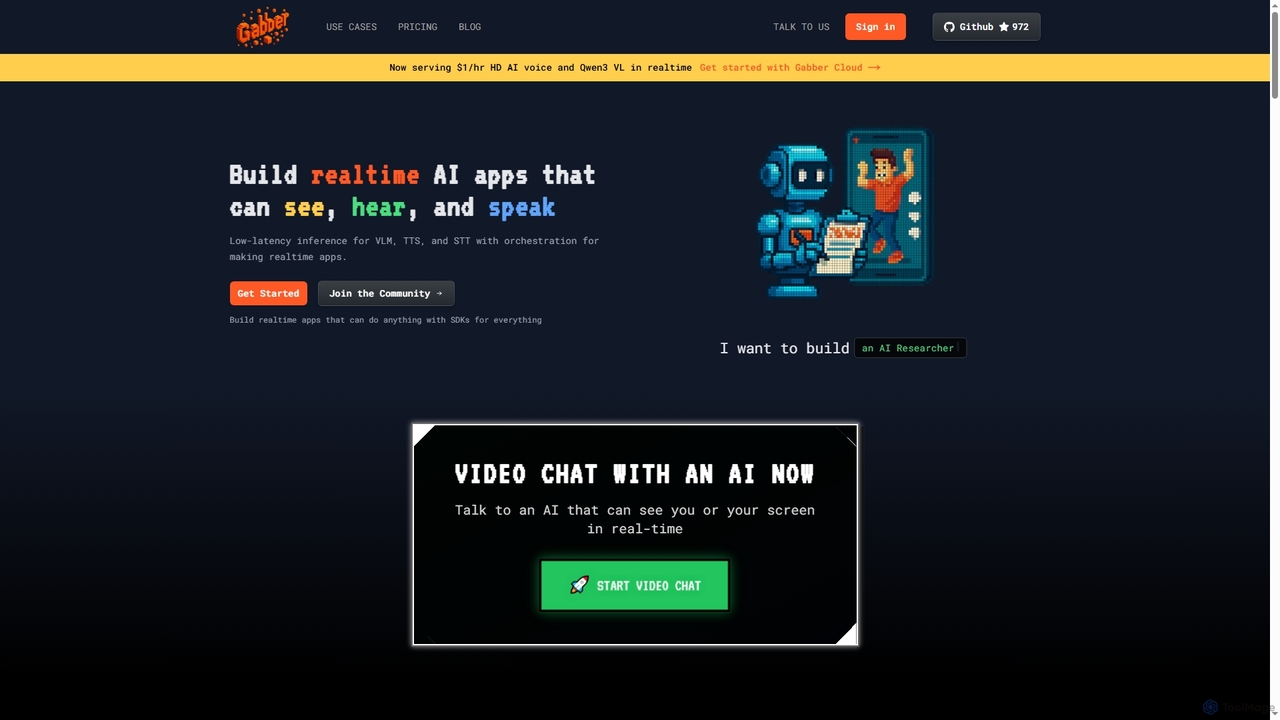
Gabber is a powerful platform for building real-time, multimodal AI applications that can see, hear, and speak. It offers low-latency inference for Vision Language Models (VLM), Text-to-Speech (TTS), and Speech-to-Text (STT), coupled with a graph-based orchestration system for rapid development and deployment.
Conversational Ai
Vectra
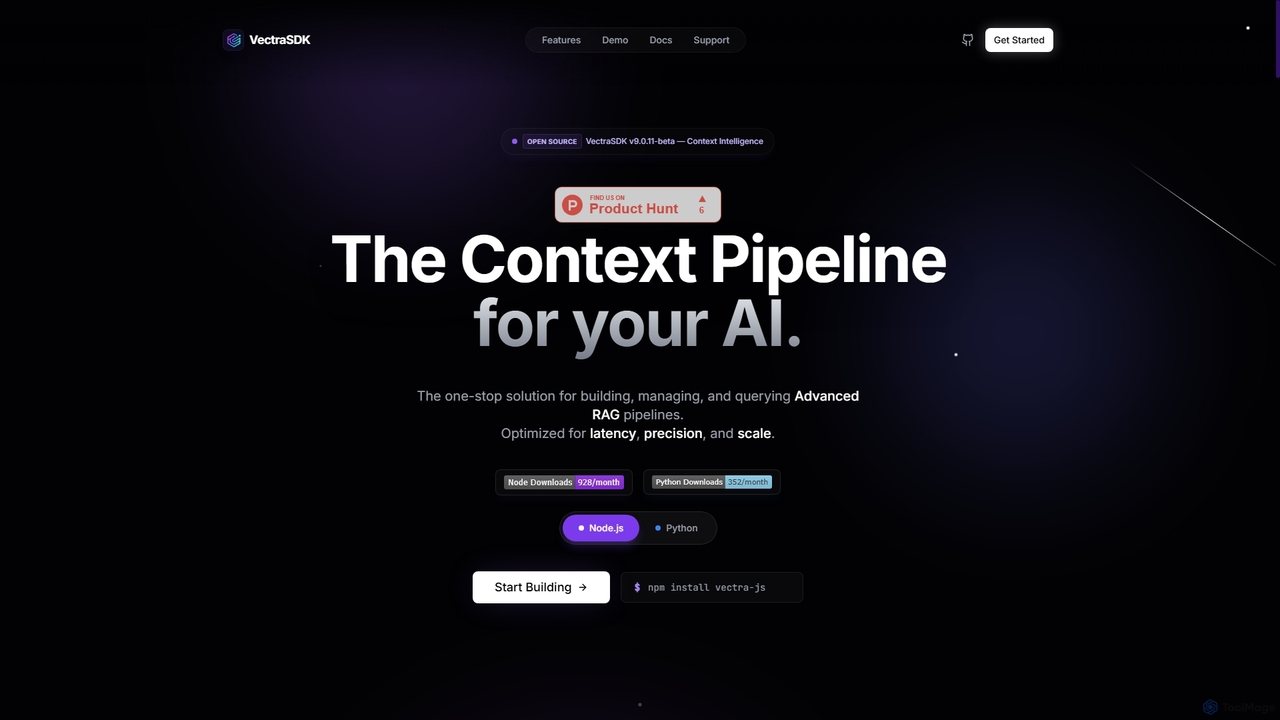
Vectra is an open-source, production-grade SDK for Node.js and Python, designed to build, manage, and query advanced Retrieval-Augmented Generation (RAG) pipelines. It offers a comprehensive toolkit for developing context-aware AI applications, optimized for low latency, high precision, and scalability.
Rag Pipelines
Outspeed
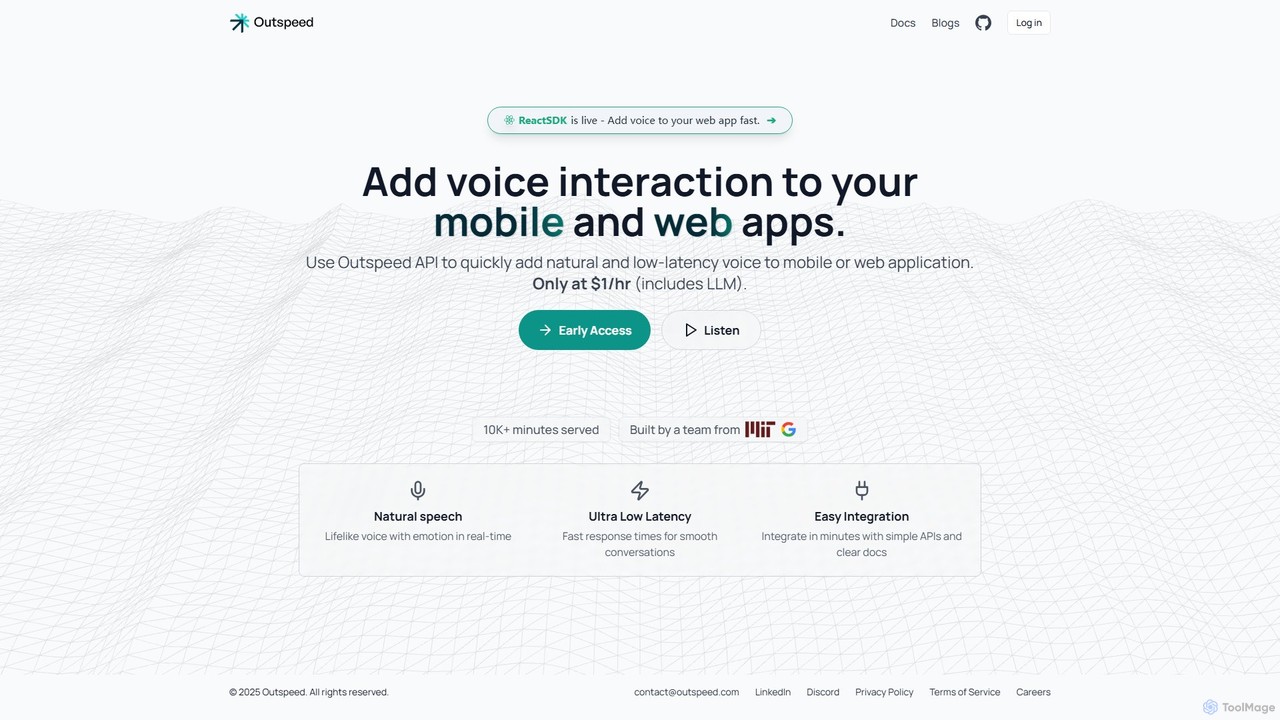
An API and SDK for developers to build and deploy AI voice companions with real-time emotion and memory. Easily integrate natural, low-latency voice interactions into web and mobile applications.
Voice Chatbot
Metorial
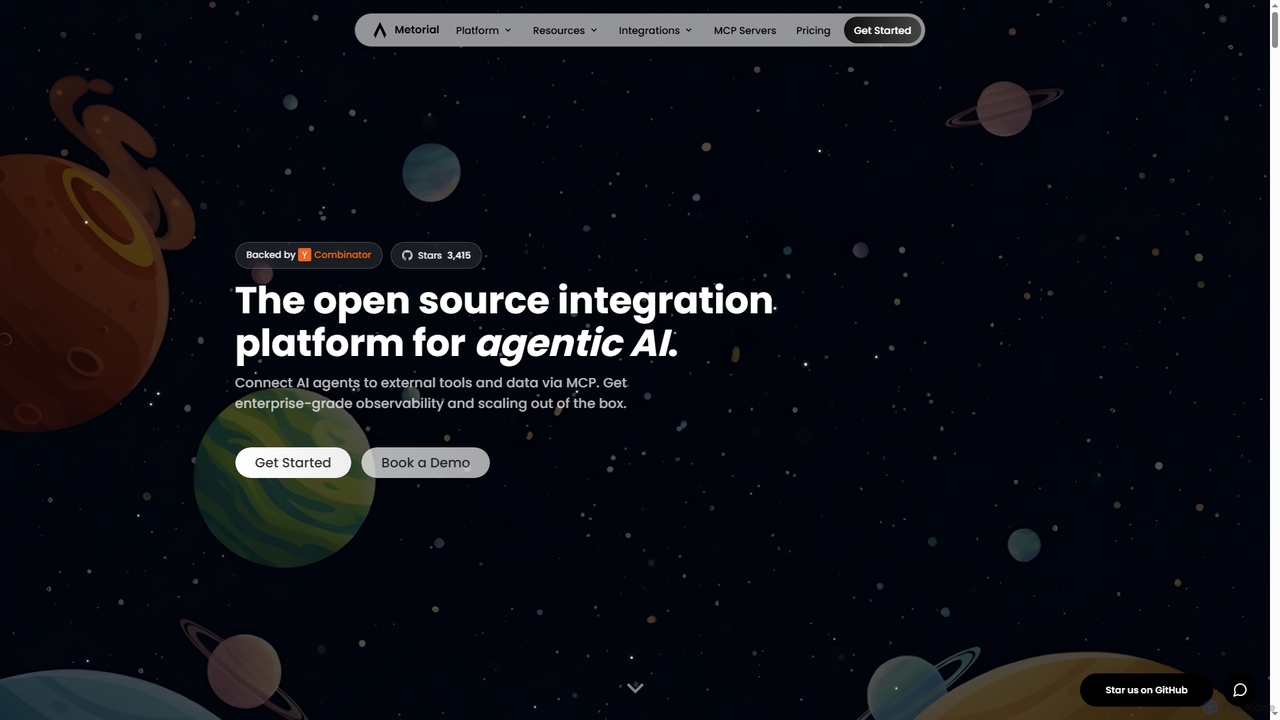
Metorial is an integration platform for AI agents, enabling developers to quickly build, deploy, and monitor powerful agentic AI applications. It provides seamless connections to hundreds of tools, data sources, and APIs via its serverless Model Context Protocol (MCP) platform, offering robust SDKs, observability, and enterprise-grade security for scalable AI solutions.
Agentic Ai
Daily
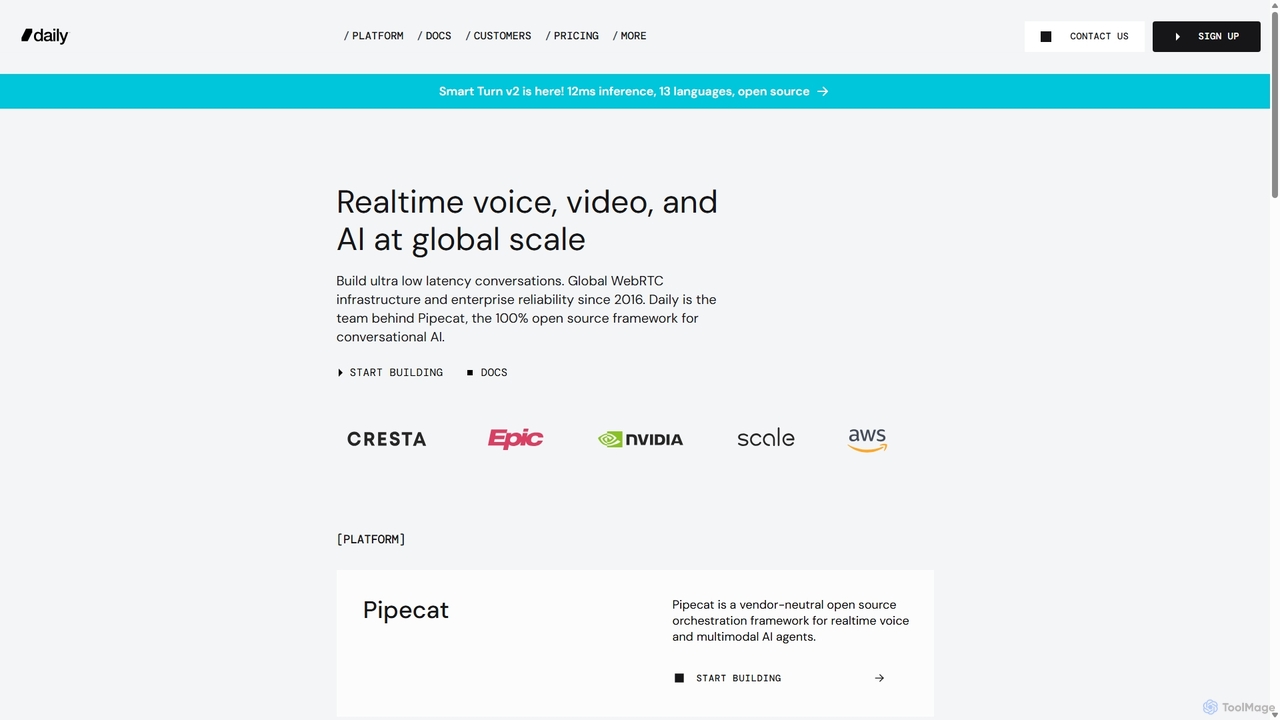
Daily is a developer platform for real-time video, voice, and AI. It provides robust APIs and SDKs for building ultra-low latency, scalable, and high-quality conversational experiences, including human-to-human video calls and advanced voice AI agents through its open-source framework, Pipecat.
Conversational Ai
Peargent
Peargent is a modern, powerful Python framework designed for building intelligent, production-grade AI agents. It offers an intuitive API, flexible LLM support, multi-agent orchestration, and persistent memory, enabling developers to create scalable and robust AI solutions for real-world use.
Agent Development
Nexa SDK
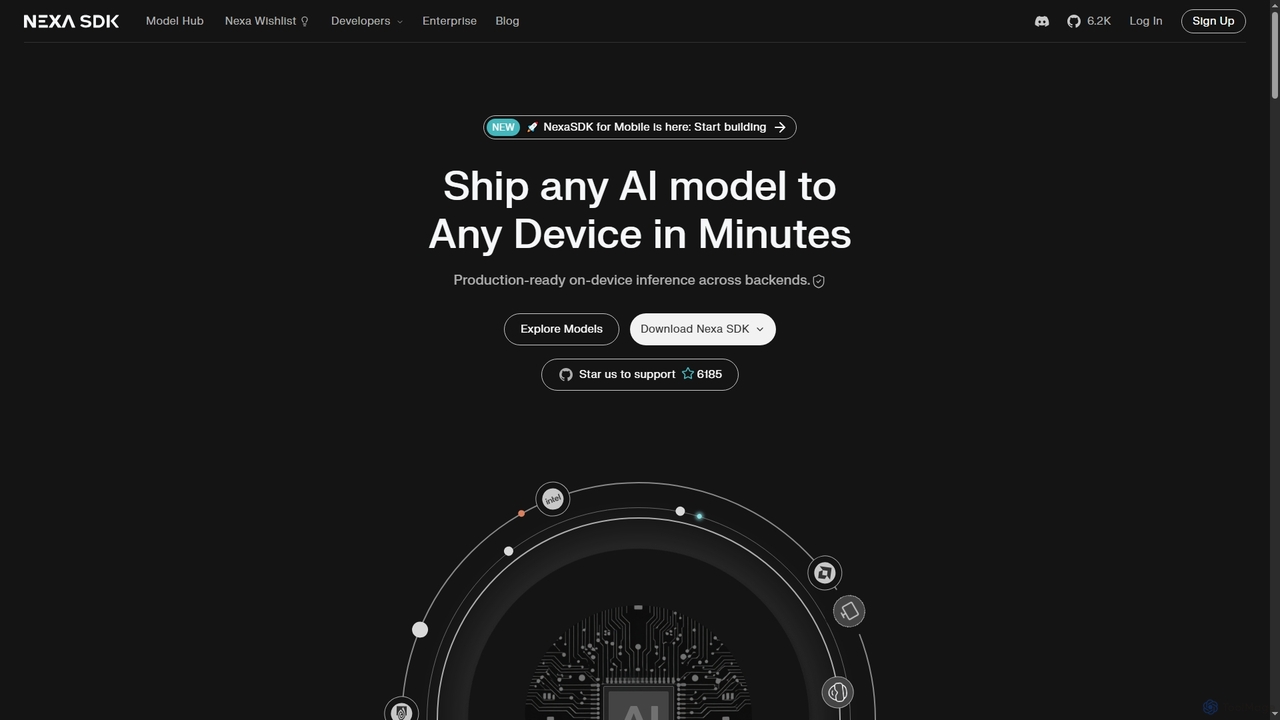
Nexa SDK is a powerful toolkit enabling developers to deploy any AI model, including frontier and state-of-the-art models, to any device (mobile, PC, IoT, automotive) in minutes. It offers production-ready on-device inference with hardware acceleration across NPUs, GPUs, and CPUs, optimized for speed and energy efficiency.
Ai Development Kit
Zyphra
Zyphra is an open-source AI research company developing high-performance, efficient foundational models. They provide state-of-the-art small language models (SLMs), text-to-speech (TTS) systems, and specialized reasoning models for developers and researchers, focusing on democratizing advanced AI for on-device and enterprise applications.
Model Development
Skald
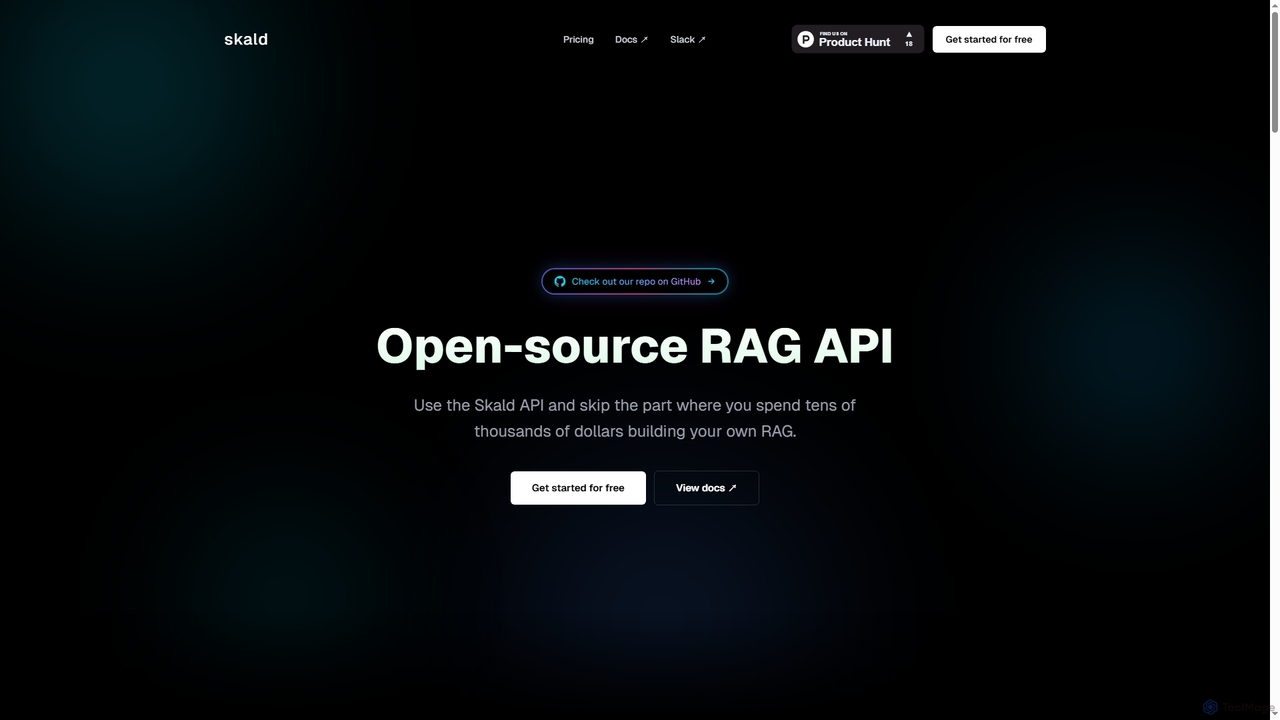
Skald is an open-source RAG API designed for developers to quickly build AI agents without the complexity of managing RAG infrastructure. It simplifies knowledge storage, context management, and semantic search, offering a powerful solution for integrating long-term memory into AI applications.
Rag
Google AI for Developers
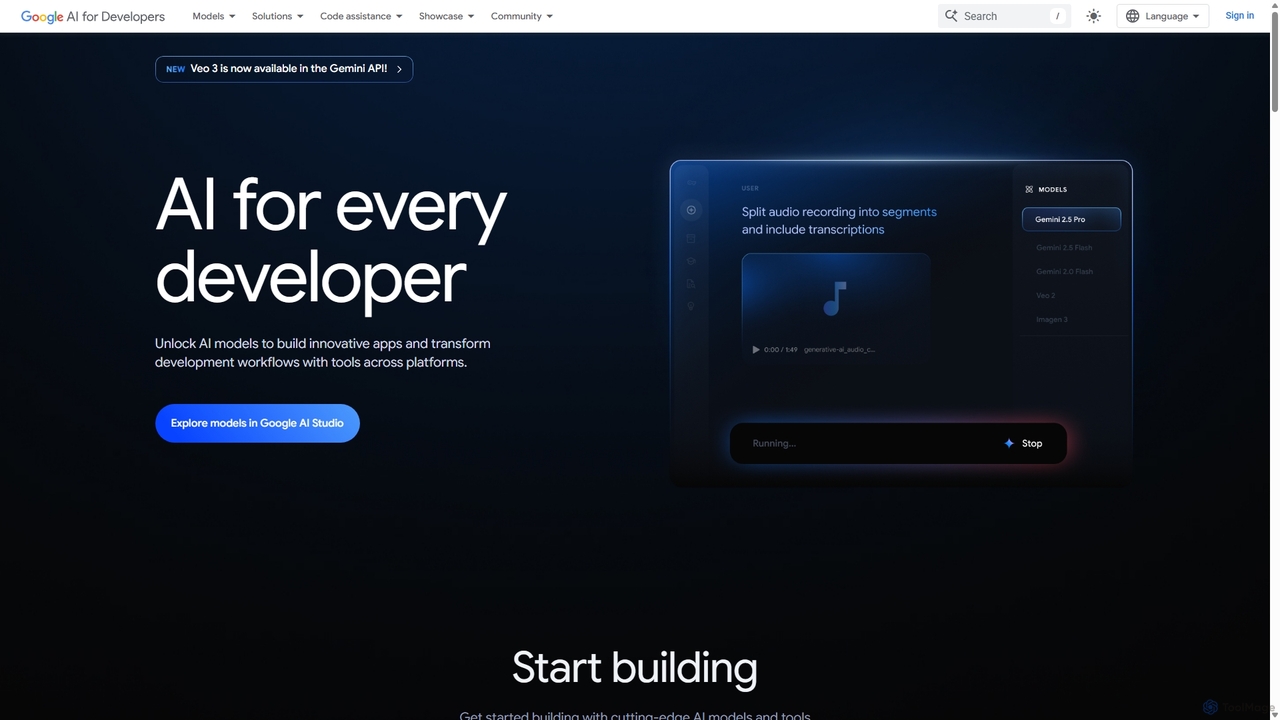
A comprehensive platform by Google providing developers with access to cutting-edge AI models like Gemini, Imagen, and Veo via API, alongside the open-source Gemma models. It includes tools like Google AI Studio for prototyping, AI Edge for on-device deployment, and integrated code assistance to build innovative applications and streamline development workflows responsibly.
Large Language ModelsHelicone
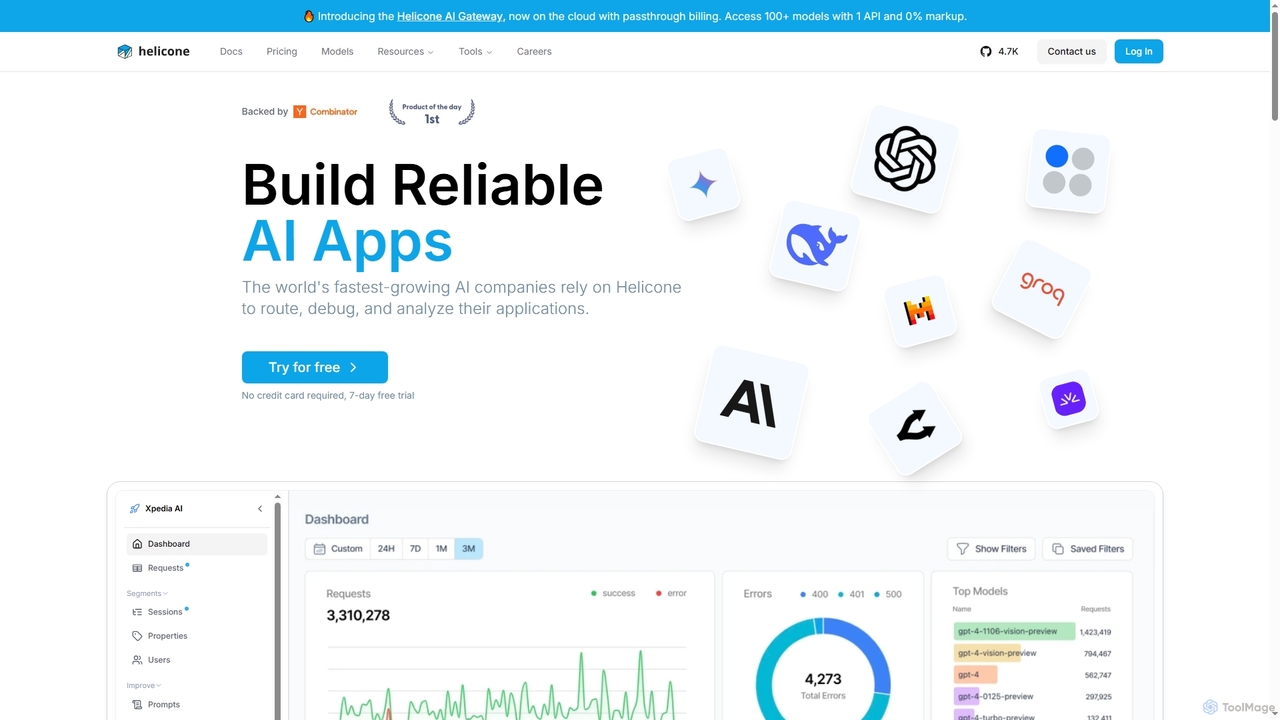
Helicone is an open-source platform offering an AI Gateway and LLM Observability for developers. It helps build reliable AI applications by providing tools to route, monitor, debug, and analyze LLM usage. Key features include a unified API for 100+ models, intelligent caching, rate limiting, prompt management, and detailed performance analytics.
Api Management
Play
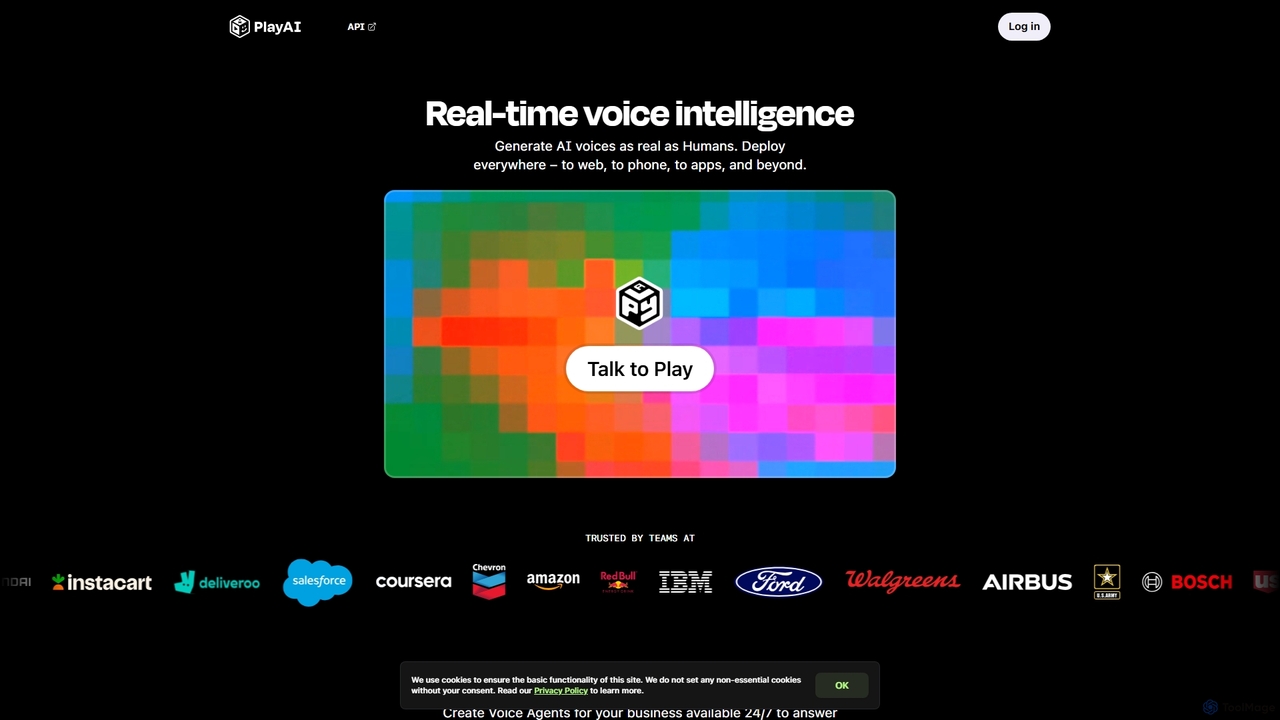
play is an advanced Voice AI platform for businesses, specializing in ultra-realistic Text-to-Speech (TTS) models and intelligent Voice Agents. It enables companies to create 24/7 automated agents for customer service, sales, and operations. With features like custom knowledge bases, API integrations for real-world actions, on-premise deployment for data security, and support for over 30 languages, play helps businesses scale their voice communications and enhance customer interactions globally.
Text To Speech
voice_vector
voice_vector is a powerful AI voice platform offering high-fidelity voice cloning, expressive text-to-speech (TTS), and accurate speech recognition. With a unique pay-as-you-go and subscription hybrid model, it provides a flexible, cost-effective solution for content creators, developers, and businesses. Create unlimited private cloned voices and integrate advanced voice capabilities into your projects via a robust API.
Text To Speech
Voice AI Space
Voice AI Space is a comprehensive online hub dedicated to voice AI technology, offering a curated directory of tools, the latest news, in-depth knowledge resources, job opportunities, and industry events. It serves as a central guide for developers, entrepreneurs, and enthusiasts navigating the rapidly evolving voice tech landscape.
Voice Technology
Vapi
Vapi is a developer-first API platform for building, deploying, and scaling advanced, human-like voice AI agents. It enables the creation of sophisticated conversational AI for inbound/outbound calls, in-app assistants, and more, with ultra-low latency and high configurability.
Voice Assistant