Nebius is a high-performance cloud platform specifically engineered for demanding AI and Machine Learning workloads. It provides scalable access to the latest NVIDIA GPUs, from single instances to massive clusters, complemented by a suite of managed services and an integrated AI Studio to streamline the entire ML lifecycle from training to inference.

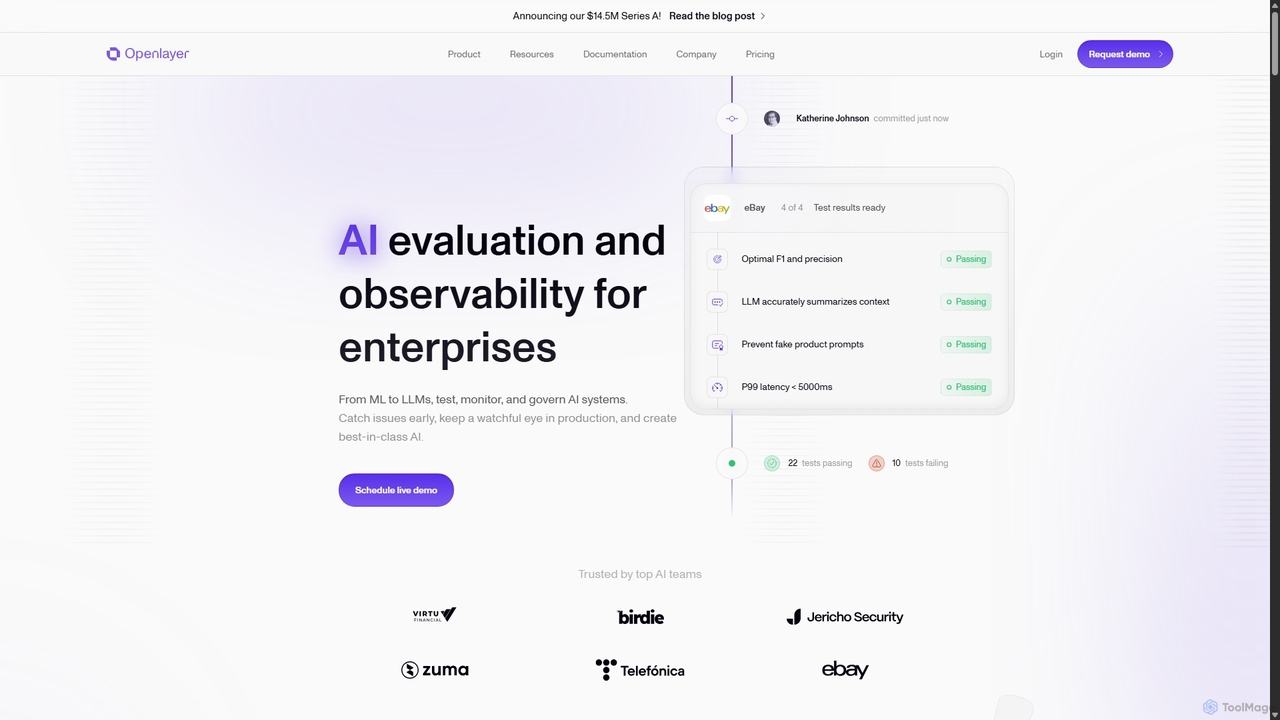
Openlayer is an enterprise-grade platform for AI evaluation and observability. It empowers teams to test, monitor, and govern both traditional machine learning models and large language models (LLMs) throughout their entire lifecycle, from development to production, ensuring reliability and compliance.
Product overview
Nebius Product overview
Nebius is a high-performance cloud platform specifically engineered for demanding AI and Machine Learning workloads. It provides scalable access to the latest NVIDIA GPUs, from single instances to massive clusters, complemented by a suite of managed services and an integrated AI Studio to streamline the entire ML lifecycle from training to inference.
Openlayer Product overview
Openlayer is an enterprise-grade platform for AI evaluation and observability. It empowers teams to test, monitor, and govern both traditional machine learning models and large language models (LLMs) throughout their entire lifecycle, from development to production, ensuring reliability and compliance.
Detailed feature comparison
| Feature | Nebius | Openlayer |
|---|---|---|
| Primary category | Gpu Cloud | Analytics |
| Added | 2025-09-10 | 2025-09-14 |
| Pricing | Paid | Freemium |
| Official website | nebius.ai | openlayer.com |
| Product type | Website | Website |
| Performance data | ||
| User rating | Not verified | Not verified |
| Comments | 0 | 0 |
| Monthly visits | 2.3K | 24.3K |
| Monthly growth | 58.2% | -0.4% |
| Favorites | 109 | 172 |
| Details | View details | View details |
Nebius vs Openlayer monthly traffic
Compare Nebius and Openlayer by monthly reach, traffic trend, visit depth, top regions, and acquisition sources.
How to interpret the traffic data
In the Nebius vs Openlayer monthly traffic comparison, Nebius currently shows 2.3K visits and Openlayer shows 24.3K; Openlayer has about 10.6 times the visible traffic of Nebius, an absolute difference of about 22K visits. This reflects visible reach, not feature quality or paid users.
Both tools provide verified traffic details, so monthly trends, visit depth, regions, and acquisition sources can be compared on the same basis.
Nebius monthly traffic:
Latest traffic
Monthly traffic trend
- 2025/9: 6.4K Monthly visits
- 2026/1: 78 Monthly visits
- 2026/2: 0 Monthly visits
- 2026/3: 365 Monthly visits
- 2026/4: 1.4K Monthly visits
- 2026/5: 2.3K Monthly visits
Top regions
Top 5 countries/regions
| Country/region | Percentage | Traffic |
|---|---|---|
| ๐ฎ๐ณIndia | 70.68% | 1.6K |
| ๐บ๐ธUnited States | 19.85% | 454 |
| ๐ฌ๐งUnited Kingdom | 9.47% | 217 |
Search keywords
Openlayer monthly traffic:
Latest traffic
Monthly traffic trend
- 2025/9: 18.6K Monthly visits
- 2026/1: 10.8K Monthly visits
- 2026/2: 9.8K Monthly visits
- 2026/3: 20.1K Monthly visits
- 2026/4: 24.3K Monthly visits
- 2026/5: 24.3K Monthly visits
Top regions
Top 5 countries/regions
| Country/region | Percentage | Traffic |
|---|---|---|
| ๐บ๐ธUnited States | 38.9% | 9.4K |
| ๐ณ๐ฌNigeria | 22.13% | 5.4K |
| ๐ฎ๐ณIndia | 20.93% | 5.1K |
| ๐ฉ๐ชGermany | 9.78% | 2.4K |
| ๐ง๐ทBrazil | 8.26% | 2K |
Search keywords
Usage comparison
Compare the core capabilities of Nebius and Openlayer
Nebius Core features
Openlayer Core features
Use cases
Nebius Use cases
Openlayer Use cases
Best suited roles
Nebius Best suited roles
Openlayer Best suited roles
Nebius vs Openlayer๏ผIn-depth comparison and selection guidance
First decide whether the products solve the same kind of need
This in-depth Nebius vs Openlayer comparison uses only the product records, taxonomy, audience, traffic, and community signals available on this page. Nebius is primarily listed under โGpu Cloudโ, while Openlayer is primarily listed under โAnalyticsโ, so the first decision is whether your actual task matches their recorded scope.
The structured fields currently show these decision-relevant differences: Primary category (Nebius: Gpu Cloud; Openlayer: Analytics); Pricing (Nebius: Paid; Openlayer: Freemium); Monthly visits (Nebius: 2.3K; Openlayer: 24.3K); Monthly growth (Nebius: 58.2%; Openlayer: -0.4%); Favorites (Nebius: 109; Openlayer: 172). These facts are more useful for selection than brand visibility alone.
What market visibility and monthly traffic mean
In the Nebius vs Openlayer monthly traffic comparison, Nebius currently shows 2.3K visits and Openlayer shows 24.3K; Openlayer has about 10.6 times the visible traffic of Nebius, an absolute difference of about 22K visits. This reflects visible reach, not feature quality or paid users.
Both tools provide verified traffic details, so monthly trends, visit depth, regions, and acquisition sources can be compared on the same basis.
If public market visibility is an important first-pass criterion, investigate Openlayer first. The final choice should still follow taxonomy, use case, and a real trial because higher traffic does not prove broader capabilities or better workflow fit.
Product positioning, use cases, and roles
Nebius and Openlayer currently overlap in shared categories: Machine Learning; shared tags: MLOps; shared roles: AI Researcher, CTO, Data Scientist, DevOps Engineer, Machine Learning Engineer, and Product Manager. This can place both on the same shortlist, but it does not prove equal implementation, depth, or cost.
Nebius's unique categories/tags are Gpu Cloud, Cloud Computing, AI infrastructure, cloud platform, deep learning, GPU cloud, high performance computing, and kubernetes; Openlayer's are Analytics, Testing, Monitoring, AI evaluation, AI governance, AI observability, ai testing, and compliance. These unique fields are the strongest differentiators: validate the product whose recorded scope matches the task instead of following traffic alone.
What ratings, comments, and favorites can tell you
Nebius has no verified rating, 0 comments, 109 favorites, and 121 likes๏ผOpenlayer has no verified rating, 0 comments, 172 favorites, and 174 likesใ
Neither product has enough rating or comment samples for a credible reputation ranking.
Selection guidance by actual need
When to evaluate Nebius first
Put Nebius on the priority trial list when the task aligns with โGpu Cloudโ and especially Gpu Cloud, Cloud Computing, AI infrastructure, cloud platform, deep learning, and GPU cloud, or the users include Software Developer. This follows recorded positioning and does not imply unlisted capabilities are absent.
Nebius also currently records: pricing is paid, product type is website, 2.3K verified monthly visits, no verified user rating. Verify any hard requirement around price, platform, or reach before trial, and do not let sparse review data substitute for testing.
When to evaluate Openlayer first
Put Openlayer on the priority trial list when the task aligns with โAnalyticsโ and especially Analytics, Testing, Monitoring, AI evaluation, AI governance, and AI observability, or the users include AI Developer and MLOps Engineer. This follows recorded positioning and does not imply unlisted capabilities are absent.
Openlayer also currently records: pricing is freemium, product type is website, 24.3K verified monthly visits, no verified user rating. Verify any hard requirement around price, platform, or reach before trial, and do not let sparse review data substitute for testing.
How to validate the recommendation before deciding
The available data describes positioning, public visibility, and community signals, but it cannot prove output quality, speed, integration effort, privacy, or long-term cost in your workflow. Before deciding, run the same representative tasks in Nebius and Openlayer, then record completion time, accuracy, manual corrections, and the real paid threshold. A like-for-like trial turns this comparison into a defensible adoption decision.
Comparison FAQ
How should I choose between Nebius and Openlayer?
Where does this comparison data come from?
What do unknown fields mean?
Related AI tools

LastMile AI
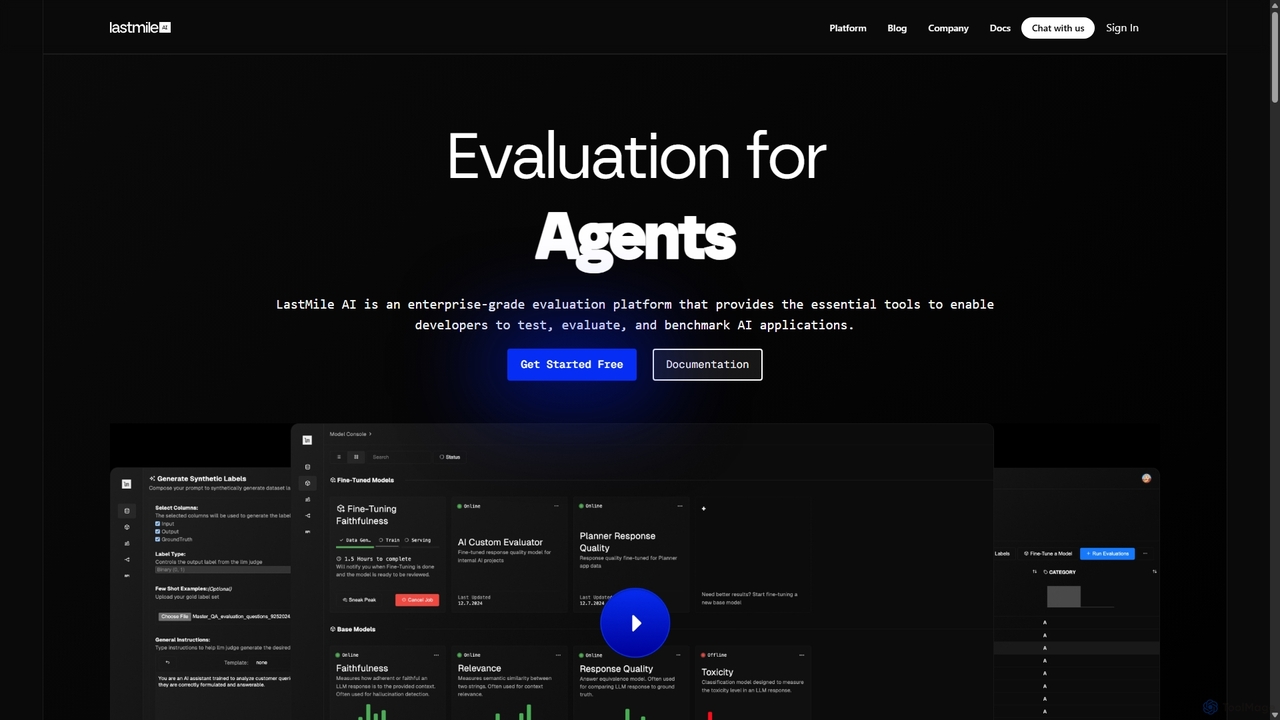
LastMile AI is an enterprise-grade developer platform for testing, evaluating, and monitoring generative AI applications. It provides tools like AutoEval for custom evaluator fine-tuning, synthetic data generation, and real-time monitoring to ensure AI systems are reliable and production-ready.
Model Evaluation
Gmi Cloud
Gmi Cloud is a high-performance GPU cloud platform designed for scalable AI training and inference. It provides on-demand access to top-tier NVIDIA GPUs, an optimized inference engine for low latency, and a cluster engine for streamlined MLOps, enabling developers and enterprises to build, deploy, and scale AI applications efficiently and cost-effectively.
Mlops
Baseten
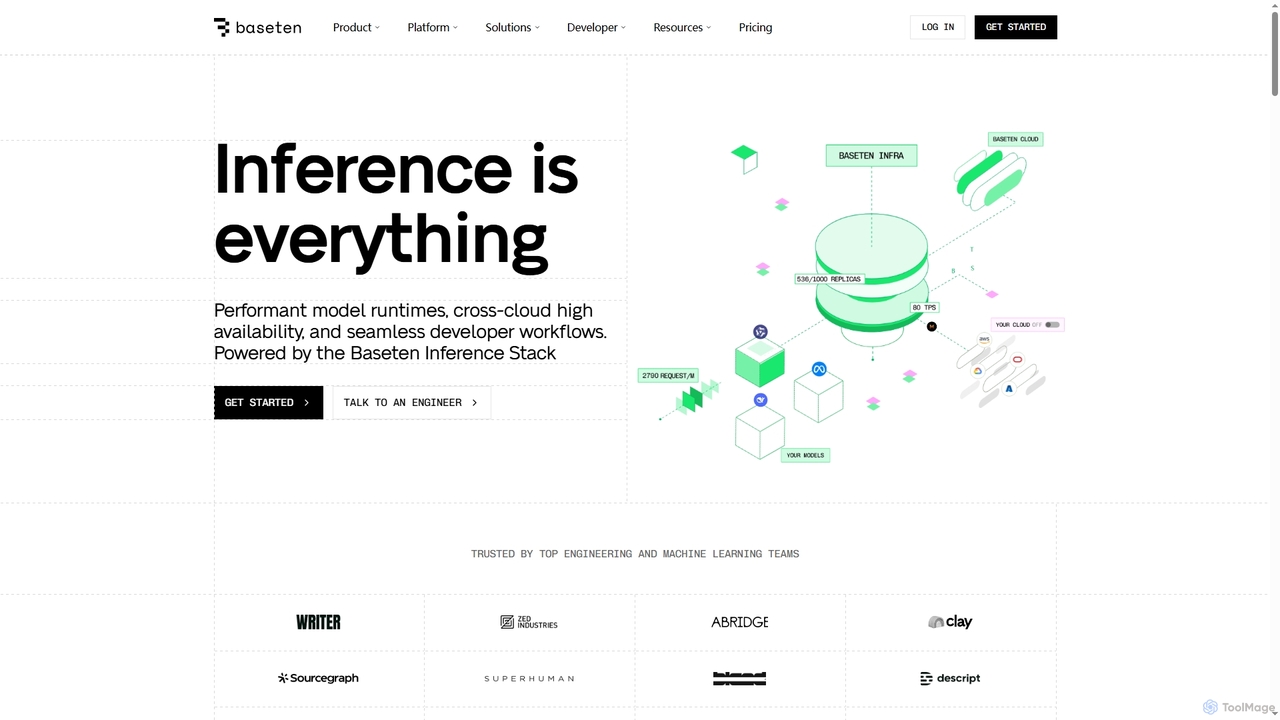
Baseten is a production-grade inference platform for deploying, scaling, and managing AI models. It offers high-performance runtimes, seamless developer workflows, and flexible deployment options (cloud, self-hosted, hybrid). Ideal for engineering and ML teams building mission-critical AI applications.
Deployment
Release.ai
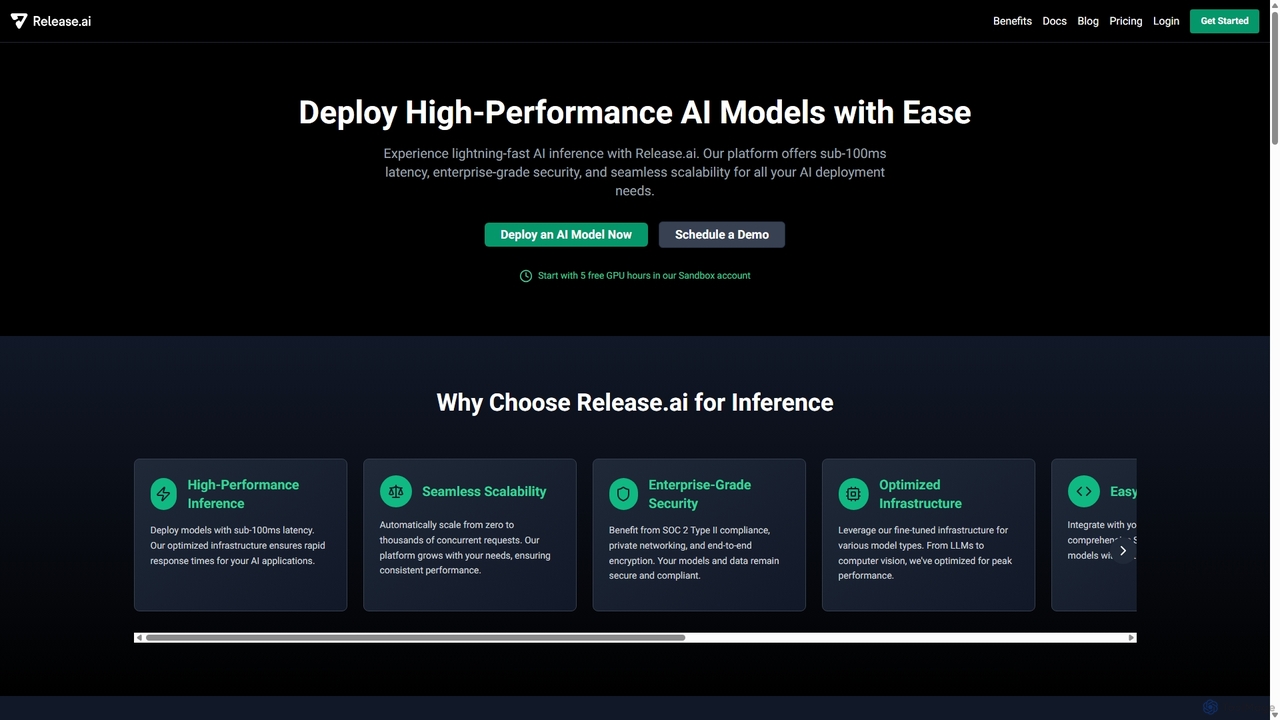
Release.ai is an enterprise-grade platform for developers to easily deploy, manage, and scale high-performance AI models. It offers sub-100ms inference latency, seamless auto-scaling, robust security, and a vast library of pre-optimized models, enabling rapid integration into any development workflow with just a few lines of code.
Platform As A Service (Paas)
UltiHash
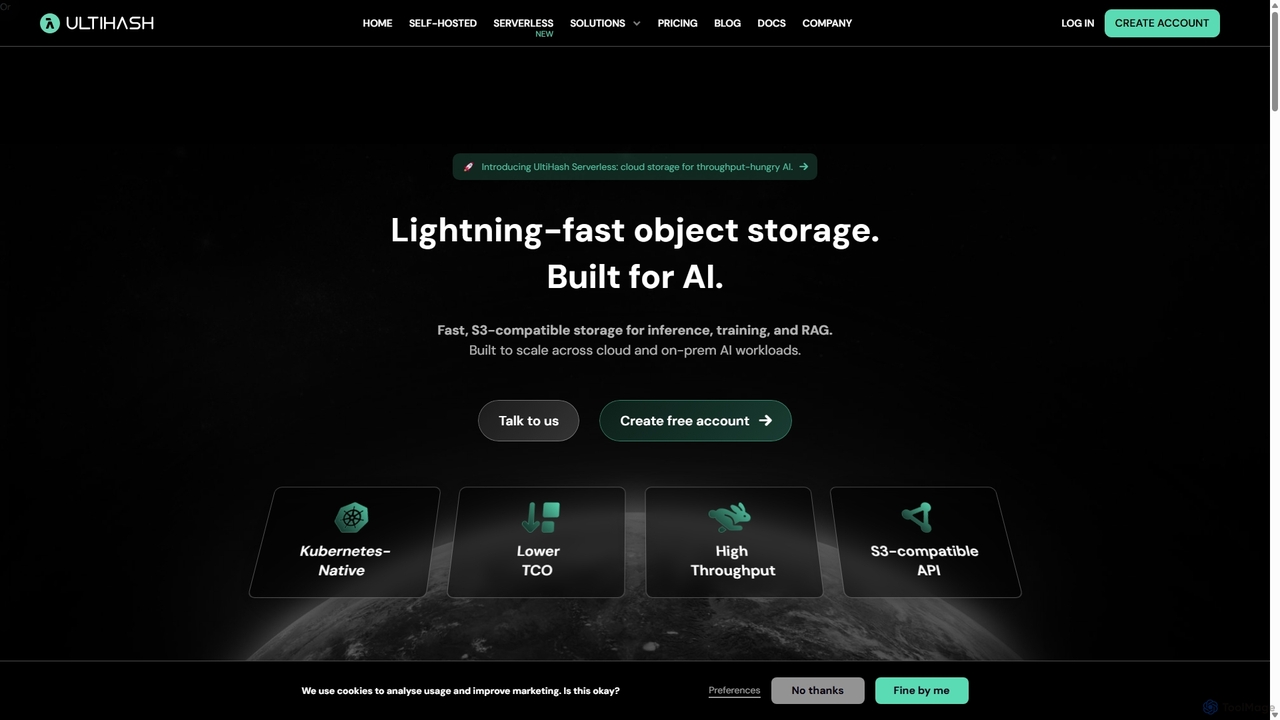
UltiHash is a high-performance, Kubernetes-native object storage platform specifically built for AI and big data workloads. It offers lightning-fast data access, significant cost savings through advanced byte-level deduplication, and flexible deployment across cloud, on-premises, or hybrid environments. Its S3-compatible API ensures seamless integration with existing data stacks and AI workflows.
Machine Learning Operations
Raven
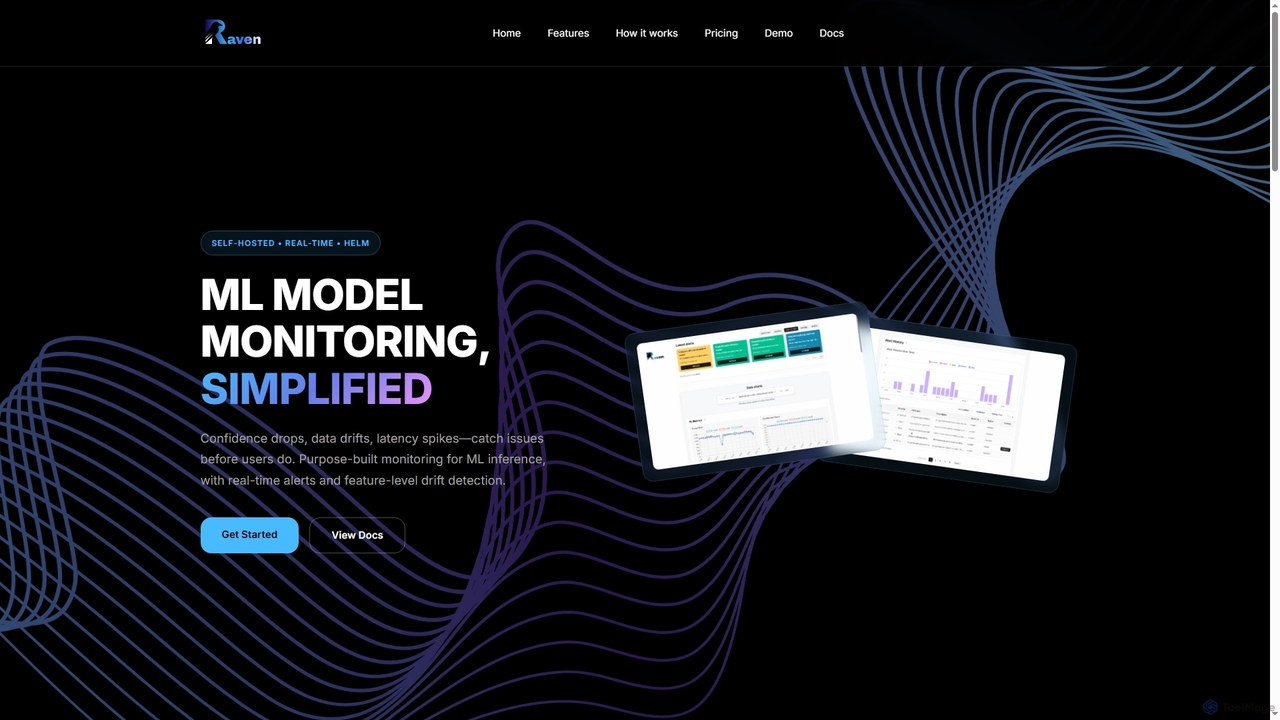
Raven is a self-hosted, real-time ML model monitoring platform designed to simplify observability for AI pipelines. It detects data drift, latency spikes, and confidence drops, providing instant alerts to ensure model reliability and performance in production environments.
Kubernetes Tools
LangDrive
LangDrive is a developer-centric platform offering a unified API to fine-tune, manage, and deploy open-source Large Language Models (LLMs). It simplifies the complex MLOps pipeline, enabling businesses to create powerful, custom AI models for specialized tasks with greater control over data and costs.
Api Management
Truefoundry
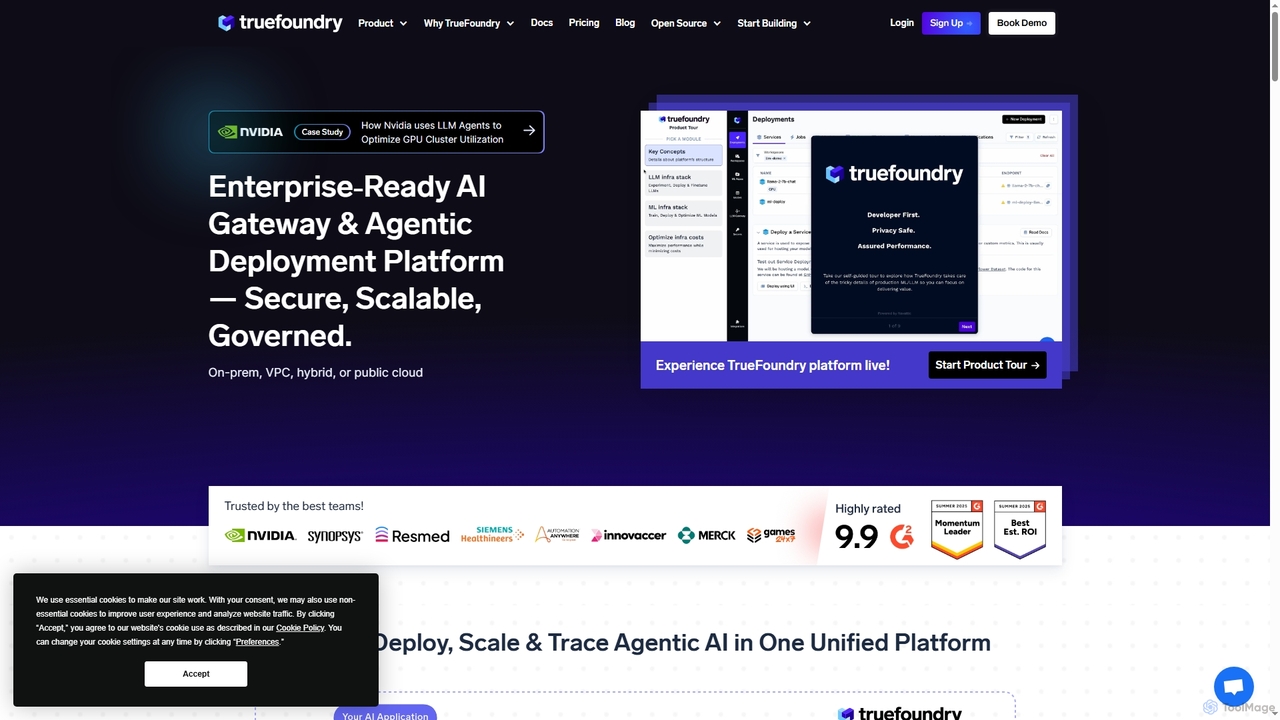
Truefoundry is an enterprise-ready platform for deploying, managing, and scaling agentic AI applications. It provides a unified AI Gateway to orchestrate complex AI workflows, manage models, and ensure security, governance, and observability. Designed for developers and MLOps teams, it supports on-premise, cloud, and hybrid deployments, optimizing GPU utilization and accelerating time-to-production.
Cloud Computing
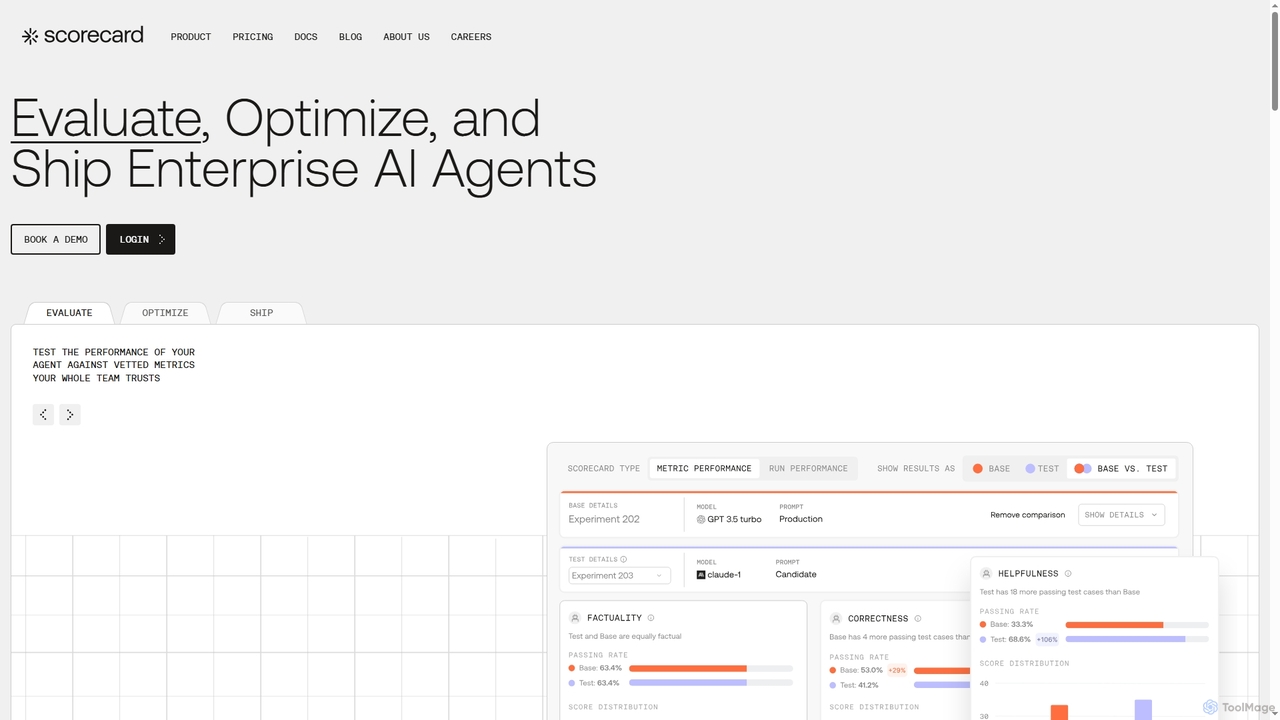
Scorecard
Scorecard is an end-to-end platform for evaluating, optimizing, and deploying enterprise AI agents. It helps teams replace subjective testing with structured evaluations, providing tools for continuous monitoring, prompt management, and performance metrics to build trustworthy and reliable AI applications with confidence.
Evaluation
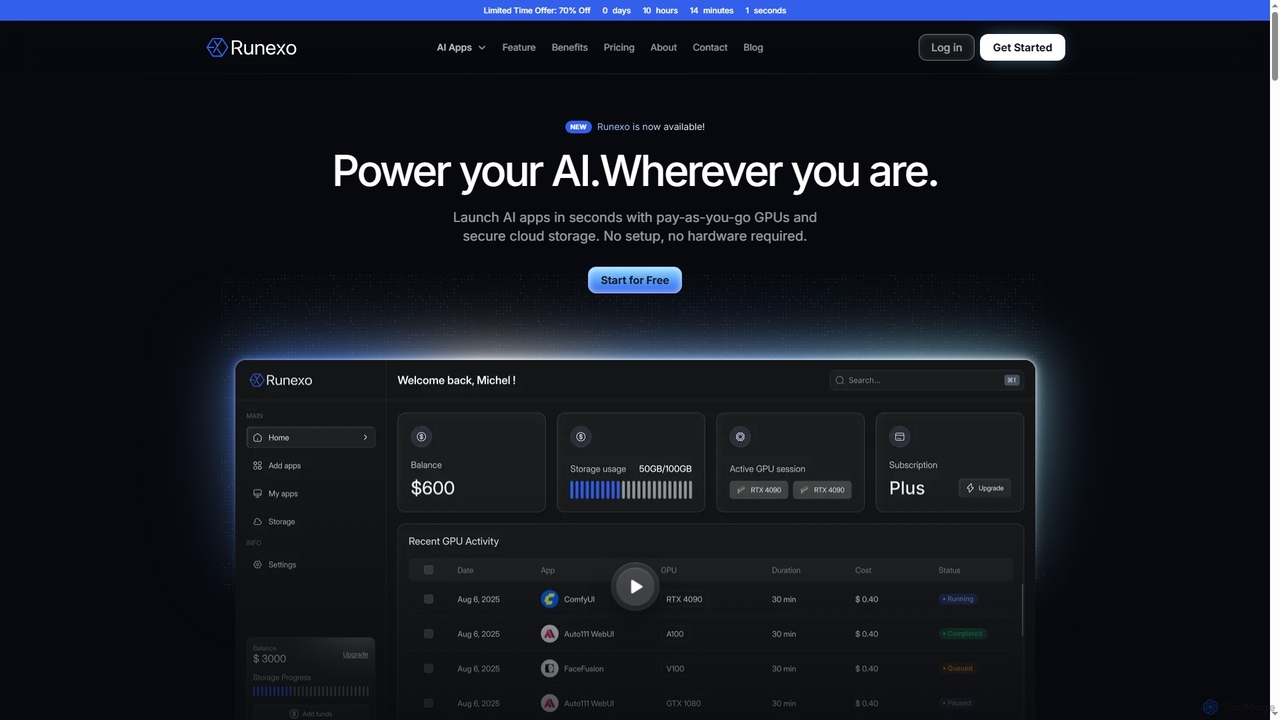
Runexo
Runexo is a cloud GPU platform designed to empower AI development, training, and inference. It offers instant access to high-performance, pay-as-you-go GPUs and secure cloud storage, enabling developers, researchers, and enterprises to launch AI applications like Stable Diffusion, ComfyUI, and Fooocus in seconds without setup or hardware requirements.
Gpu As A Service
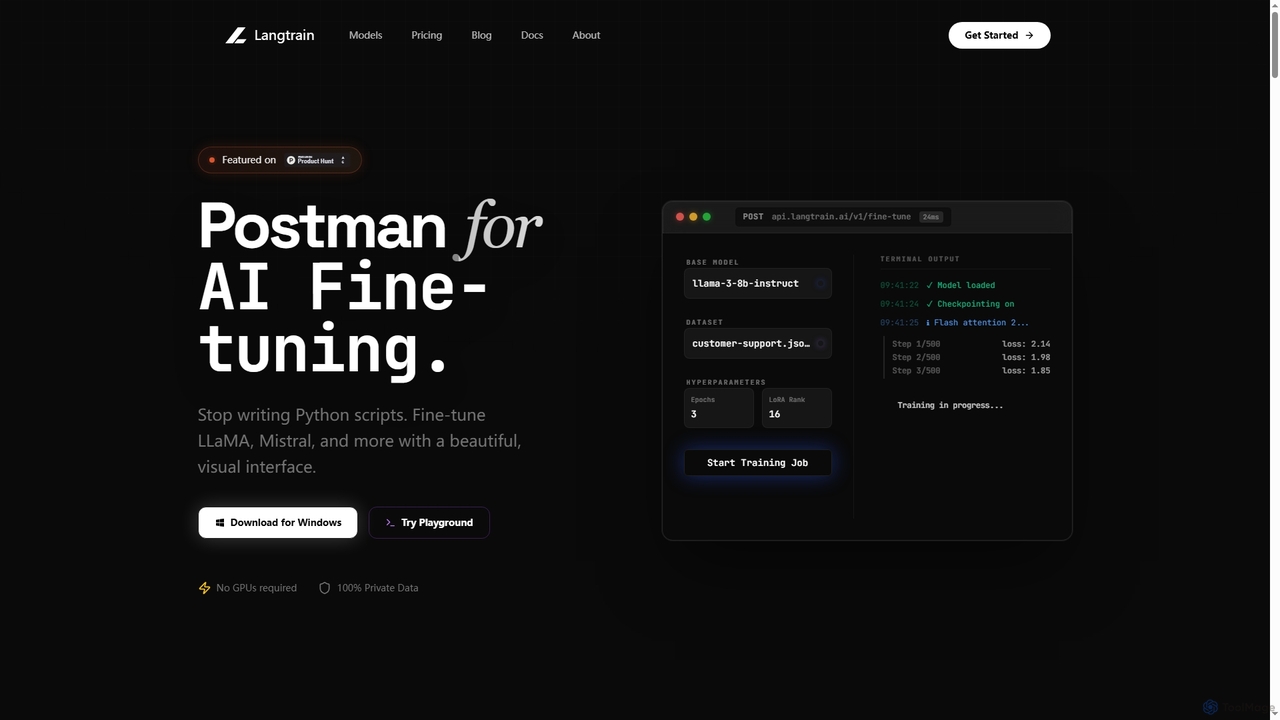
Langtrain
Langtrain is a powerful platform designed for developers and engineering teams to fine-tune, deploy, and manage large language models (LLMs) with minimal code. It offers a visual interface, supports popular open-source models like LLaMA and Mistral, and ensures data privacy through local or secure cloud training.
Modeldeployment
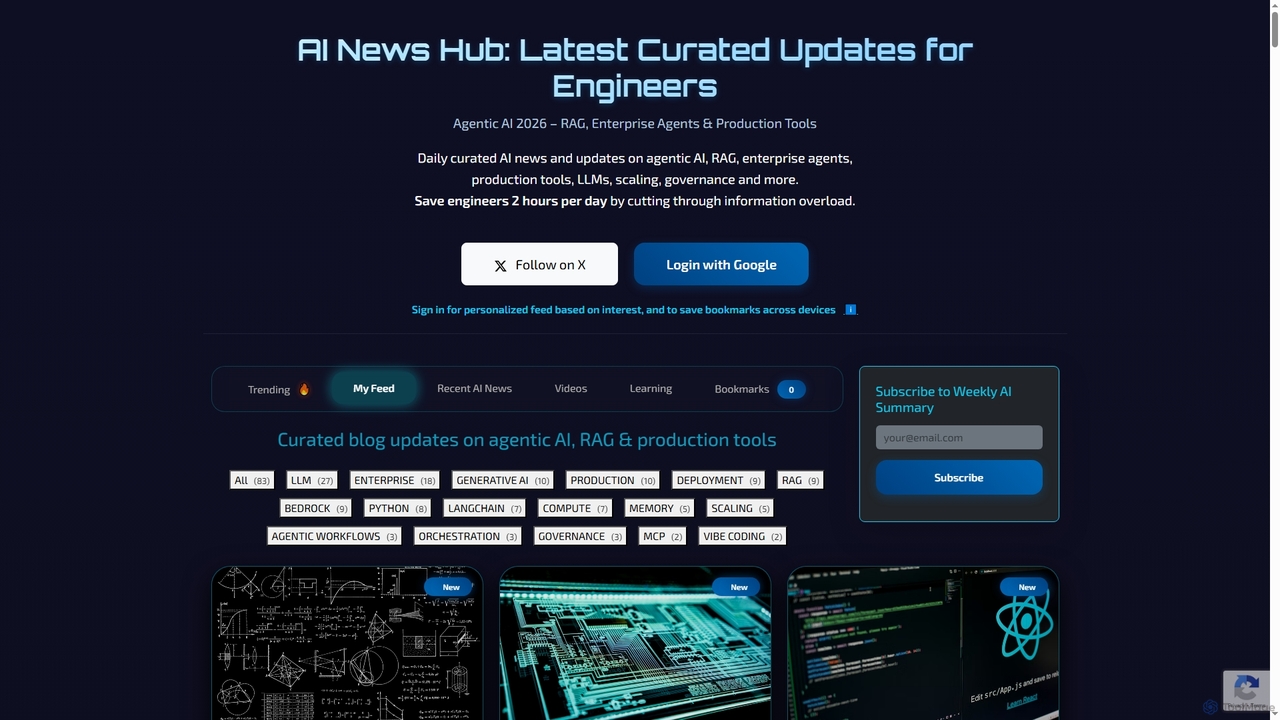
AI News Hub
AI News Hub is a comprehensive platform providing real-time AI announcements, curated blog updates on agentic AI, RAG, and production tools. It offers a personalized feed, bookmarking capabilities, and a rich collection of learning resources, including roadmaps, courses, and videos, to keep developers and enthusiasts informed and skilled in the rapidly evolving AI landscape.
Aggregation
HIVE Digital Technologies
HIVE Digital Technologies is a global leader in sustainable data center infrastructure, specializing in both large-scale Bitcoin mining and providing High-Performance Computing (HPC) for AI applications. Leveraging a fleet of NVIDIA GPUs, HIVE powers transformative technologies with efficient, green energy from its geographically diversified data centers in Canada, Sweden, and Paraguay.
Machine Learning Infrastructure
Replicate
Replicate is a cloud platform for developers to run, fine-tune, and deploy AI models via a simple API. It eliminates the need for managing complex infrastructure, offering access to thousands of models with pay-per-use pricing and automatic scaling.
Machine Learning
Grably
Grably is a decentralized data ownership network (DeDON) providing high-quality, ethically sourced AI training data. It offers a vast collection of off-the-shelf datasets, custom data collection, curation, and annotation services to accelerate AI development while allowing users to monetize their data securely and transparently.
Data Labeling