ToolMage
Sign in

Best 34 Code Generation AI tools for Code

Popular Code Generation AI tools in Code include Codeium, Augment Code, Ludo.ai, Cursor, DocuWriter.ai, All Hands AI (OpenHands), Codebuff, PearAI, Firebender, and MetaGPT X (MGX), helping you work more efficiently.

Autoplans
Freemium

Autoplans

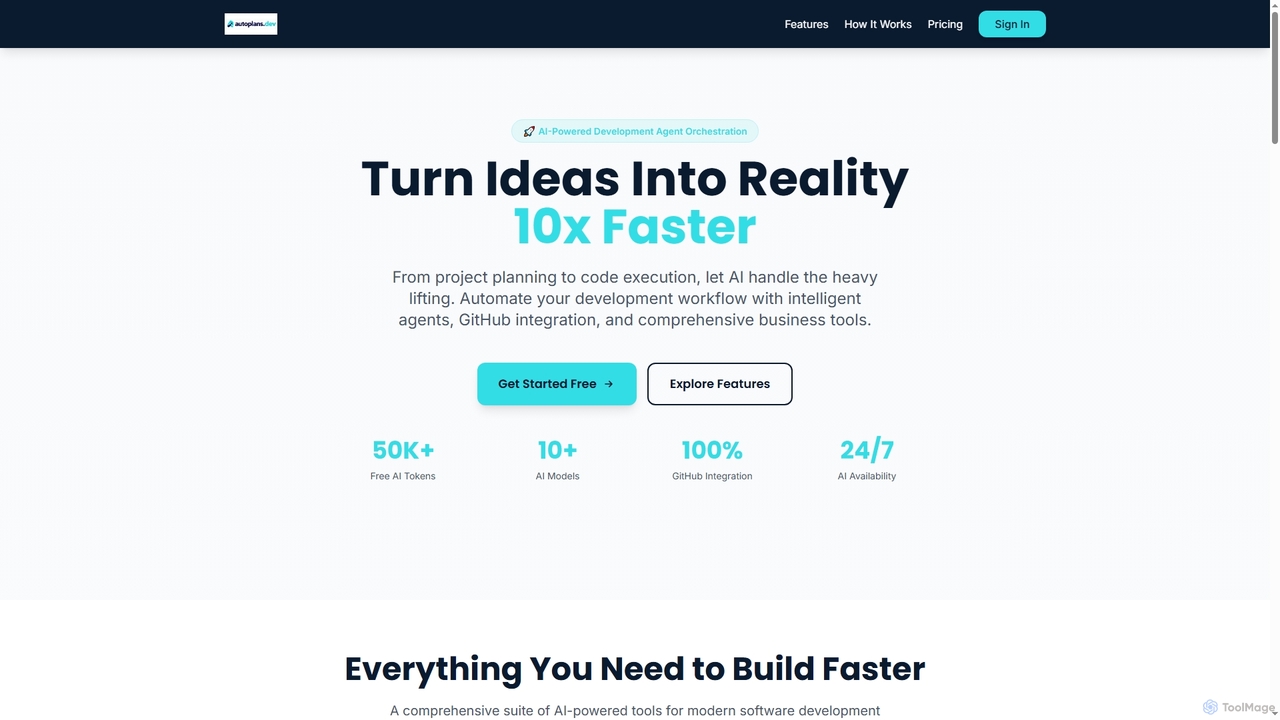
Autoplans is an AI-powered development orchestration platform that automates the entire software development workflow. It uses intelligent agents to transform project ideas into structured plans, generate code, and create GitHub pull requests, aiming to accelerate development by up to 10x.

Code Generation
Visits 3.5KFavorites 124Likes 124
1ui
Freemium

1ui

1ui is an AI-powered platform that generates pixel-perfect, production-ready UI designs from natural language prompts. It streamlines the design process by creating responsive layouts, contextual images, and clean HTML/CSS code in seconds. Features include a prompt enhancer, team collaboration, and direct export to Figma as editable layers.

Code Generation
Visits 3.9KFavorites 85Likes 90
Codebay
Freemium

Codebay

Codebay is an AI-powered development platform designed to accelerate the entire software lifecycle. It acts as an intelligent co-pilot for developers, offering advanced features for code generation, automated review, intelligent debugging, and seamless integration with existing workflows to enhance productivity and code quality.

Code Generation
Visits 5.1KFavorites 101Likes 117
MetaGPT X (MGX)
Freemium

MetaGPT X (MGX)

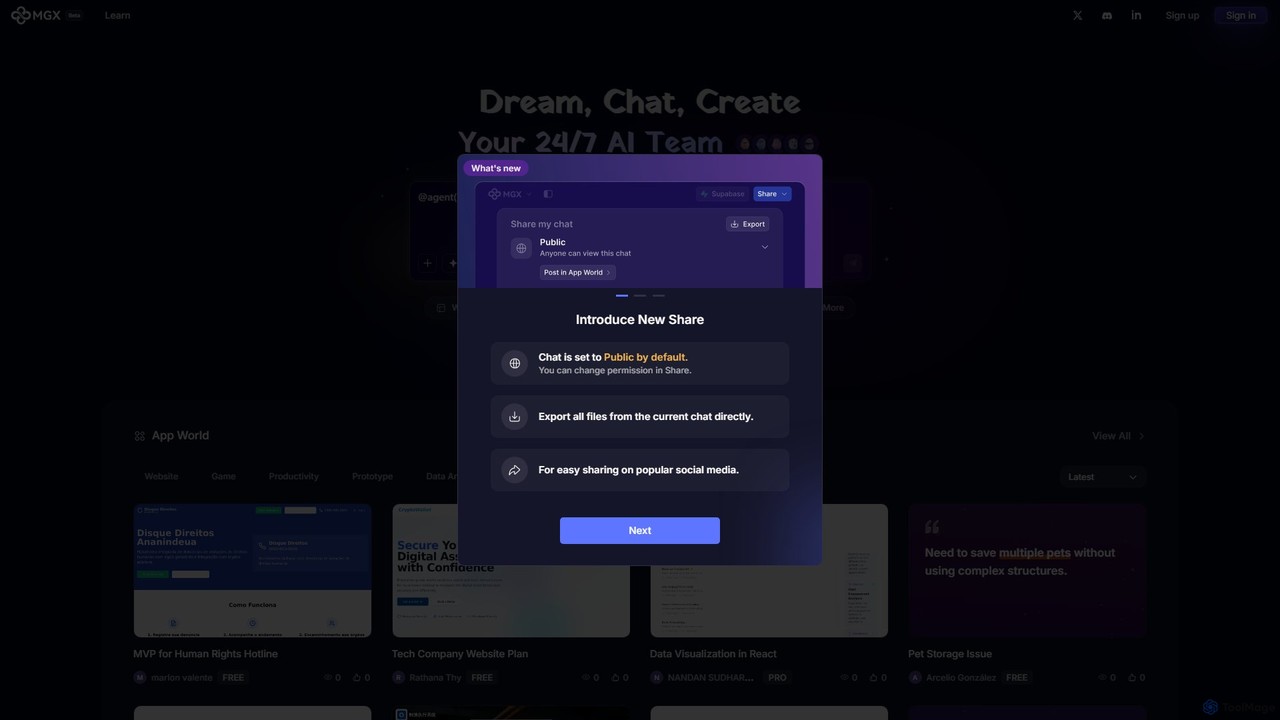
MGX (MetaGPT X) is an AI-powered software development platform that acts as your 24/7 AI team. By simply describing your idea in natural language, you can have a team of AI agents—including product managers, architects, and engineers—collaborate to design, code, and build complete applications. It streamlines the creation of websites, prototypes, data analysis tools, and more, turning your concepts into functional software with remarkable speed.

Code Generation
Visits 25.4KFavorites 112Likes 105
Ludo.ai
Freemium

Ludo.ai

Ludo.ai is an all-in-one AI-powered platform designed to accelerate the game development process. It assists creators from initial brainstorming and concept generation to creating 2D/3D assets, market research, and even generating playable prototypes and code snippets. It's a unified ecosystem for game developers to build hit games faster.

Code Generation
Visits 273.9KFavorites 124Likes 124
Syntha AI
Freemium

Syntha AI

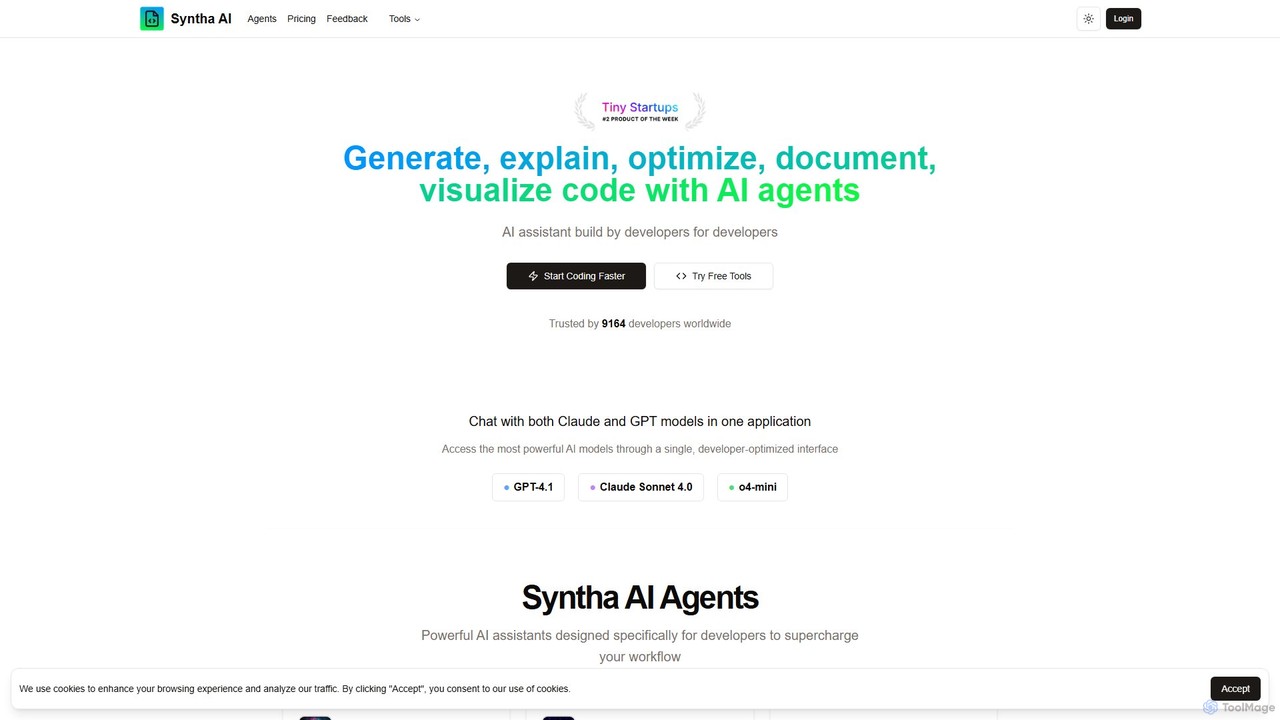
Syntha AI is a developer-centric AI assistant designed to streamline the entire coding lifecycle. It integrates top AI models like GPT-4 and Claude, offering specialized agents to generate, explain, optimize, convert, and document code, helping developers build software faster and more efficiently.

Code Documentation
Visits 11.4KFavorites 141Likes 129
CodeGrow
Freemium

CodeGrow

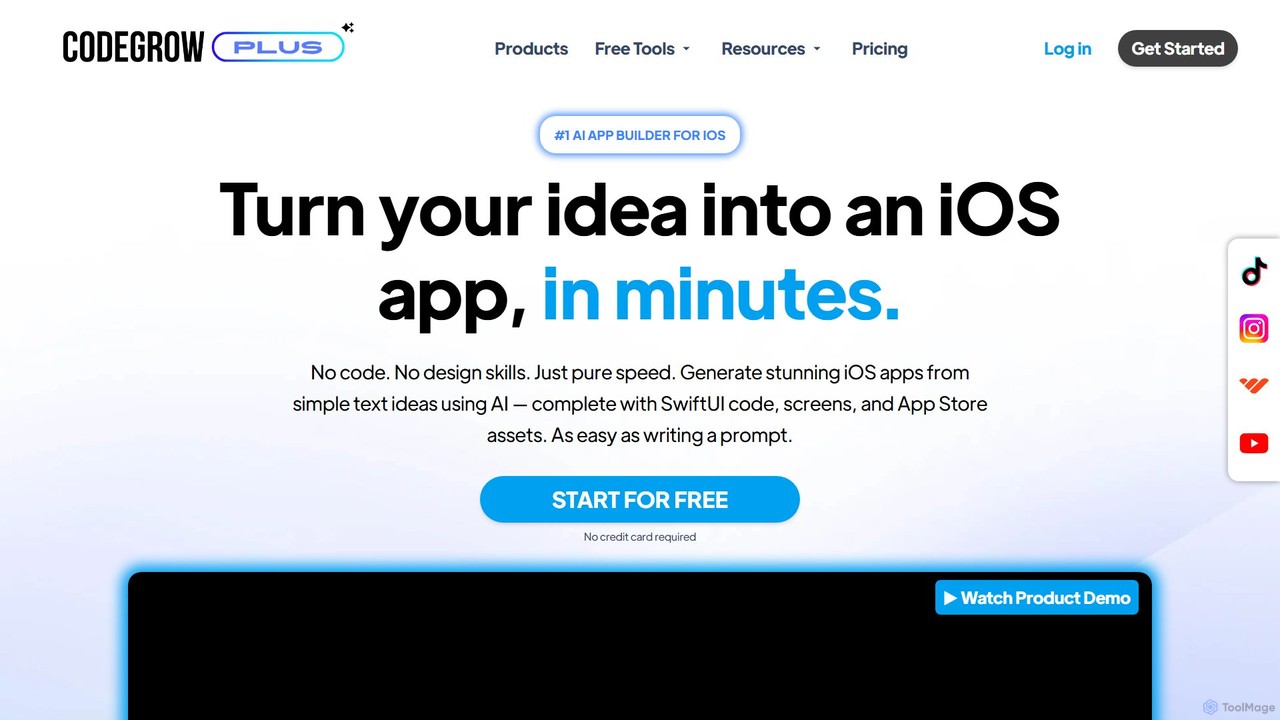
CodeGrow is a revolutionary AI-powered, no-code platform that transforms your app ideas into fully functional native iOS apps in minutes. Simply describe your idea, and the AI generates the complete app structure, SwiftUI code, screens, and even App Store assets, making app creation accessible to everyone.

Code Generation
Visits 4.2KFavorites 126Likes 126
Jolt AI
Freemium

Jolt AI

Jolt AI is a specialized AI coding assistant designed for large and complex codebases. Its proprietary HyperContext engine automatically understands your entire project, enabling it to generate accurate, multi-file code changes, answer complex questions, and significantly accelerate development velocity for teams.

Code Generation
Visits 3.3KFavorites 104Likes 103
supertest
Freemium

supertest

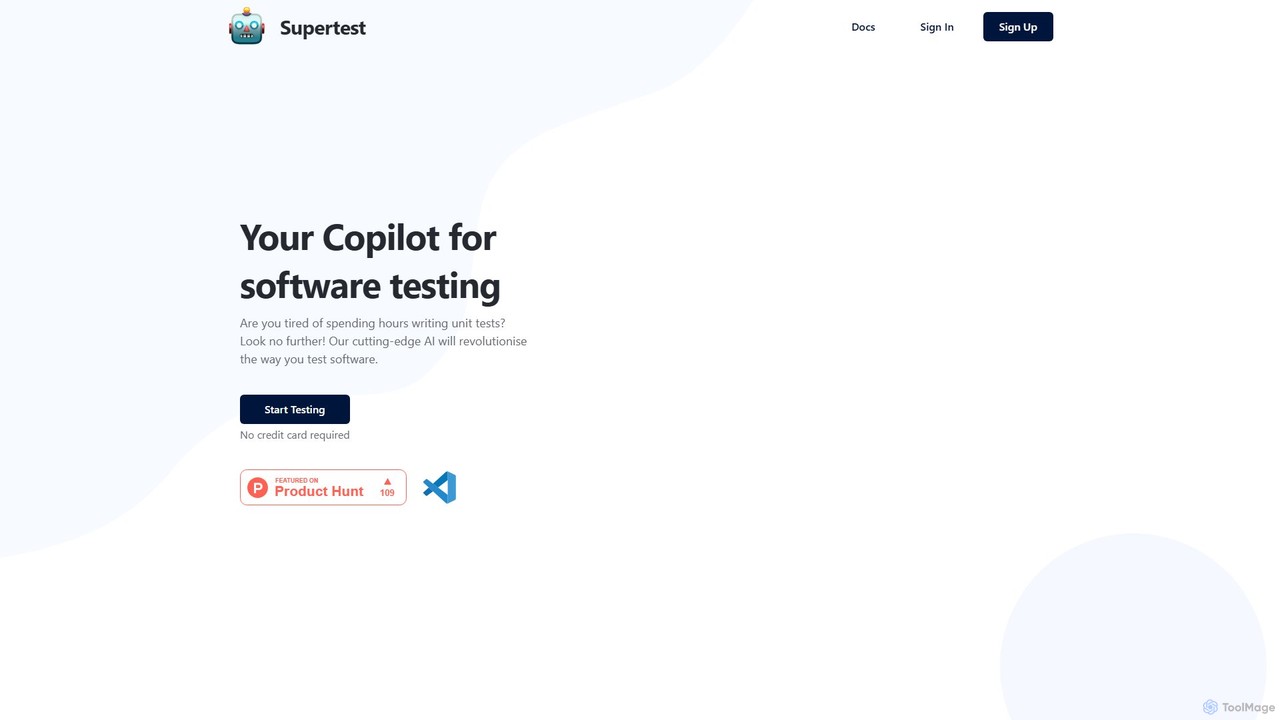
Supertest is an AI-powered copilot for software testing that integrates directly into VS Code. It automates the creation of unit tests, allowing developers to generate comprehensive tests with a single click, significantly speeding up the development workflow and improving code quality.

Code Generation
Visits 5.9KFavorites 116Likes 107
MyTools.AI
Freemium

MyTools.AI

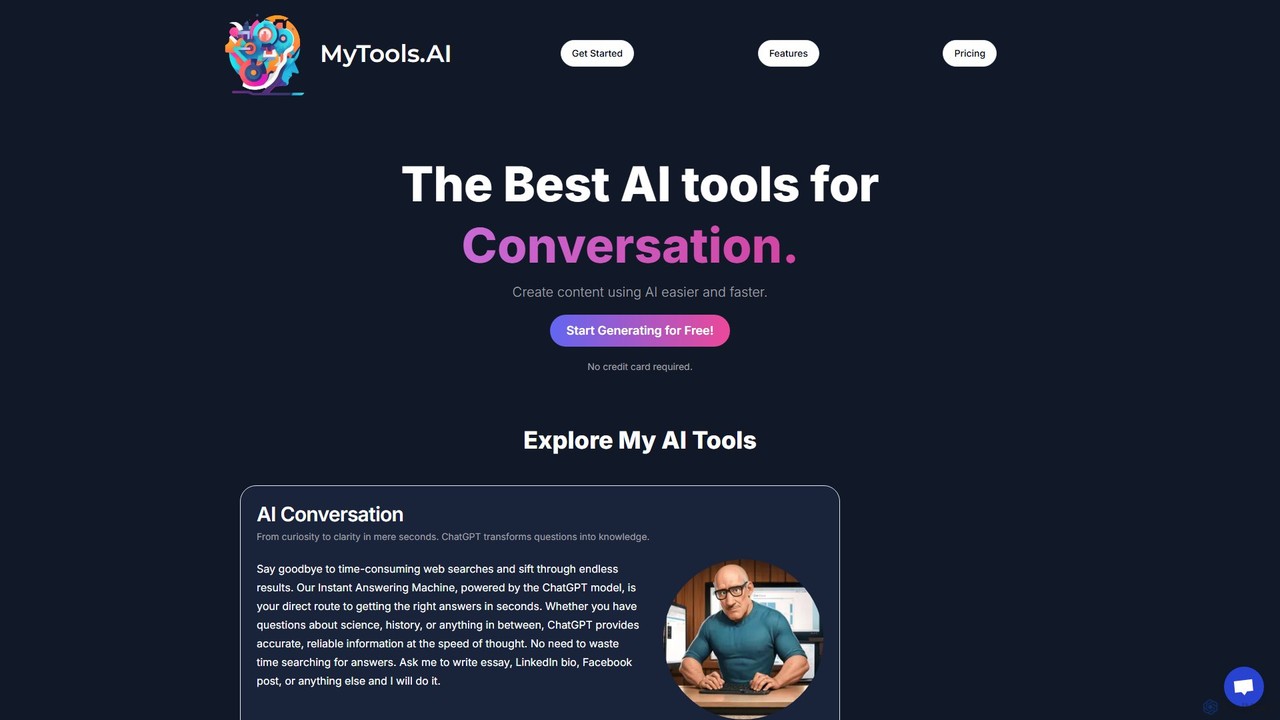
MyTools.AI is a comprehensive AI suite offering powerful tools for content creation, image generation, code development, and music composition. Powered by leading models like ChatGPT and DALL-E 3, it streamlines creative and technical workflows for professionals and beginners alike, consolidating multiple AI capabilities into one user-friendly platform.

Music Generation
Visits 3.5KFavorites 168Likes 147
Fitten Code
Freemium

Fitten Code

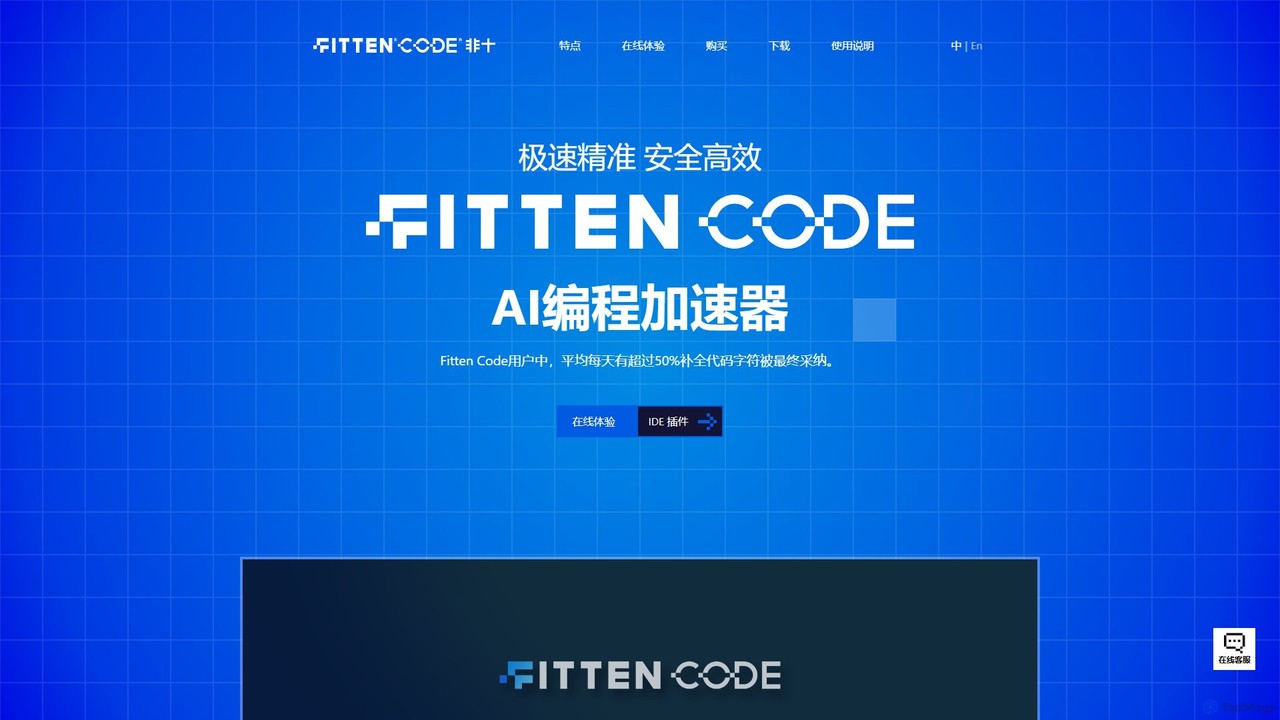
Fitten Code is a next-generation AI programming assistant designed to accelerate software development. It offers ultra-fast code completion, intelligent Q&A, automated unit test generation, and code optimization. Built by a Tsinghua PhD team, it supports major IDEs and languages, significantly boosting developer productivity while ensuring data privacy.

Code Generation
Visits 16.6KFavorites 131Likes 145
Teste.ai
Freemium

Teste.ai

An AI-powered platform designed for software testers and QA professionals to accelerate the software testing lifecycle. It automates the creation of test cases, scenarios, test data, and even automation code from simple requirements. It supports various testing types, including functional, API, security, and performance, aiming to increase test coverage and efficiency.

Code Generation
Visits 5.7KFavorites 114Likes 125
HoshAI
Freemium

HoshAI

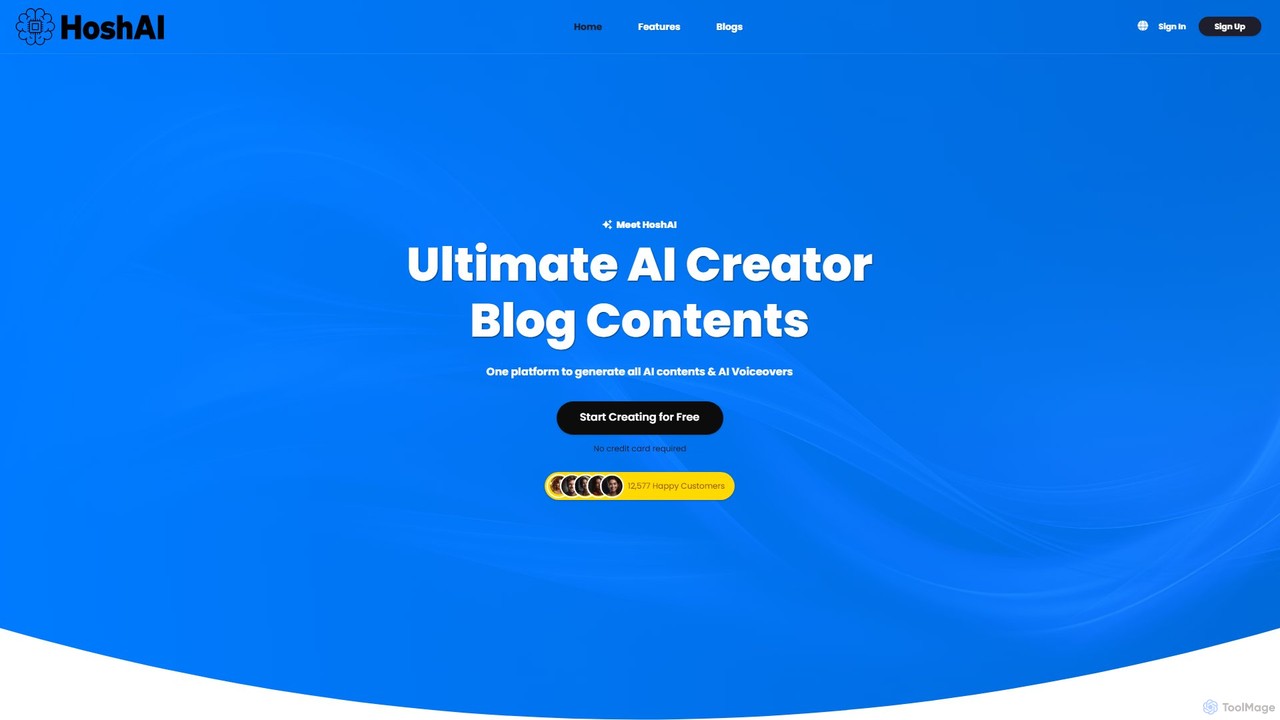
HoshAI is an all-in-one AI platform for content creation, offering tools for writing, text-to-speech, image generation, AI chatbots, and coding. It provides a vast array of templates for marketing, social media, blogs, and e-commerce, supporting over 54 languages to streamline your creative workflow.

Text To Speech
Visits 3.3KFavorites 109Likes 120
GitGab
Freemium

GitGab

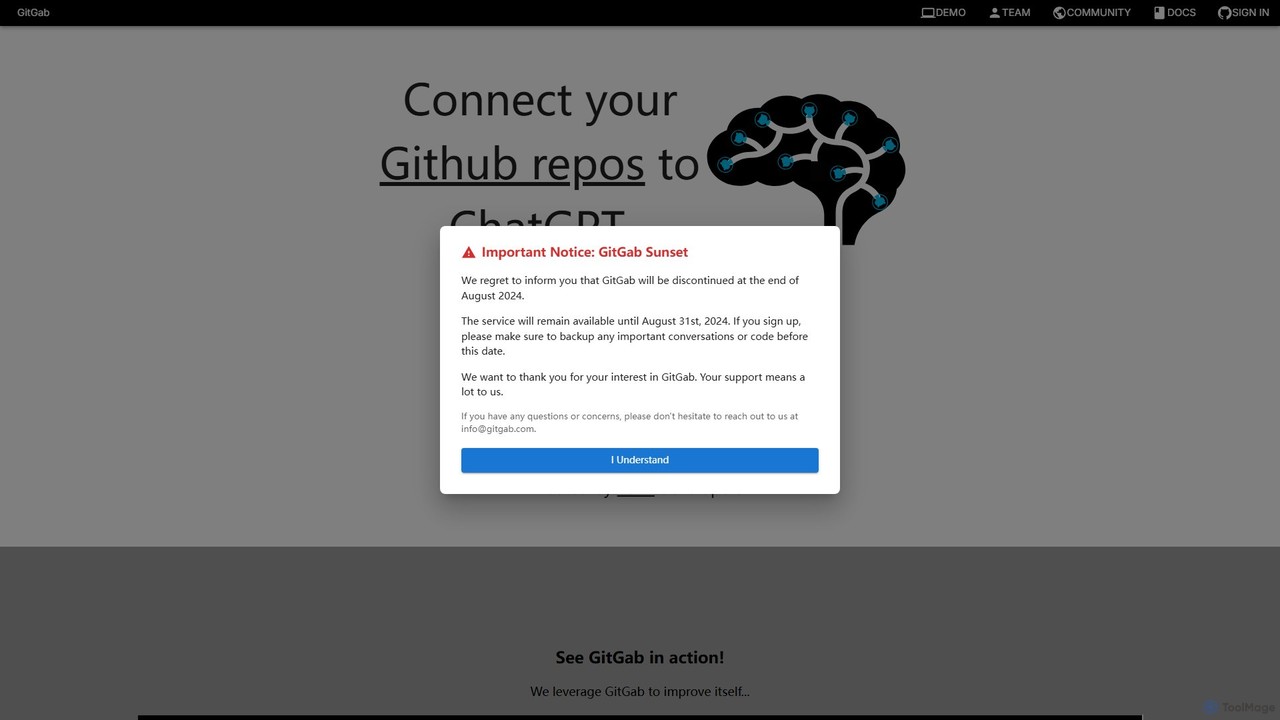
GitGab is an advanced AI code assistant that leverages top models like ChatGPT, Claude, and Gemini. It uniquely contextualizes your entire codebase, including multiple repositories and local files, to help you implement features, find bugs, write documentation, and optimize code with unparalleled accuracy.

Code Generation
Visits 3.4KFavorites 121Likes 129
All Hands AI (OpenHands)
Freemium

All Hands AI (OpenHands)

All Hands AI (OpenHands) is a leading open-source AI coding agent designed to automate software development. It helps engineers with tasks like code reviews, refactoring, bug fixing, and test generation. Available as a flexible SaaS, self-hosted, or open-source solution, it integrates with tools like GitHub and GitLab to accelerate development cycles and improve code quality.

Code Generation
Visits 73.5KFavorites 130Likes 131
startearly
Freemium

startearly

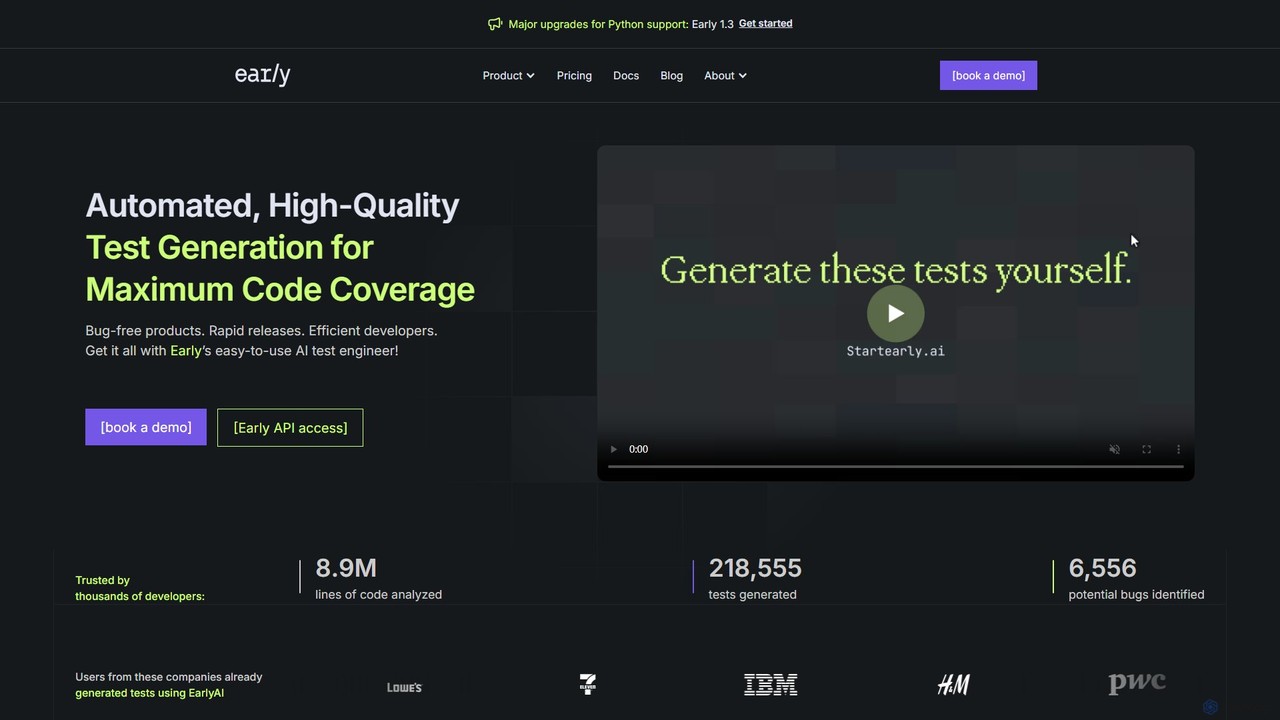
startearly is an AI-powered test engineering agent that automates the generation of high-quality unit tests directly within your IDE and CI/CD pipeline. It helps developers catch bugs early, increase code coverage, and accelerate development cycles by handling tedious testing tasks.

Code Generation
Visits 9.6KFavorites 112Likes 125
Paird.ai
Freemium

Paird.ai

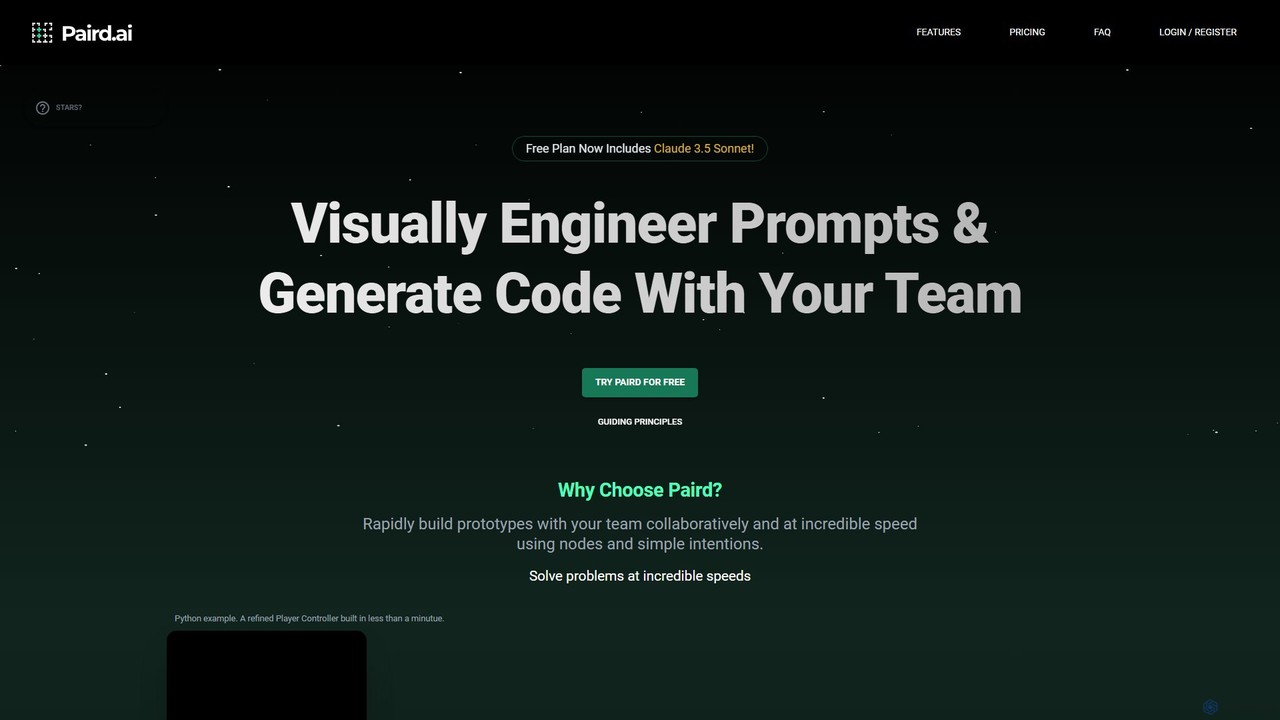
Paird.ai is an AI-powered collaborative platform that elevates pair programming. It enables teams to visually engineer prompts, generate code in real-time using multiple LLMs like Claude 3.5 and GPT-4o, and receive AI-driven code evaluations. It's designed to accelerate prototyping, enhance problem-solving, and streamline complex development workflows for teams.

Code Generation
Visits 5.9KFavorites 86Likes 79
DocuWriter.ai
Freemium

DocuWriter.ai

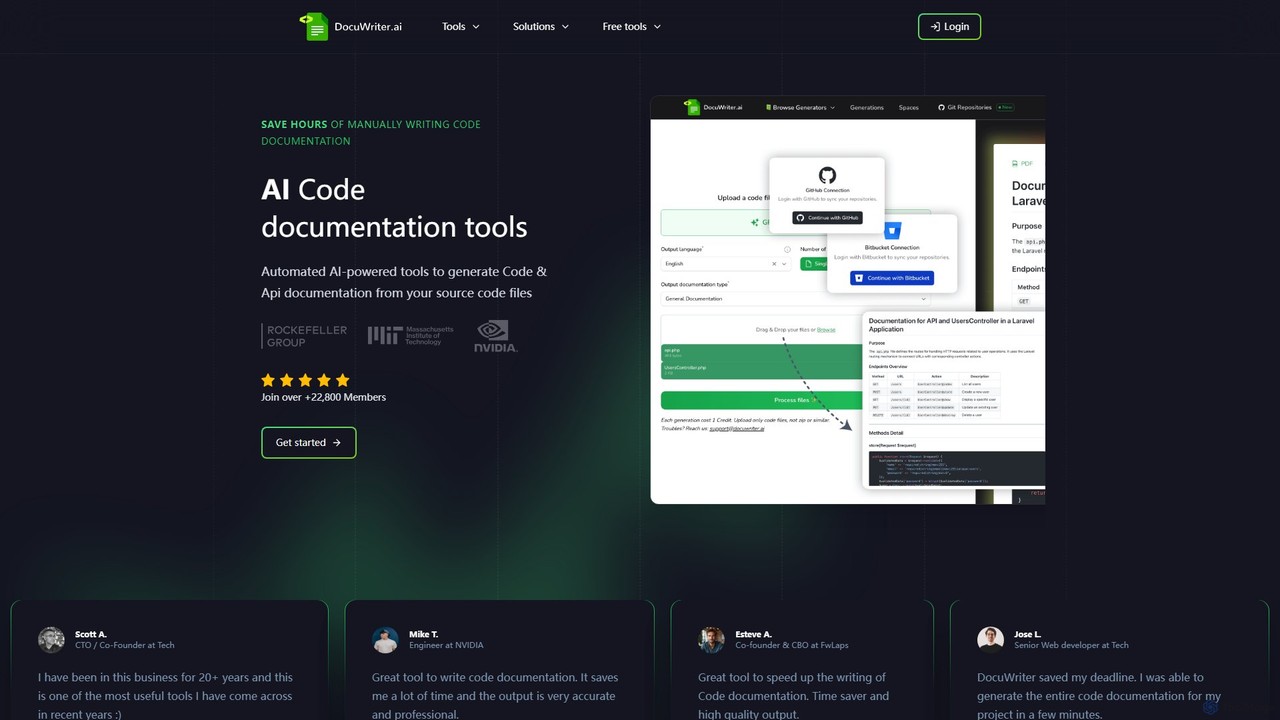
DocuWriter.ai is an AI-powered platform that automates the entire code documentation lifecycle. It generates comprehensive documentation, from API specs and end-user guides to inline comments and UML diagrams, directly from your source code. It also includes tools for code conversion, refactoring, and optimization, helping developers and teams save time, improve code quality, and enhance collaboration.

Code Generation
Visits 74.5KFavorites 118Likes 115
Devpilot

Devpilot

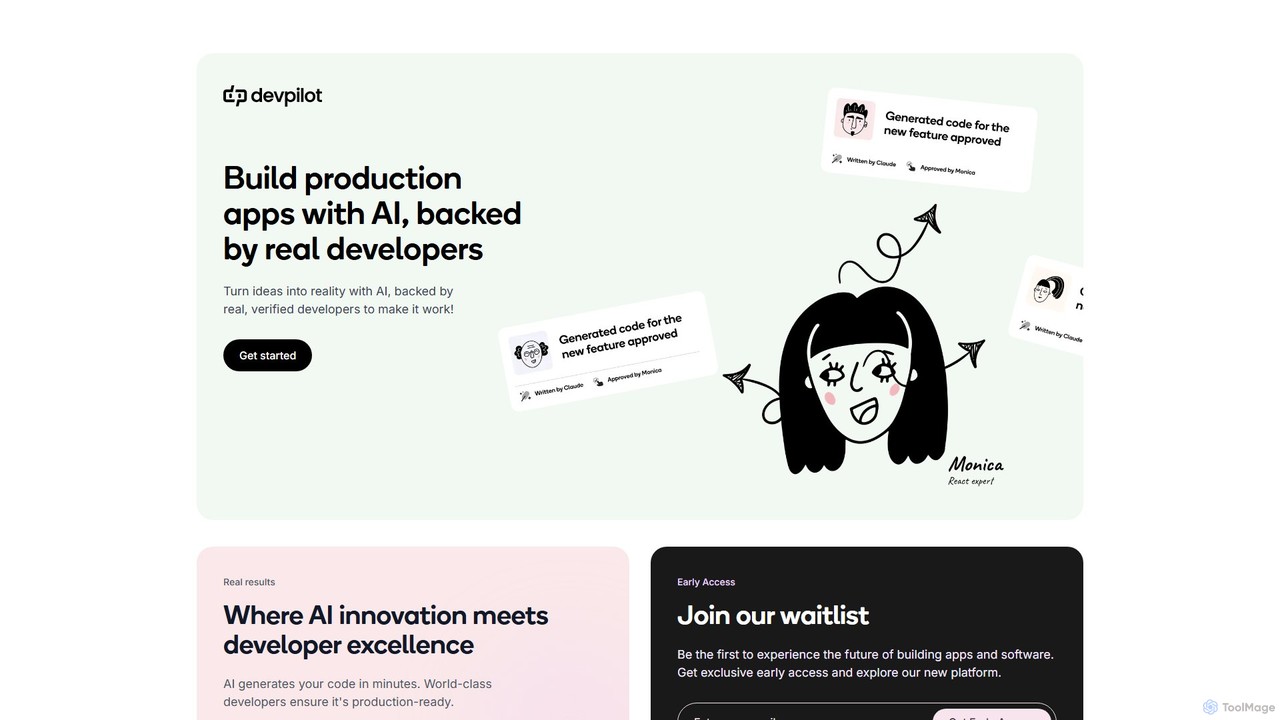
Devpilot is a unique platform that combines AI-powered code generation with expert human developers to build production-ready applications. It transforms your ideas into reality by having AI generate the initial code, which is then meticulously reviewed, refined, and perfected by world-class developers, ensuring unparalleled speed, quality, and reliability in software development.

Code Generation
Visits 4KFavorites 137Likes 121
GitDevTool
Freemium

GitDevTool

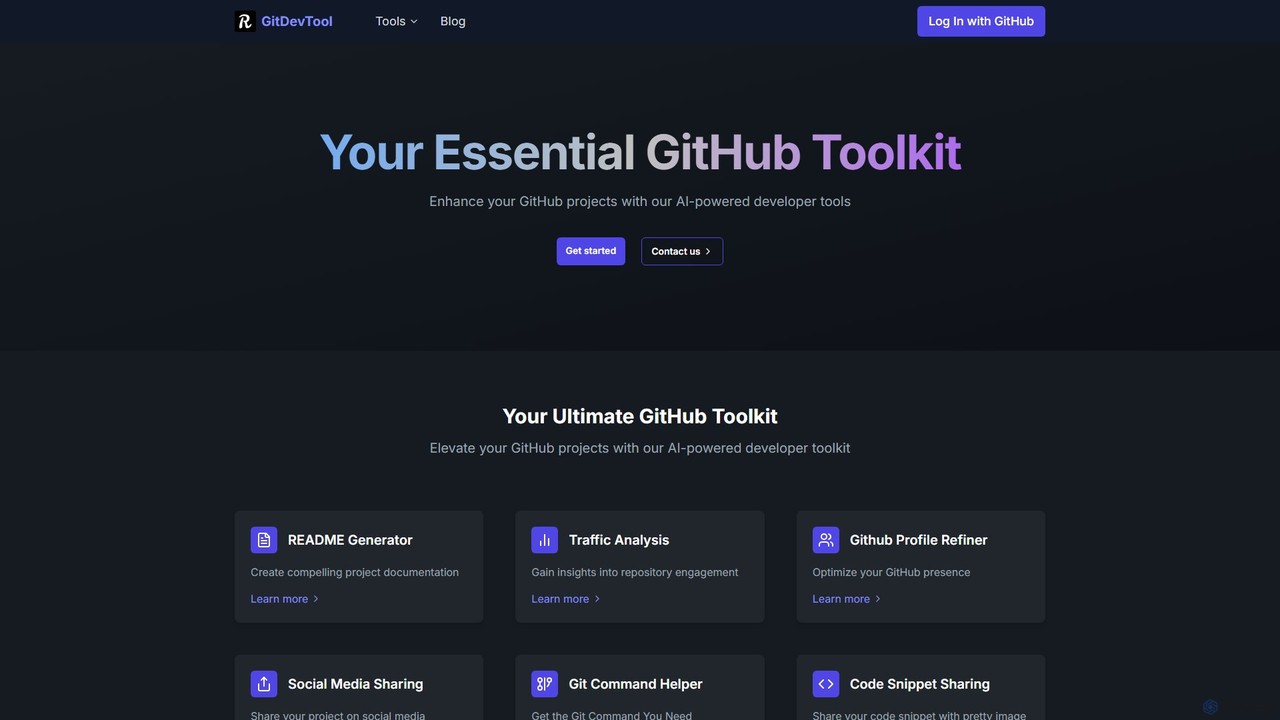
GitDevTool is an AI-powered toolkit designed for developers to enhance their GitHub projects. It offers a suite of tools including a README generator, traffic analysis, profile refiner, and more, to streamline documentation, boost visibility, and optimize repository management.

Code Generation
Visits 5.8KFavorites 116Likes 106
Folderer
Freemium

Folderer

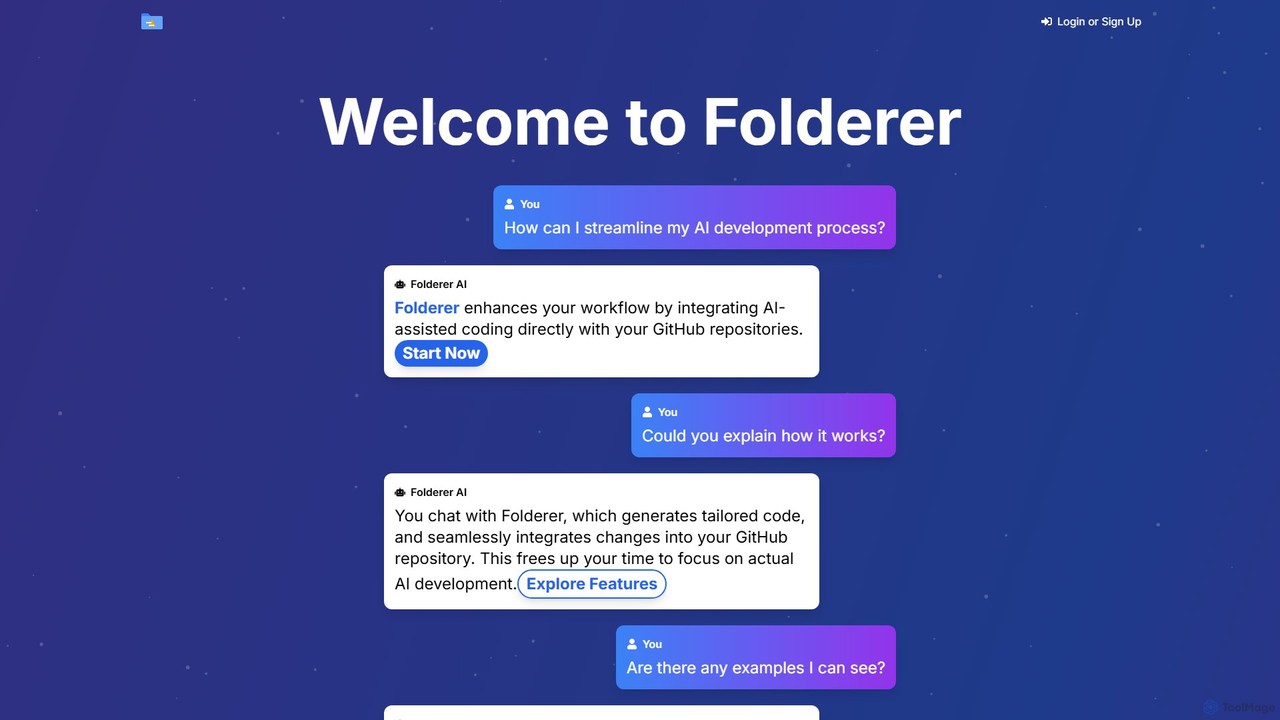
Folderer is an AI-powered coding assistant that integrates directly with your GitHub repositories. It uses a conversational chat interface to generate, refine, and commit high-quality code, streamlining the entire development workflow from idea to deployment.

Code Generation
Visits 3.3KFavorites 95Likes 87

About Code Generation

AI Code Generation tools are a specialized class of software that automatically write source code based on natural language prompts or existing code context. These tools leverage large language models (LLMs) trained on vast public code repositories to understand programming logic and syntax. They significantly accelerate the development process by automating the creation of functions, classes, unit tests, and boilerplate code. As a key part of the broader AI Code toolset, they focus specifically on creation, distinguishing them from tools for debugging or analysis.

Core Features

  • Natural Language to Code: Translates plain English descriptions into functional code snippets in various programming languages.
  • Context-Aware Autocompletion: Suggests entire lines or blocks of code by analyzing the surrounding code and project context.
  • Boilerplate & Scaffolding: Generates initial project structures, configuration files, and repetitive code patterns instantly.
  • Unit Test Generation: Automatically creates test cases for functions and methods to improve code coverage and reliability.
  • Code Refactoring & Translation: Suggests improvements to existing code or translates code from one programming language to another.

Use Cases

These tools are widely used by software developers for rapid prototyping, allowing them to build functional mockups quickly. In enterprise environments, they automate repetitive coding tasks, freeing up developers to focus on complex problem-solving. They also serve as powerful learning aids for students and programmers exploring new languages or frameworks by providing instant, idiomatic examples.

How to Choose

When selecting an AI Code Generation tool, first consider its support for your specific programming languages and frameworks. Evaluate the quality and depth of its integration with your preferred IDE (e.g., VS Code, JetBrains). Assess the model's accuracy and context-awareness, as this directly impacts the relevance of its suggestions. Finally, review the tool's data privacy and security policies, especially when working with proprietary codebases.

Featured tool rankings

Code Generation use cases

1

Rapid Prototyping of a Web API

A backend developer needs to build a proof-of-concept for a new service. Instead of manually writing every file, they use an AI code generation tool. By providing a prompt like "Create a REST API for a blog with endpoints for creating, reading, updating, and deleting posts using Node.js and Express," the tool generates the entire project structure. This includes server setup, route definitions, controller logic, and basic data models. The developer can then refine this generated code, saving hours of initial setup and allowing them to focus on the core business logic, reducing prototyping time from days to hours.

2

Automating Unit Test Creation

A software engineer has just completed a complex data processing function and needs to ensure its reliability. Manually writing comprehensive unit tests is time-consuming. Using an AI code generation tool, they highlight the function and ask it to "generate unit tests for this function, including edge cases like null inputs and empty arrays." The AI analyzes the function's logic, inputs, and outputs, then produces a suite of tests in the project's testing framework (e.g., Jest, PyTest). This not only accelerates the testing process but also helps identify potential edge cases the developer might have missed, leading to more robust code.

3

Generating Complex SQL Queries

A data analyst needs to extract specific insights from a large database with a complex schema. Writing the correct SQL query with multiple joins, aggregations, and filtering conditions can be challenging and error-prone. Instead, they use an AI code generation tool and type a natural language request: "Show me the total sales per product category for customers in North America who registered in the last 6 months." The tool translates this into an optimized SQL query. This empowers analysts who are less familiar with advanced SQL syntax to perform complex data retrieval, while also serving as a productivity booster for experienced SQL developers.

4

Scaffolding a Frontend UI Component

A frontend developer is tasked with creating a new, reusable UI component, such as a responsive product card for an e-commerce site. They use an AI code generator integrated into their IDE. They type a comment like `// Create a React component for a product card with an image, title, price, and an 'Add to Cart' button. Use Tailwind CSS for styling.` The tool instantly generates the complete component file, including the JSX structure, prop types, and basic responsive styling classes. This provides a solid foundation, allowing the developer to immediately start customizing the component's appearance and logic rather than writing everything from scratch.

5

Learning a New Programming Language

A developer with strong experience in Python wants to learn Go for a new project. To understand idiomatic Go, they use an AI code generation tool as a learning companion. They write a familiar Python function, such as one that reads a file and counts word frequencies, and then ask the AI to "translate this Python code to idiomatic Go." The tool provides the Go equivalent, often with comments explaining Go-specific concepts like error handling and goroutines. This interactive translation process helps the developer grasp new syntax and best practices much faster than by reading documentation alone.

6

Generating Code Documentation

A development team needs to improve the documentation of their existing codebase to facilitate onboarding for new members. Manually writing docstrings for hundreds of functions is a tedious task. A developer uses an AI code generation tool with a 'document code' feature. They select a function, and the AI automatically generates a comprehensive docstring that describes the function's purpose, explains each parameter, and specifies the return value. This process can be applied across the entire codebase, ensuring consistent and high-quality documentation is created in a fraction of the time it would take manually, improving code maintainability and team collaboration.

Code Generation FAQ

What are AI Code Generation tools?

AI Code Generation tools are software applications that use artificial intelligence, specifically large language models (LLMs), to automatically write, complete, and refactor source code. They act as intelligent assistants for developers, capable of translating natural language descriptions into code, suggesting entire blocks of code based on context, and generating boilerplate for new projects. Unlike static code snippets, these tools are dynamic and context-aware, significantly speeding up development workflows and reducing repetitive tasks.

How do I choose the right AI Code Generation tool?

Choosing the right tool depends on your specific needs. Consider the following factors:

  • Language & Framework Support: Ensure the tool excels in the programming languages and frameworks you use daily (e.g., Python/Django, JavaScript/React, Go).
  • IDE Integration: A seamless integration with your code editor (like VS Code or JetBrains) is crucial for a smooth workflow. Check for official plugins and their features.
  • Model Quality & Context Window: Look for tools with high accuracy and a large context window, which allows the AI to understand more of your codebase for better suggestions.
  • Security & Privacy: If you work with proprietary code, verify the tool's privacy policy. Some tools offer on-premise solutions or policies that prevent your code from being used for training.
What's the difference between AI Code Generation and traditional code snippets?

The key difference is dynamism and context awareness. Traditional code snippets are static, pre-written blocks of code that you manually insert and adapt. They are not aware of the surrounding code. In contrast, AI Code Generation tools are dynamic. They analyze the existing code, comments, and even the intent behind your natural language prompts to generate new, contextually relevant code on the fly. They can create novel solutions and adapt to the specific logic of your project, whereas snippets are limited to their pre-defined structure.

Can AI Code Generation tools replace human developers?

No, AI code generation tools are designed to augment, not replace, human developers. They function as powerful assistants or 'pair programmers' that handle repetitive, boilerplate, and well-defined tasks. This frees up developers to focus on higher-level challenges like system architecture, complex problem-solving, creative solutions, and user experience. While they accelerate coding, they lack the critical thinking, domain expertise, and architectural oversight that are essential for building robust and meaningful software applications. The best results come from human-AI collaboration.

Is the code generated by AI tools secure and reliable?

The code generated by AI should always be treated as a first draft and must be carefully reviewed, tested, and validated by a human developer. While often correct and efficient, AI-generated code can sometimes contain subtle bugs, inefficiencies, outdated practices, or even security vulnerabilities. It reflects the patterns from its training data, which includes code of varying quality. Therefore, it is a powerful starting point and productivity tool, but it is not a substitute for rigorous code review, security analysis, and comprehensive testing practices.