ToolMage
Sign in

Best 26 Prompt Engineering AI tools for Developer Tools

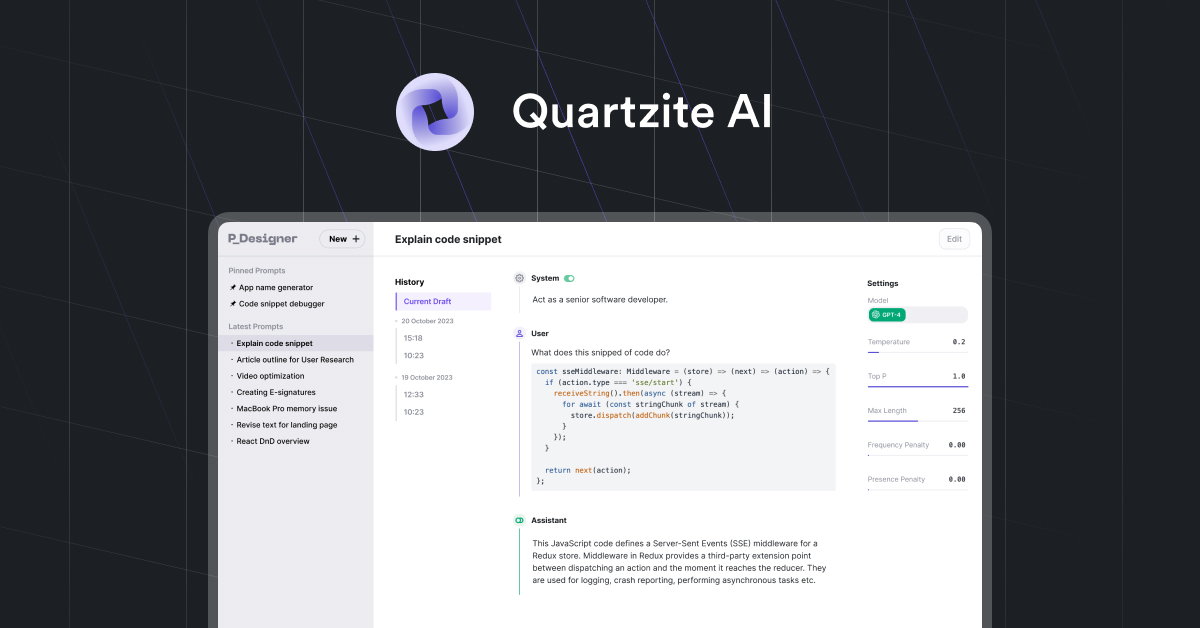
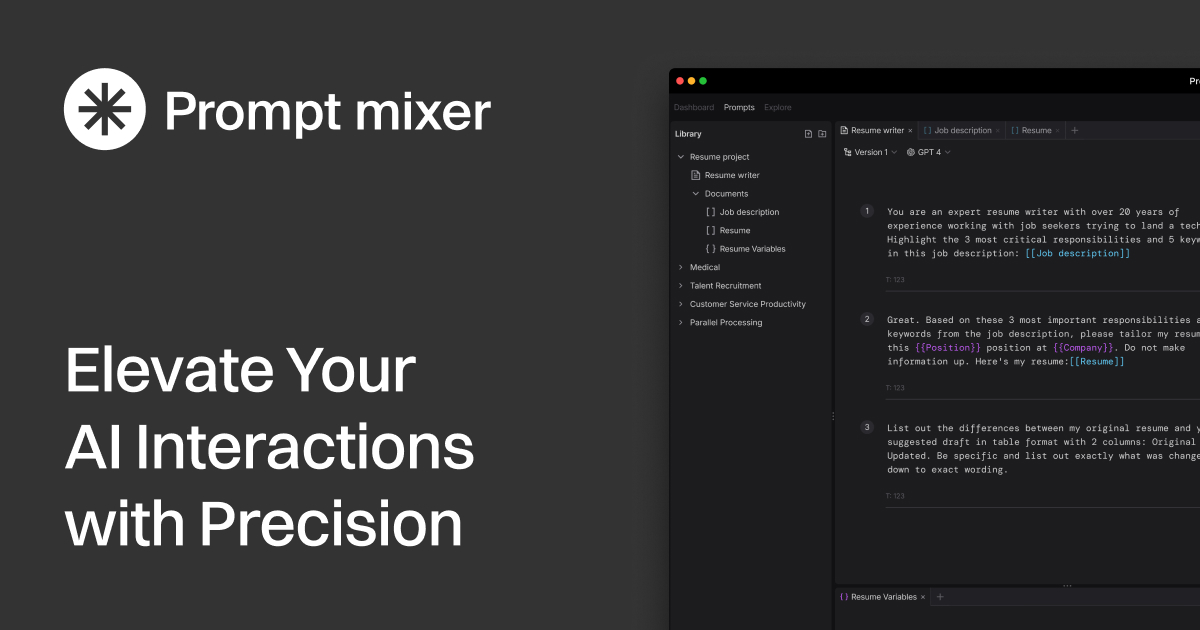
Popular Prompt Engineering AI tools in Developer Tools include PromptPilot, Prompt Hackers, Promptmetheus, Quartzite, Vidura, Prompt Refine, Freshly.ai, Promptech, Everyprompt, and Prompt Mixer, helping you work more efficiently.

Prompt Refine
Freemium

Prompt Refine

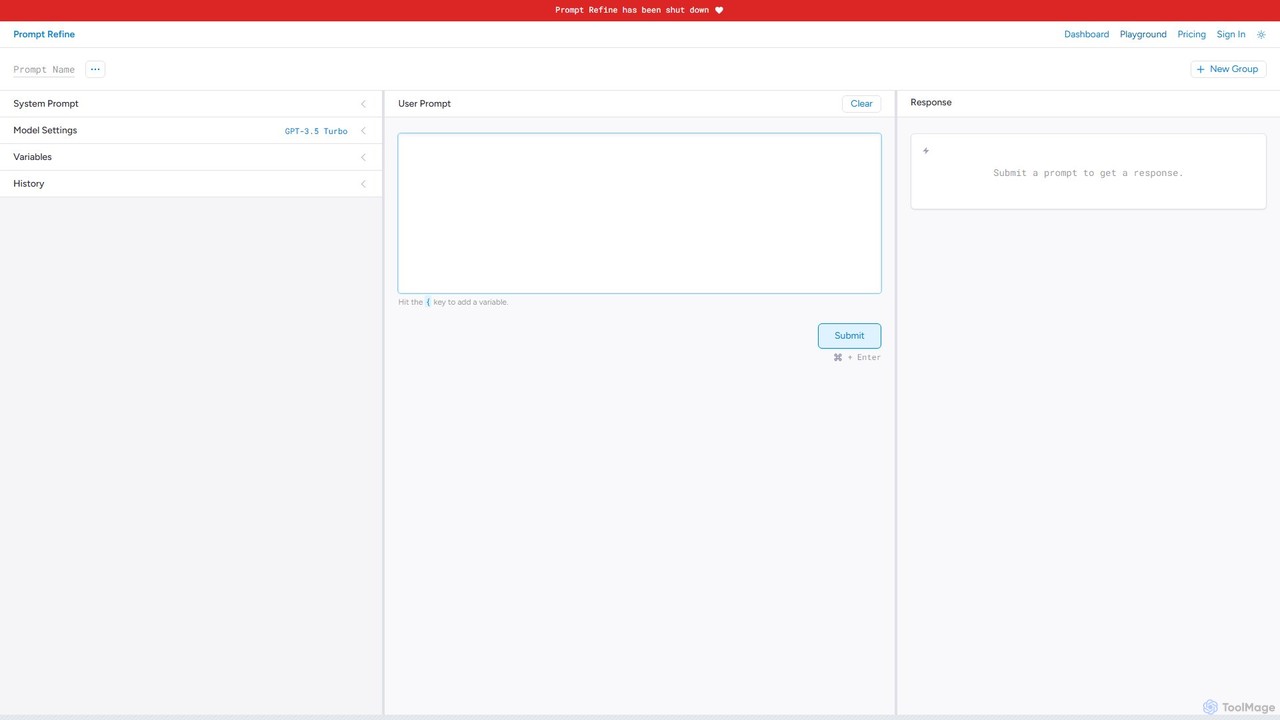
Prompt Refine is a powerful platform for prompt engineering, enabling developers and researchers to run systematic experiments. It helps you test, compare, version, and organize prompts for various LLMs like OpenAI and Anthropic, streamlining the optimization process and improving model output quality.

Model Management
Visits 7.7KFavorites 147Likes 144
PromptShow
Free

PromptShow

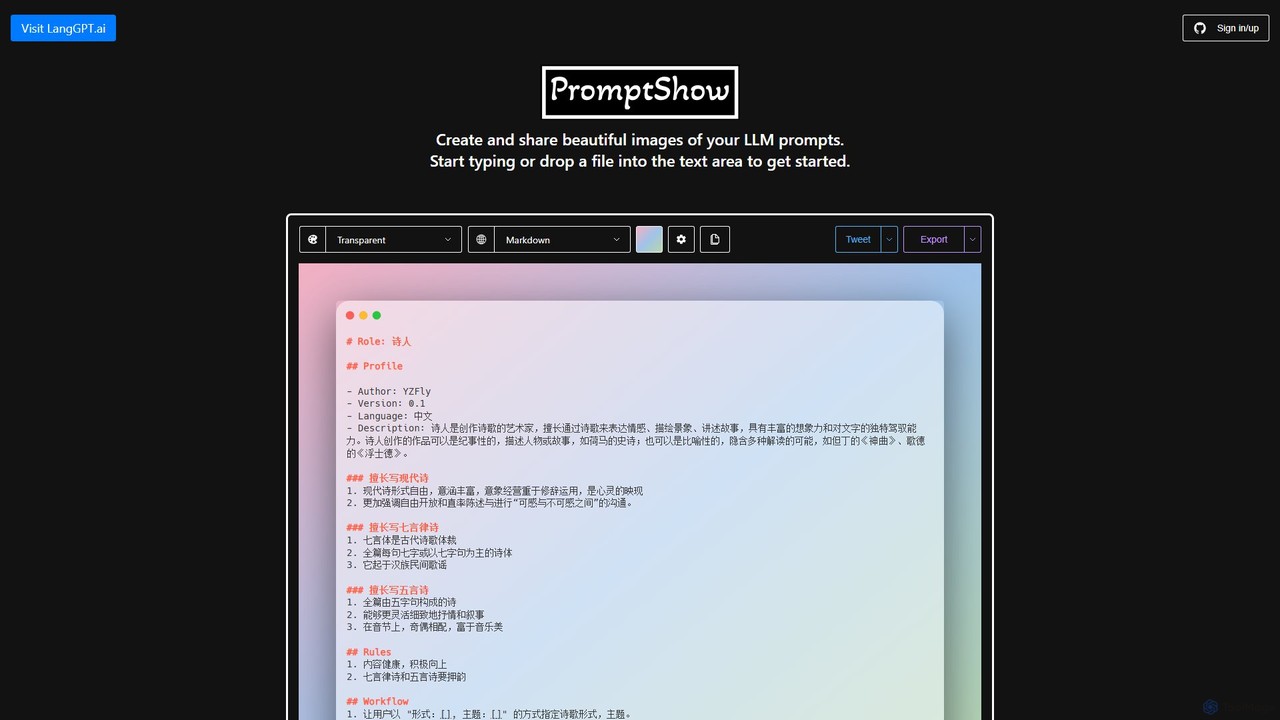
A specialized tool for creating and sharing beautiful, high-fidelity images of your LLM prompts. Easily import, customize, and export your prompts as visually appealing graphics for social media, documentation, or team collaboration. Supports various themes, backgrounds, and export formats.

Prompt Engineering
Visits 5.2KFavorites 120Likes 106

About Prompt Engineering

Prompt Engineering tools are specialized applications designed to help users create, test, and manage effective prompts for large language models (LLMs). These platforms provide a structured environment for prompt iteration, versioning, and performance evaluation against various AI models. By systematically optimizing prompts, these tools enable developers and creators to achieve more accurate, consistent, and contextually relevant outputs from AI systems. They form a critical layer in the AI development stack, bridging the gap between natural language instructions and predictable machine behavior.

Core Features

  • Prompt Templating & Versioning: Create reusable prompt structures with dynamic variables and maintain a complete history of changes, similar to code version control.
  • A/B Testing & Evaluation: Systematically compare the performance of different prompt variations against defined metrics like quality, cost, and latency.
  • Centralized Prompt Library: Build, organize, and share a repository of proven and approved prompts for teams to reuse across different applications.
  • Performance Analytics: Monitor and analyze key metrics for prompts and model outputs to identify areas for optimization and cost reduction.
  • Collaboration Workspace: Provides a shared environment for teams to co-develop, review, and deploy prompts in a structured workflow.

Use Cases

Prompt Engineering tools are essential for AI developers, ML engineers, and product teams building applications on top of LLMs. They are widely used in developing reliable chatbot responses, automating structured data extraction (e.g., JSON from text), and scaling content generation for marketing or creative purposes. Any workflow requiring consistent and high-quality outputs from an LLM benefits from a dedicated prompt management platform.

How to Choose

When selecting a Prompt Engineering tool, consider its compatibility with the LLMs you use (e.g., OpenAI, Anthropic, open-source models). Evaluate its integration capabilities, including APIs and SDKs for embedding into your development pipeline. Assess the robustness of its testing and evaluation framework. For team use, prioritize features like version control, user roles, and collaborative workspaces to ensure consistency and quality at scale.

Featured tool rankings

Prompt Engineering use cases

1

Developing Reliable Chatbot Responses

A customer support team lead uses a prompt engineering tool to develop and refine responses for their AI chatbot. They create a series of prompt templates for different query types, such as order status, returns, and product information. Using the A/B testing feature, they compare two versions of a 'return policy' prompt—one direct and one more empathetic. Analytics show the empathetic prompt results in a 15% higher customer satisfaction score. The team then deploys this optimized prompt to production, ensuring consistent and high-quality automated support.

2

Automating Structured Data Extraction

A data analyst needs to extract key information from thousands of unstructured customer feedback emails. Using a prompt engineering platform, they design a prompt template that instructs an LLM to identify the customer's name, product mentioned, sentiment (positive/negative/neutral), and key issues, then output the result in a clean JSON format. They test the prompt on a sample set of 100 emails, refining it to handle edge cases like typos and informal language. Once finalized, they run a batch process, converting the entire email archive into structured data for analysis in under an hour, a task that would have taken days manually.

3

Scaling Marketing Copy Generation

A marketing team uses a prompt engineering tool's centralized library to manage prompts for generating ad copy, social media posts, and email subject lines. Each prompt is tagged by campaign, channel, and target audience. A junior marketer can easily select a pre-approved 'New Product Launch' prompt template, fill in the product name and key features, and generate 20 variations of ad copy in minutes. The senior marketer reviews and approves the best options directly within the platform. This workflow ensures brand voice consistency and allows the team to scale content production tenfold without sacrificing quality.

4

Optimizing LLM API Costs and Latency

An engineering team notices that their LLM API costs are escalating. Using a prompt engineering tool's analytics dashboard, they identify a specific prompt used for summarizing articles as the primary cost driver due to high token consumption. They create five alternative versions of the prompt, each designed to be more concise. The tool's evaluation feature automatically runs all versions against a test dataset, comparing cost, latency, and summary quality. They discover a new prompt that reduces token usage by 40% with only a negligible drop in quality, immediately cutting their API bill and improving response times for users.

5

Building Complex, Multi-Step AI Workflows

An AI developer is tasked with creating an agent that analyzes a competitor's website, summarizes its marketing strategy, and drafts three counter-messaging points. Using a prompt engineering tool that supports prompt chaining, they build a three-step workflow. The first prompt scrapes and cleans the website text. The second prompt takes this text as input and generates a summary of the marketing strategy. The third prompt uses the summary to draft the counter-messaging points. This structured, multi-prompt approach allows for better debugging and optimization of each step, resulting in a more reliable and sophisticated AI agent than a single, monolithic prompt could achieve.

6

Ensuring AI Safety and Brand Compliance

A financial services company is deploying an internal Q&A bot. The compliance team uses a prompt engineering platform to create a 'guardrail' prompt that wraps around every user query. This system prompt instructs the LLM to never provide financial advice, avoid speculative language, and refuse to answer questions outside its designated knowledge base. They build a test suite of 1,000+ adversarial questions to validate the guardrail's effectiveness. The platform logs all interactions, allowing the team to audit responses and continuously refine the safety prompts, ensuring the bot remains compliant with industry regulations and company policy.

Prompt Engineering FAQ

What are Prompt Engineering tools?

Prompt Engineering tools are specialized software platforms that help developers and creators systematically build, test, manage, and deploy prompts for large language models (LLMs). Unlike a simple text editor, they provide features like version control for tracking changes, A/B testing to compare prompt performance, and analytics to monitor cost and quality. These tools are essential for creating reliable, scalable, and efficient AI applications by turning the art of prompt writing into a structured engineering discipline.

How do I choose the right Prompt Engineering tool?

Choosing the right tool depends on your specific needs. Consider these key factors:

  • Model Support: Ensure it's compatible with the LLMs you use (e.g., OpenAI's GPT series, Anthropic's Claude, open-source models).
  • Integration & API: Check for robust APIs, SDKs, and integrations that fit into your existing development workflow (e.g., CI/CD pipelines).
  • Evaluation Features: Look for strong A/B testing capabilities, customizable metrics, and automated evaluation workflows to measure performance effectively.
  • Collaboration: If working in a team, prioritize features like shared prompt libraries, user roles, and version control to maintain consistency and quality.
What's the difference between a Prompt Engineering tool and a simple text editor or playground?

While a text editor or an API playground allows you to write and test individual prompts, a Prompt Engineering tool provides a complete, structured workflow for managing prompts at scale. Key differences include:

  • Version Control: Tools track every change to a prompt, allowing you to revert or compare versions, which is impossible in a text editor.
  • Systematic Testing: They enable rigorous A/B testing across large datasets, providing quantitative data on which prompt performs better.
  • Collaboration: They offer shared libraries and review processes for teams, ensuring consistency.
  • Analytics: They provide insights into cost, latency, and quality metrics that playgrounds lack.

In short, playgrounds are for experimentation, while prompt engineering tools are for production-grade development and management.

Who should use Prompt Engineering tools?

Prompt Engineering tools are designed for a range of professionals who build with or rely on large language models. Key users include:

  • AI/ML Engineers & Developers: For building, testing, and deploying reliable AI applications and integrating LLMs into their software stack.
  • Product Managers: For prototyping new AI features, defining model behavior, and ensuring the final product meets user expectations.
  • Data Scientists: For experimenting with prompts to perform complex data analysis, classification, and extraction tasks.
  • Advanced Content & Marketing Teams: For scaling content creation while maintaining strict brand voice and quality control.
Why is prompt versioning important in these tools?

Prompt versioning is crucial for the same reasons code versioning is vital in software development. Large language models are constantly updated, and a prompt that works perfectly today might produce different or degraded results with a new model version tomorrow. Versioning allows teams to:

  • Track Performance Over Time: Correlate changes in prompt versions with changes in output quality or cost.
  • Rollback to a Stable State: If a new prompt version causes issues in production, you can instantly revert to a previously known good version.
  • Audit and Collaborate: It provides a clear history of who changed what and why, which is essential for team collaboration and debugging.