ToolMage
Sign in

Best 44 Hardware AI tools

Popular Hardware AI tools include Apple, NVIDIA, Plaud, Broadcom, Omi, comma.ai, Autonomous, Frame, rabbit, and Limitless, helping you work more efficiently.

Lucyd
Paid

Lucyd

Lucyd offers a line of smart eyewear that integrates ChatGPT, allowing users to access the power of AI hands-free. These bluetooth glasses feature open-ear audio, a built-in microphone, and touch controls, seamlessly blending fashion with function. Available with prescription, sunglass, or other custom lenses, Lucyd provides a discreet and convenient way to make calls, listen to music, and interact with a voice assistant on the go.

Visual Aids
Visits 52.7KFavorites 120Likes 109
Leia Inc.

Leia Inc.

Leia Inc. provides LeiaSR™, an AI-powered technology platform that converts standard 2D displays into immersive, glasses-free 3D experiences. It combines advanced optics, AI face tracking, and real-time content conversion to bring depth and presence to any device, from smartphones to automotive displays.

Sdk & Api
Visits 5.5KFavorites 102Likes 109

Kommu
Paid

Kommu

Kommu offers KommuAssist, a hardware and software kit that upgrades existing cars with Level 2 autonomous driving capabilities. Powered by 'bukapilot' AI trained on Malaysian roads, it provides features like Adaptive Cruise Control, Lane Keep Assist, and Stop and Go, enhancing safety and reducing driver fatigue for a more convenient driving experience.

Computer Vision
Visits 9.3KFavorites 152Likes 145
rabbit
Freemium

rabbit

rabbit is an AI ecosystem featuring the r1 hardware companion and the rabbit intern web agent. Powered by a proprietary Large Action Model (LAM), it's designed to understand natural language and execute complex tasks across websites and applications, simplifying digital workflows and moving beyond traditional app-based interfaces.

Personal Assistant
Visits 168.1KFavorites 134Likes 127
Hapticlabs
Freemium

Hapticlabs

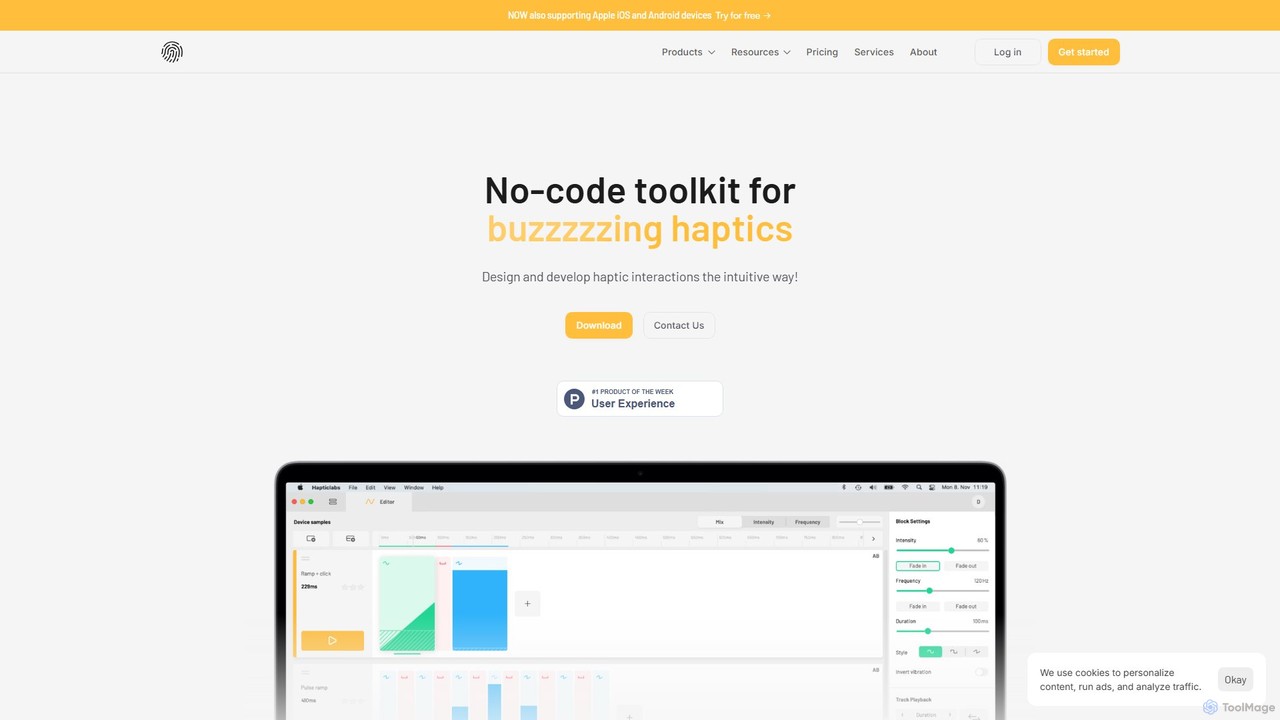
Hapticlabs is a no-code toolkit for designing, prototyping, and deploying tangible haptic interactions. It provides an intuitive ecosystem of software (Hapticlabs Studio), hardware (DevKit), and mobile apps to create rich tactile feedback for products, research, and education, significantly speeding up the development process.

Ux
Visits 10.4KFavorites 134Likes 147
XNote
Paid

XNote

XNote is an AI-powered smart writing set that combines a traditional pen and paper notebook with advanced digital technology. It captures your handwriting in real-time, converts it into editable digital text, and uses AI to help you search, summarize, and organize your notes. It's designed for anyone who loves the feel of writing on paper but needs the power and convenience of digital tools.

Study Tools
Visits 34.9KFavorites 140Likes 131
comma.ai
Paid

comma.ai

comma.ai offers an AI-powered hardware and open-source software solution, openpilot, that upgrades your car with advanced driver-assistance capabilities. Similar to Tesla Autopilot, it provides features like Adaptive Cruise Control, Automated Lane Centering, and Lane Change Assist for over 325 car models. The system uses a sophisticated neural network and a 360° vision system to make driving safer and more relaxing, especially on long journeys.

Driver Assistance
Visits 316.3KFavorites 115Likes 115
Apple
Paid

Apple

Apple integrates 'Apple Intelligence,' a personal intelligence system, across its ecosystem. It enhances user experience on iPhone, iPad, and Mac with powerful AI features like advanced Writing Tools, Image Playground, and a more capable Siri, all designed with a primary focus on privacy and seamless integration.

Smart Devices
Visits 541.1MFavorites 163Likes 171
ShapeScale
Paid

ShapeScale

ShapeScale is a revolutionary 3D body scanner and smart scale that creates a photorealistic 3D avatar of your body. It goes beyond traditional scales by visually tracking changes in muscle gain and fat loss with millimetric precision, providing heatmaps and detailed body composition analysis to keep you motivated on your fitness journey.

3D
Visits 17.1KFavorites 159Likes 166
magexmonitor
Paid

magexmonitor

MAGEX offers a range of high-performance portable monitors designed to enhance productivity and entertainment on the go. Specializing in ultra-slim, lightweight displays, their product line includes OLED, 2K/4K, and touchscreen models. With plug-and-play connectivity via USB-C and HDMI, MAGEX monitors are perfect for professionals, gamers, content creators, and anyone needing a reliable second screen for their laptop, gaming console, or other devices.

Gaming Accessories
Visits 9KFavorites 125Likes 146
OHMNI
Paid

OHMNI

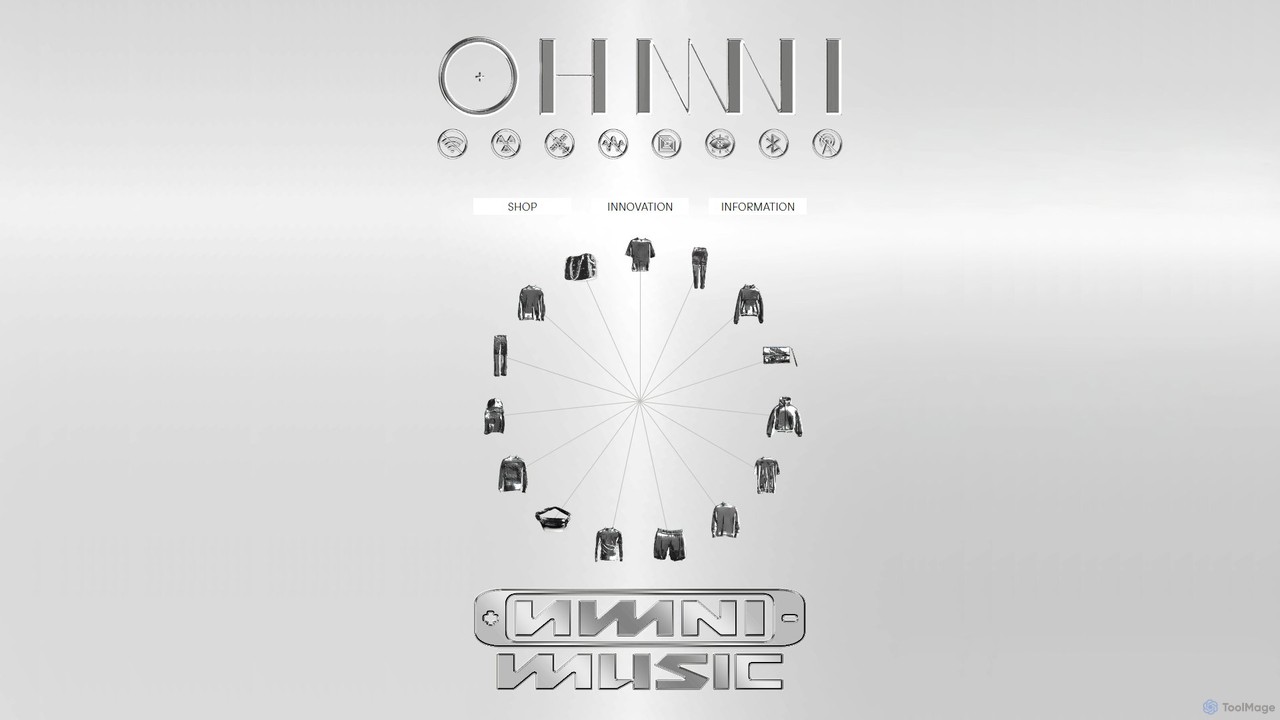
OHMNI is a revolutionary fashion brand offering 'Silver Street Shield' apparel. These garments, made with pure silver, are designed as modern-day armor to protect against digital surveillance, data harvesting, and electromagnetic fields (EMF), providing a physical barrier for privacy and autonomy.

Wearable Tech
Visits 79KFavorites 121Likes 119
Autonomous
Paid

Autonomous

Autonomous provides an integrated ecosystem of AI-powered smart office furniture and software solutions designed to enhance productivity and well-being. It combines ergonomic hardware like standing desks (SmartDesk) and chairs (ErgoChair) with intelligent software and the EdgeAI platform to create optimized, healthy, and efficient work environments for individuals and businesses.

Office Management
Visits 291KFavorites 151Likes 118
Mentra
Paid

Mentra

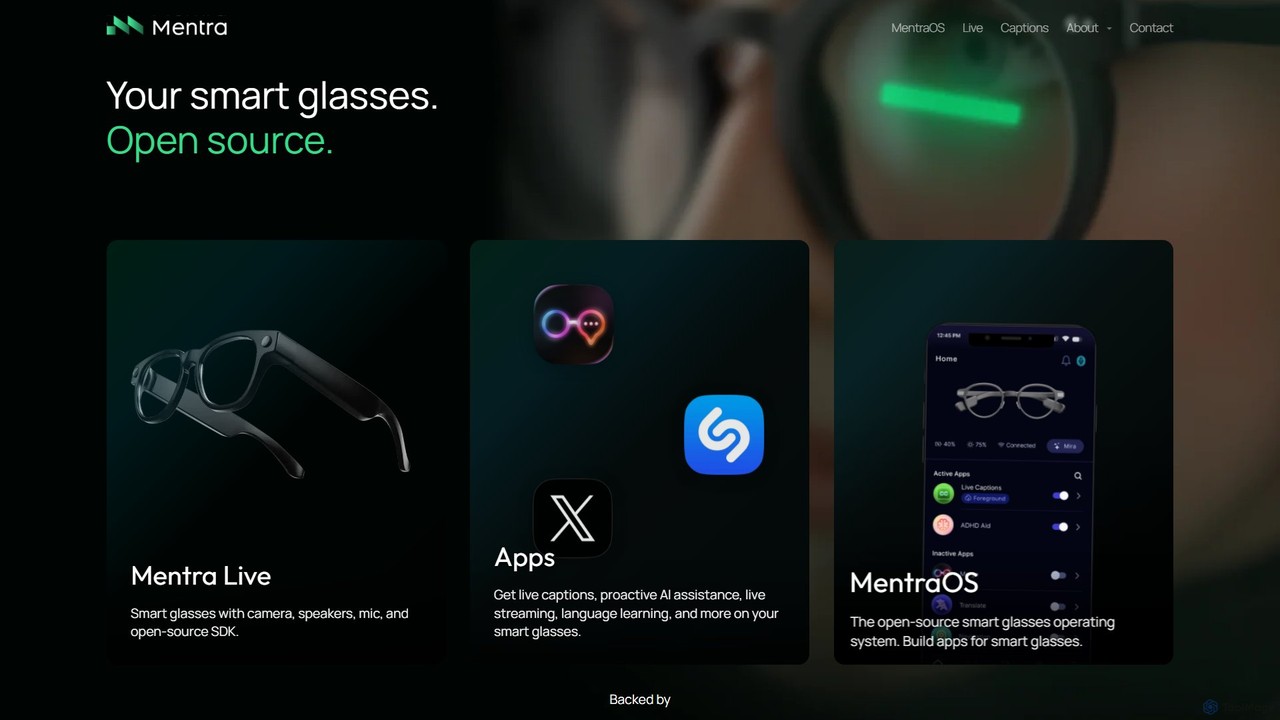
Mentra is a pioneering platform building the future of personal computing with open-source AI smart glasses. It features Mentra Live hardware and the MentraOS operating system, designed for proactive AI assistance, unrestricted live streaming, real-time translation, and a robust developer ecosystem. It aims to be the 'Android for smart glasses'.

Personal Assistant
Visits 12.1KFavorites 148Likes 160
phospho
Paid

phospho

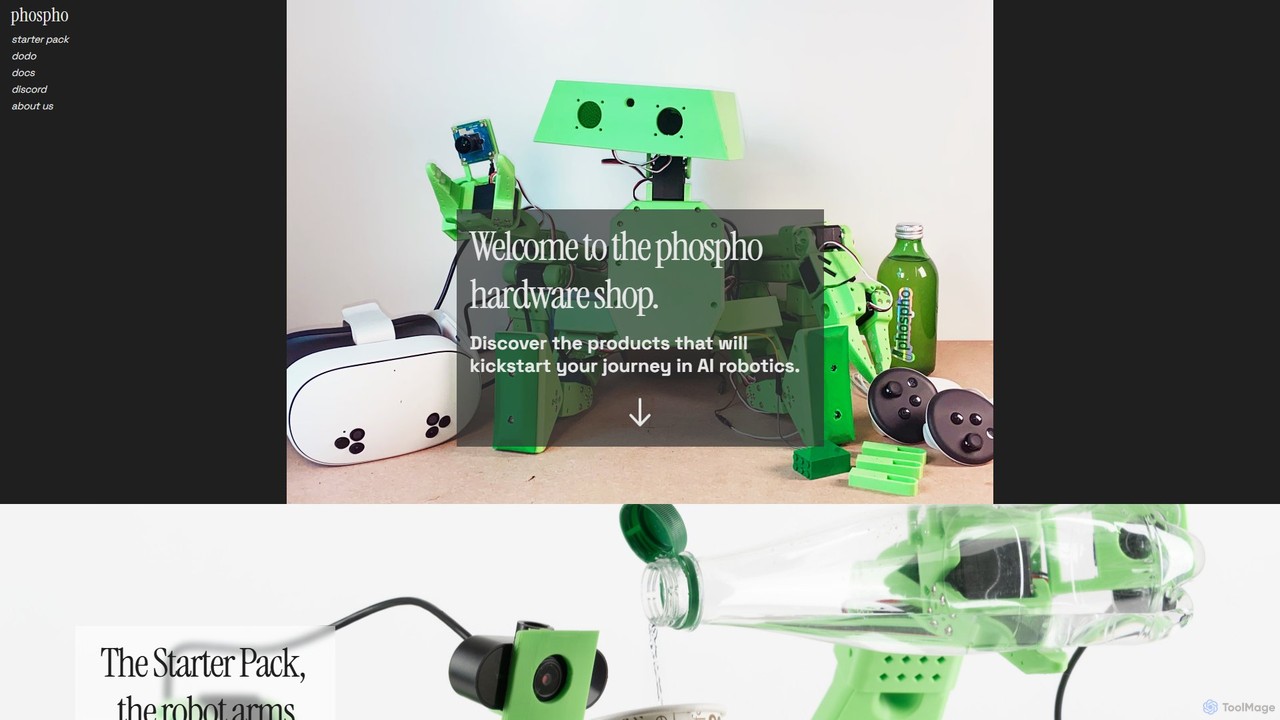
phospho is an AI robotics company providing an integrated ecosystem of open-source hardware and software. It offers starter kits like robotic arms and walking robots, powered by the phosphobot platform, to make advanced physical AI accessible for developers, researchers, and hobbyists.

Machine Learning
Visits 24.1KFavorites 114Likes 134
Broadcom
Paid

Broadcom

Broadcom is a global technology leader providing a comprehensive portfolio of semiconductor and infrastructure software solutions. Its products are foundational for building, scaling, and securing the world's most advanced AI data centers and enterprise private AI clouds.

Semiconductors
Visits 4.8MFavorites 107Likes 122
Telly
Free

Telly

Telly is a revolutionary dual-screen smart TV offered completely free to consumers. It features a 55” 4K HDR main display and a secondary Smart Screen that shows ads and useful information. The device is subsidized by advertising, integrating features like an AI voice assistant, video calling, fitness tracking, and gaming.

Voice Control
Visits 71.5KFavorites 103Likes 115
Clone Robotics
Paid

Clone Robotics

Clone Robotics is developing advanced, musculoskeletal humanoid androids designed to assist with daily life tasks for both individuals and businesses. Powered by revolutionary "Myofiber" artificial muscle technology and integrated with large language models, these bipedal robots offer human-level strength and dexterity. They can be controlled through natural language, making them intuitive companions for automation, assistance, and complex problem-solving.

Physical Assistants
Visits 31.4KFavorites 146Likes 127
Persys
Paid

Persys

Persys is a private, offline AI console designed as your personal cloud. This hardware device performs all AI inference on-device, ensuring your data and interactions remain completely private. With up to 2TB of storage and a suite of AI-native applications like private chat and deep search, it complements your existing devices by providing a secure, personalized, and offline-accessible intelligent computing environment.

Personal Server
Visits 5.5KFavorites 130Likes 140
Fydetab Duo
Paid

Fydetab Duo

Fydetab Duo is a high-performance, open-source 2-in-1 Linux tablet powered by FydeOS. It features a Rockchip RK3588S chip with a 6 TOPS AI NPU for on-device machine learning, a 12.35-inch 2K display, and a detachable keyboard with a stylus. It's designed for developers, tech enthusiasts, and productivity users seeking a versatile and customizable computing experience.

Embedded Systems
Visits 14KFavorites 119Likes 115
Omi
Paid

Omi

Omi is an open-source, wearable AI hardware device designed to capture your thoughts and conversations 24/7. It transforms spoken words into actionable insights, notes, and tasks through a rich ecosystem of apps. Available as a necklace or glasses, Omi serves individuals, developers, and enterprises with its customizable, white-label solutions.

Open Source
Visits 367.9KFavorites 132Likes 135

About Hardware

Hardware refers to specialized physical components designed to accelerate artificial intelligence workloads. These devices, including GPUs, TPUs, FPGAs, and custom AI chips, are optimized for the massive parallel processing and specific computations required by deep learning and machine learning algorithms. They enable significantly faster model training, real-time inference, and efficient deployment of AI solutions across diverse industries, offering substantial performance gains and energy efficiency compared to general-purpose CPUs for AI tasks.

Core Features

  • Parallel Processing: Efficiently handles the massive parallel computations inherent in neural networks and other AI models.
  • Specialized Accelerators: Incorporates dedicated units like Tensor Cores or AI Engines for optimized matrix multiplication and deep learning operations.
  • High Bandwidth Memory: Provides rapid data access crucial for processing large datasets and complex AI models.
  • Energy Efficiency: Designed to perform intensive AI tasks with optimized power consumption, reducing operational costs.
  • Scalability: Supports flexible scaling from single devices to large clusters for distributed AI training and inference.

Applicable Scenarios

AI hardware is indispensable for accelerating deep learning model training in research and development, enabling real-time AI inference on edge devices for immediate decision-making, and powering high-throughput AI services in cloud data centers. It also integrates with high-performance computing (HPC) for scientific simulations and data analytics.

How to Choose

When selecting AI hardware, consider your primary workload (training vs. inference), required performance metrics (speed, throughput, latency), budget, and scalability needs. Evaluate compatibility with your preferred AI frameworks (e.g., TensorFlow, PyTorch), the available software ecosystem, and the specific power consumption and form factor constraints for your deployment environment.

Featured tool rankings

Hardware use cases

1

Accelerating Large-Scale Deep Learning Training

AI researchers and data scientists utilize specialized AI hardware to drastically reduce the time required for training complex neural networks, such as large language models or advanced image recognition systems. By leveraging thousands of parallel processing cores and high-bandwidth memory, these components can cut training durations from weeks to days, enabling faster iteration on model architectures and hyperparameter tuning. This accelerates the development and deployment of more accurate and sophisticated AI solutions.

2

Real-time AI Inference at the Edge

IoT developers and robotics engineers deploy compact, energy-efficient AI accelerators on edge devices like smart cameras, drones, and industrial sensors. This allows AI models to perform immediate predictions locally, eliminating the latency associated with cloud communication. For instance, an autonomous drone can instantly detect obstacles, or a factory sensor can identify equipment anomalies in real-time, enhancing responsiveness, reducing bandwidth usage, and improving data privacy for critical applications.

3

High-Throughput AI for Cloud Services

Cloud service providers and SaaS developers rely on powerful AI hardware in data centers to offer scalable AI inference and training capabilities to millions of users. Racks of GPUs or TPUs handle concurrent AI requests, dynamically allocating resources to optimize throughput for services such as voice assistants, recommendation engines, and content moderation. This infrastructure ensures low-latency AI services at scale, supporting a vast user base and enabling cost-effective operation of AI-powered applications.

4

Scientific Computing and AI Integration

Scientific researchers and HPC engineers integrate AI hardware into complex scientific simulations, such as climate modeling or drug discovery, to accelerate analysis and discovery. By training surrogate models or performing data analysis with AI accelerators, they can speed up computationally intensive parts of simulations. This approach leverages the parallel processing strengths of AI hardware for both traditional high-performance computing and advanced AI tasks, enabling faster research cycles and new insights.

5

Automated Quality Control in Manufacturing

Manufacturing engineers and quality assurance teams implement automated visual inspection systems using AI-powered cameras connected to edge AI hardware. On high-speed production lines, these systems rapidly process images and run deep learning models to identify product defects or anomalies in real-time. This capability far exceeds human consistency and speed, significantly reducing defect rates, minimizing waste, and ensuring consistent product quality, leading to substantial cost savings and improved customer satisfaction.

6

Developing Autonomous Vehicle Perception Systems

Automotive engineers and AI perception developers utilize dedicated in-car AI hardware platforms to process vast amounts of sensor data (cameras, lidar, radar) in real-time. These platforms run complex neural networks for object detection, tracking, and path planning with ultra-low latency, enabling autonomous vehicles to accurately perceive their environment. This real-time processing capability is crucial for the safety and reliability of self-driving cars, facilitating instantaneous environmental understanding and safe decision-making in dynamic road conditions.

Hardware FAQ

What is AI Hardware?

AI Hardware refers to specialized computing components designed to efficiently execute artificial intelligence workloads. Unlike general-purpose CPUs, these devices, such as GPUs, TPUs, and custom AI chips, are optimized for the parallel processing and matrix operations fundamental to deep learning and machine learning algorithms. They accelerate tasks like neural network training and inference, enabling faster model development and deployment across various applications.

How does AI Hardware differ from traditional CPUs?

Traditional CPUs are versatile processors designed for sequential tasks and general computing. AI Hardware, conversely, is built for highly parallel computations, which are common in AI algorithms. CPUs have fewer, powerful cores, while AI accelerators like GPUs have thousands of smaller, specialized cores. This architectural difference allows AI hardware to process large datasets and complex neural networks significantly faster and more energy-efficiently for AI-specific tasks, making them ideal for demanding AI workloads.

What are the main types of AI Hardware?

The main types of AI Hardware include Graphics Processing Units (GPUs), Tensor Processing Units (TPUs), Field-Programmable Gate Arrays (FPGAs), and Application-Specific Integrated Circuits (ASICs). GPUs are widely used for both training and inference due to their parallel architecture. TPUs, developed by Google, are specifically designed for TensorFlow workloads. FPGAs offer flexibility and reconfigurability for custom AI solutions, while ASICs are custom-designed for maximum performance and efficiency for a specific AI task, often at scale.

How do I choose the right AI Hardware for my project?

Choosing the right AI hardware depends on your specific project needs. Consider whether you're primarily focused on AI model training (requiring high computational power and memory bandwidth) or inference (prioritizing energy efficiency and low latency, especially at the edge). Evaluate compatibility with your chosen AI frameworks (e.g., TensorFlow, PyTorch), your budget, scalability requirements, and the form factor (e.g., cloud, data center, edge device). Software ecosystem support and developer tools are also crucial for a smooth development process.

Can AI Hardware be used for edge computing?

Yes, AI Hardware is increasingly vital for edge computing. Edge AI hardware, often smaller and more energy-efficient than data center counterparts, enables AI models to run directly on local devices like smart cameras, sensors, and industrial robots. This allows for real-time processing of data at the source, reducing latency, conserving bandwidth, and enhancing data privacy. It's crucial for applications requiring immediate decision-making, such as autonomous systems, smart cities, and industrial automation, where instant responses are critical.