Paid
Popular Hardware AI tools include Apple, NVIDIA, Plaud, Broadcom, Omi, comma.ai, Autonomous, Frame, rabbit, and Limitless, helping you work more efficiently.


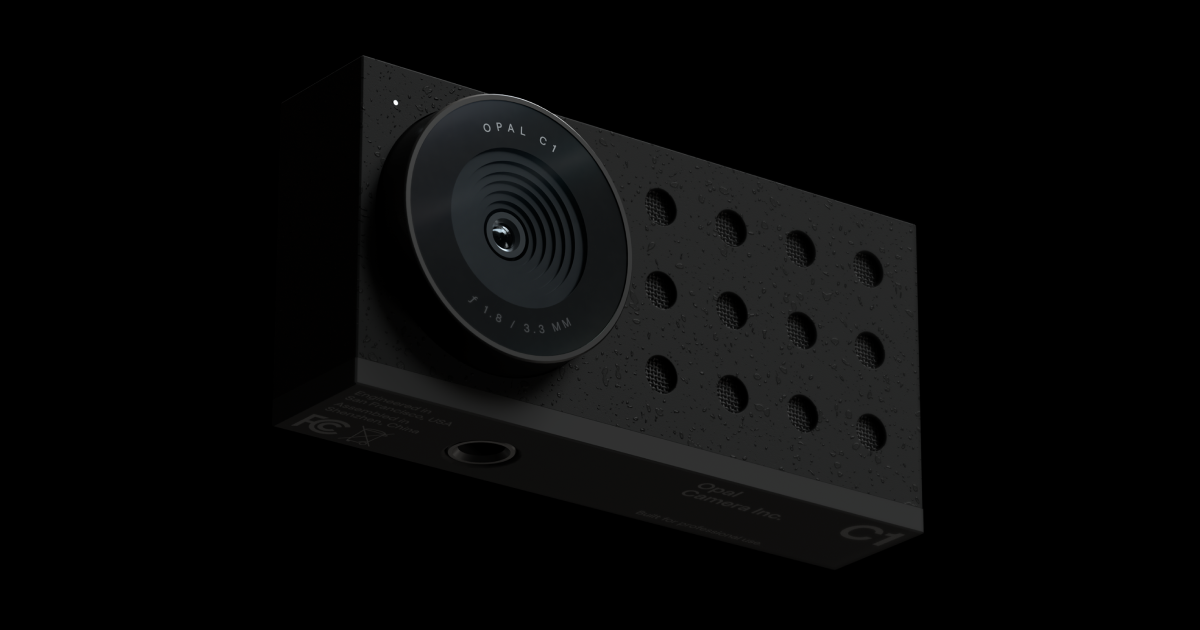
Everest is a high-performance, edge-optimized AI compute unit designed for automating enterprise workloads and enabling efficient on-premises AI model deployment. Based on provided information, it appears to be a physical hardware solution (C1 Unit) focused on significant cost savings compared to cloud services, low standby power consumption, and scalable automation for large-scale operations. It is currently available for pre-order.
Edge Computing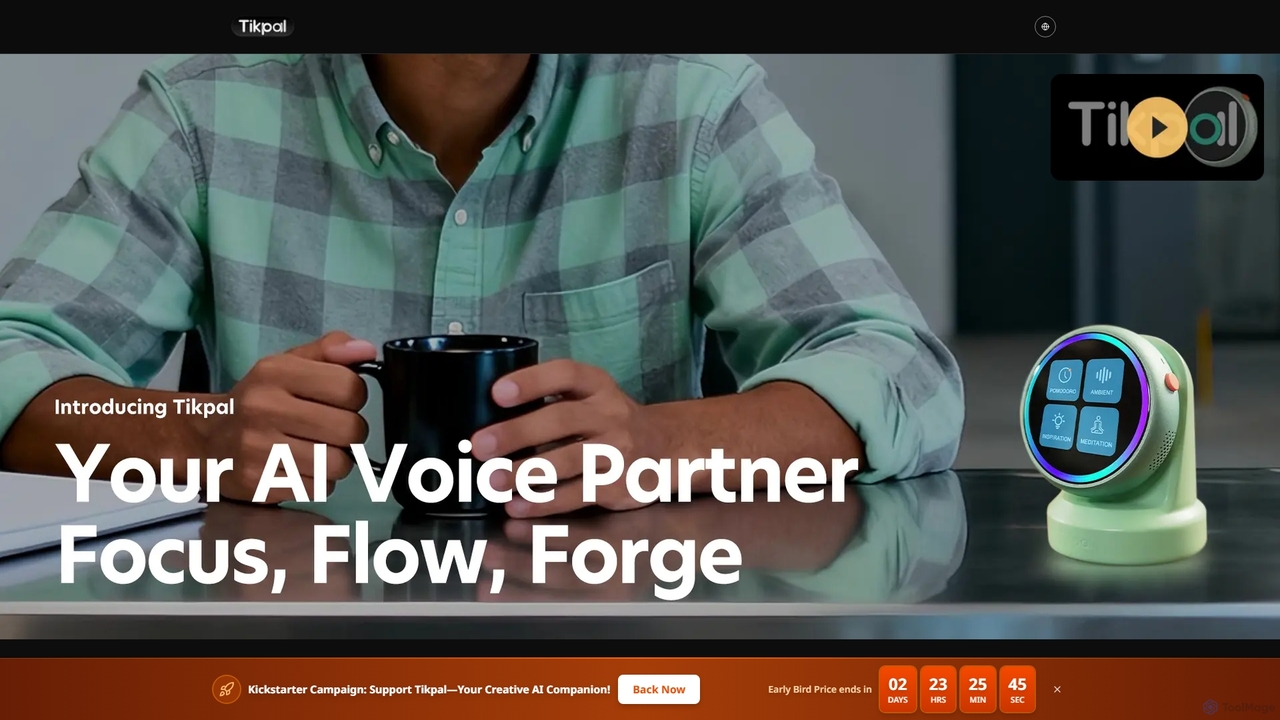
Tikpal is an innovative AI creative companion designed to enhance focus and productivity. This compact, multi-agent smart device captures ideas instantly through high-quality voice recording, offers real-time transcription, and intelligently organizes your thoughts. It seamlessly integrates with popular tools like Notion and Xmind, fostering an uninterrupted creative flow for thinkers and creators.
Idea Management
Stickerbox is an AI-powered creative device for kids that instantly transforms spoken ideas into custom, colorable stickers. Using voice-to-image generation and mess-free thermal printing, it offers a hands-on, screen-free way to unleash imagination. Simply speak an idea, print the sticker, and bring it to life with color.
Image Generation
Vitruvianform is an AI-powered smart home gym system, the Trainer+, that offers adaptive digital weight up to 200kg (440lbs). It provides personalized strength training, real-time performance tracking, and a vast library of guided workouts through its integrated app, revolutionizing home fitness with intelligent, space-saving technology.
Fitness Tech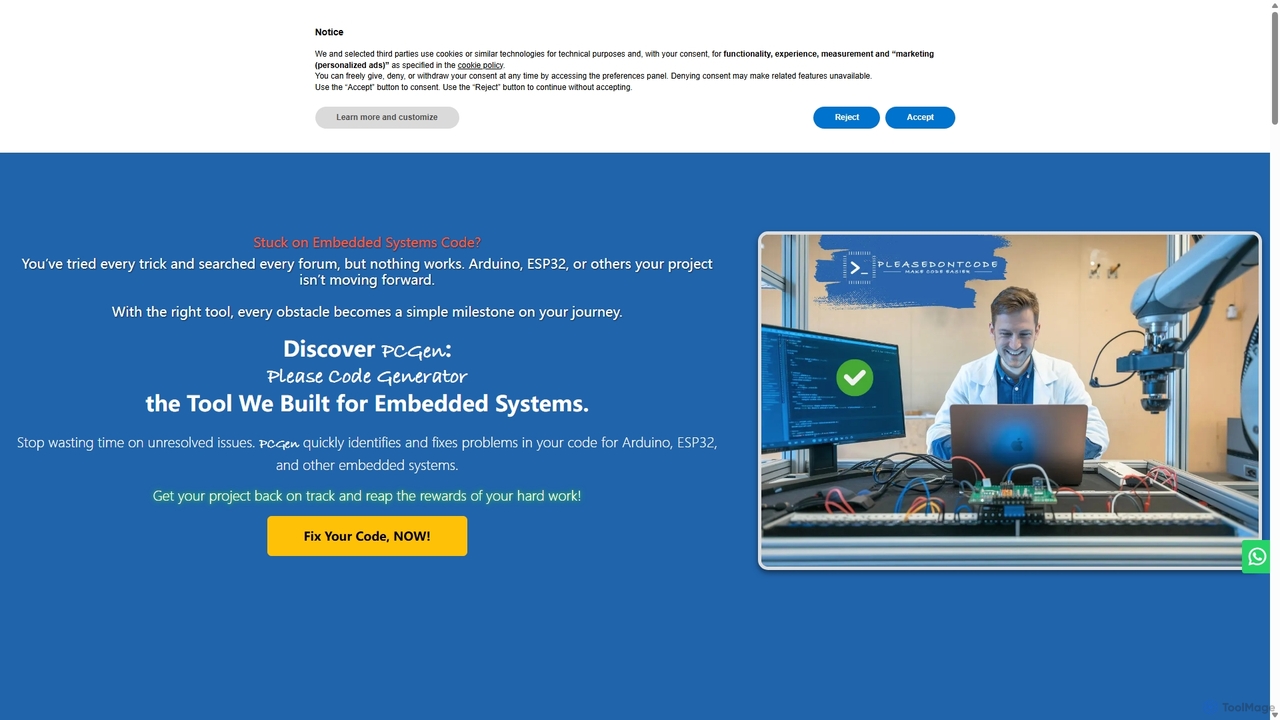
Pleasedontcode is a specialized AI code generator for embedded systems, designed to accelerate development for Arduino and ESP32 projects. It transforms natural language requirements into functional, error-free C++ code, fixes compilation errors, and guides users through a structured project setup, saving significant time for developers, hobbyists, and businesses.
Code Generation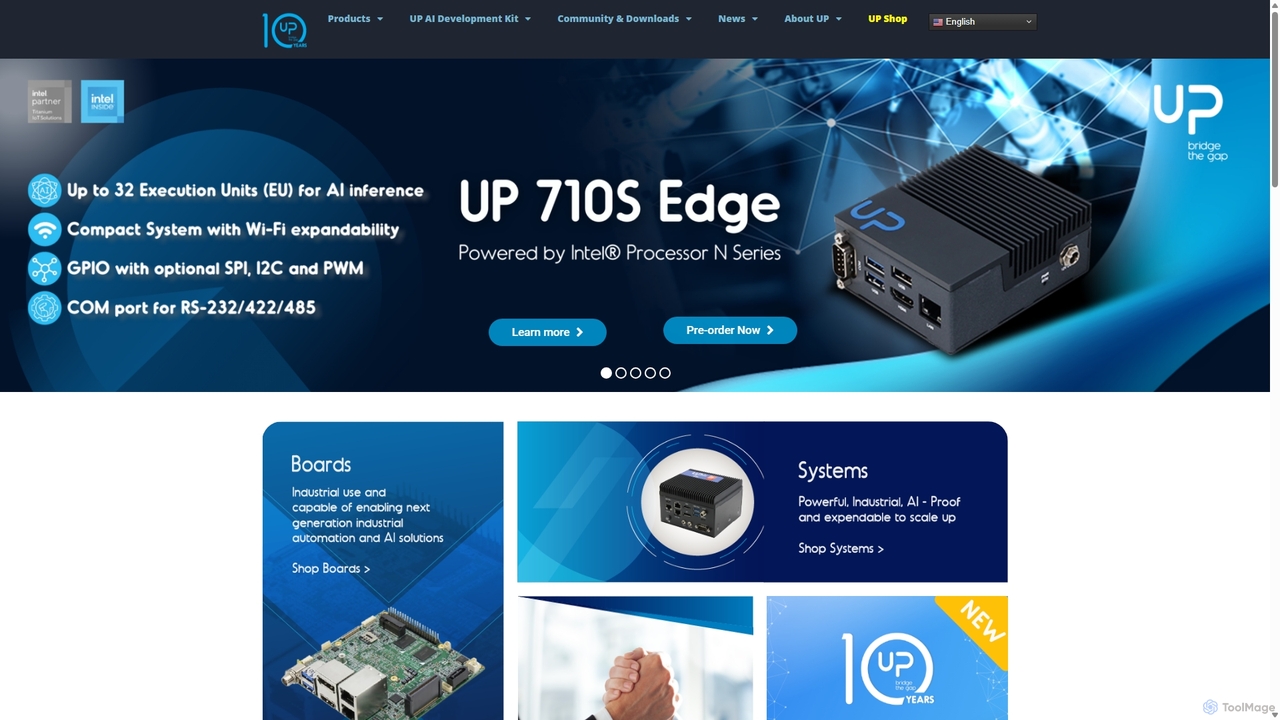
UP Board is a series of high-performance single-board computers (SBCs) designed for professional developers building edge AI, IoT, and robotics applications. Powered by robust Intel® processors and compatible with the Raspberry Pi ecosystem, it provides an ideal hardware platform for transitioning from prototype to mass production.
Edge Computing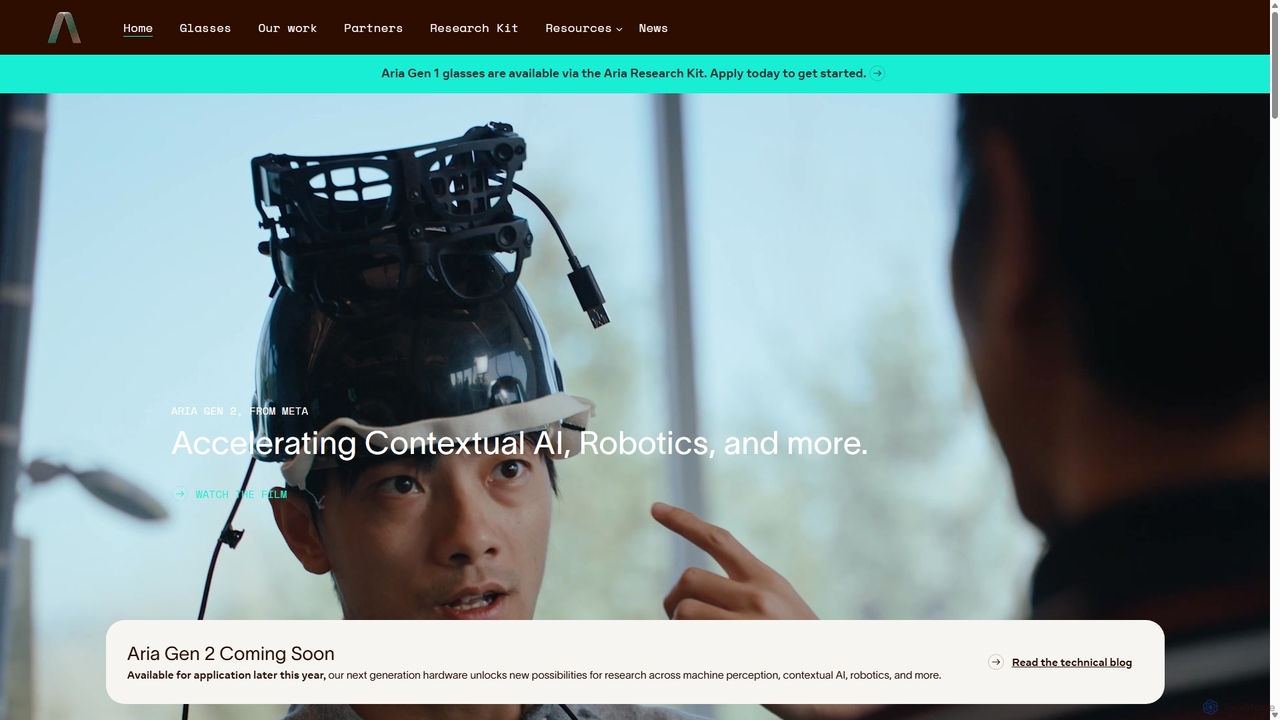
Project Aria is a research initiative by Meta designed to accelerate the development of contextual AI, augmented reality (AR), and robotics. It utilizes advanced research glasses, like the Aria Gen 2, to capture first-person perspective data, providing researchers with a comprehensive platform including hardware, open-source datasets, and development tools to build the future of machine perception.
Datasets
Lushair is an AI-powered hair and scalp analysis system that uses a smart dermascope and a mobile app to provide clinic-grade diagnostics at home. It analyzes 16 vital signs to generate personalized care plans, including product, lifestyle, and professional recommendations, helping users proactively manage their hair health.
Diagnostics
Exa Laboratories (now Zettascale) is a YC-backed Silicon Valley startup developing state-of-the-art, energy-efficient reconfigurable chips (XPUs) for AI. Their polymorphic computing architecture aims to solve the AI energy crisis by offering superior performance, versatility, and efficiency compared to traditional GPUs and TPUs for both training and inference.
Ai Development
Plaud is an innovative AI note-taking solution combining a sleek hardware voice recorder with a powerful AI app. It captures conversations, transcribes them with high accuracy, and generates structured summaries, mind maps, and action items. Designed for professionals, students, and creators, Plaud streamlines the documentation of meetings, lectures, and interviews, saving hours of manual work and ensuring no critical detail is missed.
Transcription
Limitless is a personal AI system featuring a wearable Pendant that captures what you've seen, said, and heard. It acts as an external memory, transcribing conversations, generating summaries, and allowing you to query your past experiences with HIPAA-grade privacy.
Wearables
Proception develops advanced humanoid hands, merging robotics and AI to achieve unprecedented dexterity. Their flagship product, ProHand, features human-like precision, adaptive grip, and tactile sensing. Backed by Y Combinator, Proception aims to revolutionize industries like manufacturing, healthcare, and research by enabling robots to perform complex, delicate tasks previously exclusive to humans.
Machine Learning
Omi AI is a revolutionary AI hardware platform designed to turn thought into action. Centered around a wearable device, it functions as an all-encompassing personal assistant. With customizable omiGPT Personas and a vast ecosystem of apps for productivity, health, and companionship, Omi AI seamlessly integrates artificial intelligence into your daily life, offering a hands-free, context-aware experience.
Wearables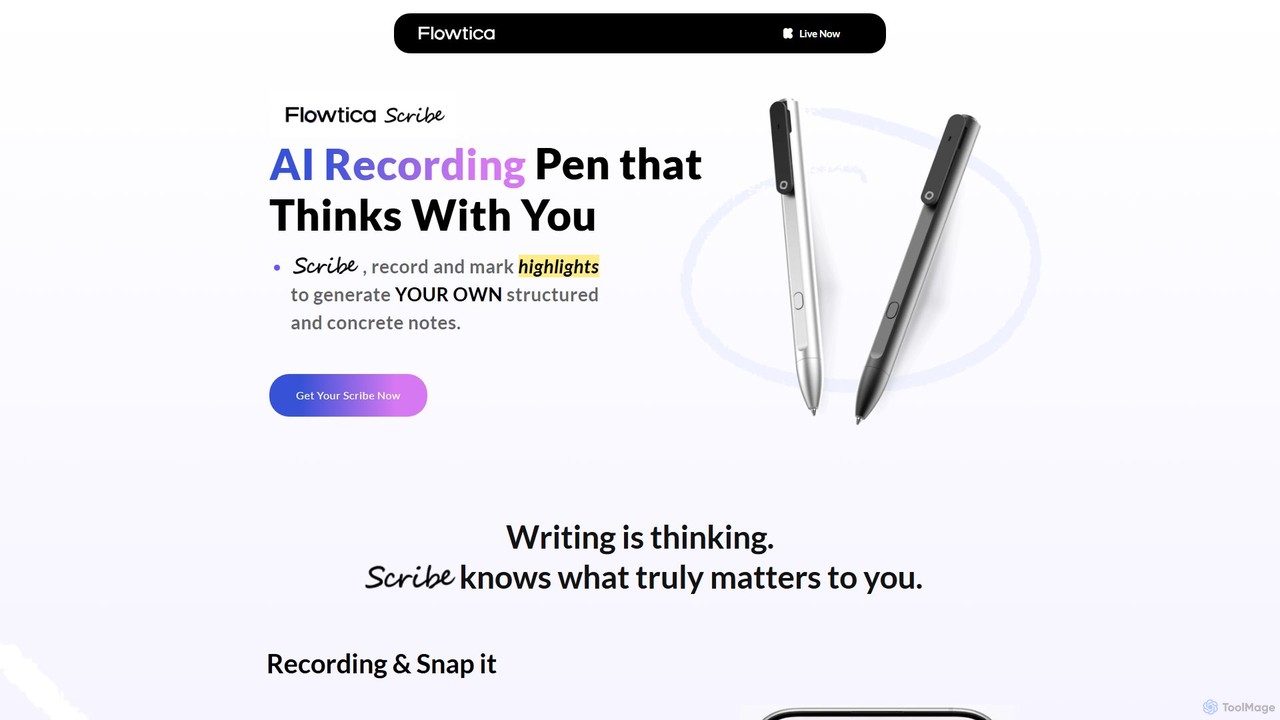
Flowtica Scribe is a revolutionary AI-powered recording pen designed to capture audio and generate personalized, structured notes. By combining audio recording with user-marked highlights and snapped handwritten notes, it creates insightful summaries that reflect your priorities, moving beyond generic bullet points for meetings, interviews, and lectures.
Transcription
HP IQ is an advanced AI ecosystem, born from the acquisition of Humane, featuring the Ai Pin wearable and the intelligent CosmOS. It offers a screen-free, context-aware computing experience through voice, gestures, and a laser-projected display. Designed for both personal and enterprise use, it aims to enhance productivity and integrate AI seamlessly into daily life, prioritizing intuitive interaction and user privacy.
Workforce Collaboration
Spectacles are standalone Augmented Reality (AR) glasses by Snap, powered by the Snap OS. They integrate multi-modal AI and are designed for developers and creators to build immersive, shared AR experiences. Featuring see-through lenses and advanced sensors, Spectacles seamlessly blend digital content with the real world, extending the Snapchat ecosystem into three dimensions.
Generative Ai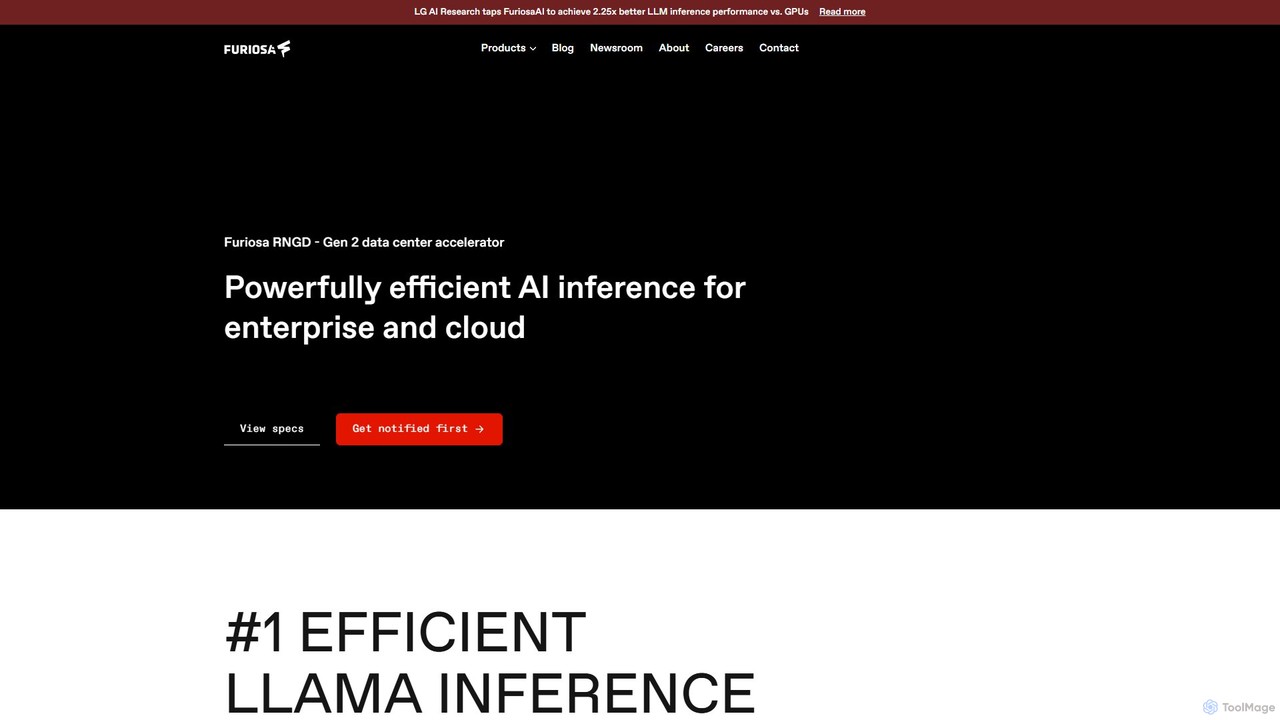
FuriosaAI develops high-performance, power-efficient AI accelerators for data centers. Its flagship product, RNGD, is designed for demanding AI inference tasks, particularly for large language models (LLMs). Featuring the innovative Tensor Contraction Processor (TCP) architecture, RNGD delivers exceptional performance at a very low 180W power consumption, significantly reducing the total cost of ownership and environmental impact for enterprise and cloud AI deployments.
Infrastructure
Opal Camera offers a range of AI-powered webcams, including the C1 and Tadpole models, designed to deliver DSLR-like video quality. Paired with the intelligent Composer software, it provides features like professional bokeh, auto-framing, and advanced image processing for video conferencing, streaming, and content creation.
Smart Gadgets
Frame by Brilliant Labs are open-source AI smart glasses designed for developers, hackers, and creators. Featuring a micro OLED display, camera, and microphone, they allow users to build and experience custom AI and AR applications. These lightweight glasses integrate with cloud AI services, enabling real-time visual search, translation, and more, all powered by a vibrant, community-driven ecosystem.
Personal Assistant
NVIDIA is a global leader in artificial intelligence computing, providing a full-stack platform of hardware, software, and services. Its solutions power everything from gaming and professional graphics with GeForce and RTX GPUs to advanced AI, data science, and high-performance computing in data centers and the cloud.
Infrastructure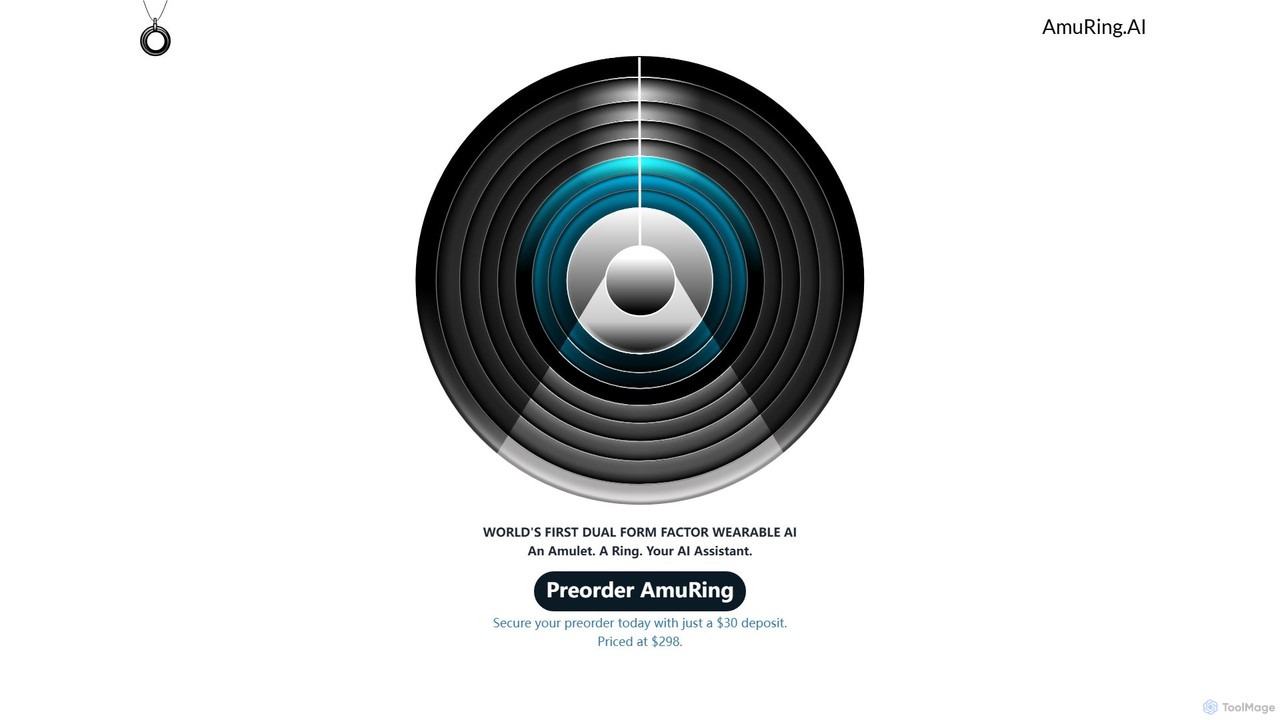
amuring is a revolutionary wearable AI companion featuring a unique dual form factor, multilingual support, and a Community-driven, Open-Source Software (COSS) platform. It can be worn as a stylish ring or a discreet pendant, offering seamless access to a personal AI assistant for real-time translation, voice commands, health tracking, and more, without needing to look at a screen.
Real Time Translation
BookLed is a revolutionary paper book that merges traditional reading with Generative AI. It features embedded electronics that detect page turns, triggering synchronized light, sound, and dynamic AI-powered narration to create an immersive and interactive storytelling experience for children.
StorytellingHardware refers to specialized physical components designed to accelerate artificial intelligence workloads. These devices, including GPUs, TPUs, FPGAs, and custom AI chips, are optimized for the massive parallel processing and specific computations required by deep learning and machine learning algorithms. They enable significantly faster model training, real-time inference, and efficient deployment of AI solutions across diverse industries, offering substantial performance gains and energy efficiency compared to general-purpose CPUs for AI tasks.
AI hardware is indispensable for accelerating deep learning model training in research and development, enabling real-time AI inference on edge devices for immediate decision-making, and powering high-throughput AI services in cloud data centers. It also integrates with high-performance computing (HPC) for scientific simulations and data analytics.
When selecting AI hardware, consider your primary workload (training vs. inference), required performance metrics (speed, throughput, latency), budget, and scalability needs. Evaluate compatibility with your preferred AI frameworks (e.g., TensorFlow, PyTorch), the available software ecosystem, and the specific power consumption and form factor constraints for your deployment environment.
AI researchers and data scientists utilize specialized AI hardware to drastically reduce the time required for training complex neural networks, such as large language models or advanced image recognition systems. By leveraging thousands of parallel processing cores and high-bandwidth memory, these components can cut training durations from weeks to days, enabling faster iteration on model architectures and hyperparameter tuning. This accelerates the development and deployment of more accurate and sophisticated AI solutions.
IoT developers and robotics engineers deploy compact, energy-efficient AI accelerators on edge devices like smart cameras, drones, and industrial sensors. This allows AI models to perform immediate predictions locally, eliminating the latency associated with cloud communication. For instance, an autonomous drone can instantly detect obstacles, or a factory sensor can identify equipment anomalies in real-time, enhancing responsiveness, reducing bandwidth usage, and improving data privacy for critical applications.
Cloud service providers and SaaS developers rely on powerful AI hardware in data centers to offer scalable AI inference and training capabilities to millions of users. Racks of GPUs or TPUs handle concurrent AI requests, dynamically allocating resources to optimize throughput for services such as voice assistants, recommendation engines, and content moderation. This infrastructure ensures low-latency AI services at scale, supporting a vast user base and enabling cost-effective operation of AI-powered applications.
Scientific researchers and HPC engineers integrate AI hardware into complex scientific simulations, such as climate modeling or drug discovery, to accelerate analysis and discovery. By training surrogate models or performing data analysis with AI accelerators, they can speed up computationally intensive parts of simulations. This approach leverages the parallel processing strengths of AI hardware for both traditional high-performance computing and advanced AI tasks, enabling faster research cycles and new insights.
Manufacturing engineers and quality assurance teams implement automated visual inspection systems using AI-powered cameras connected to edge AI hardware. On high-speed production lines, these systems rapidly process images and run deep learning models to identify product defects or anomalies in real-time. This capability far exceeds human consistency and speed, significantly reducing defect rates, minimizing waste, and ensuring consistent product quality, leading to substantial cost savings and improved customer satisfaction.
Automotive engineers and AI perception developers utilize dedicated in-car AI hardware platforms to process vast amounts of sensor data (cameras, lidar, radar) in real-time. These platforms run complex neural networks for object detection, tracking, and path planning with ultra-low latency, enabling autonomous vehicles to accurately perceive their environment. This real-time processing capability is crucial for the safety and reliability of self-driving cars, facilitating instantaneous environmental understanding and safe decision-making in dynamic road conditions.
AI Hardware refers to specialized computing components designed to efficiently execute artificial intelligence workloads. Unlike general-purpose CPUs, these devices, such as GPUs, TPUs, and custom AI chips, are optimized for the parallel processing and matrix operations fundamental to deep learning and machine learning algorithms. They accelerate tasks like neural network training and inference, enabling faster model development and deployment across various applications.
Traditional CPUs are versatile processors designed for sequential tasks and general computing. AI Hardware, conversely, is built for highly parallel computations, which are common in AI algorithms. CPUs have fewer, powerful cores, while AI accelerators like GPUs have thousands of smaller, specialized cores. This architectural difference allows AI hardware to process large datasets and complex neural networks significantly faster and more energy-efficiently for AI-specific tasks, making them ideal for demanding AI workloads.
The main types of AI Hardware include Graphics Processing Units (GPUs), Tensor Processing Units (TPUs), Field-Programmable Gate Arrays (FPGAs), and Application-Specific Integrated Circuits (ASICs). GPUs are widely used for both training and inference due to their parallel architecture. TPUs, developed by Google, are specifically designed for TensorFlow workloads. FPGAs offer flexibility and reconfigurability for custom AI solutions, while ASICs are custom-designed for maximum performance and efficiency for a specific AI task, often at scale.
Choosing the right AI hardware depends on your specific project needs. Consider whether you're primarily focused on AI model training (requiring high computational power and memory bandwidth) or inference (prioritizing energy efficiency and low latency, especially at the edge). Evaluate compatibility with your chosen AI frameworks (e.g., TensorFlow, PyTorch), your budget, scalability requirements, and the form factor (e.g., cloud, data center, edge device). Software ecosystem support and developer tools are also crucial for a smooth development process.
Yes, AI Hardware is increasingly vital for edge computing. Edge AI hardware, often smaller and more energy-efficient than data center counterparts, enables AI models to run directly on local devices like smart cameras, sensors, and industrial robots. This allows for real-time processing of data at the source, reducing latency, conserving bandwidth, and enhancing data privacy. It's crucial for applications requiring immediate decision-making, such as autonomous systems, smart cities, and industrial automation, where instant responses are critical.