Ansible
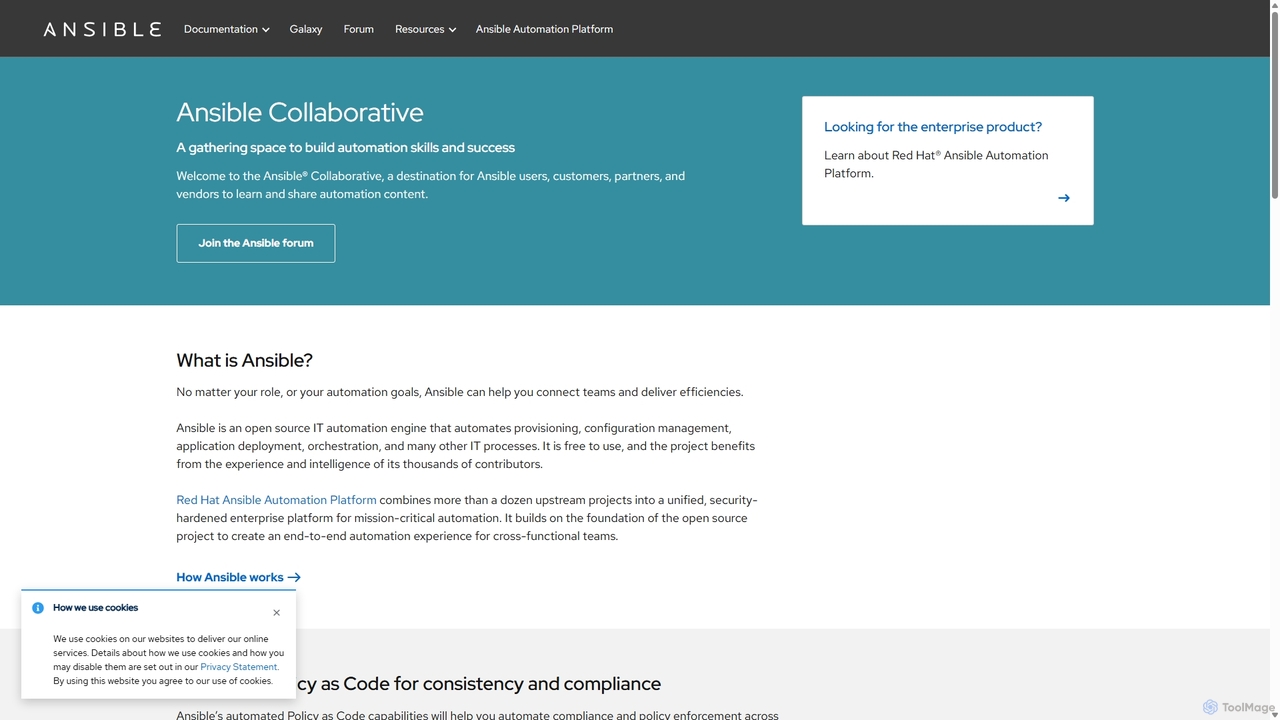
Ansible is a powerful open-source IT automation engine that simplifies application deployment, configuration management, and orchestration. Using human-readable …
Ansible is a powerful open-source IT automation engine that simplifies application deployment, configuration management, and orchestration. Using human-readable YAML, it automates complex IT processes without requiring agents on managed nodes, making it simple, efficient, and secure for DevOps, system administrators, and developers.
K8Studio
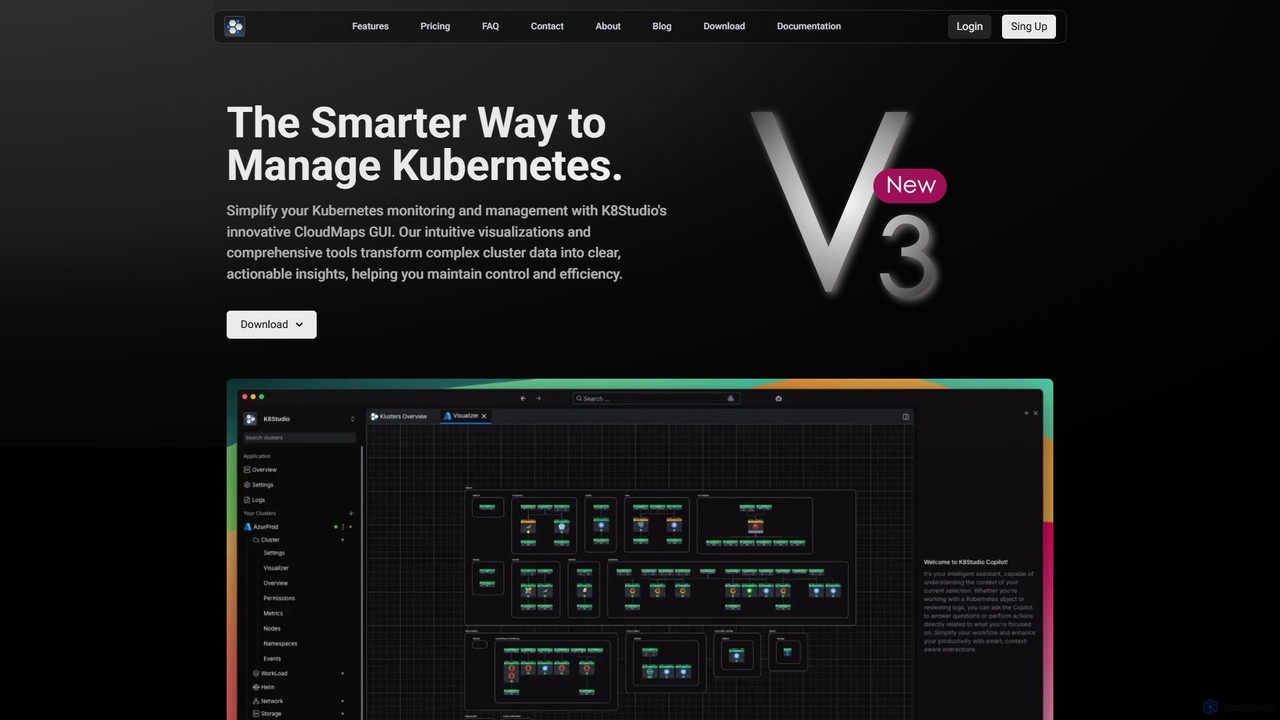
K8Studio is an advanced Kubernetes UI designed for DevOps, DevSecOps, and SRE teams. It simplifies cluster management with …
K8Studio is an advanced Kubernetes UI designed for DevOps, DevSecOps, and SRE teams. It simplifies cluster management with an intuitive visual interface, featuring CloudMaps for real-time visualization, an AI Copilot for intelligent assistance, and robust multi-cluster management capabilities. Its agent-free architecture ensures security and high performance, making complex Kubernetes operations more efficient and accessible.
e-chos
e-chos is an AI-powered platform featuring Phom, a DevOps assistant for Linux systems. It automates server monitoring, detects …
e-chos is an AI-powered platform featuring Phom, a DevOps assistant for Linux systems. It automates server monitoring, detects issues, applies self-healing fixes, and predicts outages in real-time. Designed for system administrators and DevOps teams, it simplifies infrastructure management, optimizes performance, and brings autonomous intelligence to any machine, anywhere.
OtterTune
OtterTune is an AI-powered database optimization service that uses machine learning to automatically tune and improve the performance …
OtterTune is an AI-powered database optimization service that uses machine learning to automatically tune and improve the performance of PostgreSQL and MySQL databases. It analyzes your database's workload to recommend optimal configuration settings, helping to increase throughput, reduce latency, and lower operational costs without manual intervention.
About Infrastructure Management
AI Infrastructure Management tools are specialized platforms that use machine learning and data analysis to automate the monitoring, maintenance, and optimization of IT infrastructure. These tools analyze vast amounts of data from servers, networks, and cloud services to predict failures, detect anomalies, and automate responses. Their primary value lies in shifting IT operations from a reactive to a proactive model, significantly improving system reliability, security, and cost-efficiency. By identifying potential issues before they impact users, these solutions help maintain high availability for critical business applications.
Core Features
- Predictive Analytics: Forecasts potential hardware failures, performance bottlenecks, and capacity shortages by analyzing historical data trends.
- Automated Root Cause Analysis (RCA): Automatically correlates disparate alerts and log data to pinpoint the precise origin of a problem, reducing troubleshooting time.
- Dynamic Resource Optimization: Intelligently scales cloud resources up or down based on real-time demand, optimizing performance and minimizing costs.
- Anomaly Detection: Identifies unusual patterns in system behavior, network traffic, or user activity that may indicate a security threat or operational issue.
- Automated Remediation: Executes pre-defined workflows to resolve common issues automatically, such as restarting a service or applying a patch.
Applicable Scenarios
These tools are essential for organizations with complex, large-scale IT environments. They are widely used by Site Reliability Engineers (SREs), DevOps teams, and IT administrators in sectors like finance, e-commerce, and SaaS to manage hybrid clouds and microservices architectures. For instance, an e-commerce platform can use them to ensure uptime during peak shopping seasons, while a financial institution can detect fraudulent activity in real-time.
Selection Criteria
When choosing an AI Infrastructure Management tool, consider its integration capabilities with your existing stack (e.g., AWS, Azure, Kubernetes). Evaluate the depth of its automation features and the transparency of its AI models (explainability). Also, assess its scalability to handle your data volume and the pricing model's alignment with your operational budget. Finally, consider the learning curve and the level of expertise required to operate the platform effectively.

Infrastructure ManagementUse Cases
Proactive Server Failure Prediction
A data center manager for a large hosting company is responsible for maintaining thousands of servers. Instead of waiting for hardware to fail, they use an AI Infrastructure Management tool to continuously analyze server health metrics like temperature, disk I/O, and memory usage. The AI model identifies subtle patterns that precede a hard drive failure, generating a predictive alert days in advance. This allows the operations team to schedule maintenance, replace the drive during a low-traffic window, and prevent a critical outage that could affect hundreds of customers, thus preserving service level agreements (SLAs) and company reputation.
Automated Cloud Cost Optimization
A fast-growing startup's DevOps team struggles with unpredictable cloud spending on AWS. They deploy an AI Infrastructure Management tool that analyzes resource utilization across all their EC2 instances and RDS databases. The AI identifies that many instances are consistently underutilized outside of business hours. It automatically generates and applies a schedule to shut down non-production instances overnight and on weekends. Furthermore, it recommends rightsizing over-provisioned instances, projecting a 30% reduction in their monthly cloud bill without impacting application performance, freeing up budget for further development.
Intelligent Log Analysis for Troubleshooting
An application on a complex microservices architecture experiences intermittent errors. A developer would typically spend hours manually searching through millions of log entries from dozens of services. By using an AI Infrastructure Management tool, the logs are automatically ingested and analyzed. The AI clusters related log messages, filters out the noise, and identifies a rare error correlation between a database query timeout and a specific API call. It presents a concise summary of the event timeline and the likely root cause, reducing the mean time to resolution (MTTR) from hours to minutes and allowing the developer to focus on fixing the bug.
Real-time Network Security Threat Detection
A financial services company needs to protect sensitive customer data from cyber threats. Their Site Reliability Engineering (SRE) team uses an AI-powered tool to monitor all network traffic in real-time. The AI establishes a baseline of normal network behavior. When it detects a sudden, unusual pattern of data transfer to an external IP address—a potential sign of data exfiltration—it immediately triggers a high-priority alert. The system can also be configured to automatically block the suspicious IP address, containing the threat instantly while the security team investigates. This proactive defense mechanism significantly reduces the risk of a major data breach.
Dynamic Resource Allocation for E-commerce
An online retail platform prepares for a major flash sale event. In the past, they would manually over-provision servers to handle the anticipated traffic spike, leading to high costs. Now, they use an AI Infrastructure Management tool integrated with their Kubernetes cluster. The tool's AI model, trained on past traffic data, accurately predicts the required compute and database resources second-by-second. As traffic surges, it automatically scales up the number of application pods and database connections. Once the sale ends and traffic normalizes, it scales everything back down, ensuring a smooth customer experience while only paying for the exact resources needed.
Automated Security Compliance and Patching
An IT security team at a large enterprise is responsible for ensuring thousands of virtual machines comply with security policies like CIS Benchmarks. Manually auditing and patching systems is slow and error-prone. They implement an AI Infrastructure Management tool with compliance automation features. The tool continuously scans the entire infrastructure, identifying systems with misconfigurations or missing security patches. It uses AI to prioritize patching based on vulnerability severity and asset criticality. For low-risk patches, it can automatically deploy them during maintenance windows, generating a detailed compliance report for auditors and freeing up the security team to focus on more complex threats.