CybertraceAI
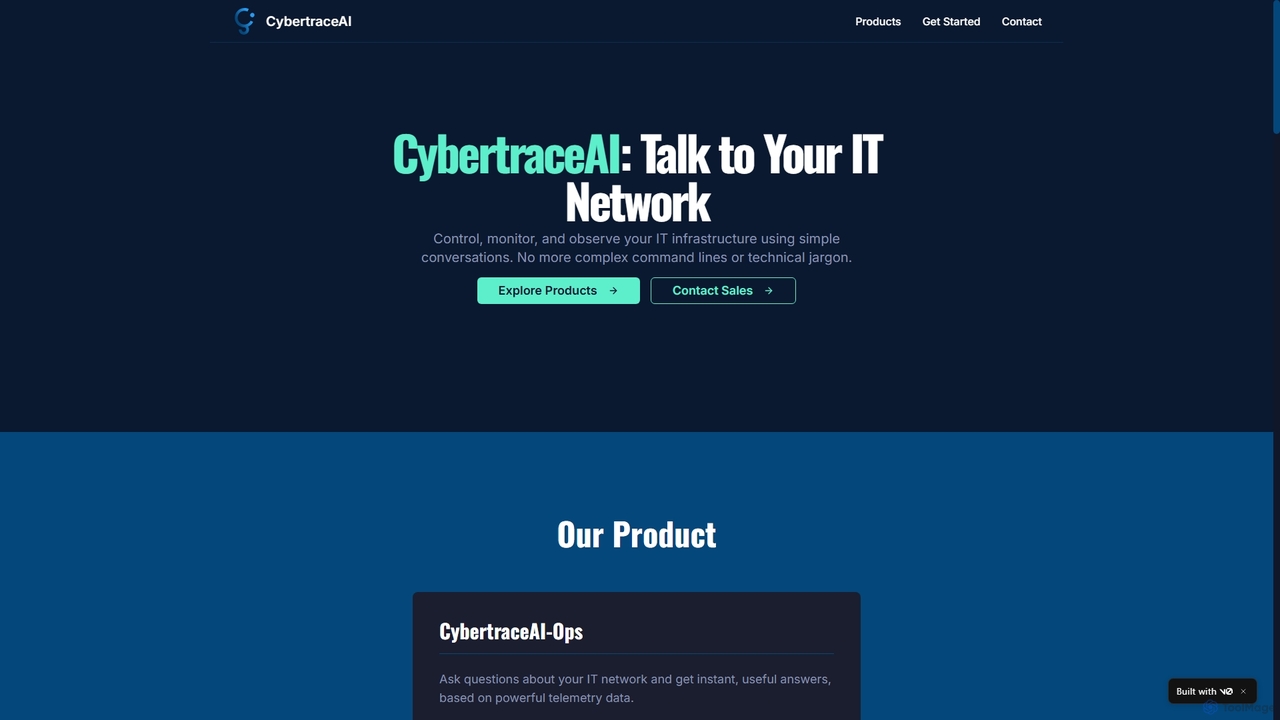
CybertraceAI is a conversational AI platform for IT network management. It enables professionals to monitor, control, and analyze …
CybertraceAI is a conversational AI platform for IT network management. It enables professionals to monitor, control, and analyze their infrastructure using simple natural language queries. Replace complex command lines with intuitive conversations to get instant, verifiable answers based on real-time telemetry data, simplifying network operations and troubleshooting.
itva
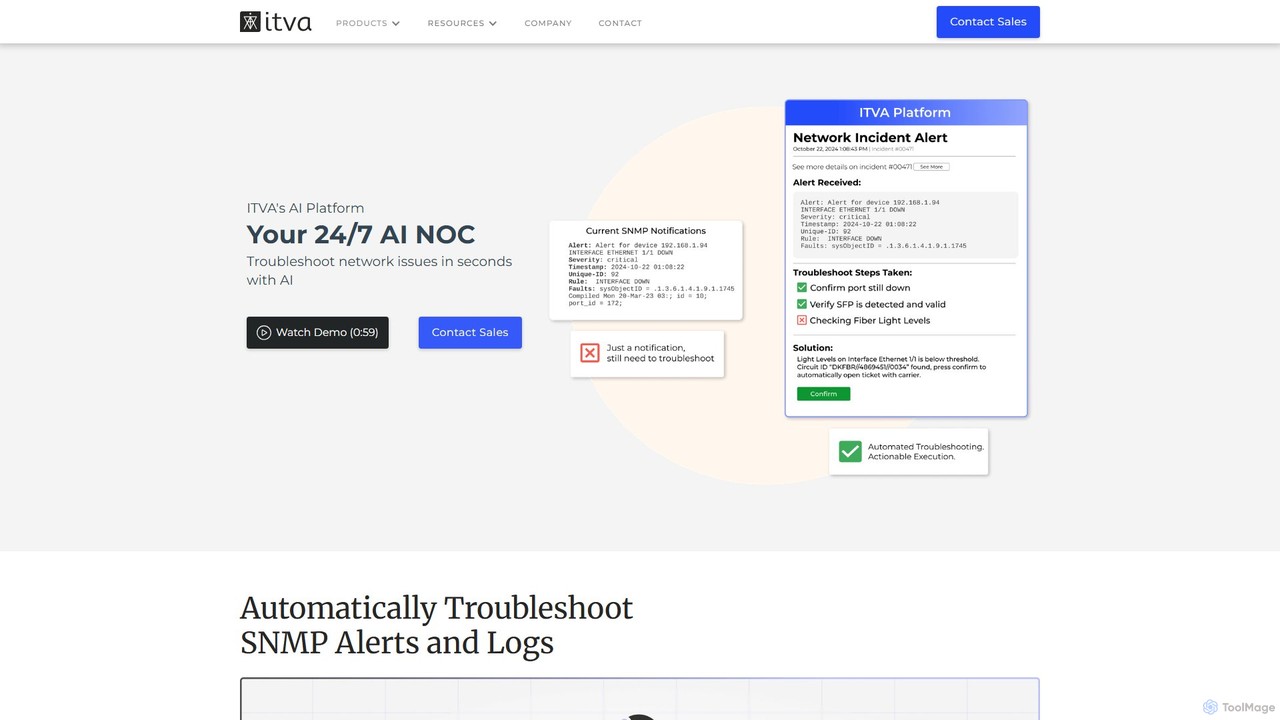
itva is a 24/7 AI Network Operations Center (NOC) that leverages generative AI to automate network configuration, management, …
itva is a 24/7 AI Network Operations Center (NOC) that leverages generative AI to automate network configuration, management, and documentation. It enables users to perform complex network tasks using natural language, significantly reducing configuration time and improving operational efficiency and accuracy.
LatenceTech
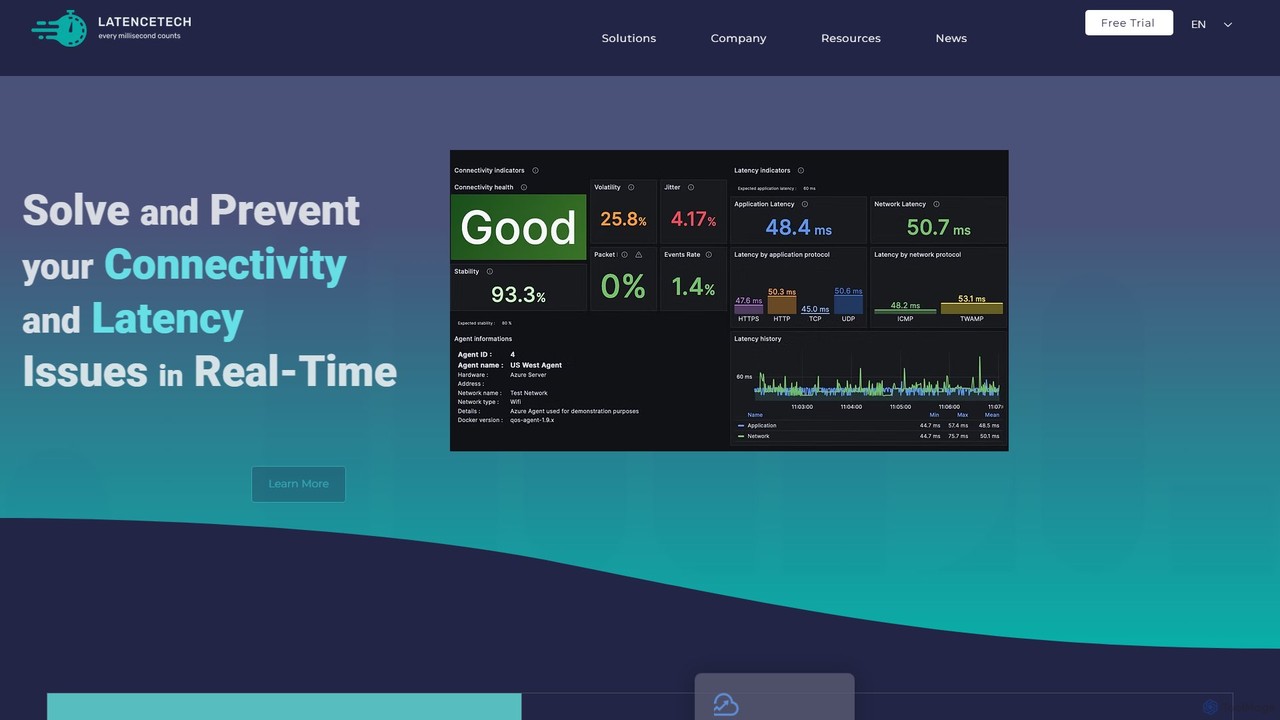
LatenceTech is an AI-powered platform for real-time wireless network monitoring and analytics. It helps businesses visualize, predict, and …
LatenceTech is an AI-powered platform for real-time wireless network monitoring and analytics. It helps businesses visualize, predict, and resolve connectivity and latency issues across various networks like 5G, LTE, Wi-Fi, and Satellite. By leveraging machine learning, it provides end-to-end visibility, predictive insights, and customizable solutions to ensure stable, low-latency performance for critical applications and innovations.
Censornet
Censornet is an autonomous, integrated cloud security platform that unifies Web Security, Email Security, and Cloud Application Security …
Censornet is an autonomous, integrated cloud security platform that unifies Web Security, Email Security, and Cloud Application Security (CASB). Powered by AI, it provides mid-market organizations and MSPs with a single, easy-to-manage solution to protect people, apps, and data from cyber threats without the complexity of multiple point products.
About Network Management
AI Network Management tools are a specialized category of IT solutions that leverage artificial intelligence to automate and optimize network monitoring, maintenance, and security. These tools utilize machine learning algorithms to analyze vast amounts of network data in real-time, identifying patterns, predicting potential failures, and automating responses. This proactive approach helps organizations enhance network performance, improve security posture, and significantly reduce downtime and manual intervention. By providing deep insights and intelligent automation, they transform traditional reactive network operations into a predictive and self-healing model.
Core Features
- Predictive Analytics: Forecasts potential network issues, hardware failures, and performance bottlenecks before they impact users.
- Automated Threat Detection: Identifies and responds to security threats like malware and DDoS attacks in real-time using anomaly detection.
- Intelligent Traffic Shaping: Automatically prioritizes critical application traffic and optimizes bandwidth allocation for better performance.
- AI-Powered Root Cause Analysis: Rapidly pinpoints the source of complex network problems by correlating data from multiple sources.
- Automated Configuration Management: Ensures network devices comply with policies and standards, automatically correcting misconfigurations.
Use Cases
These tools are essential for network administrators, IT operations (ITOps) teams, and Security Operations Centers (SOC) in medium to large enterprises. Industries such as telecommunications, financial services, e-commerce, and cloud service providers rely on AI Network Management to maintain high availability and performance for their mission-critical services. They are used to manage complex hybrid environments, including on-premises data centers, cloud infrastructure, and IoT devices.
How to Choose
When selecting an AI Network Management tool, consider its integration capabilities with your existing infrastructure (e.g., firewalls, routers, SIEM). Evaluate the scalability to handle your network's size and data volume. Assess the level of automation and the customization options for response workflows. Finally, examine the clarity of the analytics, the quality of the reporting, and the user-friendliness of the dashboard for your team's technical skill level.

Network ManagementUse Cases
Proactive Outage Prevention in an Enterprise Network
A network administrator for a large financial services firm is responsible for maintaining 99.99% uptime. Instead of waiting for alerts, they use an AI Network Management tool that continuously analyzes performance metrics from thousands of switches and routers. The AI model detects subtle, correlated patterns of increased latency and packet drops on a core switch, predicting a potential hardware failure within the next 72 hours. The administrator receives a proactive alert with the specific component identified, allowing them to schedule maintenance and replace the switch during a non-critical window, completely avoiding a costly network outage.
Automated Security Threat Mitigation
A Security Operations Center (SOC) analyst at an e-commerce company is tasked with protecting against DDoS attacks. Their AI Network Management tool constantly monitors traffic flows against a learned baseline of normal activity. During a flash sale, the tool detects a sudden, anomalous surge of traffic from a specific range of IP addresses, characteristic of a botnet attack. Instead of requiring manual intervention, the system automatically triggers a pre-configured workflow: it reroutes the malicious traffic to a scrubbing center and updates firewall rules to block the source IPs, all within seconds. This ensures legitimate customers are unaffected and the sale proceeds smoothly.
Optimizing Cloud Application Performance
A DevOps team at a SaaS company notices inconsistent performance for their video conferencing application, especially during peak morning hours. Their AI Network Management tool analyzes traffic across their multi-cloud environment. It identifies that non-critical data backup processes are consuming significant bandwidth and competing with real-time video streams. The tool's intelligent traffic shaping feature is then configured to automatically de-prioritize backup traffic during business hours and guarantee a minimum bandwidth for the video application. This results in a stable, high-quality user experience and a 40% reduction in user-reported performance issues.
Rapid Root Cause Analysis of Network Slowdowns
An IT helpdesk receives multiple tickets complaining about a slow CRM application. In the past, this would trigger a lengthy investigation involving server, network, and application teams. Now, the IT operations team uses an AI Network Management tool. The tool automatically ingests and correlates logs, metrics, and network flow data from all related components. Within minutes, its AI engine constructs a dependency map and highlights a specific database query as the source of the latency, showing it is timing out under load. This allows the team to bypass hours of manual troubleshooting and immediately engage the database administrators with precise, actionable data to resolve the issue.
Automating Network Compliance and Configuration
An IT compliance officer at a healthcare organization must ensure all network devices adhere to strict HIPAA regulations. Manually auditing hundreds of device configurations is time-consuming and prone to error. They deploy an AI Network Management tool with a compliance module. The tool continuously scans device configurations against a predefined HIPAA policy template. When a junior admin mistakenly opens a non-compliant port on a firewall, the AI tool detects the deviation within minutes, automatically reverts the change, and logs the incident for audit purposes. This automated process ensures continuous compliance and reduces audit preparation time by over 75%.
Intelligent Capacity Planning for a Telecom Provider
A network planner for a major telecommunications company needs to decide where to invest in infrastructure upgrades to meet future demand. Using an AI Network Management tool, they analyze historical data on bandwidth usage, subscriber growth, and application trends across different regions. The AI model generates a forecast predicting that a specific suburban area will experience a 50% surge in data demand over the next year due to new housing developments. Based on this predictive insight, the planner prioritizes fiber optic upgrades in that area, preventing future network congestion and ensuring a high quality of service for new and existing customers.