dystr
Dystr is an AI-powered engineering analysis platform for technical teams. It enables users to ingest, process, and analyze …
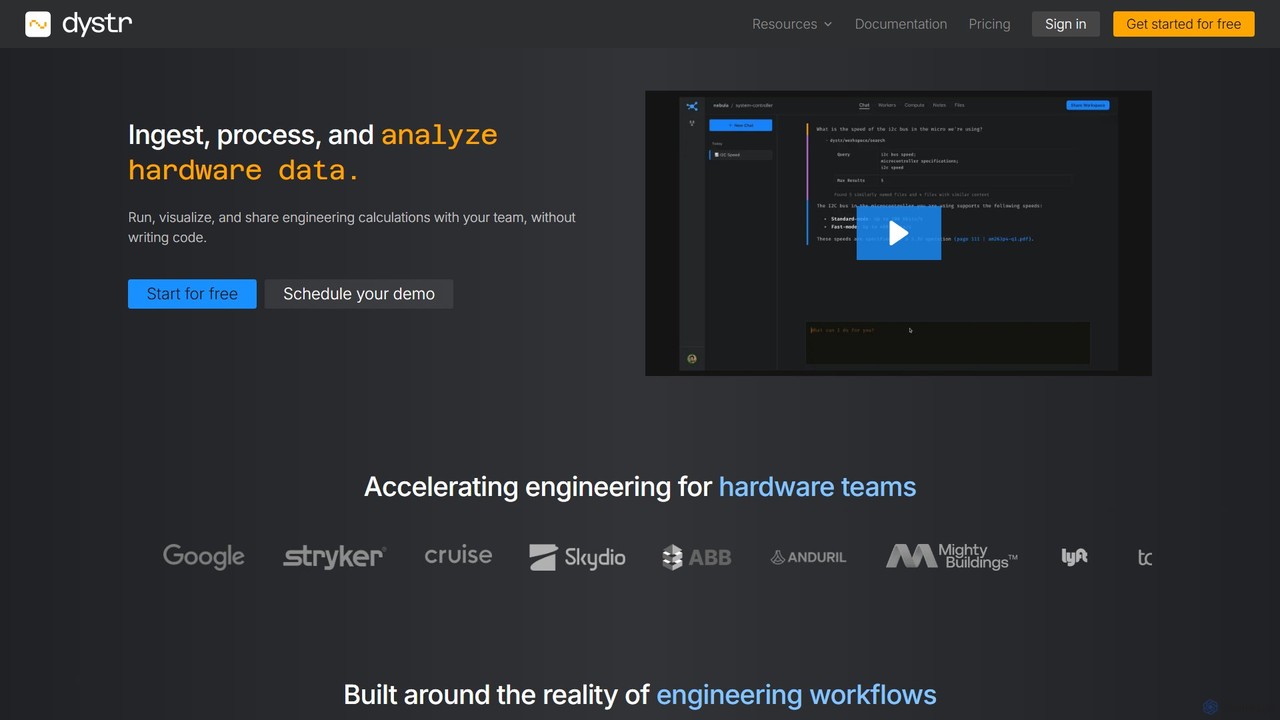
Dystr is an AI-powered engineering analysis platform for technical teams. It enables users to ingest, process, and analyze hardware data using natural language, without writing code. It streamlines workflows by automating calculations, generating live reports, and fostering collaboration in a unified, secure environment.
Siml.ai
Siml.ai is an AI-powered software platform designed for high-performance physics simulations. It enables engineers and researchers to train …
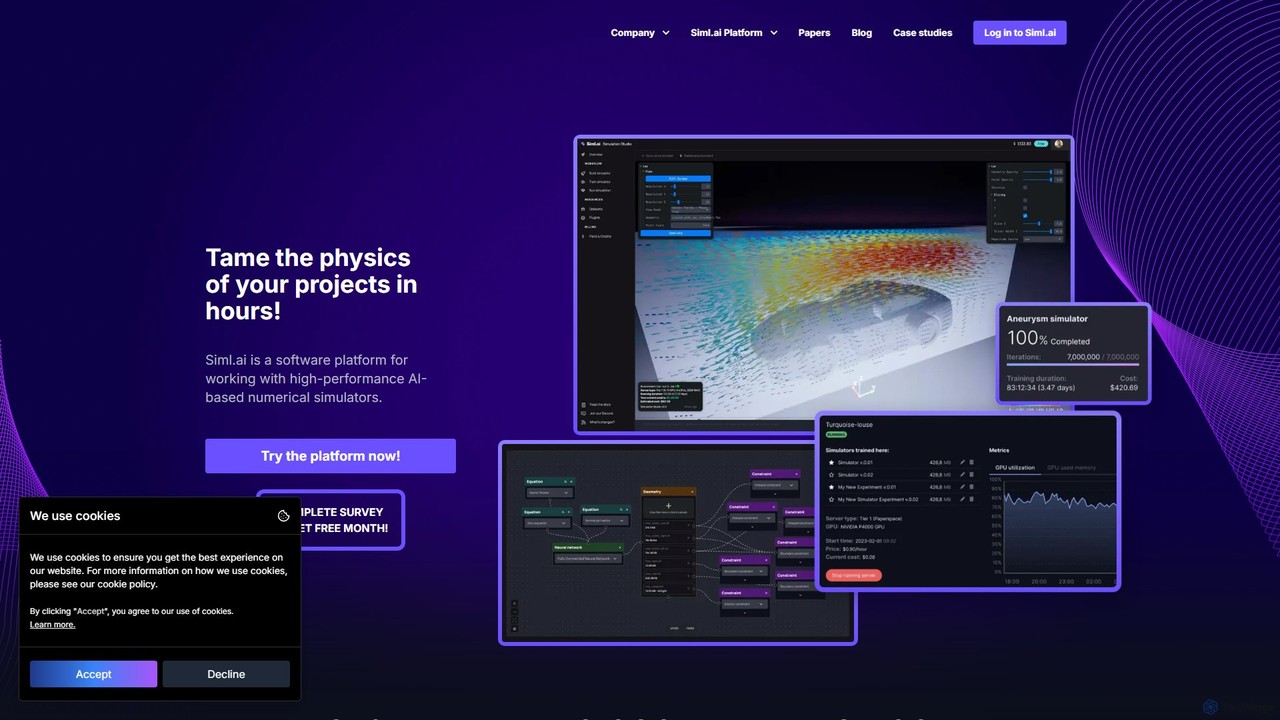
Siml.ai is an AI-powered software platform designed for high-performance physics simulations. It enables engineers and researchers to train AI models that accelerate simulations by up to 100,000x, transforming weeks of computation into hours. The web-based platform allows for the creation of interactive, real-time digital twins with high-fidelity visualization, democratizing access to advanced scientific simulation tools.
Backflip AI
Backflip AI is a powerful platform that transforms 3D design workflows. It features AI-driven tools to convert 3D …
Backflip AI is a powerful platform that transforms 3D design workflows. It features AI-driven tools to convert 3D scans into parametric CAD models in seconds and generate 3D mesh models from text, images, or sketches. It's designed to accelerate engineering, manufacturing, and creative processes.
About Engineering
Engineering AI tools are specialized artificial intelligence applications designed to augment and automate various tasks across engineering disciplines. These tools leverage machine learning, generative AI, and advanced analytics to assist engineers in areas such as design, simulation, optimization, code generation, and data analysis. By streamlining complex workflows and providing intelligent insights, they significantly enhance productivity and innovation in fields like software, mechanical, civil, and electrical engineering.
Core Features
- Generative Design: Automatically explores and generates optimal design solutions based on specified parameters and constraints.
- Code Assistance: Provides intelligent code completion, error detection, refactoring suggestions, and even generates code snippets or entire functions.
- Predictive Maintenance: Analyzes sensor data to forecast equipment failures, optimizing maintenance schedules and reducing downtime.
- Simulation & Analysis: Accelerates complex simulations (e.g., CFD, FEA) and analyzes results to identify performance bottlenecks or design flaws.
- Project Optimization: Uses AI to optimize resource allocation, schedule tasks, and manage risks in large-scale engineering projects.
Applicable Scenarios
Engineers in product development, infrastructure planning, software creation, and manufacturing leverage these tools. They are crucial for accelerating design iterations, ensuring structural integrity, optimizing system performance, and managing complex project timelines efficiently. From conceptualization to deployment, AI engineering tools provide critical support.
How to Choose
When selecting engineering AI tools, consider the specific engineering discipline it supports, its integration capabilities with existing CAD/CAE software or IDEs, the accuracy and reliability of its AI models, and its scalability for project demands. Evaluate the user interface for ease of adoption and ensure robust data security features are in place.

EngineeringUse Cases
AI-Driven Generative Design for Automotive Parts
Mechanical engineers use AI generative design tools to rapidly explore thousands of design iterations for lightweight yet strong automotive components. By inputting performance requirements, material properties, and manufacturing constraints, the AI automatically generates optimized geometries, significantly reducing design cycle time and material usage compared to traditional methods.
Automated Code Generation and Refactoring for Software Development
Software engineers utilize AI code assistants to accelerate development. These tools can generate boilerplate code, suggest optimal algorithms, refactor existing code for better performance or readability, and even identify potential bugs or security vulnerabilities, allowing developers to focus on complex logic and innovation.
Predictive Maintenance for Industrial Machinery
Maintenance engineers in manufacturing plants deploy AI tools to analyze real-time sensor data from critical machinery. The AI identifies subtle patterns indicative of impending failures, enabling proactive maintenance scheduling. This prevents unexpected breakdowns, extends equipment lifespan, and minimizes costly production downtime.
Optimizing Civil Infrastructure Planning with AI Simulation
Civil engineers employ AI-powered simulation tools to model and analyze the performance of large-scale infrastructure projects like bridges or urban drainage systems. The AI can predict structural responses under various environmental conditions or traffic loads, optimizing material use, ensuring safety, and identifying potential design flaws before construction begins.
AI-Assisted Electronic Circuit Design and Verification
Electrical engineers use AI tools to assist in designing complex integrated circuits and PCBs. These tools can suggest optimal component placements, route traces efficiently, and perform automated verification checks to ensure functionality and signal integrity, drastically reducing manual design errors and iteration time.
Intelligent Project Scheduling and Resource Allocation
Project managers in large engineering firms leverage AI for dynamic project scheduling and resource allocation. The AI analyzes project dependencies, team availability, and potential risks to create optimized timelines, reallocate resources in real-time based on progress, and predict completion dates, improving overall project efficiency and delivery.