Productivity Best in category 9 results Recommendation Engine AI Tool

Popular AI tools in the Recommendation Engine field of Productivity include tvfoodmaps、moveme.tv、Taranify、RushTix、SkinGenie、GlowAI、aimons、AI Bookstore, etc., helping you quickly improve efficiency.

Free
Taranify

Taranify

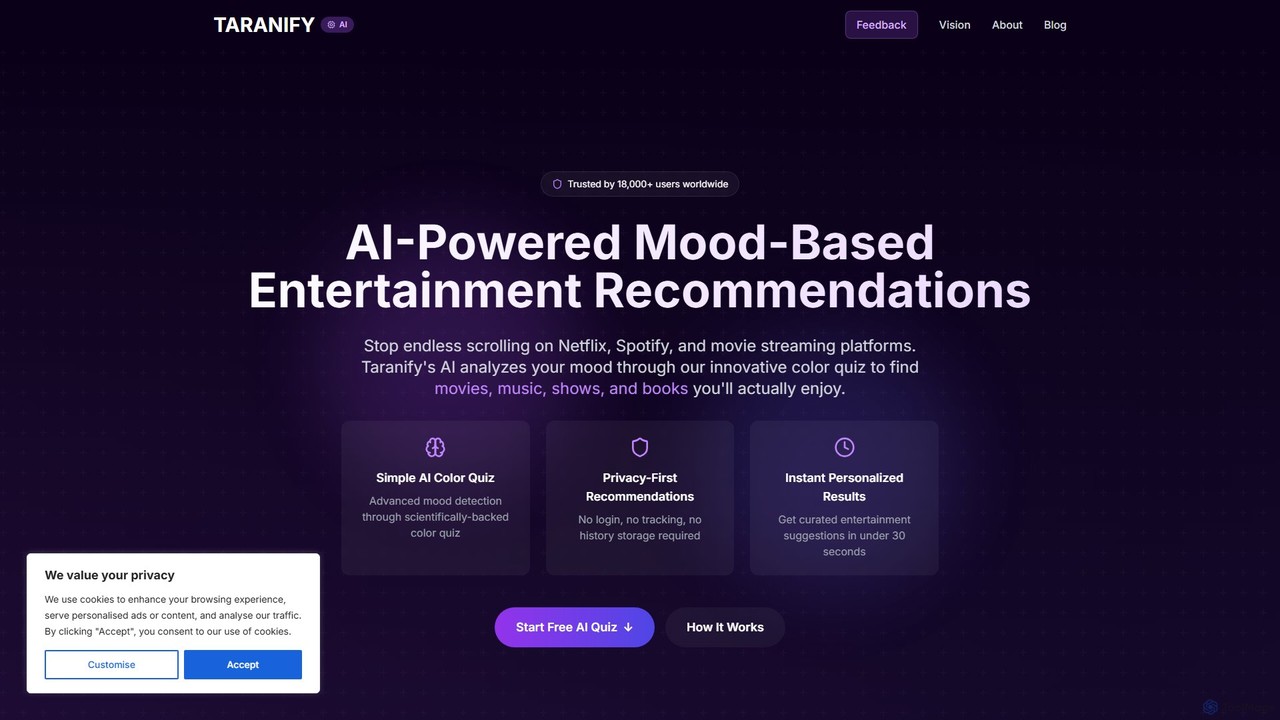
Taranify is a free, AI-powered recommendation engine that suggests entertainment and food based on your current mood. Through …

2.4K
Free
SkinGenie

SkinGenie

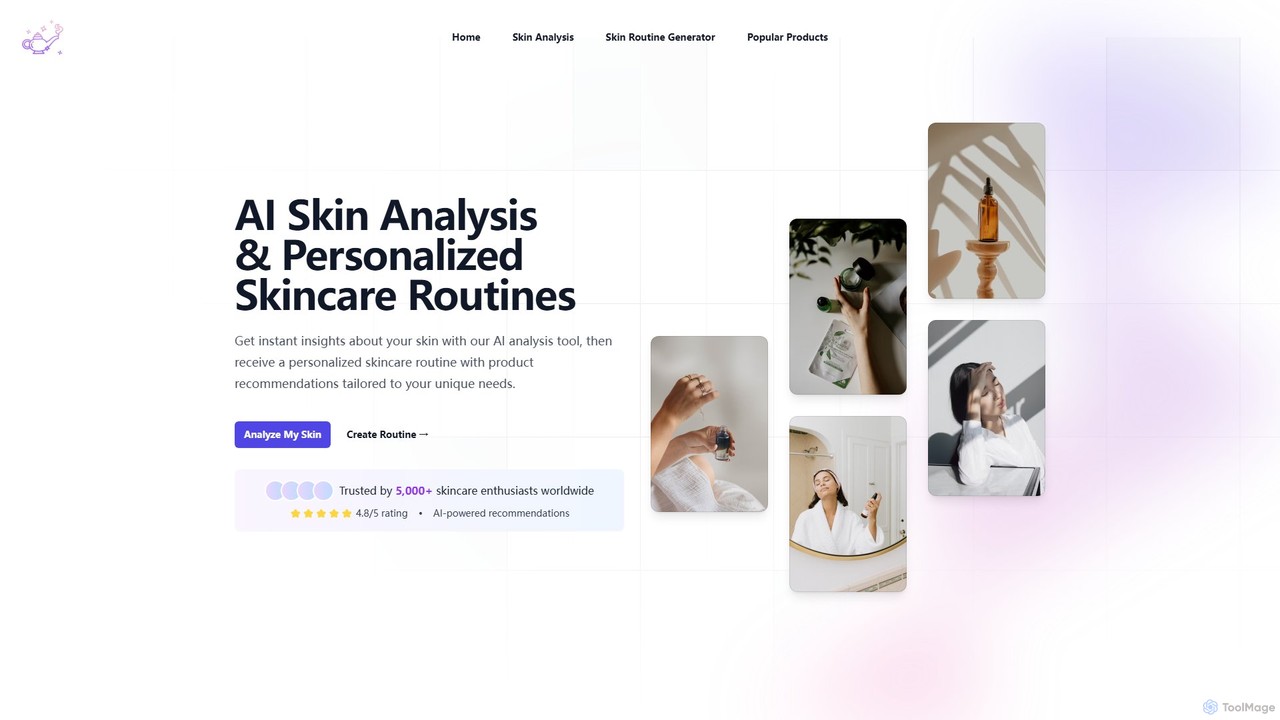
SkinGenie is a free AI-powered platform that provides instant skin analysis and generates personalized skincare routines. By analyzing …

2.5K
RushTix

RushTix

RushTix is an AI-powered platform that connects you with exclusive, last-minute deals on live events. By setting your …

2.9K
tvfoodmaps

tvfoodmaps

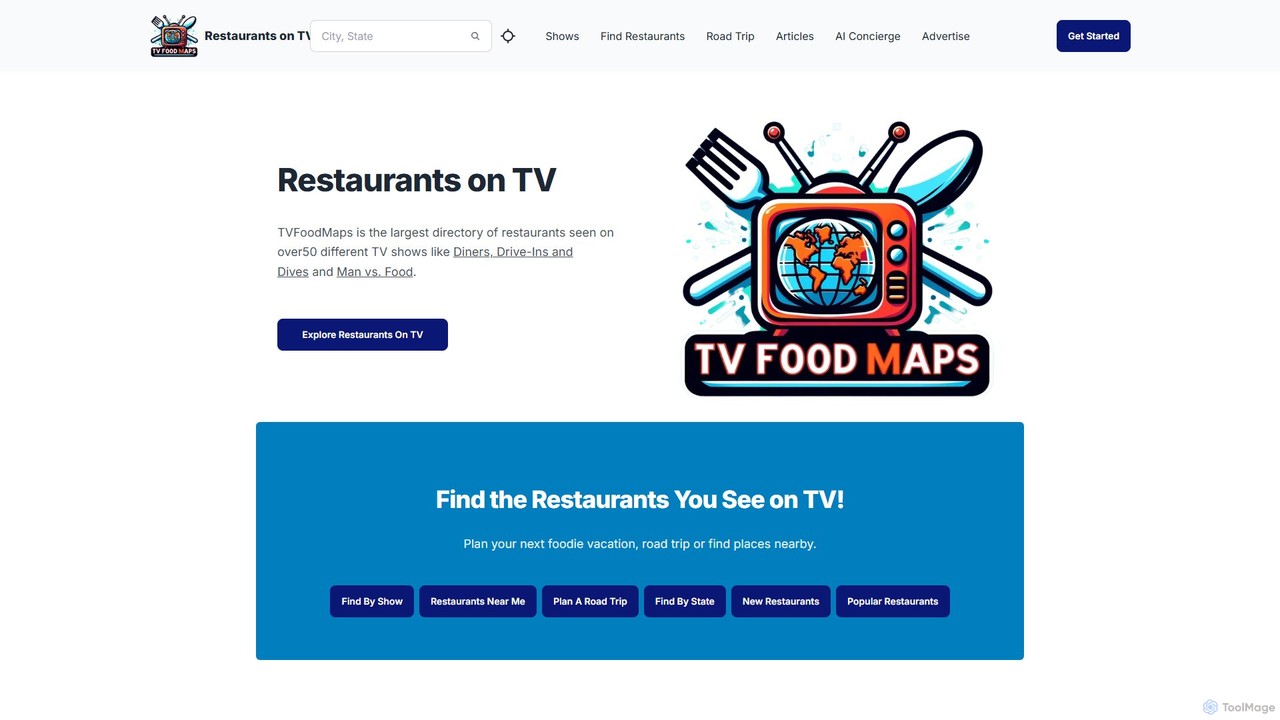
tvfoodmaps is the largest directory of restaurants featured on TV, enhanced with an AI Restaurant Concierge. Discover over …

39.3K
Free
GlowAI

GlowAI

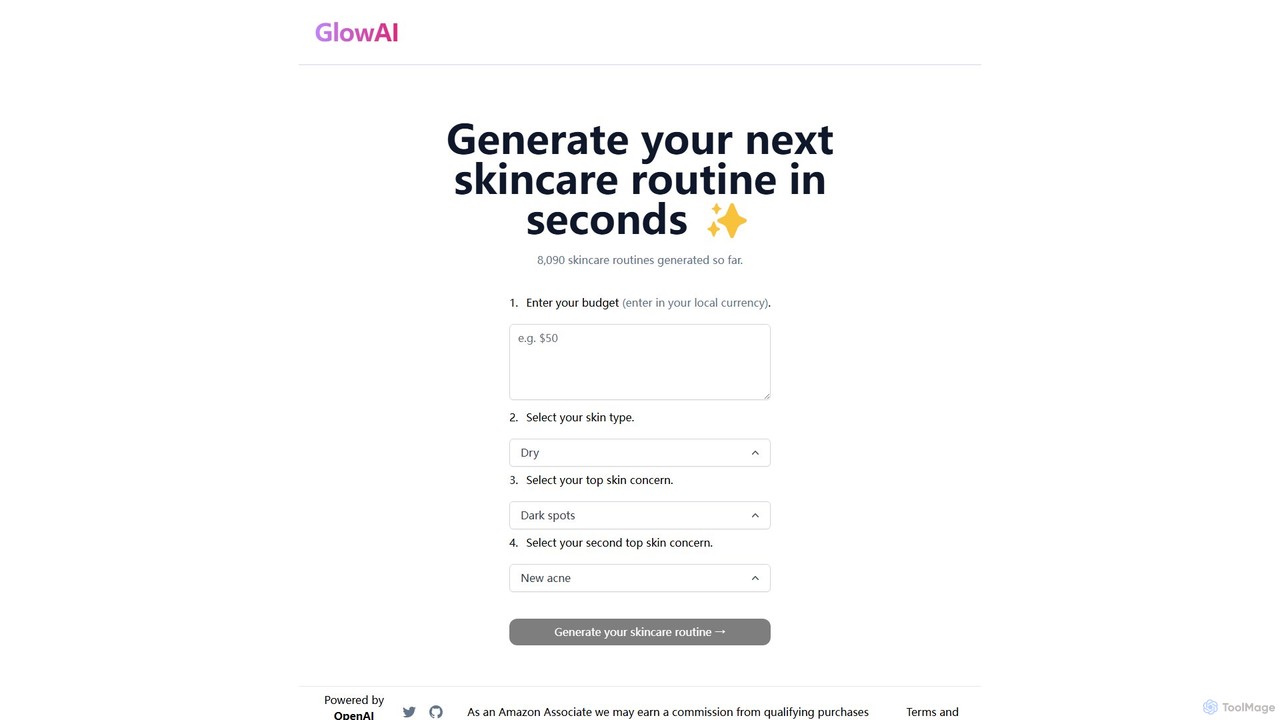
GlowAI is an AI-powered tool that generates personalized skincare routines in seconds. Simply input your budget, skin type, …

2.4K
Free
aimons

aimons

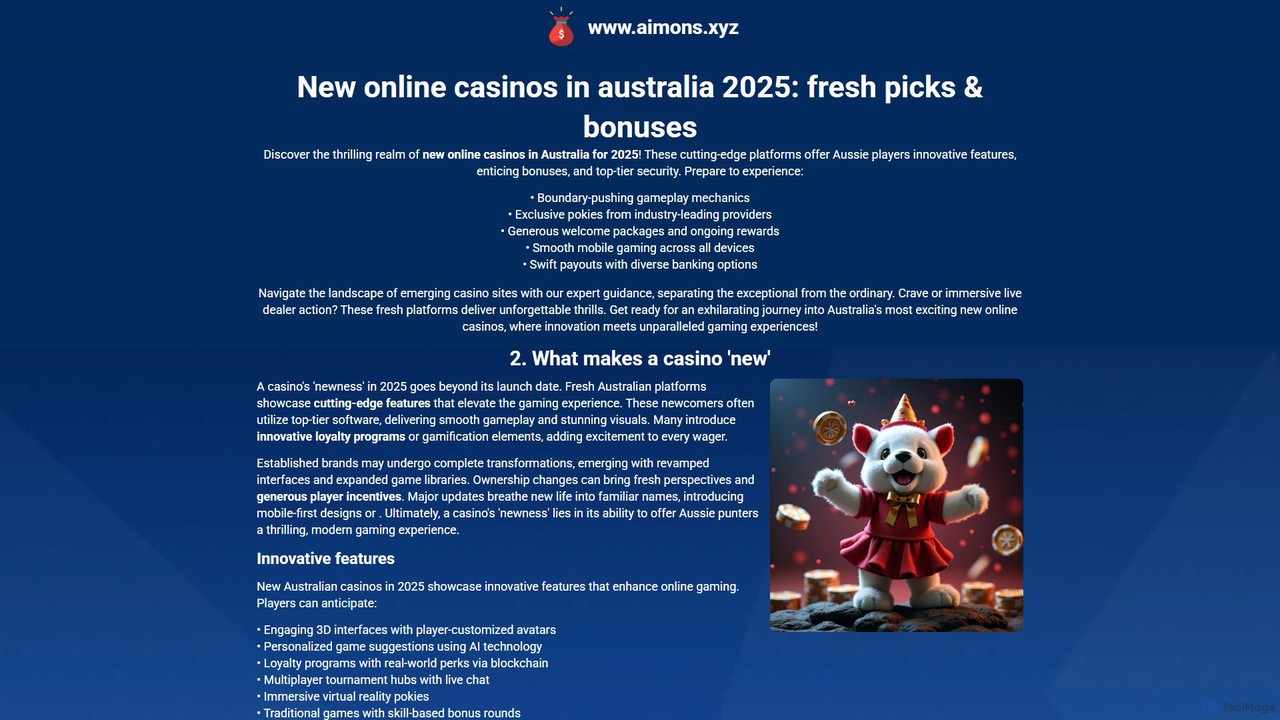
aimons is an AI-powered discovery platform that analyzes and reviews new online casinos. It provides players with personalized …

2.4K
Free
moveme.tv

moveme.tv

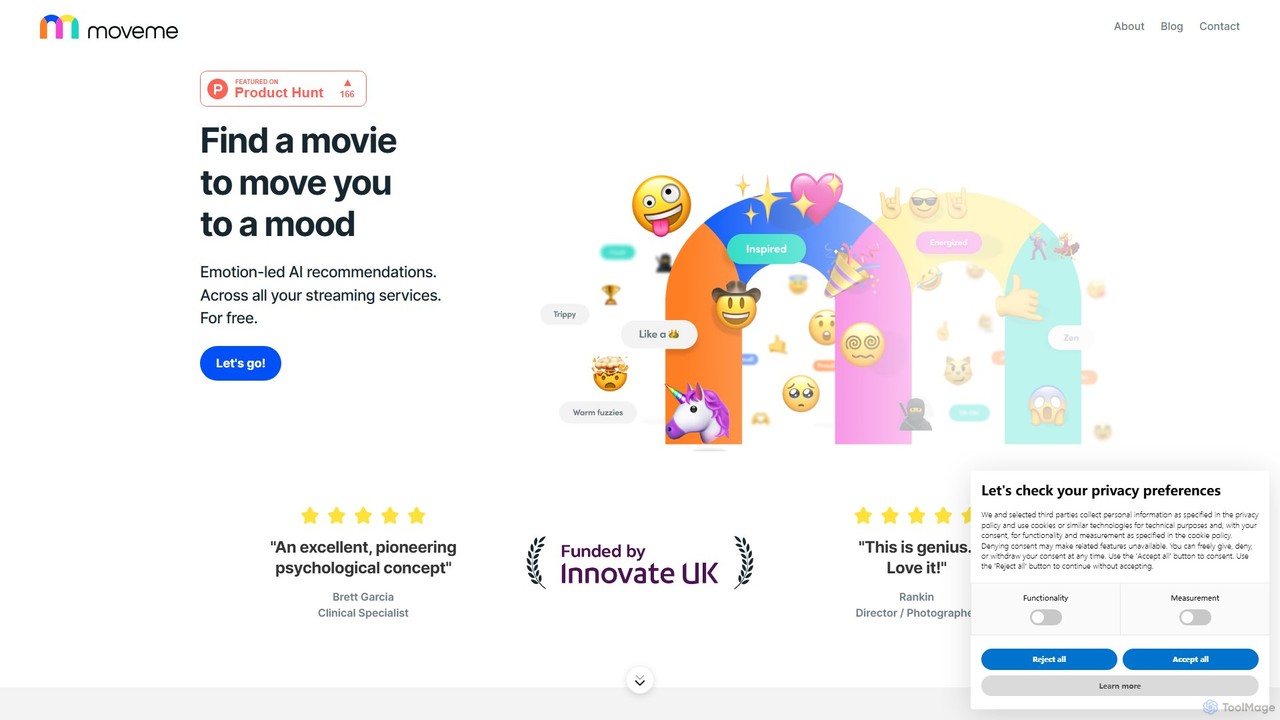
moveme.tv is an AI-powered movie recommendation engine that helps you discover films based on your mood. Instead of …

24.2K
Free
AI Bookstore

AI Bookstore

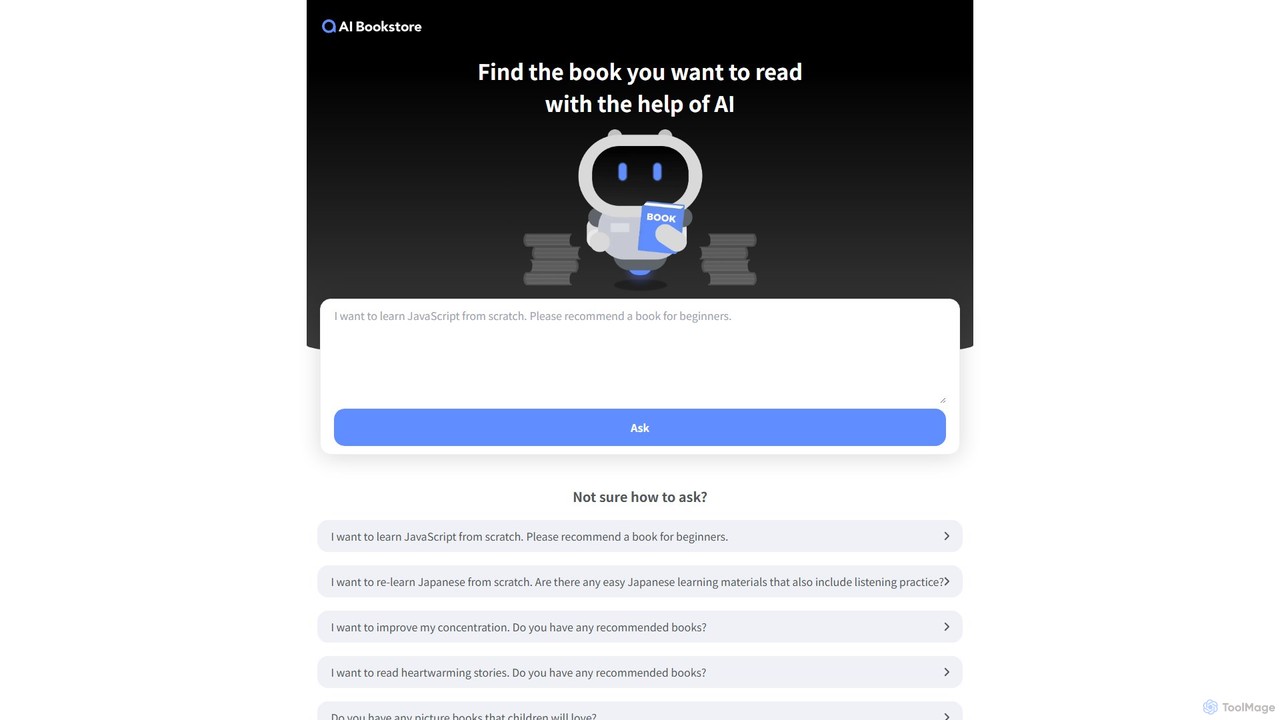
AI Bookstore is an AI-powered recommendation engine that helps you discover your next read. Simply ask for book …

2.4K
Free
Taranify

Taranify

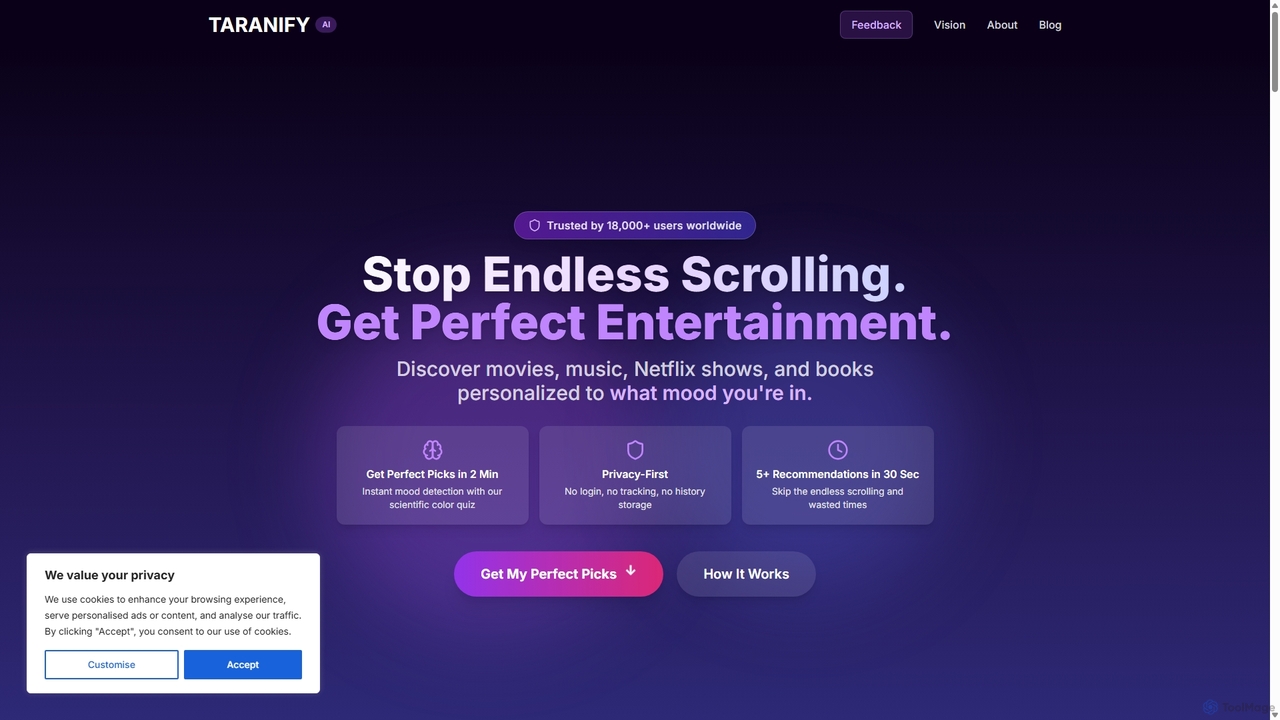
Taranify is an AI-powered recommendation platform that suggests entertainment and food based on your current mood. Through a …

7.5K

About Recommendation Engine

A Recommendation Engine is a type of AI system that analyzes data to predict and suggest relevant items, content, or services to users. These tools utilize algorithms like collaborative filtering and content-based filtering to identify patterns in user behavior and item attributes. Their primary value is in creating personalized user experiences, which helps increase engagement, boost sales, and improve customer retention. As a key productivity tool, a recommendation engine automates the discovery process, enabling businesses to surface relevant inventory and helping users find what they need more efficiently.

Core Features

  • Collaborative Filtering: Recommends items by identifying users with similar tastes and suggesting items they have liked.
  • Content-Based Filtering: Suggests items based on their similarity to items a user has previously interacted with or rated highly.
  • Real-time Personalization: Instantly adapts recommendations based on a user's current browsing behavior and actions.
  • Hybrid Models: Combines multiple recommendation strategies (e.g., collaborative and content-based) to improve accuracy and handle data sparsity.
  • Performance Analytics: Provides dashboards and reports to track key metrics like click-through rates, conversion rates, and revenue generated from recommendations.

Use Cases

Recommendation engines are widely used in industries with large catalogs. E-commerce platforms use them to suggest products, streaming services like Netflix and Spotify use them to recommend movies and music, and news websites employ them to create personalized article feeds for readers. They are essential for any digital platform aiming to guide users through a vast selection of options.

How to Choose

When selecting a recommendation engine, first evaluate its data requirements and ensure it aligns with the data you collect. Consider its scalability to handle your user base and catalog size. Check for robust API support and ease of integration with your existing website, app, or CRM. Finally, assess the level of algorithm customization offered and whether it meets your specific business needs and technical capabilities.

Recommendation EngineUse Cases

1

Increase E-commerce Average Order Value

An e-commerce manager for an online fashion retailer uses a recommendation engine to personalize the shopping experience. By analyzing a user's browsing history, past purchases, and items in their cart, the engine dynamically displays 'You Might Also Like' and 'Frequently Bought Together' sections on product and checkout pages. This strategy encourages customers to discover complementary items, leading to a measurable increase in average order value and overall revenue without requiring manual product curation from the marketing team.

2

Boost User Engagement on Content Platforms

A content strategist at a video streaming service implements a recommendation engine to improve user retention. The system analyzes viewing history, ratings, and time spent on different genres. Based on this data, it curates a personalized homepage for each user, suggesting new shows, movies, and documentaries aligned with their tastes. This continuous discovery of relevant content keeps users engaged with the platform for longer periods, reducing churn and increasing the lifetime value of a subscriber.

3

Personalize Automated Email Marketing

A digital marketing team integrates a recommendation engine with their email service provider. Instead of sending generic newsletters, the engine automatically populates emails with personalized content for each subscriber. For an online bookstore, this could mean recommending new arrivals from a user's favorite authors or genres. This level of personalization significantly increases email open rates and click-through rates, turning a standard communication channel into a powerful, automated sales tool.

4

Enhance B2B Sales with Content Suggestions

A sales operations manager at a B2B software company uses an internal recommendation engine integrated with their CRM. When a salesperson views a lead's profile, the engine suggests the most relevant case studies, whitepapers, and product datasheets based on the lead's industry, company size, and recorded interests. This empowers the sales team to quickly find and share impactful content, personalizing their outreach, shortening the sales cycle, and improving their productivity by automating content discovery.

5

Create Adaptive Learning Paths in EdTech

An instructional designer for an online learning platform uses a recommendation engine to create personalized learning journeys. The engine tracks a student's progress, quiz scores, and interactions with course materials. It then suggests the next most suitable module, supplementary reading, or practice exercise to either reinforce a difficult concept or accelerate learning for advanced students. This creates an adaptive experience that caters to individual learning paces, improving course completion rates and student satisfaction.

6

Optimize In-App News and Article Feeds

A product manager for a mobile news application uses a recommendation engine to power the main content feed. The system learns from user behavior, such as articles read, topics followed, and sharing activity. It then personalizes the feed for each user, prioritizing stories and authors they are most likely to find interesting. This transforms a generic news feed into a highly relevant, personalized stream of information, significantly increasing daily active users and time spent within the app.

Recommendation EngineFrequently Asked Questions