ToolMage
Sign in

Best 7 Research Assistant for Productivity

Popular Research Assistant in Productivity include CoCounsel, SOM AI, Ordinal for Gov, RikiGPT, HeyScience, MedUp, and Thinkable, helping you work more efficiently.

Thinkable
Paid

Thinkable

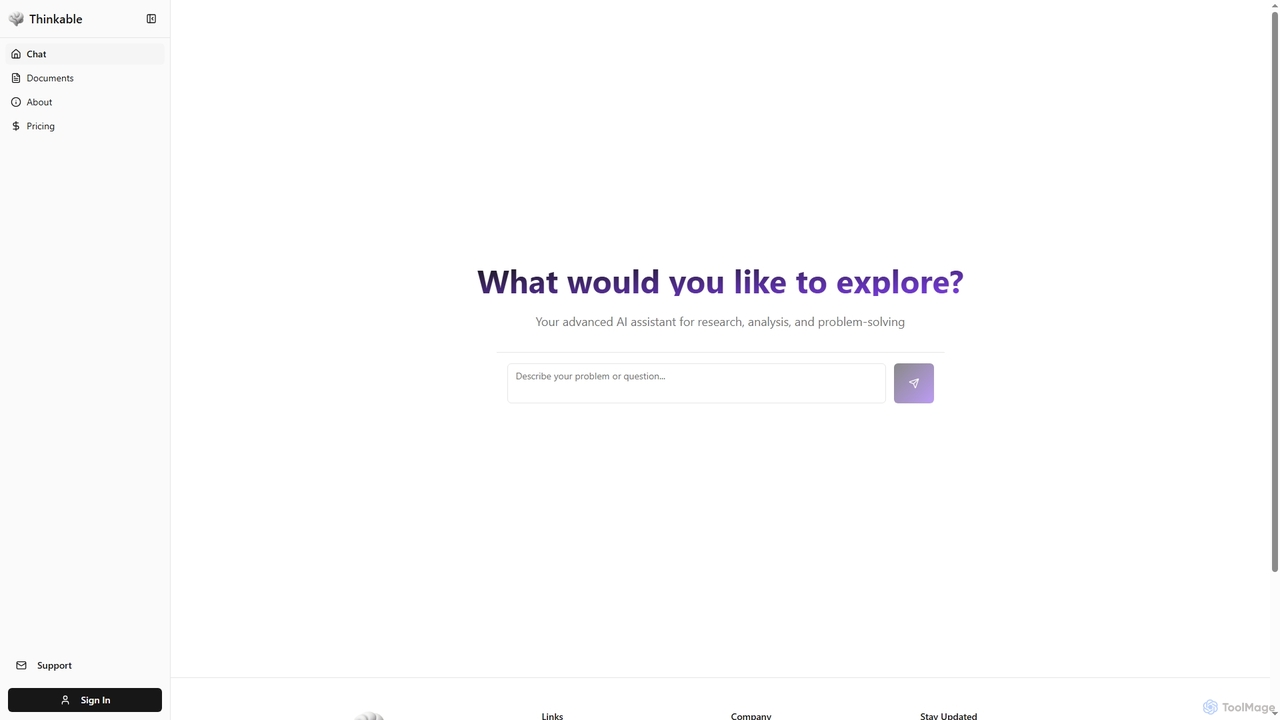
Thinkable is an advanced AI thinking companion designed to enhance human intelligence through deep research, analysis, and problem-solving. It leverages cognitive science principles to foster active learning, personal growth, and critical thinking, adapting to your unique learning style for effective information absorption and retention.

Critical Thinking
Visits 5.4KFavorites 158Likes 152
RikiGPT
Freemium

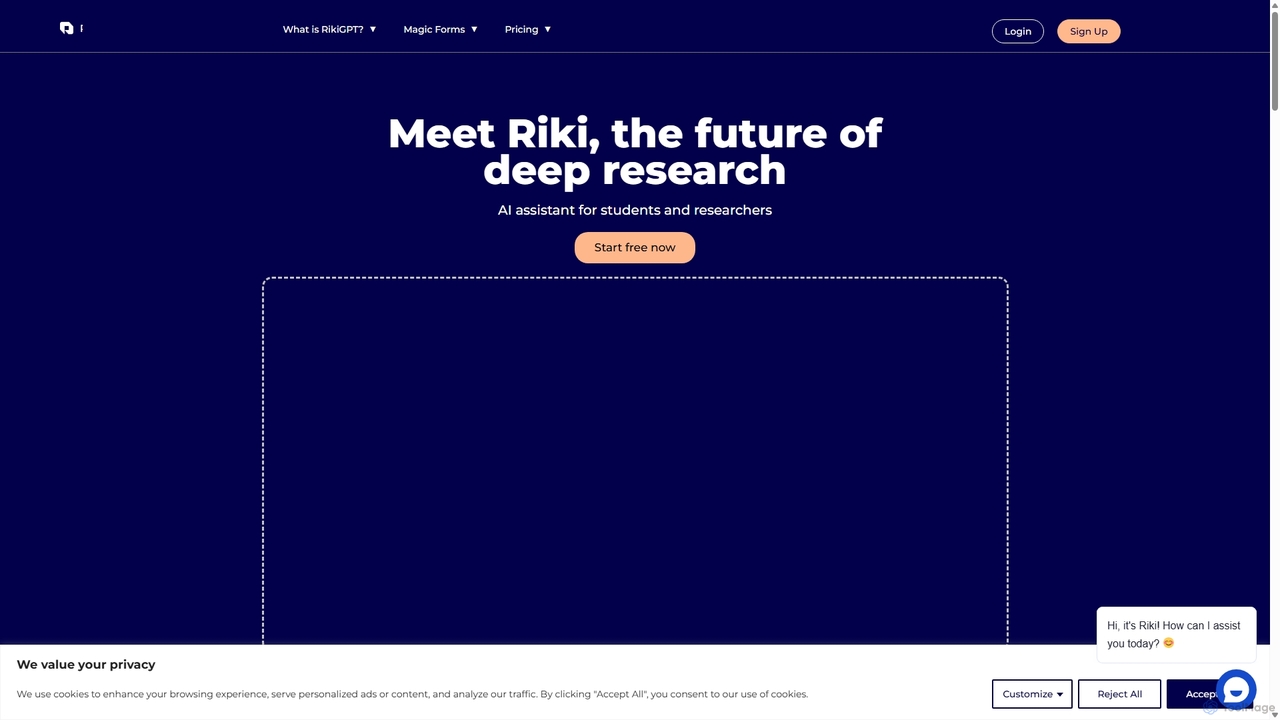
RikiGPT

RikiGPT is a powerful AI writing assistant designed for students and researchers. It acts as a one-click solution for academic needs, generating high-quality research papers, essays, and assignments complete with accurate citations from a database of over 200 million sources. It simplifies the entire research and writing process, from topic generation to final paper delivery.

Academic Writing
Visits 9.2KFavorites 143Likes 143
CoCounsel
Paid

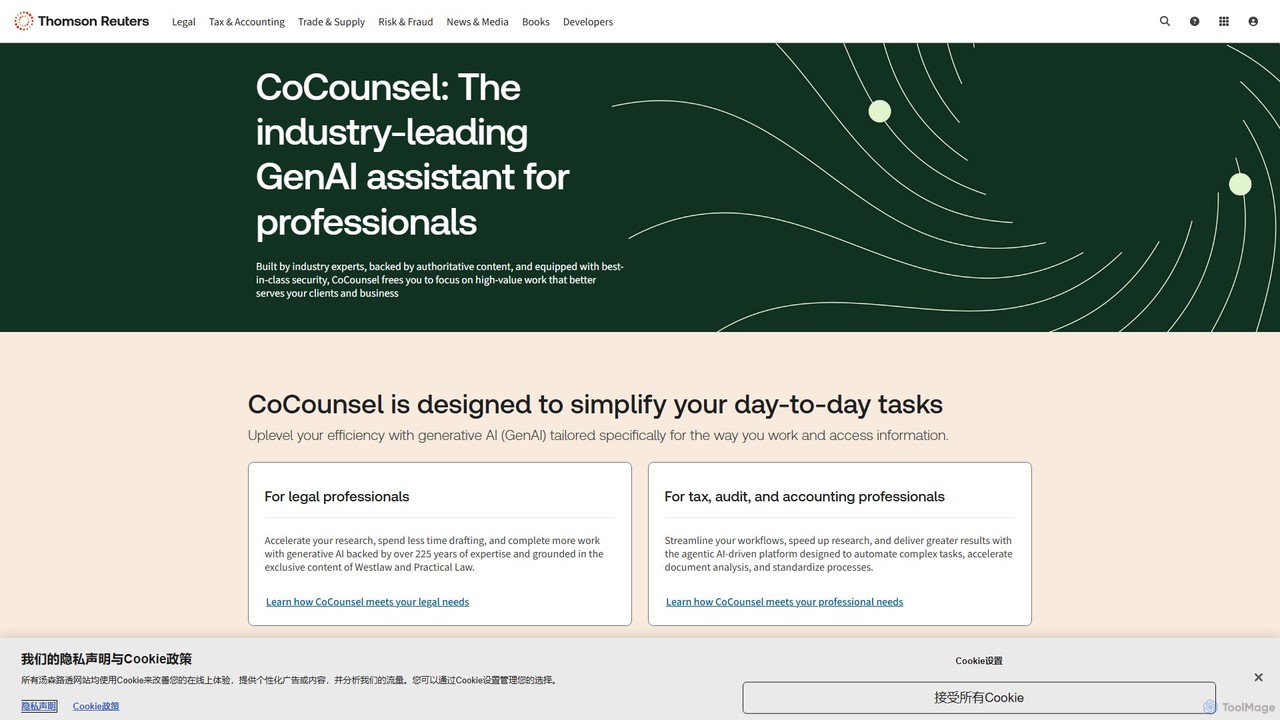
CoCounsel

CoCounsel is a professional-grade generative AI assistant from Thomson Reuters, designed for legal, tax, and accounting professionals. It accelerates complex tasks like legal research, document review, and drafting by leveraging trusted, authoritative content and ensuring top-tier data security and privacy.

Accounting
Visits 13.9MFavorites 139Likes 172
HeyScience
Freemium

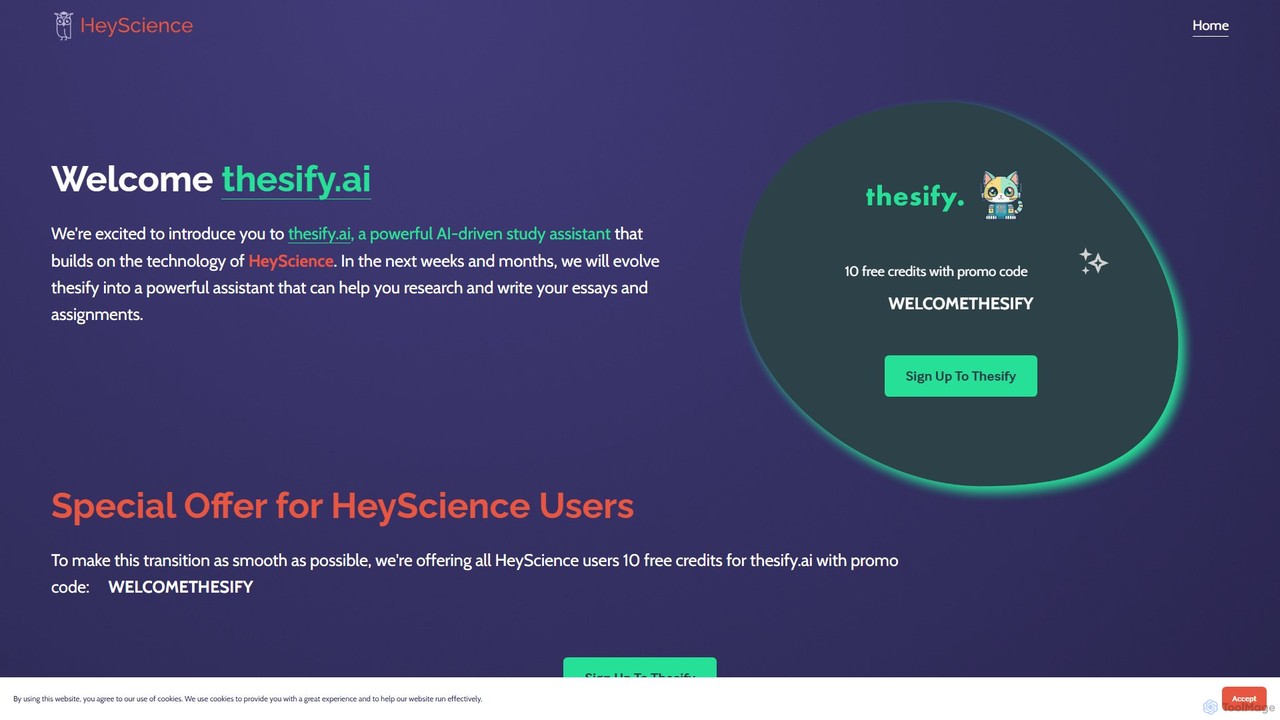
HeyScience

HeyScience is an AI-powered academic assistant, now evolved into thesify.ai, designed to help students and researchers. It streamlines the academic process by assisting with research, essay writing, and assignment completion. The platform offers a suite of tools to find sources, generate content, and structure papers, serving as a comprehensive companion for academic success.

Academic Writing
Visits 6.4KFavorites 104Likes 104
SOM AI
Freemium

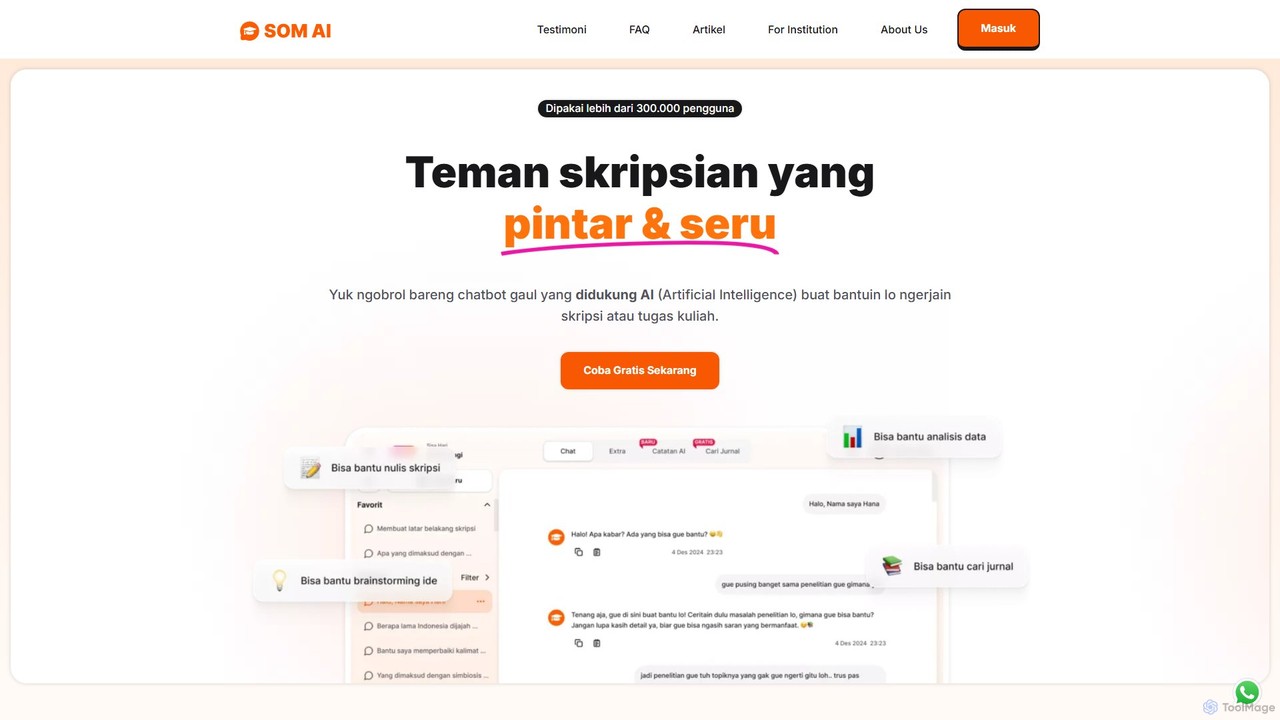
SOM AI

SOM AI is an AI-powered chatbot designed for Indonesian university students to assist with thesis writing and academic tasks. It helps with brainstorming research topics, paraphrasing to avoid plagiarism, simplifying complex concepts, and even provides emotional support. It acts as a 24/7 academic companion to make the thesis journey smoother and less stressful.

Academic Writing
Visits 28KFavorites 120Likes 114
Ordinal for Gov
Paid

Ordinal for Gov

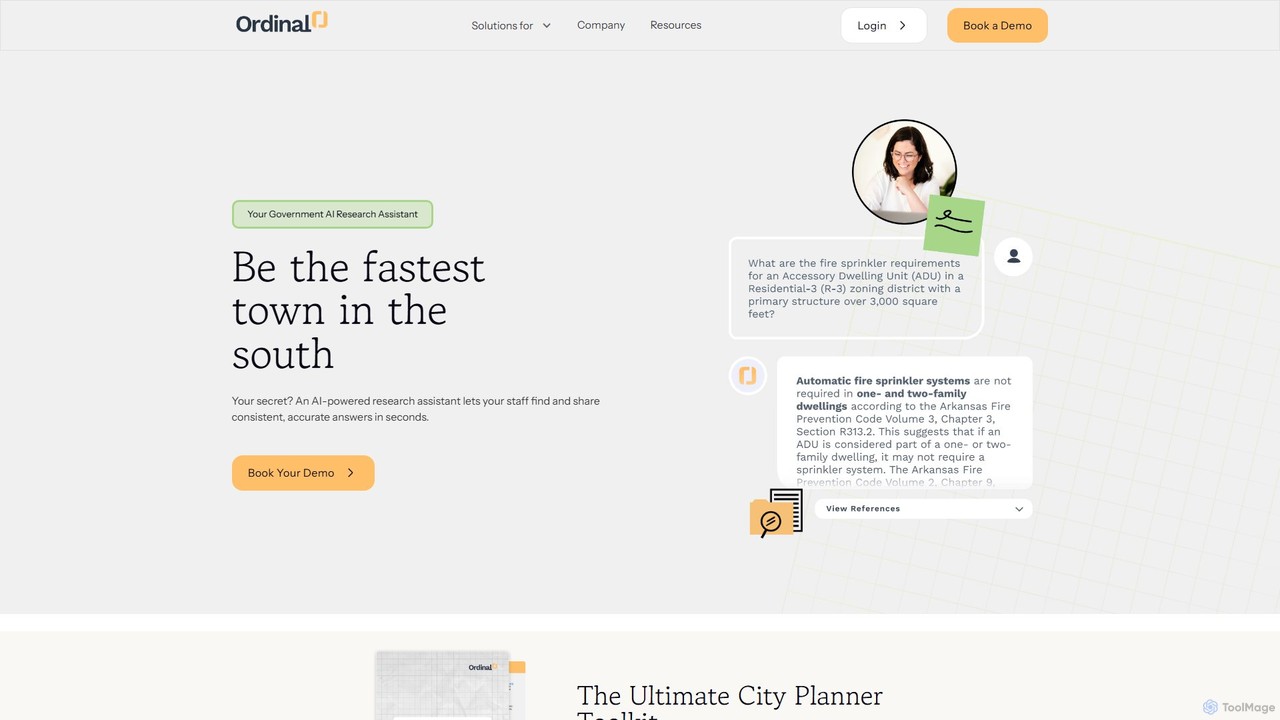
Ordinal for Gov is an AI-powered research and knowledge management platform designed specifically for government teams. It transforms your approved documents, GIS data, and municipal codes into a secure, searchable knowledge base. Staff can ask questions in natural language and receive instant, accurate answers with direct references, saving significant time, improving efficiency, and preserving institutional knowledge.

Internal Communication
Visits 9.5KFavorites 101Likes 113
MedUp
Free

MedUp

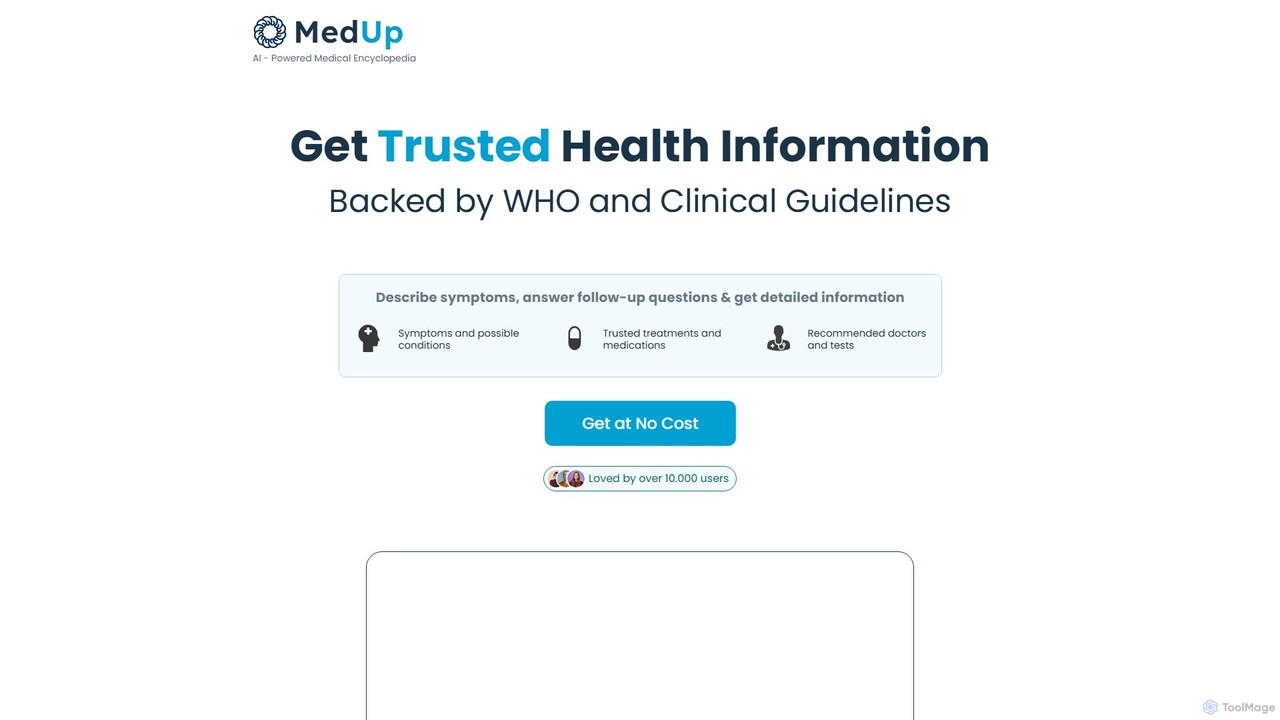
MedUp is a free, AI-powered medical encyclopedia that provides trusted health information based on WHO and clinical guidelines. Describe your symptoms via text, voice, or photo to receive instant, detailed information about possible conditions, treatments, and recommended specialists. It's designed for educational purposes to help you make informed health decisions.

Medical Information
Visits 5.5KFavorites 131Likes 141

About Research Assistant

AI Research Assistants are specialized tools designed to automate and accelerate the process of gathering, synthesizing, and analyzing information. They leverage natural language processing (NLP) to scan vast databases, academic journals, and web sources to find relevant data. These assistants help users quickly understand complex topics, identify key insights, and generate structured summaries from large volumes of text. This significantly reduces manual effort in literature reviews, market analysis, and evidence-based writing, making them a focused productivity tool for knowledge workers.

Core Features

  • Automated Literature Search: Scans multiple databases and sources to find relevant papers and articles based on queries.
  • Intelligent Summarization: Condenses lengthy documents into concise summaries, highlighting key findings and arguments.
  • Data Extraction: Identifies and extracts specific information like statistics, names, and key terms from unstructured text.
  • Citation Generation: Automatically creates accurate citations for sources in various academic styles like APA, MLA, and Chicago.
  • Semantic Q&A: Allows users to ask questions in natural language and receive direct answers sourced from the provided documents.

Use Cases

These tools are invaluable for academic researchers, students, market analysts, and journalists. They are used for conducting comprehensive literature reviews, performing competitor analysis, fact-checking articles, and compiling industry reports. Legal and medical professionals also use them to quickly review case law and scientific studies.

How to Choose

When selecting an AI Research Assistant, consider the scope of its database integrations (e.g., PubMed, ArXiv). Evaluate its analytical capabilities—does it only summarize or also identify trends? Check for collaboration features if you work in a team, and verify the accuracy of its citation generation. Finally, assess the user interface and its ease of use for your specific workflow.

Research Assistant use cases

1

Accelerating Academic Literature Reviews

For postgraduate students and academic researchers, conducting a thorough literature review is a time-consuming but critical task. An AI Research Assistant automates this process by simultaneously searching across multiple academic databases like PubMed, Scopus, and Google Scholar. The user inputs their research query, and the tool returns a curated list of relevant papers, often with summaries of their abstracts and key findings. This can reduce the initial information gathering phase from weeks to a few hours, allowing researchers to focus more on analysis and synthesis rather than manual searching.

2

Conducting In-Depth Market & Competitor Analysis

Market analysts and business strategists use AI Research Assistants to stay ahead of industry trends and monitor competitors. By feeding the tool news articles, financial reports, and social media data, they can quickly extract key information such as new product launches, executive changes, or shifts in market sentiment. The tool can synthesize these findings into a digestible report, highlighting threats and opportunities. This provides a data-driven foundation for strategic decision-making without the need for manually sifting through hundreds of sources.

3

Streamlining Journalistic Fact-Checking & Reporting

Journalists and content creators rely on accuracy and speed. An AI Research Assistant helps them quickly verify facts and gather background information for a story. They can upload interview transcripts, press releases, and historical articles into the tool and ask specific questions like "What was the company's Q2 revenue last year?". The AI provides a direct answer with a link to the source document, creating a verifiable and efficient research workflow. This enhances the credibility of their reporting while meeting tight deadlines.

4

Enhancing Legal Case & Precedent Research

Legal professionals, including lawyers and paralegals, must analyze vast amounts of case law and legal documents. An AI Research Assistant can rapidly search through legal databases to find relevant precedents for a specific case. The tool can summarize lengthy court opinions, identify key legal arguments, and highlight citations within documents. This not only saves significant billable hours but also helps build stronger, more evidence-based legal strategies by ensuring no critical precedent is overlooked.

5

Optimizing R&D and Patent Discovery

Scientists and R&D teams in technology and pharmaceutical industries use these tools to navigate the complex landscape of scientific literature and patents. An AI assistant can help identify existing patents to avoid infringement, discover novel research in a specific domain, and track the work of competing research groups. By summarizing complex scientific papers and technical documents, it enables researchers to quickly grasp the state-of-the-art and identify gaps for new innovation.

6

Creating Data-Driven Content Briefs

Content strategists and SEO specialists use AI Research Assistants to create comprehensive content briefs. They can analyze top-ranking articles for a specific keyword to extract common themes, key statistics, and expert sources. The tool synthesizes this information into a structured outline, suggesting topics to cover, questions to answer, and data points to include. This ensures the content produced is thorough, well-researched, and optimized to meet user search intent, improving its chances of ranking well.

Research Assistant FAQ

What is an AI Research Assistant?

An AI Research Assistant is a software tool that uses artificial intelligence, particularly natural language processing, to automate and enhance research tasks. Its primary function is to help users find, understand, and organize information from large volumes of text. Key features often include automated literature searching across multiple databases, summarizing articles, extracting specific data points, and generating citations. They are designed to make the research process more efficient and comprehensive.

How do I choose the right AI Research Assistant?

To choose the right tool, consider these four factors. First, evaluate its source coverage: ensure it connects to the databases and websites relevant to your field. Second, assess its analytical features: do you need simple summarization or more advanced capabilities like trend analysis or data extraction? Third, consider usability and workflow integration: the tool should be intuitive and fit into your existing research process. Finally, check the pricing model and ensure it aligns with your budget and usage needs.

What's the difference between an AI Research Assistant and a standard search engine?

A standard search engine like Google indexes the web and returns a list of links based on keyword matching. An AI Research Assistant goes much further by analyzing the content within the sources. Key differences include:

  • Synthesis: Research assistants can read and summarize multiple documents to provide a consolidated answer, whereas search engines provide links to the documents themselves.
  • Targeted Sources: They often focus on specific databases (e.g., academic, legal) not always prioritized by general search engines.
  • Interaction: You can ask complex questions about your uploaded documents and get direct answers with citations.

What key features should I look for in an AI Research Assistant?

Look for a combination of features that support the entire research lifecycle. Essential features include:

  • Multi-Source Search: The ability to query academic journals, web pages, and internal documents simultaneously.
  • AI-Powered Summarization: Tools that can generate abstractive or extractive summaries of long texts.
  • Data Extraction: The capability to pull out specific data like statistics, names, or methodologies.
  • Citation Management: Automatic generation of citations in various formats (APA, MLA, etc.).
  • Collaborative Workspace: Features that allow teams to share findings, notes, and sources.

Who can benefit from using an AI Research Assistant?

A wide range of professionals and students can benefit from these tools. Academics and students use them to accelerate literature reviews and thesis writing. Market analysts and consultants leverage them for competitor intelligence and industry reports. Journalists use them for rapid fact-checking and background research. Additionally, legal professionals for case law analysis and R&D scientists for reviewing scientific literature and patents find them highly valuable for improving efficiency and depth in their work.