Supersense
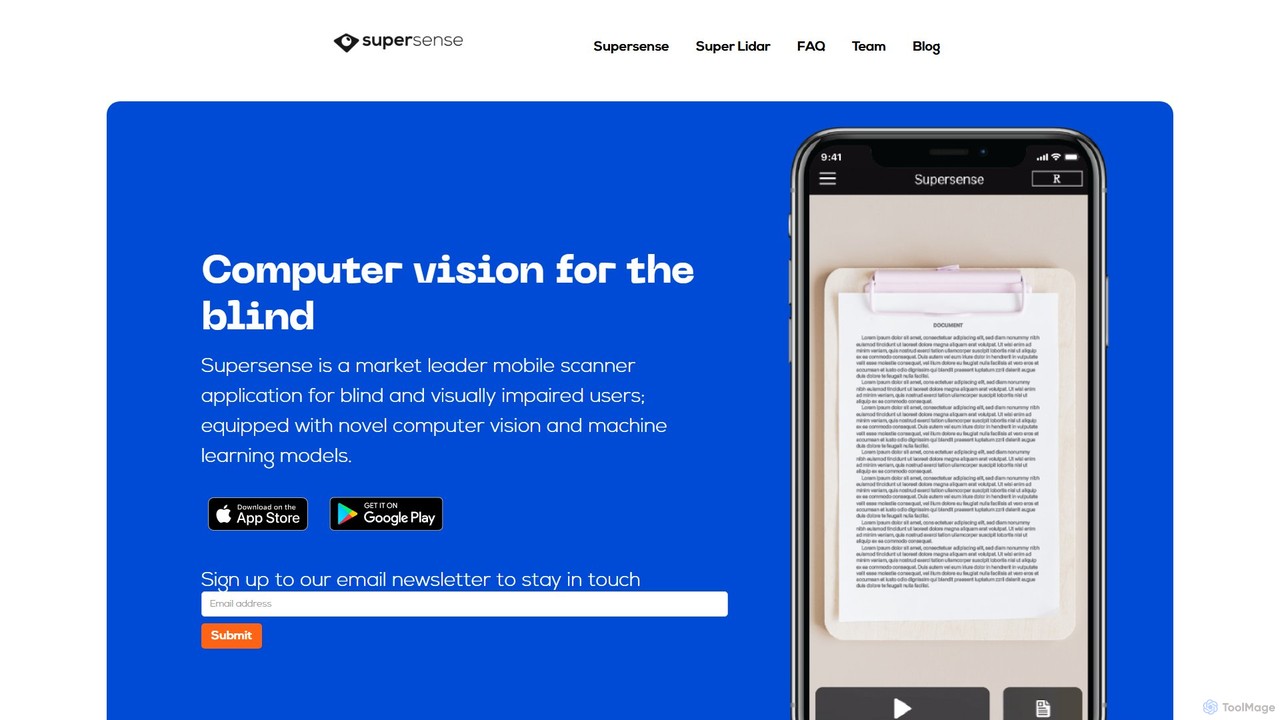
Supersense is an AI-powered mobile application designed for blind and visually impaired users. It acts as a smart …
Supersense is an AI-powered mobile application designed for blind and visually impaired users. It acts as a smart scanner, using the phone's camera to read text, identify currency, scan barcodes, and recognize objects in the user's environment. With a highly accessible interface and verbal guidance, it makes the physical world more navigable and information more accessible.
SnaptoBook
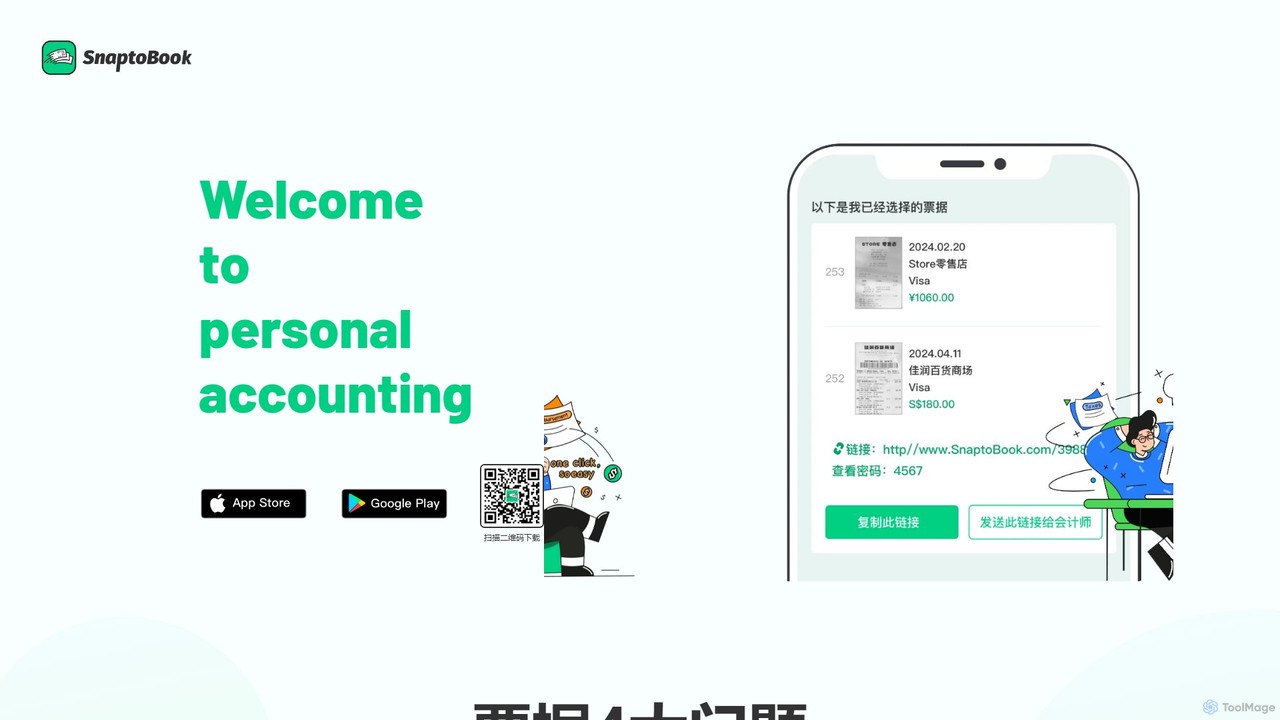
SnaptoBook is an AI-powered mobile app that digitizes receipts and invoices for effortless personal finance management. Simply snap …
SnaptoBook is an AI-powered mobile app that digitizes receipts and invoices for effortless personal finance management. Simply snap a photo of any bill, and the app automatically extracts data for expense tracking, reimbursement, tax filing, bill splitting, and project cost management. It's your smart assistant for organizing finances.
About Scanning
Scanning tools are AI-powered solutions designed to convert physical documents, objects, and environments into digital formats. Leveraging advanced computer vision and optical character recognition (OCR), these tools automate the digitization process, extracting valuable data and enhancing accessibility. They play a crucial role in streamlining workflows within the broader productivity landscape by transforming physical information into actionable digital assets.
Core Features
- Optical Character Recognition (OCR): Converts scanned text into editable and searchable digital text.
- Object Recognition & 3D Scanning: Identifies physical objects and reconstructs them into detailed 3D digital models.
- Document Classification & Data Extraction: Automatically categorizes scanned documents and extracts specific data fields like invoices or receipts.
- Image Enhancement & Noise Reduction: Improves the clarity and quality of scanned images, removing imperfections.
- Multi-format Support: Handles various input types, from paper documents to real-world objects and environments.
Applicable Scenarios
AI scanning tools are indispensable for industries requiring efficient data capture and digital asset creation. They are widely used in legal for digitizing case files, in finance for automating invoice processing, and in manufacturing for quality control through 3D model comparison. Cultural institutions also leverage them for preserving and digitizing historical artifacts.
How to Choose
When selecting an AI scanning tool, consider its accuracy in OCR and object recognition, the range of supported document and object types, and its integration capabilities with existing systems. Evaluate the speed of processing, the quality of output (e.g., 3D model fidelity, text accuracy), and the security features for sensitive data. Finally, assess the pricing model and scalability to match your organizational needs.
ScanningUse Cases
Automating Invoice and Receipt Processing
Finance departments and small businesses utilize AI scanning tools to automatically extract key information such as vendor names, amounts, dates, and line items from physical invoices and receipts. This eliminates manual data entry, significantly reducing errors and accelerating the accounts payable process, allowing for quicker reconciliation and financial reporting.
Digitizing Historical Archives and Cultural Heritage
Museums, libraries, and archival institutions employ AI scanning for the delicate task of digitizing fragile historical documents, ancient texts, maps, and artifacts. High-resolution 2D and 3D scanning preserves these invaluable items digitally, making them accessible to researchers and the public worldwide without risking damage to the originals, while also enabling advanced digital restoration.
Quality Control and Inspection in Manufacturing
Manufacturers leverage 3D scanning tools to create precise digital twins of components and finished products. These scans are then compared against original CAD designs to detect minute deviations, defects, or wear and tear. This application ensures high product quality, reduces waste, and streamlines the inspection process, moving beyond manual checks to automated, highly accurate assessments.
Creating Digital Twins for Architecture and Construction
Architects, engineers, and construction firms use AI scanning to capture existing building structures, terrains, and infrastructure. This generates highly accurate 3D models and point clouds, forming the basis for digital twins. These digital twins aid in renovation planning, progress monitoring, facility management, and virtual reality walkthroughs, improving collaboration and decision-making throughout a project's lifecycle.
Inventory Management and Asset Tracking
Retailers, logistics companies, and warehouses deploy AI scanning solutions for efficient inventory management. By scanning product barcodes, QR codes, or even recognizing objects directly, these tools automate stock counts, track asset movements, and update inventory databases in real-time. This reduces human error, prevents stockouts, and optimizes supply chain operations, leading to significant cost savings.
Converting Handwritten Notes to Digital Text
Students, researchers, and professionals use AI scanning to transform handwritten notes, meeting minutes, or lecture materials into editable and searchable digital text. Advanced OCR capabilities can interpret various handwriting styles, making it easier to organize, share, and retrieve information that would otherwise be confined to physical paper, significantly boosting personal productivity.