SessionStack
SessionStack is a user behavior analytics platform that helps businesses understand the user journey. It offers session replay, …
SessionStack is a user behavior analytics platform that helps businesses understand the user journey. It offers session replay, error tracking, and co-browsing to identify bugs, resolve support tickets faster, and optimize the user experience. By watching video-like recordings of user sessions, teams can see exactly what users do, where they get stuck, and why they encounter errors, leading to faster problem resolution and improved product quality.
riyo.ai
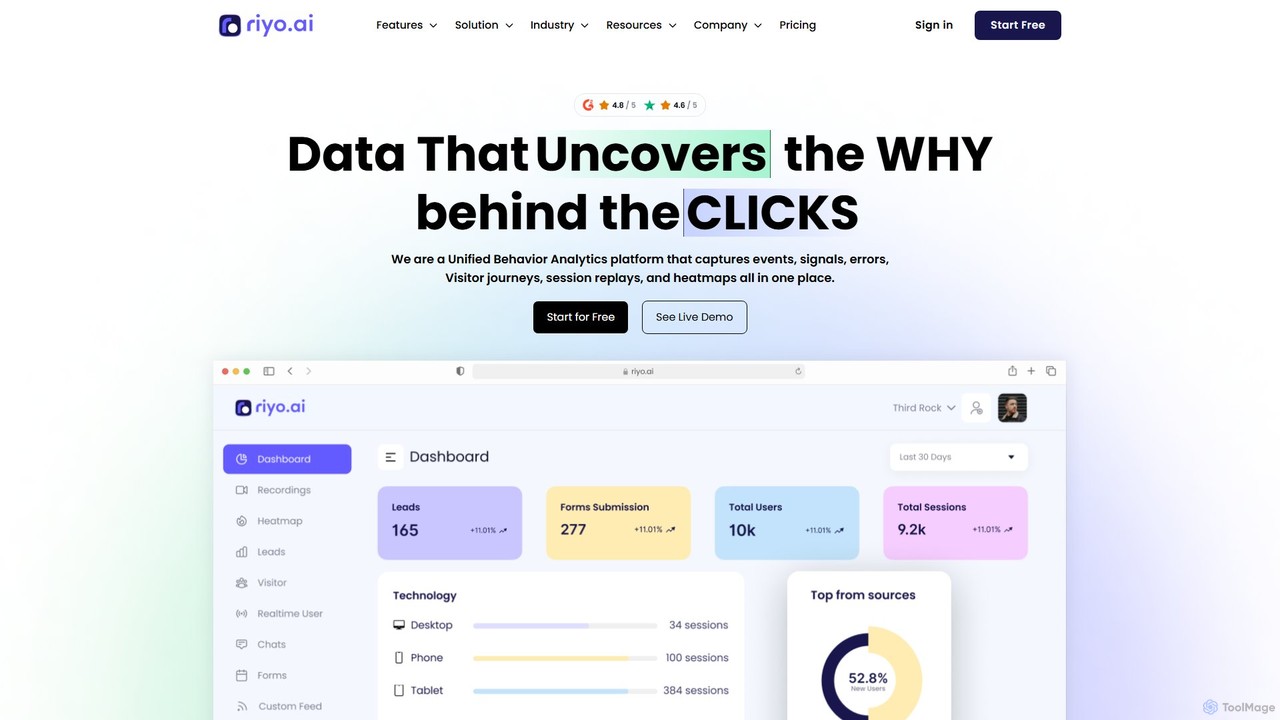
riyo.ai is a unified behavior analytics platform that combines session replays, heatmaps, error tracking, and product analytics. It …
riyo.ai is a unified behavior analytics platform that combines session replays, heatmaps, error tracking, and product analytics. It helps businesses understand user behavior, optimize the customer journey, and increase conversion rates by revealing the 'why' behind every click.
About User Feedback
User Feedback AI tools are a specialized category within productivity solutions, designed to automate the collection, analysis, and management of user opinions and suggestions. These tools leverage advanced artificial intelligence, including natural language processing (NLP) and machine learning, to transform raw feedback data into actionable insights. They empower product teams, customer service departments, and marketers to deeply understand user sentiment, identify emerging trends, and prioritize improvements, ultimately enhancing user experience and driving product development.
Core Features
- Automated Feedback Collection: Deploy AI-driven surveys, in-app prompts, or chatbots to gather feedback efficiently across various channels.
- Sentiment Analysis: Utilize NLP to accurately determine the emotional tone (positive, negative, neutral) of text-based feedback from reviews, comments, and support tickets.
- Topic & Trend Identification: Automatically categorize and cluster feedback into key themes, identifying recurring issues or emerging user needs without manual effort.
- Feedback Prioritization: AI algorithms help rank feedback based on factors like impact, urgency, or frequency, enabling teams to focus on the most critical improvements.
- Reporting & Visualization: Generate comprehensive dashboards and reports with visual representations of feedback data, making insights easily digestible and shareable.
Applicable Scenarios
These tools are invaluable for organizations seeking to become more user-centric. Product managers use them to inform roadmap decisions by analyzing feature requests and bug reports. Customer service teams leverage insights from support interactions to identify pain points and improve service quality. Marketing professionals apply them to gauge public sentiment on campaigns and optimize messaging for better engagement.
How to Choose
When selecting an AI user feedback tool, consider its integration capabilities with your existing CRM, project management, or communication platforms. Evaluate the sophistication of its AI analysis, particularly for sentiment accuracy and topic modeling. Assess the range of feedback channels supported, from in-app prompts to social media monitoring. Finally, examine the flexibility of its reporting and visualization features to ensure it meets your analytical and presentation needs.
User FeedbackUse Cases
Automate Product Feature Feedback Collection & Analysis
Product managers deploy AI tools to automatically launch micro-surveys and feedback prompts within the product, gathering real-time user experiences on new features. The AI performs sentiment analysis and topic clustering, quickly identifying user pain points and high-frequency demands to optimize product iteration directions.
Enhance Customer Service Conversation Insights
Customer service teams use AI user feedback tools to analyze support call transcripts and ticket content. The AI automatically identifies customer emotions, common issue types, and pain points, helping teams optimize FAQs, train service agents, and proactively address potential problems, thereby improving customer satisfaction.
Optimize Marketing Campaign Performance Evaluation
Marketing professionals collect user feedback on advertisements, promotional activities, or content marketing through AI tools. The AI analyzes comments, social media mentions, and survey results, quantifying user sentiment and preferences. This helps marketing teams adjust strategies, improve ad spend ROI, and enhance brand image.
Continuous Monitoring of User Experience Pain Points
UX/UI designers utilize AI feedback platforms to continuously monitor user behavior and feedback along the product usage journey. The AI automatically flags user confusion, complaints, or suggestions on specific pages or functionalities, helping designers quickly pinpoint and improve user interface and interaction flows.
Employee Satisfaction & Engagement Analysis
Human Resources departments use AI tools to anonymously collect employee feedback on work environment, benefits, or company culture. The AI analyzes text data, identifying employee sentiment trends and focus areas, providing data support for developing more effective employee care policies and enhancing organizational cohesion.
Competitive Product & Market Trend Insights
Market analysts leverage AI user feedback tools to scrape and analyze competitor product reviews, forum discussions, and social media data. The AI identifies competitor strengths and weaknesses, user pain points, and market gaps, providing intelligence for their own product positioning and differentiated competitive strategies.