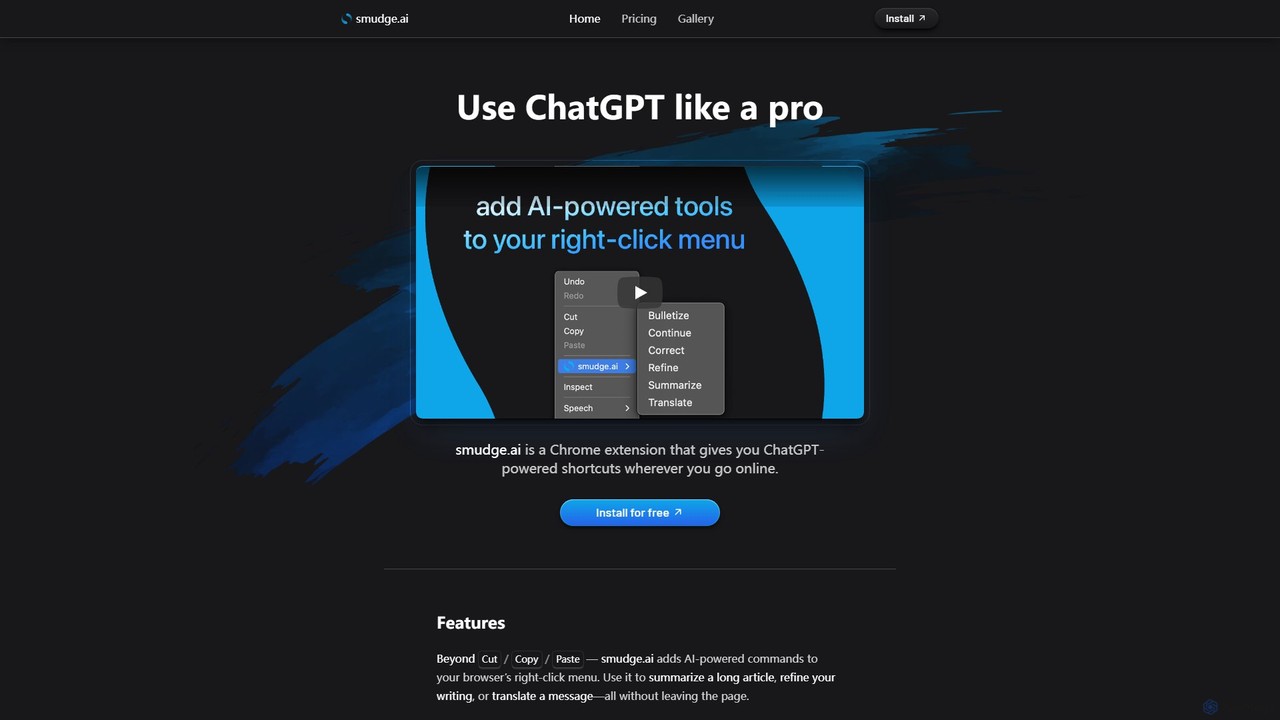
Text AI tools are AI-powered applications that process, generate, analyze, and transform human language. Leveraging advanced natural language processing (NLP) and machine learning models, these tools can understand context, extract meaning, and produce coherent, human-like text. They significantly enhance productivity across various domains by automating repetitive writing tasks, improving communication, and providing deep insights from textual data. From content creation and marketing to customer service and academic research, Text AI tools are becoming indispensable for businesses and individuals alike, streamlining workflows and unlocking new possibilities in textual data management.
Core Features
- Content Generation: Automatically create articles, marketing copy, social media posts, and creative writing based on prompts and desired styles.
- Summarization: Condense long documents, reports, or articles into concise, key takeaways, saving time on information digestion.
- Translation: Accurately translate text between multiple languages while preserving context, nuance, and cultural appropriateness.
- Sentiment Analysis: Identify and categorize the emotional tone (positive, negative, neutral) within text data, crucial for customer feedback and market research.
- Paraphrasing & Rewriting: Rephrase existing text to improve clarity, avoid plagiarism, or adapt content for different audiences.
- Grammar & Style Correction: Enhance writing quality by detecting and suggesting corrections for grammatical errors, spelling, punctuation, and stylistic inconsistencies.
Use Cases
Text AI tools are widely adopted by content creators, marketers, customer service teams, and researchers. They can automate the drafting of email responses, generate product descriptions for e-commerce platforms, assist in academic literature reviews by summarizing complex papers, or analyze vast amounts of customer feedback for sentiment insights. These applications streamline workflows, enable more efficient handling of large volumes of textual information, and foster more effective communication strategies across organizations.
How to Choose
When selecting a Text AI tool, consider its accuracy in language processing, the breadth of supported languages, and its specific functional capabilities (e.g., generation, analysis, translation). Evaluate integration options with existing platforms, customization potential for specific use cases, and the pricing model, including token usage. User-friendliness, the quality of output, and the ability to handle diverse text formats are also crucial for effective adoption and maximizing value.