ToolMage
Sign in
Agentfield
Orchestration · 19.1K monthly visits

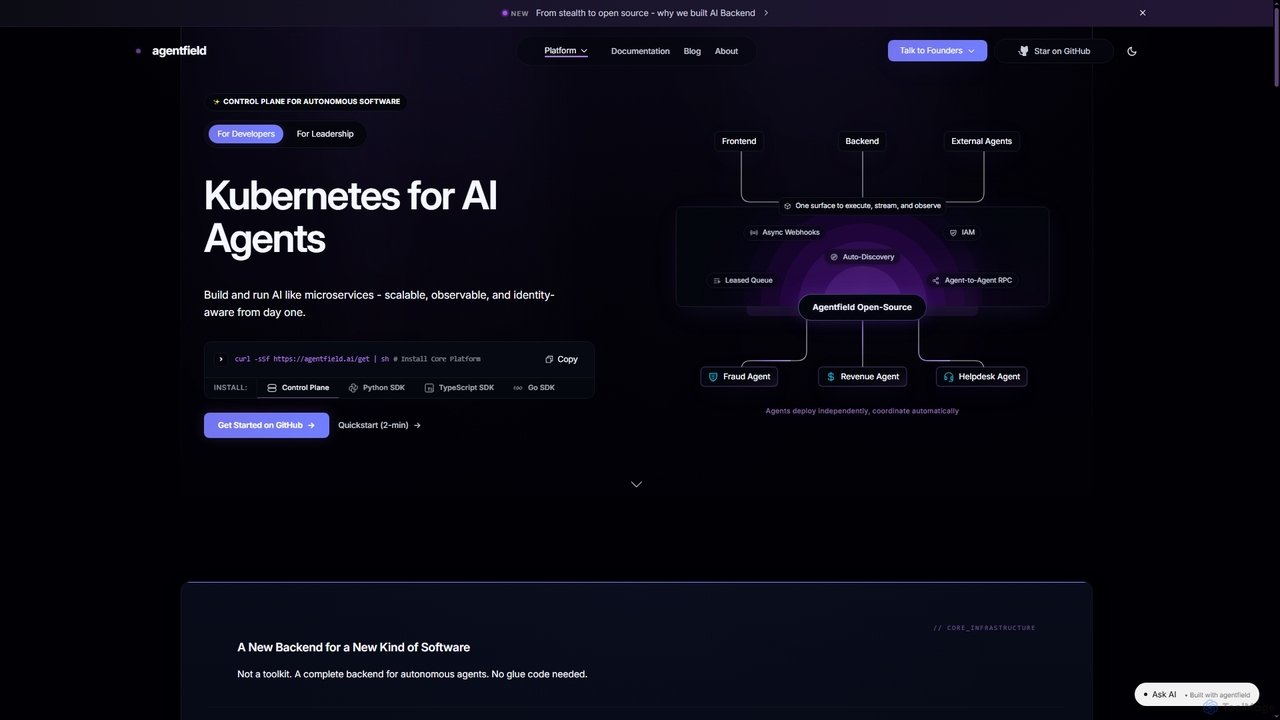
Agentfield is an open-source control plane designed for building and running autonomous AI agents as scalable, observable, and identity-aware microservices. It provides Kubernetes-like orchestration, cryptographic identity management, and production-ready infrastructure to bridge the gap between AI prototypes and robust, trustworthy production deployments.

VS
Agentium
Machine Learning · 3.8K monthly visits

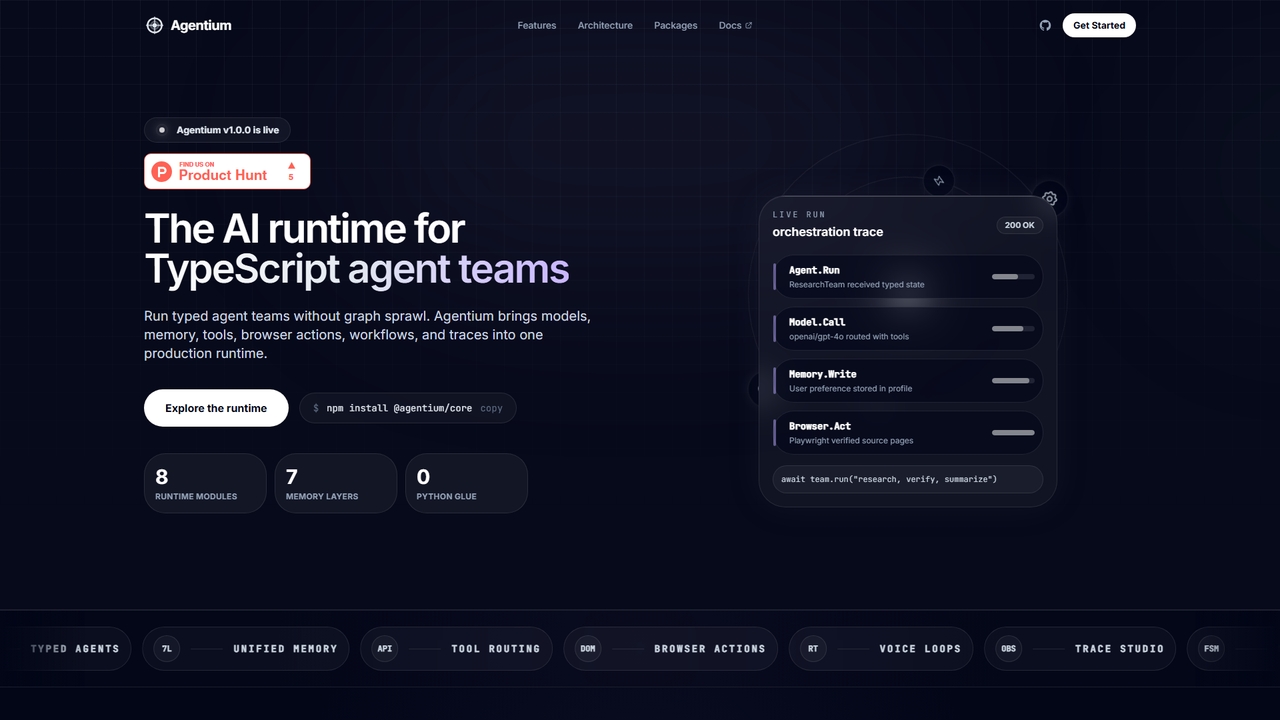
Agentium is an AI runtime for TypeScript agent teams, providing a unified platform for orchestration, memory, tools, and observability to build sophisticated agent systems.

Agentfield vs Agentium: pricing, features, traffic, and use cases

Compare Agentfield and Agentium across positioning, pricing, traffic, and user feedback using structured factual data.

Updated Aug 13, 2026

Product overview

Agentfield Product overview

Agentfield is an open-source control plane designed for building and running autonomous AI agents as scalable, observable, and identity-aware microservices. It provides Kubernetes-like orchestration, cryptographic identity management, and production-ready infrastructure to bridge the gap between AI prototypes and robust, trustworthy production deployments.
Preview

Agentium Product overview

Agentium is an AI runtime for TypeScript agent teams, providing a unified platform for orchestration, memory, tools, and observability to build sophisticated agent systems.

Preview

Detailed feature comparison

FeatureAgentfieldAgentium
Primary categoryOrchestrationMachine Learning
Added2025-12-132026-05-25
PricingFreeNot verified
Official websiteagentfield.aiagentium.in
Product typeWebsiteWebsite
Performance data
User ratingNot verifiedNot verified
Comments00
Monthly visits19.1K3.8K
Monthly growth9.5%Not verified
Favorites564
DetailsView detailsView details

Agentfield vs Agentium monthly traffic

Compare Agentfield and Agentium by monthly reach, traffic trend, visit depth, top regions, and acquisition sources.

How to interpret the traffic data

In the Agentfield vs Agentium monthly traffic comparison, Agentfield currently shows 19.1K visits and Agentium shows 3.8K; Agentfield has about 5 times the visible traffic of Agentium, an absolute difference of about 15.3K visits. This reflects visible reach, not feature quality or paid users.

Only Agentfield has complete third-party traffic details; Agentium uses visits recorded inside ToolMage. These scopes cannot estimate market share directly, and on-site views should not be treated as the product’s total website traffic.

Agentfield monthly traffic:

Latest traffic

Monthly visits
19.1K
Avg. visit duration
0:38
Pages per visit
2.12
Bounce rate
43.47%
Data updated 2026-06-15

Monthly traffic trend

  • 2026/1: 33.2K Monthly visits
  • 2026/2: 11.4K Monthly visits
  • 2026/3: 16.3K Monthly visits
  • 2026/4: 17.4K Monthly visits
  • 2026/5: 19.1K Monthly visits

Top regions

Top 5 countries/regions
Country/regionPercentageTraffic
🇮🇳India26.5%5.1K
🇻🇳Vietnam23.74%4.5K
🇺🇸United States16.68%3.2K
🇧🇷Brazil16.55%3.2K
🇮🇩Indonesia16.53%3.2K

Traffic sources

Source typePercentageTraffic
Direct89.77%17.1K
Referral6.84%1.3K
Email3.39%647

Search keywords

agent fieldagent-fieldagentfieldagentfield aiagents field

Agentium monthly traffic:

Latest traffic

Monthly visits
3.8K
Traffic-based selection guidance: The current traffic scope is not sufficient for a reliable product ranking. Treat monthly visits as a market-interest signal, then decide using taxonomy, use cases, pricing, and a like-for-like trial rather than reading exposure as product capability.

Usage comparison

Compare the core capabilities of Agentfield and Agentium

Agentfield Core features

Orchestration
Agent Frameworks
Identity Management
Backend

Agentium Core features

Machine Learning
Agent Orchestration
Workflow Automation

Use cases

Agentfield Use cases

developer tools
observability
typescript
ai agents
Audit Trails
Autonomous Software
backend
distributed systems
go
IAM
identity management
kubernetes
LLM integration
microservices
open source
orchestration
python
scalability
Verifiable Credentials

Agentium Use cases

developer tools
observability
typescript
agent orchestration
AI runtime
AI Workflows
multi-agent systems
unified memory

Best suited roles

Agentfield Best suited roles

AI Engineer
DevOps Engineer
Software Developer
Technical Lead
Cloud Architect
Compliance Officer
Product Manager (AI/ML)

Agentium Best suited roles

AI Engineer
DevOps Engineer
Software Developer
Technical Lead
Backend Developer
Machine Learning Engineer

Agentfield vs Agentium:In-depth comparison and selection guidance

First decide whether the products solve the same kind of need

This in-depth Agentfield vs Agentium comparison uses only the product records, taxonomy, audience, traffic, and community signals available on this page. Agentfield is primarily listed under “Orchestration”, while Agentium is primarily listed under “Machine Learning”, so the first decision is whether your actual task matches their recorded scope.

The structured fields currently show these decision-relevant differences: Primary category (Agentfield: Orchestration; Agentium: Machine Learning); Pricing (Agentfield: Free; Agentium: Not disclosed); Monthly visits (Agentfield: 19.1K; Agentium: 3.8K); Favorites (Agentfield: 56; Agentium: 4); Website (Agentfield: agentfield.ai; Agentium: agentium.in). These facts are more useful for selection than brand visibility alone.

What market visibility and monthly traffic mean

In the Agentfield vs Agentium monthly traffic comparison, Agentfield currently shows 19.1K visits and Agentium shows 3.8K; Agentfield has about 5 times the visible traffic of Agentium, an absolute difference of about 15.3K visits. This reflects visible reach, not feature quality or paid users.

Only Agentfield has complete third-party traffic details; Agentium uses visits recorded inside ToolMage. These scopes cannot estimate market share directly, and on-site views should not be treated as the product’s total website traffic.

The current traffic scope is not sufficient for a reliable product ranking. Treat monthly visits as a market-interest signal, then decide using taxonomy, use cases, pricing, and a like-for-like trial rather than reading exposure as product capability.

Product positioning, use cases, and roles

Agentfield and Agentium currently overlap in shared tags: developer tools, observability, and typescript; shared roles: AI Engineer, DevOps Engineer, Software Developer, and Technical Lead. This can place both on the same shortlist, but it does not prove equal implementation, depth, or cost.

Agentfield's unique categories/tags are Orchestration, Agent Frameworks, Identity Management, Backend, ai agents, Audit Trails, Autonomous Software, and backend; Agentium's are Machine Learning, Agent Orchestration, Workflow Automation, agent orchestration, AI runtime, AI Workflows, multi-agent systems, and unified memory. These unique fields are the strongest differentiators: validate the product whose recorded scope matches the task instead of following traffic alone.

What ratings, comments, and favorites can tell you

Agentfield has no verified rating, 0 comments, 56 favorites, and 59 likes;Agentium has no verified rating, 0 comments, 4 favorites, and 5 likes。

Neither product has enough rating or comment samples for a credible reputation ranking.

Selection guidance by actual need

When to evaluate Agentfield first

Put Agentfield on the priority trial list when the task aligns with “Orchestration” and especially Orchestration, Agent Frameworks, Identity Management, Backend, ai agents, and Audit Trails, or the users include Cloud Architect, Compliance Officer, and Product Manager (AI/ML). This follows recorded positioning and does not imply unlisted capabilities are absent.

Agentfield also currently records: pricing is free, product type is website, 19.1K verified monthly visits, no verified user rating. Verify any hard requirement around price, platform, or reach before trial, and do not let sparse review data substitute for testing.

When to evaluate Agentium first

Put Agentium on the priority trial list when the task aligns with “Machine Learning” and especially Machine Learning, Agent Orchestration, Workflow Automation, agent orchestration, AI runtime, and AI Workflows, or the users include Backend Developer and Machine Learning Engineer. This follows recorded positioning and does not imply unlisted capabilities are absent.

Agentium also currently records: pricing is not verified, product type is website, 3.8K on-site monthly views, no verified user rating. Verify any hard requirement around price, platform, or reach before trial, and do not let sparse review data substitute for testing.

How to validate the recommendation before deciding

The available data describes positioning, public visibility, and community signals, but it cannot prove output quality, speed, integration effort, privacy, or long-term cost in your workflow. Before deciding, run the same representative tasks in Agentfield and Agentium, then record completion time, accuracy, manual corrections, and the real paid threshold. A like-for-like trial turns this comparison into a defensible adoption decision.

Comparison FAQ

How should I choose between Agentfield and Agentium?
Compare positioning, pricing, taxonomy, and traffic maturity, then verify the latest details on each official website.
Where does this comparison data come from?
The factual baseline is derived from product, taxonomy, traffic, and community data. Reviewed editorial conclusions show their source and verification date.
What do unknown fields mean?
Unknown means there is not enough reliable evidence; the page does not fill gaps with assumptions.

Related AI tools

Metorial
Freemium

Metorial

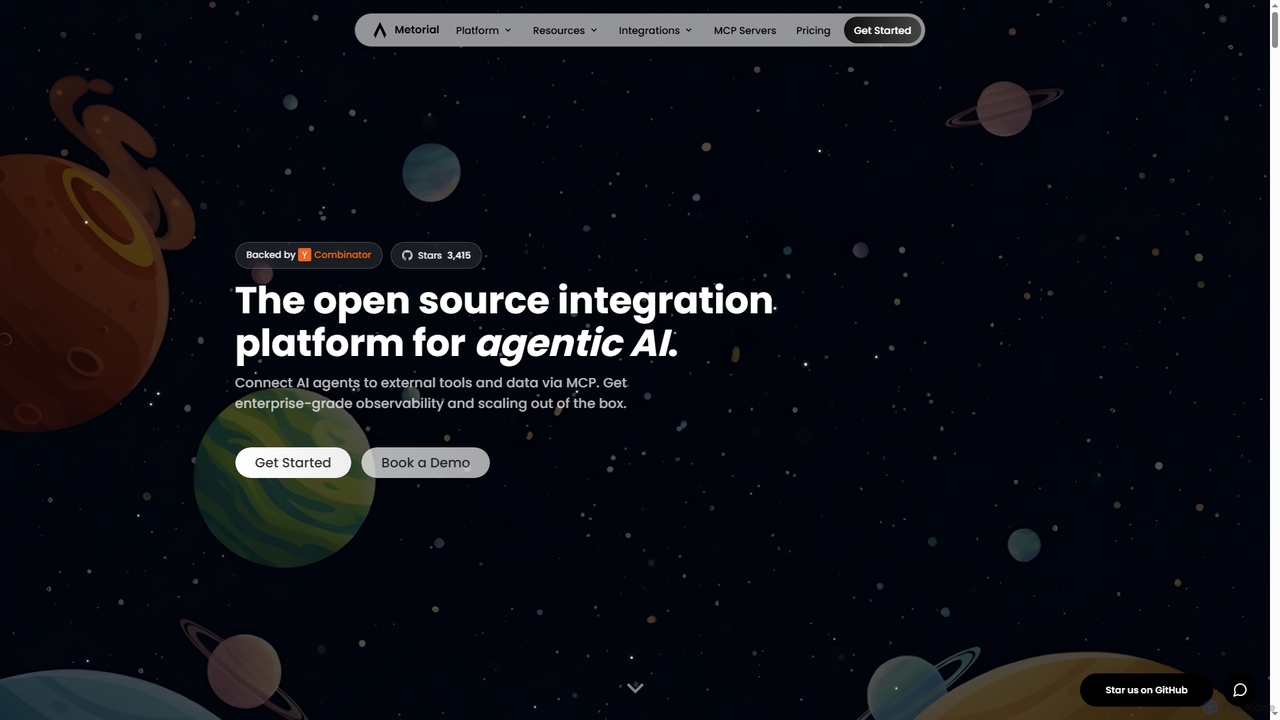
Metorial is an integration platform for AI agents, enabling developers to quickly build, deploy, and monitor powerful agentic AI applications. It provides seamless connections to hundreds of tools, data sources, and APIs via its serverless Model Context Protocol (MCP) platform, offering robust SDKs, observability, and enterprise-grade security for scalable AI solutions.

Agentic Ai
Visits 11.5KFavorites 119Likes 118
AutoRail

AutoRail

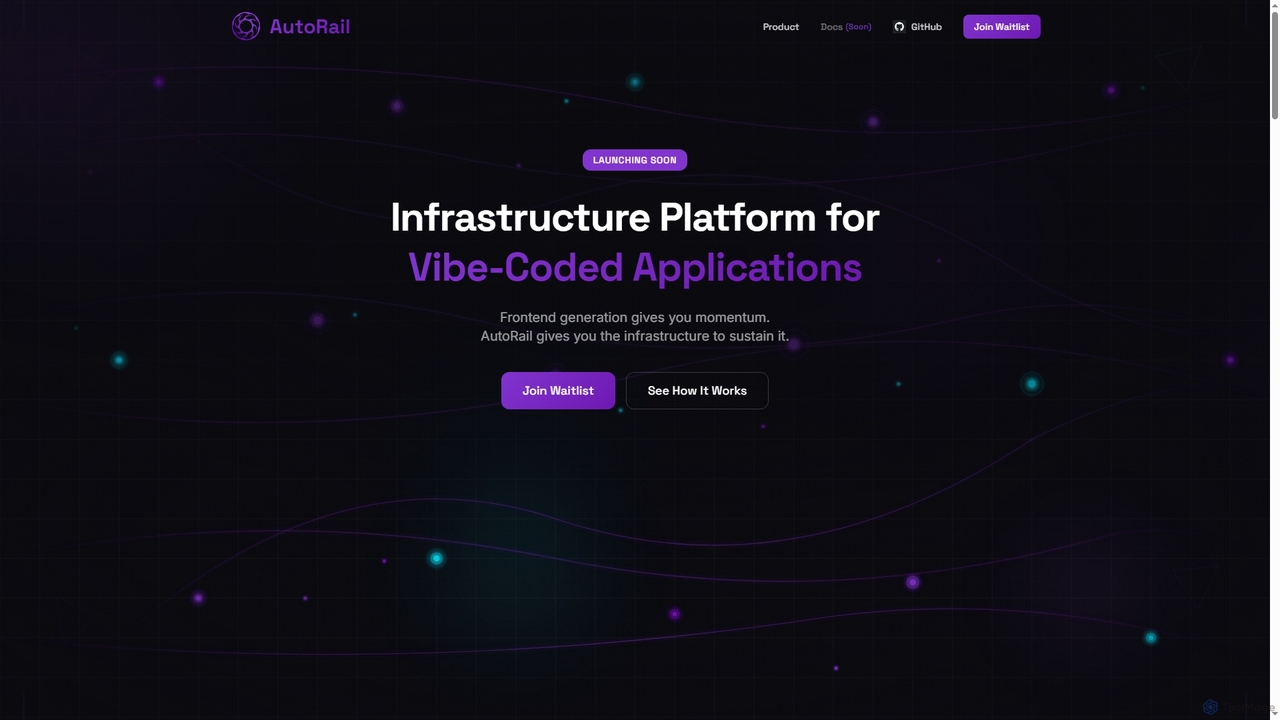
AutoRail is an infrastructure platform designed to transform "vibe-coded" prototypes into production-ready applications. It automatically provisions essential backend primitives like stateful memory, workflow orchestration, and auto-scaling, bridging the critical gap between rapid frontend development and robust, scalable production systems without manual configuration.

Ai Infrastructure
Visits 3.8KFavorites 37Likes 43
Dank
Freemium

Dank

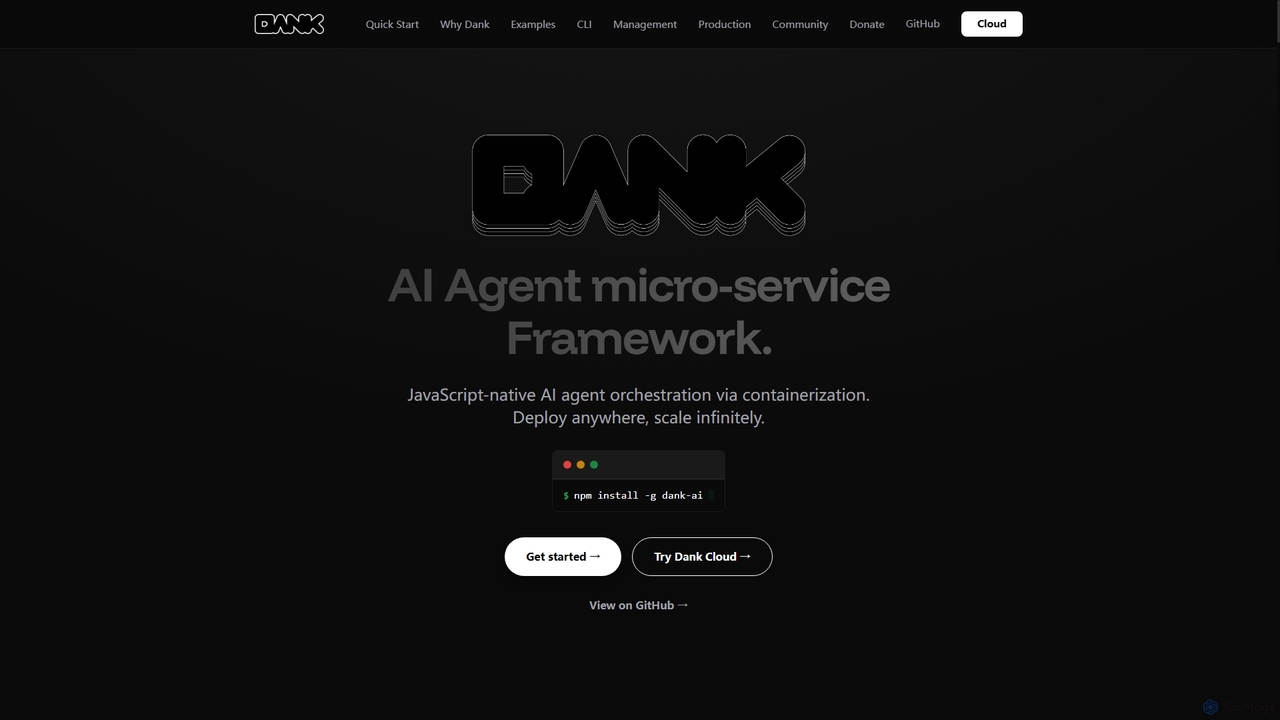
Dank is a JavaScript-native, open-source framework for orchestrating and deploying containerized AI agents. It enables developers to build, manage, and scale multiple AI agents as microservices across any cloud infrastructure, simplifying complex AI deployments with Docker-native architecture and real-time monitoring.

Agent Frameworks
Visits 3.7KFavorites 126Likes 131
AI SDK
Free

AI SDK

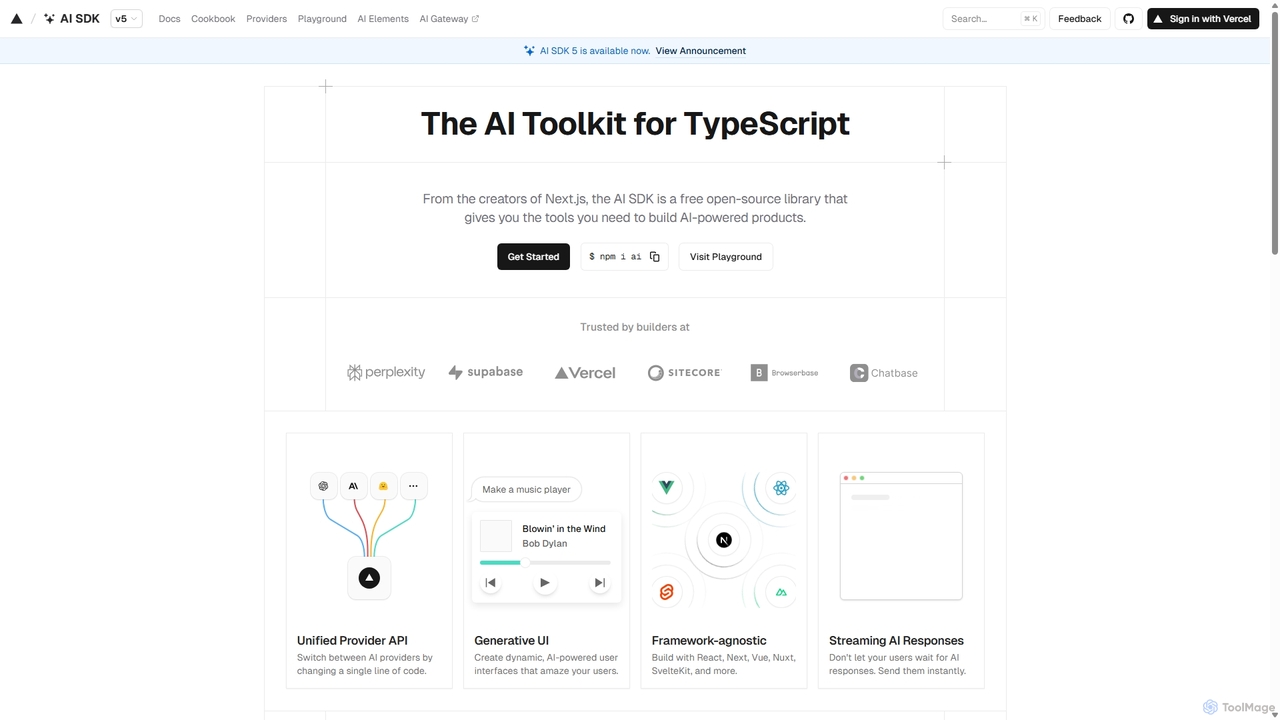
AI SDK by Vercel is a free, open-source TypeScript toolkit designed to help developers build AI-powered applications. It provides a unified API to seamlessly integrate with various large language models like OpenAI, Anthropic, and Google Gemini. The SDK is framework-agnostic, supporting React, Next.js, Vue, Svelte, and more, enabling the creation of features like streaming responses and generative UIs with minimal effort.

Model Integration
Visits 3.8KFavorites 109Likes 113
Helicone
Freemium

Helicone

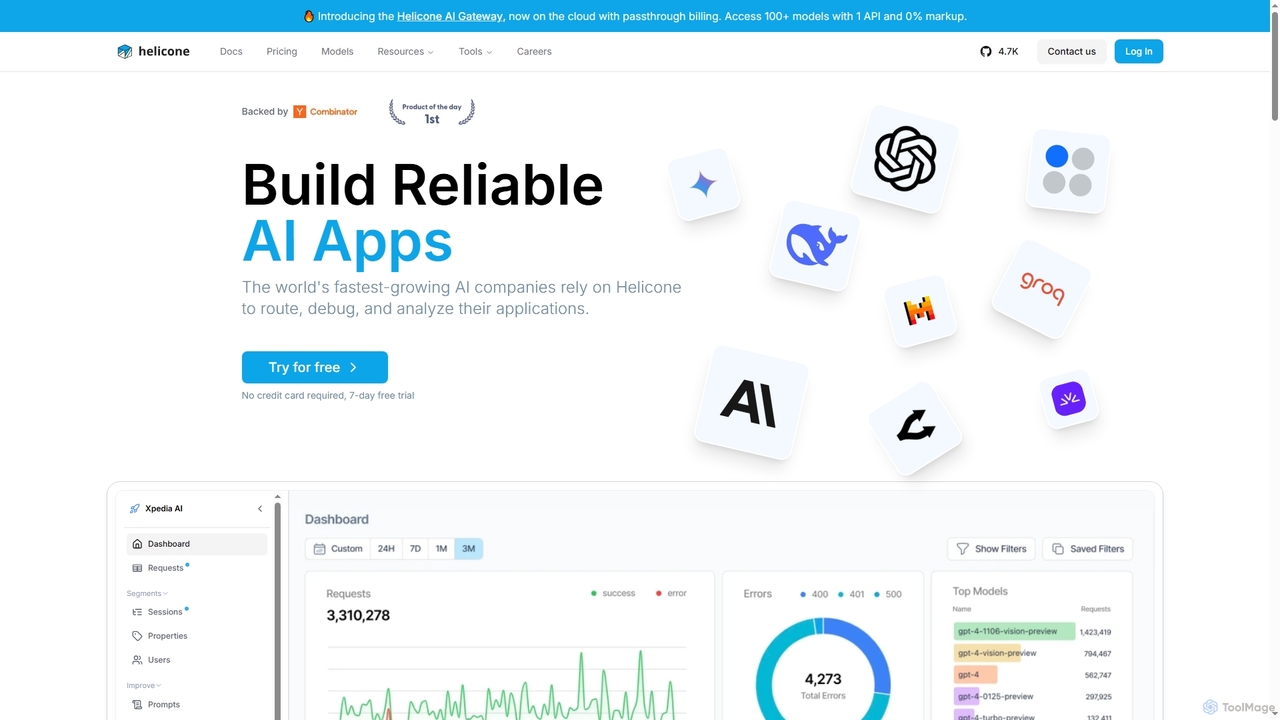
Helicone is an open-source platform offering an AI Gateway and LLM Observability for developers. It helps build reliable AI applications by providing tools to route, monitor, debug, and analyze LLM usage. Key features include a unified API for 100+ models, intelligent caching, rate limiting, prompt management, and detailed performance analytics.

Api Management
Visits 104KFavorites 113Likes 106
Plano

Plano

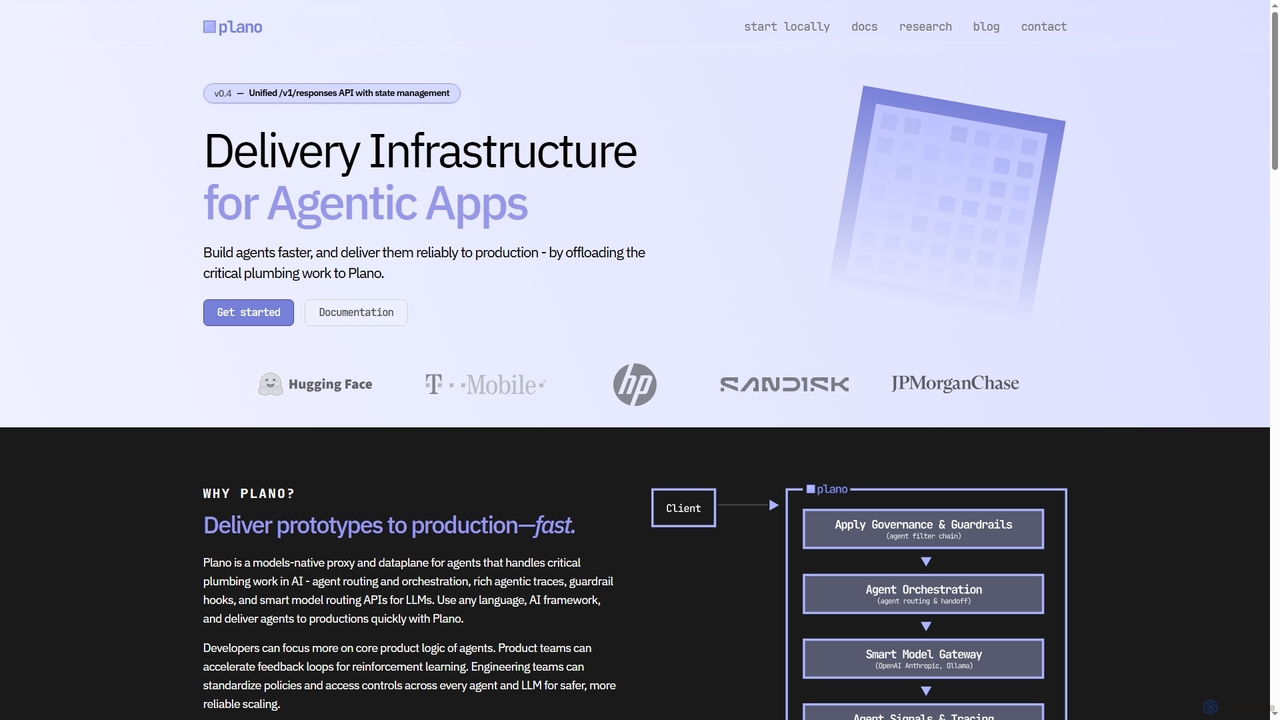
Plano is a models-native delivery infrastructure for agentic AI applications, offloading critical plumbing work such as agent routing, orchestration, rich observability, and guardrail hooks. It accelerates the development and reliable deployment of AI agents to production, allowing developers to focus on core product logic. Designed for speed and reliability, Plano simplifies complex AI infrastructure challenges.

Agent Orchestration
Visits 6.6KFavorites 6Likes 9
MACH-AI
Freemium

MACH-AI

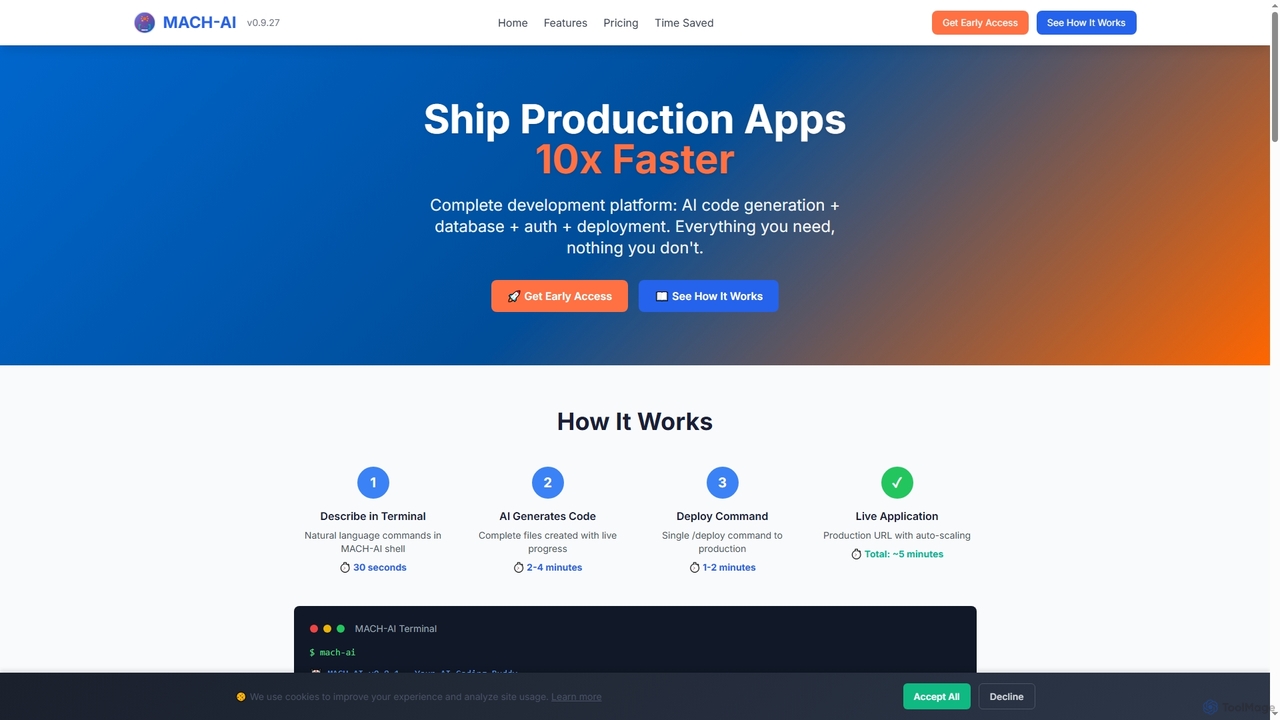
MACH-AI is an AI coding assistant and complete development platform that transforms concepts into production-ready cloud applications in minutes. It integrates AI code generation, built-in database, authentication, and one-command deployment, enabling developers to build and launch scalable web applications 10x faster across Python, JavaScript, and TypeScript.

Application Deployment
Visits 5.1KFavorites 28Likes 27
Vectra

Vectra

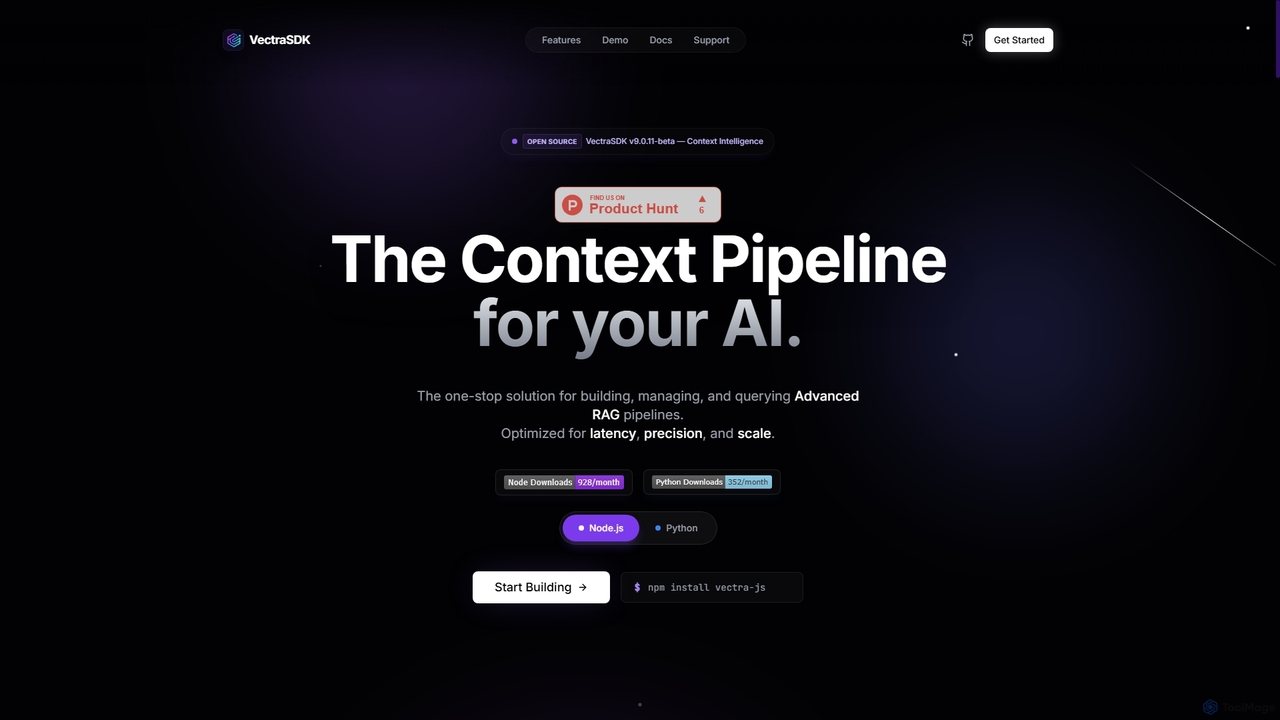
Vectra is an open-source, production-grade SDK for Node.js and Python, designed to build, manage, and query advanced Retrieval-Augmented Generation (RAG) pipelines. It offers a comprehensive toolkit for developing context-aware AI applications, optimized for low latency, high precision, and scalability.

Rag Pipelines
Visits 3.7KFavorites 28Likes 29
DevBlogs

DevBlogs

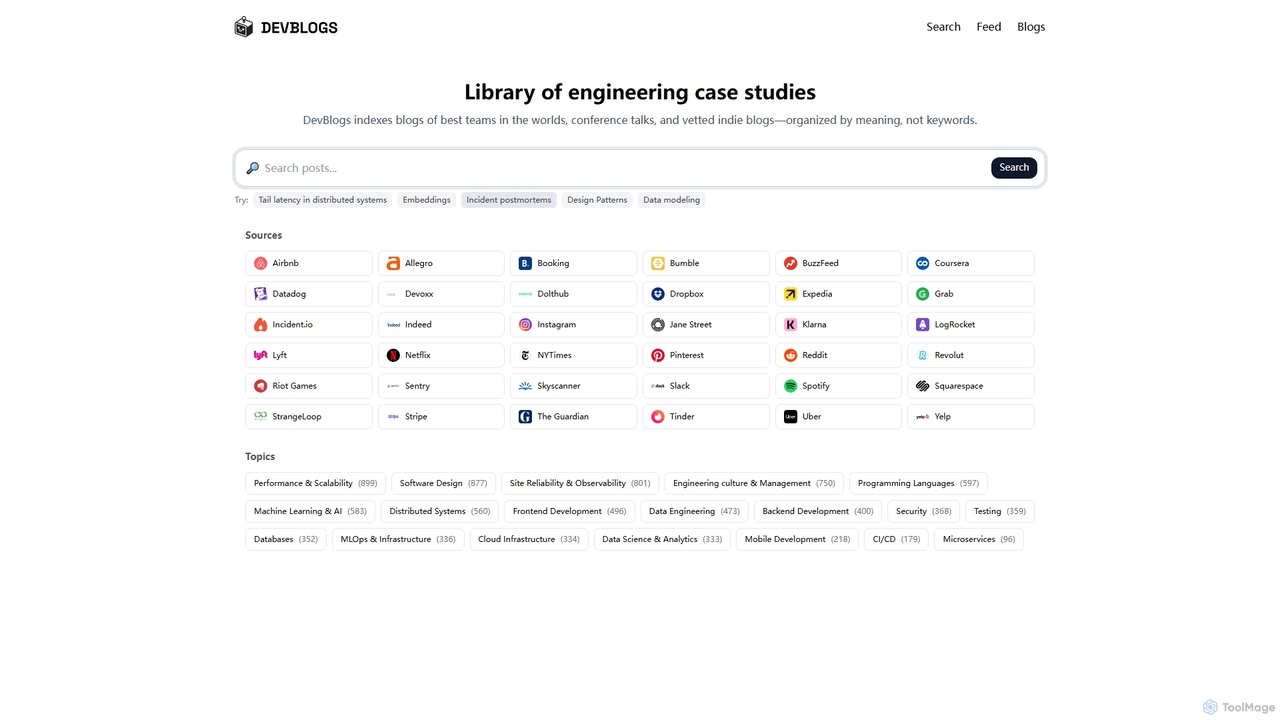
DevBlogs is a curated library indexing engineering case studies, tech blogs, and conference talks from leading global teams. It organizes content by meaning and specific technical topics, providing a valuable resource for developers and engineers to discover insights and best practices.

Infrastructure
Visits 3.6KFavorites 110Likes 116
Unify
Freemium

Unify

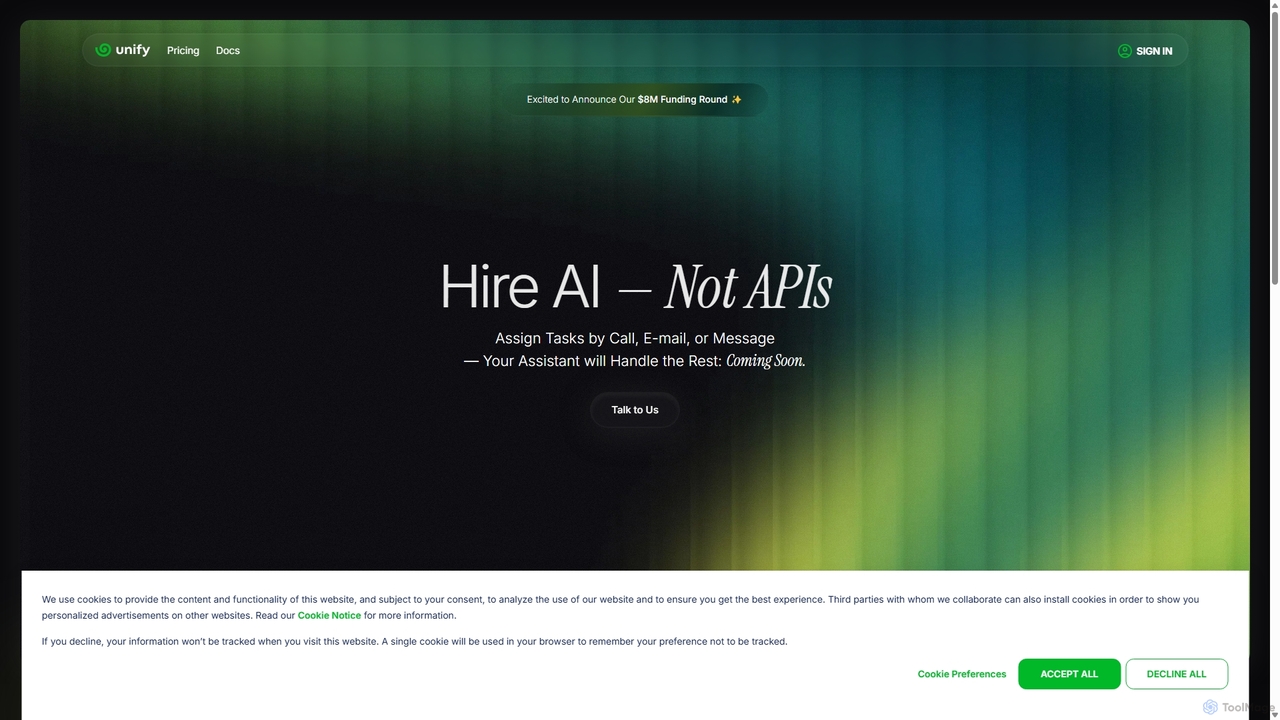
Unify is a developer-centric LLMOps platform designed to simplify building, monitoring, and optimizing AI applications. It provides a universal API and a hackable framework for logging, evaluation, tracing, and managing AI agents, enabling developers to create custom workflows and interfaces with ease.

Llmops
Visits 15.2KFavorites 114Likes 117
AI SDK Agents
Paid

AI SDK Agents

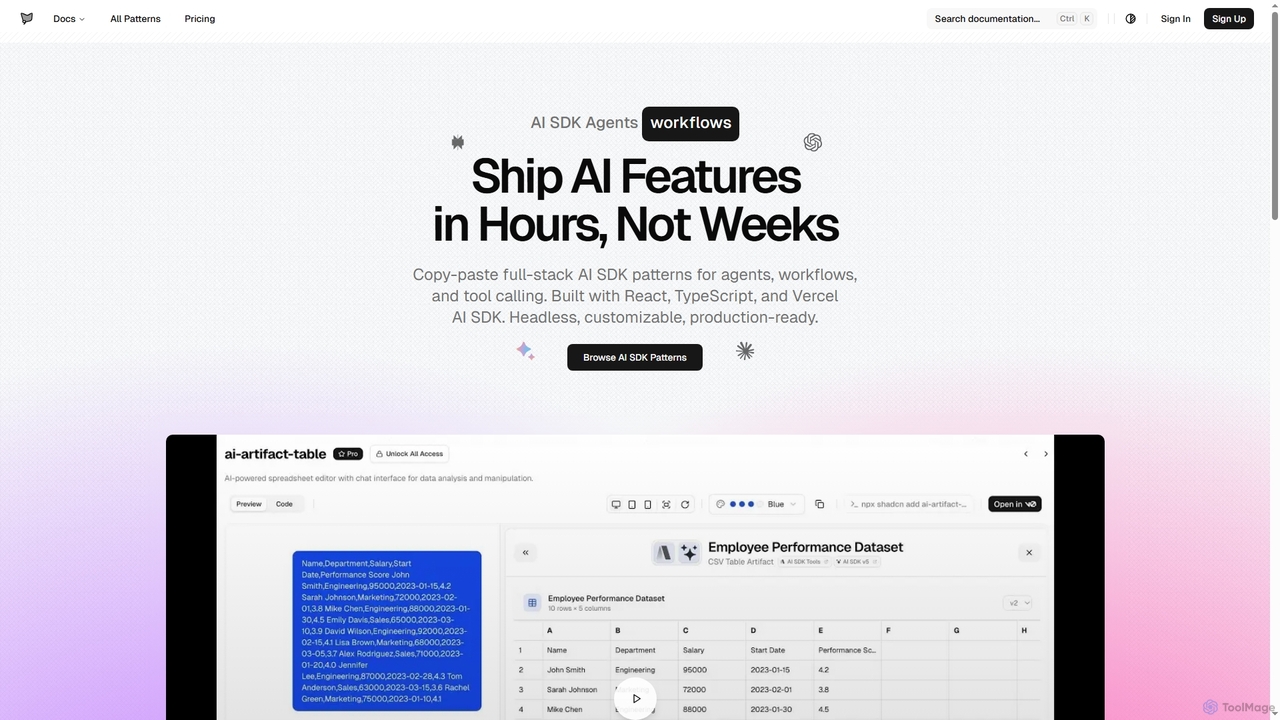
AI SDK Agents provides production-ready React components for rapidly building AI applications. Leverage copy-paste patterns for agents, workflows, tool calling, and streaming responses, built with React, TypeScript, and Vercel AI SDK. Accelerate your AI feature development from weeks to hours, ensuring customizable and headless integration into your projects.

Ui Components
Visits 62.4KFavorites 116Likes 131
Kubiks
Freemium

Kubiks

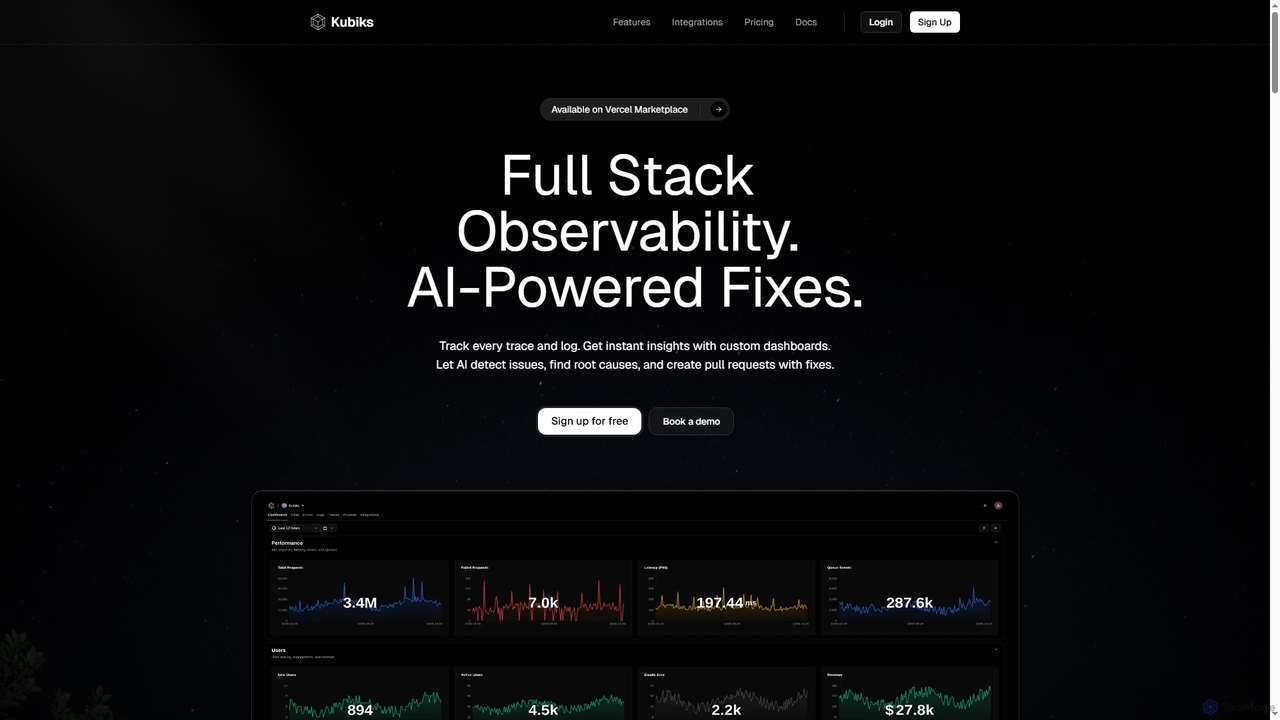
Kubiks is an AI-powered full-stack observability platform providing distributed tracing, logging, and custom dashboards. It automatically detects issues, identifies root causes, and generates pull requests with fixes, helping engineering teams debug faster and proactively resolve problems.

Debugging
Visits 3.7KFavorites 103Likes 106
Protocol Lattice

Protocol Lattice

Protocol Lattice is an organization dedicated to building open-source protocols and frameworks that foster interoperable, intelligent AI systems. Their flagship project, the Universal Tool Calling Protocol (UTCP), provides a lightweight, secure, and scalable standard for AI agents and applications to discover and interact with tools using their native protocols. They emphasize practical, well-documented solutions and community collaboration.

Interoperability
Visits 4.4KFavorites 90Likes 120
Portkey AI
Freemium

Portkey AI

Portkey AI is an advanced AI gateway and LLM Ops platform designed for developers. It simplifies the development of reliable, scalable, and cost-effective AI applications by providing a unified API for various LLMs, real-time observability, semantic caching, and intelligent load balancing.

Infrastructure
Visits 3.8KFavorites 106Likes 100
Skald
Freemium

Skald

Skald is an open-source RAG API designed for developers to quickly build AI agents without the complexity of managing RAG infrastructure. It simplifies knowledge storage, context management, and semantic search, offering a powerful solution for integrating long-term memory into AI applications.

Rag
Visits 3.8KFavorites 98Likes 120