ConnectOnion is a minimalist Python framework designed to build production-ready AI agents with significantly less code. It simplifies agent creation by combining Markdown prompts and Python functions, reducing boilerplate by up to 85% compared to other frameworks.

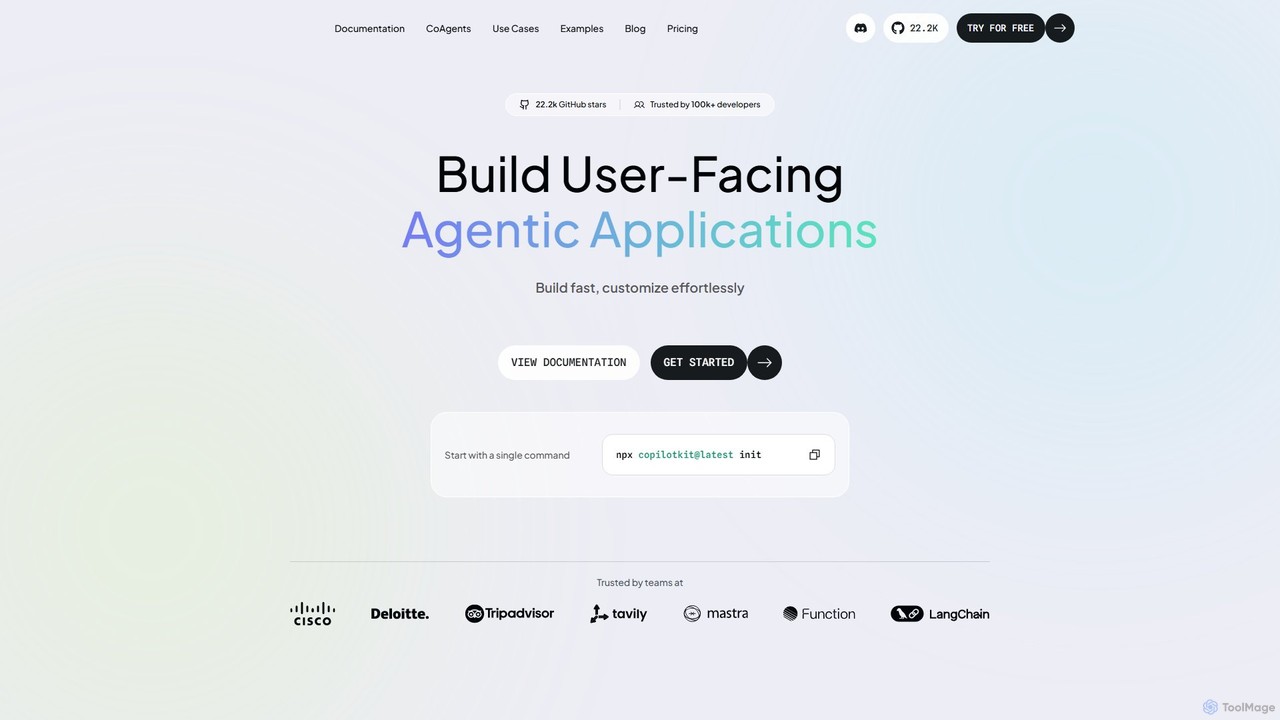
CopilotKit is an open-source, full-stack framework for developers to build, deploy, and customize in-app AI copilots and agentic applications. It provides front-end components, back-end logic, and seamless integrations with any LLM or agent framework, enabling the creation of powerful, user-facing AI assistants.
Product overview
ConnectOnion Product overview
ConnectOnion is a minimalist Python framework designed to build production-ready AI agents with significantly less code. It simplifies agent creation by combining Markdown prompts and Python functions, reducing boilerplate by up to 85% compared to other frameworks.
CopilotKit Product overview
CopilotKit is an open-source, full-stack framework for developers to build, deploy, and customize in-app AI copilots and agentic applications. It provides front-end components, back-end logic, and seamless integrations with any LLM or agent framework, enabling the creation of powerful, user-facing AI assistants.
Detailed feature comparison
| Feature | ConnectOnion | CopilotKit |
|---|---|---|
| Primary category | Libraries | Frameworks |
| Added | 2025-10-19 | 2025-08-12 |
| Pricing | Free | Freemium |
| Official website | docs.connectonion.com | www.copilotkit.ai |
| Product type | Website | Website |
| Performance data | ||
| User rating | Not verified | Not verified |
| Comments | 0 | 0 |
| Monthly visits | 3.4K | 169.6K |
| Monthly growth | Not verified | 5.4% |
| Favorites | 104 | 82 |
| Details | View details | View details |
ConnectOnion vs CopilotKit monthly traffic
Compare ConnectOnion and CopilotKit by monthly reach, traffic trend, visit depth, top regions, and acquisition sources.
How to interpret the traffic data
In the ConnectOnion vs CopilotKit monthly traffic comparison, ConnectOnion currently shows 3.4K visits and CopilotKit shows 169.6K; CopilotKit has about 49.7 times the visible traffic of ConnectOnion, an absolute difference of about 166.2K visits. This reflects visible reach, not feature quality or paid users.
Only CopilotKit has complete third-party traffic details; ConnectOnion uses visits recorded inside ToolMage. These scopes cannot estimate market share directly, and on-site views should not be treated as the product’s total website traffic.
ConnectOnion monthly traffic:
Latest traffic
CopilotKit monthly traffic:
Latest traffic
Monthly traffic trend
- 2025/9: 153.3K Monthly visits
- 2026/1: 231.9K Monthly visits
- 2026/2: 193.2K Monthly visits
- 2026/3: 164.7K Monthly visits
- 2026/4: 160.9K Monthly visits
- 2026/5: 169.6K Monthly visits
Top regions
Top 5 countries/regions
| Country/region | Percentage | Traffic |
|---|---|---|
| 🇺🇸United States | 41.88% | 71K |
| 🇨🇳China | 32.12% | 54.5K |
| 🇮🇳India | 14.68% | 24.9K |
| 🇳🇬Nigeria | 6.35% | 10.8K |
| 🇩🇪Germany | 4.97% | 8.4K |
Traffic sources
| Source type | Percentage | Traffic |
|---|---|---|
| Direct | 81.51% | 138.2K |
| Referral | 17.17% | 29.1K |
| 1.32% | 2.2K |
Search keywords
Usage comparison
Compare the core capabilities of ConnectOnion and CopilotKit
ConnectOnion Core features
CopilotKit Core features
Use cases
ConnectOnion Use cases
CopilotKit Use cases
Best suited roles
ConnectOnion Best suited roles
CopilotKit Best suited roles
ConnectOnion vs CopilotKit:In-depth comparison and selection guidance
First decide whether the products solve the same kind of need
This in-depth ConnectOnion vs CopilotKit comparison uses only the product records, taxonomy, audience, traffic, and community signals available on this page. ConnectOnion is primarily listed under “Libraries”, while CopilotKit is primarily listed under “Frameworks”, so the first decision is whether your actual task matches their recorded scope.
The structured fields currently show these decision-relevant differences: Primary category (ConnectOnion: Libraries; CopilotKit: Frameworks); Pricing (ConnectOnion: Free; CopilotKit: Freemium); Monthly visits (ConnectOnion: 3.4K; CopilotKit: 169.6K); Favorites (ConnectOnion: 104; CopilotKit: 82); Website (ConnectOnion: docs.connectonion.com; CopilotKit: www.copilotkit.ai). These facts are more useful for selection than brand visibility alone.
What market visibility and monthly traffic mean
In the ConnectOnion vs CopilotKit monthly traffic comparison, ConnectOnion currently shows 3.4K visits and CopilotKit shows 169.6K; CopilotKit has about 49.7 times the visible traffic of ConnectOnion, an absolute difference of about 166.2K visits. This reflects visible reach, not feature quality or paid users.
Only CopilotKit has complete third-party traffic details; ConnectOnion uses visits recorded inside ToolMage. These scopes cannot estimate market share directly, and on-site views should not be treated as the product’s total website traffic.
The current traffic scope is not sufficient for a reliable product ranking. Treat monthly visits as a market-interest signal, then decide using taxonomy, use cases, pricing, and a like-for-like trial rather than reading exposure as product capability.
Product positioning, use cases, and roles
ConnectOnion and CopilotKit currently overlap in shared categories: Frameworks and Automation; shared tags: AI agent, developer tools, framework, and open source. This can place both on the same shortlist, but it does not prove equal implementation, depth, or cost.
ConnectOnion's unique categories/tags are Libraries, agent framework, automation, boilerplate reduction, LangChain alternative, llm, and python; CopilotKit's are Low Code No Code, Copilot, generative ui, in-app ai, LangChain, react, SaaS, and SDK. These unique fields are the strongest differentiators: validate the product whose recorded scope matches the task instead of following traffic alone.
What ratings, comments, and favorites can tell you
ConnectOnion has no verified rating, 0 comments, 104 favorites, and 107 likes;CopilotKit has no verified rating, 0 comments, 82 favorites, and 77 likes。
Neither product has enough rating or comment samples for a credible reputation ranking.
Selection guidance by actual need
When to evaluate ConnectOnion first
Put ConnectOnion on the priority trial list when the task aligns with “Libraries” and especially Libraries, agent framework, automation, boilerplate reduction, LangChain alternative, and llm, or the users include AI Engineer, Automation Engineer, Data Scientist, and Machine Learning Engineer. This follows recorded positioning and does not imply unlisted capabilities are absent.
ConnectOnion also currently records: pricing is free, product type is website, 3.4K on-site monthly views, no verified user rating. Verify any hard requirement around price, platform, or reach before trial, and do not let sparse review data substitute for testing.
When to evaluate CopilotKit first
Put CopilotKit on the priority trial list when the task aligns with “Frameworks” and especially Low Code No Code, Copilot, generative ui, in-app ai, LangChain, and react. This follows recorded positioning and does not imply unlisted capabilities are absent.
CopilotKit also currently records: pricing is freemium, product type is website, 169.6K verified monthly visits, no verified user rating. Verify any hard requirement around price, platform, or reach before trial, and do not let sparse review data substitute for testing.
How to validate the recommendation before deciding
The available data describes positioning, public visibility, and community signals, but it cannot prove output quality, speed, integration effort, privacy, or long-term cost in your workflow. Before deciding, run the same representative tasks in ConnectOnion and CopilotKit, then record completion time, accuracy, manual corrections, and the real paid threshold. A like-for-like trial turns this comparison into a defensible adoption decision.
Comparison FAQ
How should I choose between ConnectOnion and CopilotKit?
Where does this comparison data come from?
What do unknown fields mean?
Related AI tools

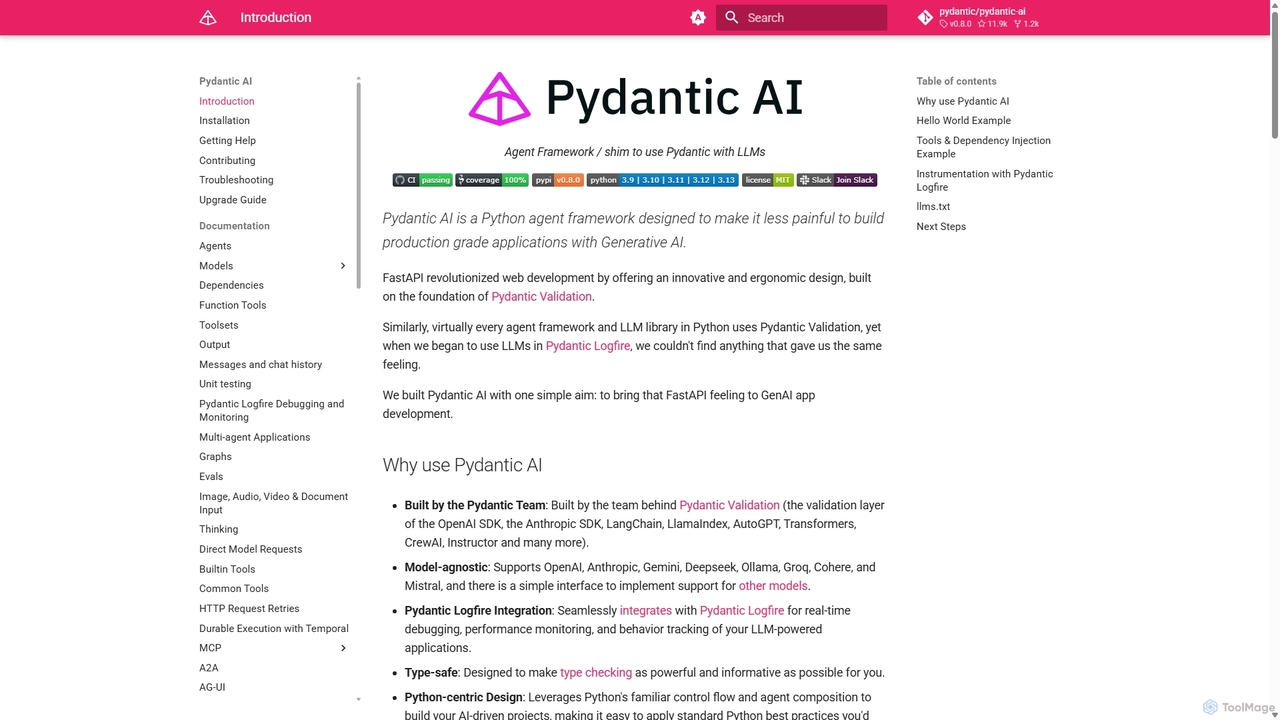
Pydantic AI
Pydantic AI is a Python agent framework from the creators of Pydantic, designed to simplify building production-grade Generative AI applications. It offers a model-agnostic approach, supporting major LLMs like OpenAI, Gemini, and Anthropic. By leveraging Pydantic's robust validation, it ensures type-safe, structured outputs, aiming to bring the ergonomic and intuitive developer experience of FastAPI to the world of AI agent development.
Agent Builder
smolagents
smolagents is a minimalist, open-source AI agent framework developed by Hugging Face. It empowers developers to build and deploy powerful, code-first AI agents with minimal Python code. By focusing on simplicity and efficiency, it enables Large Language Models (LLMs) to interact with tools and the real world seamlessly, supporting a wide range of models and secure execution environments.
Development
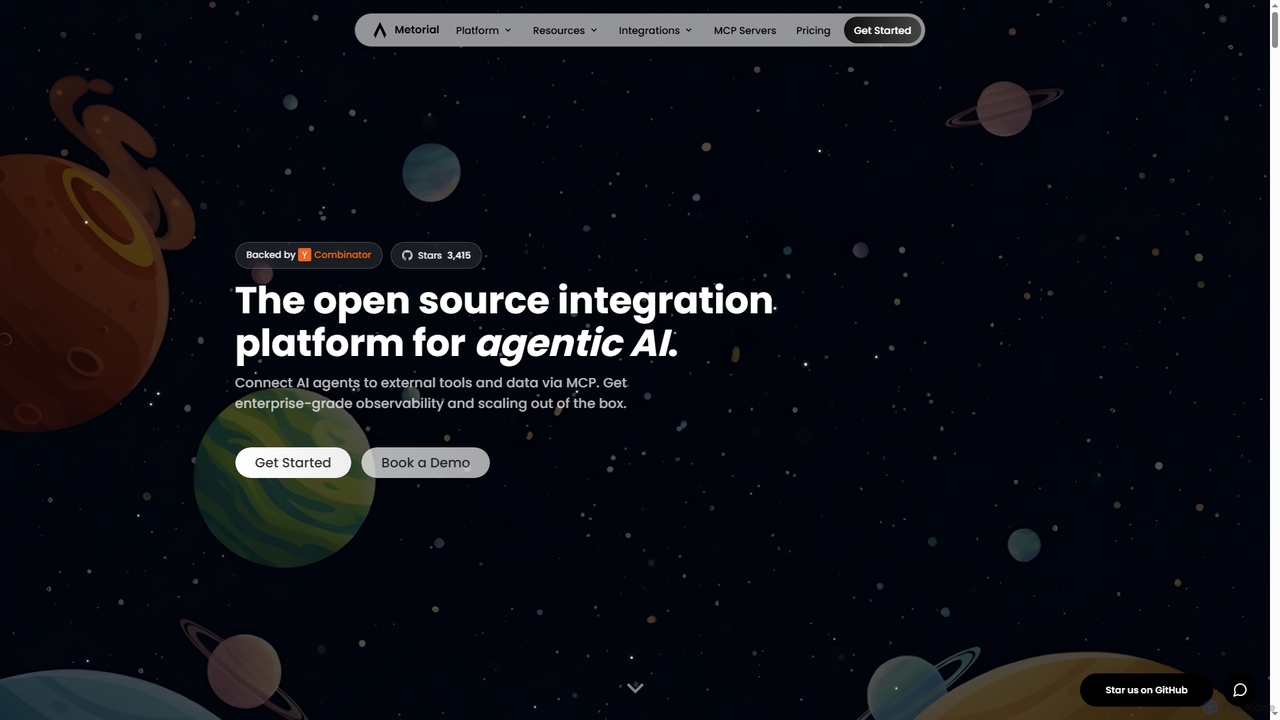
Metorial
Metorial is an integration platform for AI agents, enabling developers to quickly build, deploy, and monitor powerful agentic AI applications. It provides seamless connections to hundreds of tools, data sources, and APIs via its serverless Model Context Protocol (MCP) platform, offering robust SDKs, observability, and enterprise-grade security for scalable AI solutions.
Agentic Ai
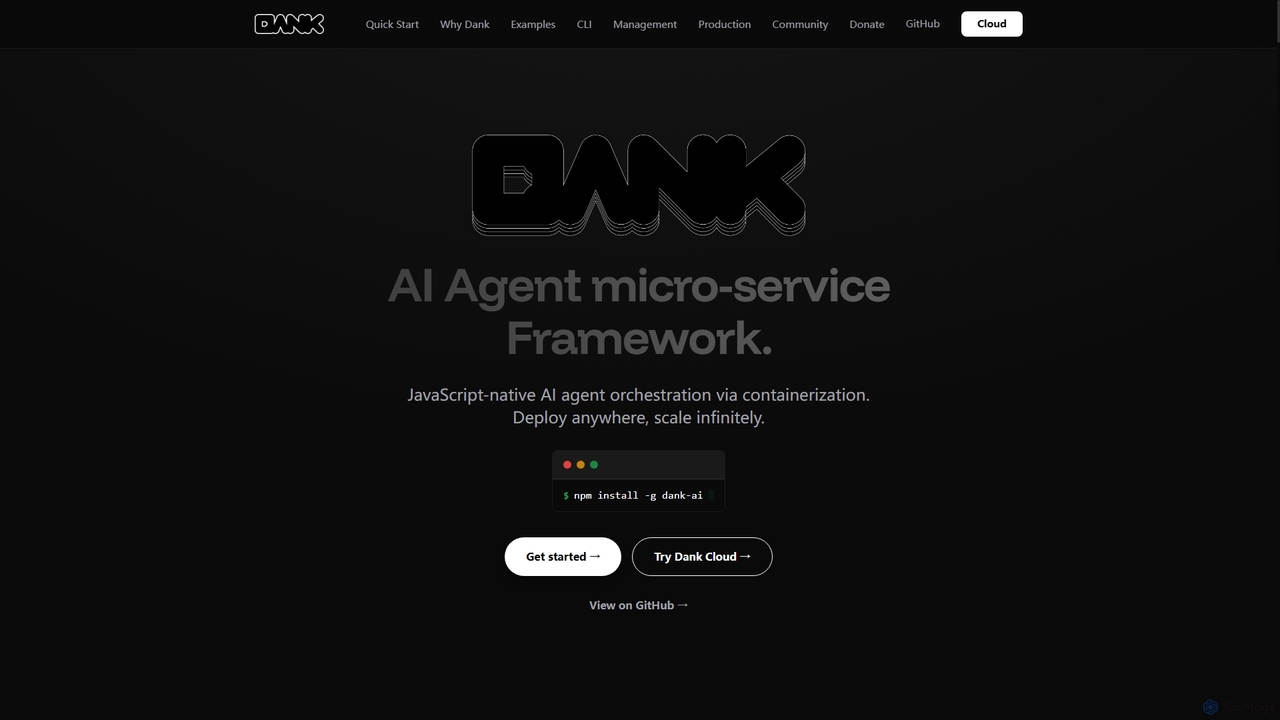
Dank
Dank is a JavaScript-native, open-source framework for orchestrating and deploying containerized AI agents. It enables developers to build, manage, and scale multiple AI agents as microservices across any cloud infrastructure, simplifying complex AI deployments with Docker-native architecture and real-time monitoring.
Agent Frameworks
Arcade
Arcade is an AI tool-calling platform for developers, enabling AI agents to securely perform actions on behalf of users. It connects AI to services like Gmail, Slack, and APIs through pre-built connectors and a custom SDK, handling complex authentication (OAuth) automatically. This allows developers to build assistants that go beyond chat to execute real-world tasks.
Framework
CrewAI
CrewAI is an advanced open-source framework for orchestrating role-playing, autonomous AI agents. By fostering collaborative intelligence, it enables agents with distinct roles and tools to work together seamlessly to solve complex tasks. This multi-agent system simplifies the development of sophisticated applications, from automated content creation to complex data analysis, by managing agent interactions, task delegation, and workflow processes.
Agent
AgentSystems
An open-source, self-hosted platform for discovering, deploying, and managing specialized AI agents on your own infrastructure, ensuring complete data privacy and control.
Self Hosted
phidata
phidata is an open-source Python framework for building autonomous AI Assistants. It simplifies the integration of LLMs with memory, knowledge bases, and external tools, enabling developers to create powerful, stateful AI applications with ease.
Frameworks
PandasAI
PandasAI offers a suite of developer tools for building AI applications. It features an open-source library for conversational data analysis using natural language and PandaAGI, an advanced SDK for creating generalist AI agents that can perform complex tasks like web searches and filesystem access.
Data Analysis
Sylph AI
Sylph AI is a development platform designed to maximize the potential of LLM applications. It features AdalFlow, a leading open-source library for building and auto-optimizing LLM task pipelines, and an AI Teammate that provides expert guidance throughout the entire development workflow, from ideation to production.
Libraries
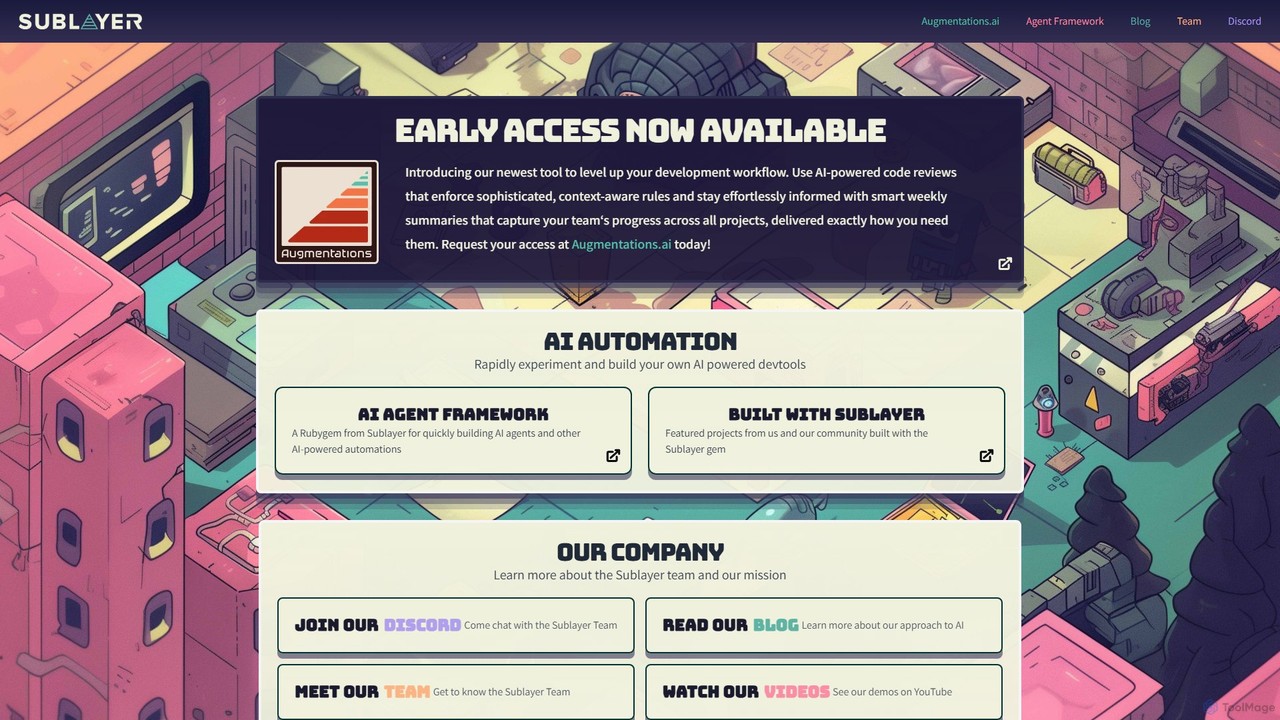
Sublayer
Sublayer is a model-agnostic AI agent framework for Ruby developers. It provides a powerful Rubygem to rapidly build, experiment with, and deploy AI agents and custom developer tools, enabling personalized and context-aware automation for software development workflows.
Code Assistant
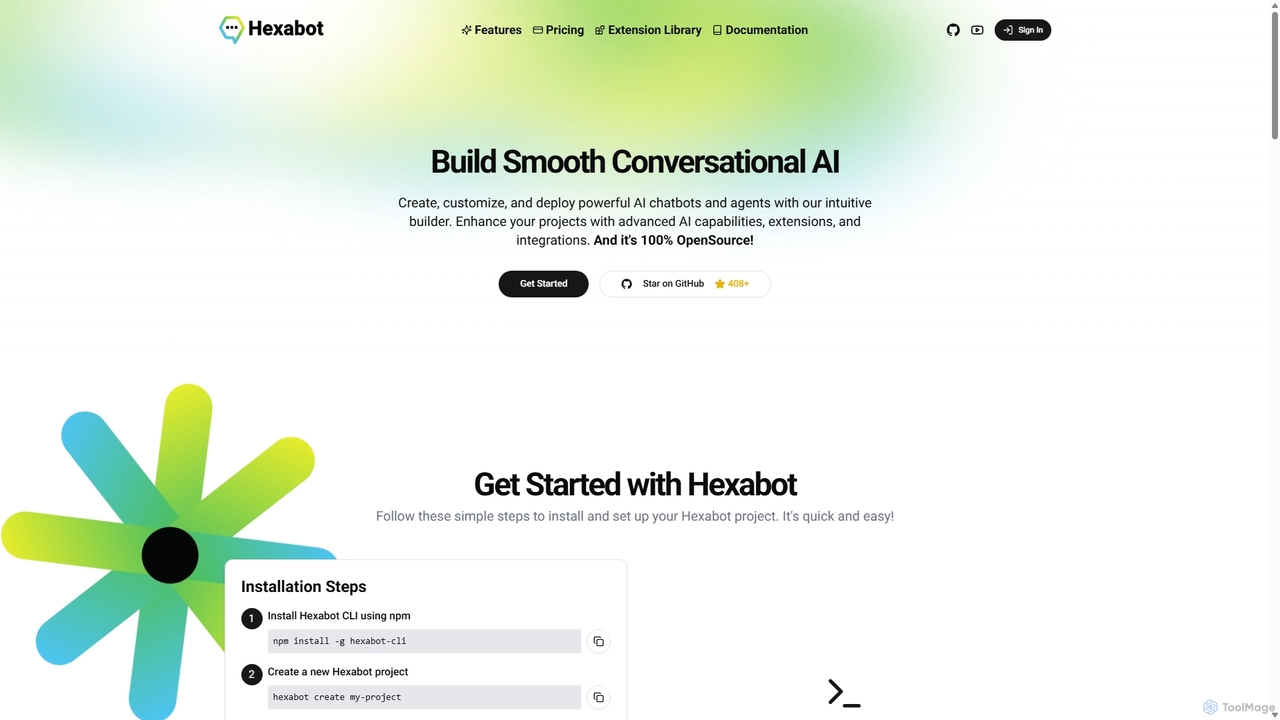
Hexabot
Hexabot is a 100% open-source platform for building, customizing, and deploying powerful AI chatbots and agents. It offers an intuitive low-code builder, on-premise hosting for data privacy, and a vast library of extensions. Ideal for developers and businesses seeking to enhance customer experience and automate workflows across multiple channels and languages.
Chatbot
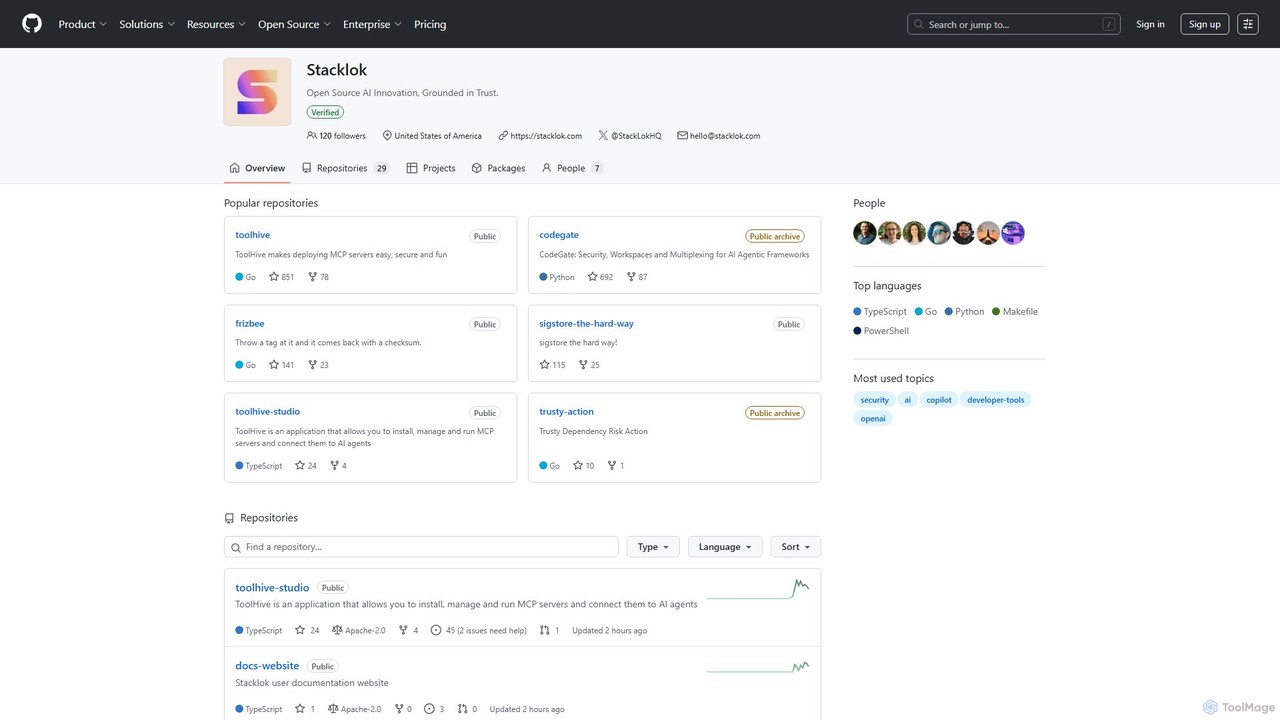
codegate
Codegate is an open-source security gateway and multiplexing framework for AI agentic systems. Developed by Stacklok, it provides secure workspaces and policy-based access control, enabling developers to build and manage complex multi-agent applications safely and efficiently.
Agentic Frameworks
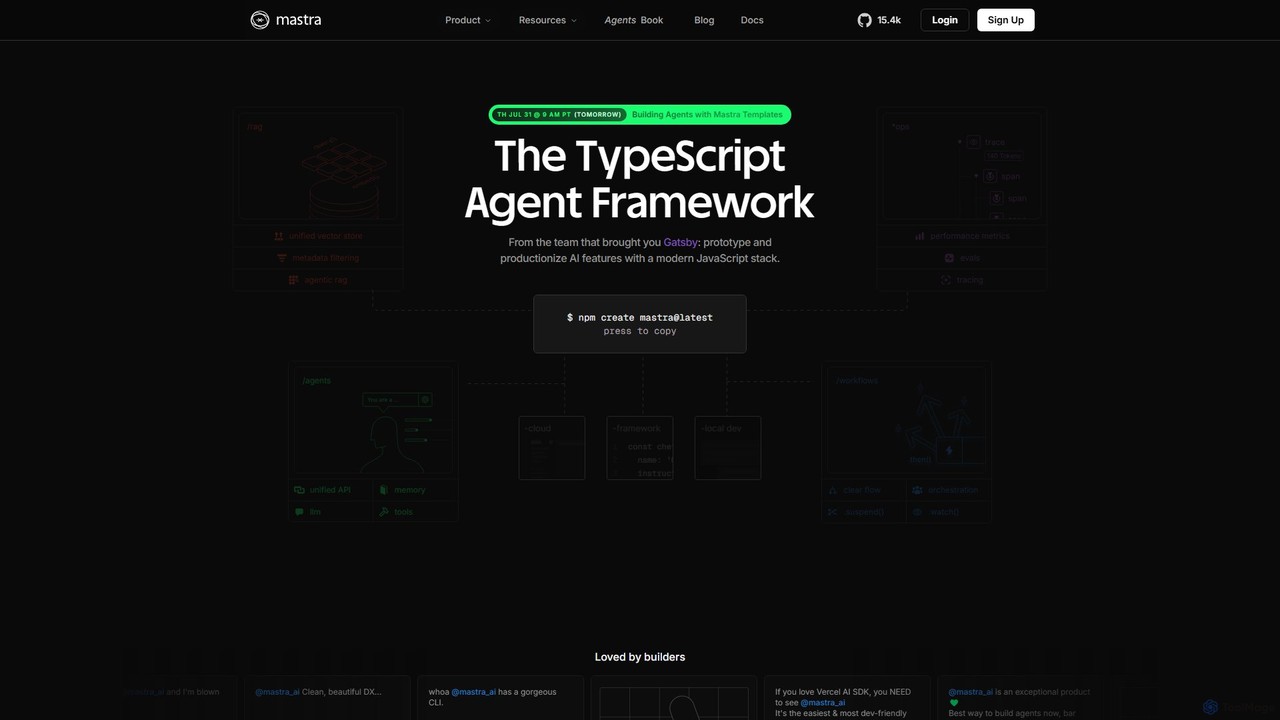
Mastra
Mastra is an open-source TypeScript framework designed for developers to build, deploy, and manage sophisticated AI agents and complex workflows. It provides a developer-friendly SDK with features like persistent memory, tool calling, Retrieval-Augmented Generation (RAG), and deterministic workflow graphs. Built by the team behind Gatsby, Mastra simplifies creating production-ready AI applications within the JavaScript ecosystem.
Agent Builder
Latitude
Latitude is an open-source development platform designed for building, evaluating, and deploying applications powered by Large Language Models (LLMs), with a special focus on creating autonomous AI agents. It provides a comprehensive suite of tools for developers to experiment, refine, and scale their AI solutions.
Mlops