ToolMage
Sign in
Dagster
Machine Learning Operations · 152.3K monthly visits

Dagster is a modern, open-source data orchestrator designed for building, scaling, and observing AI and data pipelines. It acts as a unified control plane, allowing teams to model data assets, track lineage, and ensure data quality with confidence. By integrating software engineering best practices like local testing and reusable components, Dagster helps data engineers and ML teams ship products faster and more reliably.

VS
Flyte
Mlops · 26.6K monthly visits

Flyte is an open-source, cloud-native workflow orchestration platform designed for building, deploying, and managing production-grade data, machine learning, and analytics pipelines. It emphasizes scalability, reproducibility, and ease of use, enabling teams to move from local development to large-scale production seamlessly. With a Python-first SDK and support for multiple languages, Flyte empowers data scientists and engineers to create complex, versioned, and maintainable workflows.

Dagster vs Flyte: pricing, features, traffic, and use cases

Compare Dagster and Flyte across positioning, pricing, traffic, and user feedback using structured factual data.

Updated Aug 20, 2026

Product overview

Dagster Product overview

Dagster is a modern, open-source data orchestrator designed for building, scaling, and observing AI and data pipelines. It acts as a unified control plane, allowing teams to model data assets, track lineage, and ensure data quality with confidence. By integrating software engineering best practices like local testing and reusable components, Dagster helps data engineers and ML teams ship products faster and more reliably.
Preview

Flyte Product overview

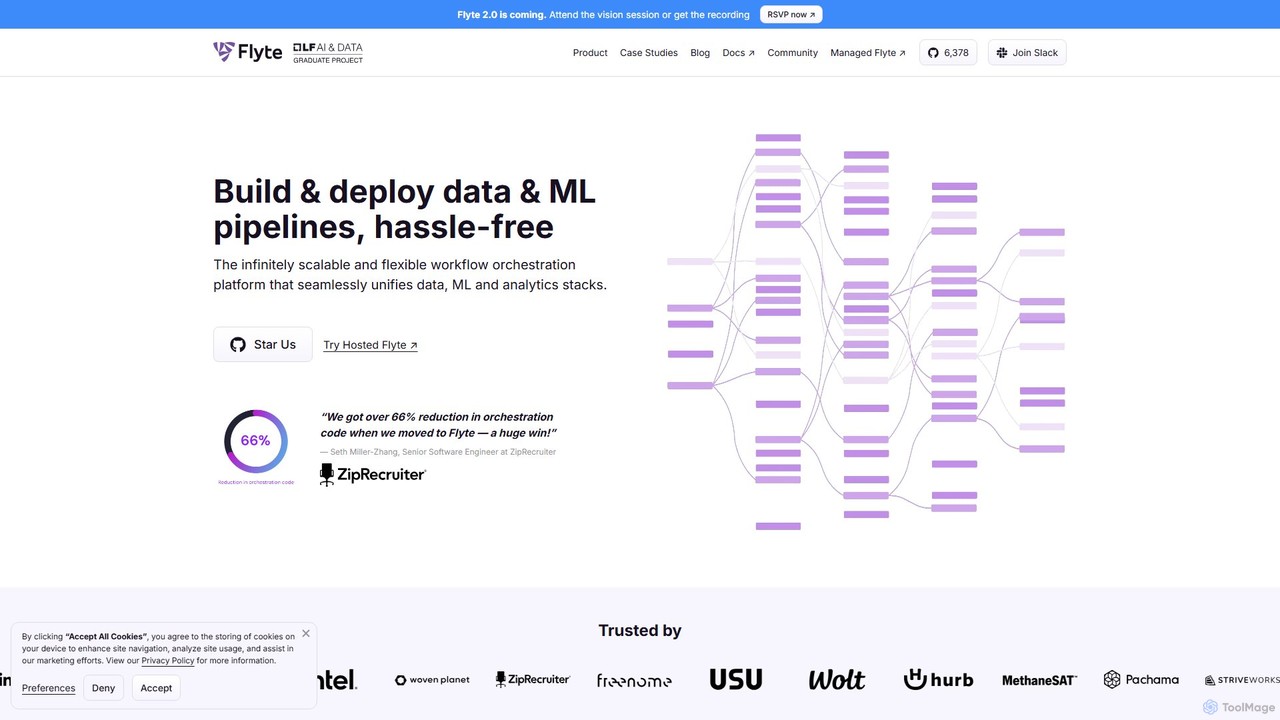
Flyte is an open-source, cloud-native workflow orchestration platform designed for building, deploying, and managing production-grade data, machine learning, and analytics pipelines. It emphasizes scalability, reproducibility, and ease of use, enabling teams to move from local development to large-scale production seamlessly. With a Python-first SDK and support for multiple languages, Flyte empowers data scientists and engineers to create complex, versioned, and maintainable workflows.

Preview

Detailed feature comparison

FeatureDagsterFlyte
Primary categoryMachine Learning OperationsMlops
Added2025-08-172025-08-03
PricingFreemiumFreemium
Official websitedagster.ioflyte.org
Product typeWebsiteWebsite
Performance data
User ratingNot verifiedNot verified
Comments00
Monthly visits152.3K26.6K
Monthly growth-16.4%-14.5%
Favorites117120
DetailsView detailsView details

Dagster vs Flyte monthly traffic

Compare Dagster and Flyte by monthly reach, traffic trend, visit depth, top regions, and acquisition sources.

How to interpret the traffic data

In the Dagster vs Flyte monthly traffic comparison, Dagster currently shows 152.3K visits and Flyte shows 26.6K; Dagster has about 5.7 times the visible traffic of Flyte, an absolute difference of about 125.7K visits. This reflects visible reach, not feature quality or paid users.

Both tools provide verified traffic details, so monthly trends, visit depth, regions, and acquisition sources can be compared on the same basis.

Dagster monthly traffic:

Latest traffic

Monthly visits
152.3K
Avg. visit duration
1:02
Pages per visit
1.93
Bounce rate
42.6%
Data updated 2026-06-15

Monthly traffic trend

  • 2025/9: 186K Monthly visits
  • 2026/1: 178.3K Monthly visits
  • 2026/2: 157.2K Monthly visits
  • 2026/3: 174K Monthly visits
  • 2026/4: 182.3K Monthly visits
  • 2026/5: 152.3K Monthly visits

Top regions

Top 5 countries/regions
Country/regionPercentageTraffic
🇺🇸United States42.87%65.3K
🇨🇳China29.08%44.3K
🇬🇧United Kingdom12.44%18.9K
🇻🇳Vietnam8.47%12.9K
🇨🇭Switzerland7.14%10.9K

Traffic sources

Source typePercentageTraffic
Direct70.24%107K
Referral25.79%39.3K
Email3.97%6K

Search keywords

airflowdagsterdagster dashboardprefectrdd

Flyte monthly traffic:

Latest traffic

Monthly visits
26.6K
Avg. visit duration
0:12
Pages per visit
1.8
Bounce rate
38.08%
Data updated 2026-06-15

Monthly traffic trend

  • 2025/9: 37.5K Monthly visits
  • 2026/1: 29.4K Monthly visits
  • 2026/2: 32.2K Monthly visits
  • 2026/3: 30K Monthly visits
  • 2026/4: 31K Monthly visits
  • 2026/5: 26.6K Monthly visits

Top regions

Top 5 countries/regions
Country/regionPercentageTraffic
🇺🇸United States46.74%12.4K
🇮🇳India15.16%4K
🇻🇳Vietnam14.31%3.8K
🇨🇦Canada13.45%3.6K
🇩🇪Germany10.34%2.7K

Traffic sources

Source typePercentageTraffic
Direct54.58%14.5K
Referral32.11%8.5K
Email13.31%3.5K

Search keywords

flyteflyte lyftgraphvizgraphviz onlinelyft flyte
Traffic-based selection guidance: If public market visibility is an important first-pass criterion, investigate Dagster first. The final choice should still follow taxonomy, use case, and a real trial because higher traffic does not prove broader capabilities or better workflow fit.

Usage comparison

Compare the core capabilities of Dagster and Flyte

Dagster Core features

Machine Learning Operations
Data Orchestration
Workflow Automation

Flyte Core features

Mlops
Orchestration
Automation

Use cases

Dagster Use cases

data engineering
data pipeline
MLOps
open source
python
airflow alternative
data catalog
data lineage
dbt
ETL
orchestration
snowflake

Flyte Use cases

data engineering
data pipeline
MLOps
open source
python
kubernetes
machine learning
reproducibility
scalability
workflow orchestration

Dagster vs Flyte:In-depth comparison and selection guidance

First decide whether the products solve the same kind of need

This in-depth Dagster vs Flyte comparison uses only the product records, taxonomy, audience, traffic, and community signals available on this page. Dagster is primarily listed under “Machine Learning Operations”, while Flyte is primarily listed under “Mlops”, so the first decision is whether your actual task matches their recorded scope.

The structured fields currently show these decision-relevant differences: Primary category (Dagster: Machine Learning Operations; Flyte: Mlops); Monthly visits (Dagster: 152.3K; Flyte: 26.6K); Monthly growth (Dagster: -16.4%; Flyte: -14.5%); Favorites (Dagster: 117; Flyte: 120); Website (Dagster: dagster.io; Flyte: flyte.org). These facts are more useful for selection than brand visibility alone.

What market visibility and monthly traffic mean

In the Dagster vs Flyte monthly traffic comparison, Dagster currently shows 152.3K visits and Flyte shows 26.6K; Dagster has about 5.7 times the visible traffic of Flyte, an absolute difference of about 125.7K visits. This reflects visible reach, not feature quality or paid users.

Both tools provide verified traffic details, so monthly trends, visit depth, regions, and acquisition sources can be compared on the same basis.

If public market visibility is an important first-pass criterion, investigate Dagster first. The final choice should still follow taxonomy, use case, and a real trial because higher traffic does not prove broader capabilities or better workflow fit.

Product positioning, use cases, and roles

Dagster and Flyte currently overlap in shared tags: data engineering, data pipeline, MLOps, open source, and python. This can place both on the same shortlist, but it does not prove equal implementation, depth, or cost.

Dagster's unique categories/tags are Machine Learning Operations, Data Orchestration, Workflow Automation, airflow alternative, data catalog, data lineage, dbt, and ETL; Flyte's are Mlops, Orchestration, Automation, kubernetes, machine learning, reproducibility, scalability, and workflow orchestration. These unique fields are the strongest differentiators: validate the product whose recorded scope matches the task instead of following traffic alone.

What ratings, comments, and favorites can tell you

Dagster has no verified rating, 0 comments, 117 favorites, and 141 likes;Flyte has no verified rating, 0 comments, 120 favorites, and 134 likes。

Neither product has enough rating or comment samples for a credible reputation ranking.

Selection guidance by actual need

When to evaluate Dagster first

Put Dagster on the priority trial list when the task aligns with “Machine Learning Operations” and especially Machine Learning Operations, Data Orchestration, Workflow Automation, airflow alternative, data catalog, and data lineage. This follows recorded positioning and does not imply unlisted capabilities are absent.

Dagster also currently records: pricing is freemium, product type is website, 152.3K verified monthly visits, no verified user rating. Verify any hard requirement around price, platform, or reach before trial, and do not let sparse review data substitute for testing.

When to evaluate Flyte first

Put Flyte on the priority trial list when the task aligns with “Mlops” and especially Mlops, Orchestration, Automation, kubernetes, machine learning, and reproducibility. This follows recorded positioning and does not imply unlisted capabilities are absent.

Flyte also currently records: pricing is freemium, product type is website, 26.6K verified monthly visits, no verified user rating. Verify any hard requirement around price, platform, or reach before trial, and do not let sparse review data substitute for testing.

How to validate the recommendation before deciding

The available data describes positioning, public visibility, and community signals, but it cannot prove output quality, speed, integration effort, privacy, or long-term cost in your workflow. Before deciding, run the same representative tasks in Dagster and Flyte, then record completion time, accuracy, manual corrections, and the real paid threshold. A like-for-like trial turns this comparison into a defensible adoption decision.

Comparison FAQ

How should I choose between Dagster and Flyte?
Compare positioning, pricing, taxonomy, and traffic maturity, then verify the latest details on each official website.
Where does this comparison data come from?
The factual baseline is derived from product, taxonomy, traffic, and community data. Reviewed editorial conclusions show their source and verification date.
What do unknown fields mean?
Unknown means there is not enough reliable evidence; the page does not fill gaps with assumptions.

Related AI tools

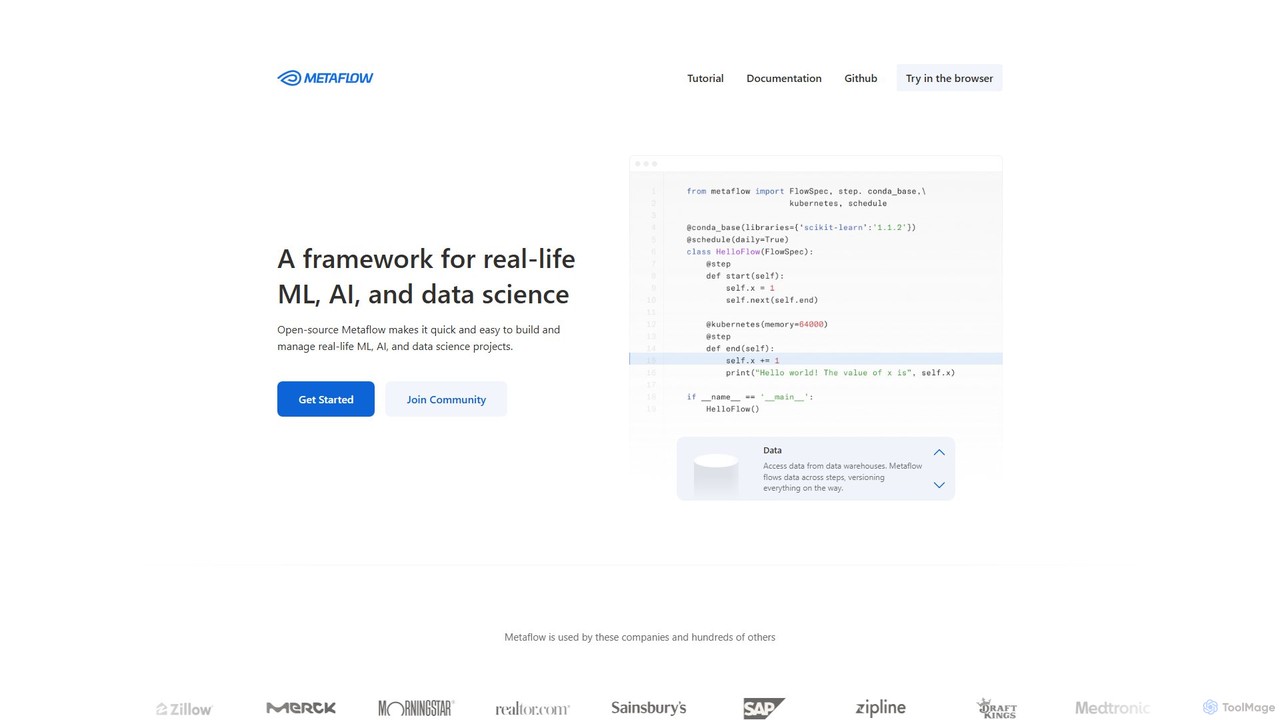
Metaflow
Free

Metaflow

A human-centric Python framework, originally from Netflix, for building and managing real-life data science, ML, and AI projects. It simplifies workflow orchestration, data management, and model deployment, enabling rapid prototyping and scalable production pipelines.

Mlops
Visits 24.6KFavorites 94Likes 92
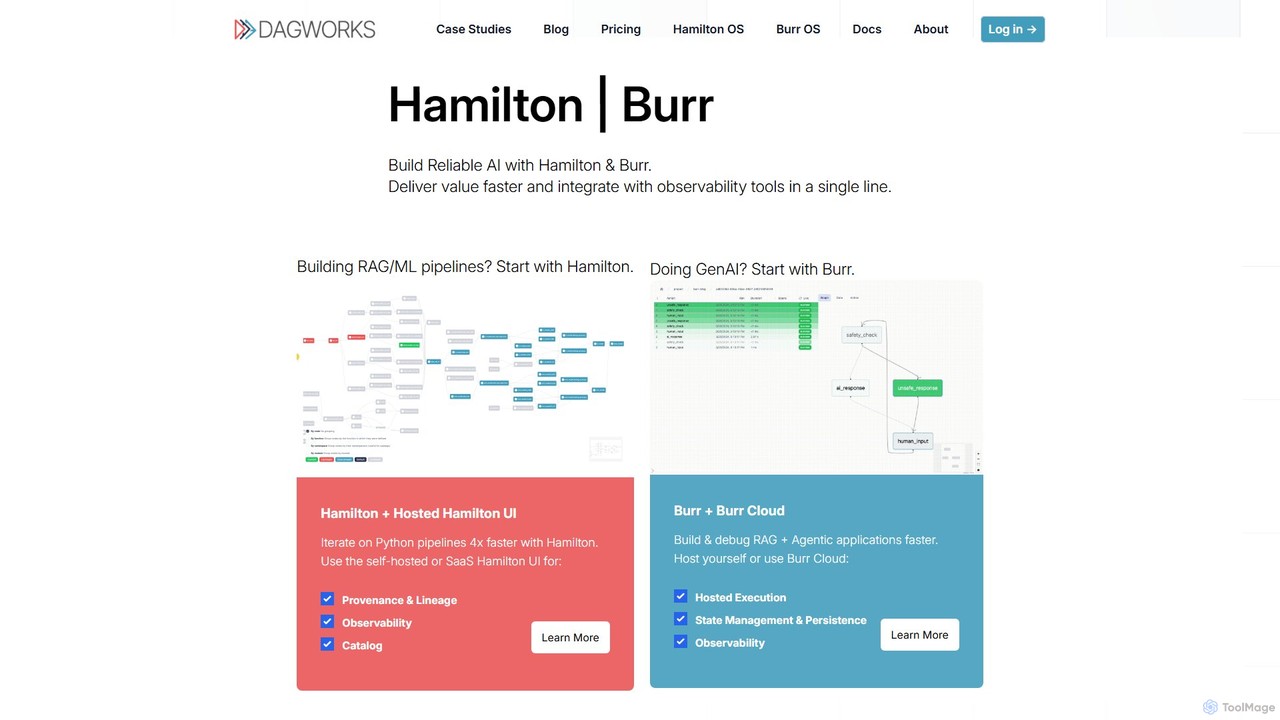
dagworks
Freemium

dagworks

Dagworks provides a suite of open-source developer tools, Hamilton and Burr, designed to build, debug, and observe reliable AI applications. Hamilton standardizes ML and data pipelines for faster iteration and clear lineage, while Burr simplifies the creation of complex, stateful RAG and agentic systems with built-in observability.

Mlops
Visits 7.8KFavorites 95Likes 102
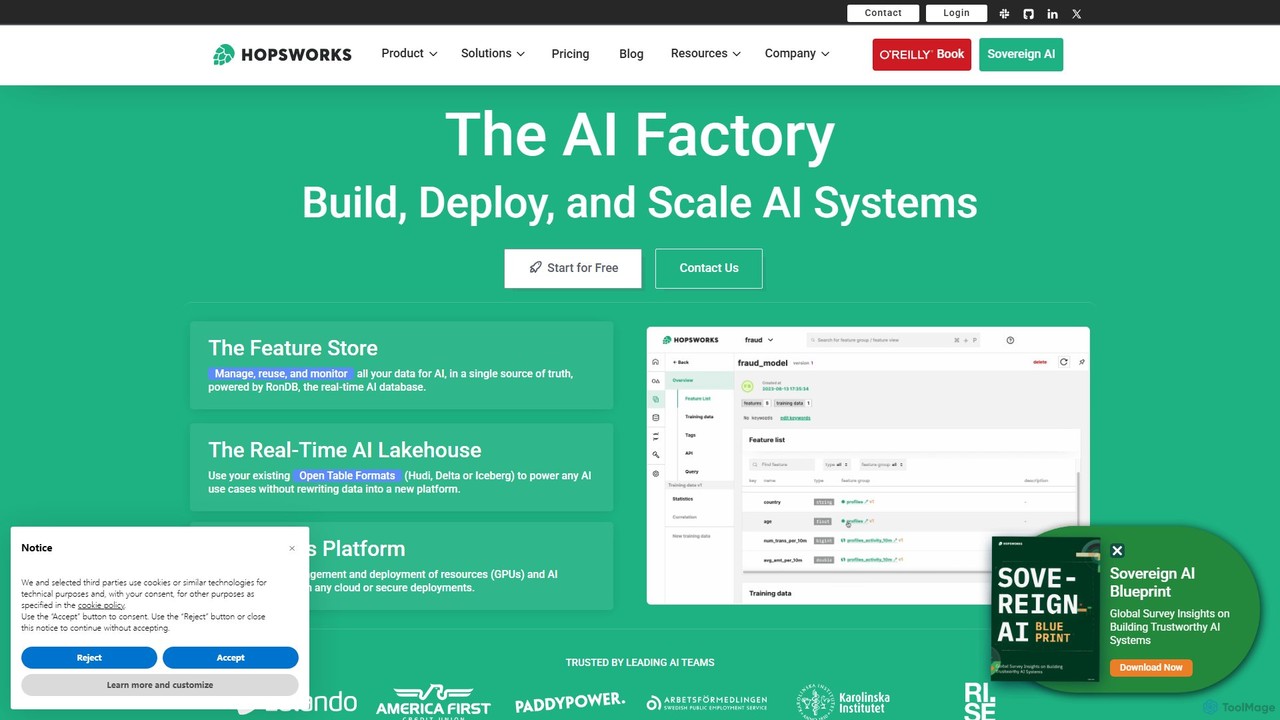
Hopsworks
Freemium

Hopsworks

Hopsworks is a real-time AI Lakehouse and the industry's most advanced Feature Store. It's designed for MLOps, unifying data and compute to build and operate reliable, real-time AI systems. It supports any framework, cloud, or on-premises environment, enabling faster model development and significant cost reduction.

Database
Visits 41KFavorites 144Likes 140
Eventual
Freemium

Eventual

Eventual is building the future of data infrastructure with Daft, a high-performance, open-source query engine for multimodal data. It enables engineers to process petabyte-scale images, video, audio, and text with the simplicity of SQL, drastically accelerating AI and ML workflows without the need for deep distributed systems expertise.

Machine Learning
Visits 11.4KFavorites 122Likes 133
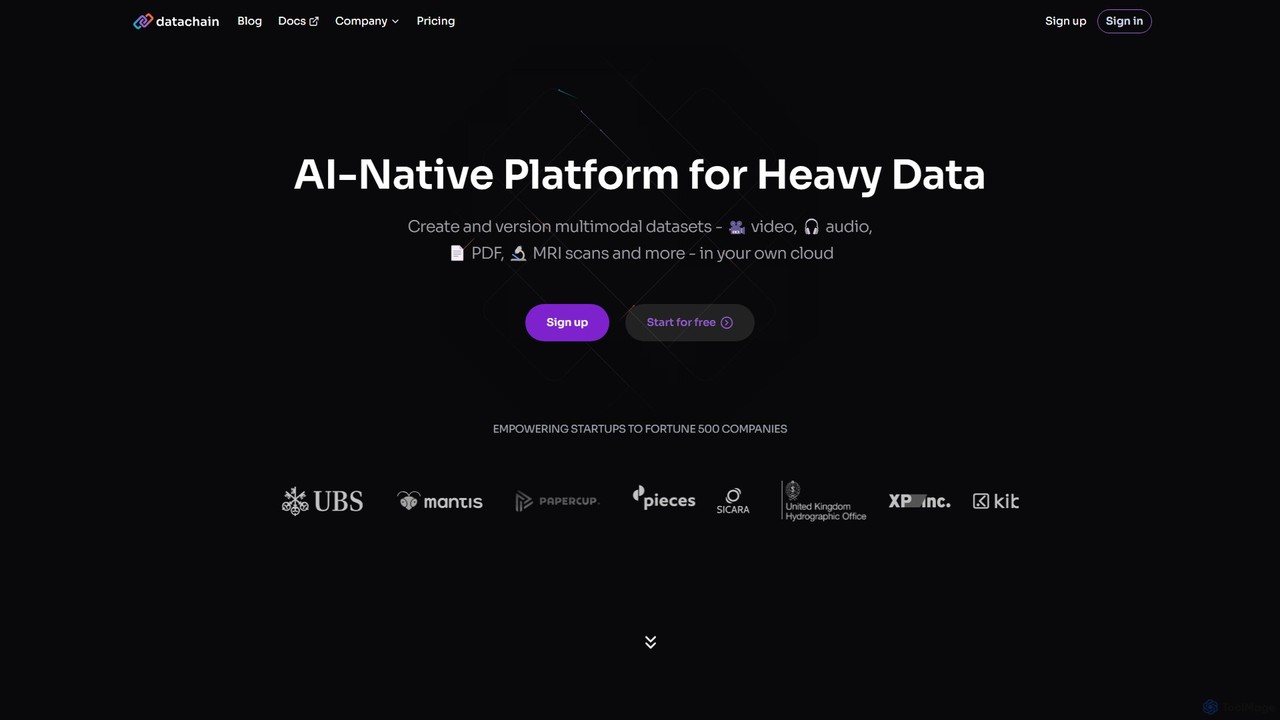
DataChain
Freemium

DataChain

DataChain is a developer-first platform for managing "Heavy Data"—large-scale, unstructured, multimodal datasets. It enables teams to curate, enrich, and version data like videos, images, audio, and PDFs for AI applications, featuring Python-based ETL pipelines, full data lineage, and scalable processing from local IDE to cloud.

Database
Visits 8.6KFavorites 117Likes 115
Orchestra
Freemium

Orchestra

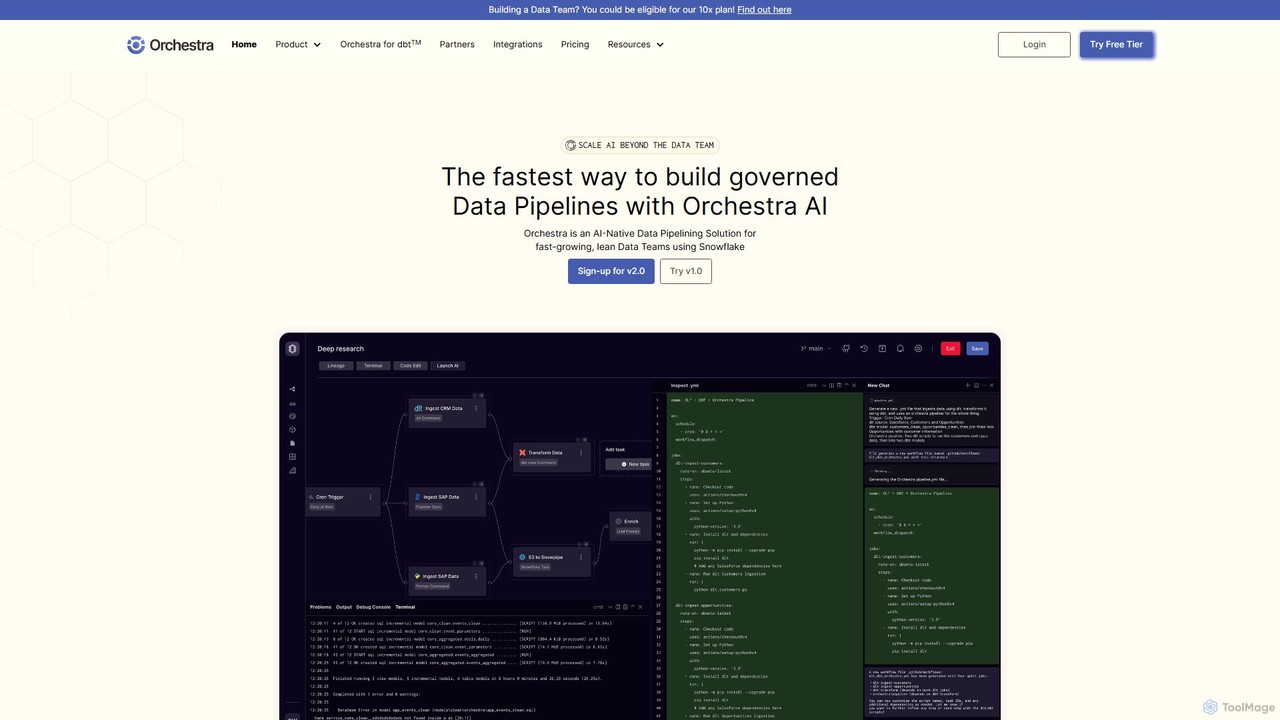
Orchestra is a unified control plane for data orchestration and pipelining, designed for lean data teams. It offers an AI-native solution to build, monitor, and manage governed data pipelines with end-to-end observability, proactive alerting, and extensive integrations. It simplifies complex data workflows, reduces maintenance time, and ensures data is reliable and AI-ready.

Business Intelligence
Visits 74.9KFavorites 119Likes 132
Ask On Data
Freemium

Ask On Data

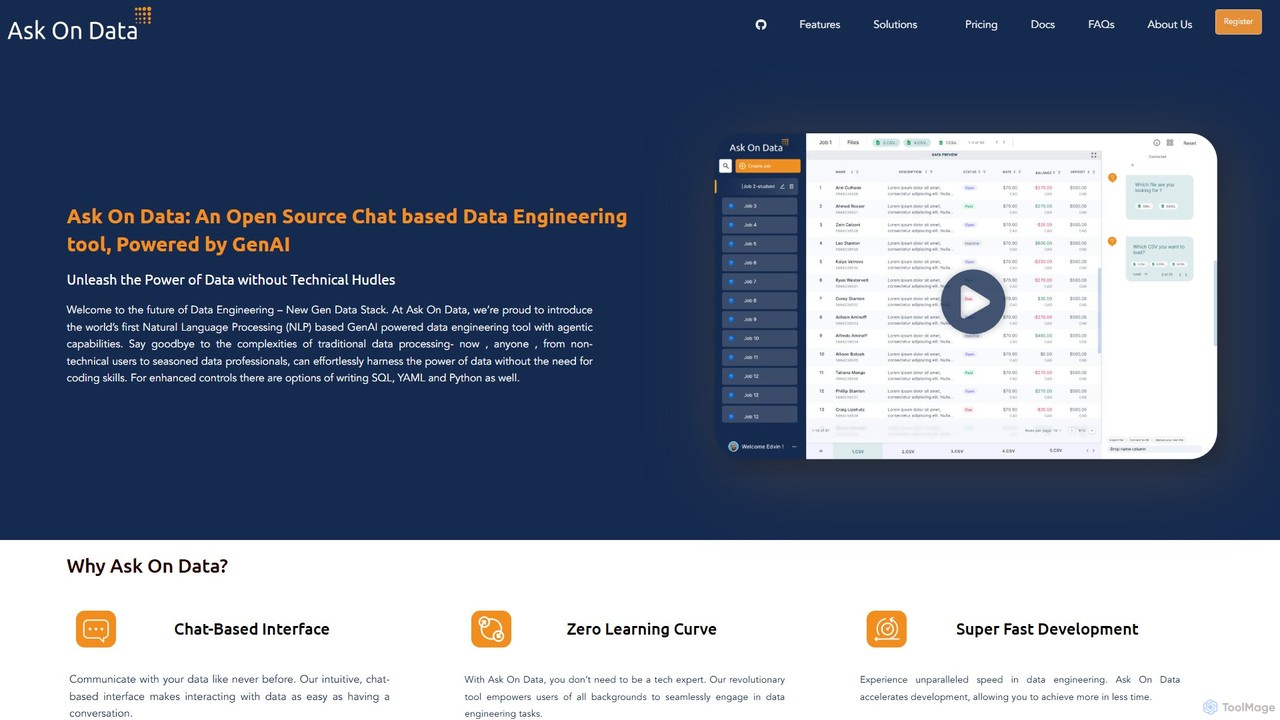
Ask On Data is an open-source, GenAI-powered data engineering tool that lets you build and manage data pipelines using a simple chat interface. By translating natural language commands into complex data operations, it eliminates the need for coding, making data engineering accessible to everyone. It supports various data sources, offers real-time previews, and provides both cloud-hosted and self-hosted options.

Etl
Visits 6.8KFavorites 128Likes 120
Airbyte
Freemium

Airbyte

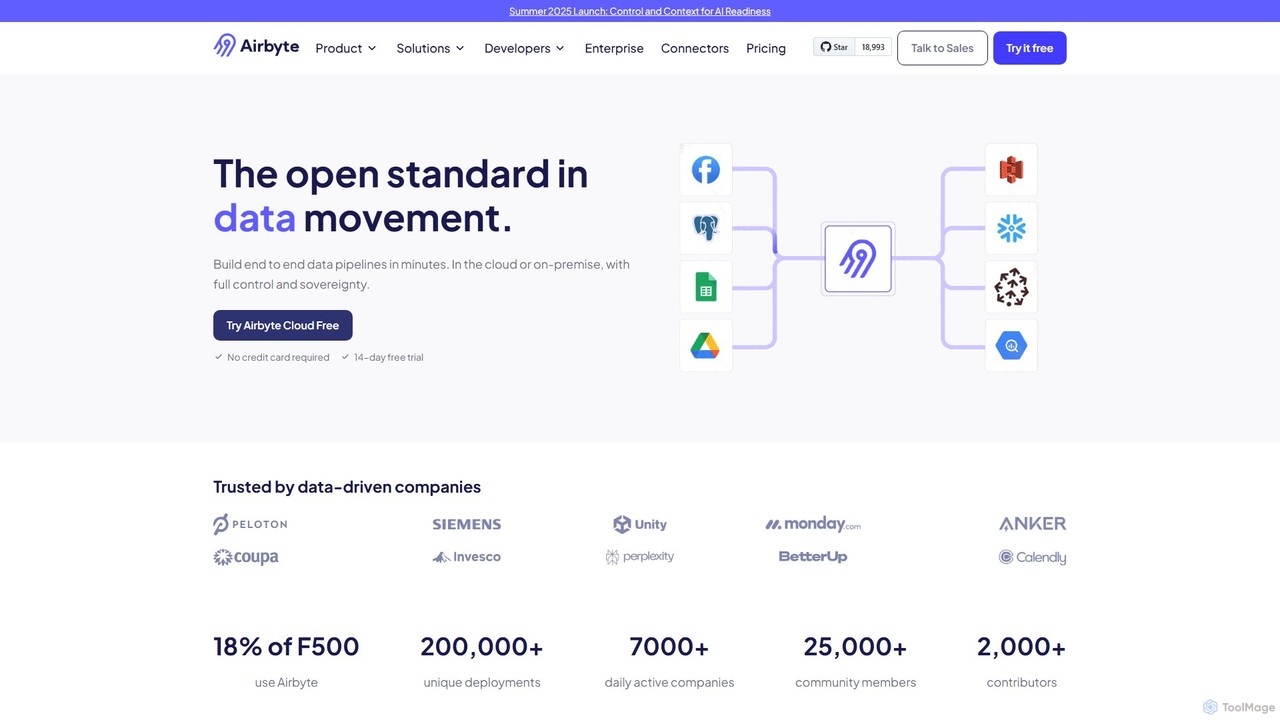
Airbyte is an open-source data integration platform that simplifies building and managing data pipelines. It enables you to move data from hundreds of sources to destinations like data warehouses, lakes, and vector databases in minutes, using a vast catalog of pre-built connectors or by creating your own with a low-code builder. It supports both cloud and self-hosted deployments, focusing on data security, governance, and scalability for modern data and AI applications.

Data Pipelines
Visits 226.7KFavorites 95Likes 106
ProjectPro
Paid

ProjectPro

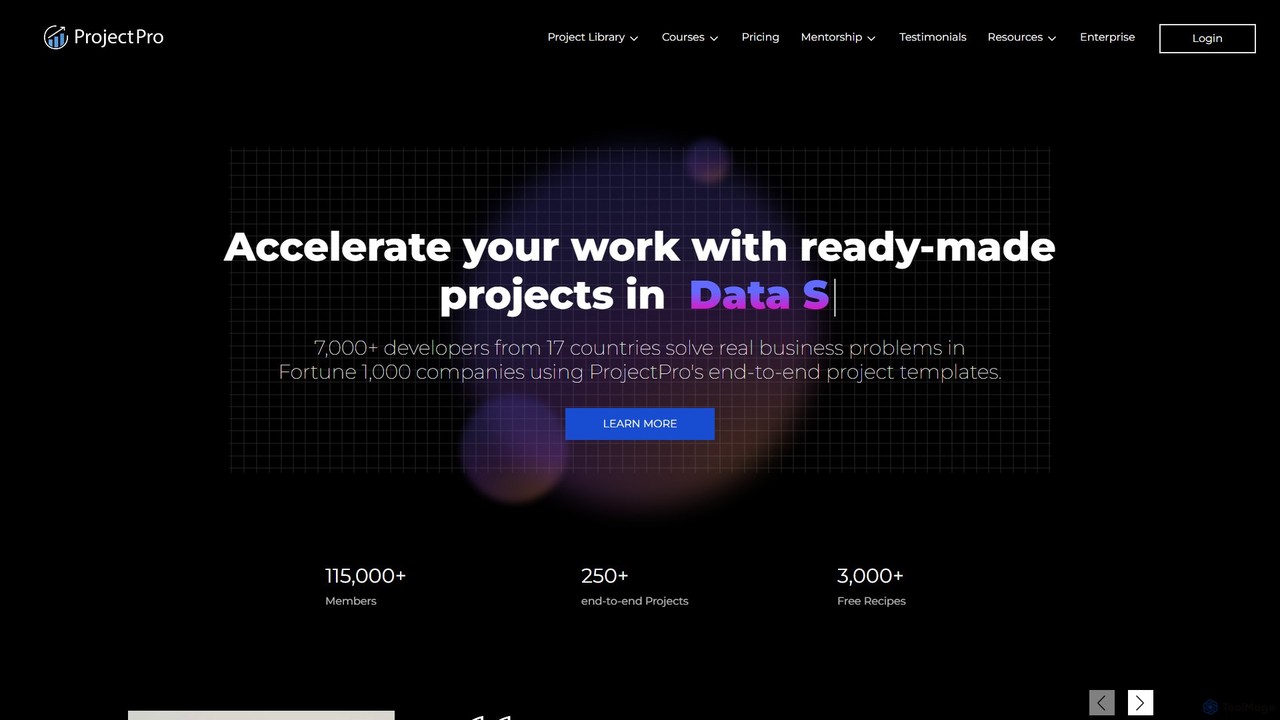
ProjectPro is a project-based learning platform designed to help data professionals accelerate their careers. It offers a vast library of over 250 end-to-end, industry-grade projects in Data Science, Big Data, AI, and MLOps. Each project includes verified solution code, detailed explainer videos, a cloud lab environment, and expert support, enabling users to gain practical, hands-on experience with real-world business problems and cutting-edge technologies.

Data Science
Visits 202.8KFavorites 147Likes 141
Agentfield
Free

Agentfield

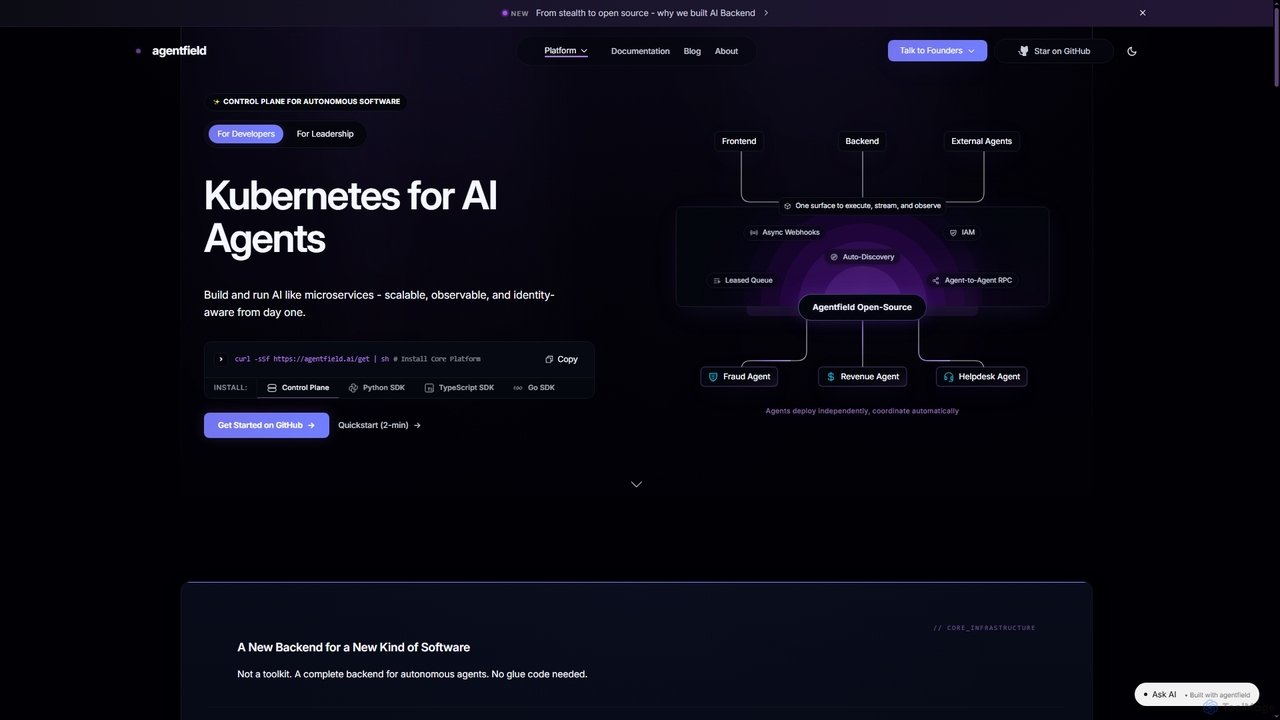
Agentfield is an open-source control plane designed for building and running autonomous AI agents as scalable, observable, and identity-aware microservices. It provides Kubernetes-like orchestration, cryptographic identity management, and production-ready infrastructure to bridge the gap between AI prototypes and robust, trustworthy production deployments.

Orchestration
Visits 23.3KFavorites 61Likes 64
DAGForge
Freemium

DAGForge

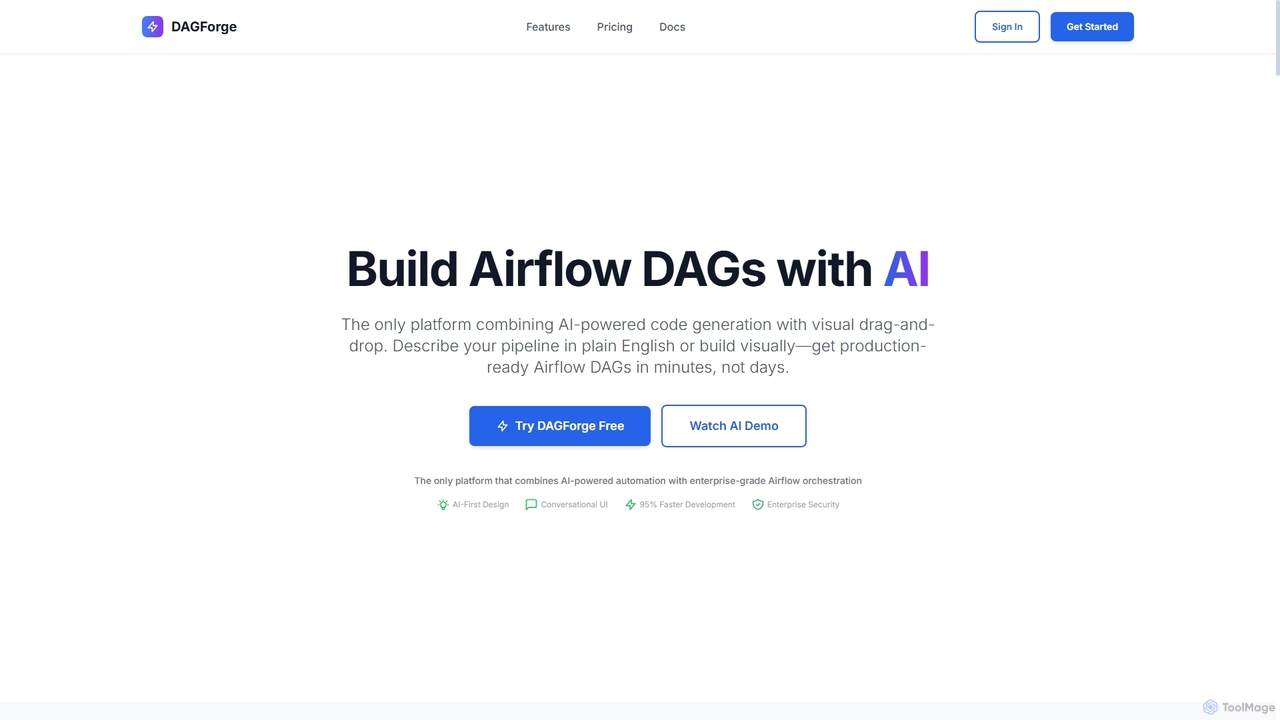
DAGForge is an AI-powered platform that combines conversational AI with a visual drag-and-drop interface to build production-ready Airflow DAGs 10x faster. It enables data professionals to describe data pipelines in plain English and deploy them in minutes, not days, streamlining data orchestration and development.

Workflow Automation
Visits 4.2KFavorites 120Likes 121
Pipekit
Paid

Pipekit

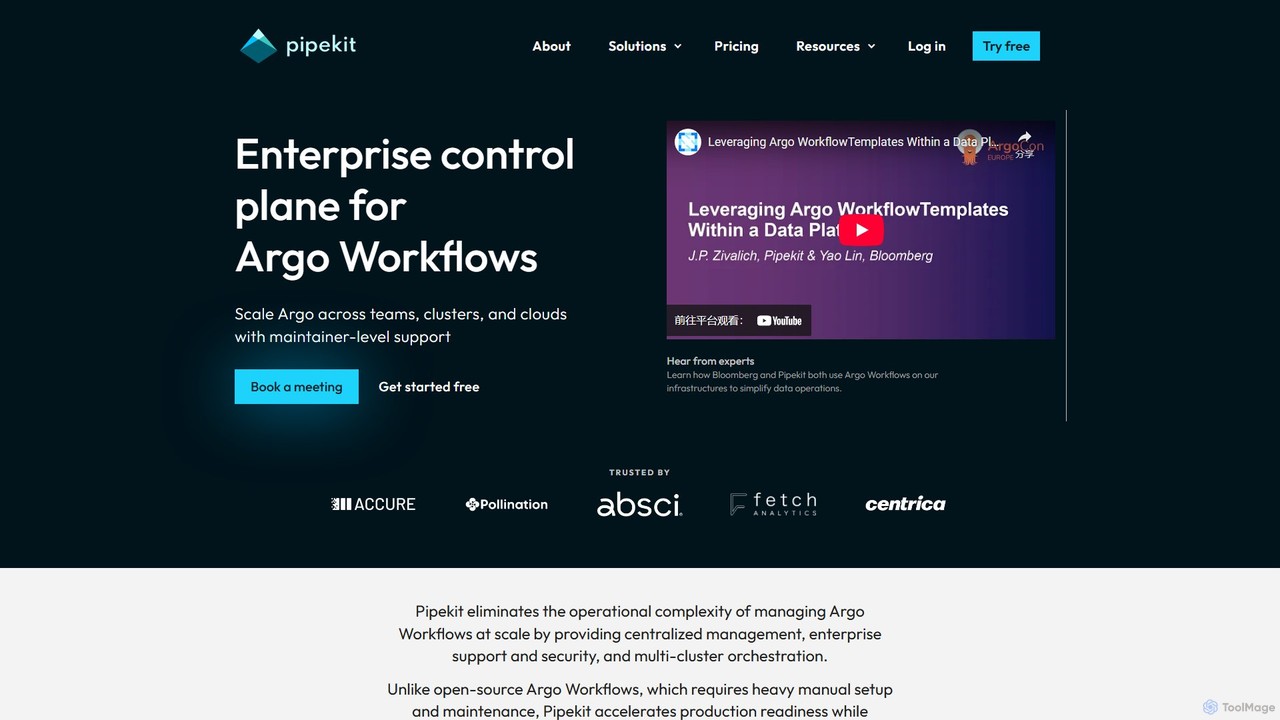
Pipekit is an enterprise-grade control plane and support service for Argo Workflows. It empowers platform and data teams to run, monitor, and govern large-scale data, MLOps, and CI/CD pipelines on Kubernetes across multiple clusters and clouds.

Orchestration
Visits 10.2KFavorites 158Likes 154
MLflow
Freemium

MLflow

MLflow is an open-source platform for managing the end-to-end machine learning lifecycle. It enables developers and data scientists to track experiments, package code into reproducible runs, version and share models, and deploy them to production, supporting both traditional ML and modern GenAI applications.

Data Science
Visits 237.1KFavorites 104Likes 99
Anyscale
Freemium

Anyscale

Anyscale is a fully-managed compute platform for scaling AI and Python workloads. Built on the open-source Ray framework by its original creators, it empowers developers to build, run, and scale distributed applications, from LLM training to data processing, with optimized performance and cost-efficiency on any cloud.

Mlops
Visits 76.9KFavorites 109Likes 115
dstack
Freemium

dstack

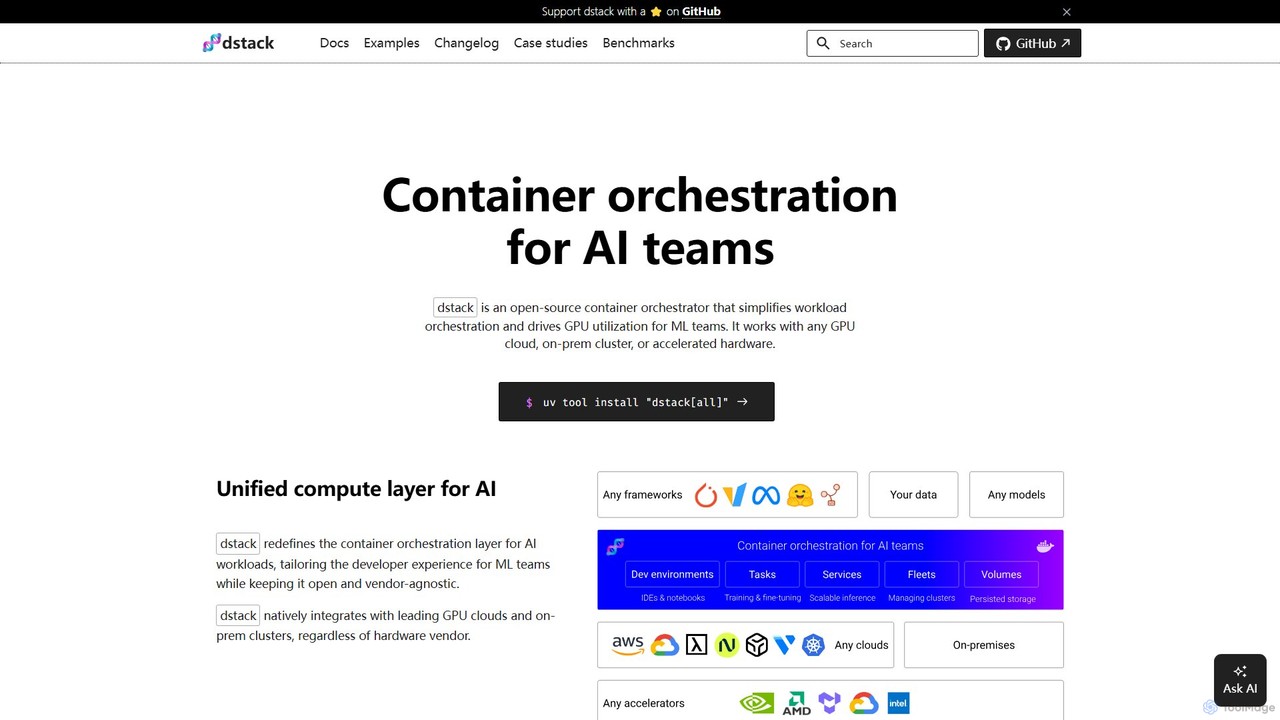
dstack is an open-source container orchestrator designed for AI and ML teams. It simplifies workload orchestration and maximizes GPU utilization across any cloud provider, on-premise cluster, or accelerated hardware. It provides a unified compute layer, streamlining development, training, and model deployment.

Orchestration
Visits 18KFavorites 150Likes 157