FinallyLater is an AI-powered service that transforms your cluttered bookmarks into a weekly, curated newsletter. It analyzes your saved links, discovers hidden themes and connections, and delivers five of your most valuable bookmarks as organized insights every Friday, helping you combat information overload and rediscover knowledge.
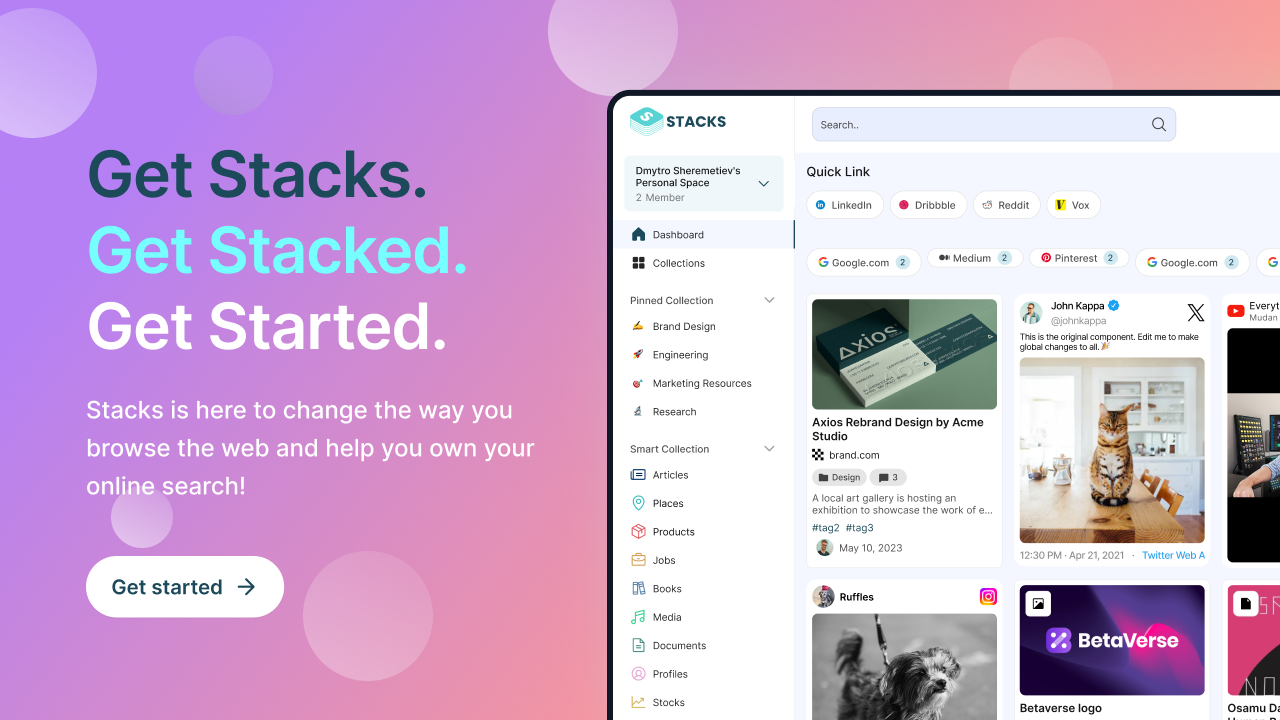
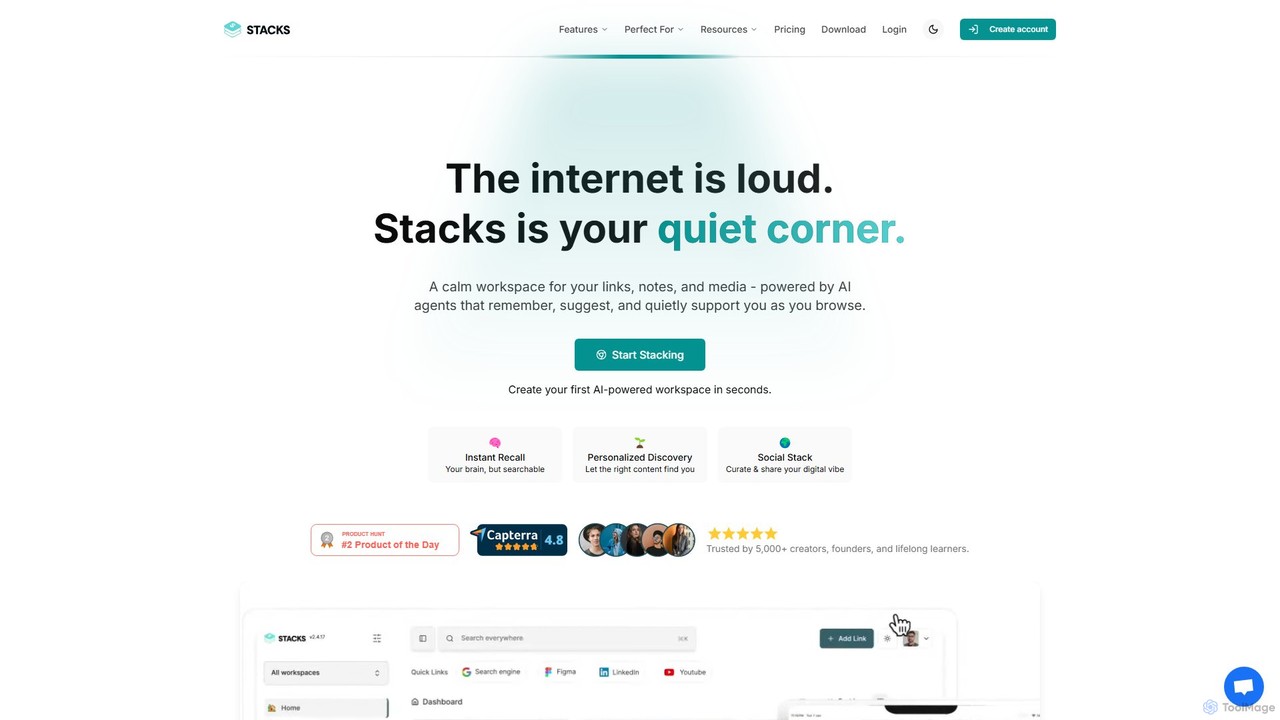
Stacks is an AI-powered workspace that organizes your digital footprint. It goes beyond simple bookmarking to understand the *intent* behind your saved links, notes, and files, creating a personalized knowledge hub that connects ideas and supports your workflow.
Product overview
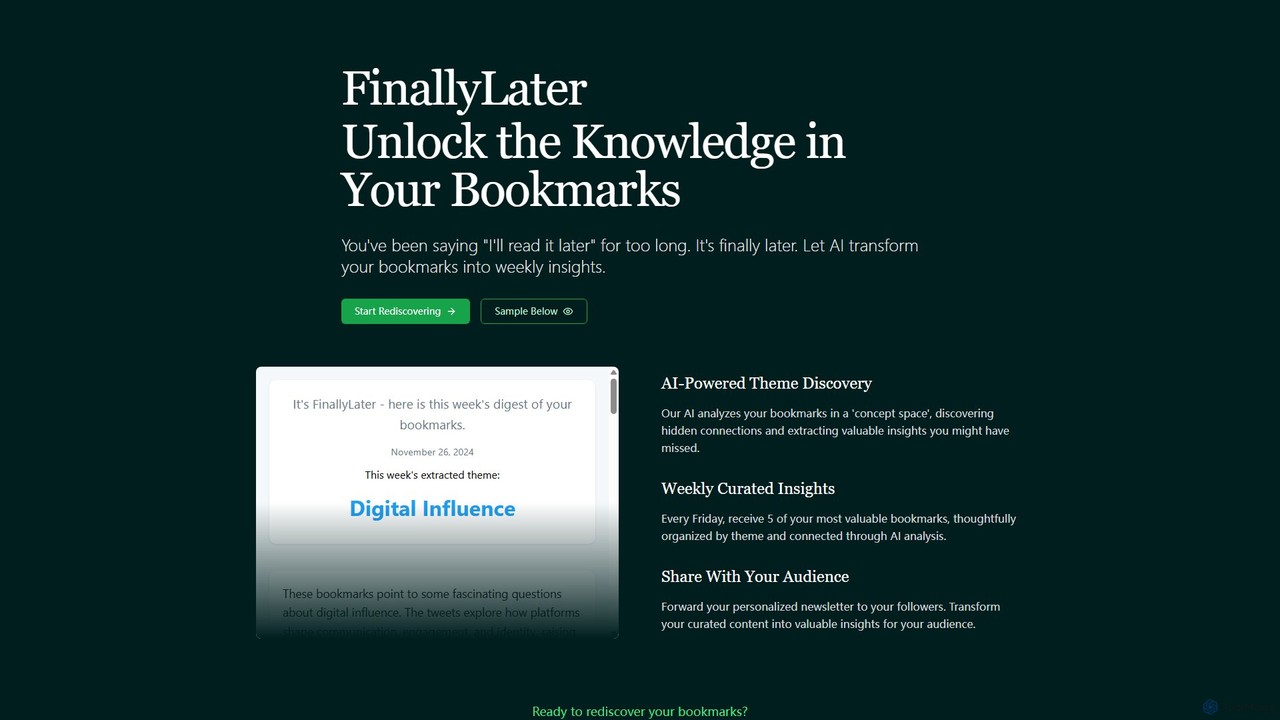
FinallyLater Product overview
FinallyLater is an AI-powered service that transforms your cluttered bookmarks into a weekly, curated newsletter. It analyzes your saved links, discovers hidden themes and connections, and delivers five of your most valuable bookmarks as organized insights every Friday, helping you combat information overload and rediscover knowledge.
Stacks Product overview
Stacks is an AI-powered workspace that organizes your digital footprint. It goes beyond simple bookmarking to understand the *intent* behind your saved links, notes, and files, creating a personalized knowledge hub that connects ideas and supports your workflow.
Detailed feature comparison
| Feature | FinallyLater | Stacks |
|---|---|---|
| Primary category | Learning | Bookmarking |
| Added | 2025-08-03 | 2025-08-08 |
| Pricing | Paid | Freemium |
| Official website | finallylater.com | betterstacks.com |
| Product type | Website | Website |
| Performance data | ||
| User rating | Not verified | Not verified |
| Comments | 0 | 0 |
| Monthly visits | 3.4K | 5.1K |
| Monthly growth | Not verified | -11% |
| Favorites | 85 | 100 |
| Details | View details | View details |
FinallyLater vs Stacks monthly traffic
Compare FinallyLater and Stacks by monthly reach, traffic trend, visit depth, top regions, and acquisition sources.
How to interpret the traffic data
In the FinallyLater vs Stacks monthly traffic comparison, FinallyLater currently shows 3.4K visits and Stacks shows 5.1K; Stacks has about 1.5 times the visible traffic of FinallyLater, an absolute difference of about 1.7K visits. This reflects visible reach, not feature quality or paid users.
Only Stacks has complete third-party traffic details; FinallyLater uses visits recorded inside ToolMage. These scopes cannot estimate market share directly, and on-site views should not be treated as the product’s total website traffic.
FinallyLater monthly traffic:
Latest traffic
Stacks monthly traffic:
Latest traffic
Monthly traffic trend
- 2025/9: 14.8K Monthly visits
- 2026/1: 12.2K Monthly visits
- 2026/2: 12.8K Monthly visits
- 2026/3: 8.7K Monthly visits
- 2026/4: 5.7K Monthly visits
- 2026/5: 5.1K Monthly visits
Top regions
Top 5 countries/regions
| Country/region | Percentage | Traffic |
|---|---|---|
| 🇺🇸United States | 54.26% | 2.7K |
| 🇮🇳India | 14.37% | 727 |
| 🇮🇹Italy | 12.55% | 635 |
| 🇮🇩Indonesia | 9.93% | 503 |
| 🇨🇦Canada | 8.89% | 450 |
Search keywords
Usage comparison
Compare the core capabilities of FinallyLater and Stacks
FinallyLater Core features
Stacks Core features
Use cases
FinallyLater Use cases
Stacks Use cases
FinallyLater vs Stacks:In-depth comparison and selection guidance
First decide whether the products solve the same kind of need
This in-depth FinallyLater vs Stacks comparison uses only the product records, taxonomy, audience, traffic, and community signals available on this page. FinallyLater is primarily listed under “Learning”, while Stacks is primarily listed under “Bookmarking”, so the first decision is whether your actual task matches their recorded scope.
The structured fields currently show these decision-relevant differences: Primary category (FinallyLater: Learning; Stacks: Bookmarking); Pricing (FinallyLater: Paid; Stacks: Freemium); Monthly visits (FinallyLater: 3.4K; Stacks: 5.1K); Favorites (FinallyLater: 85; Stacks: 100); Website (FinallyLater: finallylater.com; Stacks: betterstacks.com). These facts are more useful for selection than brand visibility alone.
What market visibility and monthly traffic mean
In the FinallyLater vs Stacks monthly traffic comparison, FinallyLater currently shows 3.4K visits and Stacks shows 5.1K; Stacks has about 1.5 times the visible traffic of FinallyLater, an absolute difference of about 1.7K visits. This reflects visible reach, not feature quality or paid users.
Only Stacks has complete third-party traffic details; FinallyLater uses visits recorded inside ToolMage. These scopes cannot estimate market share directly, and on-site views should not be treated as the product’s total website traffic.
The current traffic scope is not sufficient for a reliable product ranking. Treat monthly visits as a market-interest signal, then decide using taxonomy, use cases, pricing, and a like-for-like trial rather than reading exposure as product capability.
Product positioning, use cases, and roles
FinallyLater and Stacks currently overlap in shared categories: Knowledge Management; shared tags: bookmark manager, content curation, knowledge management, personal AI, productivity, and research tool. This can place both on the same shortlist, but it does not prove equal implementation, depth, or cost.
FinallyLater's unique categories/tags are Learning, Content Creation, Curation, ai newsletter, information overload, and read it later; Stacks's are Bookmarking, Note Taking, digital workspace, and note-taking. These unique fields are the strongest differentiators: validate the product whose recorded scope matches the task instead of following traffic alone.
What ratings, comments, and favorites can tell you
FinallyLater has no verified rating, 0 comments, 85 favorites, and 92 likes;Stacks has no verified rating, 0 comments, 100 favorites, and 108 likes。
Neither product has enough rating or comment samples for a credible reputation ranking.
Selection guidance by actual need
When to evaluate FinallyLater first
Put FinallyLater on the priority trial list when the task aligns with “Learning” and especially Learning, Content Creation, Curation, ai newsletter, information overload, and read it later. This follows recorded positioning and does not imply unlisted capabilities are absent.
FinallyLater also currently records: pricing is paid, product type is website, 3.4K on-site monthly views, no verified user rating. Verify any hard requirement around price, platform, or reach before trial, and do not let sparse review data substitute for testing.
When to evaluate Stacks first
Put Stacks on the priority trial list when the task aligns with “Bookmarking” and especially Bookmarking, Note Taking, digital workspace, and note-taking. This follows recorded positioning and does not imply unlisted capabilities are absent.
Stacks also currently records: pricing is freemium, product type is website, 5.1K verified monthly visits, no verified user rating. Verify any hard requirement around price, platform, or reach before trial, and do not let sparse review data substitute for testing.
How to validate the recommendation before deciding
The available data describes positioning, public visibility, and community signals, but it cannot prove output quality, speed, integration effort, privacy, or long-term cost in your workflow. Before deciding, run the same representative tasks in FinallyLater and Stacks, then record completion time, accuracy, manual corrections, and the real paid threshold. A like-for-like trial turns this comparison into a defensible adoption decision.
Comparison FAQ
How should I choose between FinallyLater and Stacks?
Where does this comparison data come from?
What do unknown fields mean?
Related AI tools

PackPack
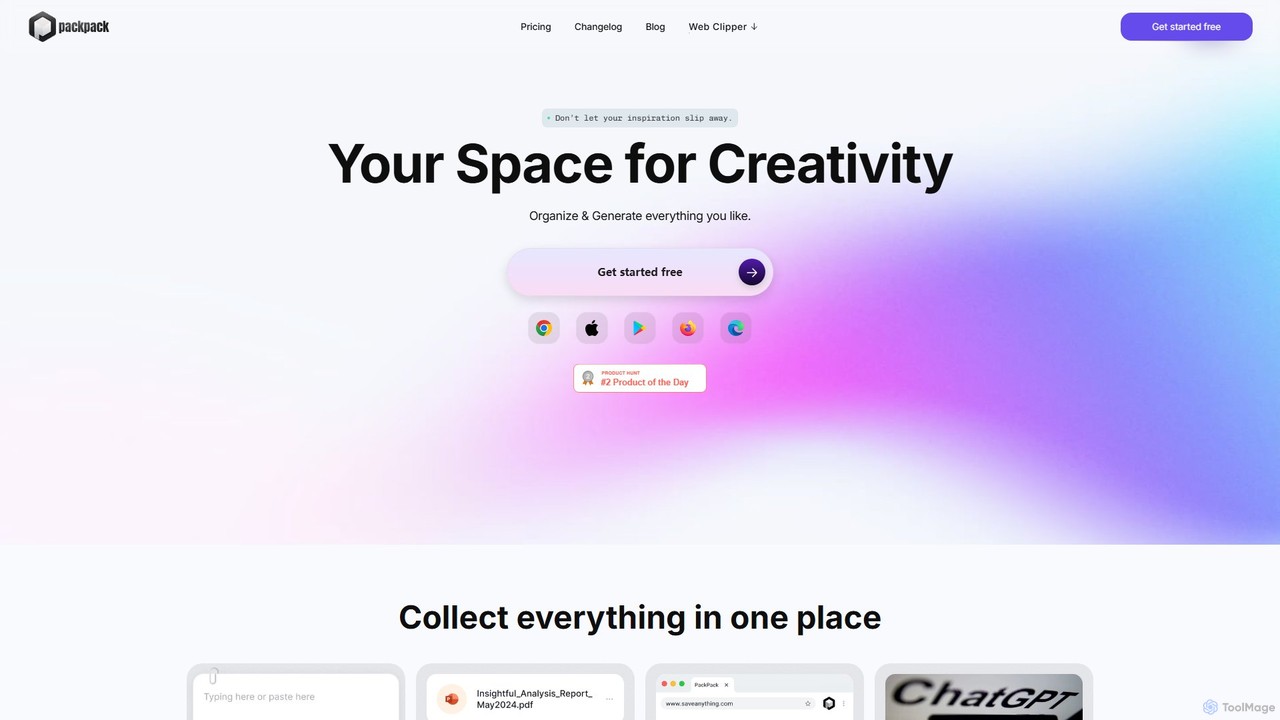
PackPack is an AI-powered digital workspace designed to centralize your creativity and research. It allows you to collect bookmarks, articles, images, files, and notes in one place. With features like AI-powered Q&A, summarization, and automatic image tagging, PackPack transforms scattered information into an organized, searchable knowledge base, boosting productivity for creatives, researchers, and professionals.
Bookmarking
Bookmark
Bookmark is an AI-powered knowledge management platform that helps you save, organize, and rediscover digital content. It uses AI to automatically summarize articles, tag content, and enable powerful semantic search, transforming your collection of links into a personal knowledge base or a collaborative team hub.
Study Tools
Clipmate AI
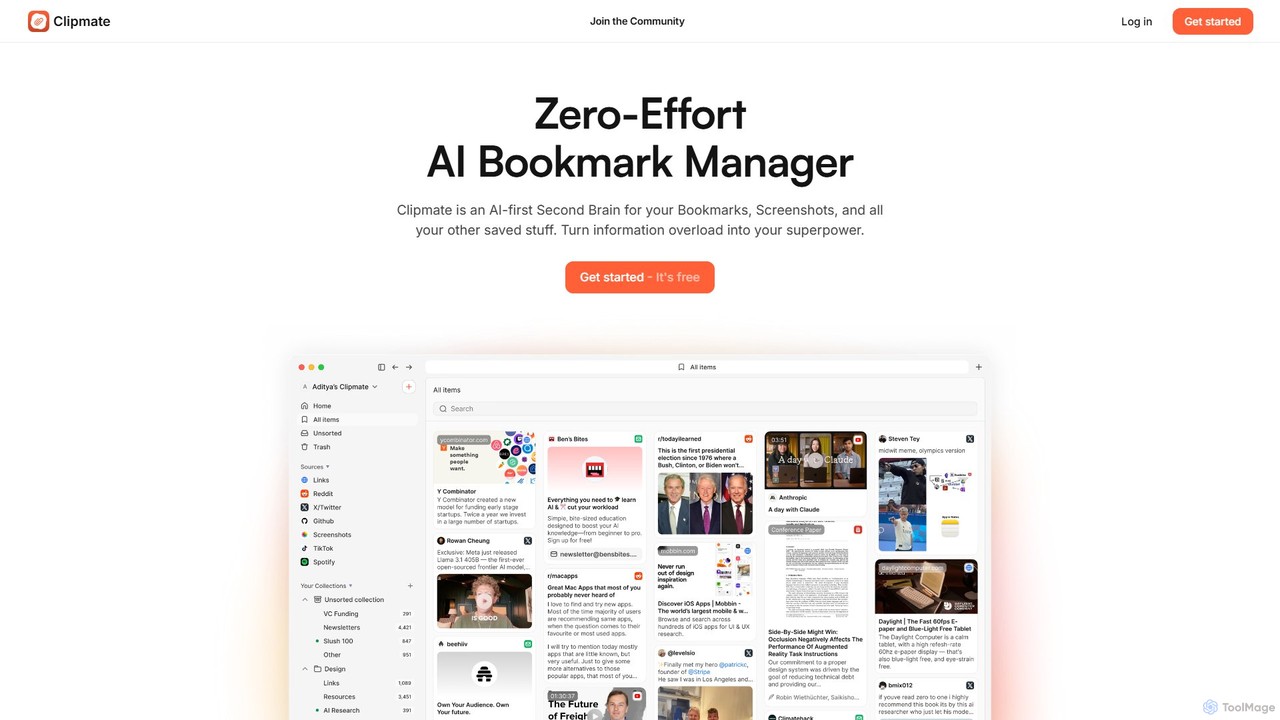
Clipmate AI is a zero-effort AI bookmark manager and second brain. It automatically syncs, organizes, and summarizes your bookmarks, screenshots, and links from various platforms, turning information overload into a searchable and intelligent knowledge base.
Second Brain
RecapioGPT
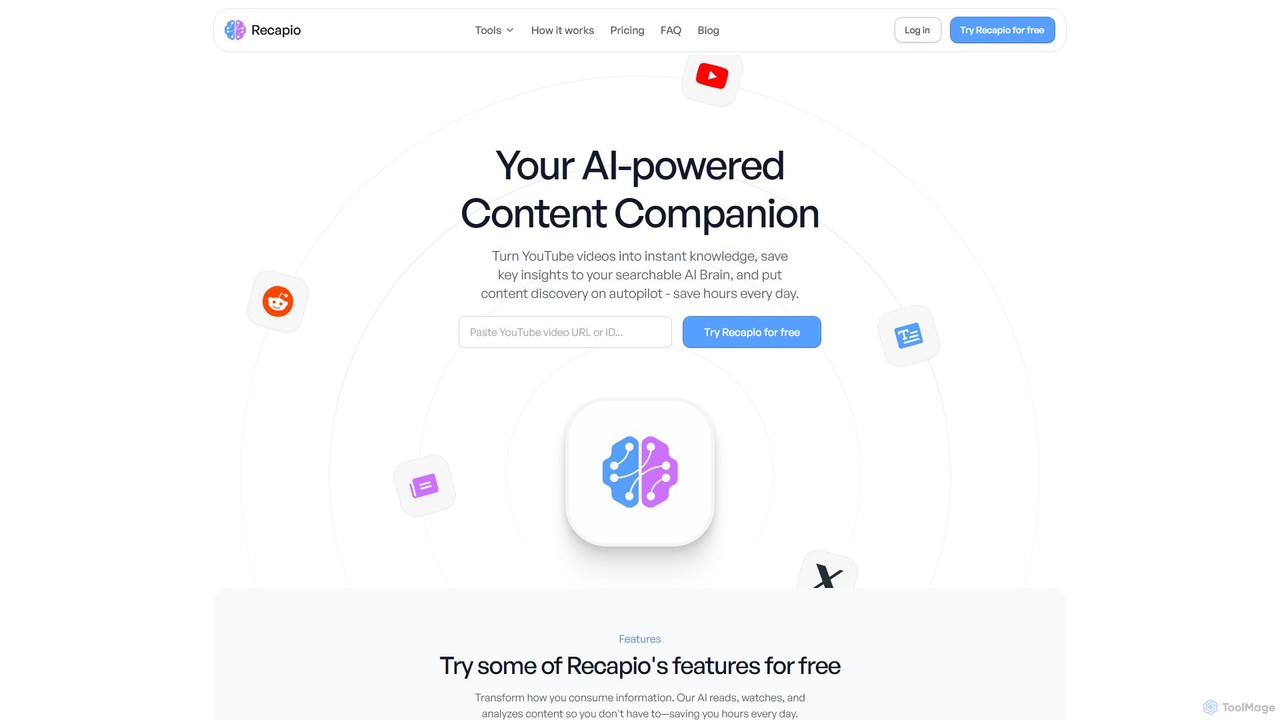
RecapioGPT is an AI-powered second brain and content summarizer that transforms YouTube videos, articles, and web posts into a searchable knowledge base. Chat with your content, get daily recaps, and organize insights to save time and learn smarter.
Research
twitterbookmarks
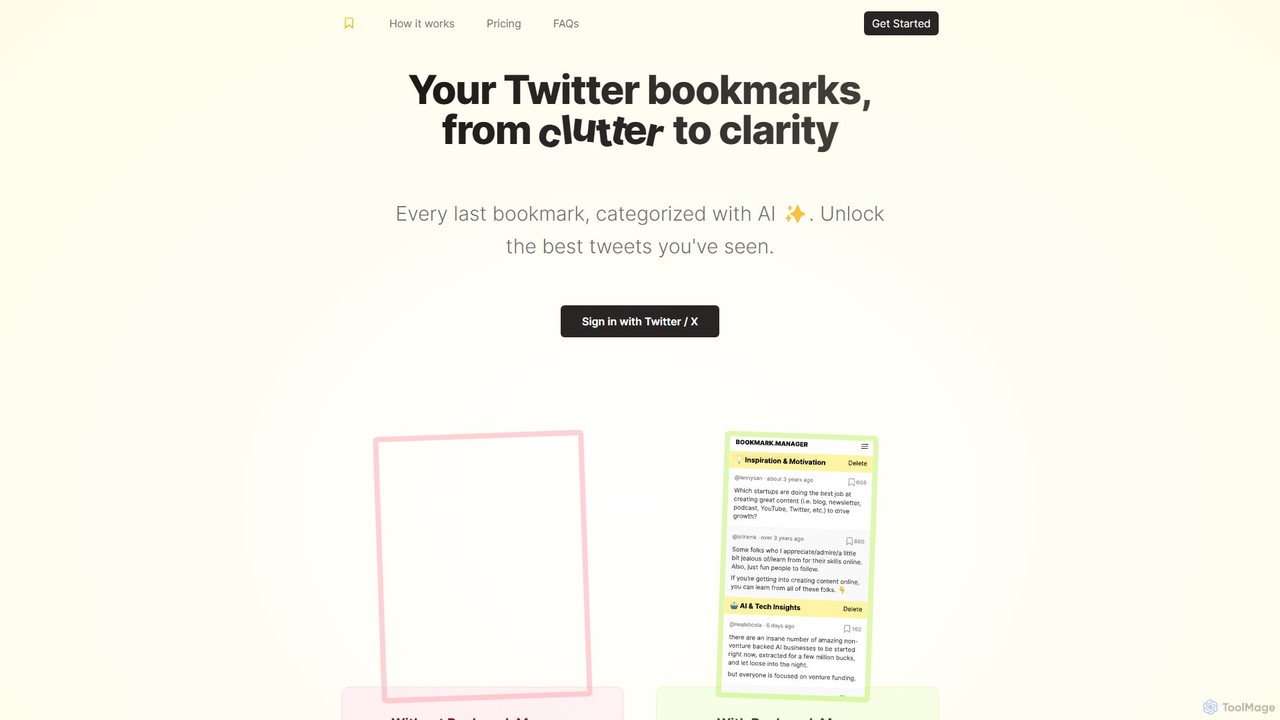
An AI-powered tool that uses GPT-4 to automatically categorize your Twitter/X bookmarks. It transforms your cluttered collection of saved tweets into a clear, organized, and searchable knowledge base, allowing you to export your data to CSV or JSON.
Curation
Cokeep
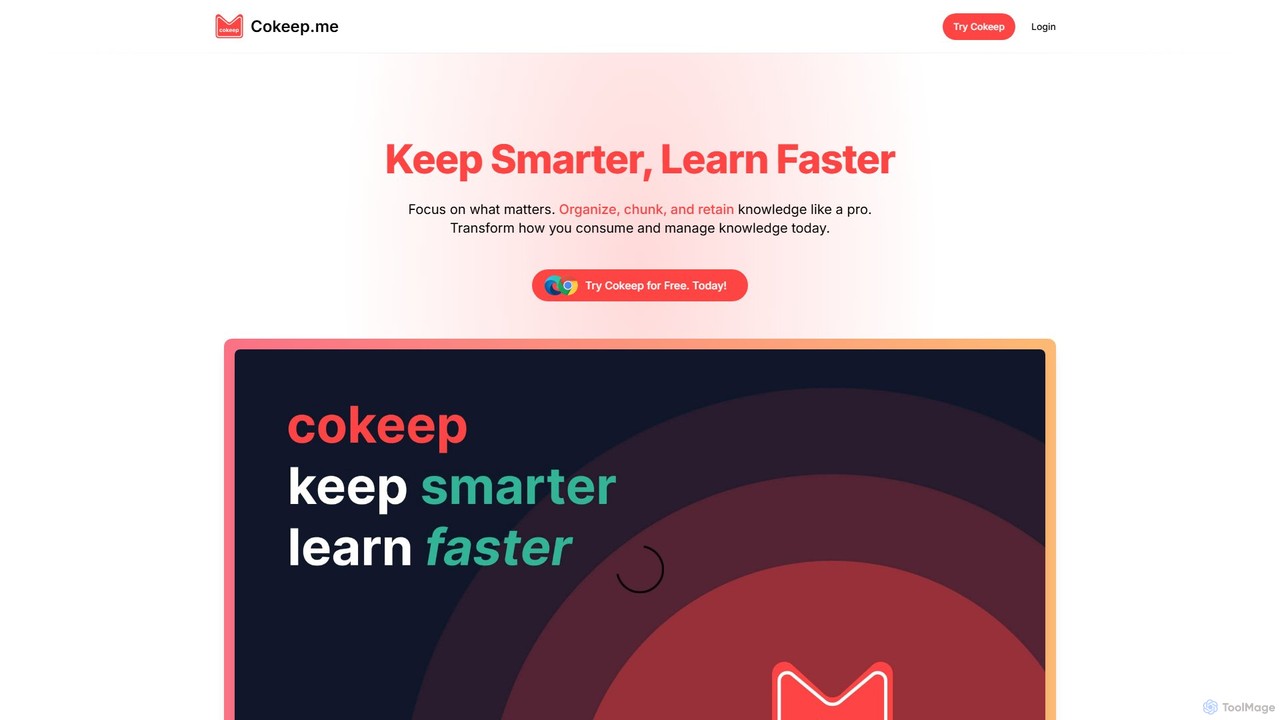
Cokeep is an AI-powered knowledge management tool designed to help you save, organize, and learn from online content more effectively. It transforms articles and videos into digestible summaries, automatically tags information, and provides a collaborative space to manage your learning resources, helping you combat information overload and retain knowledge faster.
Learning
Deta Surf
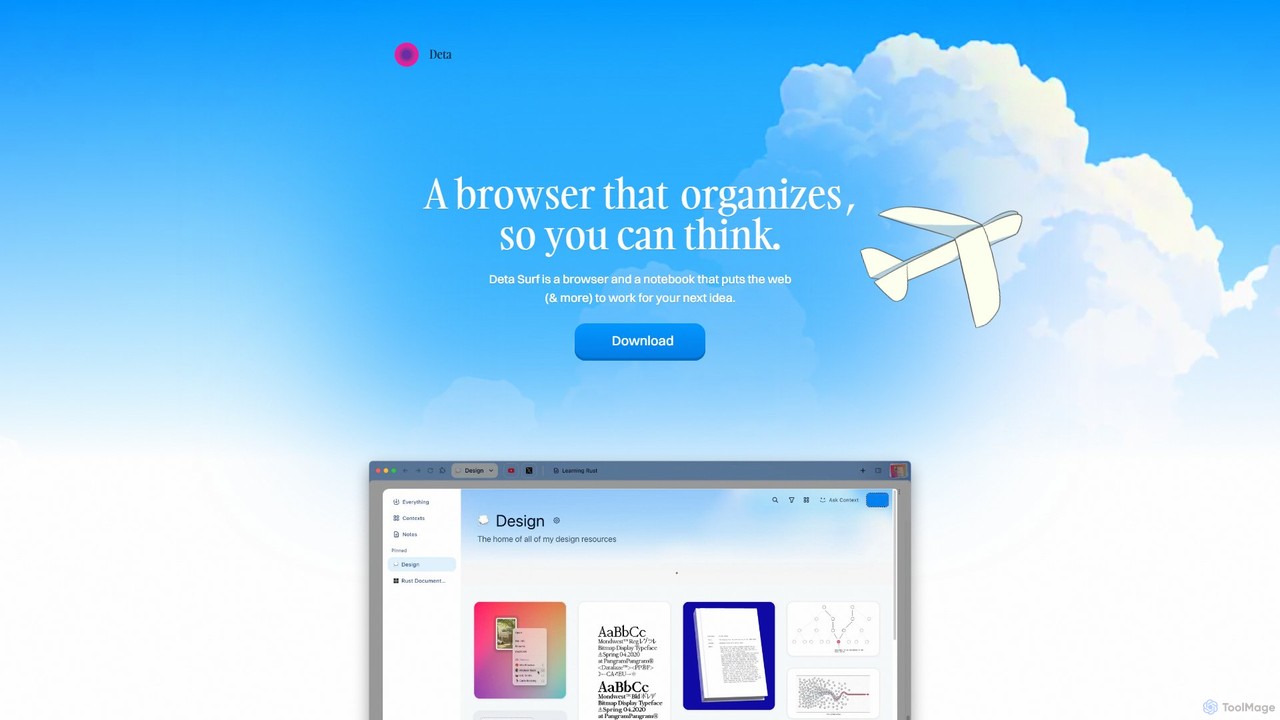
Deta Surf is an intelligent browser and notebook that organizes your web experience. It uses AI to help you collect, remember, and synthesize information, all while keeping your data private and local on your device. It's designed to reduce context switching and enhance your thinking and creativity.
Browser
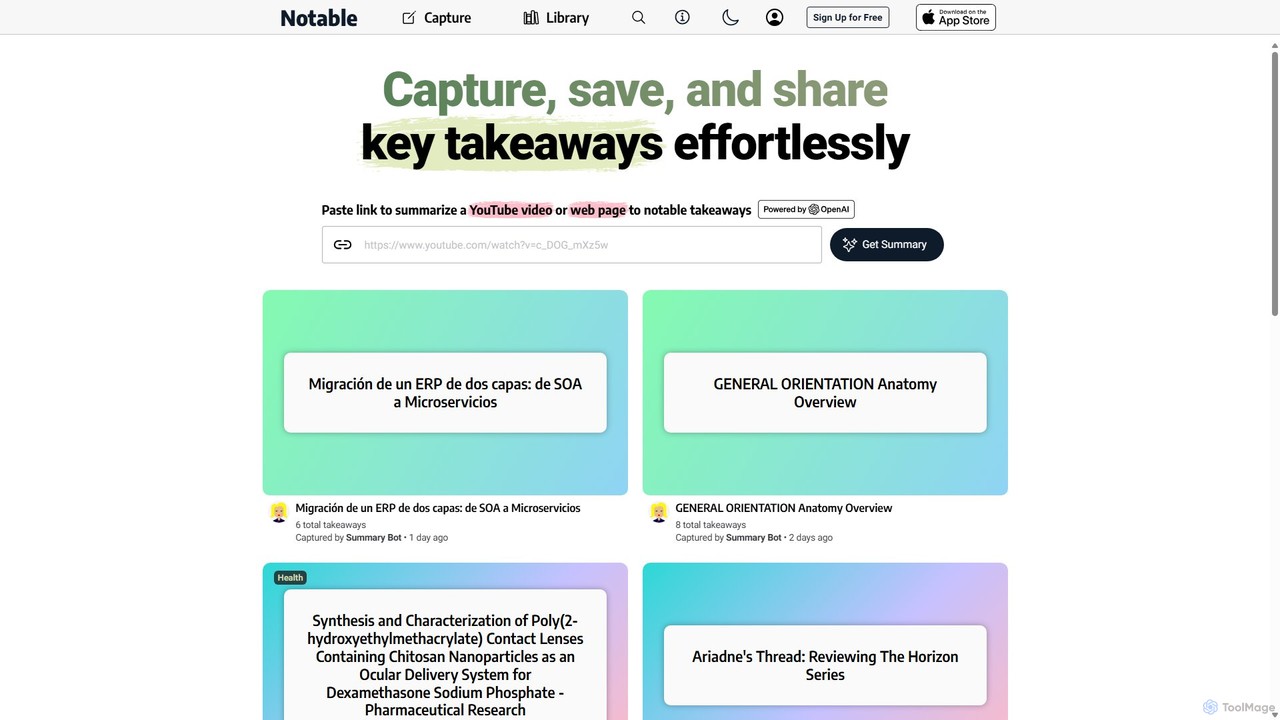
Notable AI
Notable AI is an intelligent tool designed to capture, summarize, and organize key takeaways from web pages and YouTube videos. Simply paste a link, and the AI generates concise summaries, helping you build a personal knowledge library and share insights effortlessly.
Research
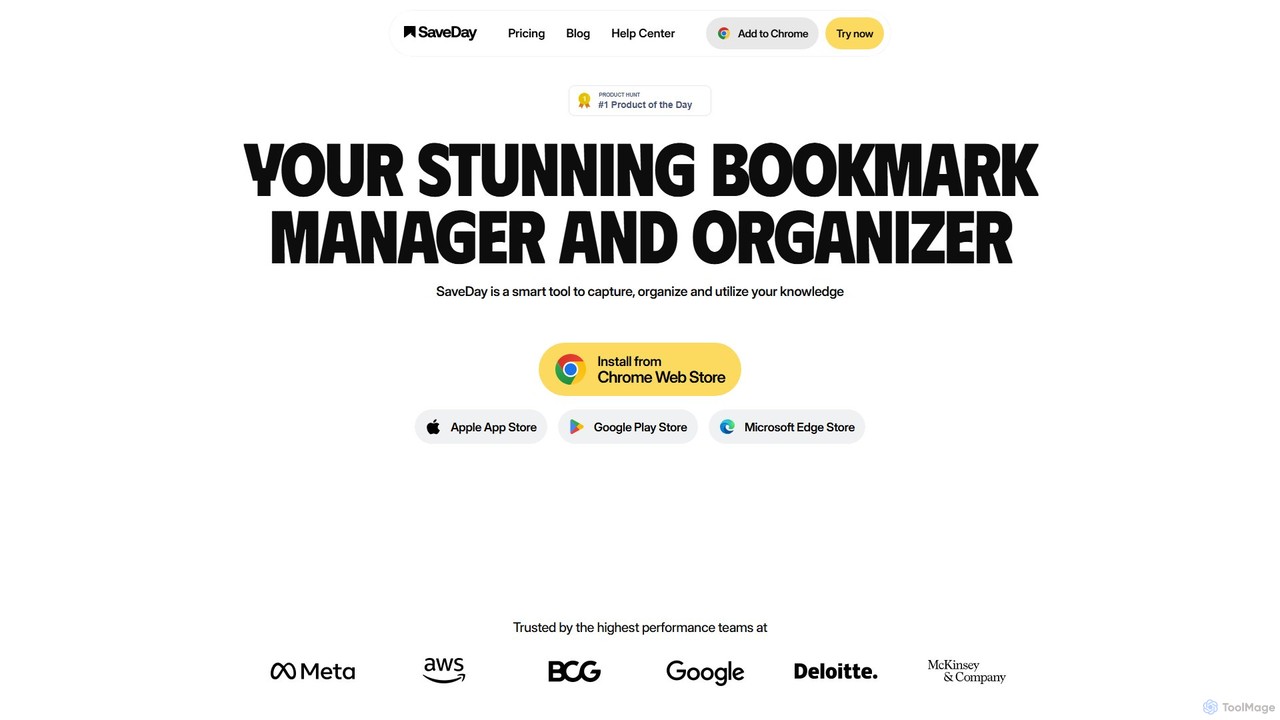
SaveDay
SaveDay is an AI-powered bookmark and knowledge manager. It helps you capture, organize, and utilize online content like articles, videos, and links with one click. Use AI to summarize content, search your personal library with natural language, and get answers based on what you've saved.
Bookmarking
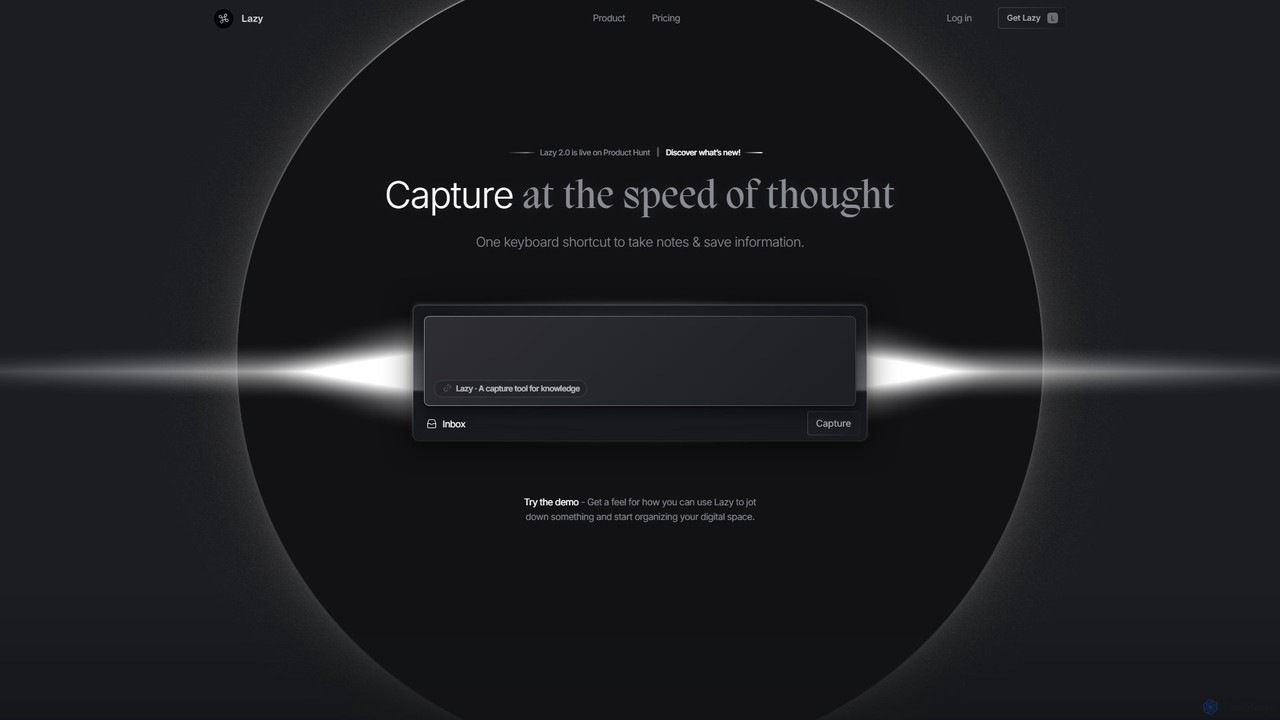
Lazy
Lazy is a universal capture tool designed to eliminate context switching. It allows you to instantly clip information from any app, website, or document using a simple shortcut. With AI-powered features like summarization and voice input, Lazy helps you build a centralized knowledge base without interrupting your workflow.
Bookmarking
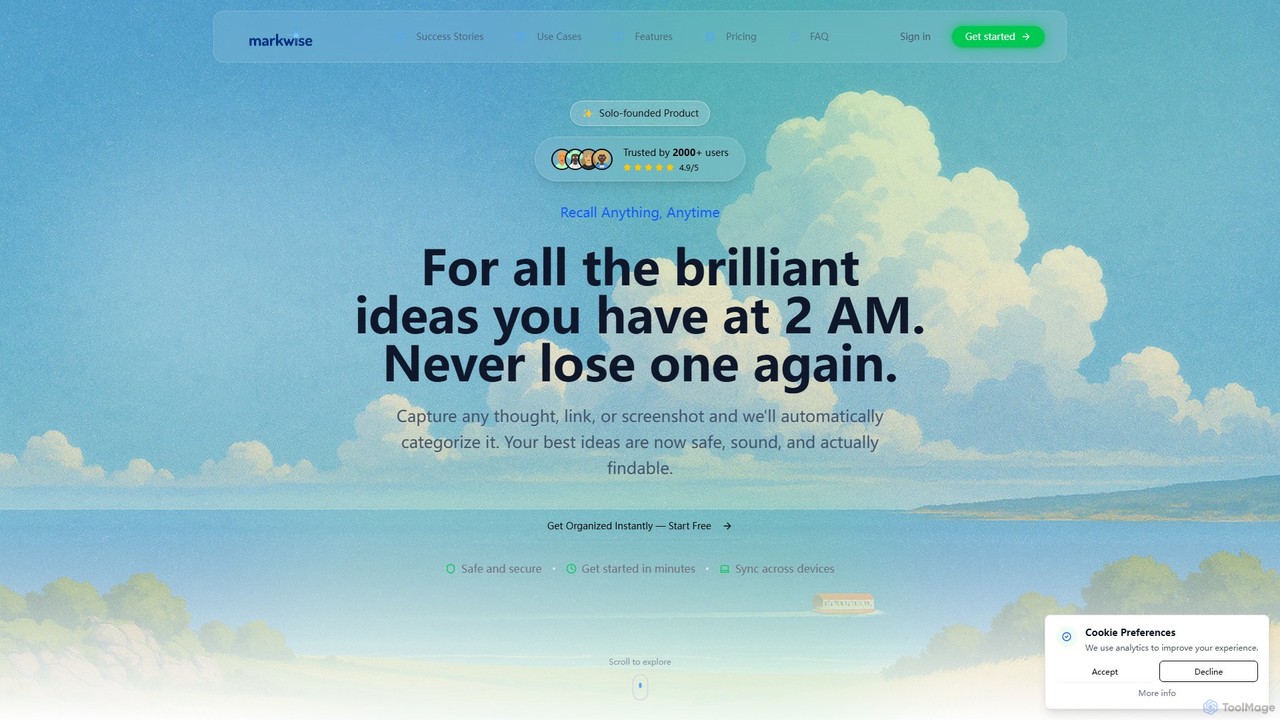
Markwise
Markwise is an AI-powered knowledge manager that helps you save, organize, and recall bookmarks, notes, and ideas. It automatically categorizes and summarizes your content, allowing you to build a personal, searchable knowledge base. With features like semantic search, project-based Spaces, and a browser extension, it streamlines research and boosts productivity for professionals, students, and creatives.
Bookmarking
Mem
Mem is an AI-powered, self-organizing workspace designed to act as your personal knowledge base. It captures your notes, ideas, and meeting transcripts, then uses AI to connect related information, summarize content, and help you generate new insights without manual organization.
Personal
Karakeep
Karakeep is an AI-powered bookmarking and knowledge management app for "data hoarders." It allows you to quickly save links, notes, images, and PDFs. The core feature is its AI engine, which automatically analyzes and tags your content for effortless organization and fast retrieval. With self-hosting options for privacy, mobile apps, and browser extensions, Karakeep provides a seamless and powerful way to build your personal, searchable knowledge base.
Code Snippets

Findr
Findr is an AI-powered second brain for personal and enterprise knowledge management. It unifies all your information—from apps like Google Drive, Notion, and Slack, to documents, notes, and bookmarks—into a single, searchable workspace. Ask questions in natural language to get context-aware answers from your own data, streamline research, and never lose an idea again.
Knowledge Management