ToolMage
Sign in
Hatchet
Task Queuing · 51K monthly visits

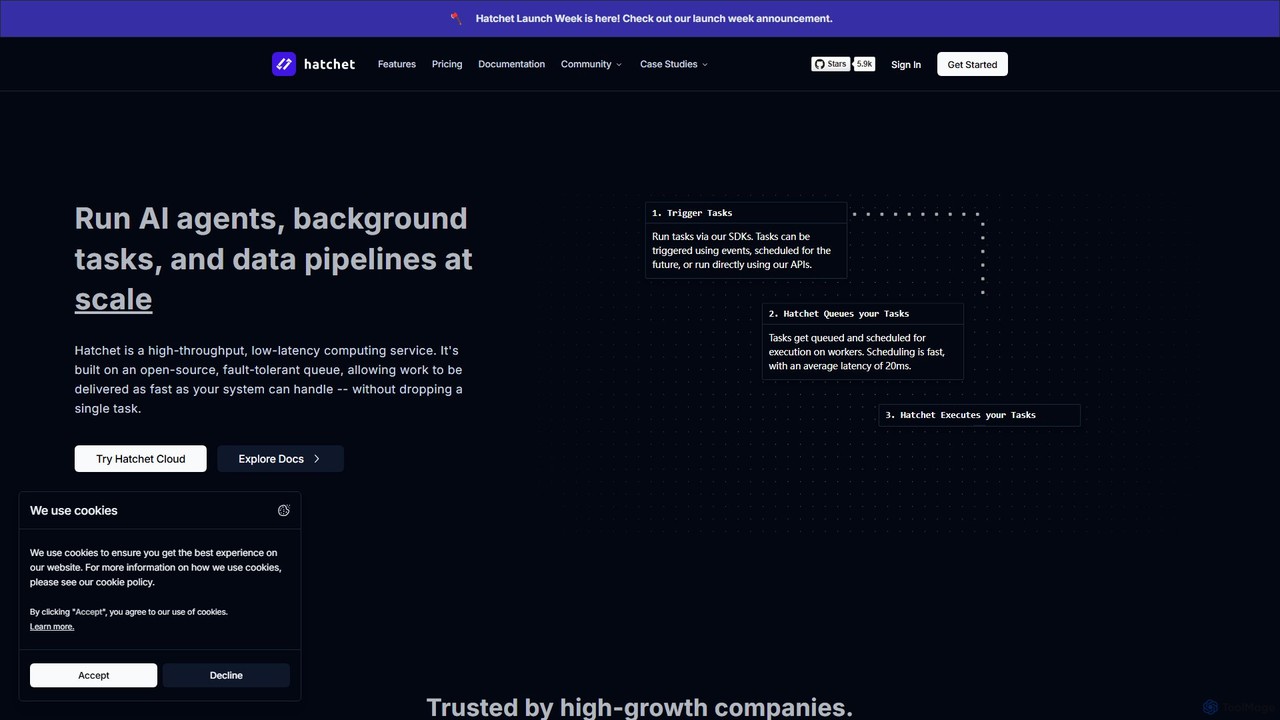
Hatchet is a distributed, fault-tolerant task queue designed to run AI agents, background tasks, and data pipelines at scale. It offers high-throughput, low-latency performance, ensuring no task is dropped. With SDKs for Python, Go, and TypeScript, developers can easily orchestrate complex workflows, schedule jobs, and monitor execution with built-in observability tools. It can be used as a managed cloud service or self-hosted.
VS
Inferable
Agent Builder · 5.9K monthly visits

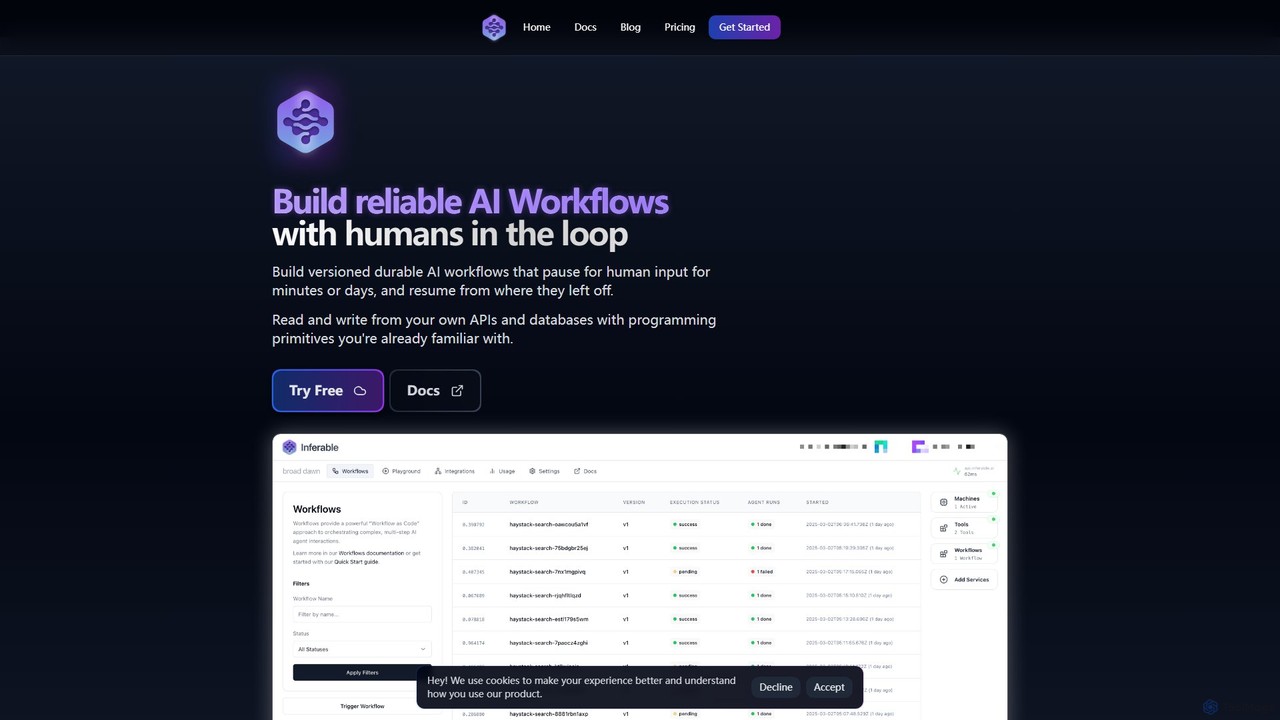
Inferable is an open-source, self-hostable developer platform for building reliable, durable, and versioned AI agents and workflows. It enables the creation of complex, long-running processes with human-in-the-loop capabilities, structured outputs, and on-premise execution for maximum security and control.

Hatchet vs Inferable: pricing, features, traffic, and use cases

Compare Hatchet and Inferable across positioning, pricing, traffic, and user feedback using structured factual data.

Updated Aug 18, 2026

Product overview

Hatchet Product overview

Hatchet is a distributed, fault-tolerant task queue designed to run AI agents, background tasks, and data pipelines at scale. It offers high-throughput, low-latency performance, ensuring no task is dropped. With SDKs for Python, Go, and TypeScript, developers can easily orchestrate complex workflows, schedule jobs, and monitor execution with built-in observability tools. It can be used as a managed cloud service or self-hosted.
Preview

Inferable Product overview

Inferable is an open-source, self-hostable developer platform for building reliable, durable, and versioned AI agents and workflows. It enables the creation of complex, long-running processes with human-in-the-loop capabilities, structured outputs, and on-premise execution for maximum security and control.

Preview

Detailed feature comparison

FeatureHatchetInferable
Primary categoryTask QueuingAgent Builder
Added2025-08-042025-08-02
PricingFreemiumFreemium
Official websitehatchet.runwww.inferable.ai
Product typeWebsiteWebsite
Performance data
User ratingNot verifiedNot verified
Comments00
Monthly visits51K5.9K
Monthly growth14.5%-4.8%
Favorites95129
DetailsView detailsView details

Hatchet vs Inferable monthly traffic

Compare Hatchet and Inferable by monthly reach, traffic trend, visit depth, top regions, and acquisition sources.

How to interpret the traffic data

In the Hatchet vs Inferable monthly traffic comparison, Hatchet currently shows 51K visits and Inferable shows 5.9K; Hatchet has about 8.6 times the visible traffic of Inferable, an absolute difference of about 45K visits. This reflects visible reach, not feature quality or paid users.

Both tools provide verified traffic details, so monthly trends, visit depth, regions, and acquisition sources can be compared on the same basis.

Hatchet monthly traffic:

Latest traffic

Monthly visits
51K
Avg. visit duration
11:35
Pages per visit
13.89
Bounce rate
36.11%
Data updated 2026-06-15

Monthly traffic trend

  • 2025/9: 34K Monthly visits
  • 2026/1: 45.7K Monthly visits
  • 2026/2: 77.1K Monthly visits
  • 2026/3: 76.3K Monthly visits
  • 2026/4: 44.5K Monthly visits
  • 2026/5: 51K Monthly visits

Top regions

Top 5 countries/regions
Country/regionPercentageTraffic
🇬🇧United Kingdom55.28%28.2K
🇺🇸United States28.98%14.8K
🇻🇳Vietnam7.31%3.7K
🇮🇳India4.42%2.3K
🇧🇷Brazil4.01%2K

Traffic sources

Source typePercentageTraffic
Direct82.76%42.2K
Referral16.66%8.5K
Email0.58%296

Search keywords

best multi agent orchestration framework freehatchethatchet companyhatchet pythontemporal

Inferable monthly traffic:

Latest traffic

Monthly visits
5.9K
Avg. visit duration
0:25
Pages per visit
1.8
Bounce rate
41.24%
Data updated 2026-06-15

Monthly traffic trend

  • 2025/9: 11K Monthly visits
  • 2026/1: 2.8K Monthly visits
  • 2026/2: 2.7K Monthly visits
  • 2026/3: 5.5K Monthly visits
  • 2026/4: 6.2K Monthly visits
  • 2026/5: 5.9K Monthly visits

Top regions

Top 5 countries/regions
Country/regionPercentageTraffic
🇺🇸United States50.95%3K
🇷🇺Russia21.64%1.3K
🇮🇳India19.25%1.1K
🇵🇱Poland4.11%244
🇳🇱Netherlands4.05%241

Search keywords

assistant-uiinferablelong polling vs websockettake skip function postgreswhat update skip lock does in post gres
Traffic-based selection guidance: If public market visibility is an important first-pass criterion, investigate Hatchet first. The final choice should still follow taxonomy, use case, and a real trial because higher traffic does not prove broader capabilities or better workflow fit.

Usage comparison

Compare the core capabilities of Hatchet and Inferable

Hatchet Core features

Orchestration
Workflow Automation
Task Queuing

Inferable Core features

Orchestration
Workflow Automation
Agent Builder

Use cases

Hatchet Use cases

developer tools
open source
AI pipelines
background jobs
data processing
distributed systems
fault tolerance
scalability
task queue
workflow orchestration

Inferable Use cases

developer tools
open source
AI agent
durable workflows
go
human-in-the-loop
llm
self-hosted
typescript
workflow automation

Hatchet vs Inferable:In-depth comparison and selection guidance

First decide whether the products solve the same kind of need

This in-depth Hatchet vs Inferable comparison uses only the product records, taxonomy, audience, traffic, and community signals available on this page. Hatchet is primarily listed under “Task Queuing”, while Inferable is primarily listed under “Agent Builder”, so the first decision is whether your actual task matches their recorded scope.

The structured fields currently show these decision-relevant differences: Primary category (Hatchet: Task Queuing; Inferable: Agent Builder); Monthly visits (Hatchet: 51K; Inferable: 5.9K); Monthly growth (Hatchet: 14.5%; Inferable: -4.8%); Favorites (Hatchet: 95; Inferable: 129); Website (Hatchet: hatchet.run; Inferable: www.inferable.ai). These facts are more useful for selection than brand visibility alone.

What market visibility and monthly traffic mean

In the Hatchet vs Inferable monthly traffic comparison, Hatchet currently shows 51K visits and Inferable shows 5.9K; Hatchet has about 8.6 times the visible traffic of Inferable, an absolute difference of about 45K visits. This reflects visible reach, not feature quality or paid users.

Both tools provide verified traffic details, so monthly trends, visit depth, regions, and acquisition sources can be compared on the same basis.

If public market visibility is an important first-pass criterion, investigate Hatchet first. The final choice should still follow taxonomy, use case, and a real trial because higher traffic does not prove broader capabilities or better workflow fit.

Product positioning, use cases, and roles

Hatchet and Inferable currently overlap in shared categories: Orchestration and Workflow Automation; shared tags: developer tools and open source. This can place both on the same shortlist, but it does not prove equal implementation, depth, or cost.

Hatchet's unique categories/tags are Task Queuing, AI pipelines, background jobs, data processing, distributed systems, fault tolerance, scalability, and task queue; Inferable's are Agent Builder, AI agent, durable workflows, go, human-in-the-loop, llm, self-hosted, and typescript. These unique fields are the strongest differentiators: validate the product whose recorded scope matches the task instead of following traffic alone.

What ratings, comments, and favorites can tell you

Hatchet has no verified rating, 0 comments, 95 favorites, and 107 likes;Inferable has no verified rating, 0 comments, 129 favorites, and 130 likes。

Neither product has enough rating or comment samples for a credible reputation ranking.

Selection guidance by actual need

When to evaluate Hatchet first

Put Hatchet on the priority trial list when the task aligns with “Task Queuing” and especially Task Queuing, AI pipelines, background jobs, data processing, distributed systems, and fault tolerance. This follows recorded positioning and does not imply unlisted capabilities are absent.

Hatchet also currently records: pricing is freemium, product type is website, 51K verified monthly visits, no verified user rating. Verify any hard requirement around price, platform, or reach before trial, and do not let sparse review data substitute for testing.

When to evaluate Inferable first

Put Inferable on the priority trial list when the task aligns with “Agent Builder” and especially Agent Builder, AI agent, durable workflows, go, human-in-the-loop, and llm. This follows recorded positioning and does not imply unlisted capabilities are absent.

Inferable also currently records: pricing is freemium, product type is website, 5.9K verified monthly visits, no verified user rating. Verify any hard requirement around price, platform, or reach before trial, and do not let sparse review data substitute for testing.

How to validate the recommendation before deciding

The available data describes positioning, public visibility, and community signals, but it cannot prove output quality, speed, integration effort, privacy, or long-term cost in your workflow. Before deciding, run the same representative tasks in Hatchet and Inferable, then record completion time, accuracy, manual corrections, and the real paid threshold. A like-for-like trial turns this comparison into a defensible adoption decision.

Comparison FAQ

How should I choose between Hatchet and Inferable?
Compare positioning, pricing, taxonomy, and traffic maturity, then verify the latest details on each official website.
Where does this comparison data come from?
The factual baseline is derived from product, taxonomy, traffic, and community data. Reviewed editorial conclusions show their source and verification date.
What do unknown fields mean?
Unknown means there is not enough reliable evidence; the page does not fill gaps with assumptions.

Related AI tools

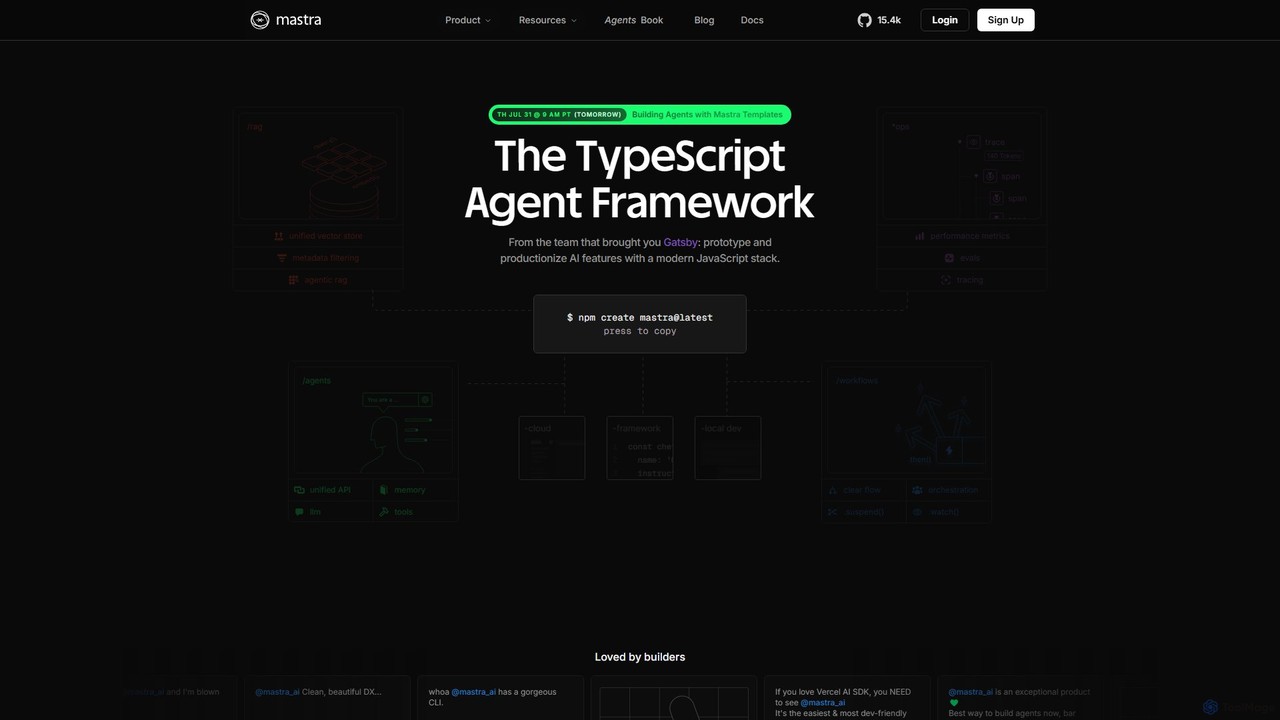
Mastra
Freemium

Mastra

Mastra is an open-source TypeScript framework designed for developers to build, deploy, and manage sophisticated AI agents and complex workflows. It provides a developer-friendly SDK with features like persistent memory, tool calling, Retrieval-Augmented Generation (RAG), and deterministic workflow graphs. Built by the team behind Gatsby, Mastra simplifies creating production-ready AI applications within the JavaScript ecosystem.

Agent Builder
Visits 310.9KFavorites 133Likes 137
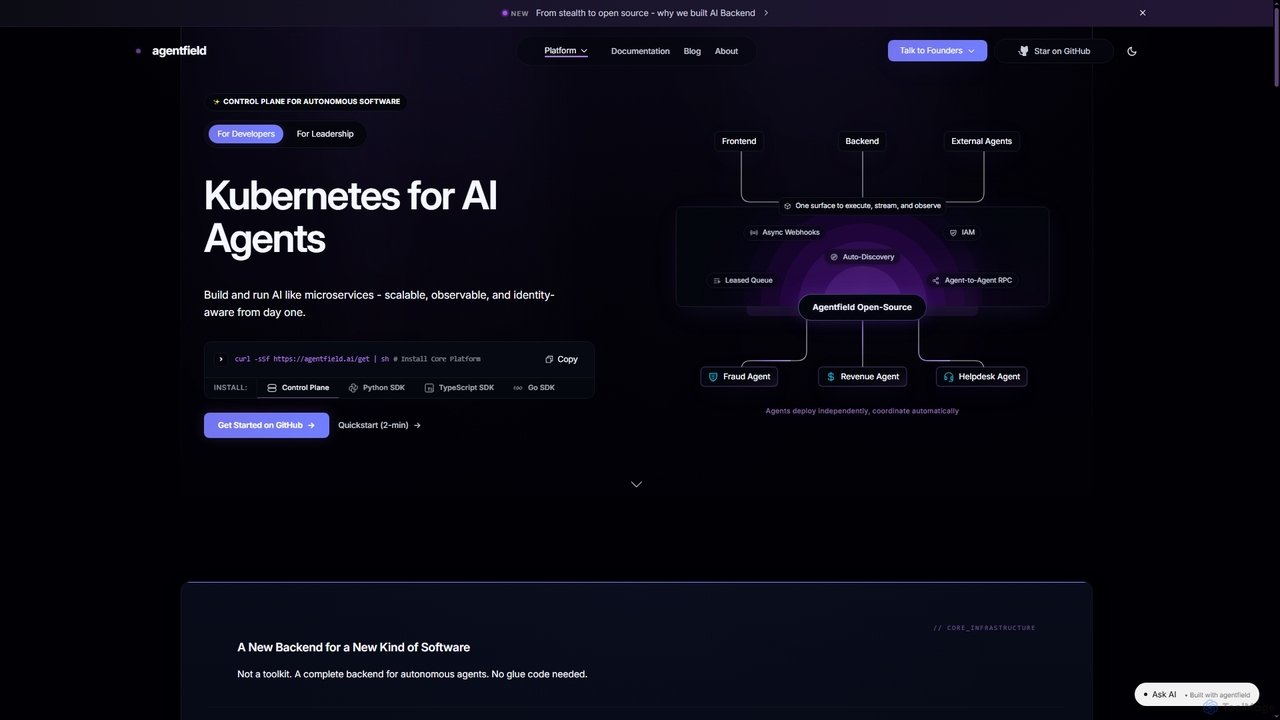
Agentfield
Free

Agentfield

Agentfield is an open-source control plane designed for building and running autonomous AI agents as scalable, observable, and identity-aware microservices. It provides Kubernetes-like orchestration, cryptographic identity management, and production-ready infrastructure to bridge the gap between AI prototypes and robust, trustworthy production deployments.

Orchestration
Visits 23.2KFavorites 61Likes 62
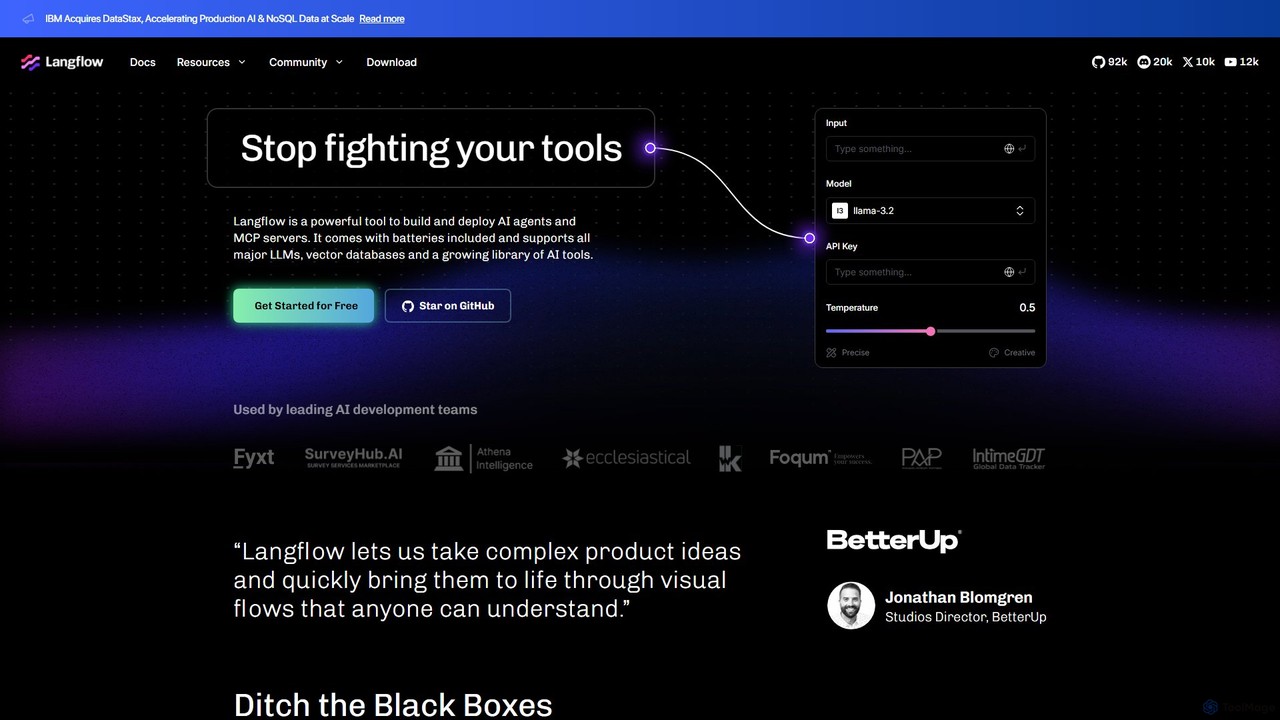
Langflow
Freemium

Langflow

Langflow is an open-source, visual UI for building and deploying AI applications. It features a drag-and-drop interface to chain LLMs, agents, and tools, enabling rapid prototyping and deployment of complex workflows like RAG and multi-agent systems. It supports extensive integrations and offers both self-hosted and cloud options.

Low Code No Code
Visits 247.8KFavorites 71Likes 82
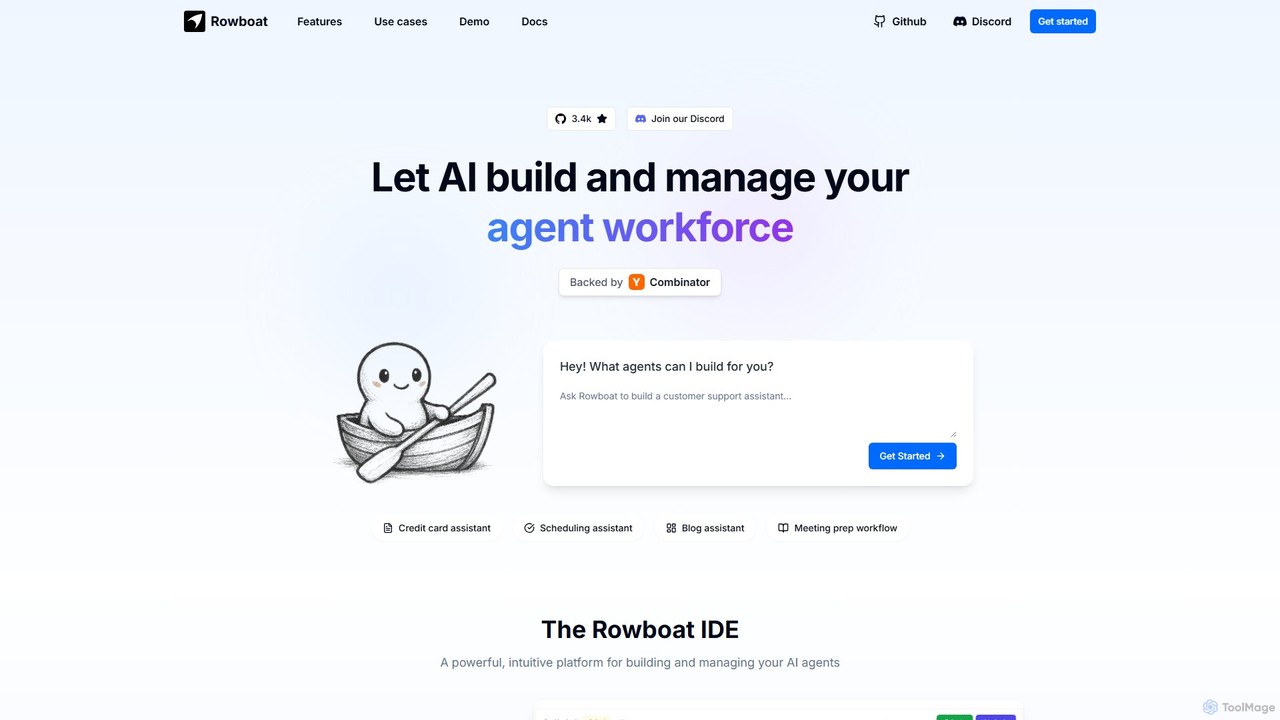
Rowboat
Freemium

Rowboat

Rowboat is a powerful, AI-powered IDE for building, managing, and deploying complex multi-agent systems. Backed by Y Combinator, it allows users to describe workflows in plain English, and its AI copilot automatically generates the entire agent graph, including roles, prompts, and tool integrations. It's designed to simplify the creation of robust, real-world AI agents for productivity, e-commerce, support, and more, with features like open-source flexibility and support for over 100 LLMs.

Agent Builder
Visits 54KFavorites 109Likes 127
n8n
Freemium

n8n

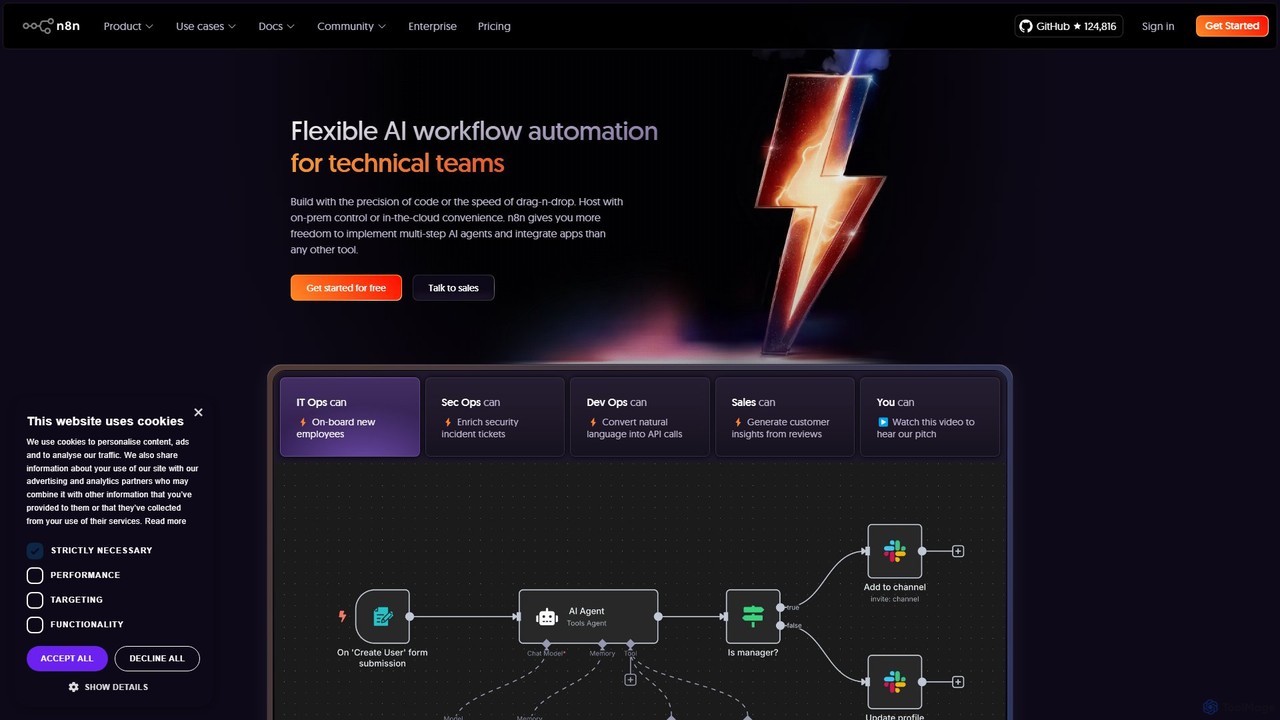
n8n is a source-available, node-based workflow automation platform designed for both technical and non-technical users. It enables you to connect hundreds of applications and services, including powerful AI models, to automate complex tasks and processes. With options for both cloud hosting and self-hosting, n8n offers unparalleled flexibility, control, and scalability for building everything from simple data syncs to sophisticated AI agents.

Crm
Visits 6.7MFavorites 134Likes 132
Hexabot
Freemium

Hexabot

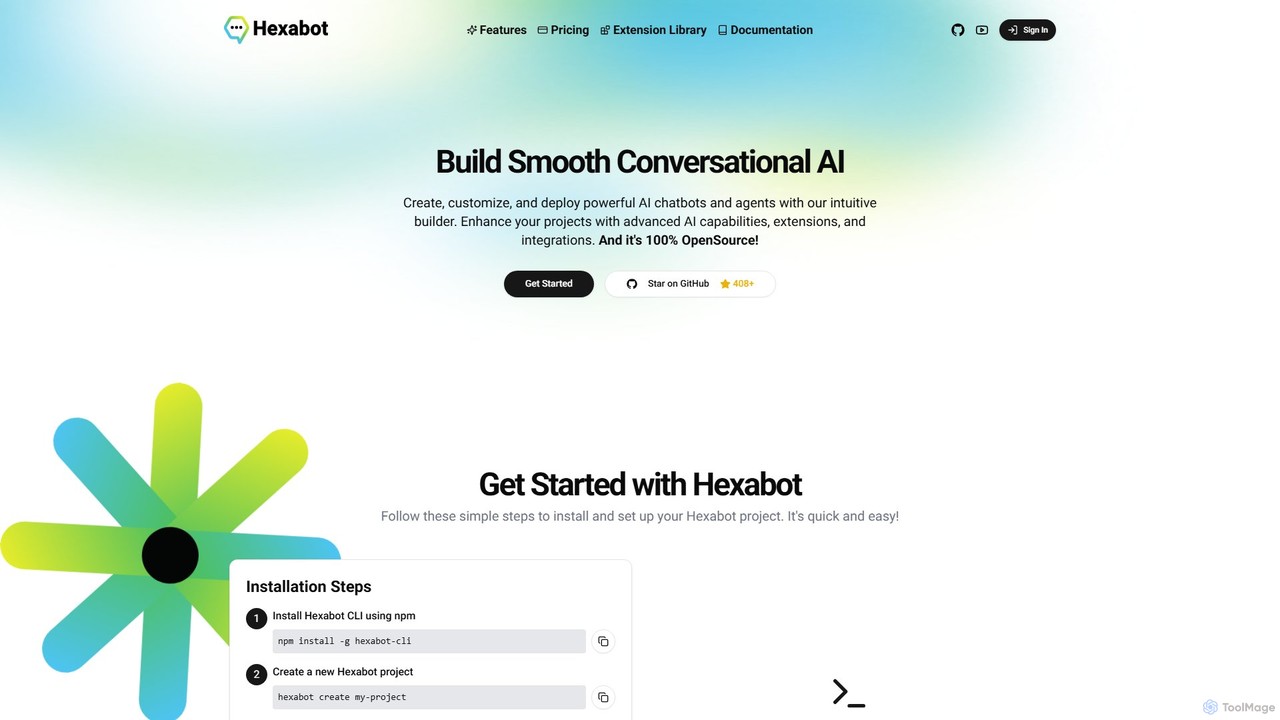
Hexabot is an open-source platform for building, customizing, and deploying powerful AI chatbots and agents. It offers a developer-friendly environment with a low-code visual editor, extensive extension library, and multi-channel integration, allowing for on-premise hosting to ensure full data privacy and control.

Chatbot
Visits 6.1KFavorites 93Likes 102
Dank
Freemium

Dank

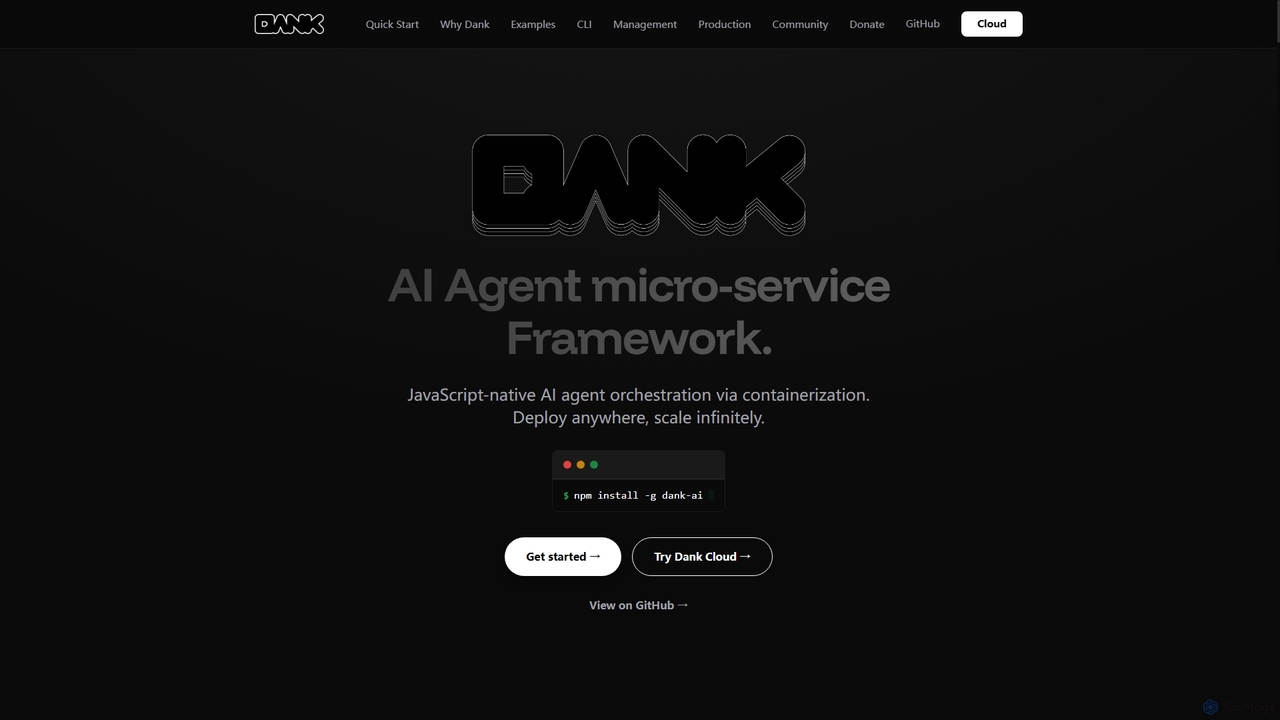
Dank is a JavaScript-native, open-source framework for orchestrating and deploying containerized AI agents. It enables developers to build, manage, and scale multiple AI agents as microservices across any cloud infrastructure, simplifying complex AI deployments with Docker-native architecture and real-time monitoring.

Agent Frameworks
Visits 4KFavorites 128Likes 133
Dify
Freemium

Dify

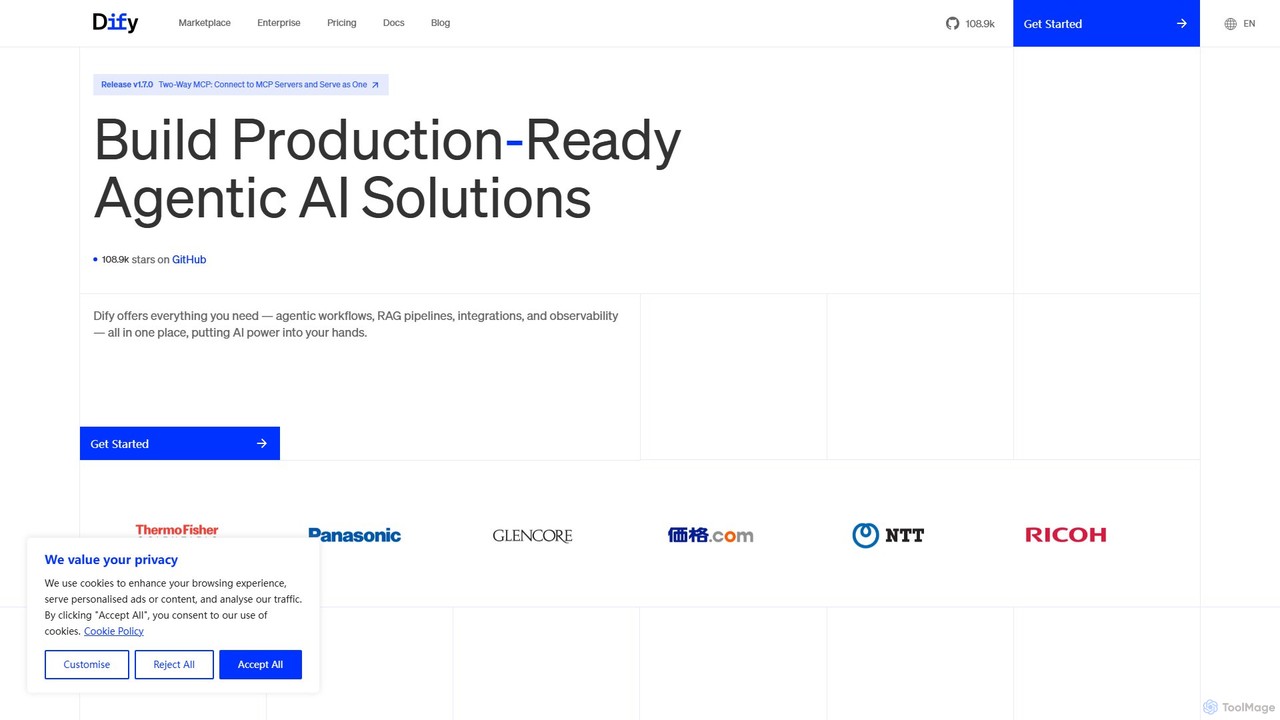
Dify is an open-source, low-code AI development platform for building and operating production-ready generative AI applications. It enables the creation of AI agents and workflows powered by RAG pipelines, extensive model support, and full observability, simplifying the entire development lifecycle from idea to deployment.

Ai Agent
Visits 1.1MFavorites 80Likes 83
Firecrawl
Freemium

Firecrawl

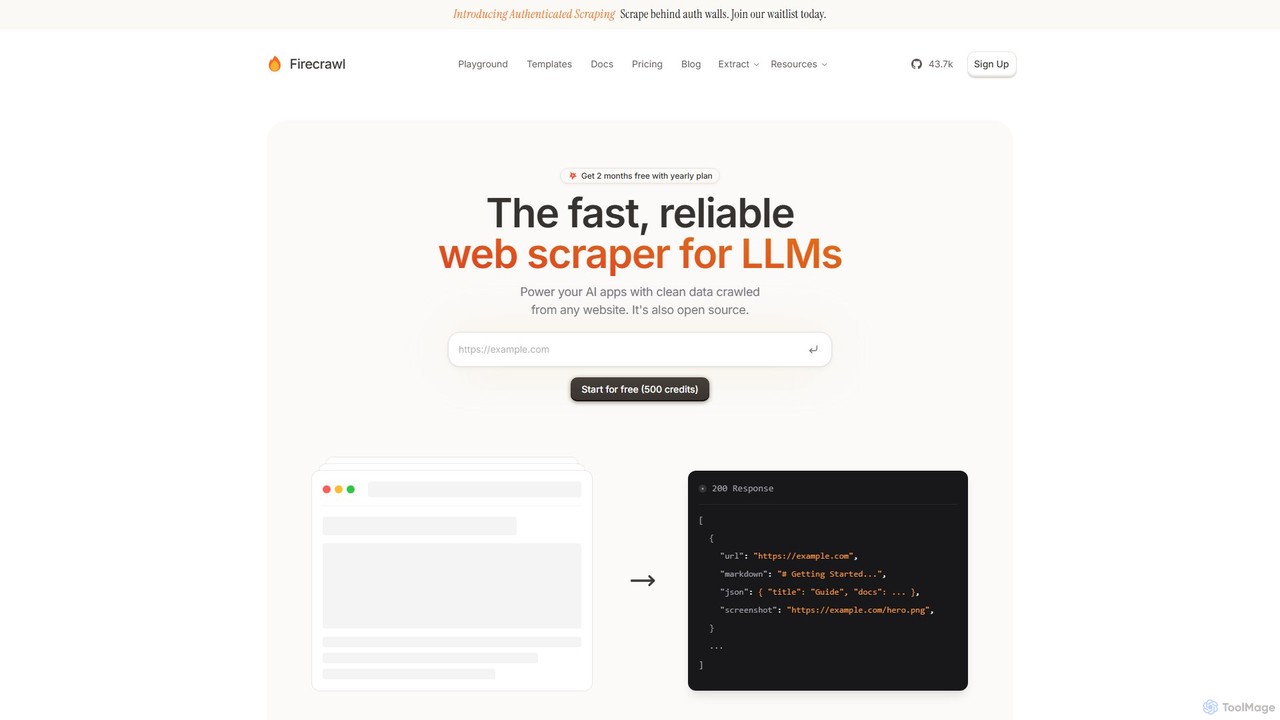
Firecrawl is an open-source, developer-first API that turns any website into clean, LLM-ready data. It handles all the complexities of web scraping, including JavaScript rendering, proxy rotation, and rate limits, allowing you to power AI applications, agents, and RAG systems with reliable web content. It offers scraping, crawling, and search functionalities through a simple API.

Data Collection
Visits 1.5MFavorites 117Likes 122
LobeHub
Freemium

LobeHub

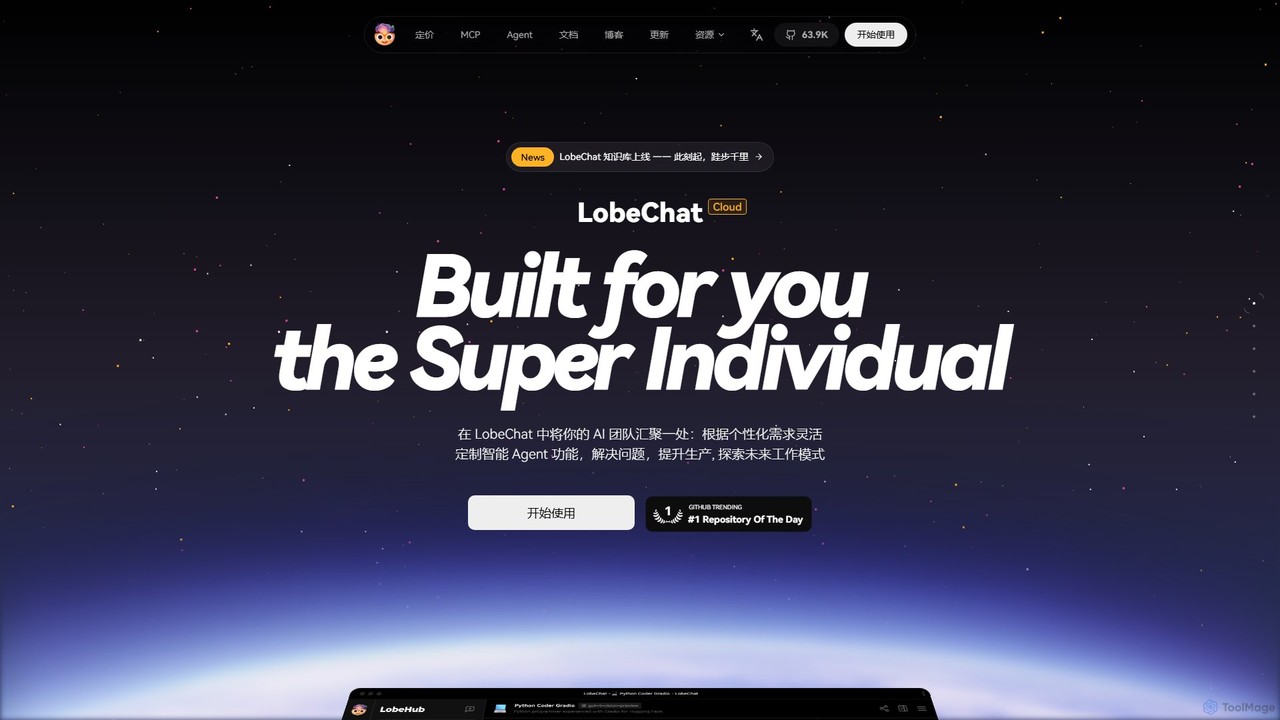
LobeHub is an all-in-one AI platform that allows you to build and manage a personalized team of AI Agents. It offers a superior user experience to standard LLM interfaces like ChatGPT, with support for numerous models, plugins, and multi-modal interactions. Create, share, and use specialized agents for tasks ranging from coding and writing to academic research and daily life, all within a single, intuitive chat interface.

Chatbot Platform
Visits 1.5MFavorites 132Likes 125
AI SDK
Free

AI SDK

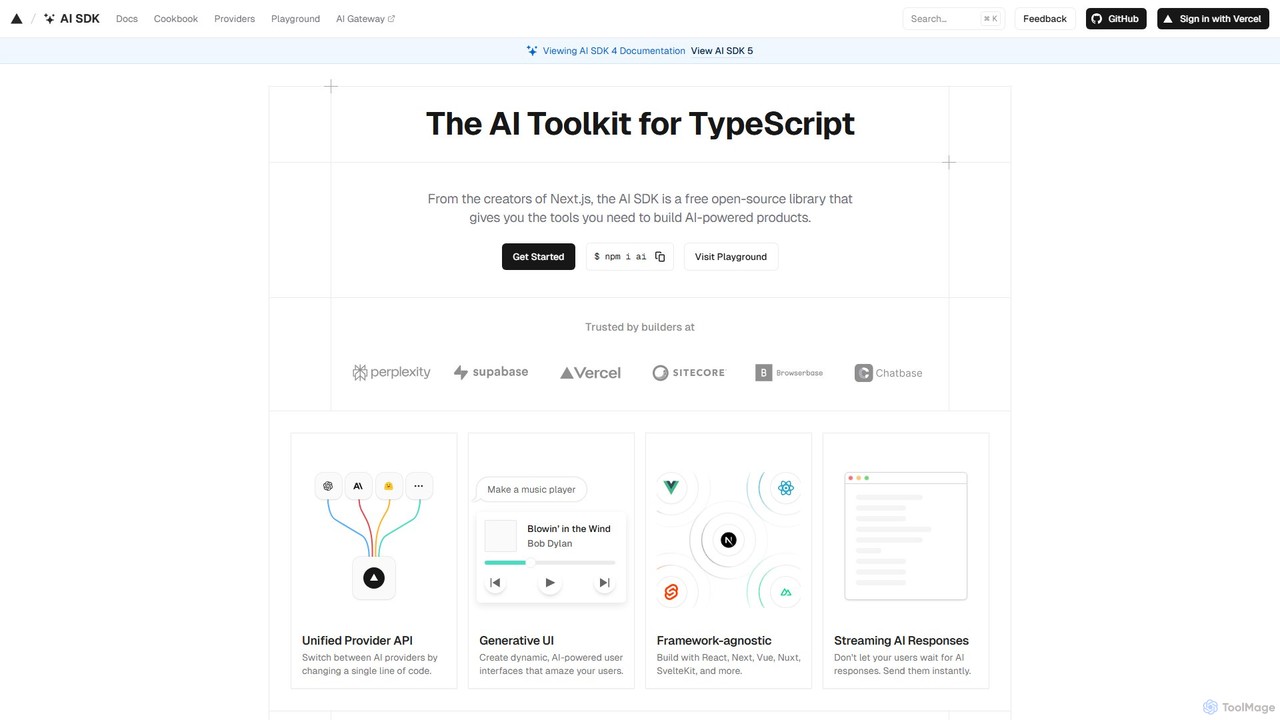
AI SDK by Vercel is a free, open-source TypeScript toolkit for building AI-powered applications. It provides a unified API to seamlessly integrate various large language models (LLMs) like OpenAI, Google, and Anthropic. It simplifies development with features like streaming responses, generative UI components, and tool calling, enabling developers to build and ship AI features faster across frameworks like Next.js, React, and Svelte.

Library
Visits 597.4KFavorites 92Likes 97
Inngest
Freemium

Inngest

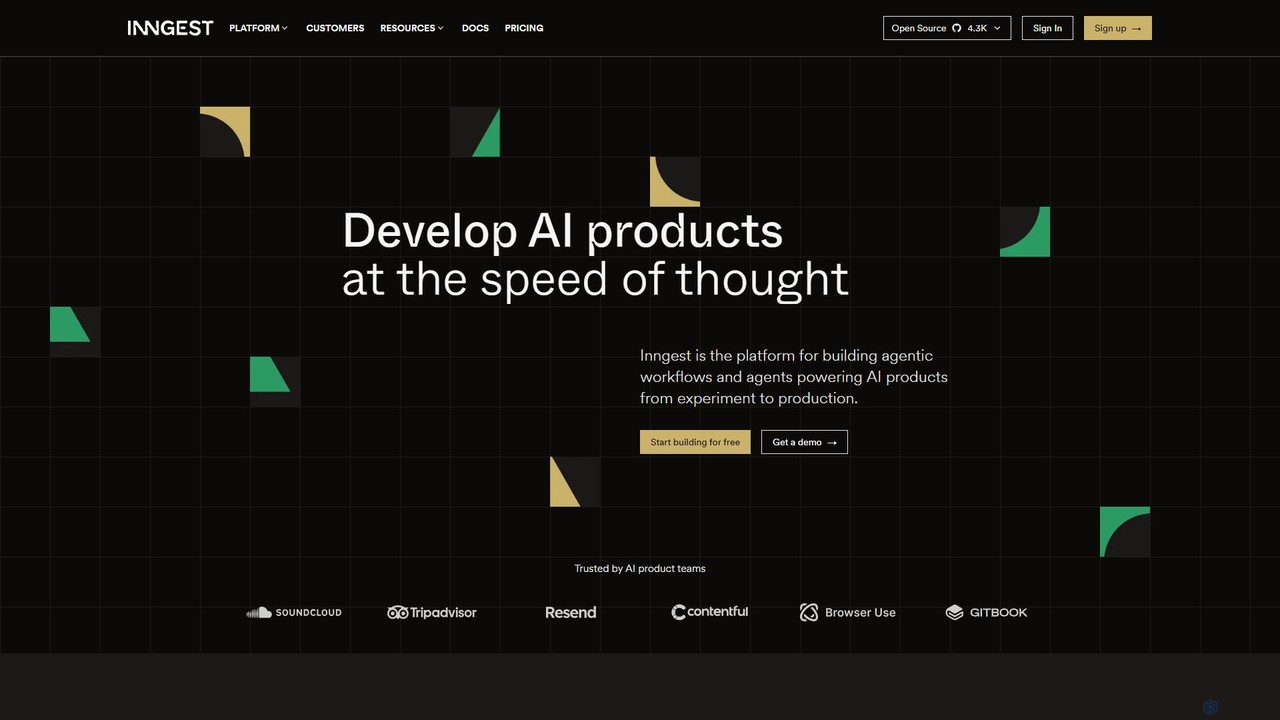
Inngest is a developer platform for building, orchestrating, and scaling reliable AI and backend workflows. It provides a robust orchestration engine for creating fault-tolerant AI agents and applications with features like automatic retries, step-by-step debugging, and full observability. Go from local prototype to production at any scale, focusing on product logic instead of infrastructure management.

Backend
Visits 268.4KFavorites 86Likes 101
Trigger.dev
Freemium

Trigger.dev

Trigger.dev is an open-source platform for developers to build, run, and manage long-running background jobs and AI workflows. It provides a robust infrastructure that handles timeouts, retries, and scaling, allowing you to write resilient tasks directly in your TypeScript or Python codebase. Ideal for orchestrating complex AI agents, data processing pipelines, and real-time applications without managing servers.

Model Orchestration
Visits 252.8KFavorites 94Likes 88
Flowise
Freemium

Flowise

Flowise is an open-source, low-code platform for visually building customized AI agents and applications. Using a drag-and-drop interface, developers and teams can rapidly prototype and deploy complex systems, from RAG-powered chatbots to multi-agent workflows. It supports over 100 LLMs, various data sources, and offers enterprise-grade features for scalable deployment.

Model Deployment
Visits 214.8KFavorites 125Likes 137
phidata
Free

phidata

phidata is an open-source Python framework for building autonomous AI Assistants. It simplifies the integration of LLMs with memory, knowledge bases, and external tools, enabling developers to create powerful, stateful AI applications with ease.

Frameworks
Visits 176.6KFavorites 84Likes 87