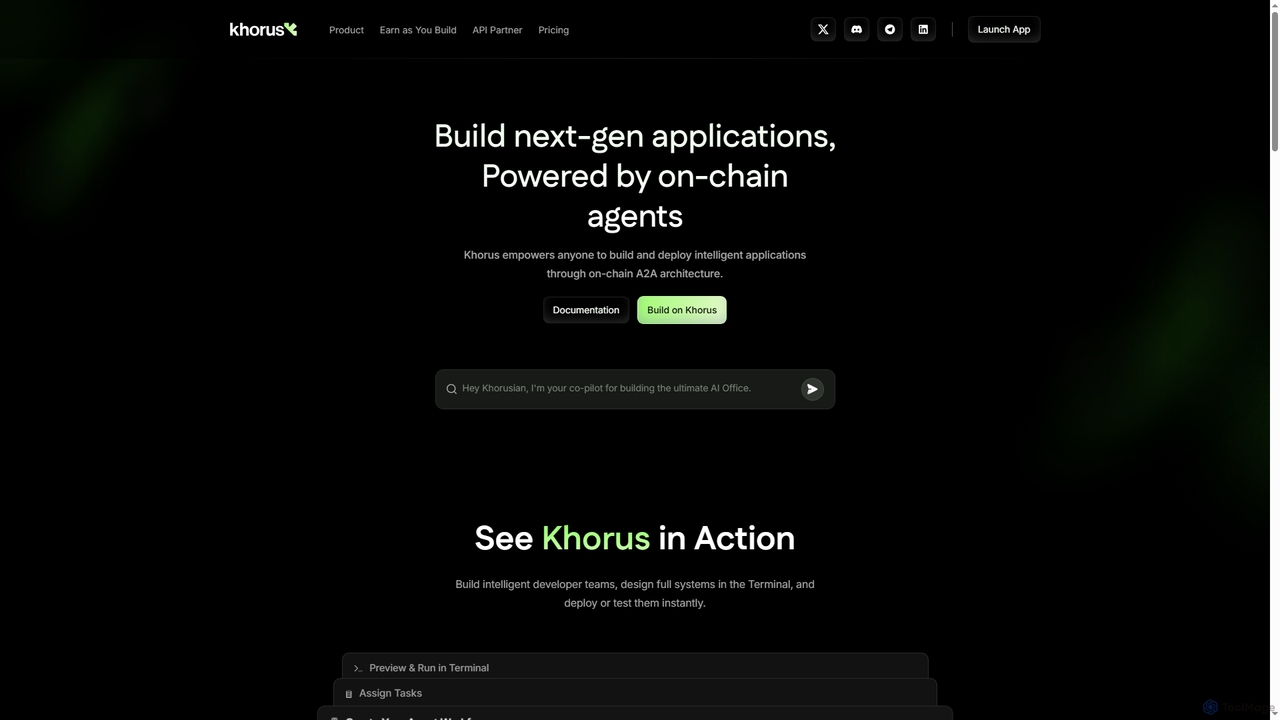
Khorus is a universal communication layer for intelligent systems, empowering developers to build and deploy next-gen AI applications through an on-chain Agent-to-Agent (A2A) architecture. It facilitates real-time collaboration, task delegation, and autonomous execution among AI agents and robotics, fostering a decentralized agent economy and marketplace for scalable modules and workflows.
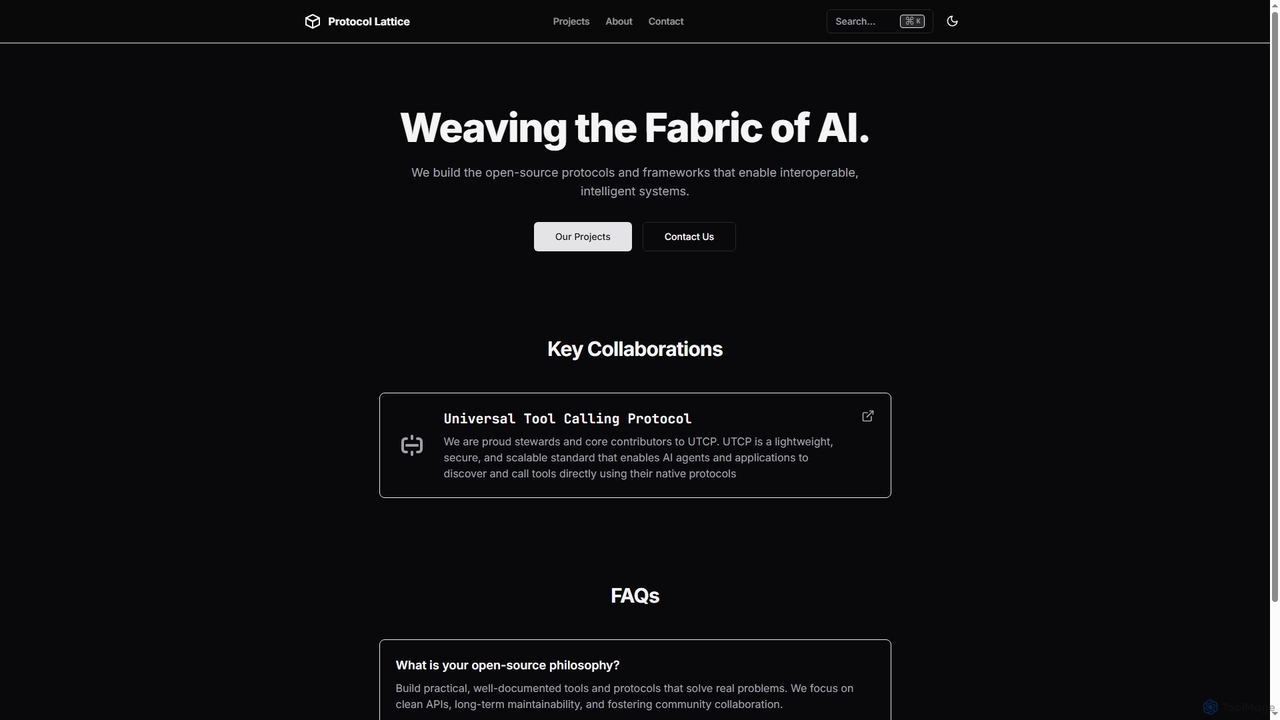
Protocol Lattice is an organization dedicated to building open-source protocols and frameworks that foster interoperable, intelligent AI systems. Their flagship project, the Universal Tool Calling Protocol (UTCP), provides a lightweight, secure, and scalable standard for AI agents and applications to discover and interact with tools using their native protocols. They emphasize practical, well-documented solutions and community collaboration.
Product overview
Khorus Product overview
Khorus is a universal communication layer for intelligent systems, empowering developers to build and deploy next-gen AI applications through an on-chain Agent-to-Agent (A2A) architecture. It facilitates real-time collaboration, task delegation, and autonomous execution among AI agents and robotics, fostering a decentralized agent economy and marketplace for scalable modules and workflows.
Protocol Lattice Product overview
Protocol Lattice is an organization dedicated to building open-source protocols and frameworks that foster interoperable, intelligent AI systems. Their flagship project, the Universal Tool Calling Protocol (UTCP), provides a lightweight, secure, and scalable standard for AI agents and applications to discover and interact with tools using their native protocols. They emphasize practical, well-documented solutions and community collaboration.
Detailed feature comparison
| Feature | Khorus | Protocol Lattice |
|---|---|---|
| Primary category | Agent Orchestration | Interoperability |
| Added | 2025-11-16 | 2025-11-02 |
| Pricing | Paid | Not verified |
| Official website | khorus.io | protocollattice.vercel.app |
| Product type | Website | Website |
| Performance data | ||
| User rating | Not verified | Not verified |
| Comments | 0 | 0 |
| Monthly visits | 4.4K | 5.1K |
| Monthly growth | Not verified | Not verified |
| Favorites | 108 | 97 |
| Details | View details | View details |
Khorus vs Protocol Lattice monthly traffic
Compare Khorus and Protocol Lattice by monthly reach, traffic trend, visit depth, top regions, and acquisition sources.
How to interpret the traffic data
In the Khorus vs Protocol Lattice monthly traffic comparison, Khorus currently shows 4.4K visits and Protocol Lattice shows 5.1K; Protocol Lattice has about 1.1 times the visible traffic of Khorus, an absolute difference of about 627 visits. This reflects visible reach, not feature quality or paid users.
Both values come from visits recorded inside ToolMage. They can indicate relative interest on this site, but not total website traffic or global market share.
Khorus monthly traffic:
Latest traffic
Protocol Lattice monthly traffic:
Latest traffic
Usage comparison
Compare the core capabilities of Khorus and Protocol Lattice
Khorus Core features
Protocol Lattice Core features
Use cases
Khorus Use cases
Protocol Lattice Use cases
Best suited roles
Khorus Best suited roles
Protocol Lattice Best suited roles
Khorus vs Protocol Lattice:In-depth comparison and selection guidance
First decide whether the products solve the same kind of need
This in-depth Khorus vs Protocol Lattice comparison uses only the product records, taxonomy, audience, traffic, and community signals available on this page. Khorus is primarily listed under “Agent Orchestration”, while Protocol Lattice is primarily listed under “Interoperability”, so the first decision is whether your actual task matches their recorded scope.
The structured fields currently show these decision-relevant differences: Primary category (Khorus: Agent Orchestration; Protocol Lattice: Interoperability); Pricing (Khorus: Paid; Protocol Lattice: Not disclosed); Monthly visits (Khorus: 4.4K; Protocol Lattice: 5.1K); Favorites (Khorus: 108; Protocol Lattice: 97); Website (Khorus: khorus.io; Protocol Lattice: protocollattice.vercel.app). These facts are more useful for selection than brand visibility alone.
What market visibility and monthly traffic mean
In the Khorus vs Protocol Lattice monthly traffic comparison, Khorus currently shows 4.4K visits and Protocol Lattice shows 5.1K; Protocol Lattice has about 1.1 times the visible traffic of Khorus, an absolute difference of about 627 visits. This reflects visible reach, not feature quality or paid users.
Both values come from visits recorded inside ToolMage. They can indicate relative interest on this site, but not total website traffic or global market share.
The current traffic scope is not sufficient for a reliable product ranking. Treat monthly visits as a market-interest signal, then decide using taxonomy, use cases, pricing, and a like-for-like trial rather than reading exposure as product capability.
Product positioning, use cases, and roles
Khorus and Protocol Lattice currently overlap in shared categories: Ai Development; shared tags: ai agents, developer tools, and intelligent systems; shared roles: AI Engineer and Software Developer. This can place both on the same shortlist, but it does not prove equal implementation, depth, or cost.
Khorus's unique categories/tags are Agent Orchestration, Decentralized Ai, Ai Agent Marketplace, Ai Robotics, A2A, agent orchestration, automation, and blockchain; Protocol Lattice's are Interoperability, Frameworks, AI infrastructure, AI interoperability, AI protocols, frameworks, open source, and scalable ai. These unique fields are the strongest differentiators: validate the product whose recorded scope matches the task instead of following traffic alone.
What ratings, comments, and favorites can tell you
Khorus has no verified rating, 0 comments, 108 favorites, and 112 likes;Protocol Lattice has no verified rating, 0 comments, 97 favorites, and 128 likes。
Neither product has enough rating or comment samples for a credible reputation ranking.
Selection guidance by actual need
When to evaluate Khorus first
Put Khorus on the priority trial list when the task aligns with “Agent Orchestration” and especially Agent Orchestration, Decentralized Ai, Ai Agent Marketplace, Ai Robotics, A2A, and agent orchestration, or the users include Blockchain Developer, IoT Developer, Product Manager, and Robotics Engineer. This follows recorded positioning and does not imply unlisted capabilities are absent.
Khorus also currently records: pricing is paid, product type is website, 4.4K on-site monthly views, no verified user rating. Verify any hard requirement around price, platform, or reach before trial, and do not let sparse review data substitute for testing.
When to evaluate Protocol Lattice first
Put Protocol Lattice on the priority trial list when the task aligns with “Interoperability” and especially Interoperability, Frameworks, AI infrastructure, AI interoperability, AI protocols, and frameworks, or the users include AI Researcher, Machine Learning Engineer, Solutions Architect, and Technical Lead. This follows recorded positioning and does not imply unlisted capabilities are absent.
Protocol Lattice also currently records: pricing is not verified, product type is website, 5.1K on-site monthly views, no verified user rating. Verify any hard requirement around price, platform, or reach before trial, and do not let sparse review data substitute for testing.
How to validate the recommendation before deciding
The available data describes positioning, public visibility, and community signals, but it cannot prove output quality, speed, integration effort, privacy, or long-term cost in your workflow. Before deciding, run the same representative tasks in Khorus and Protocol Lattice, then record completion time, accuracy, manual corrections, and the real paid threshold. A like-for-like trial turns this comparison into a defensible adoption decision.
Comparison FAQ
How should I choose between Khorus and Protocol Lattice?
Where does this comparison data come from?
What do unknown fields mean?
Related AI tools

Metorial
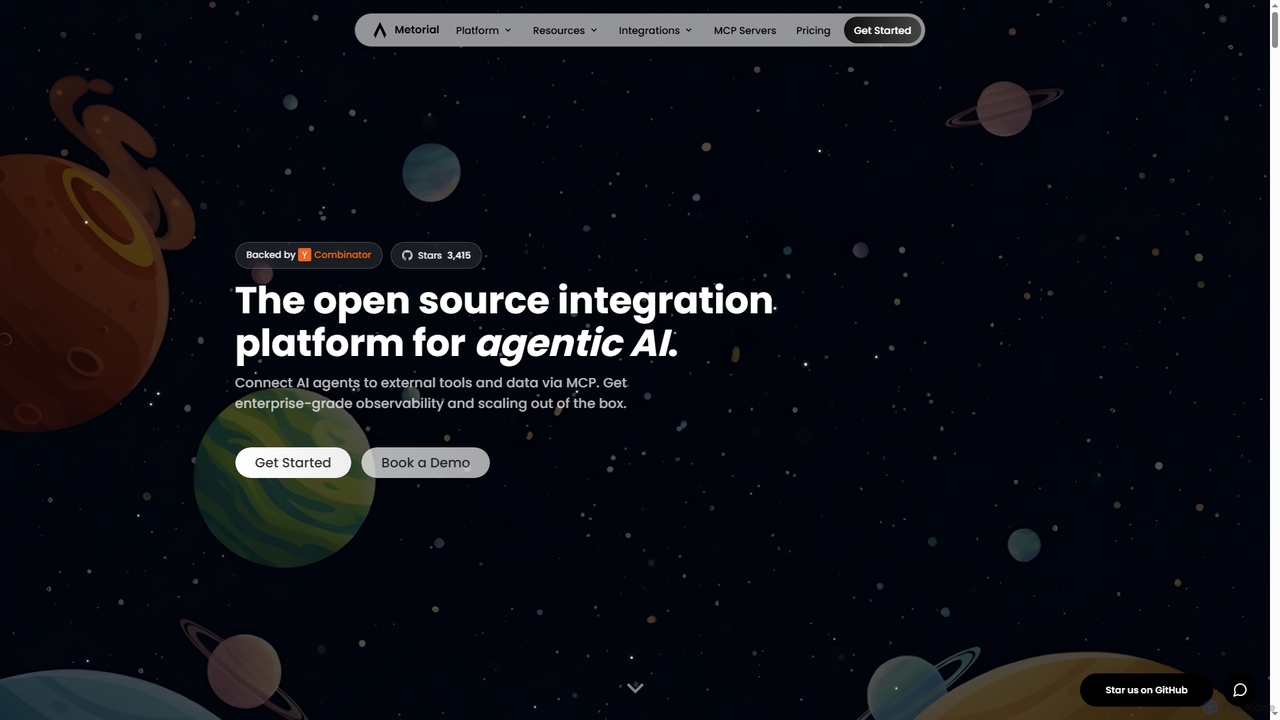
Metorial is an integration platform for AI agents, enabling developers to quickly build, deploy, and monitor powerful agentic AI applications. It provides seamless connections to hundreds of tools, data sources, and APIs via its serverless Model Context Protocol (MCP) platform, offering robust SDKs, observability, and enterprise-grade security for scalable AI solutions.
Agentic Ai
Nexlayer
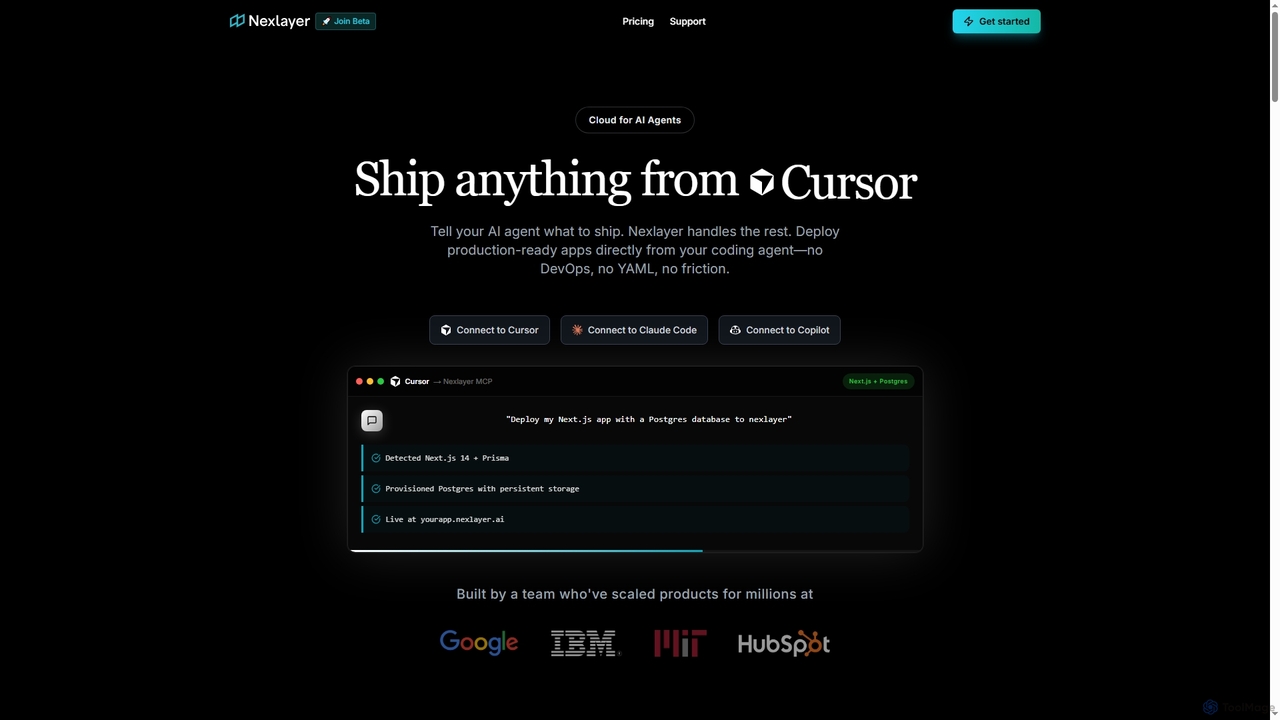
Nexlayer is the first agent-native cloud platform designed to empower AI coding agents to deploy production-ready applications swiftly. It automates complex infrastructure, enabling developers and founders to ship full-stack apps, APIs, and databases in minutes without DevOps overhead.
Application Development
Skald
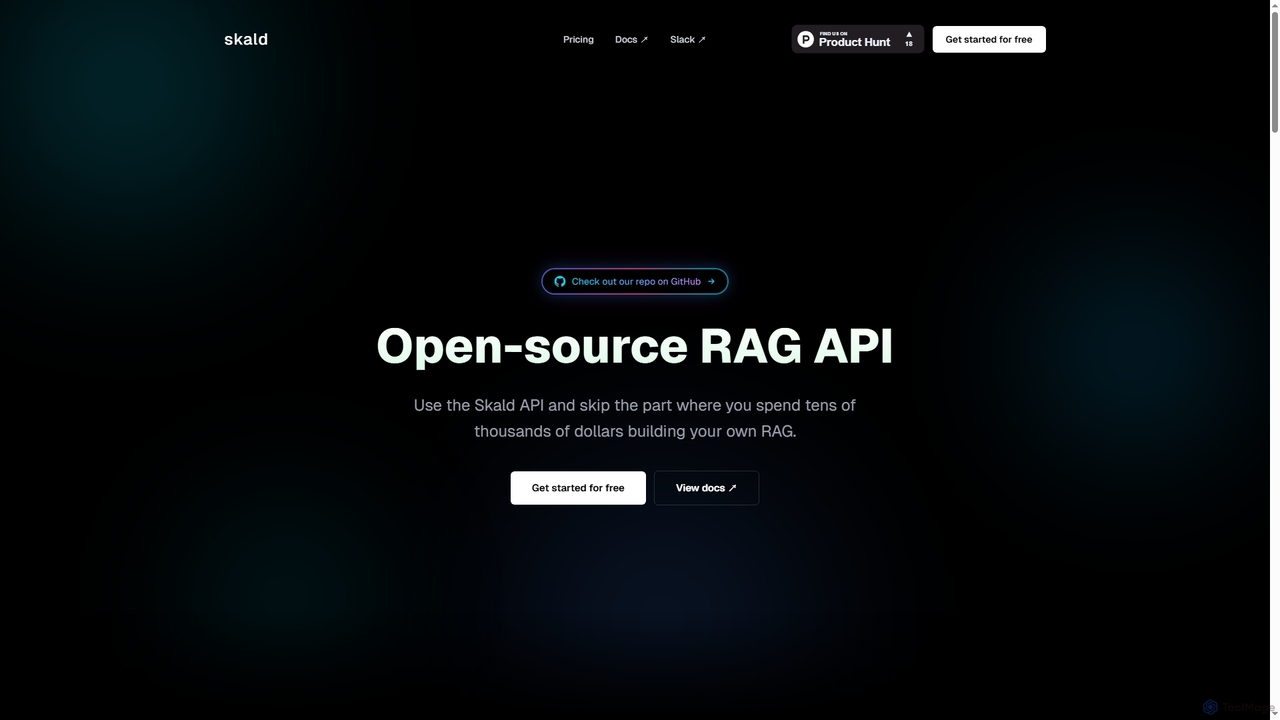
Skald is an open-source RAG API designed for developers to quickly build AI agents without the complexity of managing RAG infrastructure. It simplifies knowledge storage, context management, and semantic search, offering a powerful solution for integrating long-term memory into AI applications.
Rag
Cirtus AI
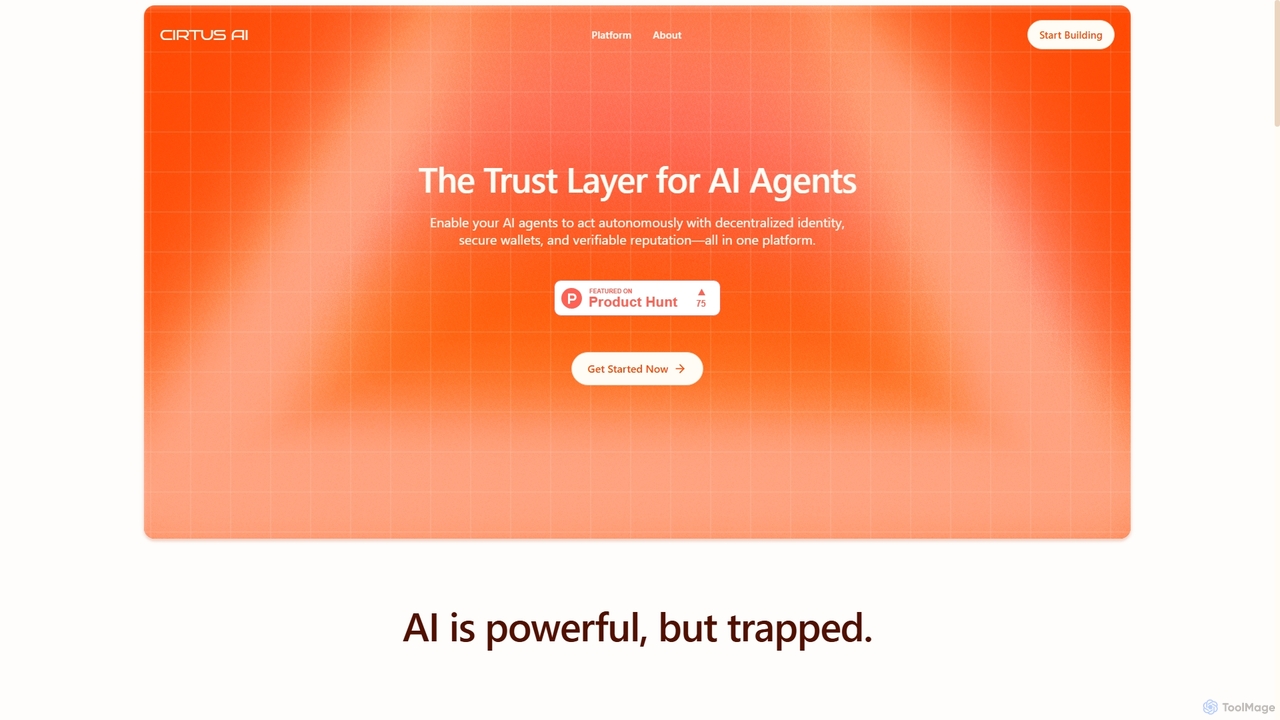
Cirtus AI is the trust layer for autonomous AI agents, providing decentralized identity, secure isolated wallets, and verifiable on-chain reputation. It empowers AI agents to act autonomously and securely, mitigating risks associated with direct access to sensitive assets and data, fostering a new era of trusted AI interactions.
Agent Frameworks
Lightchain
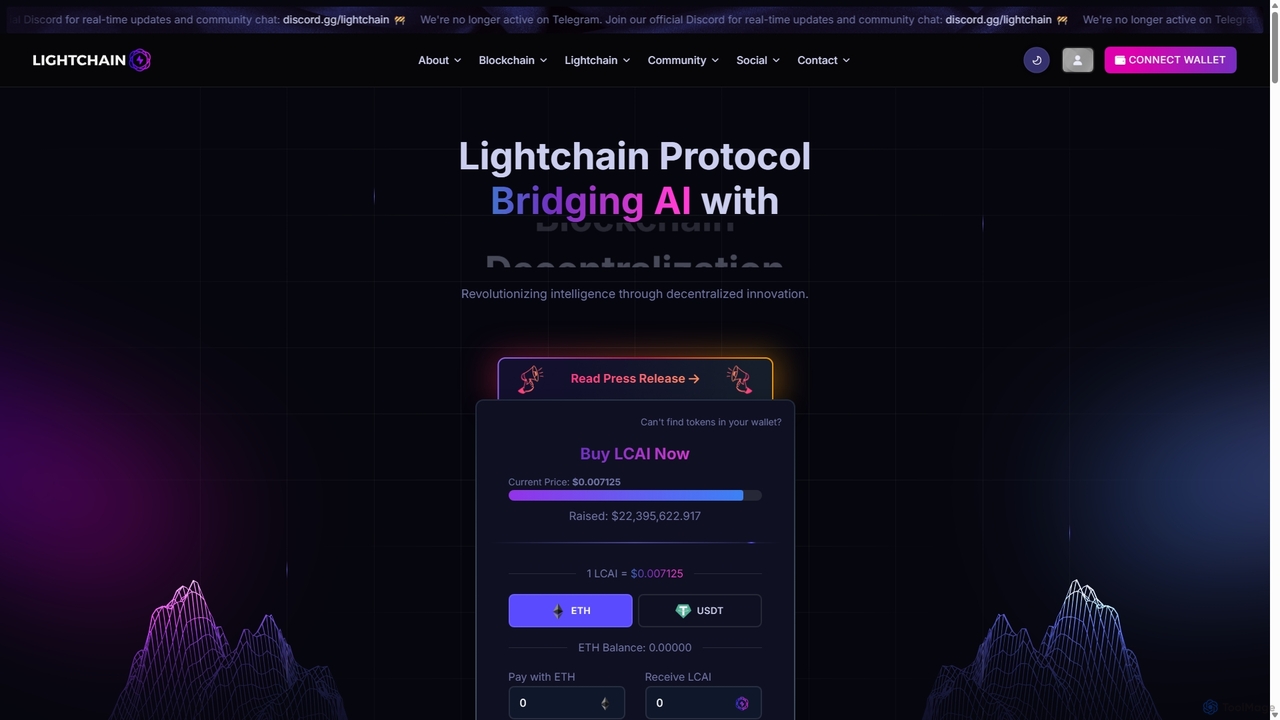
Lightchain is a revolutionary Layer 1 blockchain protocol that integrates Artificial Intelligence at its core. It features a novel Proof of Intelligence (PoI) consensus mechanism and an AI Virtual Machine (AIVM), designed to power intelligent decentralized applications (dApps) and transform computational work into valuable AI development.
Layer 1
CrewAI
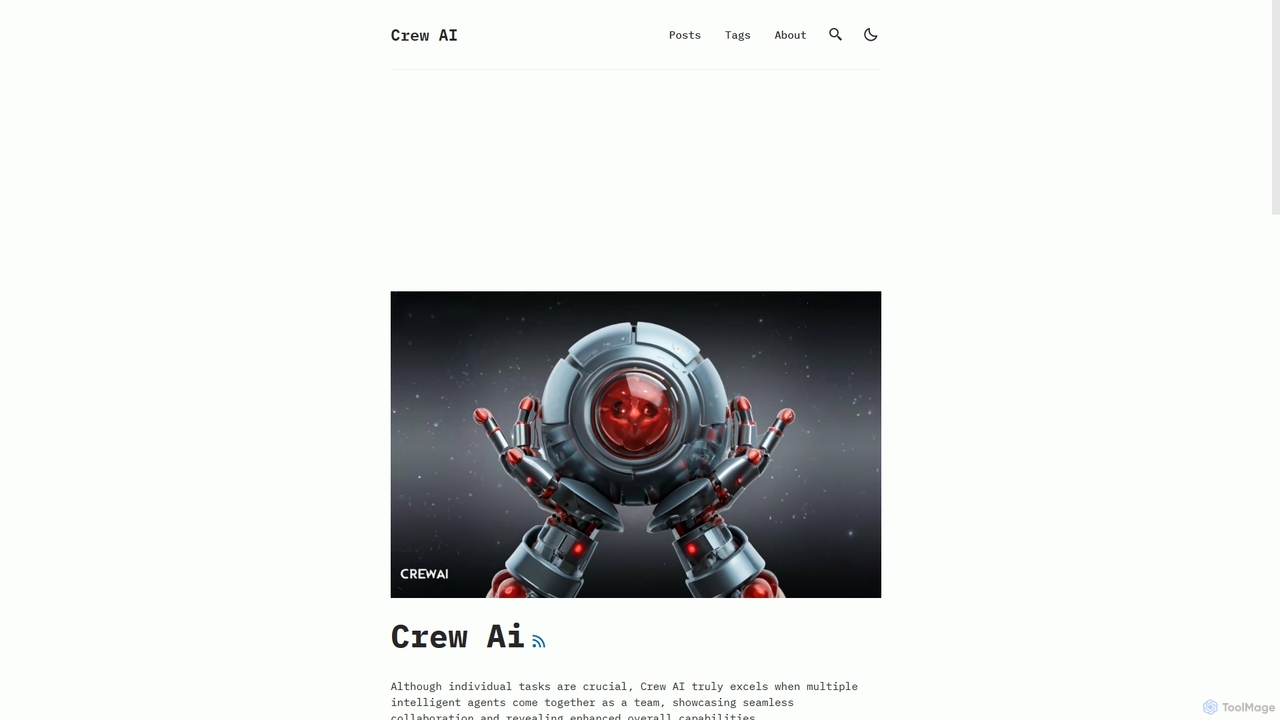
CrewAI is an advanced open-source framework for orchestrating role-playing, autonomous AI agents. By fostering collaborative intelligence, it enables agents with distinct roles and tools to work together seamlessly to solve complex tasks. This multi-agent system simplifies the development of sophisticated applications, from automated content creation to complex data analysis, by managing agent interactions, task delegation, and workflow processes.
Agent
Composio
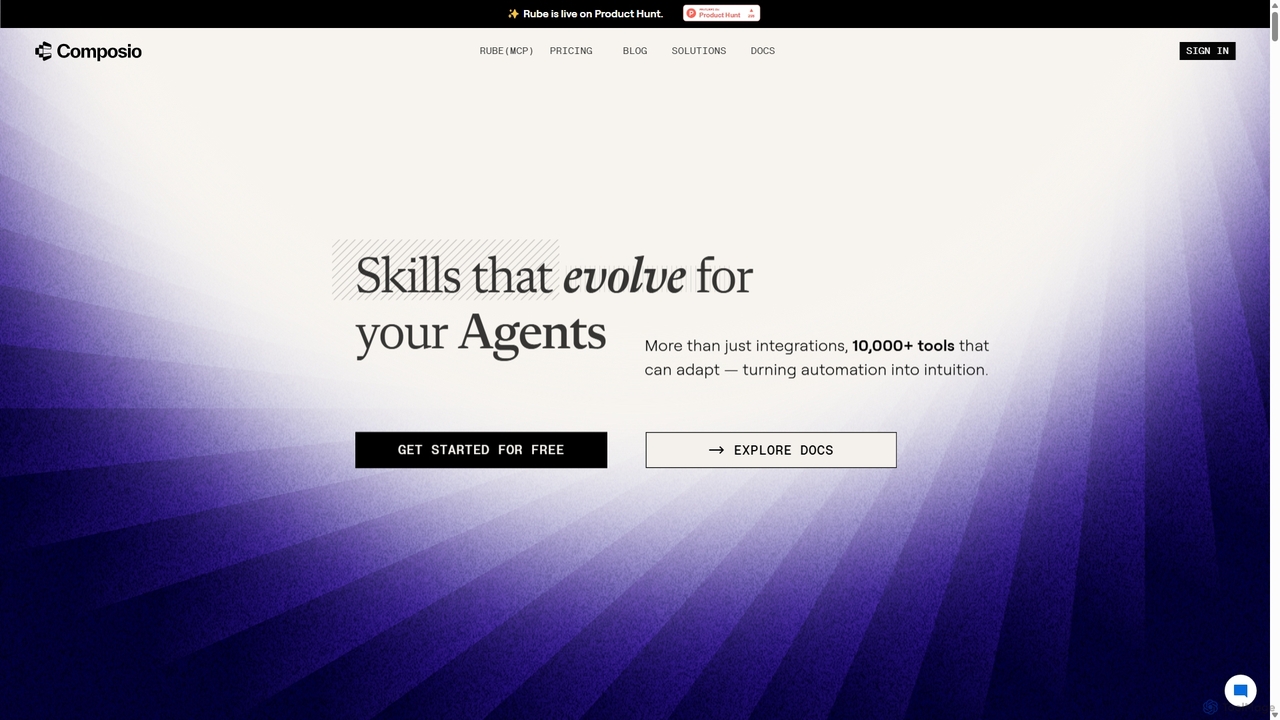
Composio is a developer platform that acts as a "skill layer" for AI agents. It enables developers to seamlessly connect their AI agents to over 10,000 tools and APIs, handling complex tasks like authentication, execution, and scaling. This allows developers to build powerful, action-oriented AI applications much faster by focusing on agent logic rather than integration plumbing.
Agent Tooling
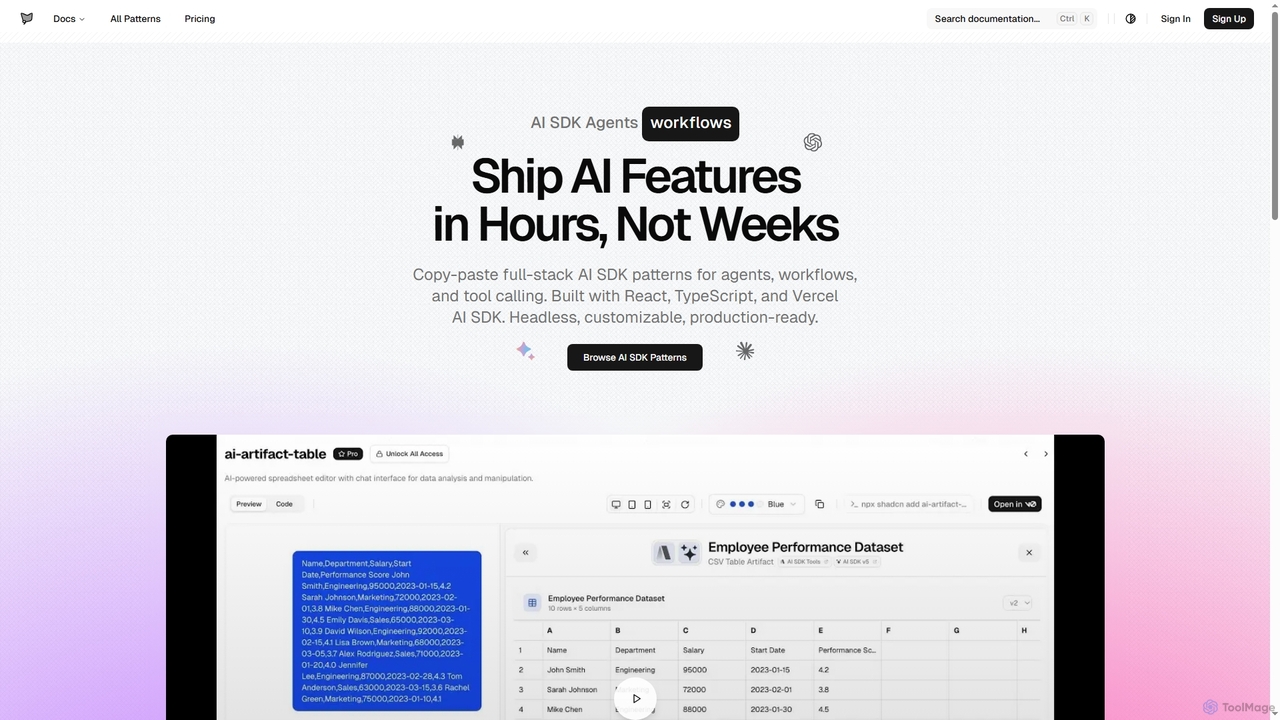
AI SDK Agents
AI SDK Agents provides production-ready React components for rapidly building AI applications. Leverage copy-paste patterns for agents, workflows, tool calling, and streaming responses, built with React, TypeScript, and Vercel AI SDK. Accelerate your AI feature development from weeks to hours, ensuring customizable and headless integration into your projects.
Ui Components
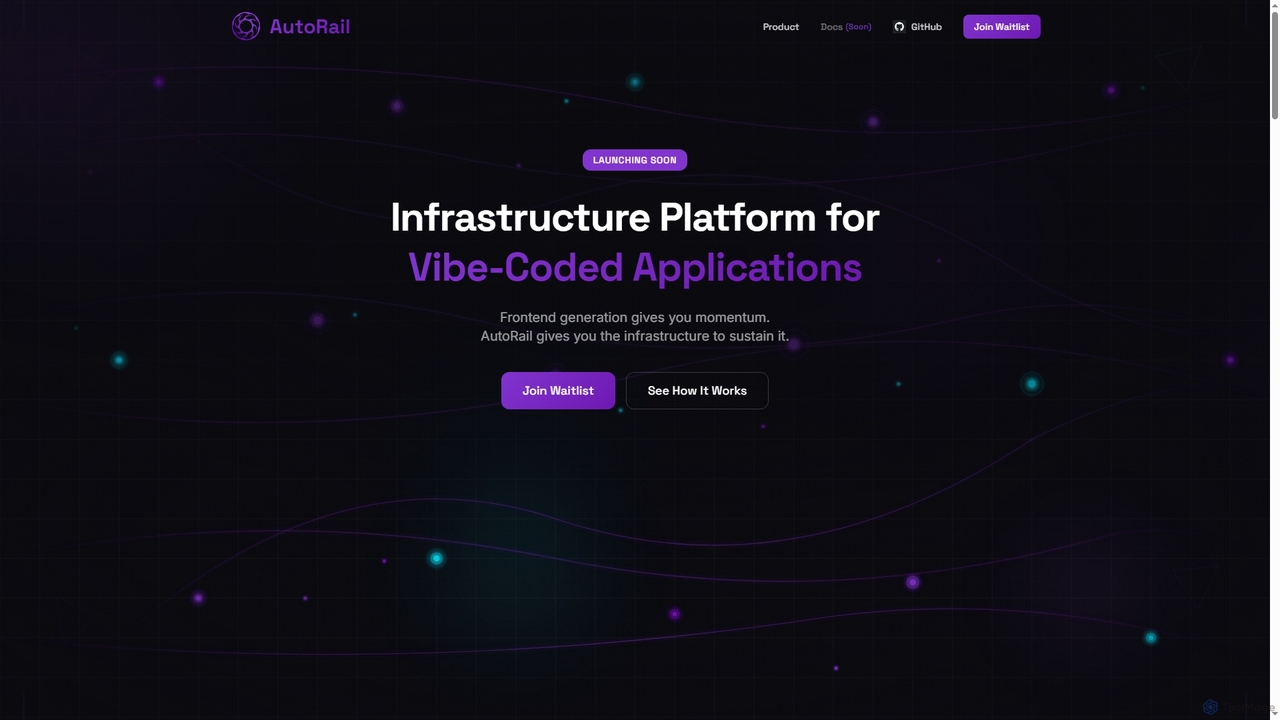
AutoRail
AutoRail is an infrastructure platform designed to transform "vibe-coded" prototypes into production-ready applications. It automatically provisions essential backend primitives like stateful memory, workflow orchestration, and auto-scaling, bridging the critical gap between rapid frontend development and robust, scalable production systems without manual configuration.
Ai Infrastructure
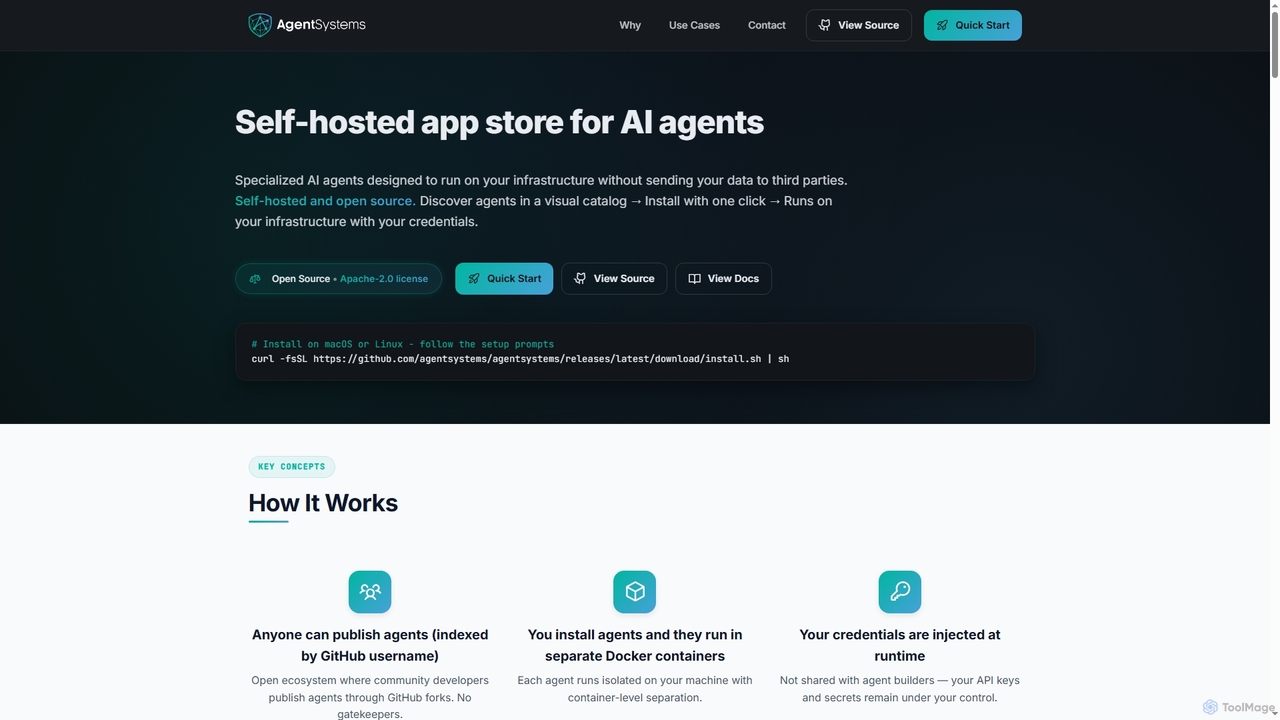
AgentSystems
An open-source, self-hosted platform for discovering, deploying, and managing specialized AI agents on your own infrastructure, ensuring complete data privacy and control.
Self Hosted
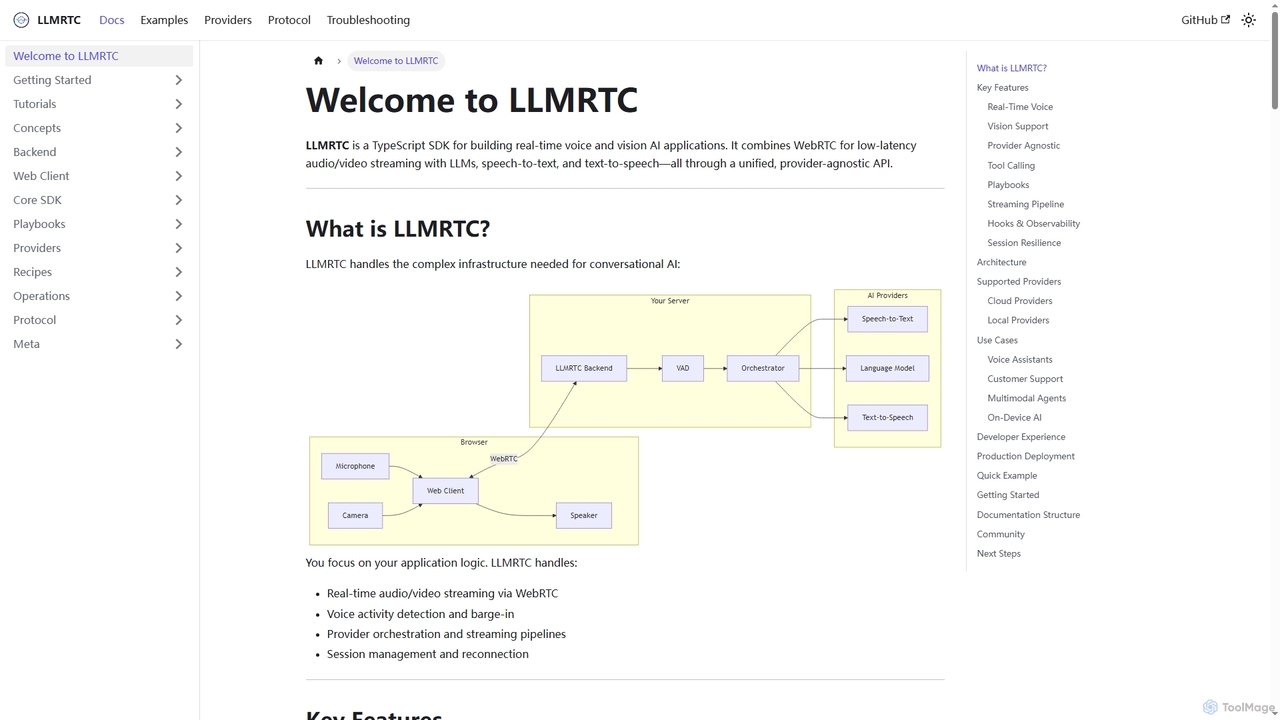
LLMRTC
LLMRTC is a TypeScript SDK for building real-time voice and vision AI applications. It integrates WebRTC for low-latency audio/video streaming with LLMs, speech-to-text, and text-to-speech technologies through a unified, provider-agnostic API. Developers can focus on application logic while LLMRTC handles complex conversational AI infrastructure.
Conversational Ai
Symphony
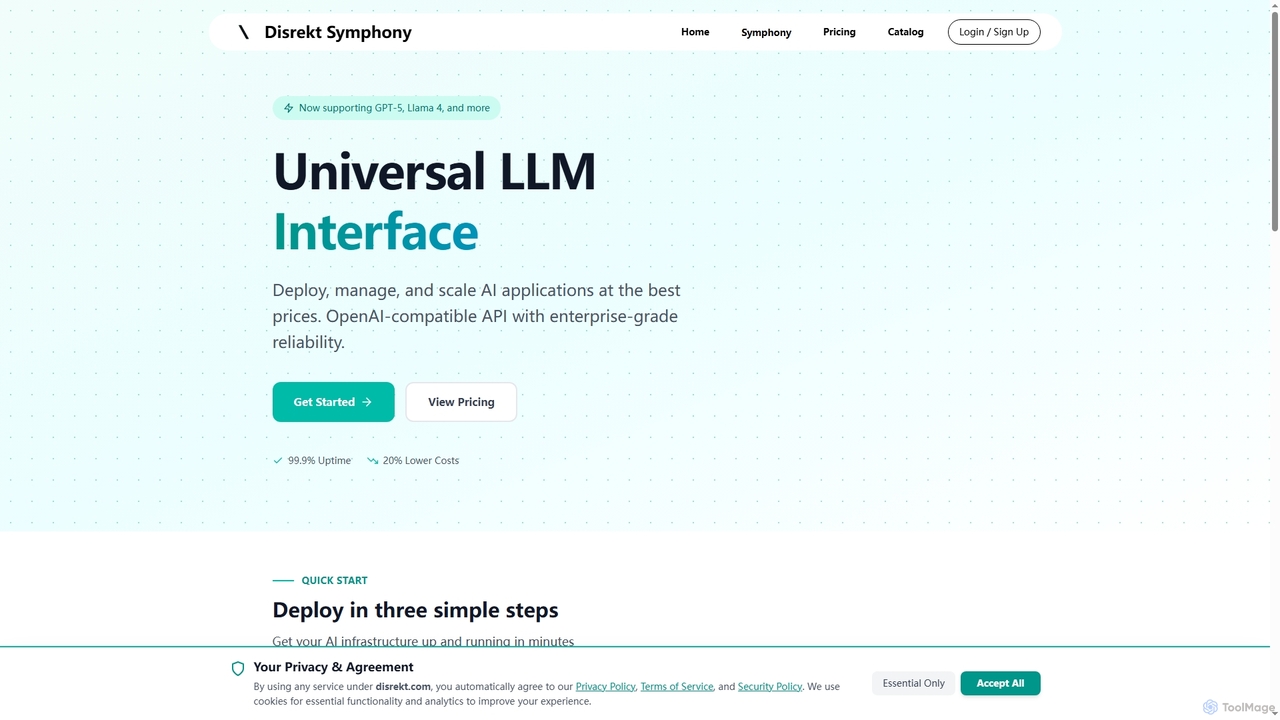
Symphony is a universal LLM interface providing an OpenAI-compatible API for deploying, managing, and scaling AI applications. It offers enterprise-grade reliability, up to 20% lower costs, and supports over 100 major AI models like GPT-5 and Llama 4, making it an ideal solution for developers and enterprises seeking efficient and robust AI infrastructure.
Api Management
Agentfield
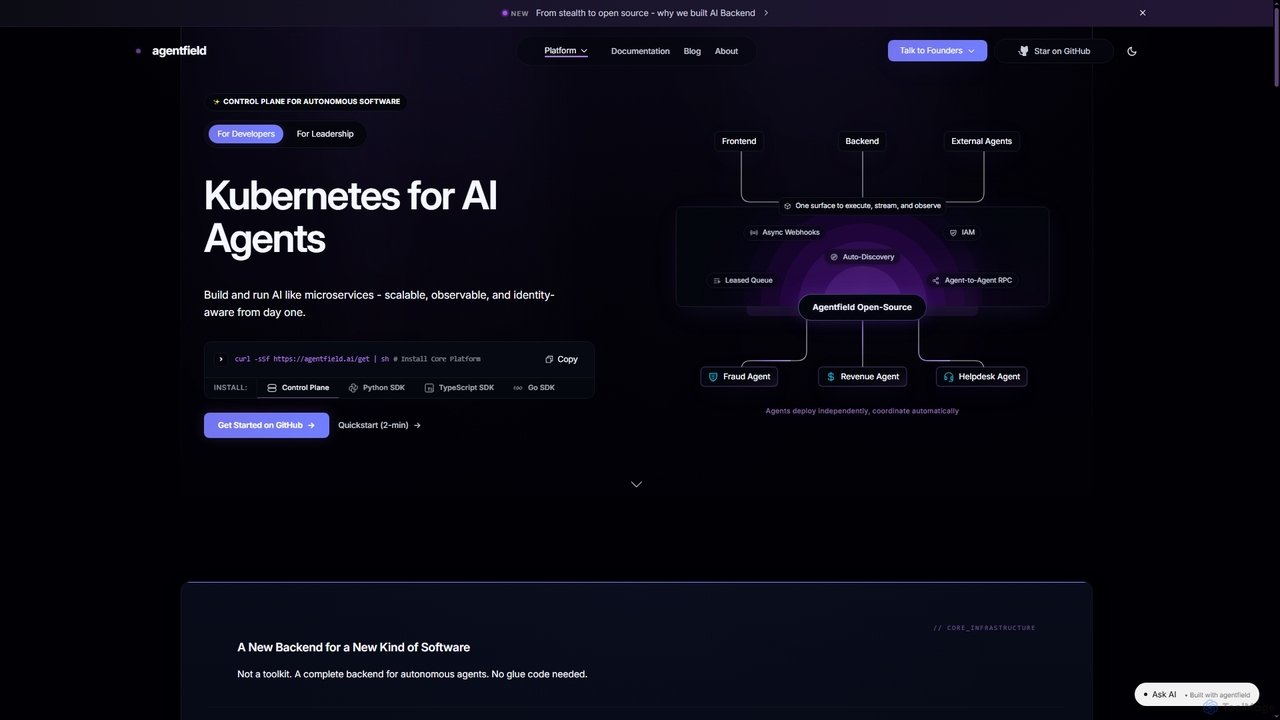
Agentfield is an open-source control plane designed for building and running autonomous AI agents as scalable, observable, and identity-aware microservices. It provides Kubernetes-like orchestration, cryptographic identity management, and production-ready infrastructure to bridge the gap between AI prototypes and robust, trustworthy production deployments.
Orchestration
Alloy Automation
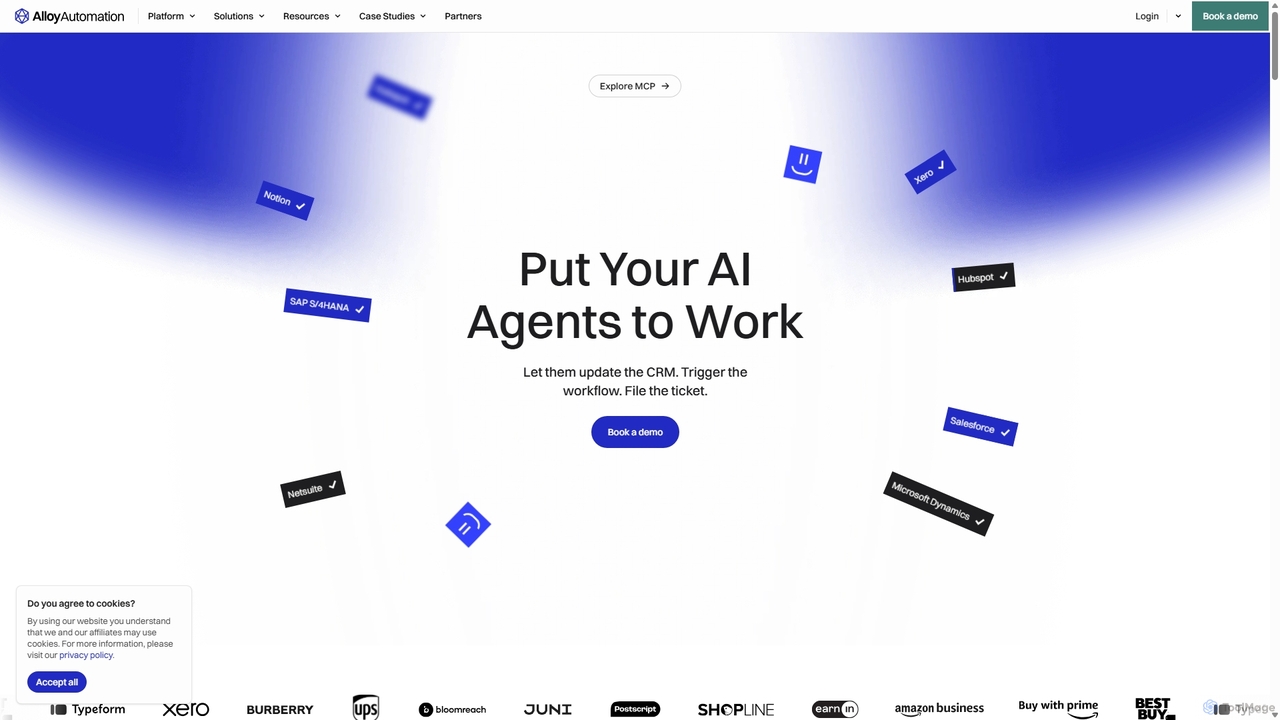
A powerful integration infrastructure for the AI era. Alloy Automation provides an agentic toolkit, embedded iPaaS, and a Connectivity API, enabling AI agents to take real-world actions and SaaS companies to rapidly build and scale product integrations.
Agent Tooling
Superglue
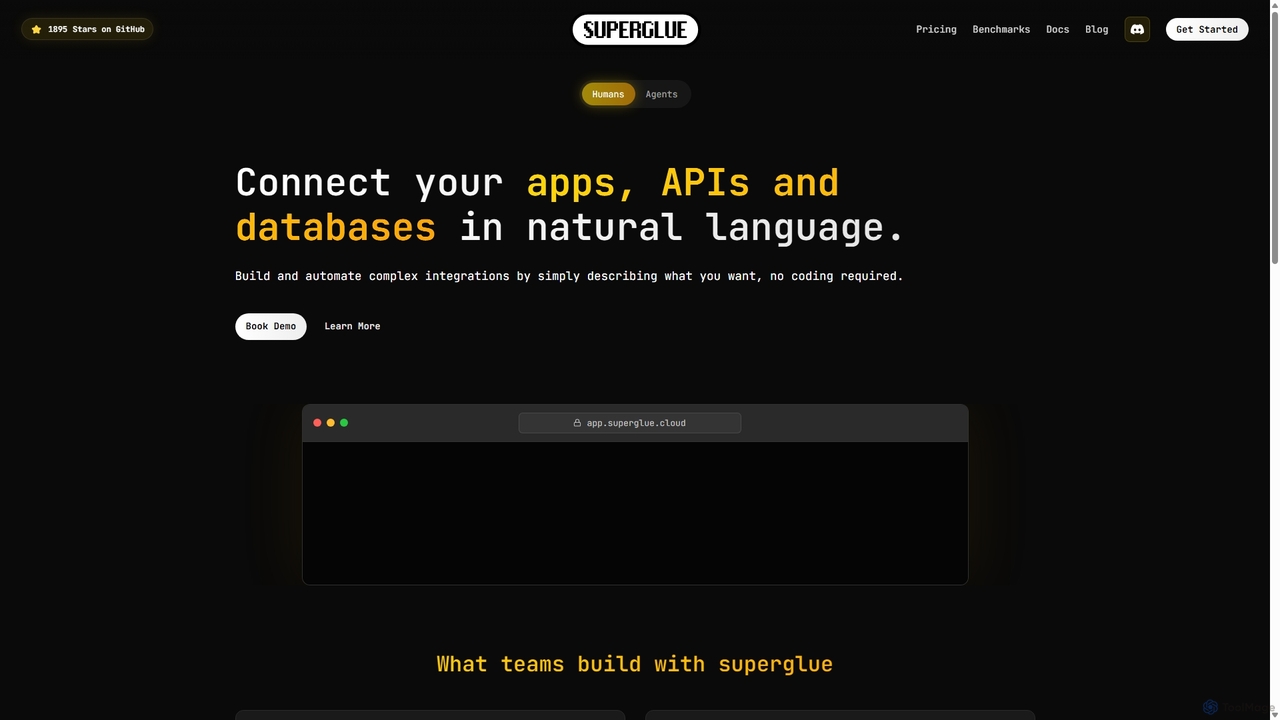
Superglue is an AI-powered platform that translates natural language intent into reliable API execution. It enables developers and teams to automate ETL pipelines, build API connectors instantly, migrate data, and create complex workflows using a chat interface or code. It's designed to empower AI agents with dynamic, production-ready tools for any API.
Tooling