Unsloth is a high-performance open-source library designed to dramatically accelerate the fine-tuning of Large Language Models (LLMs). It enables training up to 30x faster while using up to 90% less memory, making advanced AI model customization accessible on standard hardware.
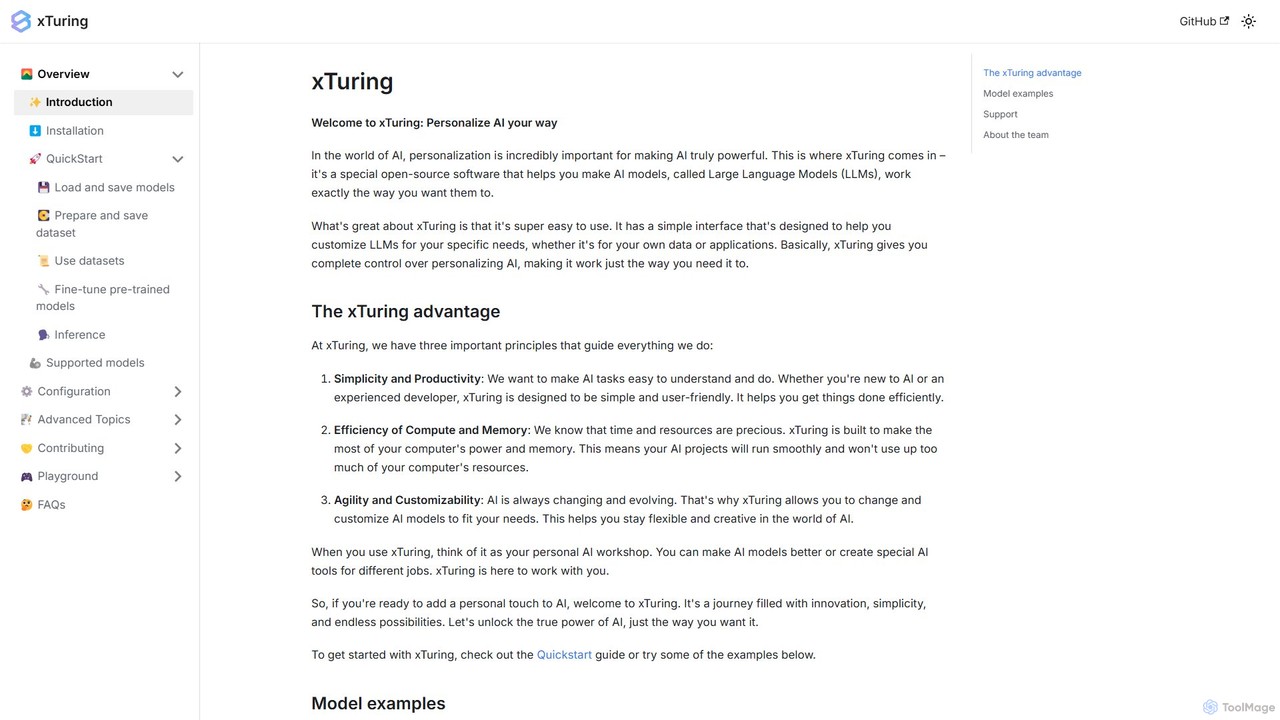
xTuring is an open-source Python library designed to simplify the process of building, fine-tuning, and controlling Large Language Models (LLMs). It provides a user-friendly interface for developers and researchers to personalize AI models for specific data and applications with high efficiency and customizability.
Product overview
Unsloth Product overview
Unsloth is a high-performance open-source library designed to dramatically accelerate the fine-tuning of Large Language Models (LLMs). It enables training up to 30x faster while using up to 90% less memory, making advanced AI model customization accessible on standard hardware.
xTuring Product overview
xTuring is an open-source Python library designed to simplify the process of building, fine-tuning, and controlling Large Language Models (LLMs). It provides a user-friendly interface for developers and researchers to personalize AI models for specific data and applications with high efficiency and customizability.
Detailed feature comparison
| Feature | Unsloth | xTuring |
|---|---|---|
| Primary category | Machine Learning | Model Training |
| Added | 2025-08-06 | 2025-08-03 |
| Pricing | Freemium | Free |
| Official website | unsloth.ai | xturing.stochastic.ai |
| Product type | Website | Website |
| Performance data | ||
| User rating | Not verified | Not verified |
| Comments | 0 | 0 |
| Monthly visits | 1.1M | 3.5K |
| Monthly growth | -31.3% | Not verified |
| Favorites | 89 | 140 |
| Details | View details | View details |
Unsloth vs xTuring monthly traffic
Compare Unsloth and xTuring by monthly reach, traffic trend, visit depth, top regions, and acquisition sources.
How to interpret the traffic data
In the Unsloth vs xTuring monthly traffic comparison, Unsloth currently shows 1.1M visits and xTuring shows 3.5K; Unsloth has about 311.7 times the visible traffic of xTuring, an absolute difference of about 1.1M visits. This reflects visible reach, not feature quality or paid users.
Only Unsloth has complete third-party traffic details; xTuring uses visits recorded inside ToolMage. These scopes cannot estimate market share directly, and on-site views should not be treated as the product’s total website traffic.
Unsloth monthly traffic:
Latest traffic
Monthly traffic trend
- 2025/9: 426.2K Monthly visits
- 2026/1: 574.8K Monthly visits
- 2026/2: 698.3K Monthly visits
- 2026/3: 1.3M Monthly visits
- 2026/4: 1.6M Monthly visits
- 2026/5: 1.1M Monthly visits
Top regions
Top 5 countries/regions
| Country/region | Percentage | Traffic |
|---|---|---|
| 🇨🇳China | 43.4% | 467.8K |
| 🇺🇸United States | 30.21% | 325.7K |
| 🇮🇳India | 11.41% | 123K |
| 🇰🇷Korea, Republic of | 7.88% | 84.9K |
| 🇩🇪Germany | 7.1% | 76.5K |
Traffic sources
| Source type | Percentage | Traffic |
|---|---|---|
| Direct | 64.94% | 700K |
| Referral | 34.01% | 366.6K |
| 1.05% | 11.3K |
Search keywords
xTuring monthly traffic:
Latest traffic
Usage comparison
Compare the core capabilities of Unsloth and xTuring
Unsloth Core features
xTuring Core features
Use cases
Unsloth Use cases
xTuring Use cases
Unsloth vs xTuring:In-depth comparison and selection guidance
First decide whether the products solve the same kind of need
This in-depth Unsloth vs xTuring comparison uses only the product records, taxonomy, audience, traffic, and community signals available on this page. Unsloth is primarily listed under “Machine Learning”, while xTuring is primarily listed under “Model Training”, so the first decision is whether your actual task matches their recorded scope.
The structured fields currently show these decision-relevant differences: Primary category (Unsloth: Machine Learning; xTuring: Model Training); Pricing (Unsloth: Freemium; xTuring: Free); Monthly visits (Unsloth: 1.1M; xTuring: 3.5K); Favorites (Unsloth: 89; xTuring: 140); Website (Unsloth: unsloth.ai; xTuring: xturing.stochastic.ai). These facts are more useful for selection than brand visibility alone.
What market visibility and monthly traffic mean
In the Unsloth vs xTuring monthly traffic comparison, Unsloth currently shows 1.1M visits and xTuring shows 3.5K; Unsloth has about 311.7 times the visible traffic of xTuring, an absolute difference of about 1.1M visits. This reflects visible reach, not feature quality or paid users.
Only Unsloth has complete third-party traffic details; xTuring uses visits recorded inside ToolMage. These scopes cannot estimate market share directly, and on-site views should not be treated as the product’s total website traffic.
The current traffic scope is not sufficient for a reliable product ranking. Treat monthly visits as a market-interest signal, then decide using taxonomy, use cases, pricing, and a like-for-like trial rather than reading exposure as product capability.
Product positioning, use cases, and roles
Unsloth and xTuring currently overlap in shared categories: Machine Learning and Code Assistant; shared tags: fine-tuning, llm, lora, machine learning, model training, and open source. This can place both on the same shortlist, but it does not prove equal implementation, depth, or cost.
Unsloth's unique categories/tags are Cloud Computing, AI developer, deep learning, GPU optimization, Llama, memory efficiency, Mistral, and performance; xTuring's are Model Training, AI personalization, developer tools, natural language processing, python, and quantization. These unique fields are the strongest differentiators: validate the product whose recorded scope matches the task instead of following traffic alone.
What ratings, comments, and favorites can tell you
Unsloth has no verified rating, 0 comments, 89 favorites, and 95 likes;xTuring has no verified rating, 0 comments, 140 favorites, and 143 likes。
Neither product has enough rating or comment samples for a credible reputation ranking.
Selection guidance by actual need
When to evaluate Unsloth first
Put Unsloth on the priority trial list when the task aligns with “Machine Learning” and especially Cloud Computing, AI developer, deep learning, GPU optimization, Llama, and memory efficiency. This follows recorded positioning and does not imply unlisted capabilities are absent.
Unsloth also currently records: pricing is freemium, product type is website, 1.1M verified monthly visits, no verified user rating. Verify any hard requirement around price, platform, or reach before trial, and do not let sparse review data substitute for testing.
When to evaluate xTuring first
Put xTuring on the priority trial list when the task aligns with “Model Training” and especially Model Training, AI personalization, developer tools, natural language processing, python, and quantization. This follows recorded positioning and does not imply unlisted capabilities are absent.
xTuring also currently records: pricing is free, product type is website, 3.5K on-site monthly views, no verified user rating. Verify any hard requirement around price, platform, or reach before trial, and do not let sparse review data substitute for testing.
How to validate the recommendation before deciding
The available data describes positioning, public visibility, and community signals, but it cannot prove output quality, speed, integration effort, privacy, or long-term cost in your workflow. Before deciding, run the same representative tasks in Unsloth and xTuring, then record completion time, accuracy, manual corrections, and the real paid threshold. A like-for-like trial turns this comparison into a defensible adoption decision.
Comparison FAQ
How should I choose between Unsloth and xTuring?
Where does this comparison data come from?
What do unknown fields mean?
Related AI tools

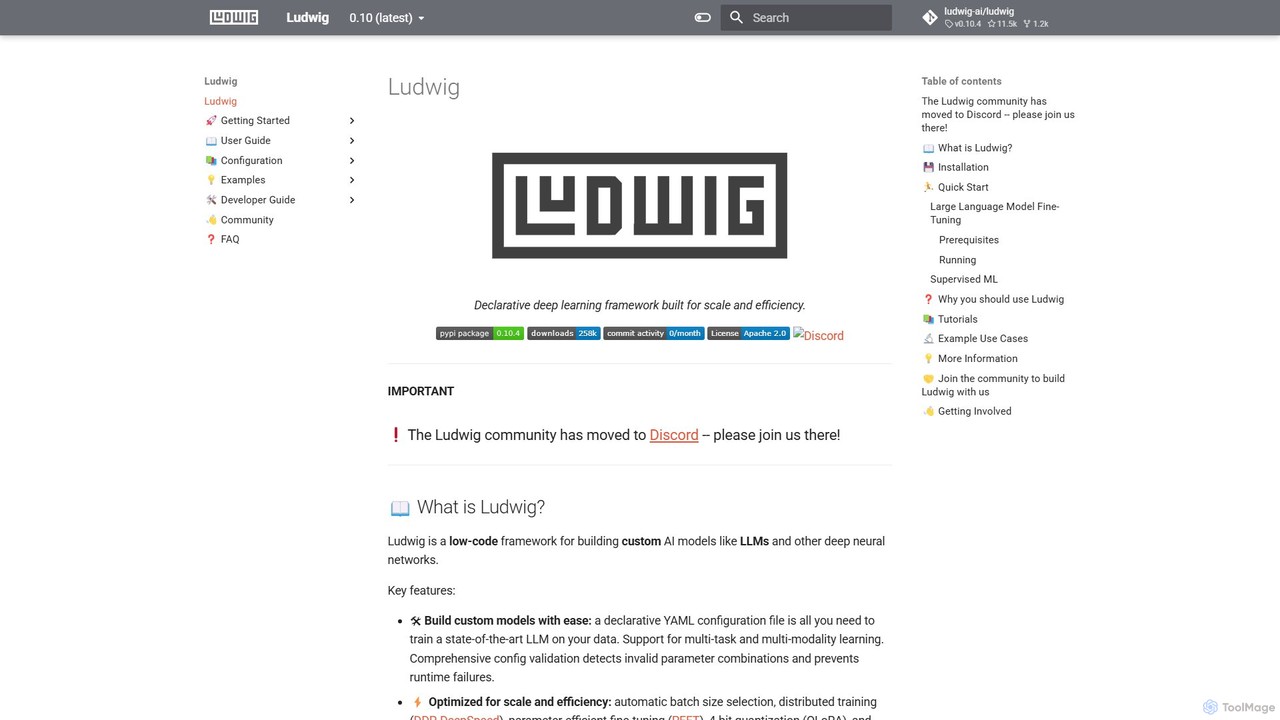
Ludwig
Ludwig is a low-code, open-source deep learning framework that simplifies building and training custom AI models. Using declarative YAML configurations, users can easily create complex models, including LLMs, for multi-modal and multi-task learning without extensive boilerplate code. It's designed for scalability, production-readiness, and integrates with popular tools like HuggingFace and MLFlow.
Model Training
hyperficient
hyperficient is an open-source AI tool for developers and ML engineers that automates the search for the most efficient fine-tuning strategies for neural networks. It significantly reduces computational costs, GPU time, and manual effort, enabling optimal model performance on limited resources.
Libraries
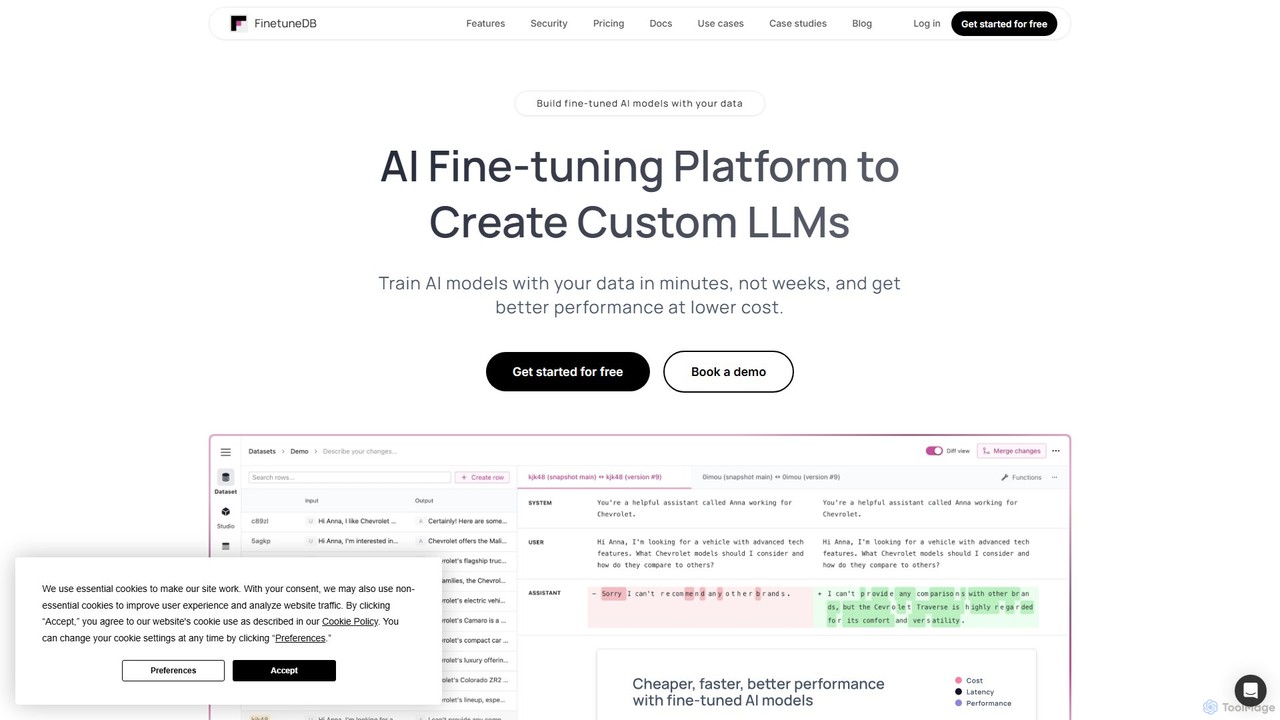
FinetuneDB
FinetuneDB is an all-in-one AI fine-tuning platform for developers. It simplifies the entire workflow of creating custom Large Language Models (LLMs), from building high-quality datasets and fine-tuning models like Llama 3 and GPT-4o mini, to deployment and continuous evaluation on a single, secure platform.
Llmops
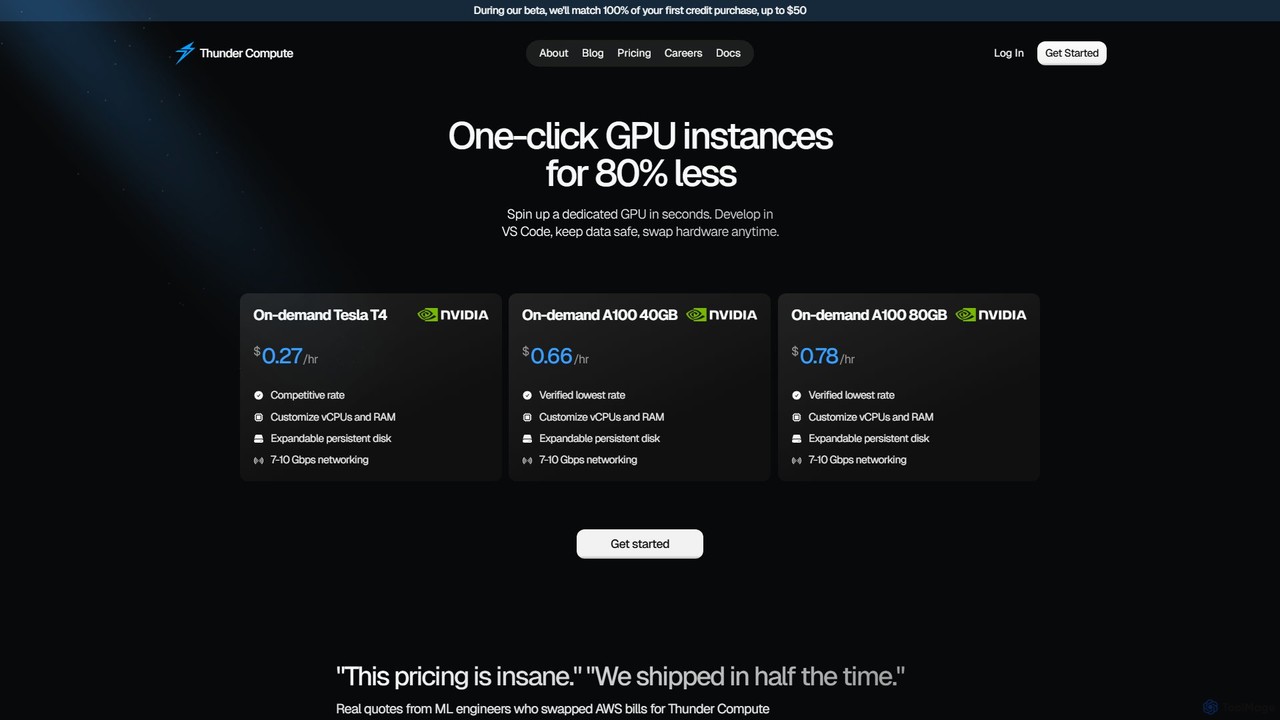
thundercompute
Thunder Compute offers an ultra-low-cost GPU cloud platform designed for AI and machine learning developers. It provides on-demand GPU instances like the NVIDIA A100 and T4 at prices up to 80% lower than major cloud providers. With features like one-click setup, VS Code integration, and seamless scalability, it dramatically simplifies the development workflow, from prototyping to production, allowing developers to focus on building models rather than managing infrastructure.
Machine Learning
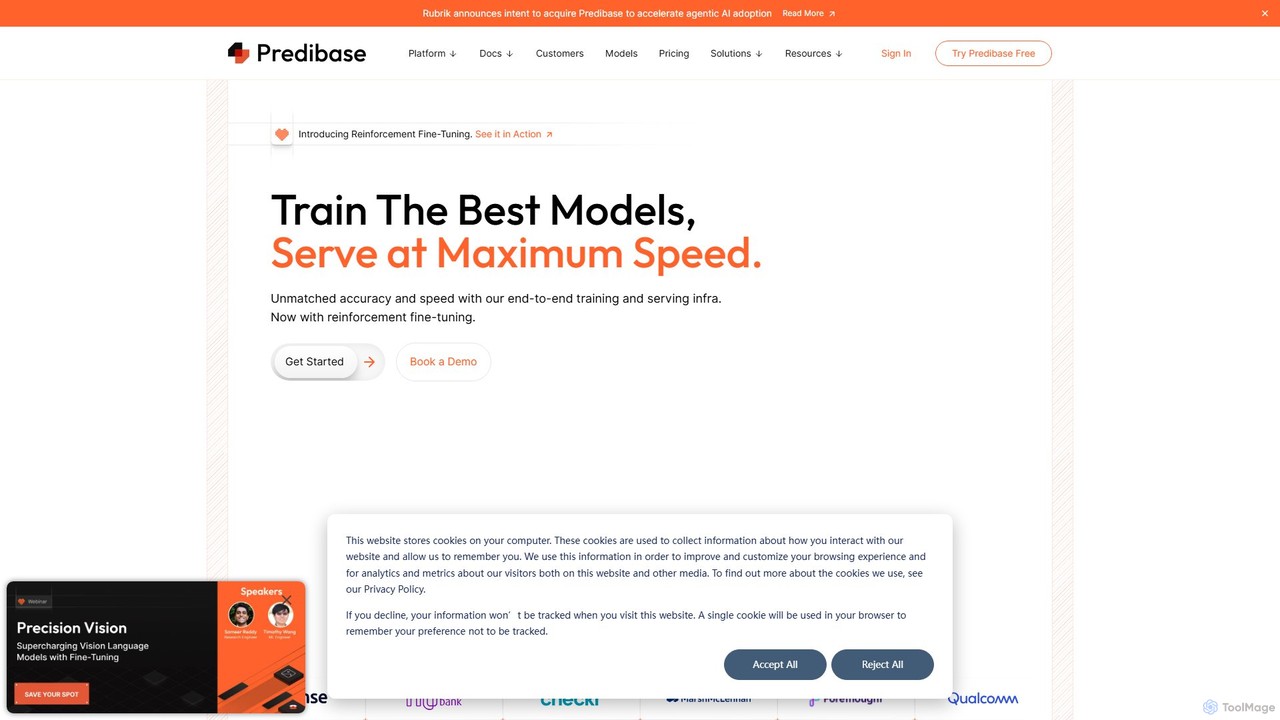
Predibase
Predibase is an end-to-end developer platform for efficiently fine-tuning and serving open-source Large Language Models (LLMs). It enables users to build custom AI models that outperform large proprietary models like GPT-4 on specific tasks, while significantly reducing costs and inference latency. The platform features advanced techniques like Reinforcement Fine-Tuning (RFT) and LoRAX for high-speed, multi-model serving.
Machine Learning
Falcon LLM
Falcon LLM is a family of powerful, open-source, and open-access large language models developed by the Technology Innovation Institute (TII). Known for state-of-the-art performance, scalability, and multimodality, Falcon models range from efficient edge-deployable versions to massive 180B parameter models, aiming to democratize access to advanced AI for developers, researchers, and enterprises worldwide.
Machine Learning
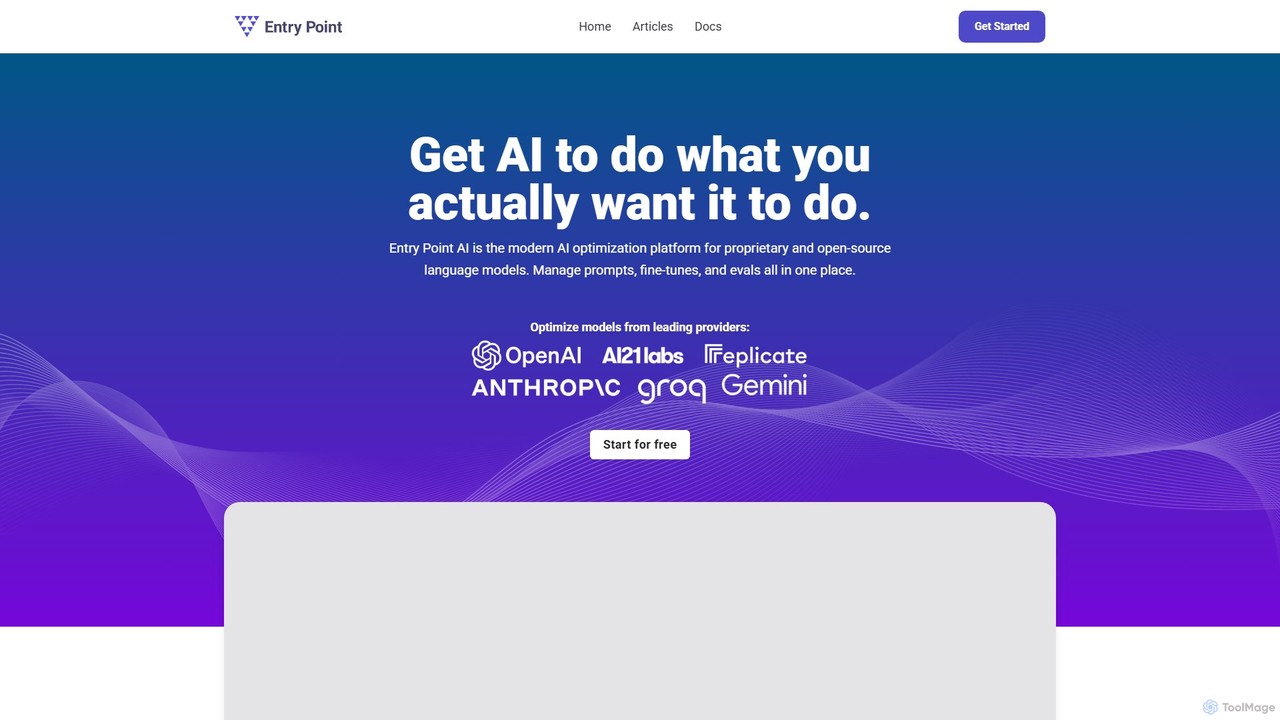
EntryPoint AI
EntryPoint AI is a no-code platform designed to simplify the fine-tuning of large language models (LLMs). It enables users to manage datasets, train, evaluate, and deploy custom AI models from providers like OpenAI without writing any code. The platform helps improve model quality, speed, and predictability for specific business tasks, making advanced AI customization accessible to teams of any size.
Data Management
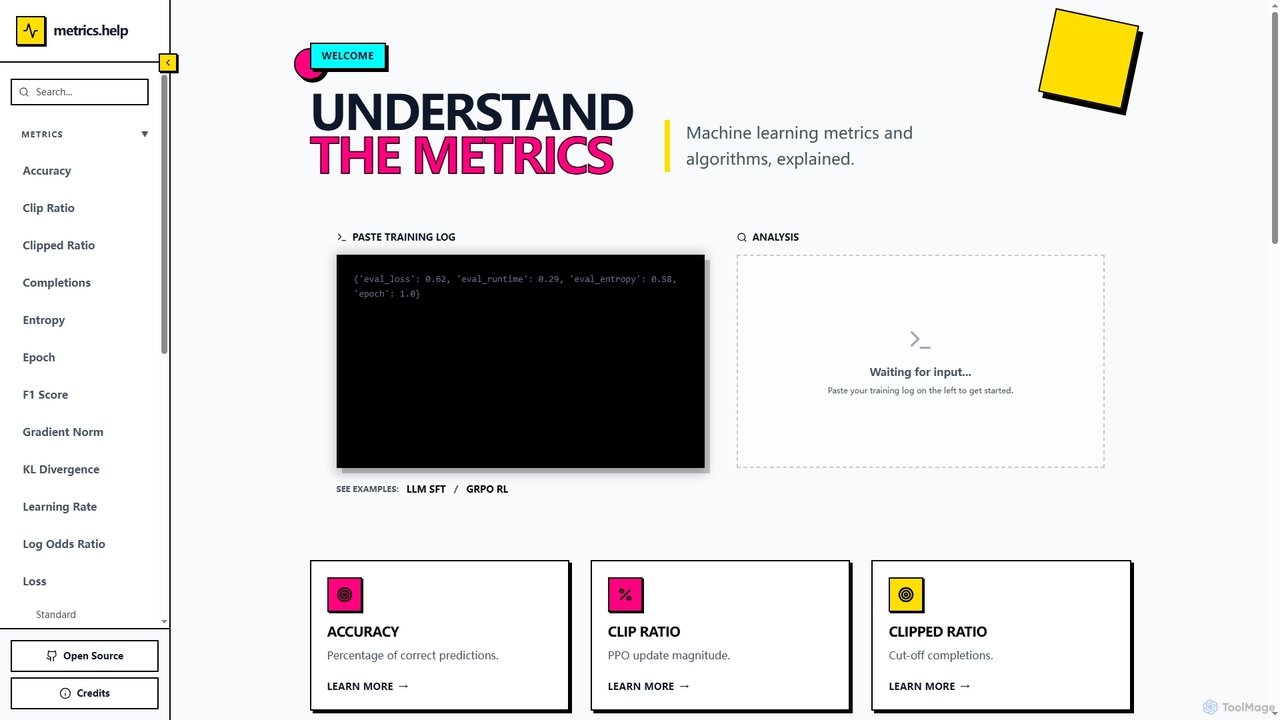
Metrics Help
Metrics Help is an open-source web tool for machine learning practitioners. It functions as a comprehensive guide and an interactive analyzer for ML training metrics. Users can paste training logs to get instant explanations for key metrics like accuracy, loss, and perplexity, aiding in model performance analysis and debugging.
Model Training
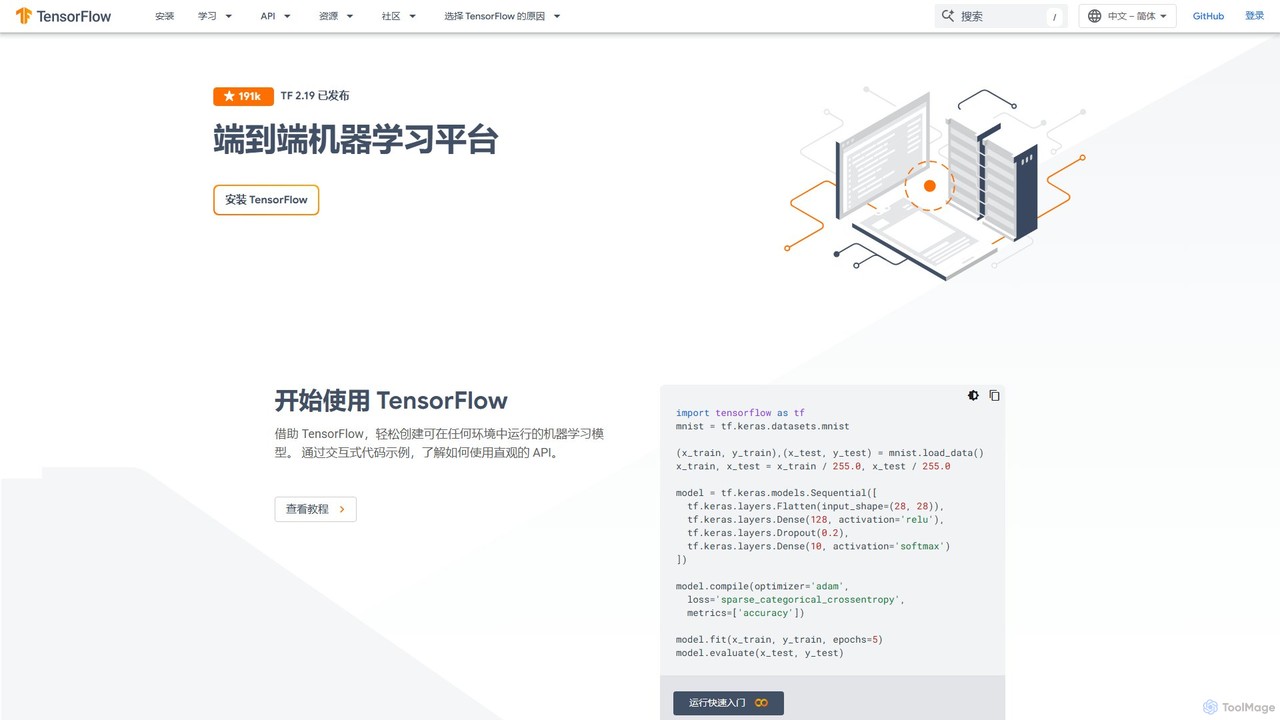
TensorFlow
TensorFlow is an end-to-end open-source platform for machine learning developed by Google. It provides a comprehensive, flexible ecosystem of tools, libraries, and community resources that lets researchers and developers build and deploy ML-powered applications. From beginners to experts, TensorFlow offers intuitive high-level APIs for easy model building and powerful low-level APIs for advanced research, enabling deployment across servers, edge devices, and browsers.
Frameworks
Label Studio
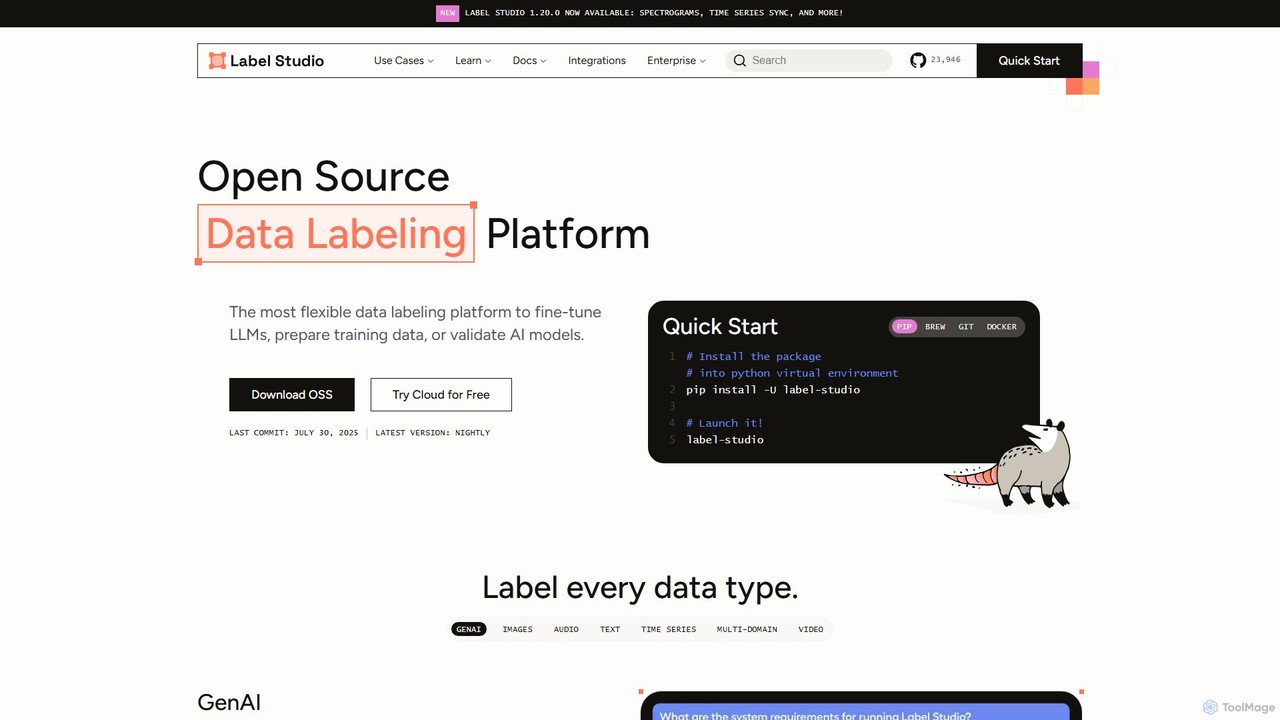
Label Studio is a versatile open-source data labeling platform designed for a wide range of data types. It enables users to annotate images, text, audio, video, and time-series data to fine-tune LLMs, prepare training data for machine learning, and validate AI models with human-in-the-loop feedback.
Training Data
Forefront
Forefront is a developer platform for building with open-source AI. It simplifies running, fine-tuning, and deploying large language models (LLMs) on your private data, providing a scalable, secure, and cost-effective alternative to closed-source platforms. Own your data, your models, and your AI.
Large Language Models
Ollama
Ollama is a powerful open-source framework for running large language models (LLMs) like Llama 3, Mistral, and Gemma locally on your own hardware. Available for macOS, Windows, and Linux, it simplifies the setup and management of open-source models, enabling private, offline, and cost-effective AI development and usage.
Machine Learning
LAION
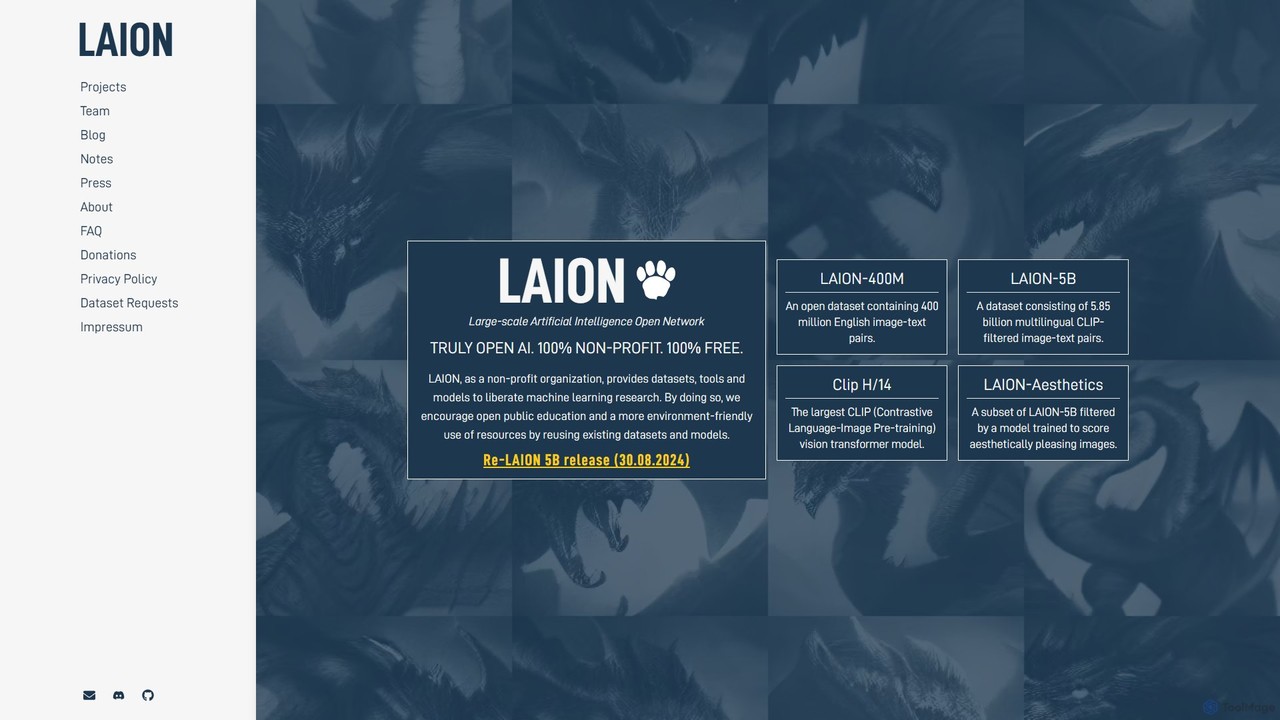
LAION (Large-scale Artificial Intelligence Open Network) is a non-profit organization dedicated to democratizing AI research. It provides massive, open-source datasets, pre-trained models, and tools to the public, fostering open research, education, and resource-efficient development in machine learning.
Datasets
OpenPipe
OpenPipe is an enterprise-grade platform for building highly reliable AI agents using Reinforcement Learning (RL) and fine-tuning. It enables developers to create specialized, cost-effective, and low-latency models that outperform large general-purpose APIs. Features include an open-source framework, on-prem deployment, and continuous optimization.
Enterprise Solutions
UBIAI
UBIAI is an end-to-end platform for building, fine-tuning, and deploying custom Large Language Models (LLMs). It integrates advanced data annotation, including OCR, with a streamlined fine-tuning process for over 20+ top-tier models. Ideal for enterprises and startups seeking to create domain-specific, accurate, and reliable AI solutions for tasks like document analysis, chatbots, and more.
Data Labeling