

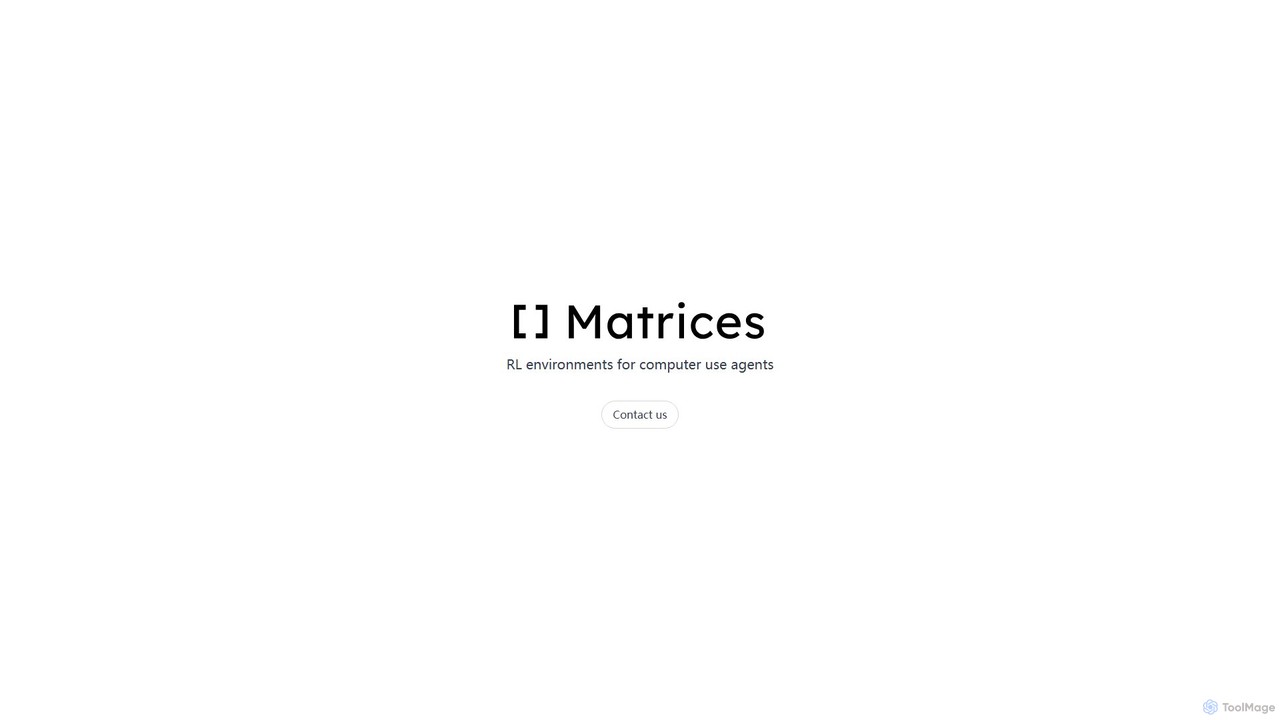
Matrices Overview
Matrices is a cutting-edge platform designed to provide sophisticated training environments for Large Language Model (LLM) agents. It specifically focuses on creating realistic Reinforcement Learning (RL) environments where AI agents can learn to operate computers just like humans do. By simulating common digital interfaces such as web browsers, operating systems, and various software applications, Matrices offers a safe, scalable, and standardized sandbox for developing the next generation of autonomous agents. This platform is an essential tool for researchers and developers aiming to build agents capable of handling complex, multi-step tasks, from data entry and web scraping to advanced software automation and digital personal assistance.
How to use Matrices
Using Matrices involves a structured workflow designed to streamline the agent training process. First, a developer defines a specific, high-level goal for the agent, such as "research competitors' pricing and compile a report." Next, they select or configure a suitable training environment from the Matrices library—this could be a simulated Chrome browser, a virtual Windows desktop, or a specific SaaS platform environment. The LLM-powered agent is then connected to this environment via the Matrices API. The training begins, with the agent attempting the task by taking actions (e.g., mouse clicks, keyboard inputs). The Matrices environment provides real-time feedback in the form of rewards or penalties based on the agent's progress. Through millions of these trial-and-error cycles, managed and scaled by the Matrices infrastructure, the agent gradually learns the optimal sequence of actions to achieve its goal efficiently and reliably.
Core Features of Matrices
- Realistic Simulation Environments: Offers a wide range of high-fidelity, sandboxed environments that mimic real-world computer interfaces, including web browsers, file systems, and complex applications.
- Advanced Reinforcement Learning Framework: Provides a robust framework optimized for training computer-use agents, complete with pre-configured RL algorithms and reward function templates.
- Scalable Cloud Infrastructure: Enables massively parallel training, allowing developers to run thousands of simulations simultaneously to drastically reduce the time required to train capable agents.
- Comprehensive Analytics and Debugging: Features a dashboard for visualizing an agent's learning curve, success rates, and common failure points, facilitating rapid iteration and debugging.
- Task Orchestration and Curriculum Learning: Allows for the creation of complex tasks and curricula, enabling agents to learn simple skills first and progressively build up to more complex behaviors.
- Secure API and Integration: A well-documented API allows for seamless integration with various LLMs and existing development workflows.
Use Cases for Matrices
Matrices is versatile and can be applied across numerous domains. For Robotic Process Automation (RPA), it can train agents to perform tasks in legacy systems that lack APIs. In software quality assurance, agents can be trained to perform exhaustive UI testing by mimicking human user behavior. For e-commerce and data aggregation, agents can navigate complex websites to gather information, compare products, or complete purchases. Researchers can use Matrices to benchmark new agent architectures and RL algorithms in a standardized setting. It can also be used to create powerful digital personal assistants that can manage emails, schedule appointments, and operate software on a user's behalf.
Advantages of Matrices
The primary advantage of Matrices is its ability to significantly accelerate the development cycle for autonomous agents. By providing ready-made, high-fidelity environments, it eliminates the immense engineering effort required to build and maintain them. The platform's safety and security are paramount, as agents learn in an isolated sandbox, preventing any risk to live systems. Its scalability ensures that even the most complex tasks can be learned in a feasible timeframe. Furthermore, by offering a standardized platform, Matrices fosters reproducibility and comparability in AI research, pushing the entire field of agentic AI forward.
Pricing and Plans
Matrices operates on an enterprise-focused model. Pricing information is not publicly listed and is available upon request. Prospective clients are encouraged to contact the sales team through the official website to discuss their specific needs, project scope, and to receive a custom quote. This approach ensures that the solution is tailored to the unique requirements of each organization, whether for academic research or large-scale commercial deployment.
Traffic
Latest traffic
Status
Monthly traffic trend
- 2025-9: 6.6K
- 2026-1: 3.2K
- 2026-2: 3.3K
- 2026-3: 2.8K
- 2026-4: 4.1K
- 2026-5: 3.9K
Geography
Top 5 countries / regions
- 🇺🇸United States73.1%
- 🇮🇳India26.9%
Top keywords
| Keyword | Cost per click |
|---|---|
| matrices ai | $5.19 |
| matrices in ai | $0.00 |
| matrix ai | $0.00 |
| rets ai | $0.00 |
| the matrices | $1.58 |
Matrices Alternatives
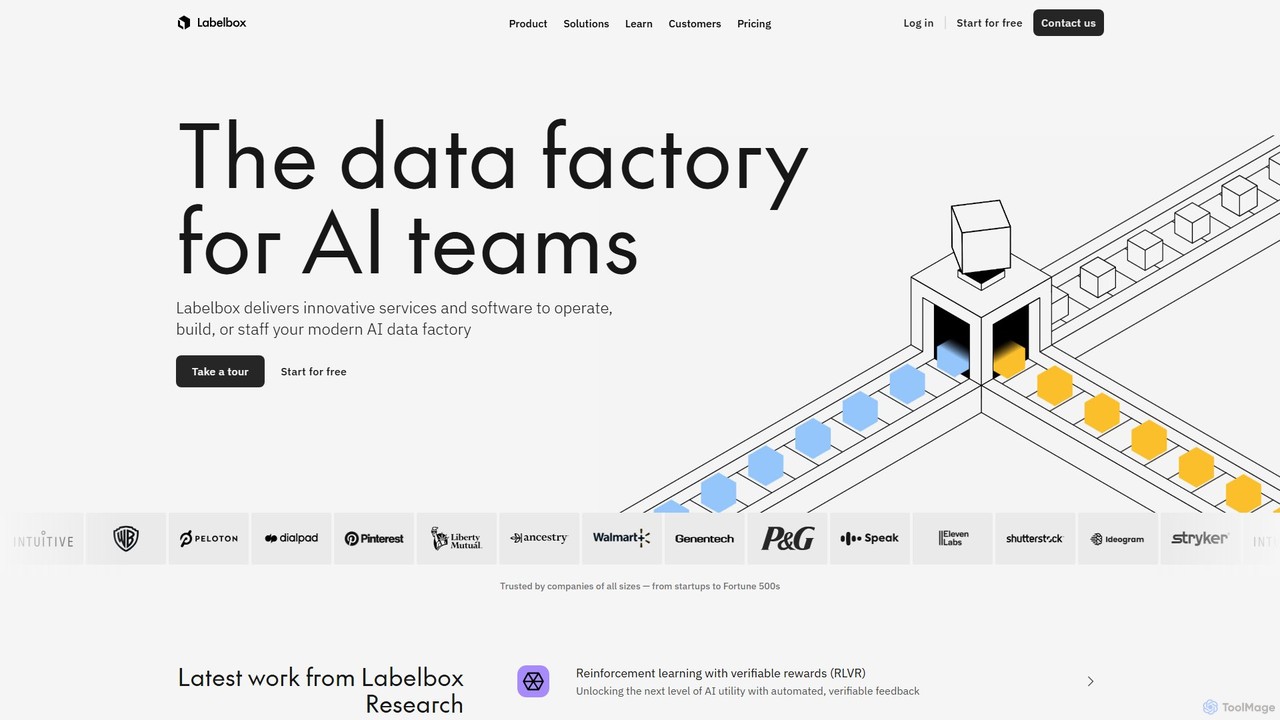
Labelbox
Labelbox is a comprehensive data-centric AI platform, or "Data Factory," designed for AI teams. It provides integrated software, expert services, and a talent marketplace to create, manage, and evaluate high-quality training data for advanced AI models, including LLMs and multimodal systems.
Labeling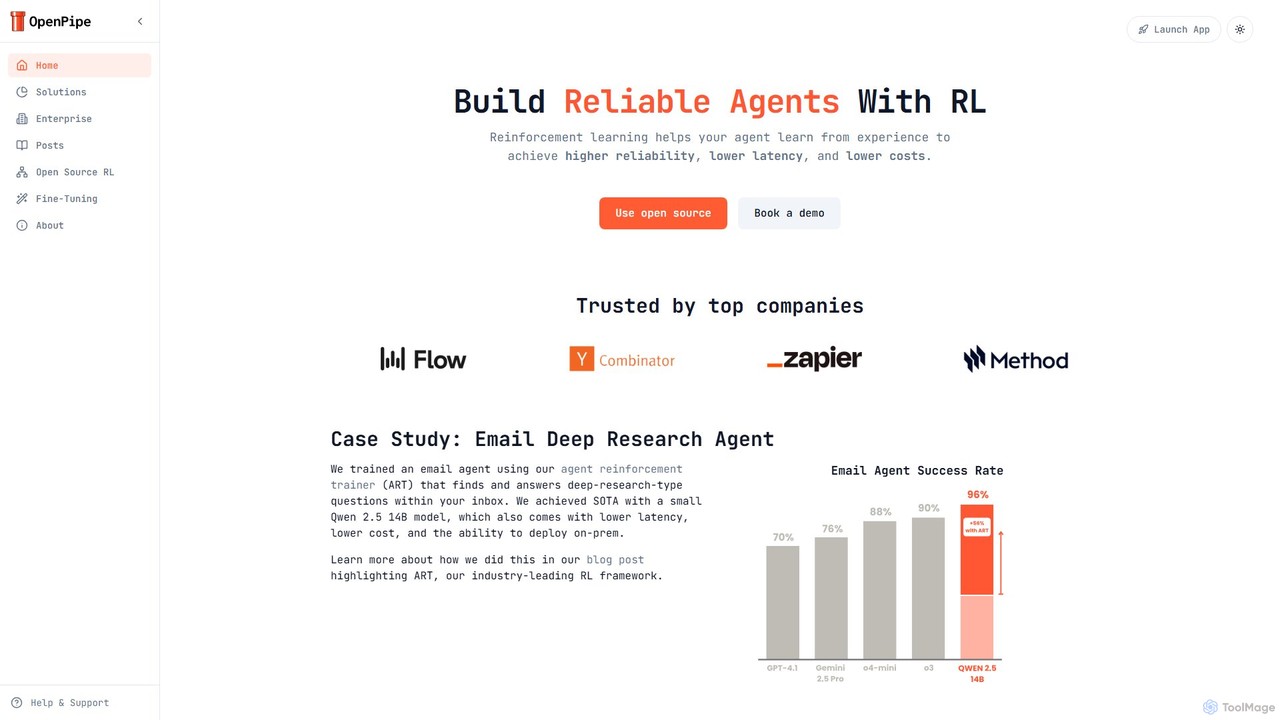
OpenPipe
OpenPipe is an enterprise-grade platform for building highly reliable AI agents using Reinforcement Learning (RL) and fine-tuning. It enables developers to create specialized, cost-effective, and low-latency models that outperform large general-purpose APIs. Features include an open-source framework, on-prem deployment, and continuous optimization.
Enterprise Solutions
dataset.gold
A curated directory of high-quality, open-source datasets for AI and machine learning. Discover the gold standard of data for training your models in computer vision, NLP, and more.
Datasets
Ollama
Ollama is a powerful open-source framework for running large language models (LLMs) like Llama 3, Mistral, and Gemma locally on your own hardware. Available for macOS, Windows, and Linux, it simplifies the setup and management of open-source models, enabling private, offline, and cost-effective AI development and usage.
Machine Learning
Runpod
Runpod is a cloud platform designed for AI and machine learning, offering scalable GPU compute for deploying, training, and running AI models. It provides serverless GPUs, pre-built templates, and cost-effective pricing to simplify the entire AI development workflow, from idea to production.
Machine LearningMatrices Categories
Matrices Embed Widget
Copy this embed code to place the badge on your blog, article, or product site and send readers directly to this ToolMage detail page.

Related AI tools

Simular
Simular is an AI-powered platform that creates autonomous agents to operate computers just like humans. It automates complex digital tasks across any application on your desktop, browser, or smartphone. By combining the flexibility of LLMs with the precision of symbolic code, Simular aims to free users from repetitive work, handling everything from data research and content creation to personal task management.
Personal Assistant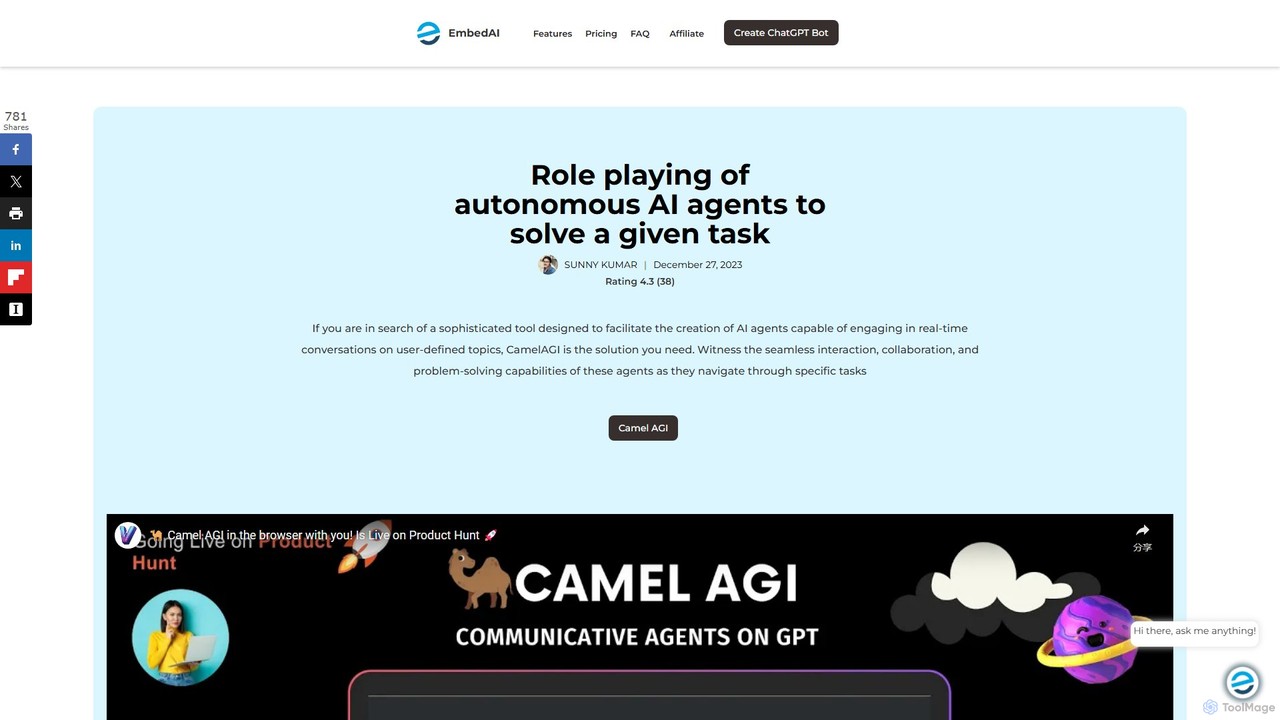
Camel AGI
Camel AGI is a pioneering platform where two autonomous AI agents collaborate through role-playing to solve complex tasks. Inspired by BabyAGI and AutoGPT, it allows users to define roles and topics, then observe the agents' dynamic interaction and problem-solving process. It's designed for applications in education, development, creative writing, and business.
Agent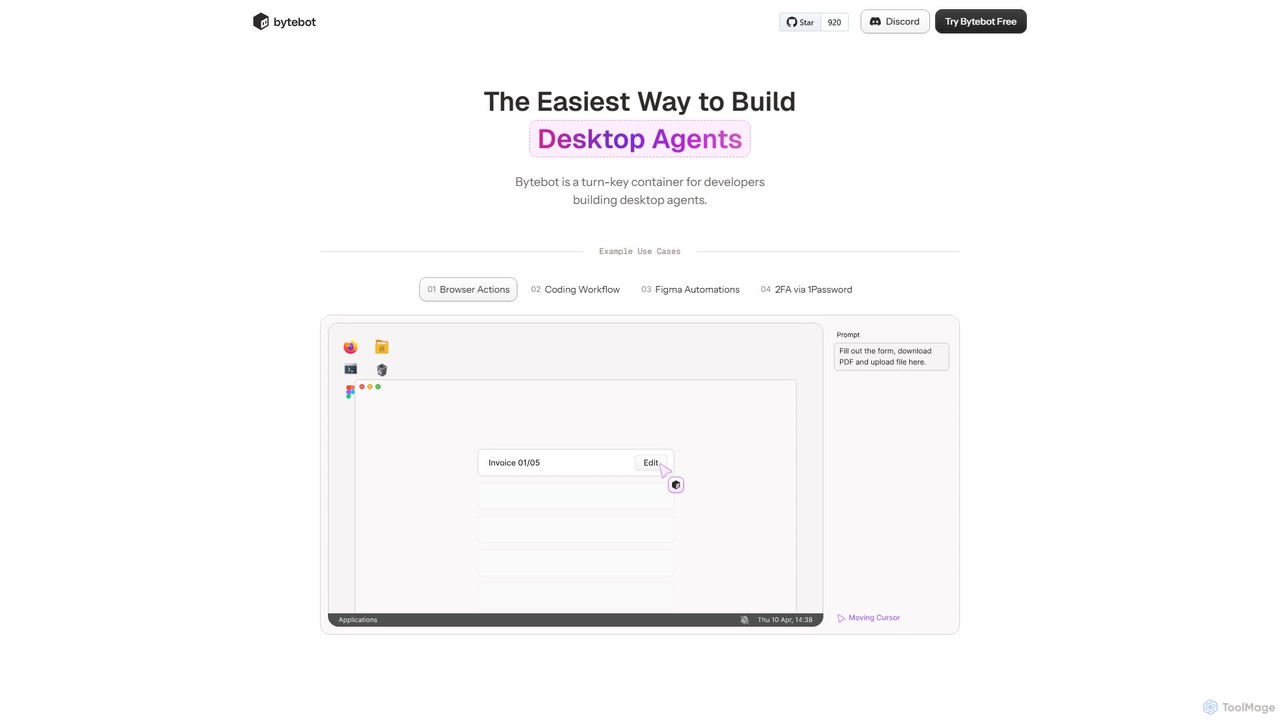
Bytebot
Bytebot is a developer platform for building, deploying, and managing AI-powered desktop agents. These agents automate complex tasks across any application by mimicking human interactions with the keyboard, mouse, and screen, moving beyond browser-only limitations.
Desktop Agent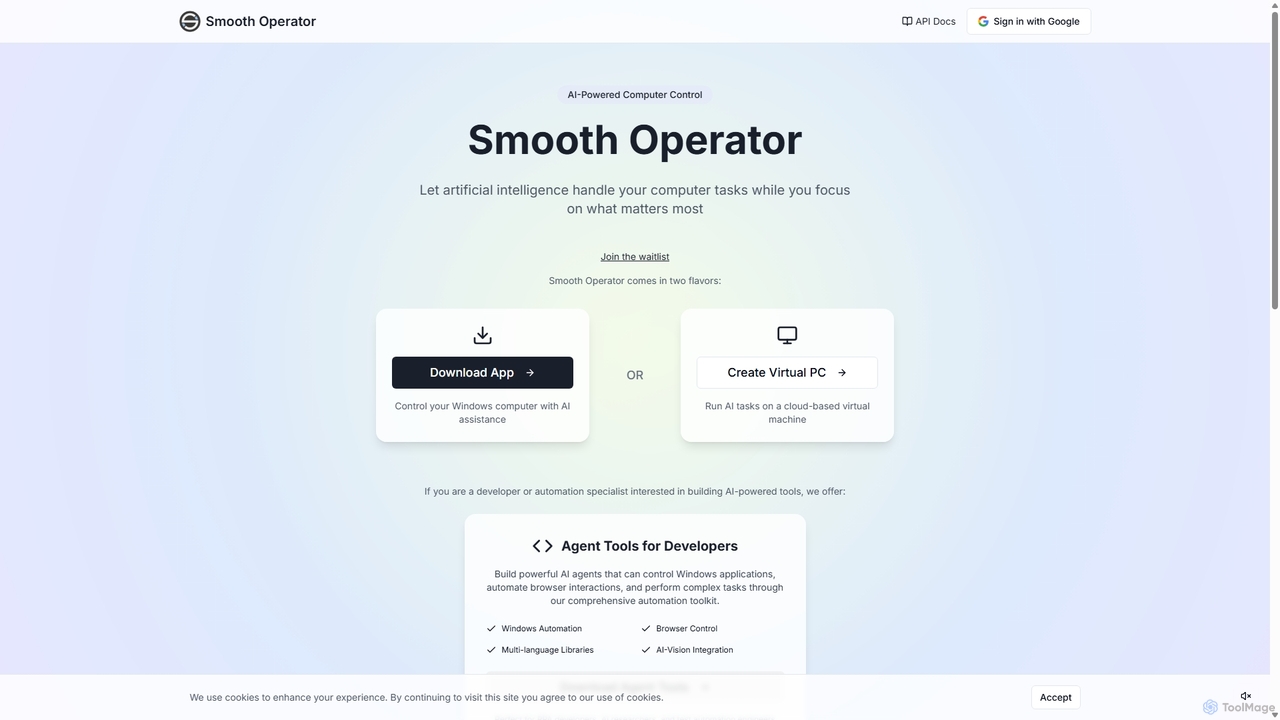
Smooth Operator
Smooth Operator is an AI-powered tool that automates computer tasks on Windows. It allows users to control their computer using natural language, either through a local app or a cloud-based virtual machine. It also provides a comprehensive toolkit for developers to build custom AI agents for advanced automation.
Robotic Process AutomationLabelbox
Labelbox is a comprehensive data-centric AI platform, or "Data Factory," designed for AI teams. It provides integrated software, expert services, and a talent marketplace to create, manage, and evaluate high-quality training data for advanced AI models, including LLMs and multimodal systems.
LabelingOpenPipe
OpenPipe is an enterprise-grade platform for building highly reliable AI agents using Reinforcement Learning (RL) and fine-tuning. It enables developers to create specialized, cost-effective, and low-latency models that outperform large general-purpose APIs. Features include an open-source framework, on-prem deployment, and continuous optimization.
Enterprise Solutionsdataset.gold
A curated directory of high-quality, open-source datasets for AI and machine learning. Discover the gold standard of data for training your models in computer vision, NLP, and more.
Datasets
Jyek
Jyek is an AI agent platform that understands objectives, creates execution plans, uses tools, and delivers verifiable results for complex, multi-step tasks.
Automation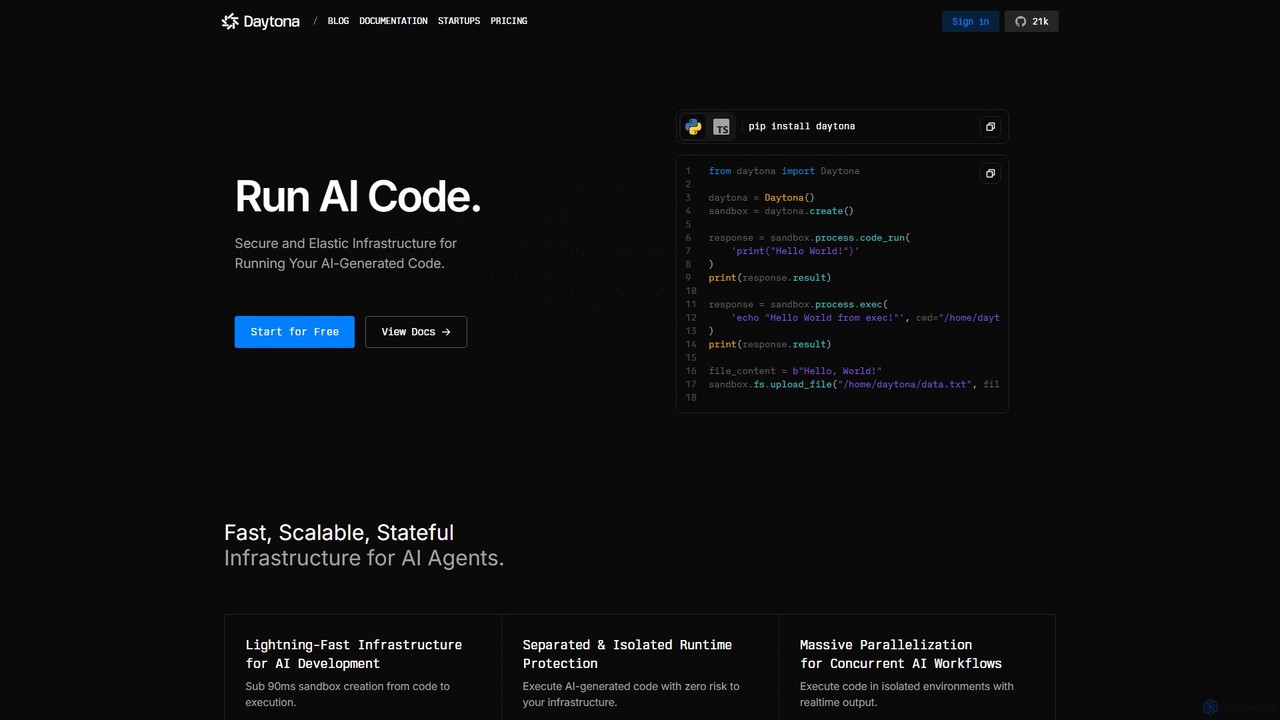
Daytona
Daytona is a secure, elastic, and high-performance runtime environment designed for executing AI-generated code. It provides isolated sandboxes for AI agents, data analysis, and scalable evaluations, enabling developers to run untrusted code with zero risk to their infrastructure. It's built for speed, scalability, and stateful, long-running tasks.
Runtime Environment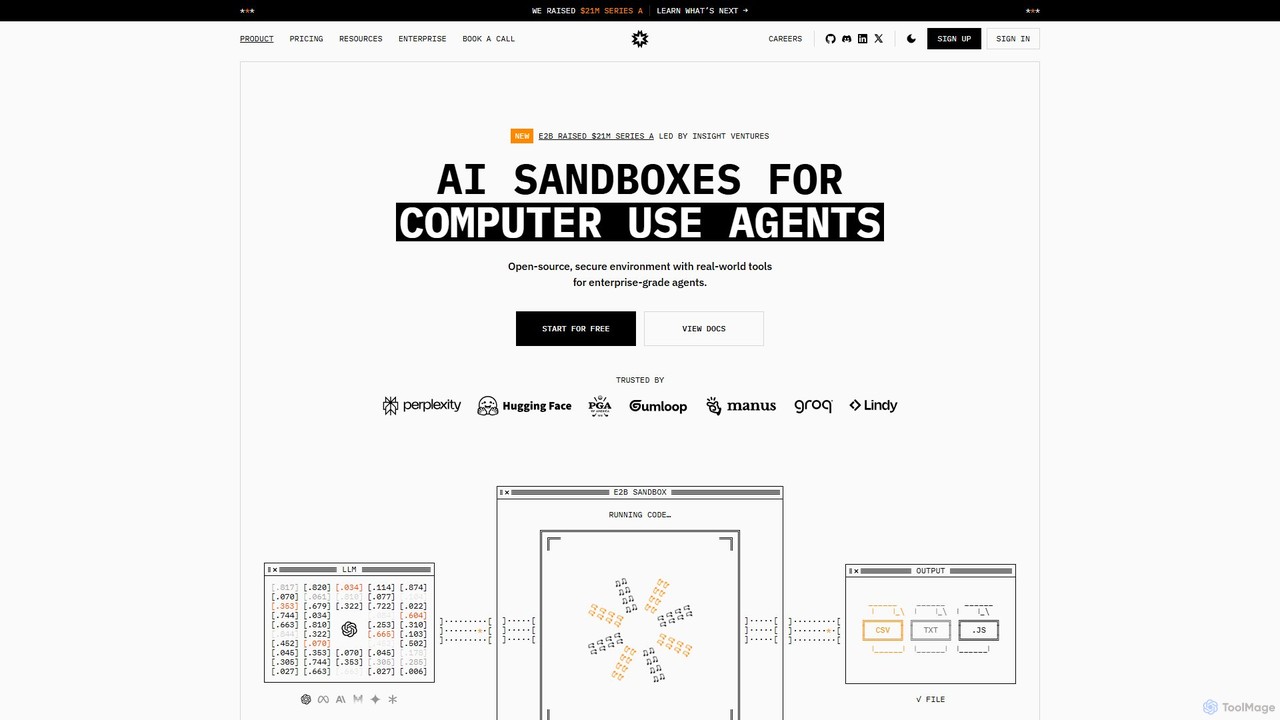
e2b
e2b is a cloud platform for developers, providing secure, scalable AI sandboxes for running AI-generated code. It enables the creation of powerful AI agents for tasks like data analysis, code execution, and deep research by offering isolated, high-performance environments with full tool access, compatible with any LLM.
Data Analysis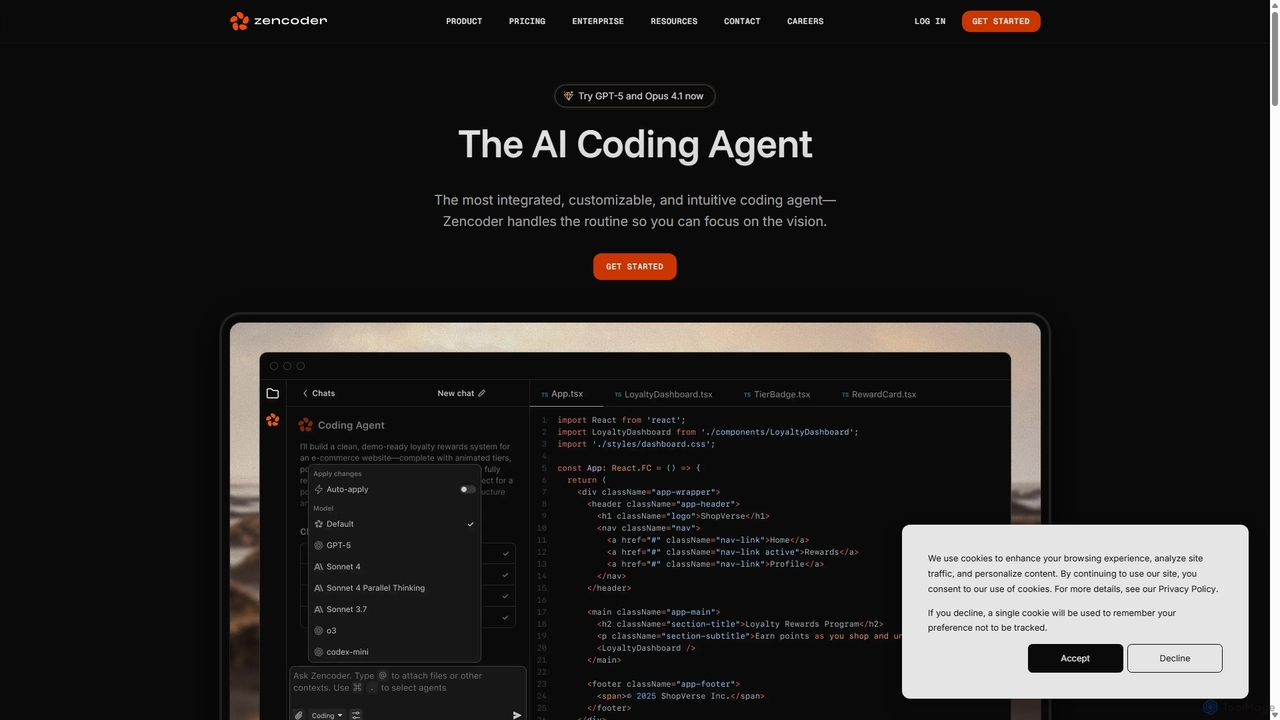
Zencoder
Zencoder is an advanced AI coding agent designed to automate routine development tasks. It deeply integrates into your workflow, understanding your entire codebase to implement features, write tests, fix bugs, and refactor code autonomously. With customizable 'Zen Agents' and seamless integration with VS Code, JetBrains, and over 100 developer tools, Zencoder empowers engineering teams to focus on innovation and ship products faster.
Code Assistant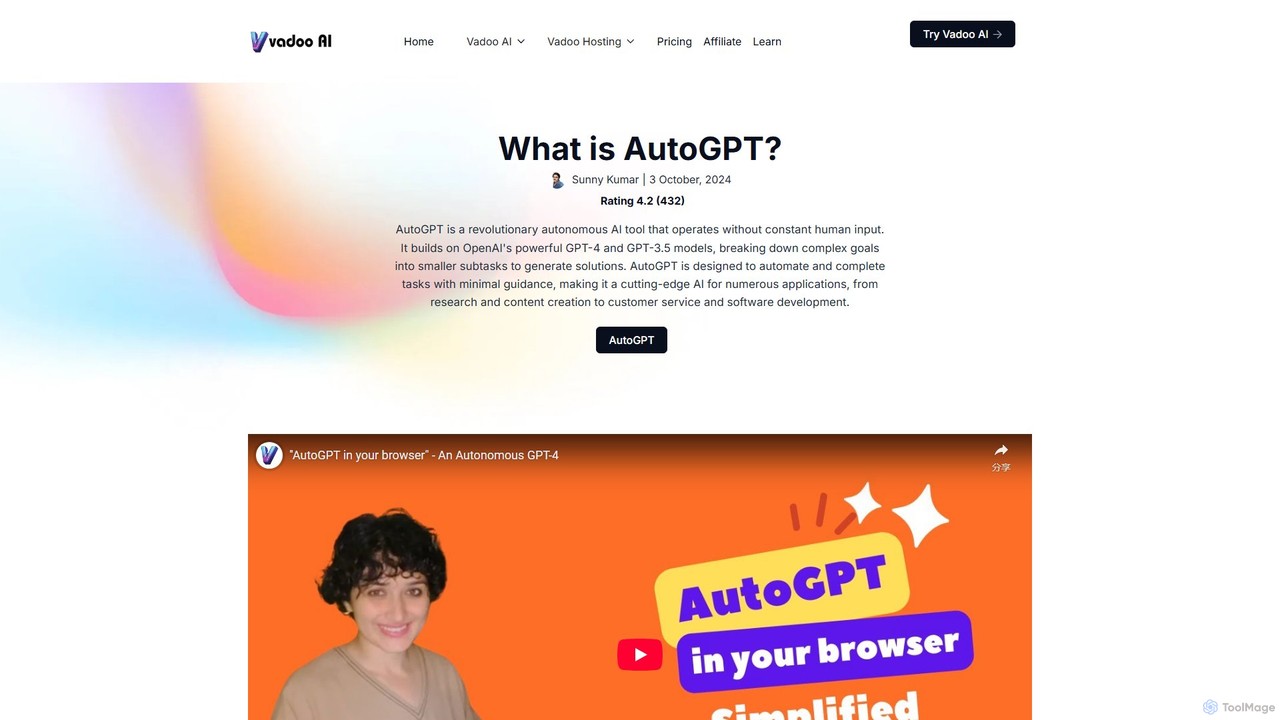
AutoGPT
AutoGPT is a revolutionary open-source autonomous AI agent that leverages GPT-4 and GPT-3.5 to independently achieve complex goals. By breaking down high-level objectives into smaller, manageable subtasks, it can browse the web, write code, manage files, and execute plans with minimal human intervention, dramatically boosting productivity and automating complex workflows.
Code Assistant
zmaticoo
zmaticoo is an AI-powered automation platform that connects your favorite apps and services to streamline workflows. It enables you to automate repetitive tasks without any coding, using an intuitive visual builder to create intelligent, multi-step processes that boost productivity and efficiency for businesses and individuals.
Automation
Agentic
Agentic is a powerful platform for building, deploying, and managing autonomous AI agents. It enables users to automate complex workflows, conduct in-depth research, and execute multi-step tasks across various applications and data sources. Designed for both developers and businesses, Agentic offers a flexible, no-code/low-code environment to create sophisticated agents that can reason, plan, and act independently to achieve specific goals, significantly boosting productivity and operational efficiency.
Workflow Management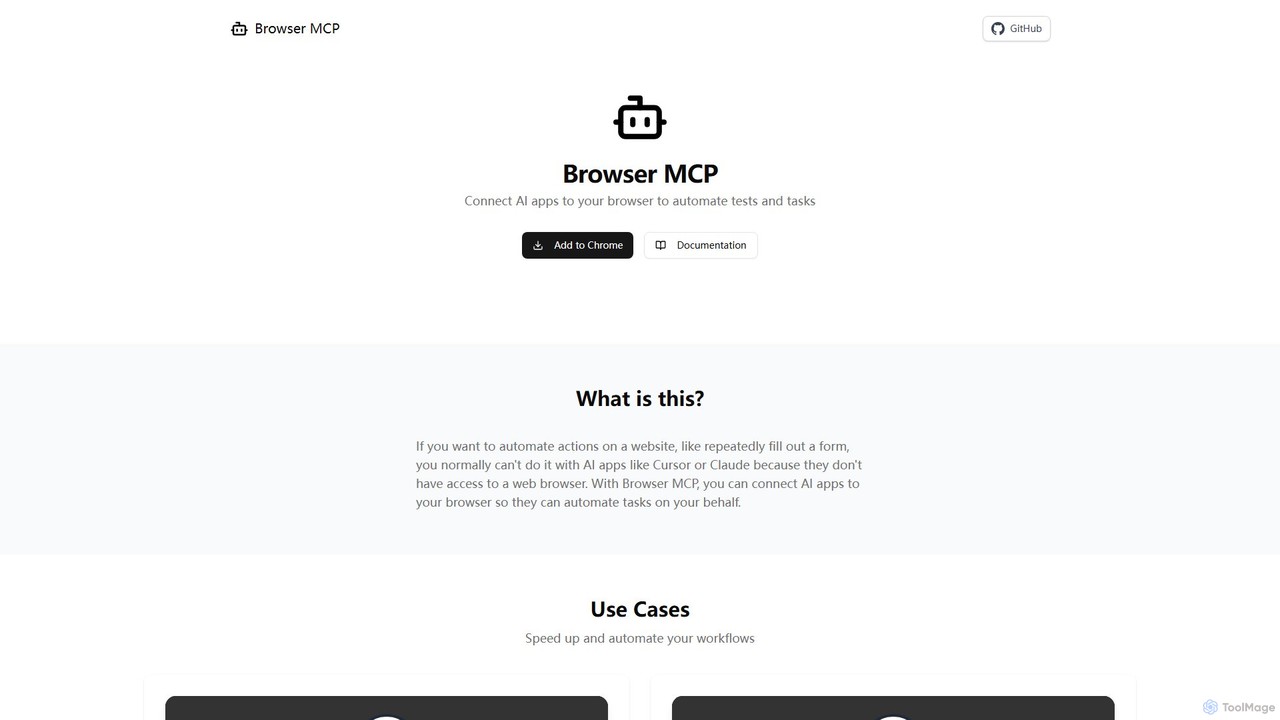
Browser MCP
Browser MCP connects AI applications like Claude or Cursor directly to your web browser. This enables you to automate repetitive tasks, conduct end-to-end software testing, and scrape web data using AI commands. It operates locally for maximum speed and privacy, leveraging your existing browser sessions to bypass logins and avoid bot detection.
Web Scraping
Matrices Comments (0)
Sign in to comment.
Sign inNo comments yet.