ToolMage
Sign in

Best 58 Data Extraction AI tools for Data

Popular Data Extraction AI tools in Data include Apify, Browser Use, Jina AI, Quartr, CapSolver, ScrapingBee, Browserless, Reworkd, Scrappey, and ApyHub, helping you work more efficiently.

ScrapeTheMap
Freemium

ScrapeTheMap

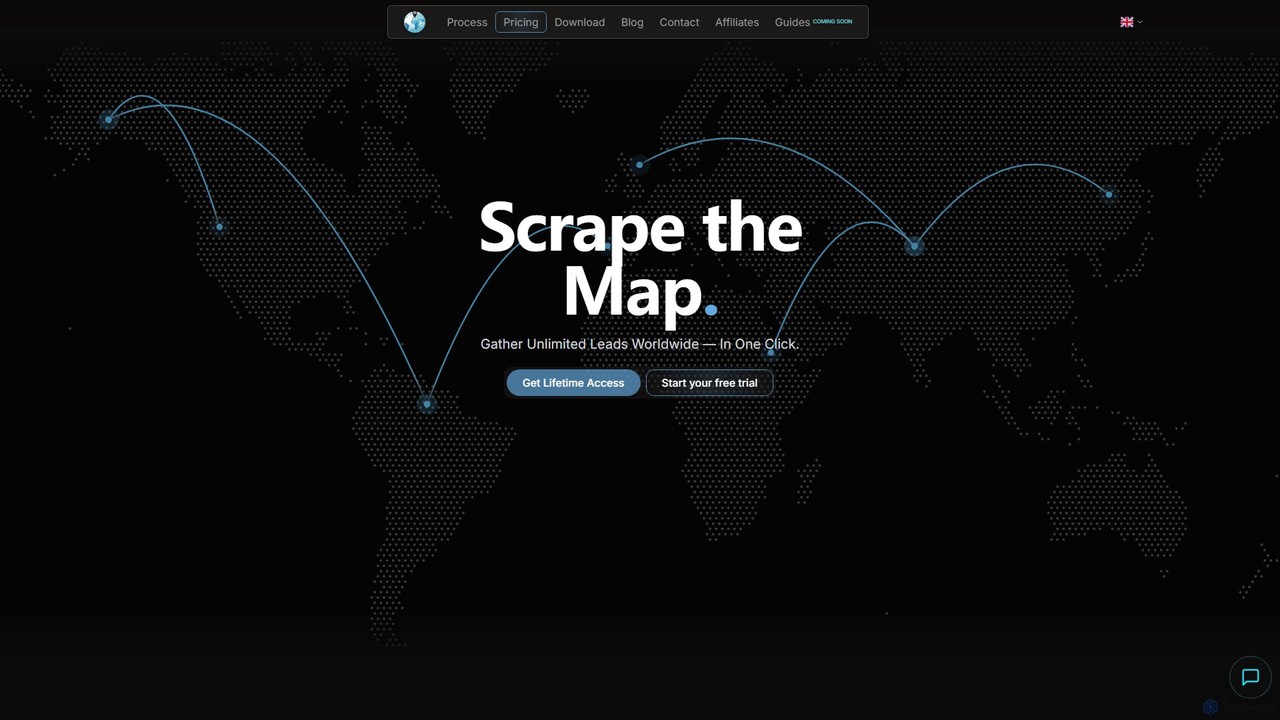
ScrapeTheMap is an AI-driven desktop application for macOS and Windows that extracts unlimited B2B leads from Google Maps, Bing Maps, and Yandex Maps. It combines five powerful tools, including a map scraper, review scraper, and domain email extractor, into one platform. With AI enhancements for generating business summaries and email templates, it's designed for lead generation, market research, and competitor analysis. The tool operates on a one-time purchase model with lifetime updates, offering a cost-effective solution without recurring fees.

Data Extraction
Visits 5.7KFavorites 121Likes 123
Browser Use
Freemium

Browser Use

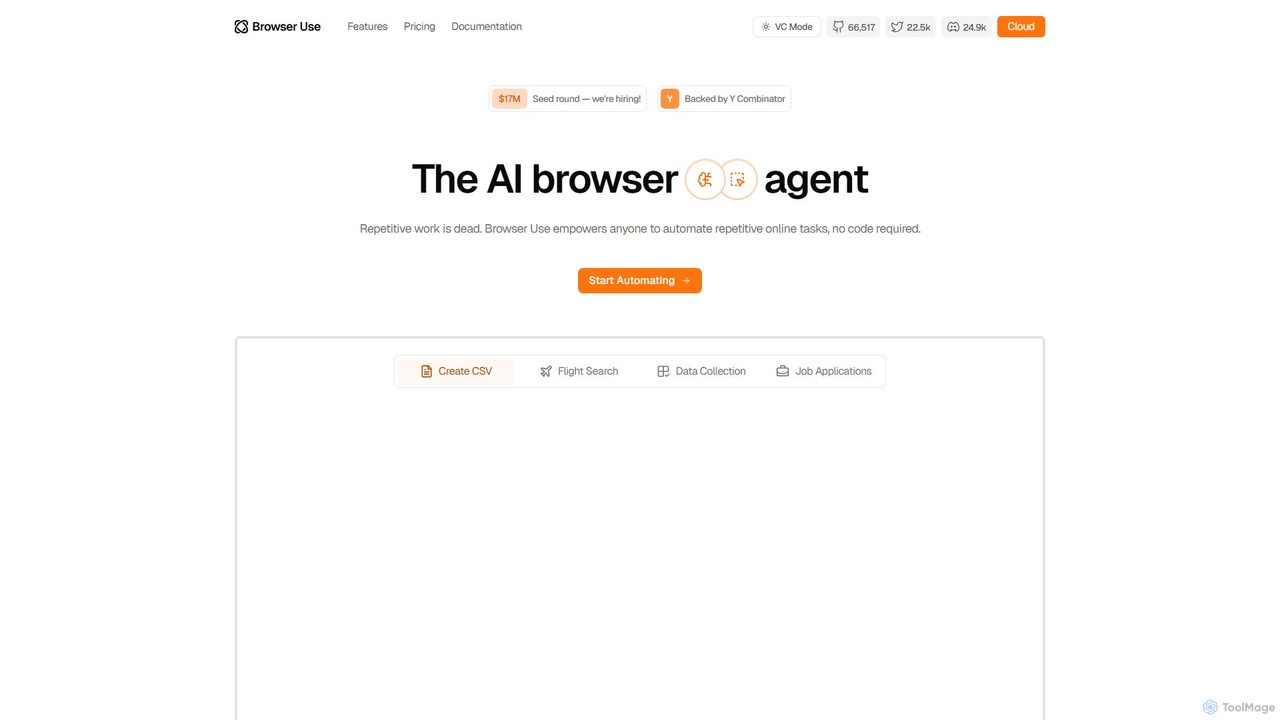
Browser Use is an AI-powered browser agent that automates repetitive online tasks without requiring any code. It can handle complex data scraping, form filling, and other web-based workflows. Backed by Y Combinator, it offers a simple chat interface for users and a powerful API for developers to streamline their online activities.

Data Extraction
Visits 544.5KFavorites 123Likes 115
Roe AI
Freemium

Roe AI

Roe AI is a platform that deploys AI agents to automate risk, compliance, and trust operations, specializing in perpetual Know Your Business (KYB) for SMBs. It also functions as an AI query engine for alternative data, transforming web content into structured insights for GTM teams, lead enrichment, and competitive analysis.

Lead Generation
Visits 5.4KFavorites 123Likes 125
hand_check
Freemium

hand_check

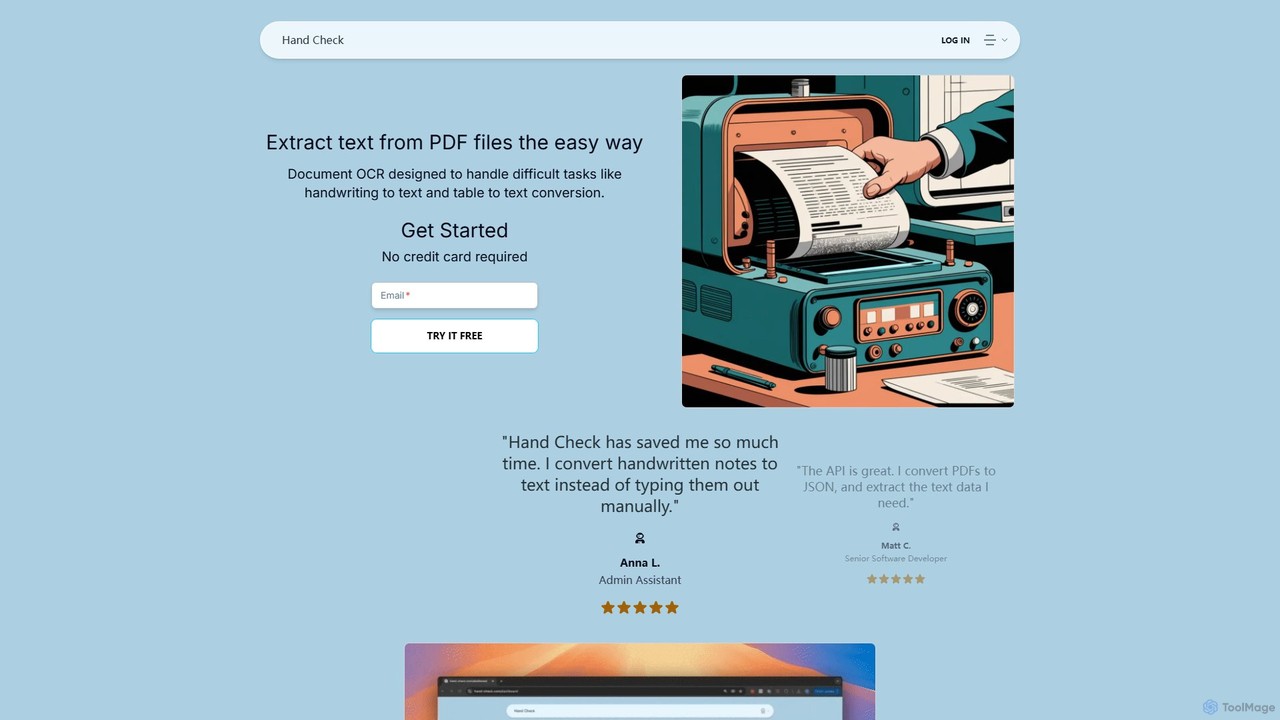
hand_check is an advanced OCR tool that uses machine learning to extract text from PDFs and images. It specializes in converting complex documents, including handwritten notes and tables, into editable text or structured JSON data. With a user-friendly interface and a powerful API for developers, it's ideal for individuals, developers, and enterprises looking to automate document processing and data extraction.

Data Extraction
Visits 5.9KFavorites 113Likes 116
Bring Me Data
Paid

Bring Me Data

Bring Me Data is an AI-powered business intelligence platform that provides structured datasets on key corporate events. It tracks company growth signals like executive changes (CEO/CFO), new office openings, and strategic partnerships for major companies, including the S&P 100. This service helps sales, marketing, and investment teams identify timely opportunities and gain a competitive edge by delivering actionable, real-time data.

Sales Intelligence
Visits 4.7KFavorites 90Likes 97
Sola
Paid

Sola

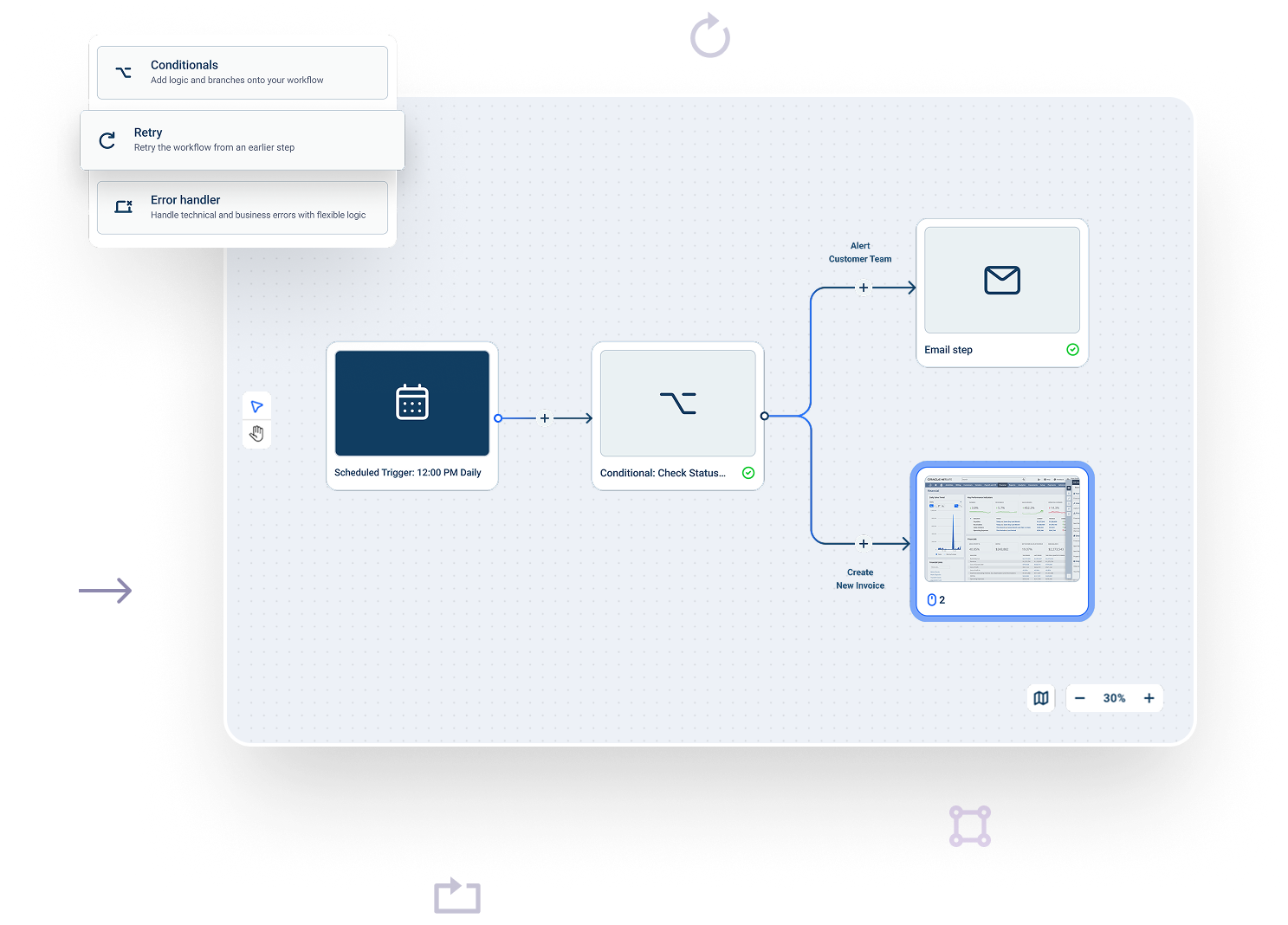
Sola is an AI-powered Robotic Process Automation (RPA) platform designed for enterprises. It transforms repetitive tasks into intelligent, adaptive automations using a no-code visual editor. Sola enables business users to build, manage, and scale complex workflows by simply recording their screen actions, significantly reducing development time and increasing operational efficiency.

Workflow Management
Visits 53.7KFavorites 149Likes 133
Webcrawlerapi
Freemium

Webcrawlerapi

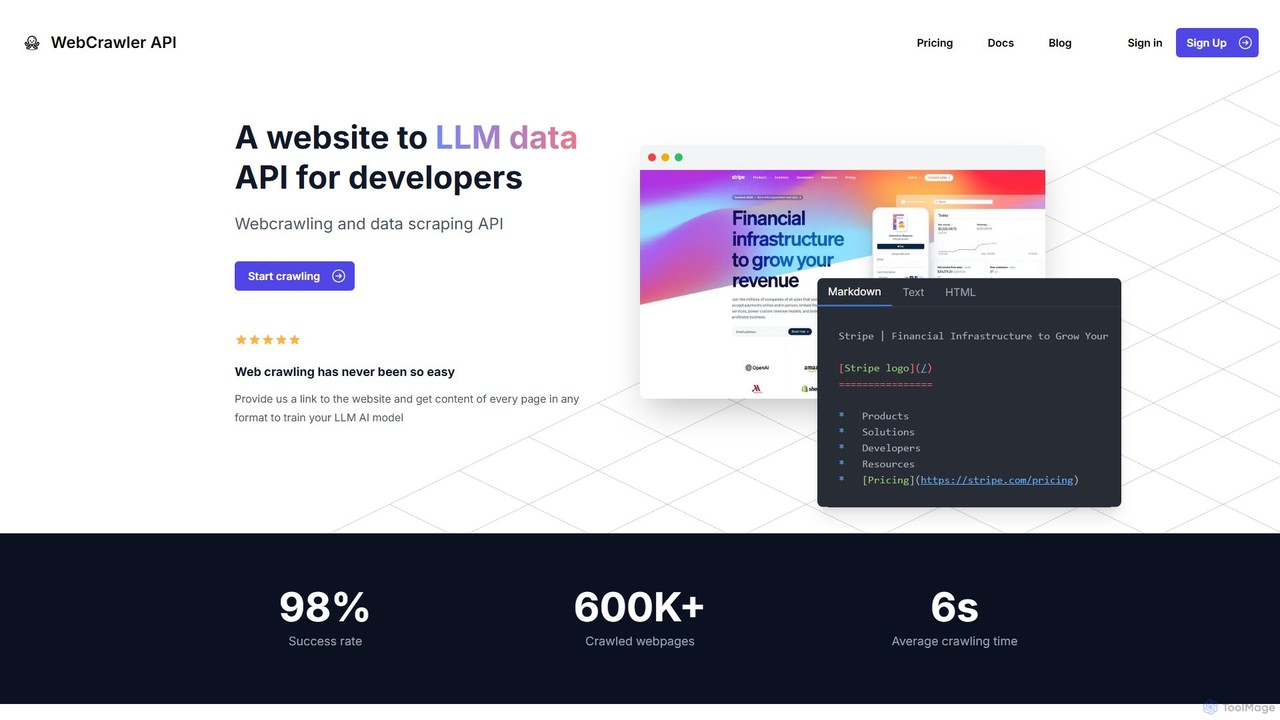
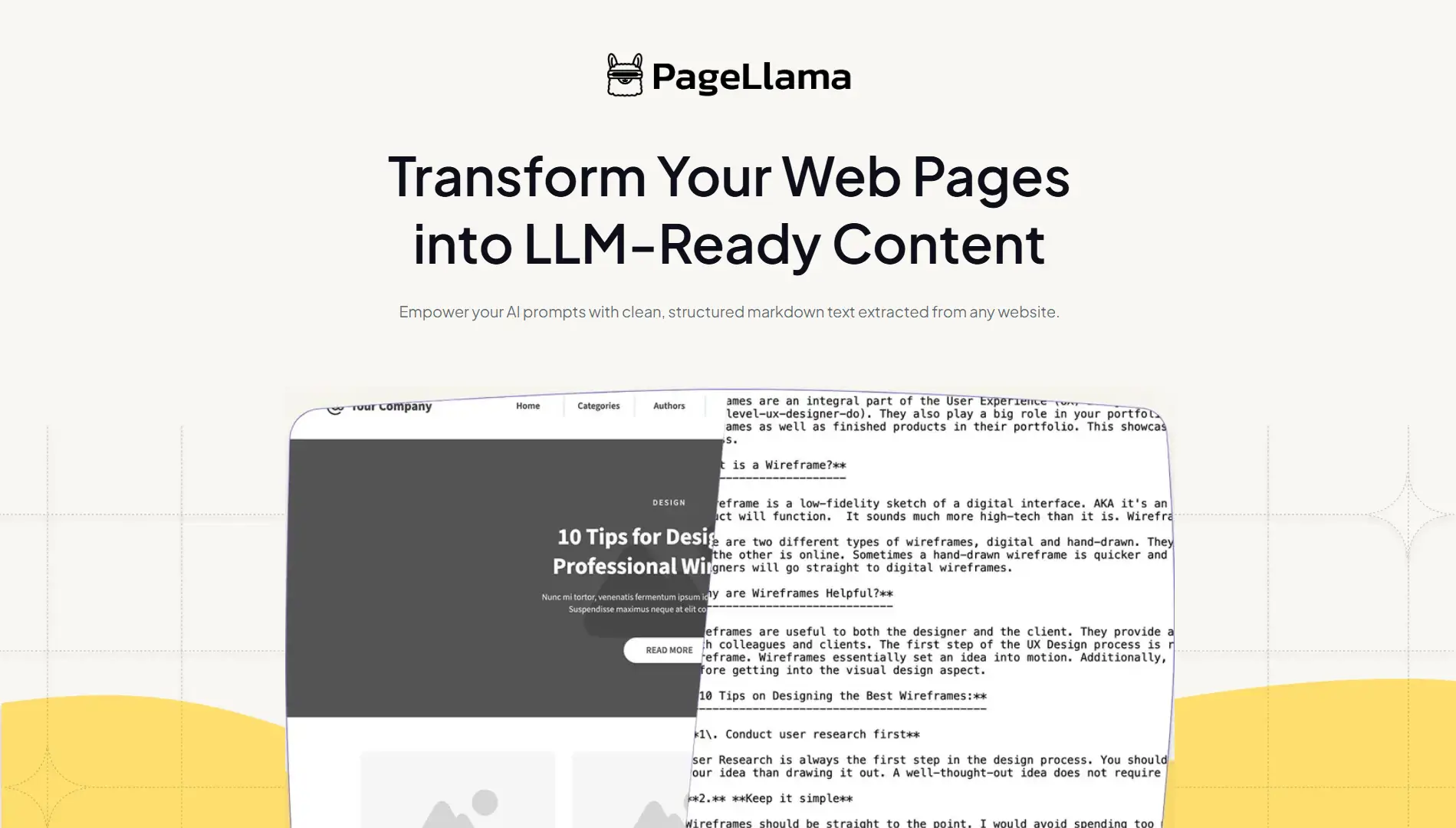
Webcrawlerapi is a powerful API for developers to effortlessly crawl websites and extract clean data. It simplifies web scraping by handling JavaScript rendering, anti-bot measures, and data parsing. Ideal for gathering structured content like Markdown or text to train LLM AI models or for Retrieval-Augmented Generation (RAG) systems, it offers a high success rate and a simple, pay-as-you-go pricing model.

Data Extraction
Visits 9.8KFavorites 123Likes 125
AgentQL
Freemium

AgentQL

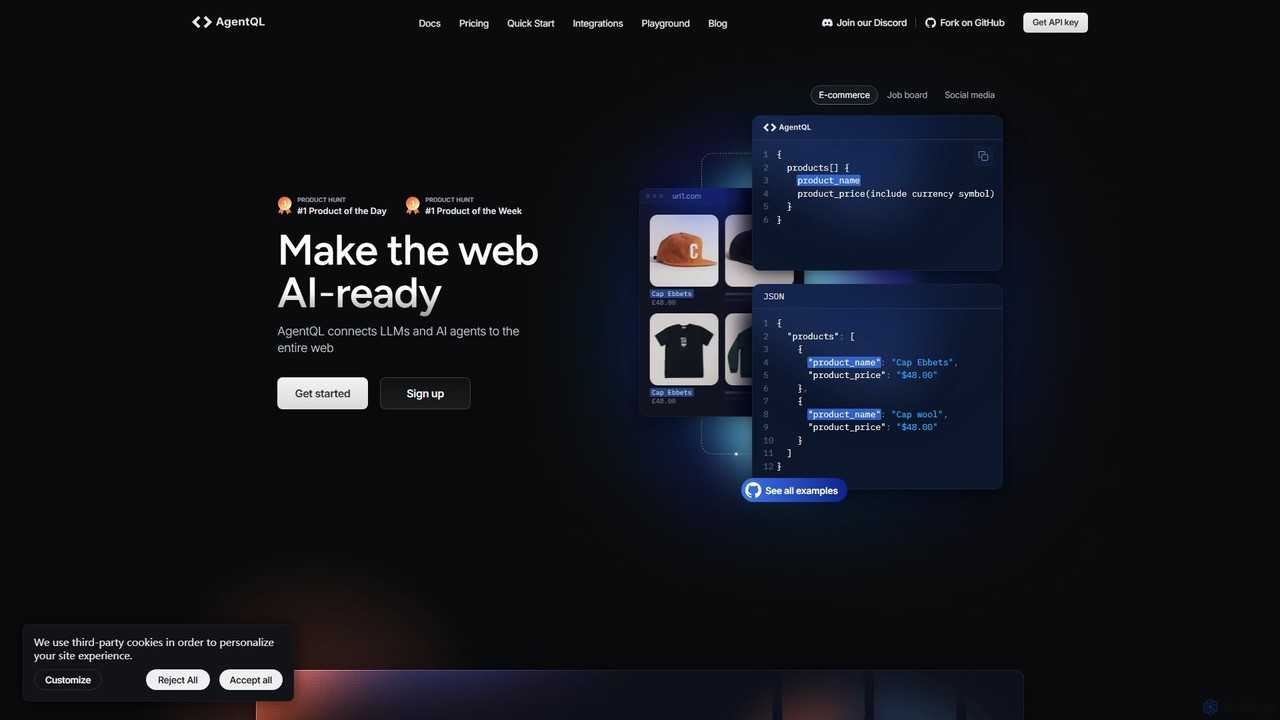
AgentQL is a developer toolset that connects LLMs and AI agents to the web. It uses an AI-powered query language to robustly extract structured data and automate web interactions, serving as a powerful, self-healing alternative to fragile XPath and CSS selectors.

Llm
Visits 24.2KFavorites 120Likes 126
CapSolver
Paid

CapSolver

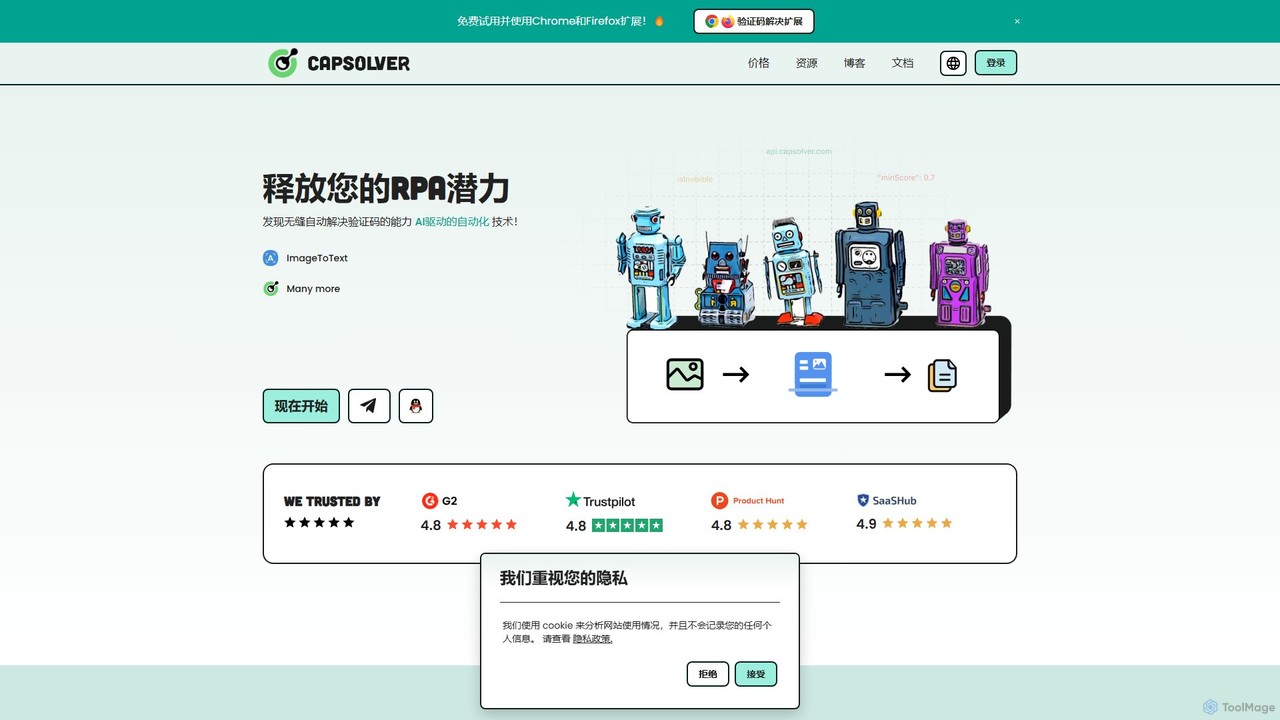
CapSolver is an AI-powered, high-performance automatic CAPTCHA solving service. It helps developers and businesses bypass various CAPTCHAs like reCAPTCHA, hCaptcha, Cloudflare, and ImageToText with high speed and accuracy. Offering seamless API integration, a browser extension, and flexible pay-as-you-go pricing, CapSolver is ideal for web scraping, data collection, and automation tasks, ensuring smooth and uninterrupted operations.

Data Extraction
Visits 285.8KFavorites 154Likes 166
Finigami AI
Paid

Finigami AI

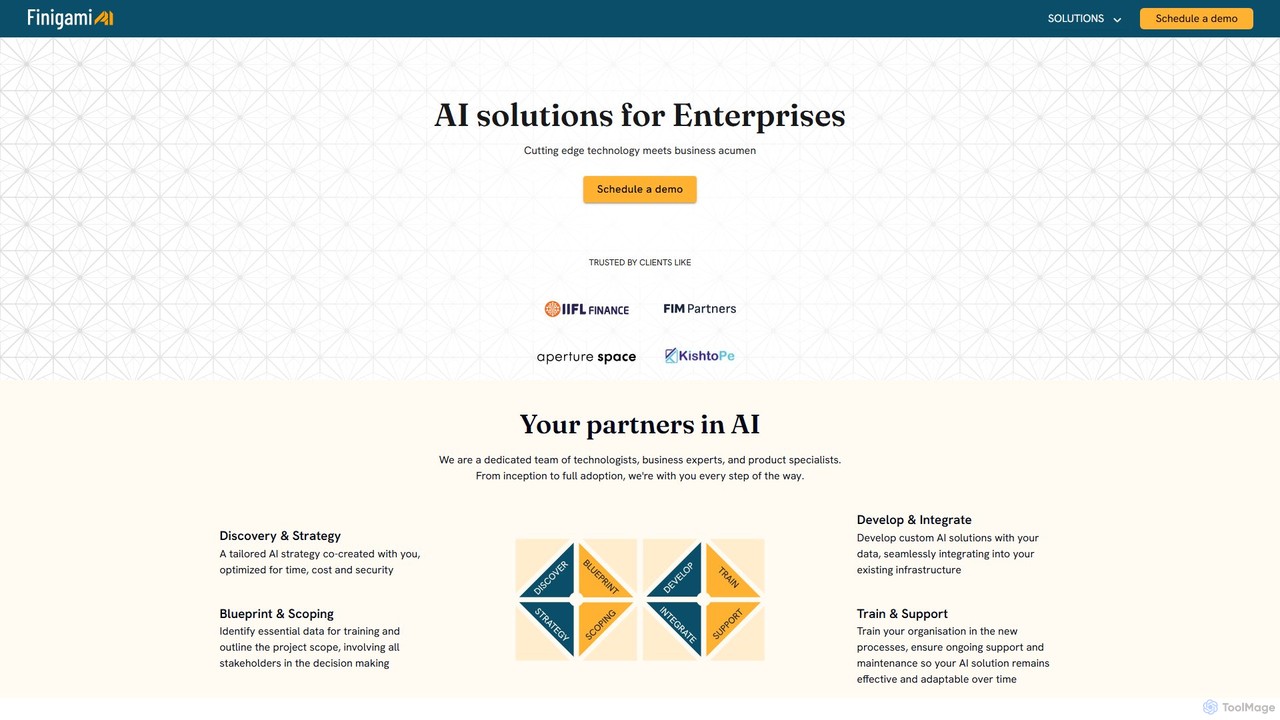
Finigami AI offers enterprise-grade AI solutions, specializing in intelligent document processing (IDP) and custom AI development. It provides a powerful platform to extract data from any document, including handwritten text and complex tables, and partners with businesses to build bespoke AI systems for functions like finance, HR, and operations.

Automation
Visits 4.4KFavorites 118Likes 120

About Data Extraction

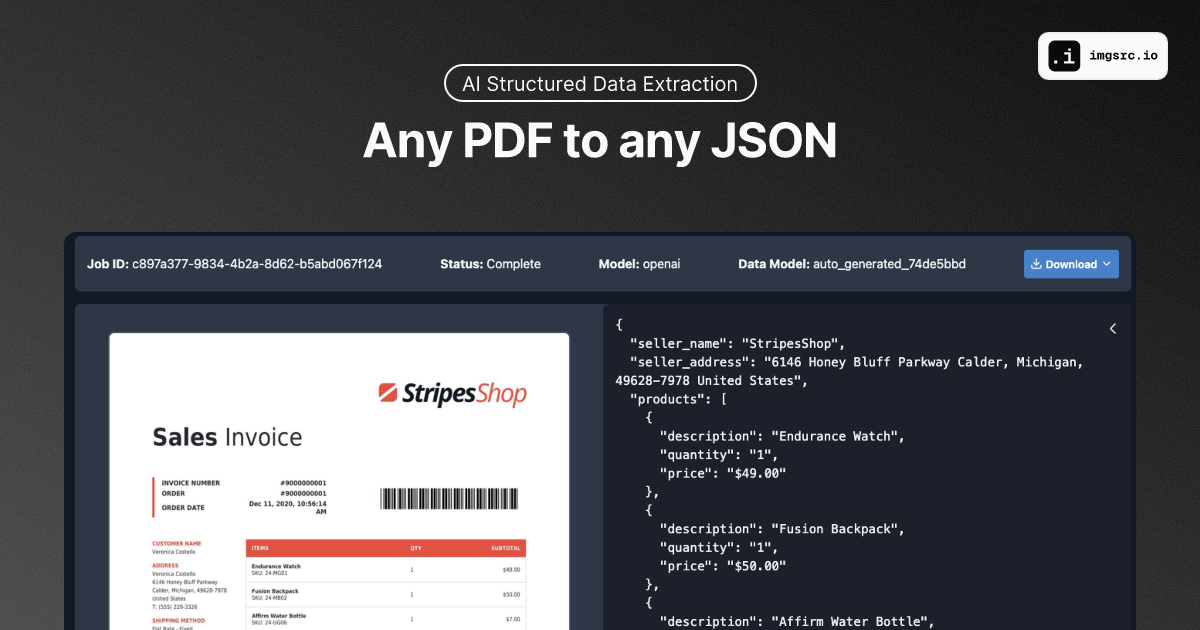
Data Extraction tools are AI-powered applications designed to automatically identify and pull specific information from unstructured or semi-structured sources. They utilize technologies like Optical Character Recognition (OCR) and Natural Language Processing (NLP) to read and understand documents, web pages, and images like a human would. This process transforms raw, inaccessible data into structured, actionable formats such as JSON or CSV, eliminating manual data entry. These tools are crucial for businesses looking to automate workflows, improve data accuracy, and derive insights from vast amounts of information.

Core Features

  • Automated Data Capture: Extracts text, tables, and key-value pairs from PDFs, scanned documents, and images.
  • Template-Free Recognition: Uses AI to understand document layouts and fields without needing pre-defined templates.
  • Web Scraping & Crawling: Gathers specific data points from websites, social media, and online forums at scale.
  • Structured Data Output: Converts extracted information into organized formats like JSON, CSV, or XML for easy integration.
  • Natural Language Understanding (NLU): Interprets context to accurately identify entities like names, dates, addresses, and invoice amounts.

Use Cases

Data Extraction tools are widely used in finance for invoice and receipt processing, in HR for parsing resumes, and in e-commerce for monitoring competitor pricing. Legal and real estate sectors use them to extract key information from contracts and deeds. Market researchers also leverage these tools to gather customer feedback and public sentiment from online sources.

How to Choose

When selecting a Data Extraction tool, consider its accuracy rate for your specific document types. Evaluate the range of supported sources (PDFs, emails, websites) and the available output formats. Assess its integration capabilities via API, its scalability for handling high volumes, and whether the pricing model (per-page or subscription) aligns with your usage needs.

Featured tool rankings

Data Extraction use cases

1

Automate Invoice and Receipt Processing

An accounts payable specialist in a mid-sized company handles hundreds of invoices weekly. Instead of manually typing data from PDF invoices into accounting software, they use a Data Extraction tool. The tool automatically scans each invoice, identifies and extracts key fields like invoice number, vendor name, due date, and line-item details. This data is then exported as a structured CSV file, which can be directly imported into their accounting system. This process reduces data entry time by over 90% and minimizes costly human errors.

2

Monitor Competitor Pricing and Product Catalogs

An e-commerce manager needs to stay competitive by tracking rivals' pricing and product availability. They configure a Data Extraction tool to crawl a list of competitor websites daily. The tool extracts product names, prices, stock status, and customer ratings. This information is automatically populated into a dashboard, providing a real-time view of the market. This allows the manager to make agile pricing adjustments, identify gaps in their own product catalog, and react quickly to market trends without spending hours on manual web browsing.

3

Parse Resumes to Streamline Hiring

A corporate recruiter receives hundreds of resumes for a single job opening. Manually reviewing each one and entering candidate data into an Applicant Tracking System (ATS) is time-consuming. By using a Data Extraction tool, the recruiter can upload all resumes in bulk. The AI parses each document, regardless of its format, and extracts key information such as candidate name, contact details, work experience, education, and skills. The output is a structured file that can be instantly uploaded to the ATS, allowing the recruiter to focus on interviewing qualified candidates rather than on data entry.

4

Extract Key Clauses from Legal Contracts

A paralegal at a law firm needs to review dozens of contracts to identify specific clauses related to liability and termination dates. This manual process is tedious and prone to oversight. They use a Data Extraction tool trained on legal documents. The tool scans the contracts and automatically highlights and extracts the relevant clauses, party names, and effective dates. This information is compiled into a summary report, allowing the legal team to quickly assess risks and obligations across their entire contract portfolio, saving dozens of hours per case.

5

Gather Market Research Data from Online Forums

A market research analyst is tasked with understanding public sentiment about a new tech product. Instead of manually reading thousands of posts on Reddit and tech forums, they use a Data Extraction tool. They set it up to crawl specific subreddits and forums, extracting user comments, product mentions, and common complaints or praises. The tool can also perform basic sentiment analysis. The extracted data is then visualized in a report, providing the analyst with actionable insights into customer needs and product perception in a fraction of the time.

6

Digitize Medical Records from Scanned Documents

A healthcare administrator is responsible for digitizing decades of paper-based patient records. Manually transcribing this sensitive information is slow and carries a high risk of error. They employ a Data Extraction tool with advanced OCR capabilities. The tool processes scanned medical charts, lab reports, and intake forms, accurately extracting patient IDs, diagnoses, medication lists, and physician notes. This structured data is then securely transferred to the hospital's Electronic Health Record (EHR) system, improving data accessibility for doctors and ensuring compliance with digital record-keeping standards.

Data Extraction FAQ

What are AI Data Extraction tools?

AI Data Extraction tools are software applications that use artificial intelligence, primarily Natural Language Processing (NLP) and Optical Character Recognition (OCR), to automatically identify and pull specific data from various unstructured sources. Unlike manual data entry, they can process documents like invoices, contracts, and web pages at scale, converting the information into a structured format (e.g., CSV, JSON) for analysis or integration into other systems. Their main purpose is to automate data collection, reduce human error, and save significant time.

How to choose the right Data Extraction tool?

Choosing the right tool depends on your specific needs. Consider the following factors:

  • Source Types: Does the tool support the formats you work with (e.g., PDFs, scanned images, emails, websites)?
  • Accuracy: Request a demo or trial to test the tool's accuracy on your own documents. Look for high precision in field recognition.
  • Integration: Check if it offers an API or pre-built connectors to integrate with your existing software (e.g., ERP, CRM, accounting systems).
  • Scalability: Ensure the tool can handle your expected volume of documents or web pages without performance issues.
  • Ease of Use: Evaluate if the interface is intuitive and if it requires extensive technical knowledge to set up and manage extraction workflows.
What's the difference between AI Data Extraction and traditional web scraping?

The key difference lies in intelligence and adaptability. Traditional web scraping relies on fixed rules, like CSS selectors or XPath, to find data in a website's HTML structure. If the website layout changes, the scraper breaks. AI Data Extraction, on the other hand, uses machine learning and computer vision to understand the context and visual layout of a page, much like a human. This makes it more resilient to website changes and allows it to extract data from complex sources beyond web pages, such as scanned PDFs and images, which traditional scrapers cannot handle.

What kind of data can these tools extract?

AI Data Extraction tools are versatile and can extract a wide range of data types from various sources. Common examples include:

  • Textual Data: Names, addresses, product descriptions, and user comments.
  • Numerical Data: Prices, quantities, invoice totals, and phone numbers.
  • Dates: Invoice dates, due dates, and contract effective dates.
  • Tabular Data: Entire tables from financial reports, product catalogs, or scientific papers.
  • Specific Fields: Key-value pairs like 'Total Amount: $150.00' from receipts or 'Vendor Name: ABC Corp' from invoices.

They can process sources like PDFs, Word documents, emails, scanned images, and live websites.

Who benefits most from using Data Extraction tools?

Virtually any organization that deals with a high volume of documents or needs to gather data from the web can benefit. Key users include:

  • Finance and Accounting Teams: For automating accounts payable by extracting data from invoices and receipts.
  • Human Resources Departments: For streamlining recruitment by parsing resumes and application forms.
  • E-commerce and Retail Businesses: For competitive analysis by scraping product data and prices from competitor websites.
  • Legal and Compliance Professionals: For quickly reviewing contracts and legal documents to find specific clauses.
  • Market Researchers and Data Analysts: For gathering public sentiment, customer feedback, and market trends from online sources.