ToolMage
Sign in

Best 58 Data Extraction AI tools for Data

Popular Data Extraction AI tools in Data include Apify, Browser Use, Jina AI, Quartr, CapSolver, ScrapingBee, Browserless, Reworkd, Scrappey, and ApyHub, helping you work more efficiently.

FetchFox
Freemium

FetchFox

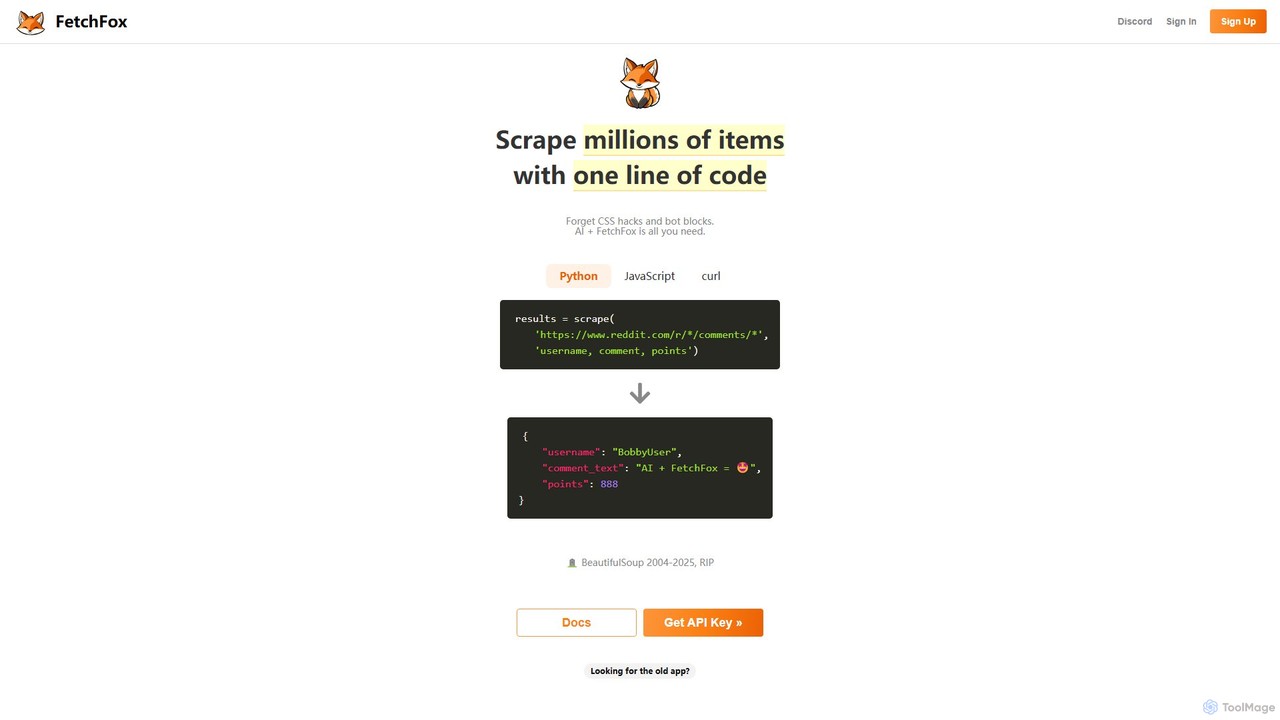
FetchFox is an AI-powered web scraping tool that allows users to extract data from any website using simple text prompts. It eliminates the need for complex coding or CSS selectors, automatically handling anti-bot measures. Available as an API, JavaScript library, and Chrome extension, it's designed for both developers and non-technical users to automate data collection effortlessly.

Data Extraction
Visits 44.9KFavorites 95Likes 100
pdfmerse
Freemium

pdfmerse

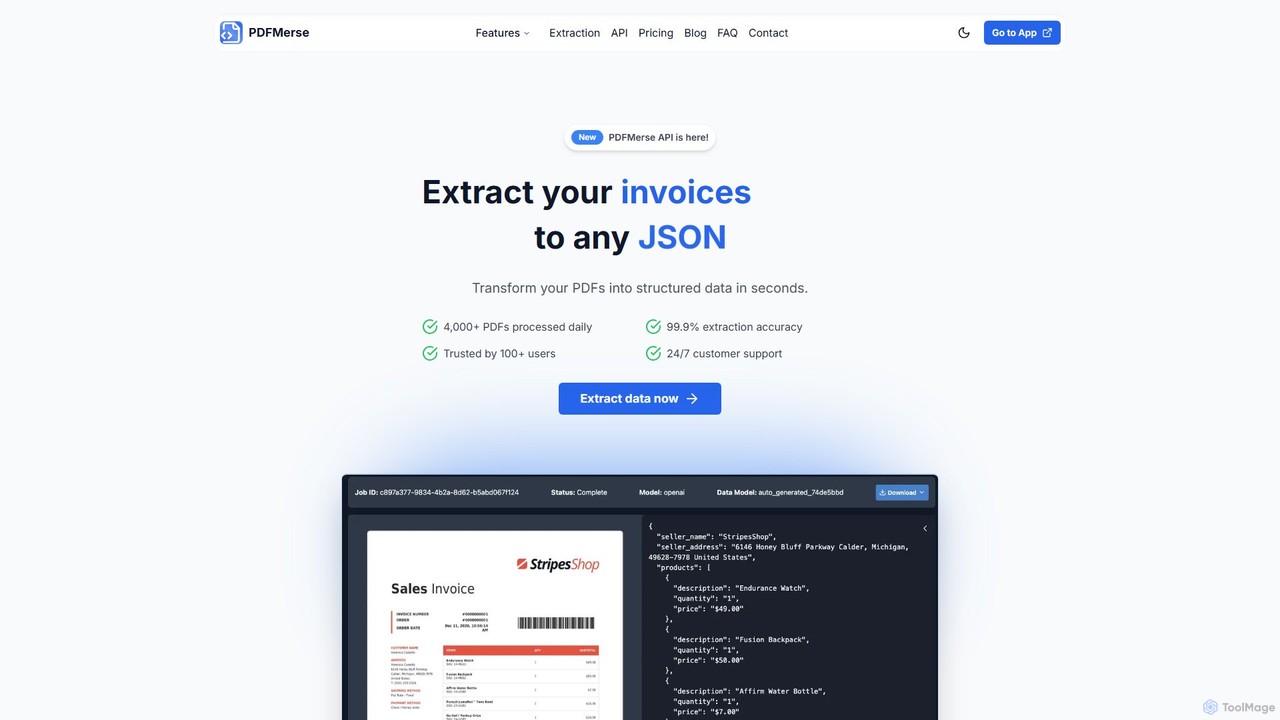
pdfmerse is an AI-powered data extractor that automates the process of capturing information from any PDF document. It intelligently converts unstructured PDF data into structured formats like JSON and text. Ideal for businesses and individuals looking to streamline document processing, reduce manual data entry, and improve workflow efficiency with high accuracy.

Automation
Visits 5.1KFavorites 155Likes 154
Sector Radar
Paid

Sector Radar

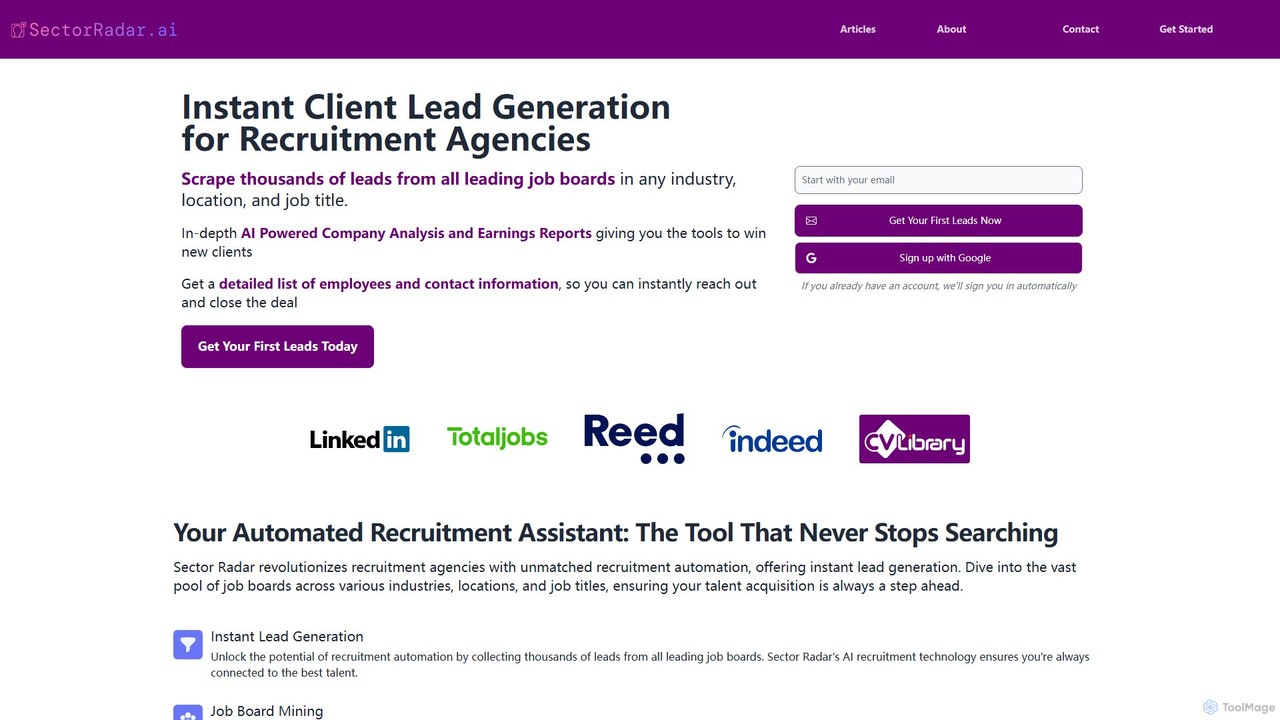
Sector Radar is an AI-powered lead generation platform designed for recruitment agencies. It automates finding new clients by scraping thousands of job postings from leading job boards. The tool provides in-depth company analysis, employee contact information, and earnings reports, enabling recruiters to identify and connect with high-potential leads efficiently and gain a competitive edge.

Data Extraction
Visits 4.5KFavorites 130Likes 131
CambioML
Freemium

CambioML

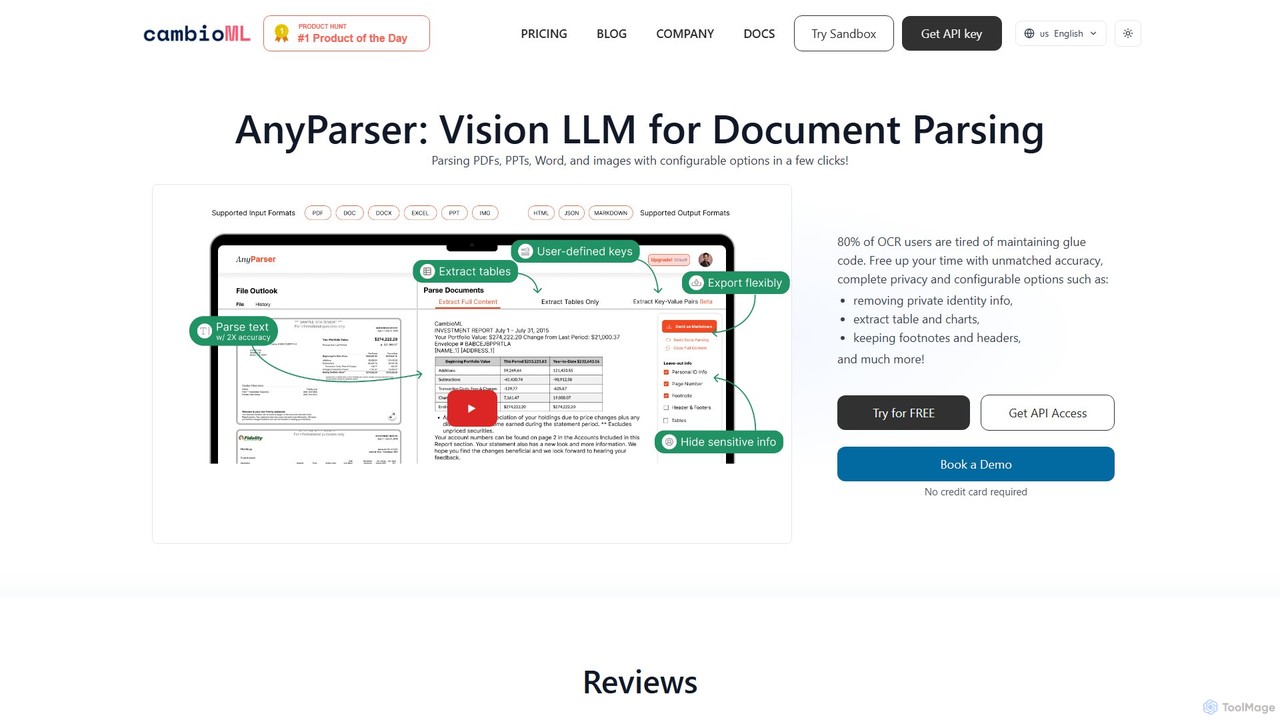
CambioML offers the AnyParser API, a powerful Vision LLM designed for high-accuracy document parsing. It extracts text, tables, charts, and key-value pairs from PDFs, images, and Office documents. With features like PII redaction, configurable outputs, and real-time processing, it's ideal for developers and businesses in finance, research, and data analysis to automate data extraction workflows while ensuring privacy and efficiency.

Data Extraction
Visits 12.3KFavorites 89Likes 94
ApyHub
Freemium

ApyHub

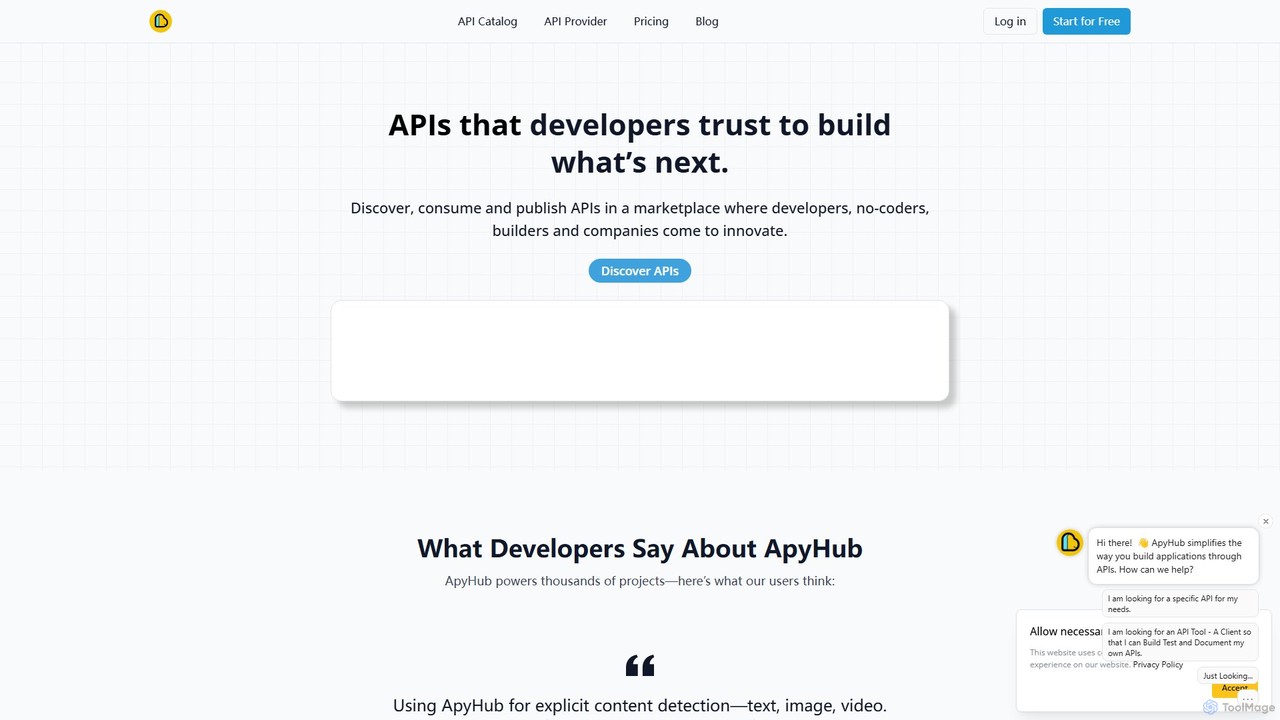
ApyHub is a comprehensive developer platform offering over 150 production-ready APIs. It's designed to accelerate application development by providing a vast catalog of utility and AI-powered APIs for tasks like data extraction, file manipulation, marketing automation, and e-commerce. It enables developers, no-coders, and teams to innovate faster by integrating trusted, pre-built functionalities, reducing boilerplate code and infrastructure management.

Text Generation
Visits 56.9KFavorites 124Likes 124
CapSolver
Paid

CapSolver

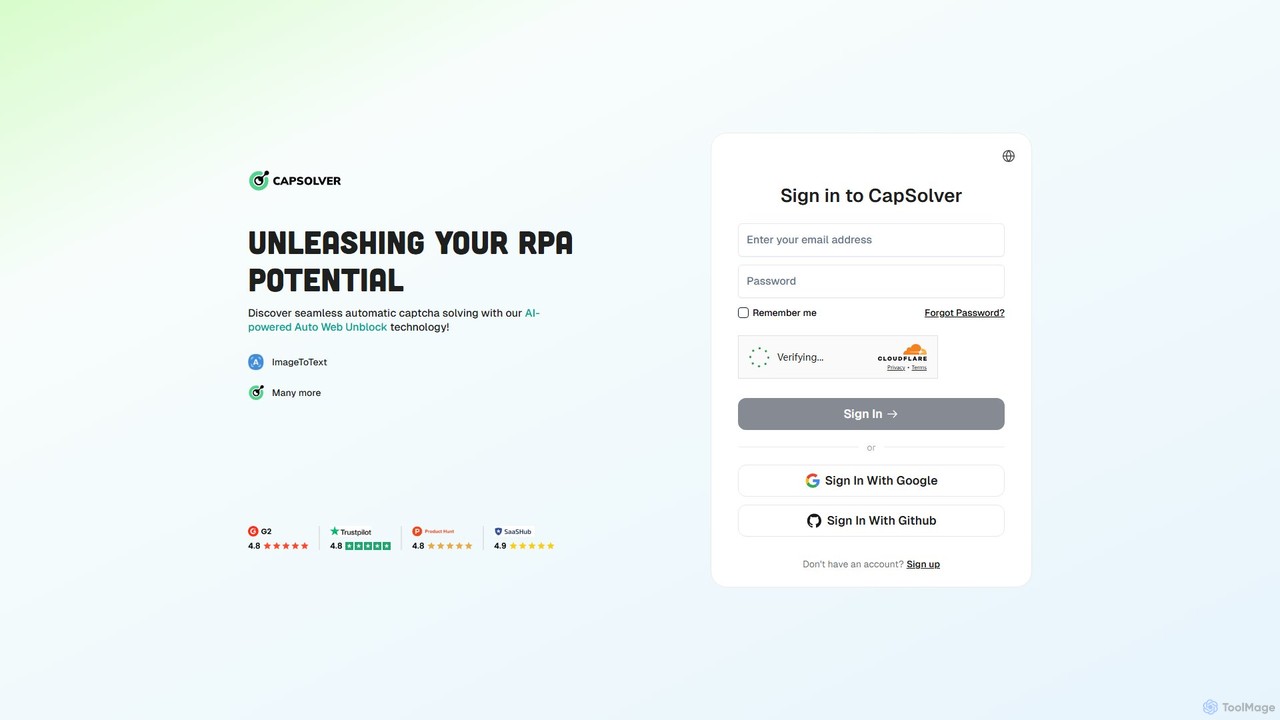
CapSolver is an AI-powered, automatic CAPTCHA solving service designed for developers and RPA professionals. It provides a high-accuracy, fast, and scalable solution to bypass various types of CAPTCHAs, including reCAPTCHA, hCaptcha, and FunCaptcha, facilitating seamless web scraping, data extraction, and process automation.

Data Extraction
Visits 124.6KFavorites 109Likes 116
Monkt
Freemium

Monkt

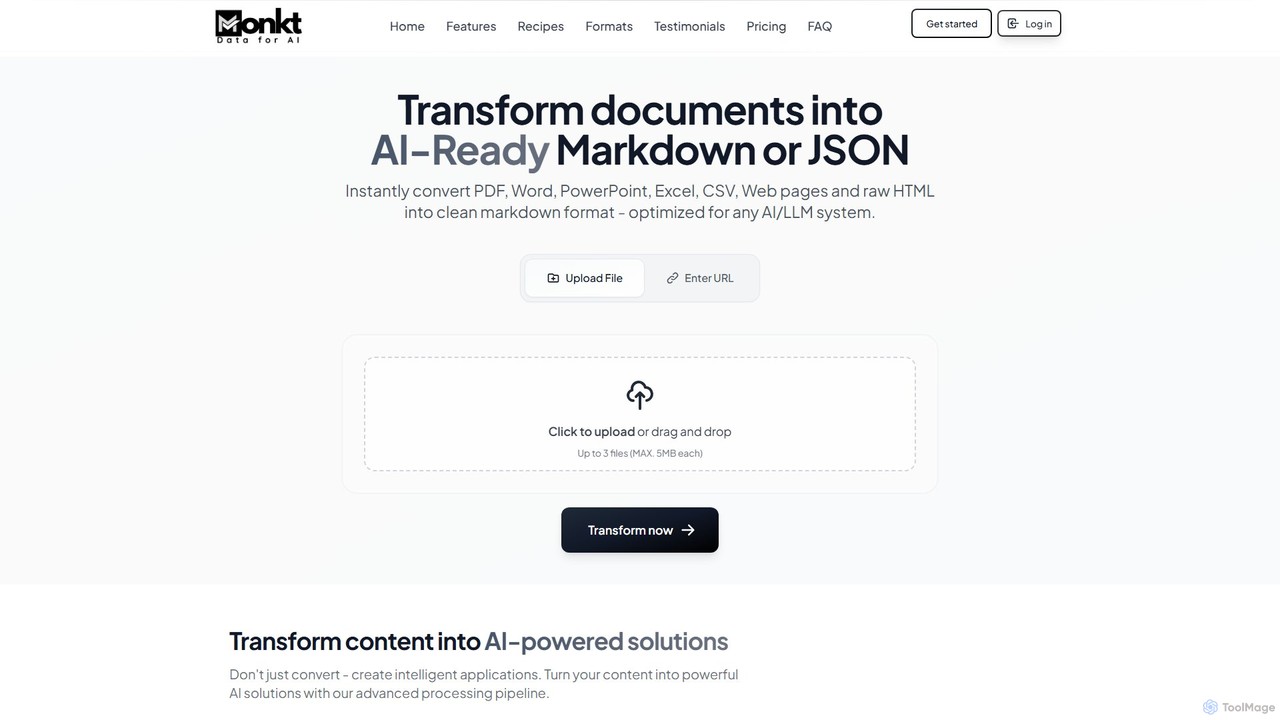
Monkt is an AI-powered platform that transforms documents and websites into clean, AI-ready Markdown or structured JSON. It supports various formats like PDF, Word, and Excel, offering features like OCR, batch processing, and a REST API for automating data extraction and preparing datasets for LLM training.

Data Extraction
Visits 38.5KFavorites 124Likes 119
Lutra AI
Freemium

Lutra AI

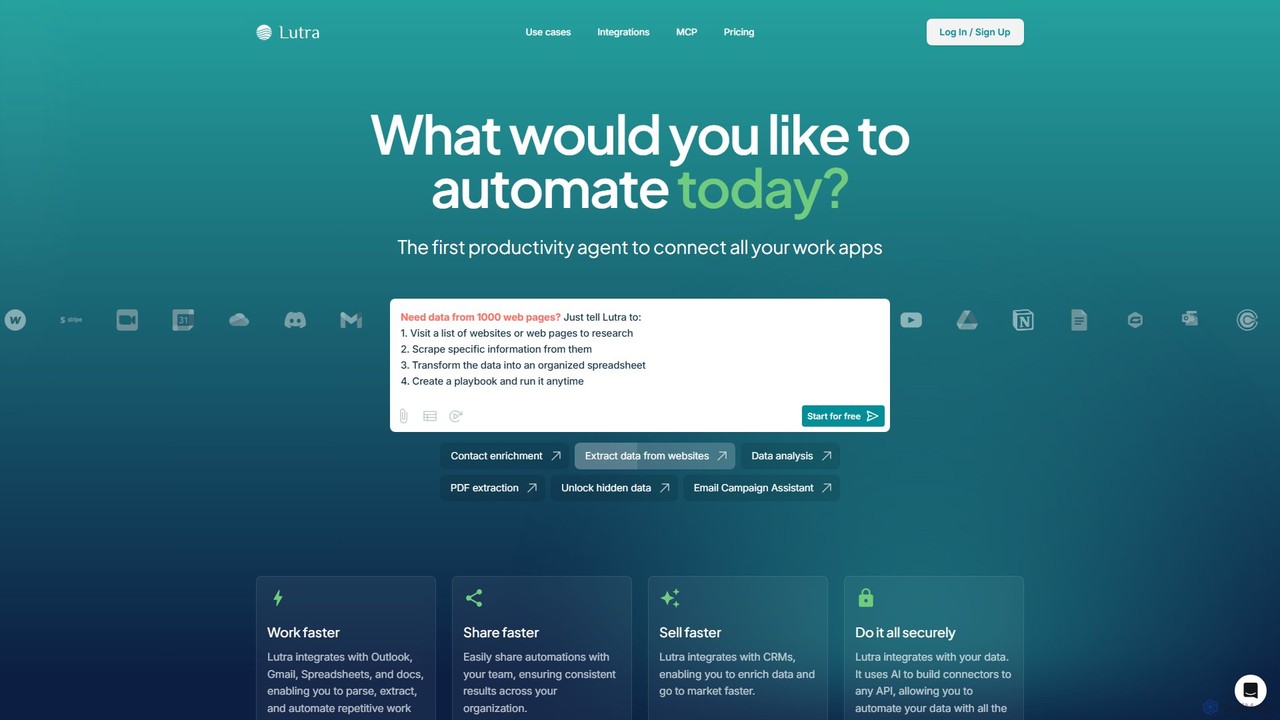
Lutra AI is a productivity agent that automates workflows by connecting all your work apps. It transforms natural language instructions into code to perform tasks like data extraction from PDFs, contact enrichment, data analysis, and email campaign management. By integrating with tools like Google Workspace, HubSpot, and Slack, Lutra streamlines repetitive processes, allowing users to build and share custom automations, called Playbooks, to enhance efficiency across sales, marketing, and operations.

Data Extraction
Visits 11.6KFavorites 113Likes 128
runautomat
Paid

runautomat

runautomat is an AI-driven platform that simplifies business process automation. It allows users to create robust Robotic Process Automation (RPA) solutions by simply providing screen recordings, videos, or text descriptions of their workflows. It's designed to be 10x faster and more cost-effective than traditional RPA, empowering businesses to automate tasks without extensive engineering teams.

Process Management
Visits 18KFavorites 125Likes 118
Doctly
Freemium

Doctly

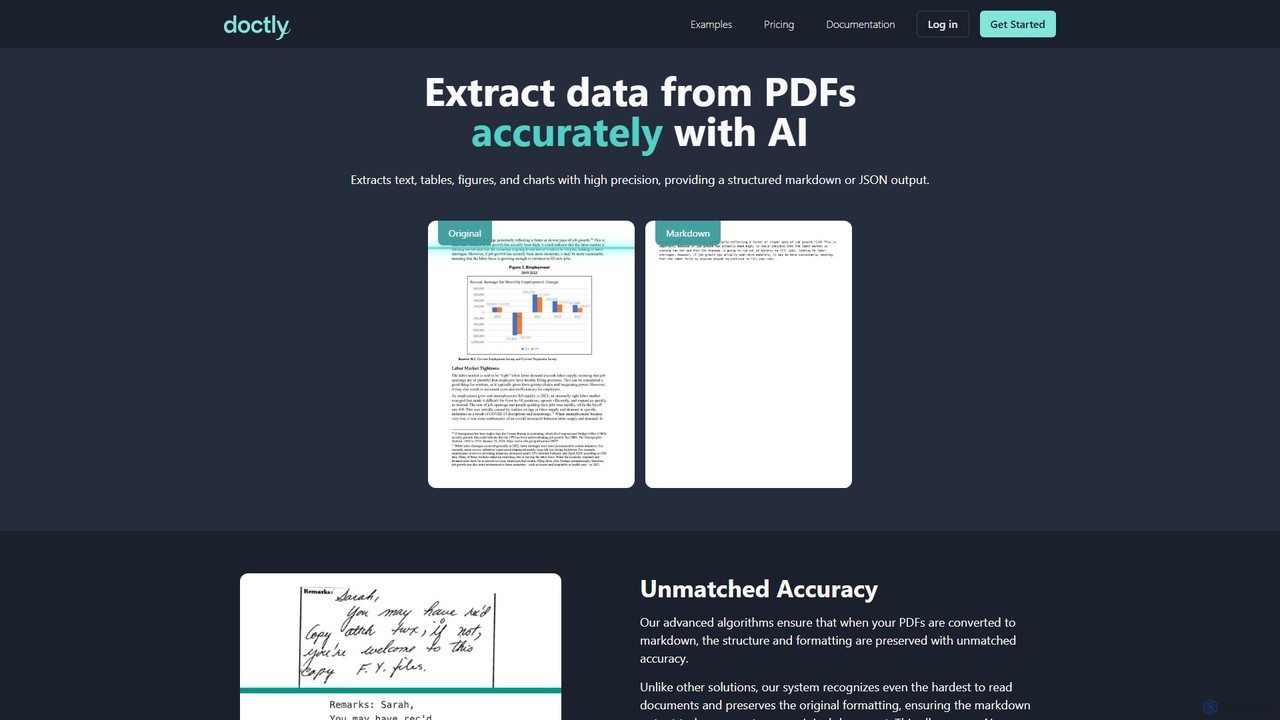
Doctly is an AI-powered tool that accurately extracts data from PDFs and other documents. It converts text, tables, figures, and charts into structured Markdown or JSON, preserving original formatting. With a simple API and high precision, it's designed for developers and businesses to automate document processing workflows.

Data Extraction
Visits 5.3KFavorites 99Likes 125
Regex.ai
Free

Regex.ai

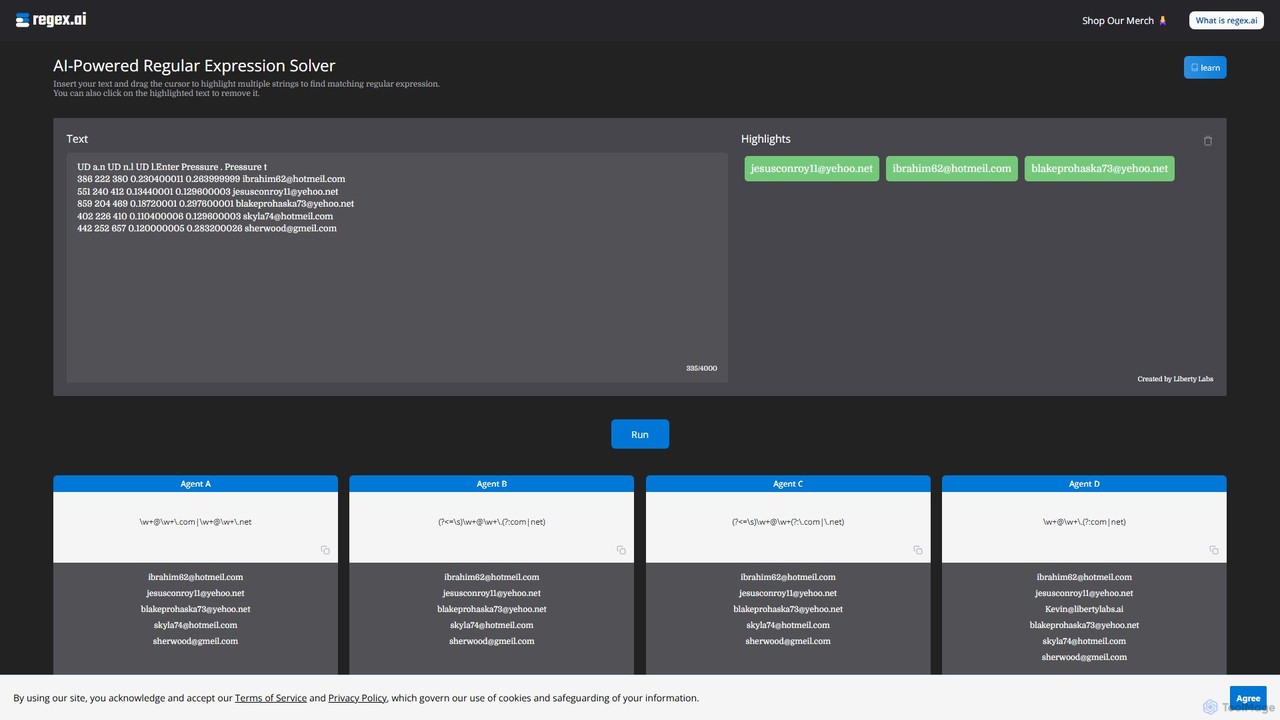
Regex.ai is an AI-powered tool that simplifies the creation of regular expressions. Users can simply input text, highlight the desired patterns, and the AI automatically generates multiple regex options. It's designed for developers, data analysts, and anyone needing to extract or validate text data without writing complex regex from scratch.

Data Extraction
Visits 8.2KFavorites 130Likes 142
automaited
Paid

automaited

automaited is an AI-powered platform designed for enterprises and SMEs to automate document-centric processes. It uses a pre-trained AI, "Ada," to understand, extract, and validate data from various documents like invoices and orders in over 40 languages. The platform integrates seamlessly with existing ERP and IT systems (cloud or on-premise), reducing manual work, minimizing errors, and significantly improving operational efficiency without requiring extensive IT resources or coding knowledge.

Workflow Automation
Visits 7.6KFavorites 124Likes 122
Jina AI
Freemium

Jina AI

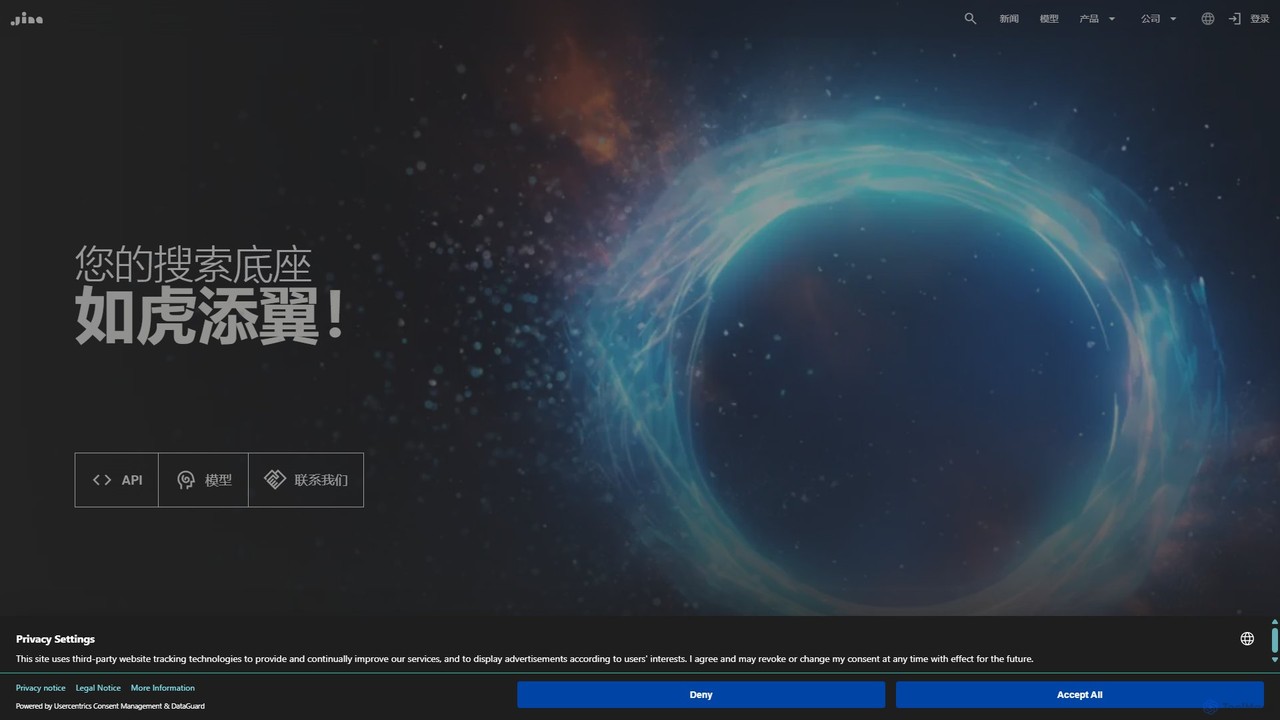
Jina AI provides a state-of-the-art Search Foundation platform, offering a suite of powerful APIs for multimodal embeddings, reranking, and data extraction. It's designed for developers and enterprises to build high-quality, reliable generative AI, RAG (Retrieval-Augmented Generation), and advanced search applications with multilingual and multimodal capabilities.

Language Model
Visits 487.7KFavorites 124Likes 132
ScrapingBee
Freemium

ScrapingBee

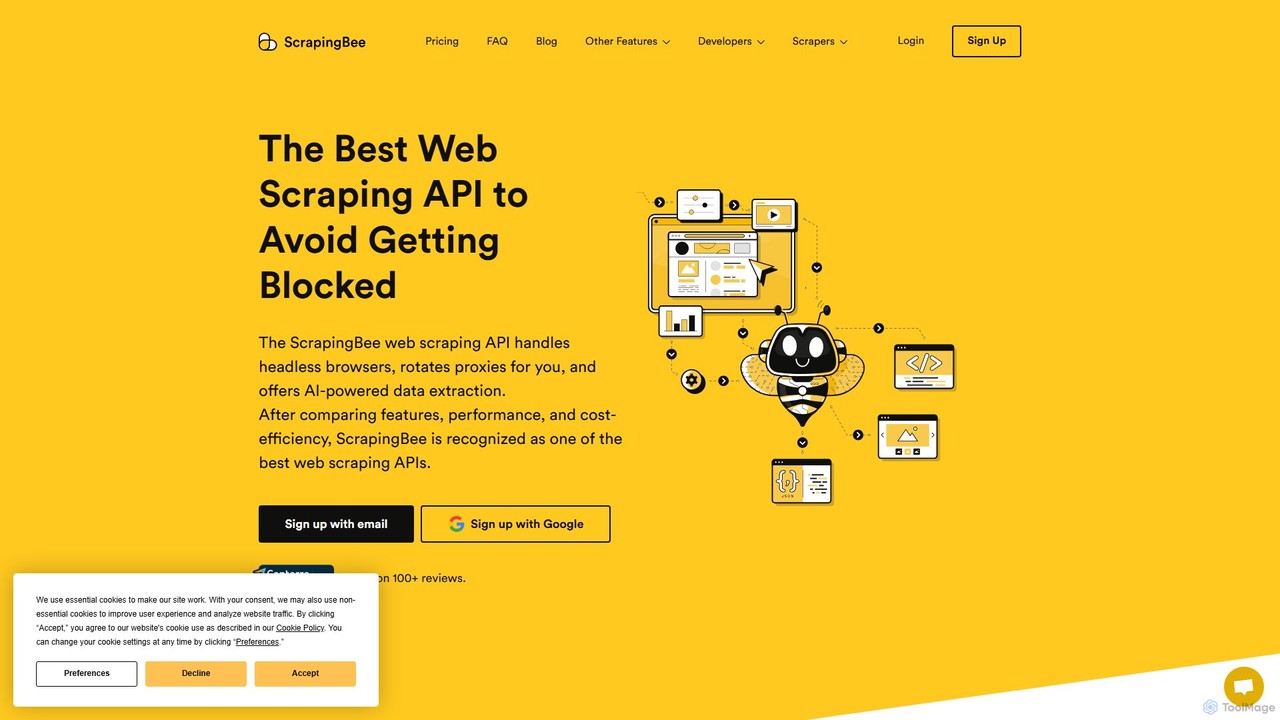
ScrapingBee is a powerful web scraping API that handles headless browsers and proxy rotation to prevent getting blocked. It features an innovative AI-powered extractor that lets you describe the data you need in plain English, eliminating the need for complex CSS selectors. Ideal for developers, marketers, and data analysts for tasks like price monitoring, lead generation, and SERP analysis.

Data Extraction
Visits 263.5KFavorites 121Likes 121
PageLlama
Freemium

PageLlama

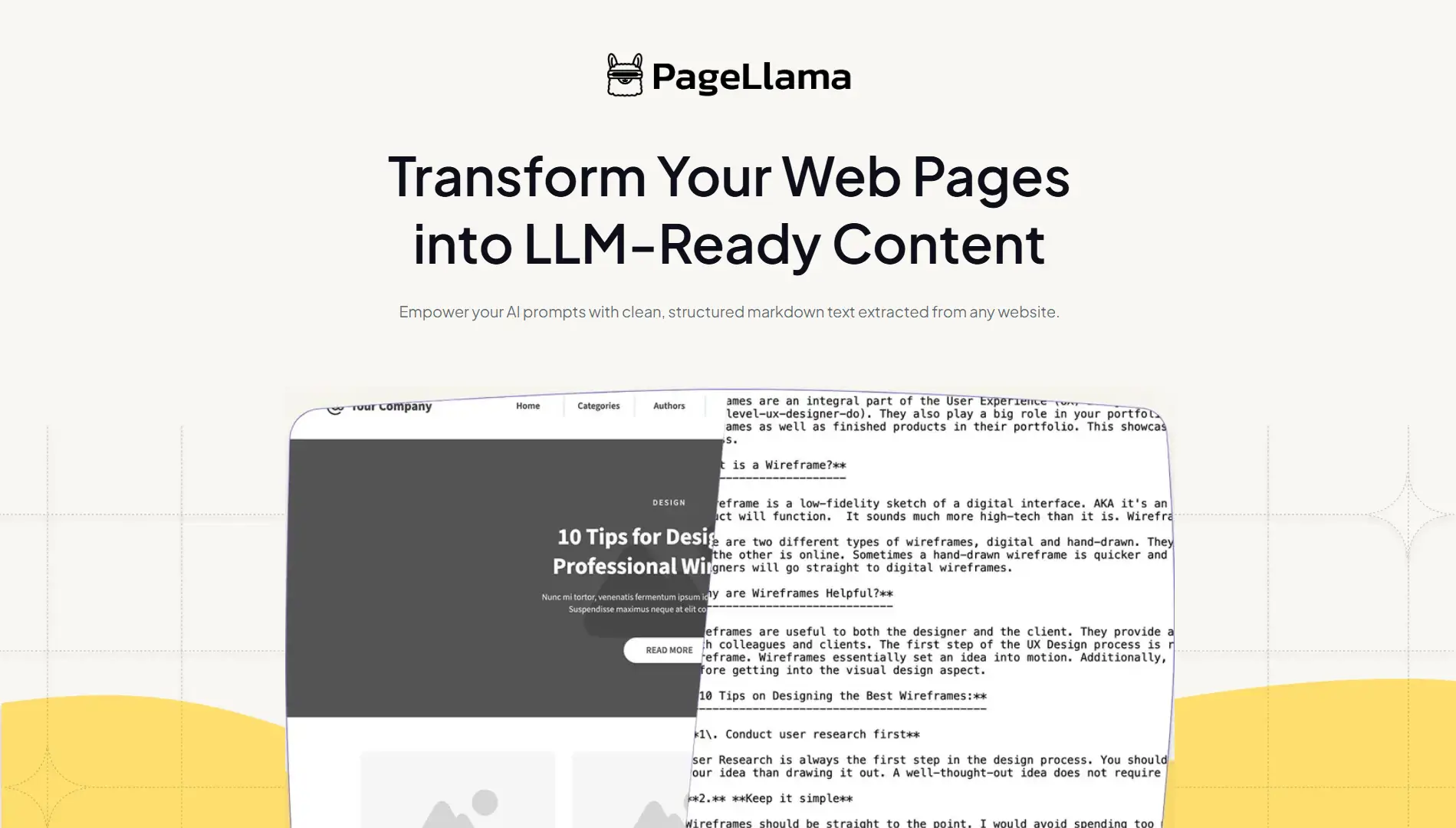
PageLlama is an AI-powered tool designed for developers and researchers. It effortlessly converts any web page content into clean, structured, and LLM-ready Markdown. By removing clutter like ads and navigation, it provides high-fidelity data, optimizing token usage and improving the accuracy of AI applications like RAG systems and data analysis models.

Data Extraction
Visits 4.4KFavorites 140Likes 145
Roborabbit
Freemium

Roborabbit

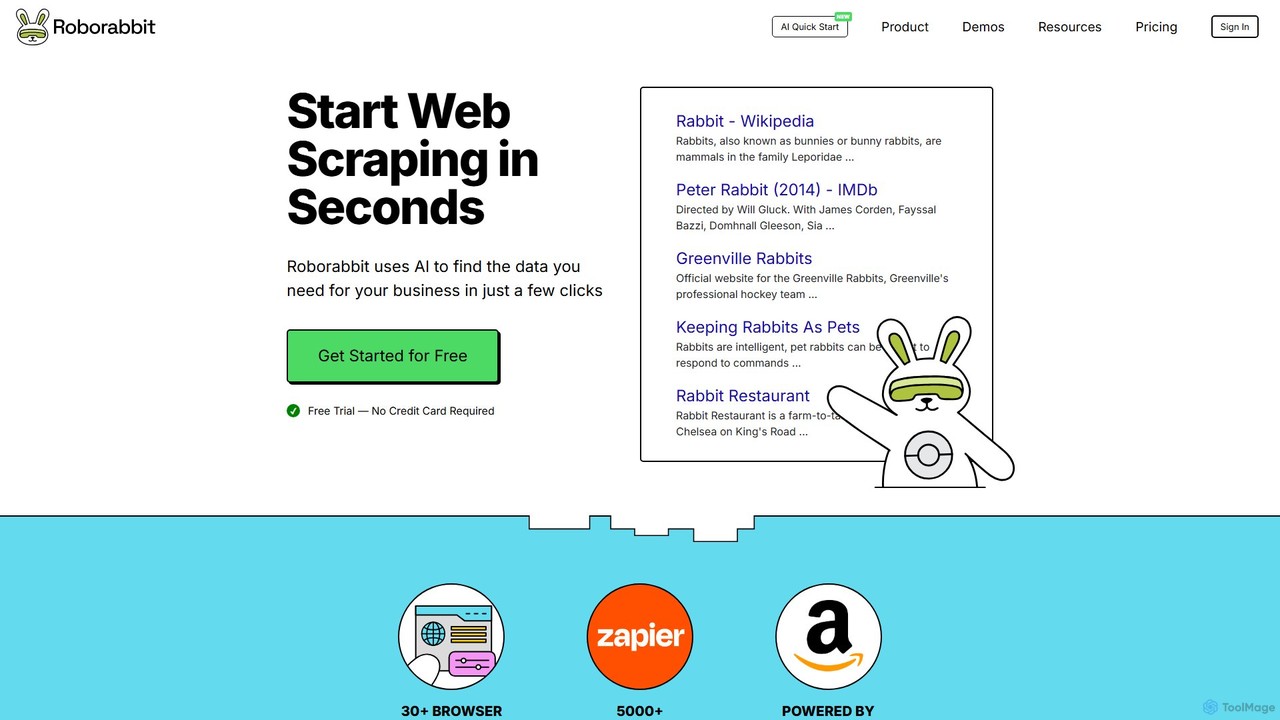
Roborabbit is a no-code AI-powered platform for web scraping and browser automation. It allows users to extract data from any website using a simple drag-and-drop interface, without writing any code. Schedule tasks, integrate with over 5000+ apps via Zapier and Make.com, or use the REST API for advanced workflows. It's designed for marketers, data analysts, and developers to automate repetitive tasks, monitor competitors, and gather valuable business intelligence effortlessly.

Data Extraction
Visits 12.3KFavorites 98Likes 109
mapsscraper
Freemium

mapsscraper

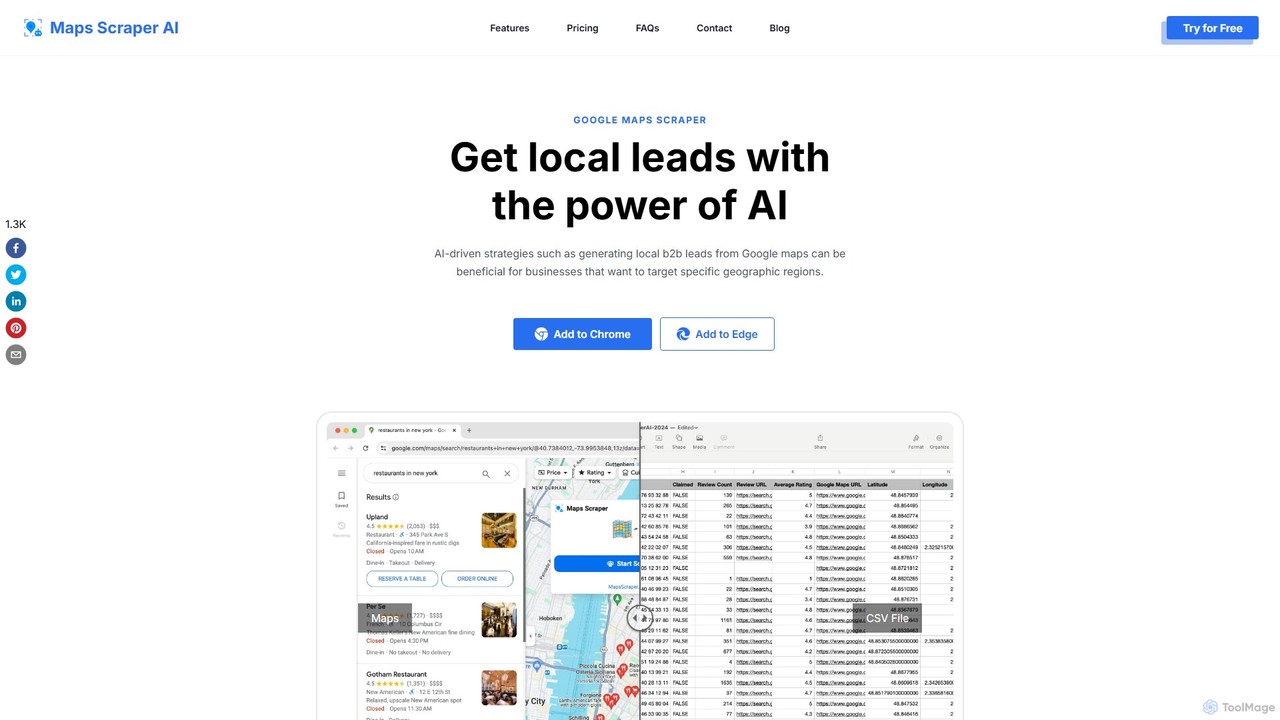
mapsscraper is an AI-powered Google Maps scraper designed for lead generation and data extraction. Available as a Chrome/Edge extension, it automates the process of collecting business information, including names, addresses, phone numbers, and hard-to-find emails and social media profiles, helping sales and marketing teams build targeted local lead lists effortlessly.

Data Extraction
Visits 28.8KFavorites 107Likes 110
Reworkd
Freemium

Reworkd

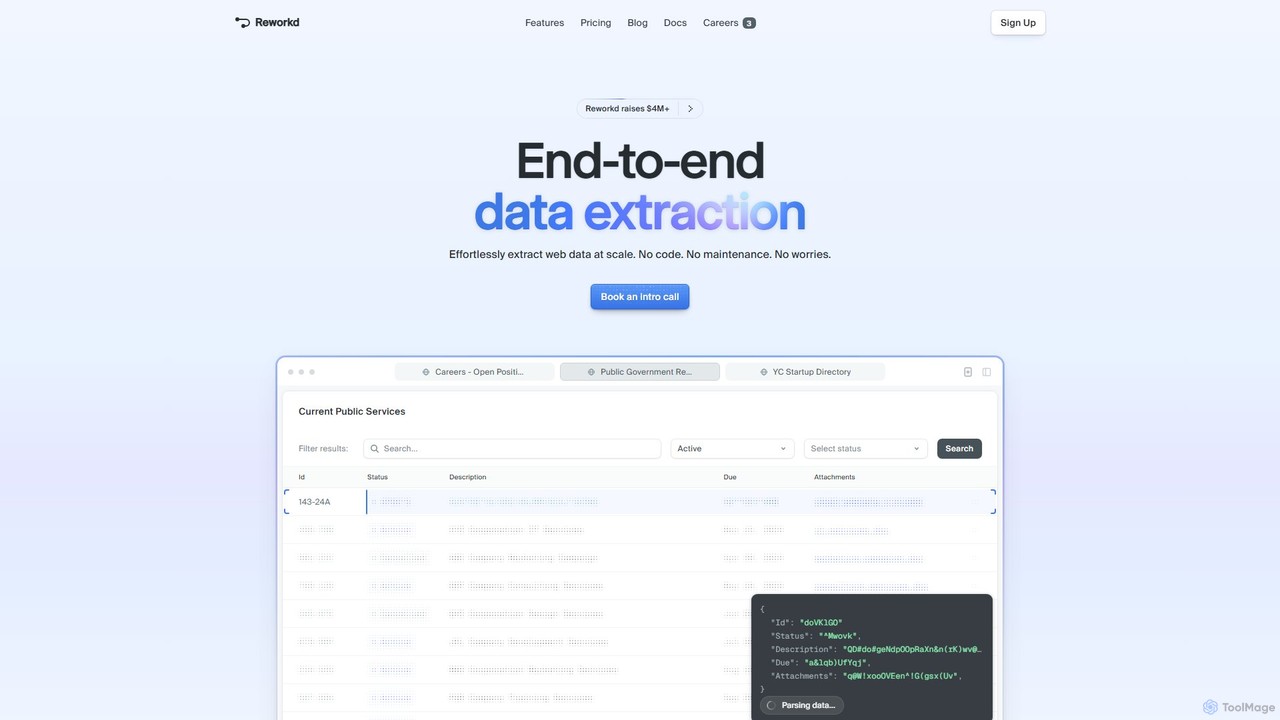
Reworkd is an AI-powered, no-code platform that automates the entire web data extraction process. It uses AI agents to understand websites, generate scraping code, and deliver structured data at scale. Ideal for building datasets, market research, and enriching data pipelines without manual coding or maintenance.

Data Extraction
Visits 116KFavorites 91Likes 91
Isomeric
Freemium

Isomeric

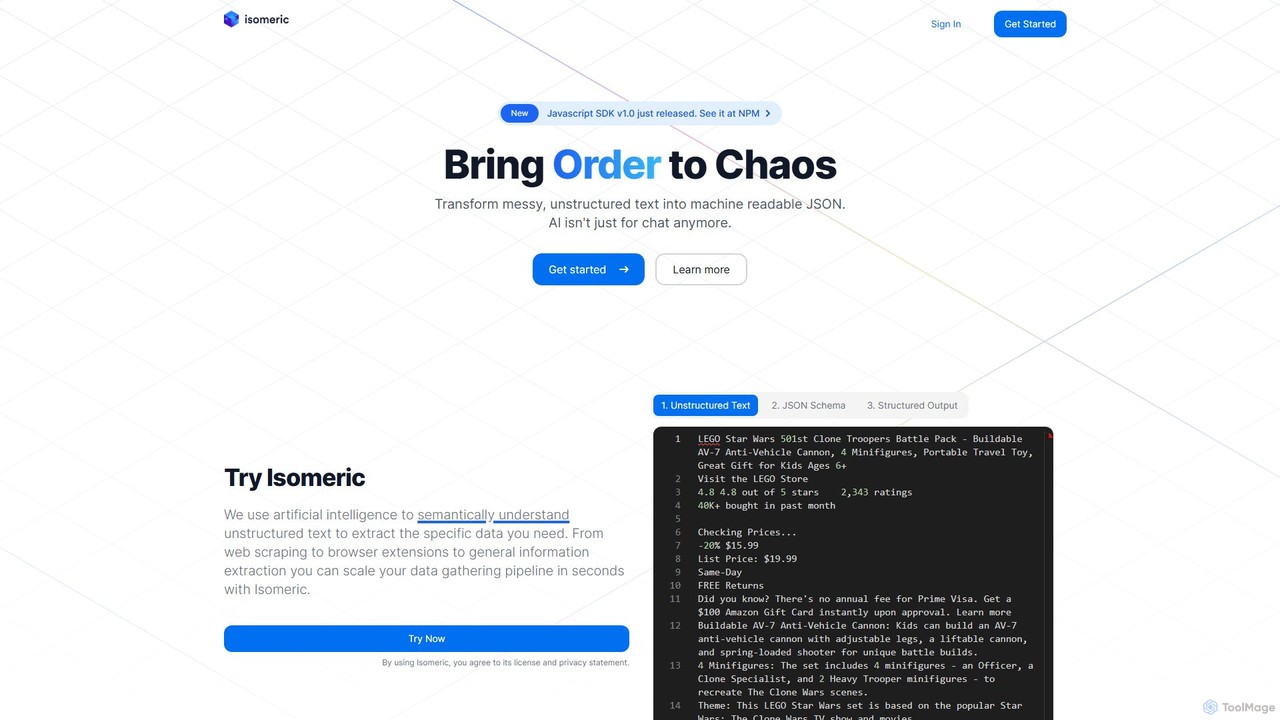
Isomeric is an AI-powered API that transforms messy, unstructured text from any source into clean, structured JSON data. By defining a simple JSON schema, you can automatically extract specific information from websites, legal documents, customer support transcripts, and more, streamlining data pipelines and automation.

Data Extraction
Visits 5KFavorites 130Likes 153
Starizon
Freemium

Starizon

Starizon is an AI-powered Chrome extension that acts as an intelligent browser assistant. It simplifies web tasks by allowing users to extract and monitor data, create automation workflows, and interact with webpages through simple conversational commands. It's designed to boost productivity by automating repetitive online activities.

Chrome Extensions
Visits 4.5KFavorites 132Likes 119
instracker
Freemium

instracker

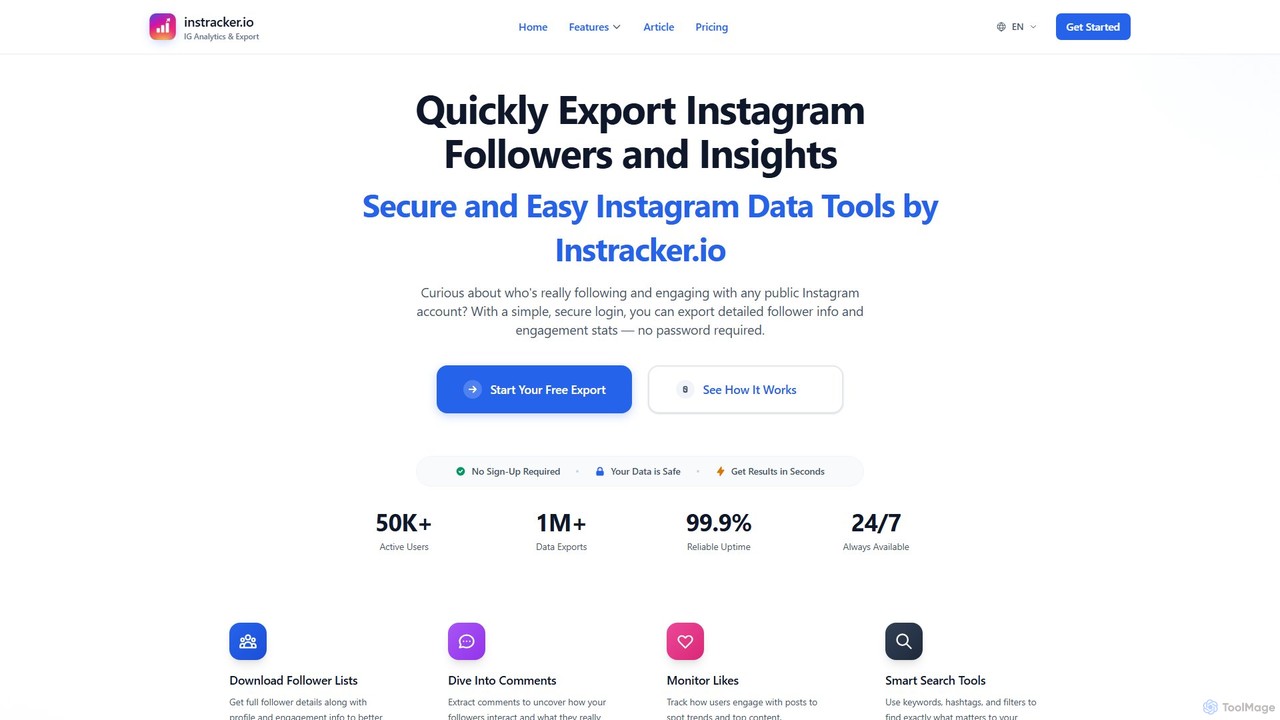
Instracker is a powerful Instagram data export and analysis tool for marketers, agencies, and creators. It securely exports follower/following lists, comments, likes, and profile data from any public Instagram account without requiring a password. Get detailed insights in CSV, Excel, or JSON formats to understand your audience, track engagement, and refine your social media strategy.

Data Extraction
Visits 5.1KFavorites 115Likes 116
pdfparser
Paid

pdfparser

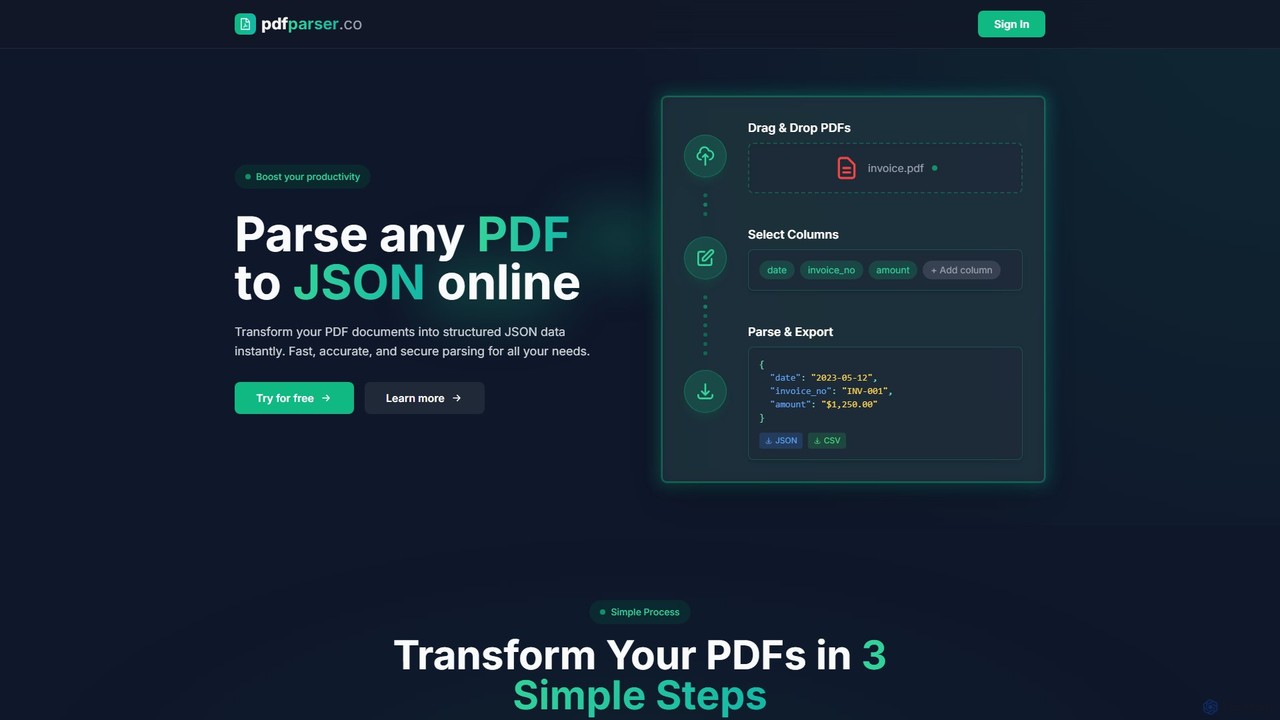
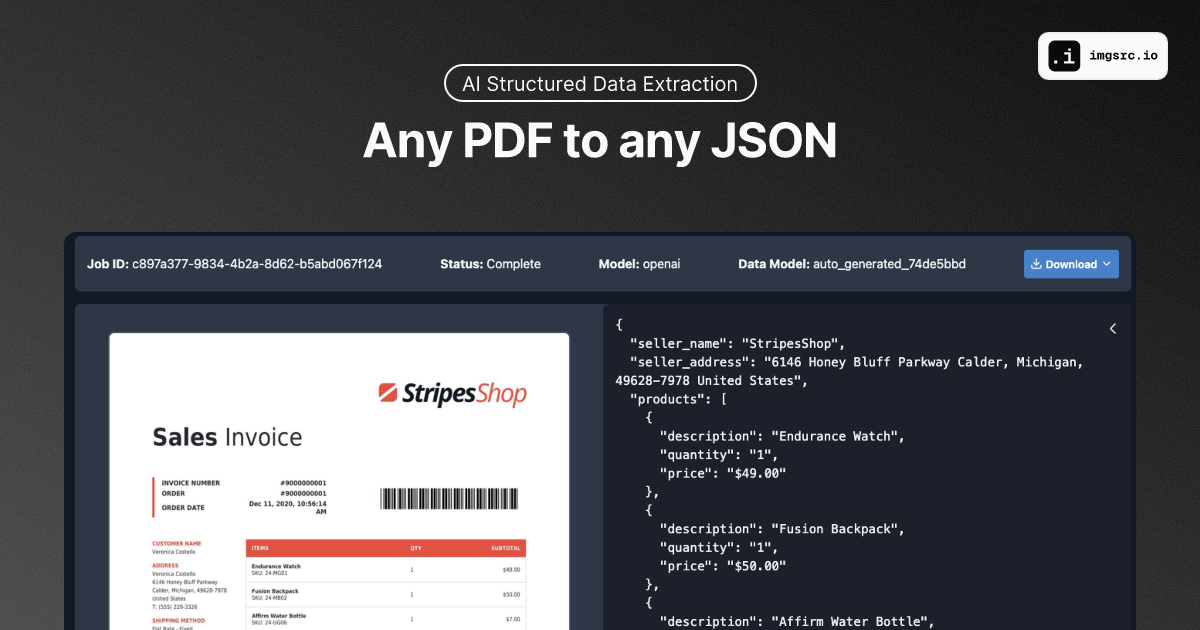
An AI-powered API service designed for developers and businesses to effortlessly parse PDF documents. It extracts text, tables, and structured data from any PDF, including scanned files, and returns clean, machine-readable JSON output, automating data extraction workflows.

Automation
Visits 4.5KFavorites 105Likes 91
UseScraper
Freemium

UseScraper

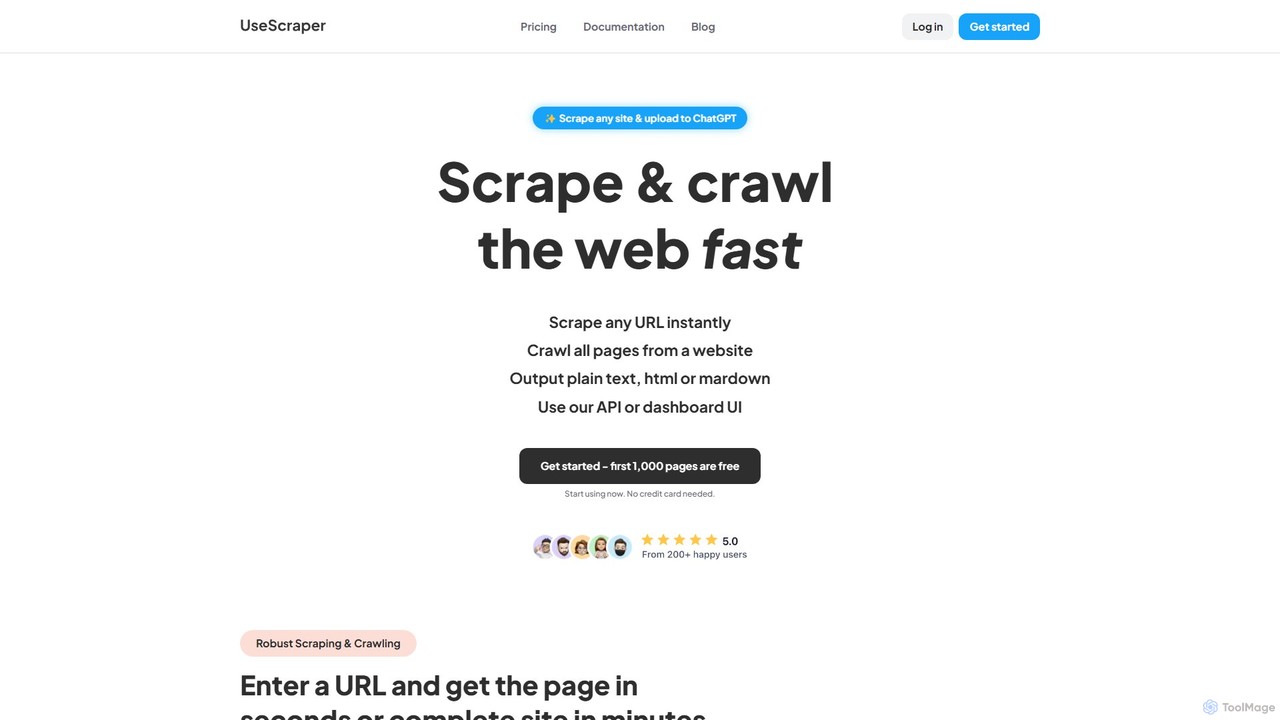
UseScraper is a powerful web crawler and scraper API designed for developers and AI applications. It efficiently extracts data from any website, featuring full JavaScript rendering, auto-scaling infrastructure, and clean output formats like Markdown, ideal for feeding data into LLMs like ChatGPT.

Data Extraction
Visits 5.1KFavorites 131Likes 118
Textraction
Freemium

Textraction

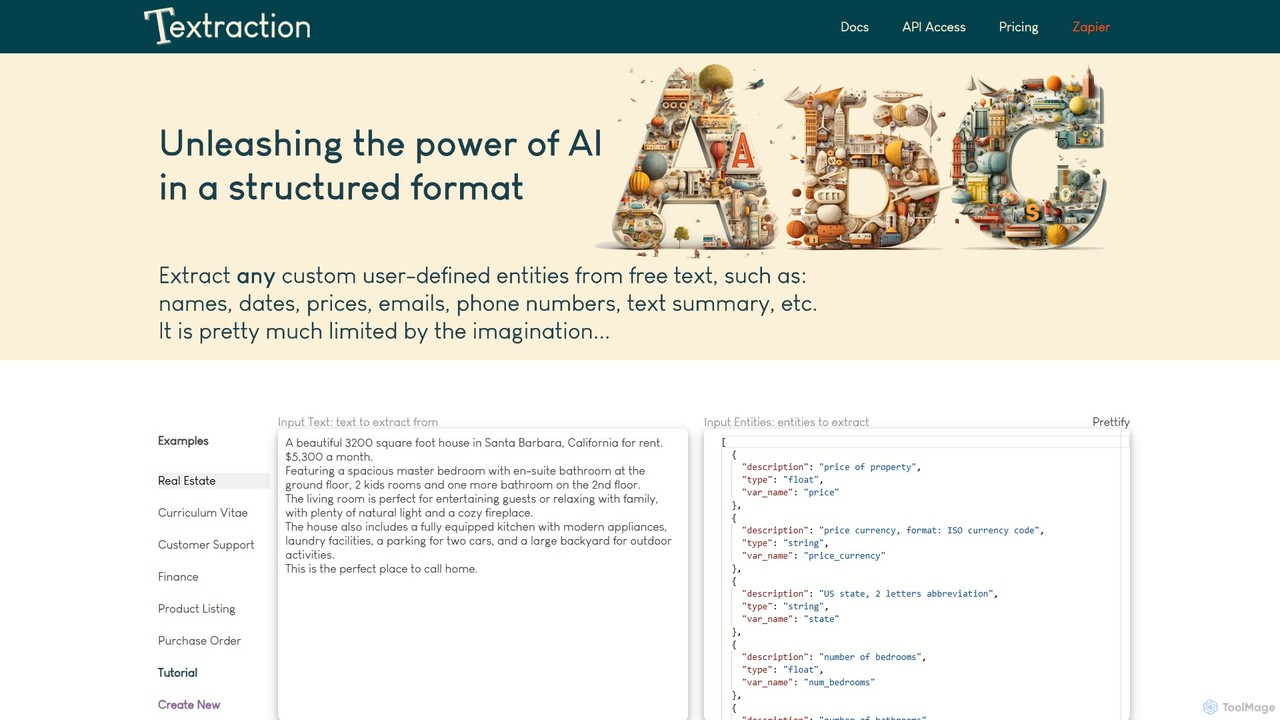
Textraction is a powerful AI-powered API that transforms unstructured text into structured data. By simply describing the information you need in natural language, you can extract any entity from documents, emails, or web content. With seamless API and Zapier integration, it automates data extraction, converting messy text into clean, table-ready JSON format, supporting multiple languages and endless custom use cases.

Data Extraction
Visits 4.6KFavorites 62Likes 80

About Data Extraction

Data Extraction tools are AI-powered applications designed to automatically identify and pull specific information from unstructured or semi-structured sources. They utilize technologies like Optical Character Recognition (OCR) and Natural Language Processing (NLP) to read and understand documents, web pages, and images like a human would. This process transforms raw, inaccessible data into structured, actionable formats such as JSON or CSV, eliminating manual data entry. These tools are crucial for businesses looking to automate workflows, improve data accuracy, and derive insights from vast amounts of information.

Core Features

  • Automated Data Capture: Extracts text, tables, and key-value pairs from PDFs, scanned documents, and images.
  • Template-Free Recognition: Uses AI to understand document layouts and fields without needing pre-defined templates.
  • Web Scraping & Crawling: Gathers specific data points from websites, social media, and online forums at scale.
  • Structured Data Output: Converts extracted information into organized formats like JSON, CSV, or XML for easy integration.
  • Natural Language Understanding (NLU): Interprets context to accurately identify entities like names, dates, addresses, and invoice amounts.

Use Cases

Data Extraction tools are widely used in finance for invoice and receipt processing, in HR for parsing resumes, and in e-commerce for monitoring competitor pricing. Legal and real estate sectors use them to extract key information from contracts and deeds. Market researchers also leverage these tools to gather customer feedback and public sentiment from online sources.

How to Choose

When selecting a Data Extraction tool, consider its accuracy rate for your specific document types. Evaluate the range of supported sources (PDFs, emails, websites) and the available output formats. Assess its integration capabilities via API, its scalability for handling high volumes, and whether the pricing model (per-page or subscription) aligns with your usage needs.

Featured tool rankings

Data Extraction use cases

1

Automate Invoice and Receipt Processing

An accounts payable specialist in a mid-sized company handles hundreds of invoices weekly. Instead of manually typing data from PDF invoices into accounting software, they use a Data Extraction tool. The tool automatically scans each invoice, identifies and extracts key fields like invoice number, vendor name, due date, and line-item details. This data is then exported as a structured CSV file, which can be directly imported into their accounting system. This process reduces data entry time by over 90% and minimizes costly human errors.

2

Monitor Competitor Pricing and Product Catalogs

An e-commerce manager needs to stay competitive by tracking rivals' pricing and product availability. They configure a Data Extraction tool to crawl a list of competitor websites daily. The tool extracts product names, prices, stock status, and customer ratings. This information is automatically populated into a dashboard, providing a real-time view of the market. This allows the manager to make agile pricing adjustments, identify gaps in their own product catalog, and react quickly to market trends without spending hours on manual web browsing.

3

Parse Resumes to Streamline Hiring

A corporate recruiter receives hundreds of resumes for a single job opening. Manually reviewing each one and entering candidate data into an Applicant Tracking System (ATS) is time-consuming. By using a Data Extraction tool, the recruiter can upload all resumes in bulk. The AI parses each document, regardless of its format, and extracts key information such as candidate name, contact details, work experience, education, and skills. The output is a structured file that can be instantly uploaded to the ATS, allowing the recruiter to focus on interviewing qualified candidates rather than on data entry.

4

Extract Key Clauses from Legal Contracts

A paralegal at a law firm needs to review dozens of contracts to identify specific clauses related to liability and termination dates. This manual process is tedious and prone to oversight. They use a Data Extraction tool trained on legal documents. The tool scans the contracts and automatically highlights and extracts the relevant clauses, party names, and effective dates. This information is compiled into a summary report, allowing the legal team to quickly assess risks and obligations across their entire contract portfolio, saving dozens of hours per case.

5

Gather Market Research Data from Online Forums

A market research analyst is tasked with understanding public sentiment about a new tech product. Instead of manually reading thousands of posts on Reddit and tech forums, they use a Data Extraction tool. They set it up to crawl specific subreddits and forums, extracting user comments, product mentions, and common complaints or praises. The tool can also perform basic sentiment analysis. The extracted data is then visualized in a report, providing the analyst with actionable insights into customer needs and product perception in a fraction of the time.

6

Digitize Medical Records from Scanned Documents

A healthcare administrator is responsible for digitizing decades of paper-based patient records. Manually transcribing this sensitive information is slow and carries a high risk of error. They employ a Data Extraction tool with advanced OCR capabilities. The tool processes scanned medical charts, lab reports, and intake forms, accurately extracting patient IDs, diagnoses, medication lists, and physician notes. This structured data is then securely transferred to the hospital's Electronic Health Record (EHR) system, improving data accessibility for doctors and ensuring compliance with digital record-keeping standards.

Data Extraction FAQ

What are AI Data Extraction tools?

AI Data Extraction tools are software applications that use artificial intelligence, primarily Natural Language Processing (NLP) and Optical Character Recognition (OCR), to automatically identify and pull specific data from various unstructured sources. Unlike manual data entry, they can process documents like invoices, contracts, and web pages at scale, converting the information into a structured format (e.g., CSV, JSON) for analysis or integration into other systems. Their main purpose is to automate data collection, reduce human error, and save significant time.

How to choose the right Data Extraction tool?

Choosing the right tool depends on your specific needs. Consider the following factors:

  • Source Types: Does the tool support the formats you work with (e.g., PDFs, scanned images, emails, websites)?
  • Accuracy: Request a demo or trial to test the tool's accuracy on your own documents. Look for high precision in field recognition.
  • Integration: Check if it offers an API or pre-built connectors to integrate with your existing software (e.g., ERP, CRM, accounting systems).
  • Scalability: Ensure the tool can handle your expected volume of documents or web pages without performance issues.
  • Ease of Use: Evaluate if the interface is intuitive and if it requires extensive technical knowledge to set up and manage extraction workflows.
What's the difference between AI Data Extraction and traditional web scraping?

The key difference lies in intelligence and adaptability. Traditional web scraping relies on fixed rules, like CSS selectors or XPath, to find data in a website's HTML structure. If the website layout changes, the scraper breaks. AI Data Extraction, on the other hand, uses machine learning and computer vision to understand the context and visual layout of a page, much like a human. This makes it more resilient to website changes and allows it to extract data from complex sources beyond web pages, such as scanned PDFs and images, which traditional scrapers cannot handle.

What kind of data can these tools extract?

AI Data Extraction tools are versatile and can extract a wide range of data types from various sources. Common examples include:

  • Textual Data: Names, addresses, product descriptions, and user comments.
  • Numerical Data: Prices, quantities, invoice totals, and phone numbers.
  • Dates: Invoice dates, due dates, and contract effective dates.
  • Tabular Data: Entire tables from financial reports, product catalogs, or scientific papers.
  • Specific Fields: Key-value pairs like 'Total Amount: $150.00' from receipts or 'Vendor Name: ABC Corp' from invoices.

They can process sources like PDFs, Word documents, emails, scanned images, and live websites.

Who benefits most from using Data Extraction tools?

Virtually any organization that deals with a high volume of documents or needs to gather data from the web can benefit. Key users include:

  • Finance and Accounting Teams: For automating accounts payable by extracting data from invoices and receipts.
  • Human Resources Departments: For streamlining recruitment by parsing resumes and application forms.
  • E-commerce and Retail Businesses: For competitive analysis by scraping product data and prices from competitor websites.
  • Legal and Compliance Professionals: For quickly reviewing contracts and legal documents to find specific clauses.
  • Market Researchers and Data Analysts: For gathering public sentiment, customer feedback, and market trends from online sources.