ToolMage
Sign in

Best 296 Research AI tools for Education

Popular Research AI tools in Education include DeepSeek, Britannica, Google Books, Yuanbao, Semantic Scholar, JustDone, Chengpian AI, Wikiwand, ModelScope, and Glasp, helping you work more efficiently.

Seamless
Paid

Seamless

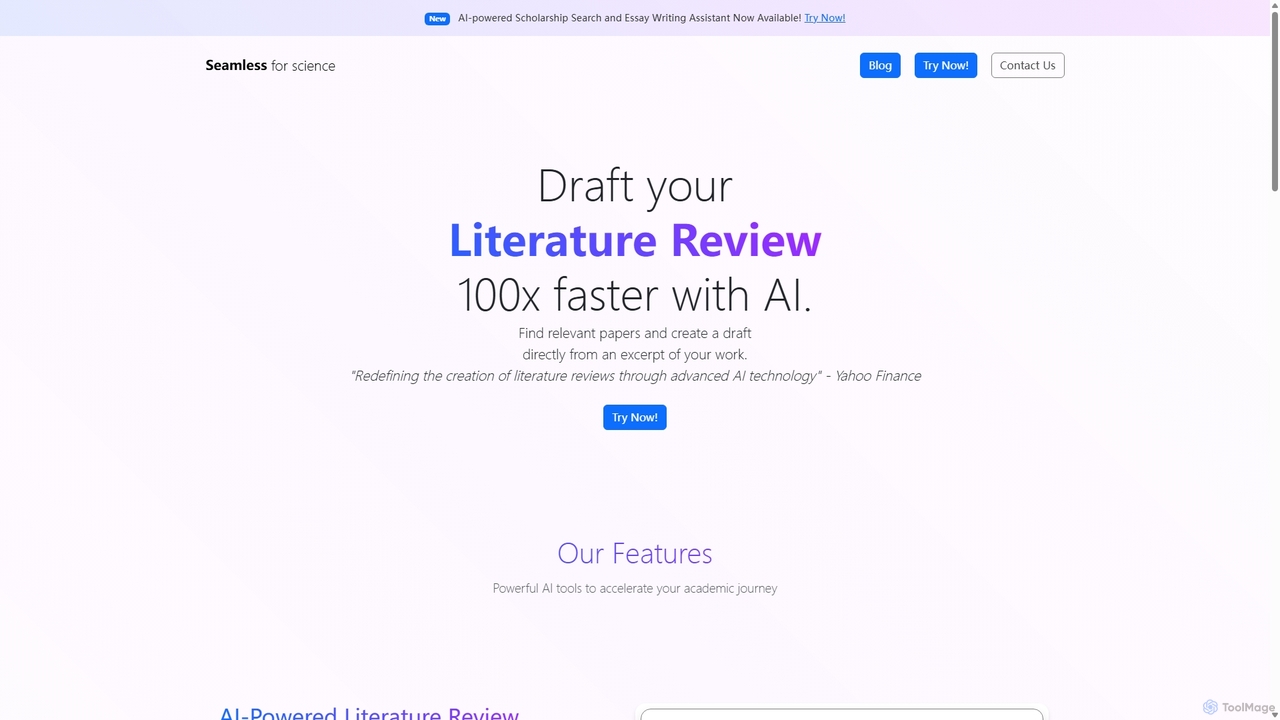
Seamless is an AI-powered platform designed to accelerate academic research. It generates comprehensive literature reviews with citations in minutes, helps students find and apply for scholarships, and offers an AI assistant for crafting compelling essays. It's built for students, researchers, and academics.

Research
Visits 6.1KFavorites 167Likes 168
Skimming AI
Freemium

Skimming AI

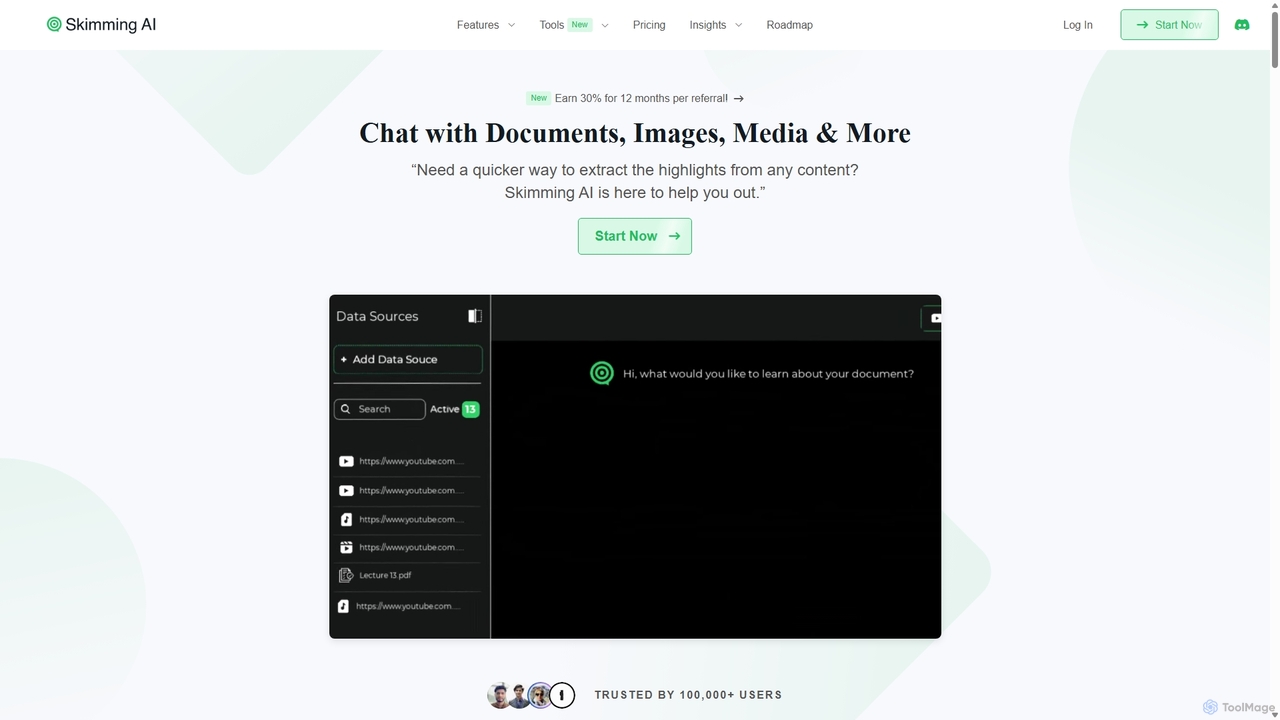
Skimming AI is a versatile AI-powered platform that allows you to chat with and summarize a wide range of content, including documents, PDFs, YouTube videos, audio, images, and social media posts. Instantly extract key insights, ask questions, and get accurate answers without sifting through hours of material. It's designed to boost productivity for students, researchers, and professionals by making information consumption faster and more efficient across multiple formats and languages.

Analysis
Visits 22.3KFavorites 119Likes 130
Summarify
Freemium

Summarify

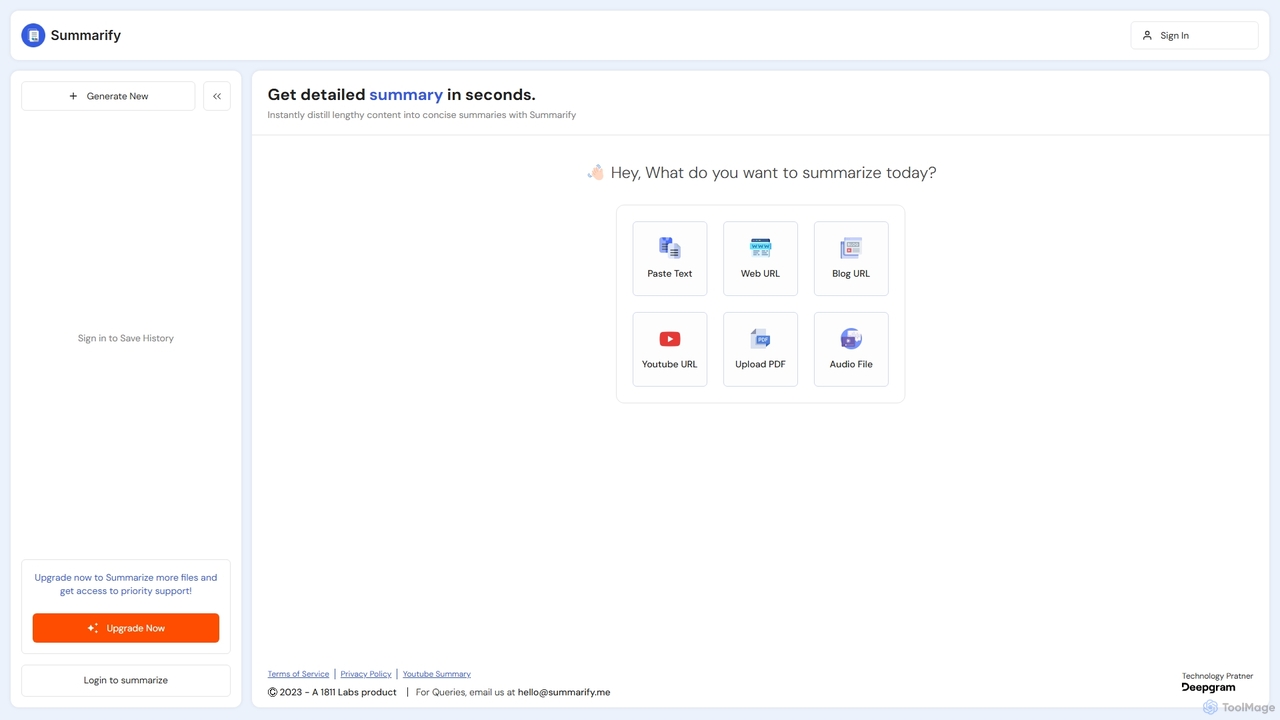
Summarify is an AI-powered tool that instantly distills lengthy content into concise summaries. It supports various formats including text, web URLs, YouTube videos, PDFs, and audio files, helping users save time and absorb key information quickly.

Research
Visits 6.5KFavorites 129Likes 131
Resea AI
Freemium

Resea AI

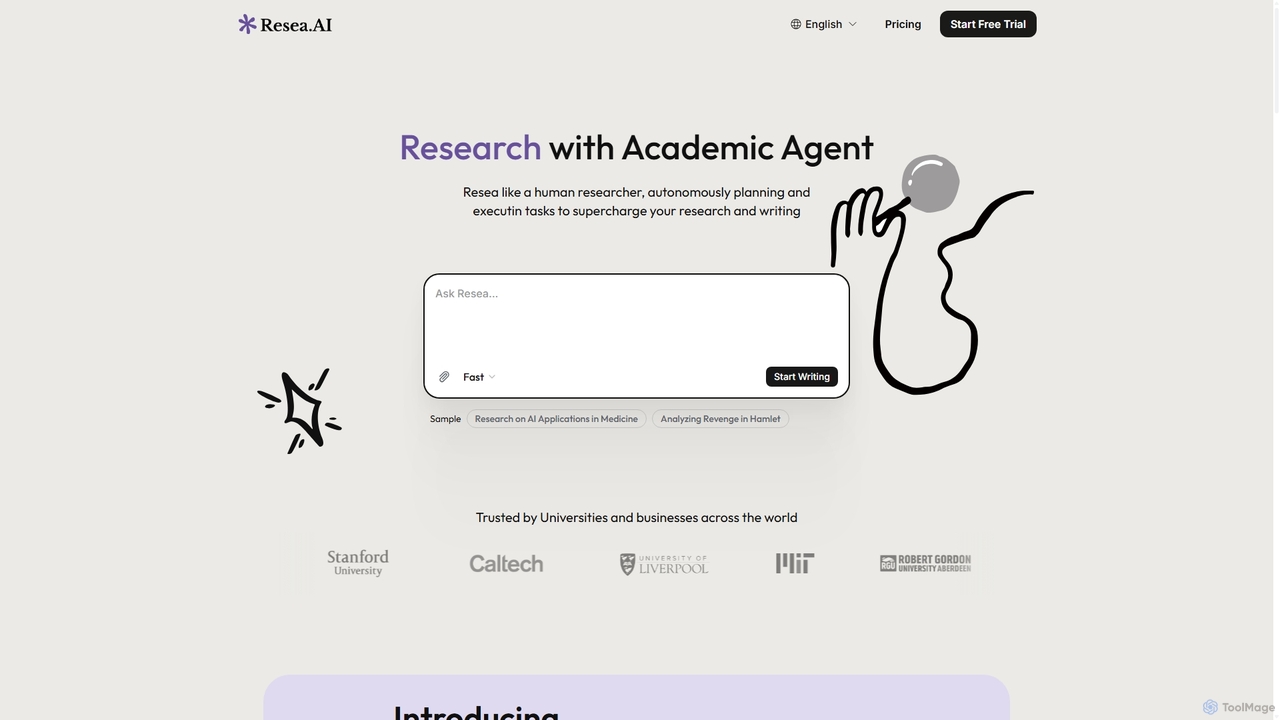
Resea AI is the world's first autonomous academic agent, designed to supercharge research and writing. It independently plans and executes tasks, from conducting in-depth research across databases like Google Scholar and PubMed to writing long-form reports of up to 50,000 words with accurate citations in formats like APA and IEEE. It's an all-in-one partner for students, academics, and researchers.

Research
Visits 25.7KFavorites 130Likes 126
Pdfai
Freemium

Pdfai

Pdfai is an AI-powered document assistant that allows you to chat with your PDF files. Instantly get summaries, ask complex questions, and extract key information from research papers, reports, and contracts. Boost your productivity and unlock insights from your documents in seconds.

Data Analysis
Visits 9KFavorites 159Likes 156
ChatDocuments
Freemium

ChatDocuments

ChatDocuments is an AI-powered platform that allows you to interact with your documents through a conversational chat interface. Upload PDFs, Word files, and other formats to ask questions, get instant summaries, extract key information, and gain insights without manually reading through pages. It's designed to boost productivity for students, researchers, and professionals.

Data Analysis
Visits 5.8KFavorites 131Likes 127
Penelope AI
Freemium

Penelope AI

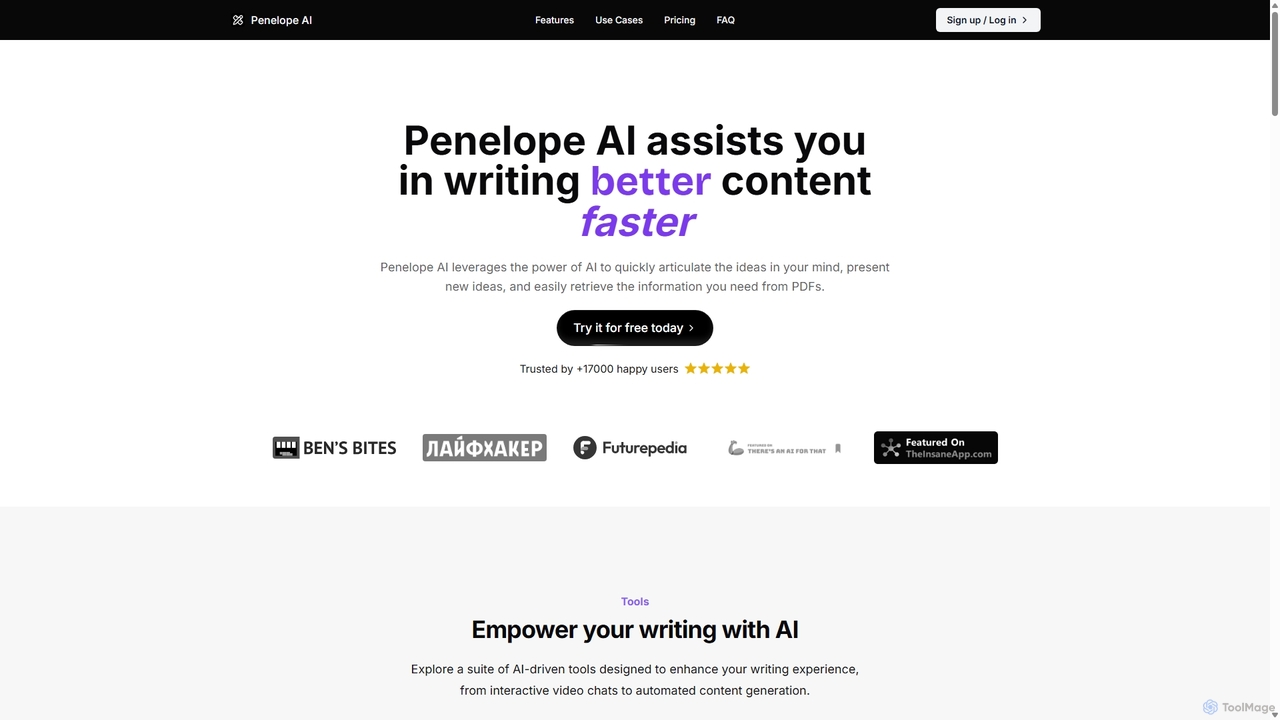
Penelope AI is an advanced AI writing assistant designed to help you write better content faster. It features intelligent autocomplete, PDF interaction, paraphrasing, and summarizing tools to streamline your writing process for essays, blogs, research, and more.

Research
Visits 5.8KFavorites 163Likes 176
SolidPoint
Freemium

SolidPoint

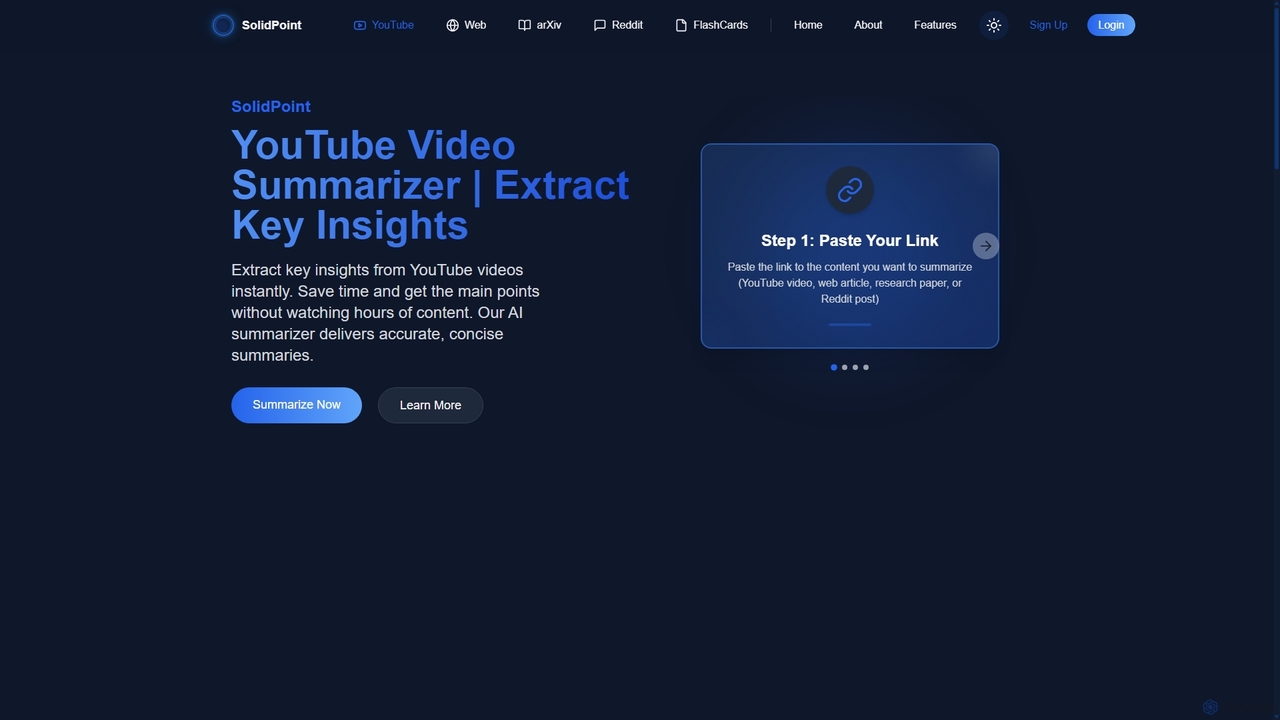
SolidPoint is an AI-powered summarization tool that instantly extracts key insights from various content types, including YouTube videos, web articles, arXiv research papers, and Reddit threads. It helps students, researchers, and professionals save time, increase productivity, and retain information more effectively.

Research
Visits 19.7KFavorites 162Likes 143
PDF Summarizer
Freemium

PDF Summarizer

PDF Summarizer is an AI-powered tool that lets you understand documents in seconds. Upload PDFs, Word files, or PowerPoints, and instantly get summaries or ask specific questions. It supports multi-file chats for comprehensive research, works with any language, and provides source-linked answers for easy verification. Ideal for students, researchers, and professionals looking to save time and extract key information efficiently.

Analysis
Visits 15.6KFavorites 138Likes 133
Bjoernkarmann
Free

Bjoernkarmann

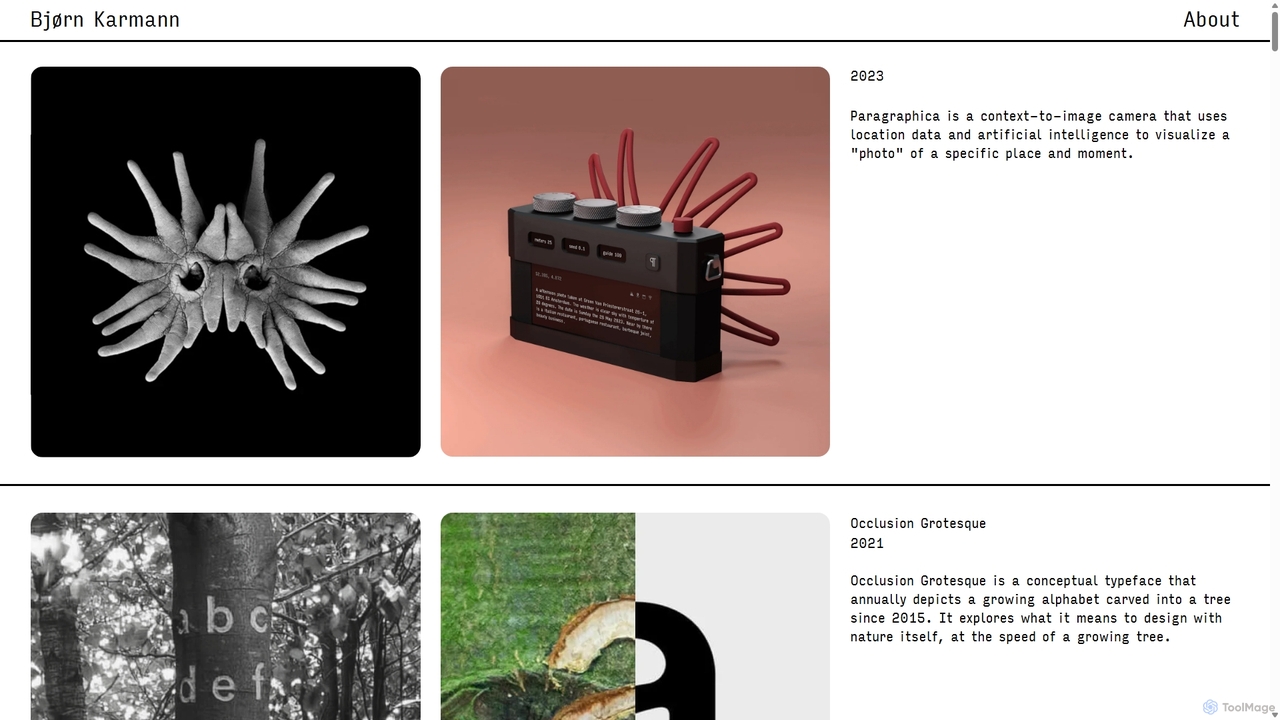
An inspirational portfolio by interaction designer Bjørn Karmann, showcasing groundbreaking projects that merge AI, art, and technology. Discover speculative designs and tangible prototypes like the Paragraphica context-to-image camera and the Project Alias privacy parasite, exploring the future of human-AI interaction.

Generative Art
Visits 7.3KFavorites 108Likes 114
Britannica
Freemium

Britannica

Britannica is a world-renowned knowledge platform that integrates an AI-powered chatbot to provide users with trusted, fact-checked answers from its extensive encyclopedia. It offers in-depth articles, quizzes, and multimedia content, making it an authoritative resource for students, researchers, and lifelong learners.

Research
Visits 33.2MFavorites 140Likes 155
Rival
Freemium

Rival

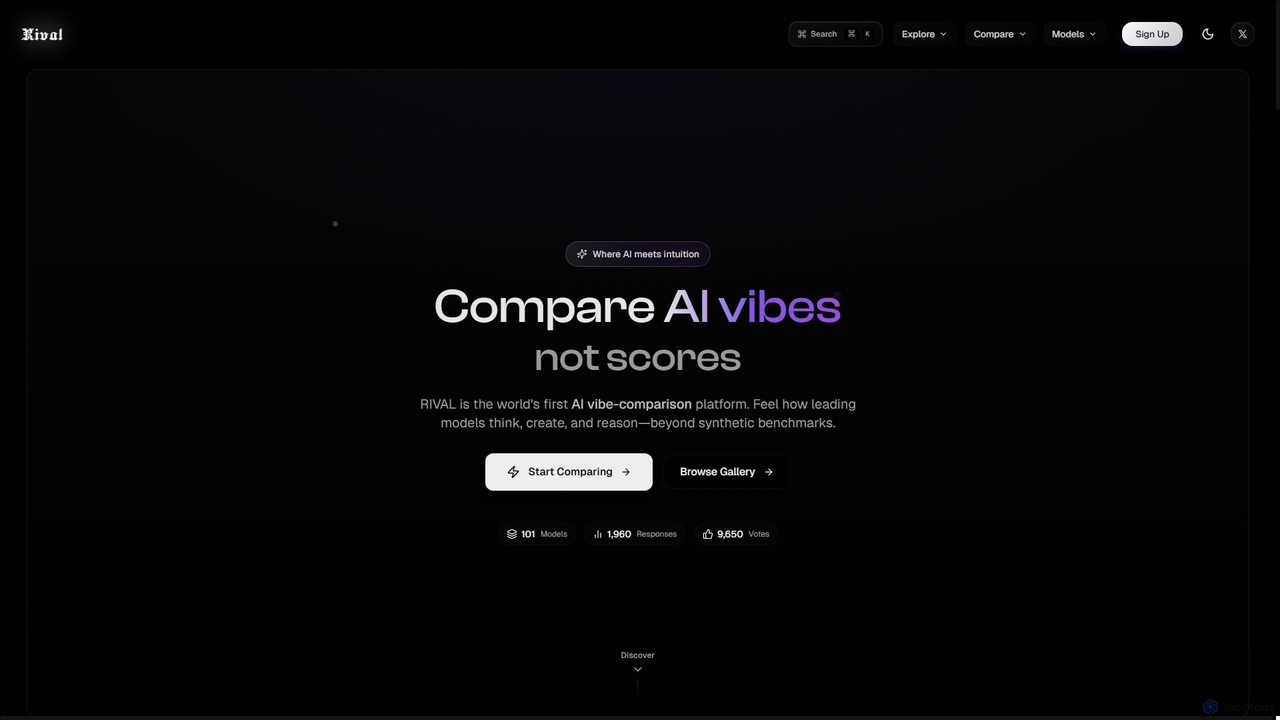
Rival is a unique AI model comparison platform that focuses on "vibe" rather than just benchmarks. It allows users to intuitively compare leading models like GPT, Gemini, and Claude through side-by-side duels, response galleries, and historical evolution tracking. Discover the distinct personalities, creative styles, and reasoning approaches of different AIs to find the perfect model for your specific task, moving beyond quantitative scores to a qualitative, hands-on experience.

Testing
Visits 41.6KFavorites 150Likes 129
Alle-AI
Freemium

Alle-AI

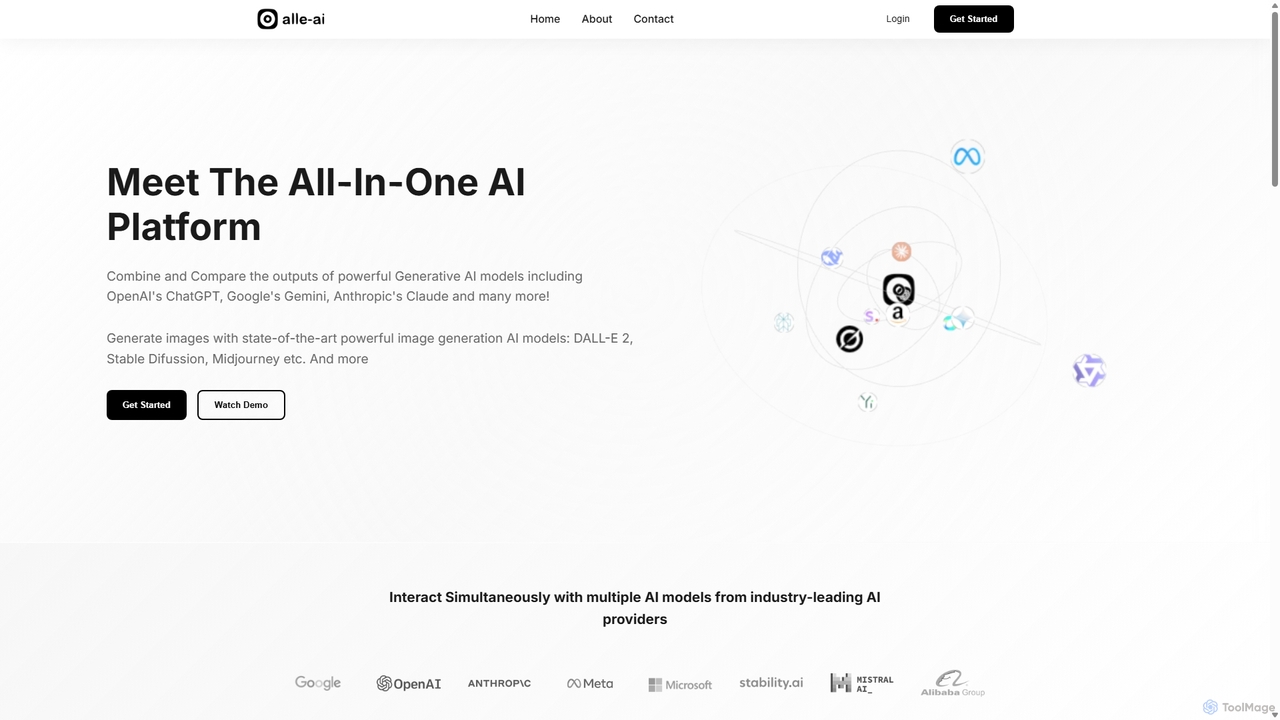
Alle-AI is an all-in-one platform that allows users to simultaneously interact with multiple leading AI models for chat, image, audio, and video generation. Compare outputs from ChatGPT, Claude, Gemini, Midjourney, and more in a single interface to enhance creativity, improve accuracy with fact-checking, and streamline your workflow.

Generative Ai
Visits 38.6KFavorites 143Likes 130
BioGPT
Freemium

BioGPT

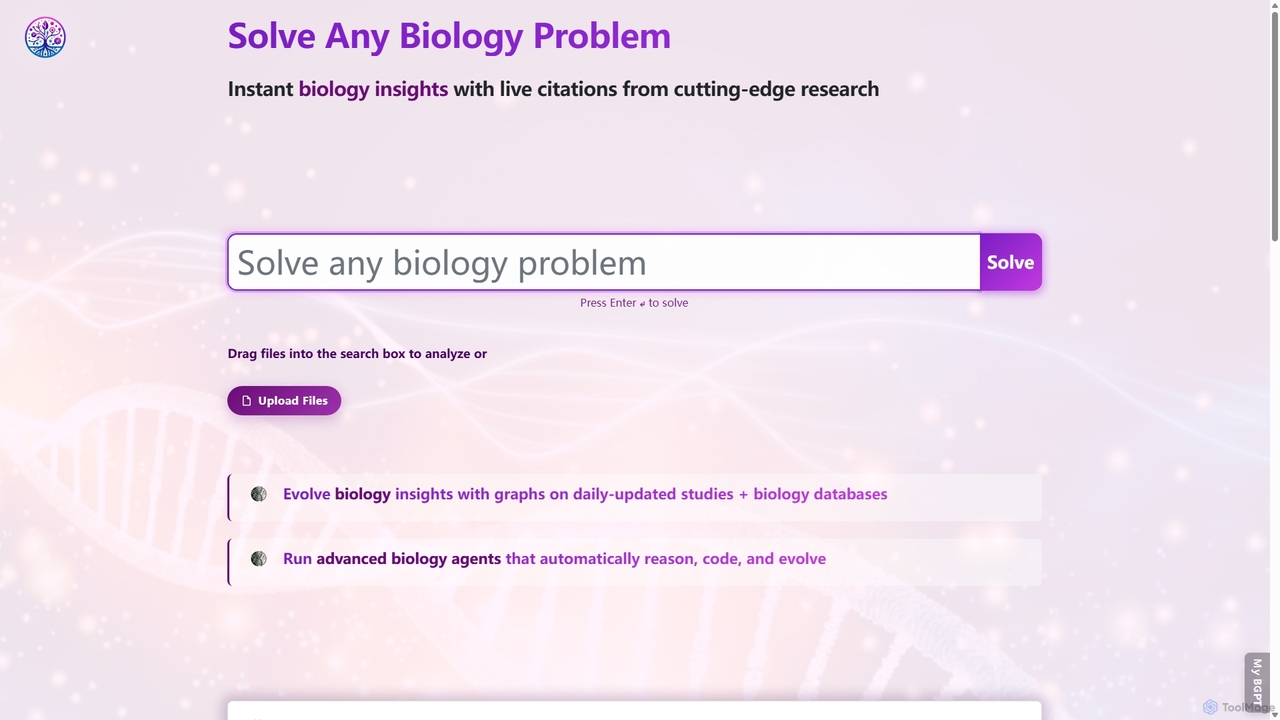
BioGPT is a specialized AI assistant for biologists, researchers, and students. It accelerates scientific discovery by solving complex biology problems, reviewing papers, analyzing data, visualizing results, designing experiments, and testing hypotheses across fields like genomics, neuroscience, and cancer biology.

Research
Visits 6.1KFavorites 140Likes 137
Chatwithpdf
Freemium

Chatwithpdf

Chatwithpdf is an AI-powered tool that allows you to interact with your PDF documents conversationally. Simply upload a file and start asking questions, get summaries, and extract key information instantly. It's designed for students, researchers, and professionals to analyze documents faster and more efficiently.

Data Extraction
Visits 6.5KFavorites 113Likes 106
Enago Read
Freemium

Enago Read

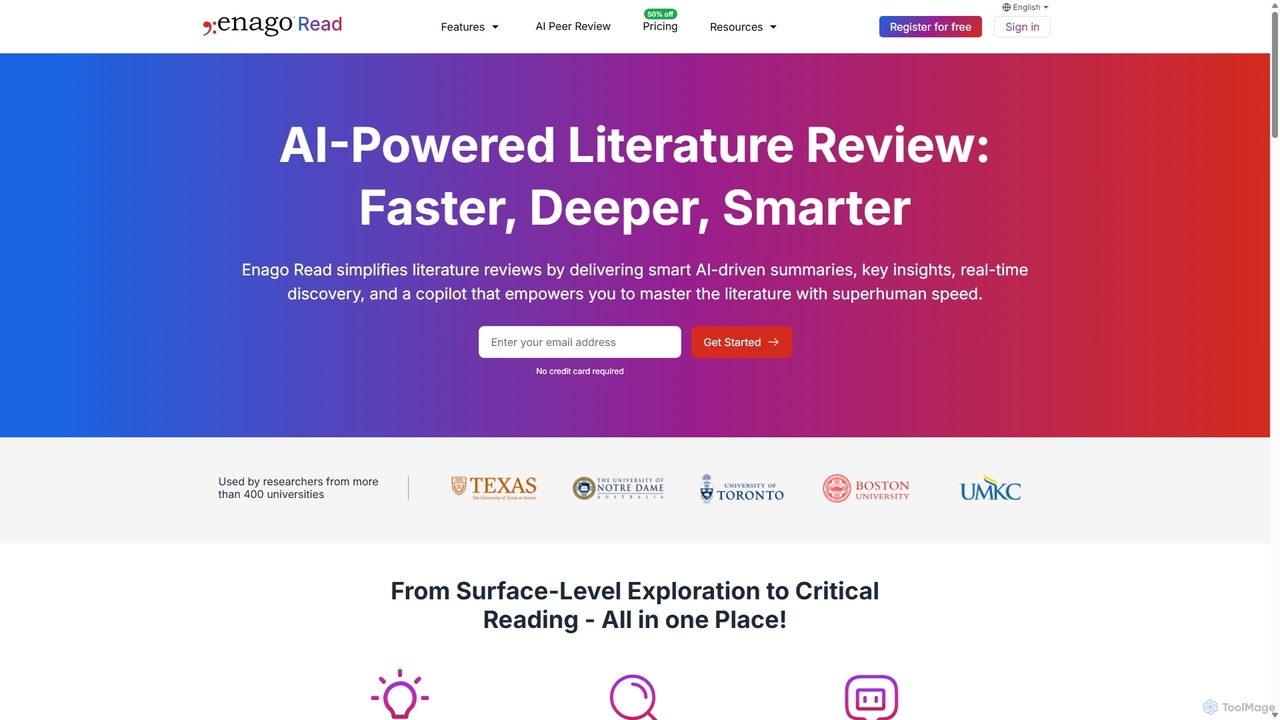
Enago Read is an AI-powered research assistant designed to accelerate literature reviews. It helps researchers and students discover, read, and analyze academic papers with features like AI-generated summaries, key insights, and an interactive AI Copilot to chat with documents. It streamlines the entire research workflow from exploration to critical analysis.

Research
Visits 8.8KFavorites 150Likes 148
Scrintal
Freemium

Scrintal

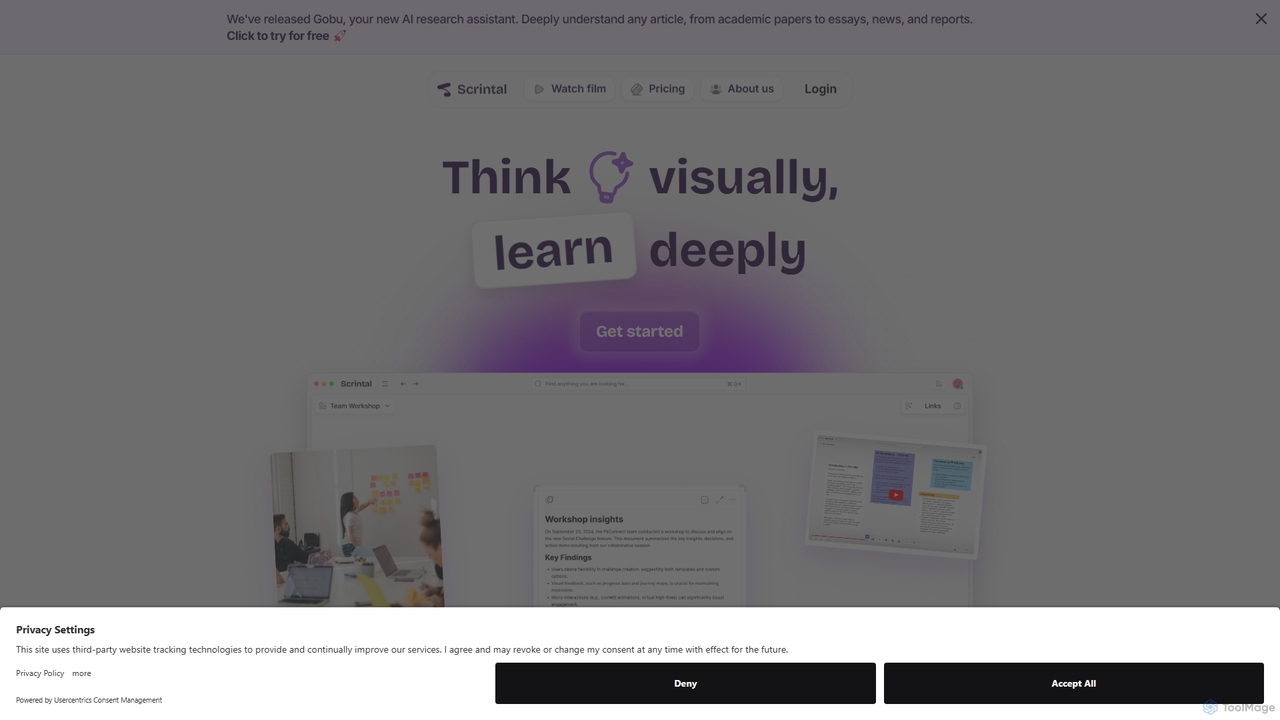
Scrintal is an AI-powered visual note-taking and research tool designed for thinkers, researchers, and students. It combines an infinite canvas for brainstorming with a powerful block-based editor and an AI assistant, Gobu. Organize ideas, connect concepts with bi-directional links, and seamlessly turn your visual thoughts into structured written documents.

Research
Visits 53.1KFavorites 142Likes 146
Uncensored Chat
Freemium

Uncensored Chat

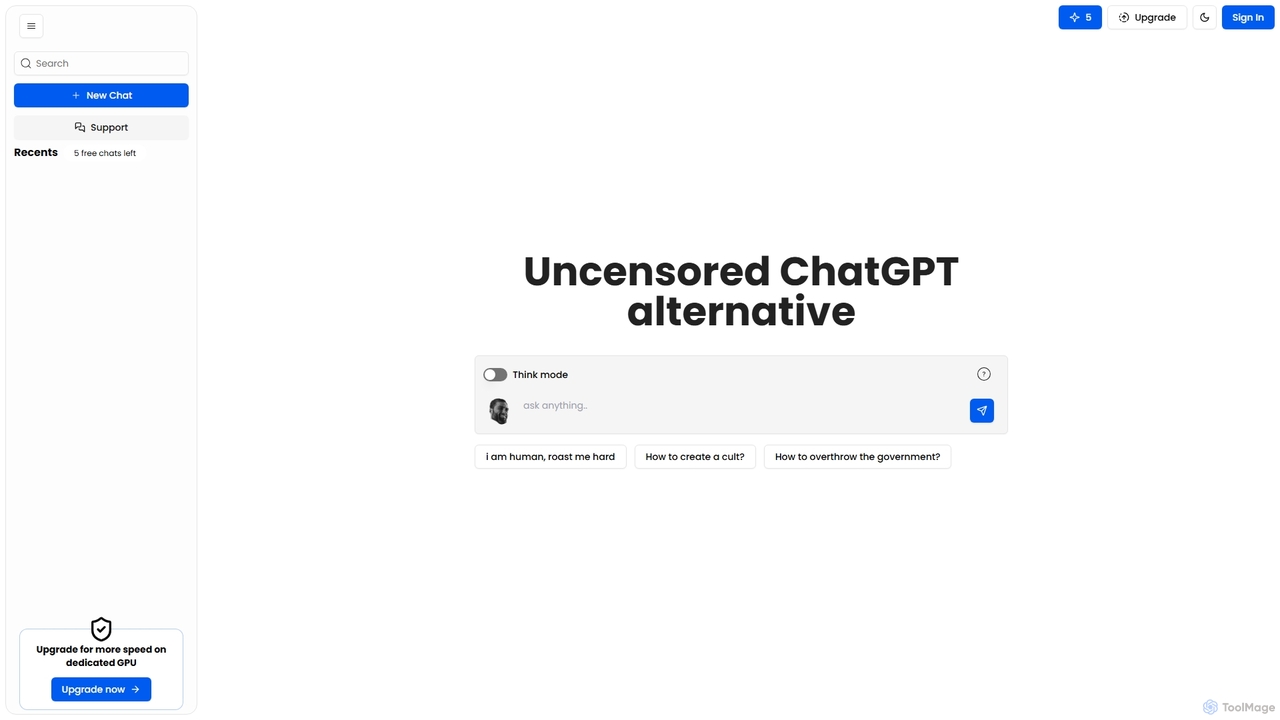
Uncensored Chat is an AI chatbot that provides an unrestricted conversational experience, positioning itself as a powerful alternative to mainstream models like ChatGPT. It allows users to explore any topic without content filters, making it ideal for creative writers, researchers, and individuals seeking unfiltered dialogue and information.

Uncensored Chatbot
Visits 737.6KFavorites 107Likes 117
Readefine
Freemium

Readefine

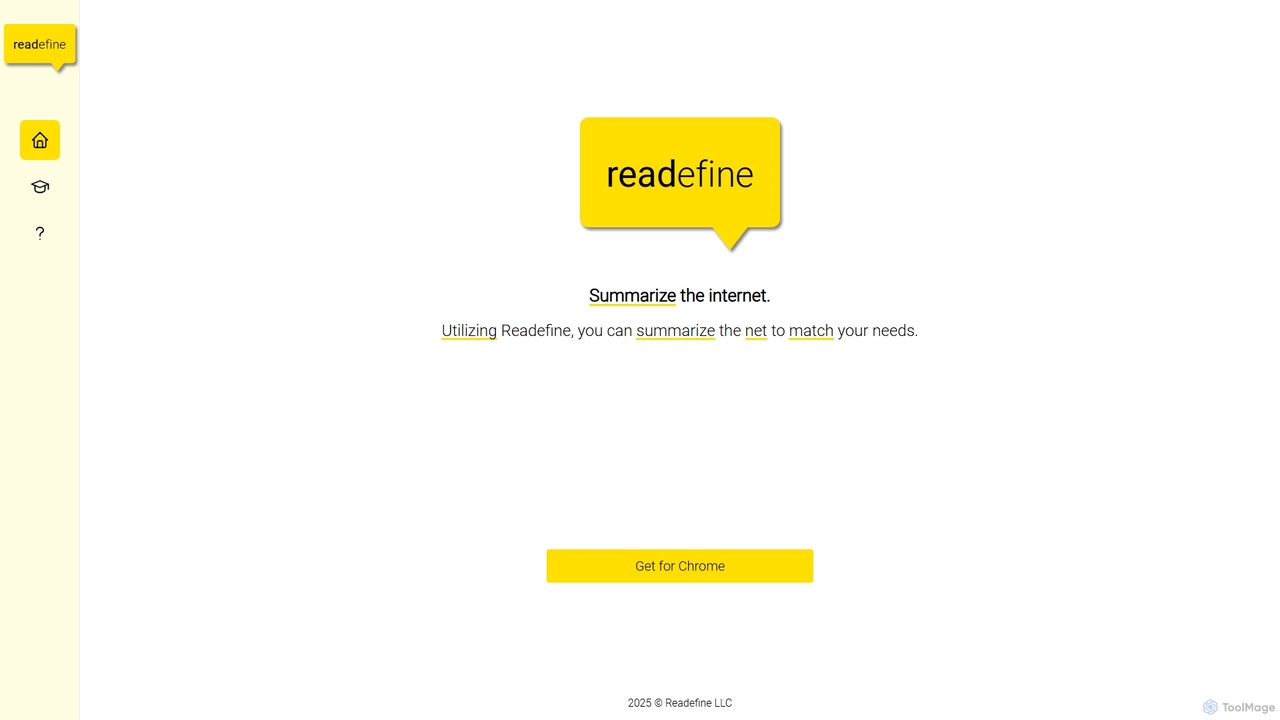
Readefine is an AI-powered Chrome extension that summarizes any webpage, article, or report in seconds. It helps you quickly grasp the core ideas of long texts, saving time and boosting productivity. Customize summary length and format to fit your specific needs.

Research
Visits 5.9KFavorites 124Likes 128
ChatWithPDF
Freemium

ChatWithPDF

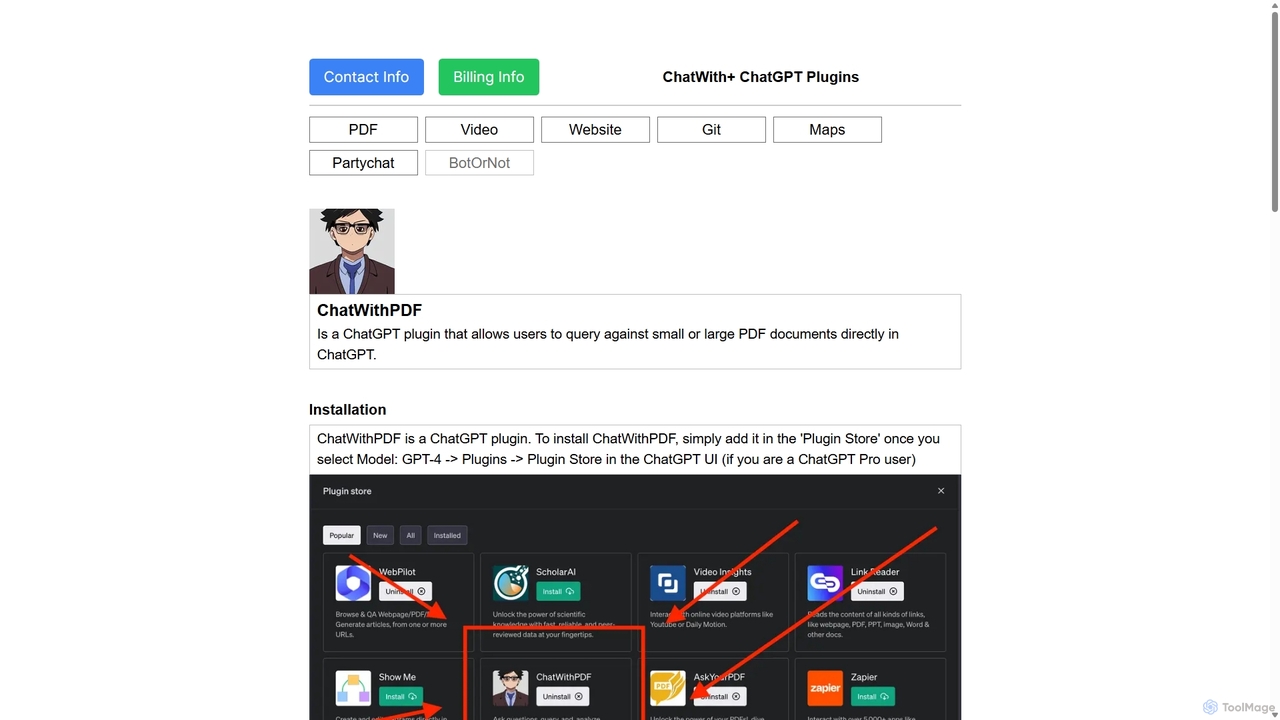
A powerful ChatGPT plugin that allows you to have interactive conversations with any PDF document. Simply provide a public URL to a PDF, and you can ask questions, request summaries, and extract specific information directly within the ChatGPT interface. Ideal for students, researchers, and professionals.

Data Extraction
Visits 6KFavorites 120Likes 119
AetheriumAI
Free

AetheriumAI

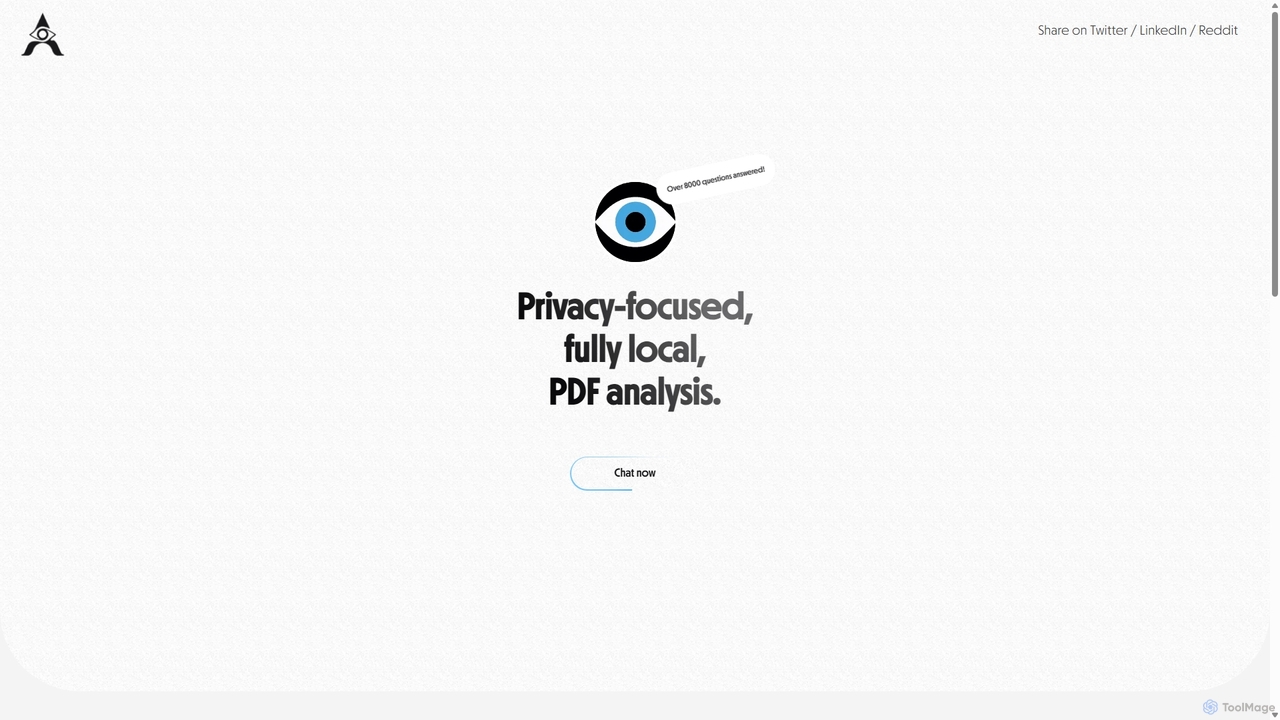
AetheriumAI is a secure, privacy-focused AI tool that allows you to chat with your PDF documents. It operates entirely on your local machine, ensuring no data is ever uploaded to a server. Supports multiple PDF uploads for comprehensive, cross-document analysis and insights.

Data Extraction
Visits 5.7KFavorites 130Likes 138
UseChatGPT.AI
Free

UseChatGPT.AI

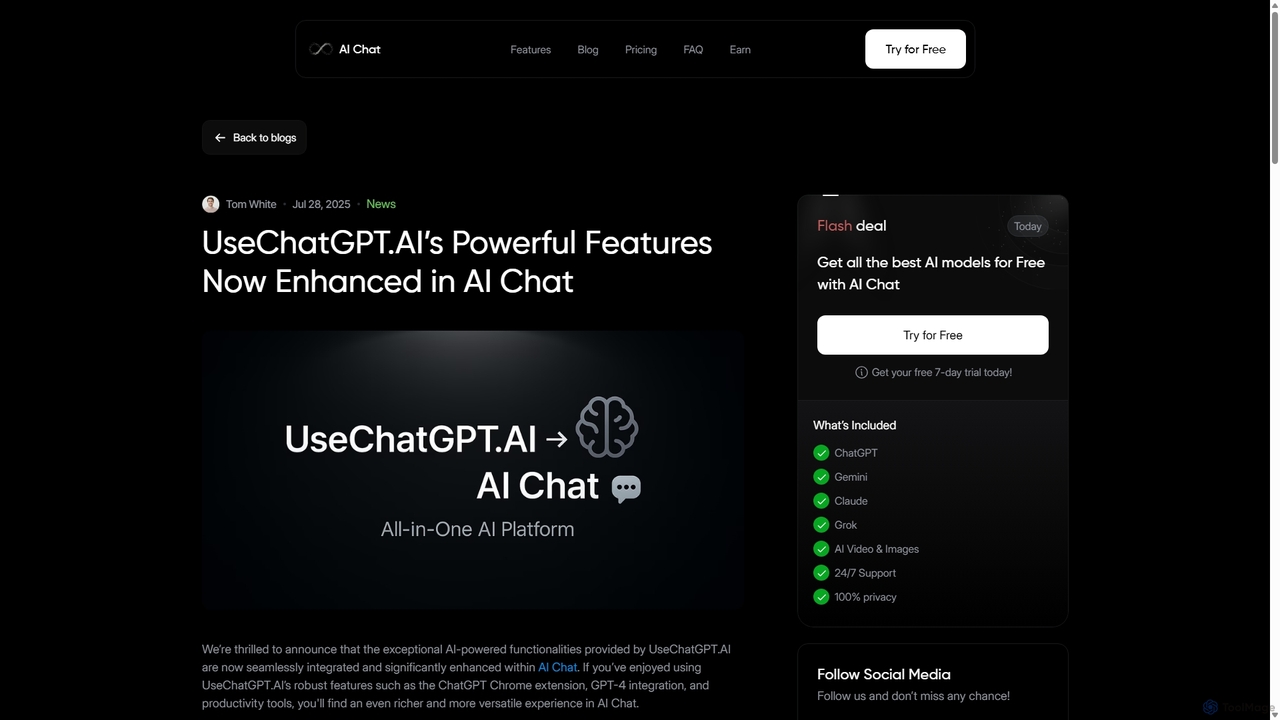
UseChatGPT.AI is a powerful free Chrome extension that integrates GPT-4 directly into your browser. It enhances productivity by allowing you to instantly write, rewrite, summarize, translate, and explain text on any website without switching tabs. Its features are now enhanced within the new AI Chat platform.

Research
Visits 6KFavorites 134Likes 132
Gimmesummary
Freemium

Gimmesummary

Gimmesummary is an AI-powered summarization tool that instantly condenses long articles, documents, and web pages into concise, easy-to-digest summaries. It helps you save time, absorb key information faster, and boost your productivity. Ideal for students, researchers, and professionals dealing with information overload. Simply paste text or enter a URL to get an instant summary.

Research
Visits 5.8KFavorites 140Likes 141
Socrates
Freemium

Socrates

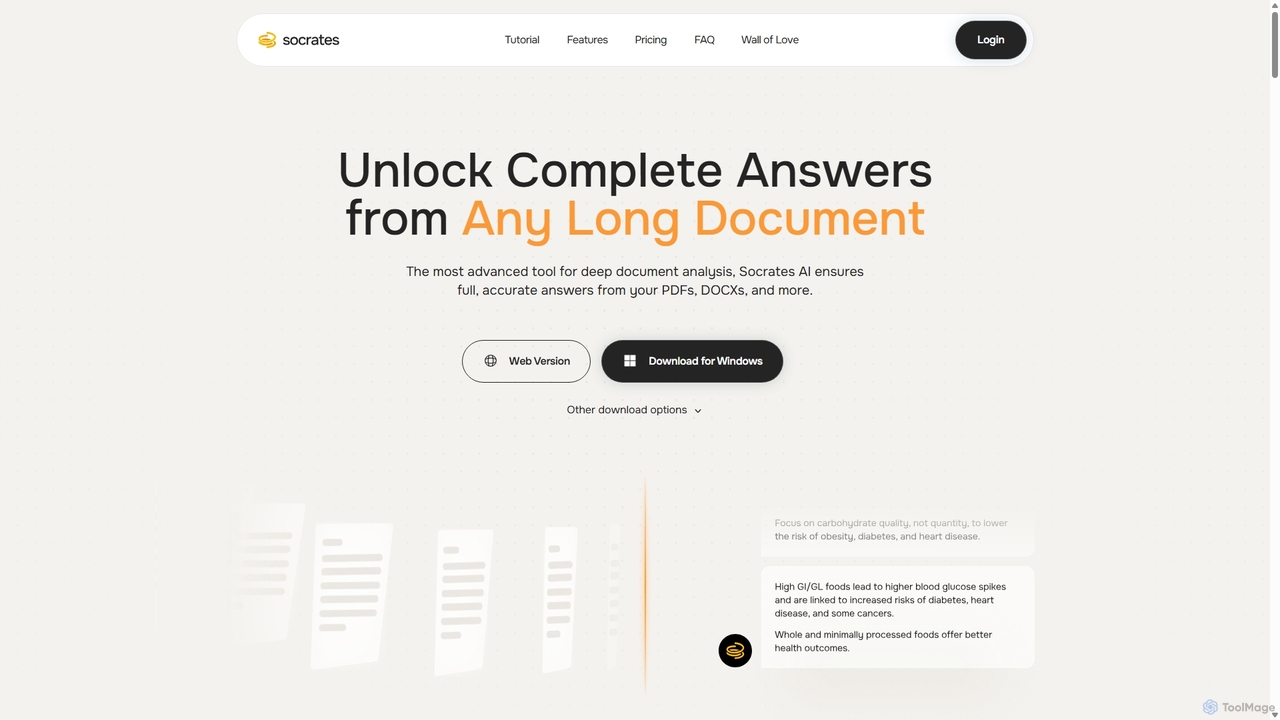
Socrates is an advanced AI tool for deep document analysis. It allows users to upload long documents like PDFs and DOCX to get complete, accurate answers. Its unique 'Deep Dive' feature provides thorough analysis, while features like Table AI and Local LLM support cater to researchers, legal professionals, and students seeking detailed insights with enhanced data privacy.

Data Analysis
Visits 6KFavorites 155Likes 155

About Research

Research AI tools are a category of AI-powered applications designed to assist and automate various stages of the research process. These tools leverage advanced algorithms like natural language processing and machine learning to streamline tasks such as literature review, data analysis, and content synthesis. They play a crucial role within the broader education and academic sectors, enabling researchers, students, and professionals to accelerate discovery, enhance accuracy, and generate deeper insights from vast amounts of information.

Core Features

  • Automated Literature Review: Quickly search, summarize, and extract key information from academic papers, reports, and databases.
  • Advanced Data Analysis: Process large datasets, identify patterns, generate visualizations, and assist in statistical interpretation.
  • Hypothesis Generation: Suggest potential research questions, identify knowledge gaps, and aid in experimental design.
  • Academic Writing Assistance: Support the drafting of research proposals, reports, abstracts, and refine academic language for clarity and coherence.
  • Citation & Reference Management: Automate bibliography creation, citation formatting, and detect potential plagiarism.

Applicable Scenarios

Research AI tools are indispensable for academics conducting scholarly studies, market analysts identifying consumer trends, scientists accelerating experimental data interpretation, and students preparing theses or dissertations. They are also vital for policy analysts synthesizing complex reports to inform evidence-based decision-making.

How to Choose

When selecting a Research AI tool, consider its data handling capabilities, ensuring it supports your specific data types and volumes. Evaluate its integration with existing research platforms and reference managers. Assess the accuracy and transparency of its AI models, especially for critical analysis. Finally, factor in the user interface, ethical considerations like data privacy, and the level of customization offered to meet unique research needs.

Featured tool rankings

Research use cases

1

Accelerating Academic Literature Reviews

Academic researchers often spend countless hours sifting through vast amounts of scholarly articles. Research AI tools can automate this process by quickly scanning, summarizing, and extracting key findings, methodologies, and citations from hundreds of papers. This allows researchers to identify relevant literature, pinpoint knowledge gaps, and synthesize information much faster, significantly reducing the time spent on initial literature review phases and enabling them to focus on deeper analysis and experimentation.

2

Automating Market Trend Analysis

Market analysts need to constantly monitor consumer behavior, industry reports, and social media trends to identify emerging opportunities or threats. Research AI tools can ingest and process massive volumes of unstructured data from various sources, identifying subtle patterns, sentiment shifts, and nascent trends that human analysts might miss. This enables businesses to make data-driven decisions, refine product strategies, and stay ahead of the competition by understanding market dynamics in real-time.

3

Streamlining Scientific Data Interpretation

Scientists often work with complex, high-dimensional datasets generated from experiments, simulations, or observations. Research AI tools can assist in the interpretation of this data by performing advanced statistical analysis, identifying correlations, anomalies, and hidden patterns. They can generate insightful visualizations and even suggest potential hypotheses based on the data, significantly accelerating the discovery process in fields like biology, chemistry, and physics, allowing researchers to move from raw data to actionable insights more efficiently.

4

Drafting Research Proposals & Grants

Securing funding for research often depends on well-structured and compelling proposals. Research AI tools can assist academics and grant writers in drafting these critical documents by providing templates, suggesting relevant literature, and refining the language for clarity, conciseness, and impact. They can help ensure all required sections are covered, improve the logical flow of arguments, and even check for consistency in terminology, increasing the likelihood of successful grant applications and project approvals.

5

Enhancing Student Essay & Thesis Writing

Students, from undergraduates to doctoral candidates, can leverage Research AI tools to improve their academic writing. These tools can assist with topic exploration, outlining, structuring arguments, and even checking for grammatical errors and stylistic inconsistencies. By providing intelligent feedback and suggestions, AI helps students refine their research papers, essays, and theses, ensuring clarity, coherence, and adherence to academic standards, ultimately leading to higher quality submissions and better learning outcomes.

6

Identifying Policy Gaps & Recommendations

Policy analysts are tasked with synthesizing vast amounts of government reports, public data, and expert opinions to formulate effective policies. Research AI tools can significantly aid this process by rapidly analyzing complex policy documents, identifying inconsistencies, gaps in existing regulations, and potential impacts of proposed changes. They can also generate data-driven recommendations, helping analysts to build stronger cases for policy adjustments and contribute to more informed, evidence-based governance.

Research FAQ

What are AI Research Tools?

AI Research Tools are software applications that use artificial intelligence, such as natural language processing and machine learning, to automate and enhance various aspects of the research process. They are designed to assist researchers, students, and professionals in tasks like literature review, data analysis, hypothesis generation, and academic writing. These tools aim to improve efficiency, accuracy, and the depth of insights derived from research, making complex information more manageable and accessible.

How do AI Research Tools differ from traditional research methods?

AI Research Tools primarily differ from traditional methods in their ability to automate and scale tasks. While traditional research relies heavily on manual effort for data collection, analysis, and synthesis, AI tools can process vast datasets, identify patterns, and generate summaries at speeds and scales impossible for humans. This automation leads to significant time savings, increased accuracy in data processing, and the potential to uncover insights from complex data that might otherwise be overlooked, thereby augmenting human research capabilities rather than replacing them.

What are the key benefits of using AI in research?

The key benefits of using AI in research include significantly increased efficiency, enhanced accuracy, and the ability to derive deeper insights. AI tools can automate repetitive tasks like data extraction and summarization, freeing up researchers' time. They reduce human error in data processing and analysis, leading to more reliable results. Furthermore, AI can identify complex patterns and correlations in large datasets that might be invisible to human observation, fostering new discoveries and more comprehensive understanding across various scientific and academic disciplines.

What should I consider when choosing an AI Research Tool?

When choosing an AI Research Tool, several factors are crucial. First, assess its compatibility with your specific research needs, including the types of data you work with and the scale of your projects. Second, evaluate the accuracy and transparency of its AI models, especially for critical analysis. Third, consider its integration capabilities with existing research platforms, reference managers, and data analysis software. Fourth, prioritize data security and privacy features, ensuring compliance with ethical guidelines. Finally, a user-friendly interface and responsive customer support are important for a smooth research workflow.

Can AI Research Tools help with data analysis and interpretation?

Yes, AI Research Tools are highly effective in assisting with data analysis and interpretation. They can process large, complex datasets, identify hidden patterns, correlations, and anomalies that might be missed by manual review. Many tools offer advanced statistical analysis capabilities, generate insightful visualizations, and can even help formulate hypotheses based on the data. This significantly speeds up the process of extracting meaningful insights, allowing researchers to focus on the implications of their findings rather than the mechanics of data crunching.