ToolMage
Sign in

Best 21 Manufacturing AI tools

Popular Manufacturing AI tools include Overview.ai, Carbonfact, Soff.ai, SwitchOn, Intelgic, Covariant, Averroes, Sorting Robotics, Berkshire Grey, and Vendra, helping you work more efficiently.

Xolver

Xolver

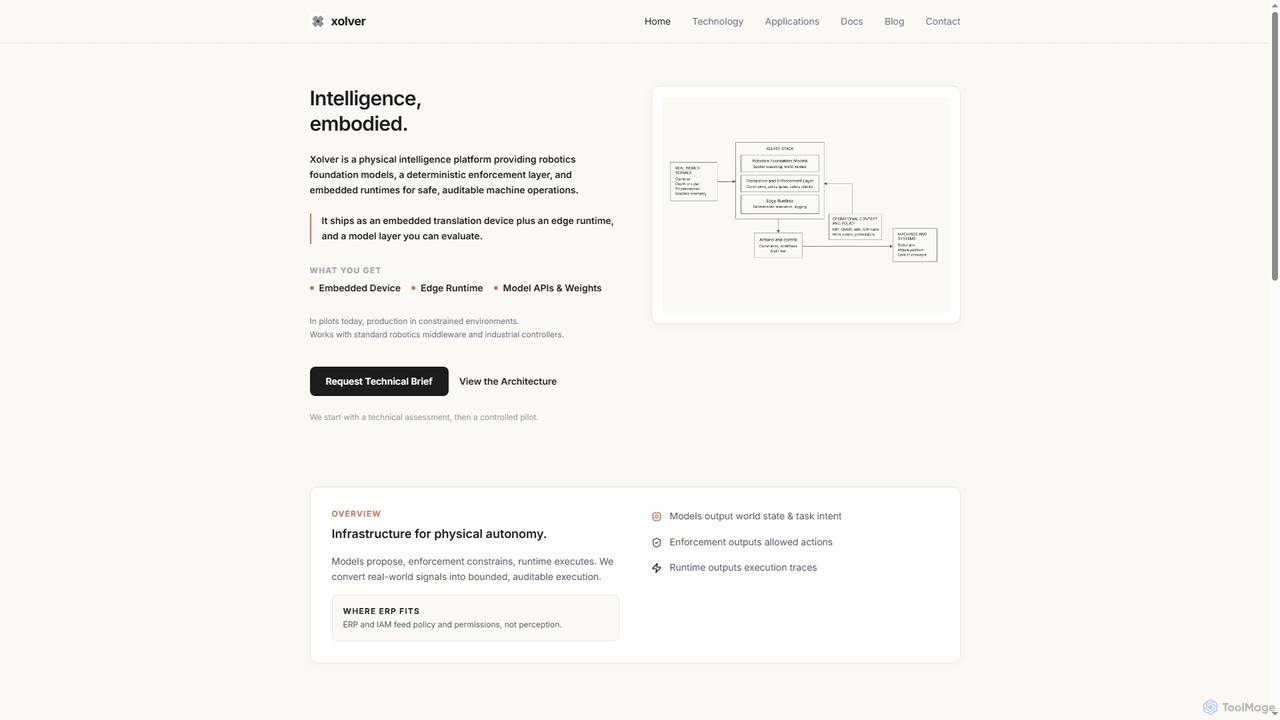
Xolver is a physical intelligence platform designed for robotics, providing foundation models, a deterministic enforcement layer, and embedded runtimes. It enables safe, auditable, and adaptive machine operations by converting real-world signals into bounded execution, ensuring reliability in complex industrial environments.

Machine Learning Models
Visits 5.5KFavorites 39Likes 34
SwitchOn

SwitchOn

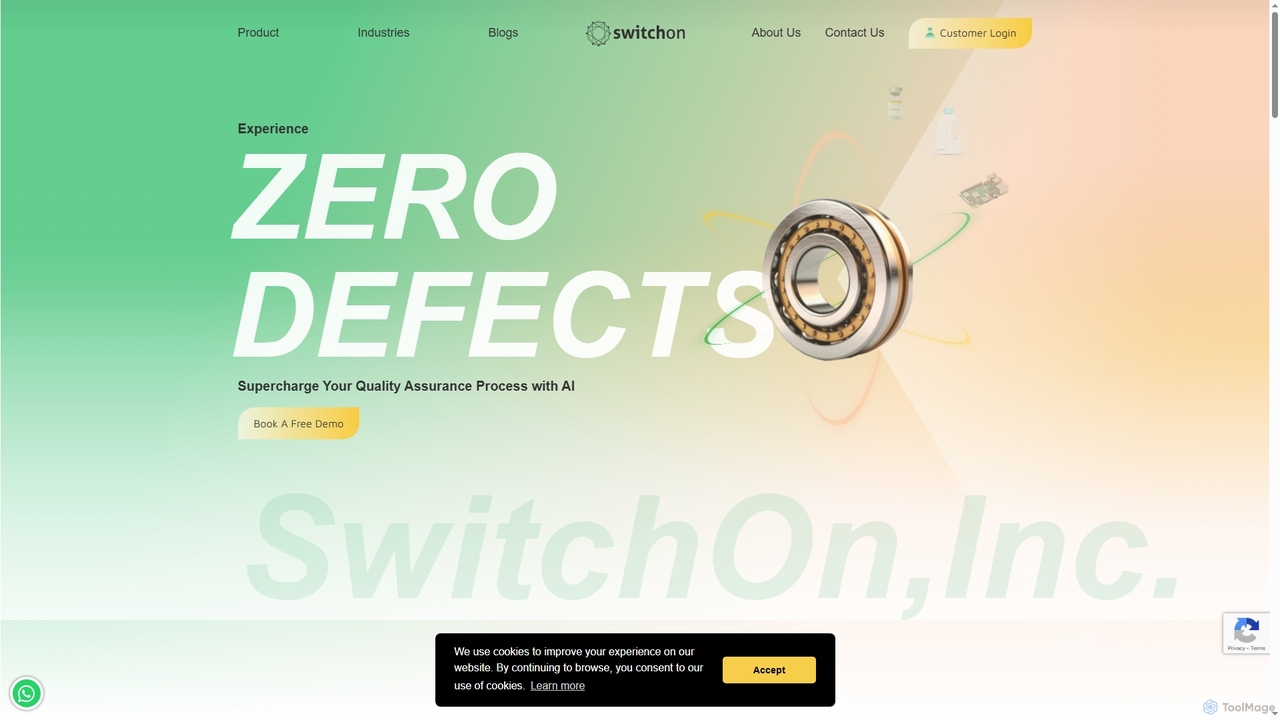
SwitchOn is an AI-powered quality inspection platform for manufacturers, leveraging advanced computer vision to ensure zero-defect production. It rapidly detects visual defects across various industries like automotive, pharma, consumer goods, and electronics, significantly reducing costs and boosting accuracy to over 99.95% at high speeds of 1000+ parts per minute.

Defect Detection
Visits 27.8KFavorites 39Likes 39
Locaxion

Locaxion

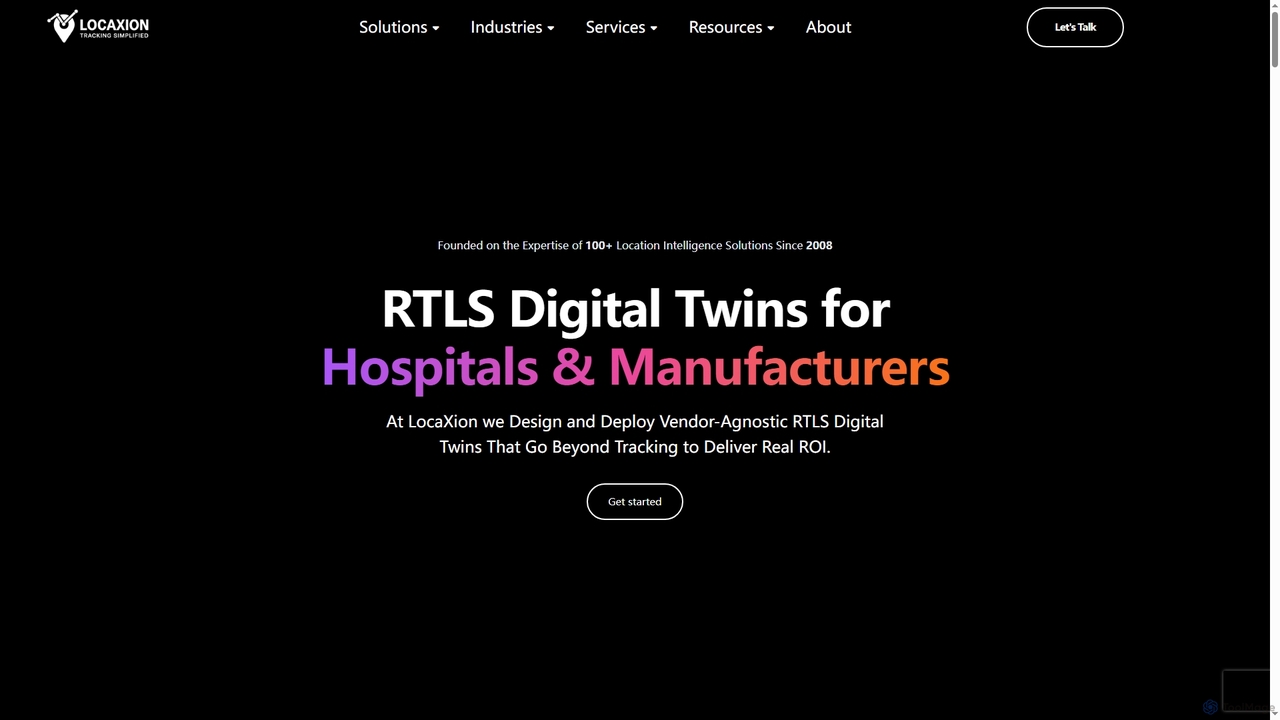
Locaxion is a vendor-agnostic provider of Real-Time Location Systems (RTLS) and Digital Twin solutions. With over 15 years of experience, they design and deploy customized tracking and intelligence systems for manufacturing, healthcare, and logistics to deliver measurable ROI and optimize operations.

Operations Management
Visits 10.6KFavorites 152Likes 157
Overview.ai

Overview.ai

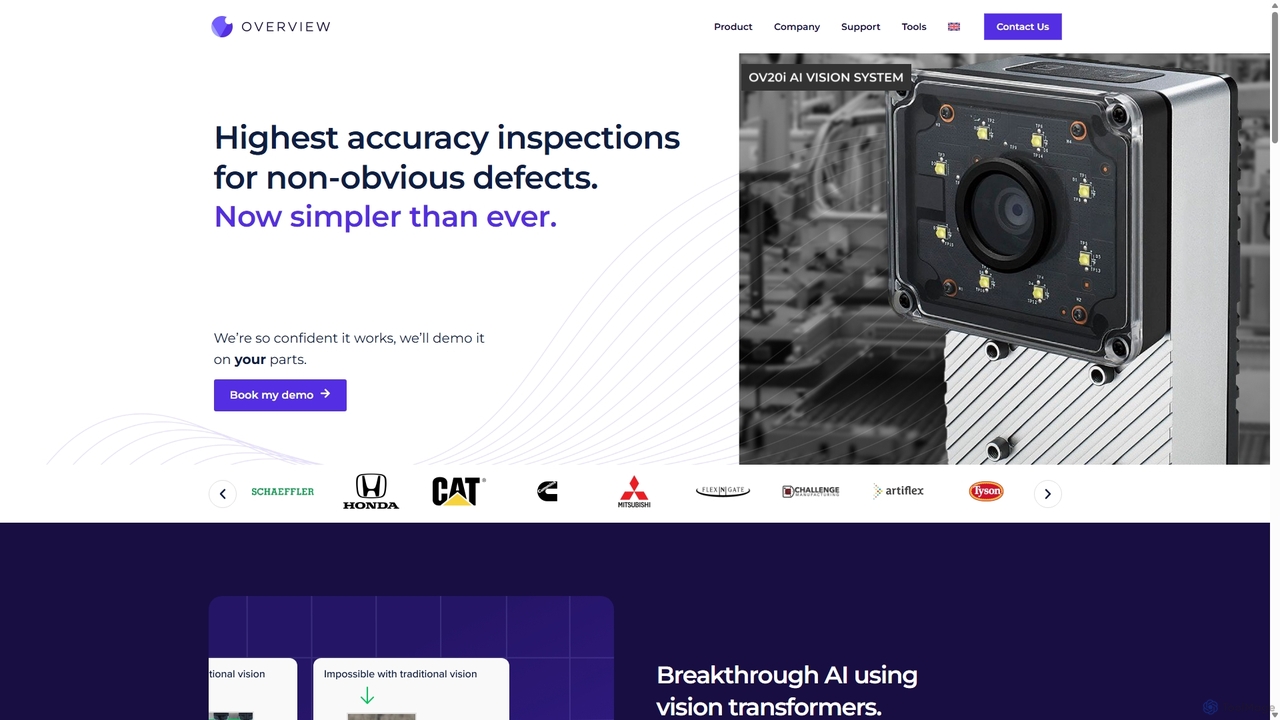
Overview.ai provides a next-generation AI industrial vision system, the OV20i, designed for high-accuracy defect detection in manufacturing. Leveraging vision transformers and deep learning, it identifies non-obvious flaws that traditional systems and human inspectors miss. The system is incredibly easy to use, requires no programming, and deploys in hours, dramatically accelerating time-to-value for manufacturers in automotive, medical, and other industries.

Defect Detection
Visits 40.2KFavorites 119Likes 123
Sorting Robotics

Sorting Robotics

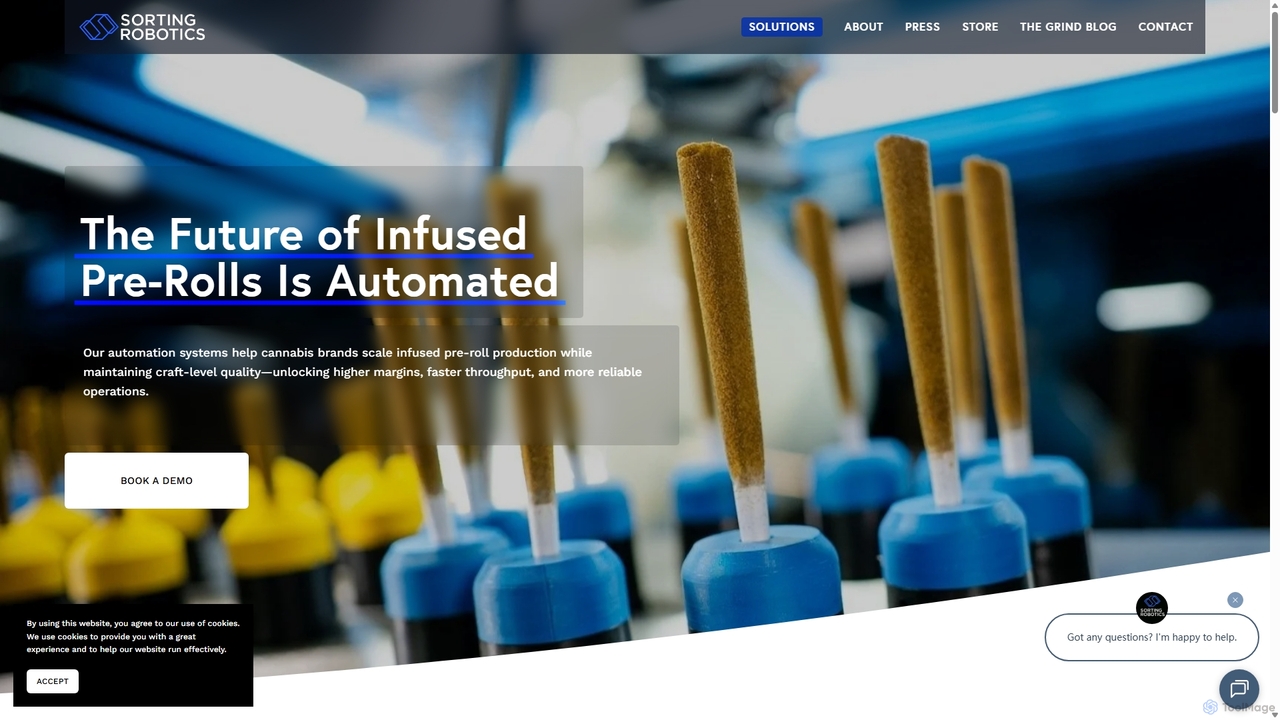
Sorting Robotics provides advanced automation and robotic solutions for the cannabis industry. Designed by ex-NASA engineers, their systems like Stardust, Jiko, and Jiko+ automate the production of infused pre-rolls, enabling brands to scale operations, ensure craft-level quality, and maximize profitability by reducing labor costs and waste.

Operations Management
Visits 14.5KFavorites 132Likes 124
Berkshire Grey
Paid

Berkshire Grey

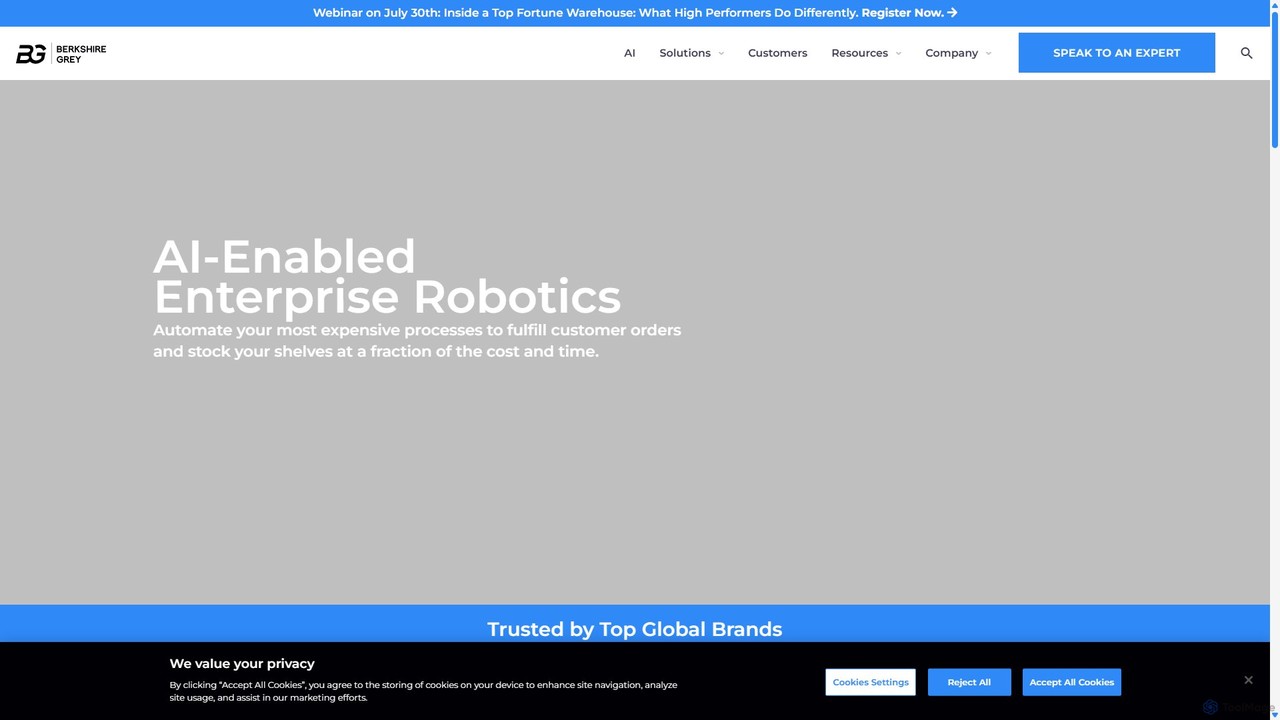
Berkshire Grey delivers AI-powered robotic solutions to automate supply chain operations for retail, e-commerce, and logistics. Their systems handle picking, sorting, and packing to increase productivity, reduce fulfillment costs, and address labor shortages, integrating seamlessly into existing warehouses.

Fulfillment
Visits 14.2KFavorites 112Likes 109
Vendra
Freemium

Vendra

Vendra is an AI-powered marketplace that connects businesses with a network of verified American manufacturers for custom parts. It streamlines the entire procurement process, from automated RFQs and intelligent supplier matching to transparent production and end-to-end logistics.

Marketplace
Visits 11.2KFavorites 120Likes 136
twinsync
Freemium

twinsync

An AI-powered platform for creating and managing Digital Twins of physical assets, processes, and systems. TwinSync enables real-time monitoring, predictive simulation, and operational optimization to enhance efficiency and reduce downtime.

Data Analysis
Visits 5.4KFavorites 114Likes 124
Carbonfact

Carbonfact

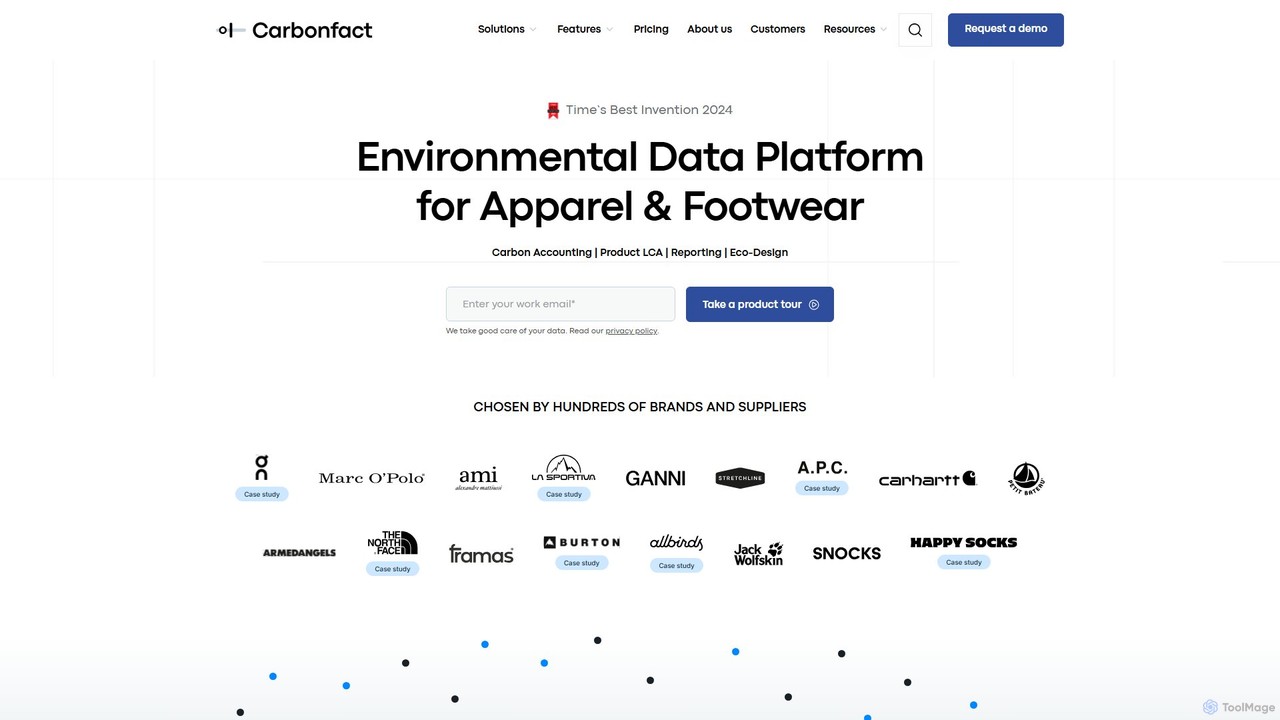
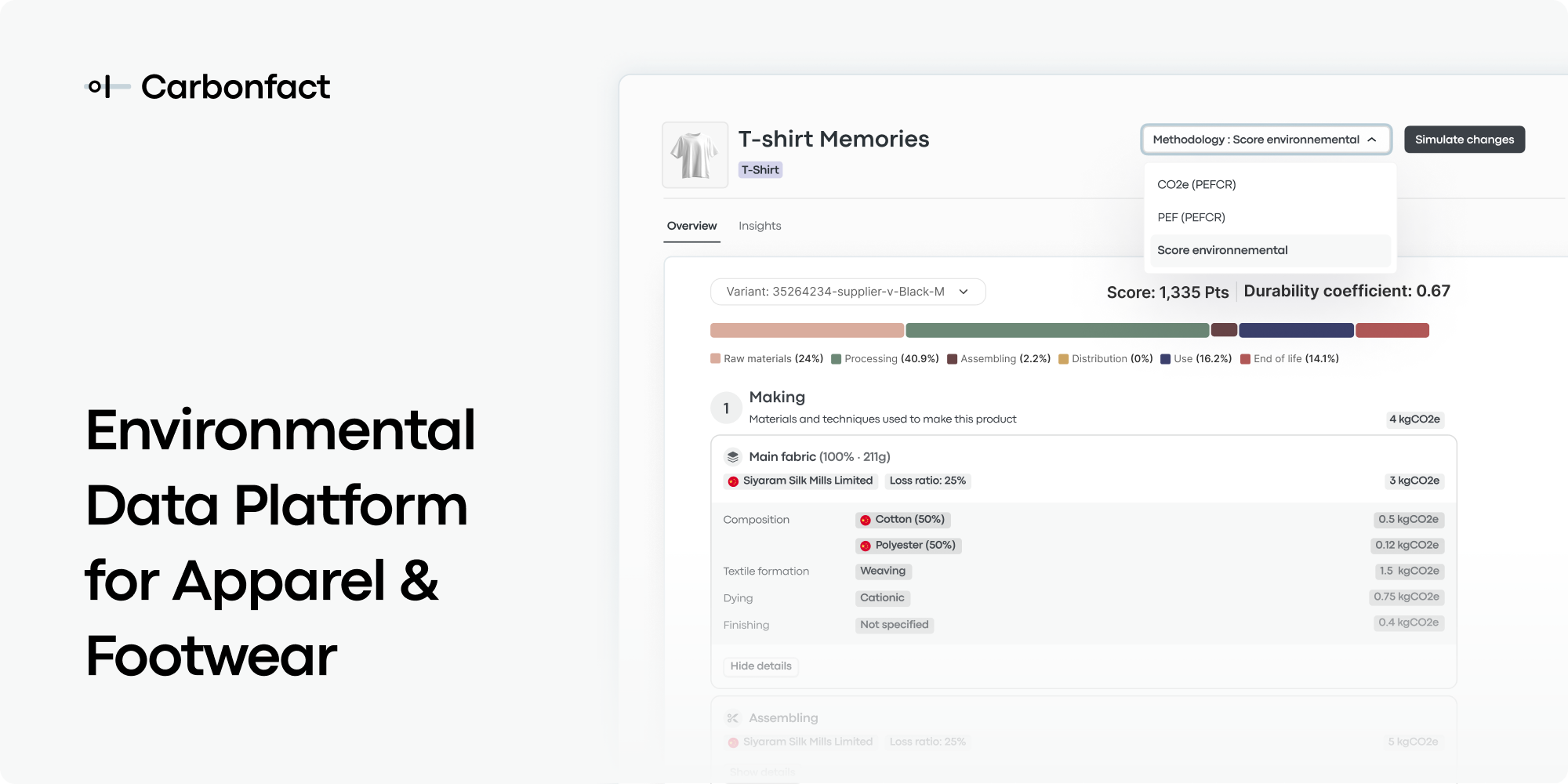
Carbonfact is an AI-powered sustainability platform specifically for the apparel and footwear industry. It automates carbon accounting, product life cycle assessments (LCAs), and compliance reporting, helping brands accurately measure, manage, and reduce their environmental impact across complex supply chains.

Data Analysis
Visits 34.9KFavorites 162Likes 151
Industrial Data Labs
Paid

Industrial Data Labs

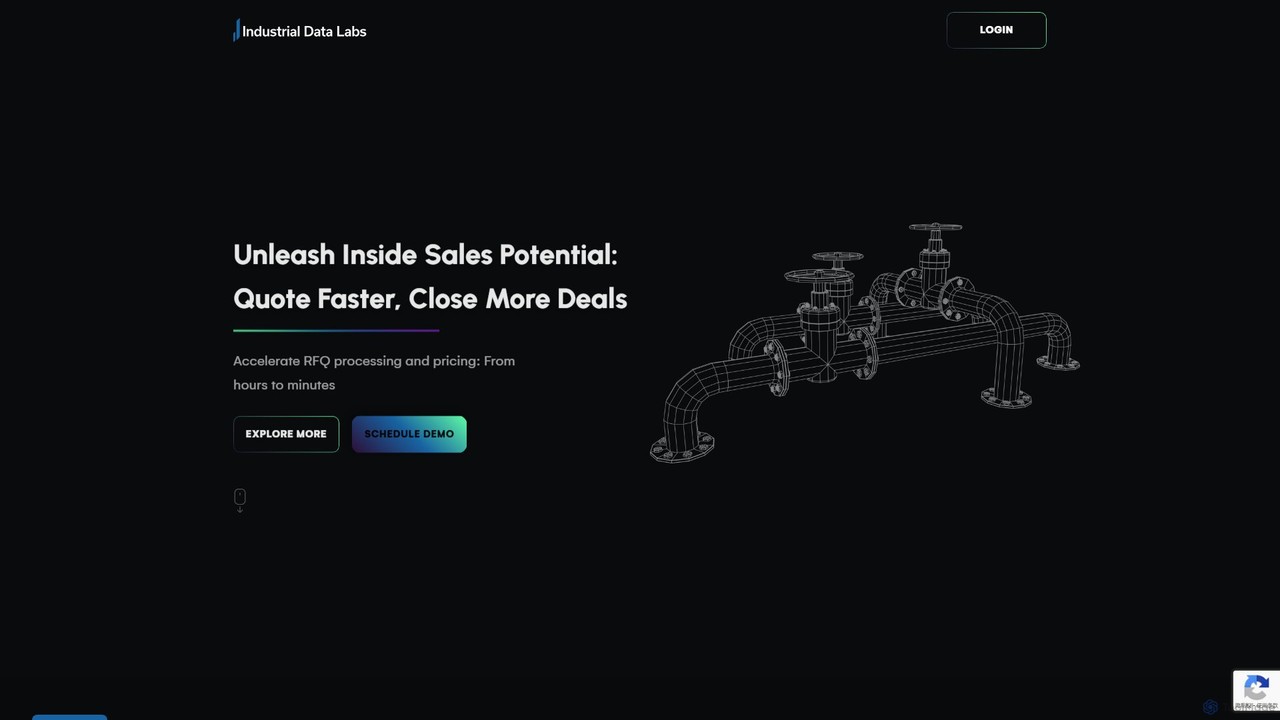
Industrial Data Labs (IDL) provides an AI-powered platform specifically designed for the industrial sector, focusing on the Pipe, Valve, and Fitting (PVF) industry. It automates and accelerates the Request for Quotation (RFQ) process, reducing quoting time from hours to minutes. This allows inside sales teams to respond faster, handle more volume, and increase their win rates by focusing on client relationships instead of manual data entry.

Data Analysis
Visits 6.2KFavorites 153Likes 172
aofithealthcare
Paid

aofithealthcare

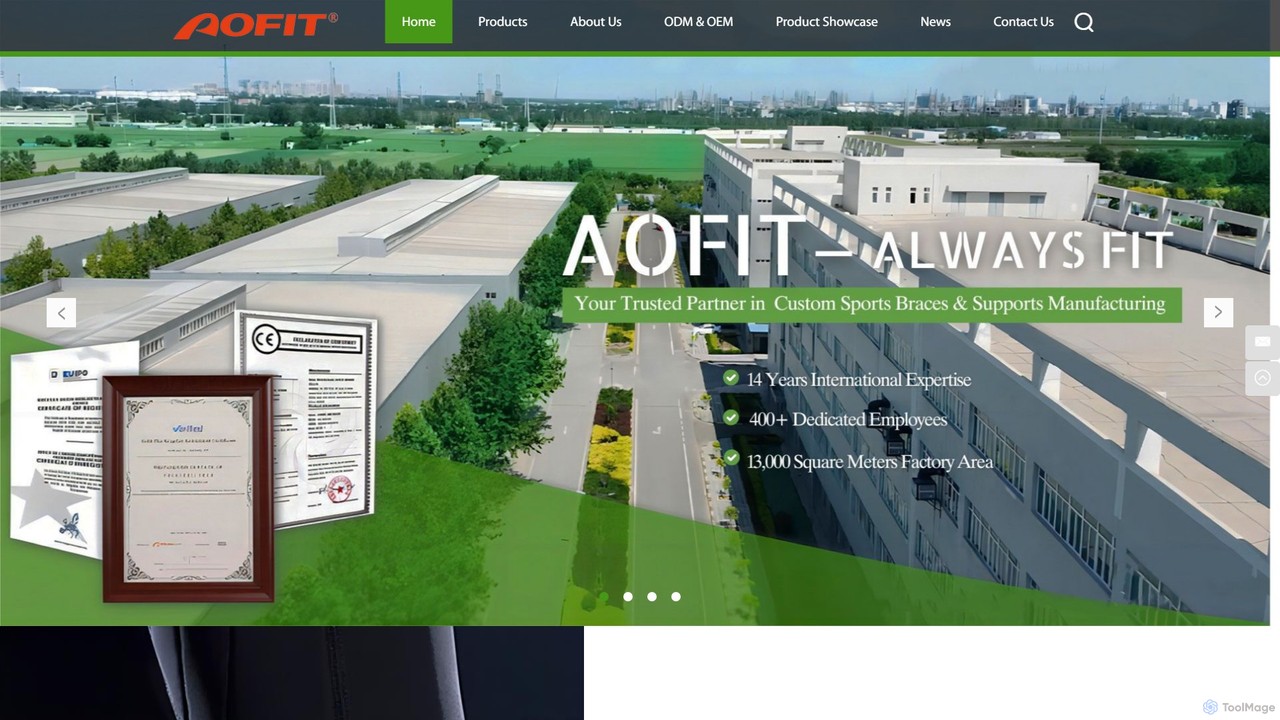
AOFIT is a leading OEM/ODM manufacturer specializing in high-quality healthcare and sports support products. They offer custom design, development, and production of sports braces, medical supports, shapewear, and mom & baby care items for global brands, distributors, and retailers.

Supply Chain
Visits 6.4KFavorites 119Likes 122
Afterquote
Paid

Afterquote

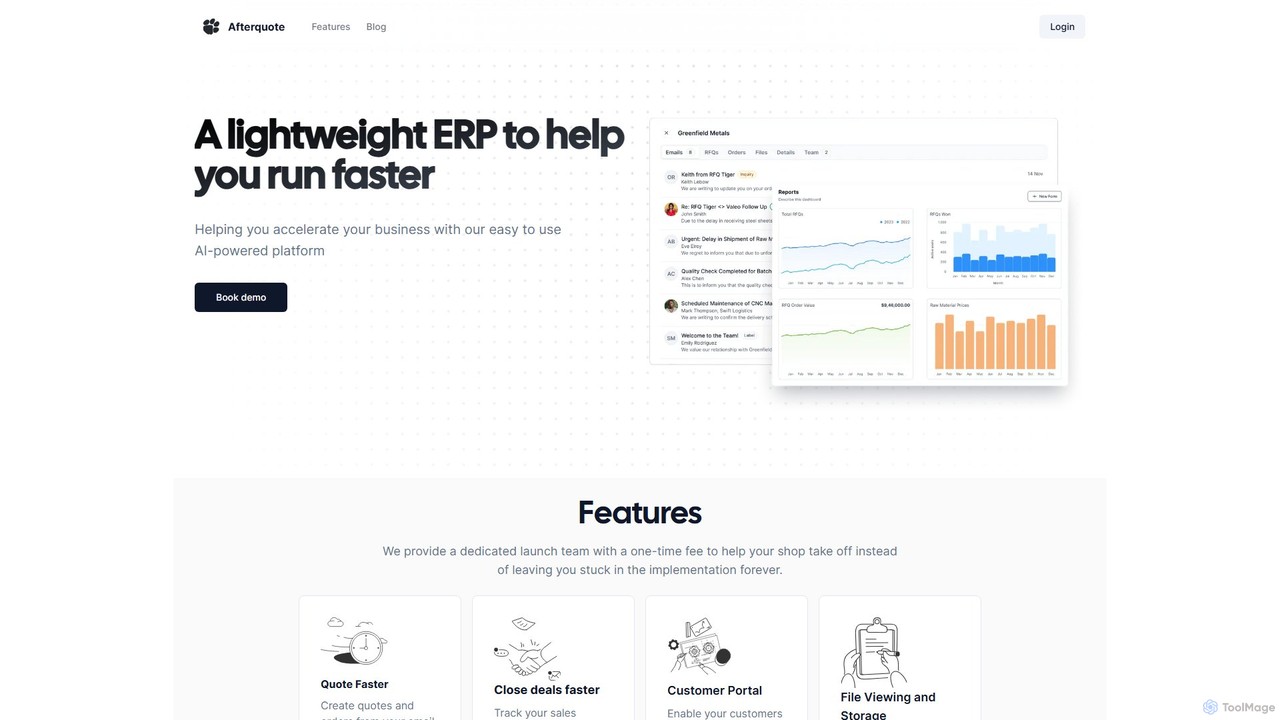
Afterquote is a lightweight, AI-powered ERP platform designed for manufacturing businesses, particularly in metal fabrication. It streamlines operations by automating quoting from emails, managing sales pipelines, and providing a real-time customer portal for order tracking.

Erp
Visits 5.4KFavorites 103Likes 100
Nanotronics
Paid

Nanotronics

Nanotronics is an industrial AI company providing an advanced platform for autonomous manufacturing. It combines AI, computer vision, and robotics in its nSpec (Automated Optical Inspection) and nControl (AI Process Control) systems to help manufacturers in sectors like semiconductors and automotive increase yields, reduce waste, and optimize production through real-time data analysis and predictive control.

Quality Control
Visits 5.4KFavorites 148Likes 145
Averroes
Paid

Averroes

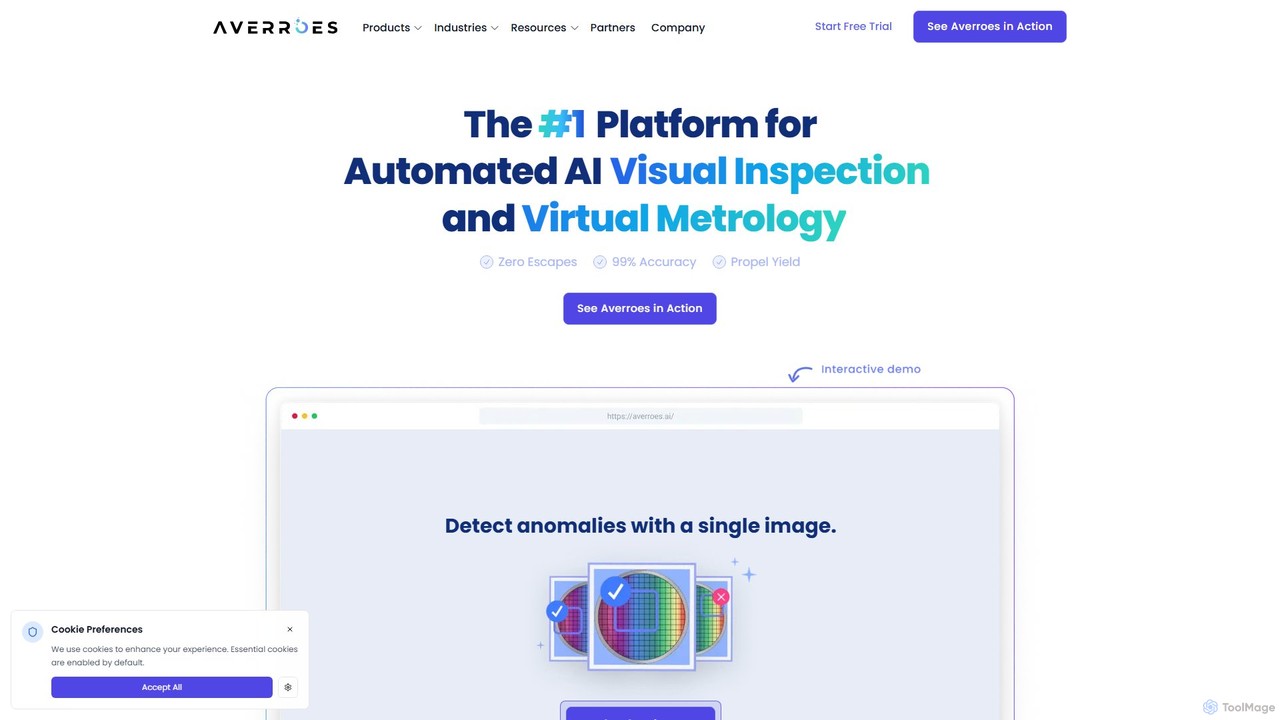
Averroes is a no-code AI platform for automated visual inspection and virtual metrology in manufacturing. It delivers over 99% accuracy in defect detection, integrates seamlessly with existing hardware, and requires minimal data to train. Designed for industries like semiconductors, electronics, and solar, it boosts productivity and yield by automating quality control processes.

No Code
Visits 18.3KFavorites 133Likes 127
Green Bio Tech

Green Bio Tech

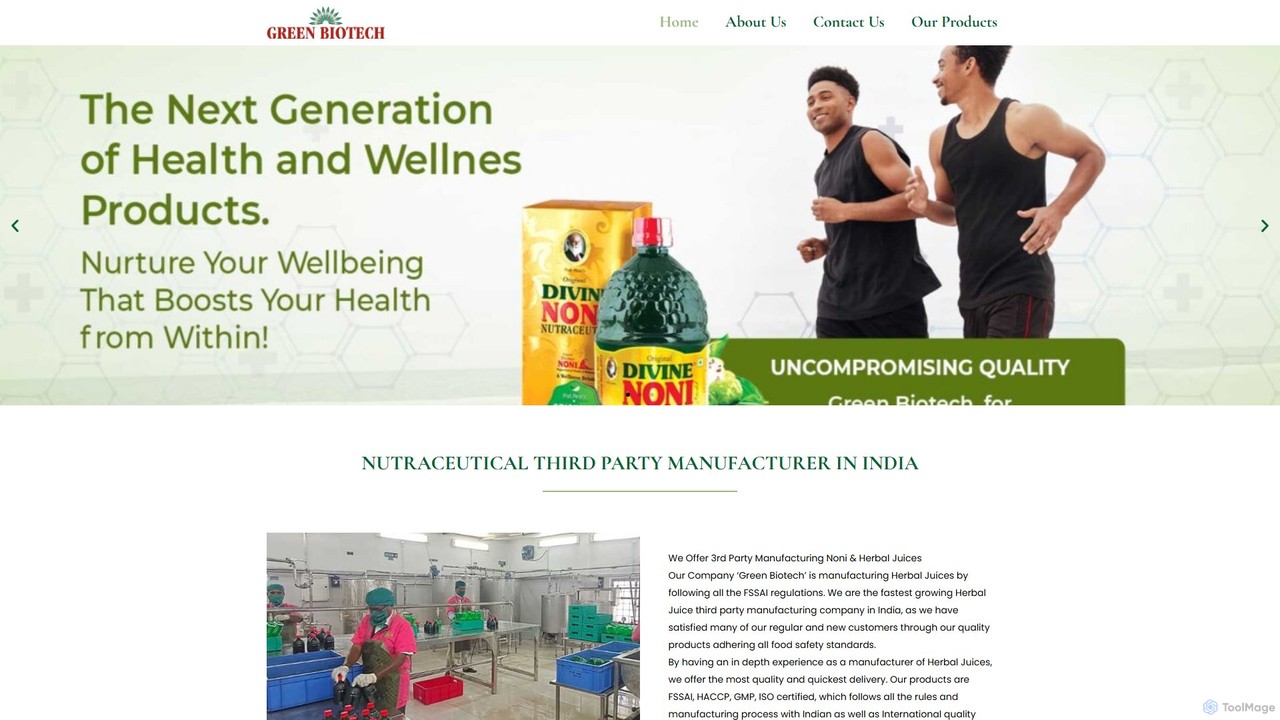
Green Bio Tech is an AI-powered platform for the nutraceutical industry, specializing in the development and third-party manufacturing of herbal products. It leverages AI for formulation optimization, real-time quality control, and supply chain management, enabling businesses to efficiently create certified, high-purity supplements like their flagship Divine Noni juice.

Nutraceuticals
Visits 5.9KFavorites 128Likes 121
Covariant
Paid

Covariant

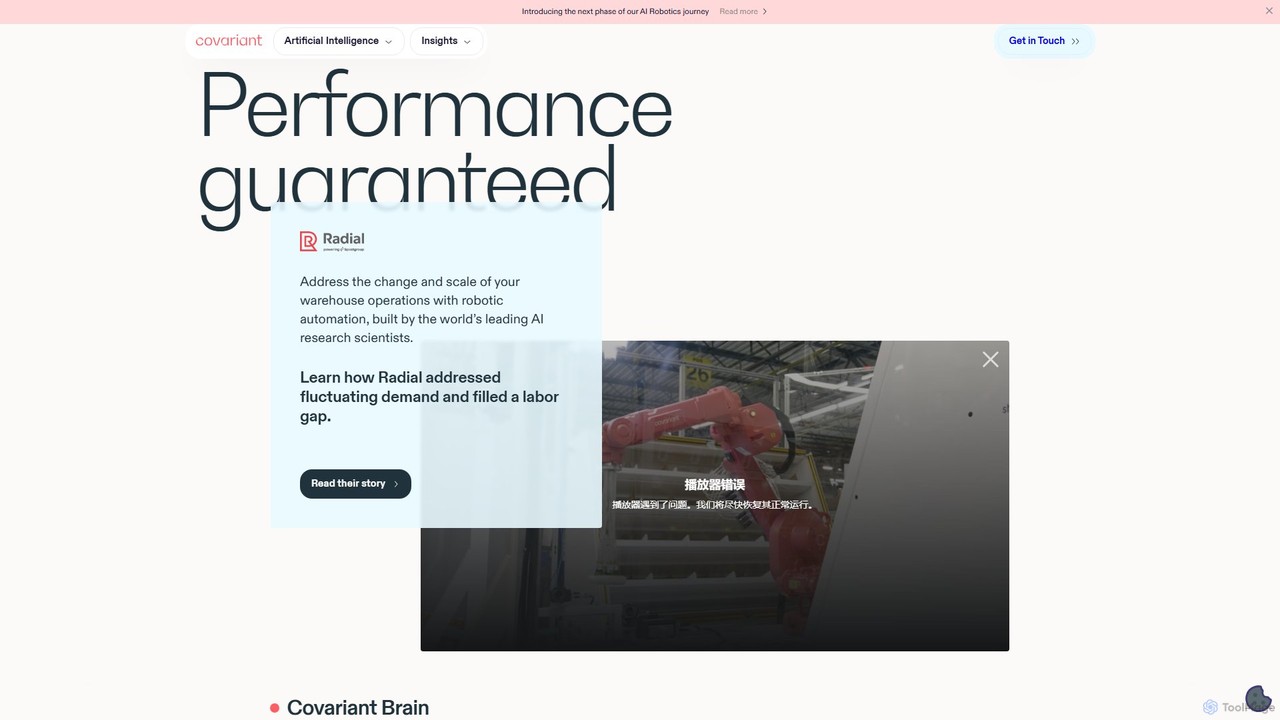
Covariant provides an advanced AI robotics platform, the Covariant Brain, designed to automate warehouse operations. Powered by Robotics Foundation Models (RFM-1), it enables robots to perform complex pick-and-place tasks with human-level autonomy. The platform is versatile, handling virtually any item from day one, and continuously improves through fleet learning. It's a solution for e-commerce, logistics, and manufacturing companies looking to address labor shortages, manage fluctuating demand, and scale their automation efforts efficiently.

Logistics Automation
Visits 22KFavorites 146Likes 145
Mercura
Paid

Mercura

Mercura is an AI-powered platform designed for wholesalers and manufacturers to automate the quoting process. It intelligently processes Bill of Quantities (BOQ) and Bill of Materials (BOMs), instantly matching requests to inventory, reducing quote generation time by up to 80%, and increasing sales conversion rates.

Data Analytics
Visits 9.5KFavorites 143Likes 135
Intelgic
Paid

Intelgic

Intelgic provides comprehensive AI-powered machine vision solutions for industrial automation. Specializing in high-speed, high-precision defect detection, their system integrates custom hardware (cameras, lighting, robotics) with proprietary "Live Vision AI" software to ensure quality control in manufacturing environments like automotive, electronics, and material processing.

Industrial Automation
Visits 22.9KFavorites 103Likes 123
Tangle
Paid

Tangle

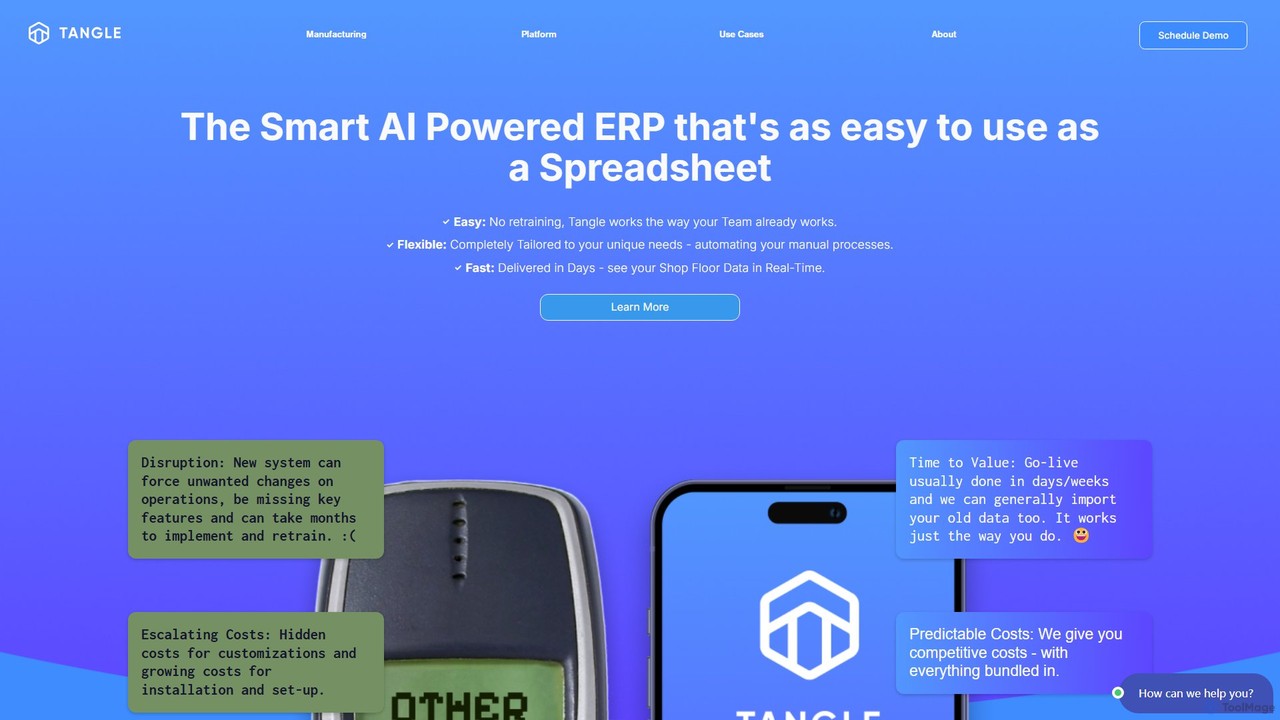
Tangle is an AI-powered Manufacturing ERP platform designed to be as flexible and easy to use as a spreadsheet. It automates manual processes, provides real-time shop floor visibility, and is tailored to the unique needs of manufacturing businesses. Tangle streamlines operations from quoting to cash, including inventory, scheduling, and production management, without the disruption of traditional ERP systems.

Erp
Visits 8.6KFavorites 125Likes 126
Soff.ai
Freemium

Soff.ai

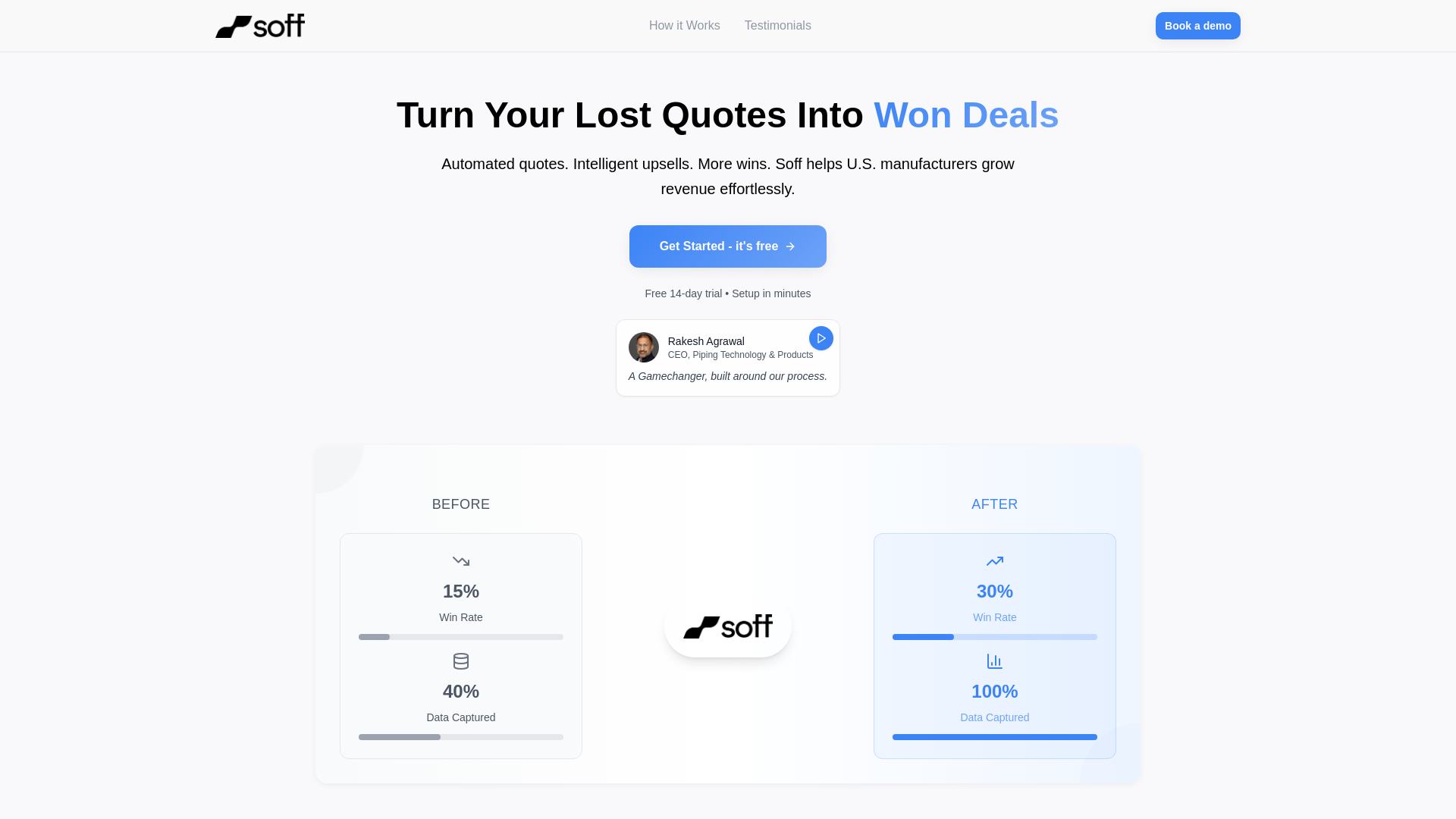
Soff.ai is a quote intelligence platform for manufacturers, using AI to automate quoting, analyze sales data, and increase win rates. It transforms lost quotes into actionable insights, streamlines the RFQ process, and integrates with existing CRM and ERP systems to boost revenue and efficiency.

Data Analysis
Visits 29.8KFavorites 154Likes 155
Artwo
Paid

Artwo

Artwo is a pioneering Robotics as a Service (RaaS) platform offering on-demand access to advanced humanoid robots. It enables businesses and individuals to lease cutting-edge robots through a flexible, pay-as-you-go model, eliminating high upfront costs. Artwo handles delivery, setup, and support, allowing users to deploy robots for various tasks using simple natural language commands.

Automation
Visits 5.4KFavorites 95Likes 101

About Manufacturing

AI Manufacturing tools are a class of software and systems that leverage artificial intelligence to optimize, automate, and enhance industrial production processes. These tools utilize technologies like machine learning, computer vision, and predictive analytics to interpret vast amounts of data from sensors, cameras, and enterprise systems. This enables manufacturers to significantly improve operational efficiency, reduce product defects, predict equipment failures before they occur, and build more agile and resilient supply chains.

Core Features

  • Predictive Maintenance: Analyzes real-time equipment data to forecast potential failures and schedule maintenance proactively, minimizing downtime.
  • AI-Powered Quality Control: Employs computer vision to automatically inspect products on the assembly line, identifying defects with greater speed and accuracy than human inspection.
  • Process Optimization: Uses machine learning models to analyze production variables and recommend optimal settings for energy consumption, material usage, and output.
  • Supply Chain Management: Provides advanced demand forecasting, inventory optimization, and logistics planning to reduce costs and improve delivery times.
  • Generative Design: Creates and refines product designs based on specified constraints like weight, material, and performance, accelerating innovation.

Use Cases

AI Manufacturing tools are widely adopted in sectors such as automotive, aerospace, electronics, pharmaceuticals, and consumer goods. They are used by process engineers to fine-tune production lines, quality assurance managers to automate inspection, and supply chain planners to forecast demand with high accuracy.

How to Choose

When selecting an AI Manufacturing tool, consider its integration capabilities with your existing Manufacturing Execution Systems (MES) and ERP software. Evaluate the tool's data processing power, scalability to handle your production volume, and the specific problem it solves (e.g., quality control vs. predictive maintenance). Also, assess the level of technical support and expertise provided by the vendor.

Featured tool rankings

Manufacturing use cases

1

Automated Visual Quality Inspection on Production Lines

A quality assurance manager in an electronics manufacturing facility is tasked with reducing the defect rate for microchips. Instead of relying on manual inspection, which is slow and prone to error, they implement an AI-powered visual inspection system. High-resolution cameras capture images of each chip on the conveyor belt, and a computer vision model, trained on thousands of examples, instantly identifies microscopic cracks, misalignments, or soldering errors. This system inspects hundreds of units per minute with over 99% accuracy, allowing for immediate removal of faulty products and providing data to pinpoint the root cause of defects in the production process.

2

Predictive Maintenance for Industrial Machinery

A maintenance engineer at an automotive plant needs to prevent unexpected breakdowns of critical robotic arms on the assembly line, as downtime can cost thousands of dollars per minute. They deploy an AI predictive maintenance tool that connects to sensors on the robots, monitoring variables like vibration, temperature, and motor current. The AI model analyzes these data streams in real-time to detect subtle anomalies that precede a failure. The system automatically generates a maintenance alert, specifying the likely issue and the recommended action, allowing the engineer to schedule repairs during planned downtime, thus preventing catastrophic failures and extending the machinery's lifespan.

3

AI-Driven Demand Forecasting for Supply Chains

A supply chain planner for a large consumer goods company struggles with accurately forecasting product demand, leading to either costly overstocking or lost sales from stockouts. By using an AI manufacturing tool for supply chain management, they can analyze historical sales data, market trends, weather patterns, and even social media sentiment. The machine learning model identifies complex patterns and generates highly accurate demand forecasts for each product line. This enables the planner to optimize inventory levels across warehouses, plan production schedules more effectively, and ensure product availability without tying up excess capital.

4

Generative Design for High-Performance Components

An aerospace design engineer is challenged with creating a new aircraft bracket that is significantly lighter than the current design without compromising strength or safety. Using an AI generative design tool, the engineer inputs the required parameters: material properties, load-bearing points, spatial constraints, and performance targets. The AI algorithm then explores thousands of possible geometric configurations, evolving the design to find the most optimal structure. The result is a complex, organic-looking bracket that is 30% lighter yet stronger than the original, which would be nearly impossible to conceive through traditional design methods.

5

Optimizing Energy Consumption in Manufacturing

A plant manager at a steel mill aims to reduce the facility's massive energy costs. They implement an AI-powered process optimization tool that monitors the electric arc furnaces, which are the largest consumers of electricity. The AI system analyzes real-time data on energy prices, production schedules, raw material composition, and furnace performance. It then provides recommendations for the most energy-efficient operational settings, such as adjusting heating cycles to coincide with lower electricity tariffs. This continuous optimization helps the plant reduce its overall energy consumption by over 10%, leading to significant financial savings and a smaller carbon footprint.

6

Enhancing Worker Safety with AI Monitoring

A safety officer in a heavy manufacturing environment wants to proactively prevent workplace accidents. They install an AI-powered safety monitoring system that uses existing security cameras. The computer vision model is trained to recognize unsafe conditions in real-time, such as workers not wearing personal protective equipment (PPE) like helmets or safety glasses, or employees entering restricted, high-risk zones. When the system detects a violation, it sends an immediate alert to the safety officer and the area supervisor, allowing for instant intervention before an accident can occur. This creates a safer working environment and helps enforce safety protocols consistently.

Manufacturing FAQ

What are AI Manufacturing tools?

AI Manufacturing tools are advanced software and hardware systems that apply artificial intelligence to optimize industrial production. They use technologies like machine learning and computer vision to analyze data from the factory floor, enabling predictive maintenance, automated quality control, and process optimization. These tools help manufacturers increase efficiency, reduce waste, and improve product quality by making data-driven decisions in real-time.

How do I choose the right AI Manufacturing tool?

Choosing the right tool depends on your specific needs. Consider these factors:

  • Problem to Solve: Identify your primary goal, whether it's reducing defects (quality control), preventing downtime (predictive maintenance), or optimizing resource use.
  • Integration: Ensure the tool can integrate with your existing systems like MES (Manufacturing Execution System) and ERP (Enterprise Resource Planning).
  • Data Requirements: Assess if you have the necessary data infrastructure and sensor technology to feed the AI model.
  • Scalability: Select a solution that can scale with your production volume and future needs.
What is the difference between AI Manufacturing and traditional automation?

Traditional automation relies on pre-programmed, rule-based systems that perform repetitive tasks exactly as instructed. It excels at consistency but lacks flexibility. AI Manufacturing, on the other hand, involves systems that can learn from data, adapt to variability, and make intelligent decisions. For example, a traditional robot might weld in the same spot every time, while an AI-powered robot could adjust its path based on visual feedback to account for slight variations in part placement.

What are the main benefits of using AI in manufacturing?

The primary benefits of implementing AI in manufacturing include significant improvements in efficiency and quality. Key advantages are reduced operational costs through predictive maintenance and energy optimization, higher product quality from automated defect detection, and increased production throughput. Furthermore, AI can enhance worker safety by monitoring for hazardous conditions and create more resilient supply chains through accurate demand forecasting.

Who should use AI Manufacturing tools?

AI Manufacturing tools are valuable for a wide range of roles within industrial settings. Plant managers use them for overall operational efficiency, quality assurance engineers for automating inspection processes, and maintenance teams for predicting equipment failures. Supply chain planners leverage them for demand forecasting, while design engineers use generative design to innovate new products. Essentially, any manufacturing business looking to become more data-driven, efficient, and competitive can benefit from these tools.