ToolMage
Sign in

Best 17 Problem Solving AI tools for Productivity

Popular Problem Solving AI tools in Productivity include Thetawise, DeepSeek R1, aimathsolve, Question AI, Chemistry AI, Maths.ai, mathsolver, HelpMoji, PRIZ Guru, and MathSolver, helping you work more efficiently.

QChing
Freemium

QChing

QChing is an innovative AI tool that merges ancient I Ching wisdom with cutting-edge quantum randomness for profound self-reflection and guidance. It offers personalized interpretations to help users navigate life's complexities, make informed decisions, and foster personal growth by framing questions and receiving coherent insights.

Guidance
Visits 6.4KFavorites 74Likes 80

Chemistry AI
Freemium

Chemistry AI

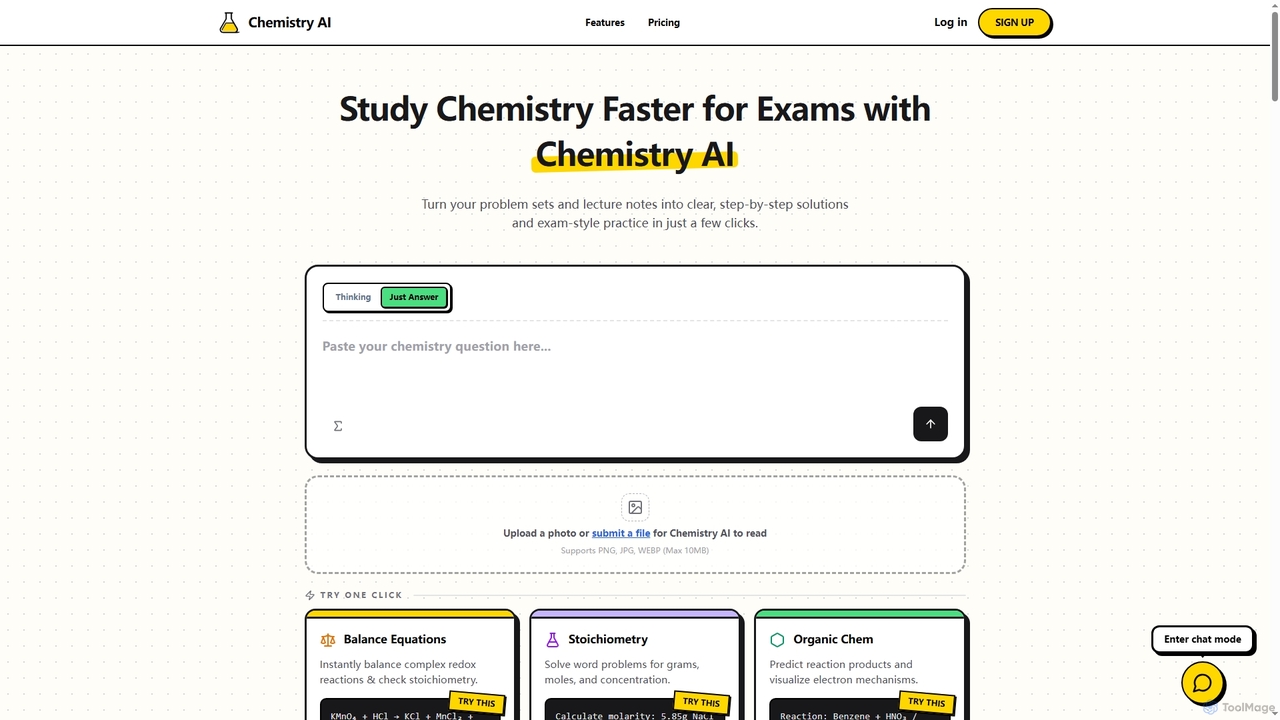
Chemistry AI is an online solver designed to accelerate chemistry learning and problem-solving for students, tutors, and self-learners. It provides clear, step-by-step solutions for complex chemistry problems, balances equations, solves stoichiometry word problems, and predicts organic reaction mechanisms, supporting both text and image inputs without requiring sign-up for basic use.

Study Aid
Visits 19.7KFavorites 117Likes 101
Question AI
Freemium

Question AI

Question AI is an advanced AI homework helper designed for students to get accurate, step-by-step solutions across a wide range of subjects. It covers math, physics, chemistry, literature, history, and programming, offering flexible input options and multilingual support. With reported accuracy up to 98%, it aims to simplify academic challenges and enhance understanding for learners worldwide.

Homework Assistance
Visits 6.4KFavorites 175Likes 160
MathSolver
Freemium

MathSolver

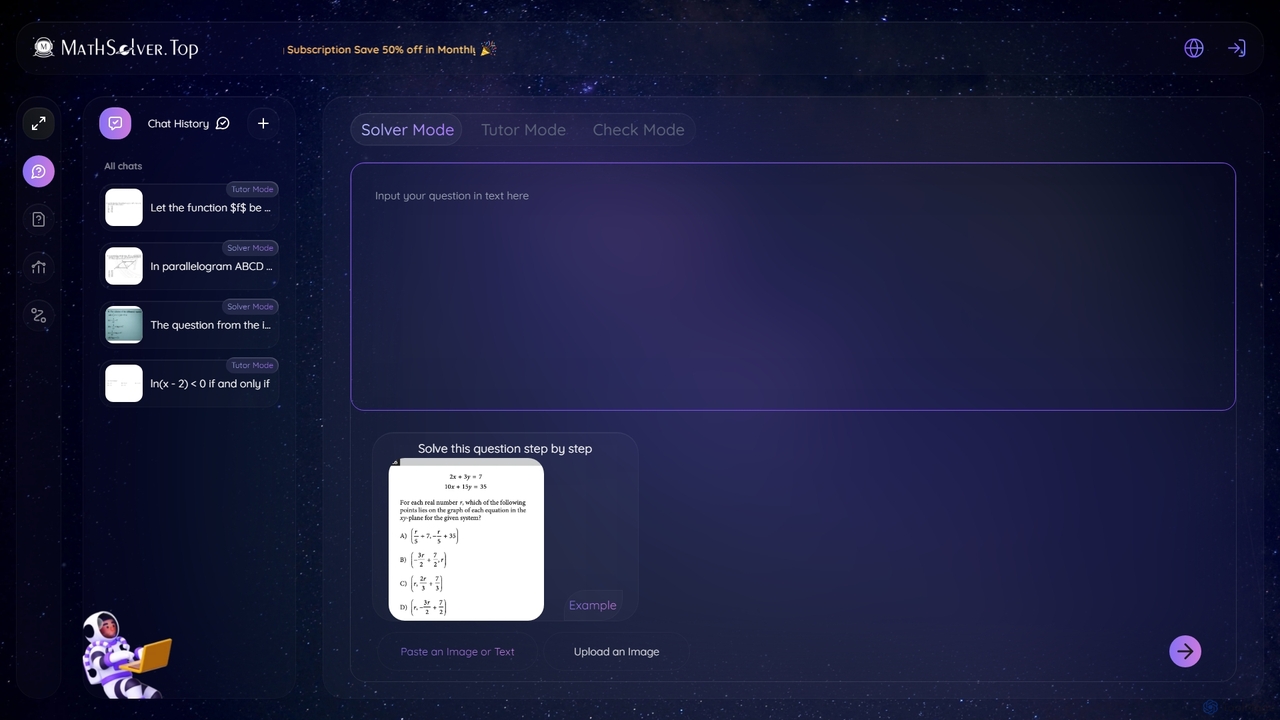
MathSolver is an AI-powered math assistant offering multiple modes to solve problems and learn concepts. Use Solver Mode for step-by-step answers, or Tutor Mode for interactive guidance. It supports text and image inputs for a wide range of math subjects, from algebra to calculus, making it an ideal tool for students and educators.

Calculation
Visits 7.8KFavorites 133Likes 134
MathGPT
Free

MathGPT

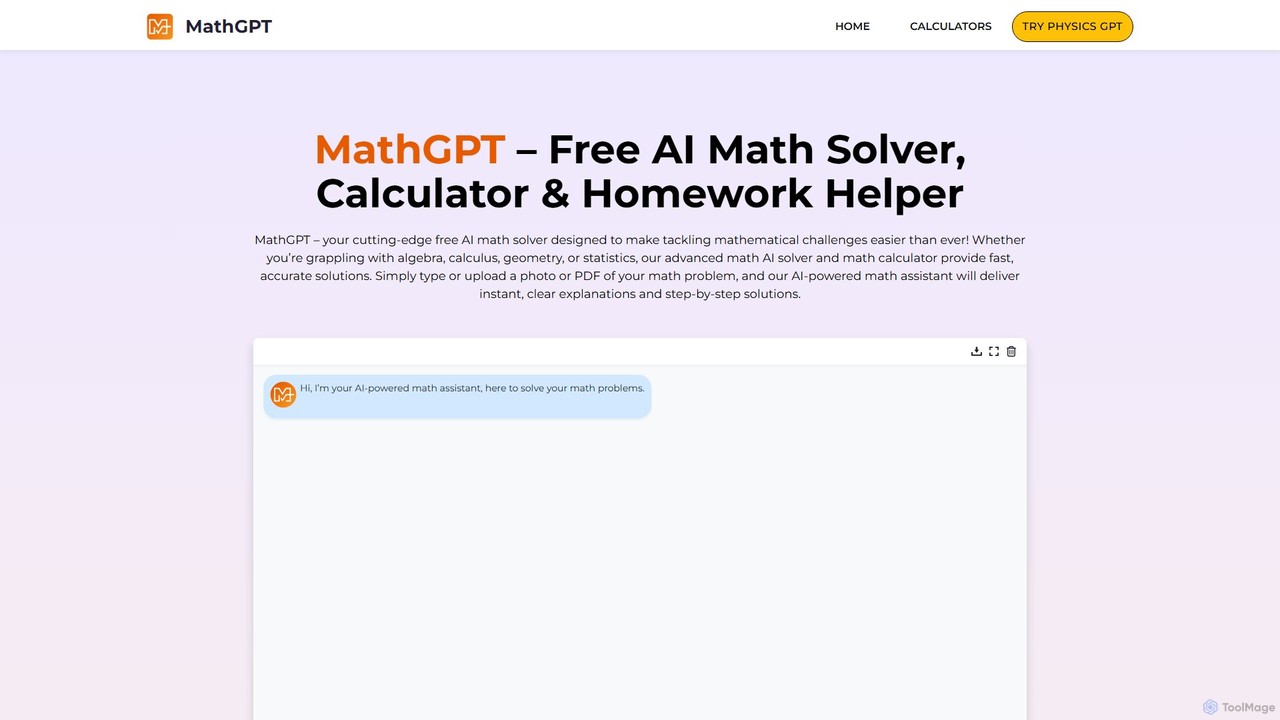
MathGPT is a free, AI-powered math solver and calculator designed to help students and educators. It provides instant, step-by-step solutions for a wide range of math problems, from basic arithmetic to advanced calculus. Users can input problems by typing, uploading a photo of handwritten or printed equations, or submitting a PDF document, making it a versatile homework helper and learning tool.

Homework Helper
Visits 6.3KFavorites 112Likes 123
mathsolver
Freemium

mathsolver

mathsolver is an AI-powered math problem solver and personalized tutor. It provides step-by-step solutions, identifies learning gaps through a knowledge graph, and creates adaptive daily study plans. With modes for solving, tutoring, and checking answers, it helps students master math concepts from high school to college level 10X faster.

Personalized Learning
Visits 8.7KFavorites 153Likes 167
Mechanic For A Chat
Freemium

Mechanic For A Chat

An AI-powered chatbot providing 24/7 expert assistance for car problems. Instantly diagnose issues like warning lights or strange noises, get repair advice, and manage your vehicle's maintenance schedule, all through a simple chat interface.

Virtual Assistant
Visits 6.4KFavorites 136Likes 132
HelpMoji
Free

HelpMoji

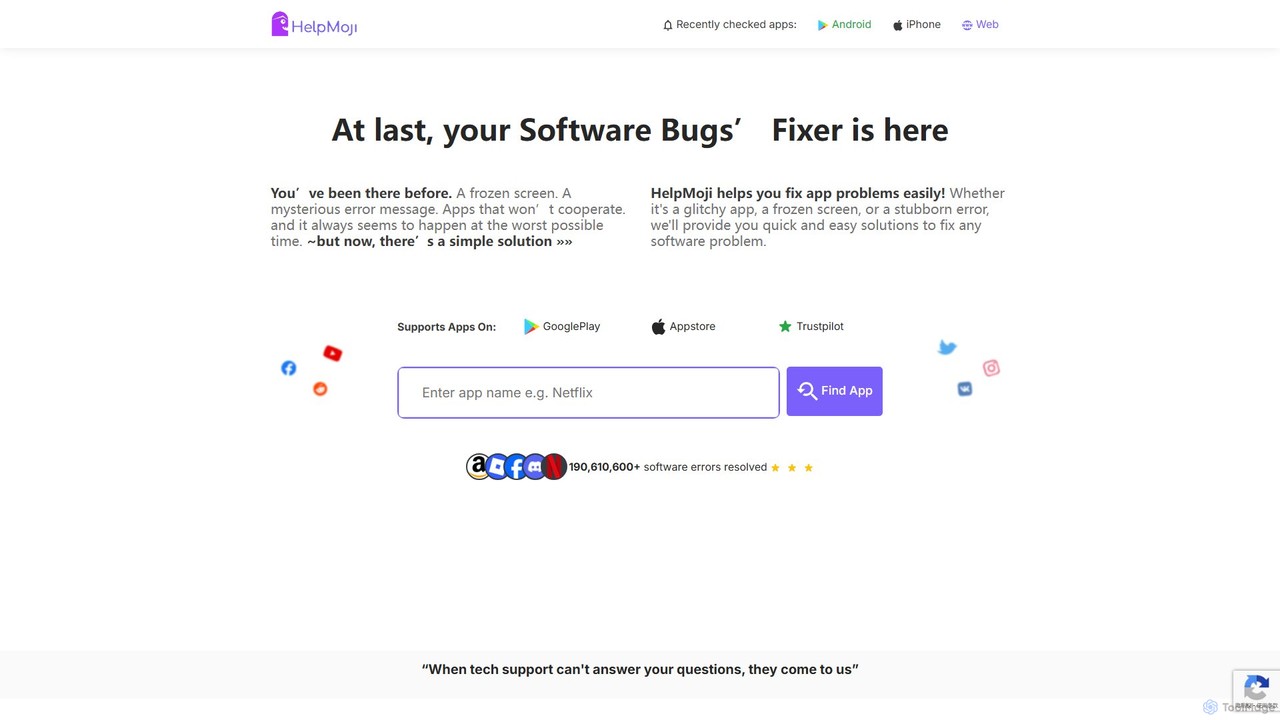
HelpMoji is an AI-powered troubleshooting platform that provides instant, step-by-step solutions for software and app errors. It helps users fix issues like frozen screens, error messages, and app crashes for a vast library of Android and iOS applications, eliminating the need for lengthy tech support calls.

Problem Solving
Visits 8.5KFavorites 126Likes 114
CodeHugo
Freemium

CodeHugo

CodeHugo is a GPT-powered AI code mentor designed to help engineers and developers enhance their computational thinking and coding skills. It acts as a personal tutor, guiding you through problems with hints and explanations, rather than just giving away the answer.

Code Assistant
Visits 6.4KFavorites 139Likes 128
ai_math
Freemium

ai_math

An AI-powered math solver that provides instant, step-by-step solutions to a wide range of mathematical problems. From algebra and calculus to geometry and statistics, ai_math helps students, educators, and professionals understand complex concepts and solve equations with ease. Simply input your problem via text or image upload to receive detailed explanations and accurate answers, making it the perfect tool for homework, exam prep, and self-study.

Math Solver
Visits 6.5KFavorites 200Likes 168
DeepSeek R1
Freemium

DeepSeek R1

DeepSeek R1 is a revolutionary open-source AI model specializing in advanced reasoning, mathematics, and coding. Built on a Mixture-of-Experts (MoE) architecture and trained with pure reinforcement learning, it delivers state-of-the-art performance comparable to leading proprietary models. It offers exceptional cost-efficiency, an OpenAI-compatible API, and various distilled models for flexible deployment, making it ideal for developers, researchers, and enterprises.

Code Generation
Visits 69.7KFavorites 126Likes 140
Thetawise
Freemium

Thetawise

Thetawise is a highly accurate AI math tutor designed to help students master complex mathematical concepts. It provides instant, step-by-step solutions, features an advanced problem solver, and can even generate personalized AI video lessons. With multiple input methods like image uploads, handwriting, and voice-to-text, Thetawise makes learning math accessible, affordable, and available 24/7.

Tutoring
Visits 645.6KFavorites 116Likes 134
Maths.ai
Freemium

Maths.ai

Maths.ai is an AI-powered math tutor designed to help students, teachers, and professionals master mathematics. It provides instant, step-by-step solutions to a wide range of math problems, from basic arithmetic to advanced calculus, in a personalized and supportive learning environment.

Tutoring
Visits 9.6KFavorites 122Likes 122
AI MathGPT
Freemium

AI MathGPT

AI MathGPT is your 24/7 AI-powered math tutor. Powered by advanced models like Llama3 and OpenAI o1, it provides instant, step-by-step solutions and clear explanations for complex math problems. Designed for students and parents, it aims to transform math frustration into confidence and improve academic performance.

Homework Help
Visits 6.4KFavorites 151Likes 149
aimathsolve
Freemium

aimathsolve

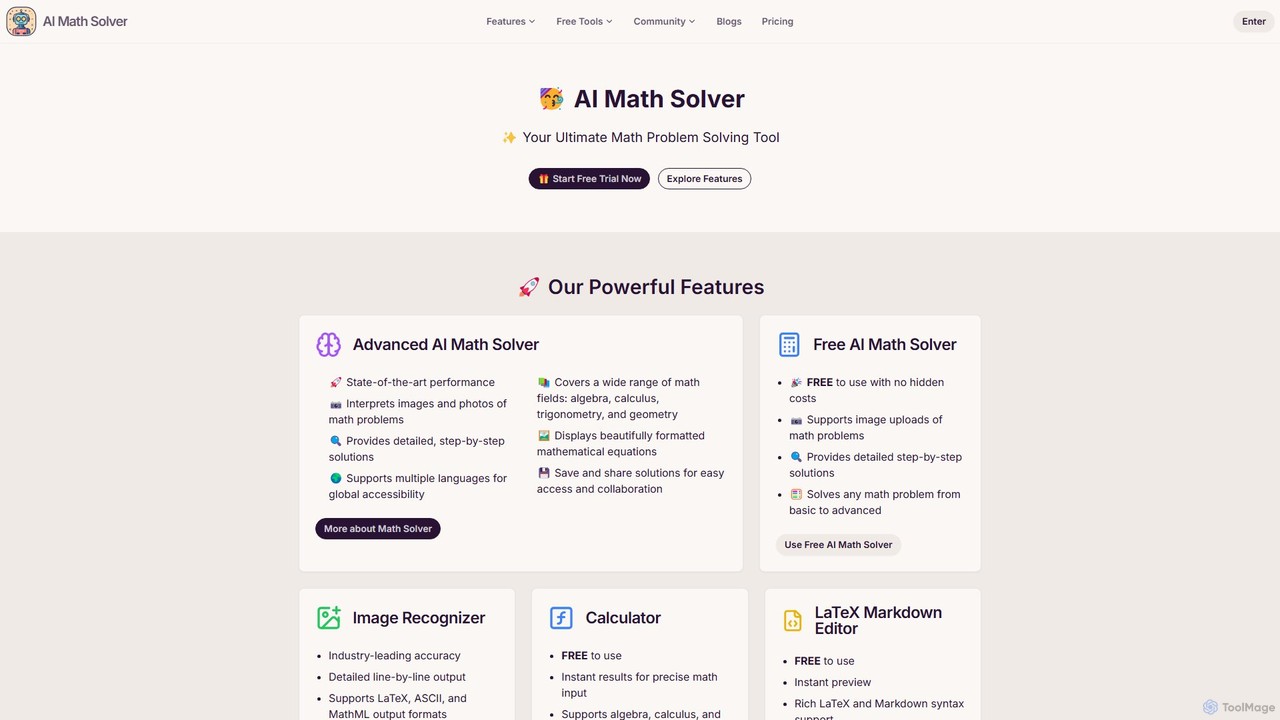
aimathsolve is an AI-powered math problem solver that provides detailed, step-by-step solutions. It supports various input methods, including image uploads of handwritten problems, and covers a wide range of math subjects from algebra to calculus. Designed for students, teachers, and professionals, it offers a flexible pay-as-you-go pricing model and a suite of free tools like a calculator and LaTeX editor.

Calculators
Visits 47.3KFavorites 120Likes 110
Question AI
Freemium

Question AI

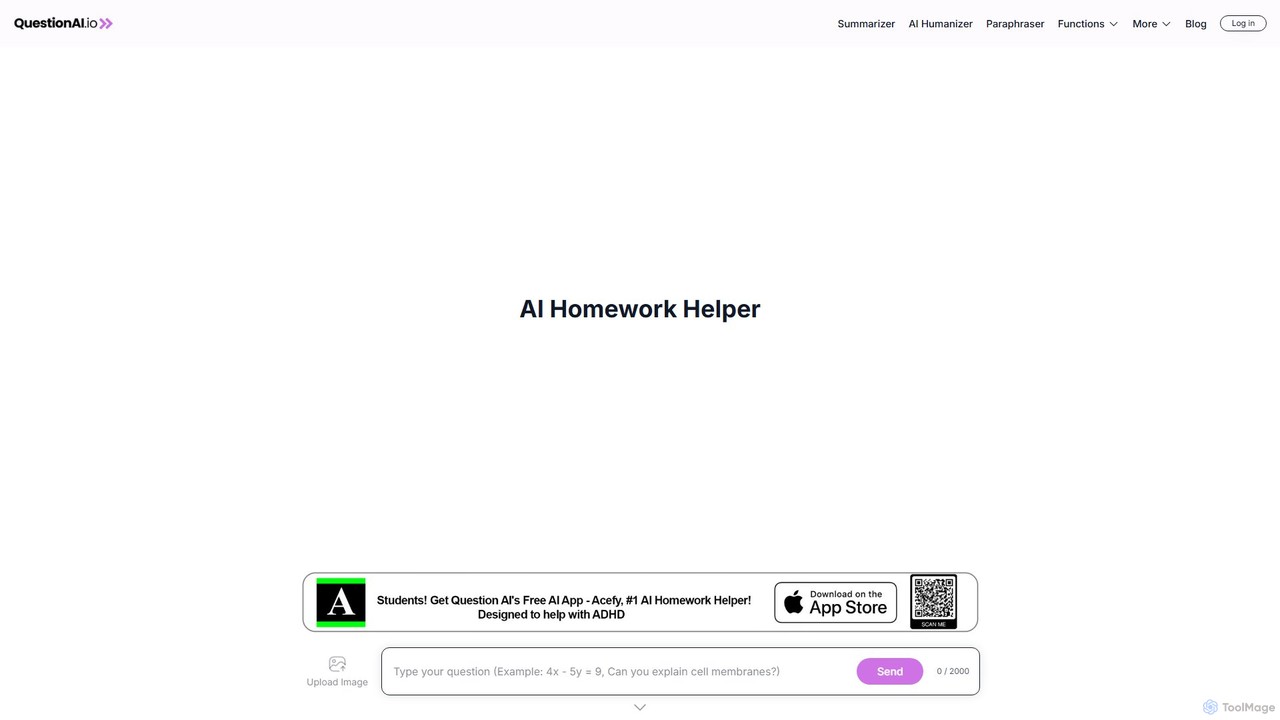
Question AI is a versatile AI-powered homework helper and study assistant designed for students. It provides instant, step-by-step answers to questions across various subjects by simply typing or uploading a photo. It also includes a suite of writing tools like a paraphraser, summarizer, and AI humanizer to help students improve their essays and reports, making learning more efficient and accessible 24/7.

Learning
Visits 42.3KFavorites 142Likes 119
PRIZ Guru
Paid

PRIZ Guru

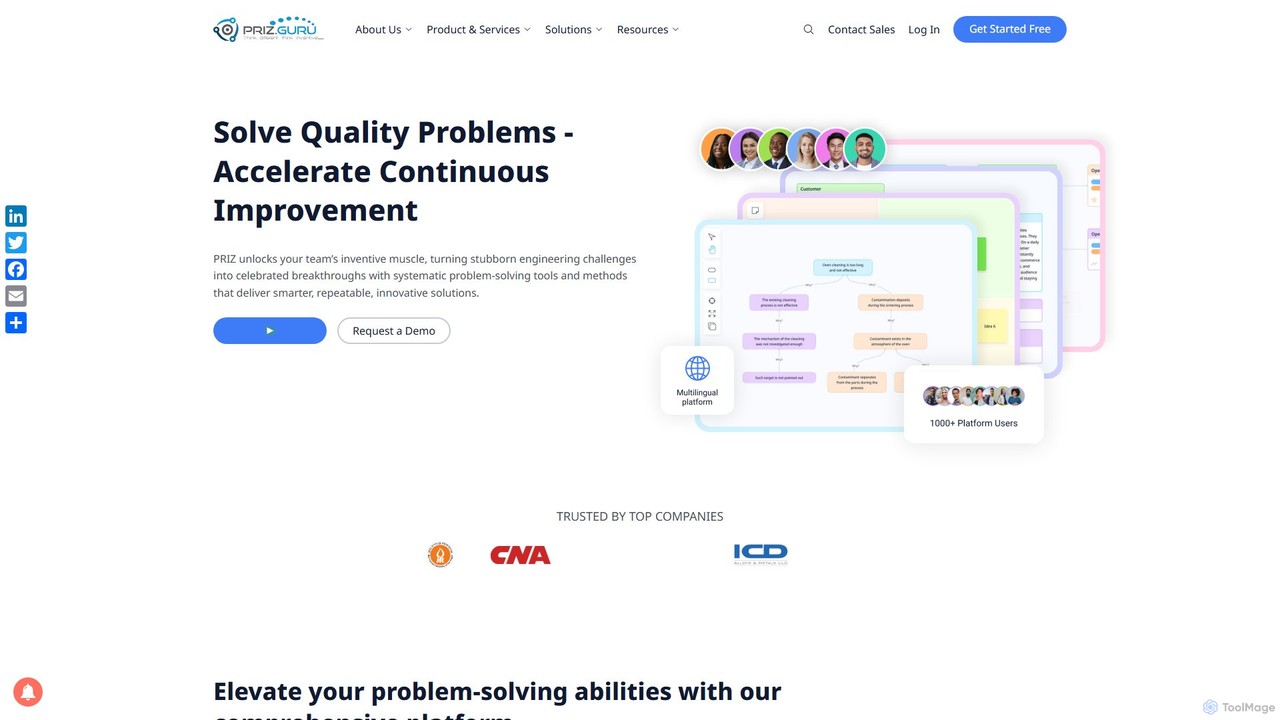
PRIZ Guru is an AI-powered innovation platform for engineering teams. It combines systematic problem-solving methodologies like TRIZ with AI-assisted facilitation, project management, and collaboration tools to turn complex engineering challenges into competitive advantages and accelerate continuous improvement.

Project Management
Visits 7.8KFavorites 132Likes 120

About Problem Solving

AI Problem Solving tools are a specialized category of productivity software designed to analyze complex issues and generate viable solutions. They leverage advanced algorithms, logic models, and machine learning to deconstruct challenges, identify root causes, and model potential outcomes. These tools are invaluable for professionals in technical, strategic, and operational roles, helping them move from ambiguity to actionable insights. Unlike general productivity aids, they focus specifically on the analytical process of decision-making and troubleshooting.

Core Features

  • Root Cause Analysis: Automatically sifts through data and dependencies to pinpoint the fundamental source of a problem.
  • Solution Generation: Proposes multiple, diverse strategies and action plans to address an identified issue.
  • Scenario Simulation: Models the potential impact and consequences of different solutions before implementation.
  • Decision Support Frameworks: Creates structured matrices for evaluating options based on custom criteria like cost, risk, and benefit.
  • Diagnostic Analytics: Interprets complex datasets to detect anomalies, system failures, or process inefficiencies.

Use Cases

These tools are widely used in fields like software engineering for debugging complex code, logistics for optimizing supply chains, and financial analysis for developing risk mitigation strategies. They are essential for project managers identifying potential bottlenecks, and for engineers troubleshooting design flaws in complex systems.

How to Choose

When selecting a tool, consider the specific type of problem you need to solve (e.g., technical, strategic, or operational). Evaluate its analytical capabilities, integration with your existing data sources, the complexity of its user interface, and whether its pricing model aligns with your usage frequency and team size.

Featured tool rankings

Problem Solving use cases

1

Accelerate Software Debugging

A software development team is facing a critical, intermittent bug in their application that is difficult to reproduce. Using an AI Problem Solving tool, they feed it application logs, crash reports, and code commits. The AI analyzes patterns across terabytes of data, correlating specific user actions with system states and recent code changes. It identifies the likely root cause as a race condition in a newly implemented module and suggests several code modifications to resolve it. This process reduces debugging time from days of manual investigation to a few hours of automated analysis.

2

Optimize Supply Chain Logistics

A logistics manager for a retail company needs to reduce shipping costs and delivery times. They use an AI Problem Solving tool to model their entire supply chain, inputting data on warehouse locations, carrier rates, traffic patterns, and fuel costs. The AI runs thousands of simulations to identify bottlenecks and inefficiencies. It then proposes an optimal strategy that involves rerouting certain shipments, consolidating orders, and adjusting inventory levels at specific distribution centers. Implementing these AI-driven suggestions leads to a significant reduction in operational costs and improved customer satisfaction.

3

Formulate Business Growth Strategies

A business strategist is tasked with identifying new growth opportunities. They use an AI Problem Solving tool to analyze market trends, competitor performance, customer feedback, and internal financial data. The AI identifies an underserved market segment and simulates the potential ROI of launching a new product line targeted at this segment. It generates a comprehensive decision matrix, comparing this strategy against others like geographic expansion or acquisitions, weighing factors like upfront investment, market risk, and projected revenue. This provides the leadership team with a data-backed foundation for their strategic planning.

4

Troubleshoot Complex Engineering Designs

An aerospace engineer is working on a new turbine blade design that fails under simulated stress tests. Instead of relying solely on traditional simulation software, they use an AI Problem Solving tool. The tool analyzes the design parameters, material properties, and simulation failure data. It identifies a critical weakness at a specific geometric point and generates dozens of design variations that reinforce this area without significantly increasing weight. The engineer can then test these AI-suggested designs, quickly finding a viable solution that meets all performance and safety criteria.

5

Identify Financial Market Risks

A financial analyst at an investment firm needs to assess the risk profile of a potential investment. They use an AI Problem Solving tool to process vast amounts of data, including historical market performance, news sentiment, economic indicators, and company financial reports. The AI identifies hidden correlations and flags potential risks that might be missed by human analysts, such as a supplier's dependency on a politically unstable region. It then generates several risk mitigation scenarios, like hedging strategies or portfolio diversification, allowing the firm to make a more informed and secure investment decision.

6

Enhance Medical Diagnostic Support

A radiologist is reviewing complex medical images where a diagnosis is uncertain. They use an AI Problem Solving tool trained on millions of anonymized medical scans and patient records. The AI highlights subtle anomalies in the images that are barely visible to the human eye and provides a list of potential diagnoses ranked by probability. It also cross-references the findings with the latest medical research and clinical trial data, presenting relevant papers to support each potential diagnosis. This acts as a powerful second opinion, helping the clinician make a more accurate and timely diagnosis.

Problem Solving FAQ

What are AI Problem Solving tools?

AI Problem Solving tools are advanced software applications that use artificial intelligence to analyze complex situations, identify root causes, and generate potential solutions. Unlike general AI assistants that handle broad queries, these tools are specialized for structured analysis. They often employ techniques like logic modeling, simulation, and data analysis to help users navigate challenges in technical, strategic, and operational domains, turning complex data into clear, actionable plans.

How do I choose the right AI Problem Solving tool?

Choosing the right tool depends on your specific needs. Consider the following factors:

  • Problem Domain: Does the tool specialize in your area, such as software engineering, finance, or logistics?
  • Data Integration: Can it easily connect with your existing data sources (e.g., databases, logs, APIs)?
  • Analytical Methods: Does it offer the right kind of analysis, like simulation, root cause analysis, or predictive modeling?
  • User Interface: Is the tool intuitive for your team's technical skill level, or does it require specialized expertise?
  • Scalability: Can it handle the volume and complexity of your data and problems as you grow?
What's the difference between AI Problem Solving tools and general AI assistants?

The key difference is specialization. General AI assistants (like chatbots or virtual assistants) are designed for a wide range of tasks, such as answering questions, writing text, and setting reminders. They are generalists. AI Problem Solving tools, on the other hand, are specialists. They are built with specific analytical models and algorithms to tackle complex, domain-specific challenges. They don't just provide information; they structure it, analyze it, run simulations, and propose strategic solutions based on deep data analysis, making them a focused tool for decision-makers and technical experts.

What types of problems can these AI tools solve?

AI Problem Solving tools excel at complex, multi-faceted problems where data analysis and scenario modeling are crucial. This includes:

  • Diagnostic Problems: Identifying the root cause of system failures, software bugs, or production line defects.
  • Optimization Problems: Finding the most efficient solution, such as optimizing supply chain routes, financial portfolios, or marketing spend.
  • Strategic Problems: Evaluating different business strategies, forecasting market changes, and performing risk analysis.
  • Design Problems: Generating and testing variations of engineering designs or chemical formulas to meet specific criteria.
Who benefits most from using AI Problem Solving tools?

Professionals who regularly face complex, data-intensive decisions benefit the most. This includes roles such as:

  • Engineers and Developers: For debugging, system design, and troubleshooting.
  • Business and Financial Analysts: For market analysis, risk assessment, and strategic planning.
  • Logistics and Supply Chain Managers: For route optimization and inventory management.
  • Scientists and Researchers: For analyzing experimental data and formulating hypotheses.
  • Project Managers: For identifying risks, dependencies, and optimizing project timelines.