Equip
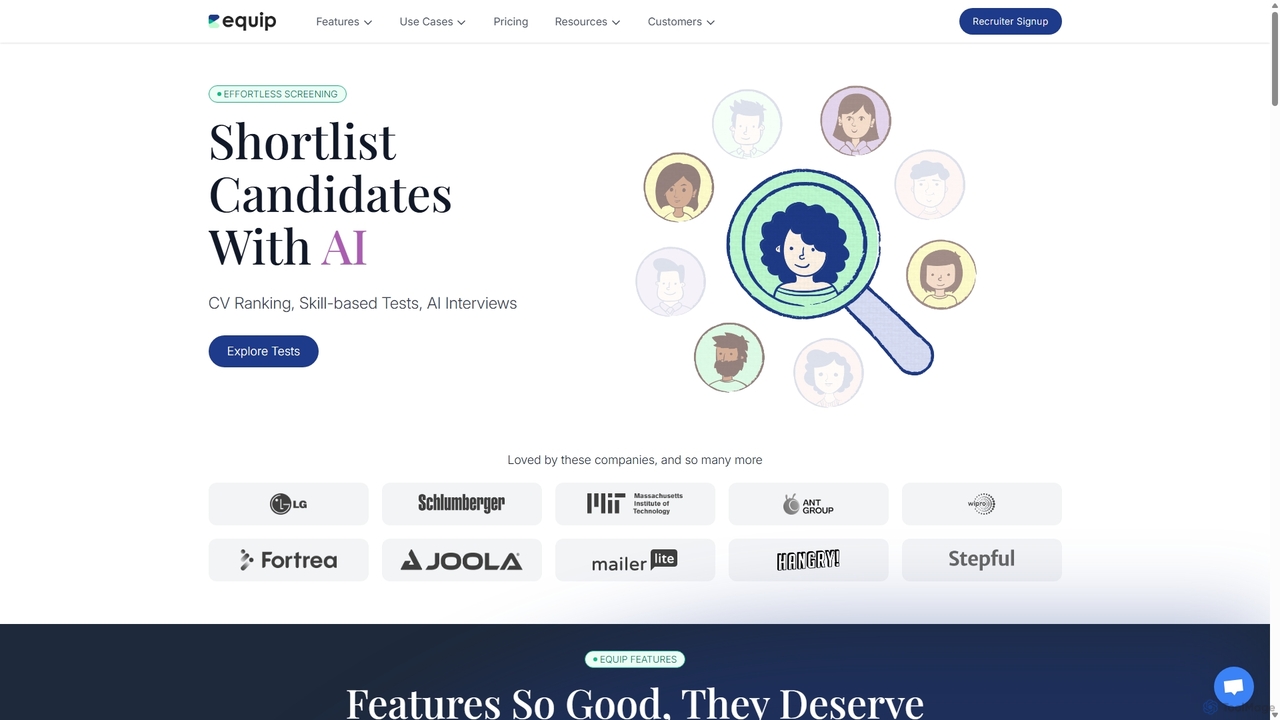
Equip is an AI-powered skill assessment platform designed to streamline the hiring process. It helps companies screen and …
Equip is an AI-powered skill assessment platform designed to streamline the hiring process. It helps companies screen and shortlist candidates effortlessly through skill-based tests, AI CV ranking, and AI-proctored interviews. With a vast question bank and robust anti-cheating technology, Equip provides a reliable way to evaluate candidates for various roles, from technical to non-technical.
Canditech
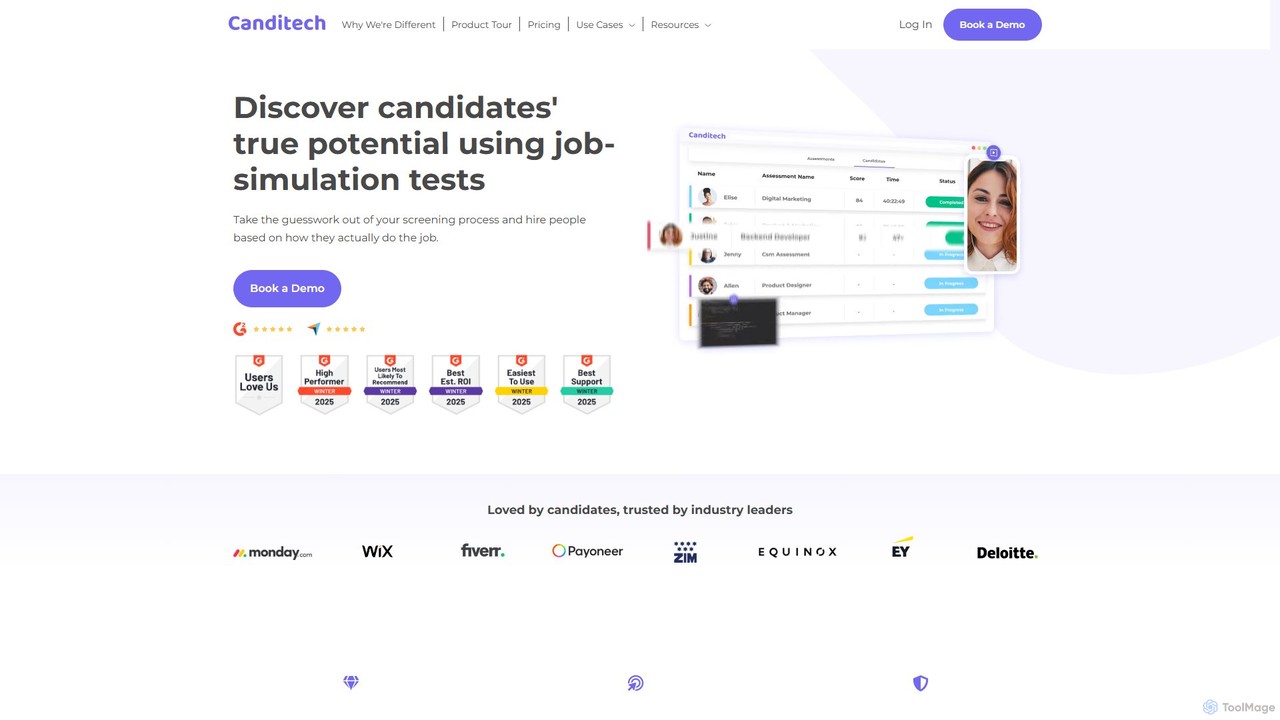
Canditech is an AI-powered skill assessment platform that helps companies streamline hiring with job-simulation tests. It offers a …
Canditech is an AI-powered skill assessment platform that helps companies streamline hiring with job-simulation tests. It offers a comprehensive suite for evaluating technical and soft skills, featuring video interviews, automated scoring, and advanced anti-cheating technology to ensure data-driven, bias-free recruitment.
Xobin
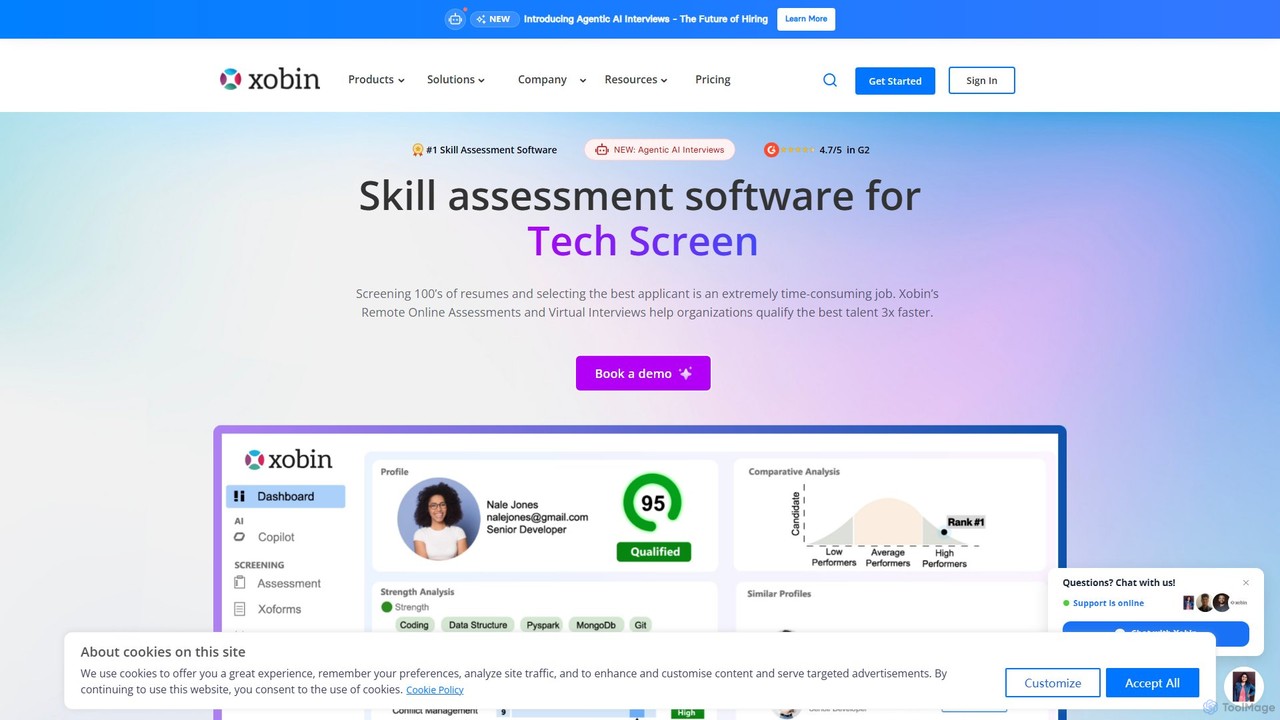
Xobin is an AI-powered platform for skill assessments and psychometric testing, designed to help companies streamline their hiring …
Xobin is an AI-powered platform for skill assessments and psychometric testing, designed to help companies streamline their hiring process. It enables recruiters to accurately evaluate candidates' technical and soft skills, reduce bias, and identify the best talent efficiently through a vast library of tests and video interviews.
Adaface
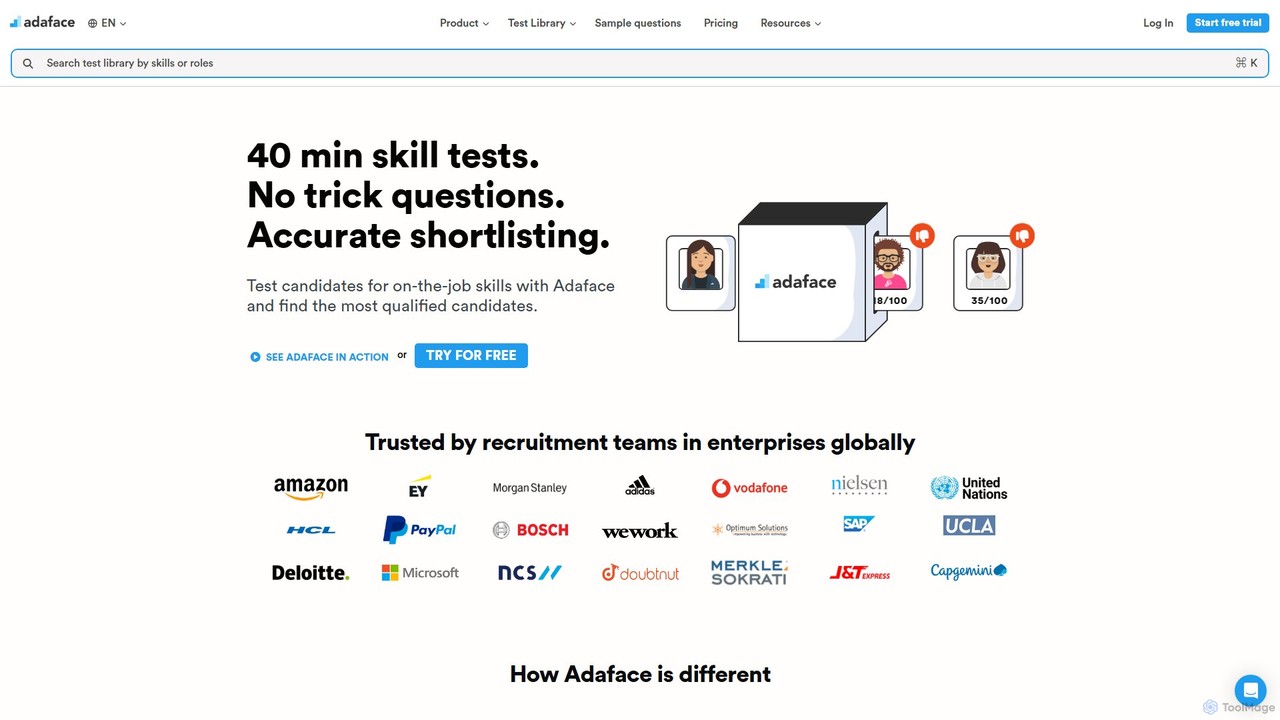
Adaface is a skills assessment platform that helps companies screen candidates with job-relevant tests. It features over 500 …
Adaface is a skills assessment platform that helps companies screen candidates with job-relevant tests. It features over 500 assessments for various roles, focusing on practical, on-the-job skills rather than trick questions. Its conversational chatbot interface provides a candidate-friendly experience, improving engagement and reducing screening time.
About Screening
AI Screening tools are applications designed to automatically filter, sort, and rank large volumes of data against predefined criteria. Leveraging technologies like Natural Language Processing (NLP) and machine learning, these tools analyze unstructured text in documents such as resumes, applications, or research papers. They significantly accelerate productivity by automating the initial, time-consuming stages of evaluation processes. This allows users to focus on the most relevant candidates, leads, or information, improving decision-making accuracy and efficiency.
Core Features
- Automated Data Parsing: Extracts key information like skills, experience, and contact details from various document formats.
- Customizable Filtering Criteria: Allows users to set specific rules and keywords to match their unique requirements.
- Scoring and Ranking: Assigns a relevance score to each item, presenting a prioritized list for review.
- Bias Reduction Mechanisms: Utilizes algorithms to minimize the impact of unconscious human bias in the selection process.
- Integration Capabilities: Connects with existing systems like Applicant Tracking Systems (ATS) or Customer Relationship Management (CRM) software.
Use Cases
AI Screening tools are widely used in Human Resources for high-volume recruitment, where they screen thousands of resumes to identify top candidates. Sales and marketing teams use them for lead qualification, automatically scoring incoming leads to prioritize follow-ups. They are also valuable in academia for literature reviews and in legal sectors for document discovery.
How to Choose
When selecting an AI Screening tool, consider its integration capabilities with your current software stack. Evaluate the accuracy and reliability of its data parsing and matching algorithms. Assess the level of customization available for filtering criteria and scoring models. Also, ensure the tool complies with relevant data privacy and anti-discrimination regulations, such as GDPR or EEOC guidelines.
ScreeningUse Cases
Automating High-Volume Candidate Screening
An HR manager at a large tech company needs to fill a software engineer position and receives over 1,000 applications. Manually reviewing each resume would take days. By using an AI Screening tool, the manager sets criteria for required programming languages, years of experience, and educational background. The tool automatically parses all resumes, scores each candidate against the criteria, and presents a ranked shortlist of the top 50 most qualified applicants in under an hour. This frees up the recruitment team to focus on interviewing high-potential candidates.
Qualifying and Scoring Inbound Sales Leads
A marketing team generates hundreds of new leads daily through a website contact form. The sales team struggles to identify which leads to contact first. An AI Screening tool integrated with their CRM can automatically analyze the information provided by each lead (company size, job title, industry, specific needs mentioned). Based on a predefined scoring model, the tool assigns a score (e.g., 'hot', 'warm', 'cold') to each lead. This allows the sales team to immediately focus their efforts on the most promising prospects, increasing conversion rates and response times.
Accelerating Academic Literature Reviews
A PhD researcher is conducting a systematic review and has identified over 5,000 potentially relevant academic papers. Manually screening titles and abstracts for inclusion criteria is a monumental task. Using an AI Screening tool, the researcher inputs keywords, inclusion/exclusion criteria (e.g., study type, publication year). The AI scans all abstracts, highlighting relevant papers and excluding irrelevant ones. It can even categorize the shortlisted papers by theme or methodology, reducing the manual screening workload by over 80% and allowing the researcher to focus on in-depth analysis of the most pertinent studies.
Streamlining Grant and Application Reviews
A charitable foundation receives thousands of grant applications for its annual funding cycle. A small team of reviewers must assess each application for eligibility and alignment with the foundation's mission. An AI Screening tool can automate the initial eligibility check by parsing applications for required documentation, budget compliance, and key project themes. This instantly filters out incomplete or non-compliant submissions, allowing reviewers to dedicate their time to a thorough, qualitative assessment of the most promising and eligible projects, ensuring a fairer and more efficient review process.
Screening Tenant Applications for Property Management
A property management company handles hundreds of rental applications for various properties each month. Manually verifying income, checking credit history references, and ensuring all fields are complete is tedious. An AI Screening tool can be configured to automatically process these applications. It extracts income data, flags missing information, and can integrate with background check services. The system then presents a summarized and scored profile for each applicant to the property manager, highlighting those who meet all predefined criteria, thus speeding up the tenant selection process significantly.
Filtering Data for Due Diligence Processes
During a corporate merger or acquisition, legal and financial teams must review thousands of documents in a data room for due diligence. They look for specific clauses, financial risks, or compliance issues. An AI Screening tool trained on legal and financial language can rapidly scan all documents. Analysts can set queries to find all contracts with a specific 'change of control' clause or identify financial statements with anomalies. This reduces manual review time from weeks to days and minimizes the risk of human error in overlooking critical information.