ToolMage
Sign in

Best 8 Summarization AI tools for Productivity

Popular Summarization AI tools in Productivity include Bookshelf, ClipSheet, Audiosum, TubeScribe, Sumlyze, Resoomer, Shrink, and NowSummarize, helping you work more efficiently.

TubeScribe
Paid

TubeScribe

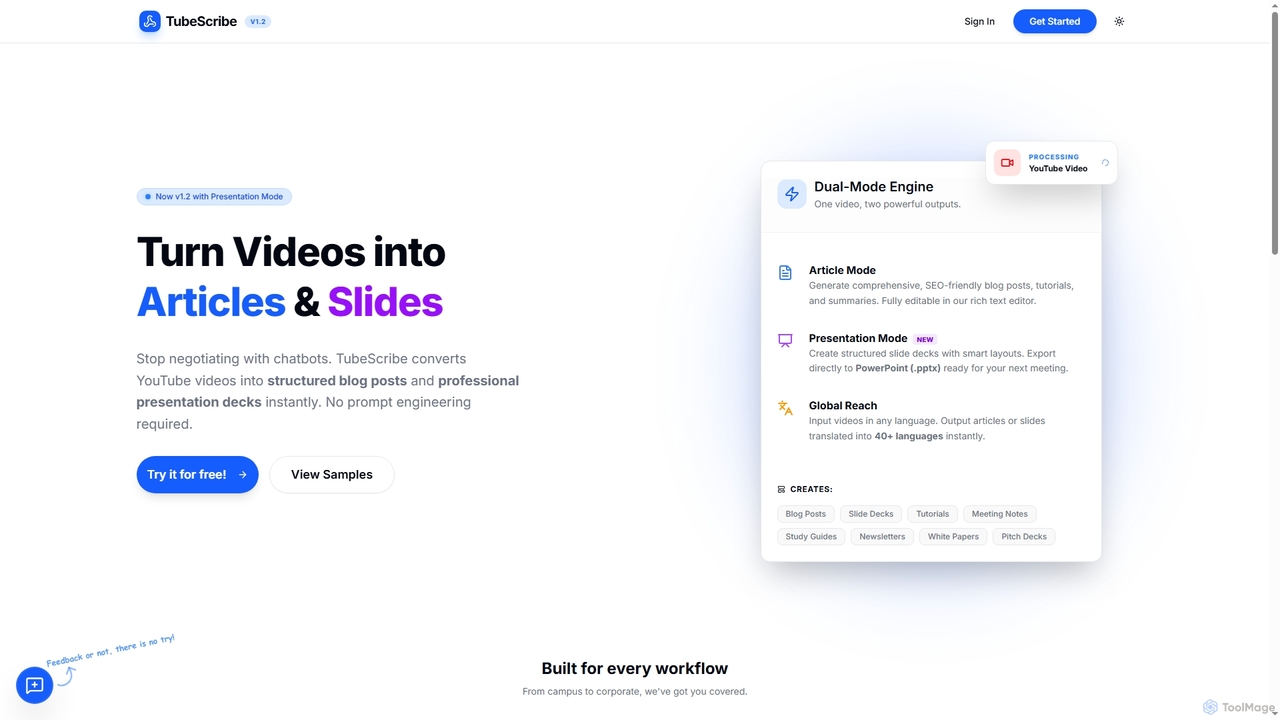
TubeScribe is an AI-powered tool that transforms YouTube videos into structured, SEO-friendly blog posts and professional presentation slides instantly. It eliminates the need for manual transcription and complex prompt engineering, enabling users to repurpose video content efficiently for various needs, from academic study to corporate presentations and content marketing.

Content Creation
Visits 10.1KFavorites 142Likes 139
Shrink

Shrink

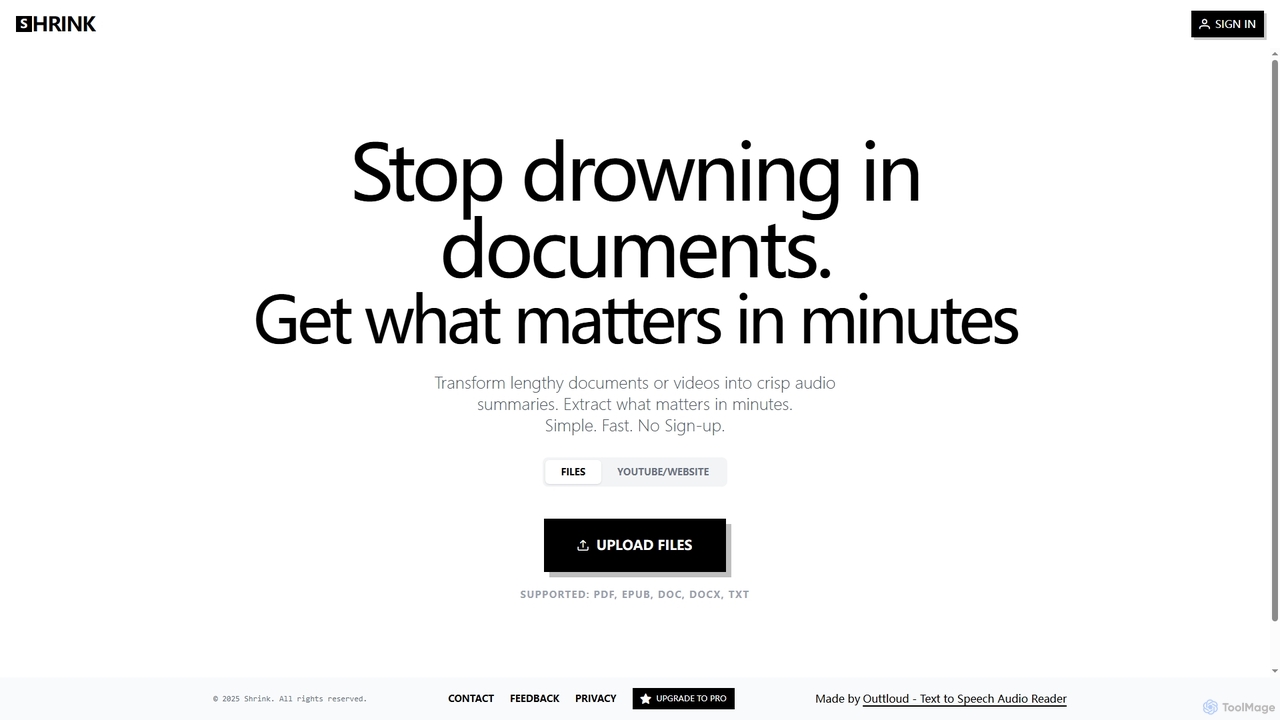
Shrink is an AI-powered tool that transforms lengthy documents and videos into concise audio summaries. It supports various file types like PDF, EPUB, DOC, DOCX, TXT, and YouTube/website URLs, allowing users to quickly extract key information. With customizable audio settings and no sign-up required, Shrink offers a simple, fast, and efficient way to consume content on the go.

Text To Speech
Visits 8.1KFavorites 120Likes 130
ClipSheet
Freemium

ClipSheet

ClipSheet is an AI-powered tool that transforms various content formats like videos, audio, PDFs, and text into concise, visual, and structured cheat sheets in seconds. It helps students, professionals, and creators quickly extract key information, summarize lectures, meetings, and repurpose content efficiently.

Video To Text
Visits 12.7KFavorites 138Likes 119
Sumlyze
Paid

Sumlyze

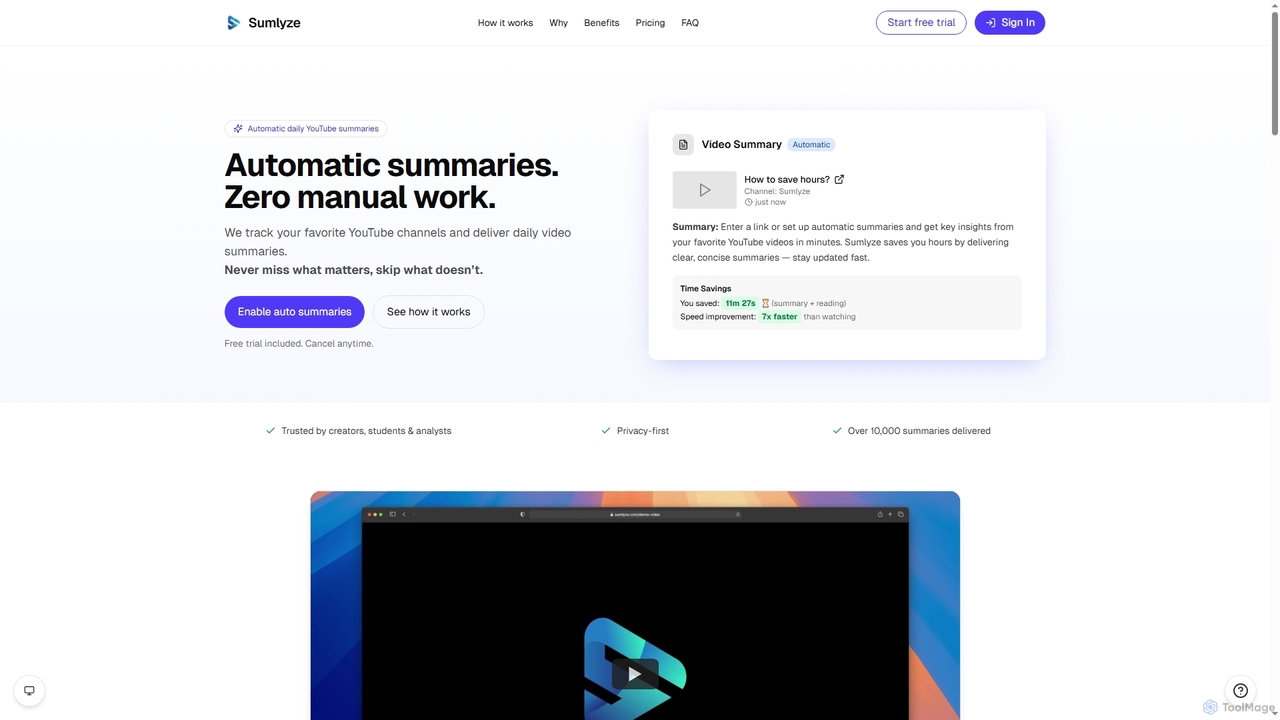
Sumlyze is an AI-powered tool that automatically generates daily summaries of YouTube videos from your favorite channels, saving you significant time. It offers both automated channel tracking and manual video link summarization, supporting 16 output languages and Notion integration for enhanced productivity.

Research
Visits 8.1KFavorites 168Likes 179
Audiosum
Freemium

Audiosum

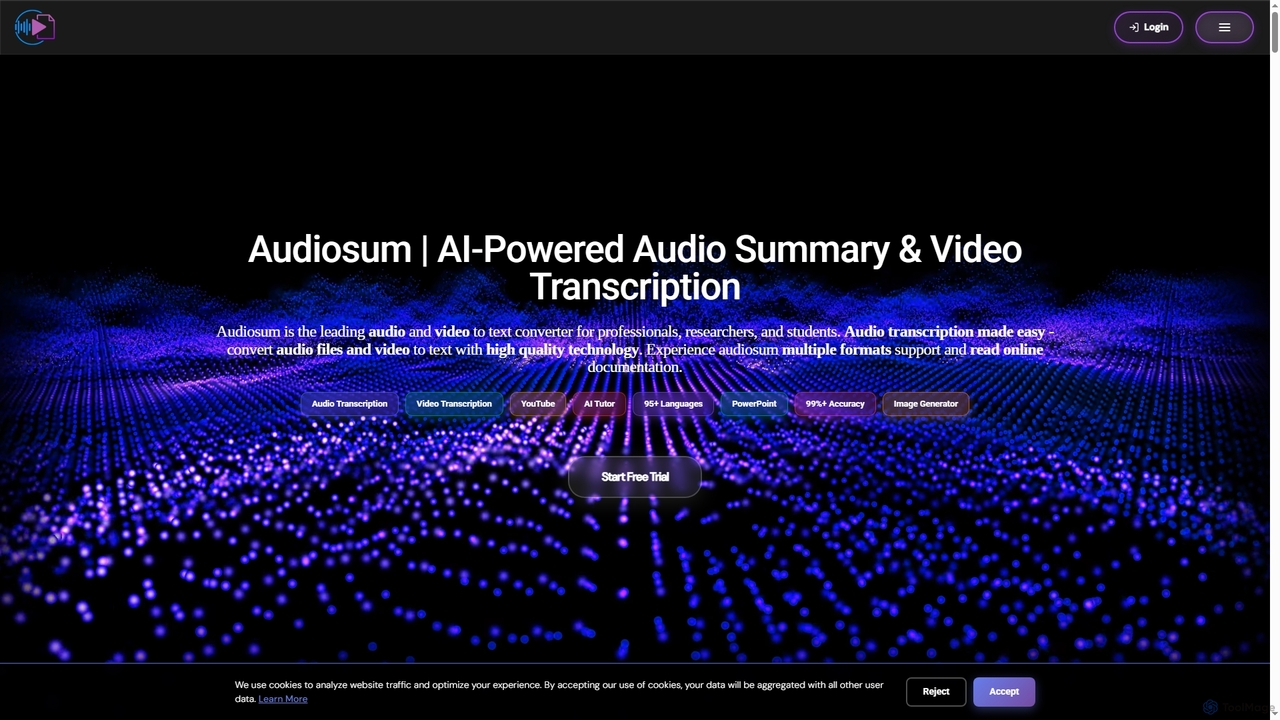
Audiosum is an advanced AI-powered platform designed for professionals, students, and researchers to efficiently process audio, video, and document content. It offers highly accurate transcription, intelligent summarization, and various content generation tools, saving users significant time by transforming lengthy media into concise, actionable insights across over 95 languages.

Meeting Management
Visits 11.8KFavorites 180Likes 190
Bookshelf
Freemium

Bookshelf

Bookshelf is an AI-powered learning platform that provides concise, 15-minute summaries of over 10,000 non-fiction books, podcasts, and articles. It transforms complex ideas into clear, actionable insights, offering expert-distilled knowledge in audio, PDF, and EPUB formats. Designed for busy individuals, Bookshelf enables efficient learning on the go and fosters deeper understanding through practical exercises and community engagement.

Professional Development
Visits 13.5KFavorites 140Likes 155
NowSummarize
Freemium

NowSummarize

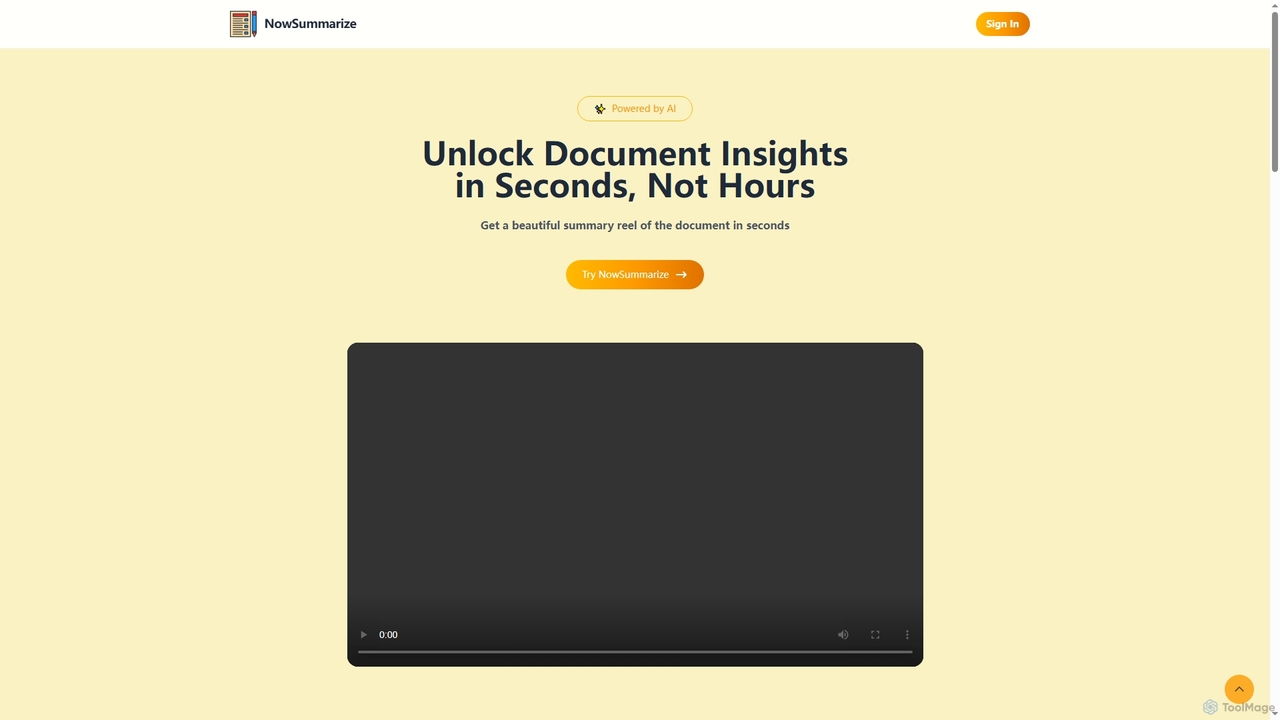
NowSummarize is an AI-powered tool that transforms lengthy documents into concise, actionable summaries in seconds. It helps professionals, researchers, and students save significant reading time and quickly extract key insights from various document types.

Study Tools
Visits 8KFavorites 179Likes 172
Resoomer
Freemium

Resoomer

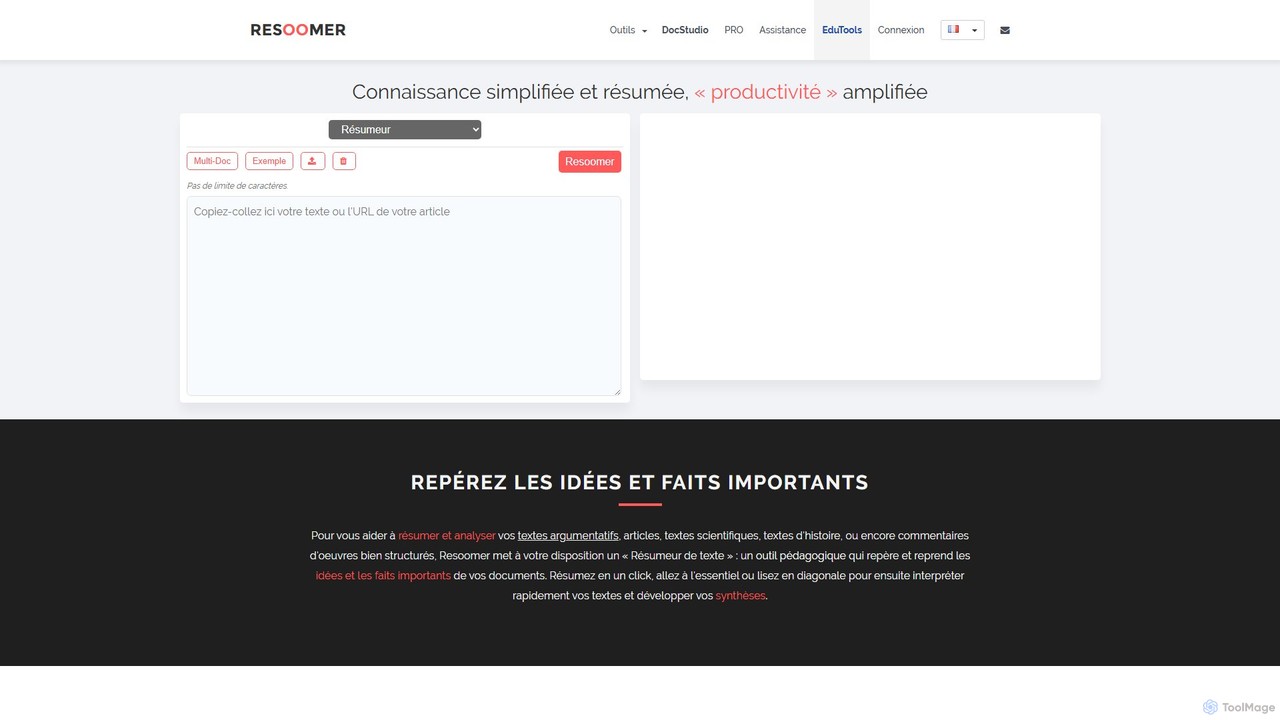
Resoomer is an AI-powered online tool and browser extension designed to summarize, analyze, and paraphrase texts and articles. It helps students, academics, and professionals quickly digest long documents, identify key arguments, and rewrite content, supporting multiple languages to enhance productivity and reading comprehension.

Research
Visits 8.1KFavorites 120Likes 111

About Summarization

Summarization tools are AI-powered applications that automatically condense long texts into shorter, coherent versions. Leveraging advanced natural language processing (NLP) techniques, these tools extract or generate key information to provide concise overviews, significantly saving time and improving comprehension. They are essential for quickly grasping the essence of documents, articles, and reports, fitting seamlessly into various productivity workflows.

Core Features

  • Key Information Extraction: Identifies and pulls out the most critical sentences and phrases from the original text.
  • Abstractive Summarization: Generates new sentences that convey the main ideas, often paraphrasing the original content.
  • Extractive Summarization: Selects and stitches together existing sentences from the source text to form a summary.
  • Customizable Length and Style: Allows users to specify desired summary length, tone, or focus areas.
  • Multi-document Summarization: Consolidates information from several related documents into a single summary.

Applicable Scenarios

These tools are widely used by researchers to quickly review academic papers, by content creators to repurpose long articles into social media snippets, and by business professionals to get executive summaries of lengthy reports. They streamline information consumption and content creation across diverse fields.

How to Choose

When selecting a summarization tool, consider its accuracy and coherence in generating summaries, the range of input formats and languages it supports, and the customization options available for length and style. Evaluate its integration capabilities with your existing platforms and its pricing model for scalability.

Summarization use cases

1

Efficiently Review Academic Papers

Researchers and students often face an overwhelming volume of academic literature. AI summarization tools enable them to quickly process lengthy research papers, theses, and articles by generating concise summaries. This allows them to rapidly identify key findings, methodologies, and conclusions, saving hours of reading time and helping them determine which full texts require deeper engagement for their studies or projects.

2

Repurpose Long-Form Content for Social Media

Content marketers and bloggers can leverage summarization tools to transform extensive articles, blog posts, or reports into engaging, bite-sized content for social media platforms, email newsletters, or ad copy. By inputting a long-form piece, they can generate multiple short summaries tailored to different character limits and audience engagement strategies, significantly boosting content repurposing efficiency and reach.

3

Extract Key Insights from Business Reports

Business analysts, managers, and executives frequently need to digest complex market research, financial statements, and internal reports. Summarization tools provide executive summaries, highlighting critical data points, trends, and recommendations. This facilitates faster decision-making, allows for quick identification of actionable insights, and ensures stakeholders can grasp the core message without sifting through hundreds of pages.

4

Condense Meeting Transcripts and Discussions

Project managers and team leads can use AI summarization to distill lengthy meeting transcripts, audio recordings, or video call notes into concise summaries. These summaries can focus on action items, key decisions, and discussion points, ensuring that all participants are aligned on outcomes and next steps. This improves post-meeting follow-up and serves as an efficient record-keeping method.

5

Stay Updated with Concise News Overviews

For busy professionals and general users, keeping up with daily news and industry developments can be time-consuming. Summarization tools offer a solution by providing brief, digestible overviews of news articles, blog posts, and online content. Users can quickly scan these summaries to stay informed across various topics, making their information consumption more efficient and manageable without deep dives into every article.

6

Analyze Customer Feedback and Support Tickets

Customer support managers and product teams deal with vast amounts of customer feedback, support tickets, and reviews. Summarization tools can process these large datasets to identify recurring issues, common sentiments, and emerging trends. This helps in quickly understanding customer pain points, prioritizing product improvements, and enhancing overall customer satisfaction by acting on aggregated insights more effectively.

Summarization FAQ

What are AI Summarization tools?

AI summarization tools are software applications that use artificial intelligence, specifically natural language processing (NLP), to automatically condense longer texts into shorter, coherent summaries. Their primary function is to extract or generate the most critical information, enabling users to quickly grasp the main points of documents, articles, or reports, thereby saving time and improving information retention.

How do I choose the best AI summarization tool?

To choose the best AI summarization tool, consider its accuracy and the coherence of its output, ensuring it captures the essence without distortion. Evaluate the types of input it supports (e.g., text, PDF, URLs) and its language capabilities. Look for customization options like summary length control, abstractive vs. extractive modes, and integration with your existing workflows or platforms. Finally, assess its pricing model and scalability for your needs.

What are the different types of AI summarization?

There are two main types of AI summarization: extractive and abstractive. Extractive summarization works by identifying and extracting key sentences or phrases directly from the original text and stitching them together to form a summary. Abstractive summarization, on the other hand, generates new sentences and phrases that convey the main ideas, often paraphrasing the original content, similar to how a human would summarize. Abstractive methods are more complex but can produce more fluent and concise summaries.

What are the main benefits of using AI summarization tools?

The main benefits of AI summarization tools include significant time savings by reducing reading load, improved comprehension of complex or lengthy documents, and enhanced productivity. They help in managing information overload, facilitating quicker decision-making, and enabling efficient content repurposing for various platforms. These tools are invaluable for anyone needing to process large volumes of text quickly and effectively.

What are the limitations of AI summarization tools?

While powerful, AI summarization tools have limitations. They may sometimes miss subtle nuances or context, especially with highly specialized or ambiguous texts. Abstractive models can occasionally generate factually incorrect information or "hallucinations" if not carefully trained. They might also struggle with very long documents or those requiring deep domain-specific understanding. Users should always review summaries for accuracy and completeness, particularly for critical information.