ToolMage
Sign in

Best 28 Training AI tools for Productivity

Popular Training AI tools in Productivity include LabEx, TechSmith, guidde, Codio, Manara, Yoodli, Hyperbound, Mini Course Generator, weet, and Solidroad, helping you work more efficiently.

Elements of AI
Freemium

Elements of AI

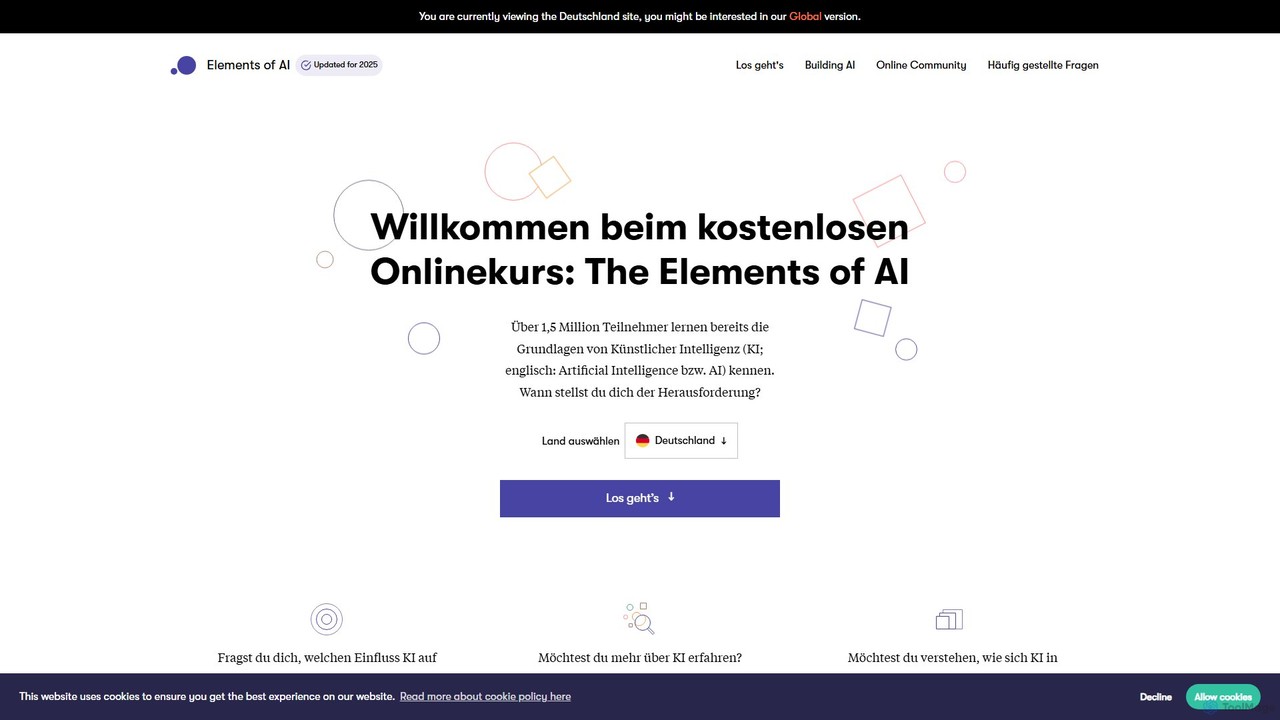
A free online course series by the University of Helsinki and MinnaLearn, designed to teach the fundamentals of AI to a broad audience. It covers what AI is, its capabilities, and its societal impact, without requiring prior programming or complex math skills.

Online Courses
Visits 11.7KFavorites 129Likes 98

Codeamigo

Codeamigo

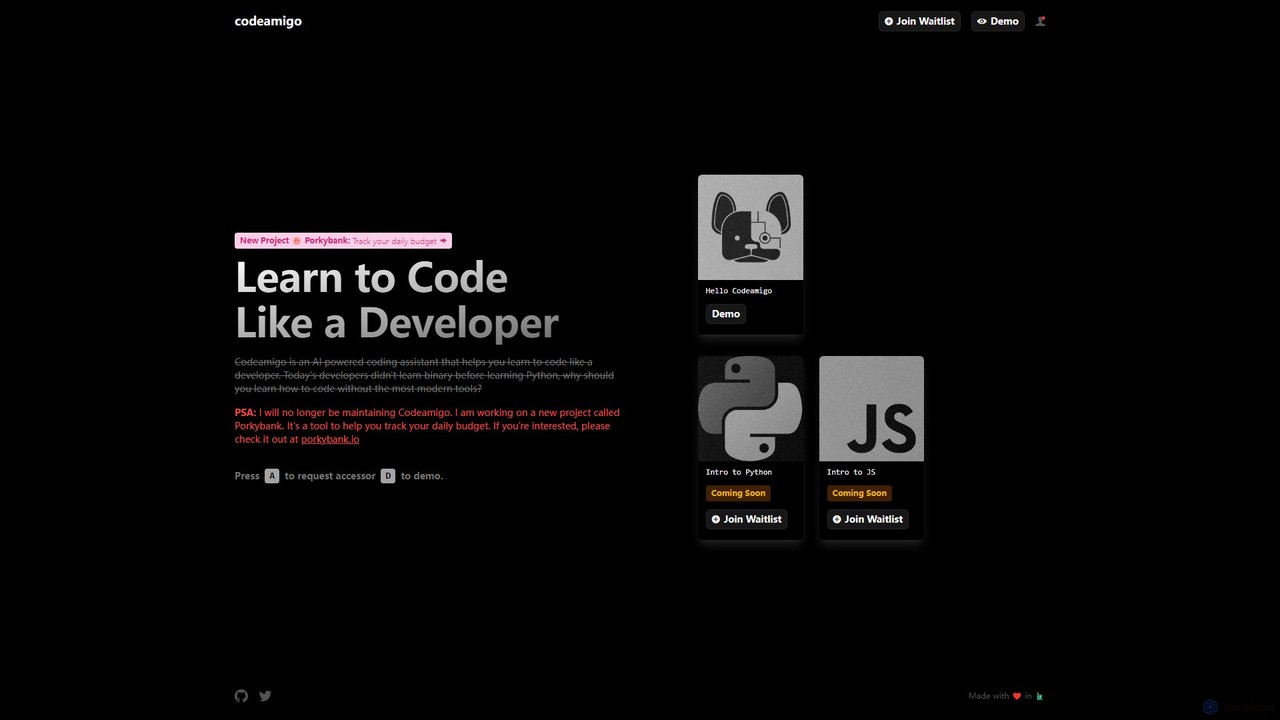
Codeamigo is a discontinued AI-powered coding assistant designed to help beginners learn programming languages like Python and JavaScript through interactive, modern tutorials. It aimed to simulate a real-world development environment.

Learning
Visits 6.2KFavorites 146Likes 141
Codio
Freemium

Codio

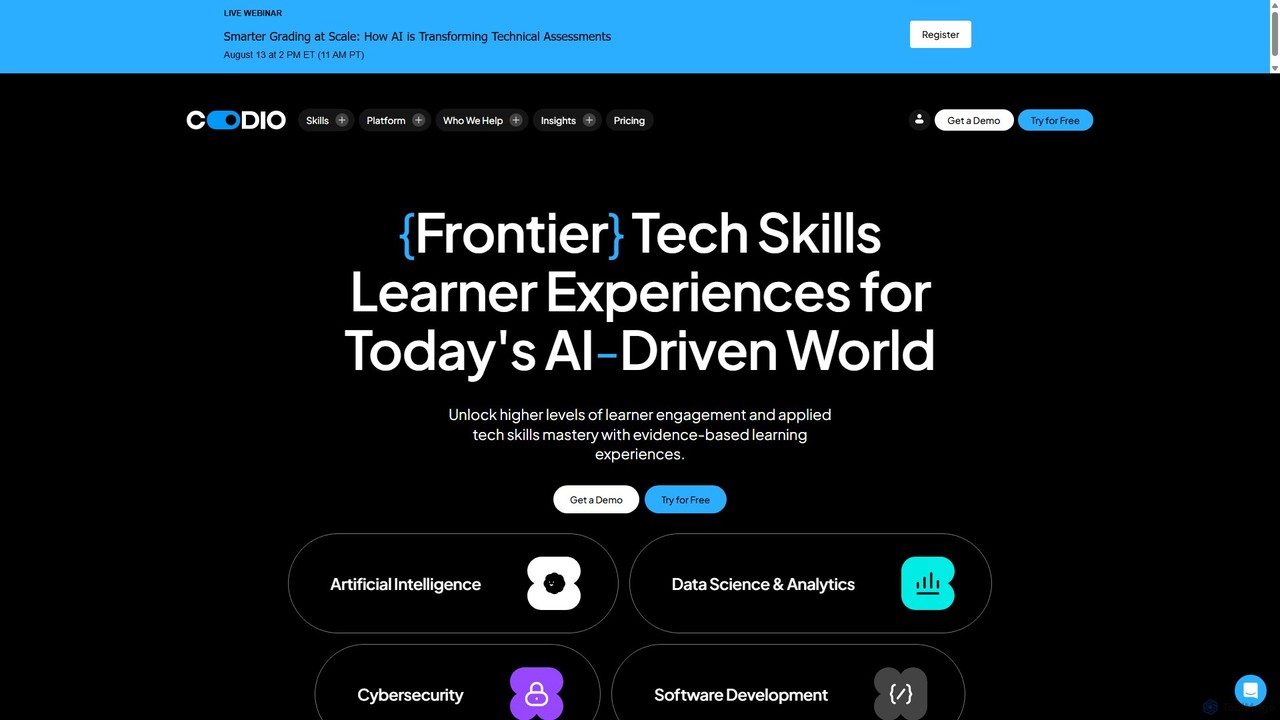
Codio is a hands-on learning experience platform for technical skills. It provides an AI-powered, browser-based environment for teaching and learning data science, AI, cybersecurity, and software development, designed to boost learner engagement and skills mastery.

Integrated Development Environment
Visits 287.8KFavorites 135Likes 147
docteurquiz
Freemium

docteurquiz

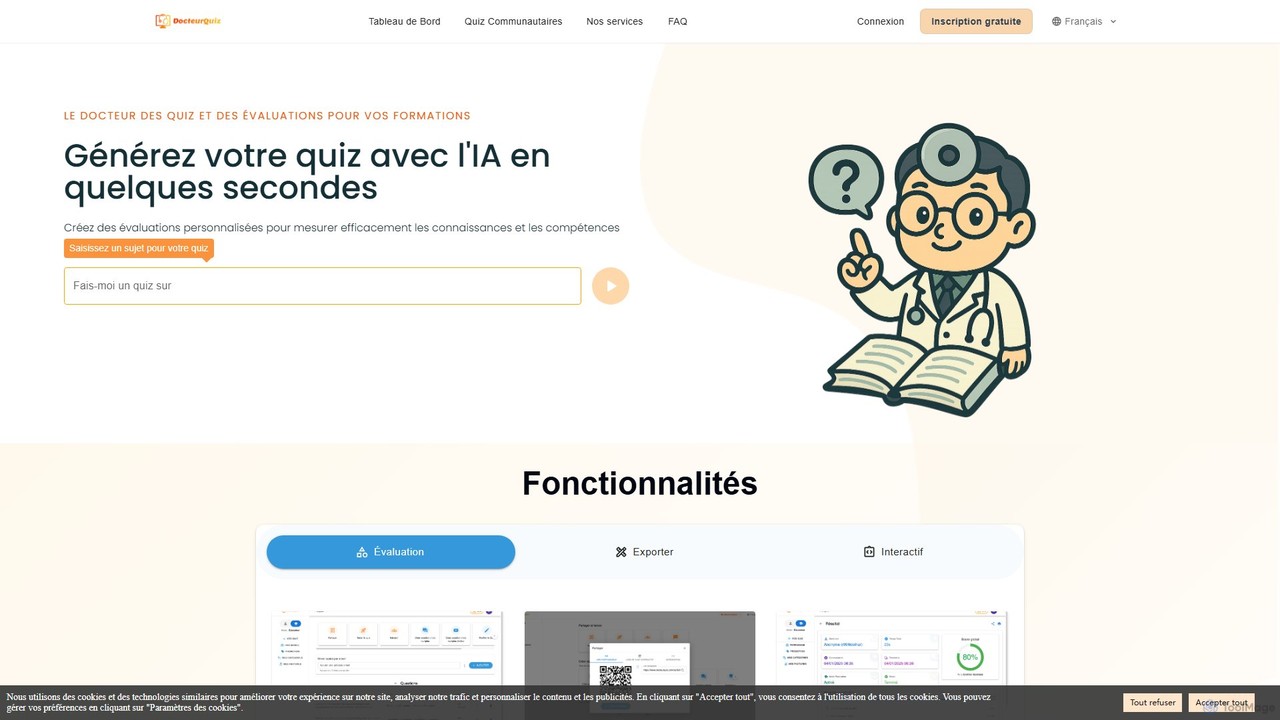
DocteurQuiz is an AI-powered platform for professionals to create sophisticated quizzes and evaluations. Generate engaging, interactive assessments in seconds from text prompts or documents. Ideal for training, education, and audience engagement, it offers detailed analytics, multimedia integration, and a polished, professional interface.

Assessment
Visits 6.1KFavorites 140Likes 134

About Training

AI Training tools are platforms that leverage artificial intelligence to create, personalize, and deliver educational content and skill development programs. They use algorithms to analyze individual learning needs, automatically generate tailored course materials, and create interactive simulations for practical application. This approach accelerates skill acquisition, improves knowledge retention, and enhances overall workforce productivity. Unlike static courses, these tools adapt in real-time to a learner's progress, offering a dynamic and efficient learning experience.

Core Features

  • Personalized Learning Paths: AI analyzes skill gaps and career goals to create customized training curricula for each user.
  • Automated Content Generation: Instantly creates courses, quizzes, and video scripts from documents, videos, or simple prompts.
  • Interactive Simulations: Generates realistic role-playing scenarios for sales, customer service, or leadership practice.
  • AI-Powered Assessment: Evaluates user performance in exercises and provides instant, objective feedback to identify areas for improvement.

Use Cases

These tools are widely used in corporate environments for employee onboarding, sales enablement, customer support training, and leadership development. Educational institutions and individual professionals also use them for creating engaging courseware and for personal upskilling in a structured, AI-guided manner.

How to Choose

When selecting an AI Training tool, consider the scope of its content generation capabilities (e.g., text, video, quizzes), the realism and customization of its simulations, its ability to integrate with existing Learning Management Systems (LMS), and the depth of its analytics for tracking learner progress and performance.

Featured tool rankings

Training use cases

1

Automating Corporate Employee Onboarding

HR managers and department heads can use AI Training tools to streamline the onboarding process for new hires. By uploading company policies, role descriptions, and product documentation, the AI can generate a complete, interactive onboarding curriculum. This includes personalized learning modules, knowledge-check quizzes, and even simulated conversations with an AI-powered 'manager' or 'customer'. This ensures a consistent and engaging experience for all new employees while significantly reducing the manual effort required from trainers and managers.

2

Developing Sales Team Pitching Skills

Sales enablement teams can create highly realistic role-playing scenarios for sales representatives. A rep can practice their product pitch with an AI avatar that simulates various customer personas, from skeptical to enthusiastic. The AI can raise common objections, ask tough questions, and provide instant, private feedback on the rep's performance, analyzing factors like clarity, confidence, and the effectiveness of their responses. This allows for unlimited, on-demand practice in a safe environment, helping reps build confidence and refine their skills before engaging with real prospects.

3

Creating Interactive Customer Service Scenarios

Customer support managers can move beyond static training manuals by using AI to generate dynamic, interactive training simulations. An agent can practice handling difficult customer interactions, such as de-escalating an angry customer or explaining a complex technical issue, through a simulated chat or voice call. The AI evaluates their responses based on criteria like empathy, problem-solving efficiency, and adherence to company policy, providing a score and actionable feedback. This prepares agents for real-world challenges more effectively than traditional methods.

4

Generating Compliance and Safety Training Modules

Compliance officers can transform dense, text-heavy regulatory documents into engaging and effective training modules. By providing the AI with source material, it can automatically generate a structured course complete with key learning objectives, interactive scenarios, and quizzes to test comprehension. For example, it can create a simulation where an employee must navigate a potential workplace safety hazard correctly. This makes mandatory training less tedious and more impactful, improving knowledge retention and reducing organizational risk.

5

Personalized Leadership Skill Development

Learning and Development (L&D) specialists can offer personalized coaching for managers and team leads. A manager can practice difficult conversations, such as giving constructive feedback or managing team conflicts, with an AI coach. The tool provides a safe, confidential space to experiment with different communication styles and strategies. The AI analyzes the dialogue for tone, empathy, and clarity, offering specific suggestions for improvement. This scalable solution provides leaders with targeted practice that is often difficult to facilitate in traditional group training sessions.

6

Building Custom Learning Paths for Career Growth

Individual professionals can use AI training tools for personal upskilling. A user can input their current role, existing skills, and desired career goal (e.g., 'transition from marketing to data science'). The AI then analyzes this information and generates a comprehensive, step-by-step learning path. It can curate content from various sources, create custom micro-lessons, and suggest projects to build a portfolio. The platform tracks progress and adapts the path based on the user's performance, providing a highly efficient and personalized roadmap for career development.

Training FAQ

What are AI Training tools?

AI Training tools are software platforms that use artificial intelligence to create, deliver, and personalize learning experiences. Unlike traditional e-learning platforms that host static content, these tools can automatically generate course materials, create interactive role-playing simulations, and adapt learning paths in real-time based on a user's performance. Their primary goal is to make training more efficient, engaging, and effective, thereby boosting individual and organizational productivity.

How do I choose the right AI Training tool?

To choose the right tool, consider these key factors:

  • Content Generation: Evaluate its ability to create diverse content types (e.g., text, quizzes, video scripts) from your source materials.
  • Interactivity & Simulation: Check the quality and realism of its role-playing and simulation features, as this is a key differentiator for skill practice.
  • Analytics & Feedback: Ensure it provides detailed, actionable feedback and robust analytics to track learner progress and identify skill gaps.
  • Integration: Determine if it can integrate with your existing systems, such as a Learning Management System (LMS) or HR software, for seamless workflow.
What's the difference between AI Training tools and a traditional LMS?

A traditional Learning Management System (LMS) is primarily a system for hosting, delivering, and tracking pre-made, static courses. It's like a library for e-learning content. In contrast, an AI Training tool is a dynamic creation and personalization engine. It doesn't just host content; it actively generates new courses, creates interactive simulations, and personalizes the learning journey for each user. While an LMS manages the logistics of training, an AI Training tool enhances the learning process itself to make it more effective.

What are the main features of AI Training platforms?

The most common features are designed to create a dynamic and personalized learning environment. Key features include:

  • AI Course Generation: Automatically creating structured courses from raw text, documents, or videos.
  • Personalized Learning Paths: Customizing the sequence and content of lessons based on individual skill levels and goals.
  • Interactive Role-Playing: Simulating real-world conversations (e.g., sales calls, HR discussions) for hands-on practice.
  • Automated Assessment & Feedback: Providing instant, data-driven feedback on user performance in exercises and simulations.
Who can benefit from using AI Training tools?

A wide range of users can benefit. Corporate L&D (Learning & Development) departments use them to scale employee training for onboarding, sales, and compliance. Sales and customer service teams use them for realistic skill practice. Educational institutions can create more engaging course content. Finally, individual professionals can use them to design personalized learning plans for career advancement and upskilling, making them a versatile tool for enhancing productivity through effective learning.