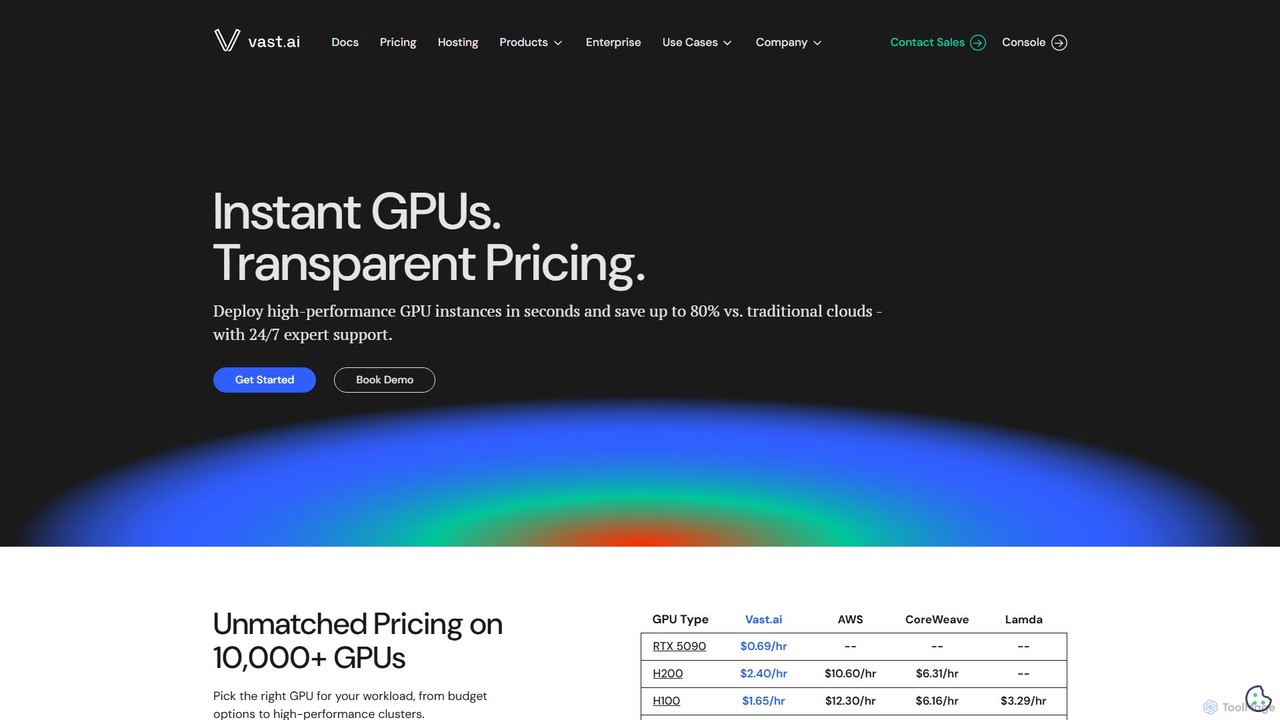
Beam is a serverless cloud platform designed for developers to run, scale, and deploy AI/ML models and applications on GPUs with ease. It offers instant autoscaling, pay-per-second billing, and a streamlined workflow, allowing you to go from code to a scalable API in minutes without managing complex infrastructure.

Wasmer is a universal WebAssembly runtime that enables you to run any code, anywhere. It functions as a next-generation container technology, offering blazing-fast, secure, and scalable deployment for applications, from websites and AI agents to serverless functions, without the overhead of traditional containers.
Product overview
Beam Product overview
Beam is a serverless cloud platform designed for developers to run, scale, and deploy AI/ML models and applications on GPUs with ease. It offers instant autoscaling, pay-per-second billing, and a streamlined workflow, allowing you to go from code to a scalable API in minutes without managing complex infrastructure.
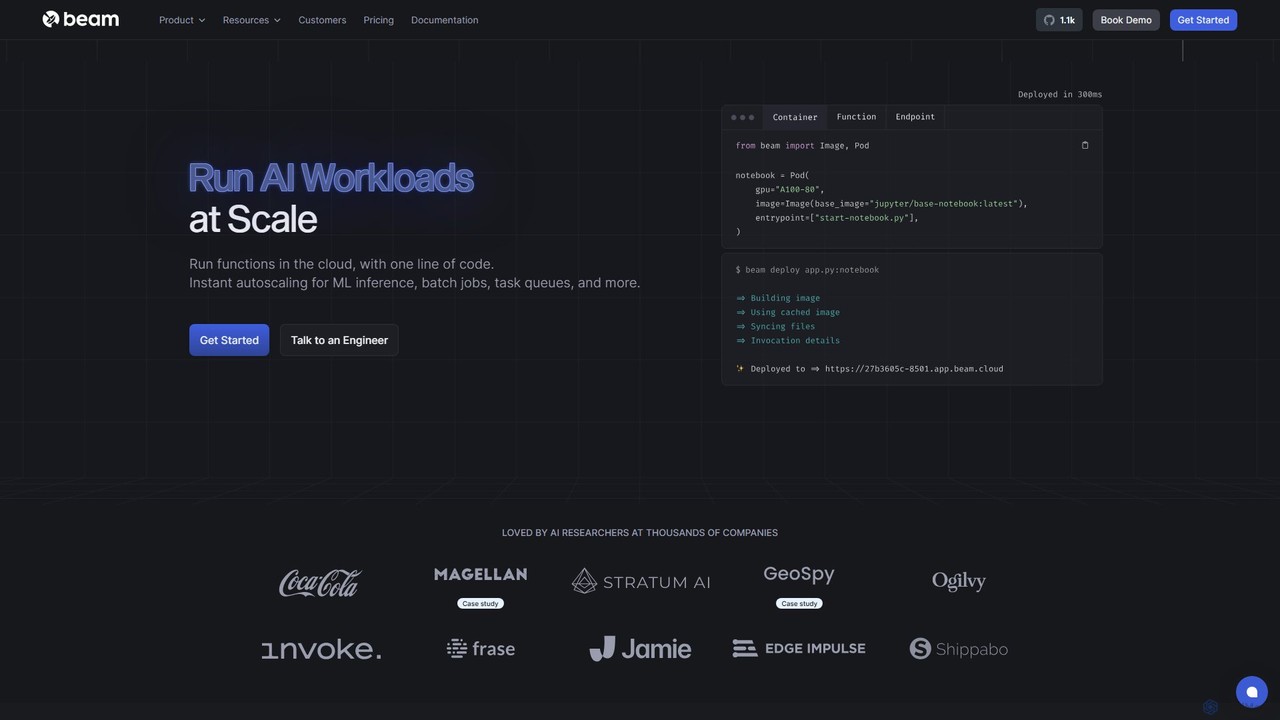
Wasmer Product overview
Wasmer is a universal WebAssembly runtime that enables you to run any code, anywhere. It functions as a next-generation container technology, offering blazing-fast, secure, and scalable deployment for applications, from websites and AI agents to serverless functions, without the overhead of traditional containers.
Detailed feature comparison
| Feature | Beam | Wasmer |
|---|---|---|
| Primary category | Machine Learning | Cloud Computing |
| Added | 2025-08-07 | 2025-08-01 |
| Pricing | Freemium | Freemium |
| Official website | www.beam.cloud | wasmer.io |
| Product type | Website | Website |
| Performance data | ||
| User rating | Not verified | Not verified |
| Comments | 0 | 0 |
| Monthly visits | 52.8K | 220.3K |
| Monthly growth | -3.2% | 10.3% |
| Favorites | 110 | 132 |
| Details | View details | View details |
Beam vs Wasmer monthly traffic
Compare Beam and Wasmer by monthly reach, traffic trend, visit depth, top regions, and acquisition sources.
How to interpret the traffic data
In the Beam vs Wasmer monthly traffic comparison, Beam currently shows 52.8K visits and Wasmer shows 220.3K; Wasmer has about 4.2 times the visible traffic of Beam, an absolute difference of about 167.5K visits. This reflects visible reach, not feature quality or paid users.
Both tools provide verified traffic details, so monthly trends, visit depth, regions, and acquisition sources can be compared on the same basis.
Beam monthly traffic:
Latest traffic
Monthly traffic trend
- 2025/9: 62.7K Monthly visits
- 2026/1: 79.5K Monthly visits
- 2026/2: 49.9K Monthly visits
- 2026/3: 54.8K Monthly visits
- 2026/4: 54.5K Monthly visits
- 2026/5: 52.8K Monthly visits
Top regions
Top 5 countries/regions
| Country/region | Percentage | Traffic |
|---|---|---|
| 🇺🇸United States | 40.88% | 21.6K |
| 🇻🇳Vietnam | 21.59% | 11.4K |
| 🇮🇳India | 17.19% | 9.1K |
| 🇳🇬Nigeria | 12.96% | 6.8K |
| 🇧🇷Brazil | 7.38% | 3.9K |
Traffic sources
| Source type | Percentage | Traffic |
|---|---|---|
| Direct | 83.18% | 43.9K |
| Referral | 15.52% | 8.2K |
| 1.3% | 686 |
Search keywords
Wasmer monthly traffic:
Latest traffic
Monthly traffic trend
- 2025/9: 139.6K Monthly visits
- 2026/1: 137.2K Monthly visits
- 2026/2: 163.2K Monthly visits
- 2026/3: 225.8K Monthly visits
- 2026/4: 199.8K Monthly visits
- 2026/5: 220.3K Monthly visits
Top regions
Top 5 countries/regions
| Country/region | Percentage | Traffic |
|---|---|---|
| 🇺🇸United States | 42.95% | 94.6K |
| 🇨🇳China | 19.29% | 42.5K |
| 🇬🇪Georgia | 17.65% | 38.9K |
| 🇮🇳India | 11.8% | 26K |
| 🇮🇩Indonesia | 8.31% | 18.3K |
Traffic sources
| Source type | Percentage | Traffic |
|---|---|---|
| Direct | 88.75% | 195.5K |
| Referral | 10.21% | 22.5K |
| 1.04% | 2.3K |
Search keywords
Usage comparison
Compare the core capabilities of Beam and Wasmer
Beam Core features
Wasmer Core features
Use cases
Beam Use cases
Wasmer Use cases
Beam vs Wasmer:In-depth comparison and selection guidance
First decide whether the products solve the same kind of need
This in-depth Beam vs Wasmer comparison uses only the product records, taxonomy, audience, traffic, and community signals available on this page. Beam is primarily listed under “Machine Learning”, while Wasmer is primarily listed under “Cloud Computing”, so the first decision is whether your actual task matches their recorded scope.
The structured fields currently show these decision-relevant differences: Primary category (Beam: Machine Learning; Wasmer: Cloud Computing); Monthly visits (Beam: 52.8K; Wasmer: 220.3K); Monthly growth (Beam: -3.2%; Wasmer: 10.3%); Favorites (Beam: 110; Wasmer: 132); Website (Beam: www.beam.cloud; Wasmer: wasmer.io). These facts are more useful for selection than brand visibility alone.
What market visibility and monthly traffic mean
In the Beam vs Wasmer monthly traffic comparison, Beam currently shows 52.8K visits and Wasmer shows 220.3K; Wasmer has about 4.2 times the visible traffic of Beam, an absolute difference of about 167.5K visits. This reflects visible reach, not feature quality or paid users.
Both tools provide verified traffic details, so monthly trends, visit depth, regions, and acquisition sources can be compared on the same basis.
If public market visibility is an important first-pass criterion, investigate Wasmer first. The final choice should still follow taxonomy, use case, and a real trial because higher traffic does not prove broader capabilities or better workflow fit.
Product positioning, use cases, and roles
Beam and Wasmer currently overlap in shared categories: Cloud Computing; shared tags: cloud computing, developer tools, and serverless. This can place both on the same shortlist, but it does not prove equal implementation, depth, or cost.
Beam's unique categories/tags are Machine Learning, Deployment, ai model deployment, API, autoscaling, GPU, infrastructure, and machine learning; Wasmer's are Deployment, Serverless, ai agents, containerization, deployment, Docker alternative, edge computing, and secure runtime. These unique fields are the strongest differentiators: validate the product whose recorded scope matches the task instead of following traffic alone.
What ratings, comments, and favorites can tell you
Beam has no verified rating, 0 comments, 110 favorites, and 103 likes;Wasmer has no verified rating, 0 comments, 132 favorites, and 145 likes。
Neither product has enough rating or comment samples for a credible reputation ranking.
Selection guidance by actual need
When to evaluate Beam first
Put Beam on the priority trial list when the task aligns with “Machine Learning” and especially Machine Learning, Deployment, ai model deployment, API, autoscaling, and GPU. This follows recorded positioning and does not imply unlisted capabilities are absent.
Beam also currently records: pricing is freemium, product type is website, 52.8K verified monthly visits, no verified user rating. Verify any hard requirement around price, platform, or reach before trial, and do not let sparse review data substitute for testing.
When to evaluate Wasmer first
Put Wasmer on the priority trial list when the task aligns with “Cloud Computing” and especially Deployment, Serverless, ai agents, containerization, deployment, and Docker alternative. This follows recorded positioning and does not imply unlisted capabilities are absent.
Wasmer also currently records: pricing is freemium, product type is website, 220.3K verified monthly visits, no verified user rating. Verify any hard requirement around price, platform, or reach before trial, and do not let sparse review data substitute for testing.
How to validate the recommendation before deciding
The available data describes positioning, public visibility, and community signals, but it cannot prove output quality, speed, integration effort, privacy, or long-term cost in your workflow. Before deciding, run the same representative tasks in Beam and Wasmer, then record completion time, accuracy, manual corrections, and the real paid threshold. A like-for-like trial turns this comparison into a defensible adoption decision.
Comparison FAQ
How should I choose between Beam and Wasmer?
Where does this comparison data come from?
What do unknown fields mean?
Related AI tools

Runpod
Runpod is a cloud platform designed for AI and machine learning, offering scalable GPU compute for deploying, training, and running AI models. It provides serverless GPUs, pre-built templates, and cost-effective pricing to simplify the entire AI development workflow, from idea to production.
Machine Learning
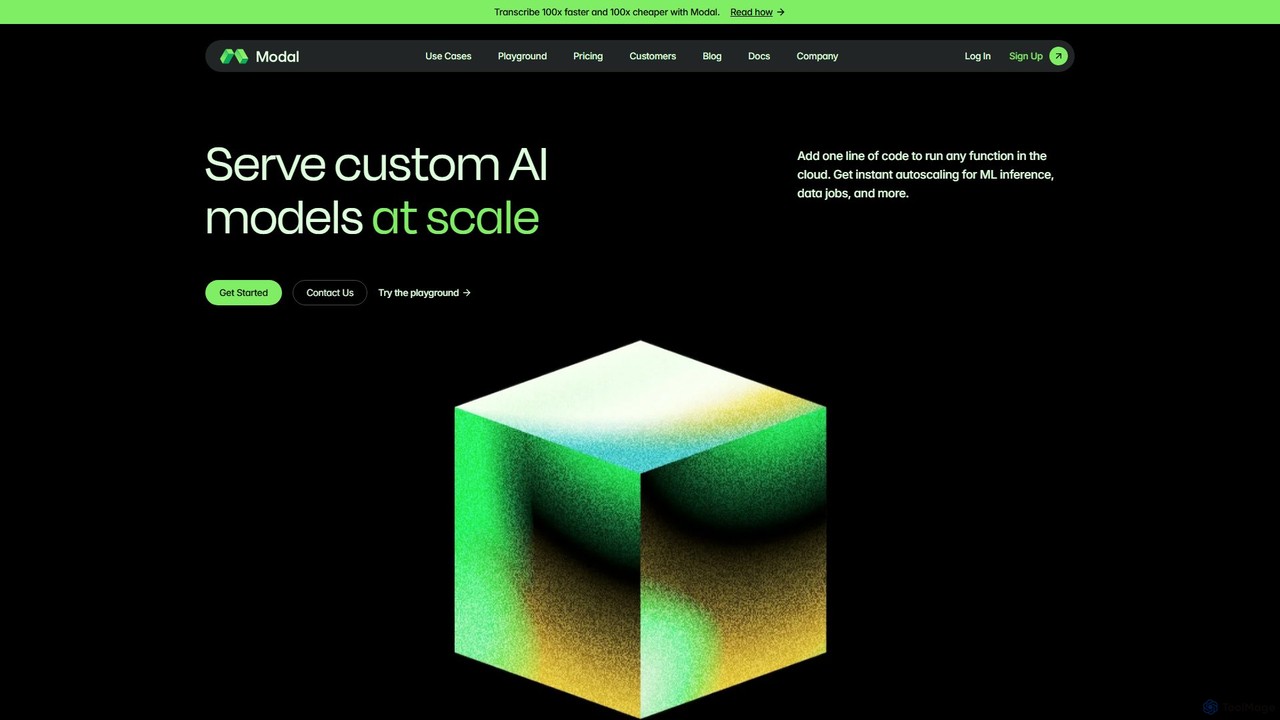
Modal
Modal is a high-performance, serverless infrastructure platform for AI and ML developers. It allows you to run Python functions in the cloud with a single line of code, providing instant access to GPUs, automatic scaling from zero to thousands of containers, and pay-per-second pricing. Eliminate infrastructure overhead and focus on building and deploying compute-intensive applications like generative AI, batch processing, and data analysis.
Model Deployment
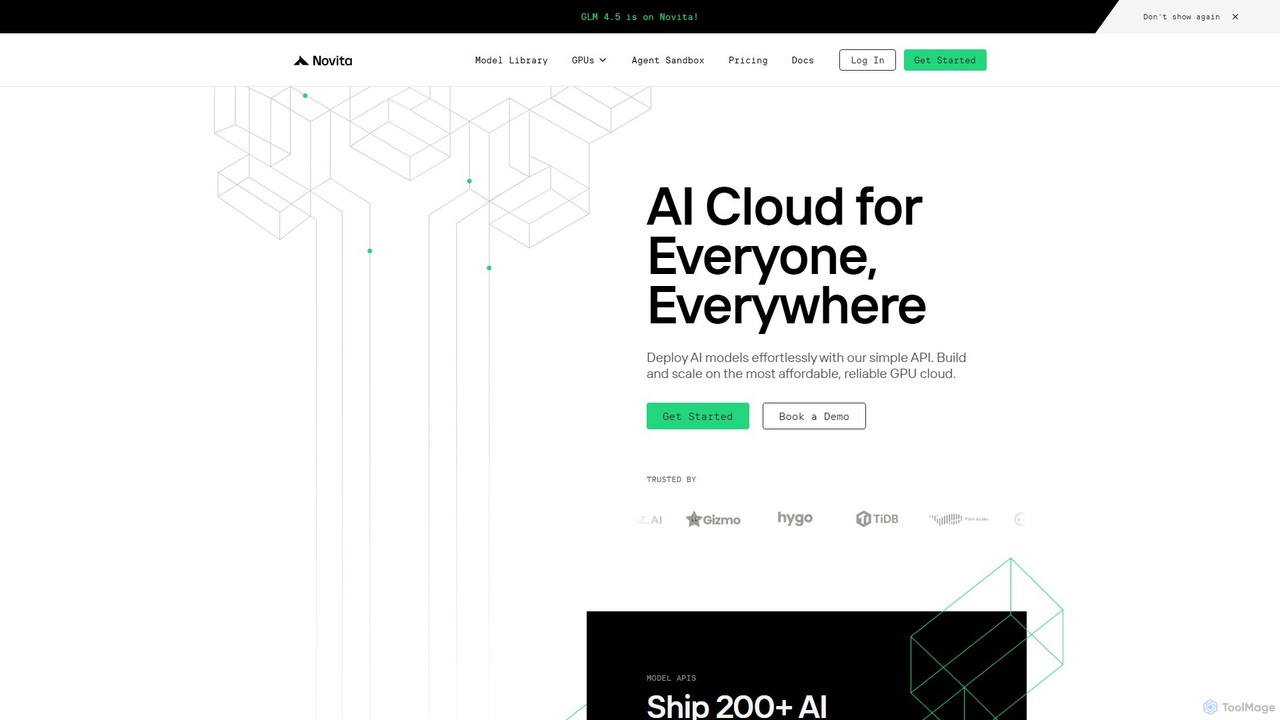
novita.ai
Novita AI is a developer-centric cloud platform offering affordable, scalable access to over 200 AI models via simple APIs. It provides serverless GPUs, dedicated GPU instances, and custom model deployment, enabling developers to build and scale AI applications without managing infrastructure.
Gpu
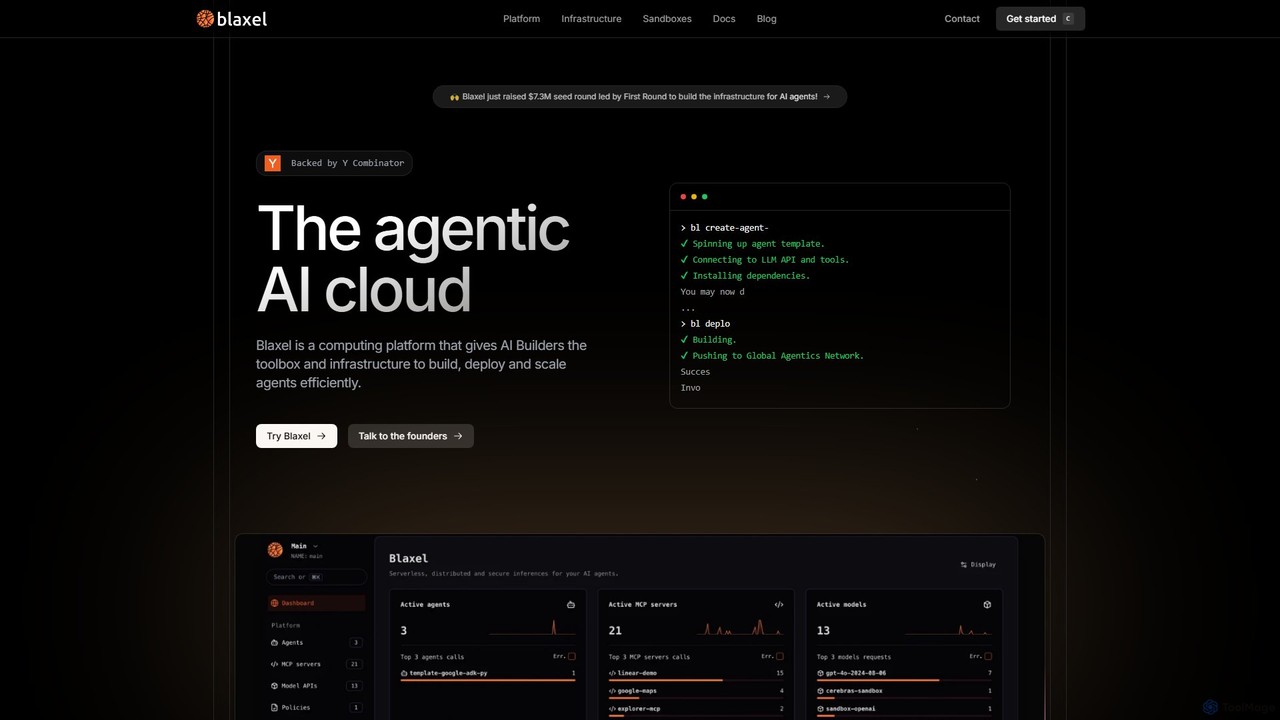
Blaxel
Blaxel is a serverless computing platform designed for AI developers, providing the infrastructure and tools to build, deploy, and scale agentic AI applications efficiently. It offers sandboxed VMs, a unified LLM gateway, and deep observability.
Cloud Computing
Float16.cloud
Float16.cloud is a serverless GPU platform designed to accelerate AI development. It provides instant access to high-performance H100 GPUs with per-second billing, zero setup, and no cold starts. Developers can deploy open-source LLMs, train models, and run AI workloads directly from Python scripts without managing infrastructure.
Platform As A Service (Paas)
Cerebrium
Cerebrium is a serverless AI infrastructure platform designed for developers to deploy, manage, and scale machine learning models with ease. It abstracts away complex infrastructure, offering features like auto-scaling, fast cold starts, and pay-per-use GPU access, enabling teams to build high-performance AI applications without managing servers.
Serverless
GPUX
GPUX is a serverless, decentralized GPU cloud platform for fast and affordable AI model inference. It allows developers to run models via API and enables GPU owners to earn money by contributing their hardware to a P2P network.
Model Deployment
DigitalOcean
DigitalOcean is a developer-focused cloud infrastructure platform that simplifies building, deploying, and scaling applications. It offers a comprehensive suite of products, including virtual machines (Droplets), managed Kubernetes, and the GradientAI platform, providing powerful GPU resources and tools for creating and hosting world-changing AI applications, from side projects to large-scale businesses.
Hosting
Replicate
Replicate is a cloud platform for developers to run, fine-tune, and deploy AI models via a simple API. It eliminates the need for managing complex infrastructure, offering access to thousands of models with pay-per-use pricing and automatic scaling.
Machine Learning
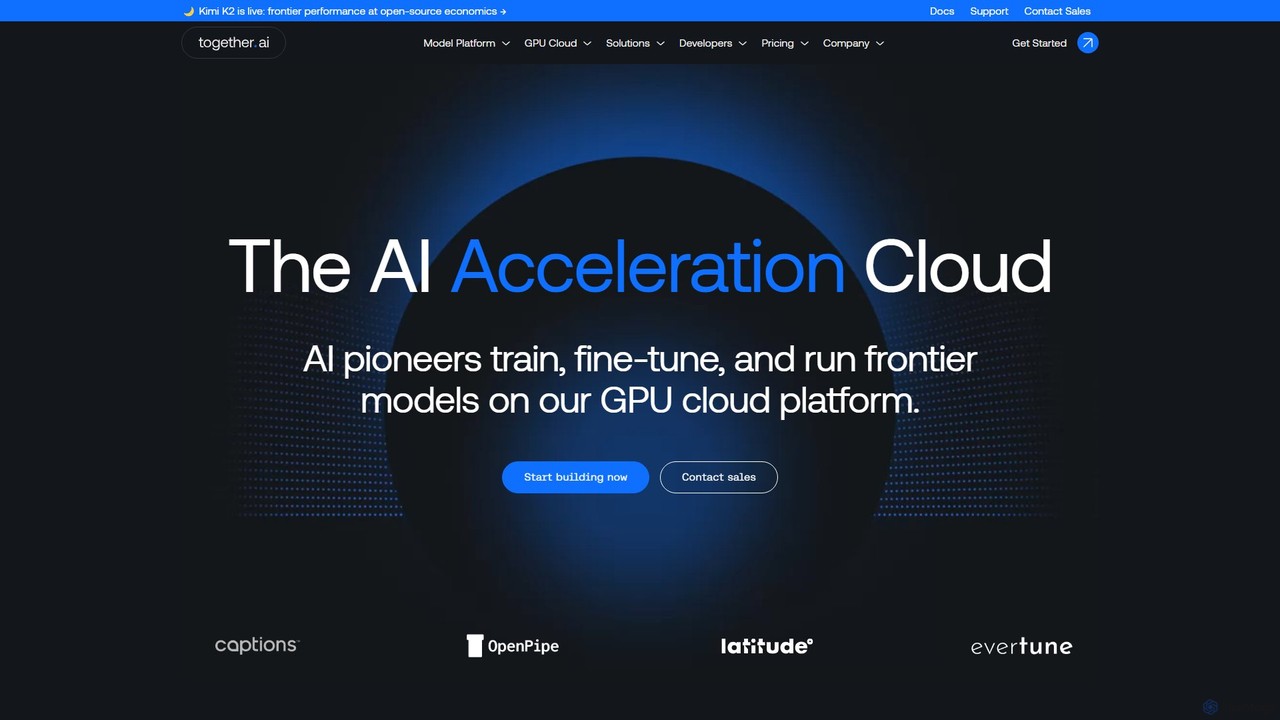
Together AI
Together AI is a leading cloud platform for developers, providing fast, cost-effective infrastructure to run, fine-tune, and train open-source generative AI models. It offers an extensive library of over 200 models, serverless inference APIs, customizable fine-tuning, and dedicated GPU clusters, creating an end-to-end solution for building and scaling AI applications.
Gpu Infrastructure
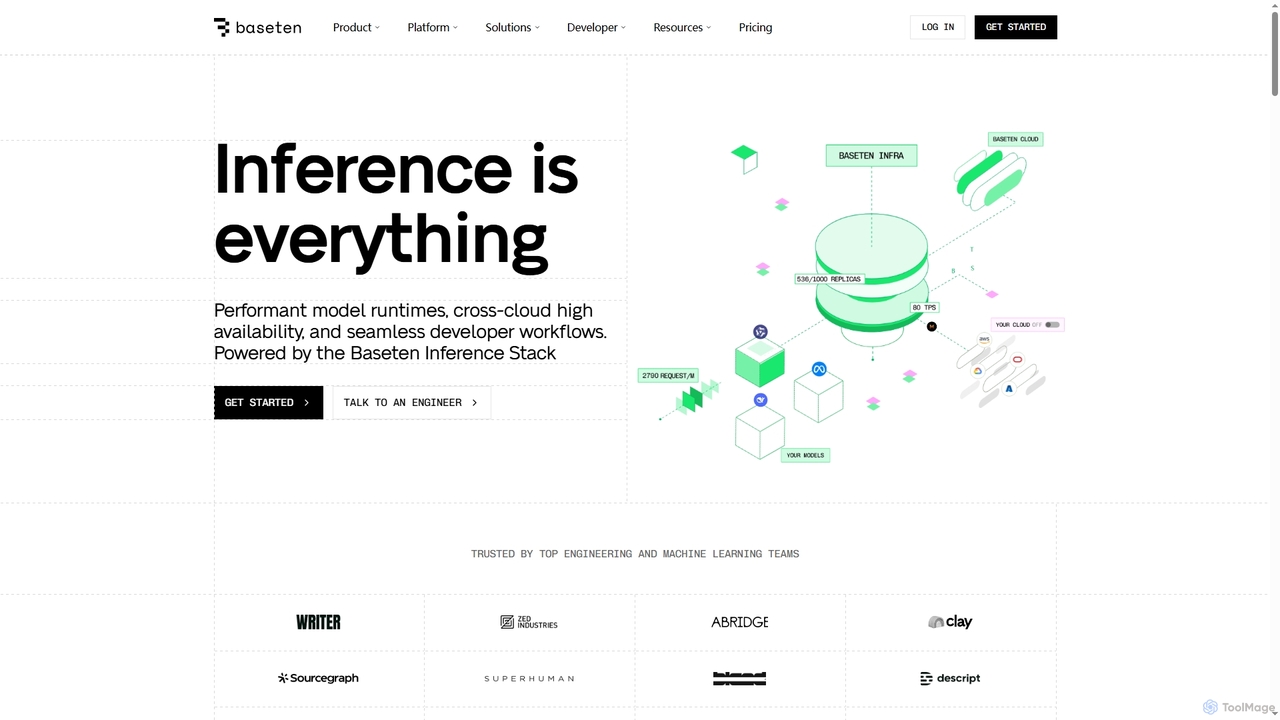
Baseten
Baseten is a production-grade inference platform for deploying, scaling, and managing AI models. It offers high-performance runtimes, seamless developer workflows, and flexible deployment options (cloud, self-hosted, hybrid). Ideal for engineering and ML teams building mission-critical AI applications.
Deployment
PPIO
PPIO is a leading distributed cloud computing platform providing cost-effective, high-performance AI computing power, model APIs, and edge computing services. It offers developers and enterprises one-stop solutions for AI, video, and metaverse applications, featuring serverless GPUs, containerized instances, and access to popular large language and multi-modal models.
Model Hosting
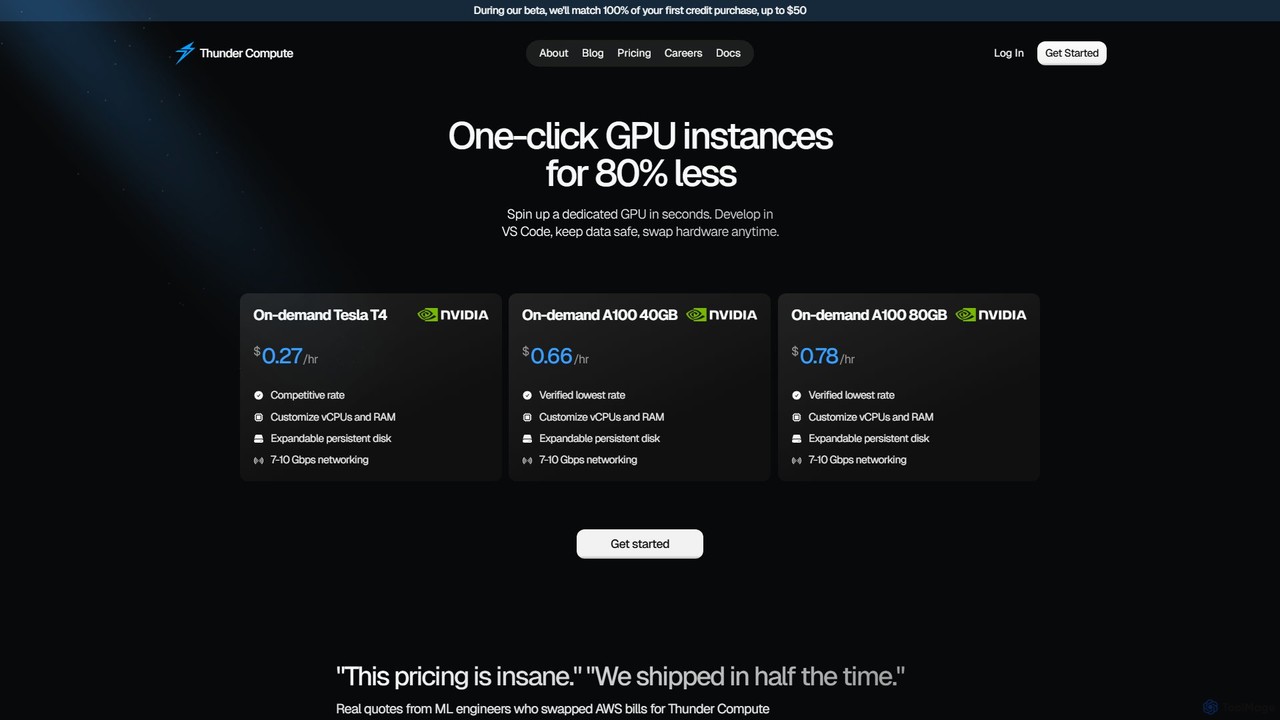
thundercompute
Thunder Compute offers an ultra-low-cost GPU cloud platform designed for AI and machine learning developers. It provides on-demand GPU instances like the NVIDIA A100 and T4 at prices up to 80% lower than major cloud providers. With features like one-click setup, VS Code integration, and seamless scalability, it dramatically simplifies the development workflow, from prototyping to production, allowing developers to focus on building models rather than managing infrastructure.
Machine Learning
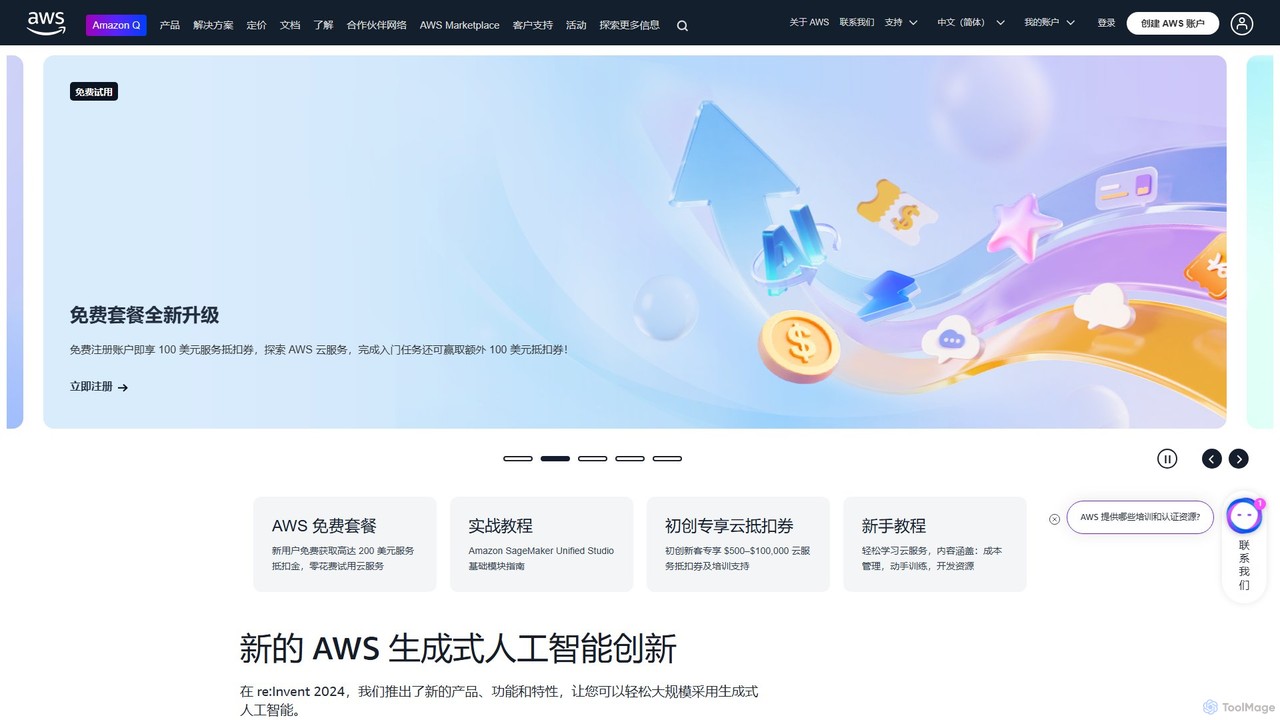
AWS
Amazon Web Services (AWS) is the world's most comprehensive and broadly adopted cloud platform, offering over 200 fully featured services from data centers globally. It provides a vast suite of AI and machine learning tools, including Amazon Bedrock for building generative AI applications with leading foundation models, Amazon SageMaker for the complete ML lifecycle, and the powerful Amazon Nova models for advanced text, image, and video generation.
Machine Learning
Vast.ai
Vast.ai is a leading GPU cloud platform offering on-demand access to a vast network of GPUs for AI and machine learning workloads. It provides developers and enterprises with high-performance computing at significantly lower costs—up to 80% less than traditional cloud providers—through a transparent, pay-as-you-go marketplace.
Gpu Rental