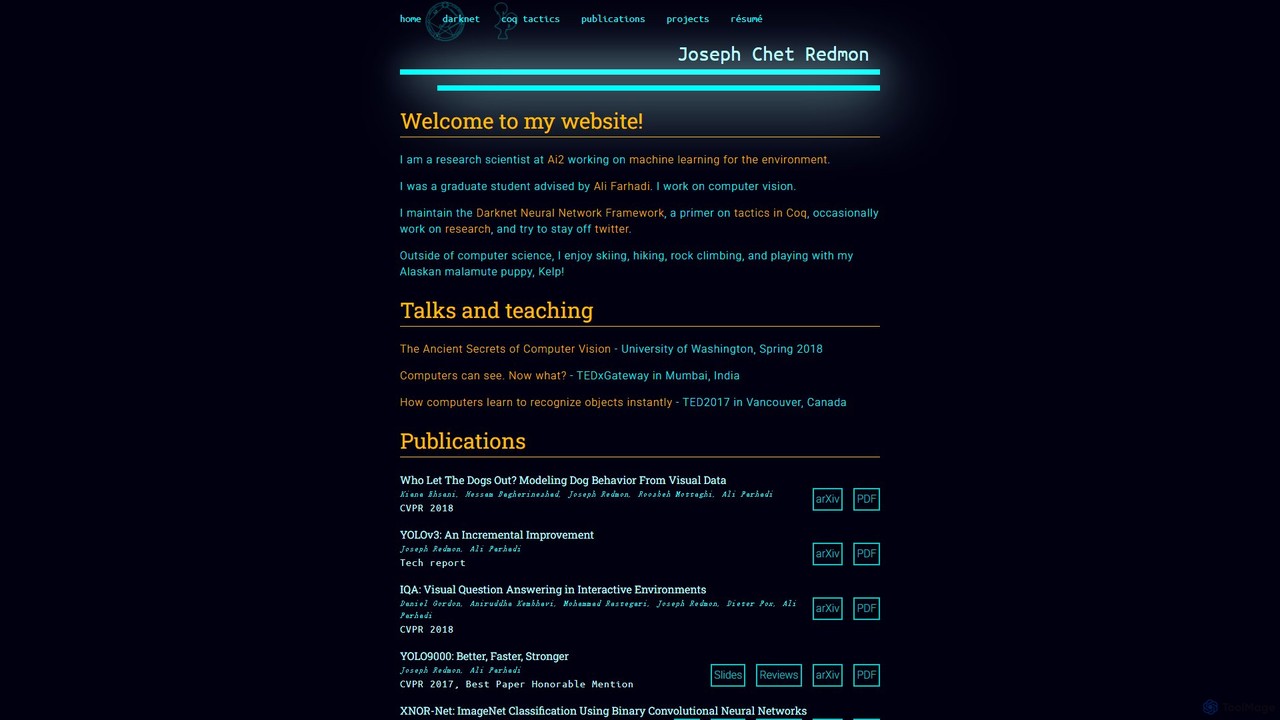
Darknet is a high-performance, open-source neural network framework written in C and CUDA. Created by Joseph Redmon, it is renowned for its speed and efficiency, famously powering the YOLO (You Only Look Once) real-time object detection system. It's designed to be small, easy to install, and supports both CPU and GPU computations, making it a popular choice for researchers and developers in computer vision.
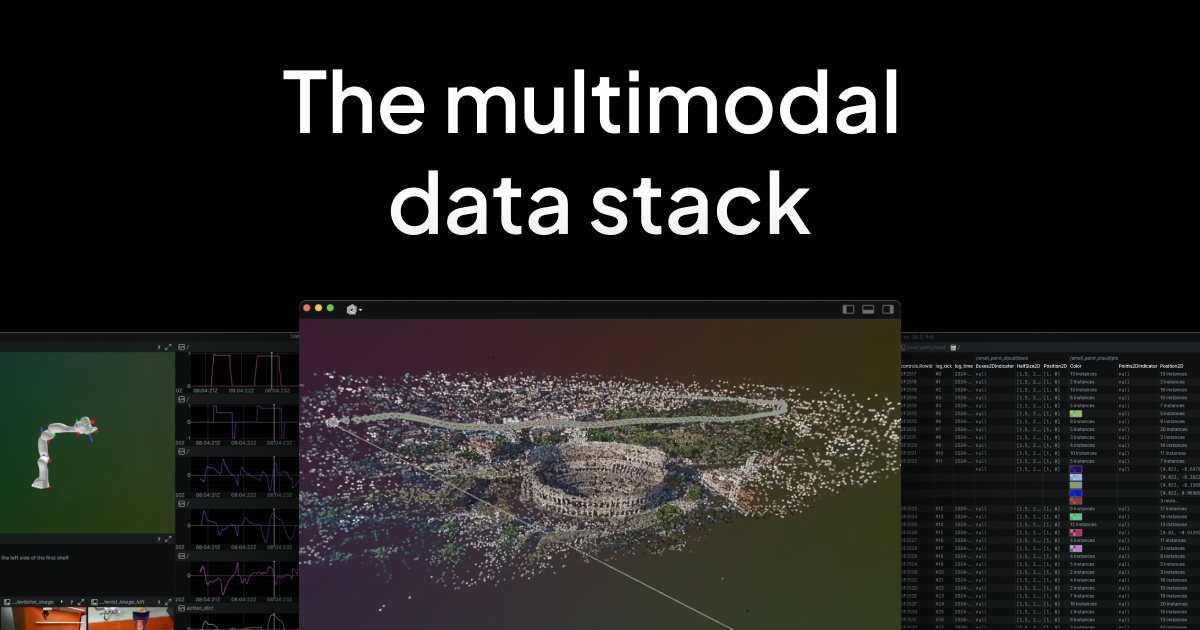
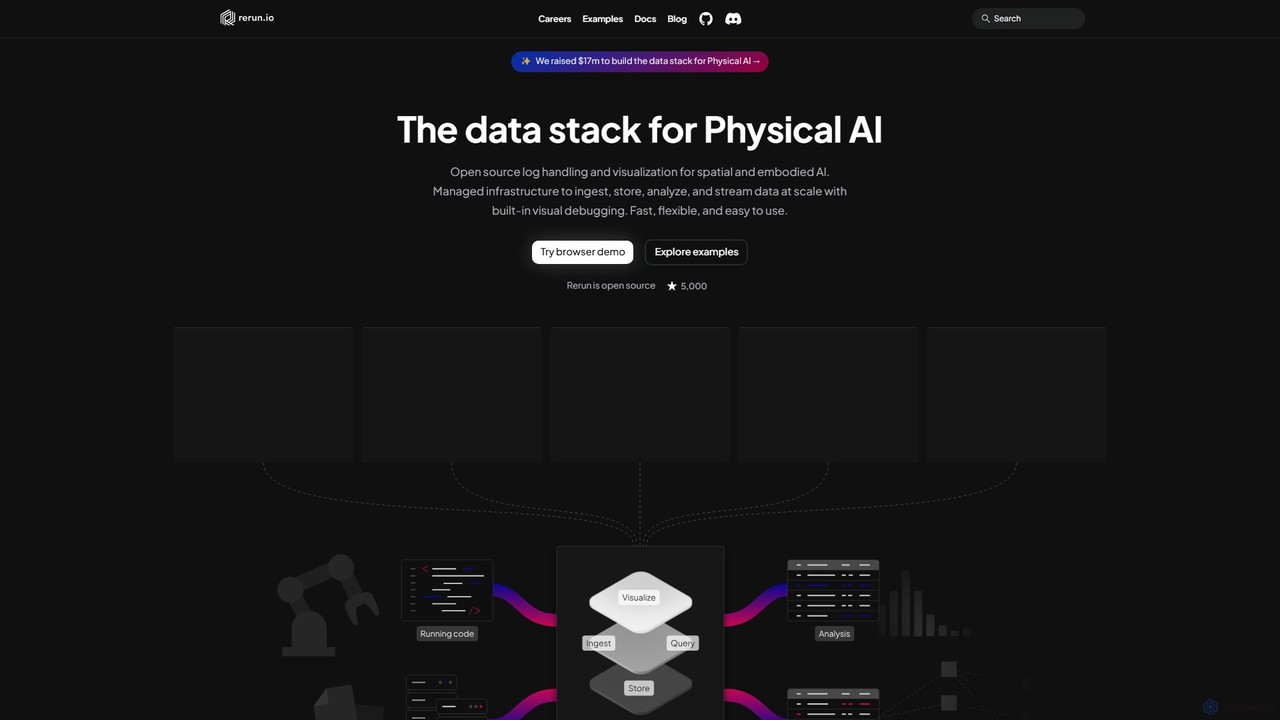
Rerun is an open-source data stack for Physical AI, providing powerful logging and visualization tools for multimodal, time-series data. Designed for robotics, computer vision, and spatial computing, it helps developers understand and debug complex systems with SDKs for Python, Rust, and C++.
Product overview
Darknet Product overview
Darknet is a high-performance, open-source neural network framework written in C and CUDA. Created by Joseph Redmon, it is renowned for its speed and efficiency, famously powering the YOLO (You Only Look Once) real-time object detection system. It's designed to be small, easy to install, and supports both CPU and GPU computations, making it a popular choice for researchers and developers in computer vision.
Rerun Product overview
Rerun is an open-source data stack for Physical AI, providing powerful logging and visualization tools for multimodal, time-series data. Designed for robotics, computer vision, and spatial computing, it helps developers understand and debug complex systems with SDKs for Python, Rust, and C++.
Detailed feature comparison
| Feature | Darknet | Rerun |
|---|---|---|
| Primary category | Object Detection | Machine Learning |
| Added | 2025-08-15 | 2025-08-10 |
| Pricing | Free | Freemium |
| Official website | pjreddie.com | rerun.io |
| Product type | Website | App |
| Performance data | ||
| User rating | Not verified | Not verified |
| Comments | 0 | 0 |
| Monthly visits | 53.5K | 87.9K |
| Monthly growth | -5.5% | 54.4% |
| Favorites | 106 | 117 |
| Details | View details | View details |
Darknet vs Rerun monthly traffic
Compare Darknet and Rerun by monthly reach, traffic trend, visit depth, top regions, and acquisition sources.
How to interpret the traffic data
In the Darknet vs Rerun monthly traffic comparison, Darknet currently shows 53.5K visits and Rerun shows 87.9K; Rerun has about 1.6 times the visible traffic of Darknet, an absolute difference of about 34.3K visits. This reflects visible reach, not feature quality or paid users.
Both tools provide verified traffic details, so monthly trends, visit depth, regions, and acquisition sources can be compared on the same basis.
Darknet monthly traffic:
Latest traffic
Monthly traffic trend
- 2025/9: 58.1K Monthly visits
- 2026/1: 71.8K Monthly visits
- 2026/2: 46.4K Monthly visits
- 2026/3: 58.7K Monthly visits
- 2026/4: 56.7K Monthly visits
- 2026/5: 53.5K Monthly visits
Top regions
Top 5 countries/regions
| Country/region | Percentage | Traffic |
|---|---|---|
| 🇺🇸United States | 40.82% | 21.9K |
| 🇺🇿Uzbekistan | 21.45% | 11.5K |
| 🇮🇳India | 16.54% | 8.9K |
| 🇮🇹Italy | 11.99% | 6.4K |
| 🇮🇩Indonesia | 9.2% | 4.9K |
Traffic sources
| Source type | Percentage | Traffic |
|---|---|---|
| Direct | 83.31% | 44.6K |
| Referral | 15.11% | 8.1K |
| 1.58% | 846 |
Search keywords
Rerun monthly traffic:
Latest traffic
Monthly traffic trend
- 2025/9: 57.2K Monthly visits
- 2026/1: 72.5K Monthly visits
- 2026/2: 65.4K Monthly visits
- 2026/3: 58.9K Monthly visits
- 2026/4: 56.9K Monthly visits
- 2026/5: 87.9K Monthly visits
Top regions
Top 5 countries/regions
| Country/region | Percentage | Traffic |
|---|---|---|
| 🇨🇳China | 53.32% | 46.9K |
| 🇺🇸United States | 21.28% | 18.7K |
| 🇮🇳India | 13.38% | 11.8K |
| 🇰🇷Korea, Republic of | 6.32% | 5.6K |
| 🇺🇿Uzbekistan | 5.7% | 5K |
Traffic sources
| Source type | Percentage | Traffic |
|---|---|---|
| Direct | 65.81% | 57.8K |
| Referral | 34.19% | 30K |
Search keywords
Usage comparison
Compare the core capabilities of Darknet and Rerun
Darknet Core features
Rerun Core features
Use cases
Darknet Use cases
Rerun Use cases
Darknet vs Rerun:In-depth comparison and selection guidance
First decide whether the products solve the same kind of need
This in-depth Darknet vs Rerun comparison uses only the product records, taxonomy, audience, traffic, and community signals available on this page. Darknet is primarily listed under “Object Detection”, while Rerun is primarily listed under “Machine Learning”, so the first decision is whether your actual task matches their recorded scope.
The structured fields currently show these decision-relevant differences: Primary category (Darknet: Object Detection; Rerun: Machine Learning); Product type (Darknet: Website; Rerun: App); Pricing (Darknet: Free; Rerun: Freemium); Monthly visits (Darknet: 53.5K; Rerun: 87.9K); Monthly growth (Darknet: -5.5%; Rerun: 54.4%). These facts are more useful for selection than brand visibility alone.
What market visibility and monthly traffic mean
In the Darknet vs Rerun monthly traffic comparison, Darknet currently shows 53.5K visits and Rerun shows 87.9K; Rerun has about 1.6 times the visible traffic of Darknet, an absolute difference of about 34.3K visits. This reflects visible reach, not feature quality or paid users.
Both tools provide verified traffic details, so monthly trends, visit depth, regions, and acquisition sources can be compared on the same basis.
If public market visibility is an important first-pass criterion, investigate Rerun first. The final choice should still follow taxonomy, use case, and a real trial because higher traffic does not prove broader capabilities or better workflow fit.
Product positioning, use cases, and roles
Darknet and Rerun currently overlap in shared tags: c++, computer vision, machine learning, and open source. This can place both on the same shortlist, but it does not prove equal implementation, depth, or cost.
Darknet's unique categories/tags are Object Detection, Machine Learning Frameworks, CUDA, developer framework, neural network, object detection, real-time detection, and YOLO; Rerun's are Machine Learning, Data Visualization, Debugging, Simulation, 3D, data visualization, debugging, and python. These unique fields are the strongest differentiators: validate the product whose recorded scope matches the task instead of following traffic alone.
What ratings, comments, and favorites can tell you
Darknet has no verified rating, 0 comments, 106 favorites, and 81 likes;Rerun has no verified rating, 0 comments, 117 favorites, and 132 likes。
Neither product has enough rating or comment samples for a credible reputation ranking.
Selection guidance by actual need
When to evaluate Darknet first
Put Darknet on the priority trial list when the task aligns with “Object Detection” and especially Object Detection, Machine Learning Frameworks, CUDA, developer framework, neural network, and object detection. This follows recorded positioning and does not imply unlisted capabilities are absent.
Darknet also currently records: pricing is free, product type is website, 53.5K verified monthly visits, no verified user rating. Verify any hard requirement around price, platform, or reach before trial, and do not let sparse review data substitute for testing.
When to evaluate Rerun first
Put Rerun on the priority trial list when the task aligns with “Machine Learning” and especially Machine Learning, Data Visualization, Debugging, Simulation, 3D, and data visualization. This follows recorded positioning and does not imply unlisted capabilities are absent.
Rerun also currently records: pricing is freemium, product type is app, 87.9K verified monthly visits, no verified user rating. Verify any hard requirement around price, platform, or reach before trial, and do not let sparse review data substitute for testing.
How to validate the recommendation before deciding
The available data describes positioning, public visibility, and community signals, but it cannot prove output quality, speed, integration effort, privacy, or long-term cost in your workflow. Before deciding, run the same representative tasks in Darknet and Rerun, then record completion time, accuracy, manual corrections, and the real paid threshold. A like-for-like trial turns this comparison into a defensible adoption decision.
Comparison FAQ
How should I choose between Darknet and Rerun?
Where does this comparison data come from?
What do unknown fields mean?
Related AI tools

PyTorch
PyTorch is an open-source machine learning framework based on the Torch library, used for applications such as computer vision and natural language processing. It offers a flexible, Python-first environment that accelerates the path from research prototyping to production deployment.
Deep Learning
TensorFlow
TensorFlow is an end-to-end open-source platform for machine learning developed by Google. It provides a comprehensive, flexible ecosystem of tools, libraries, and community resources that lets researchers and developers build and deploy ML-powered applications. From beginners to experts, TensorFlow offers intuitive high-level APIs for easy model building and powerful low-level APIs for advanced research, enabling deployment across servers, edge devices, and browsers.
Frameworks
Fast.ai
Fast.ai is a research institute dedicated to making deep learning accessible to everyone. It offers free courses, an open-source software library (fastai), cutting-edge research, and a vibrant community, empowering coders of all backgrounds to become deep learning practitioners.
Machine Learning
MindSpore
MindSpore is an open-source, all-scenario AI computing framework designed for developers and data scientists. It provides a developer-friendly experience with flexible deployment across cloud, edge, and device environments. It excels in distributed training for large models and offers specialized toolkits for scientific computing (AI4S), ensuring high performance and efficiency, especially on Ascend hardware.
Scientific Computing
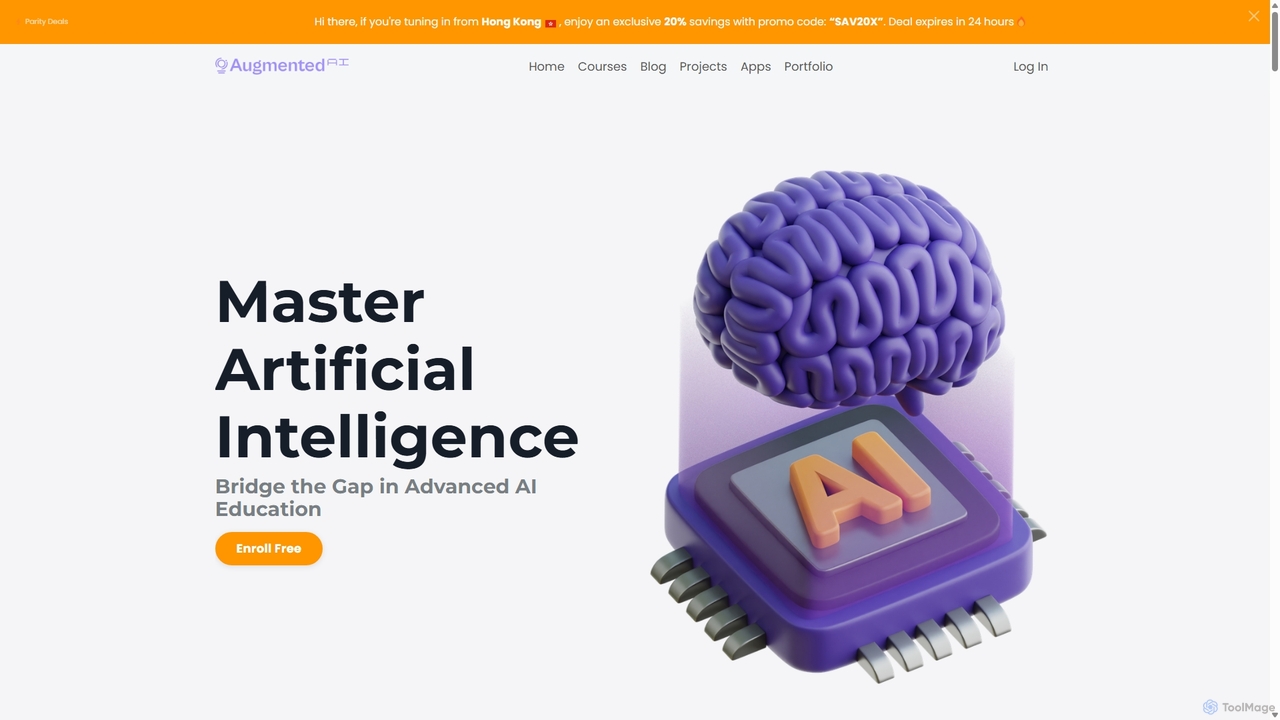
Augmented Startups
Augmented Startups is an online AI university offering practical, project-based courses for all skill levels. It specializes in advanced topics like Computer Vision, Large Language Models (LLMs), Robotics, and Autonomous Vehicles. The platform provides comprehensive learning paths with code, datasets, and expert support to help students and professionals build real-world AI applications and bridge the gap between theory and practical implementation.
Code Libraries
Segment Anything
Segment Anything (SAM) is a groundbreaking AI model from Meta AI for image segmentation. It can identify and "cut out" any object in any image with a single click or prompt. Featuring zero-shot generalization, SAM understands objects without prior specific training, making it incredibly versatile for researchers, developers, and creators in computer vision, image editing, and data annotation.
Data Annotation
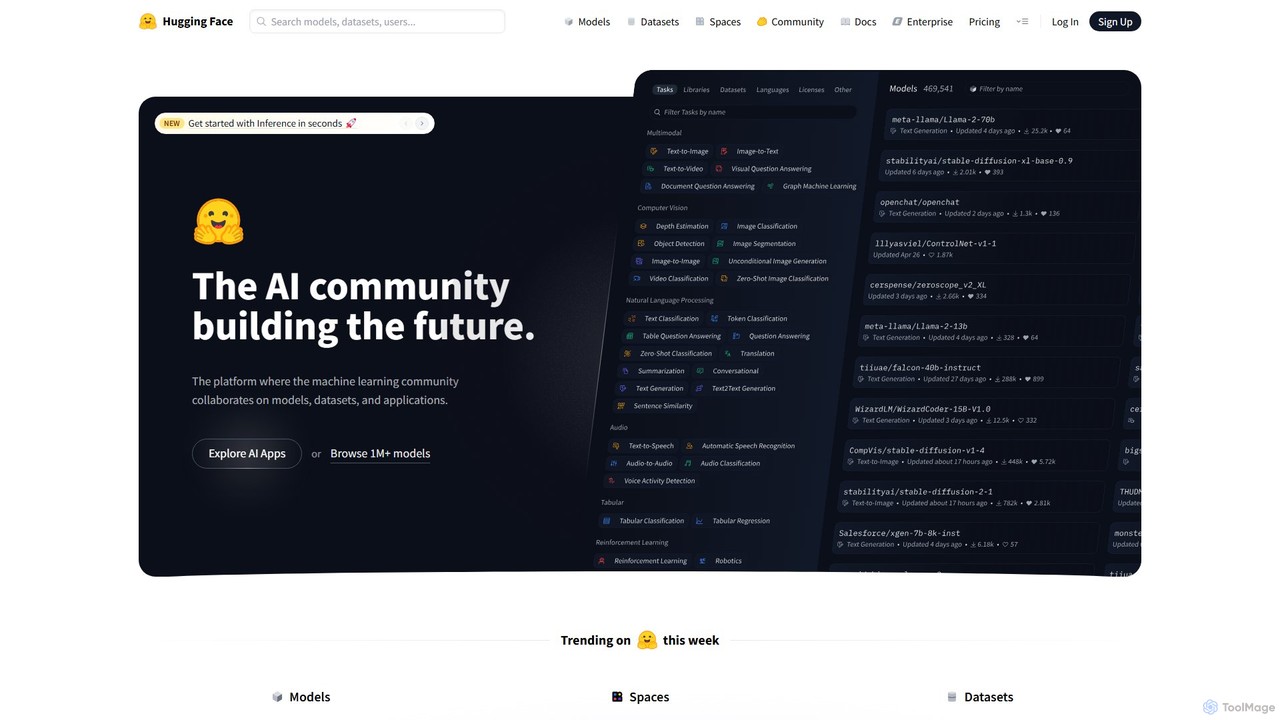
Hugging Face
Hugging Face is the leading open-source platform and community for machine learning. It provides tools for developers and researchers to build, train, and deploy state-of-the-art models, offering a vast hub of pre-trained models, datasets, and demo applications.
Dataset
Google Research
Google Research is a premier hub for exploring groundbreaking advancements in science and AI. It provides open access to a vast repository of research papers, project showcases, and open-source resources across diverse fields like machine learning, quantum computing, and healthcare. It's an essential platform for researchers, developers, and enthusiasts to stay at the forefront of technological innovation and understand its real-world impact.
Learning Platform
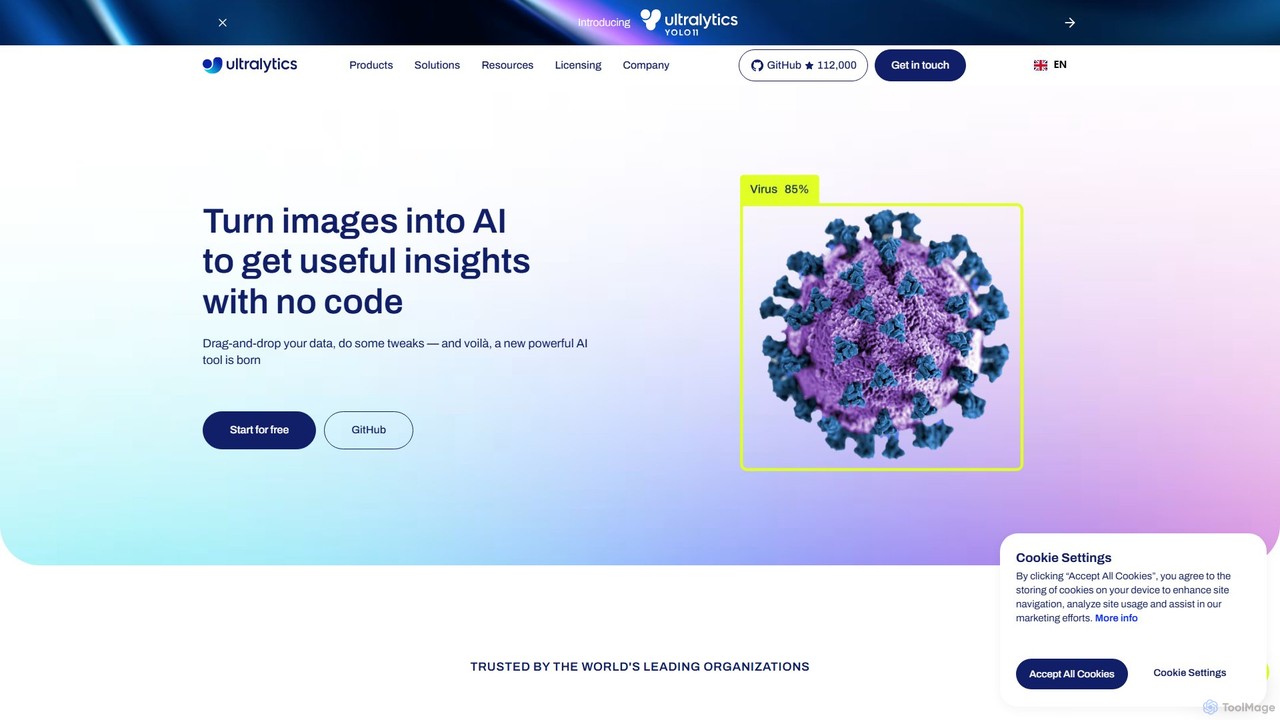
Ultralytics
Ultralytics is a leading Vision AI company, creators of the world-renowned YOLO (You Only Look Once) models. They provide a comprehensive ecosystem, including the open-source YOLOv8 framework and the Ultralytics HUB, a no-code platform for training and deploying AI models.
Machine Learning
Streamlit
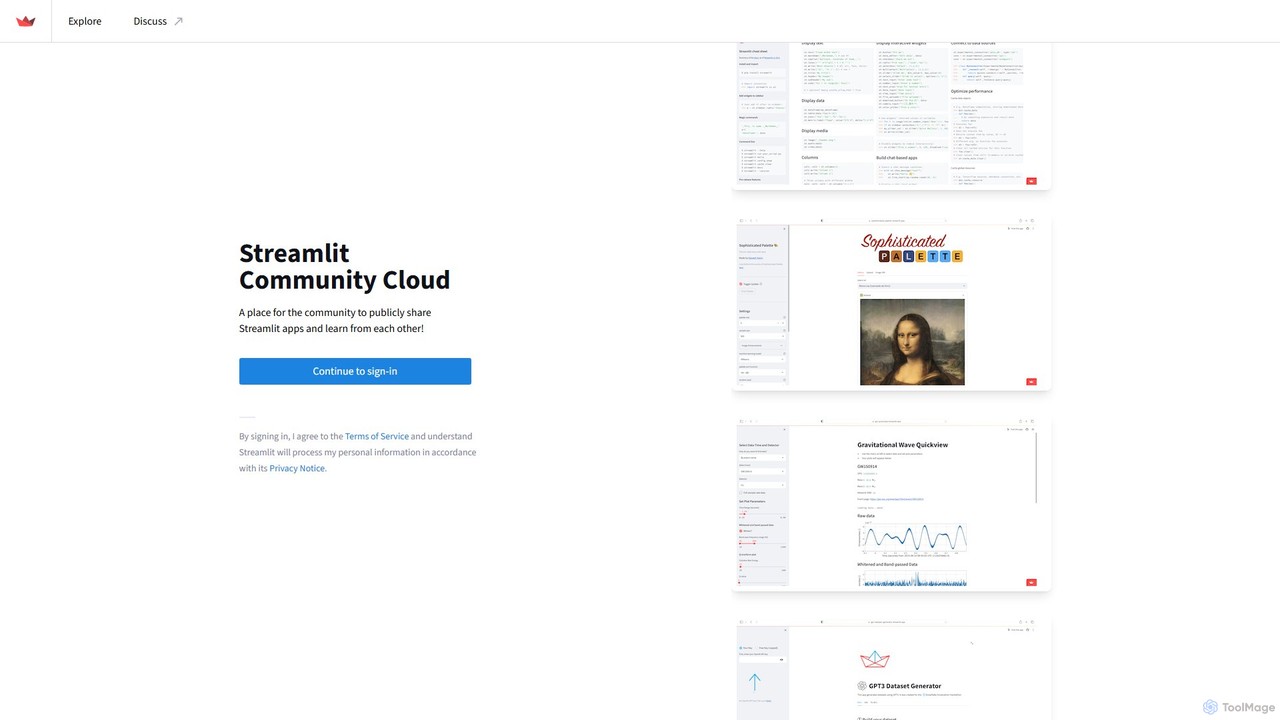
Streamlit is an open-source Python framework that enables developers and data scientists to build and share beautiful, custom web apps for machine learning and data science in minutes. The Streamlit Community Cloud provides a free platform to deploy, manage, and share these public applications with the world, fostering a collaborative environment for innovation.
Data Visualization
Label Studio
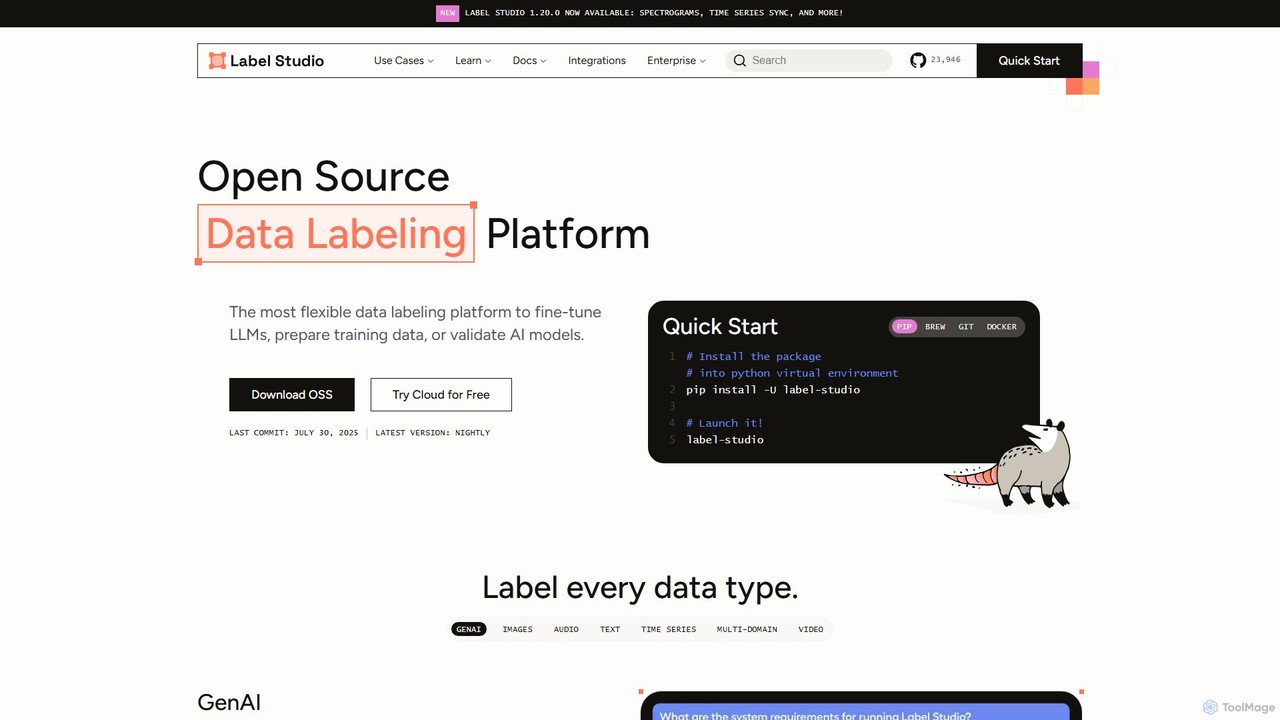
Label Studio is a versatile open-source data labeling platform designed for a wide range of data types. It enables users to annotate images, text, audio, video, and time-series data to fine-tune LLMs, prepare training data for machine learning, and validate AI models with human-in-the-loop feedback.
Training Data
marimo
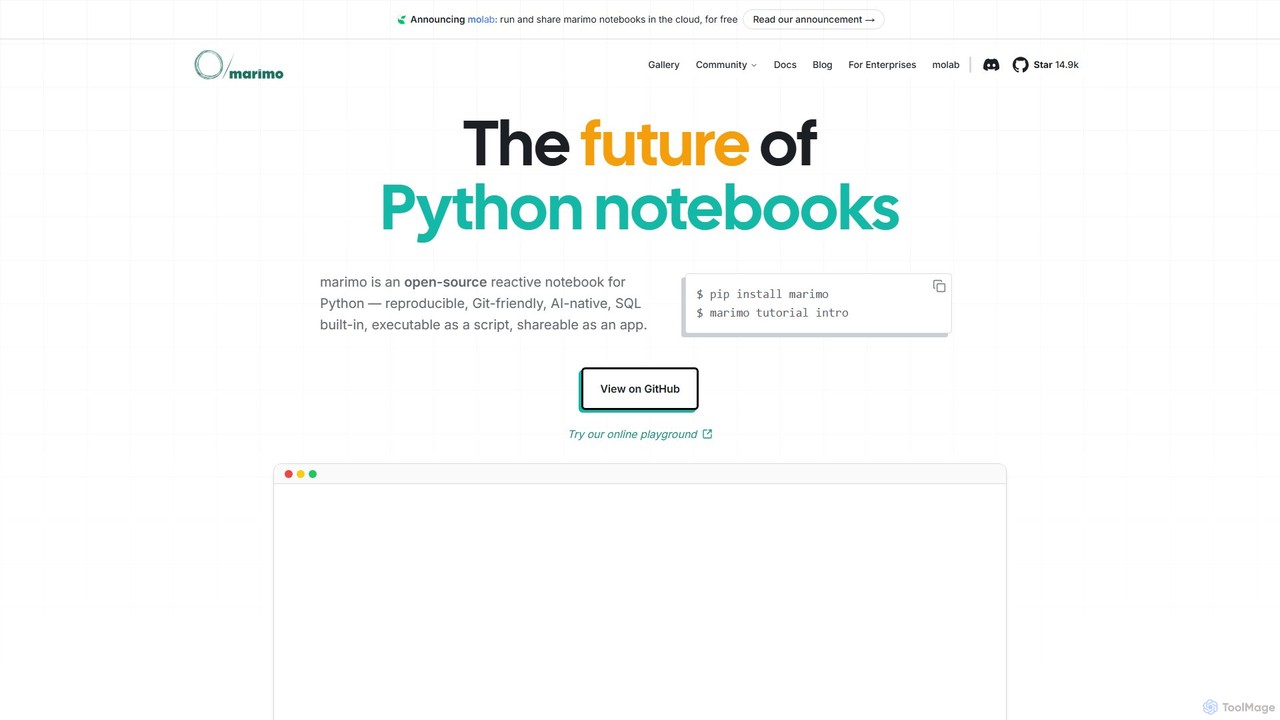
marimo is an open-source reactive Python notebook for modern data science and AI. It offers a reproducible, Git-friendly, and interactive environment where notebooks are pure Python scripts. Features include built-in AI assistance, SQL cells, and the ability to share notebooks as web apps, streamlining the workflow from experiment to production.
Data Visualization
Cleora
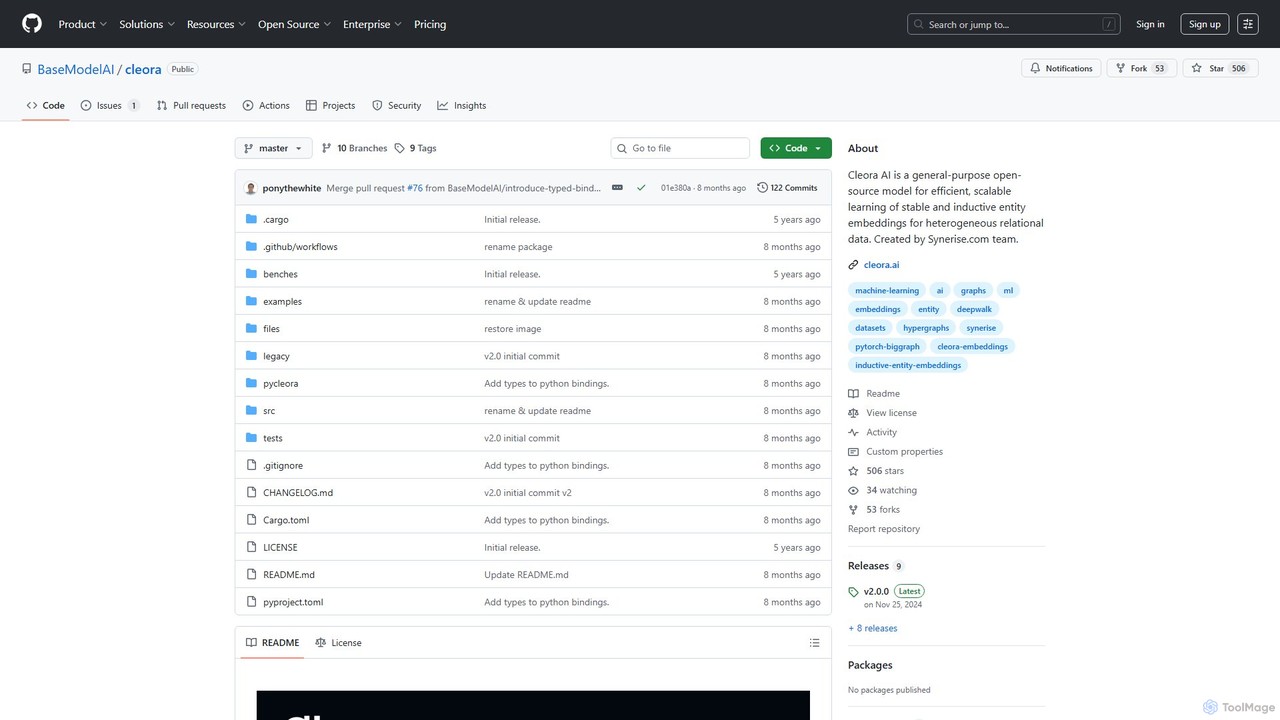
Cleora is an open-source, high-performance model for creating stable and inductive entity embeddings from large-scale, heterogeneous relational data and hypergraphs. Written in Rust with a Python API, it offers unparalleled speed and scalability for tasks like recommendation systems and graph analytics.
Embedding Models
LAION
LAION (Large-scale Artificial Intelligence Open Network) is a non-profit organization dedicated to democratizing AI research. It provides massive, open-source datasets, pre-trained models, and tools to the public, fostering open research, education, and resource-efficient development in machine learning.
Datasets
RagaAI
RagaAI is a comprehensive AI testing and observability platform designed to help developers and enterprises build reliable AI applications. It offers a suite of tools for observing, evaluating, and debugging AI agents, LLMs, and RAG systems. Key features include agentic testing, real-time guardrails, synthetic data generation, and fine-tuning capabilities. RagaAI supports multimodal data (LLMs, computer vision, tabular) and aims to automate the entire AI quality assurance lifecycle, from issue detection to resolution, ensuring robust and trustworthy AI deployments.
Analytics