DataChain is a developer-first platform for managing "Heavy Data"—large-scale, unstructured, multimodal datasets. It enables teams to curate, enrich, and version data like videos, images, audio, and PDFs for AI applications, featuring Python-based ETL pipelines, full data lineage, and scalable processing from local IDE to cloud.

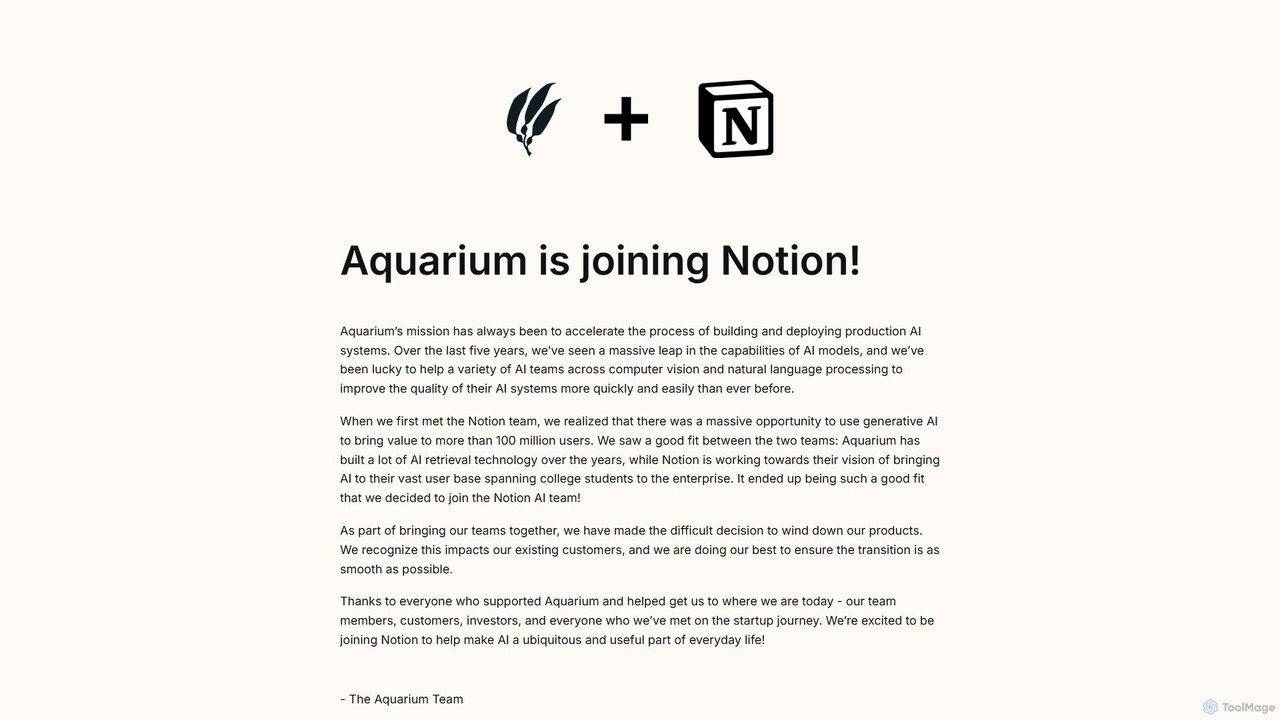
Tidepool (formerly Aquarium) was a powerful MLOps platform designed for AI teams to improve machine learning models. It specialized in managing and curating datasets for computer vision and NLP, enabling faster iteration and higher model performance through a data-centric approach.
Product overview
DataChain Product overview
DataChain is a developer-first platform for managing "Heavy Data"—large-scale, unstructured, multimodal datasets. It enables teams to curate, enrich, and version data like videos, images, audio, and PDFs for AI applications, featuring Python-based ETL pipelines, full data lineage, and scalable processing from local IDE to cloud.
Tidepool Product overview
Tidepool (formerly Aquarium) was a powerful MLOps platform designed for AI teams to improve machine learning models. It specialized in managing and curating datasets for computer vision and NLP, enabling faster iteration and higher model performance through a data-centric approach.
Detailed feature comparison
| Feature | DataChain | Tidepool |
|---|---|---|
| Primary category | Database | Machine Learning |
| Added | 2025-08-04 | 2025-08-17 |
| Pricing | Freemium | Paid |
| Official website | datachain.ai | www.tidepool.so |
| Product type | Website | Website |
| Performance data | ||
| User rating | Not verified | Not verified |
| Comments | 0 | 0 |
| Monthly visits | 4.4K | 3.8K |
| Monthly growth | 36.6% | Not verified |
| Favorites | 117 | 94 |
| Details | View details | View details |
DataChain vs Tidepool monthly traffic
Compare DataChain and Tidepool by monthly reach, traffic trend, visit depth, top regions, and acquisition sources.
How to interpret the traffic data
In the DataChain vs Tidepool monthly traffic comparison, DataChain currently shows 4.4K visits and Tidepool shows 3.8K; DataChain has about 1.2 times the visible traffic of Tidepool, an absolute difference of about 661 visits. This reflects visible reach, not feature quality or paid users.
Only DataChain has complete third-party traffic details; Tidepool uses visits recorded inside ToolMage. These scopes cannot estimate market share directly, and on-site views should not be treated as the product’s total website traffic.
DataChain monthly traffic:
Latest traffic
Monthly traffic trend
- 2025/9: 3.8K Monthly visits
- 2026/1: 5.4K Monthly visits
- 2026/2: 4.5K Monthly visits
- 2026/3: 6K Monthly visits
- 2026/4: 3.2K Monthly visits
- 2026/5: 4.4K Monthly visits
Top regions
Top 5 countries/regions
| Country/region | Percentage | Traffic |
|---|---|---|
| 🇺🇸United States | 52.28% | 2.3K |
| 🇷🇺Russia | 19.72% | 875 |
| 🇮🇳India | 13.18% | 585 |
| 🇩🇪Germany | 12.17% | 540 |
| 🇪🇸Spain | 2.65% | 118 |
Search keywords
Tidepool monthly traffic:
Latest traffic
Usage comparison
Compare the core capabilities of DataChain and Tidepool
DataChain Core features
Tidepool Core features
Use cases
DataChain Use cases
Tidepool Use cases
DataChain vs Tidepool:In-depth comparison and selection guidance
First decide whether the products solve the same kind of need
This in-depth DataChain vs Tidepool comparison uses only the product records, taxonomy, audience, traffic, and community signals available on this page. DataChain is primarily listed under “Database”, while Tidepool is primarily listed under “Machine Learning”, so the first decision is whether your actual task matches their recorded scope.
The structured fields currently show these decision-relevant differences: Primary category (DataChain: Database; Tidepool: Machine Learning); Pricing (DataChain: Freemium; Tidepool: Paid); Monthly visits (DataChain: 4.4K; Tidepool: 3.8K); Favorites (DataChain: 117; Tidepool: 94); Website (DataChain: datachain.ai; Tidepool: www.tidepool.so). These facts are more useful for selection than brand visibility alone.
What market visibility and monthly traffic mean
In the DataChain vs Tidepool monthly traffic comparison, DataChain currently shows 4.4K visits and Tidepool shows 3.8K; DataChain has about 1.2 times the visible traffic of Tidepool, an absolute difference of about 661 visits. This reflects visible reach, not feature quality or paid users.
Only DataChain has complete third-party traffic details; Tidepool uses visits recorded inside ToolMage. These scopes cannot estimate market share directly, and on-site views should not be treated as the product’s total website traffic.
The current traffic scope is not sufficient for a reliable product ranking. Treat monthly visits as a market-interest signal, then decide using taxonomy, use cases, pricing, and a like-for-like trial rather than reading exposure as product capability.
Product positioning, use cases, and roles
DataChain and Tidepool currently overlap in shared categories: Machine Learning and Data Management; shared tags: dataset management, machine learning, and MLOps. This can place both on the same shortlist, but it does not prove equal implementation, depth, or cost.
DataChain's unique categories/tags are Database, data management, data pipeline, data versioning, developer tools, ETL, multimodal AI, and open source; Tidepool's are AI development, computer vision, data-centric AI, error analysis, model training, and NLP. These unique fields are the strongest differentiators: validate the product whose recorded scope matches the task instead of following traffic alone.
What ratings, comments, and favorites can tell you
DataChain has no verified rating, 0 comments, 117 favorites, and 113 likes;Tidepool has no verified rating, 0 comments, 94 favorites, and 95 likes。
Neither product has enough rating or comment samples for a credible reputation ranking.
Selection guidance by actual need
When to evaluate DataChain first
Put DataChain on the priority trial list when the task aligns with “Database” and especially Database, data management, data pipeline, data versioning, developer tools, and ETL. This follows recorded positioning and does not imply unlisted capabilities are absent.
DataChain also currently records: pricing is freemium, product type is website, 4.4K verified monthly visits, no verified user rating. Verify any hard requirement around price, platform, or reach before trial, and do not let sparse review data substitute for testing.
When to evaluate Tidepool first
Put Tidepool on the priority trial list when the task aligns with “Machine Learning” and especially AI development, computer vision, data-centric AI, error analysis, model training, and NLP. This follows recorded positioning and does not imply unlisted capabilities are absent.
Tidepool also currently records: pricing is paid, product type is website, 3.8K on-site monthly views, no verified user rating. Verify any hard requirement around price, platform, or reach before trial, and do not let sparse review data substitute for testing.
How to validate the recommendation before deciding
The available data describes positioning, public visibility, and community signals, but it cannot prove output quality, speed, integration effort, privacy, or long-term cost in your workflow. Before deciding, run the same representative tasks in DataChain and Tidepool, then record completion time, accuracy, manual corrections, and the real paid threshold. A like-for-like trial turns this comparison into a defensible adoption decision.
Comparison FAQ
How should I choose between DataChain and Tidepool?
Where does this comparison data come from?
What do unknown fields mean?
Related AI tools

Voxel51
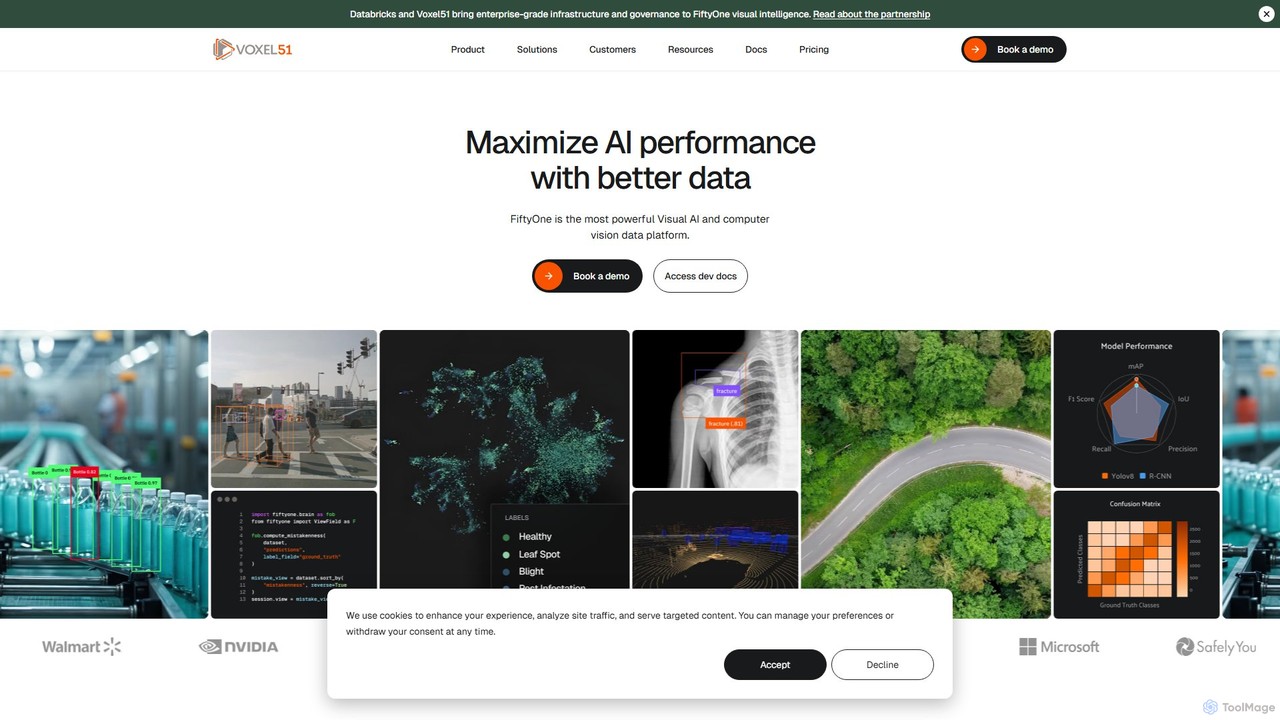
Voxel51 provides FiftyOne, an enterprise-grade computer vision and multimodal AI platform. It empowers developers and data scientists to curate, visualize, and evaluate complex datasets, leading to higher-performing models. By focusing on data-centric AI, FiftyOne streamlines workflows for data annotation, quality improvement, and model analysis, accelerating the entire development lifecycle.
Mlops
Roboflow
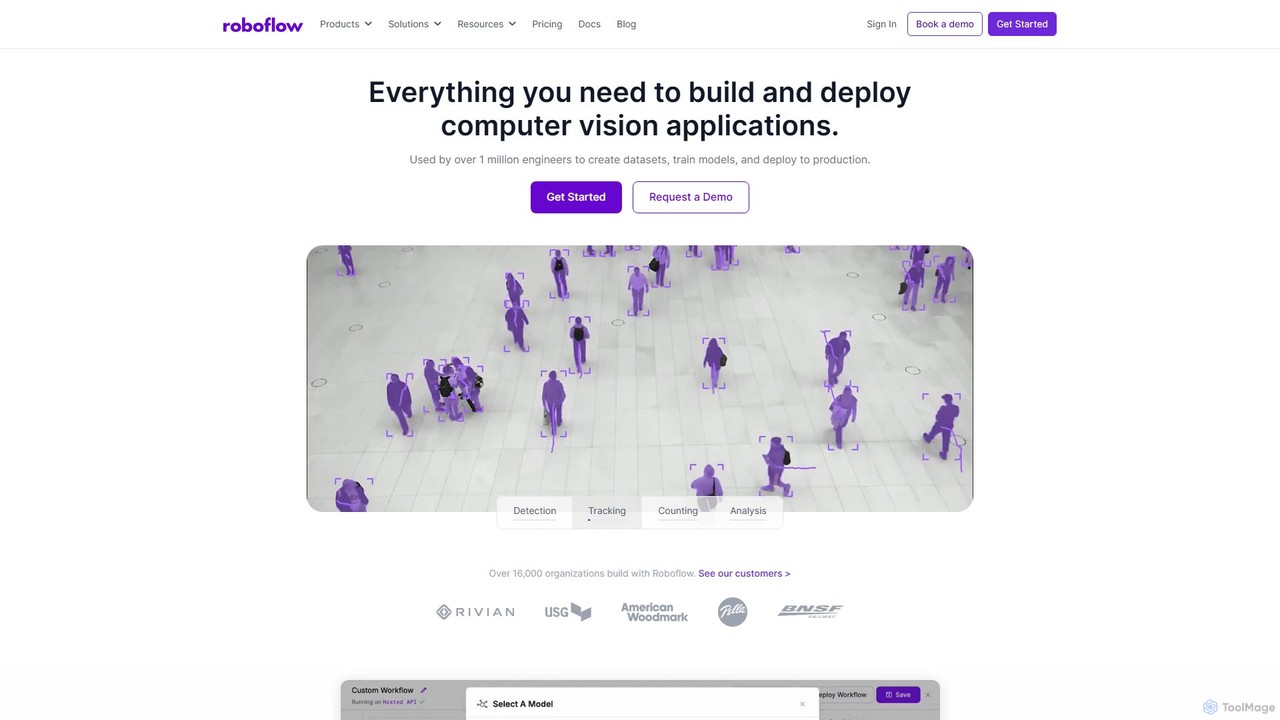
Roboflow is an end-to-end computer vision platform for developers and enterprises. It provides a comprehensive suite of tools to build, train, and deploy computer vision models at scale. From dataset creation and collaborative labeling to one-click model training and deployment to cloud or edge devices, Roboflow streamlines the entire MLOps lifecycle for vision AI, empowering over a million engineers to give their software the sense of sight.
Data Labeling
Lightly
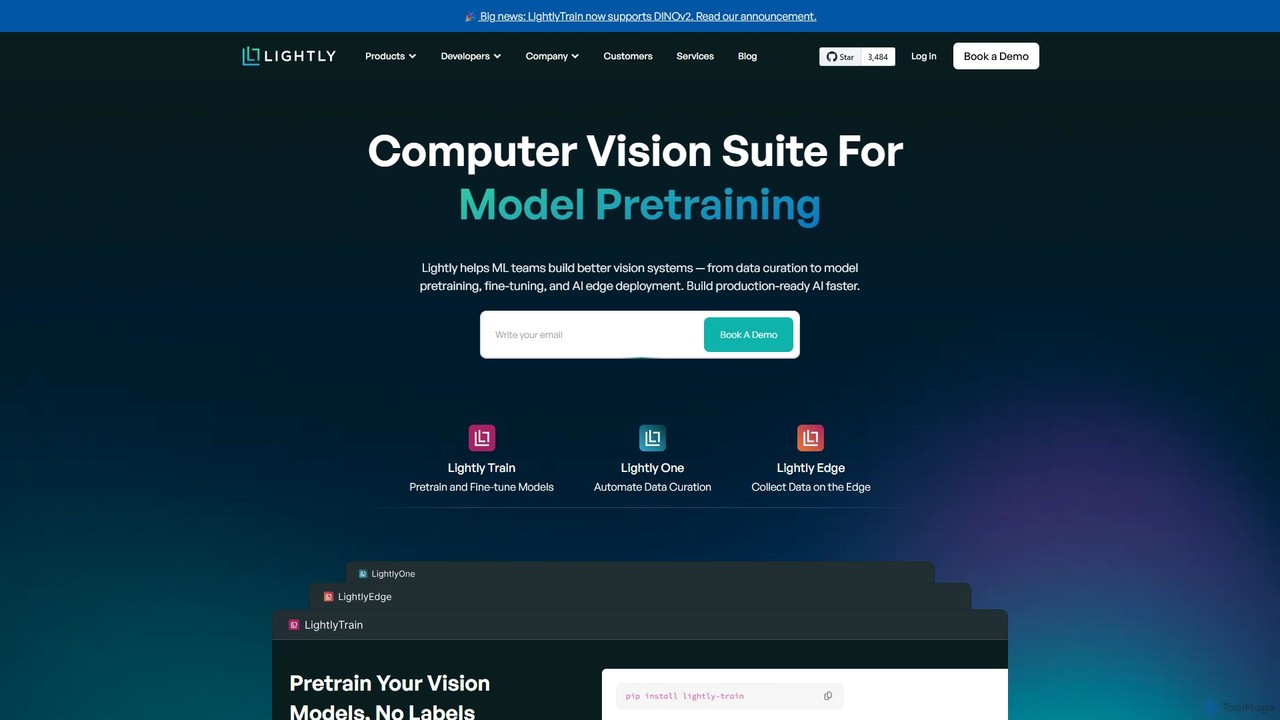
Lightly is a comprehensive computer vision suite for machine learning teams. It streamlines the entire model development lifecycle, from intelligent data curation and selection on edge devices to efficient, label-free model pretraining and fine-tuning. By focusing on the most valuable data, Lightly helps build more accurate and production-ready AI models faster, while significantly reducing data labeling and storage costs.
Data Management
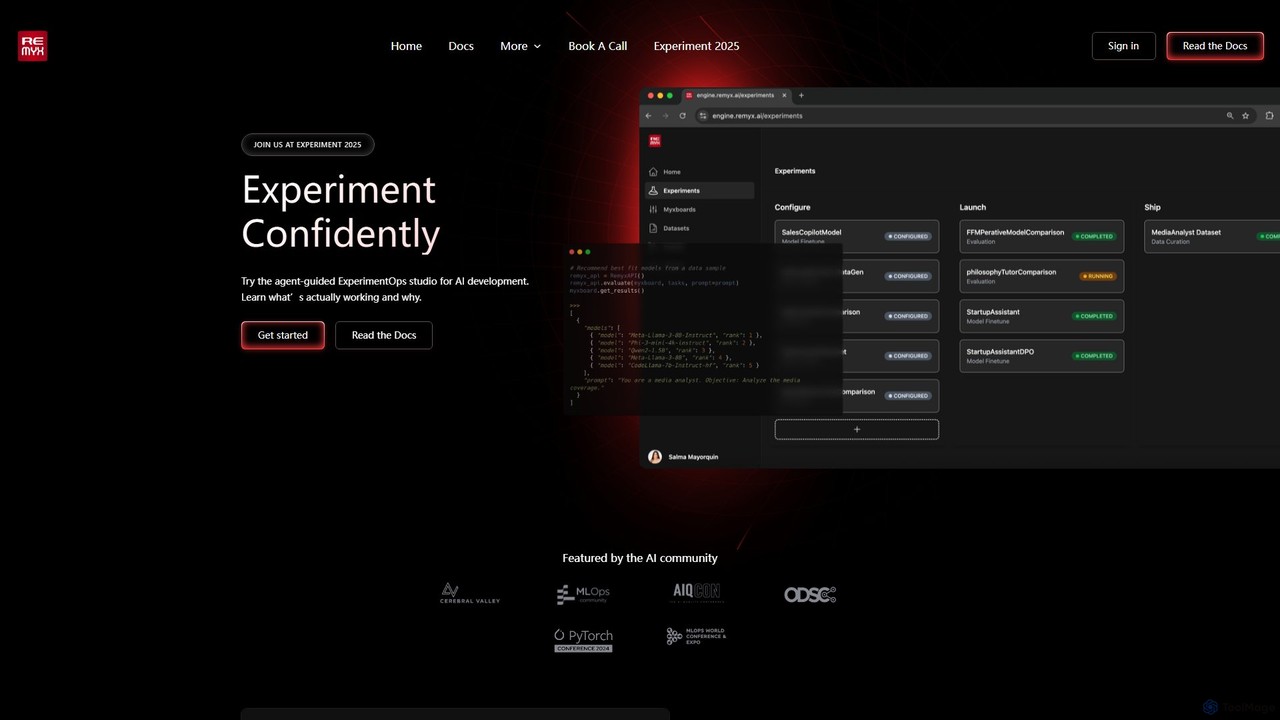
remyx
Remyx is an ExperimentOps platform designed for AI development. It helps AI and product teams operationalize knowledge by providing a collaborative studio for structured, reusable, and traceable experiments. By focusing on custom metrics and guided learning loops, Remyx accelerates the AI development lifecycle, ensuring that AI systems are aligned with real-world business goals and user impact.
Experimentation
Supervised.co
Supervised.co is an end-to-end platform for building, training, and deploying supervised machine learning models. It simplifies the MLOps lifecycle with integrated data annotation, automated model training, and one-click API deployment, empowering teams to create high-performance AI solutions efficiently.
Data Annotation
Lightning AI
Lightning AI is a cloud platform designed to build, train, and deploy AI models at scale. It combines the popular open-source PyTorch Lightning framework with Lightning AI Studio, a collaborative, browser-based environment with zero setup. Access powerful GPUs, scale from a laptop to the cloud seamlessly, and accelerate your entire AI development workflow.
Platform As A Service (Paas)
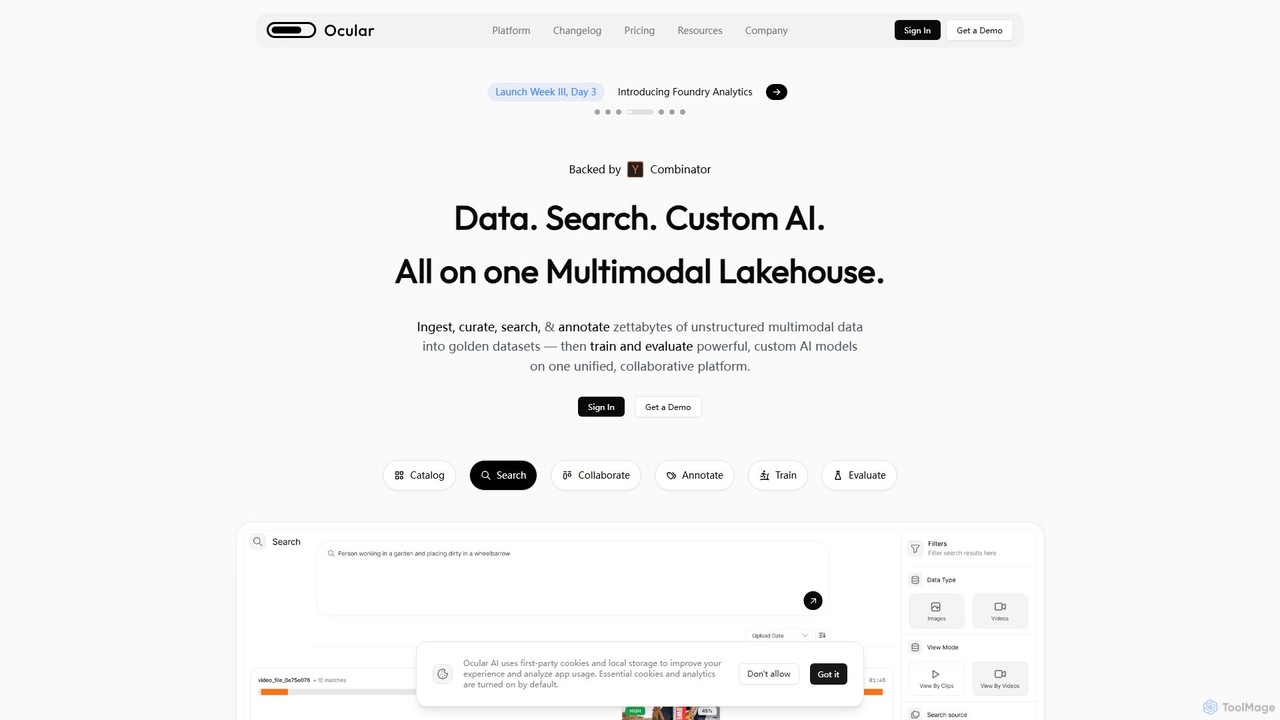
Ocular AI
Ocular AI is an end-to-end platform for the multimodal AI era, enabling teams to ingest, curate, search, and annotate zettabytes of unstructured data. It provides a unified multimodal lakehouse, advanced search, and tools for training and evaluating custom AI models, accelerating the entire AI development lifecycle.
Image Recognition
denvrdata
Denvr Dataworks offers a high-performance AI cloud platform for training, inference, and data science. It provides vertically integrated infrastructure with on-demand and dedicated GPU compute services. Tailored for developers and startups, it features the Ascend Program, offering significant compute credits to accelerate AI innovation.
Model Training
ai-rnd.com
An integrated platform for AI research and development, providing a unified workspace, pre-trained models, and one-click deployment to accelerate the entire AI lifecycle. Ideal for developers, researchers, and enterprises.
Data Management
dataset.gold
A curated directory of high-quality, open-source datasets for AI and machine learning. Discover the gold standard of data for training your models in computer vision, NLP, and more.
Datasets
TensorFlow
TensorFlow is an end-to-end open-source platform for machine learning developed by Google. It provides a comprehensive, flexible ecosystem of tools, libraries, and community resources that lets researchers and developers build and deploy ML-powered applications. From beginners to experts, TensorFlow offers intuitive high-level APIs for easy model building and powerful low-level APIs for advanced research, enabling deployment across servers, edge devices, and browsers.
Frameworks
Fast.ai
Fast.ai is a research institute dedicated to making deep learning accessible to everyone. It offers free courses, an open-source software library (fastai), cutting-edge research, and a vibrant community, empowering coders of all backgrounds to become deep learning practitioners.
Machine Learning
MLflow
MLflow is an open-source platform for managing the end-to-end machine learning lifecycle. It enables developers and data scientists to track experiments, package code into reproducible runs, version and share models, and deploy them to production, supporting both traditional ML and modern GenAI applications.
Data Science
Labellerr
Labellerr is an AI-powered data labeling and annotation platform designed to accelerate the development of Vision, NLP, and LLM models. It offers automated annotation, smart quality assurance, and seamless MLOps integration to deliver 99% accurate labels up to 99x faster, significantly reducing data preparation time and development costs for AI teams.
Machine Learning Operations
Anyscale
Anyscale is a fully-managed compute platform for scaling AI and Python workloads. Built on the open-source Ray framework by its original creators, it empowers developers to build, run, and scale distributed applications, from LLM training to data processing, with optimized performance and cost-efficiency on any cloud.
Mlops