ToolMage
Sign in
Lune
Specialized Assistant · 4.6K monthly visits

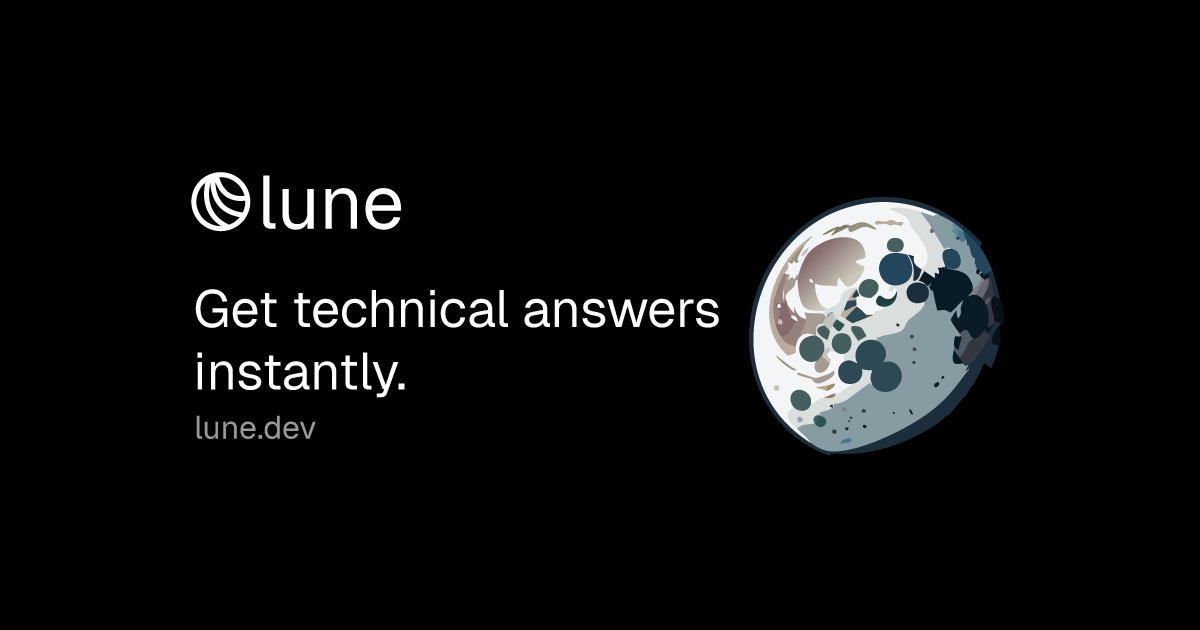
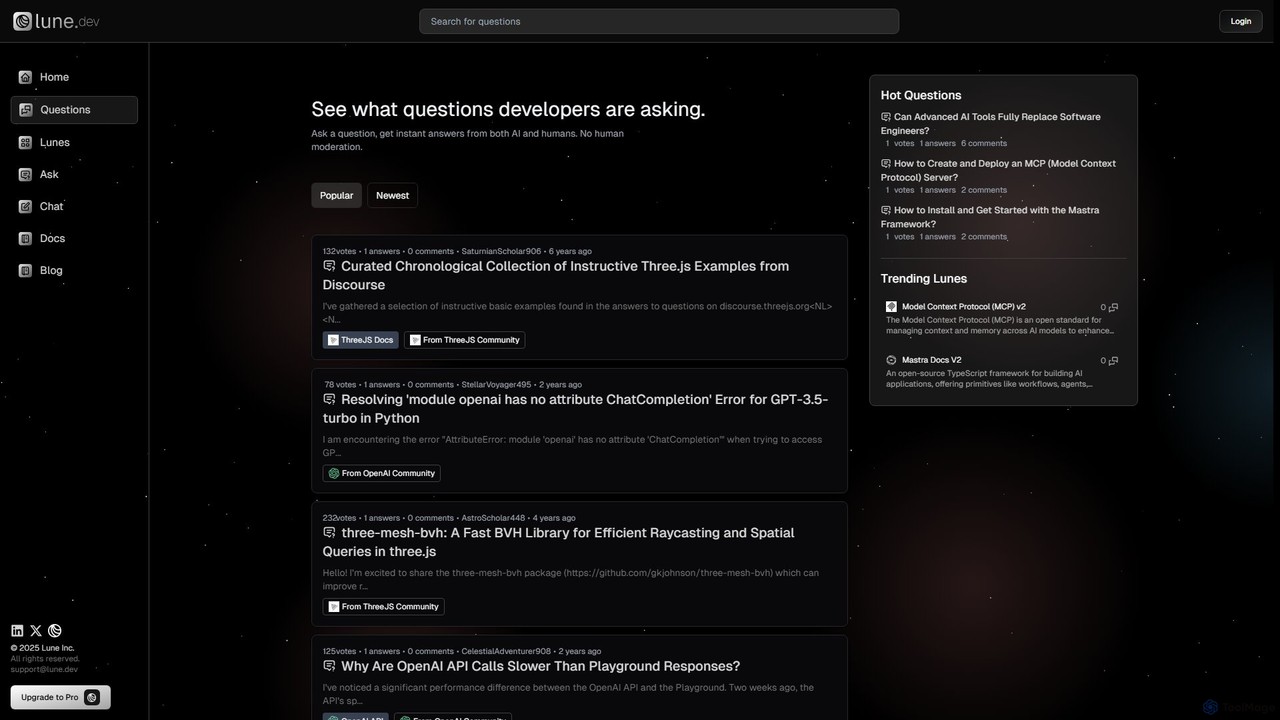
Lune is an AI-powered Q&A platform for developers, providing instant, accurate answers to technical questions. It leverages custom knowledge bases called "Lunes" and the Model Context Protocol (MCP) to ground AI responses in specific documentation, code repositories, and community discussions, ensuring high relevance and reliability.

VS
Metorial
Agentic Ai · 7.8K monthly visits

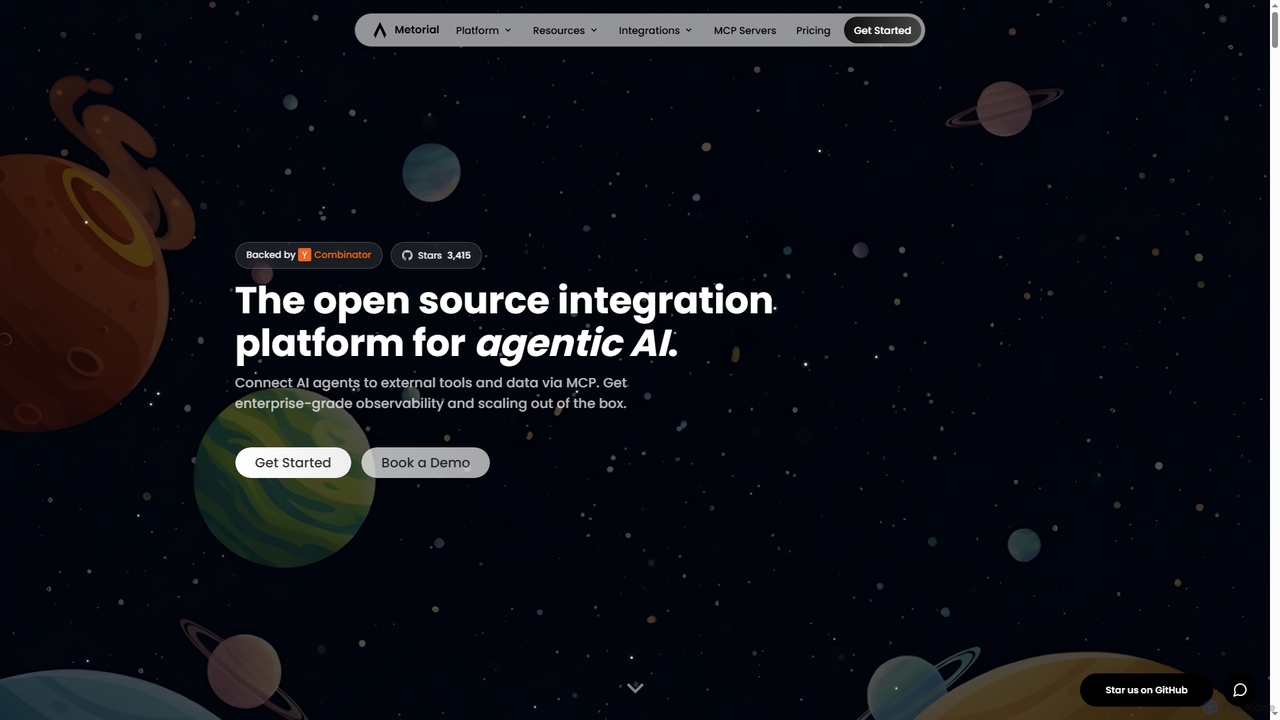
Metorial is an integration platform for AI agents, enabling developers to quickly build, deploy, and monitor powerful agentic AI applications. It provides seamless connections to hundreds of tools, data sources, and APIs via its serverless Model Context Protocol (MCP) platform, offering robust SDKs, observability, and enterprise-grade security for scalable AI solutions.

Lune vs Metorial: pricing, features, traffic, and use cases

Compare Lune and Metorial across positioning, pricing, traffic, and user feedback using structured factual data.

Updated Aug 24, 2026

Product overview

Lune Product overview

Lune is an AI-powered Q&A platform for developers, providing instant, accurate answers to technical questions. It leverages custom knowledge bases called "Lunes" and the Model Context Protocol (MCP) to ground AI responses in specific documentation, code repositories, and community discussions, ensuring high relevance and reliability.
Preview

Metorial Product overview

Metorial is an integration platform for AI agents, enabling developers to quickly build, deploy, and monitor powerful agentic AI applications. It provides seamless connections to hundreds of tools, data sources, and APIs via its serverless Model Context Protocol (MCP) platform, offering robust SDKs, observability, and enterprise-grade security for scalable AI solutions.

Preview

Detailed feature comparison

FeatureLuneMetorial
Primary categorySpecialized AssistantAgentic Ai
Added2025-08-082025-10-23
PricingFreemiumFreemium
Official websitewww.lune.devmetorial.com
Product typeWebsiteWebsite
Performance data
User ratingNot verifiedNot verified
Comments00
Monthly visits4.6K7.8K
Monthly growthNot verified67.9%
Favorites124123
DetailsView detailsView details

Lune vs Metorial monthly traffic

Compare Lune and Metorial by monthly reach, traffic trend, visit depth, top regions, and acquisition sources.

How to interpret the traffic data

In the Lune vs Metorial monthly traffic comparison, Lune currently shows 4.6K visits and Metorial shows 7.8K; Metorial has about 1.7 times the visible traffic of Lune, an absolute difference of about 3.2K visits. This reflects visible reach, not feature quality or paid users.

Only Metorial has complete third-party traffic details; Lune uses visits recorded inside ToolMage. These scopes cannot estimate market share directly, and on-site views should not be treated as the product’s total website traffic.

Lune is registered at the www.lune.dev/questions subpage. Because the current data does not state whether other host pages are excluded, treat this as domain-level context rather than independent traffic for one product or project.

Lune monthly traffic:

Latest traffic

Monthly visits
4.6K

Metorial monthly traffic:

Latest traffic

Monthly visits
7.8K
Avg. visit duration
0:19
Pages per visit
1.49
Bounce rate
48.69%
Data updated 2026-06-15

Monthly traffic trend

  • 2025/9: 2.8K Monthly visits
  • 2026/1: 27.1K Monthly visits
  • 2026/2: 10.6K Monthly visits
  • 2026/3: 7.9K Monthly visits
  • 2026/4: 4.6K Monthly visits
  • 2026/5: 7.8K Monthly visits

Top regions

Top 5 countries/regions
Country/regionPercentageTraffic
🇻🇳Vietnam34.76%2.7K
🇺🇸United States31.48%2.4K
🇮🇳India25.87%2K
🇬🇧United Kingdom4.04%313
🇫🇷France3.85%298

Search keywords

gemini api keymetorialmetroialpython anthropic api google calendar integrationtavily
Traffic-based selection guidance: The current traffic scope is not sufficient for a reliable product ranking. Treat monthly visits as a market-interest signal, then decide using taxonomy, use cases, pricing, and a like-for-like trial rather than reading exposure as product capability.

Usage comparison

Compare the core capabilities of Lune and Metorial

Lune Core features

Specialized Assistant
Knowledge Base
Q&A

Metorial Core features

Agentic Ai
Serverless
Sdks
Api Management

Use cases

Lune Use cases

developer tools
MCP
python
typescript
AI for developers
code assistant
knowledge base
OpenAI API
Q&A
RAG
technical support
Three.js

Metorial Use cases

developer tools
MCP
python
typescript
AI agent
AI infrastructure
API
automation
data integration
debugging
enterprise security
integration
LLM integration
monitoring
observability
open source
SDK
serverless
tool calling
workflow

Best suited roles

Lune Best suited roles

No verified data available

Metorial Best suited roles

AI Engineer
Data Scientist
DevOps Engineer
Product Manager
SaaS Business Owner
Software Developer
Solutions Architect
Technical Lead

Lune vs Metorial:In-depth comparison and selection guidance

First decide whether the products solve the same kind of need

This in-depth Lune vs Metorial comparison uses only the product records, taxonomy, audience, traffic, and community signals available on this page. Lune is primarily listed under “Specialized Assistant”, while Metorial is primarily listed under “Agentic Ai”, so the first decision is whether your actual task matches their recorded scope.

The structured fields currently show these decision-relevant differences: Primary category (Lune: Specialized Assistant; Metorial: Agentic Ai); Monthly visits (Lune: 4.6K; Metorial: 7.8K); Favorites (Lune: 124; Metorial: 123); Website (Lune: www.lune.dev; Metorial: metorial.com); Added (Lune: 2025-08-08; Metorial: 2025-10-23). These facts are more useful for selection than brand visibility alone.

What market visibility and monthly traffic mean

In the Lune vs Metorial monthly traffic comparison, Lune currently shows 4.6K visits and Metorial shows 7.8K; Metorial has about 1.7 times the visible traffic of Lune, an absolute difference of about 3.2K visits. This reflects visible reach, not feature quality or paid users.

Only Metorial has complete third-party traffic details; Lune uses visits recorded inside ToolMage. These scopes cannot estimate market share directly, and on-site views should not be treated as the product’s total website traffic.

Lune is registered at the www.lune.dev/questions subpage. Because the current data does not state whether other host pages are excluded, treat this as domain-level context rather than independent traffic for one product or project.

The current traffic scope is not sufficient for a reliable product ranking. Treat monthly visits as a market-interest signal, then decide using taxonomy, use cases, pricing, and a like-for-like trial rather than reading exposure as product capability.

Product positioning, use cases, and roles

Lune and Metorial currently overlap in shared tags: developer tools, MCP, python, and typescript. This can place both on the same shortlist, but it does not prove equal implementation, depth, or cost.

Lune's unique categories/tags are Specialized Assistant, Knowledge Base, Q&A, AI for developers, code assistant, knowledge base, OpenAI API, and RAG; Metorial's are Agentic Ai, Serverless, Sdks, Api Management, AI agent, AI infrastructure, API, and automation. These unique fields are the strongest differentiators: validate the product whose recorded scope matches the task instead of following traffic alone.

What ratings, comments, and favorites can tell you

Lune has no verified rating, 0 comments, 124 favorites, and 111 likes;Metorial has no verified rating, 0 comments, 123 favorites, and 128 likes。

Neither product has enough rating or comment samples for a credible reputation ranking.

Selection guidance by actual need

When to evaluate Lune first

Put Lune on the priority trial list when the task aligns with “Specialized Assistant” and especially Specialized Assistant, Knowledge Base, Q&A, AI for developers, code assistant, and knowledge base. This follows recorded positioning and does not imply unlisted capabilities are absent.

Lune also currently records: pricing is freemium, product type is website, 4.6K on-site monthly views, no verified user rating. Verify any hard requirement around price, platform, or reach before trial, and do not let sparse review data substitute for testing.

When to evaluate Metorial first

Put Metorial on the priority trial list when the task aligns with “Agentic Ai” and especially Agentic Ai, Serverless, Sdks, Api Management, AI agent, and AI infrastructure, or the users include AI Engineer, Data Scientist, DevOps Engineer, and Product Manager. This follows recorded positioning and does not imply unlisted capabilities are absent.

Metorial also currently records: pricing is freemium, product type is website, 7.8K verified monthly visits, no verified user rating. Verify any hard requirement around price, platform, or reach before trial, and do not let sparse review data substitute for testing.

How to validate the recommendation before deciding

The available data describes positioning, public visibility, and community signals, but it cannot prove output quality, speed, integration effort, privacy, or long-term cost in your workflow. Before deciding, run the same representative tasks in Lune and Metorial, then record completion time, accuracy, manual corrections, and the real paid threshold. A like-for-like trial turns this comparison into a defensible adoption decision.

Comparison FAQ

How should I choose between Lune and Metorial?
Compare positioning, pricing, taxonomy, and traffic maturity, then verify the latest details on each official website.
Where does this comparison data come from?
The factual baseline is derived from product, taxonomy, traffic, and community data. Reviewed editorial conclusions show their source and verification date.
What do unknown fields mean?
Unknown means there is not enough reliable evidence; the page does not fill gaps with assumptions.

Related AI tools

Agentfield
Free

Agentfield

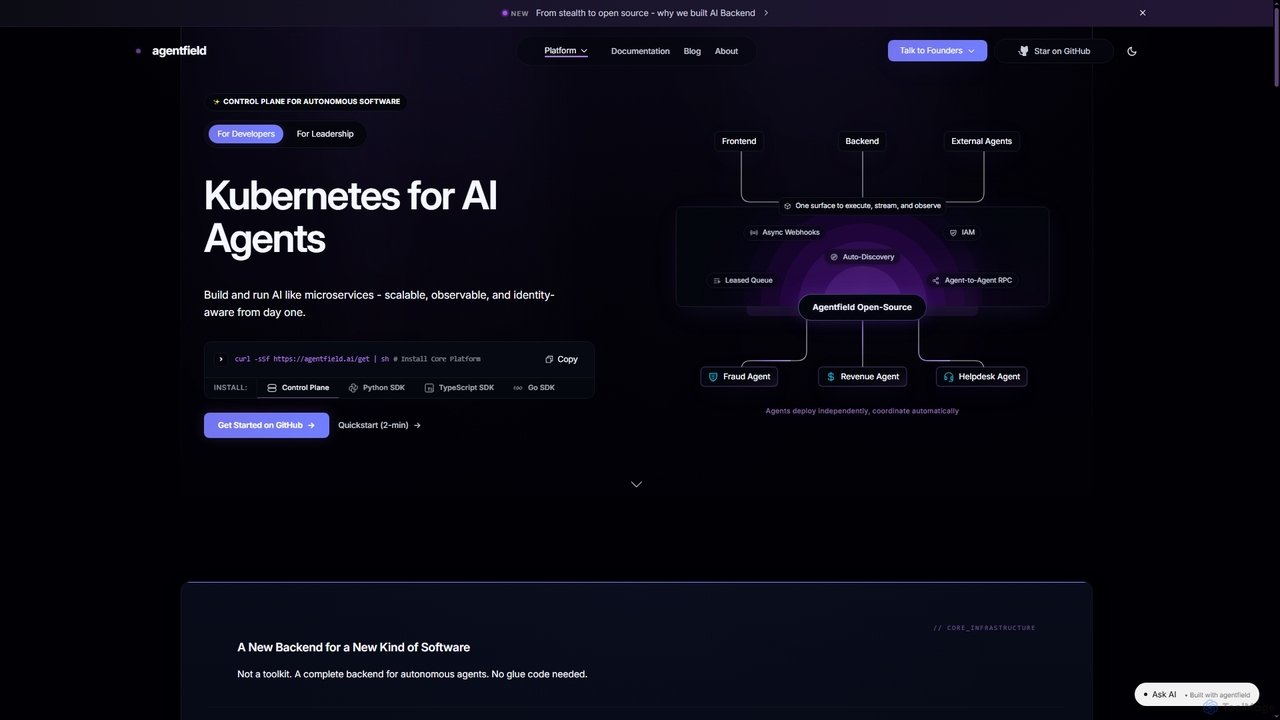
Agentfield is an open-source control plane designed for building and running autonomous AI agents as scalable, observable, and identity-aware microservices. It provides Kubernetes-like orchestration, cryptographic identity management, and production-ready infrastructure to bridge the gap between AI prototypes and robust, trustworthy production deployments.

Orchestration
Visits 23.6KFavorites 61Likes 67
MACH-AI
Freemium

MACH-AI

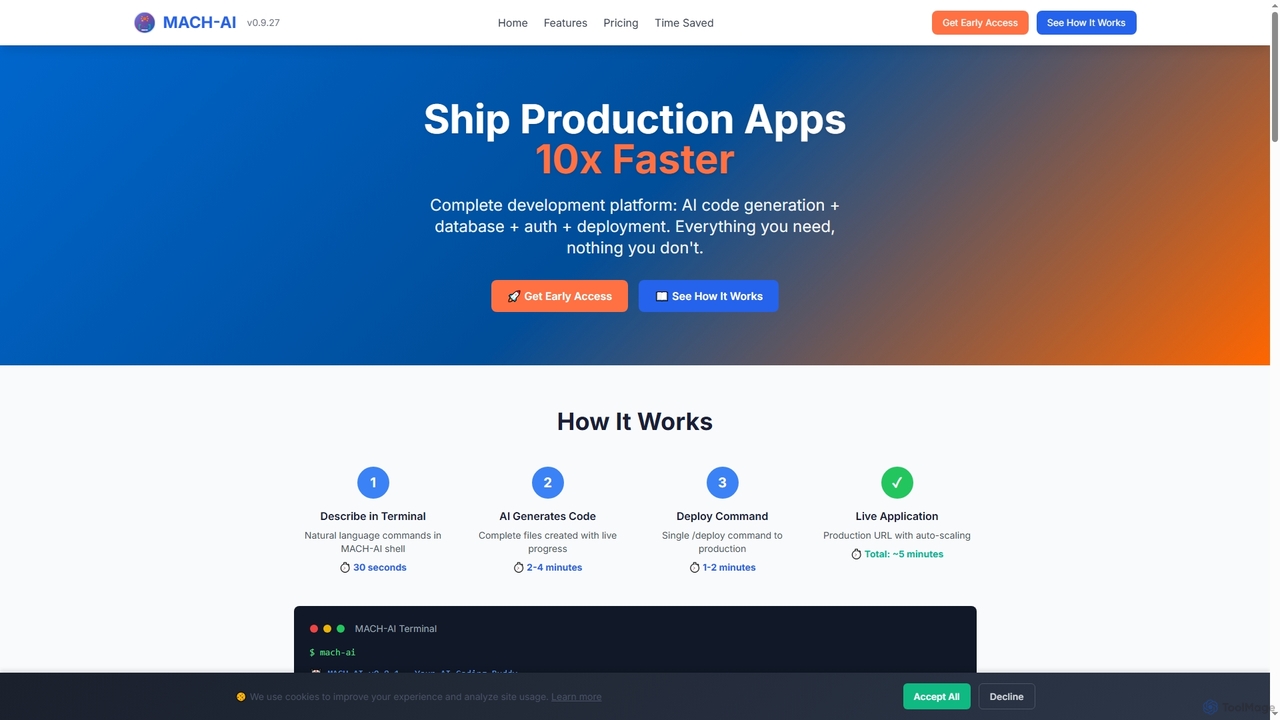
MACH-AI is an AI coding assistant and complete development platform that transforms concepts into production-ready cloud applications in minutes. It integrates AI code generation, built-in database, authentication, and one-command deployment, enabling developers to build and launch scalable web applications 10x faster across Python, JavaScript, and TypeScript.

Application Deployment
Visits 5.8KFavorites 37Likes 35
Vectra

Vectra

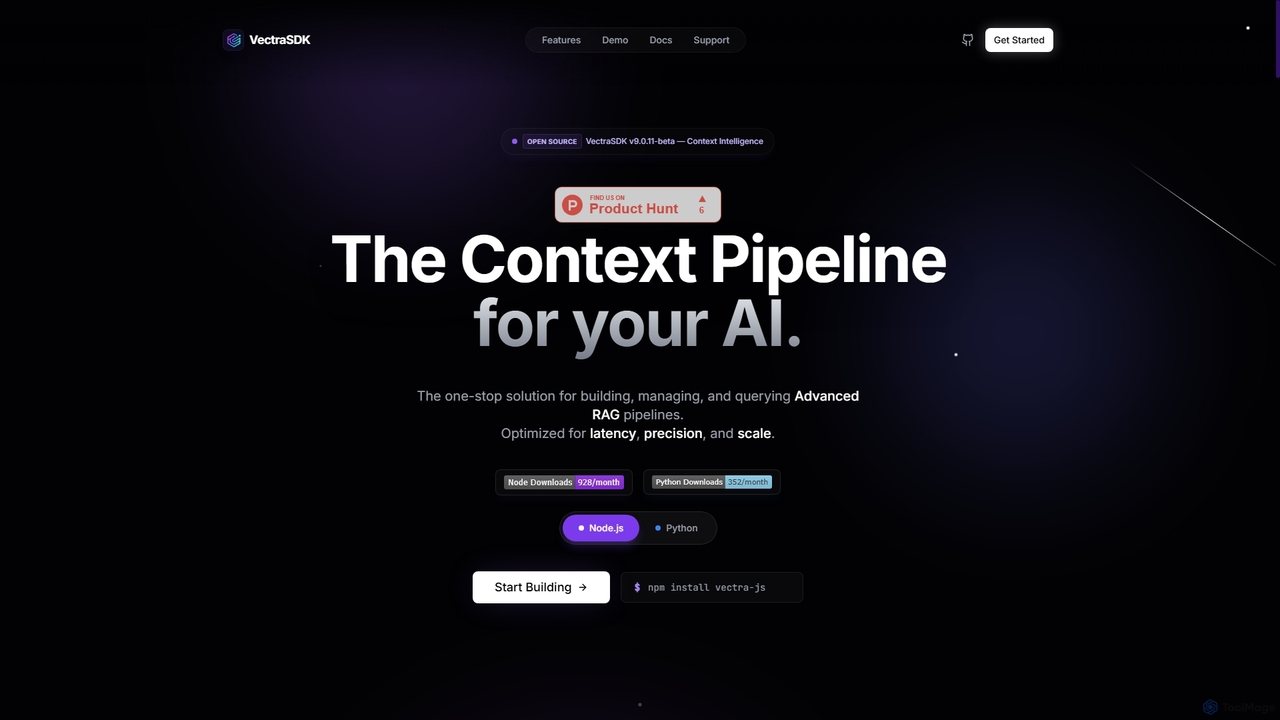
Vectra is an open-source, production-grade SDK for Node.js and Python, designed to build, manage, and query advanced Retrieval-Augmented Generation (RAG) pipelines. It offers a comprehensive toolkit for developing context-aware AI applications, optimized for low latency, high precision, and scalability.

Rag Pipelines
Visits 4.5KFavorites 34Likes 33
Mcpwhiz
Free

Mcpwhiz

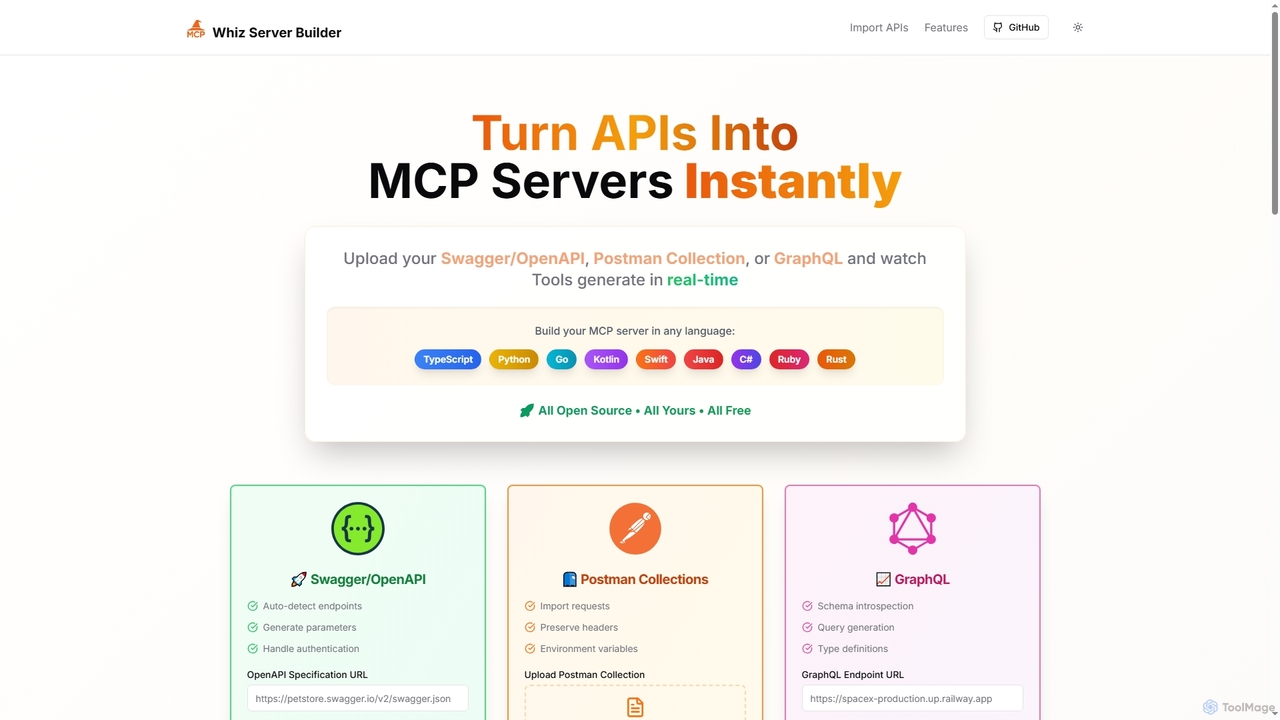
Mcpwhiz is a free, open-source developer tool that instantly converts API specifications like Swagger/OpenAPI, Postman Collections, and GraphQL into production-ready Model Context Protocol (MCP) servers. It automates code generation in multiple languages, including TypeScript and Python, allowing developers to build context-aware applications with ease.

Server Management
Visits 4.6KFavorites 93Likes 119
AI SDK
Free

AI SDK

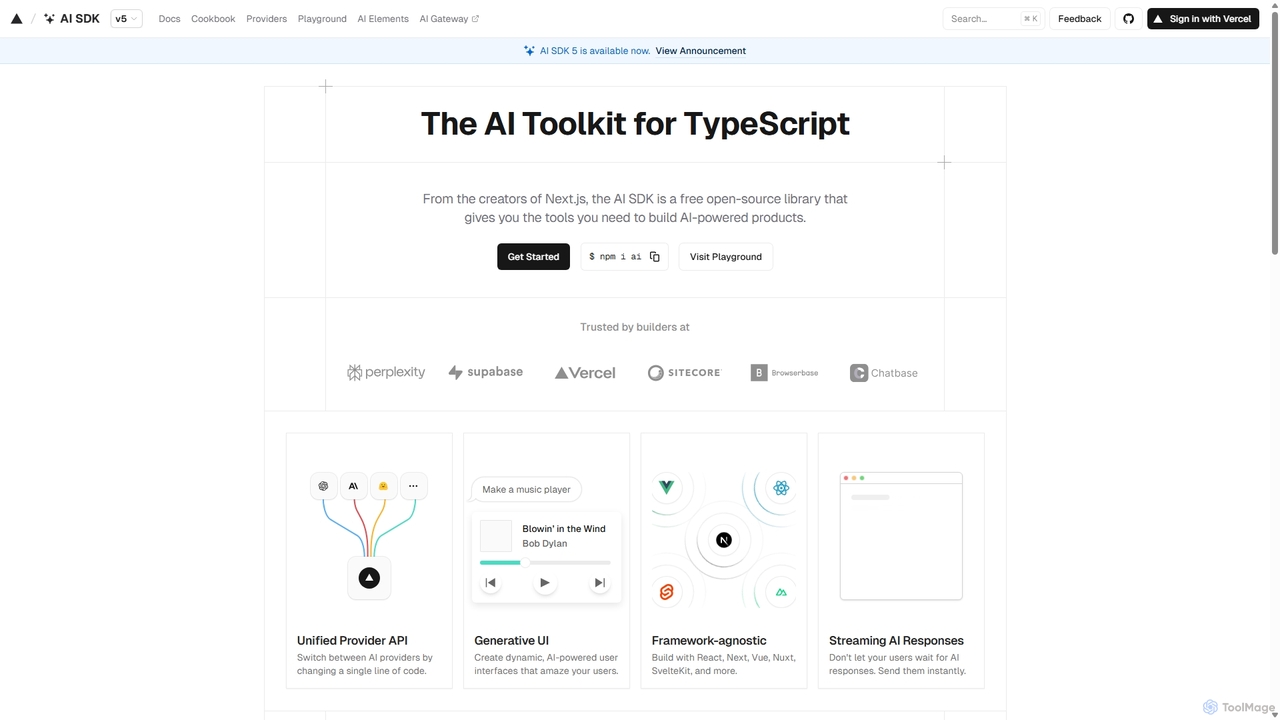
AI SDK by Vercel is a free, open-source TypeScript toolkit designed to help developers build AI-powered applications. It provides a unified API to seamlessly integrate with various large language models like OpenAI, Anthropic, and Google Gemini. The SDK is framework-agnostic, supporting React, Next.js, Vue, Svelte, and more, enabling the creation of features like streaming responses and generative UIs with minimal effort.

Model Integration
Visits 4.6KFavorites 118Likes 123
Helicone
Freemium

Helicone

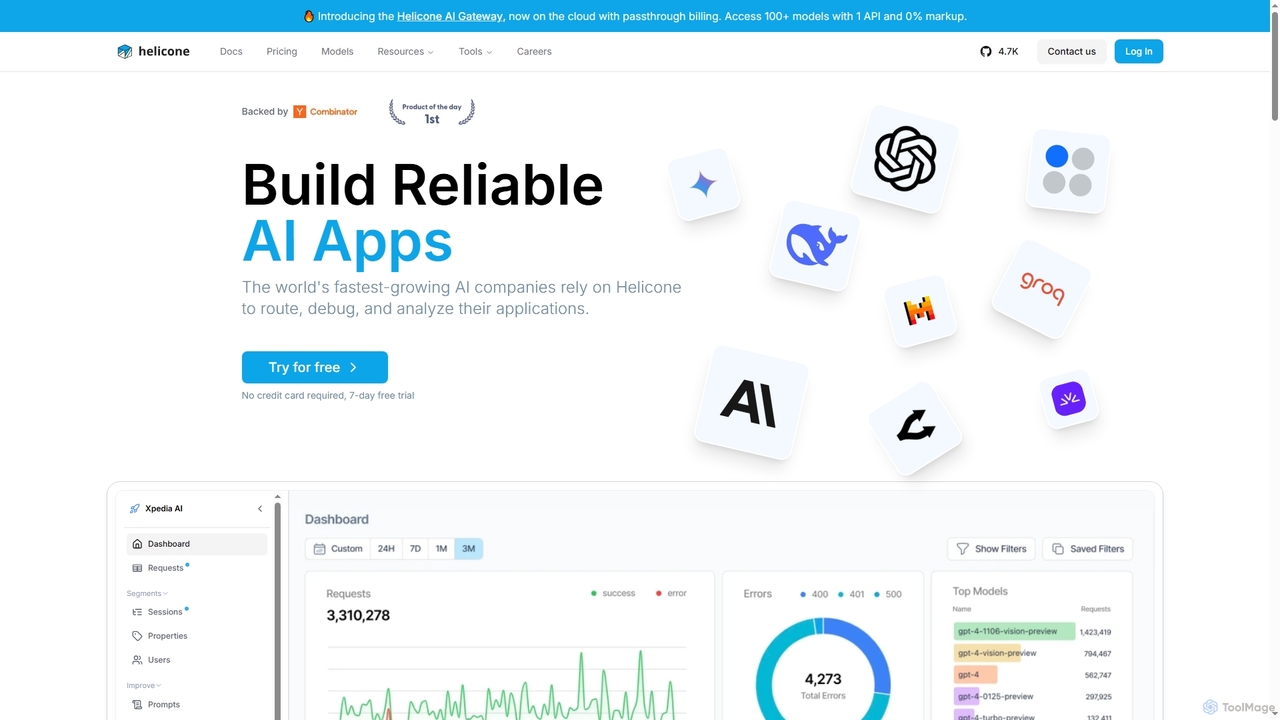
Helicone is an open-source platform offering an AI Gateway and LLM Observability for developers. It helps build reliable AI applications by providing tools to route, monitor, debug, and analyze LLM usage. Key features include a unified API for 100+ models, intelligent caching, rate limiting, prompt management, and detailed performance analytics.

Api Management
Visits 104.8KFavorites 123Likes 114
Skald
Freemium

Skald

Skald is an open-source RAG API designed for developers to quickly build AI agents without the complexity of managing RAG infrastructure. It simplifies knowledge storage, context management, and semantic search, offering a powerful solution for integrating long-term memory into AI applications.

Rag
Visits 4.5KFavorites 101Likes 132
LLMRTC

LLMRTC

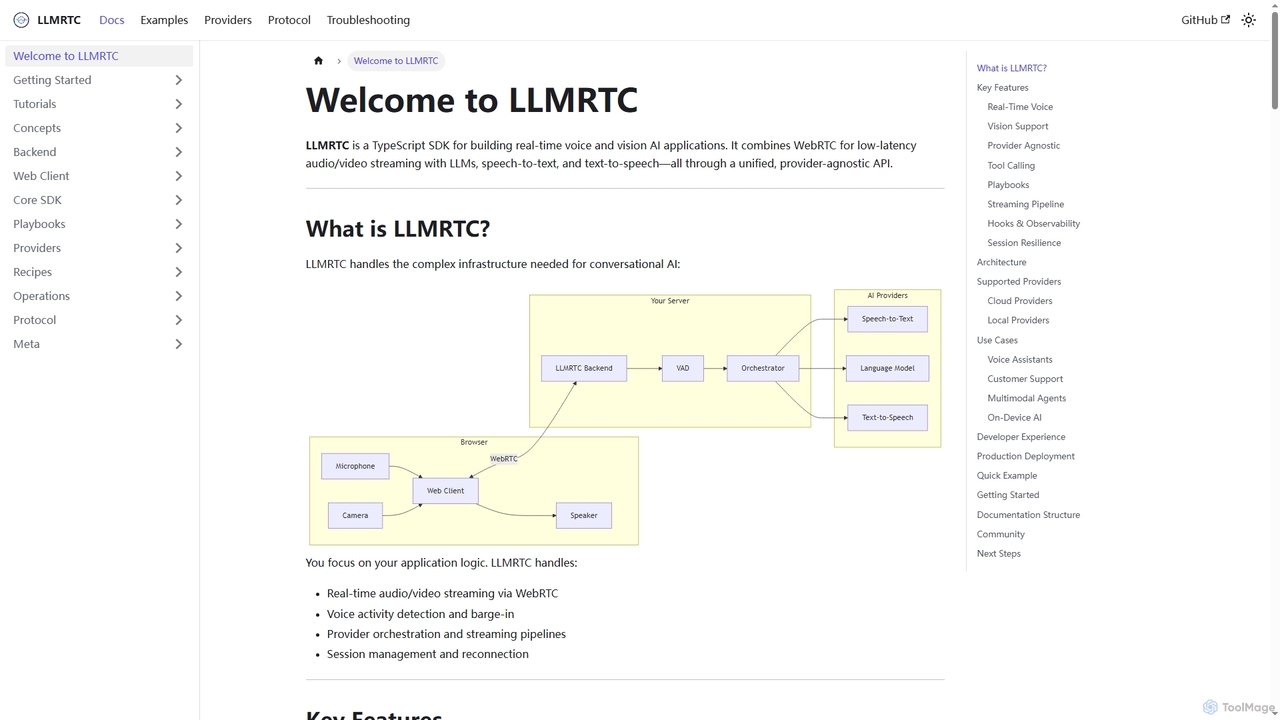
LLMRTC is a TypeScript SDK for building real-time voice and vision AI applications. It integrates WebRTC for low-latency audio/video streaming with LLMs, speech-to-text, and text-to-speech technologies through a unified, provider-agnostic API. Developers can focus on application logic while LLMRTC handles complex conversational AI infrastructure.

Conversational Ai
Visits 4.5KFavorites 26Likes 23
Apistack
Freemium

Apistack

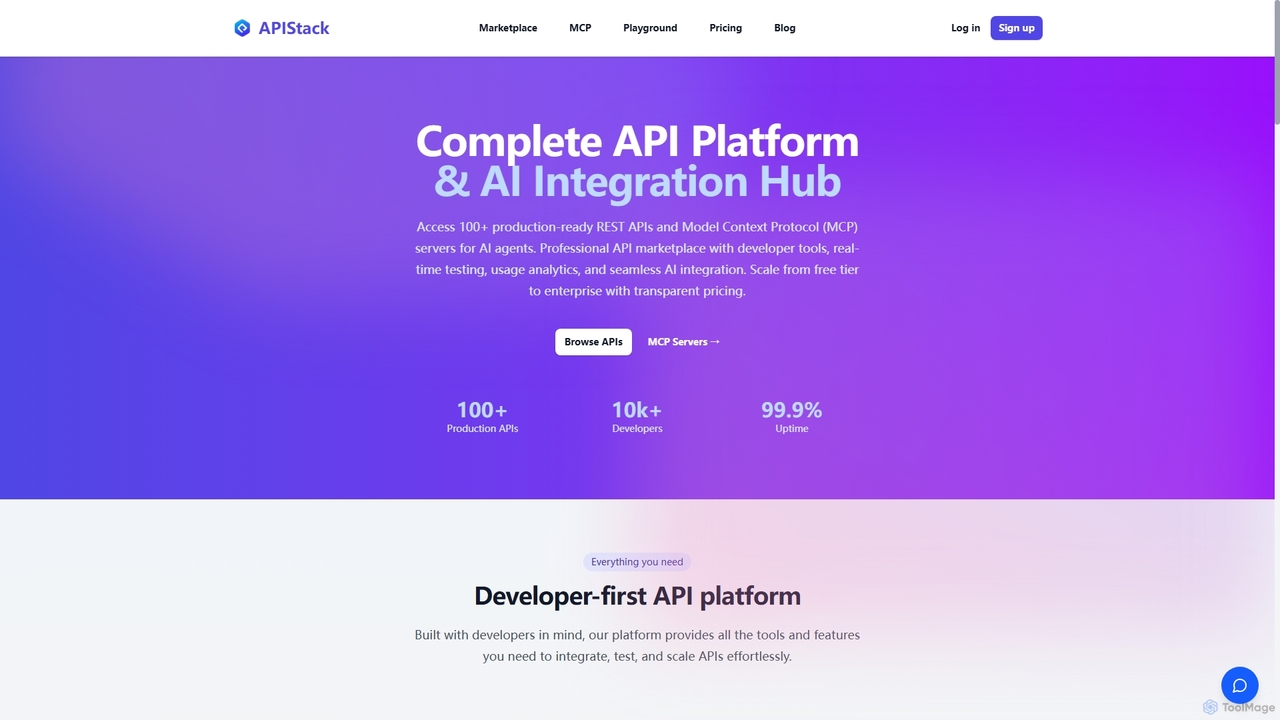
Apistack is an enterprise API marketplace and AI integration hub, offering over 100 production-ready REST APIs. It features a developer-first platform with tools for real-time testing, usage analytics, and seamless integration with AI agents like ChatGPT and Claude via Model Context Protocol (MCP) servers.

Integration
Visits 4.5KFavorites 115Likes 102
Autofix
Freemium

Autofix

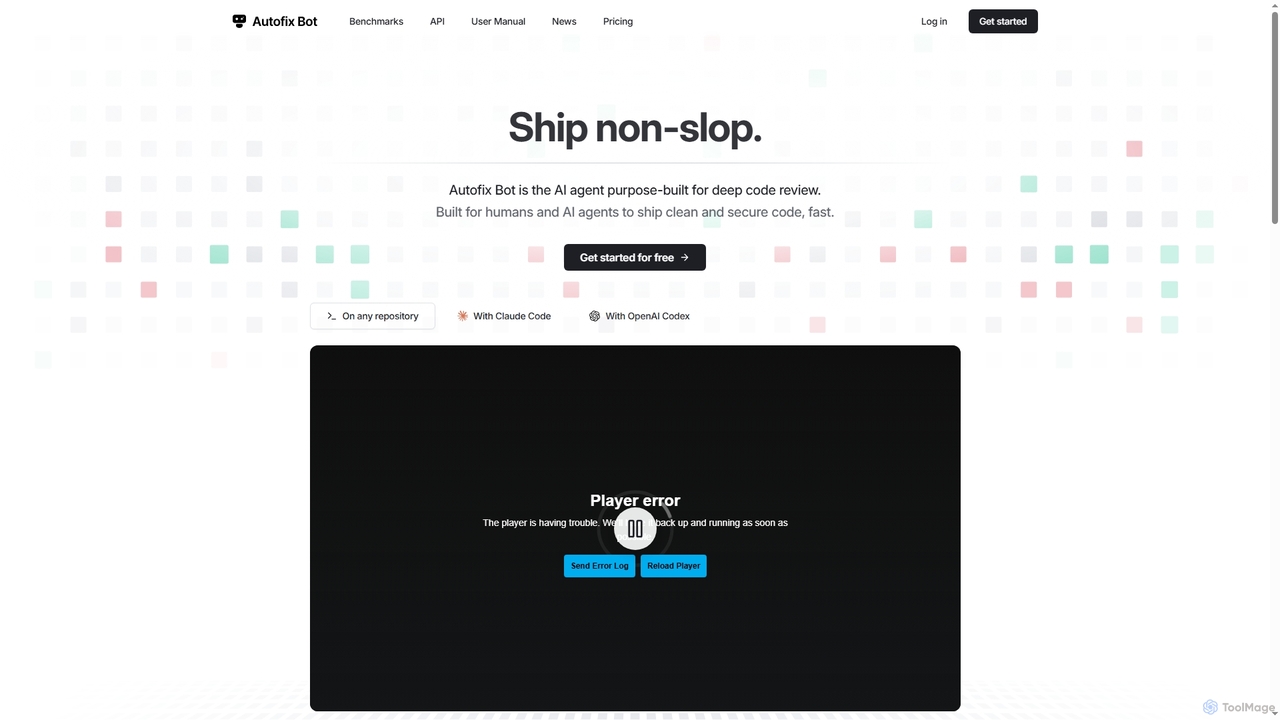
Autofix is an AI agent purpose-built for deep code review, identifying security vulnerabilities, hardcoded secrets, and code quality issues. It generates verified patches to help development teams ship clean and secure code faster.

Static Analysis
Visits 4.6KFavorites 56Likes 64
ConnectOnion
Free

ConnectOnion

ConnectOnion is a minimalist Python framework designed to build production-ready AI agents with significantly less code. It simplifies agent creation by combining Markdown prompts and Python functions, reducing boilerplate by up to 85% compared to other frameworks.

Libraries
Visits 4.5KFavorites 112Likes 121
PandasAI
Freemium

PandasAI

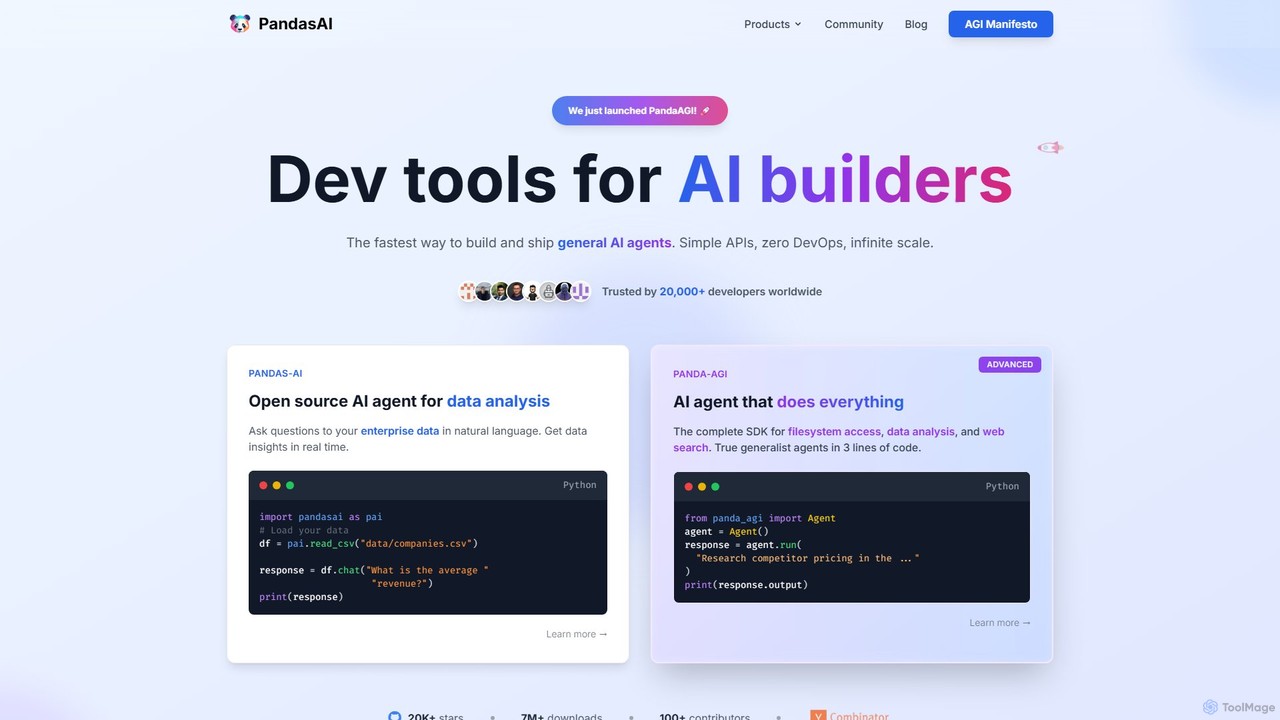
PandasAI offers a suite of developer tools for building AI applications. It features an open-source library for conversational data analysis using natural language and PandaAGI, an advanced SDK for creating generalist AI agents that can perform complex tasks like web searches and filesystem access.

Data Analysis
Visits 30.1KFavorites 158Likes 155
CrewAI
Free

CrewAI

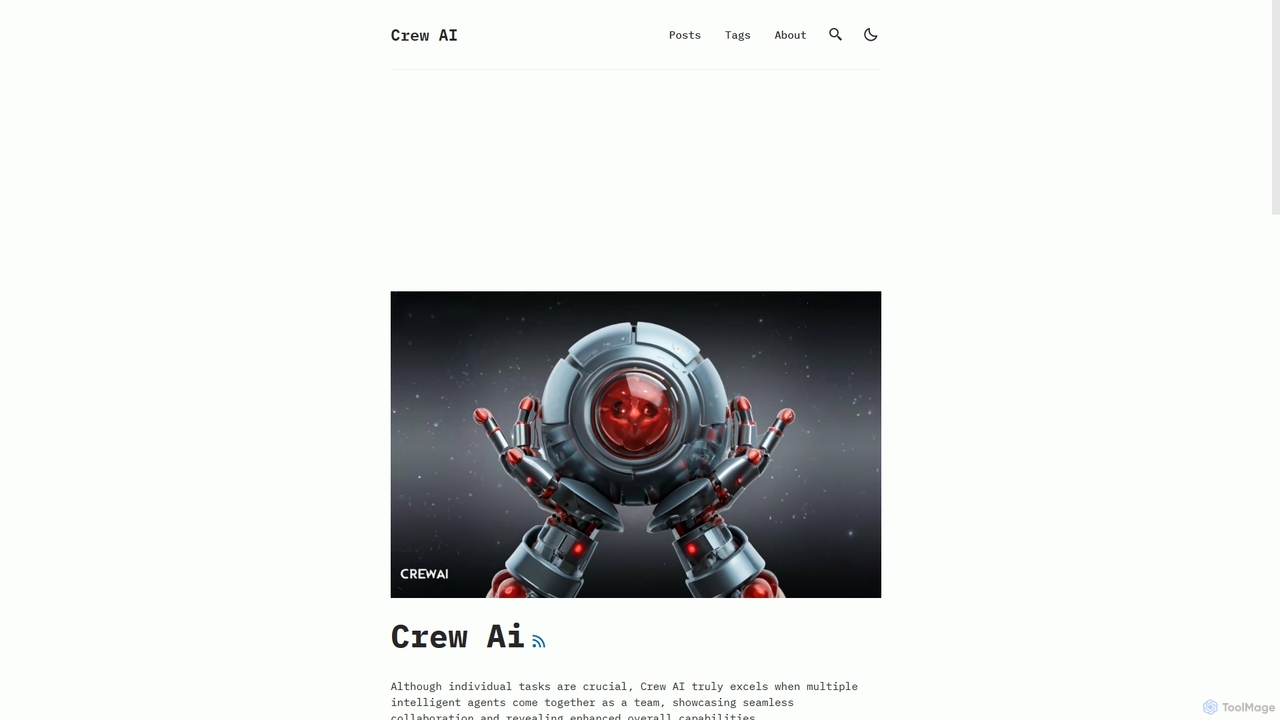
CrewAI is an advanced open-source framework for orchestrating role-playing, autonomous AI agents. By fostering collaborative intelligence, it enables agents with distinct roles and tools to work together seamlessly to solve complex tasks. This multi-agent system simplifies the development of sophisticated applications, from automated content creation to complex data analysis, by managing agent interactions, task delegation, and workflow processes.

Agent
Visits 7.4KFavorites 100Likes 94
Unify
Freemium

Unify

Unify is a developer-centric LLMOps platform designed to simplify building, monitoring, and optimizing AI applications. It provides a universal API and a hackable framework for logging, evaluation, tracing, and managing AI agents, enabling developers to create custom workflows and interfaces with ease.

Llmops
Visits 16KFavorites 123Likes 123
XMOX
Paid

XMOX

XMOX is a leading managed AI agents platform that provides enterprise-grade infrastructure and services for deploying, scaling, and managing intelligent agents. It eliminates operational complexity, allowing businesses to harness the power of multi-modal AI agents—including language, code, and voice—with advanced RAG integration, zero-touch operations, and intelligent auto-scaling.

Platform As A Service
Visits 4.5KFavorites 111Likes 92