ToolMage
Sign in
OpenLIT
Model Management · 9.1K monthly visits

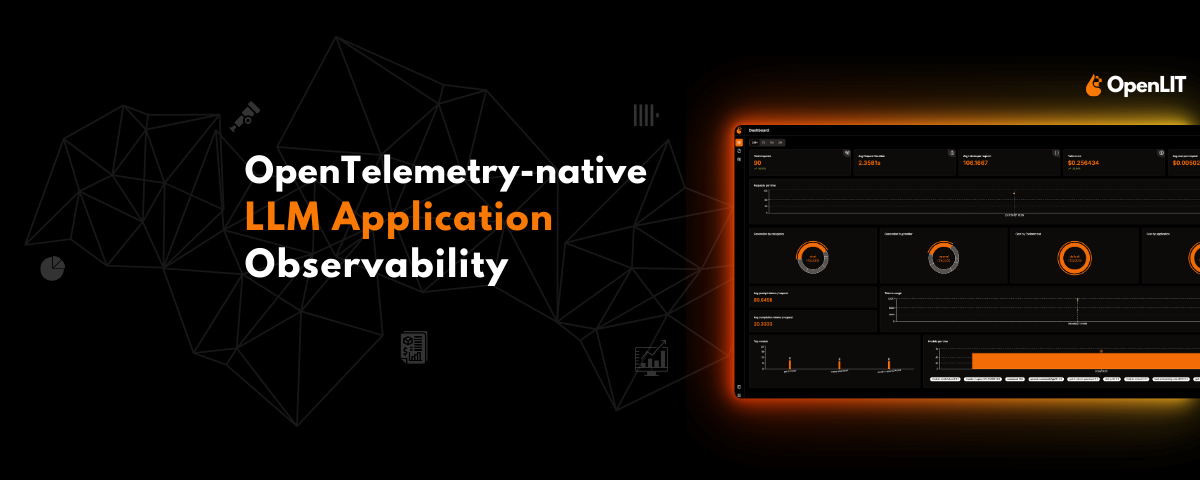
OpenLIT is an open-source, OpenTelemetry-native observability platform for Generative AI and LLM applications. It simplifies development with tools for request tracing, cost tracking, exception monitoring, and performance analysis. Featuring a centralized prompt repository, a secure vault for secrets, and a playground for comparing LLMs, OpenLIT provides a comprehensive solution for monitoring and scaling AI applications efficiently.

VS
Pydantic
Debugging & Testing · 535K monthly visits

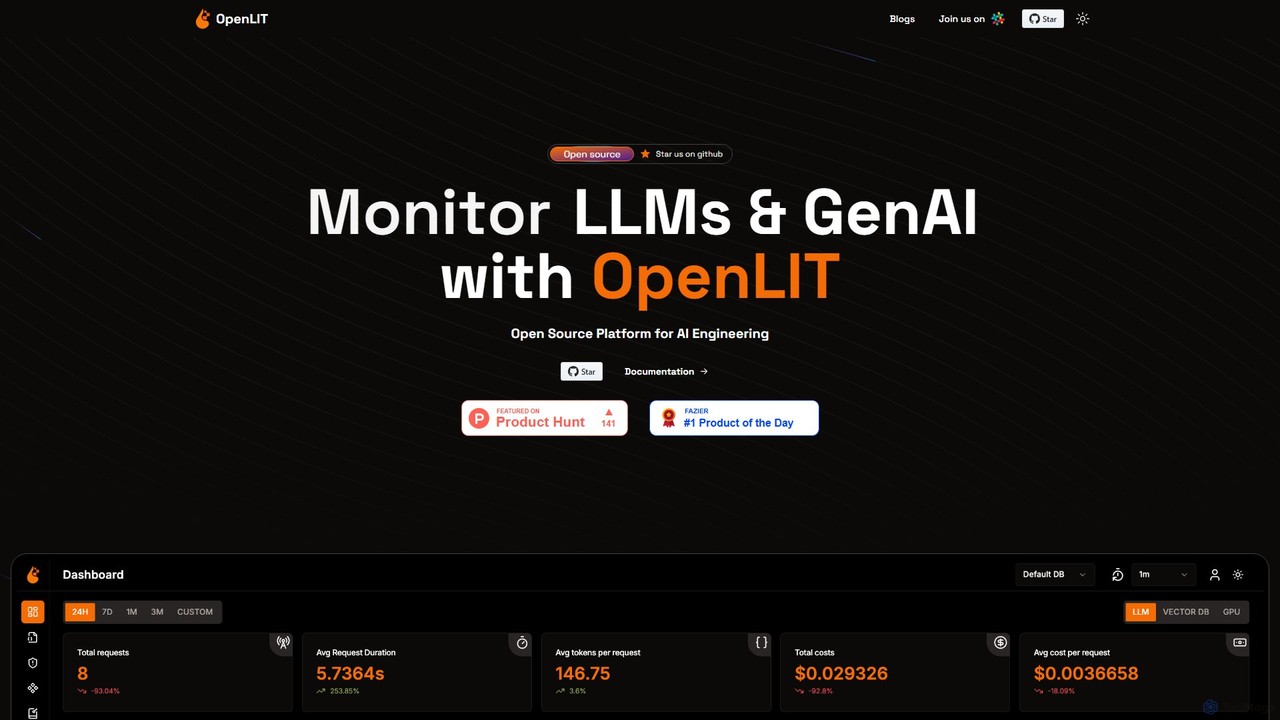
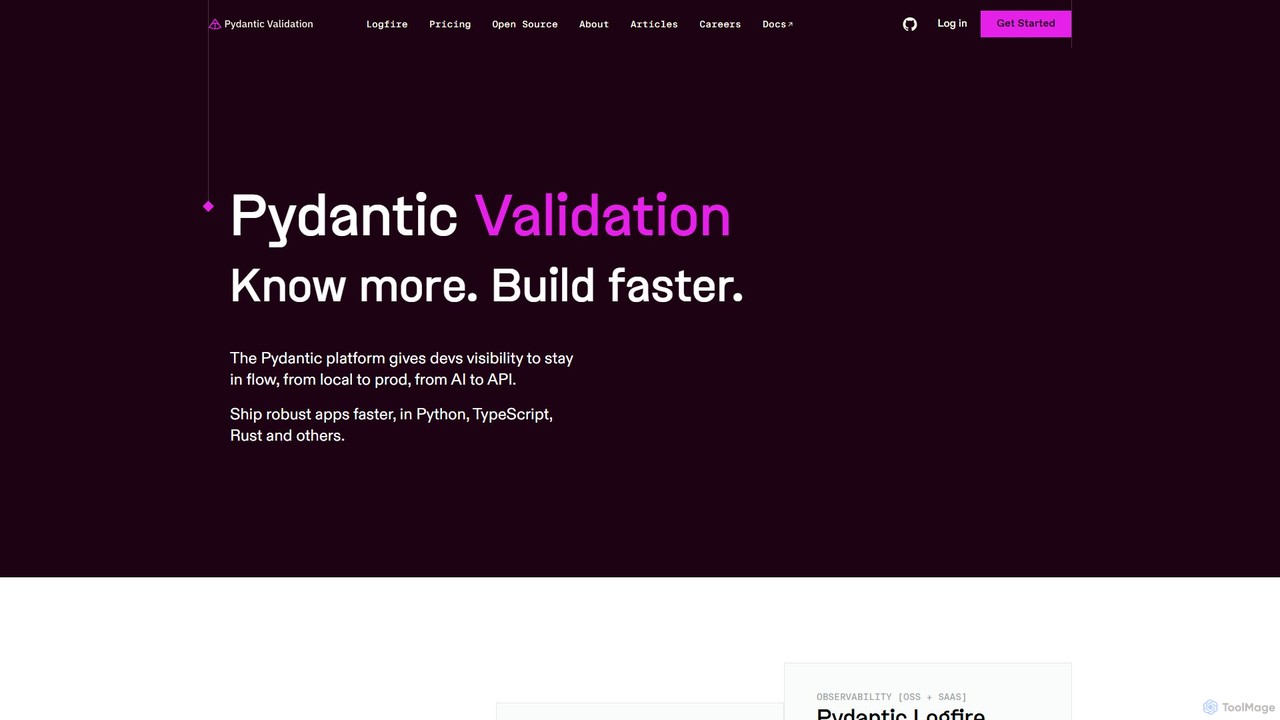
Pydantic is a comprehensive platform for developers, offering powerful data validation, AI development tools, and a full-stack observability solution. It enables faster, more robust application development in Python and other languages by leveraging type hints for runtime data validation and providing deep insights from local development to production.

OpenLIT vs Pydantic: pricing, features, traffic, and use cases

Compare OpenLIT and Pydantic across positioning, pricing, traffic, and user feedback using structured factual data.

Updated Aug 20, 2026

Product overview

OpenLIT Product overview

OpenLIT is an open-source, OpenTelemetry-native observability platform for Generative AI and LLM applications. It simplifies development with tools for request tracing, cost tracking, exception monitoring, and performance analysis. Featuring a centralized prompt repository, a secure vault for secrets, and a playground for comparing LLMs, OpenLIT provides a comprehensive solution for monitoring and scaling AI applications efficiently.
Preview

Pydantic Product overview

Pydantic is a comprehensive platform for developers, offering powerful data validation, AI development tools, and a full-stack observability solution. It enables faster, more robust application development in Python and other languages by leveraging type hints for runtime data validation and providing deep insights from local development to production.

Preview

Detailed feature comparison

FeatureOpenLITPydantic
Primary categoryModel ManagementDebugging & Testing
Added2025-08-112025-08-15
PricingFreeFreemium
Official websiteopenlit.iopydantic.dev
Product typeWebsiteWebsite
Performance data
User ratingNot verifiedNot verified
Comments00
Monthly visits9.1K535K
Monthly growth2.8%-0.5%
Favorites106113
DetailsView detailsView details

OpenLIT vs Pydantic monthly traffic

Compare OpenLIT and Pydantic by monthly reach, traffic trend, visit depth, top regions, and acquisition sources.

How to interpret the traffic data

In the OpenLIT vs Pydantic monthly traffic comparison, OpenLIT currently shows 9.1K visits and Pydantic shows 535K; Pydantic has about 58.6 times the visible traffic of OpenLIT, an absolute difference of about 525.8K visits. This reflects visible reach, not feature quality or paid users.

Both tools provide verified traffic details, so monthly trends, visit depth, regions, and acquisition sources can be compared on the same basis.

OpenLIT monthly traffic:

Latest traffic

Monthly visits
9.1K
Avg. visit duration
0:12
Pages per visit
1.74
Bounce rate
38.4%
Data updated 2026-06-15

Monthly traffic trend

  • 2025/9: 13.2K Monthly visits
  • 2026/1: 11.3K Monthly visits
  • 2026/2: 5.8K Monthly visits
  • 2026/3: 6.9K Monthly visits
  • 2026/4: 8.9K Monthly visits
  • 2026/5: 9.1K Monthly visits

Top regions

Top 5 countries/regions
Country/regionPercentageTraffic
🇺🇸United States38.46%3.5K
🇷🇺Russia26.22%2.4K
🇮🇳India15.79%1.4K
🇵🇱Poland11.87%1.1K
🇩🇪Germany7.66%699

Search keywords

aman aggarwal openlitcrewai toolsollama opelitopenlitopenlit.gr

Pydantic monthly traffic:

Latest traffic

Monthly visits
535K
Avg. visit duration
3:42
Pages per visit
3.39
Bounce rate
44.12%
Data updated 2026-06-15

Monthly traffic trend

  • 2025/9: 686K Monthly visits
  • 2026/1: 670.4K Monthly visits
  • 2026/2: 699.1K Monthly visits
  • 2026/3: 727.8K Monthly visits
  • 2026/4: 537.6K Monthly visits
  • 2026/5: 535K Monthly visits

Top regions

Top 5 countries/regions
Country/regionPercentageTraffic
🇺🇸United States49.52%264.9K
🇮🇳India15.84%84.7K
🇬🇧United Kingdom13.1%70.1K
🇨🇳China12.38%66.2K
🇨🇦Canada9.16%49K

Traffic sources

Source typePercentageTraffic
Direct81.08%433.7K
Referral18.15%97.1K
Email0.77%4.1K

Search keywords

logfirepydanticpydantic aipydanticaipydantic settings
Traffic-based selection guidance: If public market visibility is an important first-pass criterion, investigate Pydantic first. The final choice should still follow taxonomy, use case, and a real trial because higher traffic does not prove broader capabilities or better workflow fit.

Usage comparison

Compare the core capabilities of OpenLIT and Pydantic

OpenLIT Core features

Development
Model Management
Observability

Pydantic Core features

Development
Debugging & Testing
Libraries & Frameworks

Use cases

OpenLIT Use cases

developer tools
llm
monitoring
observability
open source
api management
cost tracking
generative AI
OpenTelemetry
prompt management
self-hosted

Pydantic Use cases

developer tools
llm
monitoring
observability
open source
AI development
data validation
debugging
fastapi
python

OpenLIT vs Pydantic:In-depth comparison and selection guidance

First decide whether the products solve the same kind of need

This in-depth OpenLIT vs Pydantic comparison uses only the product records, taxonomy, audience, traffic, and community signals available on this page. OpenLIT is primarily listed under “Model Management”, while Pydantic is primarily listed under “Debugging & Testing”, so the first decision is whether your actual task matches their recorded scope.

The structured fields currently show these decision-relevant differences: Primary category (OpenLIT: Model Management; Pydantic: Debugging & Testing); Pricing (OpenLIT: Free; Pydantic: Freemium); Monthly visits (OpenLIT: 9.1K; Pydantic: 535K); Monthly growth (OpenLIT: 2.8%; Pydantic: -0.5%); Favorites (OpenLIT: 106; Pydantic: 113). These facts are more useful for selection than brand visibility alone.

What market visibility and monthly traffic mean

In the OpenLIT vs Pydantic monthly traffic comparison, OpenLIT currently shows 9.1K visits and Pydantic shows 535K; Pydantic has about 58.6 times the visible traffic of OpenLIT, an absolute difference of about 525.8K visits. This reflects visible reach, not feature quality or paid users.

Both tools provide verified traffic details, so monthly trends, visit depth, regions, and acquisition sources can be compared on the same basis.

If public market visibility is an important first-pass criterion, investigate Pydantic first. The final choice should still follow taxonomy, use case, and a real trial because higher traffic does not prove broader capabilities or better workflow fit.

Product positioning, use cases, and roles

OpenLIT and Pydantic currently overlap in shared categories: Development; shared tags: developer tools, llm, monitoring, observability, and open source. This can place both on the same shortlist, but it does not prove equal implementation, depth, or cost.

OpenLIT's unique categories/tags are Model Management, Observability, api management, cost tracking, generative AI, OpenTelemetry, prompt management, and self-hosted; Pydantic's are Debugging & Testing, Libraries & Frameworks, AI development, data validation, debugging, fastapi, and python. These unique fields are the strongest differentiators: validate the product whose recorded scope matches the task instead of following traffic alone.

What ratings, comments, and favorites can tell you

OpenLIT has no verified rating, 0 comments, 106 favorites, and 102 likes;Pydantic has no verified rating, 0 comments, 113 favorites, and 108 likes。

Neither product has enough rating or comment samples for a credible reputation ranking.

Selection guidance by actual need

When to evaluate OpenLIT first

Put OpenLIT on the priority trial list when the task aligns with “Model Management” and especially Model Management, Observability, api management, cost tracking, generative AI, and OpenTelemetry. This follows recorded positioning and does not imply unlisted capabilities are absent.

OpenLIT also currently records: pricing is free, product type is website, 9.1K verified monthly visits, no verified user rating. Verify any hard requirement around price, platform, or reach before trial, and do not let sparse review data substitute for testing.

When to evaluate Pydantic first

Put Pydantic on the priority trial list when the task aligns with “Debugging & Testing” and especially Debugging & Testing, Libraries & Frameworks, AI development, data validation, debugging, and fastapi. This follows recorded positioning and does not imply unlisted capabilities are absent.

Pydantic also currently records: pricing is freemium, product type is website, 535K verified monthly visits, no verified user rating. Verify any hard requirement around price, platform, or reach before trial, and do not let sparse review data substitute for testing.

How to validate the recommendation before deciding

The available data describes positioning, public visibility, and community signals, but it cannot prove output quality, speed, integration effort, privacy, or long-term cost in your workflow. Before deciding, run the same representative tasks in OpenLIT and Pydantic, then record completion time, accuracy, manual corrections, and the real paid threshold. A like-for-like trial turns this comparison into a defensible adoption decision.

Comparison FAQ

How should I choose between OpenLIT and Pydantic?
Compare positioning, pricing, taxonomy, and traffic maturity, then verify the latest details on each official website.
Where does this comparison data come from?
The factual baseline is derived from product, taxonomy, traffic, and community data. Reviewed editorial conclusions show their source and verification date.
What do unknown fields mean?
Unknown means there is not enough reliable evidence; the page does not fill gaps with assumptions.

Related AI tools

Helicone
Freemium

Helicone

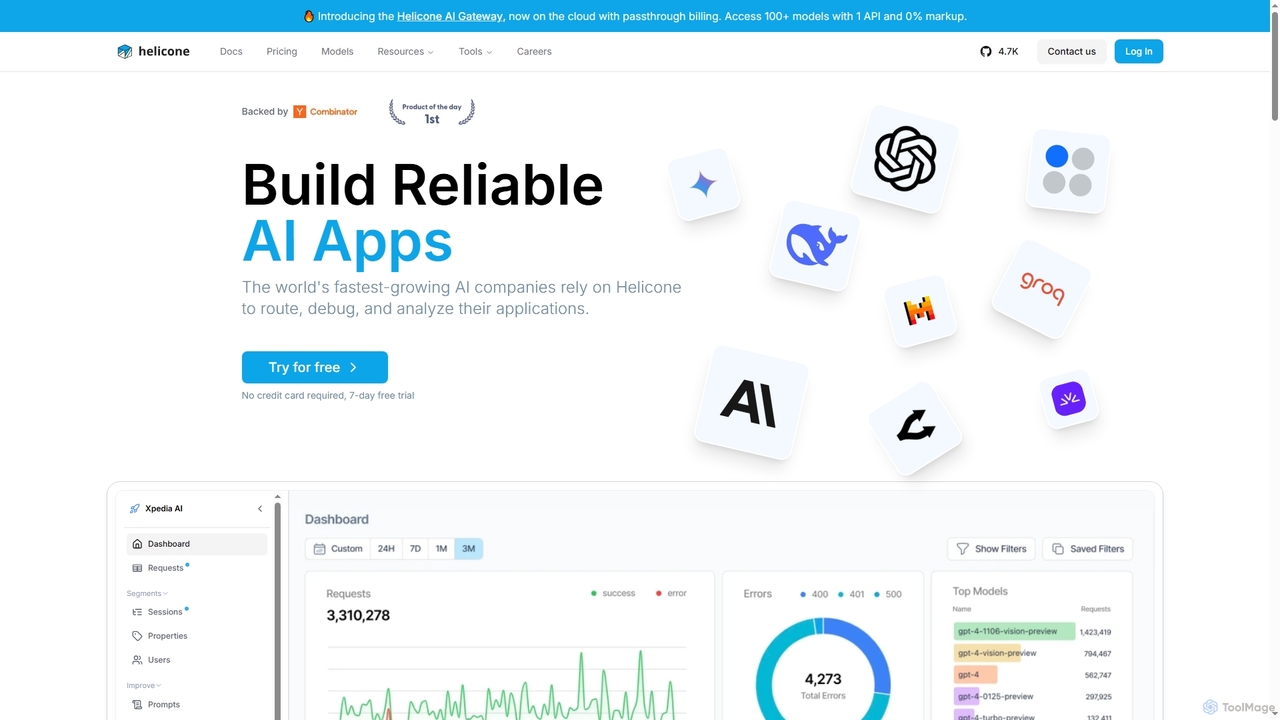
Helicone is an open-source platform offering an AI Gateway and LLM Observability for developers. It helps build reliable AI applications by providing tools to route, monitor, debug, and analyze LLM usage. Key features include a unified API for 100+ models, intelligent caching, rate limiting, prompt management, and detailed performance analytics.

Api Management
Visits 104.6KFavorites 117Likes 112
Valyr
Freemium

Valyr

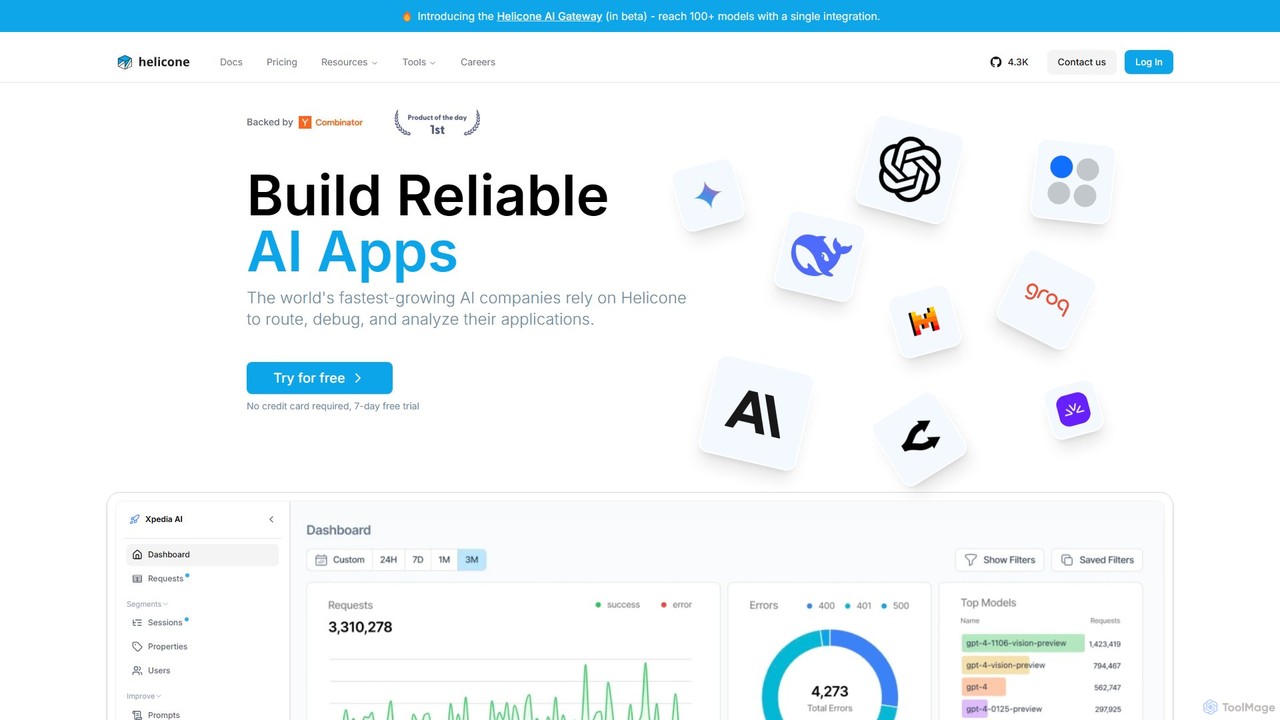
Valyr (formerly Helicone) is an open-source LLM observability platform and AI gateway. It helps developers monitor, debug, and analyze their AI applications, providing a single integration to access over 100 models, manage costs, and improve reliability with features like caching and rate limiting.

Api Management
Visits 4.3KFavorites 143Likes 143
Langfuse
Freemium

Langfuse

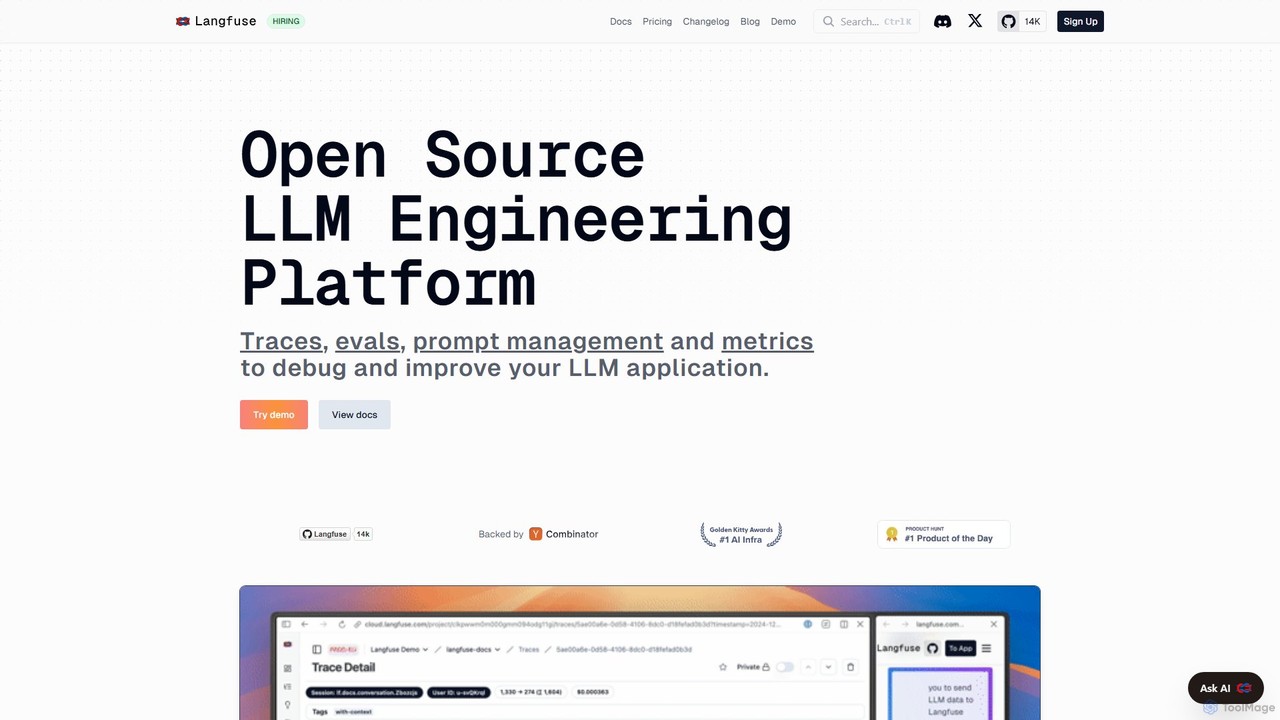
Langfuse is an open-source LLM engineering platform that provides comprehensive tools for debugging, evaluating, and improving LLM applications. It offers features like tracing, prompt management, evaluation frameworks, and metrics to streamline the entire development lifecycle for teams building with large language models.

Analytics
Visits 900KFavorites 104Likes 105
Metorial
Freemium

Metorial

Metorial is an integration platform for AI agents, enabling developers to quickly build, deploy, and monitor powerful agentic AI applications. It provides seamless connections to hundreds of tools, data sources, and APIs via its serverless Model Context Protocol (MCP) platform, offering robust SDKs, observability, and enterprise-grade security for scalable AI solutions.

Agentic Ai
Visits 12KFavorites 120Likes 124
HoneyHive
Freemium

HoneyHive

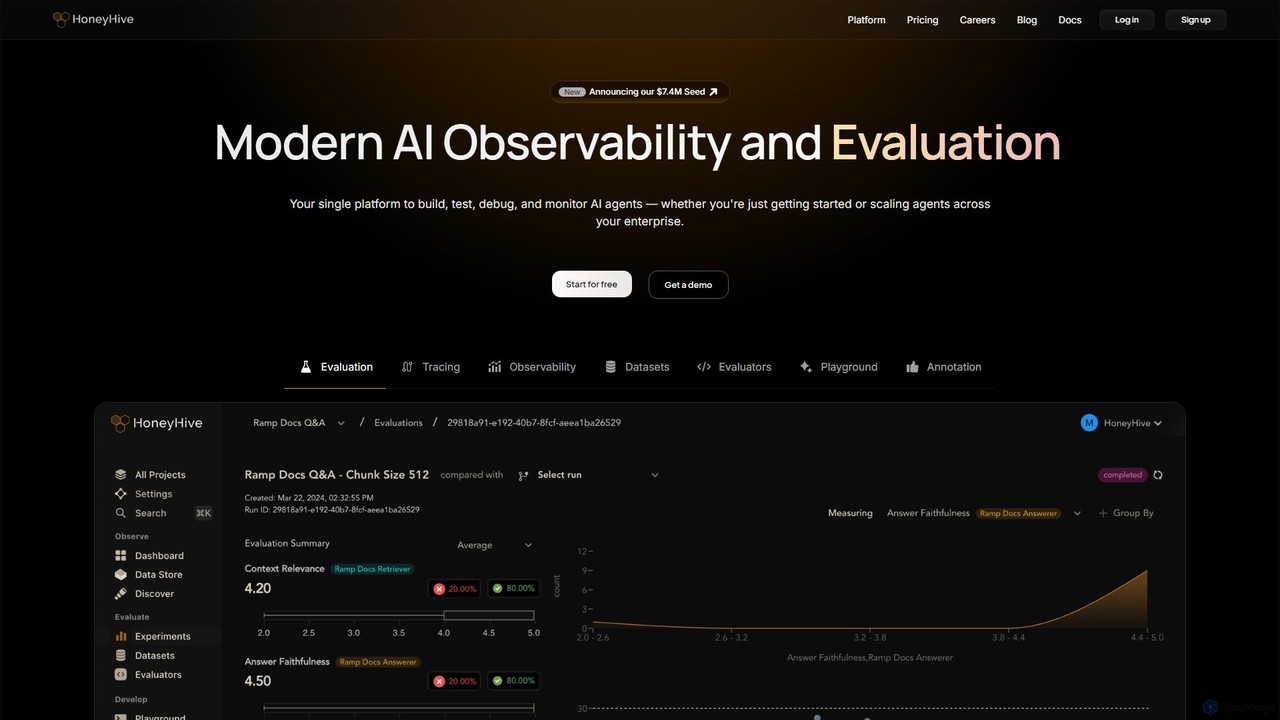
HoneyHive is an all-in-one AI observability and evaluation platform for developers building with LLMs and AI agents. It provides a unified solution to build, test, debug, and monitor AI applications, from initial experiments to enterprise-scale deployment. The platform helps teams systematically measure AI quality, gain deep visibility into agent interactions, monitor performance metrics like cost and latency, and collaborate on essential assets like prompts and datasets, ensuring the confident shipment of reliable AI products.

Debugging
Visits 29.4KFavorites 162Likes 178
Atla AI
Freemium

Atla AI

Atla AI is an observability and evaluation platform designed for AI agents. It helps developers find, understand, and fix agent failures by providing deep insights into their behavior. The platform automatically detects errors, identifies recurring patterns, and offers actionable suggestions to continuously improve agent performance and completion rates.

Model Evaluation
Visits 7.2KFavorites 102Likes 100
Braintrust
Freemium

Braintrust

Braintrust is an end-to-end platform for developing, evaluating, and deploying robust LLM applications. It provides a comprehensive suite of tools for prompt engineering, model evaluation, real-time tracing, and production monitoring. Designed for both technical and non-technical team members, Braintrust helps streamline the AI development lifecycle, ensuring that AI products are reliable, effective, and ready for production.

Evaluation & Testing
Visits 232.2KFavorites 147Likes 145
Prompt Mixer
Free

Prompt Mixer

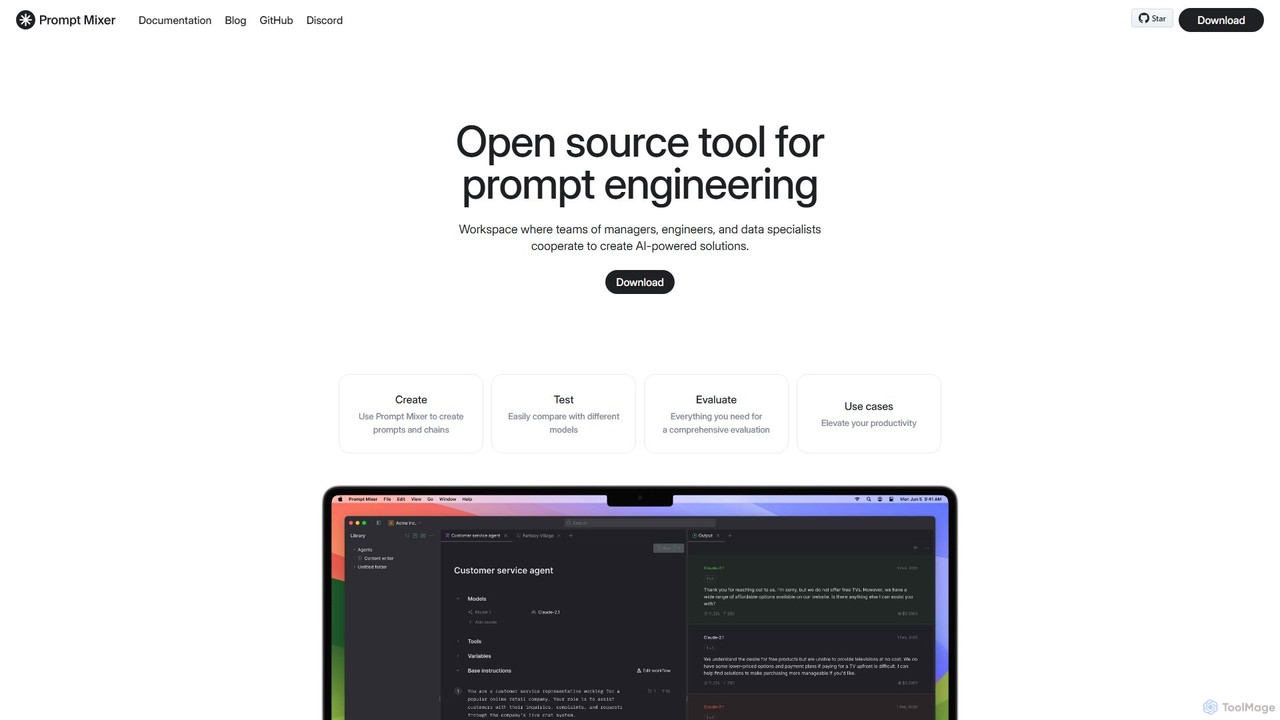
Prompt Mixer is a powerful open-source tool for prompt engineering, providing a collaborative workspace for teams. It enables users to create, test, evaluate, and deploy AI-powered solutions by managing prompt chains, comparing different LLMs, and utilizing advanced evaluation metrics.

Prompt Engineering
Visits 5KFavorites 111Likes 102
vocode
Freemium

vocode

Vocode is an open-source platform for building, deploying, and scaling hyperrealistic voice AI agents. It provides developers with a core framework and an enterprise-grade API to create sophisticated voice-based LLM applications for tasks like automated customer service, sales calls, and interactive voice response (IVR) systems.

Voicebot
Visits 636.1MFavorites 127Likes 144
LangChain
Freemium

LangChain

LangChain is a comprehensive framework and developer platform for building, deploying, and managing production-grade LLM applications. It provides a full suite of tools, including LangChain framework, LangGraph for agent orchestration, and LangSmith for observability, enabling developers to create sophisticated, reliable, and scalable AI agents.

Llm Ops
Visits 3.1MFavorites 116Likes 102
AI SDK
Free

AI SDK

AI SDK by Vercel is a free, open-source TypeScript toolkit for building AI-powered applications. It provides a unified API to seamlessly integrate various large language models (LLMs) like OpenAI, Google, and Anthropic. It simplifies development with features like streaming responses, generative UI components, and tool calling, enabling developers to build and ship AI features faster across frameworks like Next.js, React, and Svelte.

Library
Visits 597.5KFavorites 92Likes 101
phidata
Free

phidata

phidata is an open-source Python framework for building autonomous AI Assistants. It simplifies the integration of LLMs with memory, knowledge bases, and external tools, enabling developers to create powerful, stateful AI applications with ease.

Frameworks
Visits 176.8KFavorites 84Likes 88
Blaxel
Freemium

Blaxel

Blaxel is a serverless computing platform designed for AI developers, providing the infrastructure and tools to build, deploy, and scale agentic AI applications efficiently. It offers sandboxed VMs, a unified LLM gateway, and deep observability.
Cloud Computing
Visits 65.1KFavorites 118Likes 112
Chainlit
Freemium

Chainlit

Chainlit is an open-source Python framework for developers to rapidly build and deploy production-ready conversational AI applications. It provides an instant, customizable chat interface, allowing you to focus on your backend logic and LLM interactions. With deep integrations for LangChain, LlamaIndex, and major LLM providers, Chainlit simplifies the creation of everything from simple chatbots to complex, data-driven copilots.

Framework
Visits 57KFavorites 108Likes 116
Higress.AI
Freemium

Higress.AI

Higress.AI is an advanced, open-source AI Gateway designed for developers and enterprises. It simplifies the integration and management of Large Language Models (LLMs) and AI Agents by providing a unified API proxy for over 100 models. Key features include REST to MCP conversion, semantic caching, token-based rate limiting, and a robust plugin system, enabling secure, scalable, and observable AI application infrastructure.

Model Deployment
Visits 33.1KFavorites 90Likes 98