ToolMage
Sign in

Best 32 Ai Agent AI tools

Popular Ai Agent AI tools include Manus 1.5, Emergent, Warp, Taskade, Mastra, Cognition, Reflex, Simular, Lingma, and Arcade, helping you work more efficiently.

Lingma
Freemium

Lingma

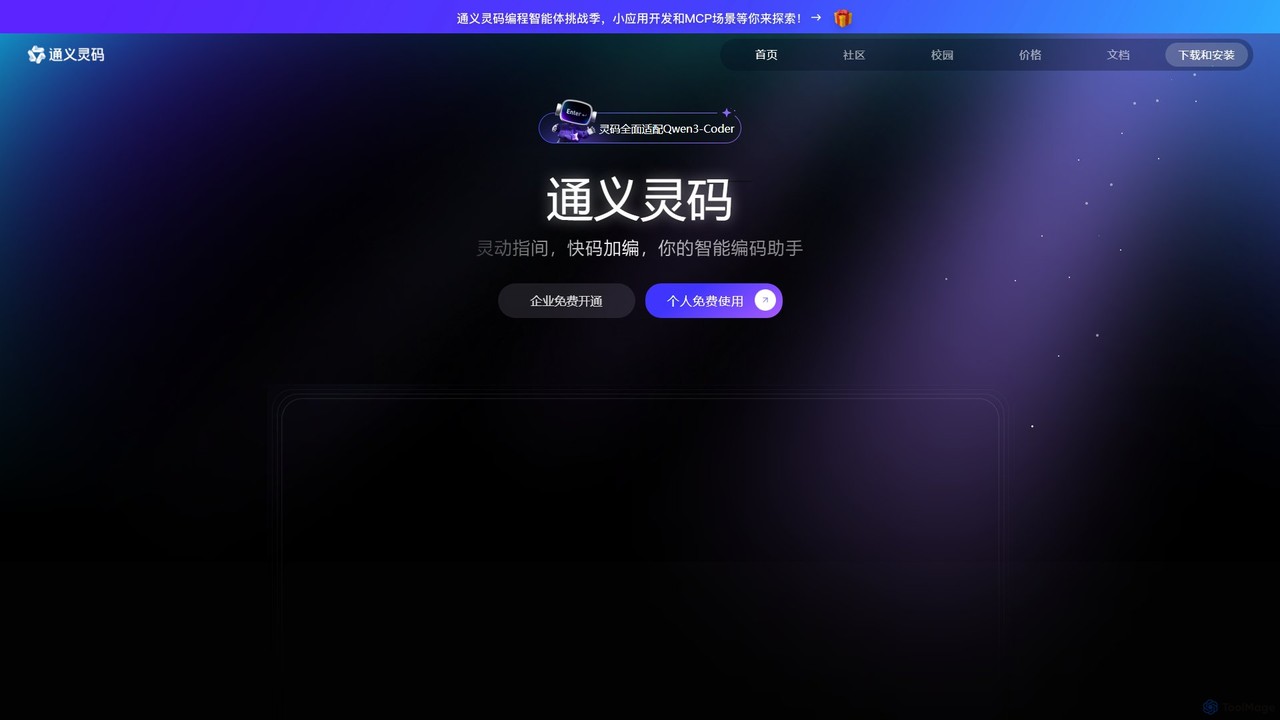
Lingma is an AI-powered coding assistant from Alibaba Cloud, designed to enhance developer productivity. It offers intelligent code generation, real-time completion, code explanation, error diagnosis, and an autonomous programming agent that can handle complex coding tasks across multiple files. It supports over 200 languages and integrates seamlessly with major IDEs.

Programming
Visits 159.9KFavorites 170Likes 150
Mastra
Freemium

Mastra

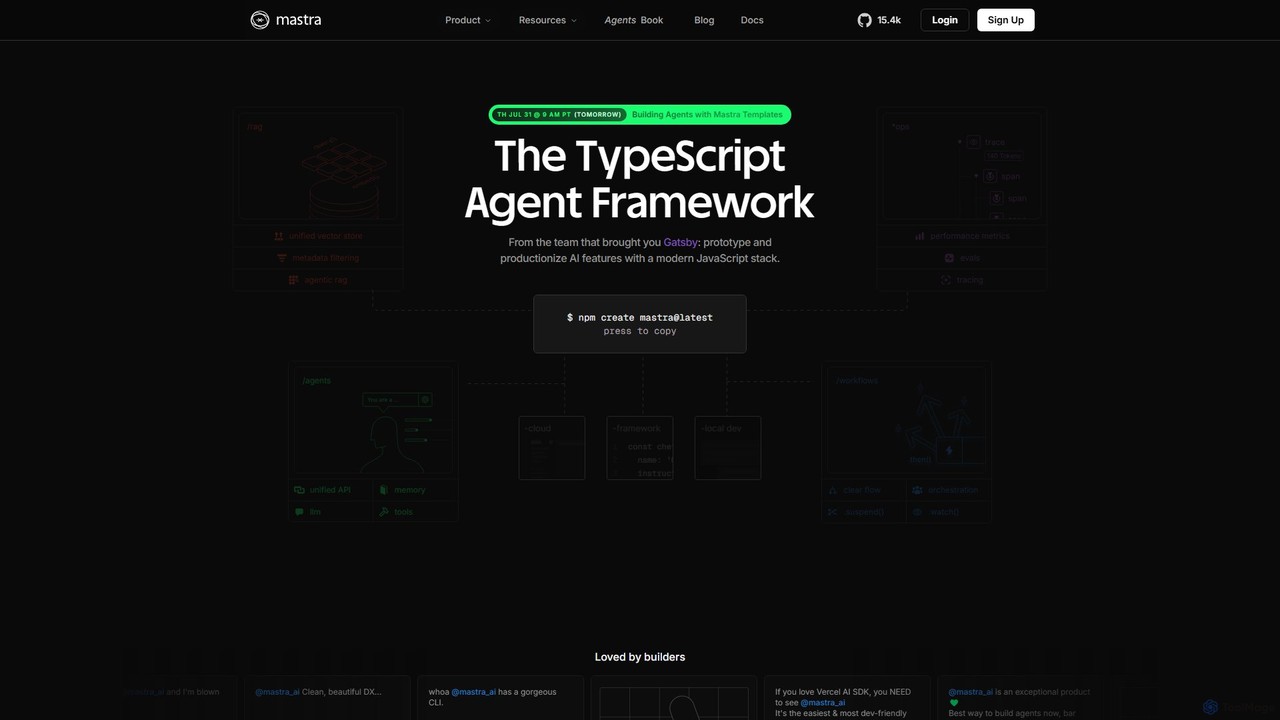
Mastra is an open-source TypeScript framework designed for developers to build, deploy, and manage sophisticated AI agents and complex workflows. It provides a developer-friendly SDK with features like persistent memory, tool calling, Retrieval-Augmented Generation (RAG), and deterministic workflow graphs. Built by the team behind Gatsby, Mastra simplifies creating production-ready AI applications within the JavaScript ecosystem.

Agent Builder
Visits 312.4KFavorites 147Likes 152
Bytebot

Bytebot

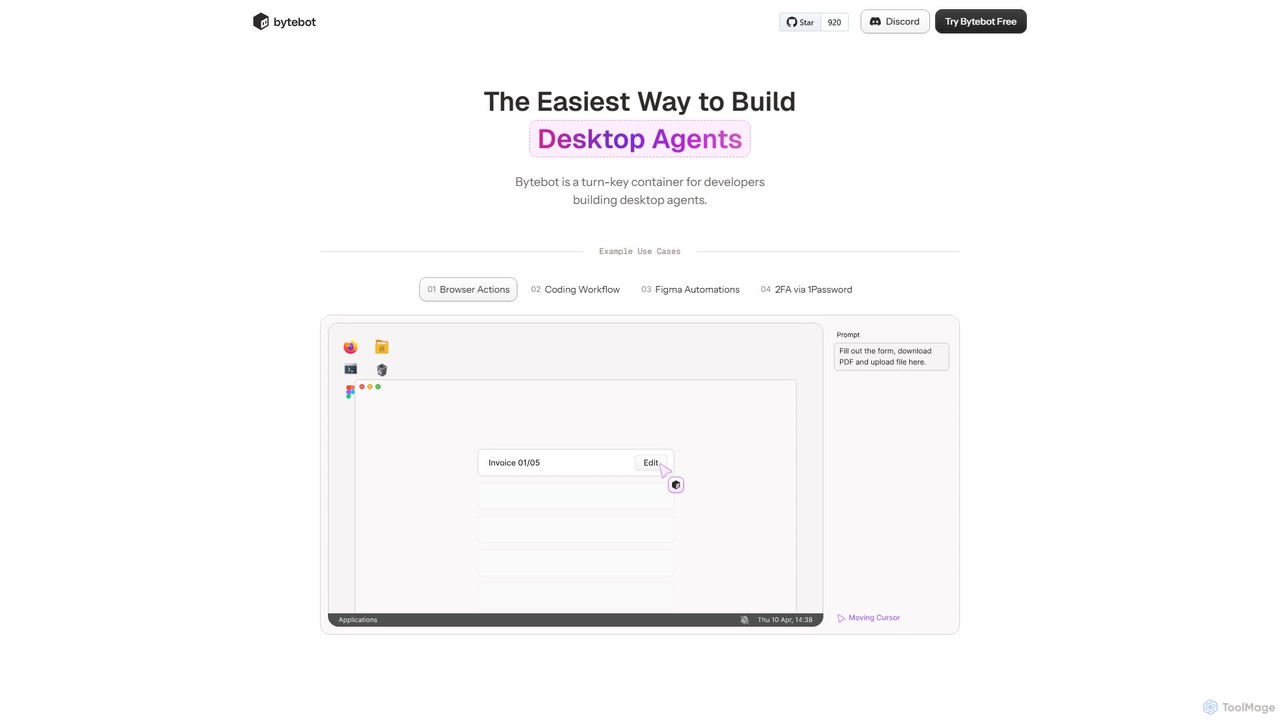
Bytebot is a developer platform for building, deploying, and managing AI-powered desktop agents. These agents automate complex tasks across any application by mimicking human interactions with the keyboard, mouse, and screen, moving beyond browser-only limitations.

Desktop Agent
Visits 18.1KFavorites 134Likes 117
Baloon.dev
Freemium

Baloon.dev

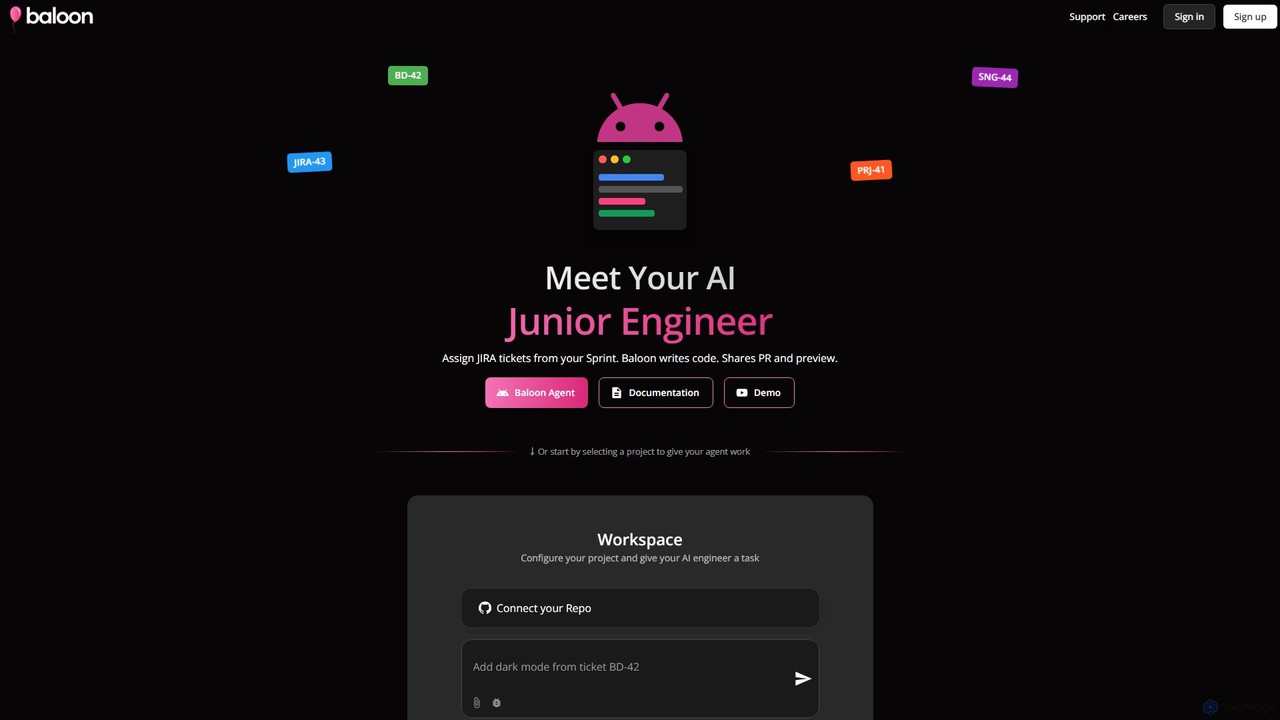
Baloon.dev is an AI-powered junior engineer that automates software development by converting JIRA tickets directly into code. It integrates seamlessly with your JIRA board, analyzes tasks, writes production-ready frontend code, and submits pull requests with live previews, accelerating your development cycle.

Software Development
Visits 7.2KFavorites 176Likes 156
Mica AI

Mica AI

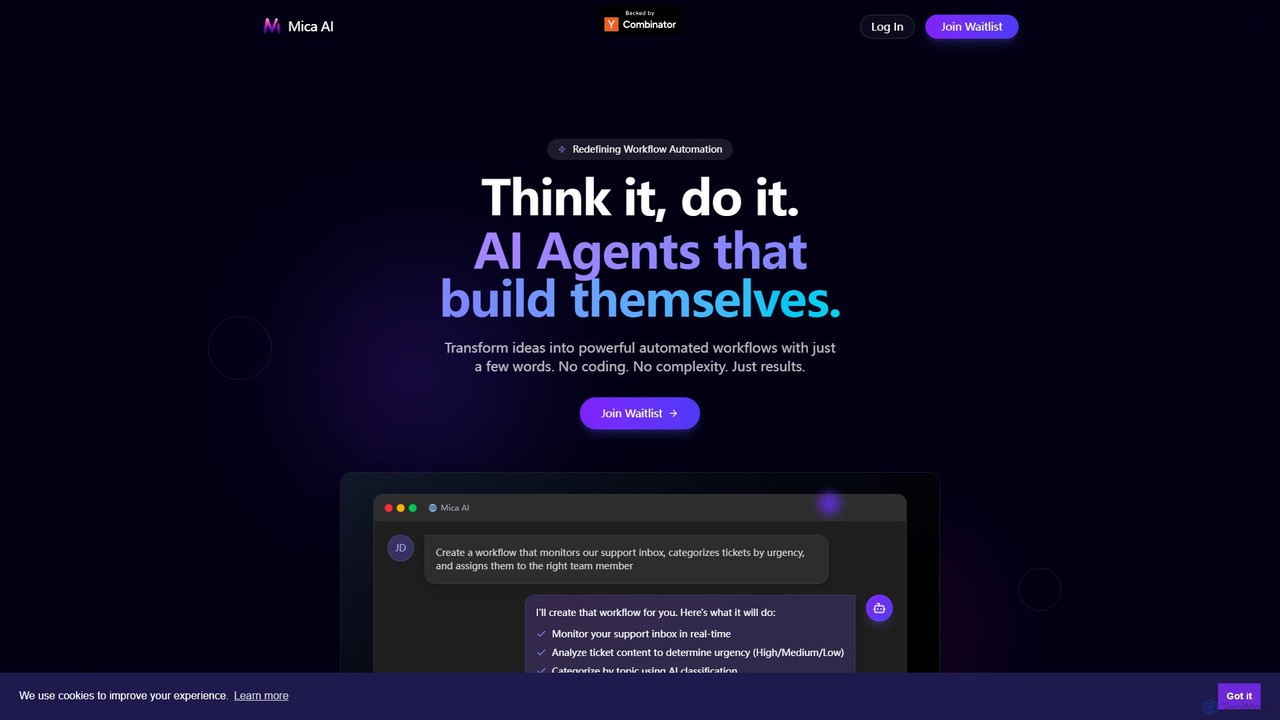
Mica AI is a no-code platform that transforms natural language descriptions into powerful, automated workflows. It deploys self-building AI agents that integrate with your existing tech stack, automating tasks and providing real-time insights across departments like sales, marketing, and engineering without any coding.

Autonomous Agents
Visits 6.3KFavorites 154Likes 143
Simular
Freemium

Simular

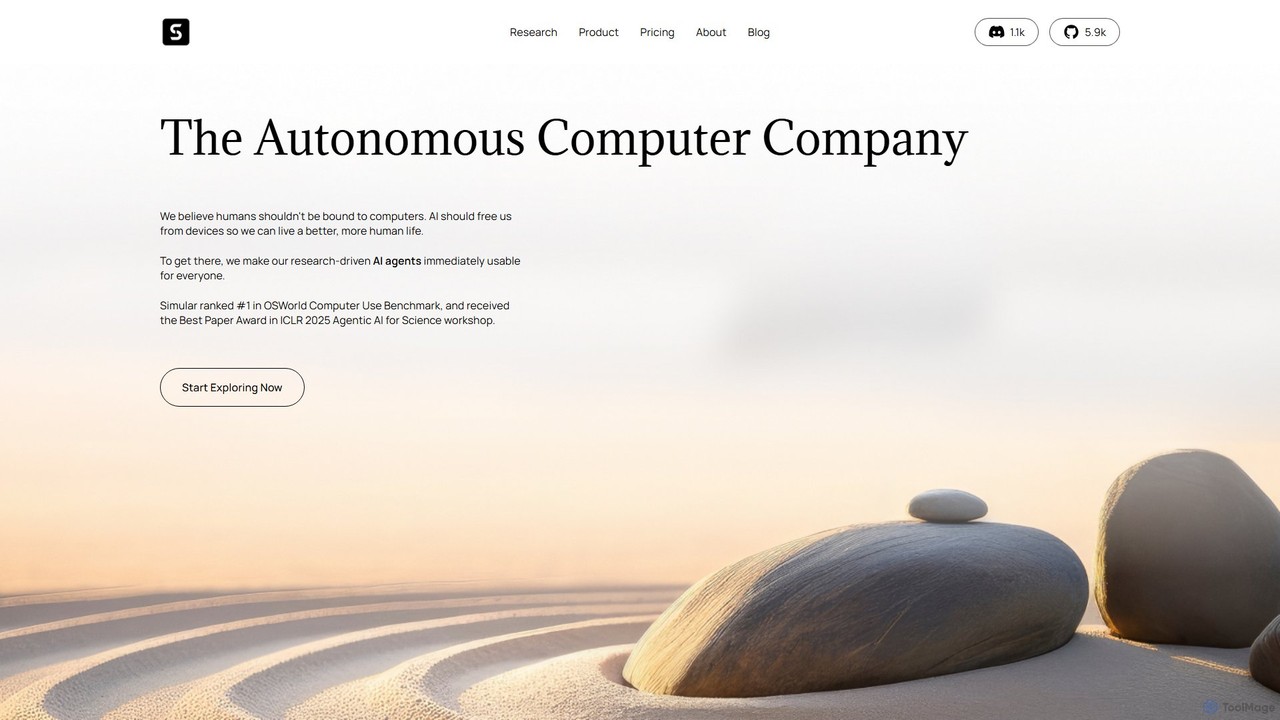
Simular is an AI-powered platform that creates autonomous agents to operate computers just like humans. It automates complex digital tasks across any application on your desktop, browser, or smartphone. By combining the flexibility of LLMs with the precision of symbolic code, Simular aims to free users from repetitive work, handling everything from data research and content creation to personal task management.

Personal Assistant
Visits 163.5KFavorites 151Likes 127
Augmeta
Freemium

Augmeta

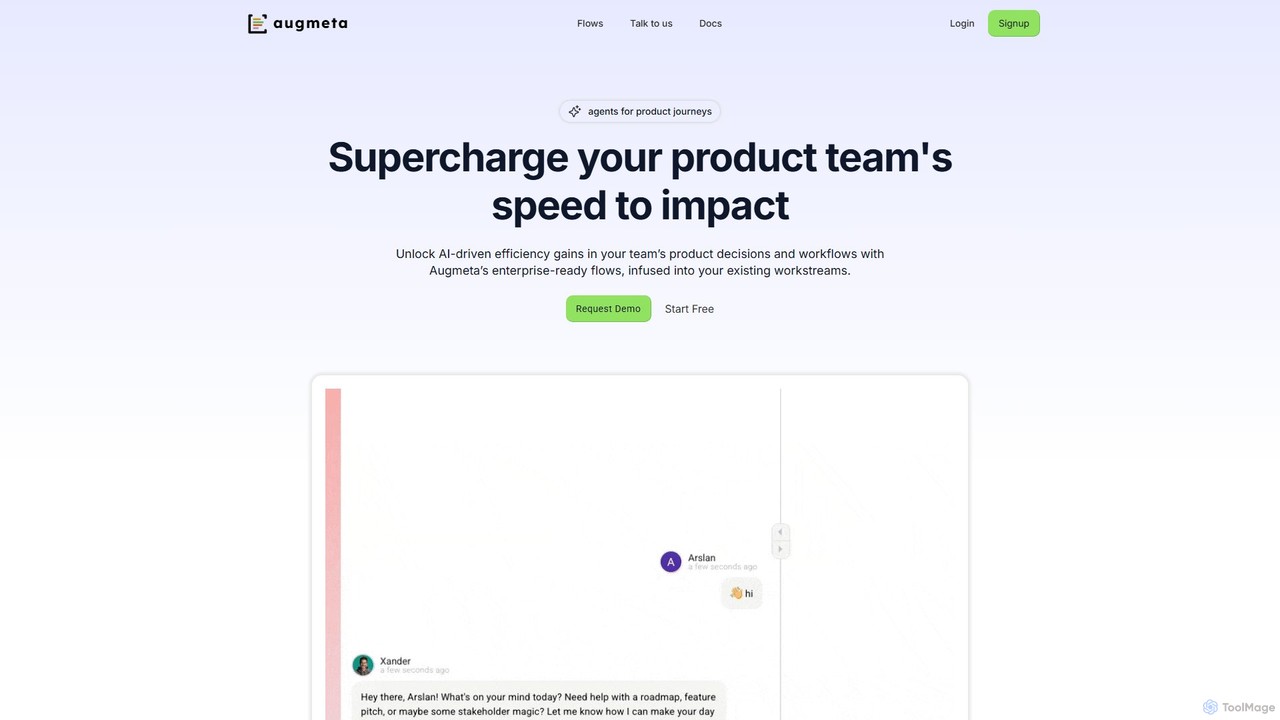
Augmeta is an AI-powered platform designed for product teams, featuring an AI agent named Xander. It centralizes fragmented workflows, automates insight generation, and accelerates decision-making. By integrating with existing tools, Augmeta provides context-aware intelligence for product discovery, planning, and execution, helping teams build better products faster.

Workflow Automation
Visits 6.5KFavorites 150Likes 151
Code Snippets AI
Freemium

Code Snippets AI

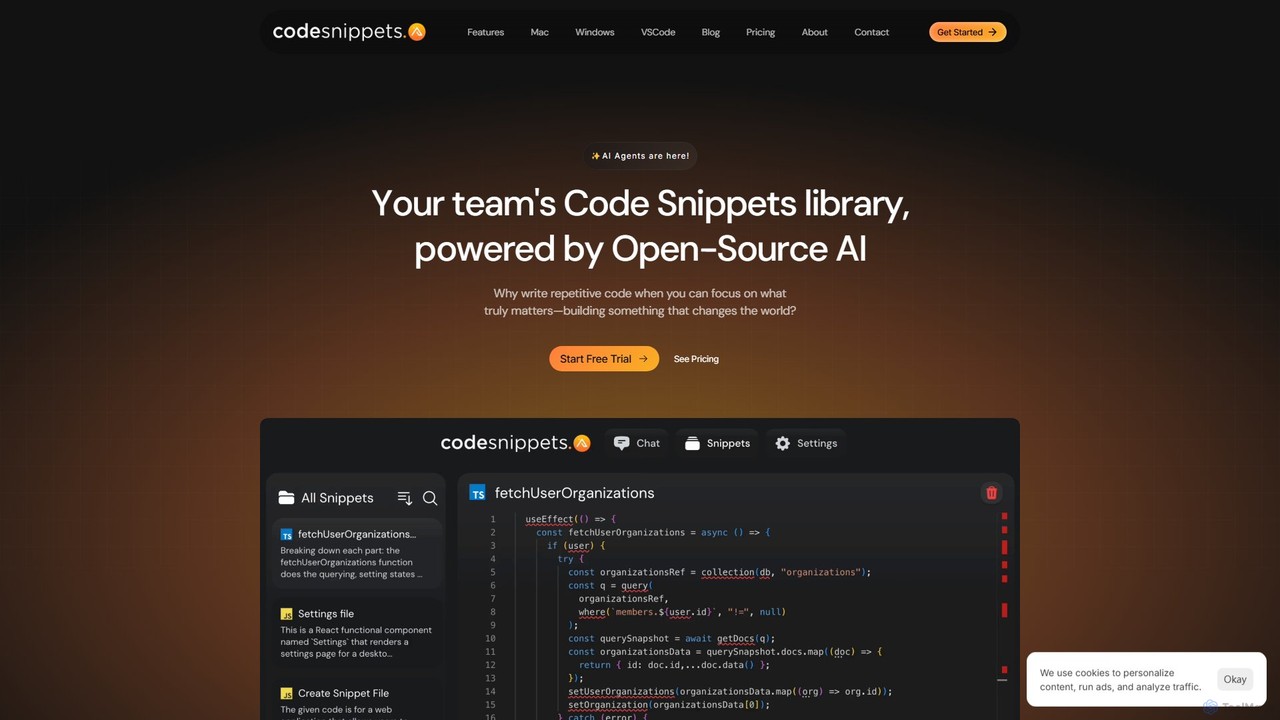
Code Snippets AI is an AI-powered code snippet library for development teams. It centralizes code management, allowing users to save, share, and collaborate on snippets. Leveraging both open and closed-source LLMs, it helps generate, refactor, debug, and document code with full codebase context, streamlining workflows and boosting productivity.

Chatbot
Visits 11KFavorites 122Likes 122

About Ai Agent

AI Agents are autonomous software programs designed to perceive their environment, make decisions, and take actions to achieve specific goals. They leverage large language models (LLMs) and planning algorithms to independently execute complex, multi-step tasks by interacting with other software and websites. This enables them to automate intricate workflows, conduct comprehensive research, and manage digital tasks on a user's behalf. Unlike simpler AI tools, AI Agents possess memory and the ability to self-correct, allowing them to handle dynamic and unforeseen challenges.

Core Features

  • Autonomous Task Execution: Independently performs multi-step tasks from start to finish without constant human intervention.
  • Goal-Oriented Planning: Decomposes a high-level objective into a sequence of executable sub-tasks.
  • Tool Integration & Usage: Accesses and utilizes external APIs, websites, and local applications to gather information or perform actions.
  • Contextual Memory: Maintains short-term and long-term memory to inform future decisions and actions.
  • Self-Correction Capability: Analyzes outcomes, identifies errors, and adjusts its strategy to successfully complete the goal.

Applicable Scenarios

AI Agents are used by developers for code generation and debugging, researchers for automated data collection and analysis, and marketers for managing complex digital campaigns. For instance, a developer can delegate bug fixing to an agent, while a business analyst can task an agent with monitoring market trends and generating weekly reports by browsing multiple news sources and financial sites.

Selection Criteria

When choosing an AI Agent, evaluate its task complexity capabilities—can it handle the multi-step workflows you need? Assess its integration ecosystem to ensure it connects with your essential tools (e.g., GitHub, Slack, Google Workspace). Consider the level of autonomy and control, allowing you to balance independent operation with necessary human oversight. Finally, prioritize agents with strong security protocols for handling sensitive data and system access.

Featured tool rankings

Ai Agent use cases

1

Automated Market Research and Reporting

A market analyst needs to compile a report on a new competitor. They instruct an AI Agent to 'Research competitor X, analyze their product offerings, pricing, and recent news, and summarize the findings in a report.' The agent autonomously browses websites, reads articles, extracts key data points, and structures the information into a coherent document. This process generates a comprehensive report in minutes, a task that would manually take hours, freeing the analyst to focus on strategic interpretation and decision-making.

2

Autonomous Software Development and Debugging

A software developer is facing a complex bug in a large codebase. Instead of spending hours manually tracing the issue, they provide an AI Agent with access to the code repository and the bug report. The agent analyzes the code, formulates hypotheses about the cause, writes and runs new tests to isolate the problem, and ultimately proposes a code patch for the developer to review. This significantly reduces debugging time and accelerates the development cycle, allowing developers to focus on building new features.

3

Personalized Travel Itinerary Planning

A user planning a vacation provides an AI Agent with a high-level goal: 'Plan a 7-day trip to Italy for two, focusing on history and food, with a budget of $3000.' The agent then breaks this down into sub-tasks: researching affordable flights, finding well-rated hotels in Rome and Florence, identifying historical sites and top-rated restaurants, and creating a day-by-day schedule. It interacts with booking websites and map services to assemble a complete, actionable itinerary, saving the user dozens of hours of planning.

4

Proactive Customer Support Ticket Resolution

A customer support team integrates an AI Agent with their helpdesk system. When a new technical support ticket arrives, the agent reads it, accesses the knowledge base to understand the issue, and runs diagnostics by connecting to the user's account data (with permission). If it identifies a common problem, it automatically sends a solution to the customer. If the issue is complex, it gathers all relevant data, summarizes its findings, and escalates the ticket to a human agent, ensuring they have all the context needed to solve it quickly.

5

Automated Social Media Content Curation

A social media manager sets a content strategy for an AI Agent: 'Find and share 3 relevant industry news articles and create one original post about our new feature each day on Twitter and LinkedIn.' The agent continuously browses the web for trending articles, drafts posts in the company's brand voice, suggests relevant hashtags, and even creates simple visuals. It then presents the drafted content in a queue for the manager's final approval before scheduling, ensuring a consistent and relevant content stream with minimal manual effort.

6

Complex Data Analysis and Visualization

A business analyst uploads a large sales dataset and instructs an AI Agent: 'Analyze this data to find the top-performing products by region and visualize the quarterly growth trends.' The agent first cleans and structures the data, then performs statistical analysis to identify key insights. It proceeds to generate various charts and graphs (e.g., bar charts for regional sales, line graphs for growth trends) and compiles them into a dashboard with a written summary of its findings. This automates the entire workflow from raw data to actionable insights.

Ai Agent FAQ

What is an AI Agent?

An AI Agent is an autonomous program that understands goals, makes plans, and executes multi-step tasks by interacting with its digital environment. Unlike simple AI tools that perform a single function, agents can use other applications, browse the web, and adapt their actions to achieve a complex objective without constant human guidance. They are designed for automating workflows like research, coding, and project management.

How do I choose the right AI Agent?

To choose the right AI Agent, consider these key factors:

  • Task Capability: Ensure it supports the complexity and type of tasks you need to automate (e.g., web browsing, code execution, API calls).
  • Tool Integration: Check if it can connect with the software and platforms essential to your workflow, such as Google Workspace, GitHub, or Slack.
  • Level of Autonomy: Decide if you need a fully autonomous agent or one that requires human approval at critical steps for more control.
  • Security and Privacy: Evaluate how the agent handles your data, credentials, and permissions when accessing external systems.
What's the difference between an AI Agent and an AI Chatbot?

The key difference is action versus conversation. An AI Chatbot is designed primarily for dialogue, answering questions and providing information based on its training data. An AI Agent, on the other hand, is designed for action. It takes a goal, creates a plan, and executes tasks using various digital tools (like browsers or APIs) to achieve that goal. An agent can use a chatbot as one of its tools, but a chatbot cannot autonomously perform multi-step actions in other applications.

What are the main functions of AI Agents?

AI Agents typically have several core functions:

  • Planning: Breaking down a high-level goal into a sequence of smaller, manageable steps.
  • Tool Use: Accessing and operating other software, APIs, and websites to gather information or perform actions.
  • Memory: Retaining context from past actions and interactions to inform future decisions (both short-term and long-term).
  • Self-Correction: Analyzing the results of its actions and adjusting its plan if it encounters errors or unexpected outcomes.
Who can benefit from using AI Agents?

A wide range of users can benefit from AI Agents. Developers use them to automate coding, testing, and debugging. Researchers and analysts use them to gather and synthesize vast amounts of information from multiple sources. Marketers can automate campaign management, social media posting, and performance analysis. Essentially, anyone looking to automate complex, multi-step digital tasks that involve using different applications or websites can find significant value in AI Agents.