Marketing Best in category 16 results Surveys AI Tool

Popular AI tools in the Surveys field of Marketing include Alchemer、SurveySparrow、Delighted、Pulse Labs、Live Polls Maker for Slides™、lightster、Responsly、Metaforms、Told、Vocads, etc., helping you quickly improve efficiency.

Wyapy

Wyapy

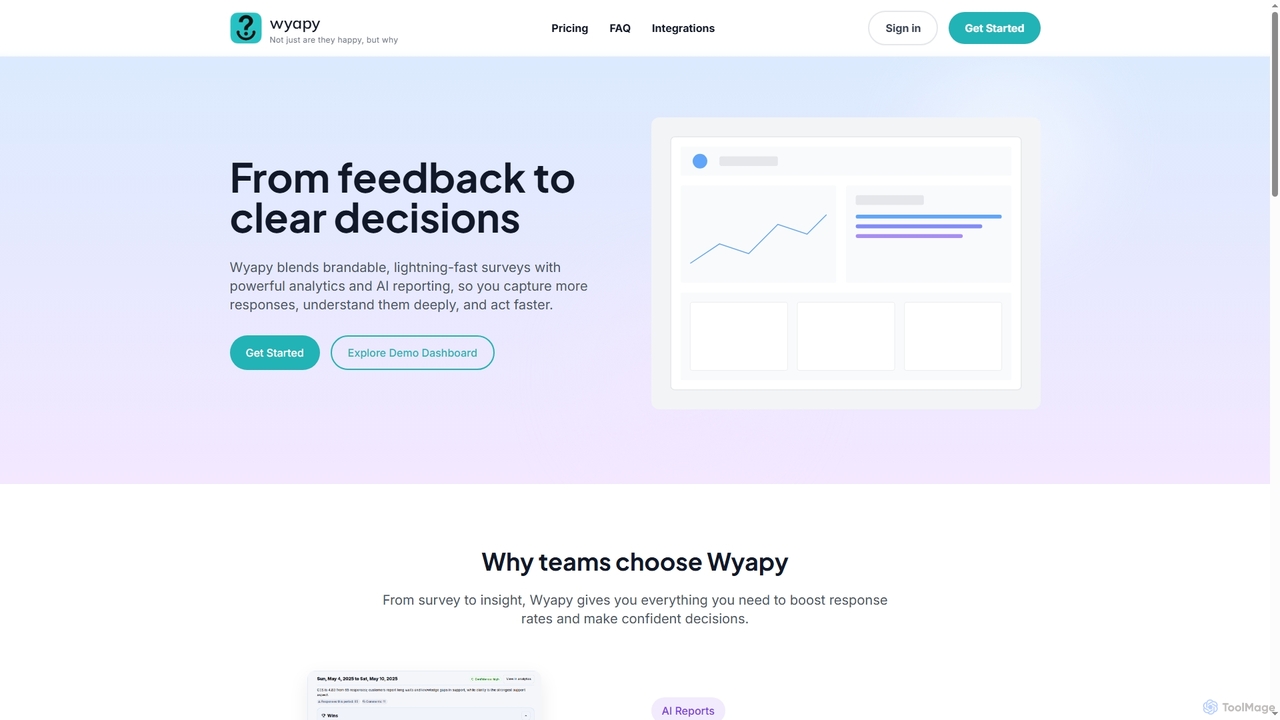
Wyapy is an AI-powered feedback platform that transforms customer feedback into actionable insights. It combines brandable, high-speed surveys …

4.3K
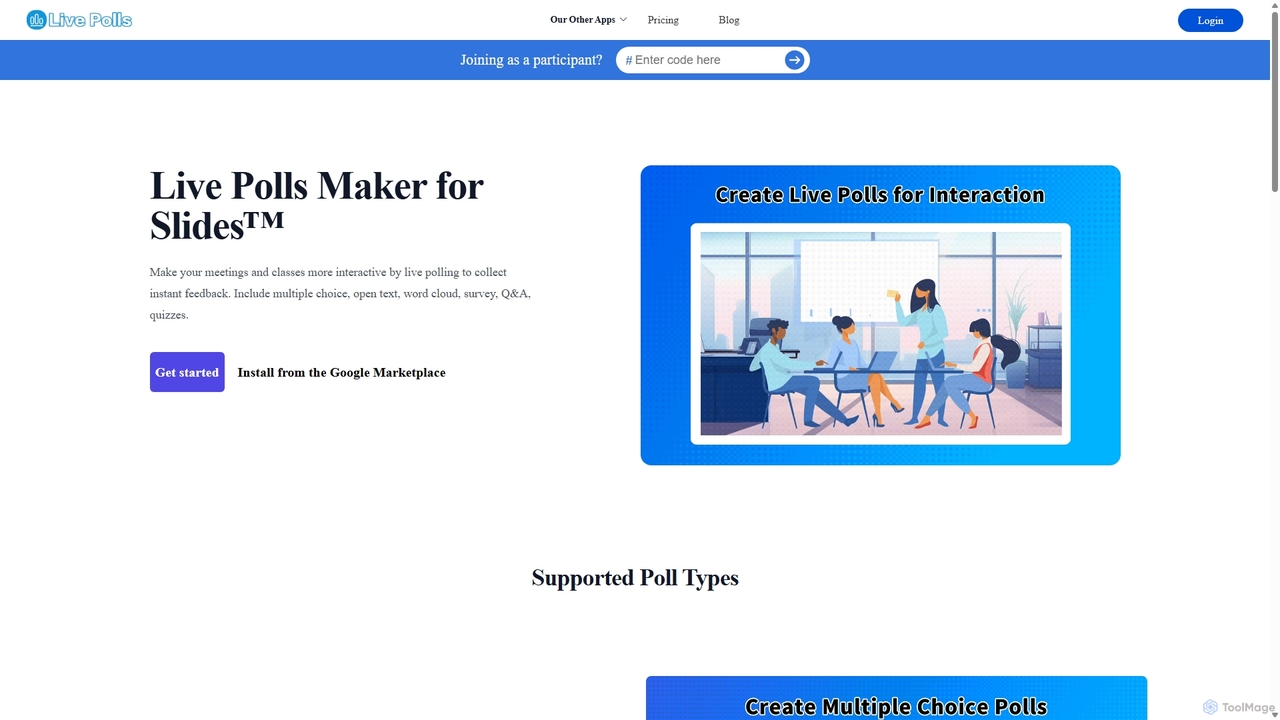
Live Polls Maker for Slides™

Live Polls Maker for Slides™

An interactive polling tool for Google Slides that enhances presentations by engaging audiences with live polls, quizzes, Q&A …

258.6K
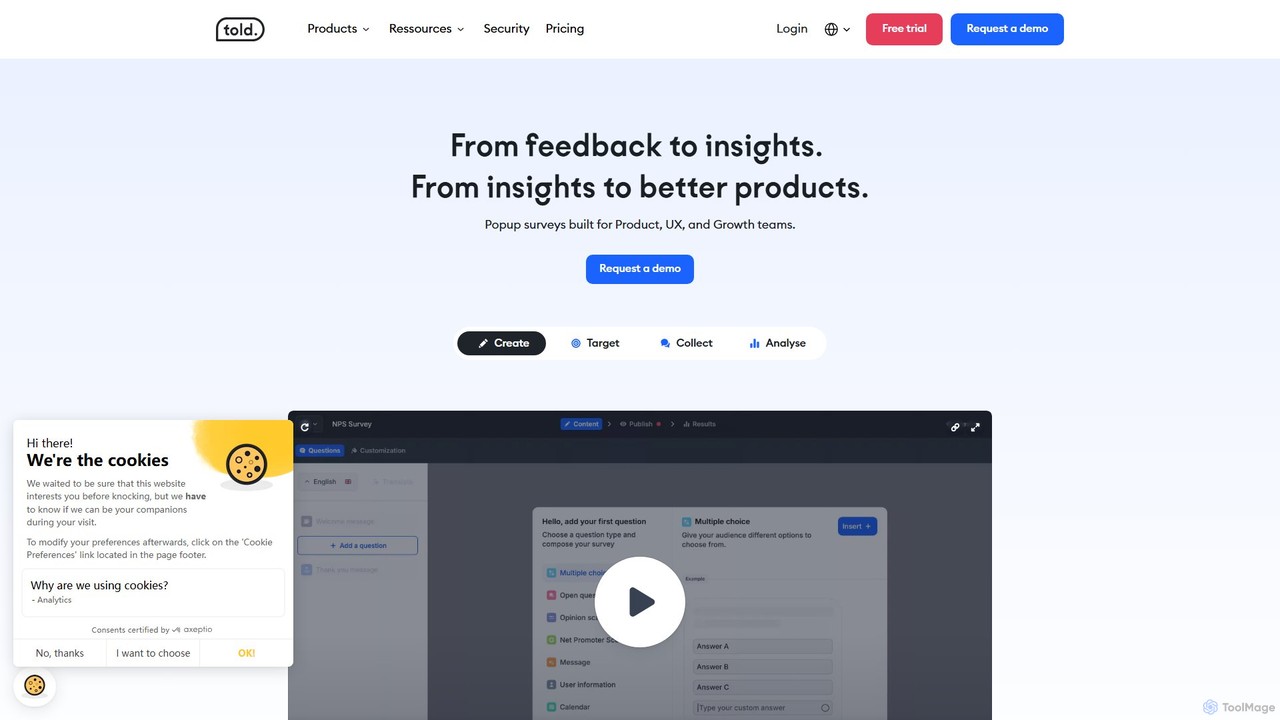
Told

Told

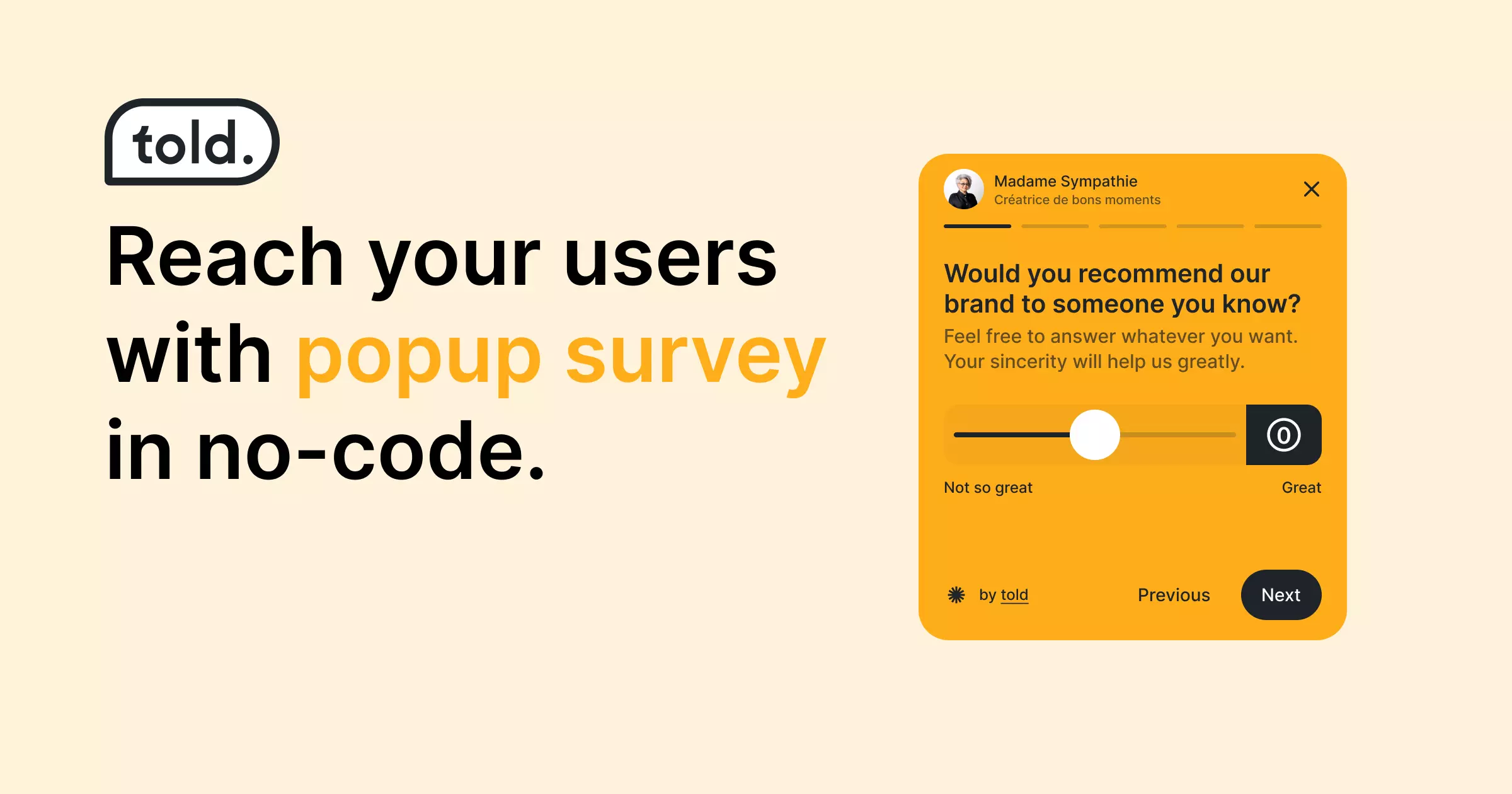
Told is an AI-powered popup survey tool designed for product, UX, and growth teams. It enables businesses to …

8.4K
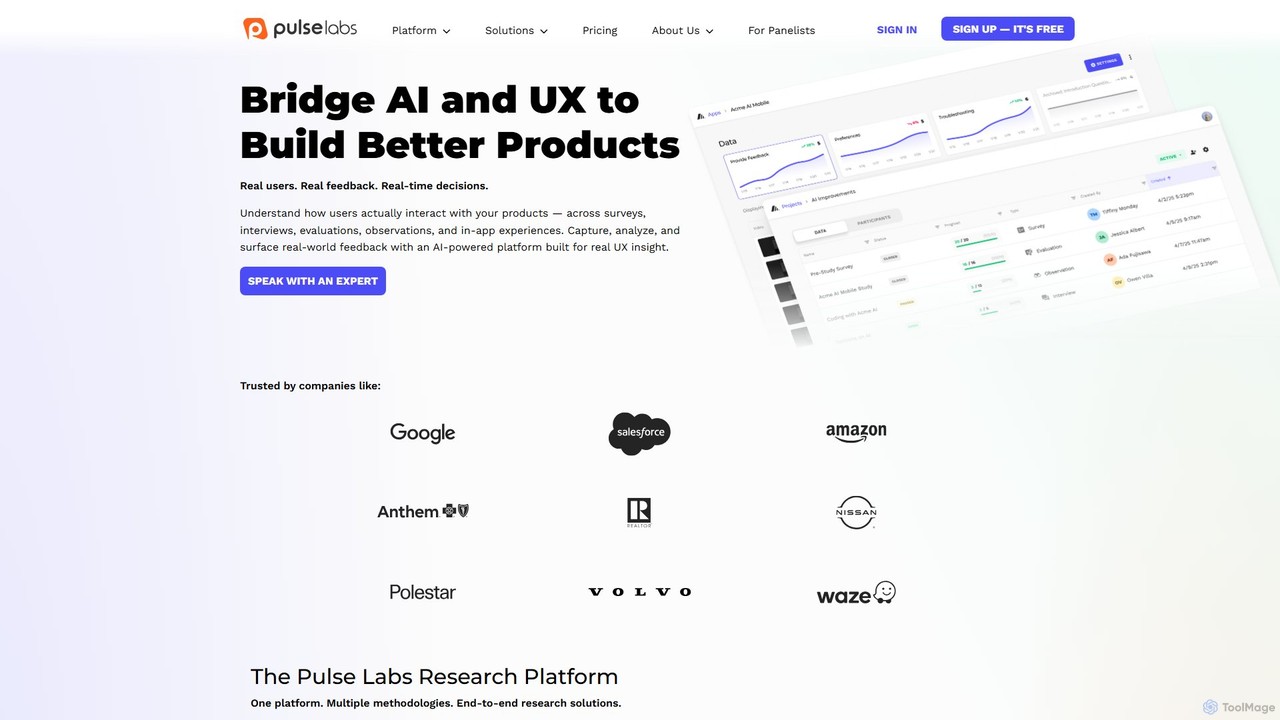
Pulse Labs

Pulse Labs

Pulse Labs is an AI-powered user research platform that helps businesses build better products by capturing and analyzing …

366.7K
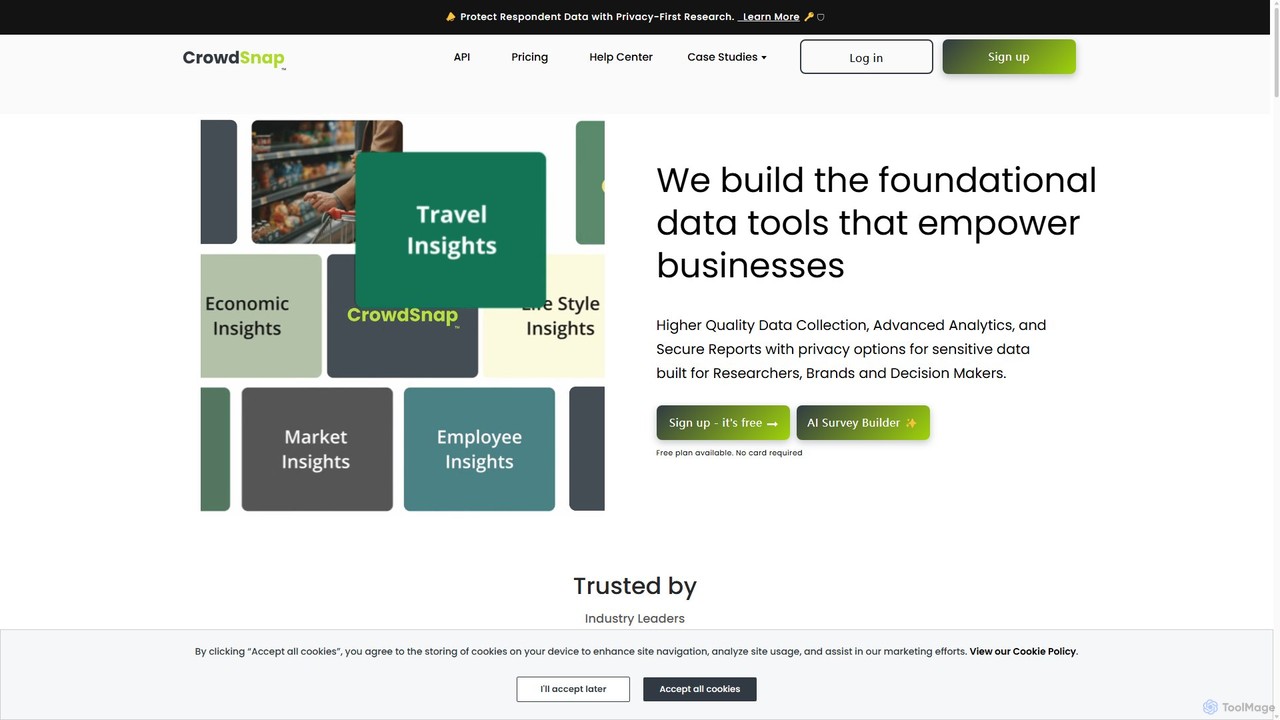
CrowdSnap

CrowdSnap

CrowdSnap is a privacy-first data collection and analytics platform powered by AI and blockchain. It enables researchers, brands, …

4.1K
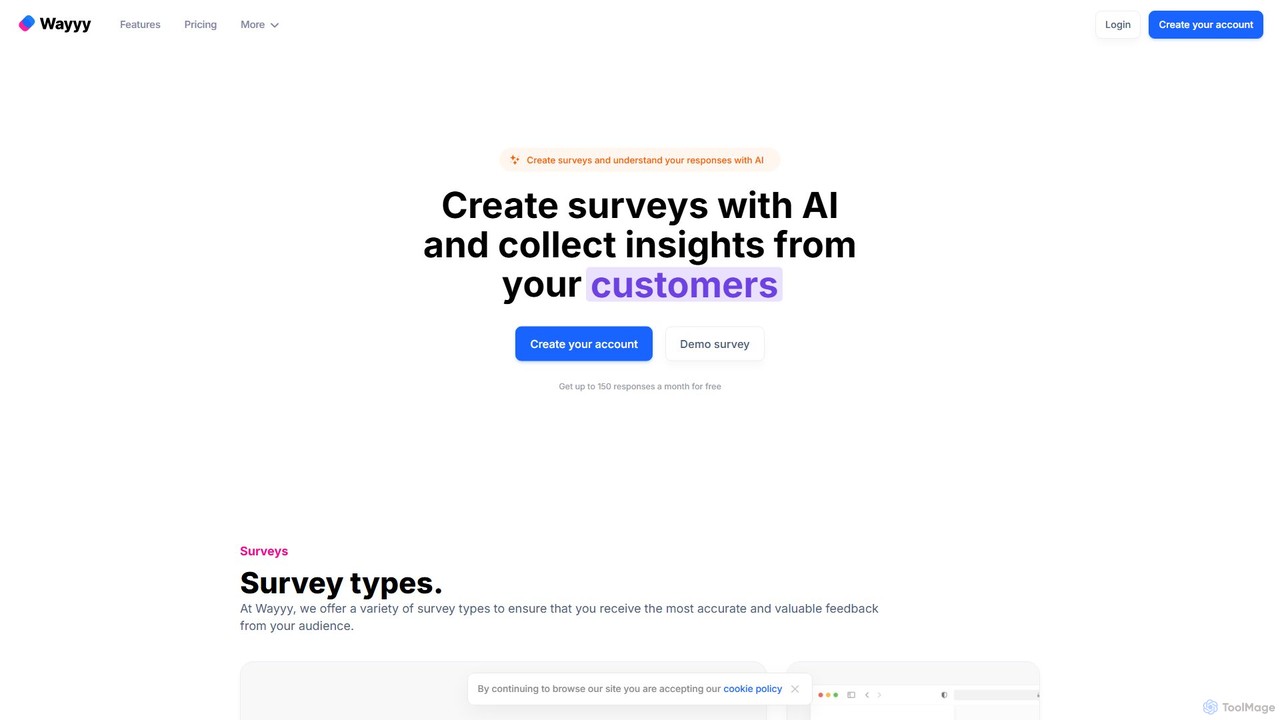
Wayyy

Wayyy

Wayyy is an AI-powered survey platform that enables users to create beautiful, effective surveys in seconds. It uses …

4.1K
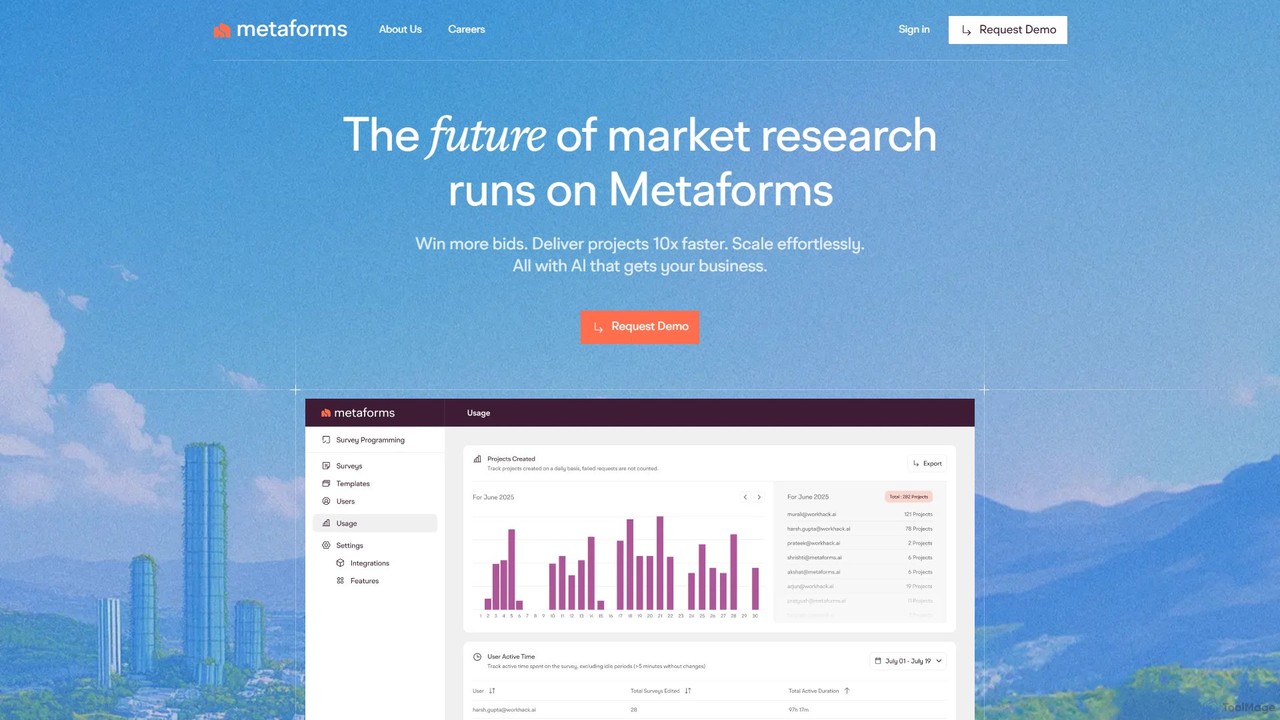
Metaforms

Metaforms

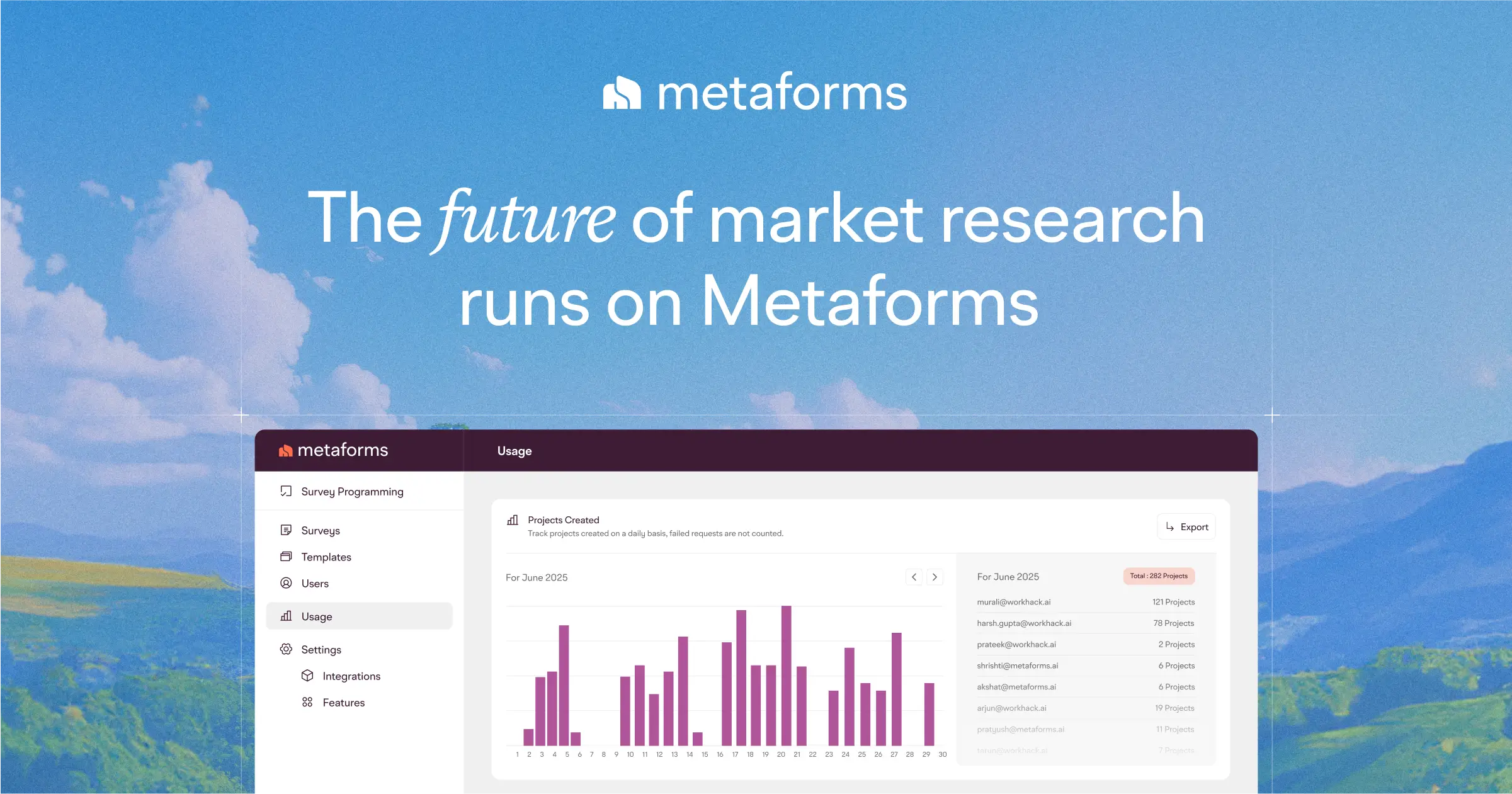
Metaforms is an AI-powered platform designed for market research agencies to automate and accelerate their operations. It streamlines …

14.9K
Alchemer

Alchemer

Alchemer is a powerful online survey and feedback management platform that helps businesses collect and analyze customer, market, …

11.3M
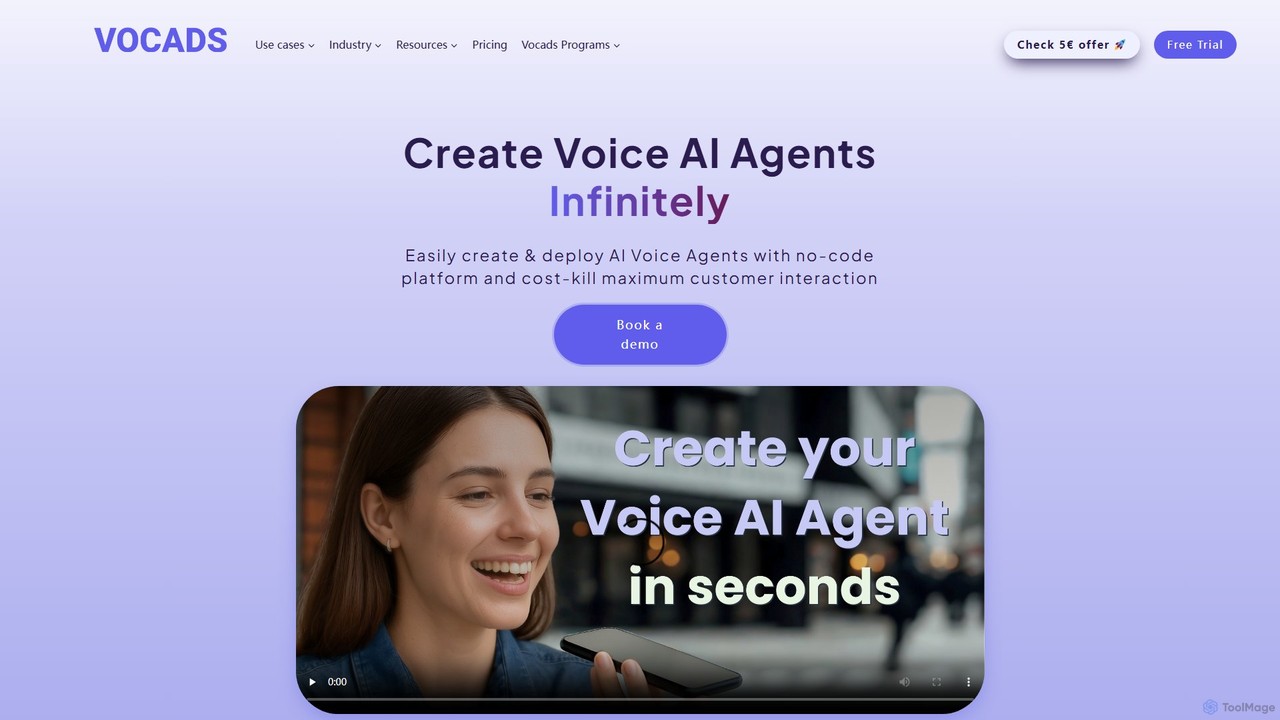
Vocads

Vocads

Vocads is a no-code platform for creating and deploying multilingual AI Voice Agents. It helps businesses automate customer …

6.9K
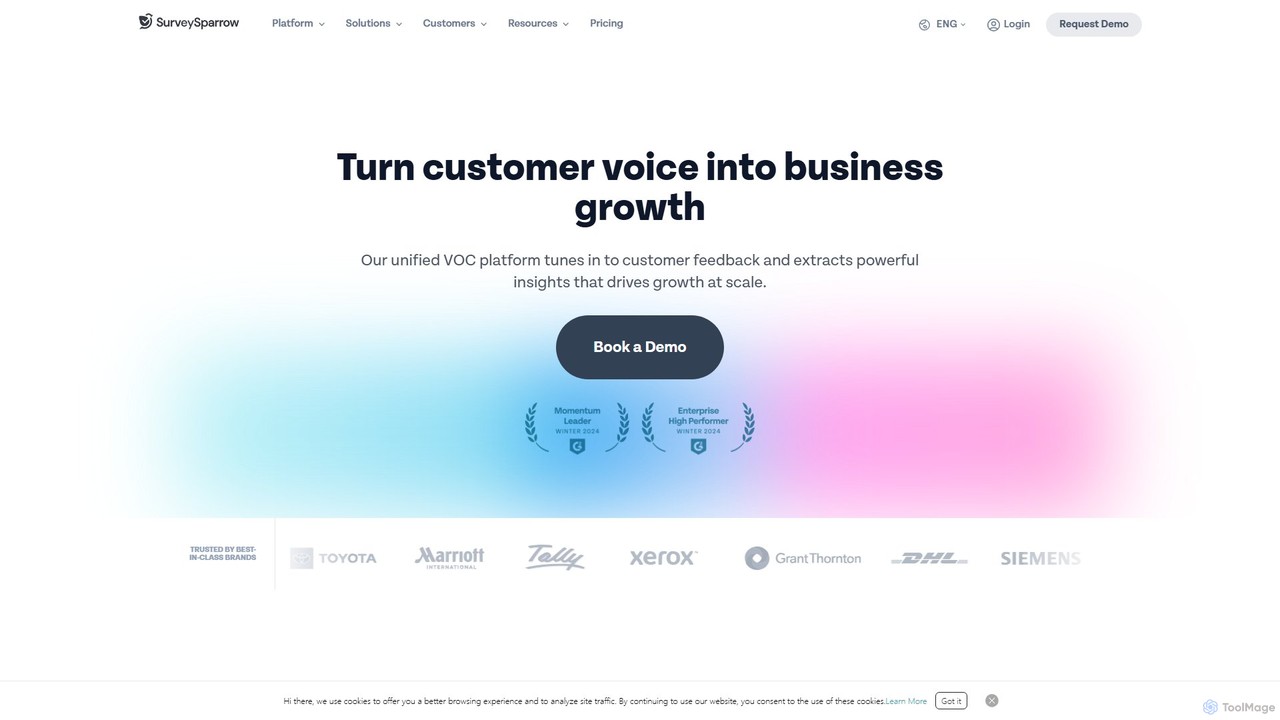
SurveySparrow

SurveySparrow

SurveySparrow is an omnichannel experience management platform that transforms feedback collection with engaging, conversational surveys. It leverages AI-powered …

1.8M
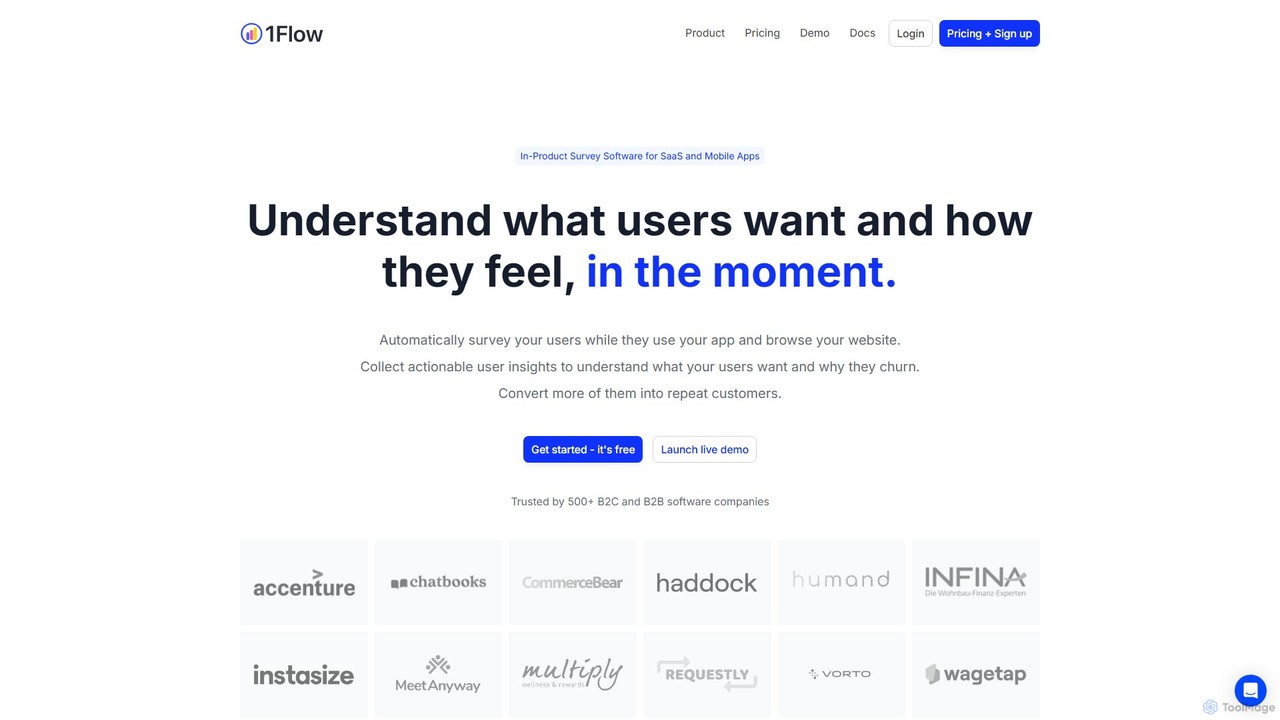
1Flow

1Flow

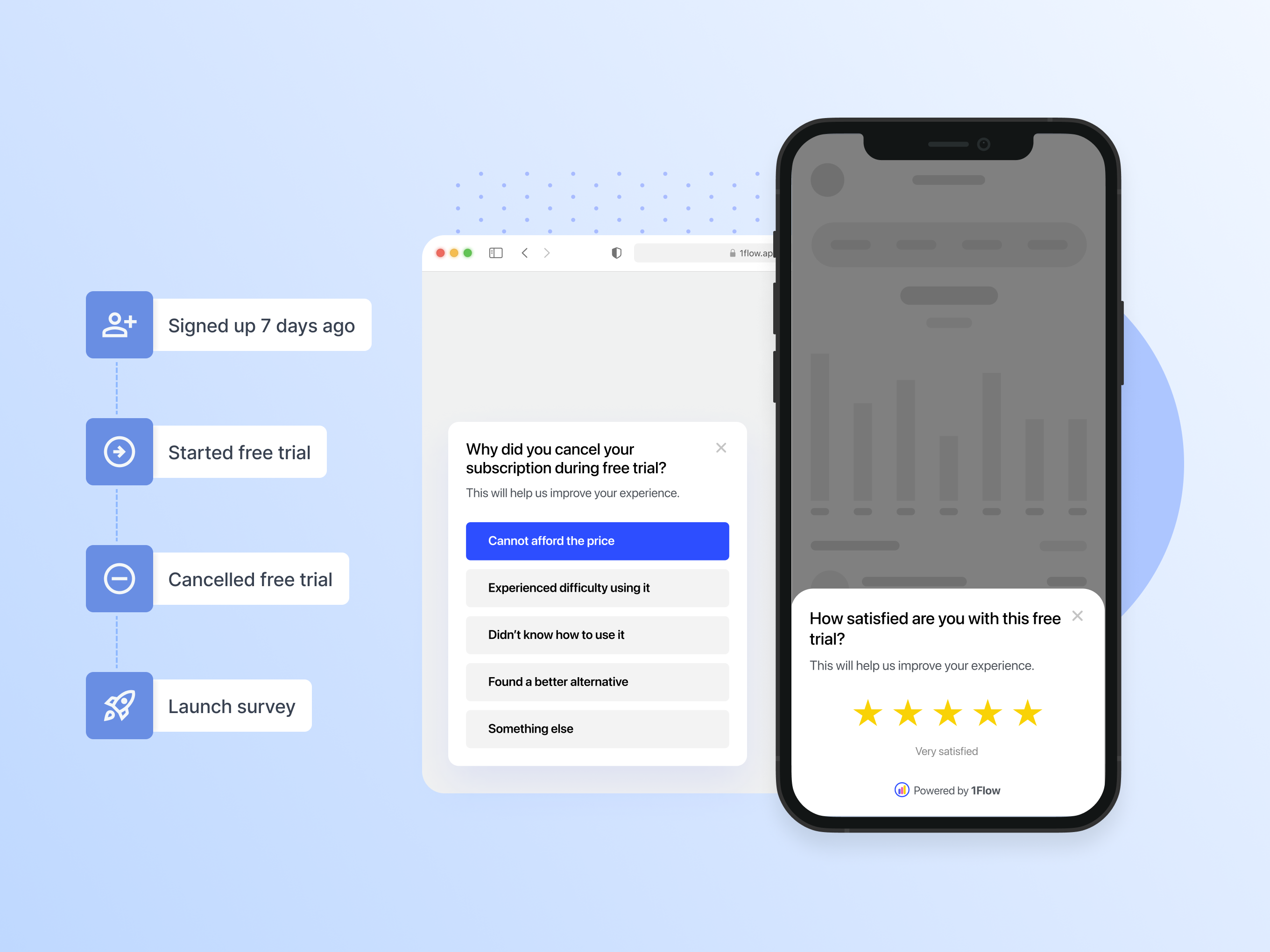
1Flow is an AI-powered, in-product microsurvey platform for SaaS and mobile apps. It enables teams to create targeted, …

5.5K
twilix

twilix

twilix is an open-source, AI-powered form builder, positioned as a powerful alternative to Typeform. It enables users to …

3.4K
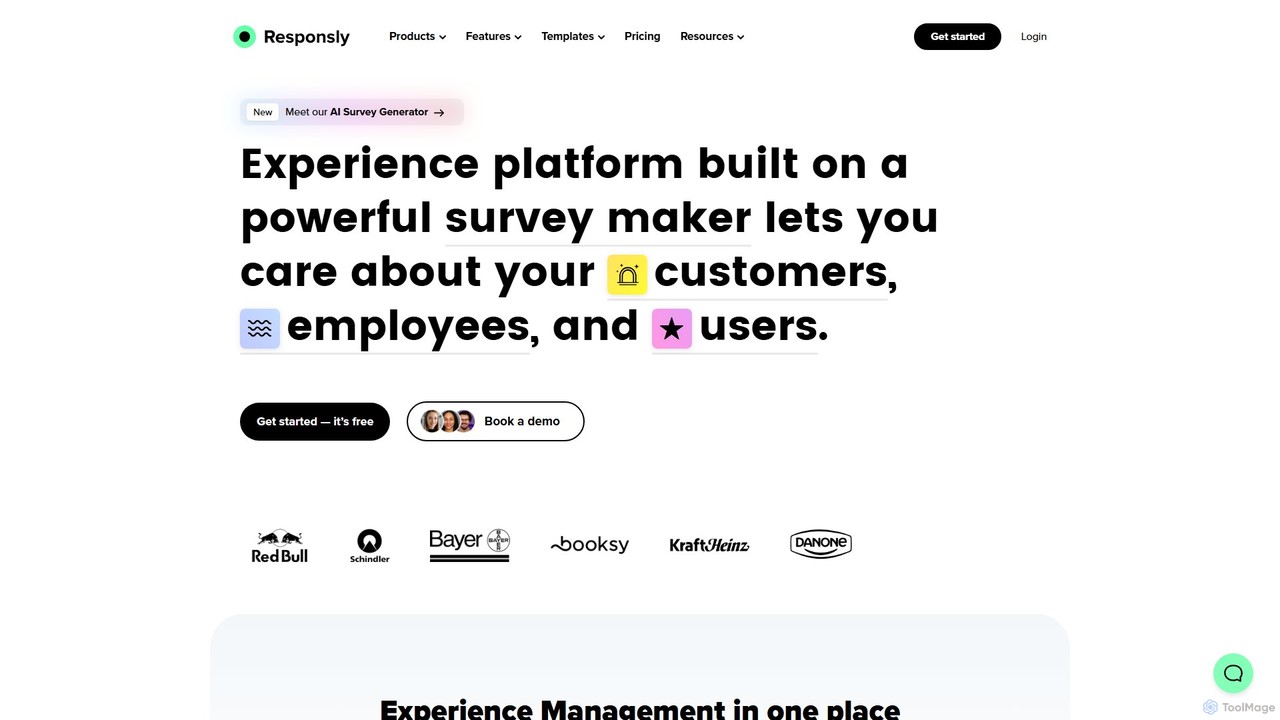
Responsly

Responsly

Responsly is an AI-powered experience management platform designed to create advanced surveys, quizzes, and forms. It helps businesses …

20.2K
lightster

lightster

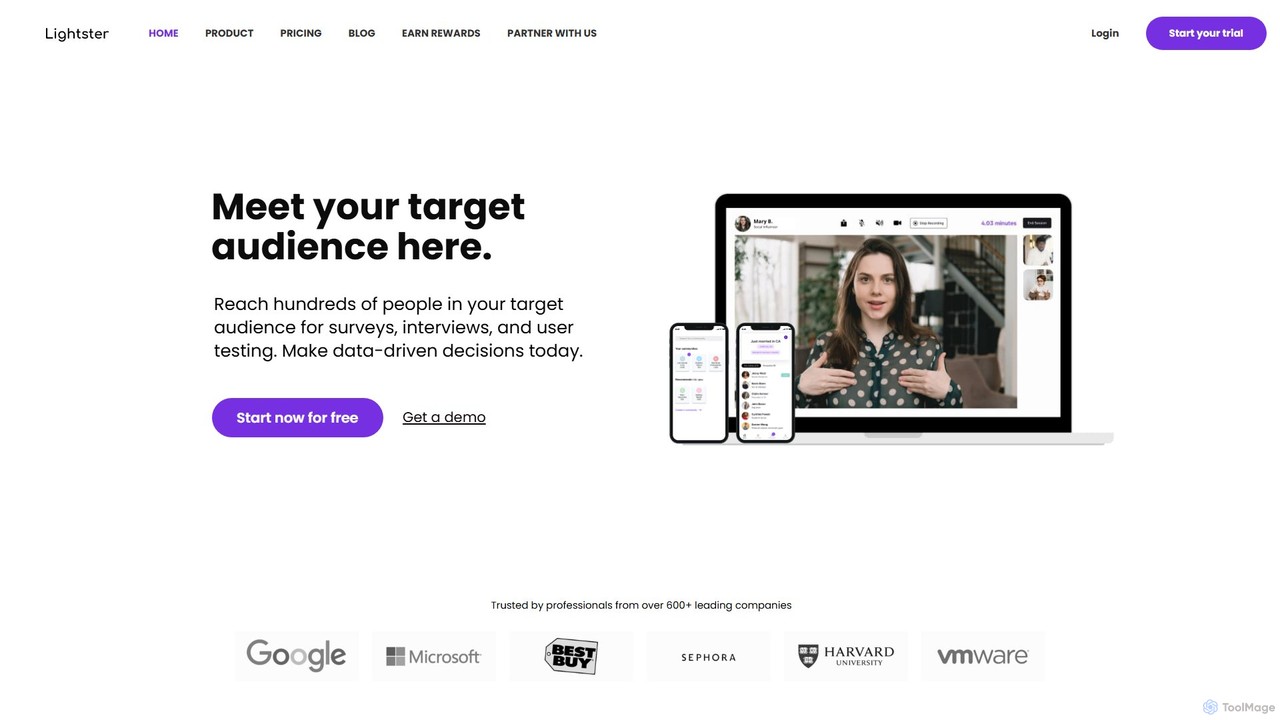
An AI-powered user research platform that connects businesses with their target audience for surveys, interviews, and unmoderated testing. …

28.4K
form_assist

form_assist

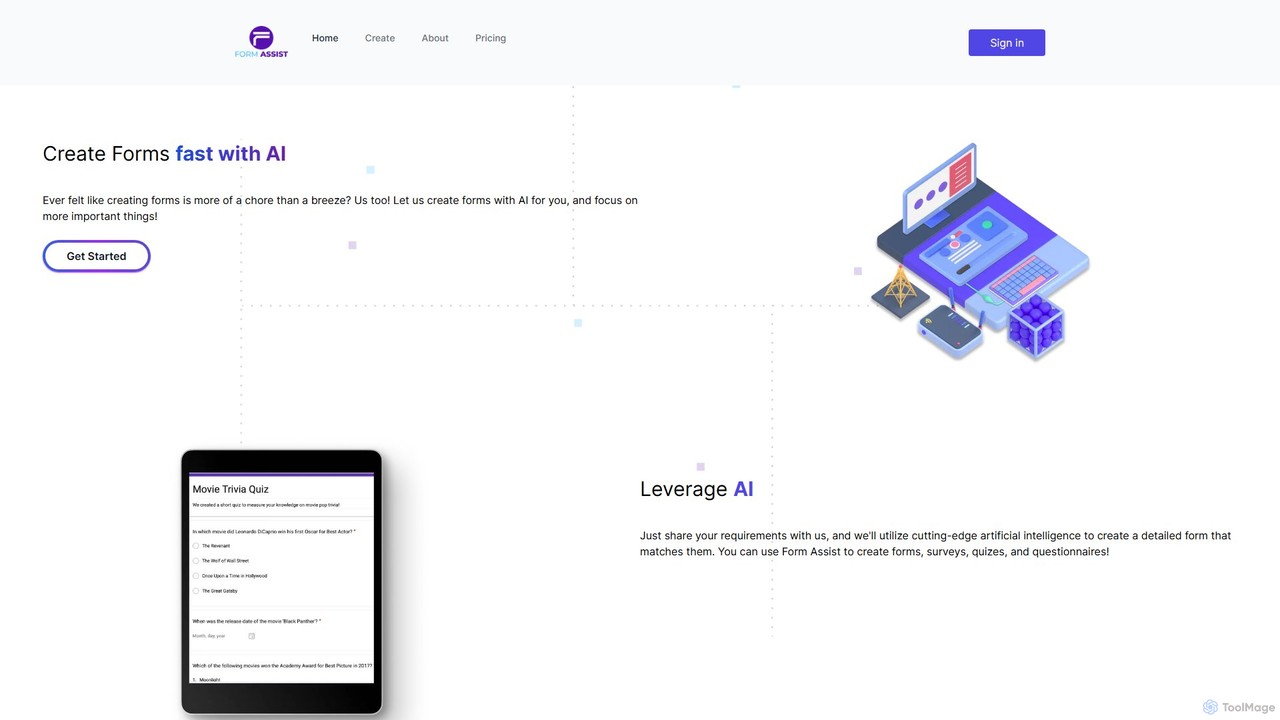
form_assist is an AI-powered tool that simplifies the creation of forms, surveys, quizzes, and questionnaires. Simply describe your …

3.3K
Delighted

Delighted

Delighted is a comprehensive experience management (XM) platform that helps businesses gather, analyze, and act on customer and …

369.9K

About Surveys

AI Survey tools are AI-powered platforms designed to automate and enhance the entire survey process, from creation to analysis. These tools leverage artificial intelligence, including natural language processing (NLP) and machine learning, to generate intelligent questions, analyze open-ended responses, detect sentiment, and uncover deeper insights. They help businesses, researchers, and marketers gather more accurate and actionable feedback, understand customer sentiment, and make data-driven decisions more efficiently.

Core Features

  • Automated Question Generation: AI suggests relevant and unbiased survey questions based on the survey's objectives and target audience.
  • Sentiment Analysis: Analyzes open-ended text responses to identify emotional tones, opinions, and attitudes expressed by respondents.
  • Response Categorization: Automatically groups and categorizes similar free-text answers, simplifying the analysis of qualitative data.
  • Bias Detection: Identifies potential biases in survey design or respondent answers, helping to ensure more objective data collection.
  • Predictive Insights: Uses machine learning to forecast trends, identify key drivers, and predict future behaviors based on survey data.

Applicable Scenarios

AI Survey tools are invaluable for organizations seeking to understand their audience better. They are widely used by marketing teams for market research and customer feedback, HR departments for employee engagement surveys, and product development teams for user experience insights. These tools streamline the process of collecting and interpreting feedback, enabling faster and more informed strategic decisions.

How to Choose

When selecting an AI Survey tool, consider its specific AI capabilities, such as NLP accuracy and predictive analytics features. Evaluate its integration options with existing CRM or marketing automation platforms, and assess the level of customization available for survey design and branding. Look for robust reporting and visualization tools, and ensure the platform offers strong data security and privacy compliance. Finally, consider scalability to handle varying survey volumes and respondent numbers.

SurveysUse Cases

1

Automated Customer Satisfaction (CSAT) Surveys

A Customer Service Manager needs to regularly gauge customer satisfaction after support interactions. Using an AI Survey tool, they can automatically trigger short, targeted CSAT surveys. The AI generates follow-up questions based on initial responses and categorizes open-ended comments, identifying common pain points or positive feedback themes. This leads to proactive issue resolution and a measurable improvement in service quality, saving hours of manual data review.

2

Market Trend Analysis for New Product Launch

A Product Marketing Specialist is preparing for a new product launch and needs to understand target audience preferences and market trends. An AI Survey tool helps design comprehensive survey questions to uncover unmet needs and gauge interest in specific features. The AI then analyzes responses for emerging trends and sentiment towards product concepts, providing data-driven insights that inform product positioning and messaging, leading to higher market acceptance and reduced launch risks.

3

Employee Engagement & Feedback Collection

An HR Department aims to gauge employee morale and identify areas for improvement in workplace culture. An AI Survey tool facilitates the creation of anonymous employee engagement surveys, ensuring honest feedback. The AI analyzes sentiment from open comments, highlights key themes in feedback related to management, benefits, or work-life balance, and even detects potential biases in responses. This enables the HR team to implement targeted initiatives, leading to improved employee satisfaction and retention.

4

Academic Research Data Collection & Analysis

An Academic Researcher needs to gather extensive quantitative and qualitative data for a study. An AI Survey tool assists in designing surveys that minimize bias and ensure data validity. It then processes large datasets of responses, automatically identifying correlations, patterns, and key themes in open-ended questions that might be missed manually. This capability leads to more robust research findings, faster data interpretation, and allows researchers to focus on deeper theoretical analysis rather than tedious data processing.

5

Event Feedback & Improvement Planning

An Event Organizer needs to collect comprehensive feedback from attendees post-event to improve future events. An AI Survey tool can generate targeted questions about speakers, content, logistics, and overall experience. The AI then analyzes the feedback for common pain points and positive highlights, categorizing comments and identifying sentiment. This provides actionable insights for enhancing attendee experience, optimizing event planning, and ultimately leading to higher satisfaction rates and repeat attendance.

6

Website User Experience (UX) Feedback

A UX Designer or Webmaster wants to understand user navigation, pain points, and overall satisfaction with a website. An AI Survey tool can deploy contextual pop-up surveys on specific pages, asking users about their experience. The AI analyzes open-text feedback, identifies usability issues, and categorizes suggestions for improvement. This allows the UX team to prioritize design changes, leading to a more intuitive user interface, reduced bounce rates, and increased conversion rates.

SurveysFrequently Asked Questions