ToolMage
Sign in

Best 6 Code Generation AI tools for Productivity

Popular Code Generation AI tools in Productivity include Superapp, Superagent, Swytchcode, Elementy, Syntux, and CodeDefender, helping you work more efficiently.

Elementy
Freemium

Elementy

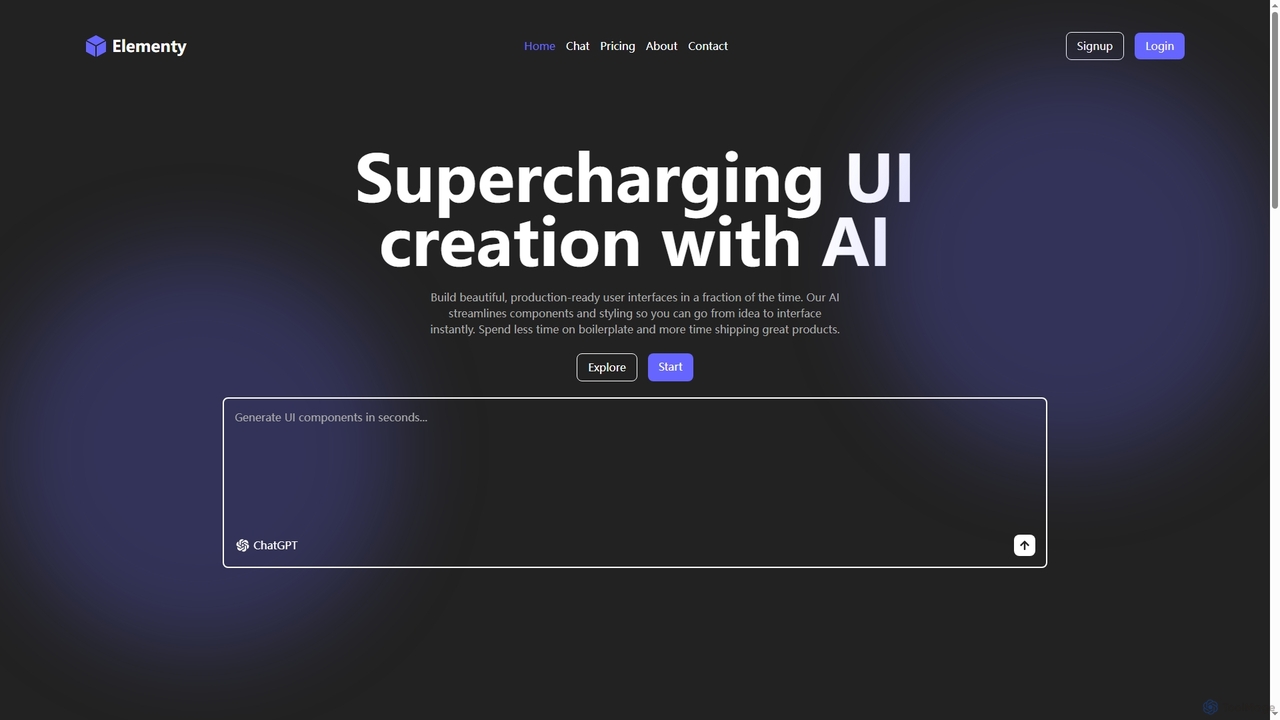
Elementy is an AI-powered tool that accelerates UI development by instantly generating production-ready, customizable, and modern user interface components from plain language descriptions. It helps developers ship faster by eliminating boilerplate and repetitive styling work, allowing them to focus on core product logic.

Front End Development
Visits 6.5KFavorites 47Likes 47
Syntux

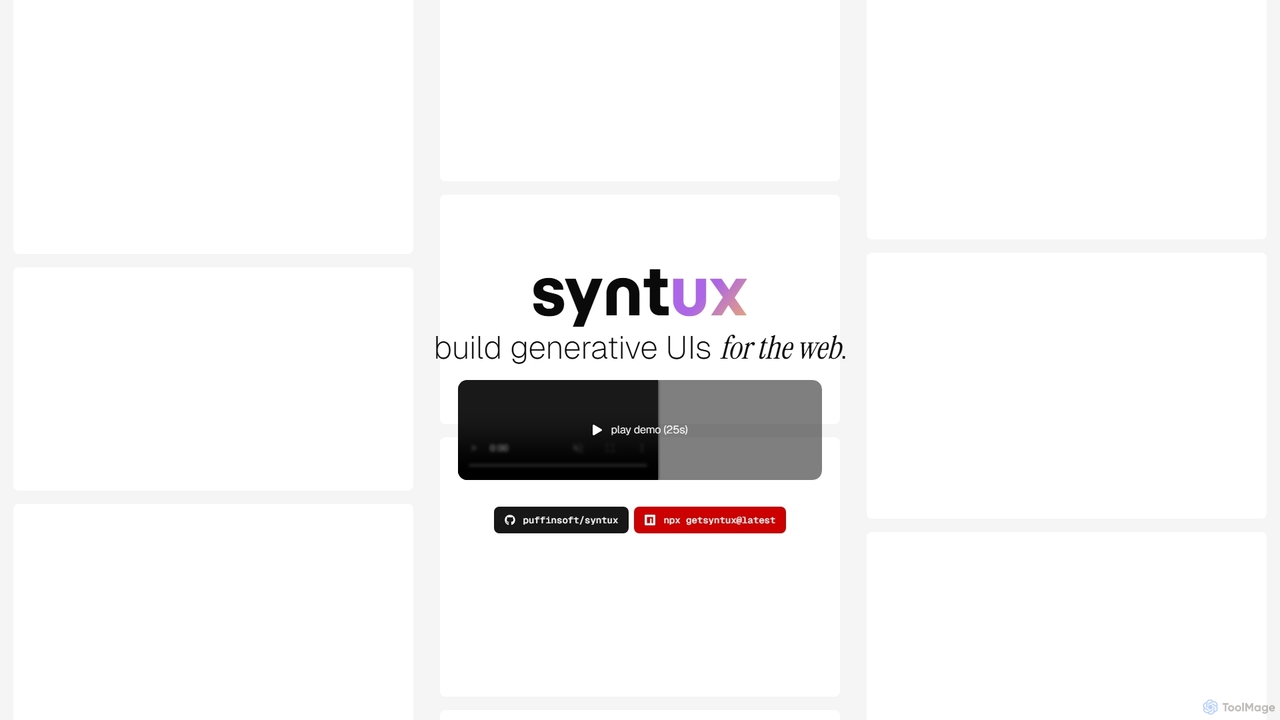
Syntux

Syntux is an innovative AI-powered developer tool designed to build generative user interfaces for the web. It empowers developers to rapidly create dynamic and customizable UI components and layouts through programmatic commands, streamlining the front-end development workflow and accelerating prototyping.

Generative Ui
Visits 6.4KFavorites 41Likes 45
Swytchcode
Paid

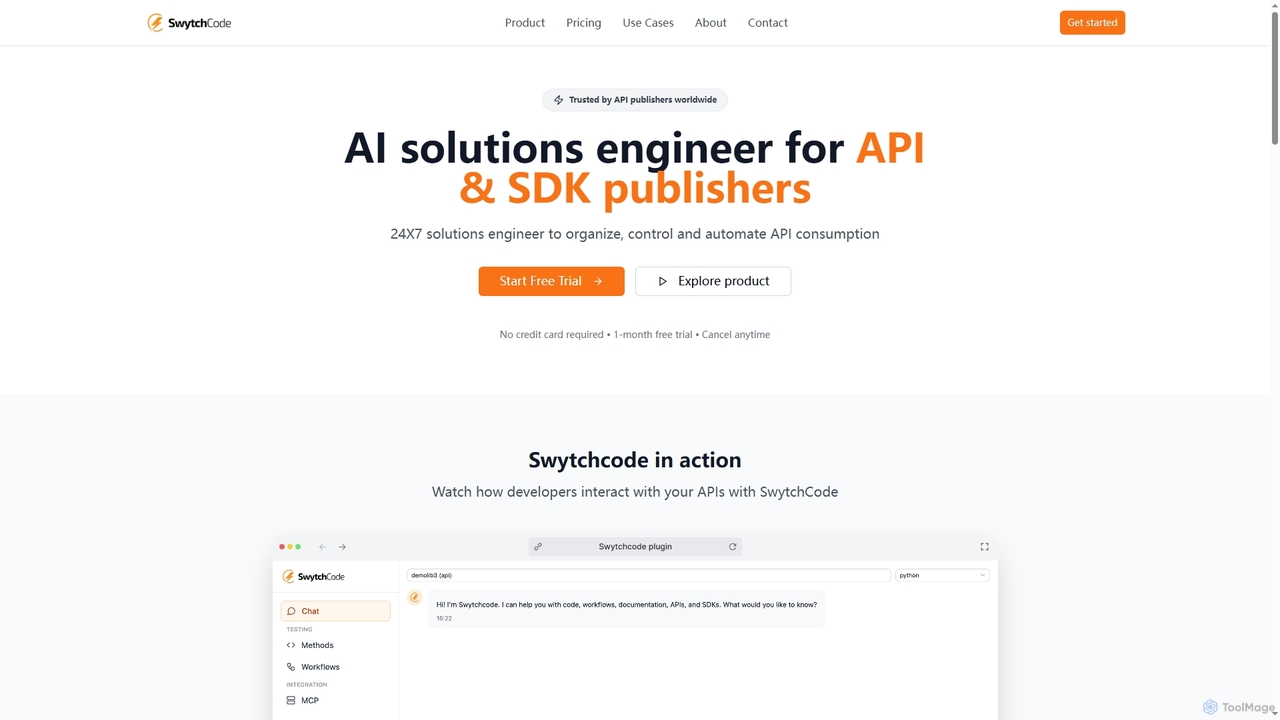
Swytchcode

Swytchcode is an AI solutions engineer designed for API and SDK publishers to streamline API consumption. It automates code generation for 15+ languages, simplifies complex integrations, and reduces support overhead. Publishers can manage APIs, create interactive playgrounds, and enable AI-API communication, significantly boosting developer adoption and cutting costs.

Customer Support Automation
Visits 16.9KFavorites 144Likes 149
Superapp
Freemium

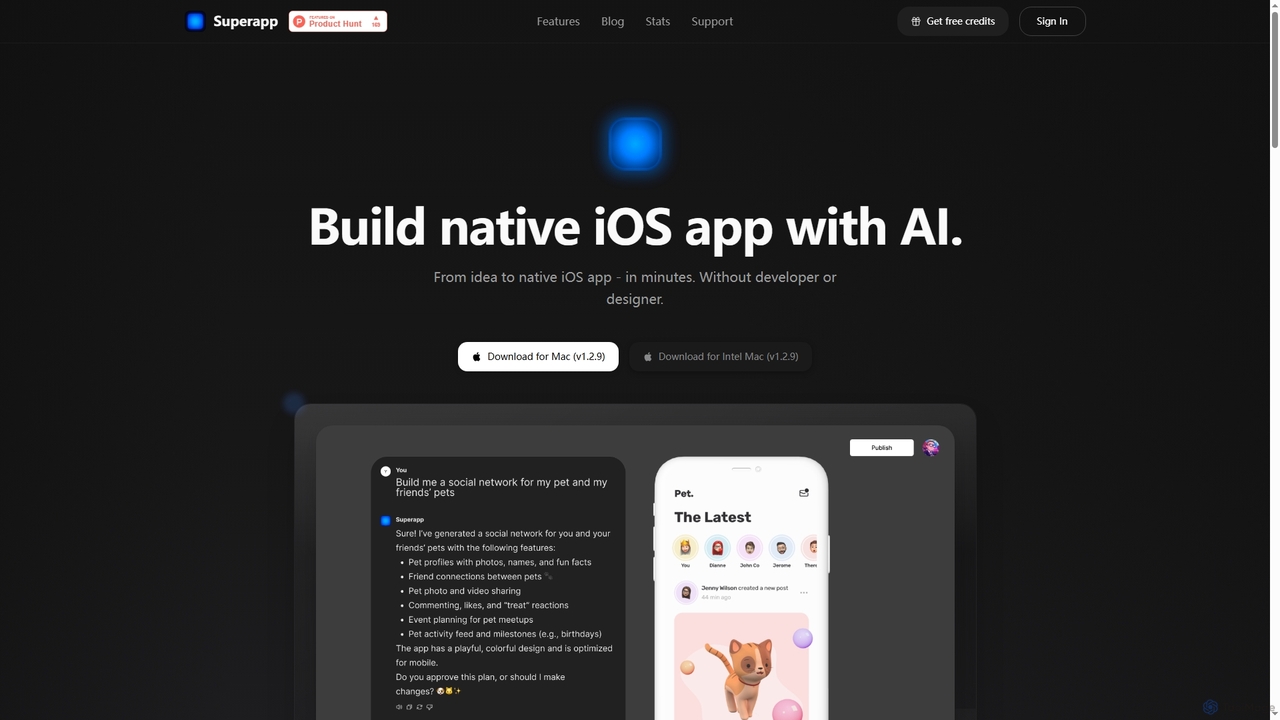
Superapp

Superapp is an AI-powered desktop application for Mac that enables anyone, regardless of technical skill, to build native iOS applications from an idea to a fully functional app in minutes. It generates high-quality Swift code, integrates with Supabase for backend, and includes a built-in design system, making app development accessible and efficient for founders and non-developers.

Ios Development
Visits 63.4KFavorites 124Likes 131
CodeDefender
Freemium

CodeDefender

CodeDefender is an AI-powered sidekick for developers and non-developers, designed to enhance code quality, security, and performance. It integrates directly into popular IDEs like VS Code and Visual Studio, offering features like code analysis, documentation generation, code conversion, and support for local LLMs, ensuring both productivity and data privacy.

Code Assistant
Visits 6.4KFavorites 155Likes 154
Superagent
Freemium

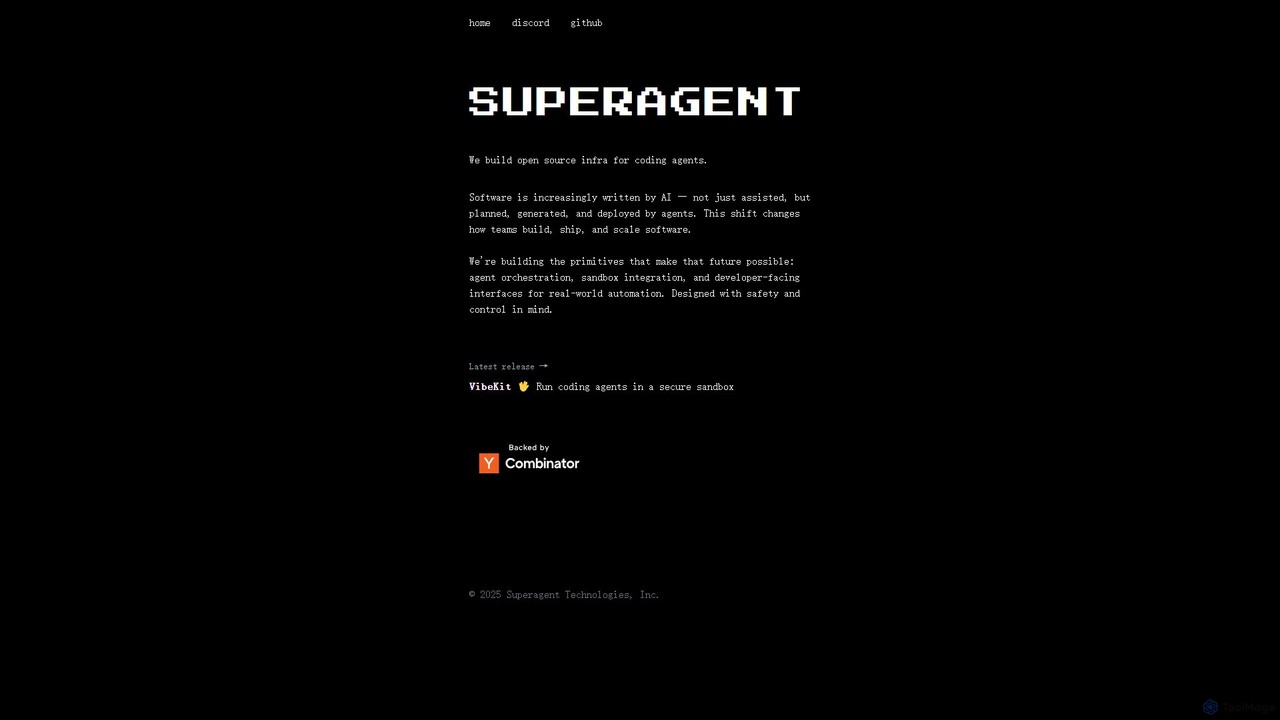
Superagent

Superagent is an open-source infrastructure for building, managing, and deploying autonomous AI coding agents. Designed for developers, it provides the essential primitives like agent orchestration, secure sandbox integration (VibeKit), and developer-friendly interfaces. This framework empowers teams to automate complex software development tasks, from feature generation and bug fixing to CI/CD management, shifting software creation into a new, AI-driven era with a strong emphasis on safety and control.

Orchestration
Visits 47.1KFavorites 146Likes 151

About Code Generation

Code Generation tools are AI-powered systems that automate the creation of source code, scripts, and other programming artifacts. Leveraging advanced machine learning models, they transform natural language descriptions or high-level specifications into functional code, significantly accelerating development cycles. As a key component of AI productivity tools, they empower developers to focus on complex problem-solving rather than repetitive coding tasks.

Core Features

  • Natural Language to Code: Converts plain English descriptions into executable code snippets or full functions.
  • Code Completion & Suggestion: Provides intelligent, context-aware suggestions for lines, blocks, or entire functions during coding.
  • Bug Detection & Fixing: Identifies potential errors and suggests corrections or automatically generates fixes.
  • Multi-language Support: Generates code in various programming languages like Python, JavaScript, Java, C, Go, etc.
  • Test Case Generation: Automatically creates unit tests or integration tests for existing codebases.

Applicable Scenarios

Software development teams use code generation to rapidly prototype new features or modules. Individual developers leverage these tools to overcome writer's block, learn new languages, or automate boilerplate code. Enterprises integrate code generation into their CI/CD pipelines to enhance efficiency and maintain code quality across large projects.

How to Choose

When selecting a code generation tool, consider its support for your primary programming languages and frameworks. Evaluate the accuracy and relevance of the generated code, as well as its integration capabilities with your existing IDEs and development workflows. Assess the tool's ability to handle complex logic versus simple boilerplate, and review its pricing model and community support.

Code Generation use cases

1

Automating Boilerplate Code Generation

A backend developer frequently needs to create standard CRUD (Create, Read, Update, Delete) operations for new database models. Using a code generation tool, they input the model schema, and the AI automatically generates the necessary API endpoints, database interactions, and validation logic, saving hours of repetitive coding.

2

Accelerating Frontend Component Development

A frontend engineer is building a new user interface with numerous similar components (e.g., forms, tables, navigation elements). By providing a high-level description or a design system specification, the code generation tool produces the React, Vue, or Angular component code, including props, state management, and basic styling, allowing for faster UI assembly.

3

Generating Unit Tests for Existing Functions

A QA engineer or developer needs to ensure robust test coverage for a critical application module. They feed the existing function code into a code generation tool, which then analyzes the function's logic and automatically creates a comprehensive suite of unit tests, covering various edge cases and expected behaviors, significantly reducing manual test writing effort.

4

Prototyping New Features with Minimal Effort

A product manager or lead developer wants to quickly visualize a new feature's functionality without investing full development resources. They describe the feature's requirements in natural language, and the code generation tool rapidly produces a basic, functional prototype, enabling early feedback and iterative design before deep coding begins.

5

Migrating Legacy Code to Modern Frameworks

An organization is upgrading an older application written in an outdated framework to a modern one. Code generation tools can assist by analyzing the legacy code's logic and suggesting or even generating equivalent code snippets or refactored components in the new framework, streamlining the migration process and reducing manual conversion errors.

6

Learning New Programming Languages or APIs

A developer is learning a new programming language or unfamiliar API. Instead of constantly looking up syntax and examples, they can use a code generation tool to describe the desired functionality. The AI generates correct code snippets, serving as an interactive learning aid and accelerating their understanding and adoption of new technologies.

Code Generation FAQ

What are Code Generation tools?

Code Generation tools are AI-powered software applications that automatically write, complete, or suggest programming code based on user input, natural language descriptions, or existing code context. They leverage large language models (LLMs) to understand intent and produce functional code snippets, functions, or even entire applications, significantly enhancing developer productivity and reducing manual coding effort.

How do AI Code Generation tools work?

AI Code Generation tools typically work by utilizing advanced machine learning models, primarily large language models (LLMs), trained on vast datasets of public code. When a user provides a prompt (e.g., natural language description, code comment, partial code), the AI processes this input, predicts the most probable and contextually relevant code sequence, and generates the corresponding output. This process involves understanding syntax, semantics, and common programming patterns.

What are the main benefits of using Code Generation tools?

The main benefits include significantly increased development speed by automating repetitive tasks and boilerplate code. They help reduce human error, improve code consistency, and allow developers to focus on higher-level architectural design and complex problem-solving. Additionally, these tools can aid in learning new languages or frameworks by providing instant, correct code examples.

How do Code Generation tools differ from traditional IDE auto-completion?

While traditional IDE auto-completion suggests keywords or methods based on syntax and local context, Code Generation tools, especially AI-powered ones, offer a much deeper level of intelligence. They can generate entire functions, classes, or even complex logic from natural language prompts, understand broader project context, and suggest solutions that go beyond simple syntax matching, often predicting user intent more accurately.

What are the key considerations when choosing a Code Generation tool?

When choosing a Code Generation tool, consider its compatibility with your preferred programming languages and development environment (IDE). Evaluate the quality and accuracy of the generated code, its ability to handle complex logic, and its integration with version control systems. Also, assess the tool's security features, data privacy policies, and the cost-effectiveness of its subscription model.