ToolMage
Sign in

Best 10 Biology AI tools for Science

Popular Biology AI tools in Science include BioRender, Flora Incognita, Synthace, JADBio, BioBuddy, BioGPT, Agent Crop, and APEER, helping you work more efficiently.

BioBuddy
Freemium

BioBuddy

BioBuddy is an AI-powered study tool designed for life science students. It instantly generates interactive concept maps from your questions or notes, helping you visualize complex biology topics, understand connections, and retain information more effectively. Built by students for students, it aims to streamline the learning process and save valuable study time.

Learning Assistant
Visits 7.2KFavorites 120Likes 111
APEER
Freemium

APEER

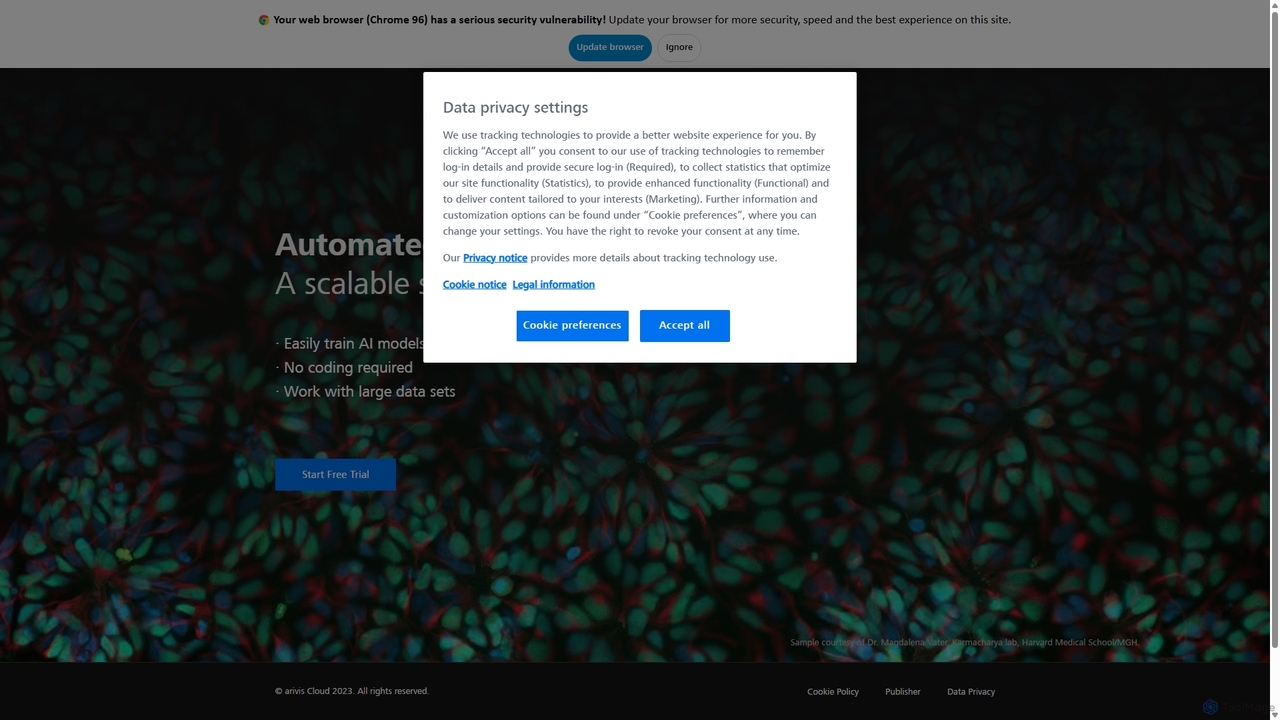
APEER (now part of arivis Cloud) is an AI-powered, cloud-based platform for automated scientific image analysis. It empowers researchers in biology and biotech to leverage deep learning for complex tasks like image segmentation and object detection without coding. It streamlines workflows, increases throughput, and ensures reproducible results for microscopy and cell analysis.

Image Processing
Visits 5.7KFavorites 112Likes 121
BioGPT
Freemium

BioGPT

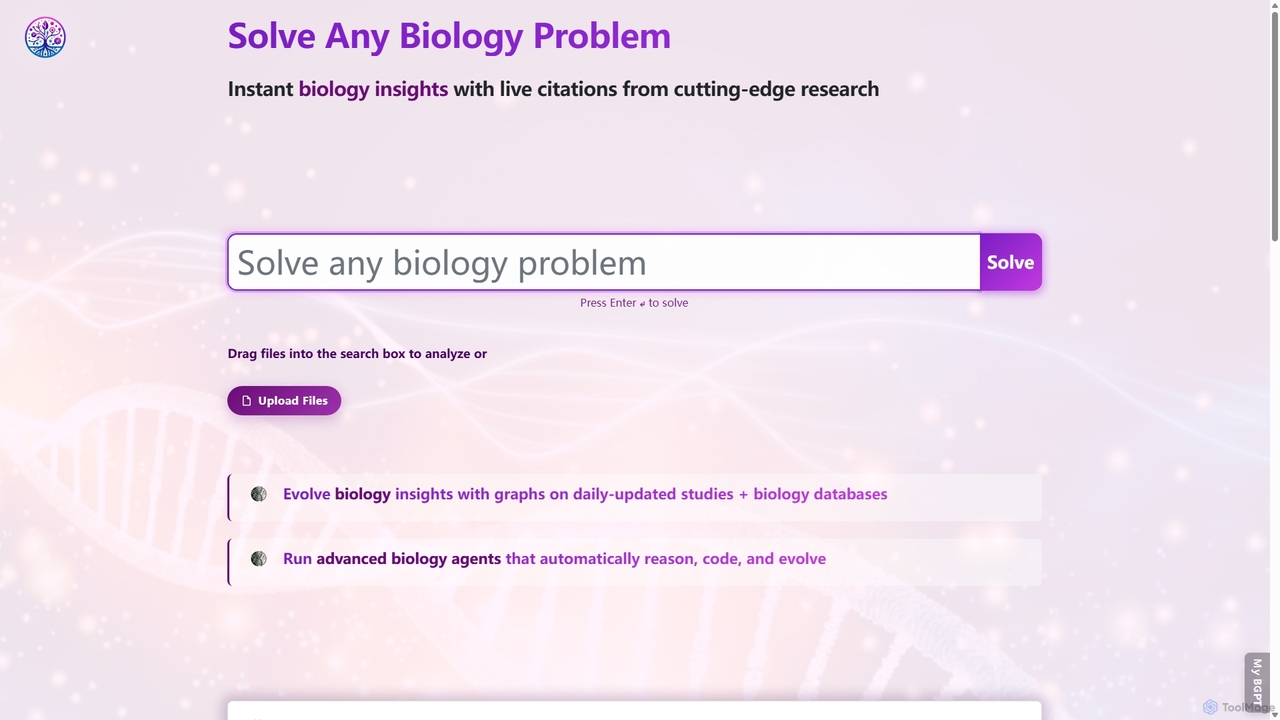
BioGPT is a specialized AI assistant for biologists, researchers, and students. It accelerates scientific discovery by solving complex biology problems, reviewing papers, analyzing data, visualizing results, designing experiments, and testing hypotheses across fields like genomics, neuroscience, and cancer biology.

Research
Visits 6.1KFavorites 140Likes 137
JADBio
Freemium

JADBio

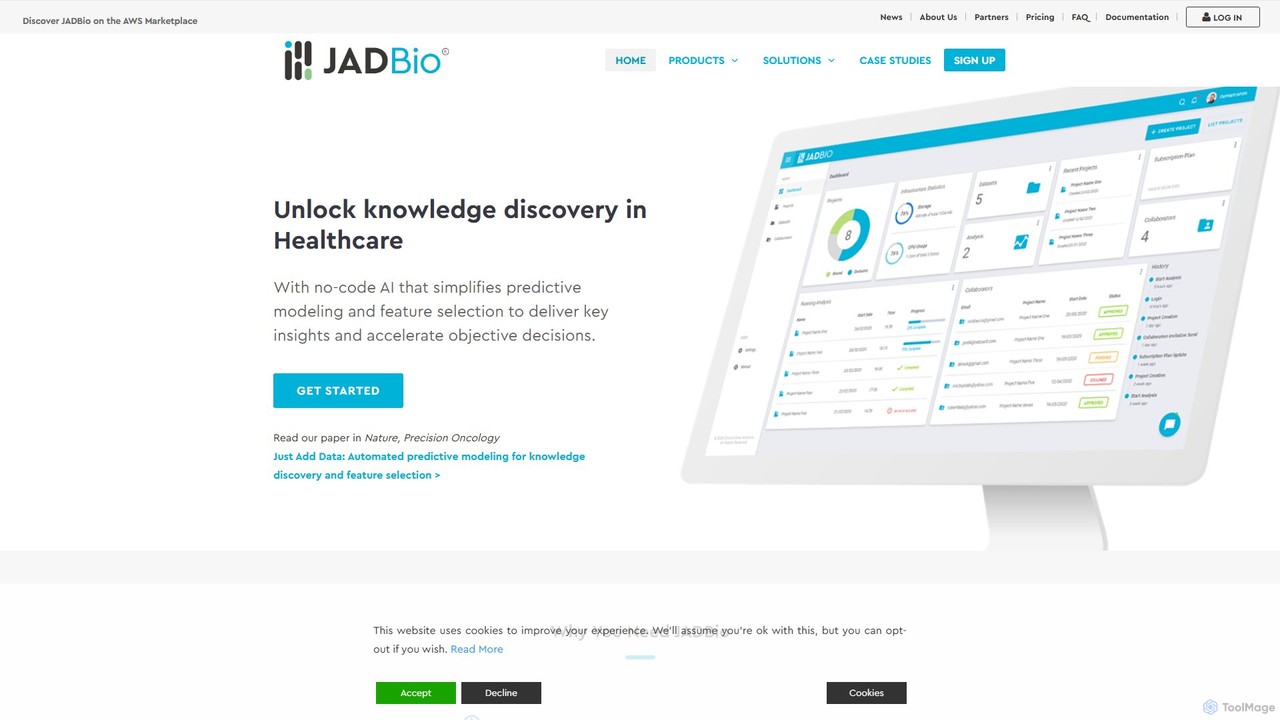
JADBio is a no-code Automated Machine Learning (AutoML) platform designed for life sciences and biotechnology. It specializes in analyzing complex, high-dimensional biological data (omics) to accelerate biomarker discovery, identify predictive biosignatures, and build accurate predictive models for precision medicine and translational research.

Machine Learning
Visits 8.4KFavorites 107Likes 124
Agent Crop
Free

Agent Crop

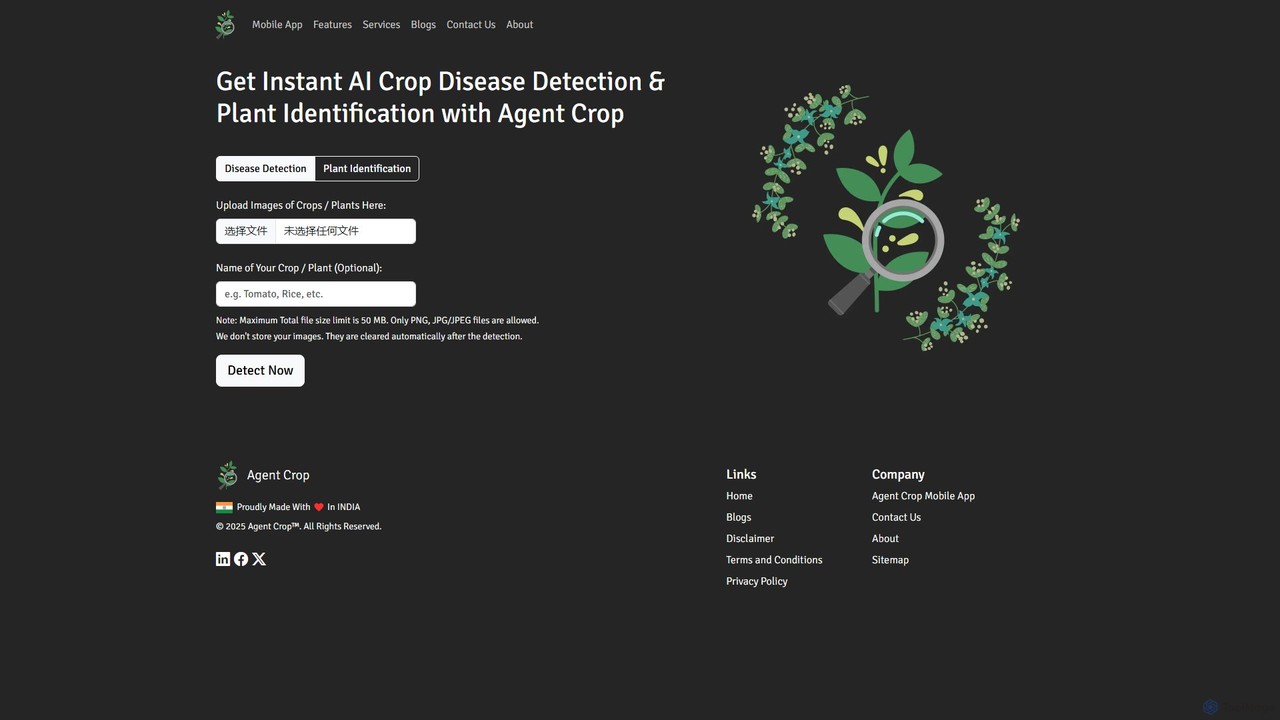
Agent Crop is a free AI-powered tool for instant crop disease detection and plant identification. Simply upload an image of a plant or crop to receive a quick and accurate diagnosis, along with recommended treatments. Designed for farmers, gardeners, and agricultural professionals, it supports multiple languages and helps improve crop health and yield.

Learning
Visits 6KFavorites 135Likes 124
BioGPT
Freemium

BioGPT

BioGPT is an AI-powered research assistant designed for the biology and life sciences community. It helps researchers, students, and professionals solve complex biological problems by analyzing scientific papers, designing experiments, interpreting data, generating hypotheses, and creating lab protocols, all based on cutting-edge research.

Learning
Visits 5.9KFavorites 136Likes 111
Synthace
Paid

Synthace

Synthace is a life sciences R&D cloud platform combining software and expert consultation to accelerate drug discovery. It helps biology teams design, automate, and analyze complex experiments, such as assay development, using multifactorial methods and lab automation. This approach significantly reduces timelines, increases experimental throughput, and delivers more robust, reliable data for critical decision-making in biopharmaceutical research.

Automation
Visits 14.5KFavorites 114Likes 145
BioRender
Freemium

BioRender

BioRender is a web-based software that empowers scientists to create professional scientific figures, diagrams, and illustrations with ease. Featuring a vast library of over 50,000 scientifically accurate icons and templates, it streamlines the process of visualizing complex biological concepts for publications, presentations, and grants. It's designed by scientists, for scientists, to replace generic tools like PowerPoint for scientific communication.

Illustration
Visits 2.2MFavorites 118Likes 116

About Biology

Biology AI tools are specialized artificial intelligence applications designed to analyze, interpret, and model complex biological data. Leveraging machine learning, deep learning, and computational biology, these tools accelerate scientific discovery, enhance research efficiency, and provide novel insights across various life science domains. They transform raw biological information into actionable knowledge, from molecular interactions to ecosystem dynamics, significantly advancing fields like medicine, agriculture, and environmental science.

Core Features

  • Genomic Data Analysis: Automates the processing and interpretation of DNA/RNA sequencing data, including variant calling, gene expression analysis, and functional annotation.
  • Protein Structure Prediction: Utilizes AI models to accurately predict the three-dimensional structures of proteins from their amino acid sequences, critical for understanding function and drug design.
  • Drug Discovery & Design: Facilitates virtual screening of compounds, predicts drug-target interactions, and optimizes lead molecules for therapeutic development.
  • Medical Image Interpretation: Applies computer vision to analyze biological and medical images, assisting in disease diagnosis, pathology, and cellular phenotyping.
  • Bioinformatics Workflow Automation: Streamlines complex bioinformatics pipelines, from data preprocessing to statistical analysis and visualization, reducing manual effort and errors.

Applicable Scenarios

These tools are indispensable in pharmaceutical research and development for identifying drug targets and optimizing compounds. Academic research labs utilize them for advanced genomic and proteomic studies, accelerating hypothesis generation and validation. Clinical diagnostics benefits from AI-powered image analysis for more accurate and earlier disease detection, while agricultural science employs them for crop optimization and disease resistance.

How to Choose

When selecting Biology AI tools, consider their compatibility with your specific biological data types (e.g., genomic, proteomic, imaging). Evaluate the model's accuracy, interpretability, and validation against established biological benchmarks. Assess the tool's scalability for handling large datasets and its integration capabilities with existing bioinformatics platforms. Finally, consider regulatory compliance, especially for tools used in clinical or drug development contexts, and the level of technical support provided.

Featured tool rankings

Biology use cases

1

Accelerating Drug Target Identification

Pharmaceutical researchers utilize AI to sift through vast genomic, proteomic, and clinical datasets. By identifying patterns and correlations, AI tools pinpoint potential disease-causing genes or proteins, significantly reducing the time and cost associated with traditional drug target discovery and validation processes.

2

Predicting Protein Structures for Drug Design

Structural biologists and biochemists employ AI models to accurately predict the complex three-dimensional structures of proteins from their amino acid sequences. This capability is crucial for understanding protein function, designing novel therapeutic molecules, and optimizing drug binding affinities, accelerating the rational drug design pipeline.

3

Automating Genomic Variant Analysis

Geneticists and clinical researchers leverage AI to rapidly analyze high-throughput sequencing data, identifying and classifying genetic variants (e.g., SNPs, indels). This automation aids in diagnosing genetic diseases, understanding disease susceptibility, and guiding personalized medicine strategies by quickly filtering relevant mutations from noise.

4

Enhancing Medical Image Diagnostics

Pathologists and radiologists use AI-powered computer vision to analyze intricate medical images, such as histology slides, MRI scans, and X-rays. AI can detect subtle anomalies, quantify disease progression, and assist in early diagnosis of conditions like cancer or neurodegenerative diseases, improving diagnostic accuracy and efficiency.

5

Optimizing Agricultural Crop Breeding

Agronomists and plant geneticists apply AI to analyze large datasets of plant genomics, phenomics, and environmental factors. AI models predict crop yield under various conditions, identify genes associated with desirable traits (e.g., disease resistance, drought tolerance), and optimize breeding programs to develop more resilient and productive crops.

6

Simulating Complex Biological Systems

Computational biologists and systems biologists use AI to build and run simulations of complex biological processes, from molecular dynamics to cellular signaling pathways and ecosystem interactions. These simulations provide deeper mechanistic insights, test hypotheses virtually, and predict system behavior under different perturbations, reducing the need for extensive wet-lab experiments.

Biology FAQ

What are AI tools in Biology?

AI tools in Biology are advanced software applications that use artificial intelligence, primarily machine learning and deep learning, to process, analyze, and interpret complex biological data. They are designed to extract meaningful patterns, make predictions, and automate tasks in areas like genomics, proteomics, drug discovery, and medical imaging, accelerating research and development in life sciences.

How do AI tools accelerate biological research?

AI tools accelerate biological research by automating repetitive tasks, analyzing massive datasets far beyond human capacity, and identifying subtle patterns that might otherwise be missed. This leads to faster hypothesis generation, more efficient experimental design, quicker drug discovery cycles, and improved diagnostic accuracy, significantly reducing the time and cost of scientific endeavors.

What types of biological data can AI analyze?

AI tools in Biology can analyze a wide array of biological data, including genomic sequences (DNA, RNA), proteomic data (protein sequences, structures, interactions), metabolomic profiles, medical imaging (histology, MRI, CT scans), clinical patient records, and environmental data. Their versatility allows for multi-modal data integration and comprehensive analysis across different biological scales.

What is the difference between AI in Biology and general scientific AI?

While general scientific AI applies to various scientific disciplines, AI in Biology is specifically tailored to the unique complexities and challenges of biological systems. It incorporates domain-specific knowledge, handles highly heterogeneous and often noisy biological data, and addresses problems like protein folding, drug-target interaction, and disease mechanisms, which require specialized algorithms and biological context awareness.

What are the key challenges in applying AI to Biology?

Key challenges include the inherent complexity and variability of biological data, often characterized by high dimensionality and small sample sizes. Data quality and standardization are significant hurdles. Additionally, ensuring the interpretability of AI models in biological contexts, addressing ethical considerations (e.g., in personalized medicine), and validating AI predictions with experimental evidence remain critical areas of focus for researchers.