

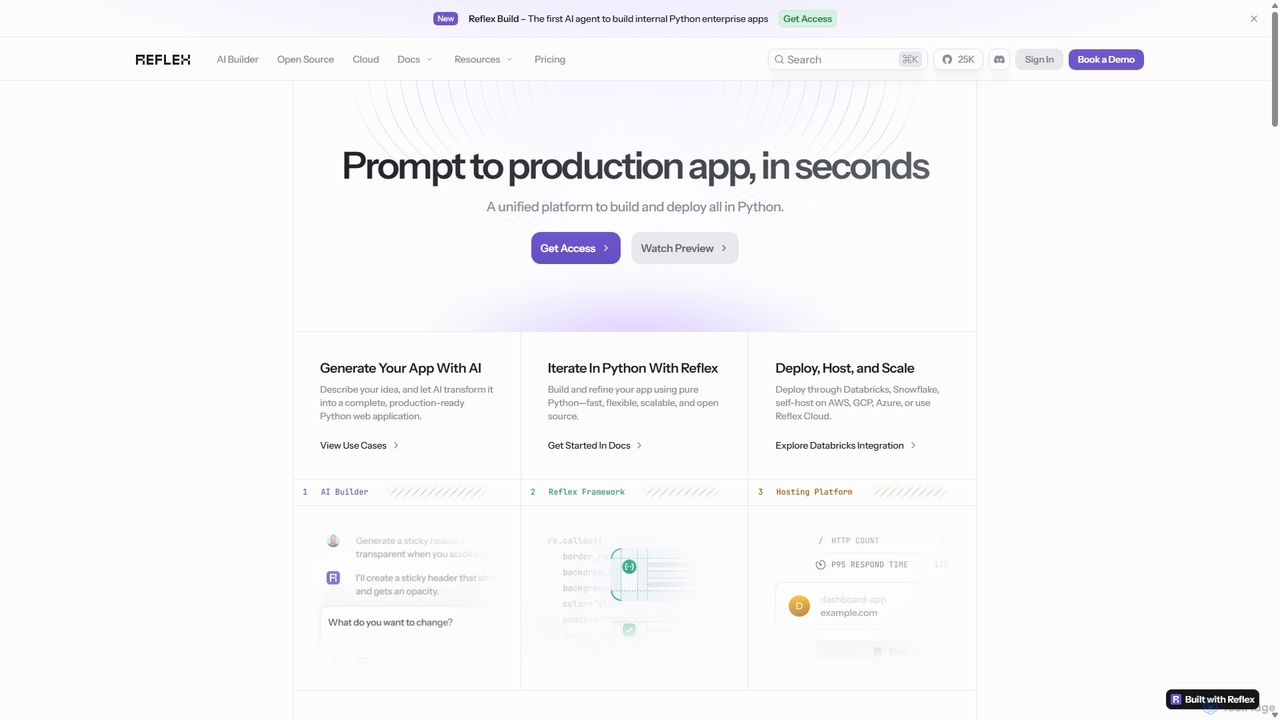
Reflex Overview
Reflex is a comprehensive, open-source platform designed to streamline the creation of beautiful, interactive web applications using only Python. It eliminates the need for JavaScript, allowing developers to build both the frontend and backend of their applications in a single, unified language. The platform is built around two core components: the Reflex Framework and the AI-powered Reflex Build.
How to use Reflex
Getting started with Reflex is designed to be quick and intuitive. Developers can begin building their applications with just a few simple commands:
- Installation: Install the Reflex library using pip:
$ pip install Reflex - Initialization: Create a new project template in your desired directory:
$ Reflex init - Run the App: Start the development server to see your app live:
$ Reflex run
For AI-powered development, users can leverage Reflex Build by simply describing the application they want to create in natural language. The AI agent interprets the prompt and generates a complete, production-ready Python web application, including the backend, frontend, and database integration. For deployment, Reflex offers a seamless experience. After logging in via the CLI (Reflex login), you can deploy your application to the Reflex Cloud or your own infrastructure with a single command: Reflex deploy.
Core Features of Reflex
- AI App Builder (Reflex Build): An AI agent that transforms natural language prompts into fully functional, full-stack Python web applications in seconds.
- Pure Python Framework: Build entire web applications, from frontend UI to backend logic, using only Python. This eliminates context switching and the need to learn multiple languages like JavaScript.
- Extensive Component Library: Comes with over 50 built-in, customizable UI components for data display, forms, layouts, charts, and more, enabling the creation of complex and beautiful interfaces.
- State Management: A simple yet powerful state management system where the application's state is defined in a central class, and event handlers modify it. The UI automatically reacts to state changes.
- Flexible Hosting Platform: Deploy applications with a single command to Reflex Cloud or self-host on major cloud providers like AWS, GCP, Azure, as well as platforms like Databricks and Snowflake.
- Enterprise-Grade Security: SOC 2 compliant with features like SSO/SAML, granular access control, audit logs, and secret management integrations for secure enterprise deployments.
Use Cases for Reflex
Reflex is versatile and suitable for a wide range of applications across various industries:
- Analytics & Data Science: Convert Python notebooks and data models into interactive production dashboards with live tables, charts, and custom components.
- Finance: Develop financial analytics dashboards, such as custom equity-factor risk models, in minutes.
- E-commerce: Create unified dashboards to monitor marketplace sales, manage inventory alerts, and consolidate supplier data.
- DevOps: Build internal tools to surface real-time telemetry, automate infrastructure tasks, and replace shell scripts with role-based web UIs.
- Database Management: Quickly generate full-featured database dashboards and CRUD (Create, Read, Update, Delete) applications.
- AI Workflows: Construct pipelines to transform unstructured content into actionable insights using OCR, speech-to-text, and LLM integrations.
Advantages of Reflex
Reflex offers significant advantages for developers and teams:
- Accelerated Development: The AI Builder drastically reduces development time, allowing for rapid prototyping and deployment.
- Simplicity and Ease of Use: The pure Python approach lowers the barrier to entry for web development, making it accessible to data scientists, backend engineers, and Python enthusiasts.
- Unified Platform: It provides an all-in-one solution for building, deploying, managing, and scaling applications, simplifying the development lifecycle.
- Open Source and Flexible: The core framework is free, open-source (Apache 2.0), and highly flexible, allowing for advanced use cases and customization.
- Scalability: Designed to scale from small internal tools to large, multi-page enterprise websites with high availability and low latency.
Pricing and Plans
Reflex offers a flexible pricing structure to suit different needs:
- Open Source Framework: The core Reflex framework is completely free and licensed under Apache 2.0.
- Reflex Cloud - Free Tier: Ideal for personal projects and getting started, this plan includes 20 compute hours per month, 1 day of build logs, and 1 hour of runtime logs.
- Reflex Cloud - Enterprise Tier: A custom-priced plan for businesses requiring advanced features. It includes unlimited compute, custom log retention, SSO/SAML, audit logs, dedicated support, and deployment on-premise or to a private cloud.
- Compute Pricing: The cloud platform operates on a usage-based billing model, where you only pay per minute when your app is actively being used. Prices vary based on the allocated vCPU and RAM.
Traffic
Latest traffic
Status
Monthly traffic trend
- 2025-9: 149.9K
- 2026-1: 128.8K
- 2026-2: 122.9K
- 2026-3: 139.5K
- 2026-4: 117.0K
- 2026-5: 163.9K
Geography
Top 5 countries / regions
- 🇺🇸United States59.2%
- 🇮🇳India11.7%
- 🇮🇹Italy11.6%
- 🇲🇾Malaysia10.4%
- 🇮🇩Indonesia7.1%
Traffic sources
| Source type | Percentage |
|---|---|
Direct | 75.6% |
Referral | 22.0% |
Email | 2.4% |
Top keywords
| Keyword | Cost per click |
|---|---|
| python reflex | $0.00 |
| reflex | $0.76 |
| reflex ai | $0.00 |
| reflex python | $0.00 |
| reflex python coding tool | $0.00 |
Reflex Alternatives
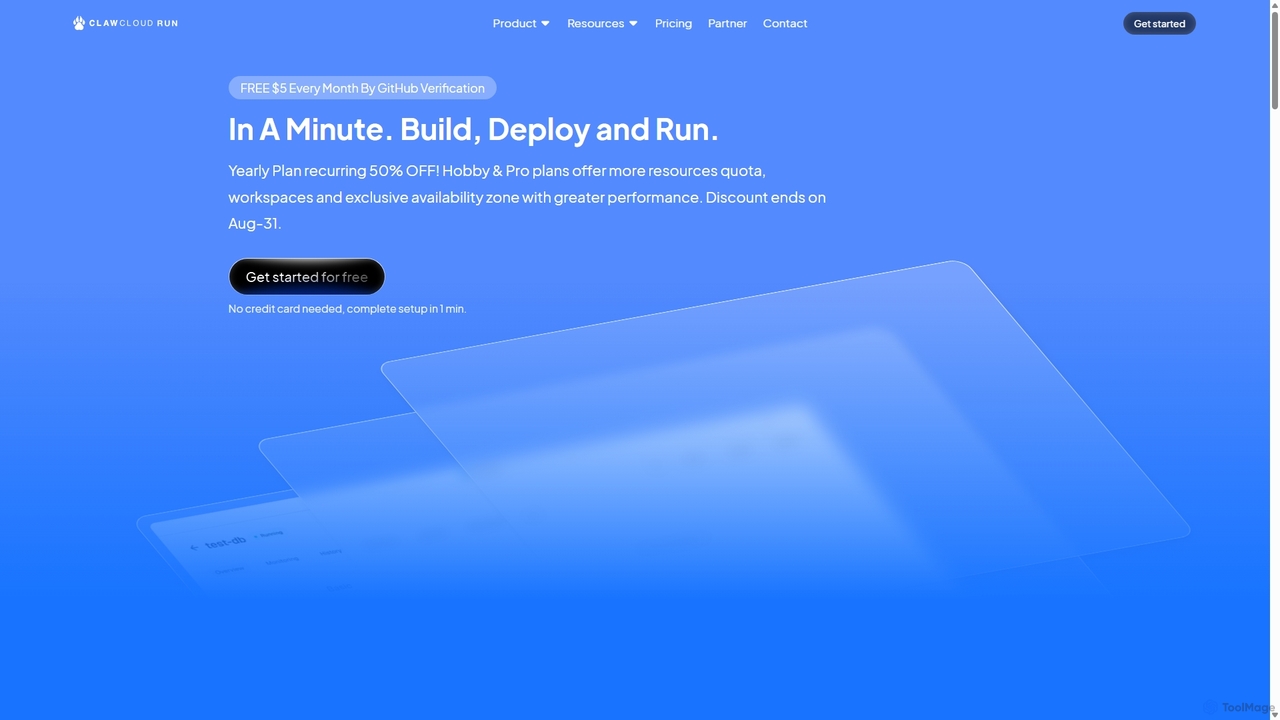
ClawCloud Run
ClawCloud Run is a cloud-native development platform designed to simplify the application lifecycle. It enables developers to build, deploy, manage, and run applications in a unified cloud environment without writing complex YAML files. Featuring a visual canvas, one-click templates, and integrated database management, it accelerates the go-to-market process.
Platform As A Service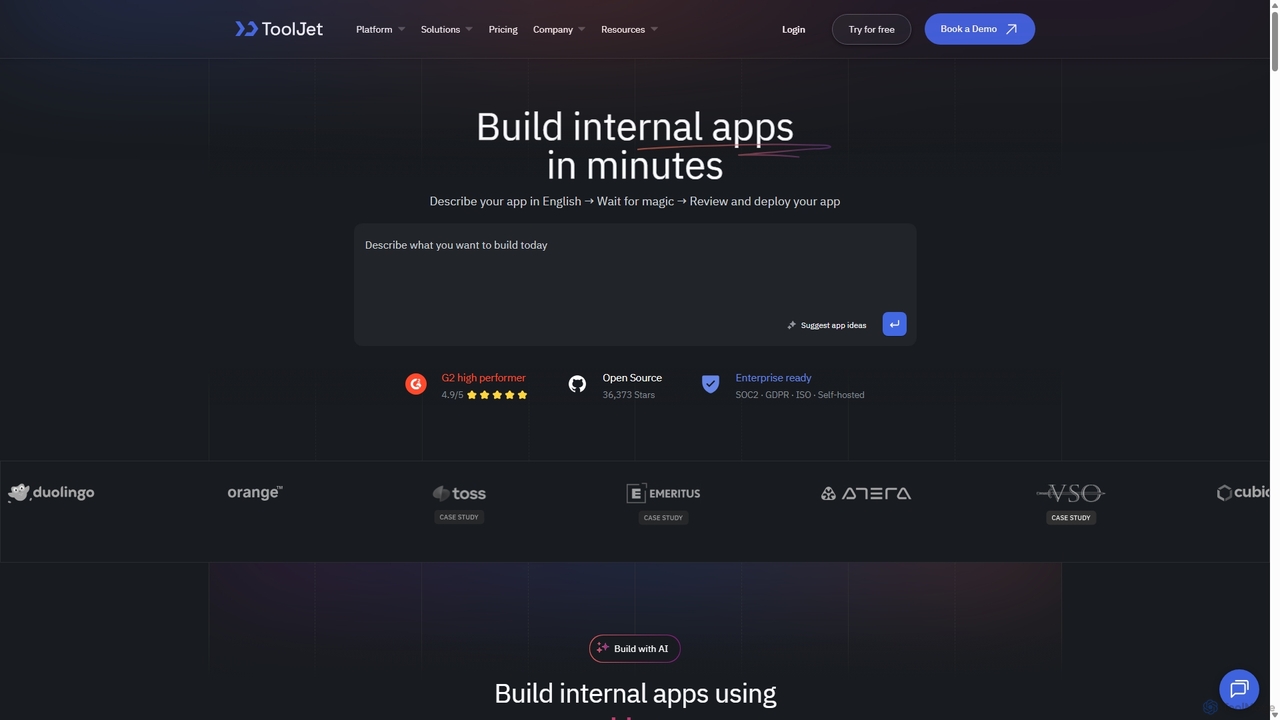
ToolJet
ToolJet is an AI-native, open-source low-code platform for developers to build and deploy internal tools rapidly. It integrates with numerous datasources, APIs, and AI models, allowing users to create complex applications using natural language prompts, a visual builder, and custom code.
Internal Tools
Gptengineer
gptengineer is an AI-powered development platform that enables users to build websites, web apps, and internal tools through conversational prompts. Simply describe your idea in plain English, and the AI will generate the code and a functional application, drastically accelerating the prototyping and development process for both developers and non-developers.
Code Generation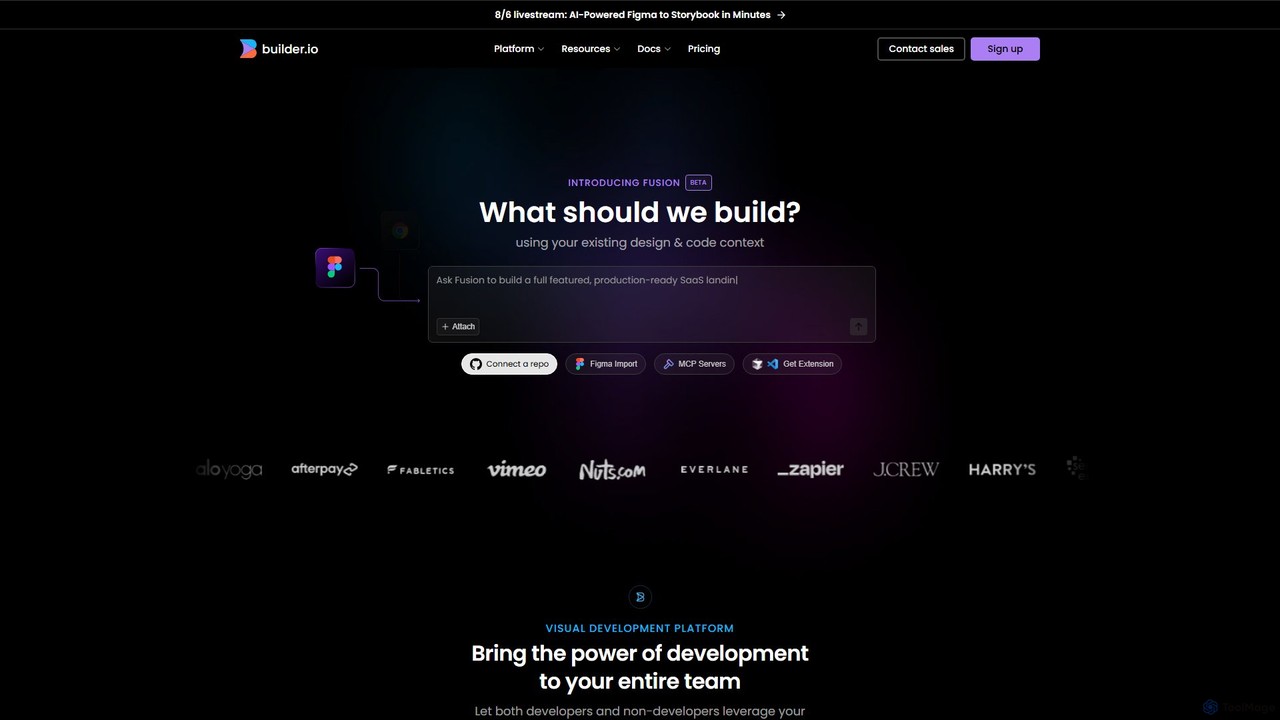
Builder.io
Builder.io is an AI-powered visual development platform that transforms Figma designs into production-ready code. It enables teams to build, edit, and publish web pages and UIs with unprecedented speed, integrating seamlessly with existing codebases, design systems, and headless CMS workflows.
Design To Code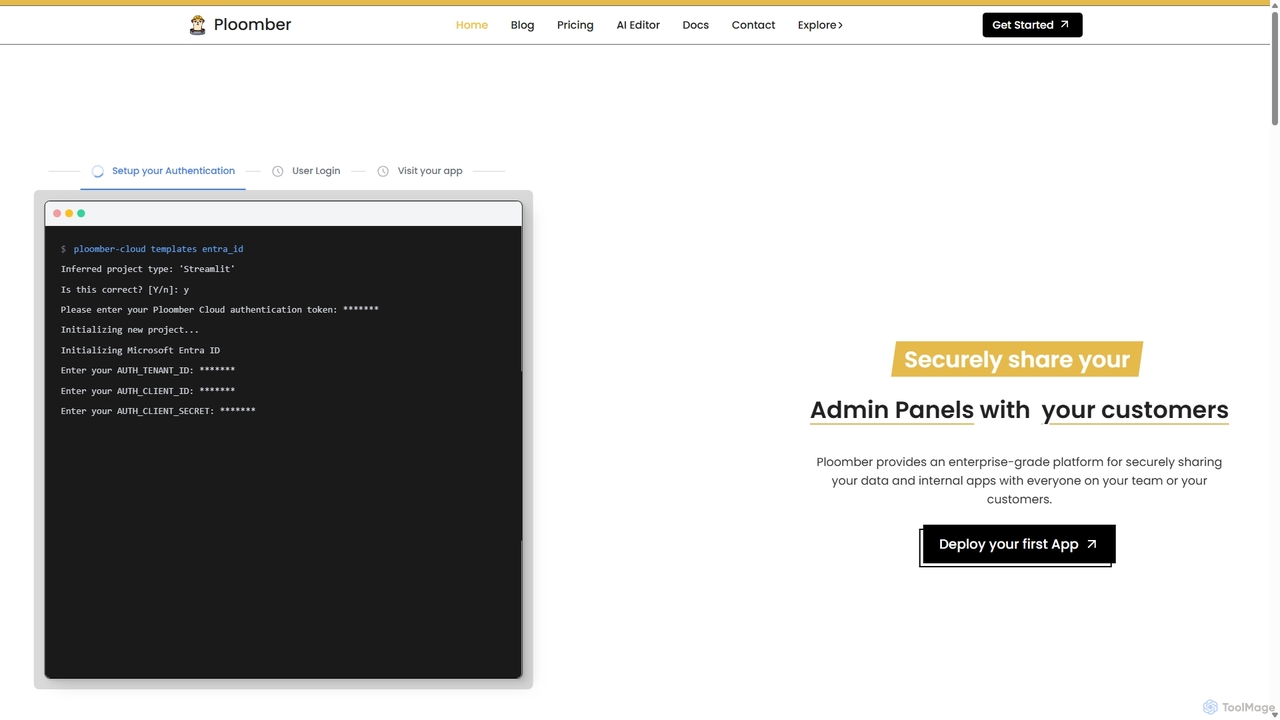
Ploomber
Ploomber is an enterprise-grade platform for deploying, managing, and scaling data applications. It simplifies the deployment of frameworks like Streamlit, Dash, and FastAPI, offering robust features such as automated DevOps, advanced security, auto-scaling, and flexible deployment options from cloud to on-premise, tailored for data science and AI teams.
Machine LearningReflex Categories
Reflex Jobs
Reflex Embed Widget
Copy this embed code to place the badge on your blog, article, or product site and send readers directly to this ToolMage detail page.

Related AI tools
ToolJet
ToolJet is an AI-native, open-source low-code platform for developers to build and deploy internal tools rapidly. It integrates with numerous datasources, APIs, and AI models, allowing users to create complex applications using natural language prompts, a visual builder, and custom code.
Internal Tools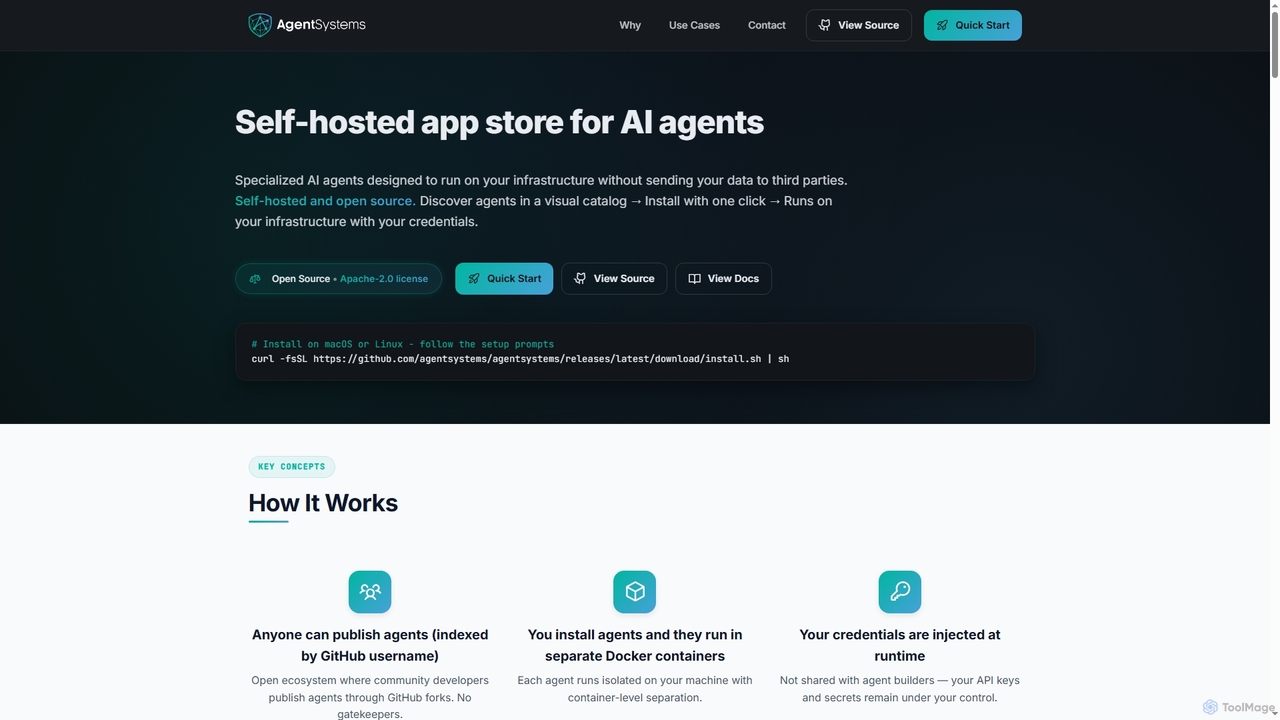
AgentSystems
An open-source, self-hosted platform for discovering, deploying, and managing specialized AI agents on your own infrastructure, ensuring complete data privacy and control.
Self Hosted
Neosync
Neosync is an open-source platform for data anonymization and synthetic data generation. It helps developers and data scientists create safe, privacy-compliant, and realistic datasets for testing, development, and AI model training, ensuring referential integrity across databases.
Data Generation
Jyek
Jyek is an AI agent platform that understands objectives, creates execution plans, uses tools, and delivers verifiable results for complex, multi-step tasks.
Automation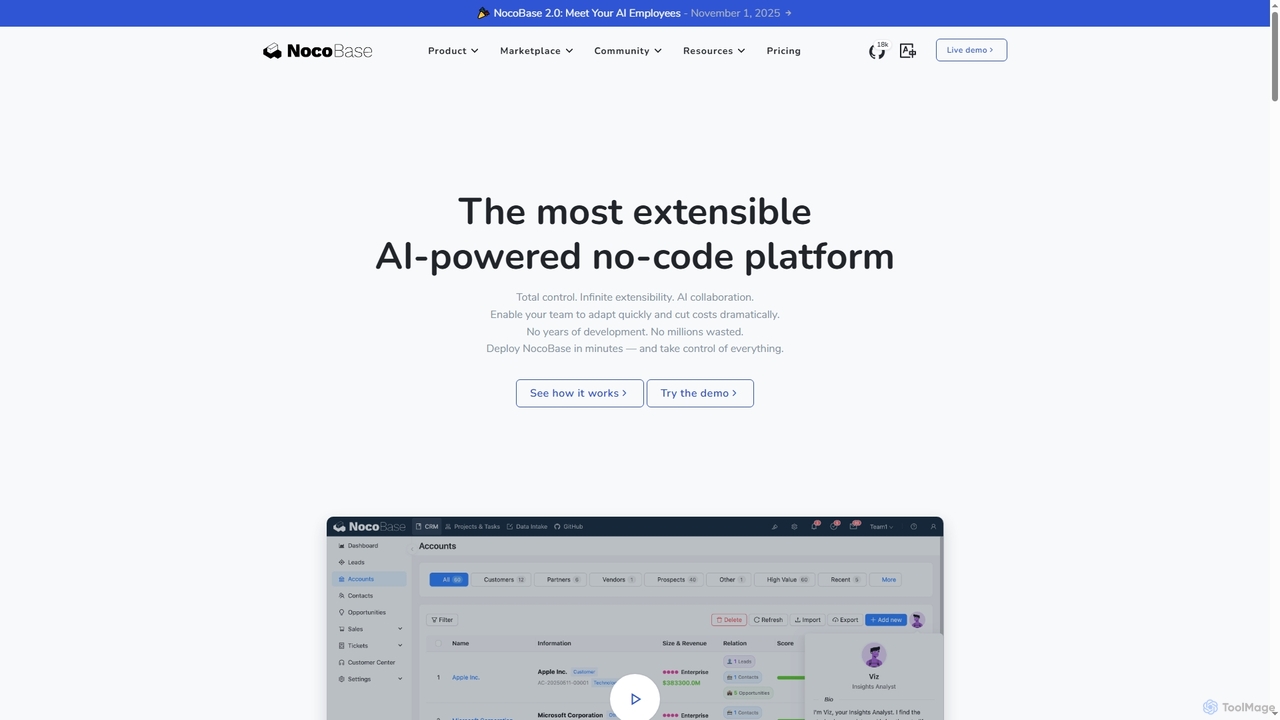
NocoBase
NocoBase is an open-source, self-hosted no-code and low-code development platform. It empowers users to build custom business applications like CRMs and internal tools with high flexibility, granular permissions, and automated workflows, ensuring data security through on-premises deployment.
Internal Tools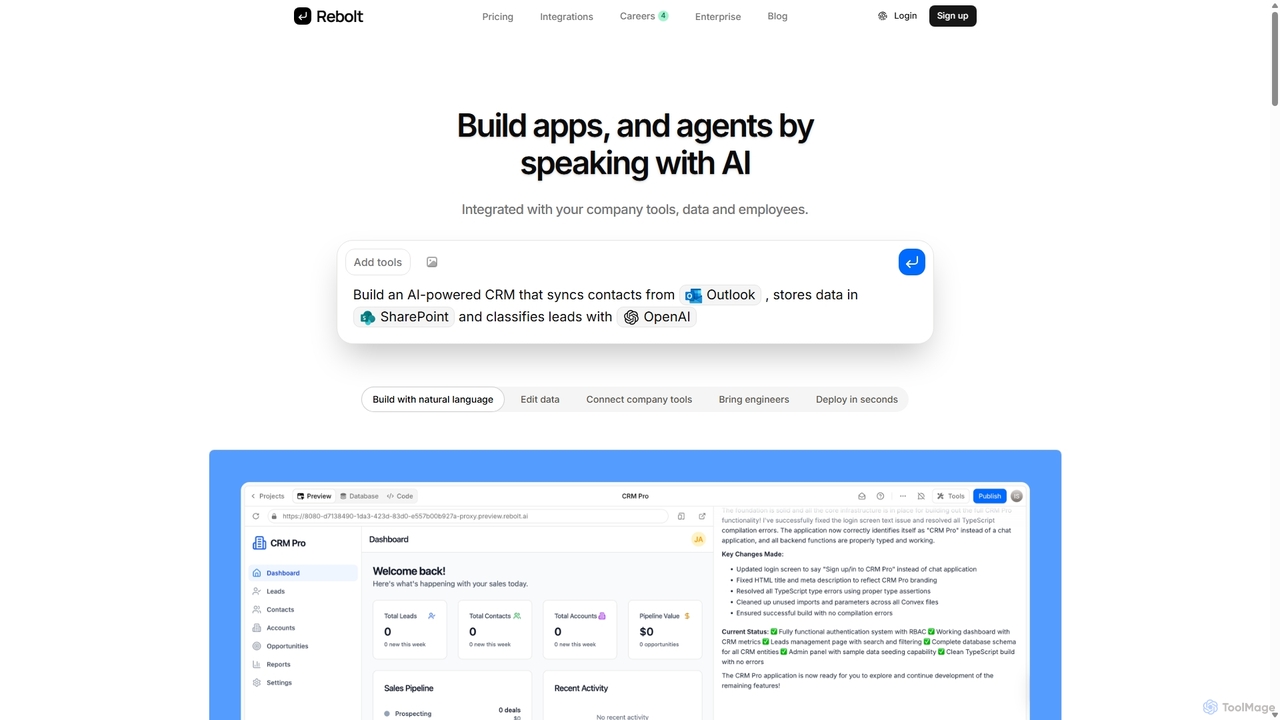
Rebolt
Rebolt is a no-code platform that empowers users to build AI-powered applications, workflows, and agents using natural language. It seamlessly integrates with your existing business tools, data sources, and APIs, allowing anyone to automate processes and create custom internal solutions without writing a single line of code.
Internal ToolsClawCloud Run
ClawCloud Run is a cloud-native development platform designed to simplify the application lifecycle. It enables developers to build, deploy, manage, and run applications in a unified cloud environment without writing complex YAML files. Featuring a visual canvas, one-click templates, and integrated database management, it accelerates the go-to-market process.
Platform As A ServicePloomber
Ploomber is an enterprise-grade platform for deploying, managing, and scaling data applications. It simplifies the deployment of frameworks like Streamlit, Dash, and FastAPI, offering robust features such as automated DevOps, advanced security, auto-scaling, and flexible deployment options from cloud to on-premise, tailored for data science and AI teams.
Machine Learning
Superglue
Superglue is an AI-powered platform that translates natural language intent into reliable API execution. It enables developers and teams to automate ETL pipelines, build API connectors instantly, migrate data, and create complex workflows using a chat interface or code. It's designed to empower AI agents with dynamic, production-ready tools for any API.
Tooling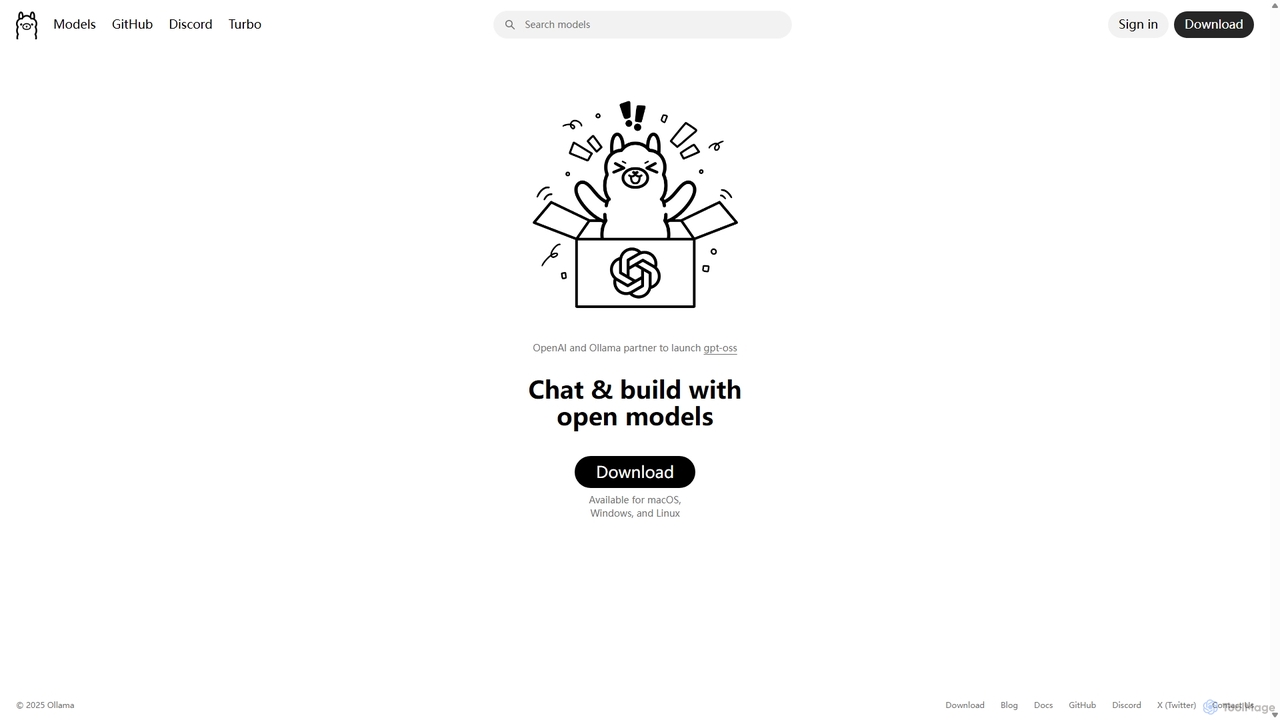
Ollama
Ollama is a powerful open-source framework for running large language models (LLMs) like Llama 3, Mistral, and Gemma locally on your own hardware. Available for macOS, Windows, and Linux, it simplifies the setup and management of open-source models, enabling private, offline, and cost-effective AI development and usage.
Machine Learning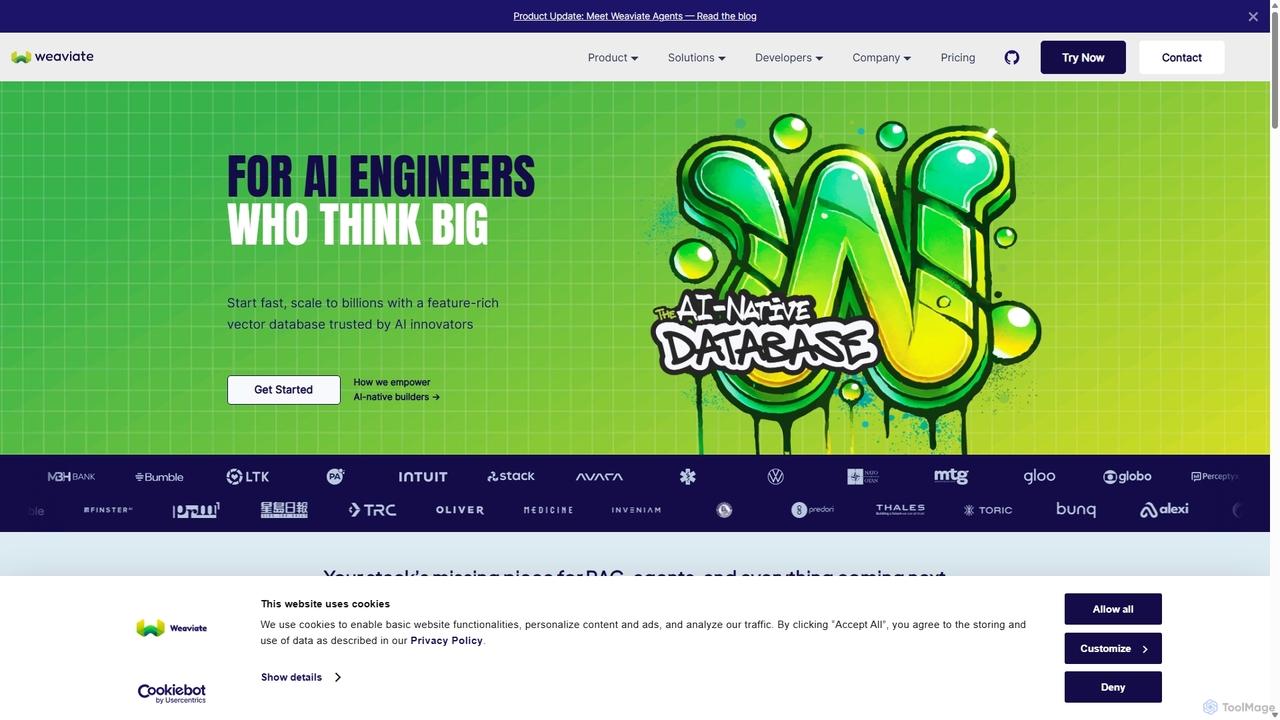
Weaviate
Weaviate is an open-source, AI-native vector database designed for developers. It enables scalable, low-latency vector, keyword, and hybrid search. Ideal for building AI applications like semantic search, recommendation engines, and Retrieval-Augmented Generation (RAG) systems, it integrates seamlessly with popular machine learning models to store and query data based on semantic meaning.
Vector Database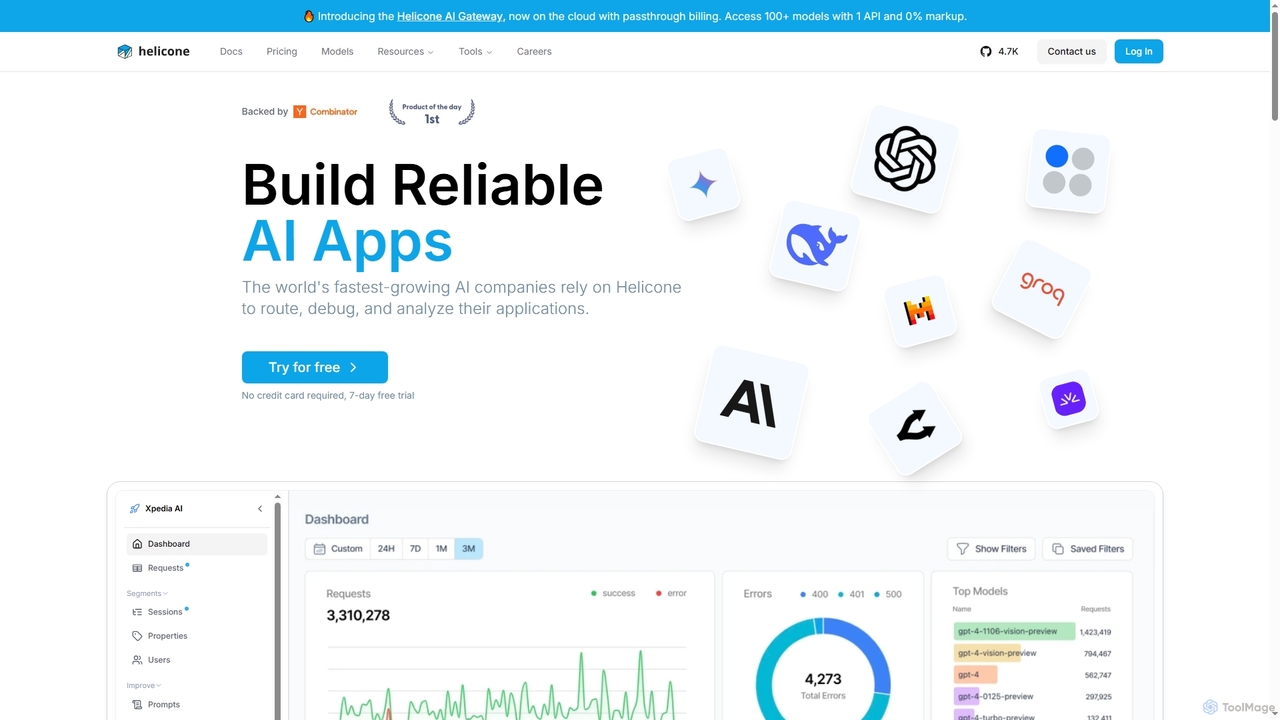
Helicone
Helicone is an open-source platform offering an AI Gateway and LLM Observability for developers. It helps build reliable AI applications by providing tools to route, monitor, debug, and analyze LLM usage. Key features include a unified API for 100+ models, intelligent caching, rate limiting, prompt management, and detailed performance analytics.
Api Management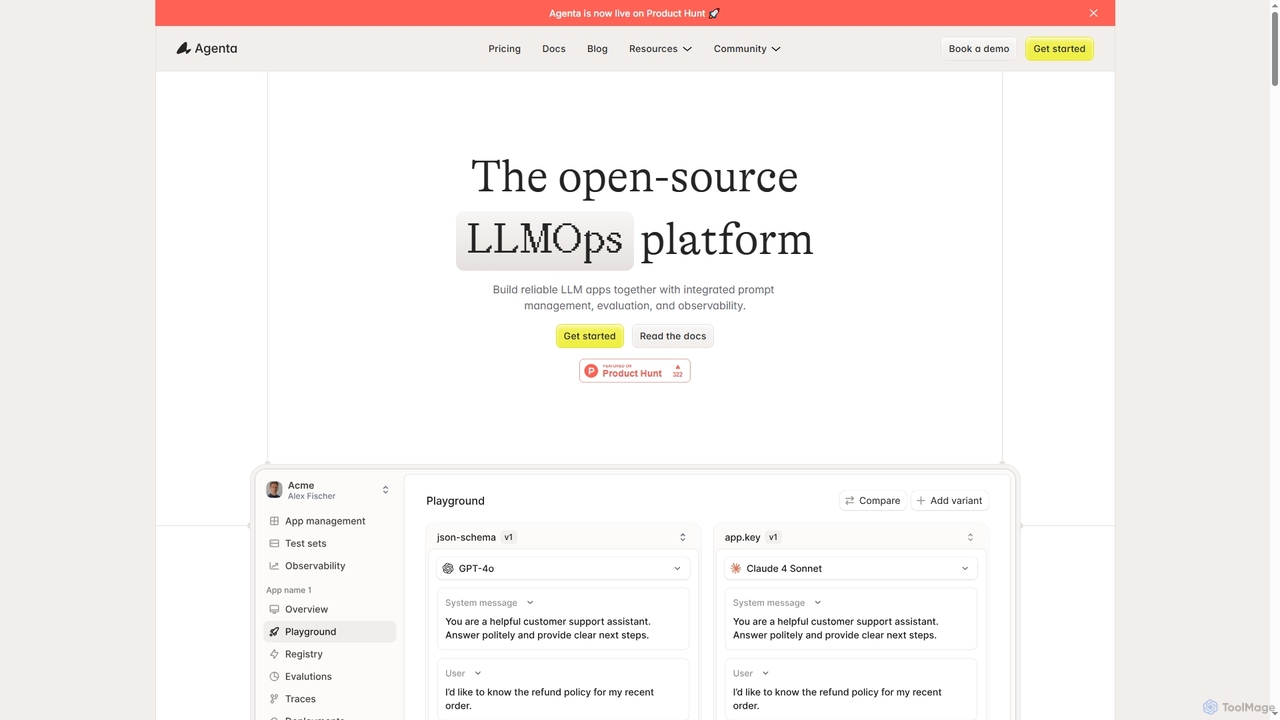
Agenta
Agenta is an open-source LLMOps platform designed for teams to build reliable LLM applications. It integrates prompt management, systematic evaluation, and observability into a single, collaborative workflow, helping developers, product managers, and domain experts move from scattered processes to structured development.
Debugging
Genius
Genius is an agentic enterprise intelligence platform by VERSES AI, designed for building reliable, domain-specific predictive models. It empowers ML researchers, engineers, and data scientists to tackle complex problems involving uncertainty by using Active Inference and Bayesian methods, delivering explainable, efficient, and adaptable AI solutions.
Predictive Analytics
MindsDB
MindsDB is an open-source AI layer for databases, enabling developers to build, train, and deploy AI models and agents using standard SQL. It connects to hundreds of data sources, unifies structured and unstructured data into knowledge bases, and allows you to get AI-powered answers directly from your data without complex ETL pipelines.
Machine Learning
Reflex Comments (0)
Sign in to comment.
Sign inNo comments yet.