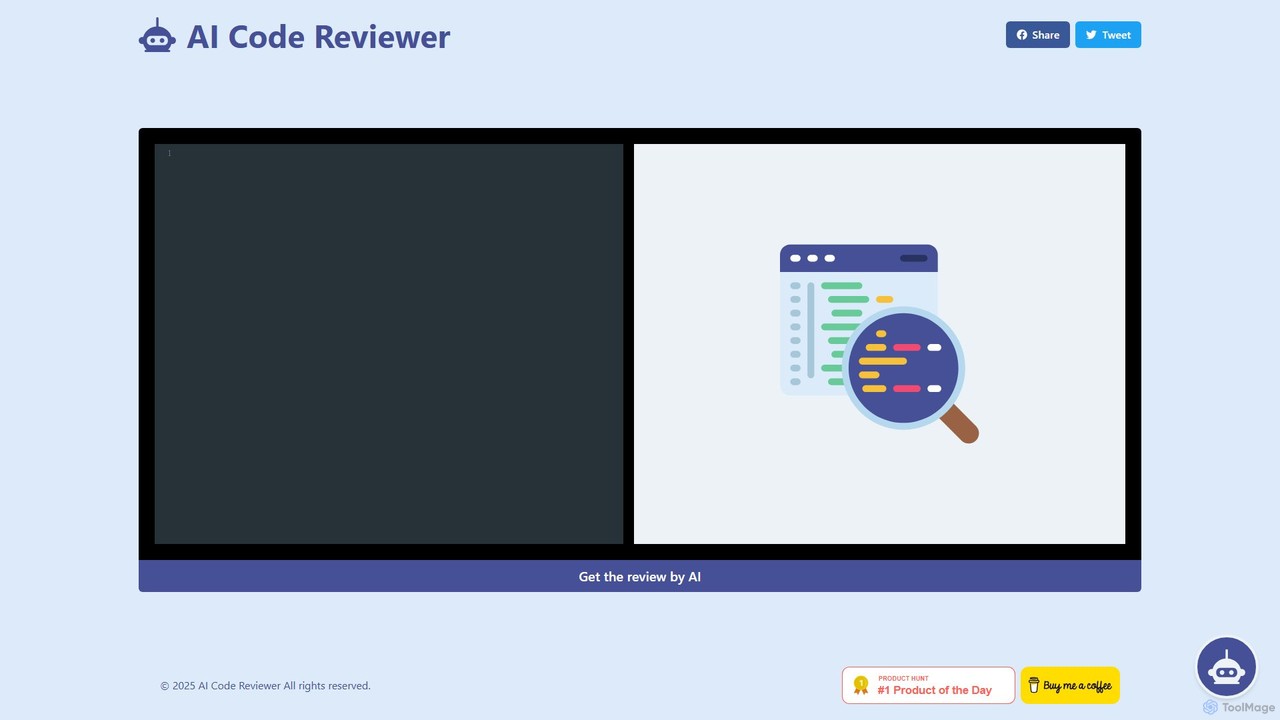
AI Code Review tools are a specialized category of developer utilities that automate the analysis of source code to identify bugs, security vulnerabilities, and style inconsistencies. These tools leverage machine learning, static analysis, and large language models to understand code context and logic, going beyond traditional linters. They provide developers with instant, actionable feedback directly within their workflow, significantly accelerating development cycles and improving overall code quality. By catching potential issues early, these tools help teams build more robust, secure, and maintainable software.
Core Features
- Automated Pull Request Analysis: Automatically scans new code submissions and leaves comments with suggestions for improvement.
- Security Vulnerability Detection: Identifies common security flaws like SQL injection, cross-site scripting (XSS), and insecure dependencies.
- Performance Optimization Suggestions: Pinpoints inefficient code, memory leaks, and performance bottlenecks before they reach production.
- Code Quality & Style Enforcement: Ensures code adheres to predefined style guides and best practices for consistency across the team.
- Intelligent Refactoring Recommendations: Suggests improvements to code structure, readability, and maintainability based on deep code understanding.
Use Cases
AI Code Review tools are widely used by DevOps teams to streamline CI/CD pipelines, by security-focused organizations to enforce secure coding practices, and by large development teams to maintain high standards of code quality and consistency. They are particularly valuable in projects with rapid iteration cycles, complex codebases, or distributed teams where manual review can become a bottleneck.
How to Choose
When selecting an AI Code Review tool, consider the programming languages it supports, its integration capabilities with your version control system (e.g., GitHub, GitLab), and the depth of its analysis (security, performance, style). Also evaluate its customizability for rule sets, the quality of its suggestions, and its pricing model (per user, per repository, or per analysis) to find the best fit for your team's needs and workflow.