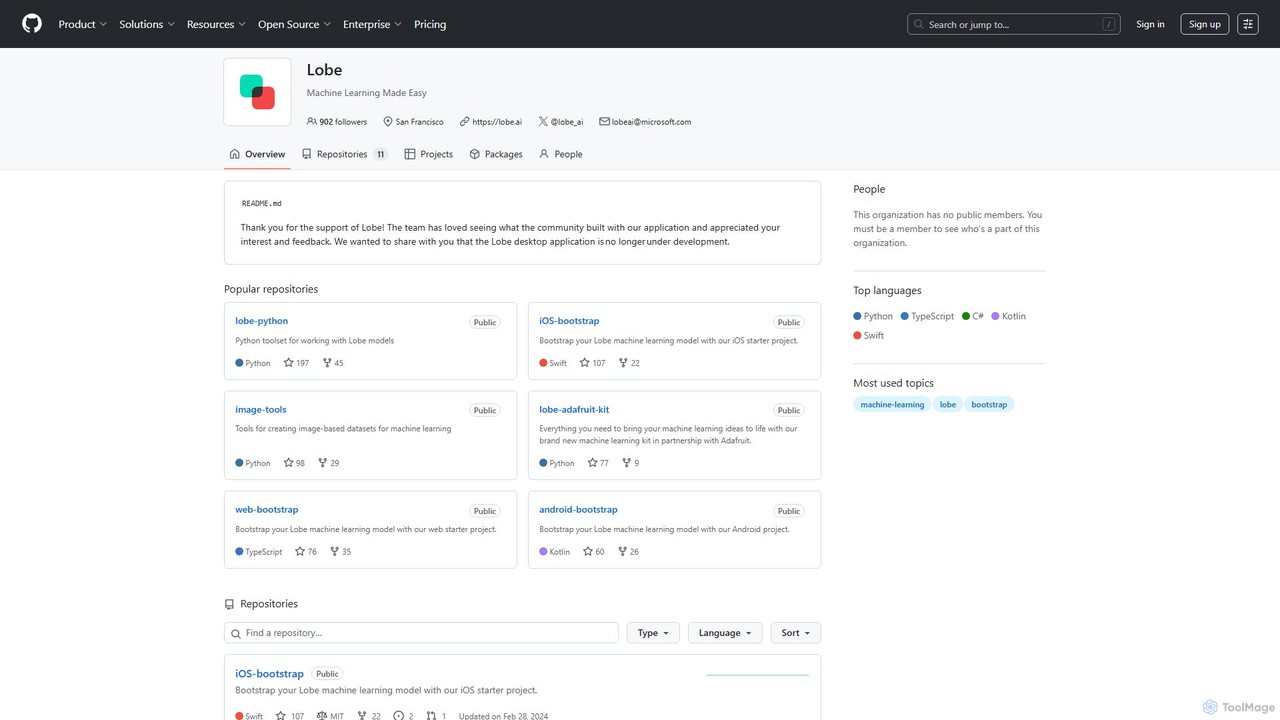
Lobe is a free, user-friendly desktop application for Mac and Windows that allows you to build, train, and deploy custom machine learning models without writing any code. It simplifies the process of creating AI, focusing primarily on image classification.
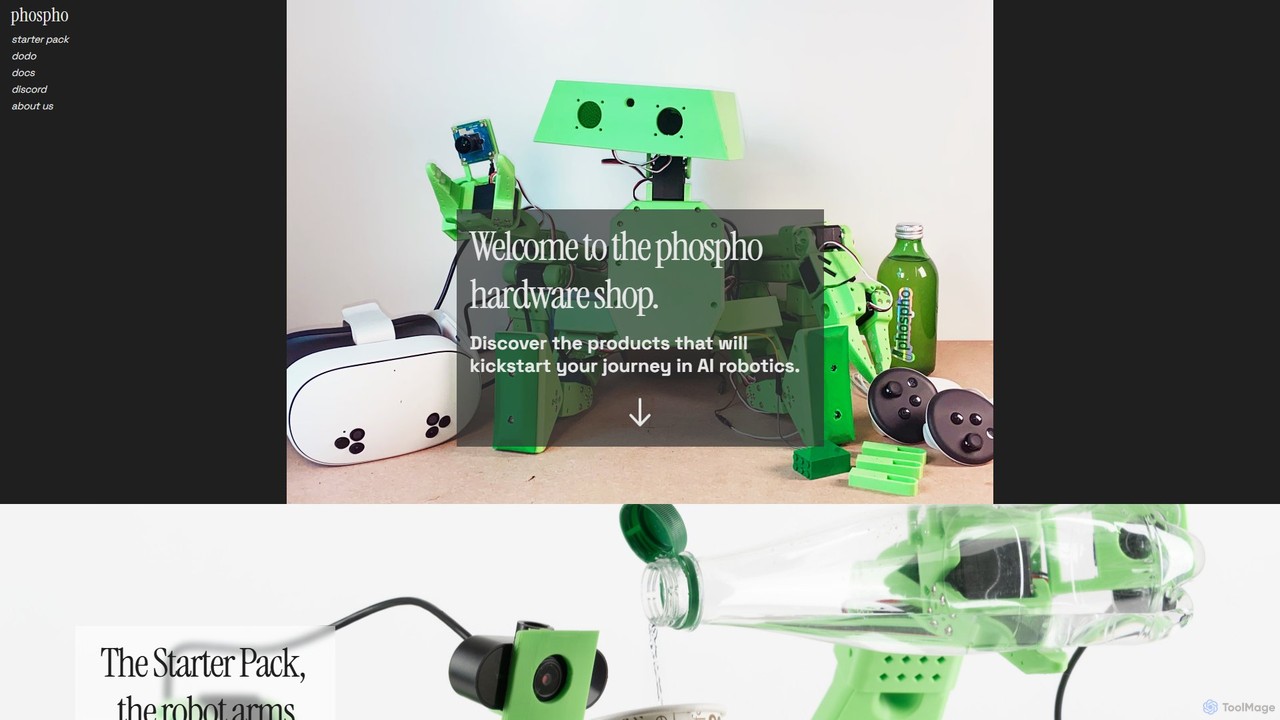
phospho is an AI robotics company providing an integrated ecosystem of open-source hardware and software. It offers starter kits like robotic arms and walking robots, powered by the phosphobot platform, to make advanced physical AI accessible for developers, researchers, and hobbyists.
Product overview
Lobe Product overview
Lobe is a free, user-friendly desktop application for Mac and Windows that allows you to build, train, and deploy custom machine learning models without writing any code. It simplifies the process of creating AI, focusing primarily on image classification.
phospho Product overview
phospho is an AI robotics company providing an integrated ecosystem of open-source hardware and software. It offers starter kits like robotic arms and walking robots, powered by the phosphobot platform, to make advanced physical AI accessible for developers, researchers, and hobbyists.
Detailed feature comparison
| Feature | Lobe | phospho |
|---|---|---|
| Primary category | Machine Learning | Machine Learning |
| Added | 2025-08-01 | 2025-08-03 |
| Pricing | Free | Paid |
| Official website | github.com | phospho.ai |
| Product type | App | Website |
| Performance data | ||
| User rating | Not verified | Not verified |
| Comments | 0 | 0 |
| Monthly visits | 636.1M | 18.7K |
| Monthly growth | 0.8% | -4.7% |
| Favorites | 123 | 105 |
| Details | View details | View details |
Lobe vs phospho monthly traffic
Compare Lobe and phospho by monthly reach, traffic trend, visit depth, top regions, and acquisition sources.
How to interpret the traffic data
In the Lobe vs phospho monthly traffic comparison, Lobe currently shows 636.1M visits and phospho shows 18.7K; Lobe has about 34,063.9 times the visible traffic of phospho, an absolute difference of about 636.1M visits. This reflects visible reach, not feature quality or paid users.
Both tools provide verified traffic details, so monthly trends, visit depth, regions, and acquisition sources can be compared on the same basis.
Lobe is registered at the github.com/lobe subpage. Because the current data does not state whether other host pages are excluded, treat this as domain-level context rather than independent traffic for one product or project.

Lobe monthly traffic:
Latest traffic
Monthly traffic trend
- 2026/1: 542.6M Monthly visits
- 2026/2: 534.8M Monthly visits
- 2026/3: 634.3M Monthly visits
- 2026/4: 631M Monthly visits
- 2026/5: 636.1M Monthly visits
Top regions
Top 5 countries/regions
| Country/region | Percentage | Traffic |
|---|---|---|
| 🇺🇸United States | 36.14% | 229.9M |
| 🇨🇳China | 22.96% | 146M |
| 🇮🇳India | 17.41% | 110.7M |
| 🇷🇺Russia | 15.84% | 100.8M |
| 🇩🇪Germany | 7.65% | 48.7M |
Traffic sources
| Source type | Percentage | Traffic |
|---|---|---|
| Direct | 82.14% | 522.5M |
| Referral | 16.14% | 102.7M |
| 1.72% | 10.9M |
Search keywords
phospho monthly traffic:
Latest traffic
Monthly traffic trend
- 2025/9: 37.3K Monthly visits
- 2026/1: 31.7K Monthly visits
- 2026/2: 30.4K Monthly visits
- 2026/3: 25.4K Monthly visits
- 2026/4: 19.6K Monthly visits
- 2026/5: 18.7K Monthly visits
Top regions
Top 5 countries/regions
| Country/region | Percentage | Traffic |
|---|---|---|
| 🇺🇸United States | 37.88% | 7.1K |
| 🇮🇳India | 21.24% | 4K |
| 🇫🇷France | 16.33% | 3K |
| 🇨🇦Canada | 12.97% | 2.4K |
| 🇻🇳Vietnam | 11.58% | 2.2K |
Traffic sources
| Source type | Percentage | Traffic |
|---|---|---|
| Direct | 69.55% | 13K |
| Referral | 30.45% | 5.7K |
Search keywords
Usage comparison
Compare the core capabilities of Lobe and phospho
Lobe Core features
phospho Core features
Use cases
Lobe Use cases
phospho Use cases
Lobe vs phospho:In-depth comparison and selection guidance
First decide whether the products solve the same kind of need
This in-depth Lobe vs phospho comparison uses only the product records, taxonomy, audience, traffic, and community signals available on this page. Lobe is primarily listed under “Machine Learning”, while phospho is primarily listed under “Machine Learning”, so the first decision is whether your actual task matches their recorded scope.
The structured fields currently show these decision-relevant differences: Primary category (Lobe: Machine Learning; phospho: Machine Learning); Product type (Lobe: App; phospho: Website); Pricing (Lobe: Free; phospho: Paid); Monthly visits (Lobe: 636.1M; phospho: 18.7K); Monthly growth (Lobe: 0.8%; phospho: -4.7%). These facts are more useful for selection than brand visibility alone.
What market visibility and monthly traffic mean
In the Lobe vs phospho monthly traffic comparison, Lobe currently shows 636.1M visits and phospho shows 18.7K; Lobe has about 34,063.9 times the visible traffic of phospho, an absolute difference of about 636.1M visits. This reflects visible reach, not feature quality or paid users.
Both tools provide verified traffic details, so monthly trends, visit depth, regions, and acquisition sources can be compared on the same basis.
Lobe is registered at the github.com/lobe subpage. Because the current data does not state whether other host pages are excluded, treat this as domain-level context rather than independent traffic for one product or project.

Lobe is registered under a github.com subpath, so its large visible total may include the host platform. The current data does not justify choosing Lobe for traffic alone; shortlist by unique taxonomy and use case, then validate with the same tasks.
Product positioning, use cases, and roles
Lobe and phospho currently overlap in shared categories: Stem; shared tags: machine learning. This can place both on the same shortlist, but it does not prove equal implementation, depth, or cost.
Lobe's unique categories/tags are Machine Learning, No Code, computer vision, desktop app, developer tools, free, image classification, and microsoft; phospho's are Machine Learning, Robotics, Iot, AI robotics, dataset collection, developer platform, embodied AI, and hardware. These unique fields are the strongest differentiators: validate the product whose recorded scope matches the task instead of following traffic alone.
What ratings, comments, and favorites can tell you
Lobe has no verified rating, 0 comments, 123 favorites, and 120 likes;phospho has no verified rating, 0 comments, 105 favorites, and 121 likes。
Neither product has enough rating or comment samples for a credible reputation ranking.
Selection guidance by actual need
When to evaluate Lobe first
Put Lobe on the priority trial list when the task aligns with “Machine Learning” and especially Machine Learning, No Code, computer vision, desktop app, developer tools, and free. This follows recorded positioning and does not imply unlisted capabilities are absent.
Lobe also currently records: pricing is free, product type is app, 636.1M monthly visits shown for the registered host (subpage scope unknown), no verified user rating. Verify any hard requirement around price, platform, or reach before trial, and do not let sparse review data substitute for testing.
When to evaluate phospho first
Put phospho on the priority trial list when the task aligns with “Machine Learning” and especially Machine Learning, Robotics, Iot, AI robotics, dataset collection, and developer platform. This follows recorded positioning and does not imply unlisted capabilities are absent.
phospho also currently records: pricing is paid, product type is website, 18.7K verified monthly visits, no verified user rating. Verify any hard requirement around price, platform, or reach before trial, and do not let sparse review data substitute for testing.
How to validate the recommendation before deciding
The available data describes positioning, public visibility, and community signals, but it cannot prove output quality, speed, integration effort, privacy, or long-term cost in your workflow. Before deciding, run the same representative tasks in Lobe and phospho, then record completion time, accuracy, manual corrections, and the real paid threshold. A like-for-like trial turns this comparison into a defensible adoption decision.
Comparison FAQ
How should I choose between Lobe and phospho?
Where does this comparison data come from?
What do unknown fields mean?
Related AI tools

Lobe
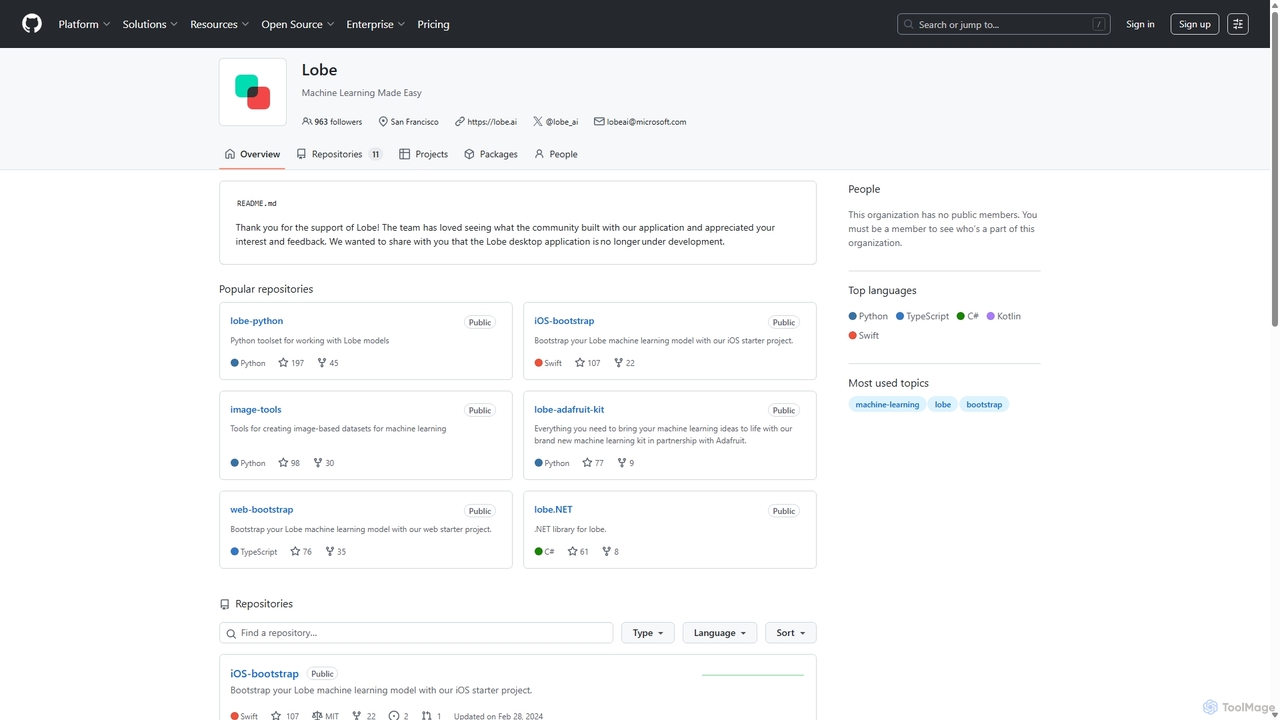
Lobe is a free, user-friendly desktop application for Mac and PC that simplifies the process of training custom machine learning models. It enables users to build, manage, and export image classification models without writing a single line of code, making AI accessible to everyone.
Machine Learning
Roboto
Roboto is an advanced analytics engine designed for physical AI and robotics. It empowers robotics teams to organize, search, analyze, and automate workflows on vast amounts of multimodal data, including logs, video, and sensor data. This platform accelerates development, enhances system reliability, and helps uncover critical edge cases before deployment.
Robotics
Custom Vision
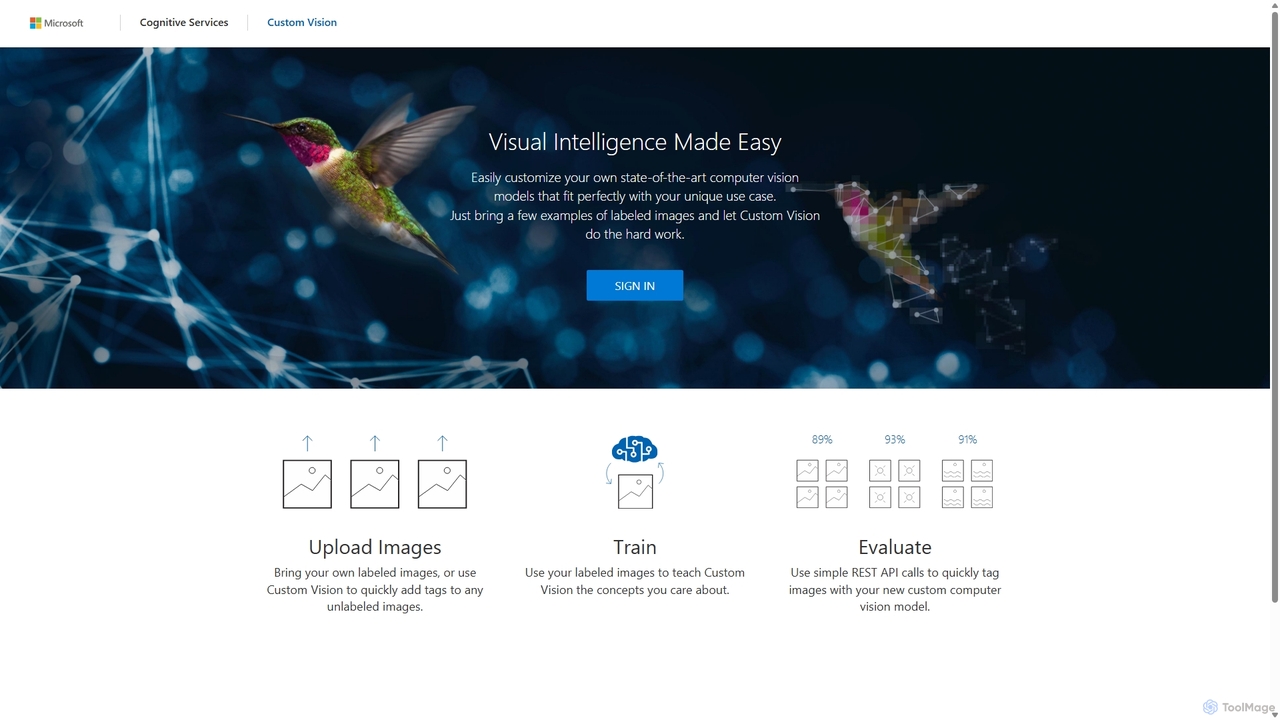
An AI service from Microsoft Azure that allows you to build, deploy, and improve your own custom image classifiers and object detectors. Easily create state-of-the-art computer vision models tailored to your specific needs with a user-friendly interface and a powerful REST API, no deep machine learning expertise required.
Machine Learning
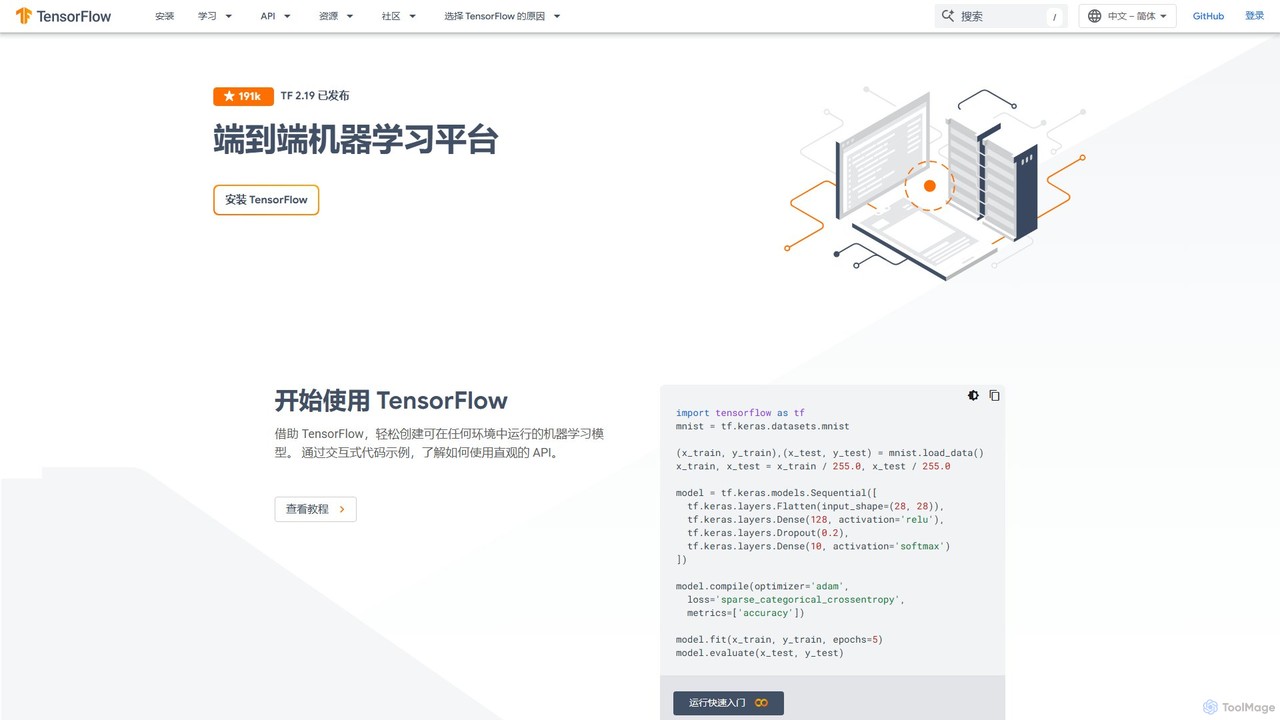
TensorFlow
TensorFlow is an end-to-end open-source platform for machine learning developed by Google. It provides a comprehensive, flexible ecosystem of tools, libraries, and community resources that lets researchers and developers build and deploy ML-powered applications. From beginners to experts, TensorFlow offers intuitive high-level APIs for easy model building and powerful low-level APIs for advanced research, enabling deployment across servers, edge devices, and browsers.
Frameworks
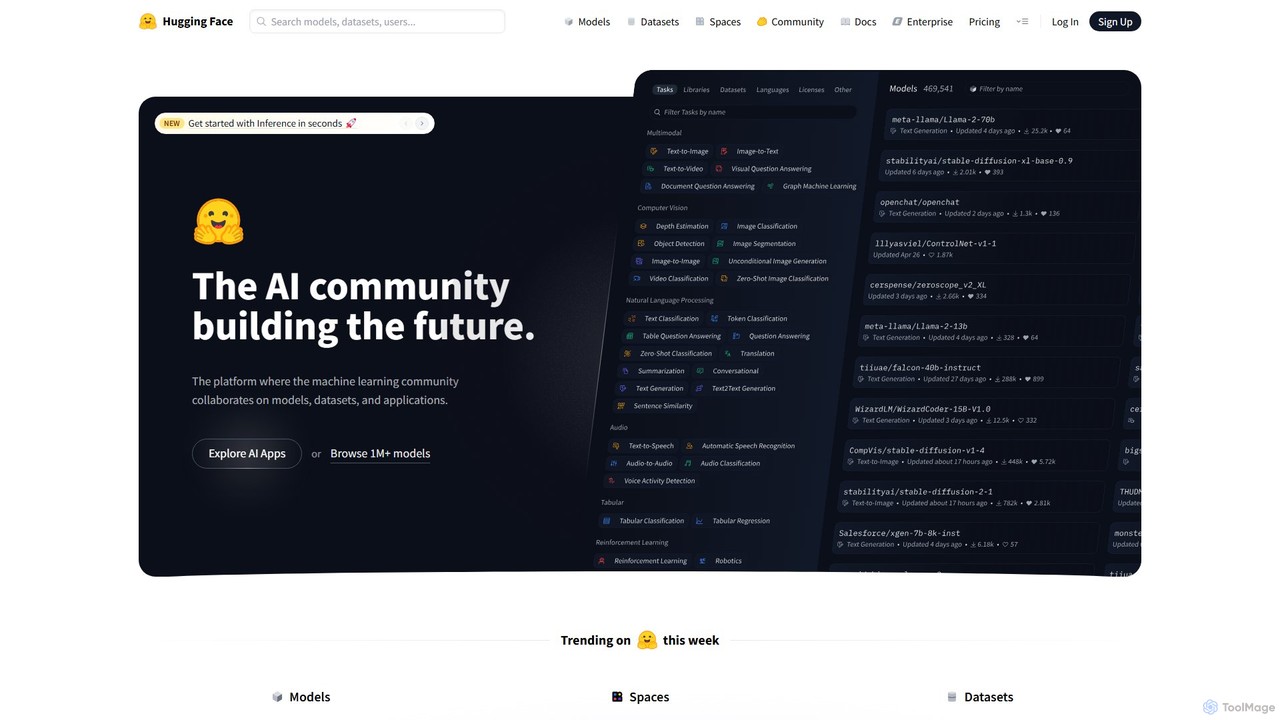
Hugging Face
Hugging Face is the leading open-source platform and community for machine learning. It provides tools for developers and researchers to build, train, and deploy state-of-the-art models, offering a vast hub of pre-trained models, datasets, and demo applications.
Dataset
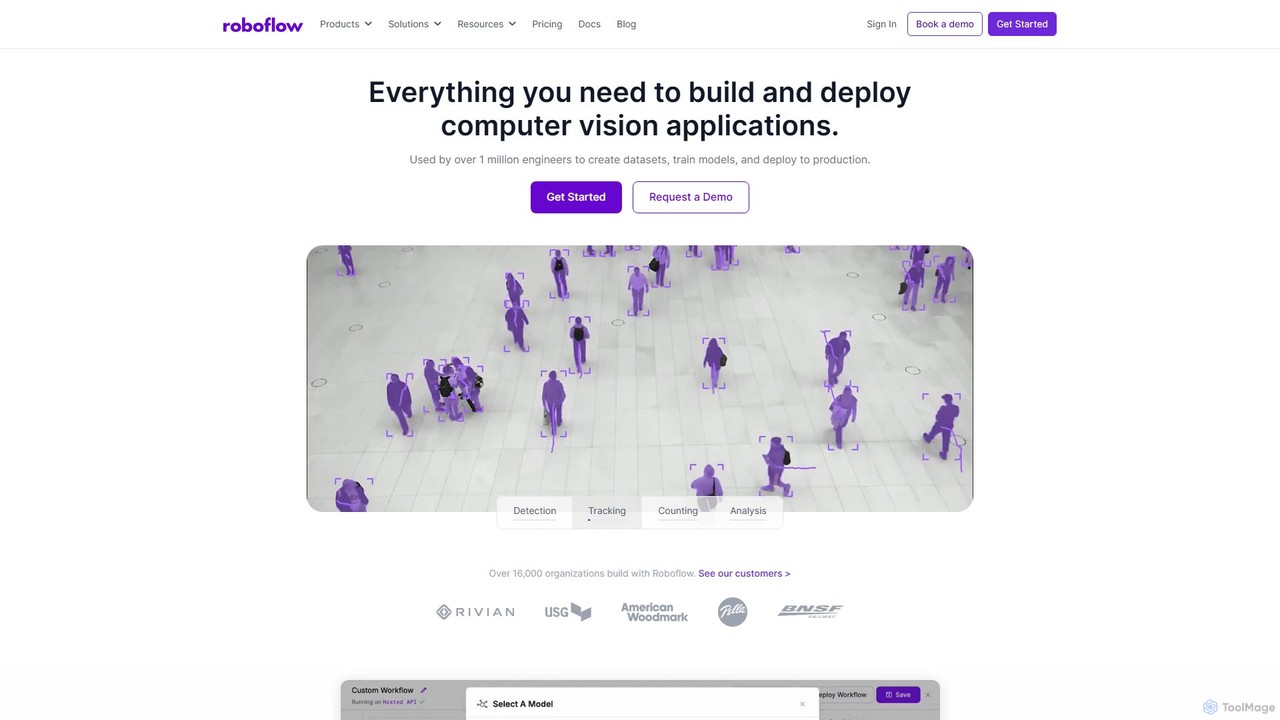
Roboflow
Roboflow is an end-to-end computer vision platform for developers and enterprises. It provides a comprehensive suite of tools to build, train, and deploy computer vision models at scale. From dataset creation and collaborative labeling to one-click model training and deployment to cloud or edge devices, Roboflow streamlines the entire MLOps lifecycle for vision AI, empowering over a million engineers to give their software the sense of sight.
Data Labeling
Teachable Machine
A fast, easy, web-based tool by Google that allows anyone to train a computer to recognize their own images, sounds, and poses. Create machine learning models for your sites, apps, and more without any expertise or coding required. It's a hands-on way to explore ML concepts.
No Code Platform
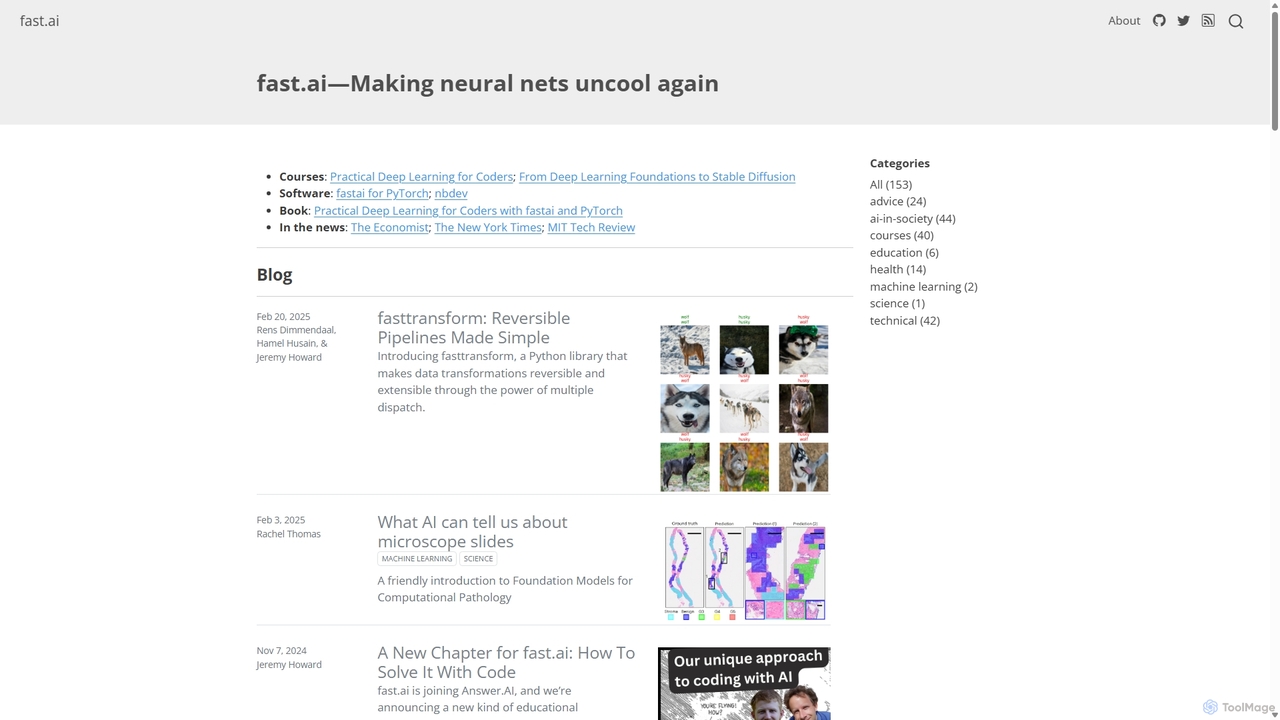
Fast.ai
Fast.ai is a research institute dedicated to making deep learning accessible to everyone. It offers free courses, an open-source software library (fastai), cutting-edge research, and a vibrant community, empowering coders of all backgrounds to become deep learning practitioners.
Machine Learning
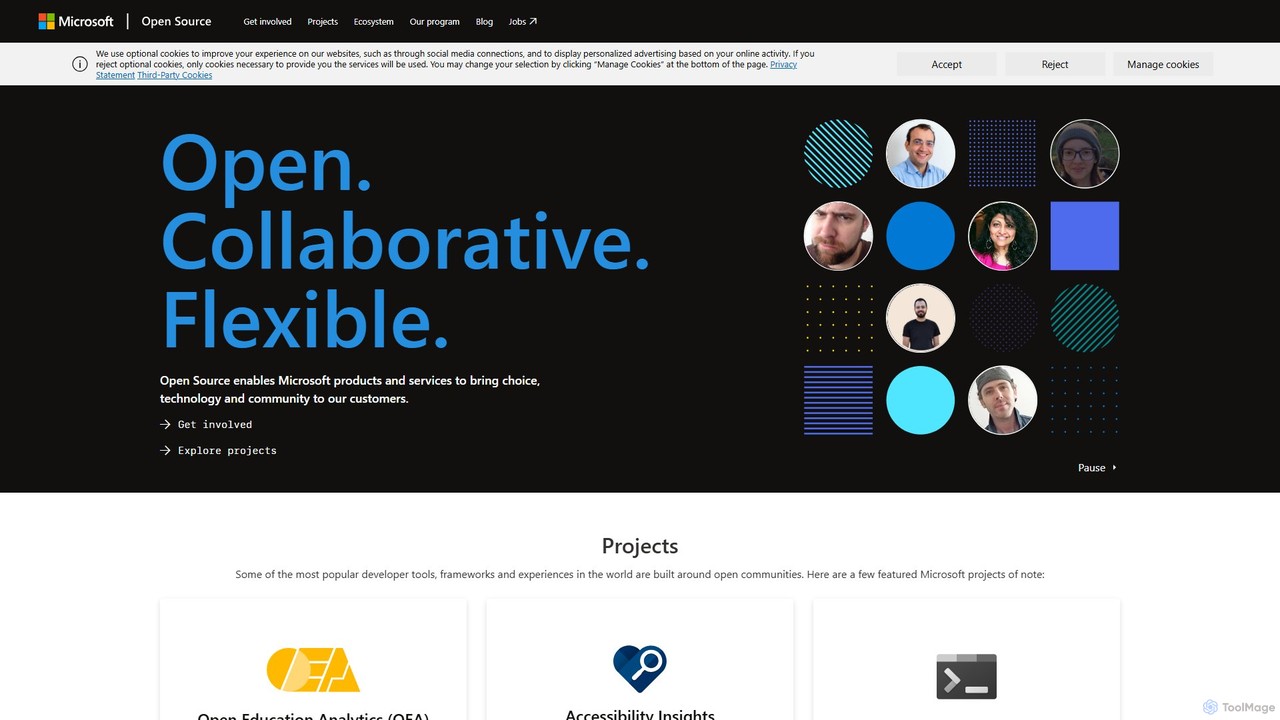
Microsoft Open Source
Microsoft's central hub for discovering, using, and contributing to a vast portfolio of open-source projects. It offers developers access to powerful tools, frameworks, and AI/ML libraries, fostering collaboration and innovation within a global community.
Platform
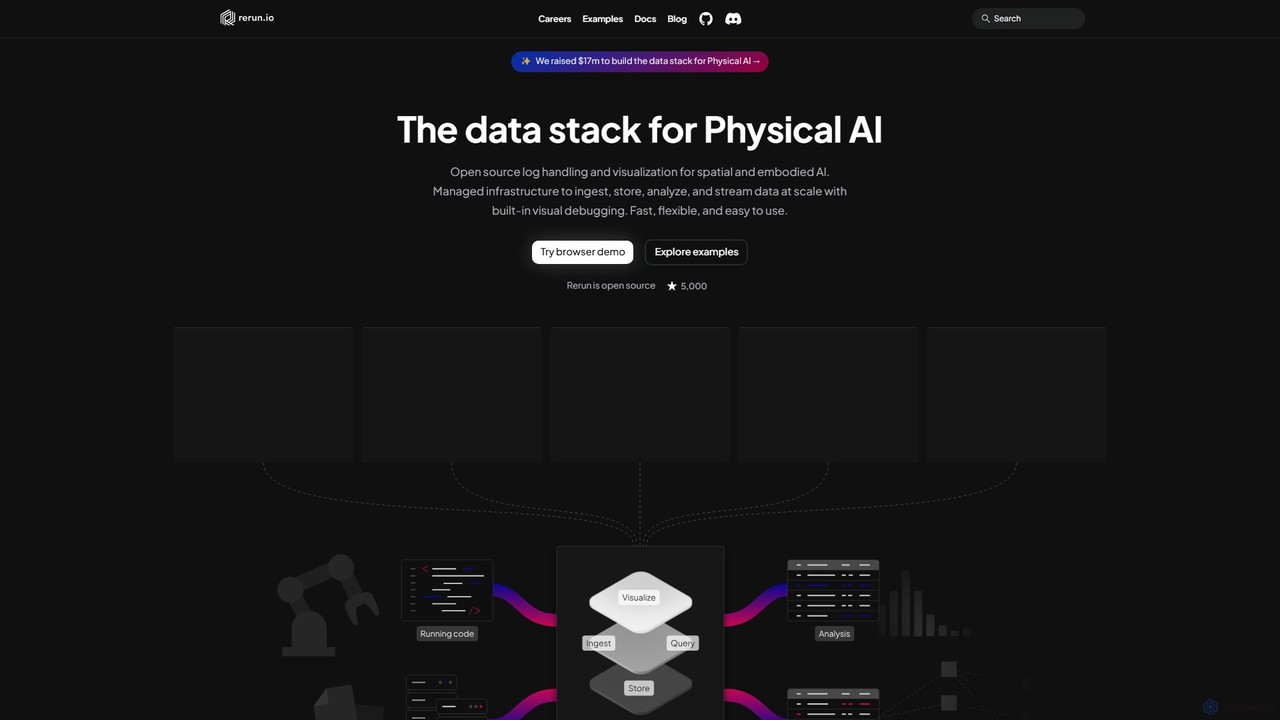
Rerun
Rerun is an open-source data stack for Physical AI, providing powerful logging and visualization tools for multimodal, time-series data. Designed for robotics, computer vision, and spatial computing, it helps developers understand and debug complex systems with SDKs for Python, Rust, and C++.
Machine Learning
Datature
Datature is an end-to-end Vision AI platform designed for developers and enterprises. It streamlines the entire machine learning lifecycle, from collaborative data annotation and no-code model training to flexible deployment. The platform empowers teams to build, fine-tune, and deploy production-ready computer vision models for diverse applications across industries like healthcare, retail, and manufacturing.
Machine Learning
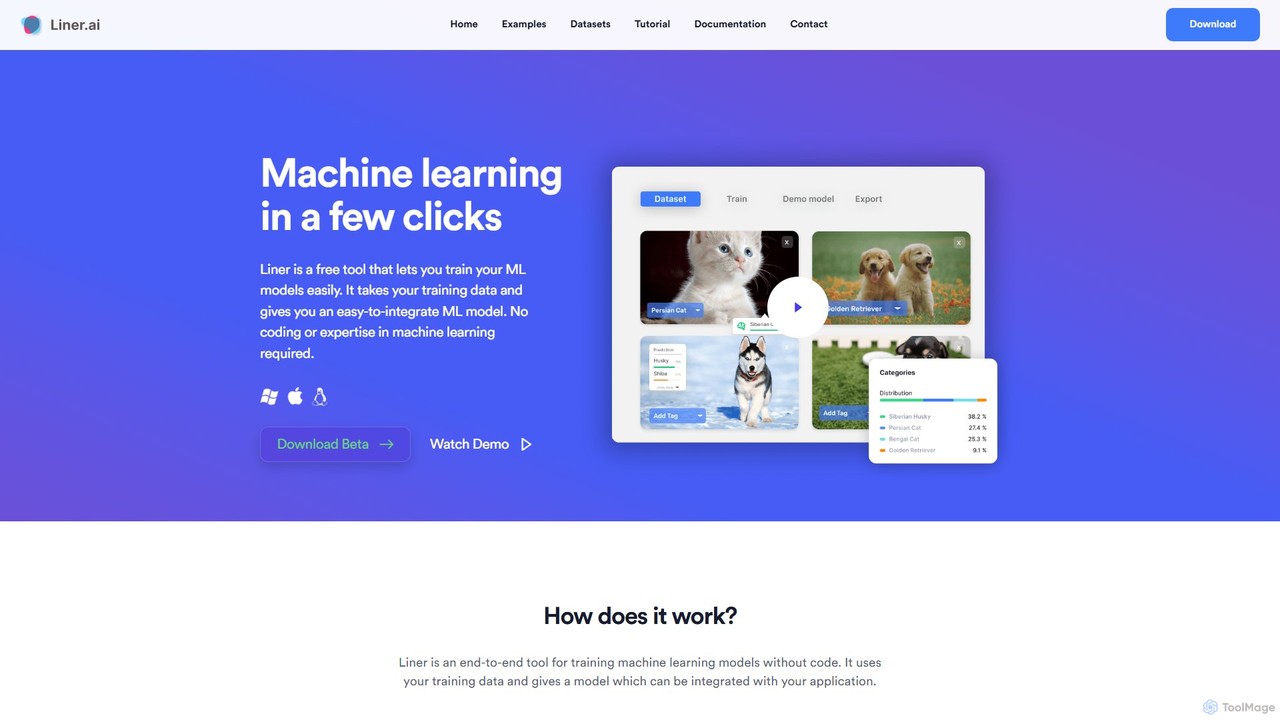
Liner.ai
Liner.ai is a free, no-code desktop application for Windows and Mac that allows users to easily train and deploy machine learning models. It simplifies the entire ML workflow, from data import to model deployment, without requiring any coding or deep learning expertise. It's designed for creating applications in image, text, audio, and video classification, object detection, and more, with a focus on speed, accuracy, and data privacy.
Machine Learning
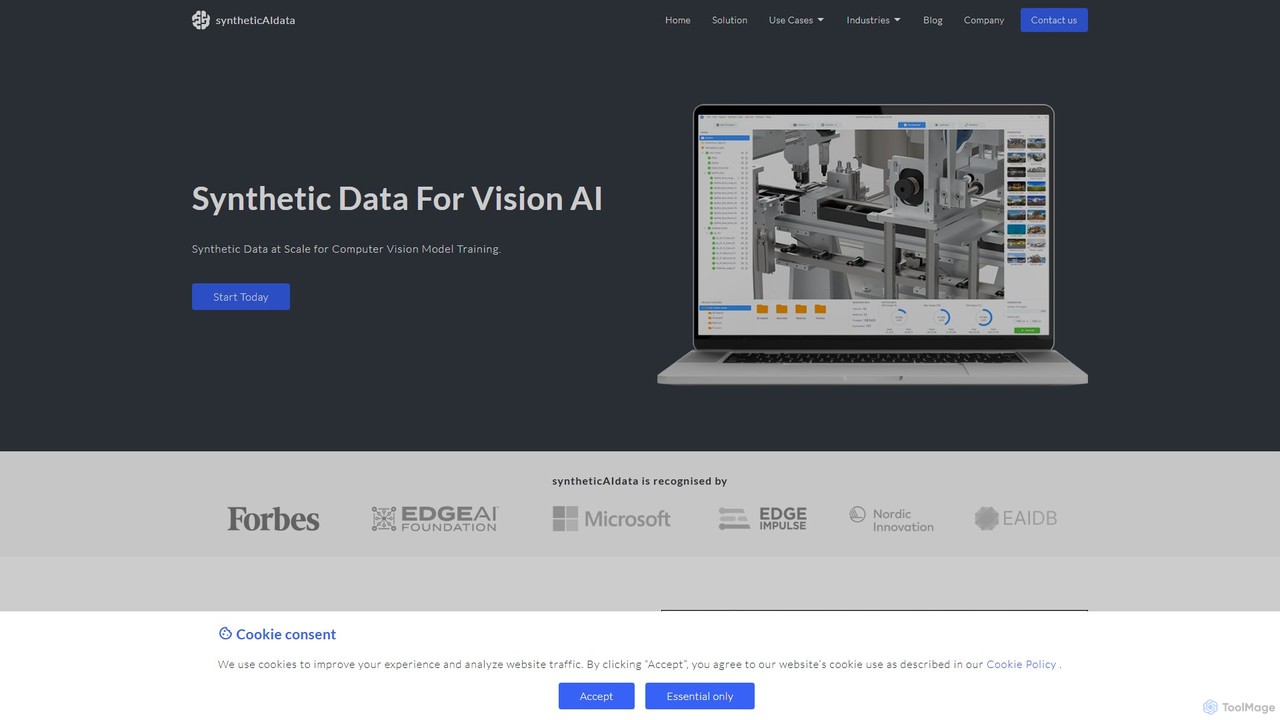
syntheticAIdata
syntheticAIdata is an advanced platform for generating high-quality, perfectly annotated synthetic data at scale for computer vision AI models. It offers a no-code solution that helps businesses reduce data acquisition costs, eliminate privacy concerns, mitigate biases, and significantly accelerate the development and deployment of AI products across industries like manufacturing, robotics, and retail.
Computer Vision
Shakespeare
Shakespeare is an open-source AI builder designed for developers to create custom AI applications. It provides a platform to select and utilize various AI models, enabling the rapid development and deployment of intelligent solutions.
Ai Development
Metrics Help
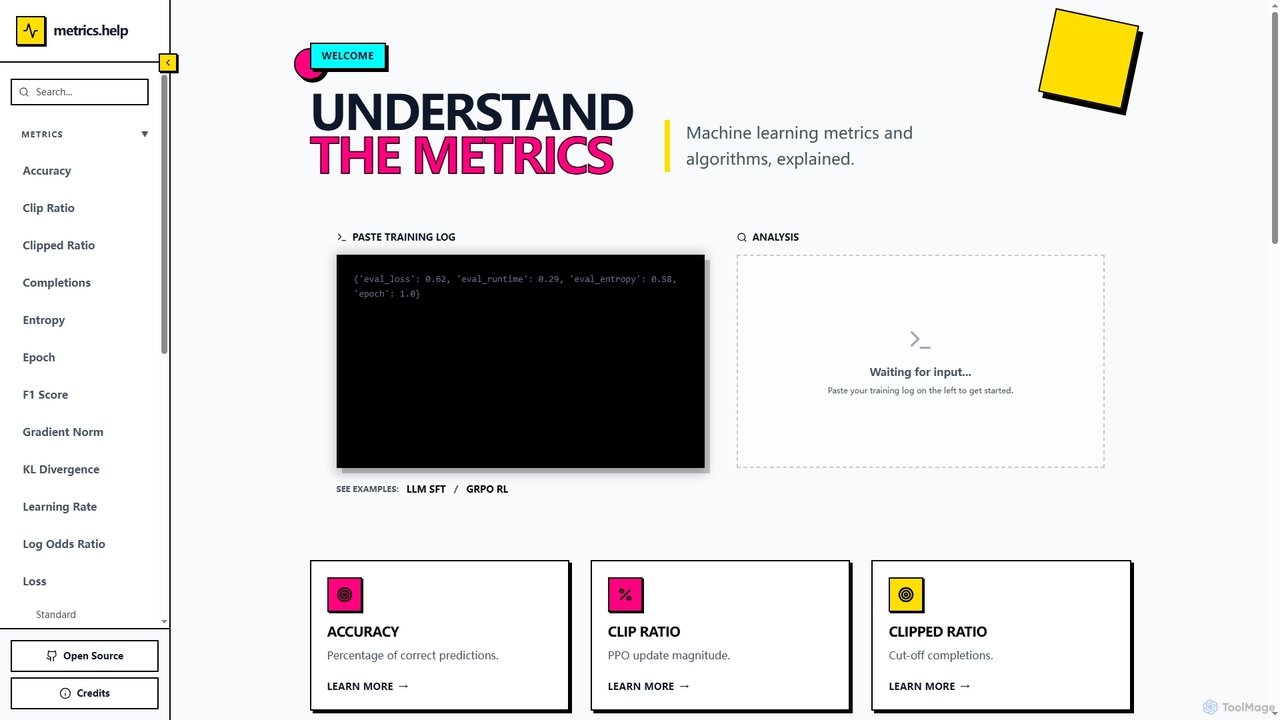
Metrics Help is an open-source web tool for machine learning practitioners. It functions as a comprehensive guide and an interactive analyzer for ML training metrics. Users can paste training logs to get instant explanations for key metrics like accuracy, loss, and perplexity, aiding in model performance analysis and debugging.
Model Training