

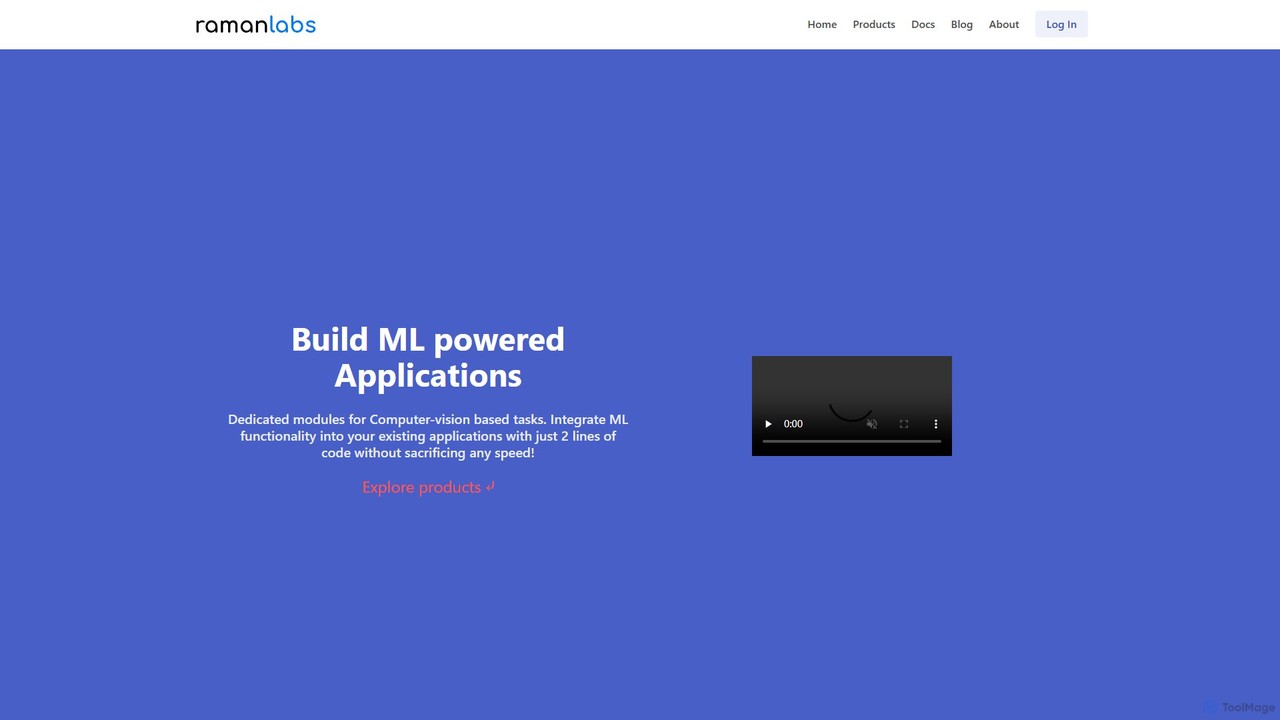
Raman Labs Overview
Raman Labs is a technology company dedicated to making machine learning accessible and practical for developers, hobbyists, and tinkerers. Based in India, the company provides a powerful Software Development Kit (SDK) featuring a collection of high-speed, pre-trained machine learning modules. The core mission of Raman Labs is to enable sophisticated AI-based applications to run locally on standard consumer-level hardware, removing the dependency on expensive cloud infrastructure or high-end GPUs. Their technology is built for performance, robustness, and simplicity, paying tribute to the scientific spirit of Indian luminaries Srinivasa Ramanujan and C. V. Raman.
The SDK is designed to be lightweight and versatile, requiring only Python 3 and NumPy to operate. This minimalistic approach allows developers to deploy ML capabilities anywhere, from a simple local system to a virtual private server (VPS), ensuring maximum flexibility. The system is adaptive, automatically scaling its performance based on the available computing power, whether it's a standard CPU or a more powerful GPU for latency-critical workloads.
How to use Raman Labs
Integrating Raman Labs' modules into a project is designed to be straightforward, thanks to its clean and minimalistic API. A developer can add powerful ML functionality with just a few lines of Python code. The typical workflow is as follows:
- Installation: Install the Raman Labs SDK package into your Python environment, likely using a package manager like pip.
- Import: Import the desired pre-trained module (e.g., Face Detection) from the Raman Labs library in your script.
- Initialization: Create an instance of the ML model. This step loads the pre-trained weights into memory.
- Processing: Feed data, such as an image or a video frame (typically as a NumPy array), to the model's processing method.
- Get Results: The model returns the processed output in a structured format, such as a list of bounding boxes for faces, coordinates for landmarks, or object labels.
Example (conceptual):
import ramanlabs
import cv2

# 1. Initialize the face detection module
face_detector = ramanlabs.FaceDetector()

# 2. Load an image
image = cv2.imread('my_selfie.jpg')

# 3. Process the image
faces = face_detector.detect(image)

# 4. Use the results
for face in faces:
    print(f"Found face at: {face.bounding_box}")
Core Features of Raman Labs
- Real-time Performance: Engineered for high-speed processing, enabling real-time analysis even on consumer-grade CPUs.
- Pre-trained Models: Offers a suite of ready-to-use models for common computer vision tasks, saving developers significant time and resources on training.
- Face Detection: Accurately identify and locate human faces in images and videos, robust to variations in scale and resolution.
- Object Tracking: Follow specific objects across multiple video frames, essential for surveillance and interactive applications.
- Facial Landmark Detection: Pinpoint key facial features (eyes, nose, mouth), useful for AR filters and emotion analysis.
- Pose Estimation: Analyze the posture and movement of human bodies in real-time.
- Minimalistic API: A clean and simple interface allows for rapid integration and development.
Use Cases for Raman Labs
The versatility and efficiency of the Raman Labs SDK make it suitable for a wide range of applications:
- Interactive Media & Art: Create interactive installations that respond to human presence and movement.
- Mobile & Web Applications: Develop photo and video editing apps with features like automatic face tagging, smart cropping, or AR effects.
- Security and Surveillance: Build lightweight monitoring systems that can run on edge devices for real-time alerts.
- Developer & Hobbyist Projects: An ideal tool for students, tinkerers, and developers to experiment with and learn about computer vision.
- Prototyping: Quickly build and test proof-of-concept ML features before committing to a larger, more complex infrastructure.
Advantages of Raman Labs
- Accessibility: By optimizing for CPUs, it democratizes access to powerful ML technology, removing the high cost of specialized hardware.
- Efficiency: The adaptive nature of the SDK ensures optimal use of available resources, scaling from low-power devices to high-performance servers.
- Simplicity: The focus on a minimalistic API significantly reduces the learning curve and development time.
- Robustness: Models are designed to handle real-world conditions, including variations in image quality, scale, and resolution, working equally well on selfie videos and high-definition footage.
- Versatility: With minimal dependencies (Python3, NumPy), the SDK can be deployed across various platforms and environments with ease.
Pricing and Plans
The official website does not provide specific pricing tiers. Raman Labs targets developers, hobbyists, and commercial entities, suggesting a flexible pricing model. Potential users are encouraged to contact the Raman Labs team directly through their website to inquire about licensing, custom solutions, and enterprise plans tailored to their specific needs.
Traffic
Latest traffic
Status
Monthly traffic trend
- 2025-9: 513
- 2026-1: 0
- 2026-2: 1.4K
- 2026-3: 253
- 2026-4: 87
- 2026-5: 1.7K
Geography
Top 5 countries / regions
- 🇺🇸United States100.0%
Top keywords
| Keyword | Cost per click |
|---|---|
| paramaan labs | $0.00 |
| raman lab | $1.69 |
Raman Labs Alternatives

Prodigy
Prodigy is a scriptable annotation tool for AI, Machine Learning, and NLP, designed for developers. It enables rapid creation of high-quality training and evaluation data through model-assisted, human-in-the-loop workflows. It runs on your own infrastructure, ensuring complete data privacy and control.
Annotation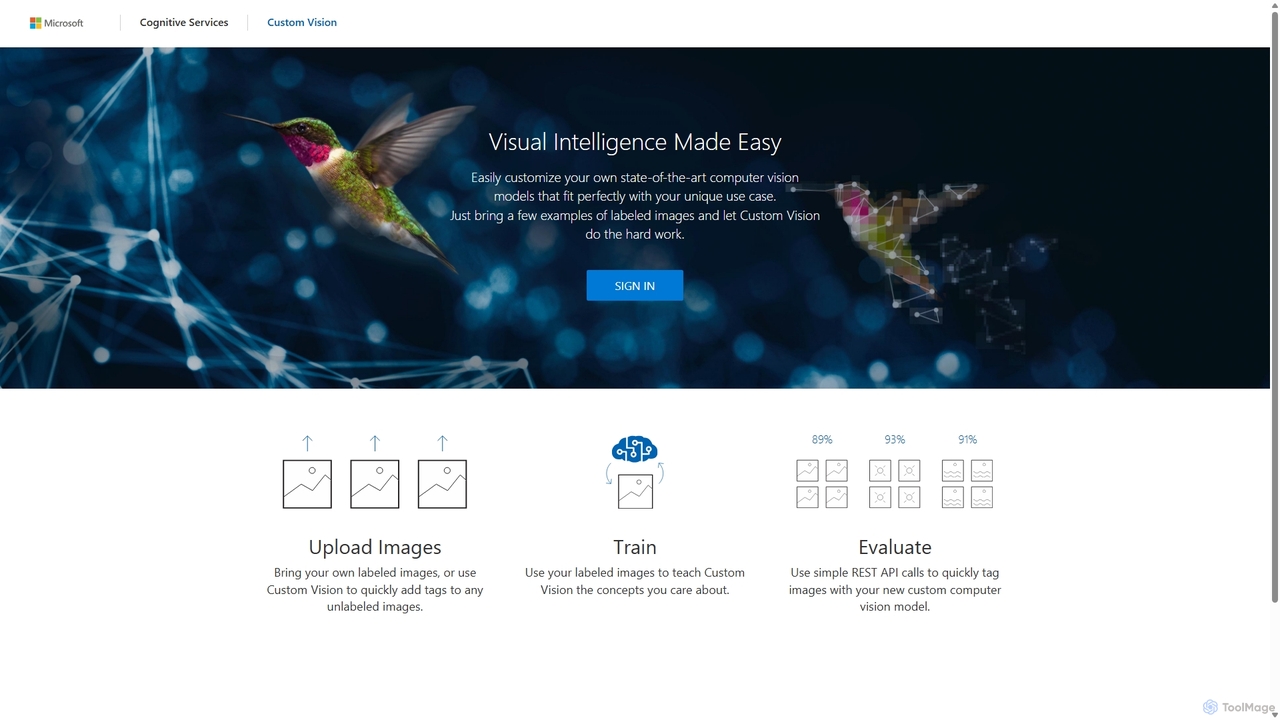
Custom Vision
An AI service from Microsoft Azure that allows you to build, deploy, and improve your own custom image classifiers and object detectors. Easily create state-of-the-art computer vision models tailored to your specific needs with a user-friendly interface and a powerful REST API, no deep machine learning expertise required.
Machine Learning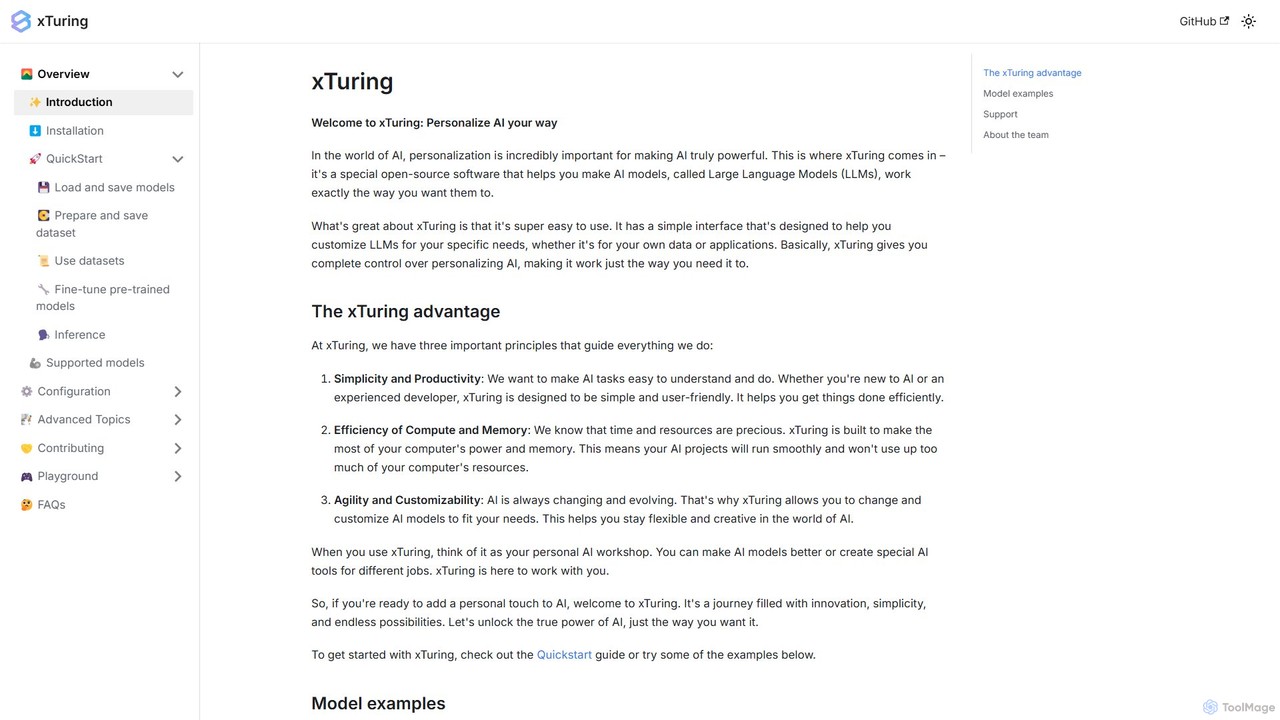
xTuring
xTuring is an open-source Python library designed to simplify the process of building, fine-tuning, and controlling Large Language Models (LLMs). It provides a user-friendly interface for developers and researchers to personalize AI models for specific data and applications with high efficiency and customizability.
Model Training
dataset.gold
A curated directory of high-quality, open-source datasets for AI and machine learning. Discover the gold standard of data for training your models in computer vision, NLP, and more.
Datasets
hyperficient
hyperficient is an open-source AI tool for developers and ML engineers that automates the search for the most efficient fine-tuning strategies for neural networks. It significantly reduces computational costs, GPU time, and manual effort, enabling optimal model performance on limited resources.
LibrariesRaman Labs Categories
Raman Labs Embed Widget
Copy this embed code to place the badge on your blog, article, or product site and send readers directly to this ToolMage detail page.

Related AI tools
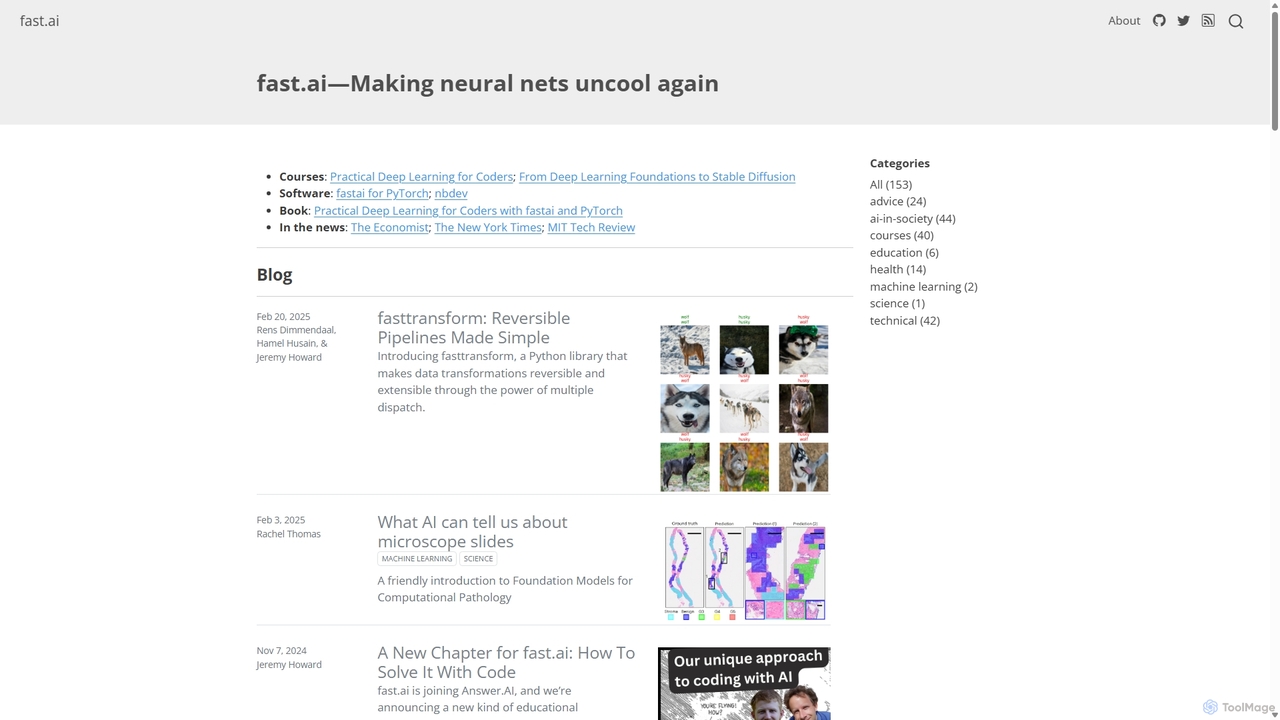
Fast.ai
Fast.ai is a research institute dedicated to making deep learning accessible to everyone. It offers free courses, an open-source software library (fastai), cutting-edge research, and a vibrant community, empowering coders of all backgrounds to become deep learning practitioners.
Machine LearningProdigy
Prodigy is a scriptable annotation tool for AI, Machine Learning, and NLP, designed for developers. It enables rapid creation of high-quality training and evaluation data through model-assisted, human-in-the-loop workflows. It runs on your own infrastructure, ensuring complete data privacy and control.
AnnotationCustom Vision
An AI service from Microsoft Azure that allows you to build, deploy, and improve your own custom image classifiers and object detectors. Easily create state-of-the-art computer vision models tailored to your specific needs with a user-friendly interface and a powerful REST API, no deep machine learning expertise required.
Machine Learning
AIGoMarket
AIGoMarket is an Edge AI Foundry and marketplace designed to democratize edge AI development. It enables creators to upload and monetize their optimized AI models, while providing developers with a platform to discover, license, and deploy high-performance AI solutions for various edge devices and applications.
Model MarketplacexTuring
xTuring is an open-source Python library designed to simplify the process of building, fine-tuning, and controlling Large Language Models (LLMs). It provides a user-friendly interface for developers and researchers to personalize AI models for specific data and applications with high efficiency and customizability.
Model Trainingdataset.gold
A curated directory of high-quality, open-source datasets for AI and machine learning. Discover the gold standard of data for training your models in computer vision, NLP, and more.
Datasetshyperficient
hyperficient is an open-source AI tool for developers and ML engineers that automates the search for the most efficient fine-tuning strategies for neural networks. It significantly reduces computational costs, GPU time, and manual effort, enabling optimal model performance on limited resources.
Libraries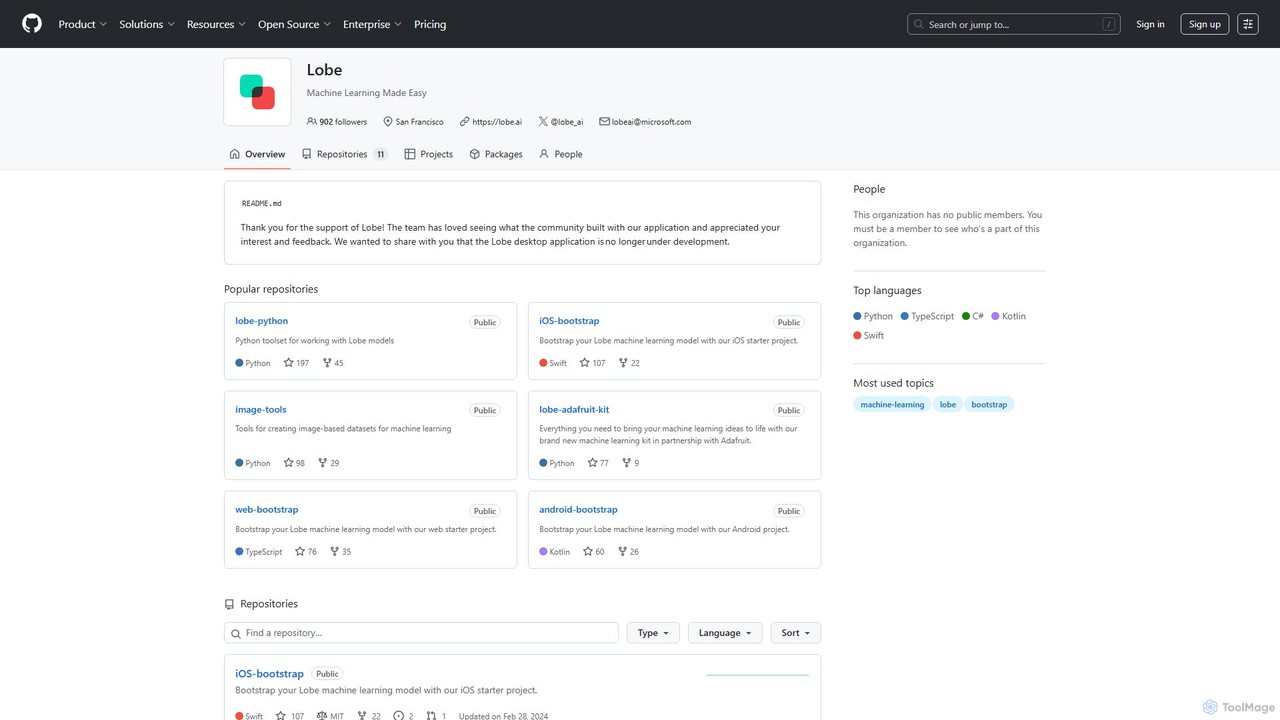
Lobe
Lobe is a free, user-friendly desktop application for Mac and Windows that allows you to build, train, and deploy custom machine learning models without writing any code. It simplifies the process of creating AI, focusing primarily on image classification.
Machine Learning
PyTorch
PyTorch is an open-source machine learning framework based on the Torch library, used for applications such as computer vision and natural language processing. It offers a flexible, Python-first environment that accelerates the path from research prototyping to production deployment.
Deep Learning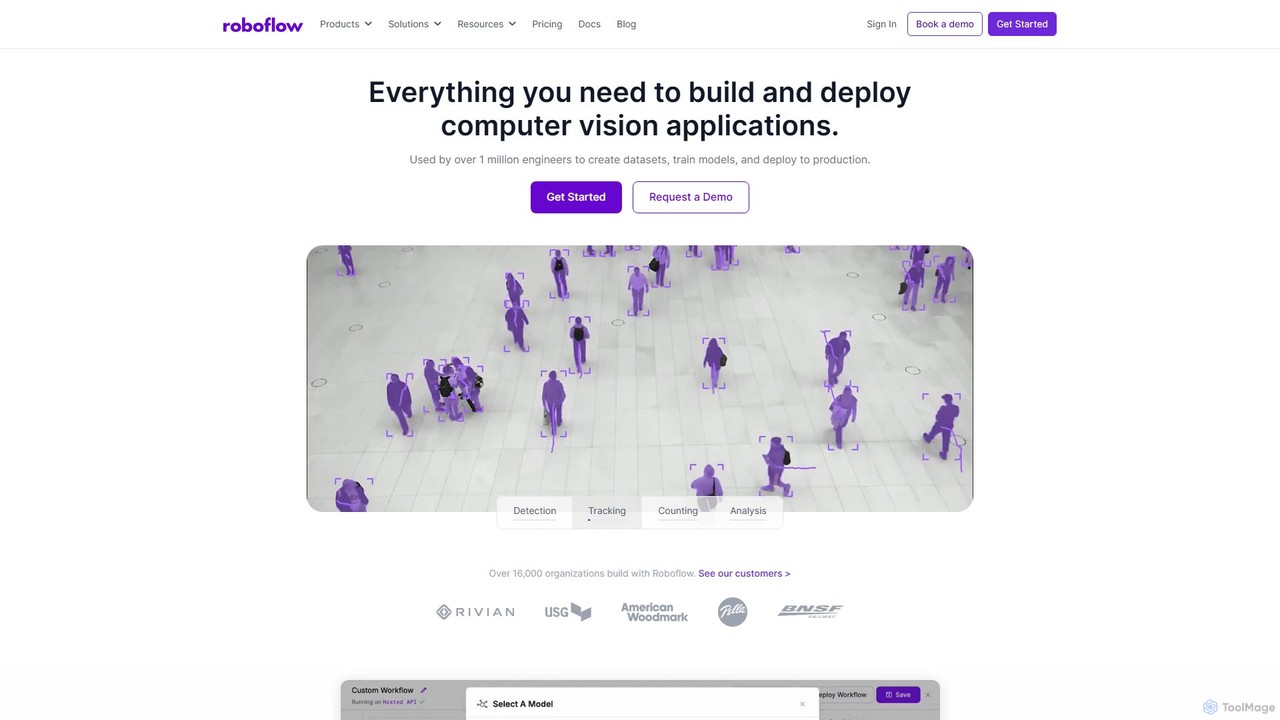
Roboflow
Roboflow is an end-to-end computer vision platform for developers and enterprises. It provides a comprehensive suite of tools to build, train, and deploy computer vision models at scale. From dataset creation and collaborative labeling to one-click model training and deployment to cloud or edge devices, Roboflow streamlines the entire MLOps lifecycle for vision AI, empowering over a million engineers to give their software the sense of sight.
Data Labeling
Modal
Modal is a high-performance, serverless infrastructure platform for AI and ML developers. It allows you to run Python functions in the cloud with a single line of code, providing instant access to GPUs, automatic scaling from zero to thousands of containers, and pay-per-second pricing. Eliminate infrastructure overhead and focus on building and deploying compute-intensive applications like generative AI, batch processing, and data analysis.
Model Deployment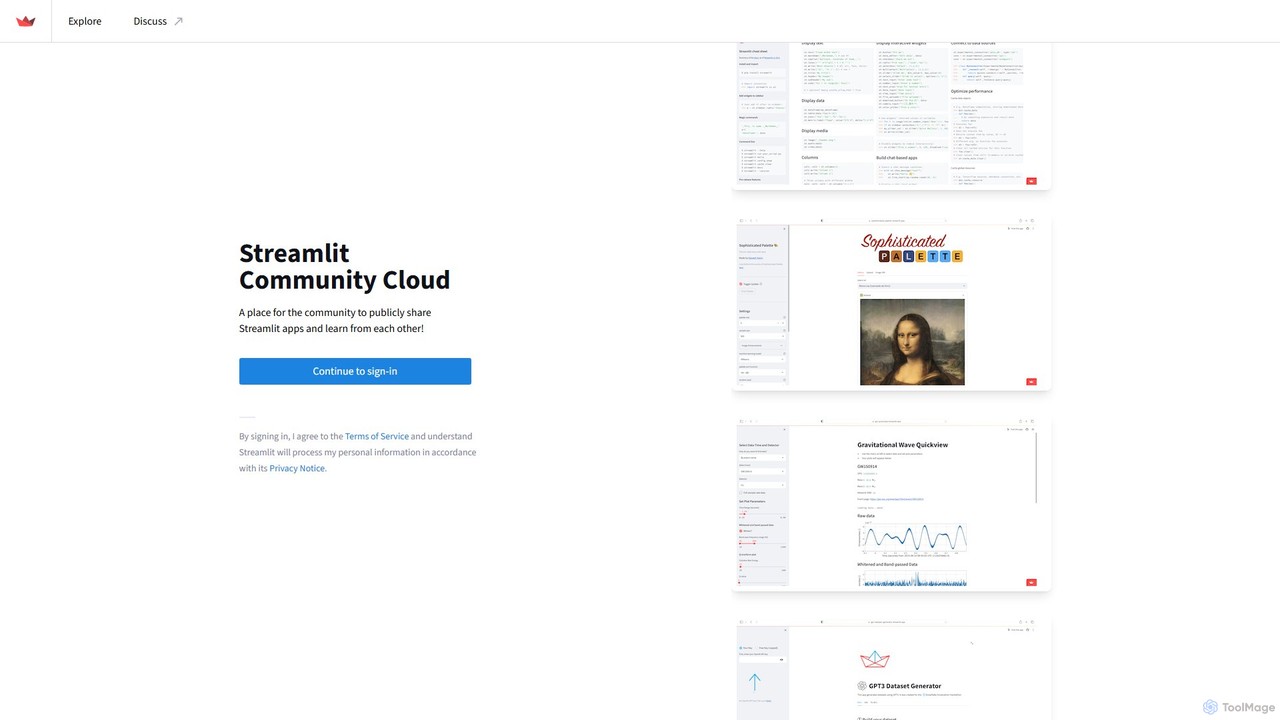
Streamlit
Streamlit is an open-source Python framework that enables developers and data scientists to build and share beautiful, custom web apps for machine learning and data science in minutes. The Streamlit Community Cloud provides a free platform to deploy, manage, and share these public applications with the world, fostering a collaborative environment for innovation.
Data Visualization
Jyek
Jyek is an AI agent platform that understands objectives, creates execution plans, uses tools, and delivers verifiable results for complex, multi-step tasks.
Automation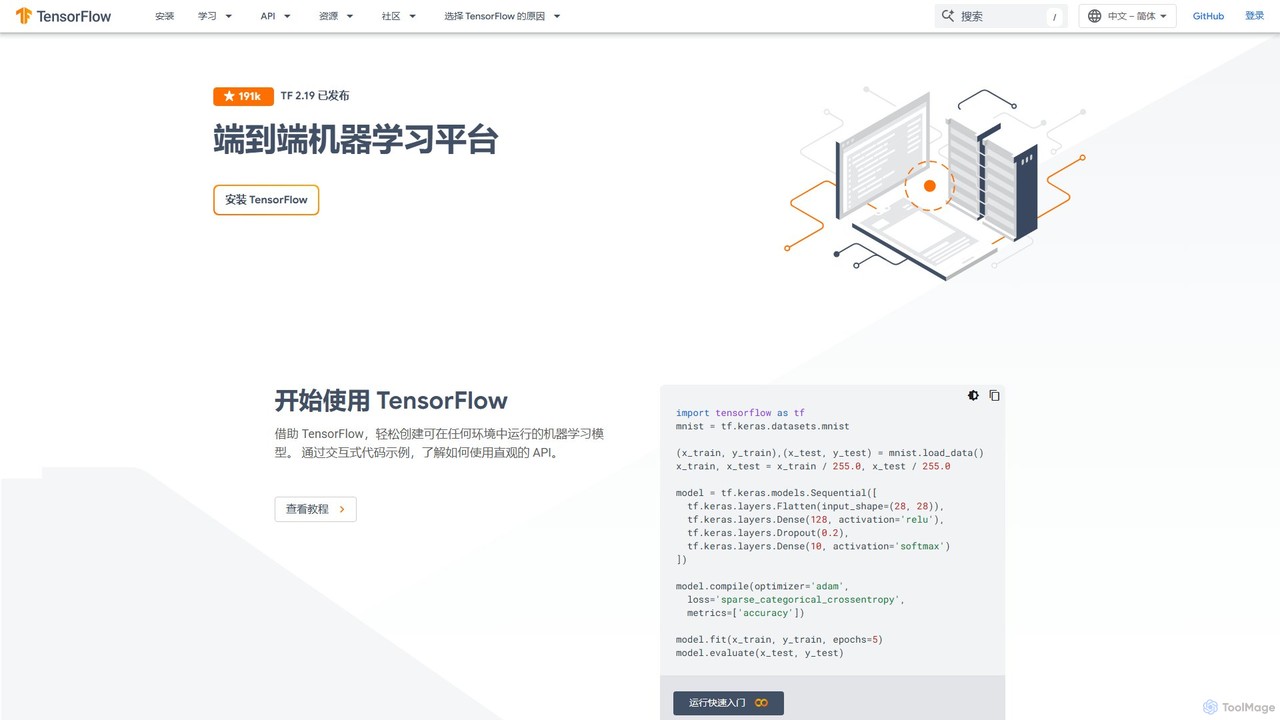
TensorFlow
TensorFlow is an end-to-end open-source platform for machine learning developed by Google. It provides a comprehensive, flexible ecosystem of tools, libraries, and community resources that lets researchers and developers build and deploy ML-powered applications. From beginners to experts, TensorFlow offers intuitive high-level APIs for easy model building and powerful low-level APIs for advanced research, enabling deployment across servers, edge devices, and browsers.
Frameworks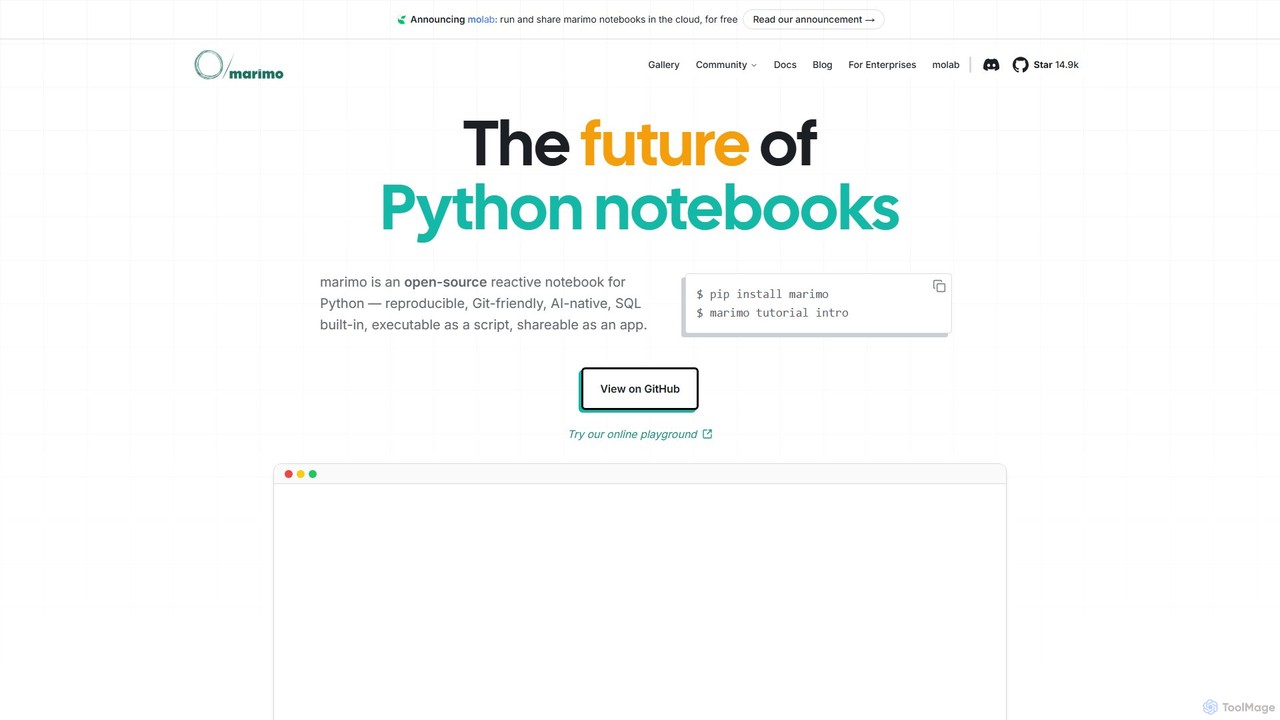
marimo
marimo is an open-source reactive Python notebook for modern data science and AI. It offers a reproducible, Git-friendly, and interactive environment where notebooks are pure Python scripts. Features include built-in AI assistance, SQL cells, and the ability to share notebooks as web apps, streamlining the workflow from experiment to production.
Data Visualization
Raman Labs Comments (0)
Sign in to comment.
Sign inNo comments yet.