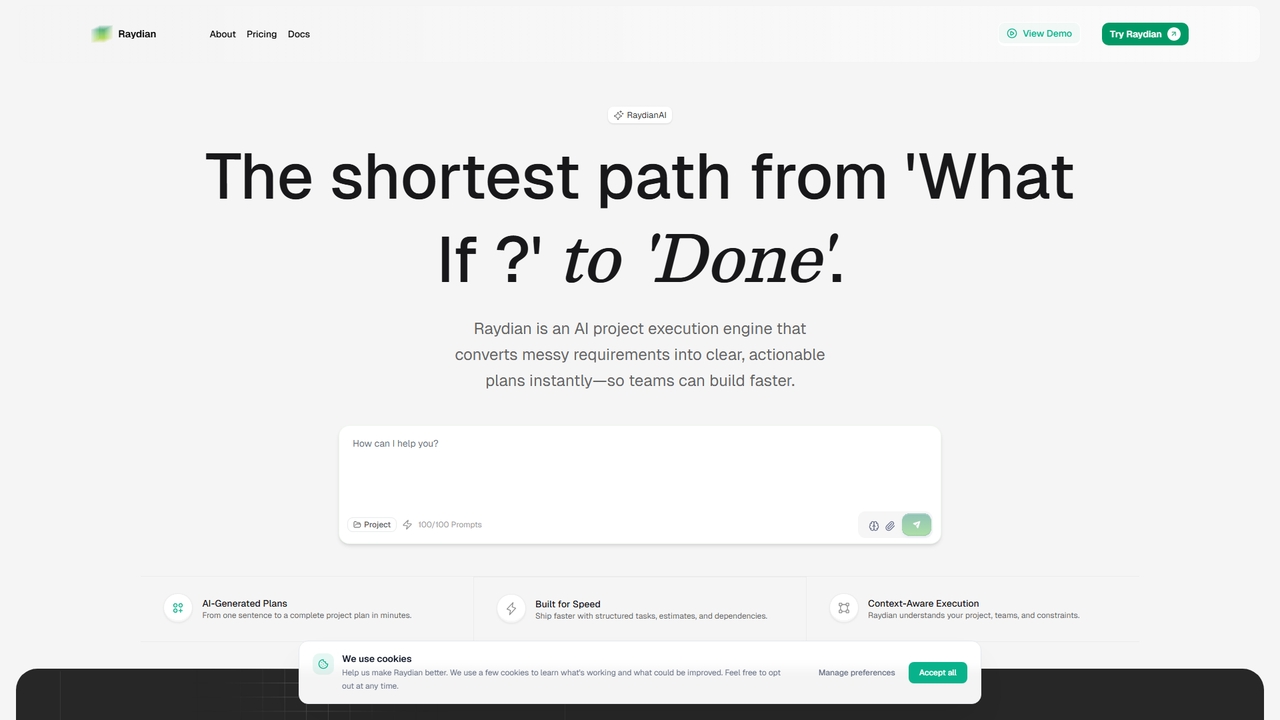
Freemium
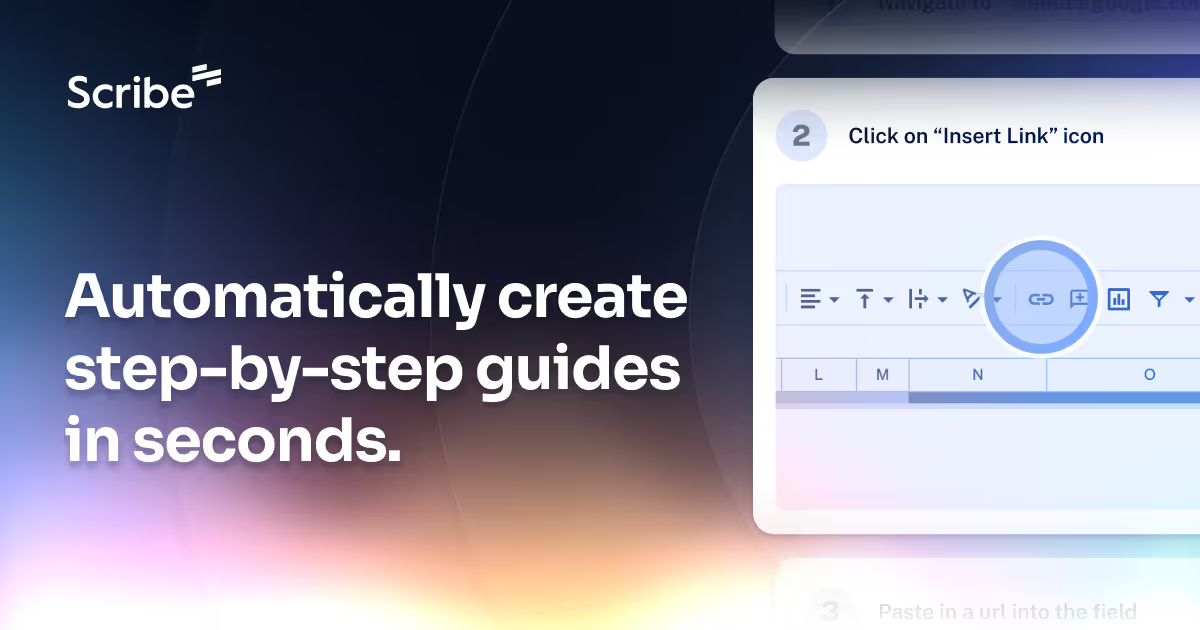
Popular Software Development AI tools include Qoder, Scribe, Air, Raccoon AI, Vibe Coding Academy, Agentfield, Trigma, Actual, Supatest, and Debugg, helping you work more efficiently.
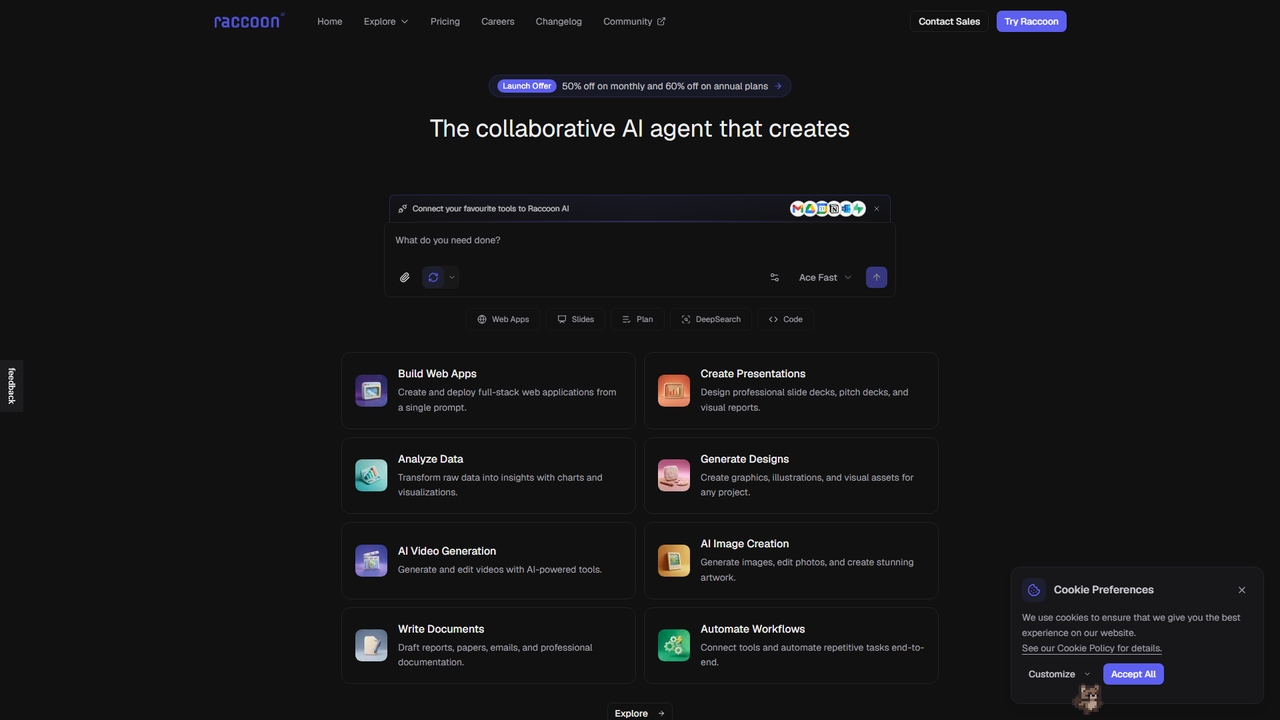
Raccoon AI is a collaborative AI workspace that transforms conversations into web applications, presentations, reports, and designs. It integrates with your favorite tools to automate and execute complex creative and technical tasks.
Content Strategy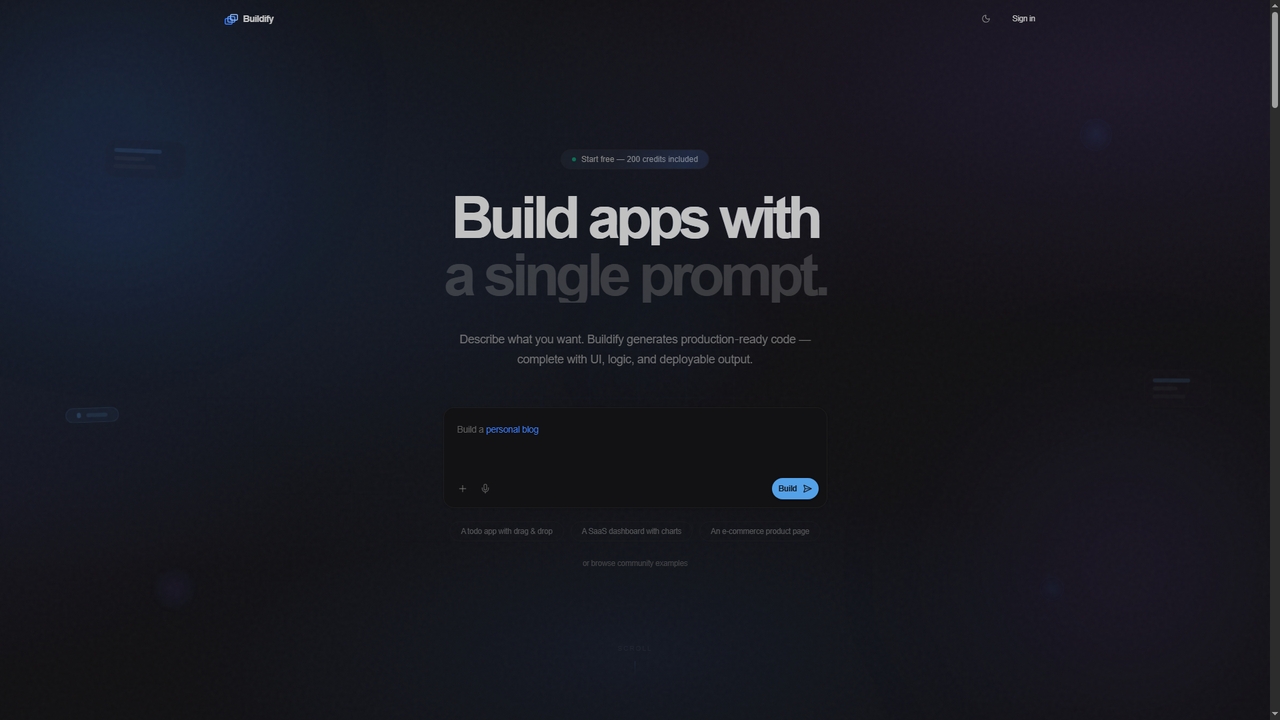
Buildify is an AI-powered app builder that translates natural language prompts into production-ready, full-stack code. It enables developers and creators to quickly generate complete applications with UI, logic, and database components, then iterate through conversation.
Ui Design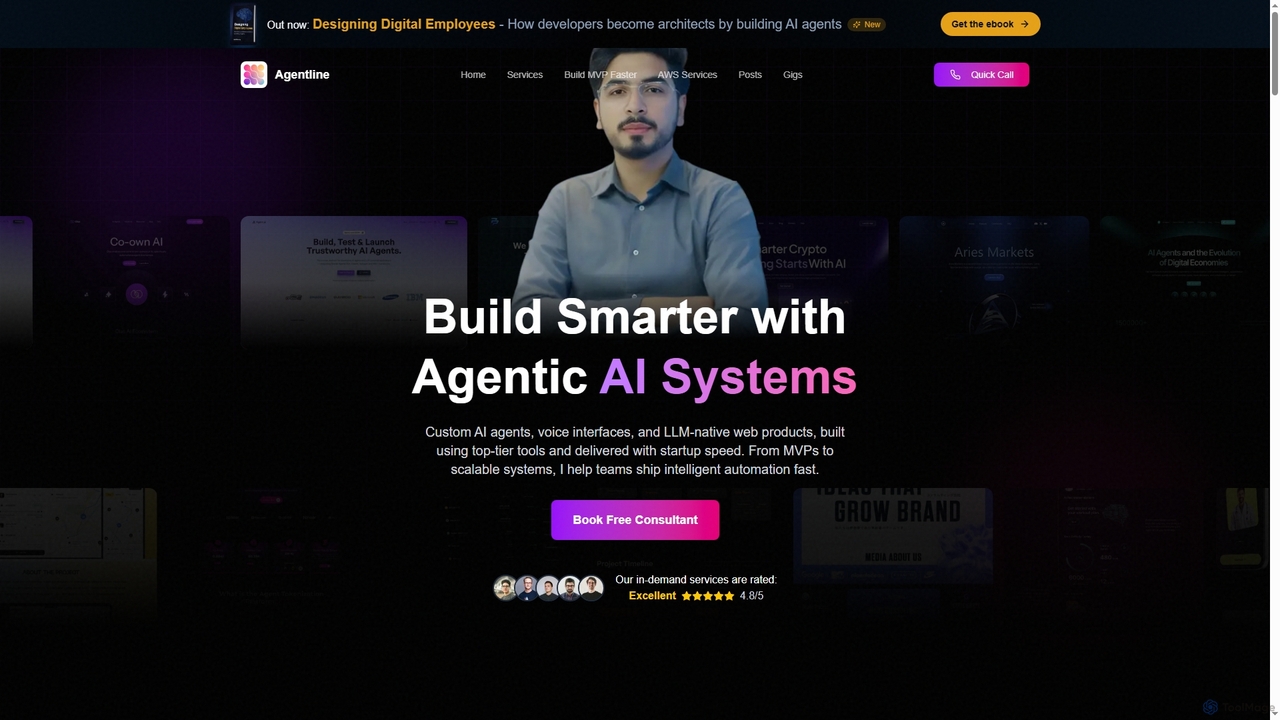
Agentline specializes in building custom agentic AI systems, voice interfaces, and LLM-native web products. They help teams rapidly develop and deploy intelligent automation, from MVPs to scalable enterprise solutions, leveraging top-tier tools and a comprehensive tech stack.
Ai Development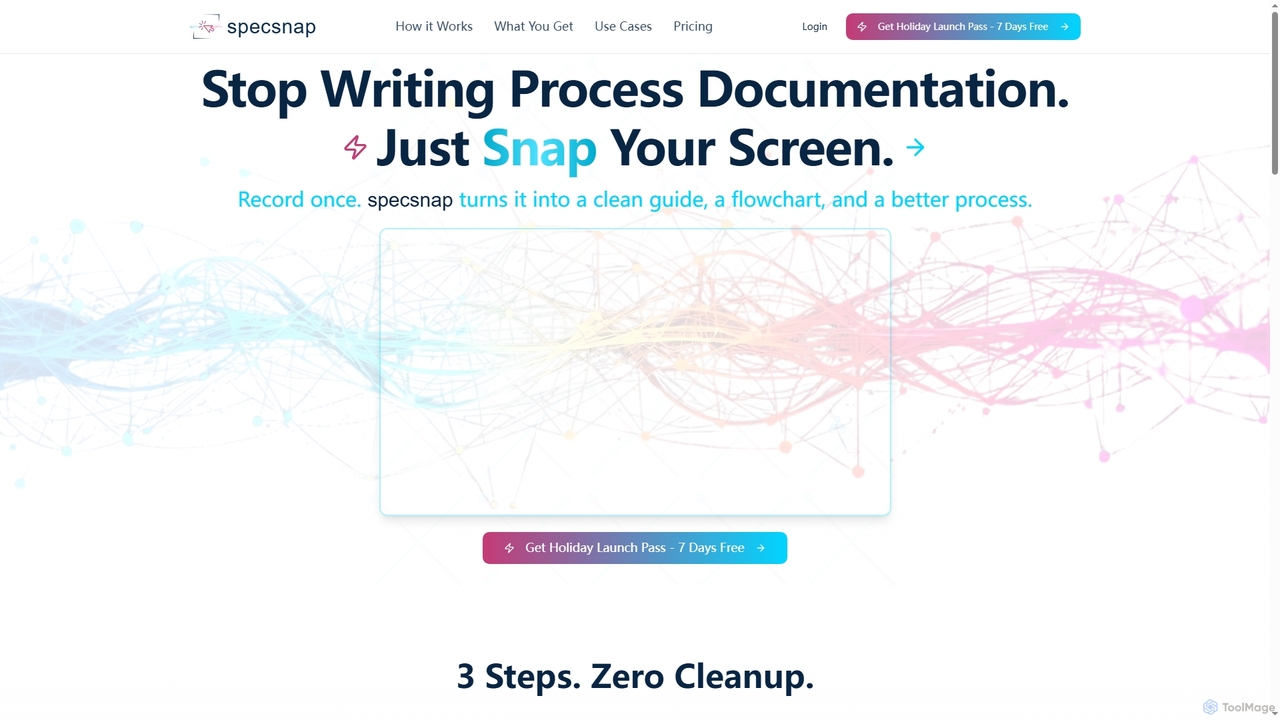
SpecSnap is an AI-powered tool that transforms screen recordings of any workflow into comprehensive process documentation. It automatically generates step-by-step guides, visual flowcharts, and identifies optimization opportunities, saving teams significant time and effort in creating standard operating procedures and training materials.
Process Management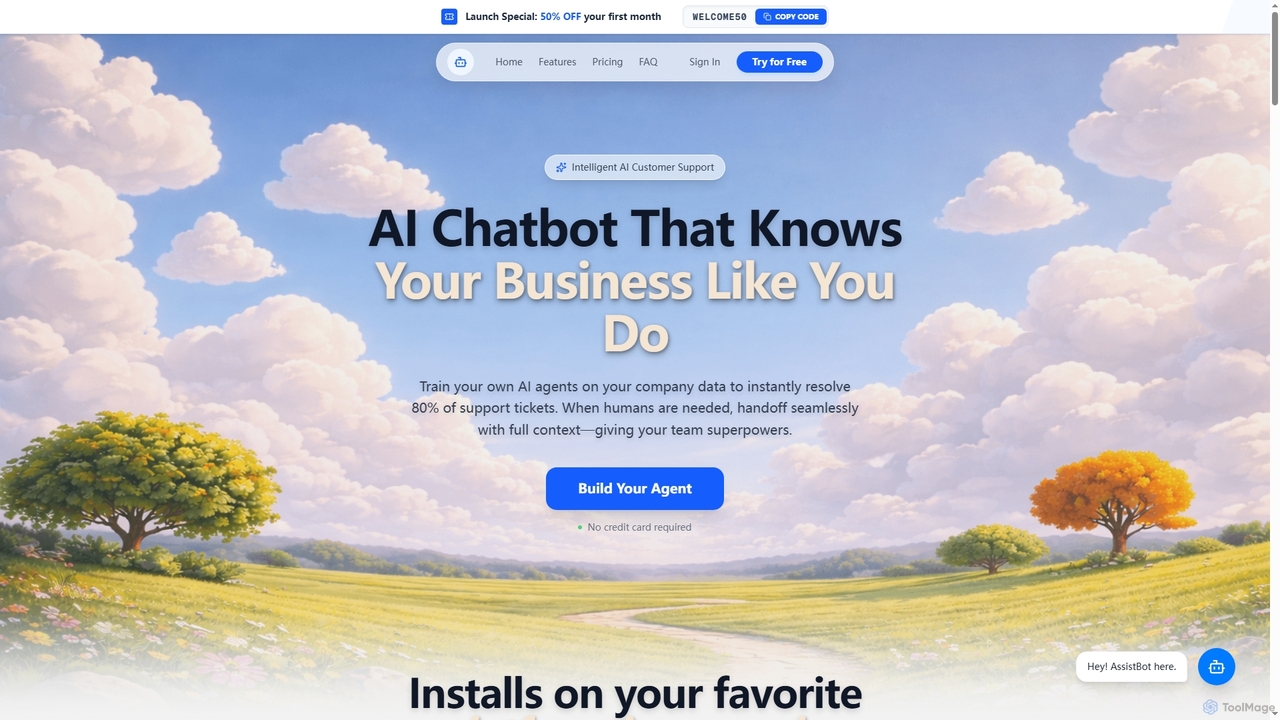
AssistBot is an intelligent AI customer support chatbot designed to instantly resolve up to 80% of support tickets by training on your company's unique data. It offers seamless human handoff with full context, automates sales, books meetings, and integrates effortlessly with various platforms, providing 24/7 personalized support.
E Commerce Solutions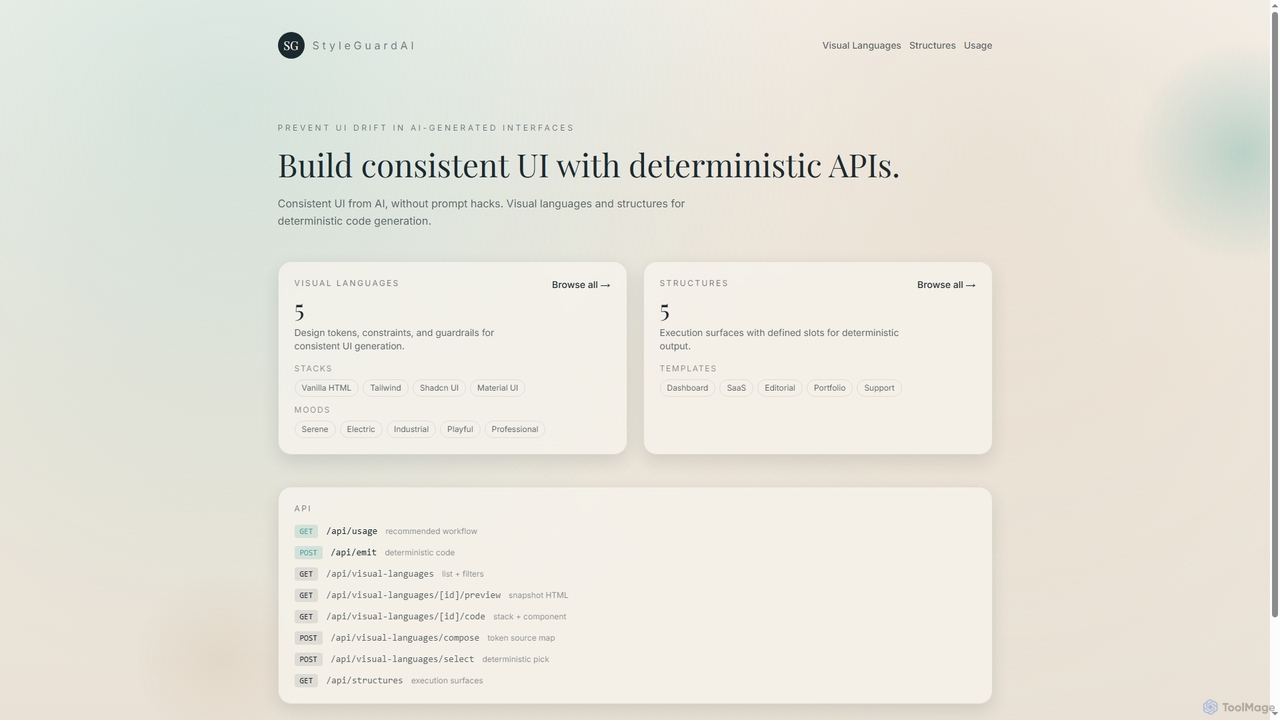
StyleGuardAI is an advanced AI tool that ensures consistent UI generation by leveraging deterministic APIs, visual languages, and structured templates. It prevents design drift in AI-generated interfaces, providing stable and predictable output across different agents and sessions.
Ui Generation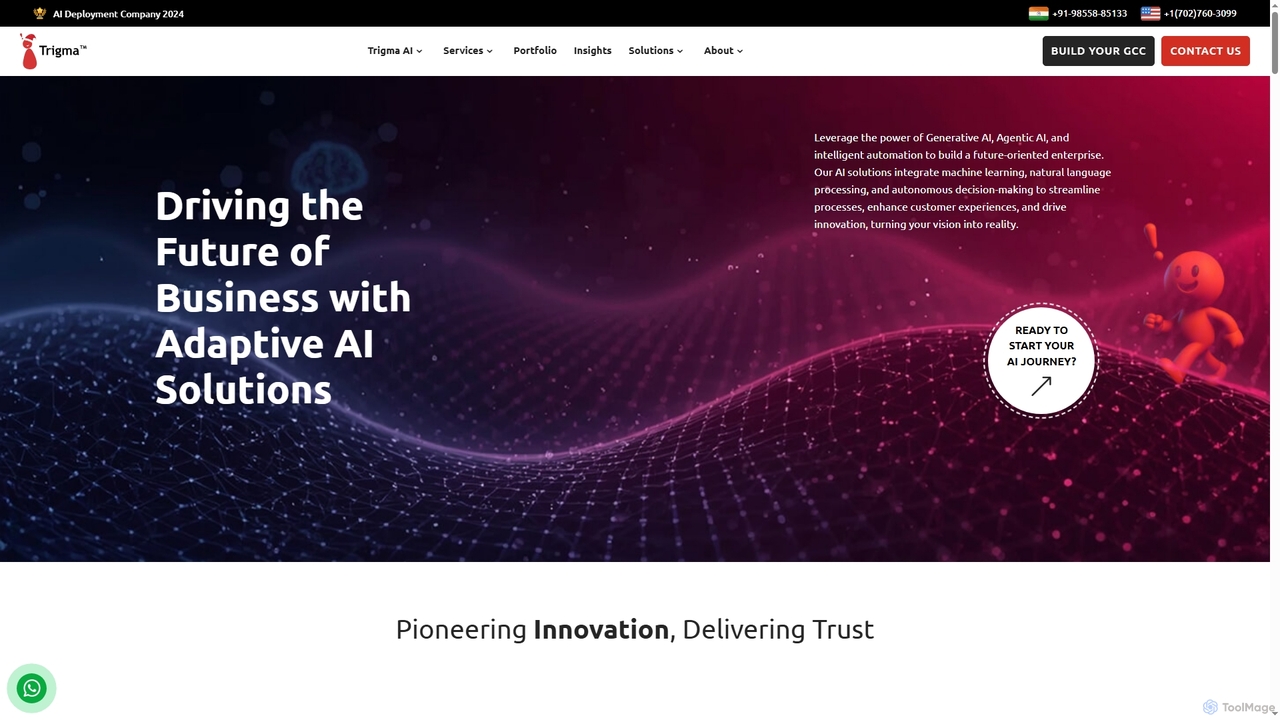
Trigma is a global AI development company specializing in custom AI and tech solutions for businesses. They leverage Generative AI, Agentic AI, machine learning, and natural language processing to create adaptive solutions that streamline processes, enhance customer experiences, and drive innovation across various industries, from healthcare to real estate.
Agentic Ai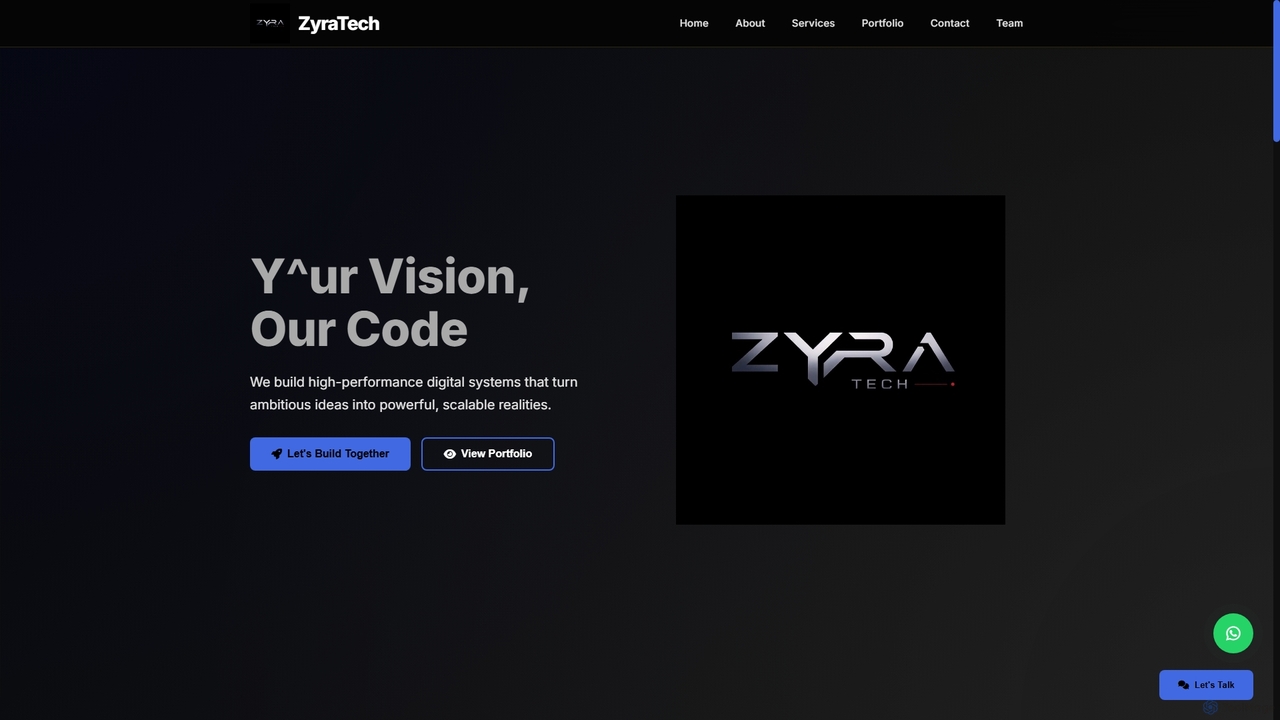
ZyraTech is a dedicated software development company specializing in creating custom web and mobile applications, alongside comprehensive software solutions. They showcase a robust portfolio including e-commerce platforms, mobile banking apps, SaaS dashboards, and industry-specific solutions for healthcare and real estate, built with modern technologies.
Business Applications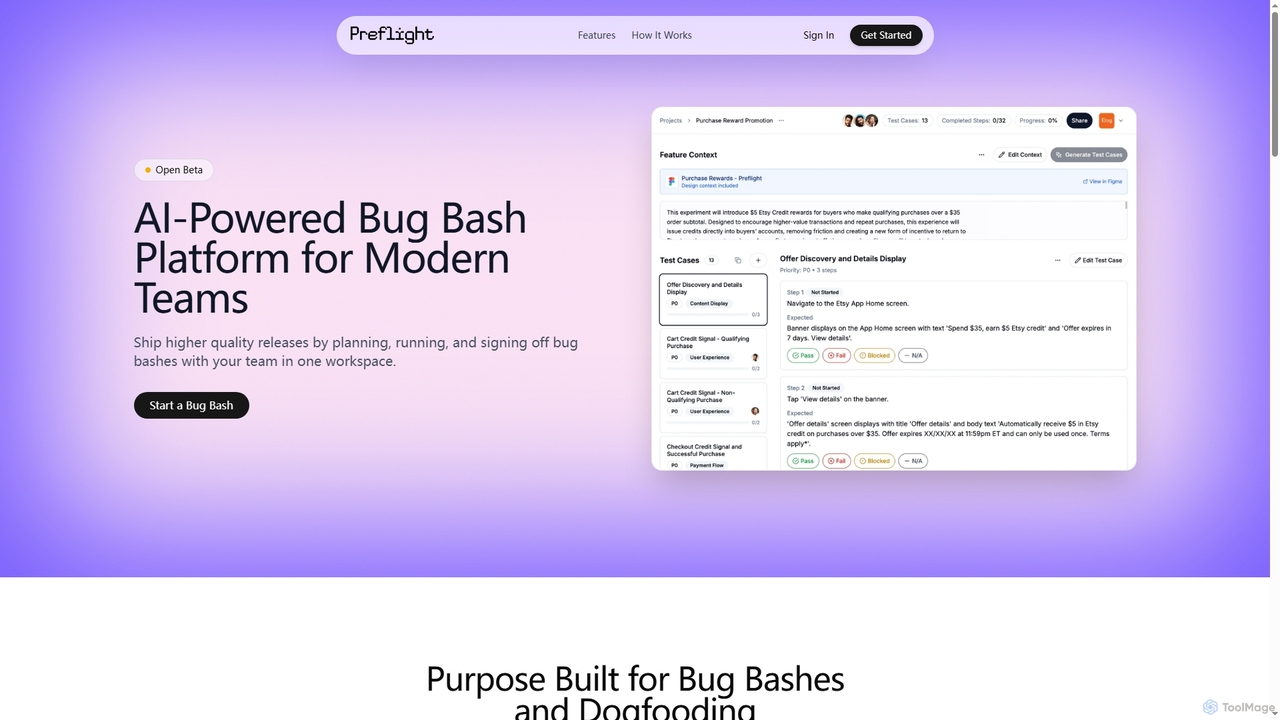
Preflight is an AI-powered bug bash platform designed for modern teams to streamline the entire bug bash process. It helps plan, execute, and sign off on quality assurance sessions, replacing traditional spreadsheets with an integrated workspace for faster, more collaborative, and efficient software releases.
Team Collaboration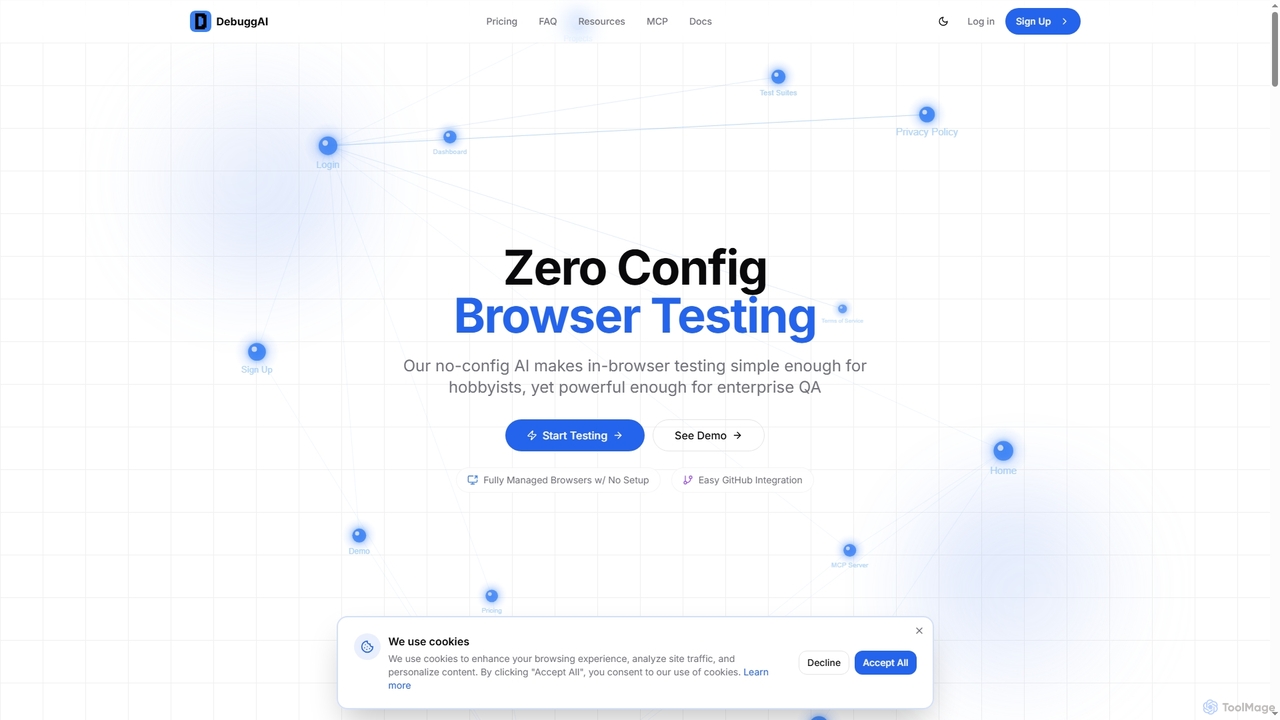
Debugg is an AI-powered platform that provides automated browser testing for every GitHub Pull Request. It offers zero-configuration, fully managed end-to-end testing, integrating seamlessly with your repository to deliver inline results and actionable insights directly in your PR comments, streamlining your development workflow.
Quality Assurance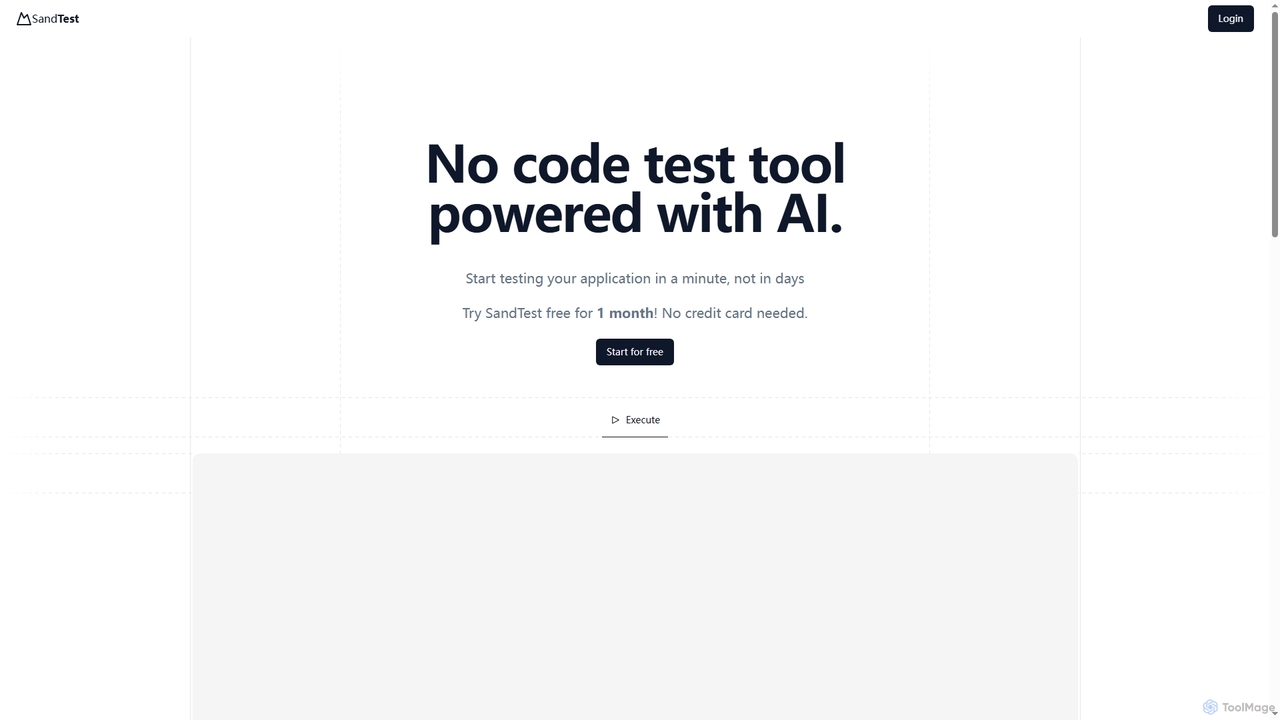
SandTest is an AI-powered, no-code test automation tool designed to help businesses validate their applications rapidly. It enables users to start testing in minutes, streamlining the quality assurance process and enhancing productivity without complex setups.
Development Tools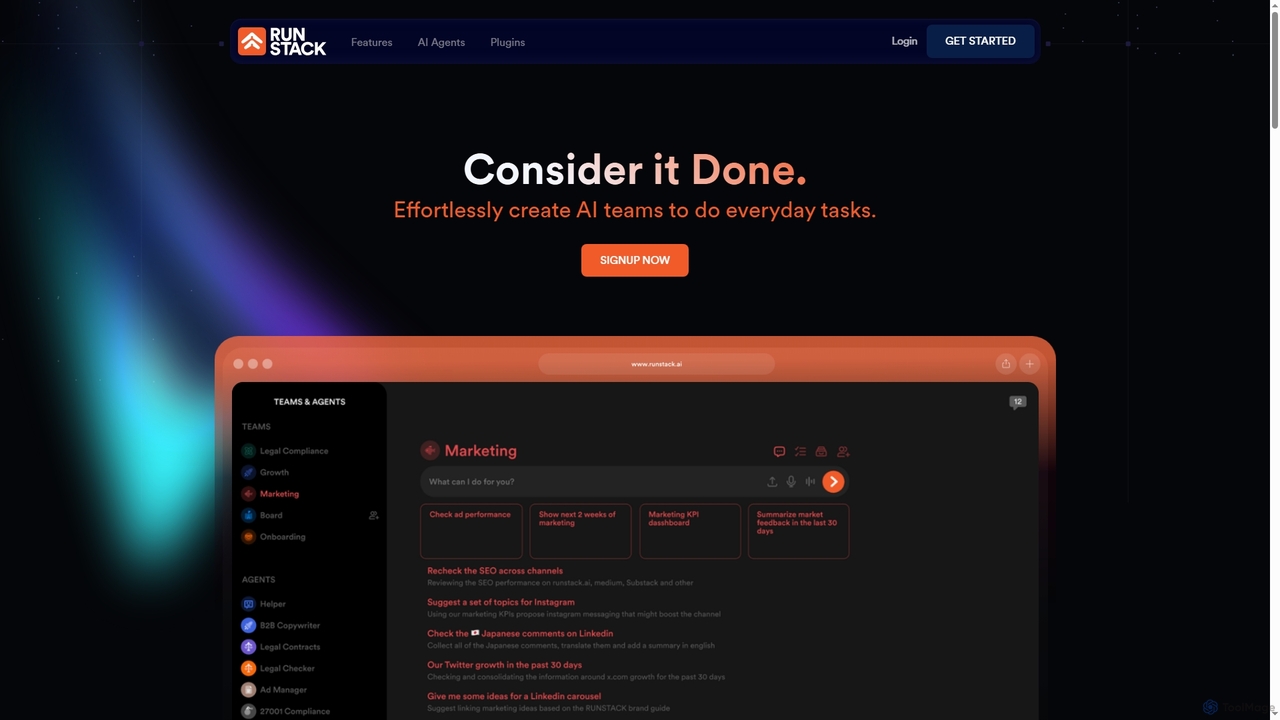
Runstack is an innovative AI agent platform that empowers businesses to effortlessly create custom AI assistants. By simply describing tasks in plain English, users can deploy intelligent agents to automate workflows, integrate with over 50 business tools, and handle complex operations across various departments, from sales and marketing to finance and project management.
Sales Automation
CTOx AI is a technical decision engine designed for founders, CTOs, and engineering teams, providing structured, actionable architectural guidance and strategic insights. It acts as a personalized technical partner, leveraging a deep knowledge base and industry-specific CTO personas to navigate complex engineering challenges and accelerate decision-making.
Technical Leadership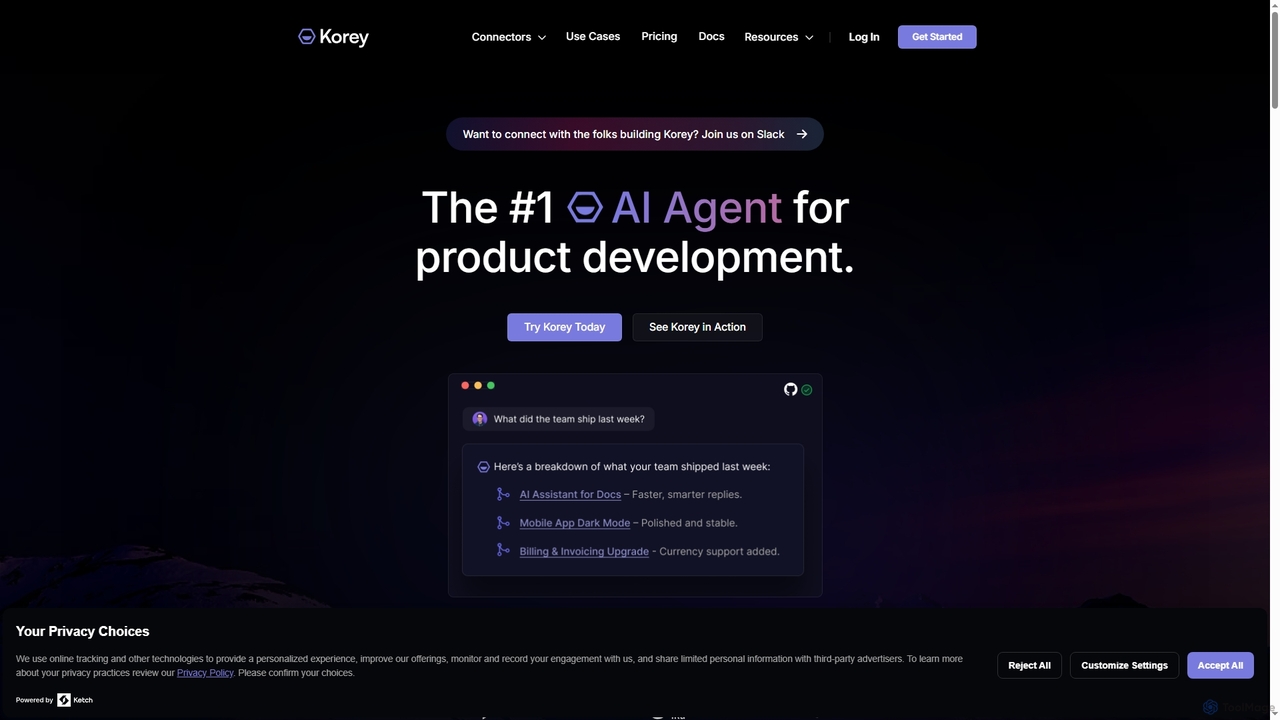
Korey is an AI agent designed to streamline product development workflows, helping teams manage projects, track status, and accelerate progress. It automates tasks like spec creation, task breakdown, and status updates, integrating with tools like Shortcut and GitHub to provide context-aware assistance for engineering teams.
Project Management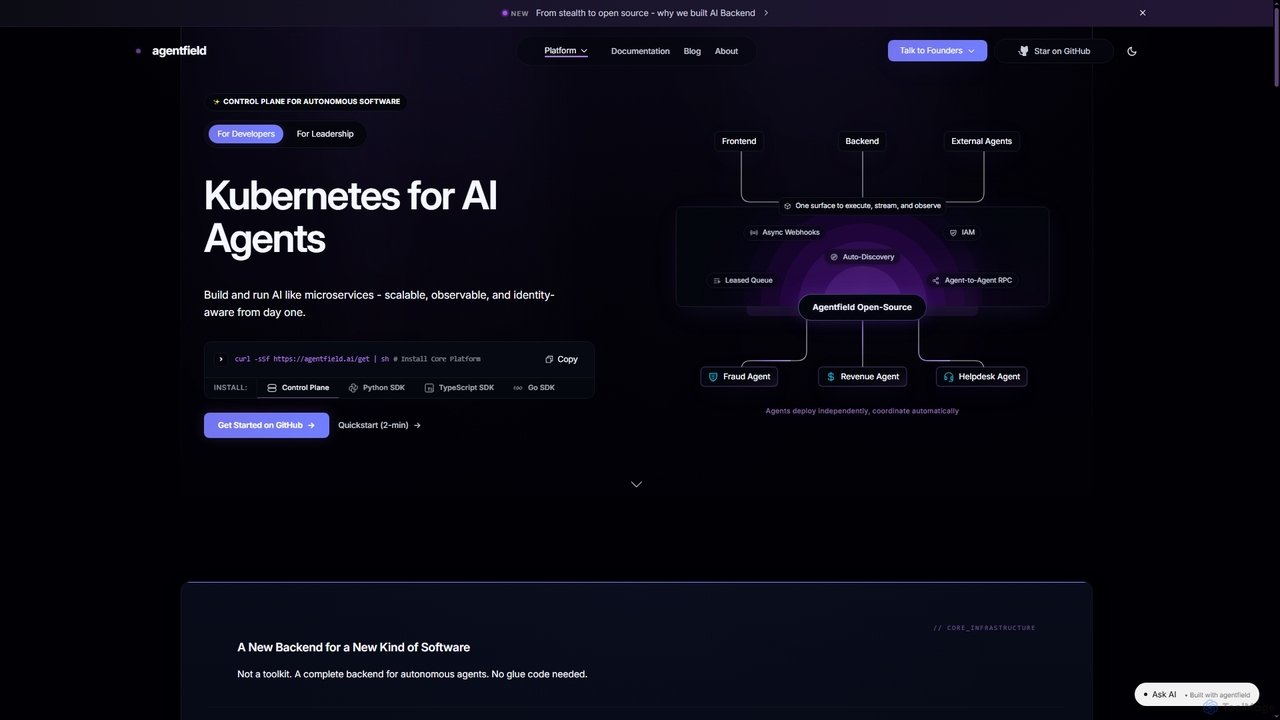
Agentfield is an open-source control plane designed for building and running autonomous AI agents as scalable, observable, and identity-aware microservices. It provides Kubernetes-like orchestration, cryptographic identity management, and production-ready infrastructure to bridge the gap between AI prototypes and robust, trustworthy production deployments.
Orchestration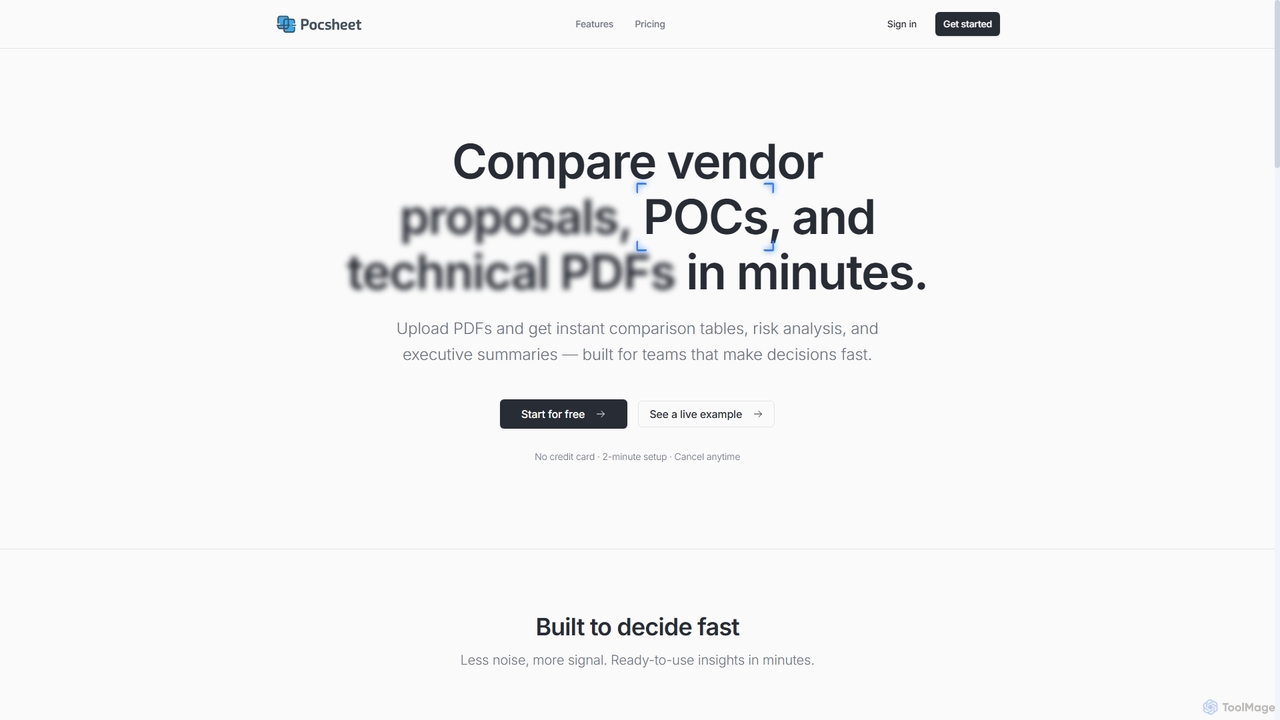
POCsheet is an AI-powered document comparison tool designed for teams to quickly analyze vendor proposals, technical specifications, and contracts. It automates the extraction of key features, risk identification, and generates instant comparison tables and executive summaries, saving significant time in decision-making processes.
Rfp Management
Arkhet is an AI-first prototyping platform designed for product teams, enabling visual thinkers to generate interactive UI prototypes and user flows rapidly. It transforms wireframes and contextual annotations into high-fidelity designs, integrating design systems and real-time collaboration.
Generative Design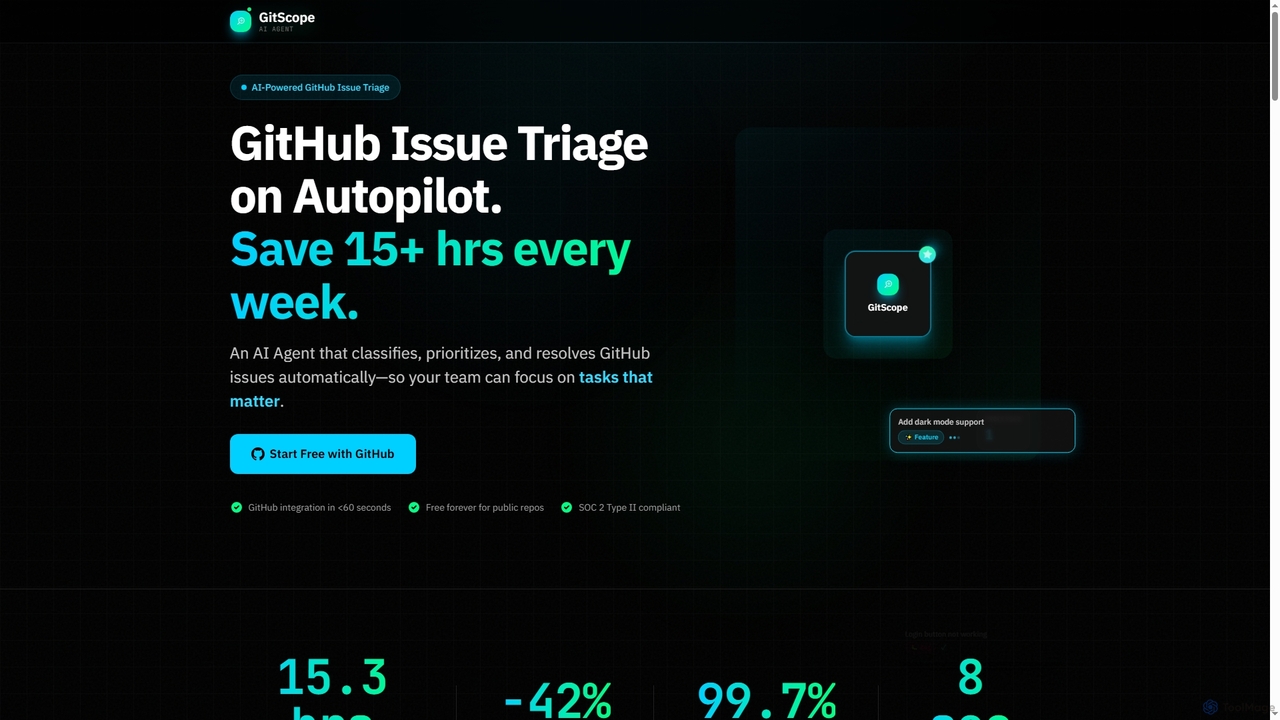
GitScope is an AI-powered GitHub issue triage agent designed to automate the classification, prioritization, and resolution of issues. It helps engineering teams save significant time, reduce backlogs, and improve consistency by leveraging GPT-4 for intelligent analysis, duplicate detection, and configurable automation workflows. Free for public repositories, GitScope integrates seamlessly with GitHub to enhance team productivity and maintainer well-being.
Github Tools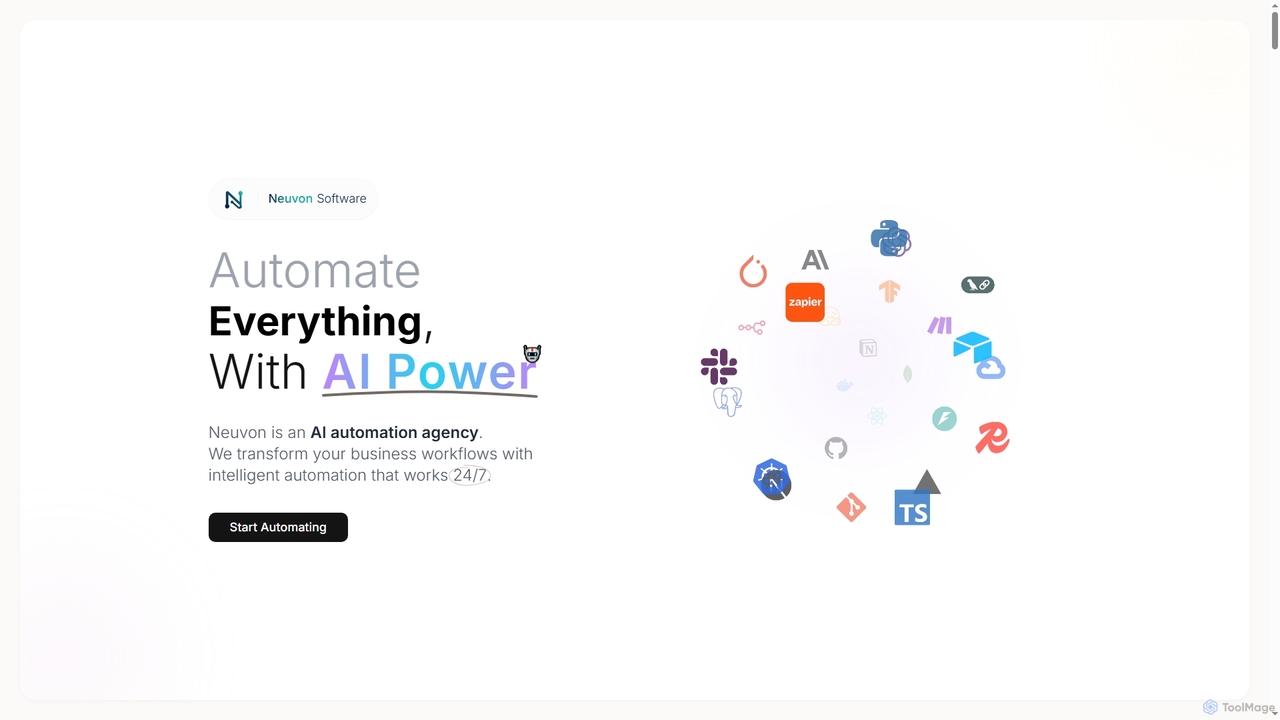
NeuvonSoftware is an AI automation and software development agency specializing in transforming business workflows with intelligent, 24/7 automation. They offer custom AI solutions, workflow automation, data integration, and bespoke software development to enhance efficiency, reduce errors, and drive data-driven decisions for businesses across various sectors.
3D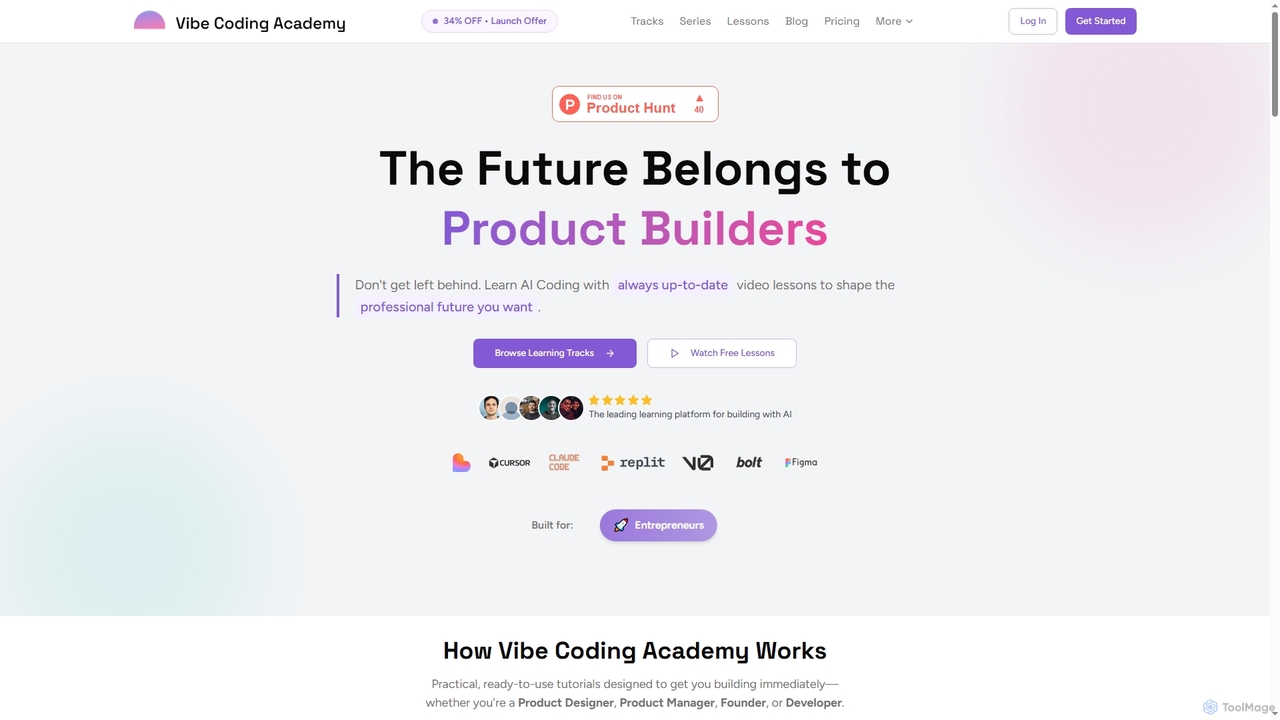
Vibe Coding Academy offers AI-powered coding education through practical video tutorials, ready-to-use prompts, and structured learning tracks. It empowers product builders, designers, managers, and engineers to master modern development workflows and ship production-ready applications with AI assistance.
Product Design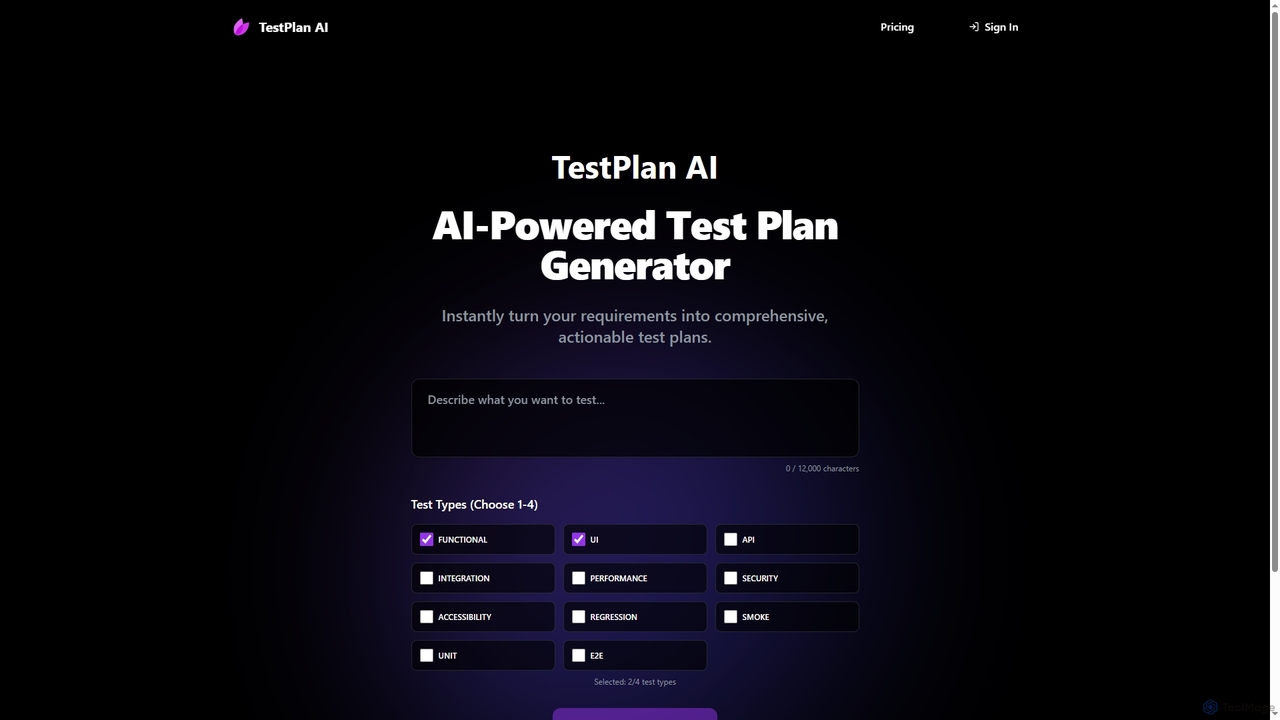
TestPlan is a powerful, AI-powered tool designed to instantly transform project requirements into comprehensive, actionable test plans and detailed test cases. It supports a wide range of test types, from functional to security, making software testing more efficient for development teams.
Automation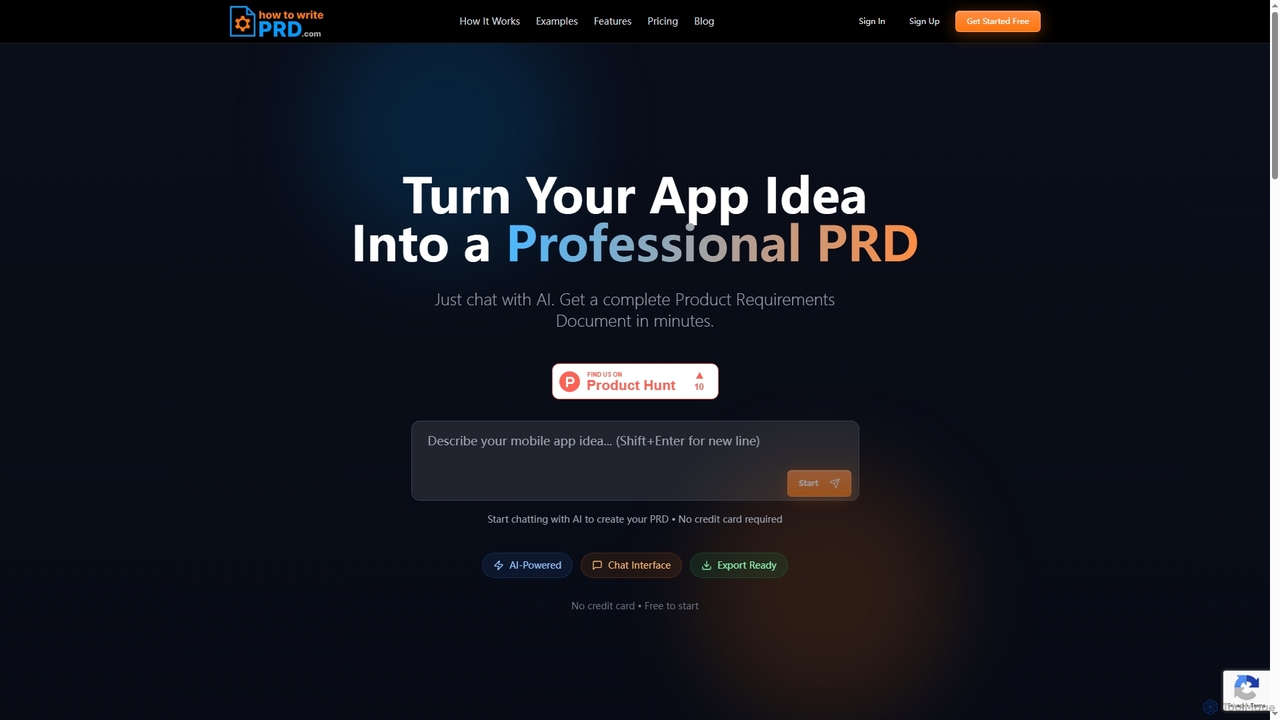
HowToWritePRD is an AI-powered tool that transforms your mobile app ideas into professional Product Requirements Documents (PRDs) in minutes. Engage in natural conversation with AI to define your vision and generate comprehensive documentation, free to start.
Writing Assistant
AI Software Development tools are a class of intelligent applications designed to assist and automate various stages of the software development lifecycle (SDLC). These tools leverage large language models (LLMs) and machine learning to understand context, generate code, identify bugs, and optimize performance. They empower developers to build, test, and deploy software faster and with higher quality by acting as an intelligent pair programmer. This enhances productivity, reduces repetitive tasks, and allows teams to focus on complex problem-solving and innovation.
These tools are widely used by individual developers, agile teams, and large enterprises. Common applications include accelerating the development of new features, modernizing legacy systems by translating old code to new languages, and optimizing CI/CD pipelines through automated testing and code review. They are also valuable for learning new programming languages or frameworks by providing real-time examples and explanations.
When selecting an AI Software Development tool, consider its integration with your existing Integrated Development Environment (IDE) and workflow. Evaluate the breadth of supported programming languages and frameworks. Assess the quality and relevance of its code suggestions and its capabilities for specific tasks like debugging or testing. For teams, collaboration features and enterprise-level security policies are also critical factors.
A startup founder with a new app idea uses an AI development tool to rapidly build a Minimum Viable Product (MVP). By providing high-level feature descriptions in natural language, such as 'Create a user login page with Google authentication' or 'Generate a REST API endpoint for product data,' the tool generates the necessary boilerplate code, database schemas, and API integrations. This process reduces the initial development time from several weeks to just a few days, allowing for faster market validation and iteration based on early user feedback.
A Quality Assurance (QA) engineer is tasked with increasing test coverage for a complex enterprise application. Instead of manually writing hundreds of test cases, they use an AI tool that analyzes the application's source code. The tool identifies critical code paths, edge cases, and potential failure points, then automatically generates comprehensive unit tests and integration tests in the project's testing framework (e.g., JUnit, PyTest). This not only saves significant time but also improves the robustness of the software by covering scenarios that a human tester might overlook.
A large financial institution needs to update a critical system written in an outdated language like COBOL. A development team uses an AI tool to analyze the legacy codebase. The tool first generates comprehensive documentation to explain the existing logic. Then, it automatically translates the code into a modern language such as Java or Python, while preserving the core business logic. It also identifies and suggests refactoring opportunities to improve code structure, remove redundancies, and enhance performance, significantly reducing the risk and cost associated with manual modernization projects.
A software developer integrates an AI assistant directly into their IDE (e.g., VS Code). While writing a new feature, the assistant provides real-time, context-aware code completions that go beyond simple function names, suggesting entire blocks of logic. When the developer encounters a complex algorithm or an unfamiliar API, they can ask the assistant for an explanation or an example implementation in plain English. The tool also proactively flags potential bugs, security vulnerabilities, and non-optimal code patterns, acting as a continuous code reviewer to improve quality from the very first line.
A data analyst needs to extract specific insights from a large, complex database but is not an expert in SQL. They use an AI tool where they can type a request in plain English, such as 'Show me the total sales for each product category in the last quarter, sorted from highest to lowest.' The AI tool translates this request into an optimized, complex SQL query, including joins, aggregations, and filtering. This democratizes data access, enabling non-technical team members to perform sophisticated data analysis without needing to learn a query language.
A project manager is onboarding new developers to a large, existing project with minimal documentation. To accelerate the process, they use an AI tool to scan the entire codebase. The tool automatically generates clear, consistent docstrings for functions and classes, explains the purpose of complex code blocks, and creates a high-level architectural overview. This living documentation can be updated automatically as the code changes, ensuring new team members can understand the project structure and contribute productively much faster than with traditional, often outdated, manual documentation.
AI Software Development tools are applications that use artificial intelligence, particularly machine learning and large language models, to assist developers throughout the software development lifecycle. They function as intelligent assistants that can generate code, complete complex statements, find and fix bugs, write tests, and even explain existing code. Their primary goal is to increase developer productivity, improve code quality, and accelerate the delivery of software.
Choosing the right tool depends on your specific needs. Consider the following factors:
Using AI in software development offers several key benefits. The most significant is a dramatic increase in productivity, as AI can handle repetitive coding tasks, allowing developers to focus on higher-level design and problem-solving. It also leads to improved code quality by catching bugs, security vulnerabilities, and performance issues early in the process. Furthermore, AI tools can accelerate learning and onboarding for new developers and reduce the time-to-market for new products and features.
Traditional static analysis tools check code against a predefined set of rules and patterns to find potential bugs, style violations, or security flaws. They are deterministic and non-generative. In contrast, AI code assistants are generative and context-aware. They use large language models to understand the intent behind the code, suggest complex logic, generate entirely new functions from natural language, and explain code in a human-like manner. While static analysis tools are for validation, AI assistants are for creation and comprehension.
AI tools are not intended to replace software developers but to augment their capabilities. They excel at handling repetitive, time-consuming, and pattern-based tasks, which frees up developers to focus on more creative and strategic work such as system architecture, complex problem-solving, and user experience design. The role of the developer is evolving to become more of a supervisor and collaborator with AI, guiding the tools to produce the desired outcomes and ensuring the final product is robust, secure, and meets business requirements.