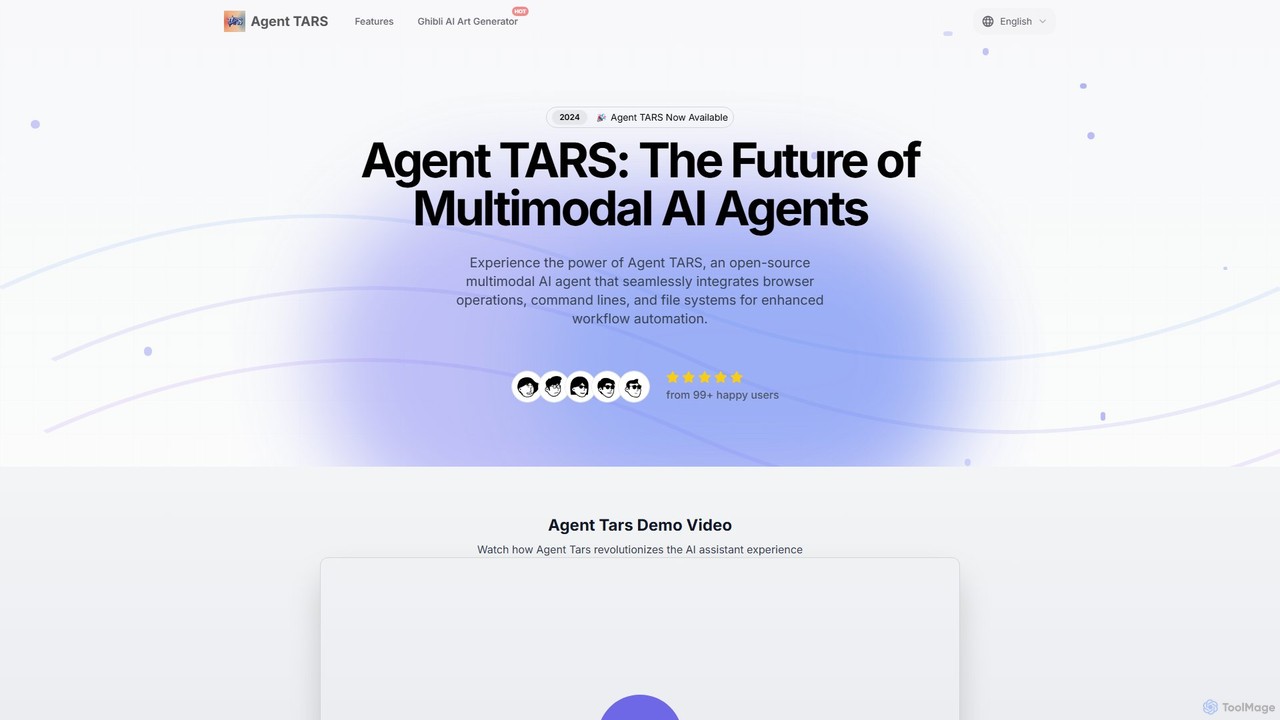
Agent TARS is a powerful, open-source multimodal AI agent designed for developers and teams. It automates complex workflows by seamlessly integrating browser operations, command-line interfaces, and file systems. Leveraging visual interpretation and sophisticated reasoning, it efficiently handles diverse tasks, from advanced browser automation to intricate tool integrations, boosting productivity and streamlining development processes.
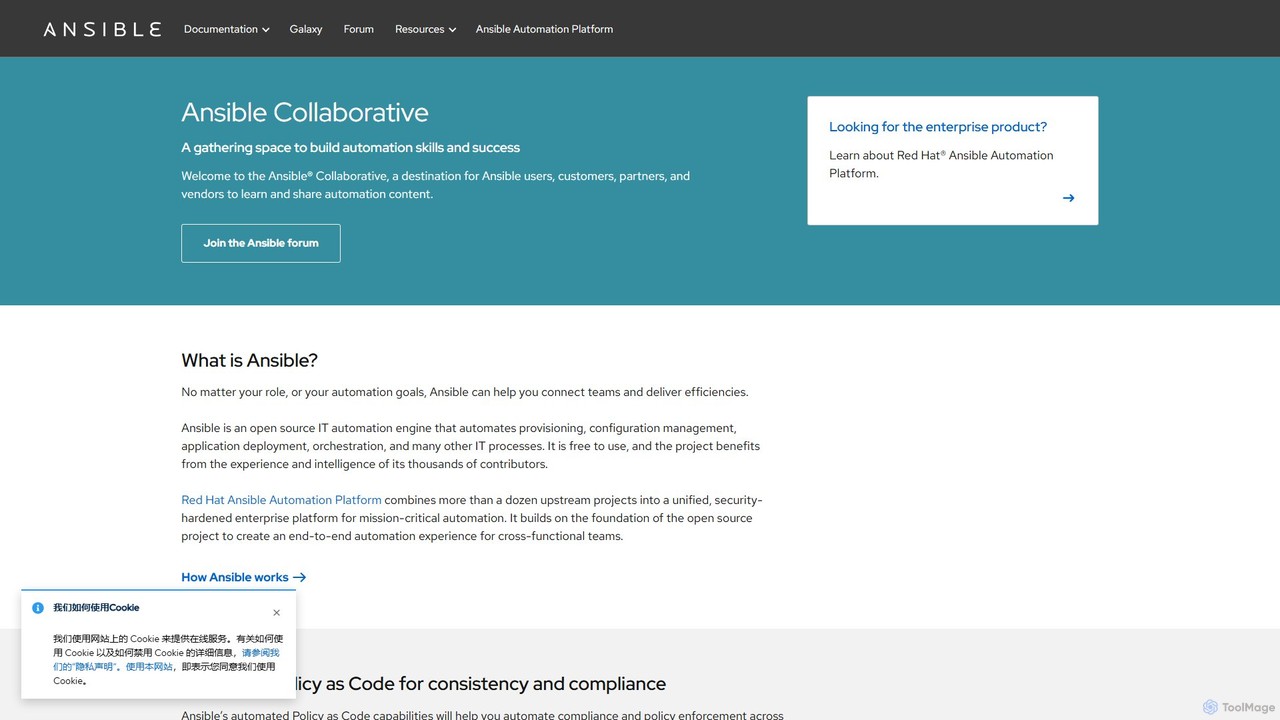
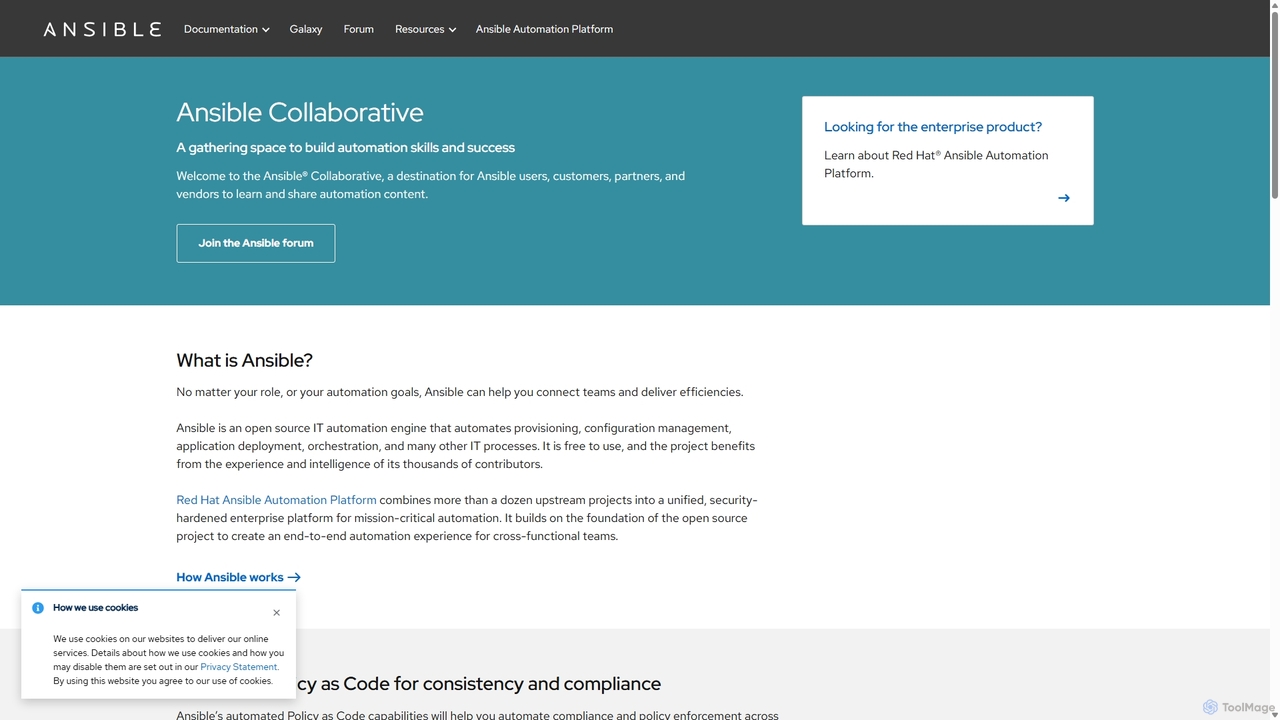
Ansible Collaborative is a central hub for the Ansible open-source community, providing resources for IT automation. It offers documentation, forums, and access to Ansible Galaxy for pre-built content. Users can learn to automate provisioning, configuration management, and application deployment. While the core Ansible project is free, it serves as the foundation for the enterprise-grade Red Hat Ansible Automation Platform, which adds advanced features like generative AI and event-driven automation.
Product overview
Agent TARS Product overview
Agent TARS is a powerful, open-source multimodal AI agent designed for developers and teams. It automates complex workflows by seamlessly integrating browser operations, command-line interfaces, and file systems. Leveraging visual interpretation and sophisticated reasoning, it efficiently handles diverse tasks, from advanced browser automation to intricate tool integrations, boosting productivity and streamlining development processes.
Ansible Collaborative Product overview
Ansible Collaborative is a central hub for the Ansible open-source community, providing resources for IT automation. It offers documentation, forums, and access to Ansible Galaxy for pre-built content. Users can learn to automate provisioning, configuration management, and application deployment. While the core Ansible project is free, it serves as the foundation for the enterprise-grade Red Hat Ansible Automation Platform, which adds advanced features like generative AI and event-driven automation.
Detailed feature comparison
| Feature | Agent TARS | Ansible Collaborative |
|---|---|---|
| Primary category | Autonomous Agent | Infrastructure As Code |
| Added | 2025-08-09 | 2025-08-13 |
| Pricing | Free | Freemium |
| Official website | agenttars.ai | www.redhat.com |
| Product type | App | Website |
| Performance data | ||
| User rating | Not verified | Not verified |
| Comments | 0 | 0 |
| Monthly visits | 4.2K | 3.5M |
| Monthly growth | Not verified | -0.8% |
| Favorites | 140 | 116 |
| Details | View details | View details |
Agent TARS vs Ansible Collaborative monthly traffic
Compare Agent TARS and Ansible Collaborative by monthly reach, traffic trend, visit depth, top regions, and acquisition sources.
How to interpret the traffic data
In the Agent TARS vs Ansible Collaborative monthly traffic comparison, Agent TARS currently shows 4.2K visits and Ansible Collaborative shows 3.5M; Ansible Collaborative has about 834 times the visible traffic of Agent TARS, an absolute difference of about 3.5M visits. This reflects visible reach, not feature quality or paid users.
Only Ansible Collaborative has complete third-party traffic details; Agent TARS uses visits recorded inside ToolMage. These scopes cannot estimate market share directly, and on-site views should not be treated as the product’s total website traffic.
Ansible Collaborative is registered at the www.redhat.com/en/ansible-collaborative subpage. Because the current data does not state whether other host pages are excluded, treat this as domain-level context rather than independent traffic for one product or project.
Agent TARS monthly traffic:
Latest traffic
Ansible Collaborative monthly traffic:
Latest traffic
Monthly traffic trend
- 2026/1: 3.6M Monthly visits
- 2026/2: 3.5M Monthly visits
- 2026/3: 4M Monthly visits
- 2026/4: 3.5M Monthly visits
- 2026/5: 3.5M Monthly visits
Top regions
Top 5 countries/regions
| Country/region | Percentage | Traffic |
|---|---|---|
| 🇺🇸United States | 49.49% | 1.7M |
| 🇮🇳India | 26.64% | 929K |
| 🇯🇵Japan | 11.58% | 403.8K |
| 🇩🇪Germany | 6.32% | 220.4K |
| 🇰🇷Korea, Republic of | 5.97% | 208.2K |
Traffic sources
| Source type | Percentage | Traffic |
|---|---|---|
| Direct | 71.95% | 2.5M |
| Referral | 22.13% | 771.7K |
| 5.92% | 206.4K |
Search keywords
Usage comparison
Compare the core capabilities of Agent TARS and Ansible Collaborative
Agent TARS Core features
Ansible Collaborative Core features
Use cases
Agent TARS Use cases
Ansible Collaborative Use cases
Agent TARS vs Ansible Collaborative:In-depth comparison and selection guidance
First decide whether the products solve the same kind of need
This in-depth Agent TARS vs Ansible Collaborative comparison uses only the product records, taxonomy, audience, traffic, and community signals available on this page. Agent TARS is primarily listed under “Autonomous Agent”, while Ansible Collaborative is primarily listed under “Infrastructure As Code”, so the first decision is whether your actual task matches their recorded scope.
The structured fields currently show these decision-relevant differences: Primary category (Agent TARS: Autonomous Agent; Ansible Collaborative: Infrastructure As Code); Product type (Agent TARS: App; Ansible Collaborative: Website); Pricing (Agent TARS: Free; Ansible Collaborative: Freemium); Monthly visits (Agent TARS: 4.2K; Ansible Collaborative: 3.5M); Favorites (Agent TARS: 140; Ansible Collaborative: 116). These facts are more useful for selection than brand visibility alone.
What market visibility and monthly traffic mean
In the Agent TARS vs Ansible Collaborative monthly traffic comparison, Agent TARS currently shows 4.2K visits and Ansible Collaborative shows 3.5M; Ansible Collaborative has about 834 times the visible traffic of Agent TARS, an absolute difference of about 3.5M visits. This reflects visible reach, not feature quality or paid users.
Only Ansible Collaborative has complete third-party traffic details; Agent TARS uses visits recorded inside ToolMage. These scopes cannot estimate market share directly, and on-site views should not be treated as the product’s total website traffic.
Ansible Collaborative is registered at the www.redhat.com/en/ansible-collaborative subpage. Because the current data does not state whether other host pages are excluded, treat this as domain-level context rather than independent traffic for one product or project.
Ansible Collaborative is registered under a www.redhat.com subpath, so its large visible total may include the host platform. The current data does not justify choosing Ansible Collaborative for traffic alone; shortlist by unique taxonomy and use case, then validate with the same tasks.
Product positioning, use cases, and roles
Agent TARS and Ansible Collaborative currently overlap in shared categories: Workflow Management; shared tags: devops and open source. This can place both on the same shortlist, but it does not prove equal implementation, depth, or cost.
Agent TARS's unique categories/tags are Autonomous Agent, Automation, AI agent, browser automation, CLI integration, developer tool, multimodal AI, and task automation; Ansible Collaborative's are Infrastructure As Code, It Automation, compliance, configuration management, infrastructure as code, IT automation, orchestration, and playbook. These unique fields are the strongest differentiators: validate the product whose recorded scope matches the task instead of following traffic alone.
What ratings, comments, and favorites can tell you
Agent TARS has no verified rating, 0 comments, 140 favorites, and 141 likes;Ansible Collaborative has no verified rating, 0 comments, 116 favorites, and 114 likes。
Neither product has enough rating or comment samples for a credible reputation ranking.
Selection guidance by actual need
When to evaluate Agent TARS first
Put Agent TARS on the priority trial list when the task aligns with “Autonomous Agent” and especially Autonomous Agent, Automation, AI agent, browser automation, CLI integration, and developer tool. This follows recorded positioning and does not imply unlisted capabilities are absent.
Agent TARS also currently records: pricing is free, product type is app, 4.2K on-site monthly views, no verified user rating. Verify any hard requirement around price, platform, or reach before trial, and do not let sparse review data substitute for testing.
When to evaluate Ansible Collaborative first
Put Ansible Collaborative on the priority trial list when the task aligns with “Infrastructure As Code” and especially Infrastructure As Code, It Automation, compliance, configuration management, infrastructure as code, and IT automation. This follows recorded positioning and does not imply unlisted capabilities are absent.
Ansible Collaborative also currently records: pricing is freemium, product type is website, 3.5M monthly visits shown for the registered host (subpage scope unknown), no verified user rating. Verify any hard requirement around price, platform, or reach before trial, and do not let sparse review data substitute for testing.
How to validate the recommendation before deciding
The available data describes positioning, public visibility, and community signals, but it cannot prove output quality, speed, integration effort, privacy, or long-term cost in your workflow. Before deciding, run the same representative tasks in Agent TARS and Ansible Collaborative, then record completion time, accuracy, manual corrections, and the real paid threshold. A like-for-like trial turns this comparison into a defensible adoption decision.
Comparison FAQ
How should I choose between Agent TARS and Ansible Collaborative?
Where does this comparison data come from?
What do unknown fields mean?
Related AI tools

Ansible
Ansible is a powerful open-source IT automation engine that simplifies application deployment, configuration management, and orchestration. Using human-readable YAML, it automates complex IT processes without requiring agents on managed nodes, making it simple, efficient, and secure for DevOps, system administrators, and developers.
Devops
Superagent
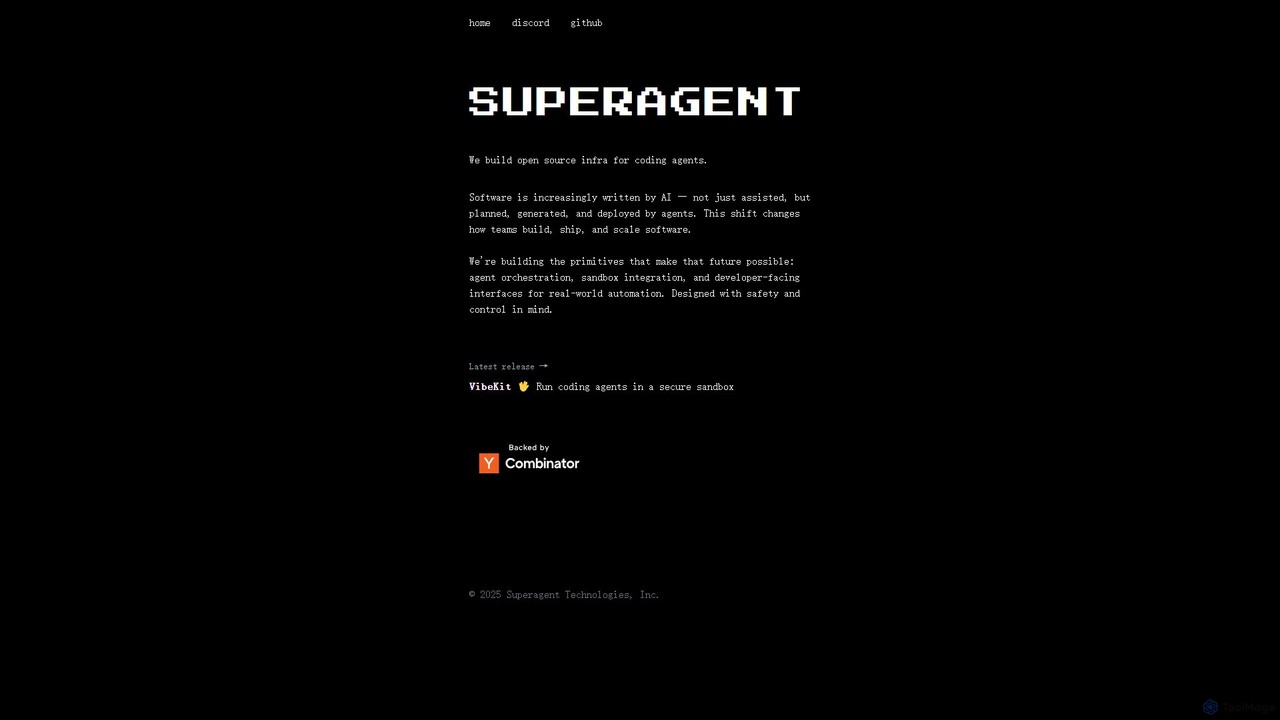
Superagent is an open-source infrastructure for building, managing, and deploying autonomous AI coding agents. Designed for developers, it provides the essential primitives like agent orchestration, secure sandbox integration (VibeKit), and developer-friendly interfaces. This framework empowers teams to automate complex software development tasks, from feature generation and bug fixing to CI/CD management, shifting software creation into a new, AI-driven era with a strong emphasis on safety and control.
Orchestration
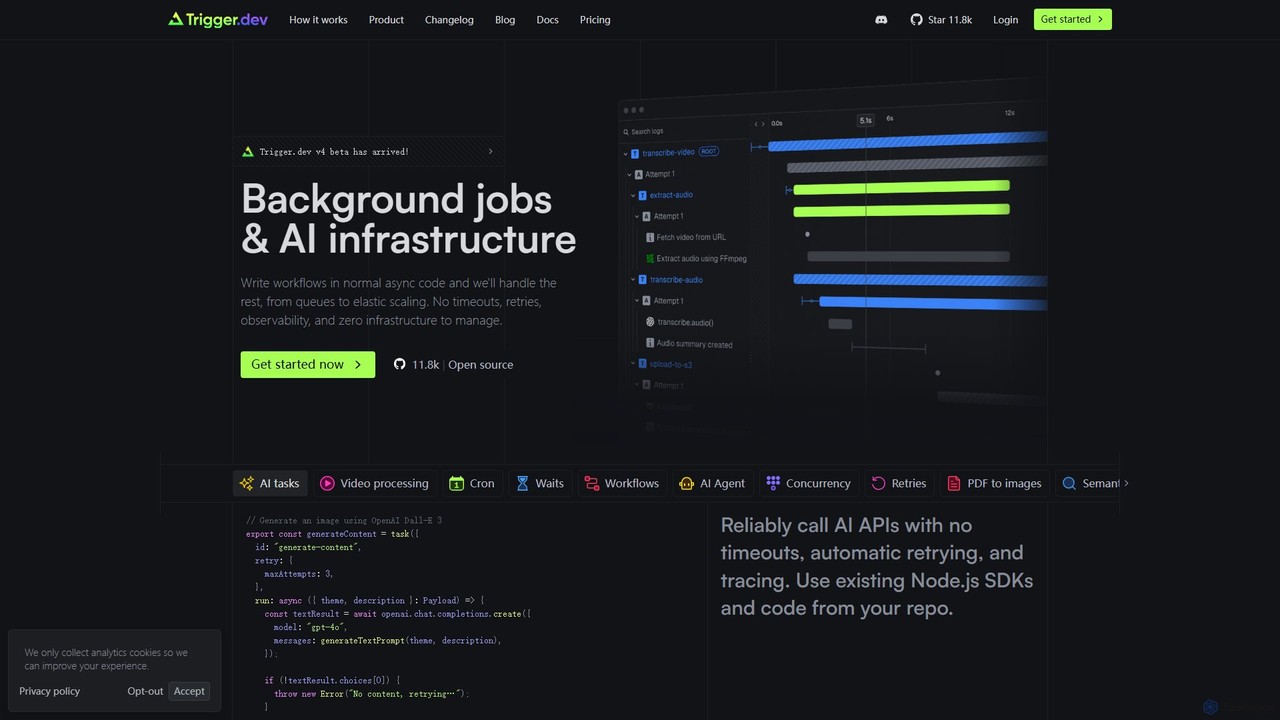
Trigger.dev
Trigger.dev is an open-source platform for developers to build, run, and manage long-running background jobs and AI workflows. It provides a robust infrastructure that handles timeouts, retries, and scaling, allowing you to write resilient tasks directly in your TypeScript or Python codebase. Ideal for orchestrating complex AI agents, data processing pipelines, and real-time applications without managing servers.
Model Orchestration
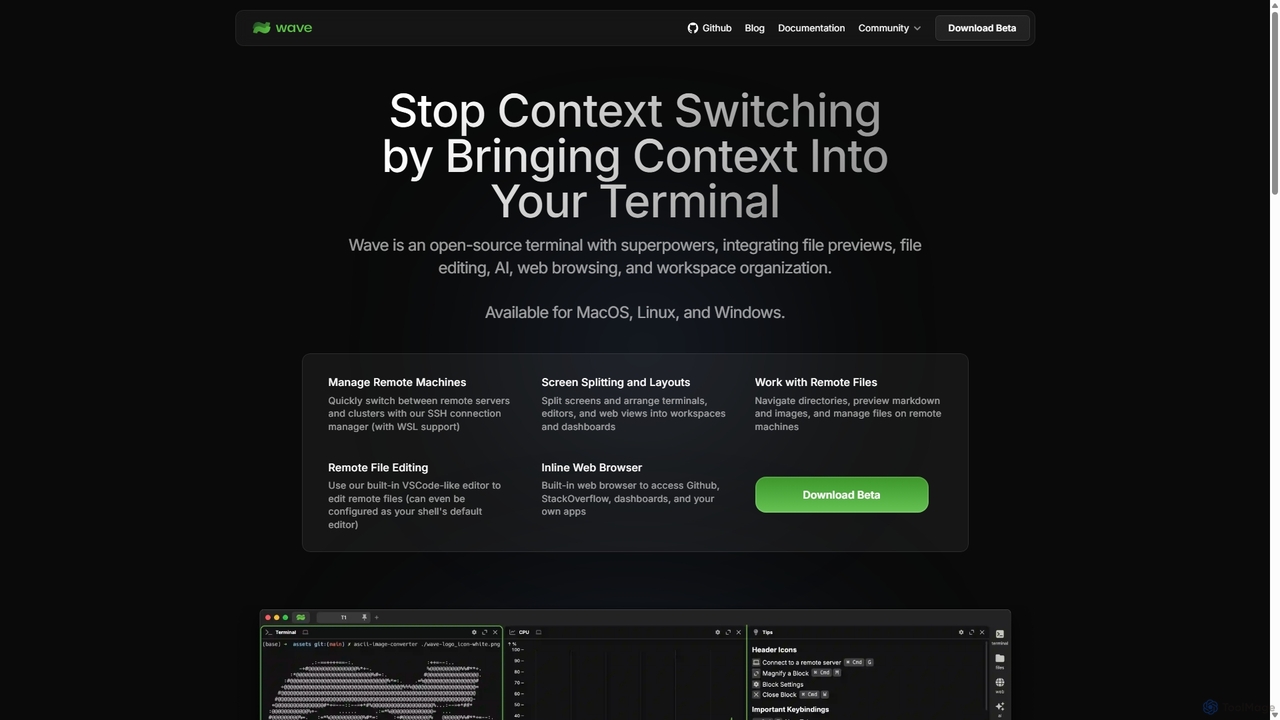
Waveterm
Waveterm is an open-source, modern terminal designed for developers and DevOps engineers. It enhances the command-line experience by integrating AI-powered assistance, a VSCode-like editor, inline file previews, a web browser, and customizable dashboards. This all-in-one workspace reduces context switching and boosts productivity across macOS, Windows, and Linux.
Code Assistant
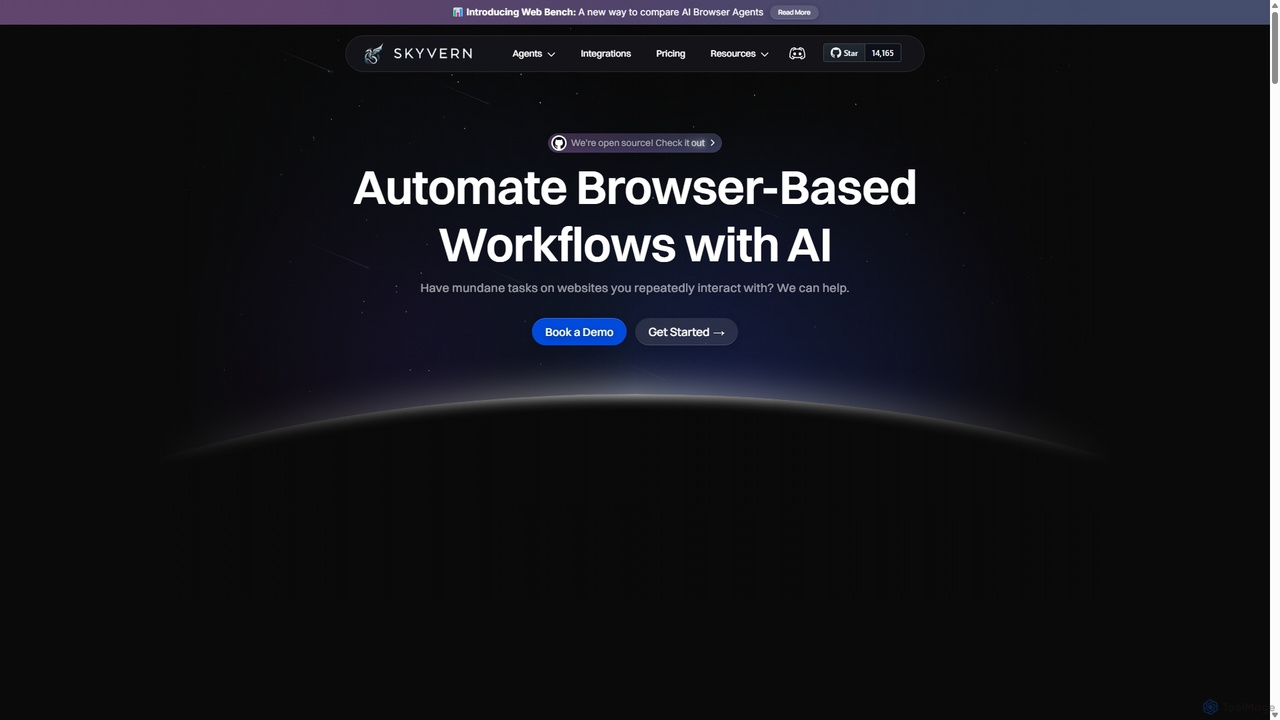
Skyvern
Skyvern is an AI-powered browser automation platform that uses computer vision and natural language to automate complex web workflows. It can handle data extraction, form submissions, invoice retrieval, and more on any website, adapting dynamically to changes without traditional scripting.
Api
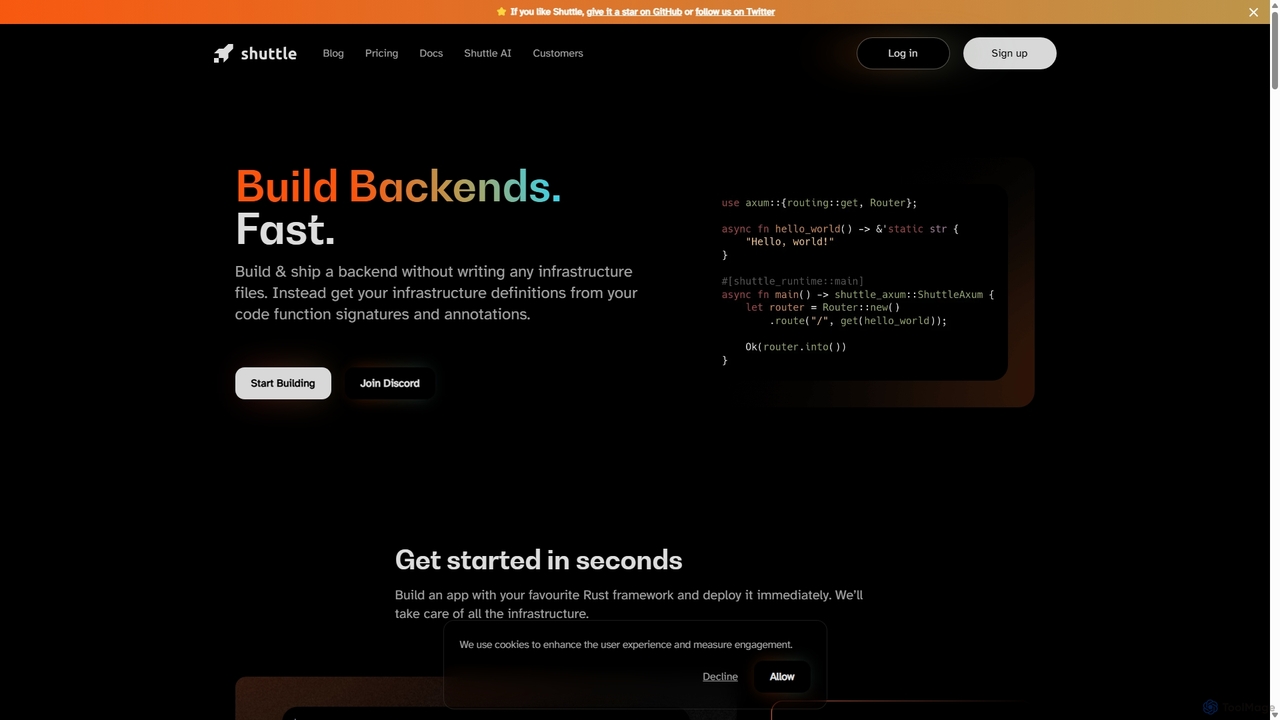
Shuttle
Shuttle is an open-source cloud platform designed to accelerate backend development in Rust. It eliminates infrastructure management by allowing developers to provision resources like databases and secrets directly within their code using simple annotations. Focus on building your application, and let Shuttle handle the deployment and scaling.
Backend Development
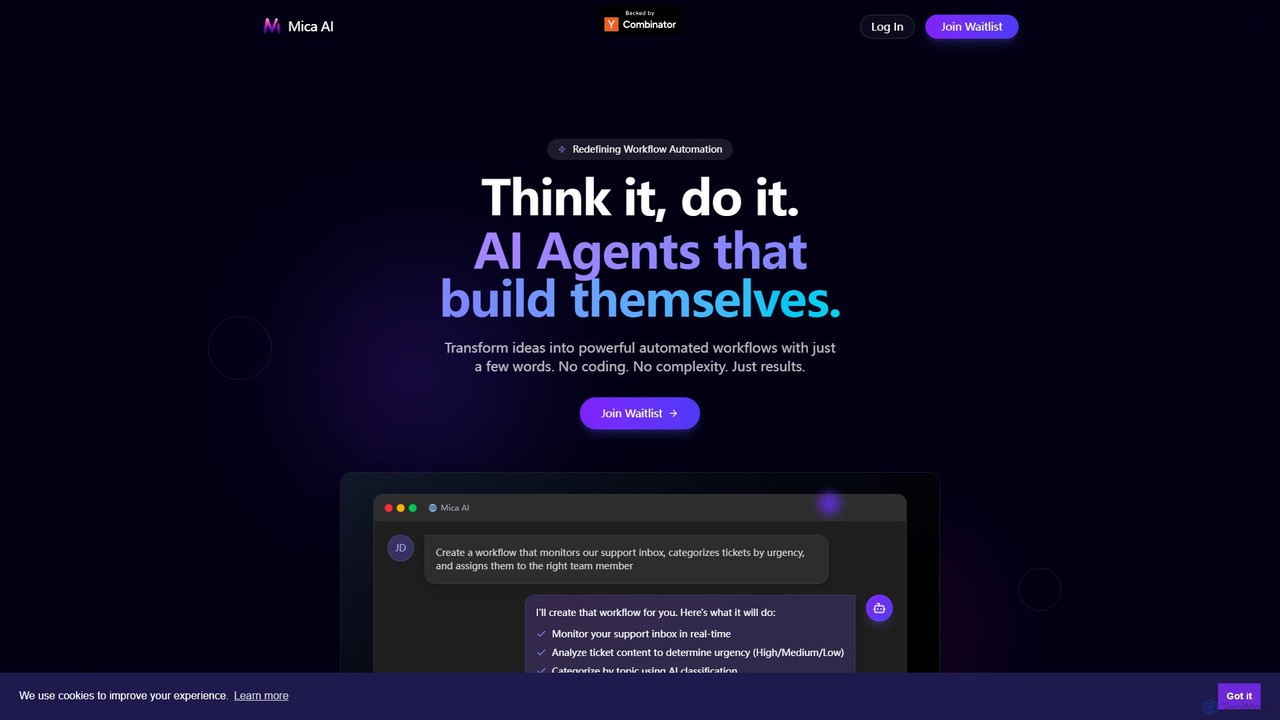
Mica AI
Mica AI is a no-code platform that transforms natural language descriptions into powerful, automated workflows. It deploys self-building AI agents that integrate with your existing tech stack, automating tasks and providing real-time insights across departments like sales, marketing, and engineering without any coding.
Autonomous Agents
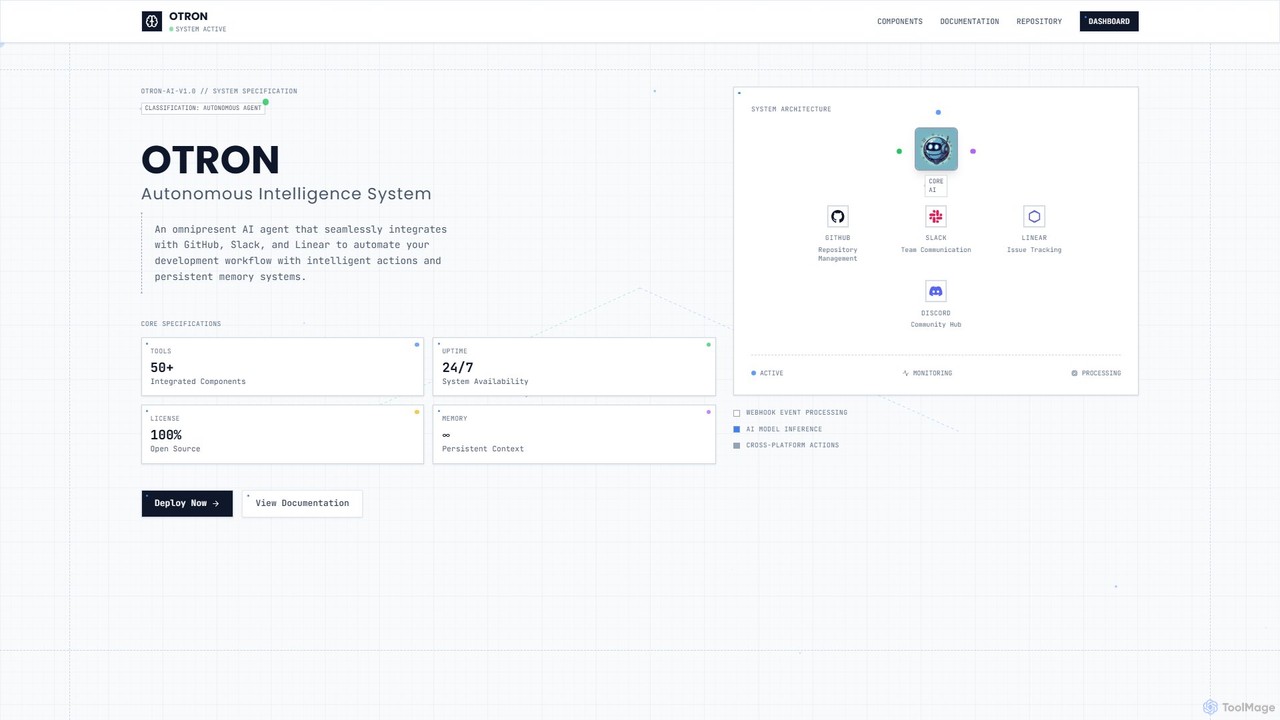
Otron
Otron is an open-source, autonomous AI development agent designed to streamline your software development lifecycle. It seamlessly integrates with GitHub, Slack, and Linear to automate workflows, manage code, handle project tasks, and facilitate team communication, all powered by advanced AI models like Claude and GPT-4.
Code Assistant
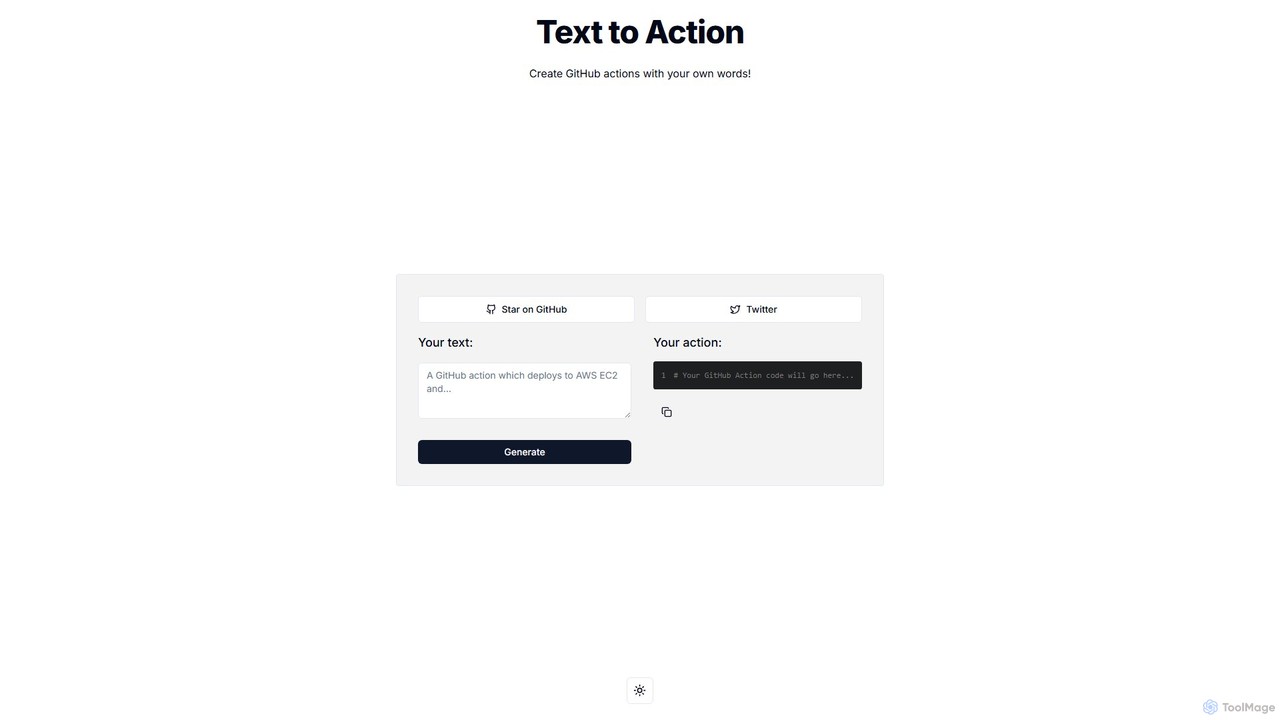
Text to Action
Text to Action is an AI-powered tool that translates natural language descriptions into functional GitHub Actions code. Simply describe your desired workflow in plain English, and the tool will generate the corresponding YAML configuration file, streamlining the CI/CD and automation process for developers.
Ci Cd
GitHub
GitHub is the world's leading AI-powered developer platform for building, shipping, and maintaining software. It provides Git-based version control, collaborative tools, and a complete DevOps lifecycle, supercharged by GitHub Copilot, an advanced AI code assistant that accelerates development and enhances code quality.
Code Assistant
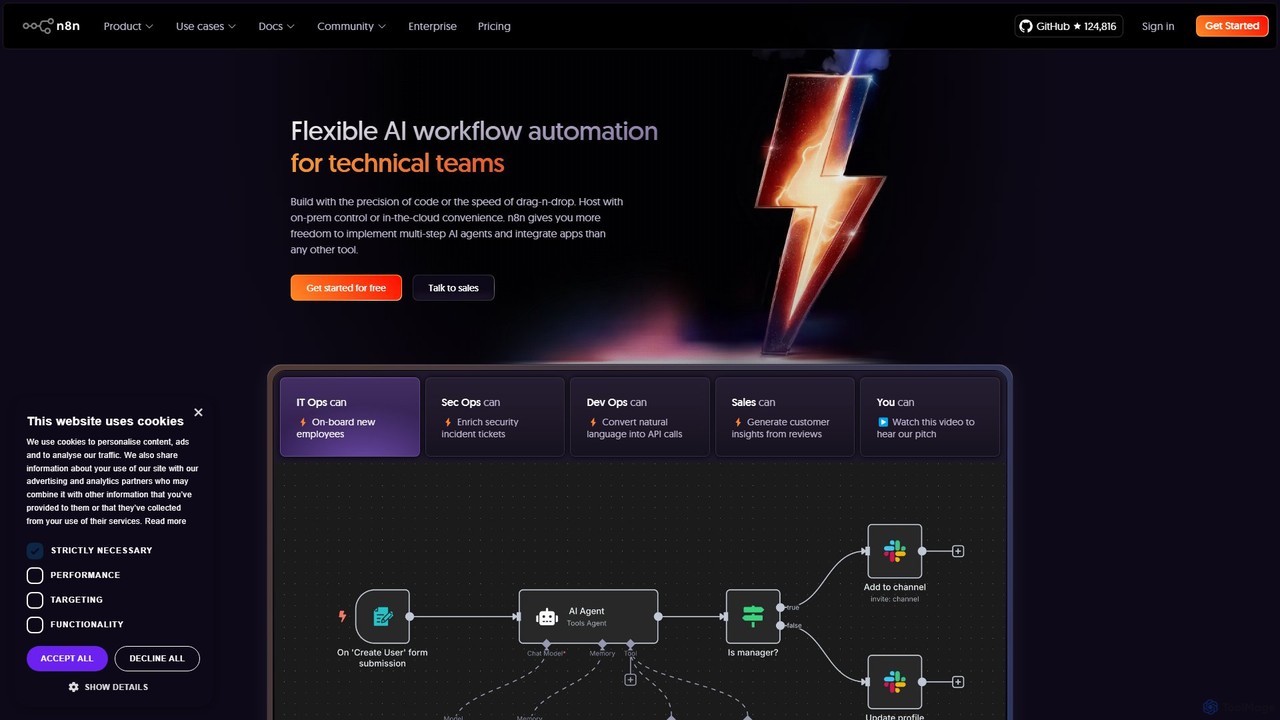
n8n
n8n is a source-available, node-based workflow automation platform designed for both technical and non-technical users. It enables you to connect hundreds of applications and services, including powerful AI models, to automate complex tasks and processes. With options for both cloud hosting and self-hosting, n8n offers unparalleled flexibility, control, and scalability for building everything from simple data syncs to sophisticated AI agents.
Crm
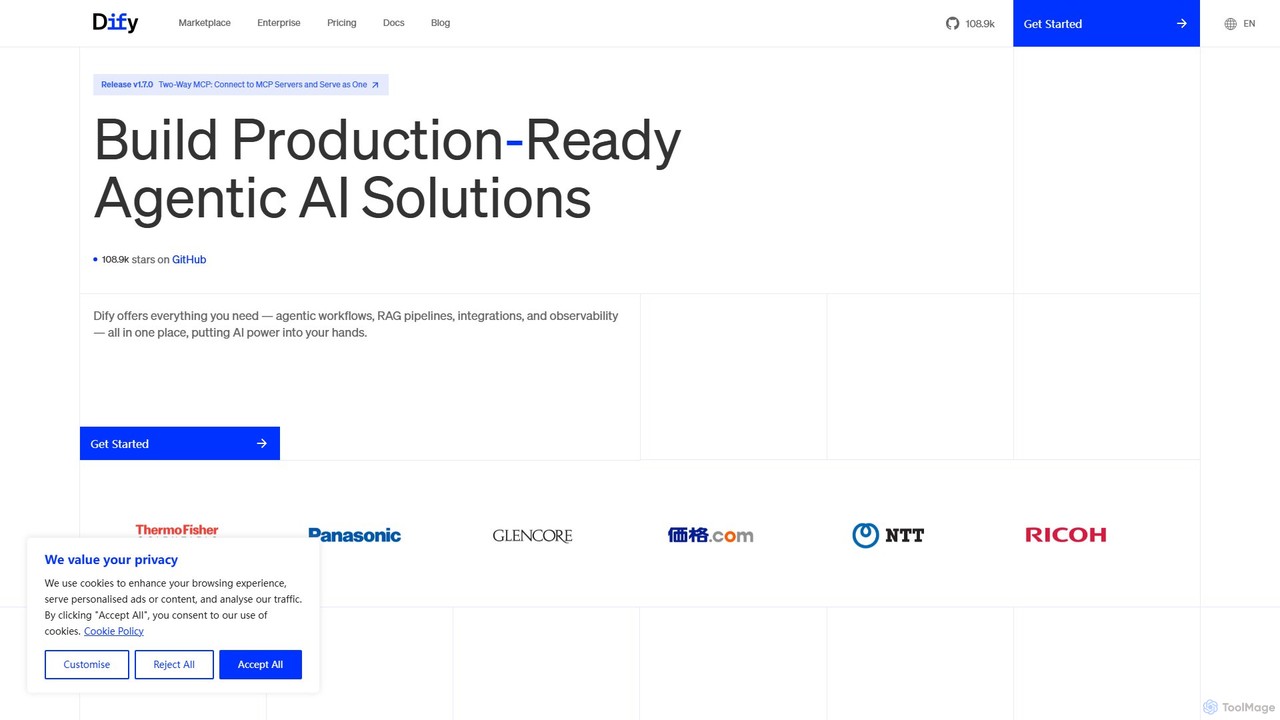
Dify
Dify is an open-source, low-code AI development platform for building and operating production-ready generative AI applications. It enables the creation of AI agents and workflows powered by RAG pipelines, extensive model support, and full observability, simplifying the entire development lifecycle from idea to deployment.
Ai Agent
Jyek
Jyek is an AI agent platform that understands objectives, creates execution plans, uses tools, and delivers verifiable results for complex, multi-step tasks.
Automation
CrewAI
CrewAI is a powerful multi-agent platform for building and orchestrating collaborative AI agent workflows. It enables developers to create "crews" of specialized AI agents that work together to automate complex tasks. With its open-source framework, no-code UI Studio, and "Flows" feature for structured automation, it streamlines development from planning to deployment and monitoring, integrating with any LLM and cloud provider.
Enterprise Solutions
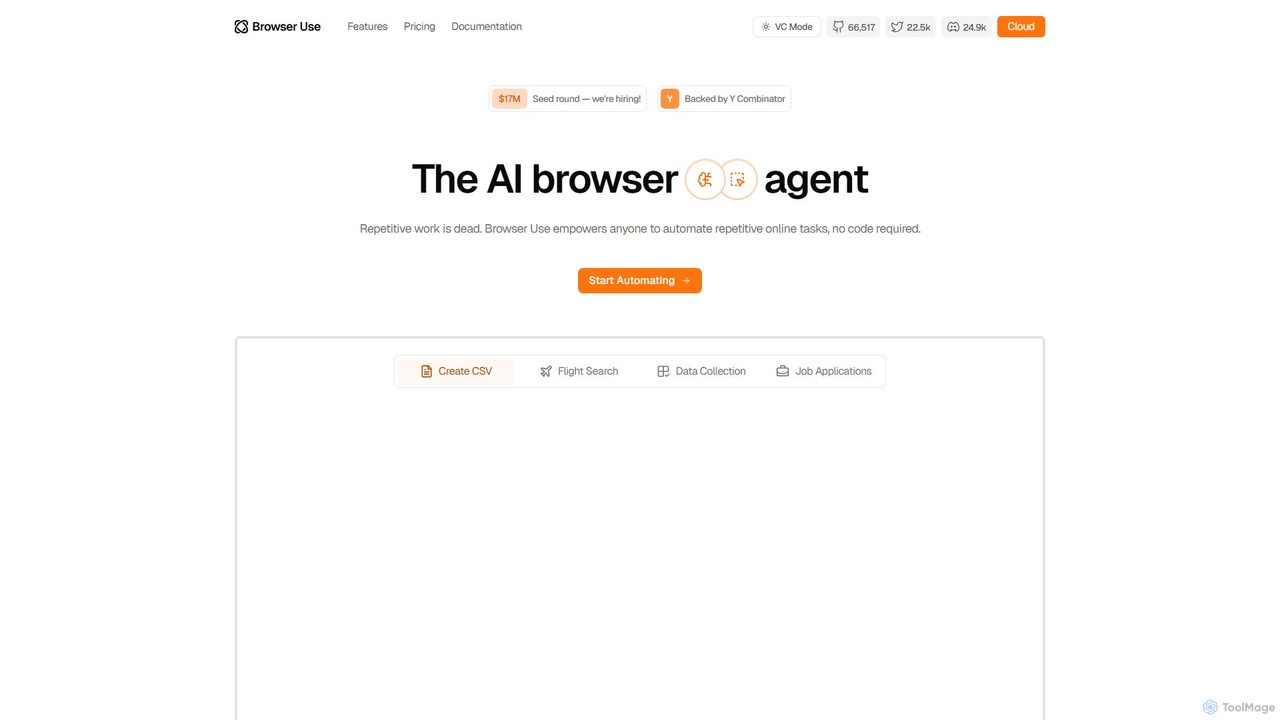
Browser Use
Browser Use is an AI-powered browser agent that automates repetitive online tasks without requiring any code. It can handle complex data scraping, form filling, and other web-based workflows. Backed by Y Combinator, it offers a simple chat interface for users and a powerful API for developers to streamline their online activities.
Data Extraction