ToolMage
Sign in

Best 52 Data Management AI tools

Popular Data Management AI tools include Wirestock, Twillot, Vectorize, MyScale, OptimumHQ, Lumenore, Dex, Text-2-ICS, Floqer, and GoMask, helping you work more efficiently.

Dialektai
Freemium

Dialektai

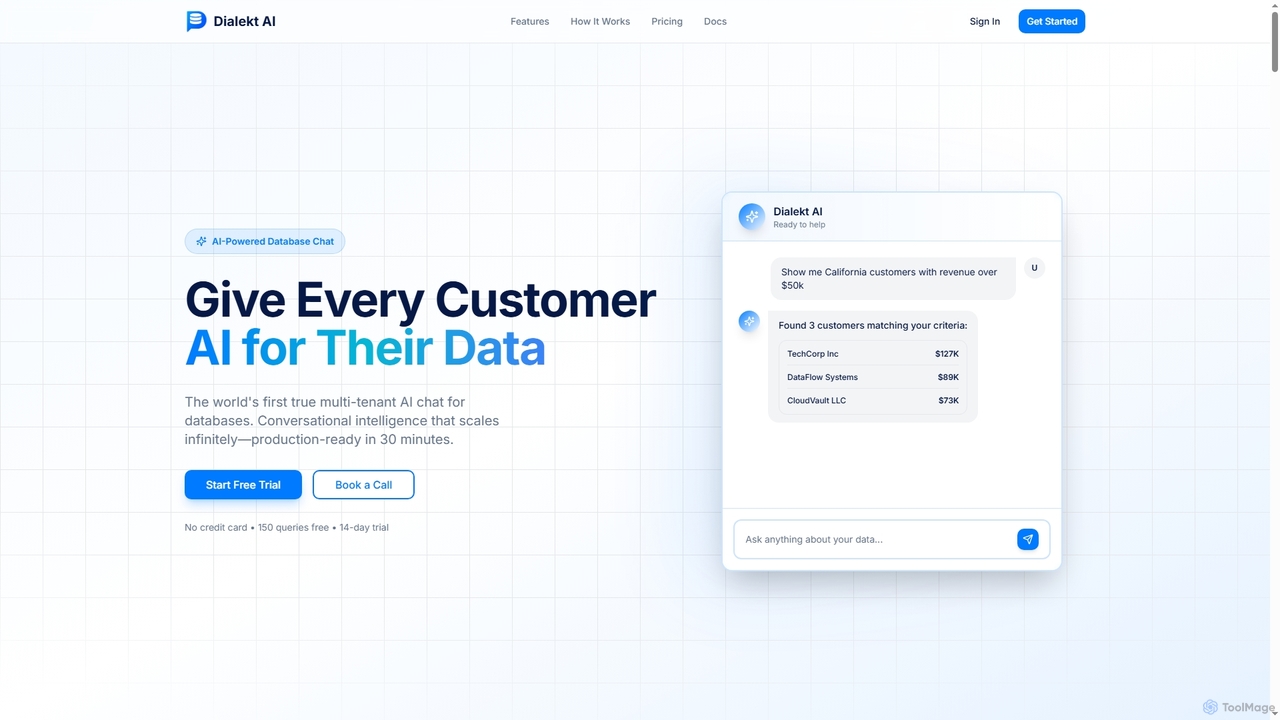
Dialektai is the world's first true multi-tenant AI chat for databases, enabling users to query complex data in plain English. It provides secure, scalable conversational intelligence, making critical business data accessible to everyone without technical expertise, and can be production-ready in under 30 minutes.

Natural Language Processing
Visits 5.4KFavorites 141Likes 139
Eazemyapi
Freemium

Eazemyapi

Eazemyapi is a no-code platform that allows founders, developers, and startups to create secure, scalable backend APIs and integrate AI models in minutes. It eliminates the need for manual database setup and repetitive coding, enabling rapid product development and deployment.

Api Integration
Visits 6.6KFavorites 154Likes 160
Kaipsul
Paid

Kaipsul

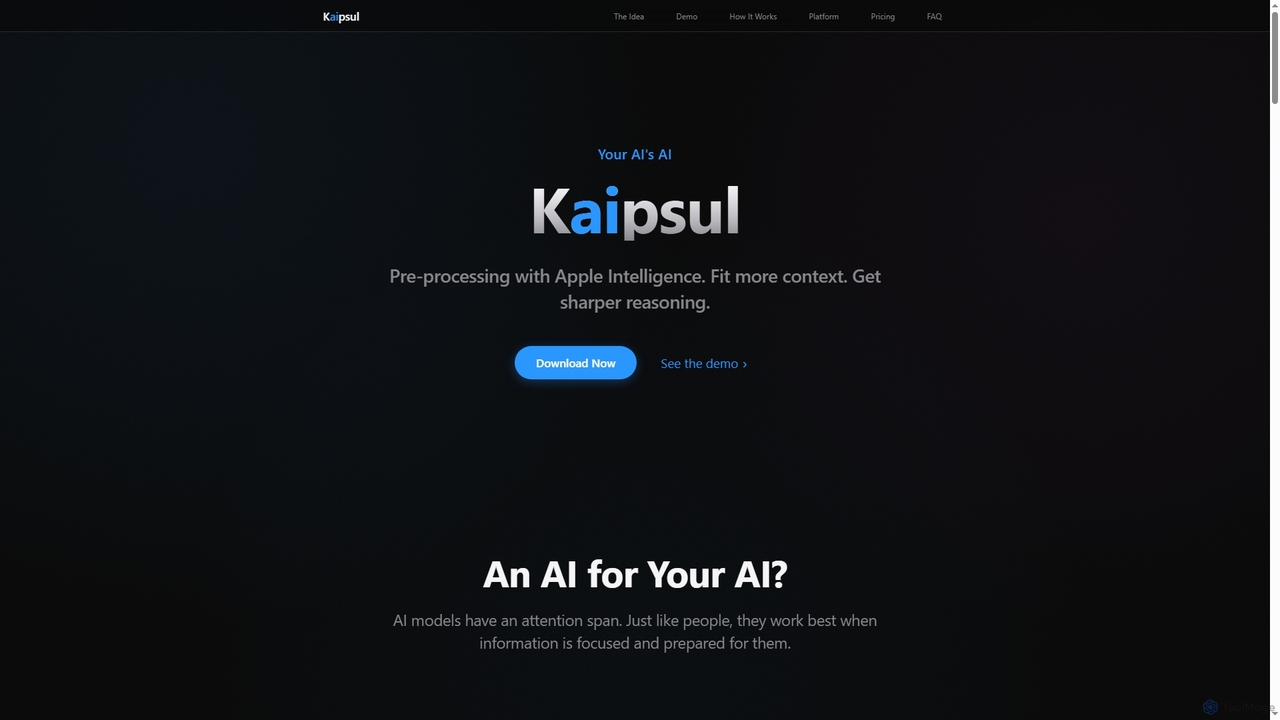
Kaipsul is an innovative macOS application that leverages Apple Intelligence to pre-process large text datasets, compressing them by up to 90% while preserving semantic meaning. It enables AI models to handle more context, overcome "context window exceeded" errors, and achieve sharper reasoning, all through 100% local, on-device processing.

Llm Optimization
Visits 5.5KFavorites 152Likes 136
Skald
Freemium

Skald

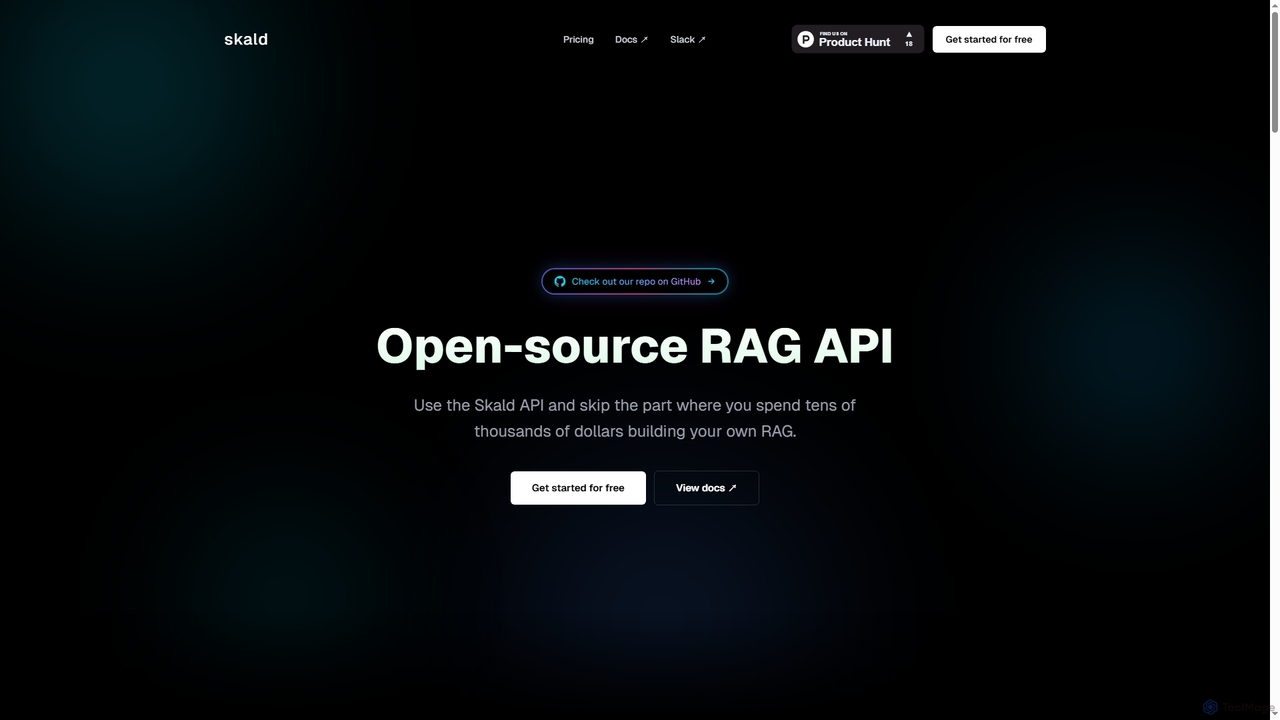
Skald is an open-source RAG API designed for developers to quickly build AI agents without the complexity of managing RAG infrastructure. It simplifies knowledge storage, context management, and semantic search, offering a powerful solution for integrating long-term memory into AI applications.

Rag
Visits 5.5KFavorites 108Likes 136
0101 Digital

0101 Digital

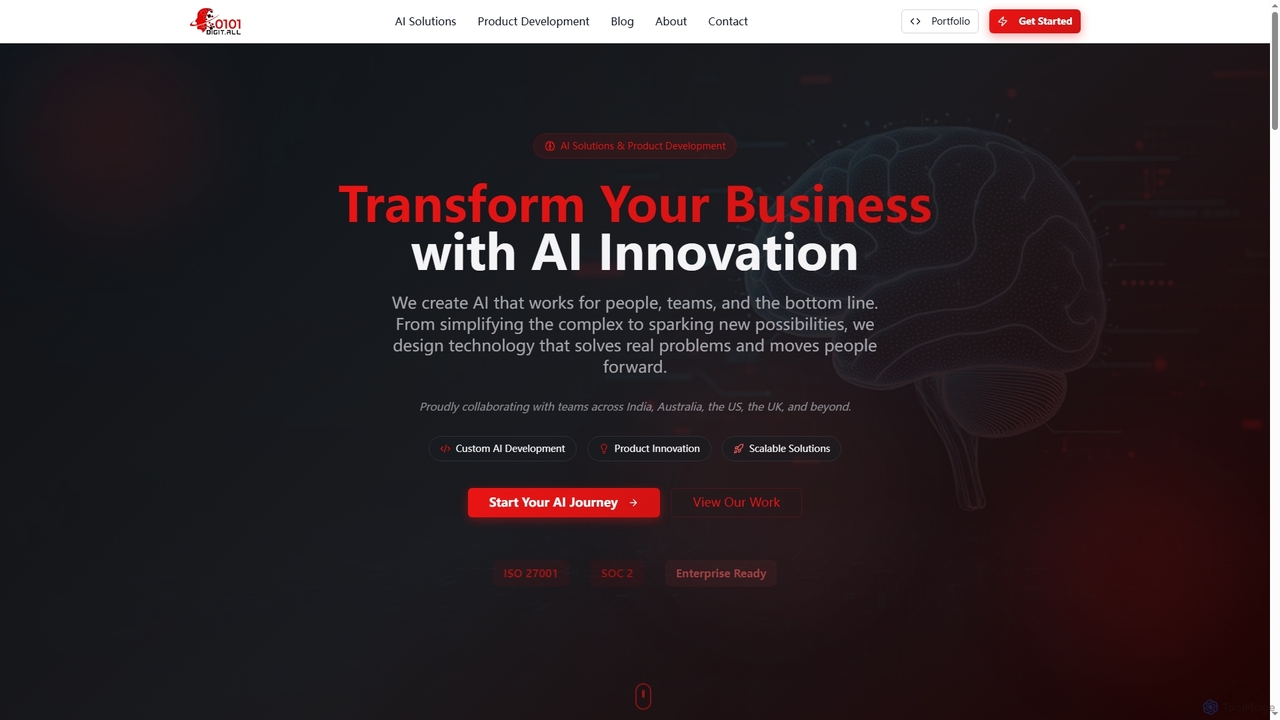
0101 Digital is a leading AI solutions provider specializing in transforming businesses through custom AI development, product innovation, and strategic AI consulting. They deliver scalable, outcome-focused solutions, including their unique DPaaS (Delivery Pods as a Service) model, to clients across various industries globally, ensuring measurable ROI and competitive advantage.

Custom Development
Visits 5.7KFavorites 138Likes 138
DeConsole
Freemium

DeConsole

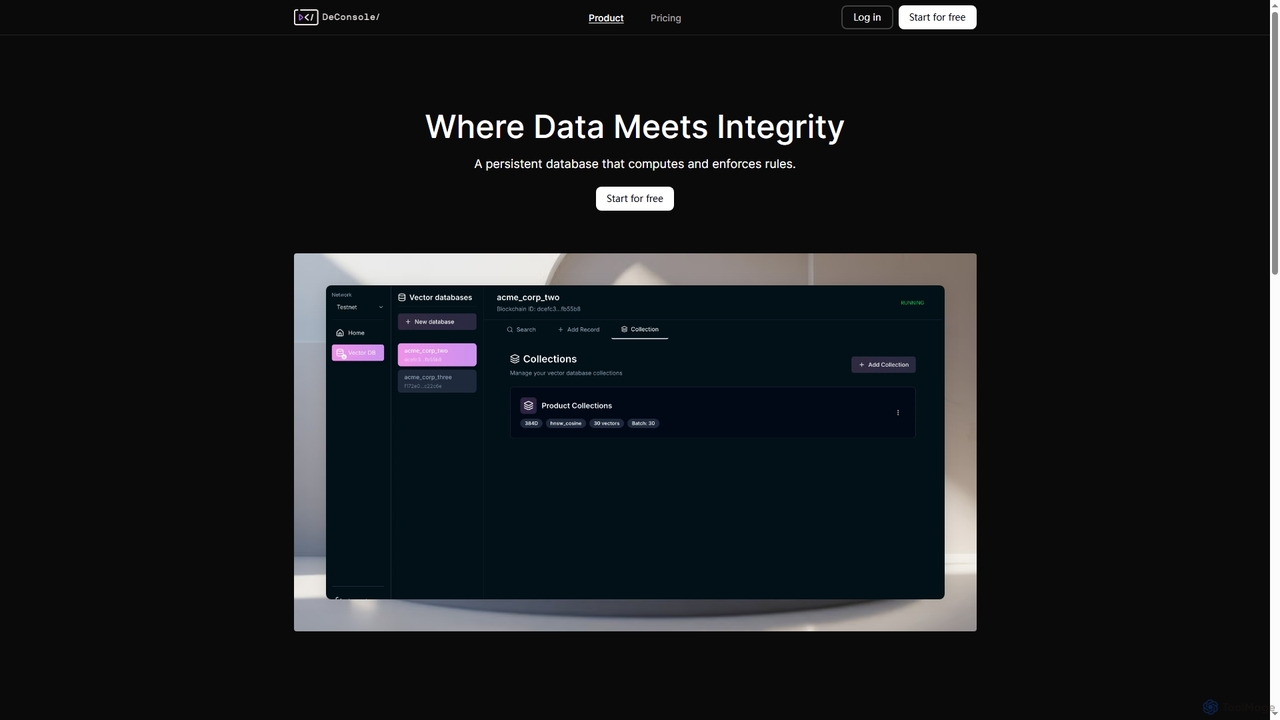
DeConsole is a distributed, persistent, and tamper-resistant database service designed for critical data, offering the simplicity of a cloud DBaaS without a single point of control. It computes and enforces rules, ensuring data integrity and providing a tamper-evident history for various applications, especially AI.

Rag Systems
Visits 5.5KFavorites 104Likes 113
Kadabra
Freemium

Kadabra

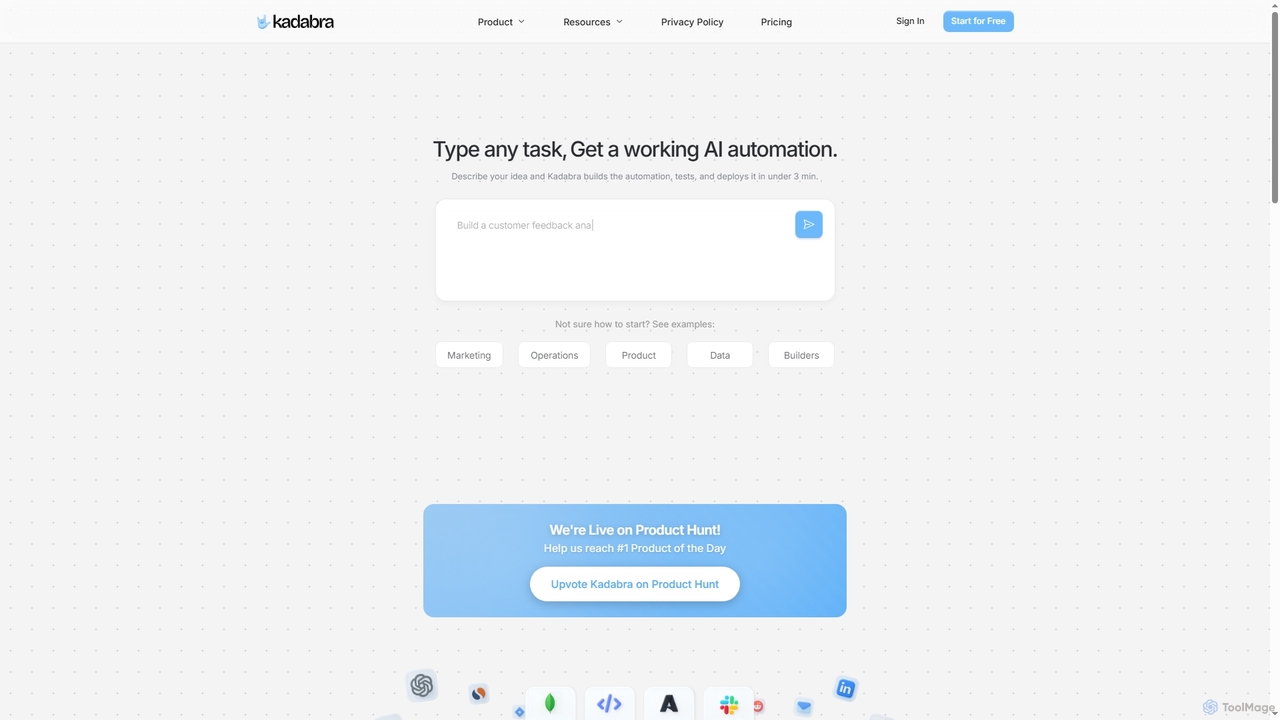
Kadabra is an AI-powered platform that transforms plain English descriptions into functional, deployable business and data automations. It allows users to build, test, and deploy complex workflows visually in minutes, integrating with a wide range of popular tools to streamline operations and enhance productivity.

Operations Management
Visits 6.1KFavorites 134Likes 135
TheNoah
Paid

TheNoah

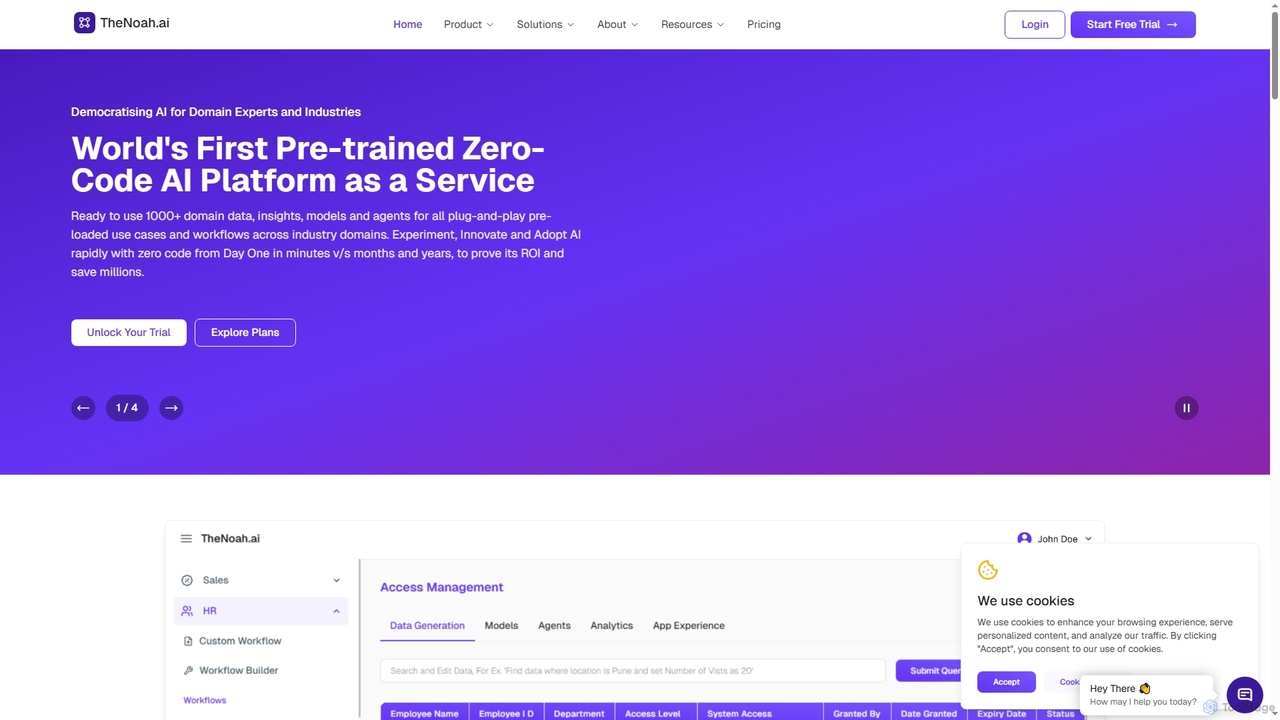
TheNoah is the world's first pre-trained, zero-code AI platform designed for enterprises and domain experts. It offers over 1000 ready-to-use domain-specific models, AI agents, and data simulation capabilities to rapidly automate workflows, generate actionable insights, and accelerate AI adoption across industries without requiring technical expertise.

Data Simulation
Visits 8.3KFavorites 147Likes 166
Alemia
Freemium

Alemia

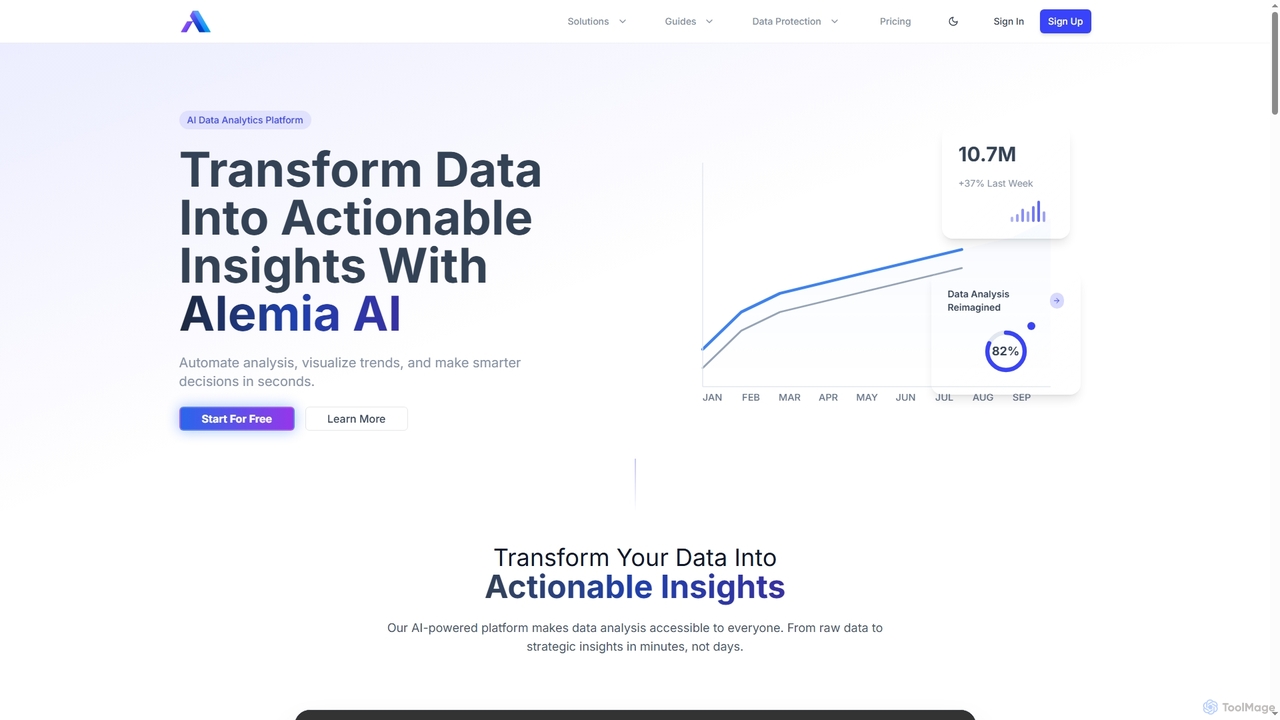
Alemia is an AI-powered data analytics platform that transforms raw data into actionable insights, visualizations, and reports. It enables users to ask questions in plain English and receive instant, intelligent analysis, making data-driven decision-making accessible to everyone without requiring technical skills.

3D
Visits 5.5KFavorites 119Likes 126
Sanitize Email
Freemium

Sanitize Email

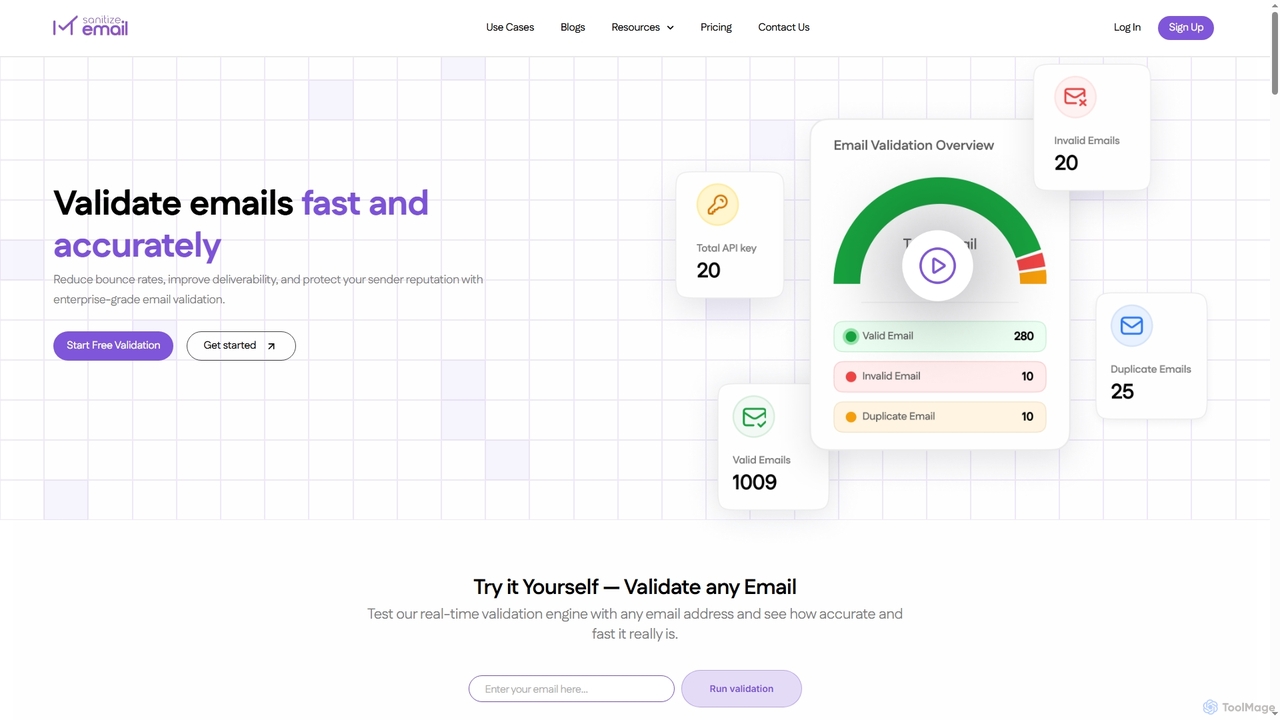
Sanitize Email is an enterprise-grade AI-powered email validation service designed to enhance deliverability, reduce bounce rates, and protect sender reputation. It offers fast, accurate bulk email verification, API integration, and fraud mitigation, ensuring your messages reach real customers and optimize marketing campaigns.

Cleaning
Visits 8.6KFavorites 139Likes 128
OneNine

OneNine

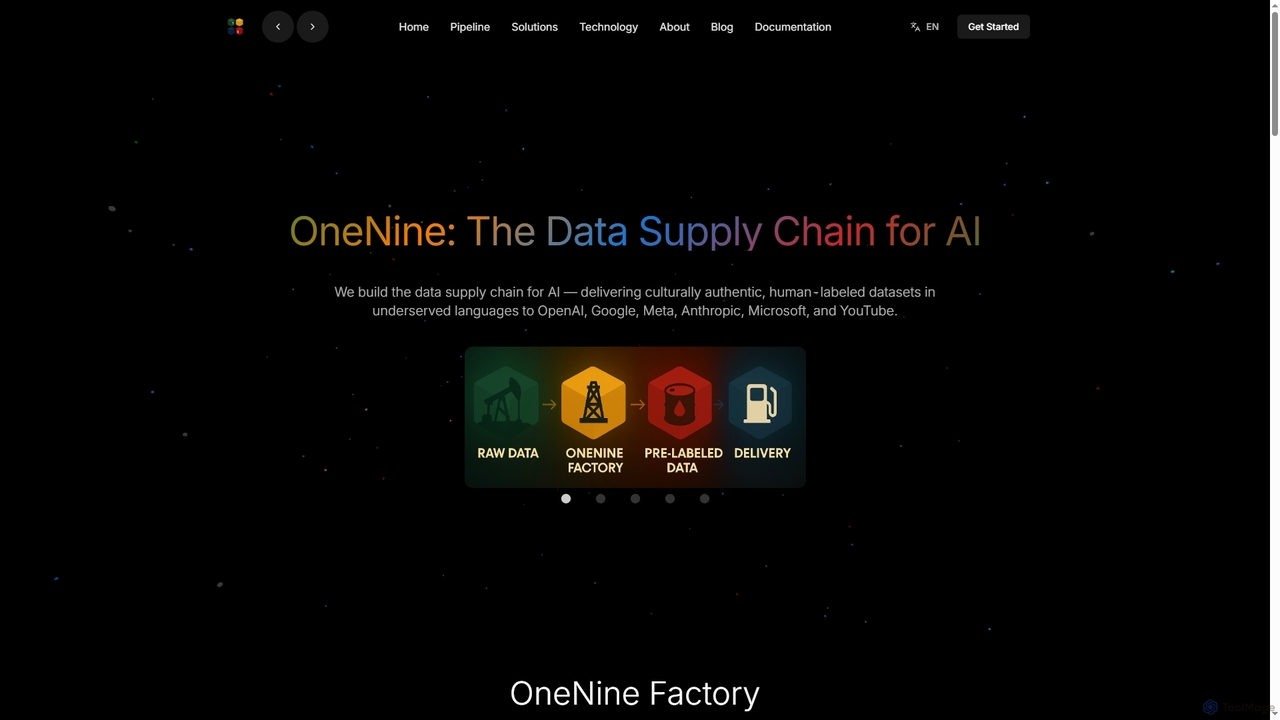
OneNine is the data supply chain for AI, specializing in delivering high-quality, culturally authentic, human-labeled datasets in underserved languages to leading AI companies. It bridges the linguistic gap, enabling more inclusive and accurate AI models globally.

Training Data
Visits 5.6KFavorites 142Likes 137
Lumenore
Freemium

Lumenore

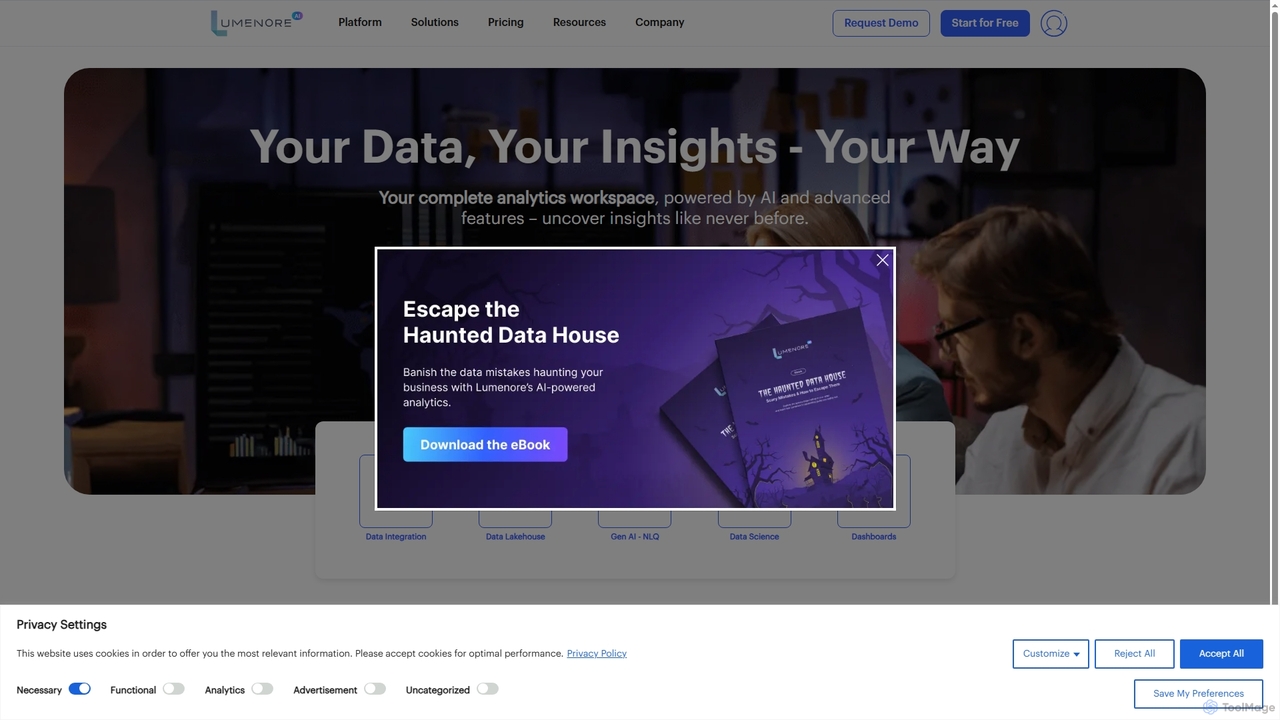
Lumenore is an AI-powered, no-code business intelligence and data analytics platform designed to transform complex data into actionable insights. It offers a complete analytics workspace with advanced features like Gen AI-powered Natural Language Query (NLQ), automated insights, and data storytelling, enabling businesses to make faster, informed decisions without requiring deep technical expertise.

3D
Visits 31.7KFavorites 112Likes 136
GoMask
Freemium

GoMask

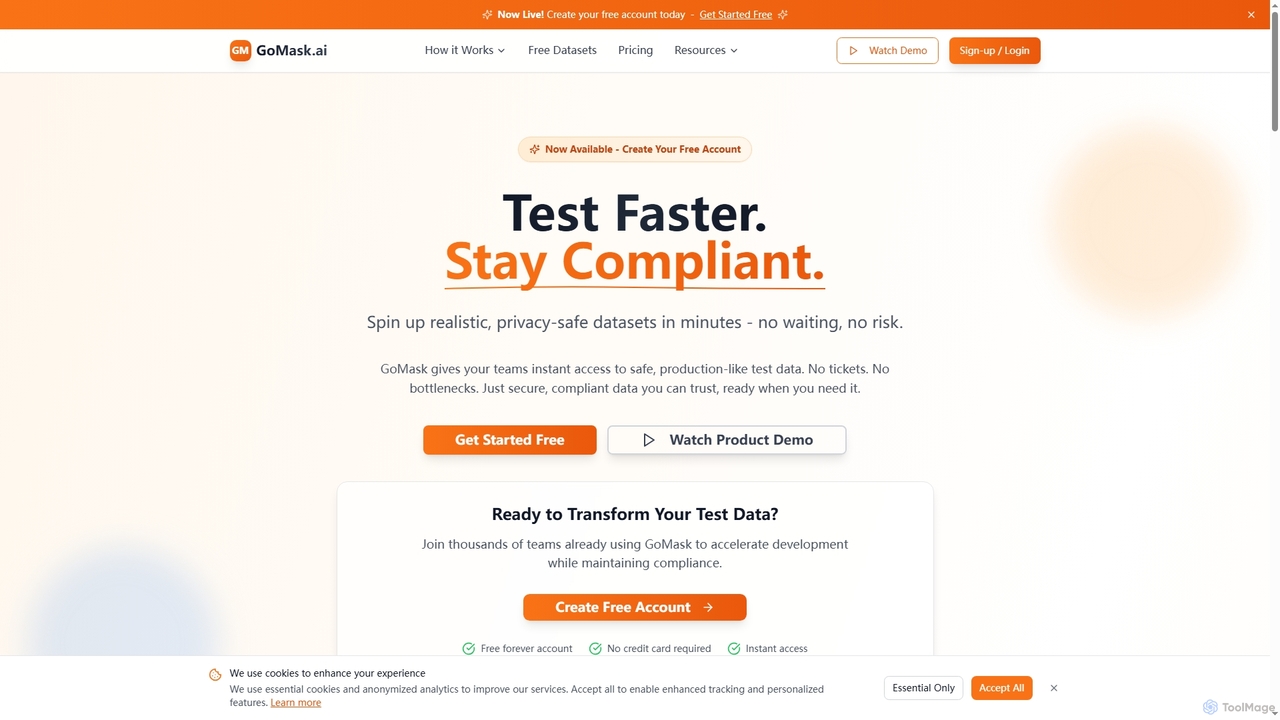
GoMask is an AI-powered platform that accelerates software development by providing instant, compliant, and realistic test data through advanced data masking and synthetic data generation. It eliminates bottlenecks, ensures regulatory compliance, and integrates seamlessly into modern CI/CD pipelines.

Data Masking
Visits 13.1KFavorites 150Likes 167
Well
Paid

Well

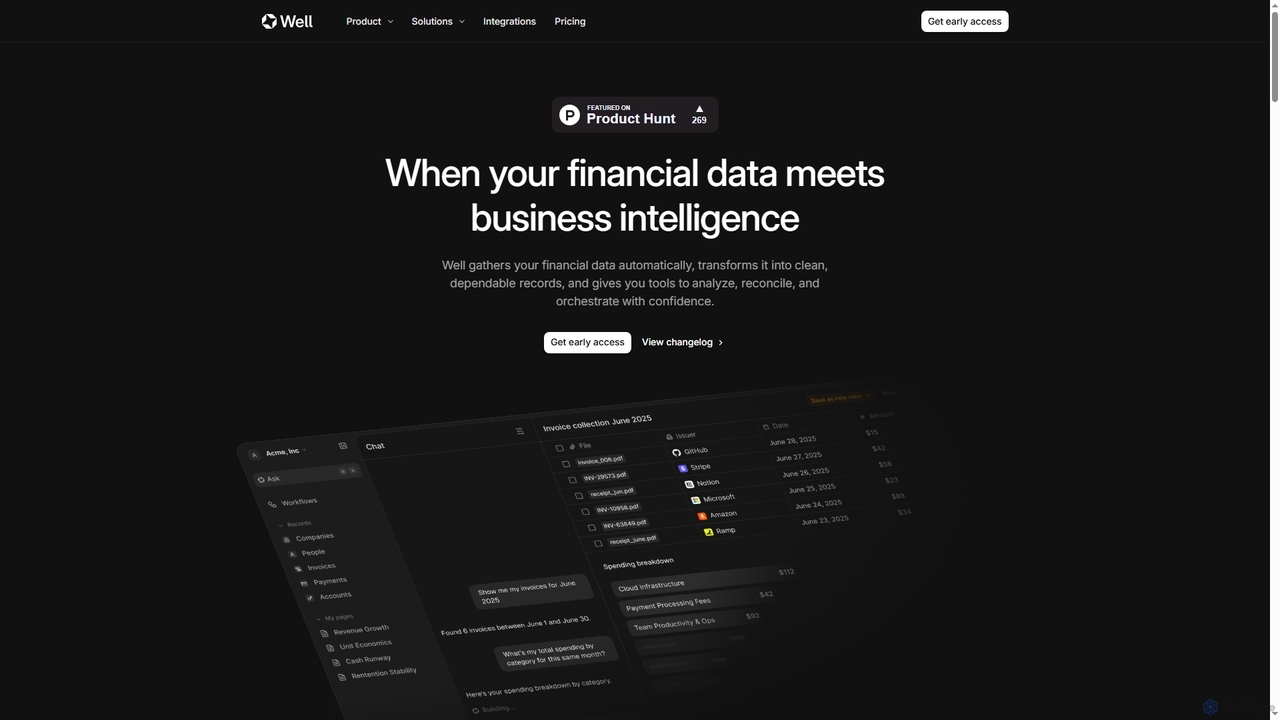
Well is an AI-native business intelligence platform designed for SMBs, automating financial data gathering, transformation, and analysis. It unifies scattered financial information from various sources, turning it into clean, dependable records and actionable insights. With natural language queries, users can generate reports, track spending, and manage cash flow effortlessly, significantly reducing manual administrative work.

Financial Automation
Visits 9.9KFavorites 151Likes 134
NexDatawork
Freemium

NexDatawork

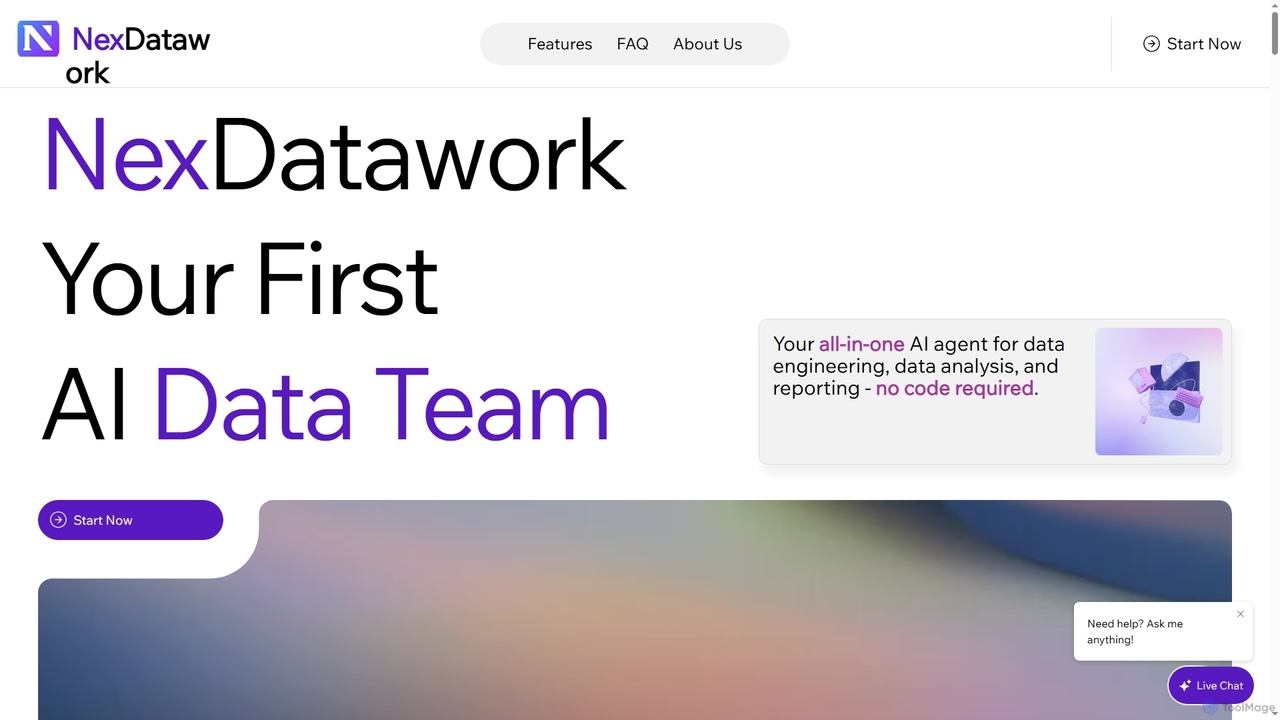
NexDatawork is an all-in-one AI data agent designed for data engineering, analysis, and reporting, requiring no code. It transforms raw data into actionable insights, automates workflows, and generates comprehensive reports, empowering individuals and teams to make data-driven decisions faster and more efficiently.

Business Intelligence
Visits 5.8KFavorites 160Likes 161
XMOX
Paid

XMOX

XMOX is a leading managed AI agents platform that provides enterprise-grade infrastructure and services for deploying, scaling, and managing intelligent agents. It eliminates operational complexity, allowing businesses to harness the power of multi-modal AI agents—including language, code, and voice—with advanced RAG integration, zero-touch operations, and intelligent auto-scaling.

Platform As A Service
Visits 5.5KFavorites 121Likes 101
Primary
Freemium

Primary

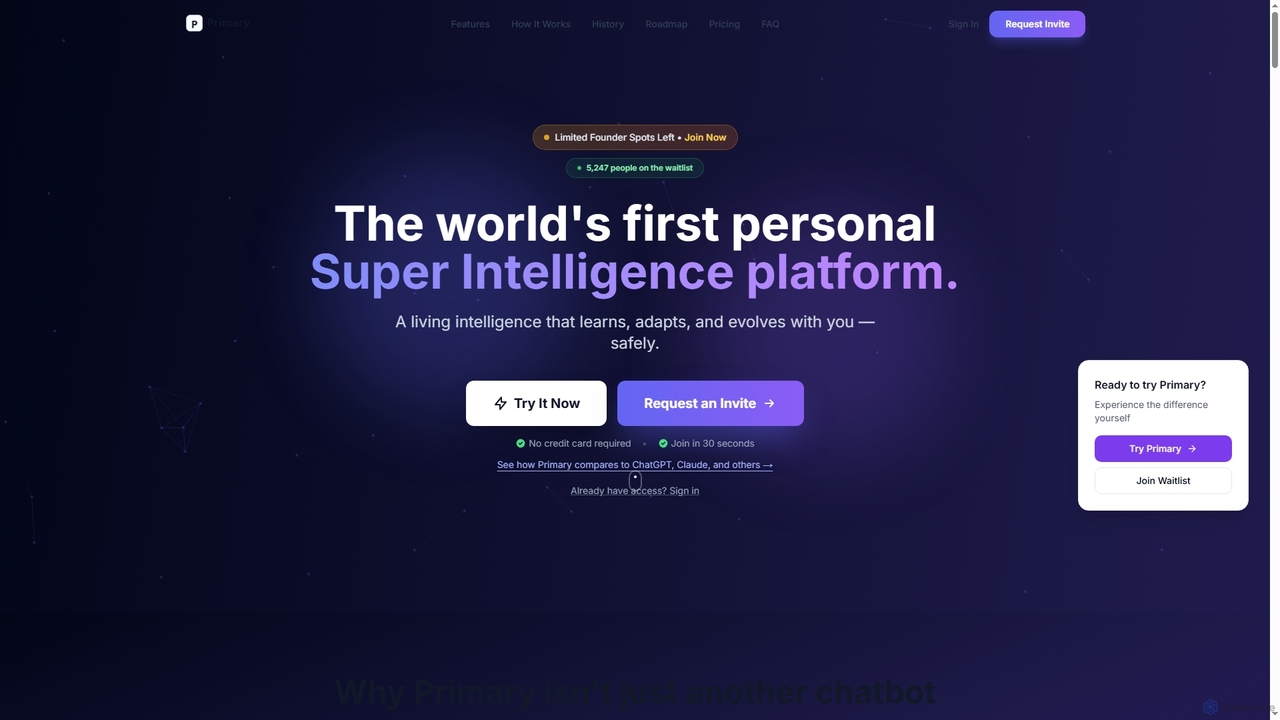
Primary is the world's first personal Super Intelligence platform, designed to learn, adapt, and evolve with you while prioritizing privacy. It automates repetitive tasks, manages complex workflows, and provides deep personalization to save users over 10 hours per week, acting as a symbiotic AI companion.

Workflow Automation
Visits 7.1KFavorites 159Likes 150
Pyrinas

Pyrinas

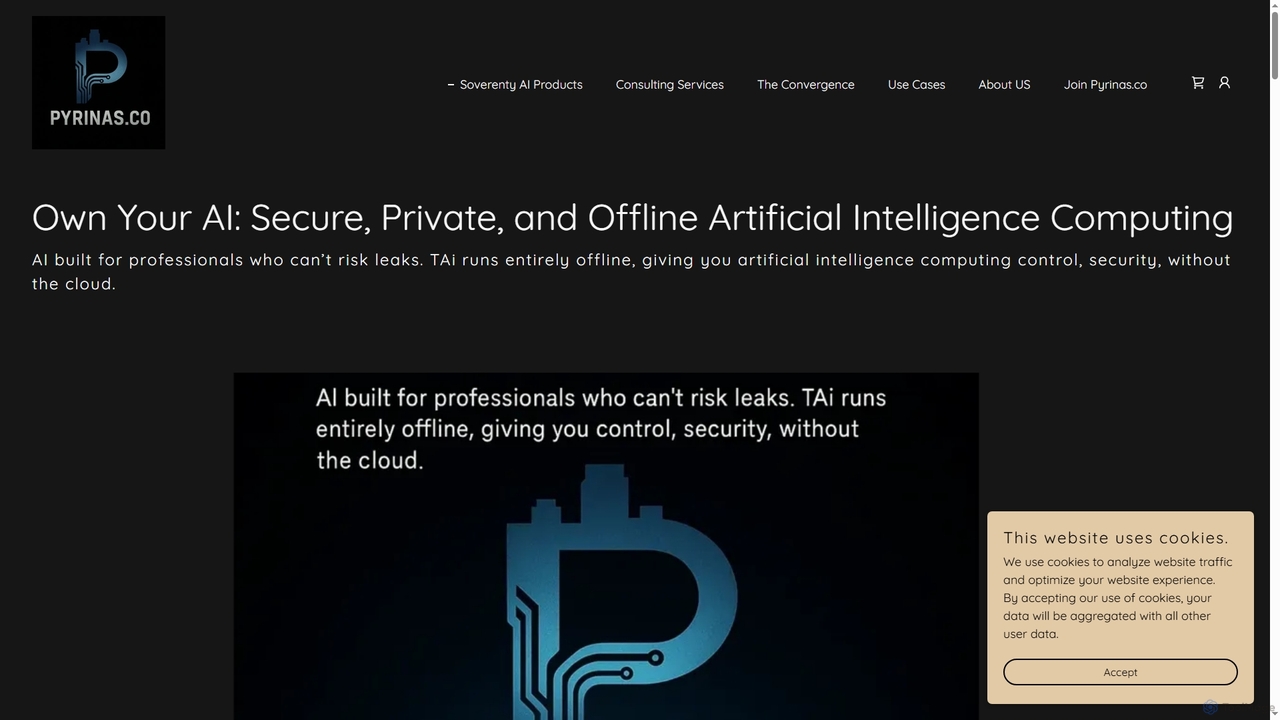
Pyrinas offers Sovereign AI products and consulting services, providing secure, private, and offline artificial intelligence computing. Its flagship TAi suite enables professionals to maintain full control over their data and AI, ensuring confidentiality and compliance with standards like HIPAA and GDPR, without reliance on cloud infrastructure.

Regulatory Technology
Visits 5.4KFavorites 151Likes 172
OptimumHQ
Paid

OptimumHQ

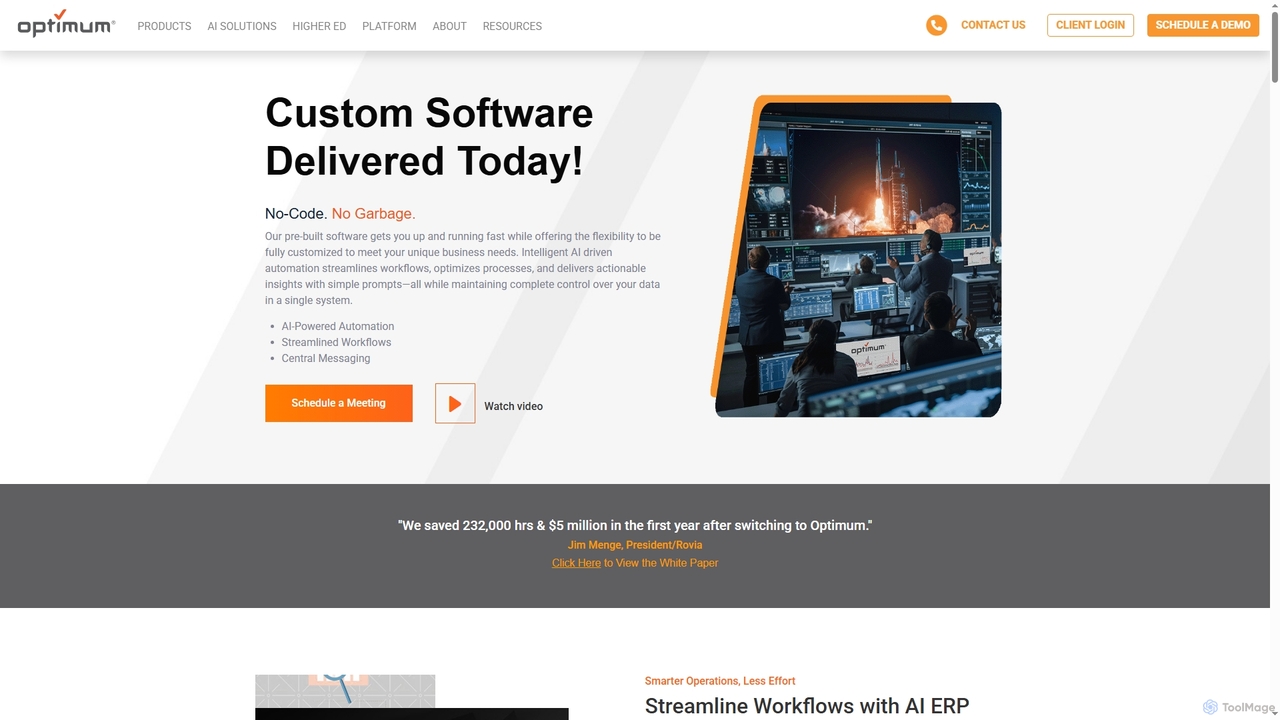
OptimumHQ is a no-code adaptive software platform that empowers businesses to rapidly create custom solutions, leveraging AI-driven automation for streamlined workflows, optimized processes, and actionable insights across ERP, CRM, messaging, and digital forms.

3D
Visits 43.2KFavorites 161Likes 156
Floqer

Floqer

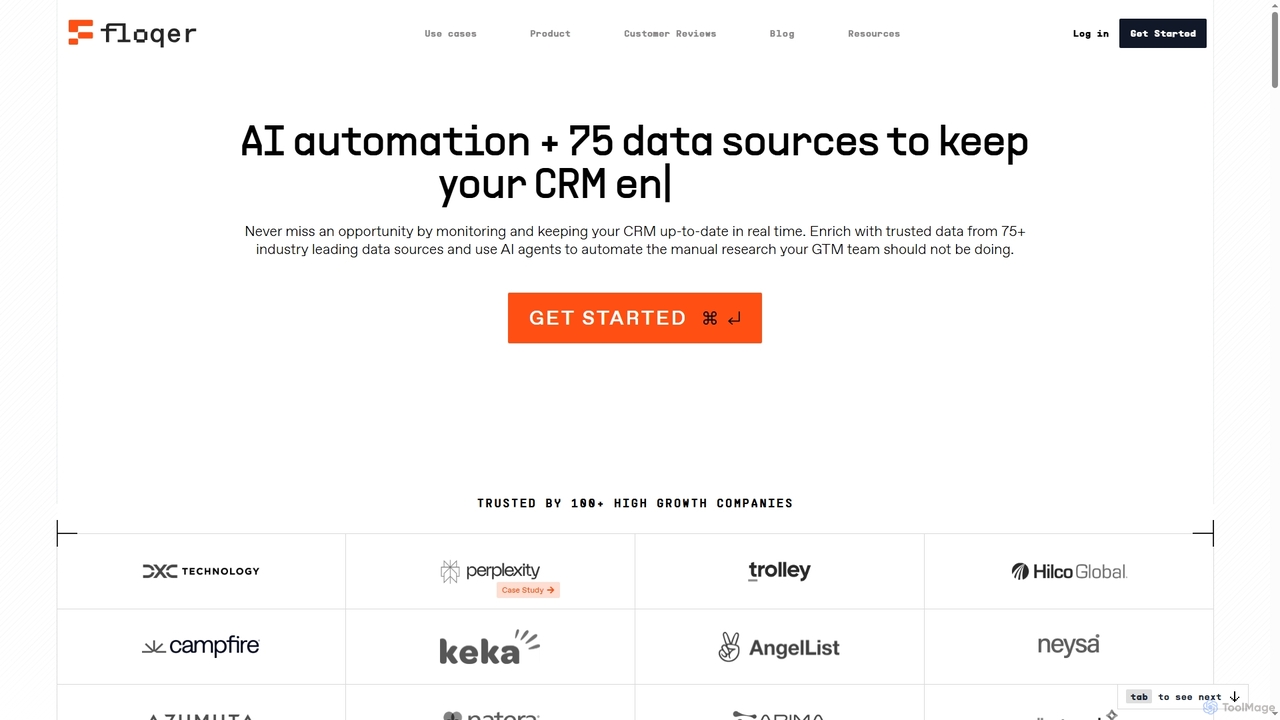
Floqer is an advanced AI-powered CRM data enrichment tool that automates real-time data updates from over 75 sources. It helps sales and marketing teams keep their CRM clean, enriched, and up-to-date, identifying high-intent buyers and automating manual research. Floqer ensures no missed opportunities by providing accurate contact details, intent signals, and buyer context for hyper-targeted outreach.

Automation
Visits 17.3KFavorites 132Likes 132
Amarsia
Freemium

Amarsia

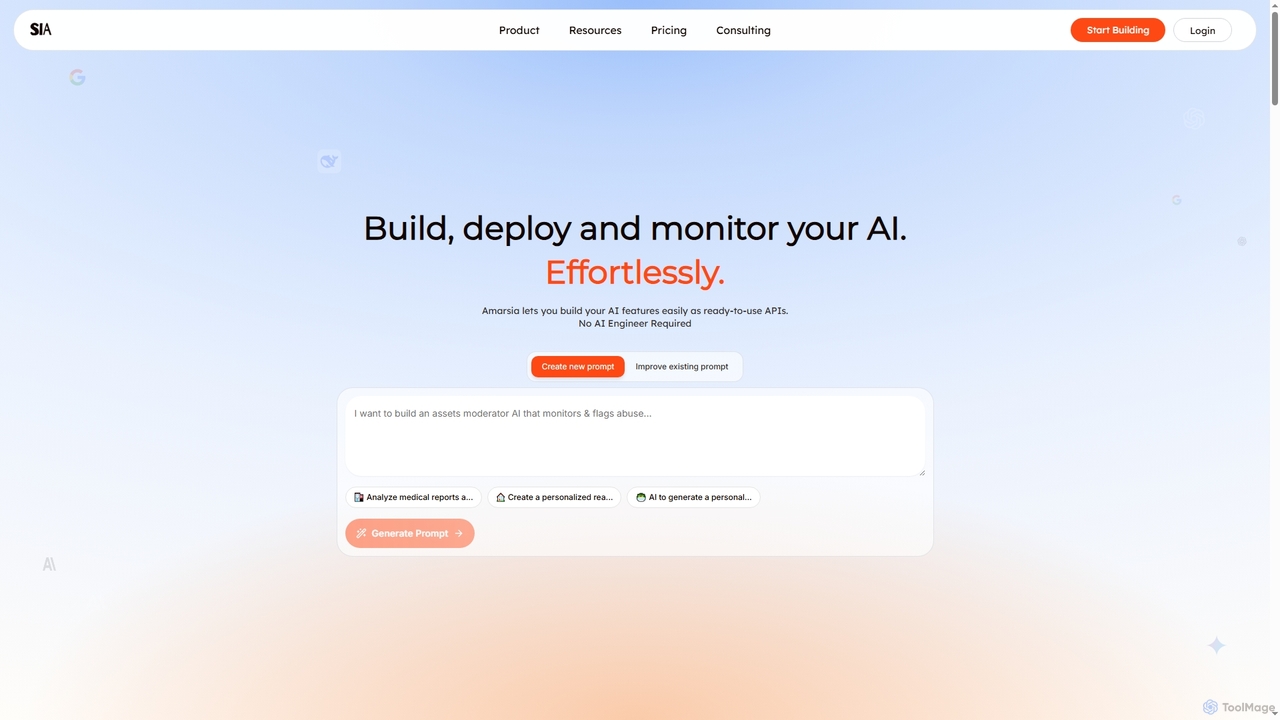
Amarsia is an intuitive platform designed to help teams effortlessly build, deploy, and monitor custom AI features as ready-to-use APIs. It eliminates the need for extensive coding or AI engineering expertise, enabling rapid development of intelligent workflows, knowledge bases, and multimodal AI solutions with built-in version control and performance monitoring.

Workflow Automation
Visits 5.5KFavorites 176Likes 159
DevBlogs

DevBlogs

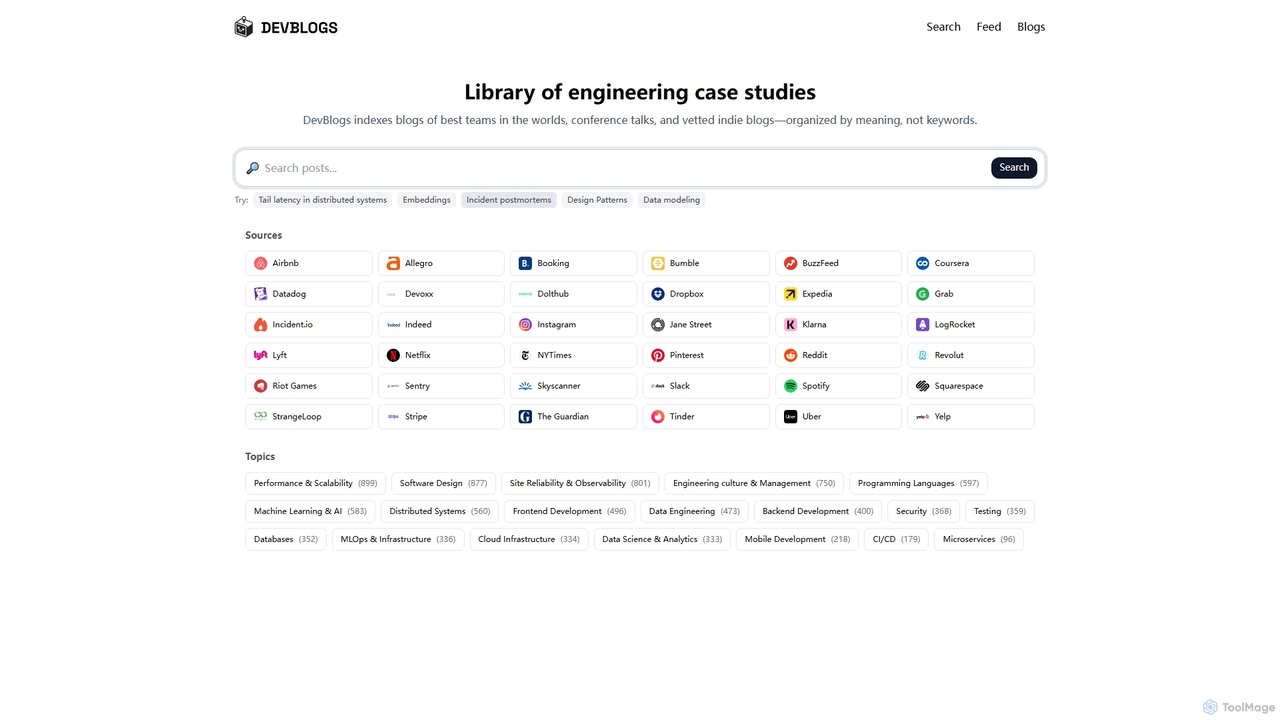
DevBlogs is a curated library indexing engineering case studies, tech blogs, and conference talks from leading global teams. It organizes content by meaning and specific technical topics, providing a valuable resource for developers and engineers to discover insights and best practices.

Infrastructure
Visits 5.4KFavorites 122Likes 132
Vectorize
Freemium

Vectorize

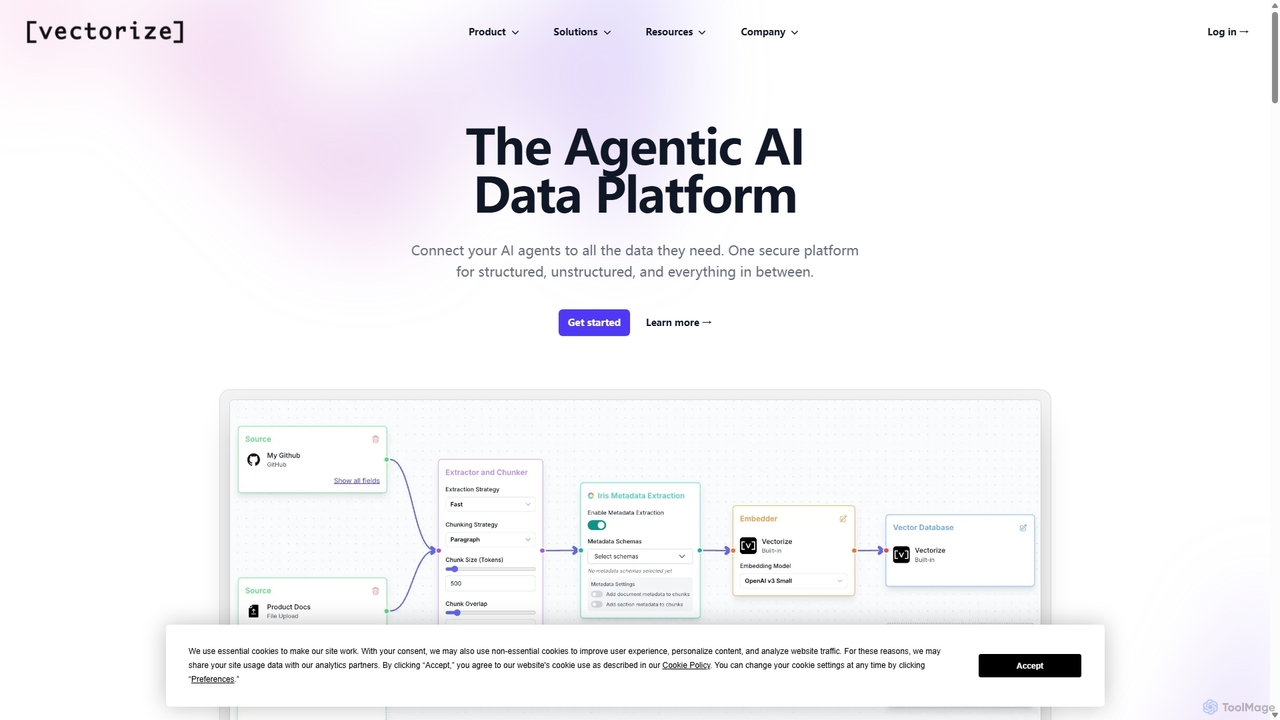
Vectorize is a RAG-as-a-Service platform that simplifies building AI applications on unstructured data. It offers managed RAG pipelines, extensive data source connectors, and the flexibility to use its managed vector database or connect your own, enabling developers to deploy production-ready AI solutions quickly.

Rag
Visits 222.1KFavorites 127Likes 122
MyScale
Freemium

MyScale

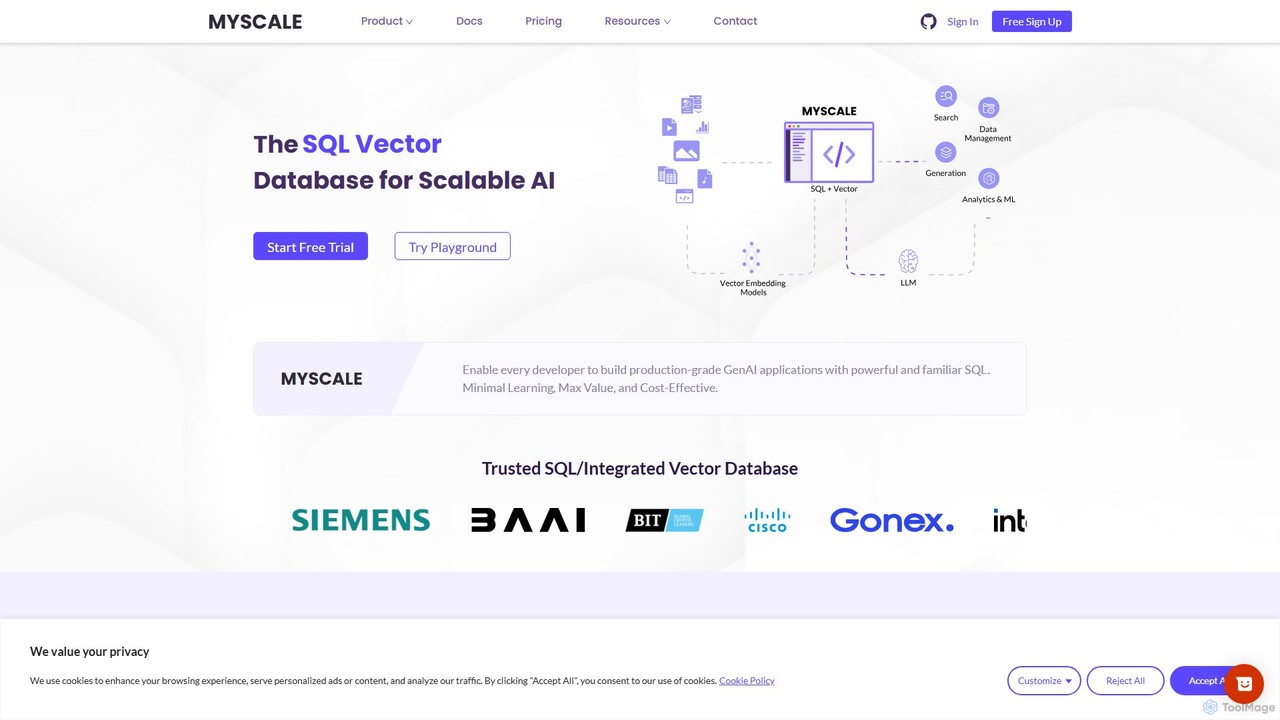
MyScale is a high-performance vector database that uniquely combines vector search with the power of SQL. It's designed for building advanced AI applications like RAG, semantic search, and recommendation systems, simplifying the tech stack by allowing developers to run hybrid queries on vectors and structured data using a single, familiar interface.

Vector Database
Visits 45.2KFavorites 127Likes 115

About Data Management

AI Data Management tools are a class of software that leverages artificial intelligence and machine learning to automate and optimize the entire data lifecycle. These tools intelligently handle tasks like data ingestion, cleaning, integration, and governance, often using algorithms to detect patterns, anomalies, and relationships within datasets. This enables organizations to maintain high-quality, reliable data pipelines with minimal manual intervention, accelerating analytics and decision-making. They transform complex data operations into efficient, scalable, and proactive processes.

Core Features

  • Automated Data Cleansing: Uses AI to identify and correct errors, duplicates, and inconsistencies in data automatically.
  • Intelligent Data Cataloging: Automatically discovers, classifies, and tags data assets, creating a searchable inventory of all data.
  • AI-Powered Data Integration: Simplifies the process of mapping and merging data from various disparate sources without manual coding.
  • Anomaly Detection: Proactively monitors data streams to identify unusual patterns or outliers that could indicate quality issues or business risks.
  • Natural Language Querying: Allows users to retrieve data and insights by asking questions in plain language, removing the need for complex SQL.

Use Cases

These tools are essential for data engineers, data analysts, governance officers, and business intelligence teams. In industries like finance, healthcare, and e-commerce, they are used to manage customer data platforms, ensure regulatory compliance (like GDPR), and prepare high-quality datasets for machine learning models. For example, a retail company can use them to unify customer data from online and offline stores for a single customer view.

How to Choose

When selecting an AI Data Management tool, consider its compatibility with your existing data sources and infrastructure. Evaluate the sophistication of its AI models for tasks like cleansing and anomaly detection. Assess its scalability to handle your data volume and velocity. Also, consider the user interface—whether it supports both technical data teams and less-technical business users—and its integration capabilities with your analytics and BI platforms.

Featured tool rankings

Data Management use cases

1

Automating Data Quality for E-commerce

An e-commerce data analyst is tasked with creating accurate customer segments for a personalized marketing campaign. They use an AI Data Management tool to ingest customer data from multiple sources like the website, mobile app, and POS systems. The tool automatically identifies and merges duplicate customer profiles, standardizes mailing addresses to a unified format, and flags incomplete records for review. This process ensures the marketing team works with a clean, reliable single view of each customer, improving campaign targeting accuracy and ROI.

2

Building a Smart Data Catalog for Compliance

A data governance officer at a financial institution needs to ensure compliance with regulations like GDPR. They deploy an AI Data Management tool to scan all organizational data sources, including databases and cloud storage. The AI automatically identifies and classifies Personally Identifiable Information (PII), tracks data lineage to show how data moves and is transformed, and builds a centralized, searchable catalog. This allows compliance teams to quickly respond to data subject access requests and demonstrate a clear data governance framework to auditors.

3

Streamlining Data Prep for Machine Learning

A data scientist is building a predictive model to forecast customer churn. The initial dataset is large and contains missing values, outliers, and inconsistent formatting. Instead of spending weeks on manual data preparation, they use an AI Data Management tool. The tool suggests optimal strategies for handling missing data, automatically detects and flags outliers based on statistical models, and streamlines feature engineering. This reduces the data preparation phase from weeks to days, allowing the data scientist to focus on model development and iteration, leading to a more accurate final model.

4

Natural Language Database Querying for Business Teams

A marketing manager, who does not have SQL skills, needs to quickly understand last quarter's sales performance. Using an AI Data Management tool with a natural language interface, they simply type: "Show me top 5 products by revenue in North America for Q3". The AI translates this request into a complex SQL query, executes it against the sales database, and returns a visualized chart and data table. This empowers non-technical users to perform self-service analytics, reducing their dependency on the data team and enabling faster, data-informed decisions.

5

Real-time Anomaly Detection in IoT Data Streams

An operations manager at a manufacturing plant monitors thousands of IoT sensors on the production line. An AI Data Management tool continuously ingests and analyzes this high-velocity data stream in real-time. Its machine learning models, trained on historical data, can instantly detect anomalies such as a sudden temperature spike or unusual vibration patterns that deviate from the norm. The system automatically sends an alert to the maintenance team, enabling them to perform predictive maintenance and prevent costly equipment failure and production downtime.

6

Accelerating Data Migration to the Cloud

An IT team is migrating a legacy on-premise database to a cloud data warehouse. This complex project involves mapping hundreds of tables and transforming data formats. They use an AI Data Management tool that automatically scans the source and target schemas, intelligently suggests column mappings, and generates the necessary transformation code. The tool also performs automated data validation post-migration to ensure data integrity. This AI-assisted approach significantly reduces manual effort, minimizes the risk of human error, and cuts the overall project timeline by more than 40%.

Data Management FAQ

What are AI Data Management tools?

AI Data Management tools are software solutions that use machine learning and artificial intelligence to automate and enhance data-related tasks. Unlike traditional tools that rely on manual rules, these tools can learn from data to perform tasks like automatically cleaning datasets, classifying sensitive information, detecting anomalies in real-time, and suggesting data integrations. Their primary goal is to improve data quality, increase operational efficiency, and make data more accessible and reliable for analytics and decision-making across an organization.

How to choose the right AI Data Management tool?

Choosing the right tool depends on your specific needs. Consider the following factors:

  • Connectivity: Ensure the tool can connect to all your data sources, whether they are databases, cloud applications, or data lakes.
  • Scalability: The tool must be able to handle your current and future data volume and processing speed requirements.
  • AI Capabilities: Evaluate the specific AI features offered. Do you need advanced anomaly detection, natural language processing, or automated data classification?
  • Ease of Use: Look for a user-friendly interface that empowers both technical and non-technical users, potentially with low-code or no-code options.
  • Integration: Check its ability to integrate with your existing BI, analytics, and data warehousing tools to create a seamless workflow.
What's the difference between AI Data Management and traditional ETL tools?

The key difference lies in intelligence and automation. Traditional ETL (Extract, Transform, Load) tools are rule-based; they require developers to manually define every step of the data pipeline. If the data format changes, the pipeline breaks and needs manual fixing. AI Data Management tools are more adaptive. They use machine learning to infer data schemas, suggest transformations, automatically detect and resolve quality issues, and can adapt to changes in data sources with less manual intervention. In essence, traditional ETL is a manual, rigid process, while AI Data Management is an automated, intelligent, and flexible one.

Who typically uses AI Data Management tools?

While traditionally used by technical roles, the user base for AI Data Management tools is expanding. Key users include:

  • Data Engineers: To build, maintain, and optimize robust and automated data pipelines.
  • Data Analysts & Scientists: To accelerate data preparation, cleansing, and feature engineering, allowing more time for analysis and modeling.
  • Data Governance & Compliance Officers: To automatically classify data, track lineage, and enforce data quality rules for regulatory compliance.
  • Business Users: With the rise of natural language interfaces and low-code platforms, business managers and analysts can now perform self-service data discovery and analysis without deep technical skills.
What are the key benefits of using AI in data management?

Integrating AI into data management offers significant advantages. The primary benefits include:

  • Increased Efficiency: AI automates repetitive and time-consuming tasks like data cleaning and validation, freeing up data professionals to focus on higher-value activities.
  • Improved Data Quality: Machine learning models can identify complex patterns and anomalies that are difficult for humans to spot, leading to more accurate and reliable data.
  • Enhanced Data Discovery: AI-powered data catalogs make it easier for users across the organization to find, understand, and trust relevant data assets.
  • Proactive Problem Solving: AI can predict potential data quality issues or pipeline failures before they occur, shifting from a reactive to a proactive management approach.