ToolMage
Sign in

Best 46 Web Scraping AI tools for Data

Popular Web Scraping AI tools in Data include Firecrawl, Bright Data, Oxylabs, Browse AI, Browserbase, Octoparse, Zyte, UpRock, BrowserAct, and Simplescraper, helping you work more efficiently.

Nextbrowser
Freemium

Nextbrowser

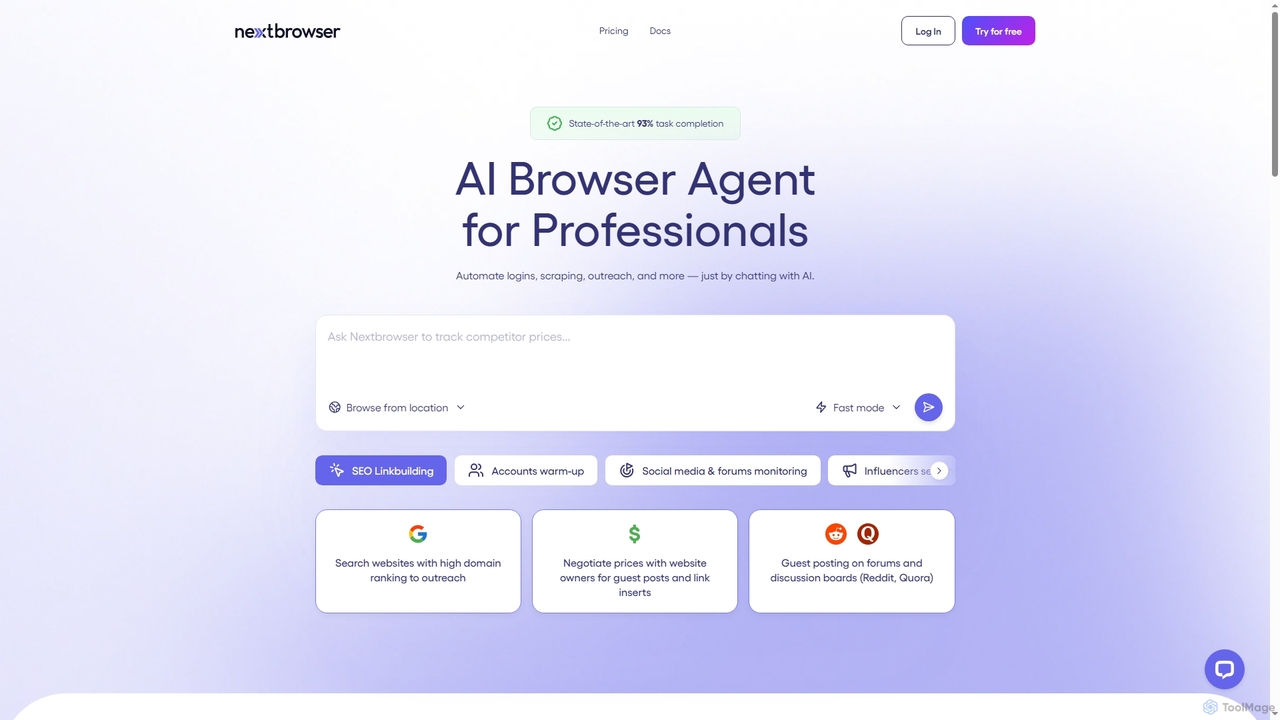
Nextbrowser is an AI-powered browser agent designed for sales and marketing professionals. It automates complex web tasks like logins, data scraping, SEO link building, and influencer outreach through simple chat commands. Operating in the cloud with human-like interaction and geo-control, it streamlines repetitive workflows, manages multiple accounts, and schedules tasks, significantly boosting efficiency and reducing operational costs.

Sales Automation
Visits 8.1KFavorites 124Likes 133
Nsocks
Paid

Nsocks

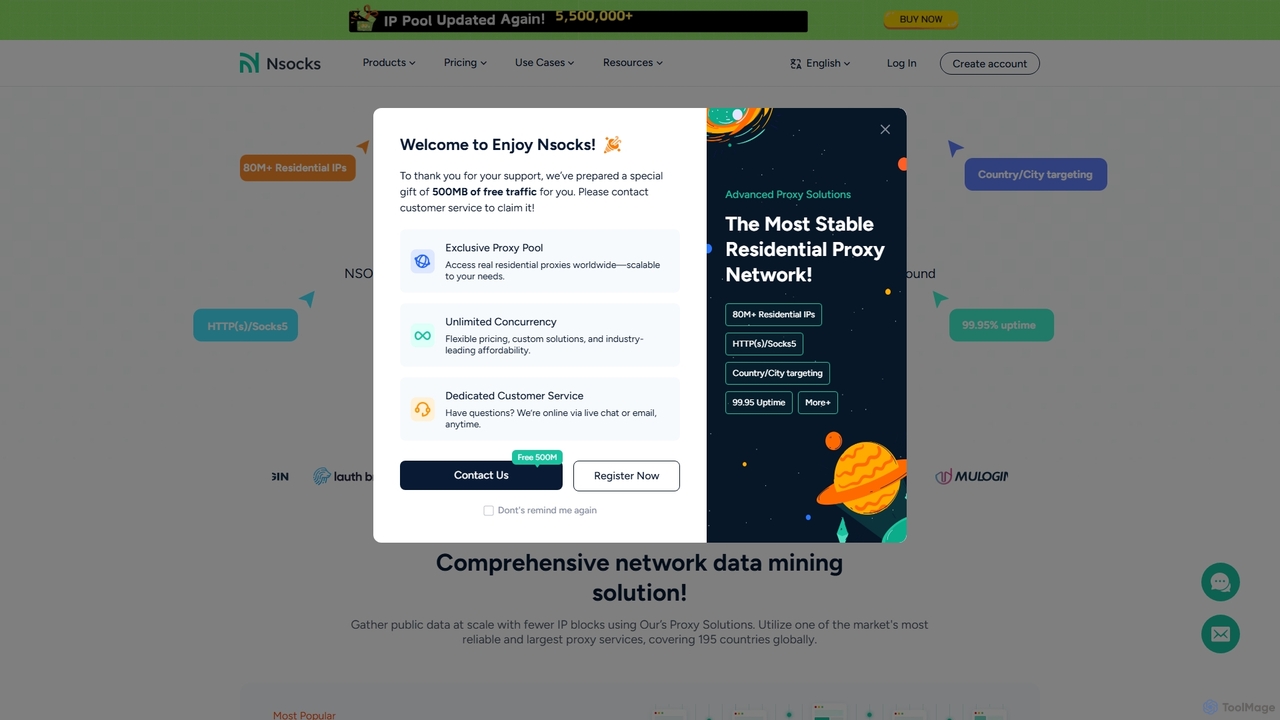
Nsocks is a professional proxy service provider offering a massive pool of over 80 million residential IPs across 195+ countries. It provides stable, high-speed residential, static, and unlimited proxies for data scraping, market research, ad verification, and social media management, ensuring high anonymity and a 99.95% success rate.

Web Scraping
Visits 29.1KFavorites 116Likes 139
TaskMagic
Freemium

TaskMagic

TaskMagic is a no-code Robotic Process Automation (RPA) tool that lets you automate any web-based task. Record your clicks and keystrokes to create powerful workflows for web scraping, data entry, and social media management without writing a single line of code. It simplifies repetitive browser actions, saving you time and effort.

Web Scraping
Visits 5.4KFavorites 114Likes 131
Zyte
Freemium

Zyte

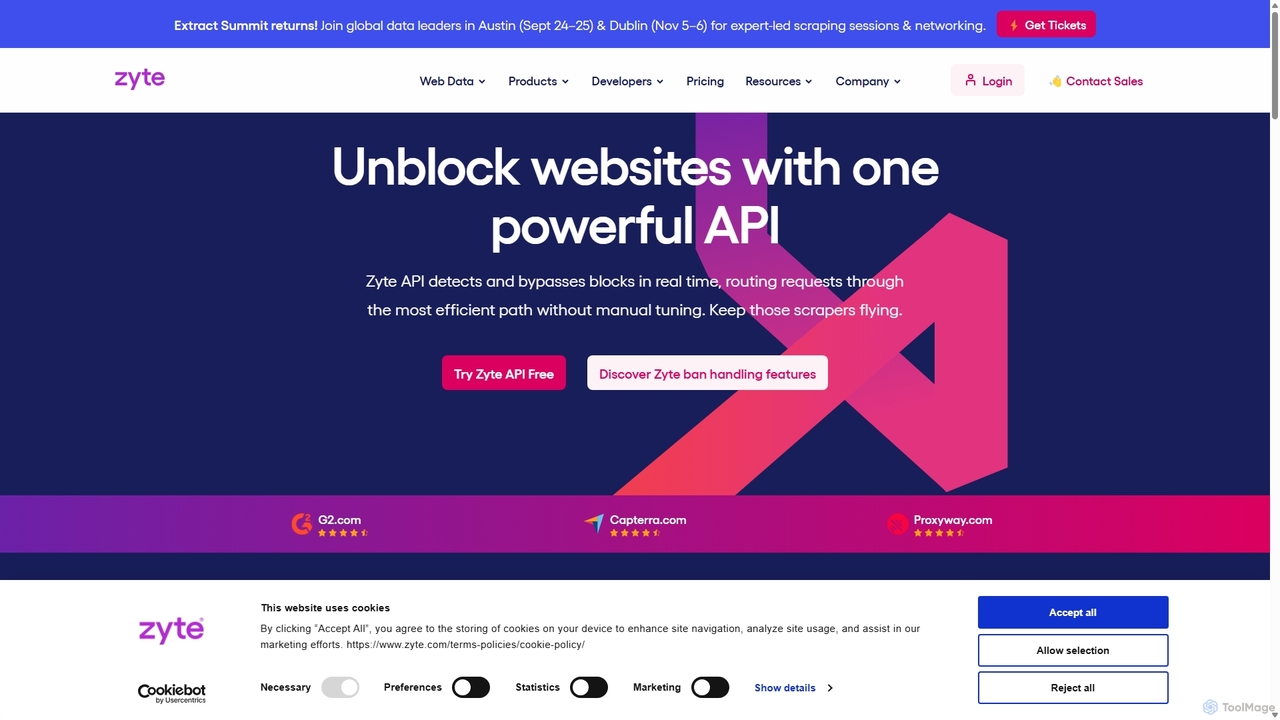
Zyte is a comprehensive web scraping platform offering a full-stack API and data extraction services. It simplifies data acquisition by managing proxies, headless browsers, and advanced anti-blocking systems. Powered by AI, Zyte delivers reliable, structured web data at scale for businesses in e-commerce, market research, and more.

Market Intelligence
Visits 207.8KFavorites 104Likes 105
UpRock
Free

UpRock

UpRock is a Decentralized Physical Infrastructure Network (DePIN) that allows users to earn passive crypto income by sharing their unused internet bandwidth. This people-powered network provides real-time, uncensored data to fuel AI innovation and various web services.

Depin
Visits 130KFavorites 98Likes 99
Browse AI
Freemium

Browse AI

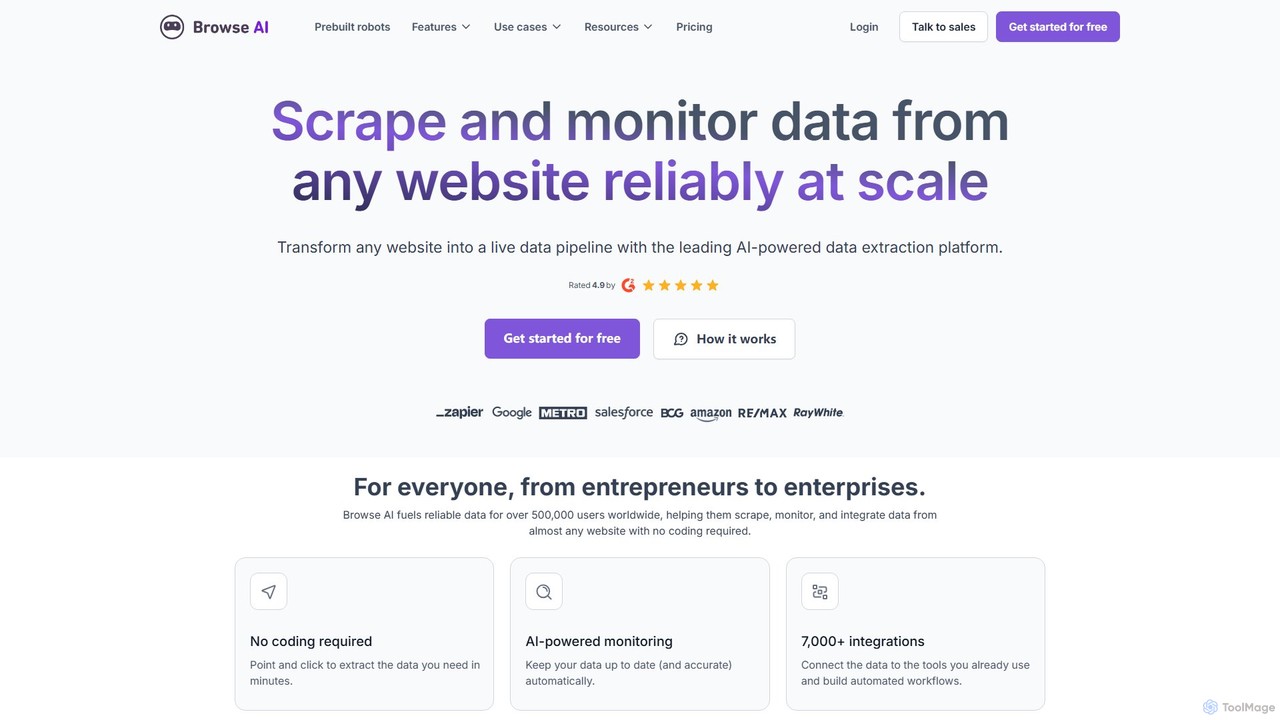
Browse AI is a no-code platform that enables users to extract and monitor data from any website. Easily train a robot to scrape information, turn websites into spreadsheets or APIs, and track changes automatically. It's designed for marketers, researchers, and developers to automate data collection without writing any code, offering prebuilt robots and seamless integrations with tools like Google Sheets and Zapier.

Web Scraping
Visits 347.3KFavorites 157Likes 154
Simplescraper
Freemium

Simplescraper

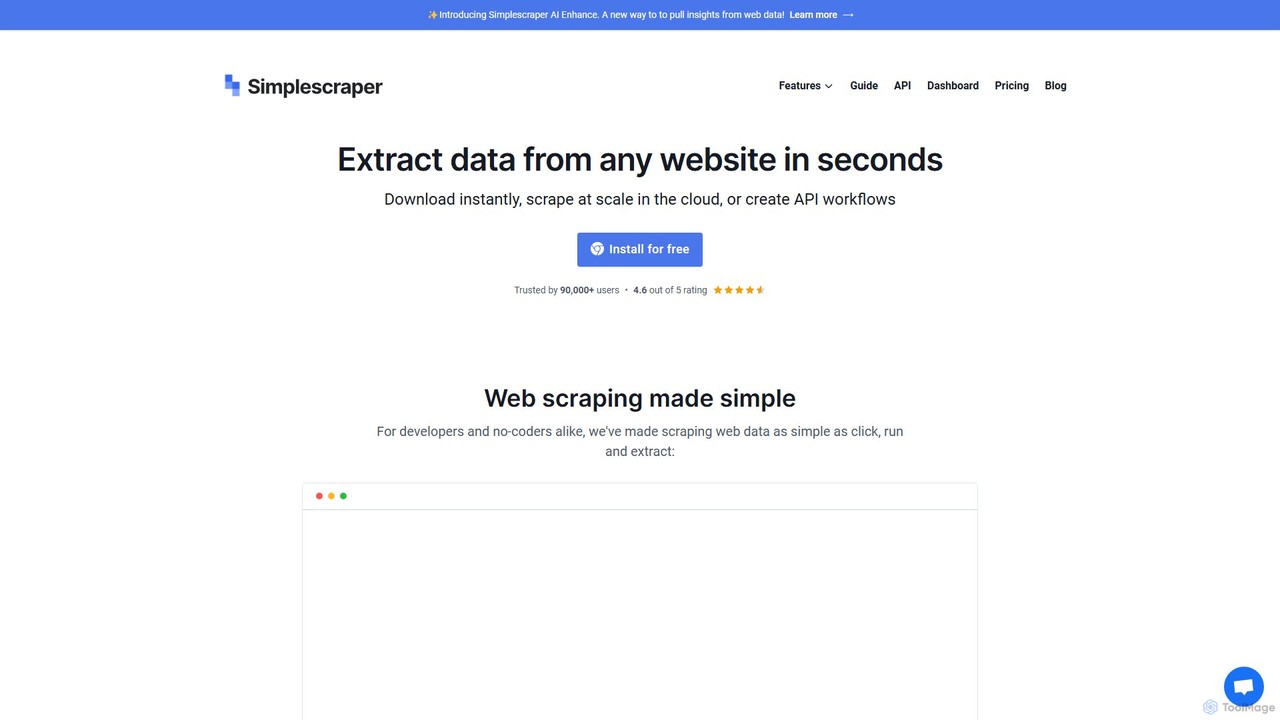
Simplescraper is a powerful web scraping tool that extracts data from any website in seconds. It offers a user-friendly Chrome extension for no-code data selection, cloud-based automation for large-scale scraping, and an innovative AI Enhance feature to pull insights using simple prompts. Turn websites into structured data (CSV, JSON) or instant APIs, and integrate with tools like Google Sheets and Airtable.

Web Scraping
Visits 109.9KFavorites 110Likes 128
MrScraper
Paid

MrScraper

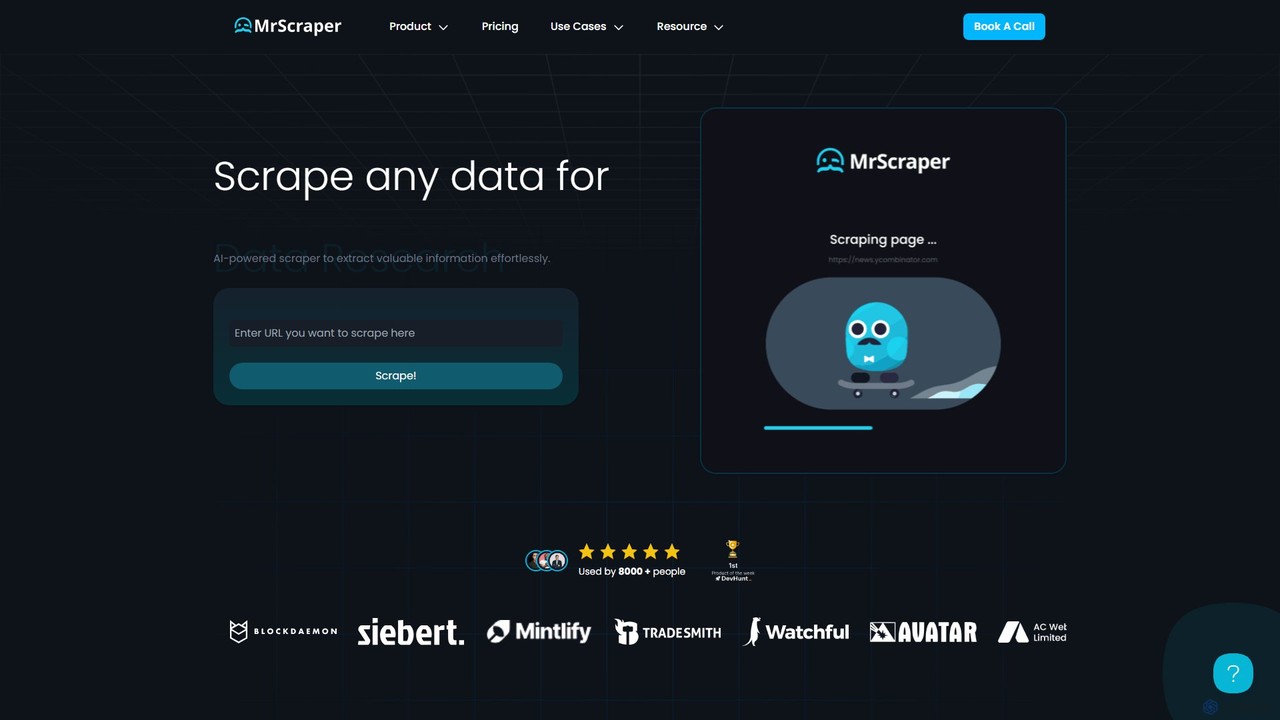
MrScraper is an AI-powered, no-code web scraping tool that allows users to effortlessly extract structured data from any website. It automates the data collection process, bypassing anti-bot measures like CAPTCHAs and IP blocks, making it ideal for pricing intelligence, market research, and lead generation.

Web Scraping
Visits 38.8KFavorites 152Likes 157
PriceResonance
Paid

PriceResonance

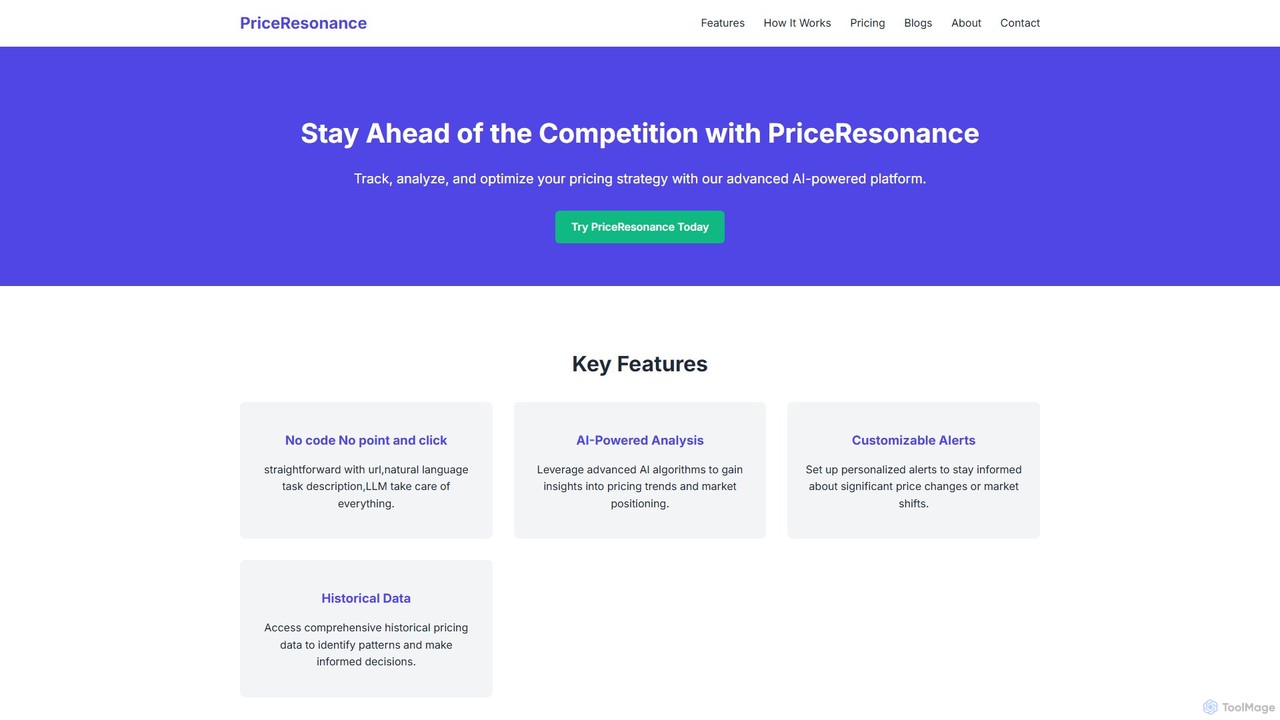
PriceResonance is an AI-powered competitive intelligence tool that simplifies price tracking and analysis. It automates web scraping to monitor competitor pricing strategies on e-commerce sites like Amazon and SaaS platforms, providing actionable insights for businesses to optimize their pricing, stay competitive, and increase market share.

Web Scraping
Visits 5.1KFavorites 140Likes 147
Oxylabs
Paid

Oxylabs

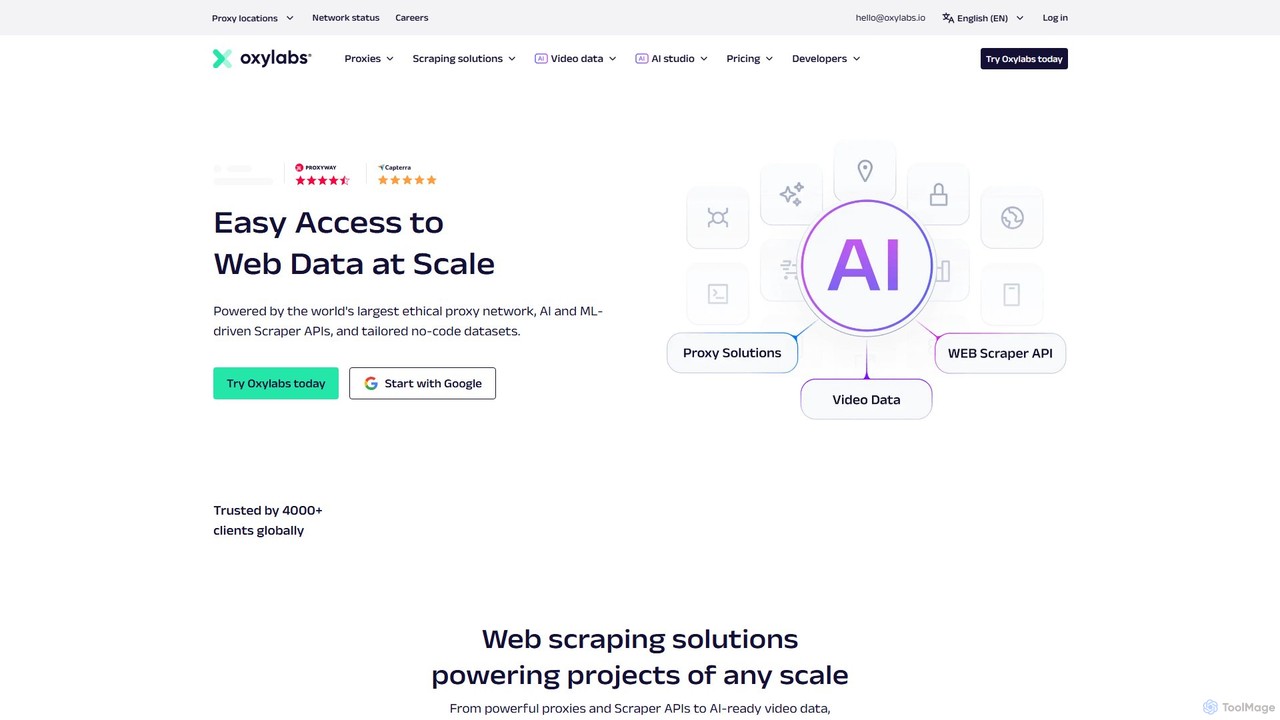
Oxylabs is a leading provider of premium proxy services and enterprise-level web data gathering solutions. Leveraging a massive, ethically-sourced proxy network of over 177 million IPs, it offers AI-powered Scraper APIs, a Web Unblocker, and the new AI Studio for natural language data extraction. It enables businesses to collect public web data at scale for e-commerce, cybersecurity, brand protection, and market research without getting blocked.

Market Intelligence
Visits 486.2KFavorites 158Likes 161
BestProxy
Paid

BestProxy

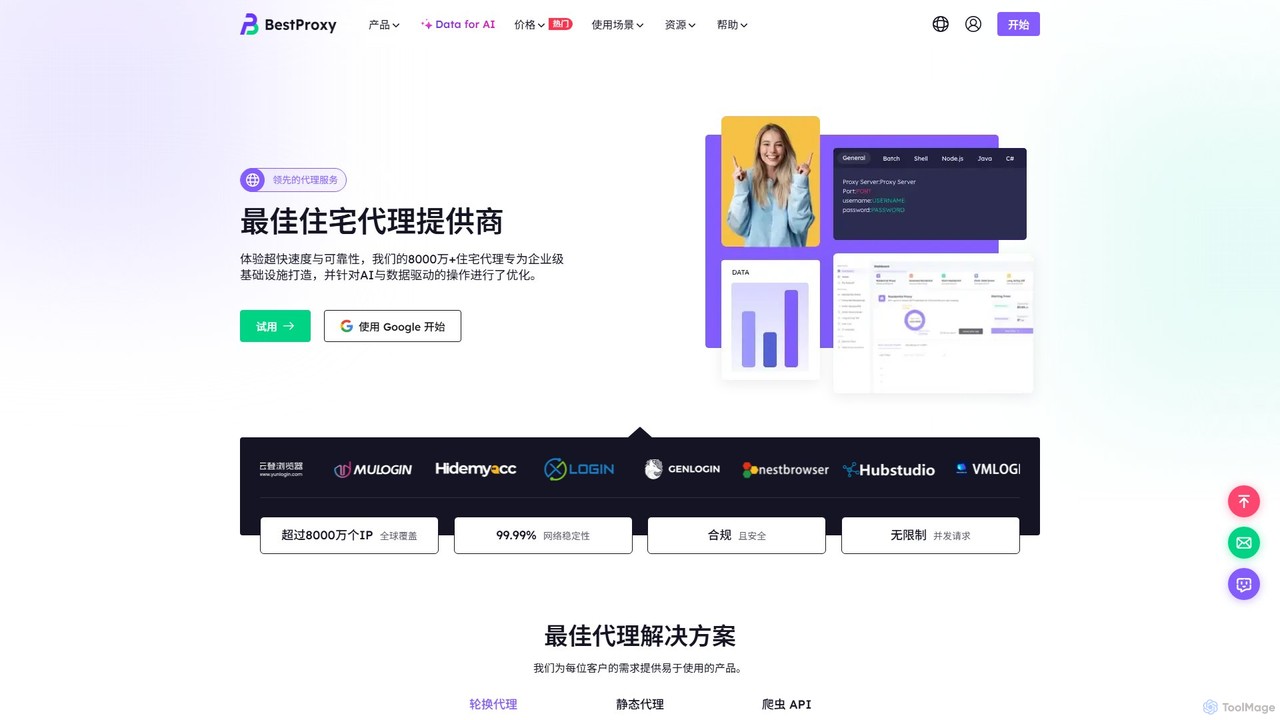
BestProxy is a leading provider of residential and ISP proxy services, offering a massive pool of over 80 million ethically sourced IPs. It is optimized for AI, large-scale data scraping, market research, and multi-account management, featuring high speeds, 99.99% uptime, unlimited concurrent requests, and precise geo-targeting.

Web Scraping
Visits 76KFavorites 130Likes 116
Scrapybara
Freemium

Scrapybara

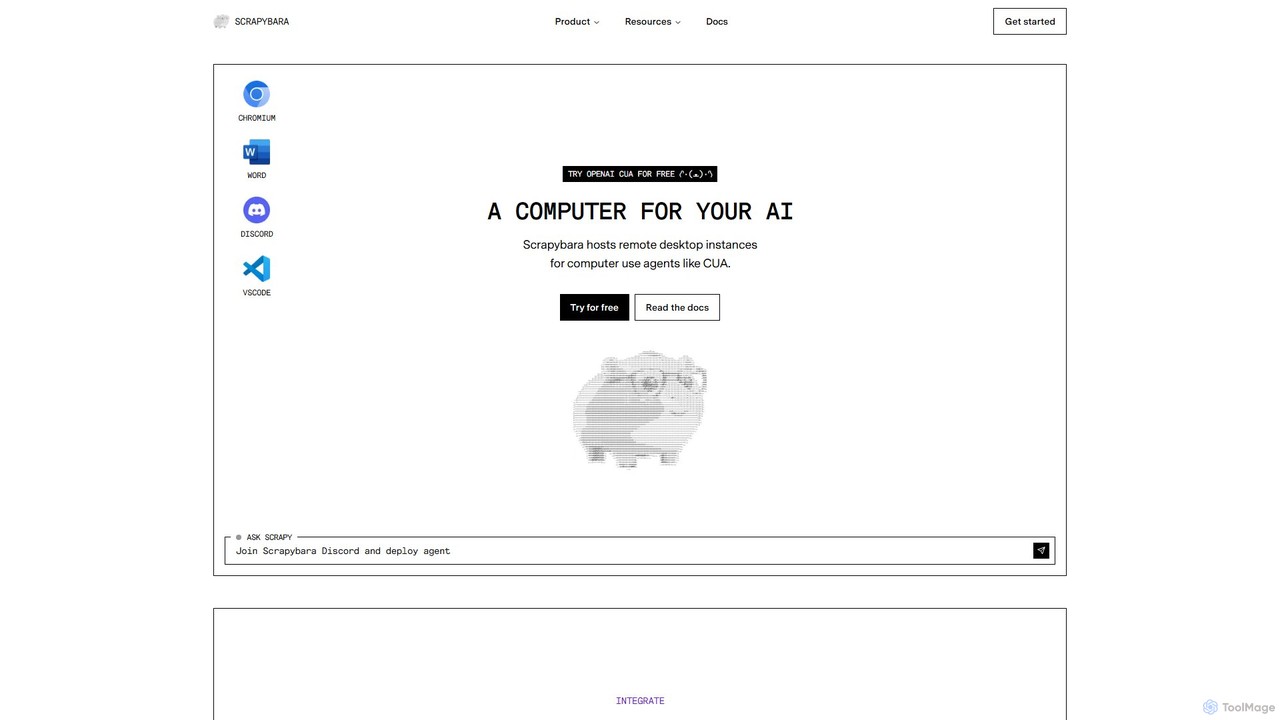
Scrapybara is a developer platform providing cloud-based virtual desktops for AI agents. It enables the creation and scaling of agents that perform complex computer tasks by interacting with graphical user interfaces (GUIs) like a human. It offers instant, scalable desktop instances (Ubuntu, Windows) with SDKs for Python and TypeScript, supporting models like OpenAI's CUA.

Robotic Process Automation
Visits 13.1KFavorites 133Likes 157
Bright Data
Paid

Bright Data

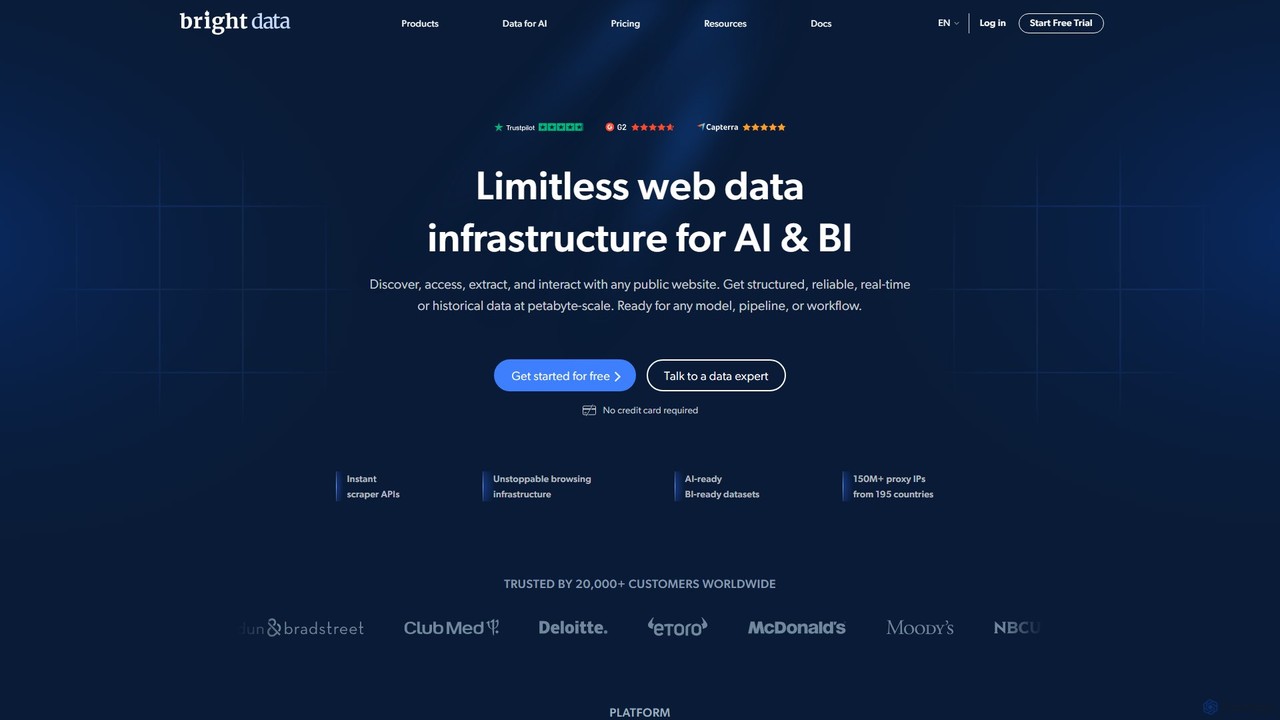
Bright Data is the world's leading web data platform, offering a comprehensive suite of tools including proxy networks, AI-powered web scrapers, and ready-to-use datasets. It enables businesses to collect vast amounts of public web data for AI training, market research, and competitive intelligence.

Business Intelligence
Visits 816KFavorites 96Likes 103
Import.io
Freemium

Import.io

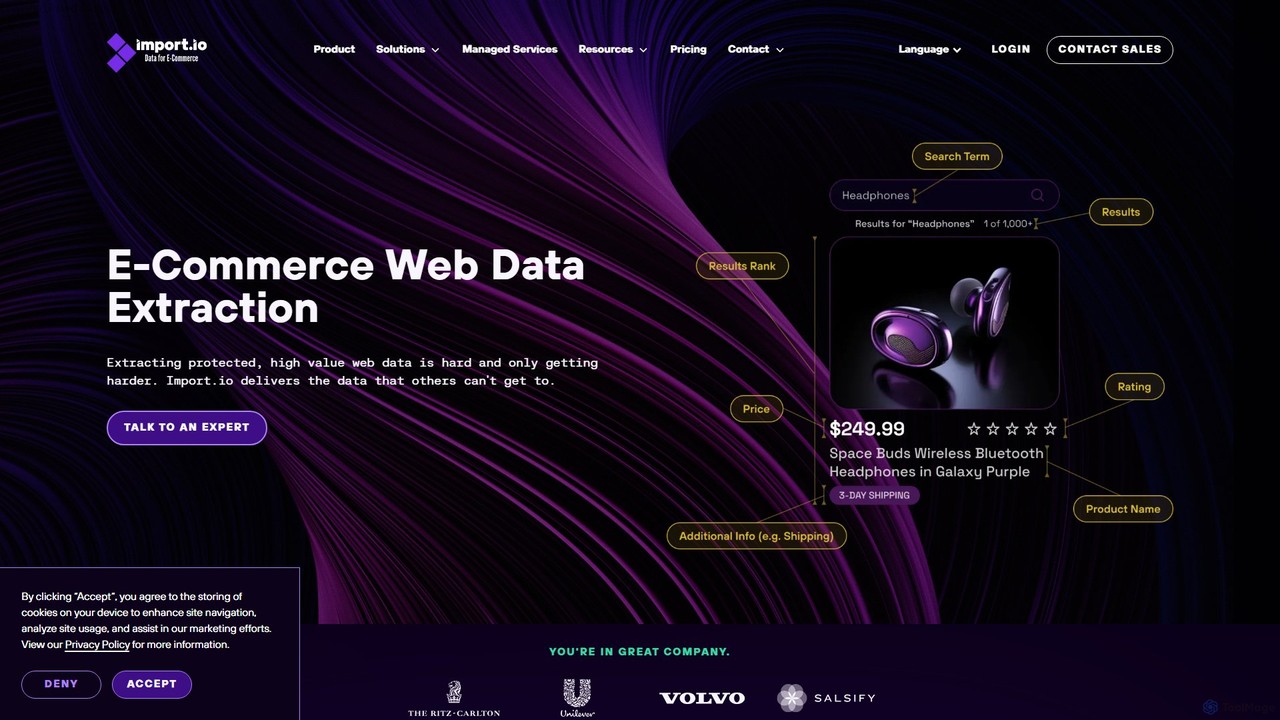
Import.io is an enterprise-grade web data extraction platform that provides high-quality, structured data from any website. It offers both a fully managed service and a self-service solution to power e-commerce market intelligence, brand monitoring, and data-driven business decisions, overcoming complex anti-scraping technologies.

Market Intelligence
Visits 41.3KFavorites 125Likes 120
webscrapeai
Freemium

webscrapeai

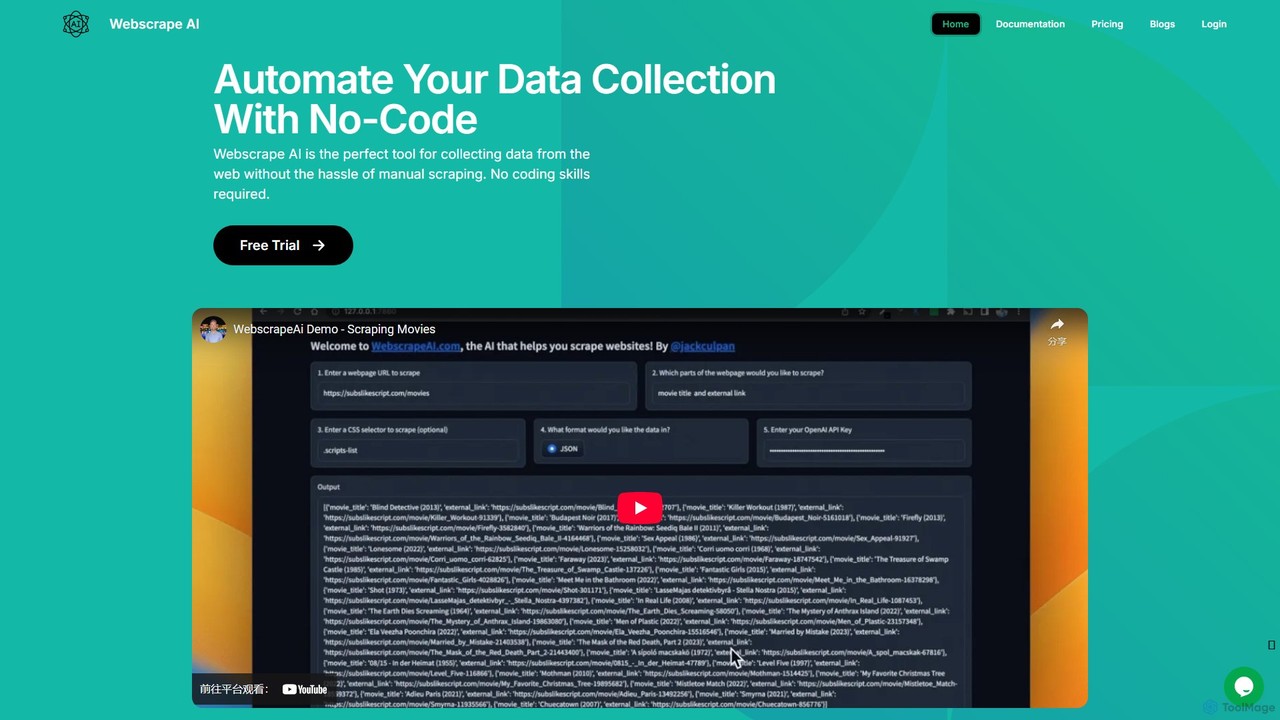
WebscrapeAI is a no-code, AI-powered platform designed to automate web data collection. Simply provide a URL and specify the data you need, and the AI handles the entire scraping process. It supports dynamic websites, bulk scraping, proxy integration, and offers an API for developers, making data extraction fast, accurate, and accessible to everyone.

Web Scraping
Visits 5.6KFavorites 112Likes 141
BulkGPT
Freemium

BulkGPT

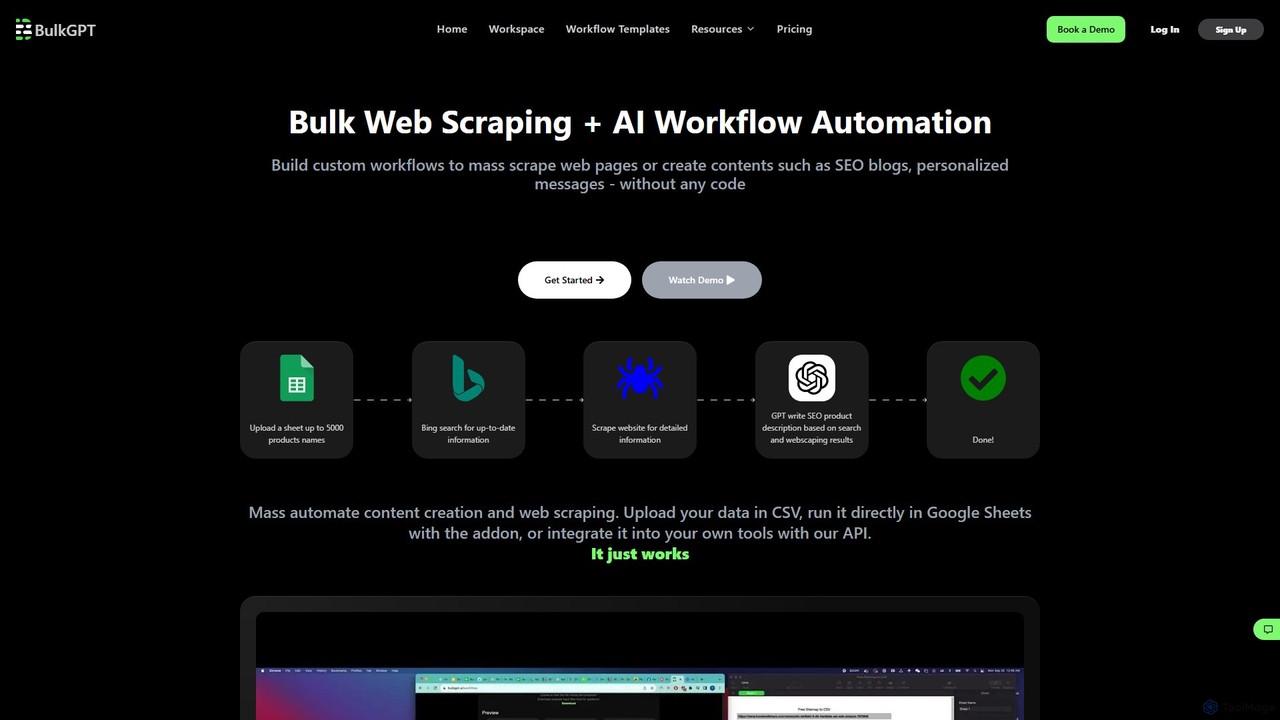
BulkGPT is a no-code platform for AI workflow automation, enabling users to perform bulk web scraping, mass content creation, and batch processing of AI tasks. It integrates with CSV, Google Sheets, and an API to streamline repetitive tasks for marketing, e-commerce, and data analysis without any coding knowledge.

Web Scraping
Visits 6KFavorites 128Likes 133

Goover
Freemium

Goover

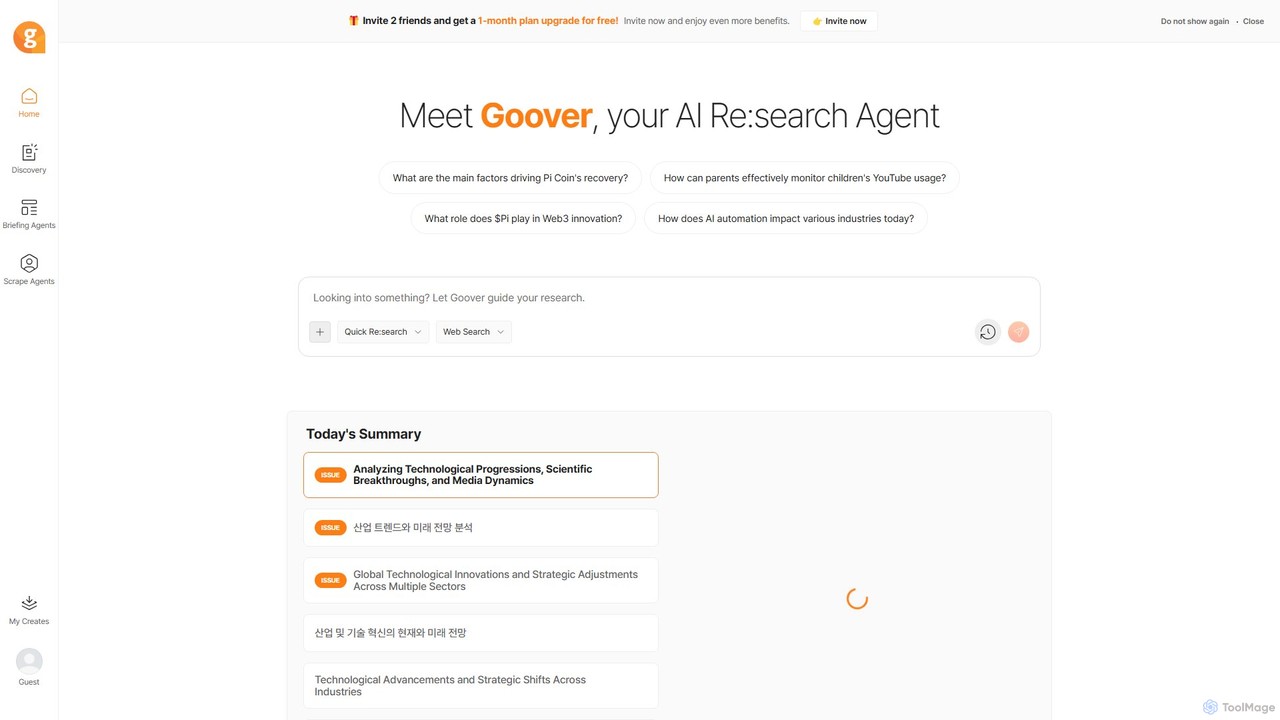
Goover is an advanced AI research agent that automates the entire process of information gathering, analysis, and synthesis. It transforms complex questions and scattered web data into structured, insightful reports and briefings, helping users save time and make informed decisions.

Web Scraping
Visits 76.5KFavorites 151Likes 152
No-Code Scraper
Freemium

No-Code Scraper

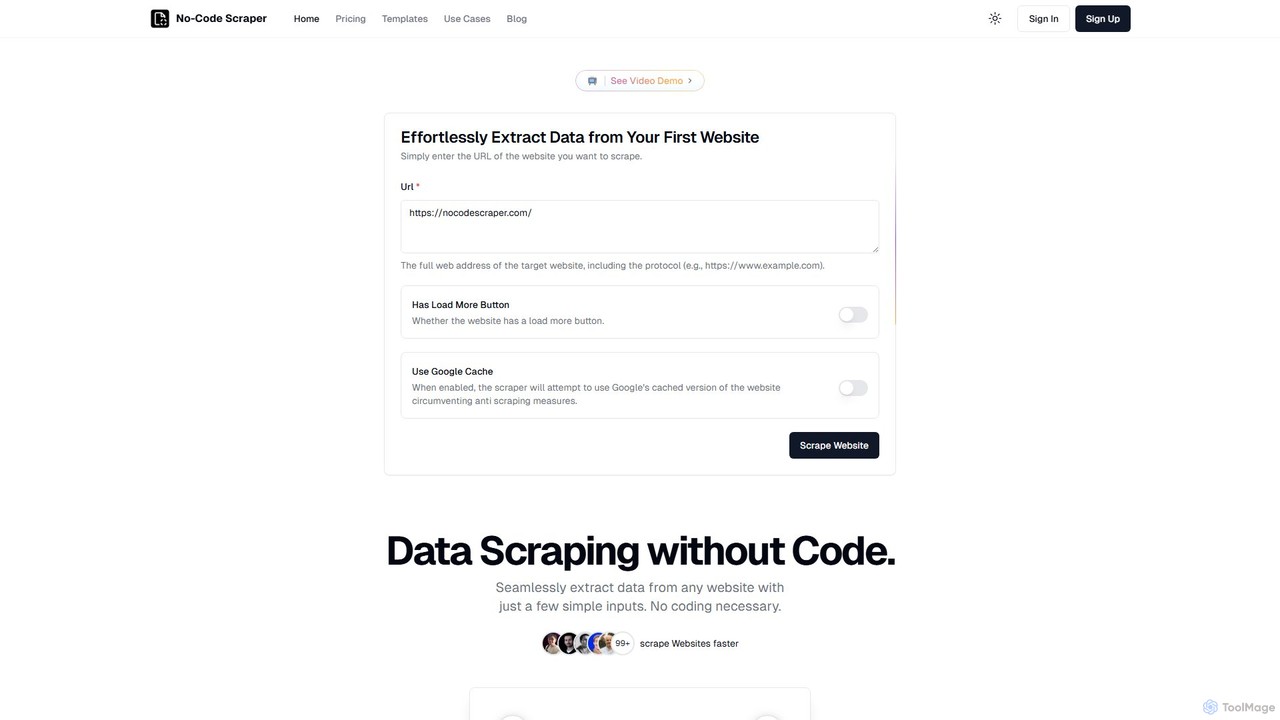
No-Code Scraper is an AI-powered platform that enables users to extract data from any website without writing a single line of code. It uses large language models to automate data extraction, cleaning, and structuring, making web scraping accessible, reliable, and efficient for everyone.

Web Scraping
Visits 8.4KFavorites 144Likes 139
Firecrawl
Freemium

Firecrawl

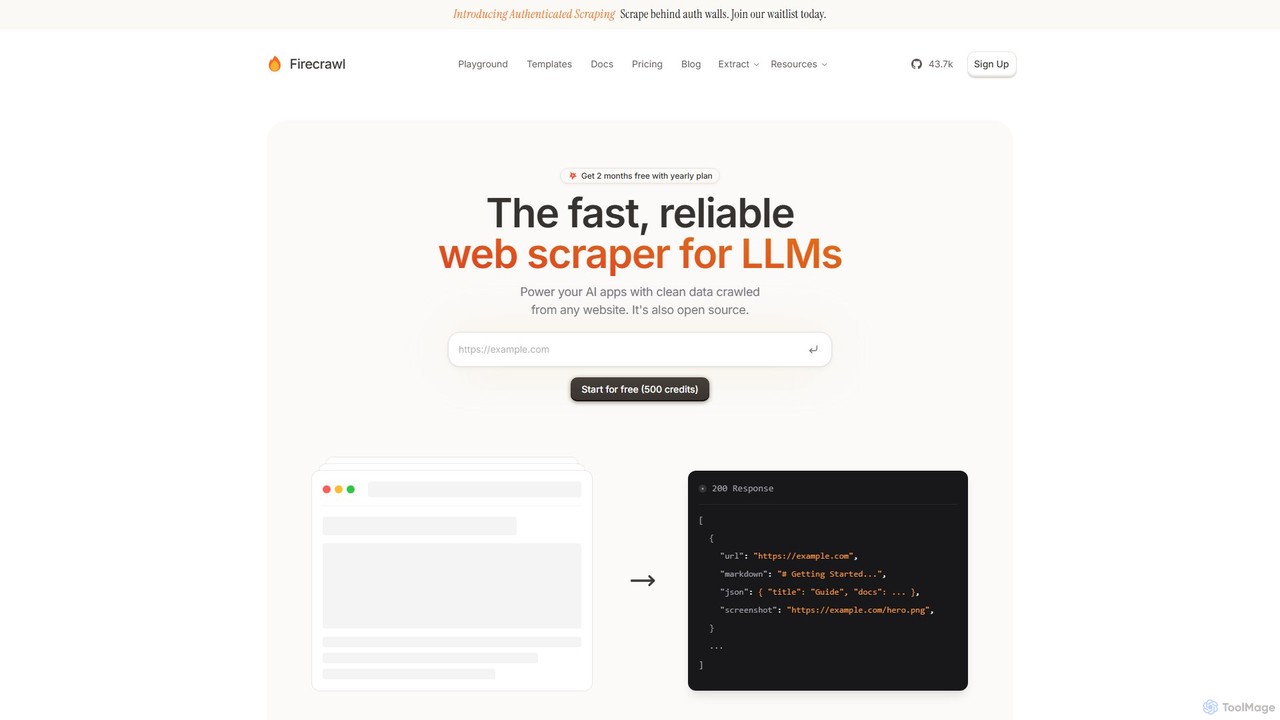
Firecrawl is an open-source, developer-first API that turns any website into clean, LLM-ready data. It handles all the complexities of web scraping, including JavaScript rendering, proxy rotation, and rate limits, allowing you to power AI applications, agents, and RAG systems with reliable web content. It offers scraping, crawling, and search functionalities through a simple API.

Data Collection
Visits 1.5MFavorites 133Likes 133

Crawly
Freemium

Crawly

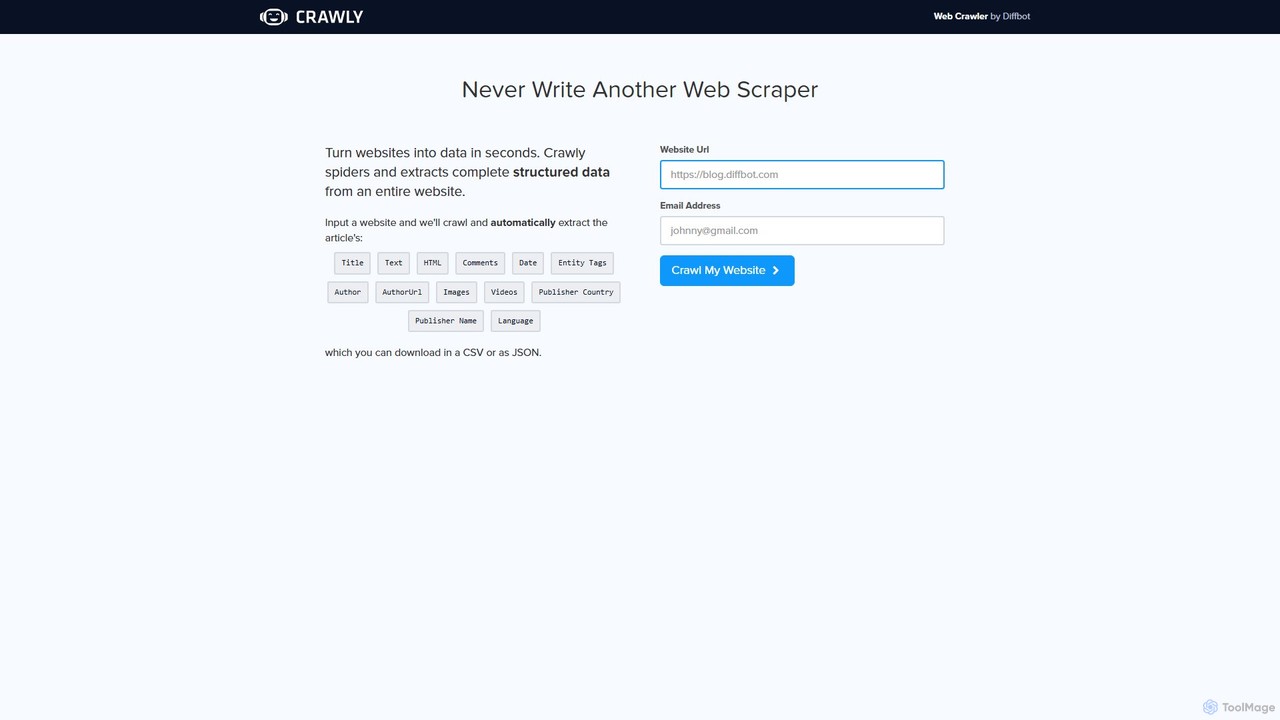
Crawly is an AI-powered web crawler by Diffbot that automatically extracts structured data from entire websites. Simply input a URL, and Crawly spiders the site to pull key information like articles, products, and discussions, converting it into clean JSON or CSV data without any coding required.

Web Scraping
Visits 6.9KFavorites 112Likes 117
SingleAPI
Freemium

SingleAPI

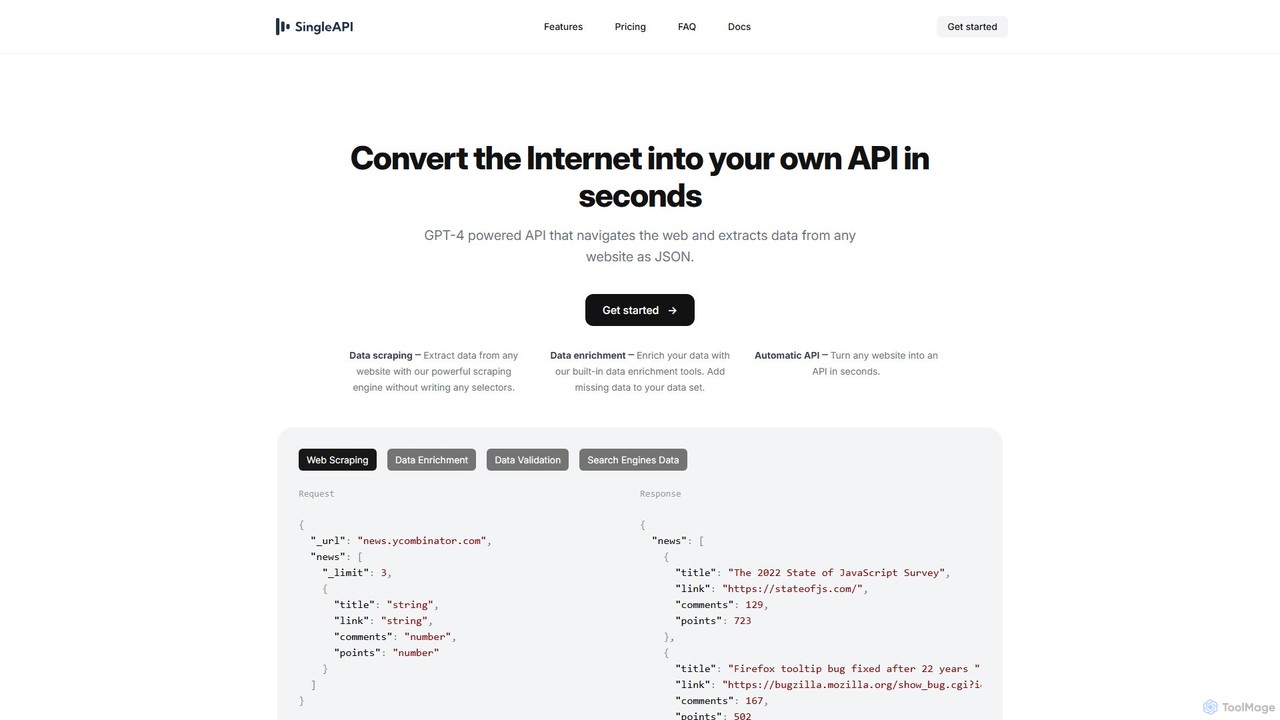
SingleAPI is a GPT-4 powered tool that instantly converts any website into a structured JSON API. It simplifies web scraping, data extraction, and data enrichment without writing any code or selectors, allowing users to effortlessly access web data for various applications.

Web Scraping
Visits 5.6KFavorites 152Likes 161
Diffbot
Freemium

Diffbot

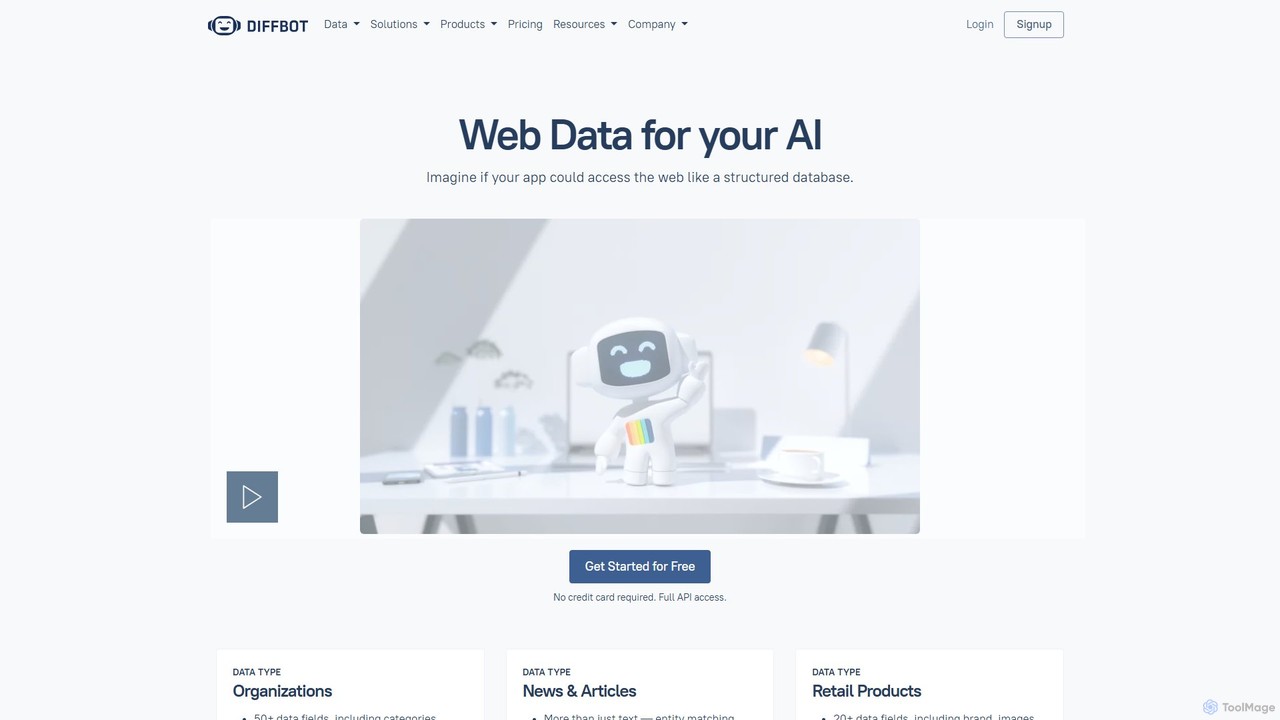
Diffbot is an AI-powered platform that transforms the unstructured web into a massive, structured Knowledge Graph. It offers APIs for web data extraction, crawling, and natural language processing, enabling businesses to access clean, organized data on organizations, news, products, and more for applications in finance, market intelligence, and risk management.

Market Intelligence
Visits 52.6KFavorites 147Likes 127
Databar.ai
Freemium

Databar.ai

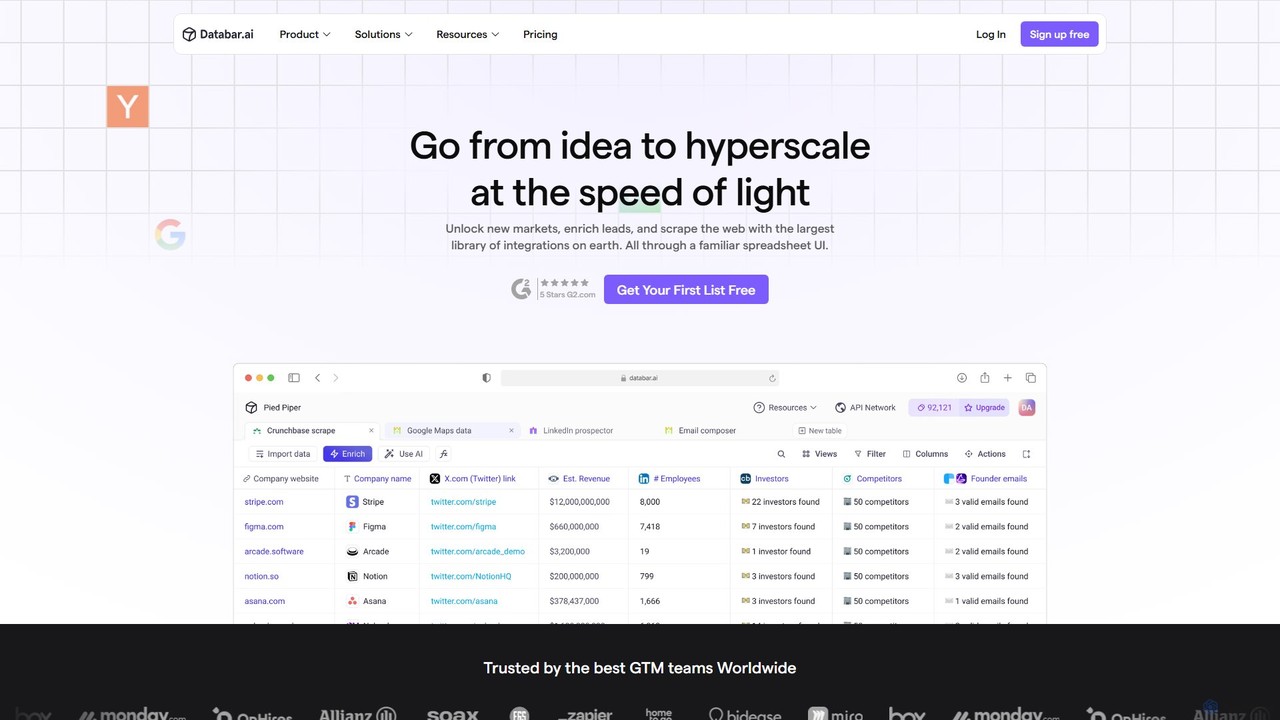
Databar.ai is a no-code data platform that empowers users to enrich data, automate research, and scrape the web by connecting to over 100 APIs through an intuitive spreadsheet interface. It's designed for sales, marketing, and GTM teams to build lead lists, personalize outreach, and conduct market research without writing any code.

Web Scraping
Visits 57.7KFavorites 114Likes 99
Hexowatch
Freemium

Hexowatch

Hexowatch is an AI-powered platform for automated website change detection, monitoring, and archiving. It tracks visual, content, source code, technology, and price changes on any webpage, sending instant alerts. Ideal for businesses, marketers, and individuals to monitor competitors, track prices, ensure website integrity, and automate data extraction at scale.

Web Scraping
Visits 24.3KFavorites 114Likes 124

About Web Scraping

AI Web Scraping tools are applications designed to automatically extract large volumes of data from websites. They leverage AI to navigate complex site structures, handle anti-scraping measures like CAPTCHAs, and parse unstructured HTML into structured formats such as JSON or CSV. This enables businesses and researchers to gather real-time market data, monitor competitors, and aggregate information without manual intervention. AI enhances traditional scraping by adapting to website changes and interpreting visual layouts for more robust data collection.

Core Features

  • Automated Data Extraction: Automatically harvests text, images, prices, and other specified data points from web pages at scale.
  • AI-Powered Parsing: Intelligently identifies and structures data fields from complex layouts, even when HTML structures change.
  • Anti-Bot Bypass: Employs techniques like proxy rotation, user-agent simulation, and CAPTCHA solving to avoid detection and blocking.
  • Scheduled Scraping: Allows users to set up recurring jobs to collect fresh data at regular intervals (e.g., daily, hourly).
  • Data Export & Integration: Exports collected data into various formats (CSV, JSON, Excel) and integrates with other applications via APIs or webhooks.

Use Cases

These tools are widely used in e-commerce for price monitoring, marketing for lead generation, finance for alternative data collection, and real estate for market analysis. For instance, a retail analyst can use an AI web scraper to track competitor pricing and stock levels across hundreds of products daily, feeding this data directly into their pricing models.

How to Choose

When selecting a tool, consider its ability to handle dynamic, JavaScript-heavy websites and its resilience against anti-scraping technologies. Evaluate the user interface—whether you need a no-code, point-and-click solution or a more powerful developer-focused API. Also, assess its scalability for large-volume data extraction and the pricing model's alignment with your usage frequency and data needs.

Featured tool rankings

Web Scraping use cases

1

E-commerce Price and Stock Monitoring

An e-commerce manager needs to maintain competitive pricing for thousands of products. They use an AI web scraping tool to automatically scan competitor websites every few hours. The tool identifies product pages, extracts current prices, stock availability, and promotional offers, then structures this data into a dashboard. This automated process replaces hours of manual checking, allowing the manager to adjust their own pricing strategy in near real-time, respond to stock-outs, and maximize sales opportunities.

2

Sales Lead Generation from Online Directories

A sales development representative (SDR) is tasked with building a list of potential clients in a specific industry. Instead of manually browsing online business directories or professional networks, the SDR configures a web scraping tool to target these sites. The tool extracts company names, contact emails, phone numbers, and job titles of key decision-makers. The resulting structured list can be directly imported into a CRM, saving the SDR over 80% of their prospecting time and allowing them to focus on outreach and engagement.

3

Market Research and Sentiment Analysis

A market analyst for a consumer electronics brand wants to understand public sentiment about a new product launch. They use a web scraping tool to collect thousands of customer reviews from retail sites, tech blogs, and social media platforms. The AI capabilities of the tool help parse unstructured text to identify key topics (e.g., 'battery life', 'screen quality') and associated sentiment (positive, negative, neutral). This aggregated data provides a comprehensive market overview, highlighting product strengths and weaknesses far more quickly than manual analysis or surveys.

4

Real Estate Market Data Aggregation

A real estate investment firm needs up-to-date information on property listings across multiple cities. They deploy a web scraping agent to aggregate data from various real estate portals like Zillow, Redfin, and local agency sites. The scraper extracts details such as property address, price, square footage, number of bedrooms, and days on the market. This data is compiled into a central database, allowing analysts to identify undervalued properties, track market trends, and make data-driven investment decisions without manually checking dozens of websites.

5

Financial Alternative Data Collection

A quantitative analyst at a hedge fund seeks alternative data sources to gain a trading edge. They use a web scraping tool to monitor and extract information from financial news sites, regulatory filings, and social media for mentions of specific stocks. The tool is scheduled to run continuously, capturing breaking news and shifts in public sentiment in real-time. This data stream is then fed into algorithmic trading models to identify correlations and predict market movements, providing insights that are not available through traditional financial data feeds.

6

Academic Research Data Aggregation

A university researcher is conducting a meta-analysis that requires data from hundreds of published scientific studies. Manually finding and extracting data points from each paper's abstract or tables would be extremely time-consuming. The researcher uses a web scraping tool to automatically crawl academic databases (like PubMed or Google Scholar), identify relevant papers based on keywords, and extract specific information such as sample sizes, methodologies, and key findings. This automates the creation of a comprehensive dataset, enabling large-scale analysis that would otherwise be impractical.

Web Scraping FAQ

What is AI Web Scraping?

AI Web Scraping is the process of using automated tools, enhanced with artificial intelligence, to extract data from websites. Unlike traditional scrapers that rely on fixed rules and HTML selectors, AI-powered tools can visually interpret web pages, understand complex layouts, and adapt to site structure changes. This makes them more resilient and capable of extracting data from dynamic, JavaScript-heavy sites and handling anti-scraping measures like CAPTCHAs. The core purpose is to convert unstructured web content into structured, usable data for analysis.

How to choose the right Web Scraping tool?

Choosing the right tool depends on your technical skills and project complexity. Consider these factors:

  • Ease of Use: Do you need a no-code tool with a visual interface for simple tasks, or a developer-focused API for complex, custom scraping jobs?
  • Target Website Complexity: Can the tool handle dynamic content loaded with JavaScript, infinite scrolling, and login requirements?
  • Anti-Scraping Resilience: Does it offer features like residential proxy rotation, CAPTCHA solving, and user-agent management to avoid being blocked?
  • Scalability and Speed: Can the tool handle scraping thousands or millions of pages efficiently without performance issues?
  • Data Export and Integration: Ensure it supports the data formats you need (e.g., CSV, JSON) and can integrate with your workflow (e.g., via API, Google Sheets).
What is the difference between Web Scraping and using an API?

The main difference lies in how data is accessed. An API (Application Programming Interface) is a structured, official way for developers to access a website's data. It's provided by the website owner, is generally stable, and returns clean, well-formatted data (like JSON). Web Scraping, on the other hand, extracts data directly from the HTML code of a webpage—the same content a human sees in a browser. Scraping is used when a website does not offer an API for the desired data. It is more fragile, as any change to the website's layout can break the scraper.

Is Web Scraping legal?

The legality of web scraping is complex and depends on jurisdiction and the specific data being scraped. Generally, scraping publicly available data that is not protected by copyright or personal data regulations is often considered permissible. However, it can violate a website's Terms of Service. It is crucial to avoid scraping personal data, copyrighted content, and overloading a website's servers (which can be seen as a denial-of-service attack). Always scrape responsibly and ethically. This information is not legal advice; consult with a legal professional for specific situations.

What types of data can be extracted with Web Scraping tools?

Virtually any data visible on a webpage can be extracted. Common examples include:

  • E-commerce Data: Product names, prices, descriptions, reviews, stock levels.
  • Contact Information: Names, email addresses, phone numbers from directories or corporate sites.
  • Financial Data: Stock prices, market news, company financial statements.
  • Real Estate Data: Property listings, prices, locations, agent details.
  • Social Media Content: Posts, comments, likes, follower counts.
  • News and Articles: Headlines, article text, author information, publication dates.

The key is transforming this unstructured information into a structured format like a spreadsheet or database for analysis.