Free
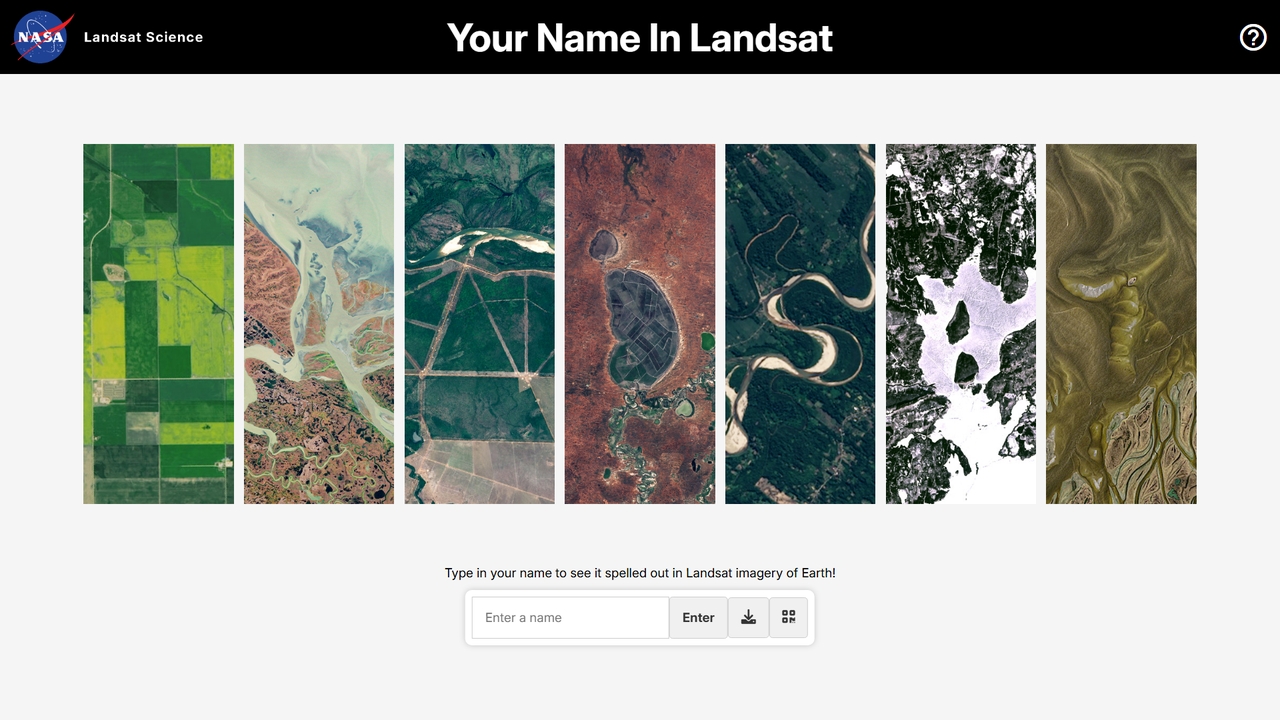
Your Name in Landsat
Type your name to see it spelled out in NASA and USGS Landsat satellite imagery spanning over 50 years. A free, interactive Earth science tool.
ScienceVisits 7.9MFavorites 52Likes 54
Popular Government AI tools include Your Name in Landsat, Anduril, Helsing, Promise, Webb Fontaine, Archistar, Emerge Career, Paladin Drones, Rekor, and Aurelian, helping you work more efficiently.
Type your name to see it spelled out in NASA and USGS Landsat satellite imagery spanning over 50 years. A free, interactive Earth science tool.
Science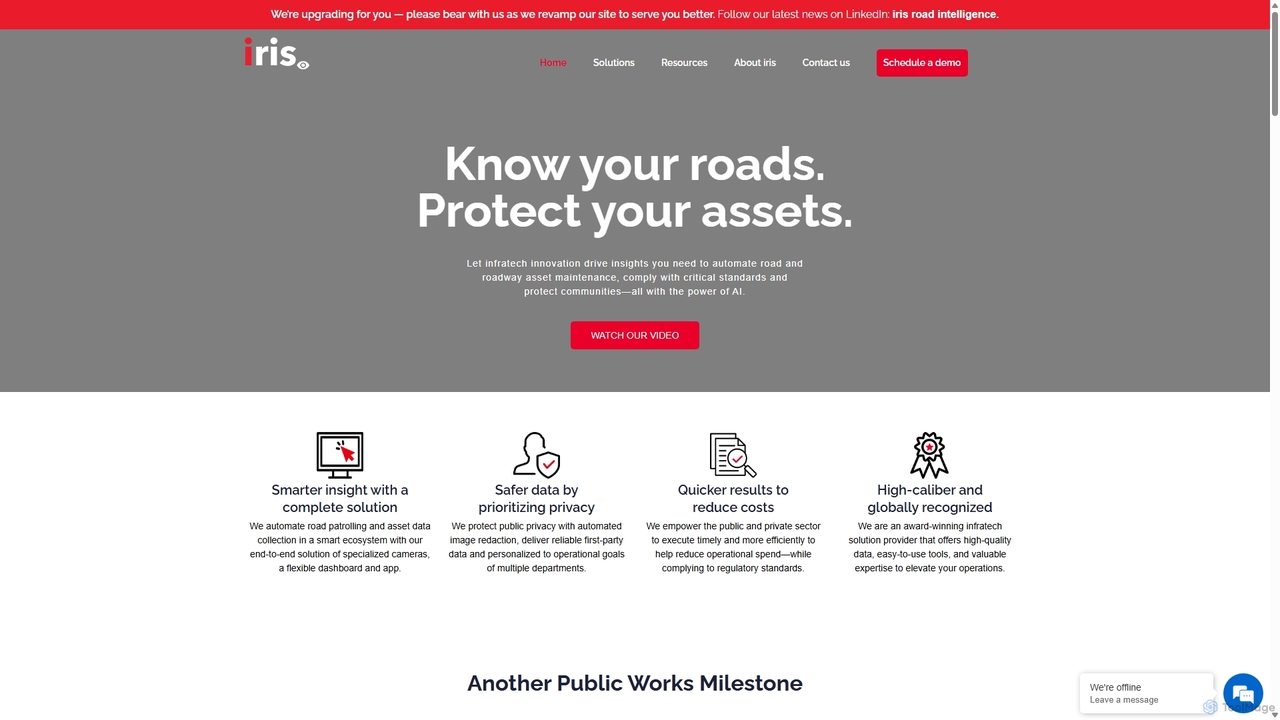
Irisradgroup is an AI-powered infratech solution that automates road and roadway asset maintenance. Using specialized cameras and an intelligent dashboard, it helps municipalities and infrastructure managers monitor road conditions, inventory assets, ensure compliance, and improve public safety efficiently.
Public Sector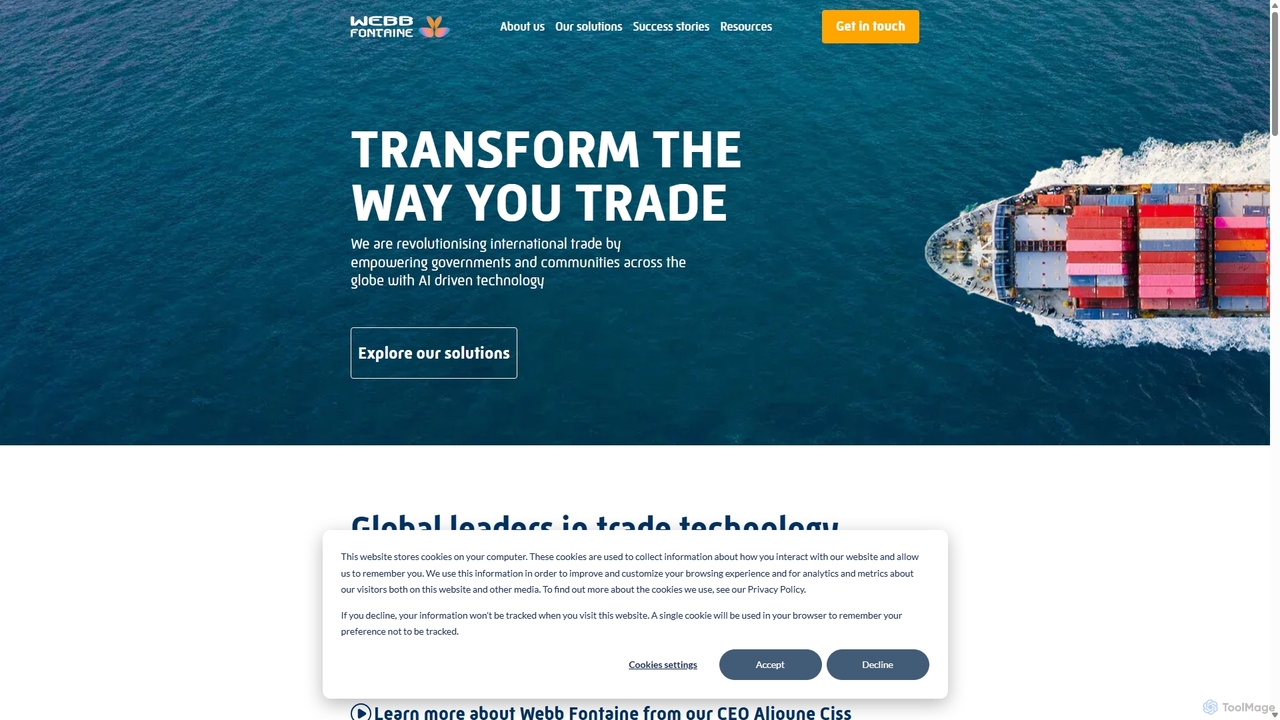
Webb Fontaine provides AI-powered technology solutions for governments to facilitate trade, streamline customs operations, and enhance revenue. Their suite of tools digitizes the entire trade spectrum, from risk management and valuation to single window platforms and port community systems, fostering efficiency and security in global logistics.
Supply Chain Management
Pollwatcher is an AI-powered election monitoring system, also known as REVISOR. It utilizes a neural network to analyze video footage from polling stations, accurately counting voters and detecting electoral irregularities. This tool offers a fast, scalable, and cost-effective alternative to traditional human observation, ensuring electoral integrity with up to 98% accuracy.
Video Analysis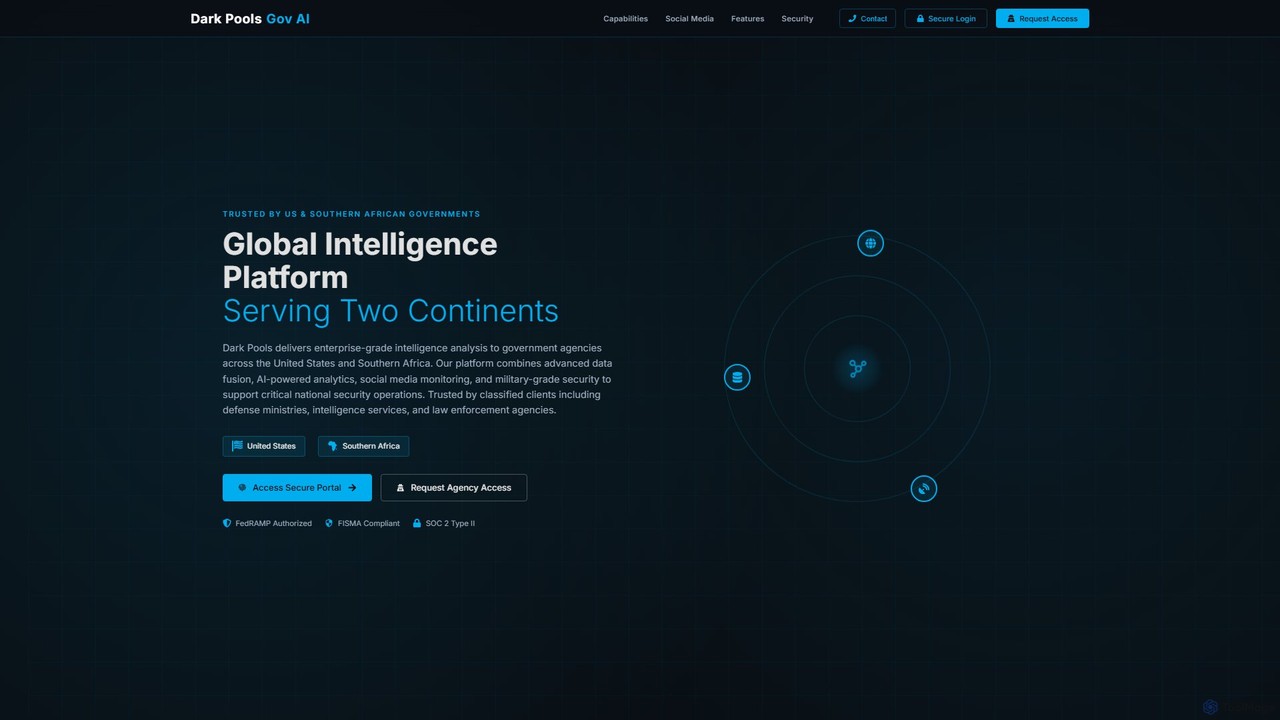
Dark Pools Gov AI is an enterprise-grade intelligence analysis platform for government agencies in the US and Southern Africa. It combines AI-powered analytics, multi-source data fusion, and social media monitoring to support critical national security, law enforcement, and defense operations with military-grade security and compliance.
Analytics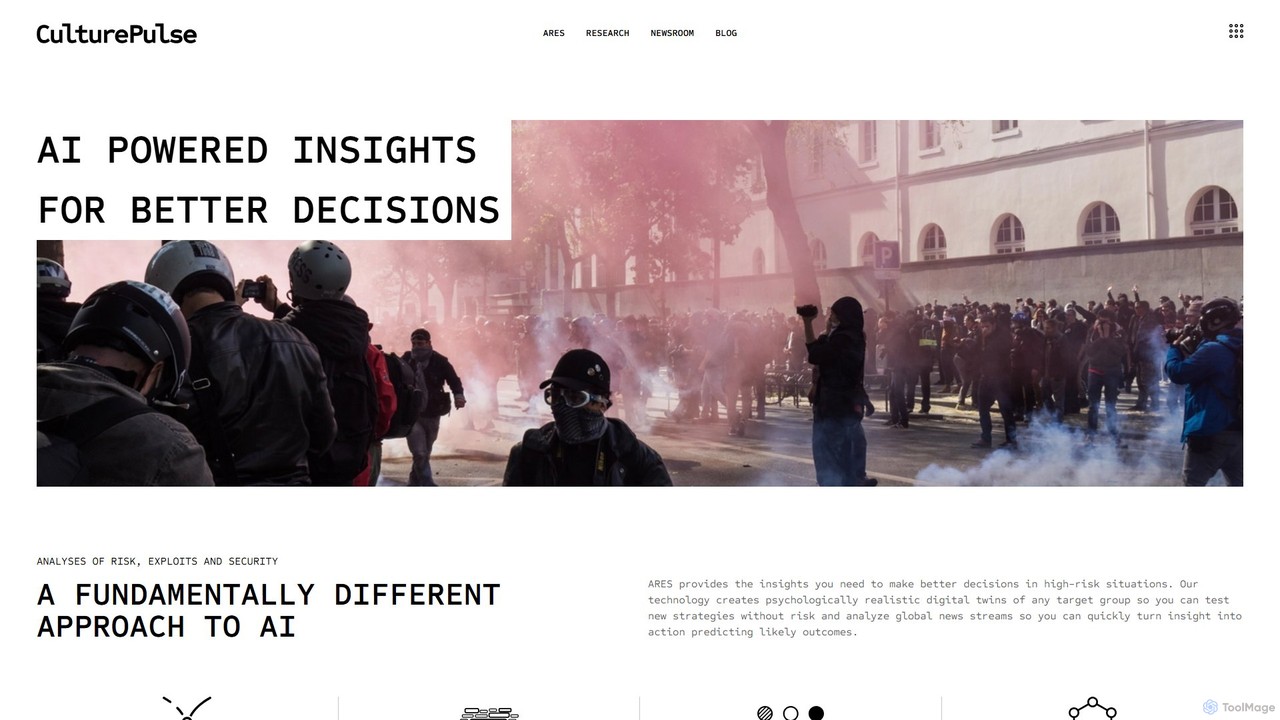
CulturePulse is an advanced AI platform that provides deep insights for high-stakes decision-making. It creates psychologically realistic digital twins of populations to simulate the impact of policies and strategies in a risk-free environment. By analyzing global data streams, it helps governments and businesses understand complex social dynamics, predict outcomes, and turn insight into action.
Risk Management
Anduril is a defense technology company that builds advanced hardware and software to solve the most complex national security challenges. Its core product, Lattice, is an AI-powered operating system that autonomously fuses sensor data into a single, real-time picture of the environment, enabling operators to control a family of autonomous systems across air, land, and sea.
Operating Systems
Promise is an AI-powered platform designed for government agencies and utilities to streamline payment management and benefits distribution. It uses advanced technology to automate income verification, create flexible payment plans, and manage relief programs, helping to recover more revenue while making essential services more accessible to communities.
Payment Processing
Aurelian is a conversational AI platform designed for public safety agencies to automate non-emergency calls. It intelligently routes callers, triages situations, and creates service call summaries in real-time. This allows dispatchers to focus on critical emergencies, reducing workload, eliminating hold times, and improving overall operational efficiency for 911 centers.
Voice Assistant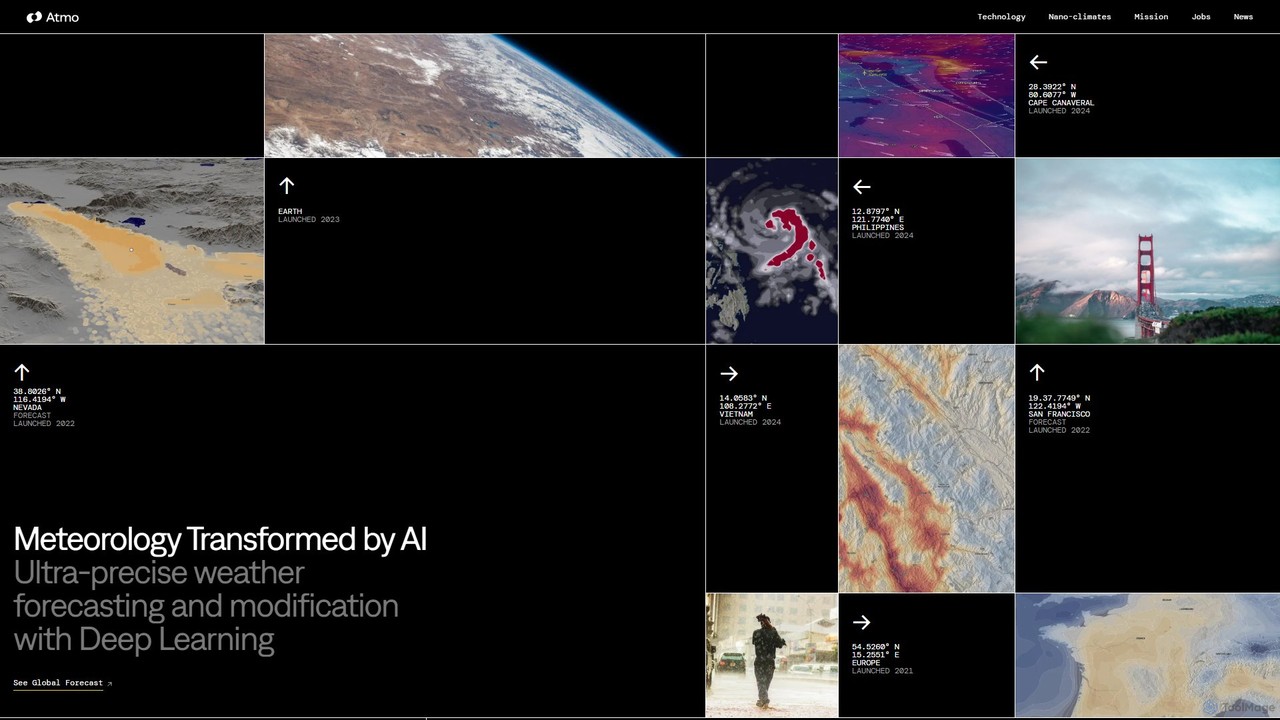
Atmo is an ultra-precise AI weather forecasting platform powered by deep learning. It delivers forecasts up to 40,000 times faster and 50% more accurately than traditional models, with resolutions as fine as 1km. Trusted by governments, militaries, and industries, Atmo provides critical insights for disaster management, mission planning, and climate change adaptation.
Risk Management
Helsing is a European defence technology company that develops advanced artificial intelligence and software to enhance the defence capabilities of democratic nations. It focuses on providing autonomous and precision mass capabilities for land, air, and sea domains to ensure national security and technological sovereignty.
Defense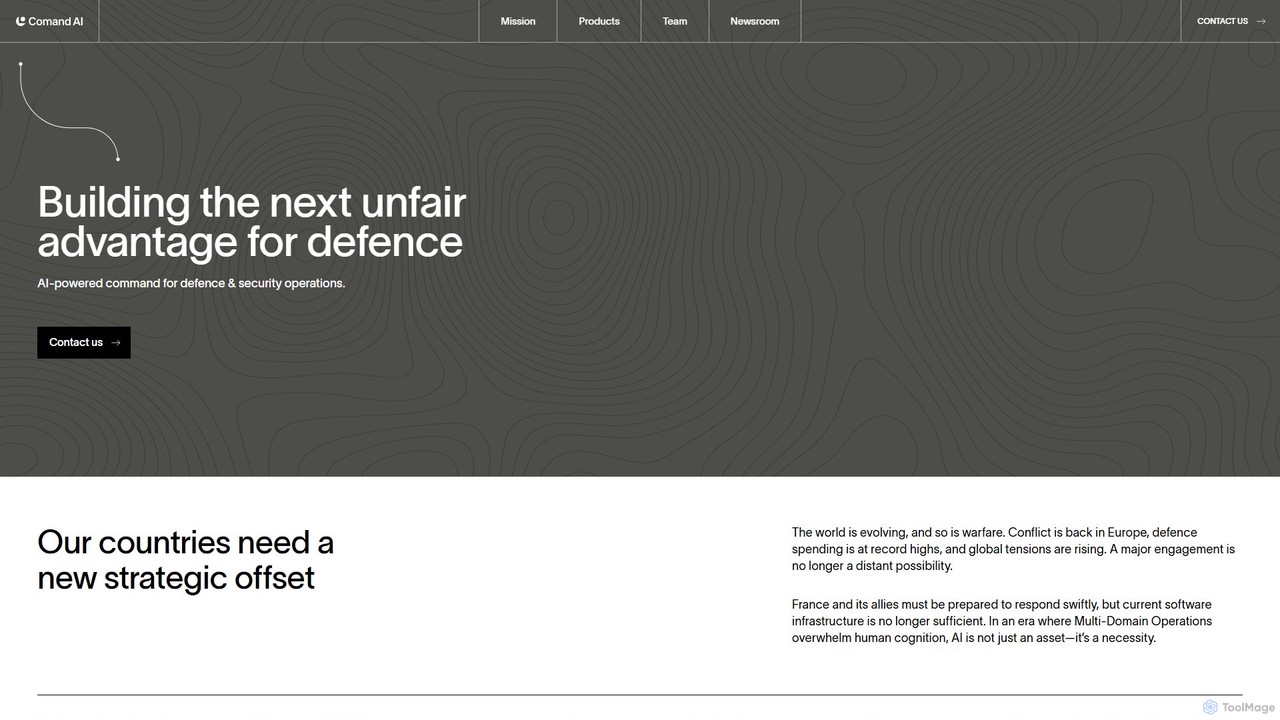
Comand AI is a cutting-edge AI-powered command and control platform designed for defense and security operations. It provides a decisive tactical advantage by accelerating mission planning, generating intelligent maneuvers through reinforcement learning, and transforming operational data into actionable insights for modern warfare.
Decision Intelligence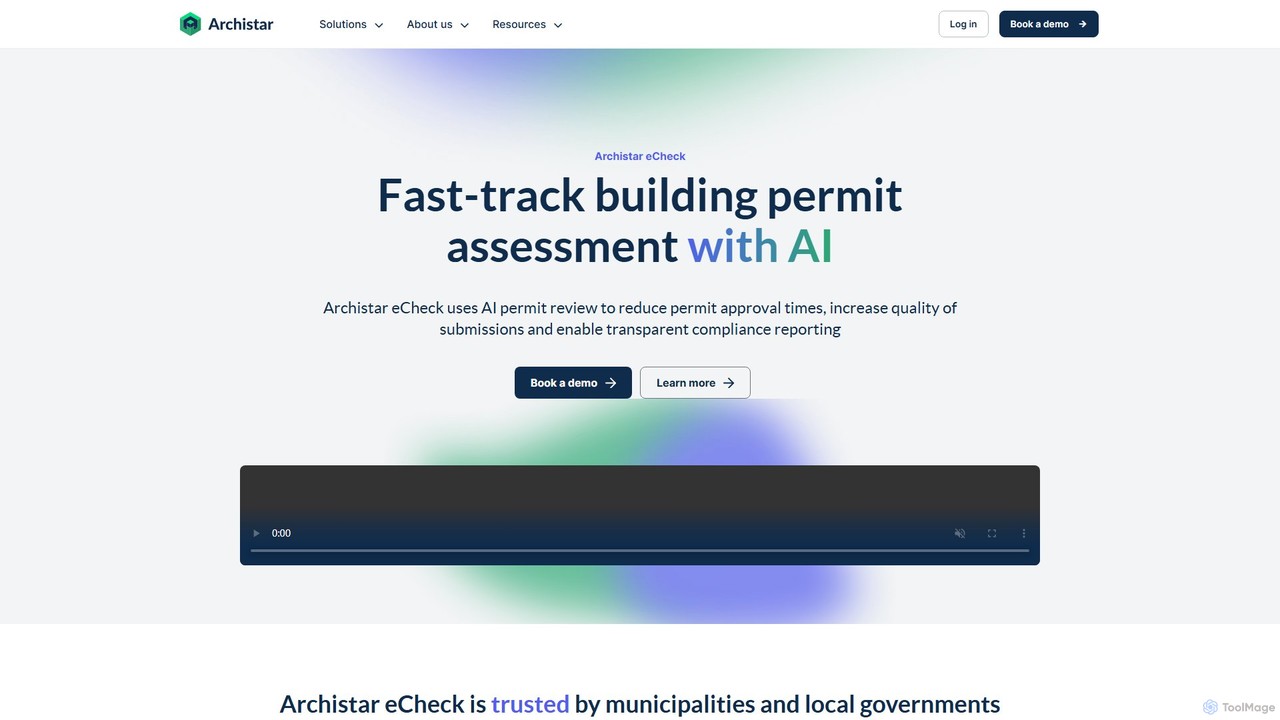
Archistar is an AI-powered platform designed to automate and accelerate building permit assessments. It uses AI, computer vision, and machine learning to check building designs against local codes, reducing approval times by up to 90%. The platform serves both government bodies and property industry professionals like architects and developers, ensuring compliance and improving submission quality.
Urban Planning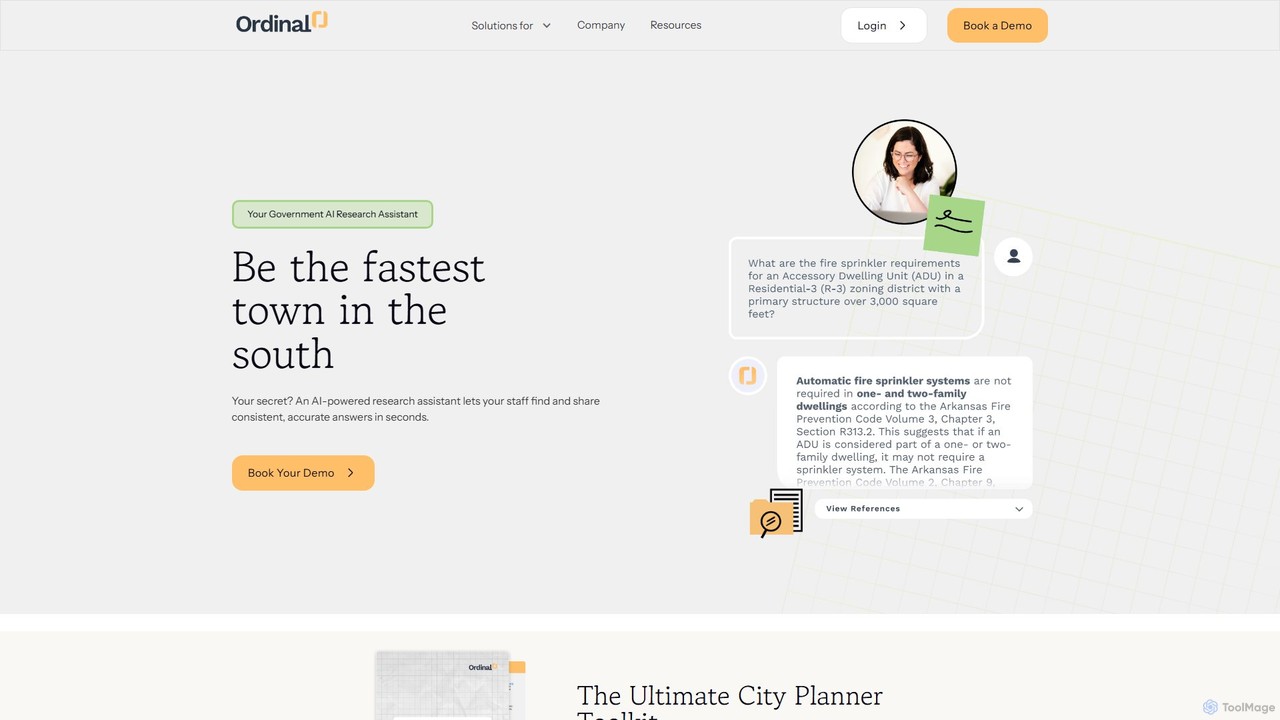
Ordinal for Gov is an AI-powered research and knowledge management platform designed specifically for government teams. It transforms your approved documents, GIS data, and municipal codes into a secure, searchable knowledge base. Staff can ask questions in natural language and receive instant, accurate answers with direct references, saving significant time, improving efficiency, and preserving institutional knowledge.
Internal Communication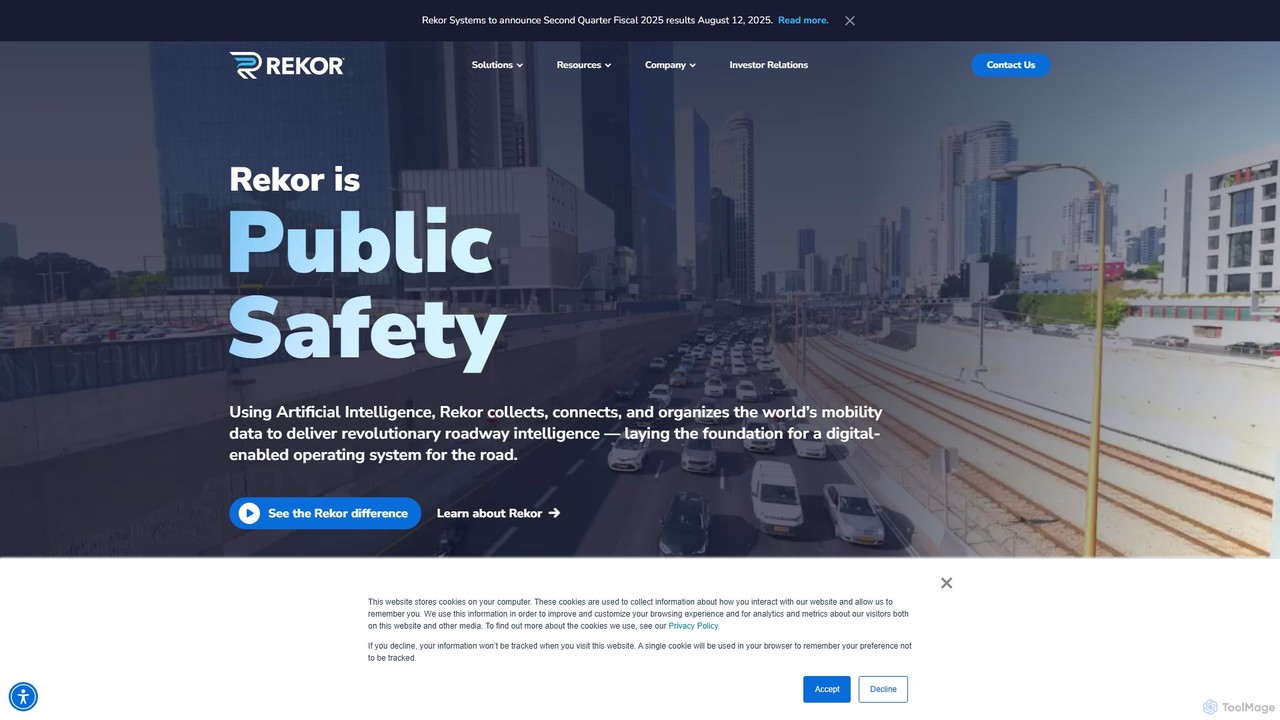
Rekor is an AI-powered roadway intelligence platform that collects, connects, and organizes global mobility data. It provides actionable insights for transportation, government, law enforcement, and commercial sectors to enhance safety, efficiency, and urban planning through advanced computer vision and machine learning.
Image Recognition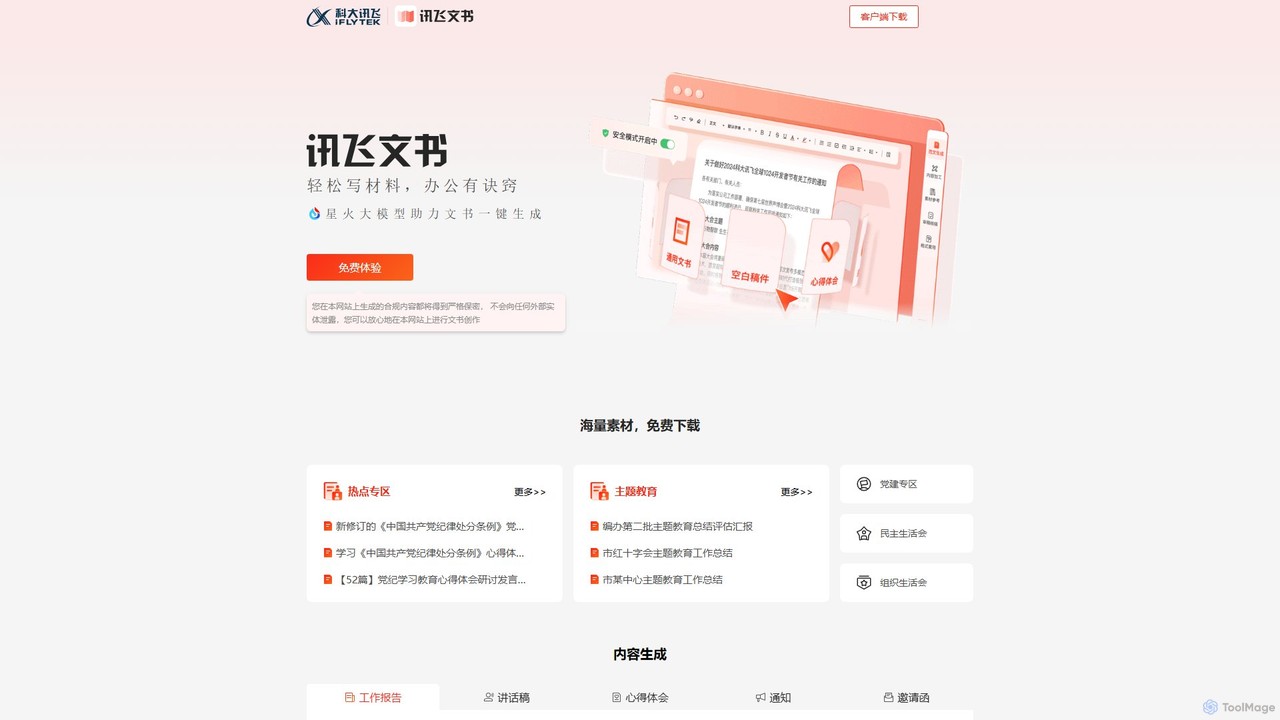
iFlyDocs is an AI-powered writing assistant by iFlytek, designed for the rapid generation and refinement of official and business documents. Leveraging the Spark large language model, it helps users create professional reports, speeches, summaries, and more with ease, offering a vast library of templates and advanced editing tools.
Document Generation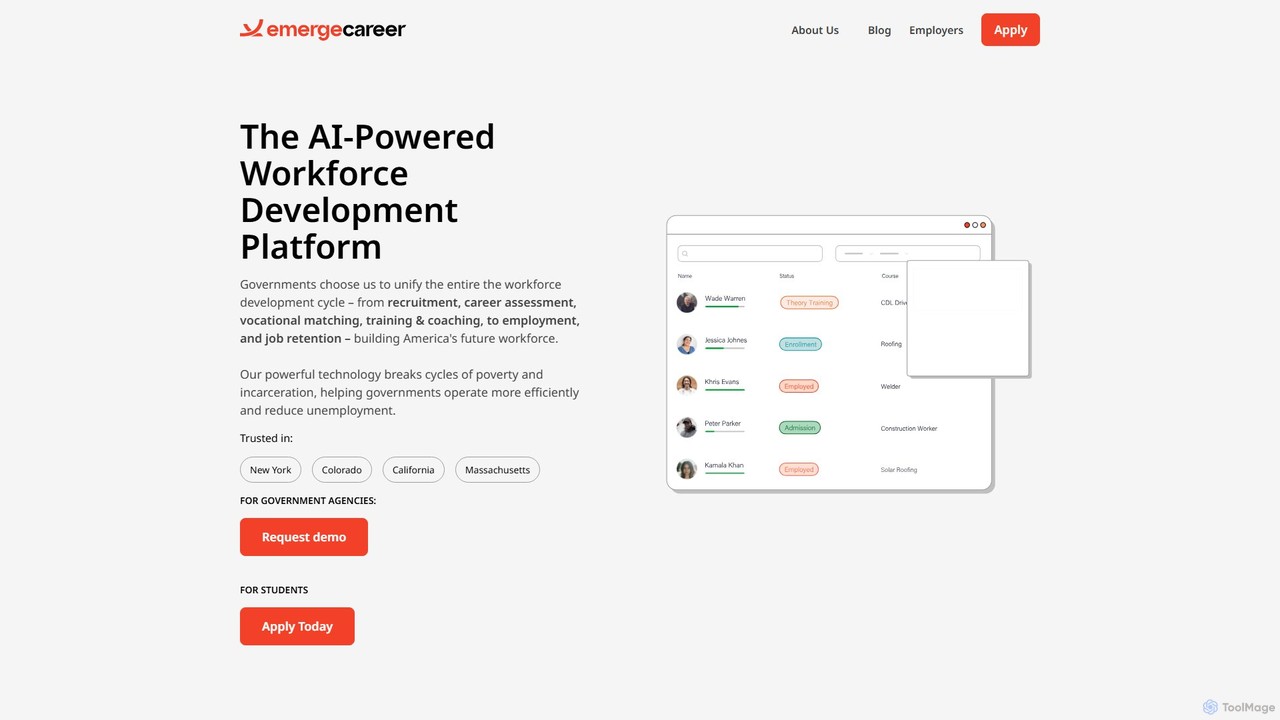
Emerge Career is an AI-powered workforce development platform designed for government agencies. It unifies the entire employment cycle, from recruitment and training to job placement and retention, focusing on upskilling low-income and justice-impacted individuals for high-demand careers in skilled trades.
Workforce Development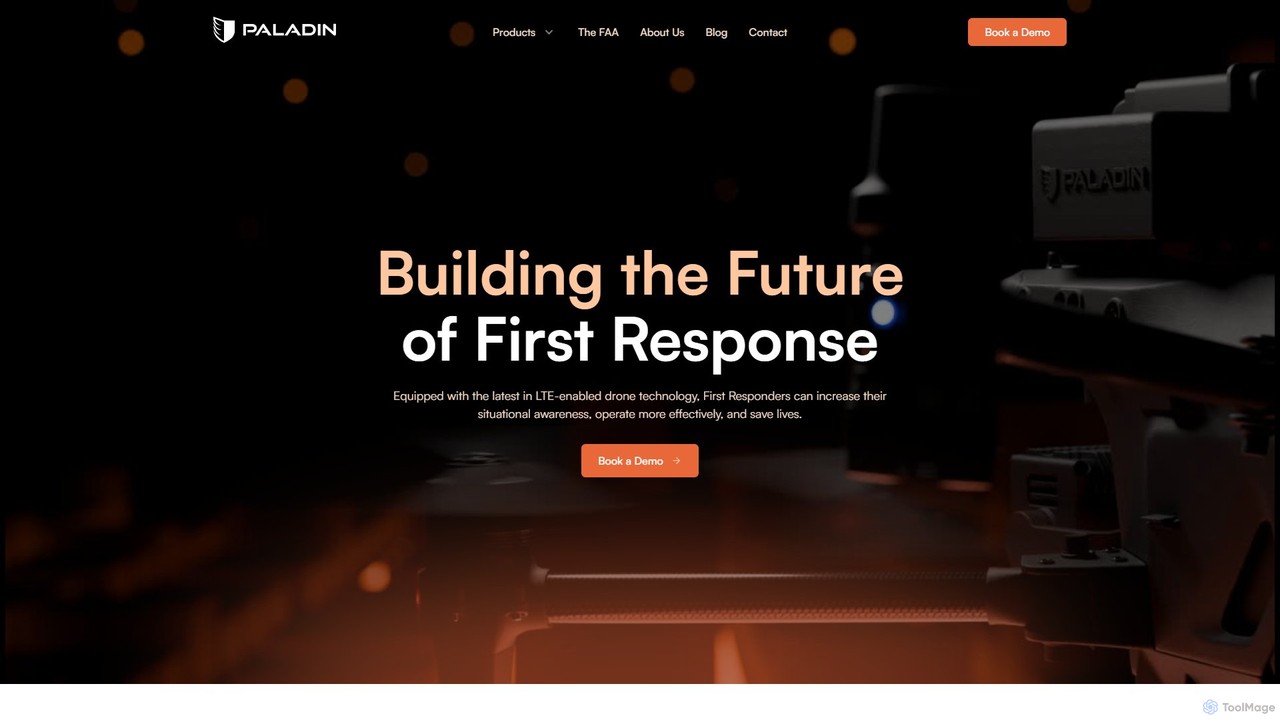
Paladin Drones offers an all-in-one Drone as First Responder (DFR) solution for public safety. It autonomously dispatches LTE-enabled drones to 911 calls, providing live video feeds to first responders within seconds. This enhances situational awareness, reduces response times, and improves the safety of officers and the community. The system includes hardware, software, and full FAA compliance support.
Law Enforcement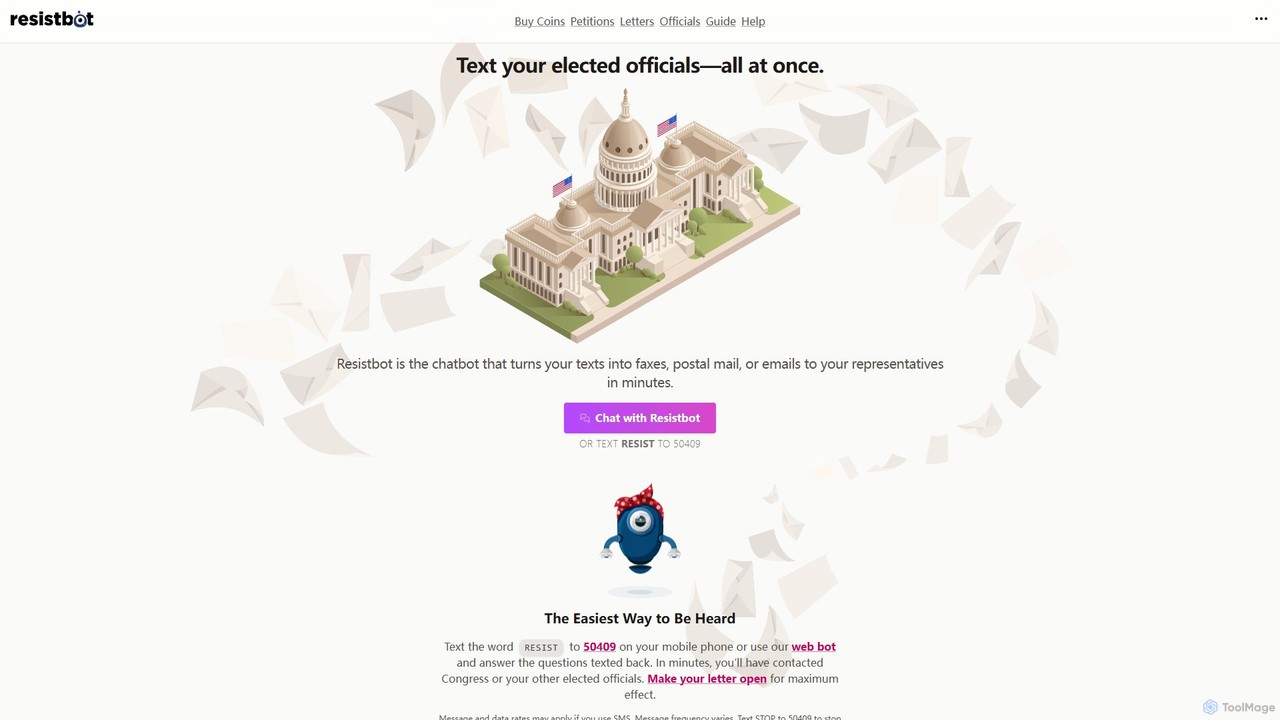
Resistbot is a chatbot that empowers users to contact their elected officials in the U.S. via text, web, or app. It turns your messages into official emails, faxes, or postal mail. With AI-powered letter writing, campaign creation, and voter services, it simplifies civic engagement and makes your voice heard by representatives in minutes.
Civic TechAI Government tools are specialized software solutions that leverage artificial intelligence to enhance public sector operations, policy-making, and citizen services. These tools utilize machine learning, natural language processing, and predictive analytics to process vast datasets, automate administrative tasks, and provide data-driven insights. Their primary value lies in improving governmental efficiency, transparency, and responsiveness, enabling agencies to deliver better services and make more informed decisions. They support a wide range of functions from urban planning to public safety.
These tools are used across all levels of government, from municipal to federal agencies. Common users include urban planners optimizing traffic flow, social service agencies streamlining benefits applications, environmental agencies monitoring pollution data, and law enforcement departments analyzing crime patterns. They are crucial for modernizing public administration and managing complex societal challenges.
When selecting an AI Government tool, prioritize data security and compliance with government-specific standards (e.g., FedRAMP, GDPR). Evaluate its ability to integrate with legacy IT systems and scale to serve large populations. Scrutinize the tool's mechanisms for ensuring ethical AI, including transparency, fairness, and bias mitigation. Finally, ensure the model's specificity and accuracy for the intended public sector domain.
A municipal government's citizen service department uses an AI-powered chatbot on its official website and mobile app. The chatbot is trained on a vast knowledge base of city regulations, service procedures, and common questions. It provides citizens with instant, 24/7 answers regarding tax payments, permit applications, waste collection schedules, and public events. This automation handles over 60% of incoming inquiries, significantly reducing call volume to human agents and allowing them to focus on more complex cases. The result is faster service for citizens and more efficient use of public resources.
A city's transportation department implements an AI platform that analyzes real-time data from traffic cameras, road sensors, and GPS signals. The system predicts traffic congestion hotspots up to an hour in advance. Based on these predictions, it automatically adjusts traffic light timings and suggests alternative routes on digital road signs to dynamically manage traffic flow. This proactive approach has led to a 15% reduction in average commute times during peak hours and a significant decrease in traffic-related emissions, creating a more efficient and sustainable urban environment.
A national social services agency uses an AI tool to manage the high volume of applications for unemployment benefits. The system automatically extracts and verifies information from submitted documents, checks for completeness, and flags applications with missing data. It then runs an initial eligibility check against predefined criteria, sorting applications into three categories: approved, needs human review, or rejected. This automation reduces the initial processing time from days to minutes, allowing caseworkers to focus on complex cases and ensuring eligible citizens receive aid faster.
A national health agency employs an AI system to monitor and analyze data from various sources, including news reports, social media, and hospital admission data, in multiple languages. The tool identifies early signs and patterns of potential disease outbreaks by detecting spikes in symptom-related keywords and reports. This allows public health officials to investigate potential threats faster, deploy resources proactively, and issue timely public health warnings. The system was instrumental in identifying a regional flu outbreak two weeks earlier than traditional methods would have allowed.
A public works department uses an AI platform to manage the maintenance of city bridges. The system analyzes data from IoT sensors installed on the bridges, which measure structural stress, vibration, and corrosion levels. Combined with historical maintenance records and weather data, the AI model predicts which components are at high risk of failure. This allows the department to shift from a fixed-schedule maintenance plan to a predictive, condition-based approach, prioritizing critical repairs, reducing costs by 20%, and enhancing public safety by preventing unexpected structural failures.
A parliamentary research service for policymakers uses an AI tool to analyze large volumes of proposed legislation, existing laws, and public feedback. The tool uses natural language processing to summarize lengthy legal documents, identify potential conflicts with existing statutes, and analyze public sentiment from online forums and submissions. This provides policy analysts with a comprehensive overview in a fraction of the time, enabling them to provide more thorough and timely advice to legislators. The tool helps ensure new laws are well-informed, consistent, and reflective of public concerns.
AI Government tools are software applications designed specifically for public sector use, employing artificial intelligence technologies like machine learning and natural language processing. Their purpose is to improve the efficiency and effectiveness of government operations. Key functions include automating administrative tasks, delivering citizen services through chatbots, analyzing data for policy decisions, and optimizing the management of public resources and infrastructure. Essentially, they help governments become more data-driven, responsive, and efficient.
Choosing the right AI tool for a government agency requires careful consideration of several key factors. Prioritize tools that meet stringent security and data privacy standards, such as FedRAMP or GDPR compliance. Assess the tool's integration capabilities with existing legacy systems. It's also crucial to evaluate the provider's commitment to ethical AI, including transparency in how the model works and measures to mitigate bias. Finally, consider the total cost of ownership, including implementation, training, and ongoing maintenance, to ensure it fits within public sector budgets.
The primary benefits of using AI in government are increased efficiency, improved services, and better decision-making. AI can automate repetitive administrative tasks, freeing up public employees for more strategic work. It enhances citizen services by providing 24/7 support through chatbots and speeding up application processes. For decision-making, AI analyzes large datasets to provide insights for policy creation, resource allocation, and predictive planning, leading to more effective and evidence-based governance.
The ethical challenges of using AI in government are significant. Key concerns include algorithmic bias, where AI systems may perpetuate or amplify existing societal biases, leading to unfair outcomes for certain population groups. Data privacy is another major issue, as these tools often handle sensitive citizen data. There is also the challenge of transparency and accountability; it can be difficult to understand how an AI made a particular decision, making it hard to contest or correct errors. Ensuring public trust and maintaining human oversight are critical to addressing these challenges.
AI Government tools are used by a wide range of public sector professionals. Users include: