ToolMage
Sign in

Best 437 Security AI tools

Popular Security AI tools include DuckDuckGo, Brave, Opera, Cloudflare, Securly, Truecaller, Feedly, Kaspersky, AppSanctuary, and Broadcom, helping you work more efficiently.

Generellem
Paid

Generellem

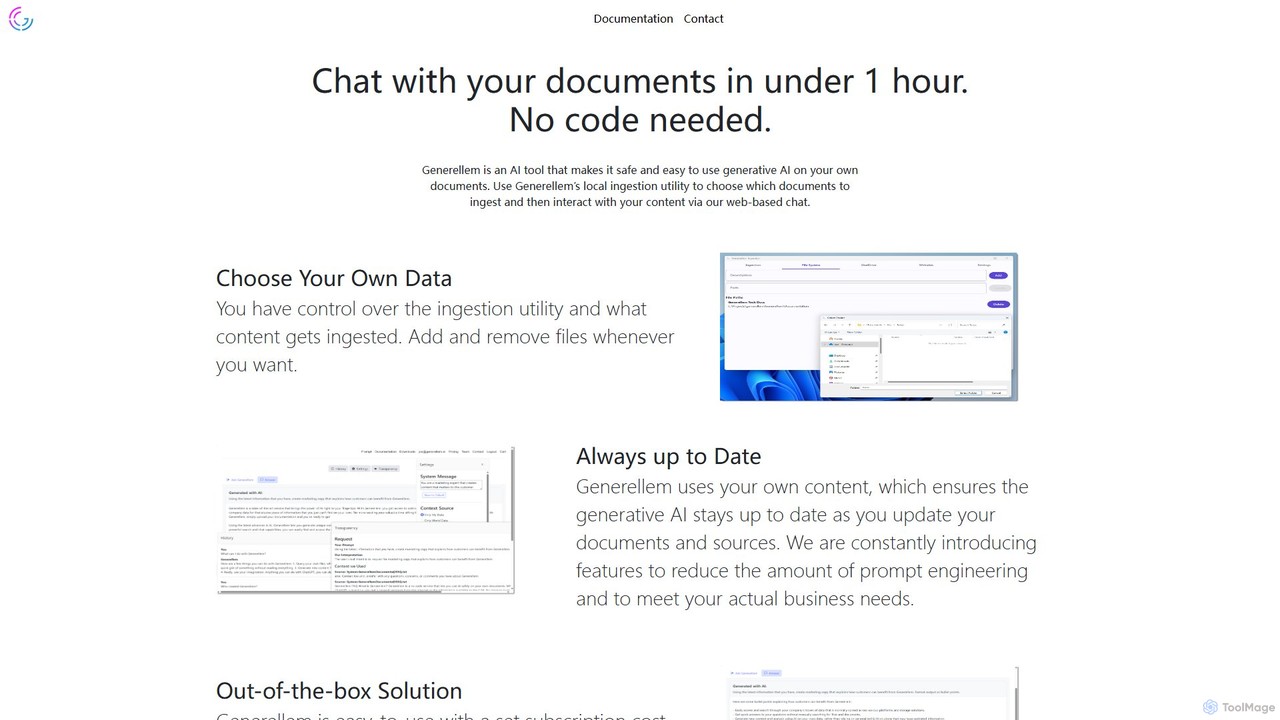
Generellem is a secure, no-code AI tool that allows you to chat with your own documents. It uses a local ingestion utility to create a private knowledge base, enabling you to get instant, accurate answers from your data via a web-based chat interface.

Knowledge Management
Visits 6.1KFavorites 115Likes 130
Lollipuff
Paid

Lollipuff

Lollipuff is an expert-driven, tech-enabled authentication service for luxury designer goods. It provides fast, reliable authenticity reports and certificates for brands like Chanel, Louis Vuitton, and Hermès, helping buyers and sellers trade with confidence and avoid costly counterfeits.

Authentication Service
Visits 15KFavorites 135Likes 118
gueno
Paid

gueno

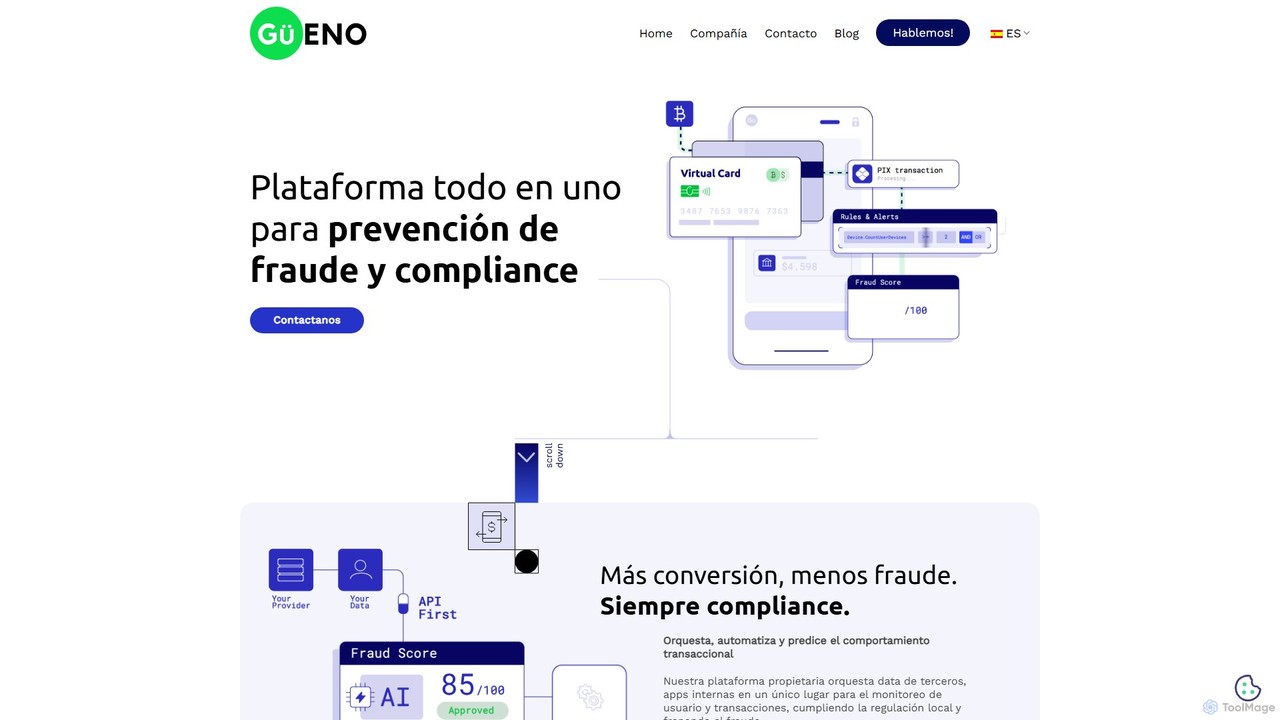
gueno is an all-in-one, AI-powered platform for fraud prevention and compliance, specifically designed for Fintech and Crypto companies operating in Latin America. It provides real-time monitoring, user onboarding, and transaction validation for both FIAT and crypto through a single, easy-to-integrate API, helping businesses increase conversion while minimizing risk.

Fraud Detection
Visits 5.5KFavorites 111Likes 117
Eyre
Freemium

Eyre

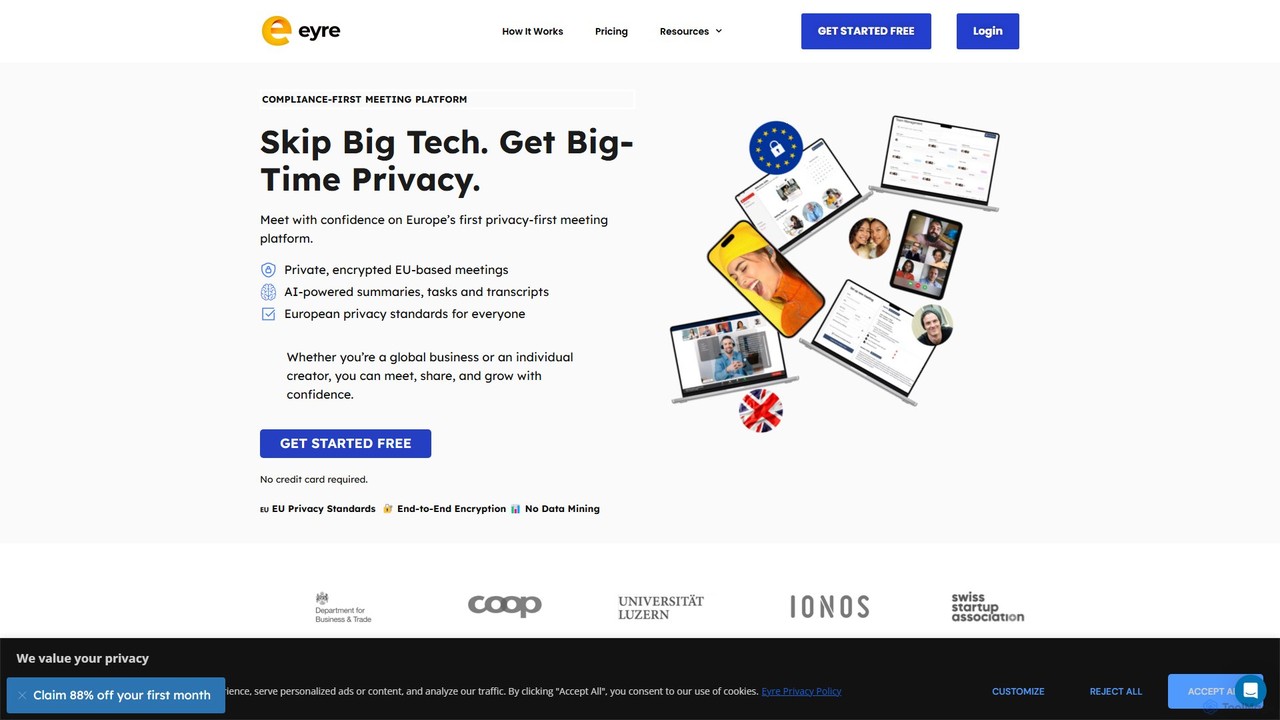
Eyre is a privacy-first, EU-based video conferencing platform designed as a secure alternative to mainstream services. It offers end-to-end encrypted meetings with AI-powered features like summaries, transcripts, and task management. By keeping all data within Europe under strict GDPR compliance and a zero-knowledge architecture, Eyre ensures your conversations remain private and your data is never mined for advertising or AI training.

Video Conferencing
Visits 6.1KFavorites 171Likes 152
Lion Browser
Paid

Lion Browser

Lion Browser is a secure, AI-powered web browser for iOS designed to build better online habits. It features real-time explicit content detection, robust parental controls, and an accountability system that sends browsing reports to a partner. Focused on privacy and speed, it offers a safe and responsible browsing experience for individuals and families.

Focus
Visits 5.8KFavorites 154Likes 160
Face Index
Freemium

Face Index

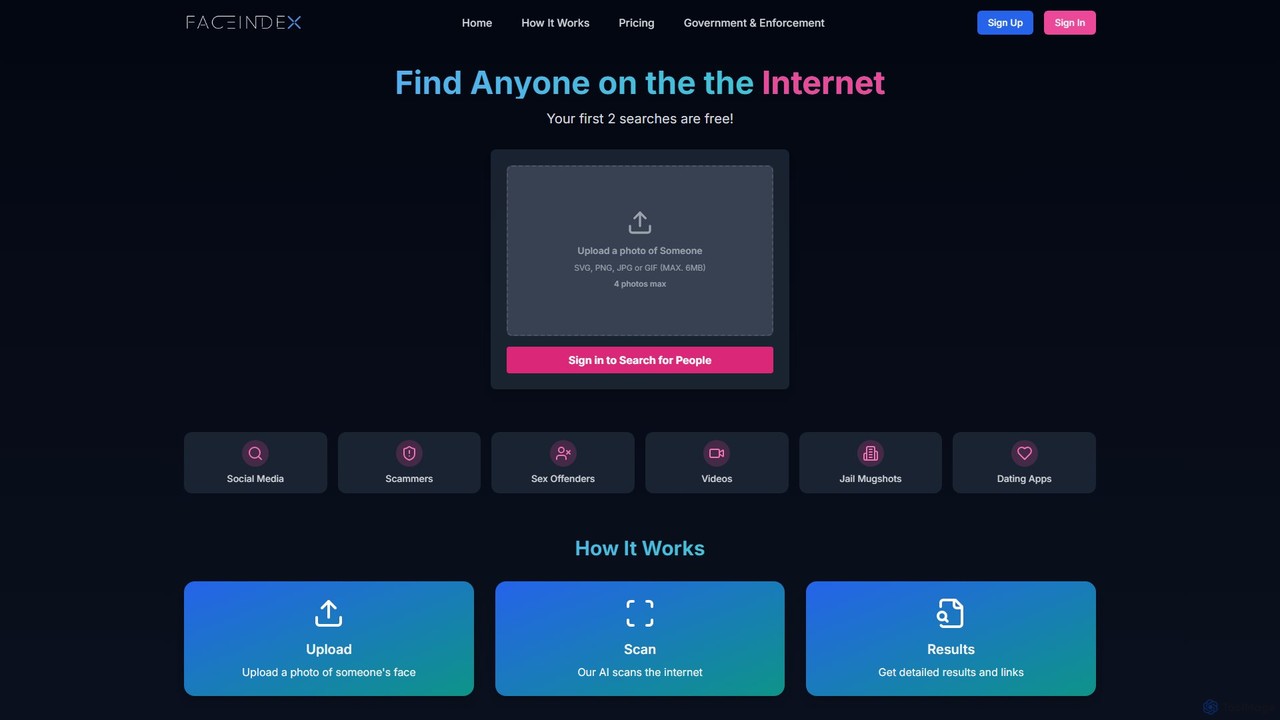
Face Index is an advanced AI-powered facial recognition search engine. Upload a photo to find anyone across the internet, including social media, dating apps, and public records. It's designed for identity verification, background checks, and online safety.

Investigation
Visits 5.8KFavorites 142Likes 137
Flowtext
Paid

Flowtext

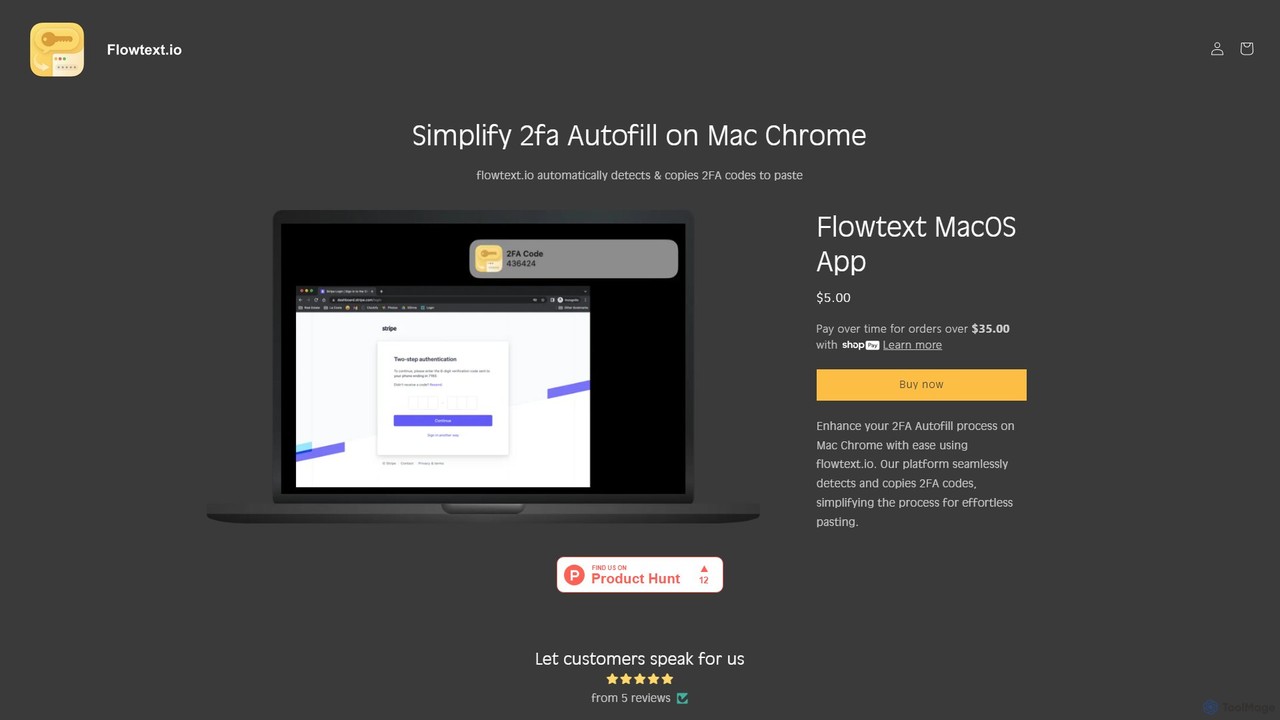
Flowtext is a macOS application designed to streamline your two-factor authentication (2FA) workflow. It automatically detects 2FA codes from SMS messages in iMessage and instantly copies them to your clipboard, eliminating the need to manually switch apps and copy-paste codes when logging into services on Google Chrome. This enhances both productivity and security.

Automation
Visits 7.3KFavorites 121Likes 111
Akto
Freemium

Akto

Akto is an AI-powered, agentic API security platform for modern application security teams. It automates the entire API security lifecycle, from discovery and inventory to testing and runtime protection. Using autonomous AI agents, Akto continuously monitors, tests, and secures APIs, identifying vulnerabilities, sensitive data exposure, and business logic flaws 50x faster than manual methods.

Api Security
Visits 74.1KFavorites 130Likes 127
WiseOptIn
Freemium

WiseOptIn

WiseOptIn is an AI-powered Chrome extension that analyzes and simplifies complex privacy policies and terms of service. It scores legal documents, provides easy-to-understand summaries, and features a chatbot to answer your specific questions, empowering you to understand what you're agreeing to online.

Chrome Extensions
Visits 5.5KFavorites 126Likes 123
Forescribe
Freemium

Forescribe

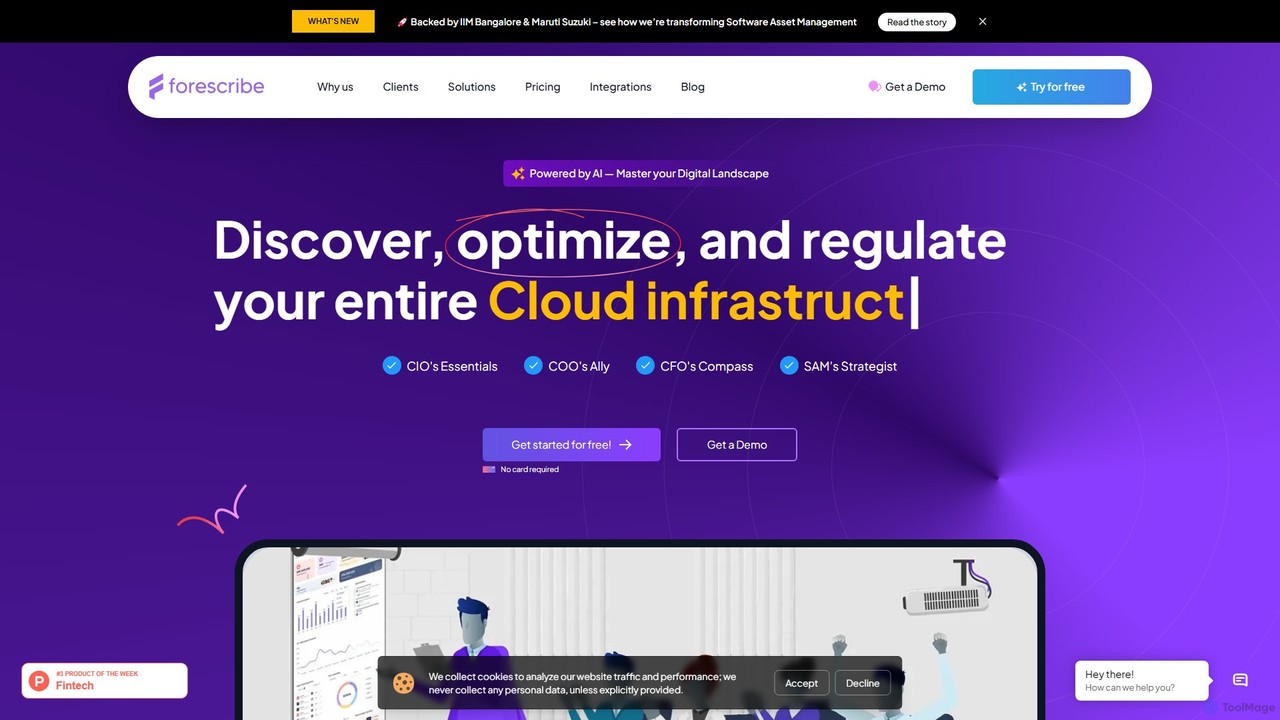
Forescribe is an AI-powered SaaS Management Platform (SMP) designed to help businesses master their digital landscape. It enables organizations to discover all their SaaS applications, optimize software spending by identifying redundant or underused licenses, and ensure security and compliance. By providing a centralized dashboard with real-time insights, Forescribe empowers IT, Finance, and Operations teams to control costs, mitigate risks, and maximize the value of their software investments.

Expense Management
Visits 6.4KFavorites 139Likes 149
Bearly
Freemium

Bearly

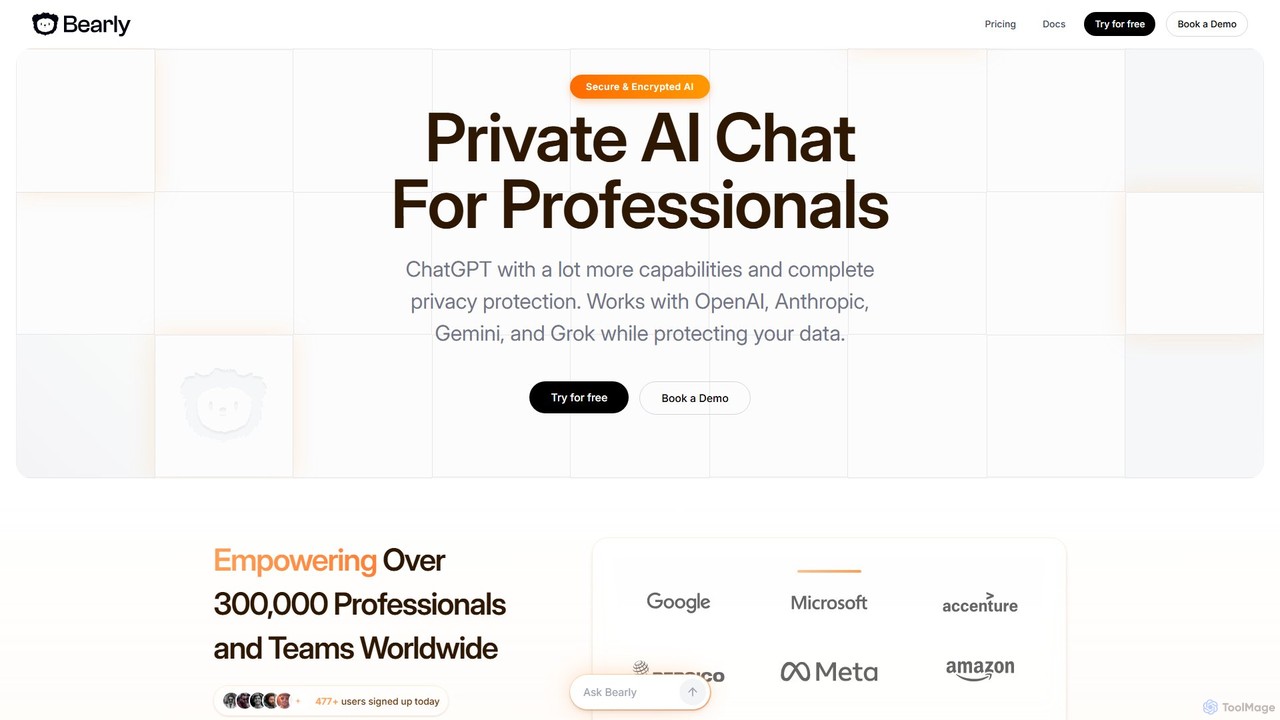
Bearly is an all-in-one, private AI platform for professionals and teams. It integrates leading AI models like GPT-4, Claude, Gemini, and Grok into a secure, encrypted environment. Featuring a collaborative canvas, secure code interpreter, image generation, and advanced memory, Bearly prioritizes user privacy with a zero-logging policy and end-to-end encryption, making it a powerful and safe AI workspace.

Code Assistant
Visits 28.9KFavorites 133Likes 133
Nanotronics
Paid

Nanotronics

Nanotronics is an industrial AI company providing an advanced platform for autonomous manufacturing. It combines AI, computer vision, and robotics in its nSpec (Automated Optical Inspection) and nControl (AI Process Control) systems to help manufacturers in sectors like semiconductors and automotive increase yields, reduce waste, and optimize production through real-time data analysis and predictive control.

Quality Control
Visits 5.6KFavorites 149Likes 145
Optery
Freemium

Optery

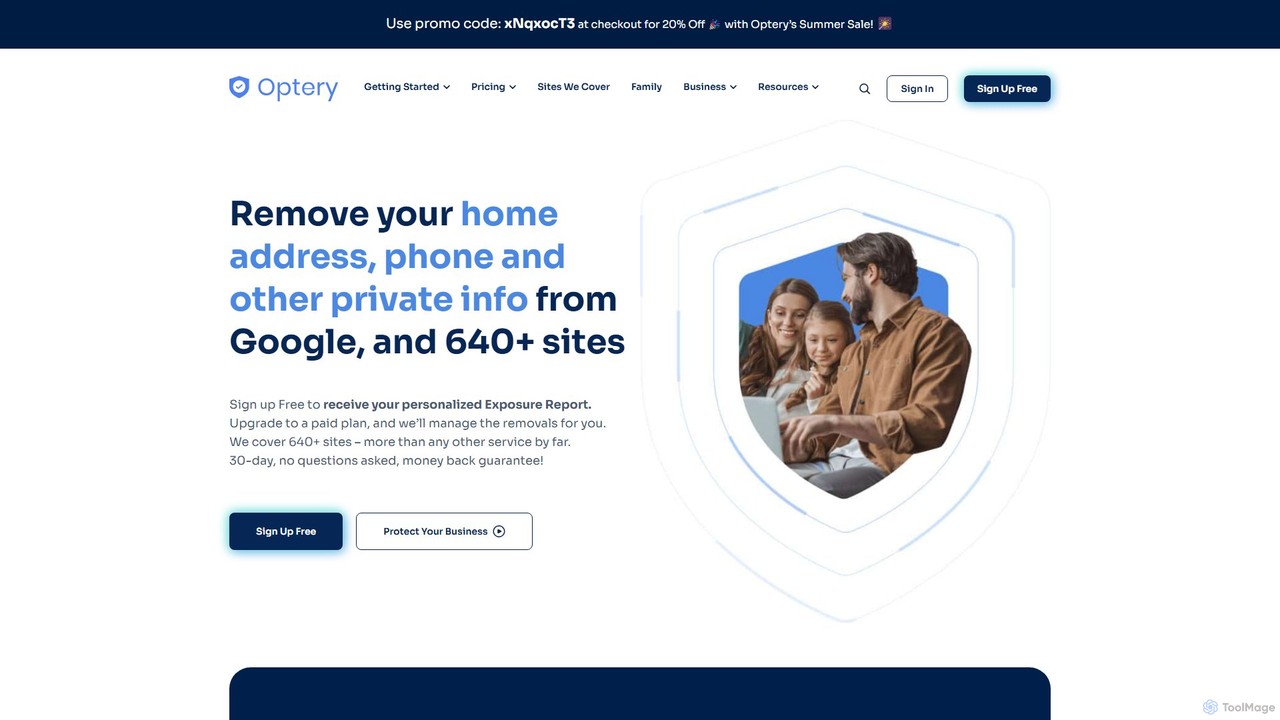
Optery is an automated data removal service that helps you reclaim your privacy. It scans over 640 data broker and people search sites to find your exposed personal information—like your home address, phone number, and email—and automatically submits opt-out requests on your behalf. With both free self-service tools and comprehensive paid plans, Optery reduces your digital footprint, preventing identity theft, spam, and stalking.

Compliance
Visits 570.2KFavorites 143Likes 121
flagright
Paid

flagright

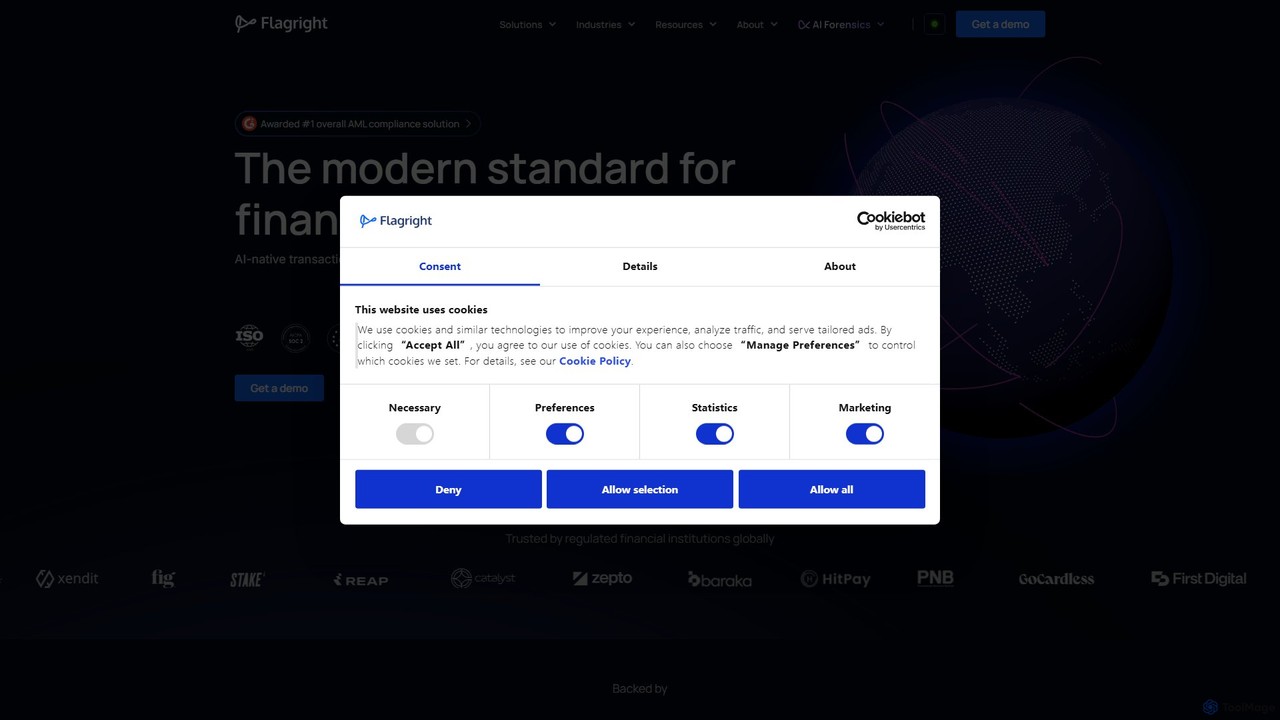
Flagright is an AI-powered platform for real-time transaction monitoring and AML compliance. It helps financial institutions and fintechs detect suspicious activities, reduce false positives, and streamline their compliance workflows with a unified, no-code solution. The platform offers features like customer risk scoring, sanctions screening, and case management to combat financial crime effectively.

Compliance
Visits 44.3KFavorites 155Likes 152
X-Ray
Freemium

X-Ray

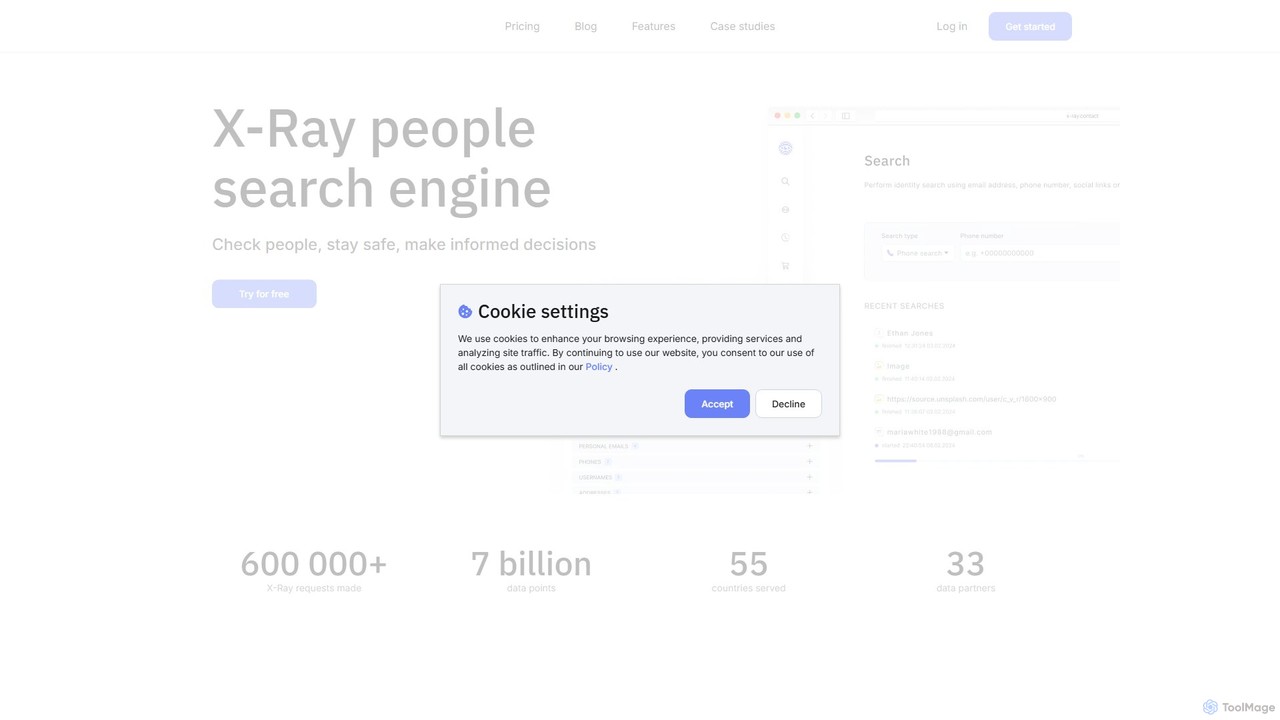
X-Ray is an advanced AI-powered person search engine designed to find and verify information about individuals online. By leveraging a vast network of public records, social media platforms, and online databases, it provides comprehensive profiles from minimal inputs like a name, email, or phone number. It's an essential tool for recruiters, sales professionals, and anyone needing to verify identities or reconnect with contacts.

Recruiting
Visits 5.8KFavorites 116Likes 141
AnythingLLM
Freemium

AnythingLLM

AnythingLLM is an open-source, all-in-one AI application that allows you to chat with any document, use AI agents, and leverage powerful LLMs. It runs locally on your desktop or in a private, self-hosted environment, ensuring complete data privacy and security for individuals and teams.

Document Analysis
Visits 687.3KFavorites 112Likes 107
Sourcery
Freemium

Sourcery

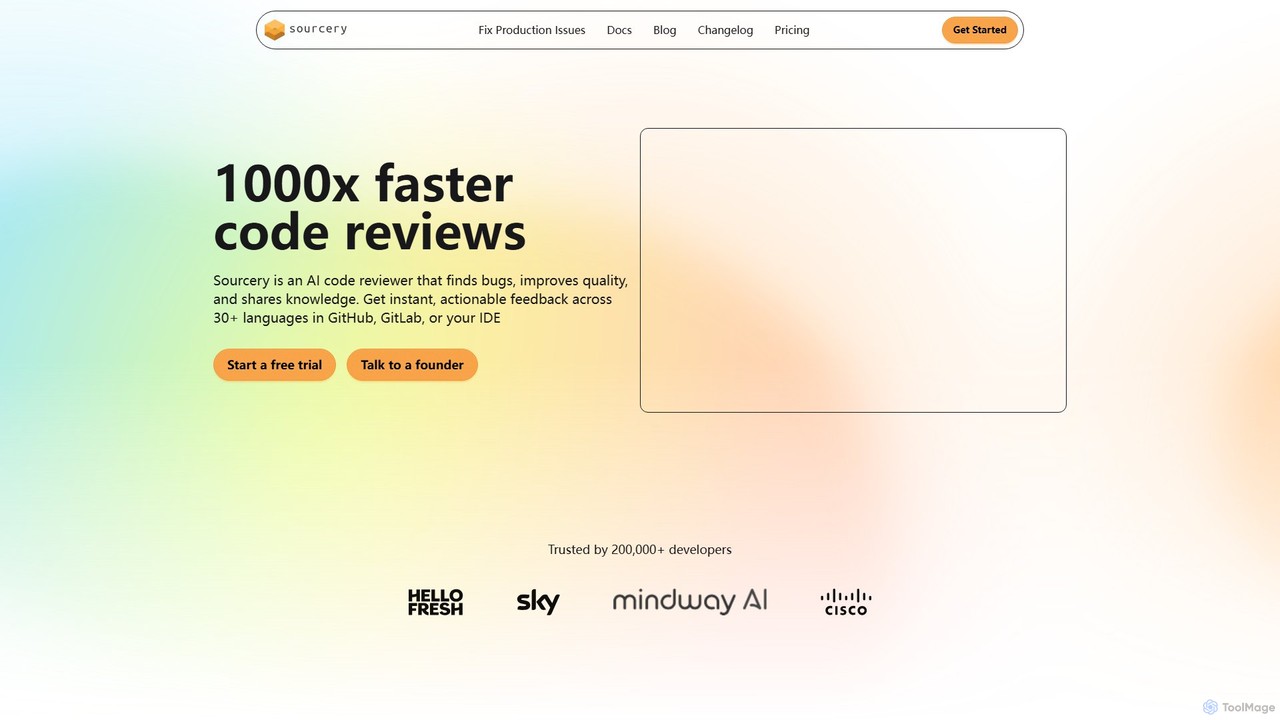
Sourcery is an AI-powered code reviewer that automates code reviews, finds bugs, improves code quality, and accelerates knowledge sharing. It integrates directly into your IDE, GitHub, and GitLab workflows, providing instant feedback and refactoring suggestions for over 30 languages.

Code Assistant
Visits 88.2KFavorites 154Likes 143
NICH: GPT Anonymizer
Freemium

NICH: GPT Anonymizer

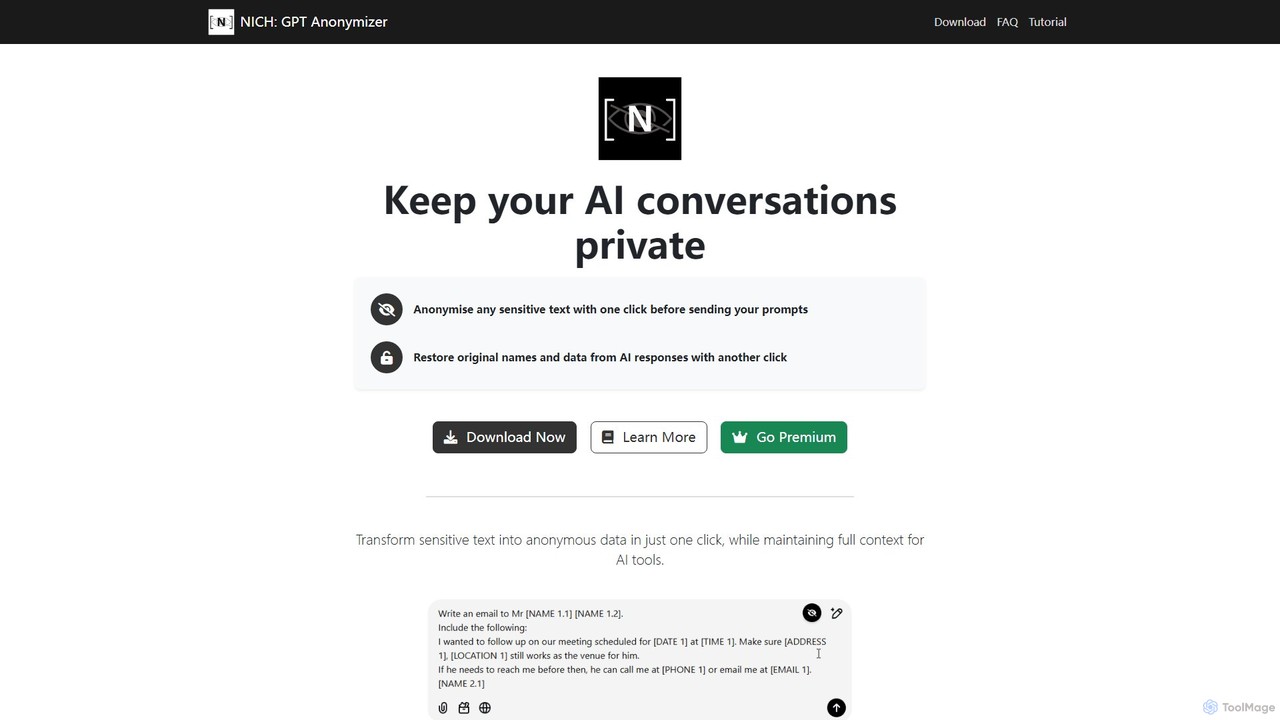
NICH: GPT Anonymizer is a privacy-focused browser extension that secures your AI interactions. It anonymizes sensitive data in your prompts with one click before sending them to services like ChatGPT, and restores the original information from AI responses. All processing is done 100% on your device, ensuring your confidential data never leaves your computer.

Chrome
Visits 5.6KFavorites 138Likes 131
OpenALPR
Freemium

OpenALPR

OpenALPR by Rekor is an advanced Automatic License Plate Recognition (ALPR) software that transforms standard IP, traffic, or security cameras into powerful vehicle recognition systems. It provides high-accuracy license plate reading, vehicle make, model, and color identification, and actionable data for security, operations management, and law enforcement.

Operations Management
Visits 28.6KFavorites 129Likes 139
Oosto
Paid

Oosto

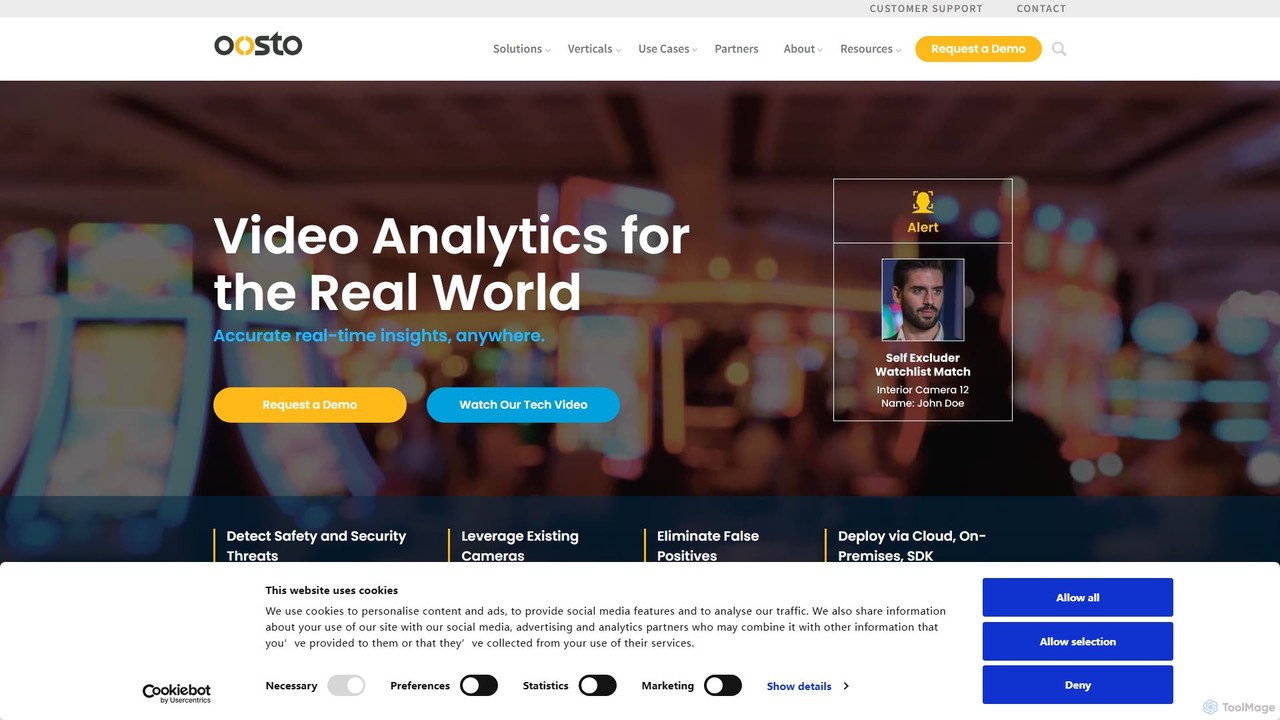
Oosto (formerly AnyVision) is a leading Vision AI platform specializing in real-time facial recognition and video analytics for enterprise security. It enhances physical security by identifying persons of interest, automating access control, and providing actionable operational intelligence from existing video streams.

Vision Ai
Visits 9.4KFavorites 131Likes 133
Pentra
Freemium

Pentra

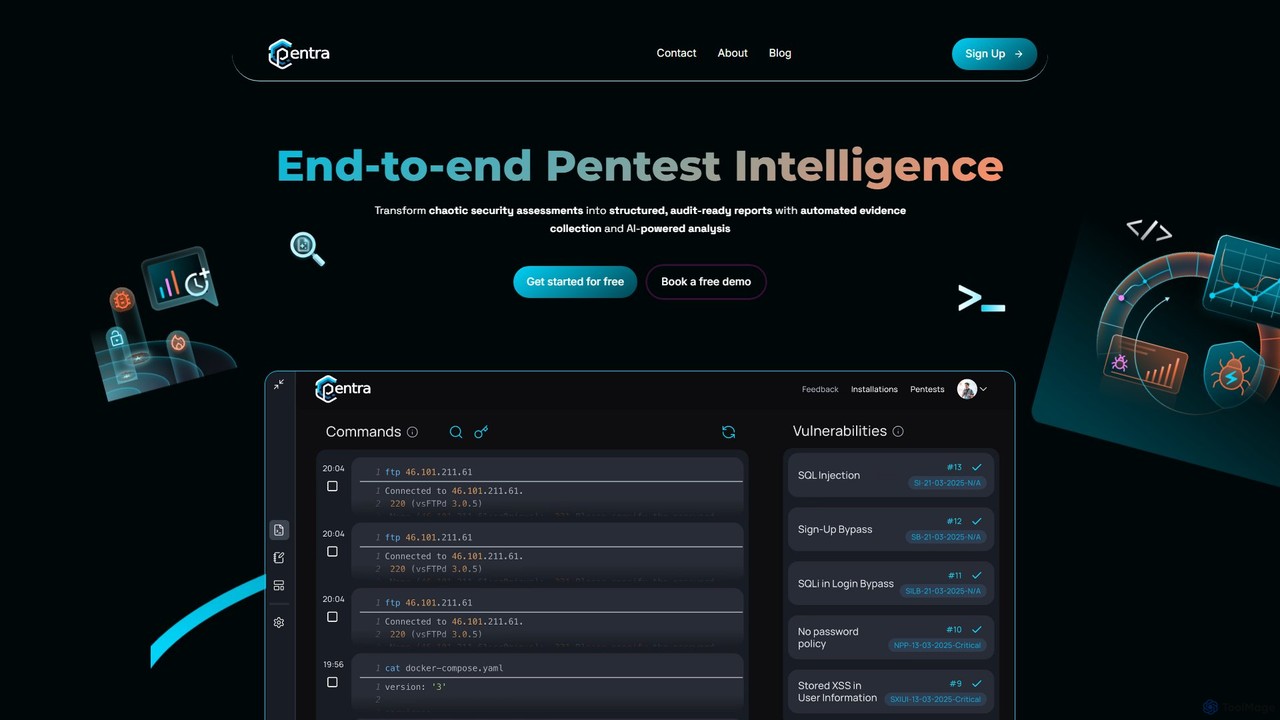
Pentra is an AI-powered platform designed for penetration testers to streamline their workflow. It automatically logs CLI commands, transforms raw data into polished findings, and generates customizable, professional reports, significantly reducing administrative overhead and improving efficiency.

Reporting
Visits 5.4KFavorites 126Likes 137
Aporia
Freemium

Aporia

Aporia is an enterprise-grade platform providing AI Guardrails and Observability for any AI workload. It ensures AI applications are secure, reliable, and compliant by preventing issues like prompt injections, data leakage, and hallucinations, while also offering detailed cost management for LLMs.

Monitoring
Visits 13.3KFavorites 122Likes 118
aiimagedetector
Free

aiimagedetector

A free online tool that uses advanced AI to instantly analyze and determine if an image is human-made or AI-generated. It provides a detailed probability analysis, helping users verify image authenticity and combat misinformation in the digital age.

Image Analysis
Visits 7.6KFavorites 104Likes 110
Sift
Paid

Sift

Sift is an AI-powered Digital Trust & Safety platform that helps businesses prevent fraud and abuse. Using real-time machine learning and a global data network, it protects against payment fraud, account takeovers, and content spam. Sift enables companies to grow securely by accurately identifying and stopping malicious activity while reducing friction for legitimate users, ultimately building trust and safety online.

Risk Management
Visits 91.3KFavorites 136Likes 109

About Security

AI Security tools are a class of solutions that leverage artificial intelligence and machine learning to proactively detect, predict, and respond to cybersecurity threats. These tools analyze vast amounts of data from networks, endpoints, and applications to identify anomalous patterns, malicious activities, and potential vulnerabilities that traditional signature-based systems often miss. Their primary value lies in automating threat hunting, accelerating incident response, and adapting to new, evolving attack vectors in real-time. This enables organizations to enhance their defensive posture, protect critical assets, and reduce the risk of data breaches and operational disruptions.

Core Features

  • Threat Detection and Prediction: Uses machine learning models to identify malware, phishing, ransomware, and zero-day exploits by analyzing behavioral patterns.
  • Automated Incident Response: Automatically contains threats by isolating infected devices, blocking malicious IP addresses, or terminating suspicious processes.
  • Behavioral Analytics (UEBA): Monitors user and entity behavior to detect insider threats, compromised accounts, and lateral movement within a network.
  • Vulnerability Management: Employs AI to scan systems, prioritize vulnerabilities based on exploitability and potential impact, and suggest remediation steps.
  • Fraud Prevention: Analyzes transaction data and user interactions in real-time to identify and block fraudulent activities like account takeovers or payment fraud.

Use Cases

AI Security tools are critical for organizations across various sectors, particularly finance, healthcare, e-commerce, and government, where sensitive data protection is paramount. Security Operations Center (SOC) analysts use them to reduce alert fatigue and focus on high-priority threats. IT administrators deploy these tools to secure cloud infrastructure and endpoints, while compliance teams rely on them to enforce security policies and generate audit reports.

How to Choose

When selecting an AI Security tool, consider its threat coverage and whether it addresses your specific risks (e.g., cloud, network, email). Evaluate its integration capabilities with your existing security stack, such as SIEM and SOAR platforms. Assess the level of automation and the tool's false positive rate to ensure it enhances rather than burdens your security team. Finally, consider its scalability to handle your organization's data volume and growth.

Featured tool rankings

Security use cases

1

Automated Phishing Attack Detection

An IT security team in a large corporation uses an AI Security tool to protect against phishing attacks. The AI continuously scans all incoming emails, analyzing not just sender reputation and keywords, but also the linguistic patterns, link destinations, and attachment structures. When an email mimicking a legitimate invoice but containing a malicious link is detected, the system automatically quarantines it and alerts the security team. This process prevents employees from ever interacting with the threat, reducing the risk of credential theft and malware infection across the organization without manual intervention.

2

Real-time Fraud Prevention for E-commerce

An online retail platform integrates an AI-powered fraud detection tool to secure its payment gateway. The system analyzes hundreds of data points for each transaction in real-time, including device fingerprint, IP location, purchase history, and mouse movement patterns. If a transaction exhibits behavior indicative of fraud—such as a user attempting multiple credit cards rapidly or using a proxy server—the AI flags it as high-risk. It can then automatically decline the transaction or route it for manual review, significantly reducing chargeback losses while maintaining a smooth checkout experience for legitimate customers.

3

Identifying Insider Threats with Behavioral Analytics

A financial institution deploys a User and Entity Behavior Analytics (UEBA) tool to monitor internal network activity. The AI establishes a baseline of normal behavior for each employee, learning their typical work hours, data access patterns, and application usage. One day, the system detects an accountant downloading large volumes of sensitive client files late at night, a significant deviation from their established baseline. The AI immediately flags this activity as a potential insider threat and generates a high-priority alert for the security team to investigate, enabling rapid intervention before a data breach occurs.

4

AI-Powered Network Intrusion Detection

A cloud service provider uses an AI-driven Network Detection and Response (NDR) system to protect its infrastructure. Unlike traditional firewalls that rely on predefined rules, the AI model continuously learns the normal flow of traffic within the network. When it detects a sophisticated, low-and-slow attack pattern, such as data being exfiltrated in small, encrypted packets over an extended period, it recognizes this anomaly. The system automatically blocks the communication channel and provides security analysts with a detailed timeline of the attack, helping them understand the threat and strengthen defenses against similar future attempts.

5

Smart Vulnerability Prioritization for DevOps

A software development company integrates an AI-powered security tool into its CI/CD pipeline. As developers commit new code, the tool automatically scans for vulnerabilities. Instead of just generating a long list of potential issues, the AI analyzes the context of each vulnerability. It considers factors like whether the vulnerable code is actually reachable in production, its potential business impact, and if an exploit is publicly available. This allows the DevOps team to focus on fixing the 10 most critical vulnerabilities first, rather than being overwhelmed by hundreds of low-risk findings, accelerating development cycles securely.

6

Securing IoT Device Networks against Botnets

A company managing a large fleet of industrial IoT sensors uses an AI security platform to prevent them from being compromised and used in a botnet. The AI first learns the normal communication patterns of each sensor—what data it sends, to which servers, and at what frequency. When a group of sensors is infected with malware and starts attempting to connect to an unknown command-and-control server, the AI detects this anomalous behavior instantly. It automatically isolates the affected sensors from the network to prevent the attack from spreading and alerts the operations team to remediate the devices.

Security FAQ

What are AI Security tools?

AI Security tools are advanced cybersecurity solutions that use artificial intelligence (AI) and machine learning (ML) to identify, predict, and prevent cyber threats. Unlike traditional security systems that rely on known threat signatures, AI tools analyze vast datasets and network behavior to detect novel attacks, anomalies, and suspicious patterns in real-time. Key functions include automated threat detection, behavioral analysis (UEBA), and intelligent incident response. They are designed to enhance security operations by reducing manual effort and improving the speed and accuracy of threat mitigation.

How to choose the right AI Security tool?

Choosing the right AI Security tool requires evaluating several key factors. First, define your primary security needs: are you focused on endpoint protection, network security, cloud infrastructure, or fraud detection? Next, assess the tool's integration capabilities with your existing security stack (e.g., SIEM, SOAR, firewalls). Consider the level of automation and customization it offers, as well as its reported false positive rate. Finally, evaluate the vendor's reputation, support services, and the tool's scalability to ensure it can grow with your organization's needs.

What is the main advantage of AI Security over traditional security?

The main advantage of AI Security is its proactive and adaptive nature. Traditional security systems are primarily reactive, relying on databases of known malware signatures and predefined rules, making them vulnerable to new, or 'zero-day', attacks. AI Security, in contrast, learns from data to establish a baseline of normal activity and can identify deviations that signal a potential threat, even if it has never been seen before. This allows for the detection of more sophisticated attacks, reduces false positives, and automates responses, enabling security teams to handle threats more efficiently and effectively.

What are the key functions of AI Security platforms?

AI Security platforms typically offer a suite of integrated functions to provide comprehensive protection. Key functions include:

  • Threat Intelligence: Aggregating and analyzing threat data from global sources to predict emerging attacks.
  • Network Detection and Response (NDR): Monitoring network traffic for suspicious patterns and anomalies that indicate a compromise.
  • Endpoint Detection and Response (EDR): Protecting individual devices like laptops and servers by analyzing process behavior to stop malware and ransomware.
  • User and Entity Behavior Analytics (UEBA): Baselining normal user activity to detect insider threats or compromised accounts.
  • Security Orchestration, Automation, and Response (SOAR): Automating routine security tasks and incident response workflows to speed up remediation.

Who should use AI Security tools?

AI Security tools are beneficial for a wide range of organizations, but they are particularly crucial for those handling sensitive data or facing a high volume of threats. This includes:

  • Enterprises: Large companies with complex IT environments use AI to manage security at scale and protect valuable intellectual property.
  • Financial Institutions: Banks and fintech companies rely on AI for real-time fraud detection and to comply with strict regulations.
  • Healthcare Organizations: Hospitals and clinics use AI to protect sensitive patient data (PHI) from ransomware and other attacks.
  • E-commerce Platforms: Online retailers use AI to prevent payment fraud, account takeovers, and protect customer information.
  • Government Agencies: Public sector entities deploy AI to defend critical infrastructure and national security interests.